A new route to the Italian city means Brits can indulge their love of cheese and even book a factory tour and tasting, as well as enjoying the historic sights in this sun-soaked destination
The city is a cultural and gastronomic destination(Image: Getty Images/iStockphoto)
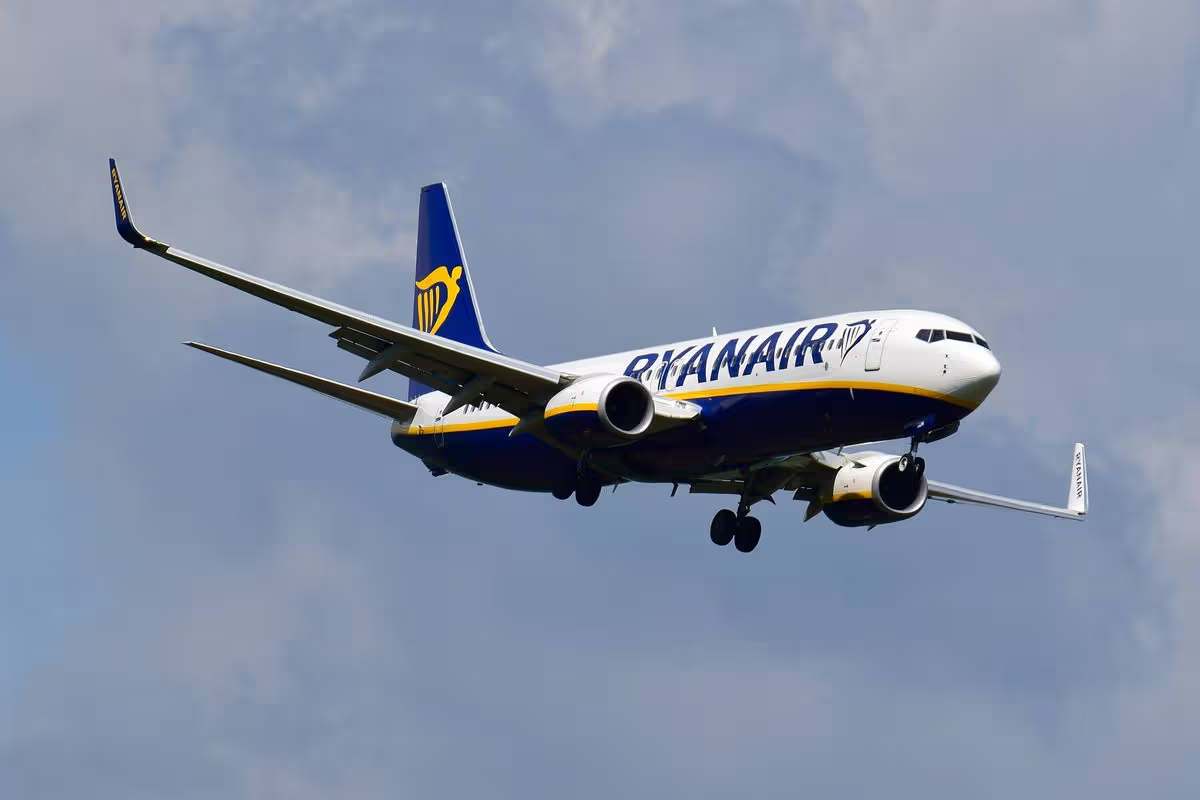
A new Ryanair route has launched from London-Stansted and it’s the perfect city break for those who love cheese, or Italian food in general.
Booking is now open for London to Parma flights, with the first of the twice-weekly flights taking off on June 4. The service will run on Thursdays and Sundays, making it the perfect route for a long weekend, and the flight time is just under two hours. Fares start from £20.95 one way.
Parma is found in northern Italy’s Emilia-Romagna region and is a major foodie city thanks to two of its most famous products that are enjoyed around the world. Firstly, the pungent Parmesan cheese comes from this city, and there are a number of factories and tours you can take which end with cheese tastings. You can even visit the Museo del Parmigiano-Reggiano just outside the city and learn about the history of cheesemaking in the area.
Prosciutto di Parma, or Parma ham as Brits tend to call it, also hails from this region. There are a few Prosciuttificio around the city where you can see the giant legs dangling from the ceiling as they go through the curing process for months on end. Some Prosciuttificio have cafes attached where you can enjoy platters of prosciutto and cheese served alongside a glass of Italian wine.
Parma is a walkable city, and many tourists start of at the old town, known as Centro Storico. Down its narrow medieval streets you’ll find impressive Romanesque architecture, colourful terraced houses, and cobbled town squares full of cafés.
At the heart of the old town is Piazza del Duomo, and here you’ll find the 900-year old gothic cathedral and 12th-century Bishop’s Palace which was built with repurposed Roman stone blocks.
Other incredible architectural sites include Teatro Farnese, one of Europe’s largest Baroque theatres, built entirely in timber. This grand auditorium dates back to the 17th century and the elaborate wood carvings are a testament to the craftsmanship of the time. Parma was the birthplace of composer Verdi, so there’s usually a packed schedule of operas and classical concerts across its historic theatres.
Music lovers can also visit the fascinating House of Sound, a museum that is focused on how technology developed for music, from the creation of the gramophone and radio to modern music devices. The museum also features 228 speakers, grouped in 64 audio channels, which allow visitors to experience ‘sound rains’ as they move around.
Parma has a huge number of restaurants, including two with Michelin stars, making it the perfect destination for foodies. There are endless Trattoria and Osteria found down narrow streets where you can experience authentic, inexpensive Italian cuisine. Osteria dei Servi comes highly recommended, and you can dine in this cosy restaurant among the hanging prosciutto legs while choosing specials from the chalkboard.
Trattoria Corrieri has a similarly rustic Italian feel. One page of the menu is devoted to prosciutto and other cured meats, and local ingredients are the cornerstone of this cosy Italian restaurant, which has been open since the 1800s.
Have a story you want to share? Email us at webtravel@reachplc.com
A flight attendant has shared the little-known reason passengers are welcomed onboard planes – and it has nothing to do with manners
14:57, 04 Apr 2026Updated 14:57, 04 Apr 2026
Flight attendants have a wealth of flying knowledge(Image: Peter Bannan via Getty Images)
A flight attendant has lifted the lid on a trade secret about the moment passengers board a plane. The little known fact explains why passengers are welcomed at the aircraft doors during boarding.
Most air travellers are well acquainted with the customary warm reception at the plane doors, which typically involves broad smiles and even some direction on locating their allocated seat. The most widespread assumption is that this is simply a display of good customer service, with the flight attendants, the public face of any airline, setting the tone with courtesy and decency.
Another presumption is that the welcome is intended to set passengers up for an enjoyable flight experience, or perhaps verify boarding passes one last time. However, one serving flight attendant claims that hospitality is not the primary driving force behind the warm greeting. The genuine reason for the friendly reception is to carry out a visual assessment of passengers from head to toe before take-off.
In a now- viral TikTok clip, MrsMiva – who claims to work for TUI out of Stuttgart airport – has revealed that flight attendants use the boarding process to assess whether passengers are fit to fly. According to the content creator, flight attendants are checking to establish whether passengers may be “too drunk or sick to fly”.
In the caption accompanying the video, MrsMiva also clarifies that the greeting enables attendants to identify who could potentially assist in the event of an emergency. The video has been watched over 18 million times and sparked a flurry of discussion in the comments.
Numerous users confirmed they’ve definitely experienced the cabin crew greeting and that the reasoning behind it makes perfect sense. One commenter who purported to be a long-serving attendant verified the policy as well, writing: “FA (flight attendant) of eight years – or to check if they could be an ABA (able-bodied assistant).”
The comments also started to diverge into the various types of cabin crew passengers had come across. Some remarked they had “really chill” attendants, while others noted theirs were supportive when they were in poor health to travel.
Being able-bodied and physically capable is essential for passengers seated adjacent to emergency exit doors, which is potentially why attendants verify this at the entrance. Emergency exit seats are highly sought-after given that they provide additional legroom and have no row ahead of them.
That being said, occupying these seats means that a passenger must be willing and capable of helping cabin crew in the improbable event of an emergency. For this reason, Ryanair’s terms and conditions stipulate that it “can change your allocated seats at any time, even if you had reserved it, if we need to do this for operational, safety or security reasons.”
According to the airline’s regulations, passengers wishing to occupy rows 1, 16, or 17, where emergency exits are situated, must fulfil specific requirements. These include being aged over 16, being physically capable of assisting during an emergency, travelling without an infant, not requiring any special assistance at the airport, not needing a seat belt extender, and not having an extra comfort seat reserved.
Should the added responsibility of emergency exit seats not appeal to you, there are alternative methods to guarantee extra legroom while on board.
Do you have a story to tell? Email: emma.mackenzie@reachplc.com
If you think people can be disgusting inside planes, flight attendants can confirm they’ve seen things that could well make you rethink how you fly and if you ever want to hop onto a plane again
Many flight attendants list tray tables as some of the grossest parts of a plane
Flight attendants are no strangers to weird experiences – especially seeing as they spend hours with hundreds of people every day. But in between nice interactions and friendly exchanges are moments that are memorable for all the most disgusting reasons.
Travel + Leisure has featured a video that asked cabin crew about their best behind-the-scenes insight into plane life, and some interviewees reminisced on shocking incidents – including some that show just how unhygienic planes can be.
Joy, a flight attendant of six years, told the story of the worst thing she’s witnessed mid-flight: “The grossest thing I’ve seen is someone putting their feet up on a tray table.”
But it gets worse: “I’ve actually had someone stand up, their pants fall down, and they have sat back down in the seat without pulling their pants back up – on the seat. It gets cleaned in between the flights. Fine. But bare naked bum…”
She also commented on one common habit she sees: “Please don’t let your toddler go to the lavatory barefoot. There’s pee everywhere in there. It’s not your living room. It’s not – this is a plane. It’s not your house. It’s not your couch.”
Another air steward, Luke, detailed his process of getting his plane seat ready to use. He approaches his seat with Clorox wipes and gives it a good going over, from top to bottom, making sure to thoroughly clean the tray table as well.
Besides these reports of unsavory incidents, the aviation workers mentioned certain moments that they hoped would prompt passengers to reflect on their behavior on flights, since small mistakes can impact both staff and passengers’ experiences.
Amara, who has been working in the industry for three years, said passengers are often keen to tell her that they know how things should be done on a plane, because they regularly fly.
However, often these passengers are the most troublesome and end up doing annoying things like taking phone calls in mid-air.
After four years of experience, Jorge highlighted the biggest mistake he sees passengers regularly making. For him, it’s assuming that flight attendants will help passengers lift a bag into the bins above the seats. On most airlines, they are forbidden from doing so due to the physical risk it would pose to them.
If you realise too late that you went slightly overboard with packing, the crew can arrange for them to be checked in instead, Jorge added.
Recently a flight attendant told eShores about the little lies that they tell passengers, for their own good.
“When a business class passenger asks for a coffee on a night flight, I’ll make a decaf coffee just so that they can fall asleep,” they said.
But that’s not the sole untruth passengers might encounter. Aircraft cabins are notoriously frigid, yet should you request the attendants warm things up slightly, you might well be misled.
They admitted: “When passengers ask to have the temperature of the cabin turned up, we lie and say yes, we will turn it up, but really we don’t because we get warm walking around.”
Choosing the right seat on the plane can determine a lot for your overall flight experience, and a travel expert has revealed exactly why you should avoid booking 11A
You might want to think carefully about choosing your seat on the plane(Image: Getty Images/Stock Image)
We all have a preferred window or aisle seat when flying, but one travel expert has revealed the exact seat you should always avoid.
Choosing the right seat on a plane can certainly come with its bonuses. Whether that’s more legroom, closer to the bathrooms, being the first row to be served refreshments, or a quieter spot near the back, away from babies. Yet some seats can be a disadvantage.
Window seats are popular among travellers, particularly for those wanting to enjoy the view during take-off or landing, for a little more privacy, or to take a little snooze against the cabin. One favoured window seat on planes has been 11A, due to its positioning near or over the wing, which is thought to offer less disruption from turbulence.
While it may sound appealing, 11A might not be as relaxing as it sounds. Andrea Platania, operations manager at airport transfer platform Transfeero, said that this specific seat often leaves passengers disappointed.
“Seat 11A might sound ideal because it’s by the window, but it can quickly become frustrating, especially on anything longer than a short hop,” the travel expert said. “You’re quite far from the toilets, which isn’t ideal, and getting in and out of that seat can be awkward.”
Andrea also explained that this seat can prove tricky for those who want to move around and stretch during the flight. “If you’re in 11A, you’re relying on the people next to you to move every time you want to get up. That might be fine once or twice, but over a longer journey it becomes inconvenient very quickly.”
It’s a seat that can also feel a little cut off from the rest of the cabin. “You’re not close to the aisle, so you don’t have that easy access, and you’re not in a premium position either. It ends up being a seat that looks better when you book it than it feels when you sit in it,” he outlined.
But that’s not the only seat you might want to think twice about booking. The expert said that seats 11A and 11F are among the “least rewarding seats” on a flight.
“Seats like 11A and 11F are often overlooked when people are booking, but they’re right in that middle section of the aircraft where you lose a lot of the small conveniences. They don’t seem bad on paper, but in practice, they’re some of the least rewarding seats to be in, Andrea said.
Yet one of the biggest disadvantages of these seats is during food and drink service. “On most short and mid-haul flights, cabin crew will begin service from both the front and the back of the plane, then work their way towards the centre. If you’re sitting in rows like 11, you’re effectively last in line from both directions.”
It can become even more of a drawback during busy flights. He said: “Passengers in seats like 11A and 11F are far more likely to find that popular snacks, meals, or even drinks have already run out by the time the trolley reaches them. It’s something people don’t think about when booking, but it becomes very obvious once you’re in the air.”
If that wasn’t enough to deter you from seats 11A and 11F, Andrea noted that they are inconveniently positioned on board. “You’re not particularly close to the toilets, and you’re not near the exits either, so you don’t get the benefit of convenience in either direction.
“You’re just in that middle zone where everything takes a bit longer.” So next time you book your plane seat, have a think about where you’d rather sit, whether that’s to ensure you’re one of the first to be served your meal or somewhere to ensure little disruption during your flight.
Do you have a travel story to share? Email webtravel@reachplc.com
As you begin to book seats on flights for the trips ahead of you this summer, there’s something you may want to consider when it comes to the most fuss-free flight
If you end up with one of these seats you might want to reconsider (Image: Getty Images)
Ahead of your big holidays this year you may be starting to look at your flights, or maybe you’re checking in and choosing your seats last minute; either way, you might want to hear this.
Most planes have a handful of seats that tend be located in the same place. Some with extra leg room, others with less, some in between windows, and some even on their own. Those boarding these flights and helping to keep everything streamlined know no more about those inside of those planes than anyone else.
That’s why it would be smart to consider this key piece of seat advice from Andrea Platania, operations manager at the airport transfer platform Transfeero. According to the firm’s onboard knowledge, there are a handful of seats that passengers continuously regret going for, and it may not be the ones that have even crossed your mind.
Seat 30F is a clear seat to avoid booking on a standard aircraft, along with 30E, as these tend to be located close to the toilets. In turn, the area tends to see a lot more disruption as people queue in the aisle or pass the seat to go in and out of the toilet.
He explained: “It’s not just about proximity, it’s about the constant movement around you.” He further claimed that these areas can quickly become gathering points during flights.
The expert shared: “The toilet doors opening and closing, people chatting as they wait, and general foot traffic all add up. If you’re hoping for a quiet, relaxed journey, these seats make that much harder.”
While these are notoriously standout bad seats, the specifics don’t quite stop there, especially in the 30 zone. Typically, seats 30A and 30F can’t be reclined as much as others.
This is worth noting for those particularly long journeys of yours, such as longer-haul flights. Andra suggested: “If you’re on a flight where you’re hoping to rest or even just sit comfortably, not being able to recline makes a big difference.” You end up feeling much more tired by the time you land.”
Adding to the already growing list of reasons as to why you might want to avoid these seats is time. If you’re a quick traveller, you have a short transfer time, you’ve got another flight to catch, or you just like to be efficient, you will not be cutting time by sitting in these seats.
These seats typically are some of the very last to leave the aircraft, according to the expert. Passengers in these rows often are left waiting longer as they have to allow time for almost everyone to disembark.
“It might not sound like a big deal, but when you’re eager to get off or have a connection to catch, it can feel like a long delay,” Andra said.
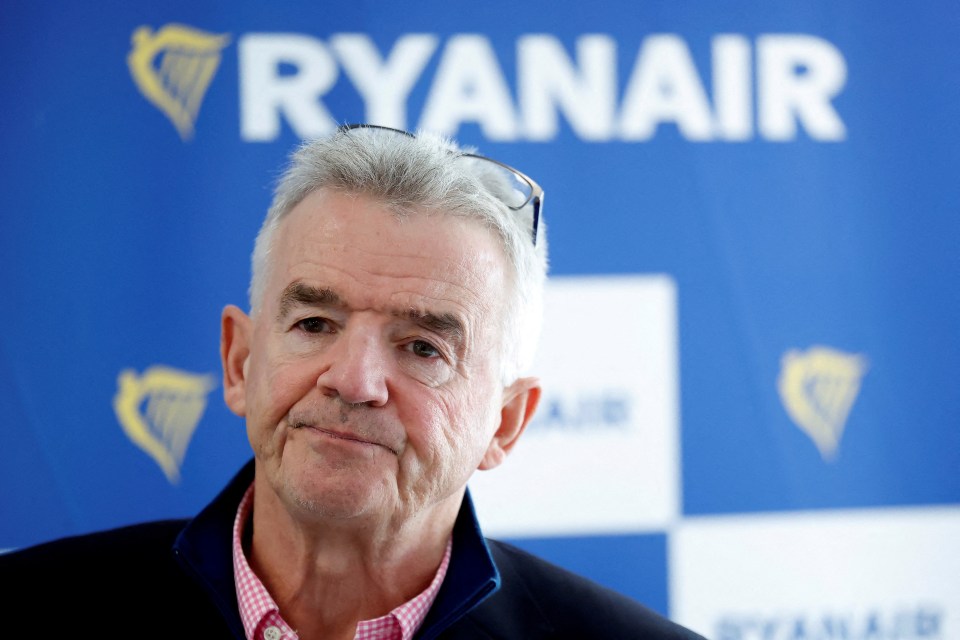
RYANAIR boss Michael O’Leary has warned jet fuel supplies could be disrupted in May as the war in Iran chokes off global oil routes.
The budget airline kingpin warned that holidaymakers could face a summer of uncertainty if the Middle East war continues to throttle global oil routes.
Sign up for the Travel newsletter
Thank you!
Michael O’Leary revealed that while Ryanair is “reasonably well hedged” on 80% of its fuel, the company is being forced to shell out nearly double for the remaining 20%.Credit: ReutersO’Leary confirmed the airline is paying around $150 a barrel for the unhedged portion of its suppliesCredit: Splash
Prices have spiralled since the outbreak of fighting at the end of February, with Iran blocking vital tankers from passing through the Strait of Hormuz.
Speaking to Sky News, the airline chief revealed that while Ryanair is “reasonably well hedged” on 80% of its fuel, the company is being forced to shell out nearly double for the remaining 20%.
O’Leary confirmed the airline is paying around $150 a barrel for the unhedged portion of its supplies.
The outspoken boss warned that while rising costs are a major headache, the more “immediate concern” is whether there will be enough fuel to keep planes in the sky.
He admitted that the industry is at the mercy of the conflict and the ongoing blockade of the world’s most important shipping passage.
“Fuel suppliers are constantly looking at the market. We don’t expect any disruption until early May, but if the war continues, we do run the risk of supply disruptions in Europe in May and June, and we hope the war will finish sooner than that and the risk to supply will be eliminated,” he said.
O’Leary calculated that the threat to the airline’s operations is now a very real possibility for millions of passengers planning their early summer getaways.
He warned that there is a “reasonable risk” that between 10% and 25% of supplies could be at risk through May and June, adding that like everyone else in the industry, he hopes the war ends sooner rather than later.
The Ryanair chief made it clear that the fate of the summer season rests on the reopening of the Strait of Hormuz.
He stated that if the war finishes by April and the shipping lane reopens, then there is “almost no risk to supply.”
Despite the looming threat of shortages, O’Leary struck a defiant tone regarding his own flight schedule.
He told Sky News that he does not expect to cancel any flights, even as some of Ryanair’s rivals struggle to cope with the volatile market.
However, the pressure on the industry is mounting across the board.
EasyJet boss Kenton Jarvis has already sounded the alarm for passengers’ wallets, warning that European consumers should expect higher ticket prices towards the end of summer when existing fuel hedges come to an end.
So far, a number of airlines have already said they will be raising the cost of flights due to the fuel crisis.
Cathay Pacific, AirAsia and Thai Airways are just some that are increasing fares, along with Air New Zealand.
United Airlines said it could eventually see fares increase as much as 20 per cent.
Other airlines have said they are cancelling flights altogether.
United Airlines confirmed that it would be cutting five per cent of flights for the next few months, which works out to around 250 a month.
Weekly insights and analysis on the latest developments in military technology, strategy, and foreign policy.
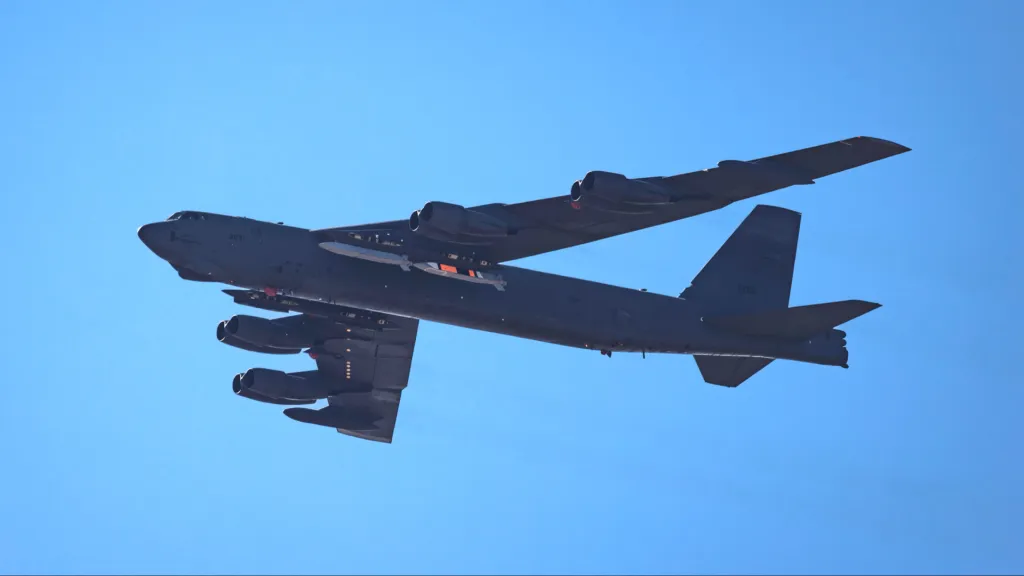
We are getting ever-better views of new stealthy external fuel tanks and underwing infrared sensor pods for the F-22 Raptor. We also now have our best look to date at the U.S. Air Force’s new AGM-181A Long-Range Standoff (LRSO) nuclear-armed cruise missile, spotted under the wing of a B-52H bomber. Both of these developments reflect a larger surge in Air Force flight testing activities as of late, including the sighting of a B-21 doing air-to-air related flight testing for the first time earlier this month. All of this comes as the service pushes ahead with plans to field a host of next-generation capabilities in the coming years.
This past weekend, aviation photographer Jarod Hamilton shared new pictures of the F-22 with the stealthy underwing fuel tanks and sensor pods, as well as the B-52 carrying the LRSOs, taken as they flew over the Mojave Desert. This is an area where flight testing out of Edwards Air Force Base in California commonly occurs.
A B-52H seen carrying a pair of LRSOs, or relevant test articles, under its wing. Jarod Hamilton
The aircraft were seen at separate times linking up with a KC-135 aerial refueling tanker. Hamilton even managed to grab a picture of all three aircraft flying together.
Critical F-22 upgrades
When it comes to the new underwing stores for the F-22, these are capabilities that have been in development for years now. However, the Air Force and prime contractor Lockheed Martin have only recently begun to talk about them openly. The tanks and pods are part of a larger upgrade plan for the Air Force’s F-22 fleet, which Lockheed is also now referring to as “Raptor 2.0.” The complete package also includes a new Infrared Defensive System (IRDS) integrated into the aircraft itself, as well as enhanced radar, electronic warfare, and other capabilities that you can read more about here.
Another picture of the F-22 with the new stealthy external fuel tanks and infrared sensor pod. Jarod Hamilton
The new external fuel tanks and infrared sensor pods are particularly important. As TWZ previously wrote, after a scale model of an F-22 in the Raptor 2.0 configuration was shown at the Air & Space Forces Association’s annual Warfare Symposium earlier this year:
Most obvious on the model are the new stealthy fuel tanks, a critical addition to ensure that the F-22 is able to better cover the vast distances that would be involved in a potential future conflict in the Indo-Pacific. In the past, the Raptor’s notoriously short range has been mitigated by using non-stealthy 600-gallon tanks, but these are not a realistic option when faced by more capable hostile air defenses. They are, however, a regular fit for the Raptors that sit alert in Alaska, which need the wing tanks for their intercept missions that can cover vast distances over long periods.
“So the way that I would describe it is, they are low-drag tanks. So the way you could interpret that is, they wouldn’t necessarily be required to punch [be jettisoned] to be in a combat scenario,” Katie Ciccarino, Vice President of the F-22 Program at Lockheed Martin, also told TWZ directly when asked about this specific detail in an interview on the sidelines of the 2026 Warfare Symposium. “They are [jettisonable] if you needed to be in a scenario where you had to, but the idea would be that you don’t have to, and you can perform any of the same maneuvers that you would on a clean wing with these tanks.”
Furthermore, as we also wrote previously:
While they are also stealthy, adding the IRST pods will nevertheless also have radar signature implications for the F-22. However, the tradeoff is considered acceptable, further evidence of just how critical this feature has become in air combat. In particular, an IRST sensor is useful for detecting stealthy targets, something that is also becoming increasingly relevant in the Pacific region. There is also the option of IRST-equipped Raptors sharing their sensor data with ‘clean’ F-22s, enhancing their situational awareness. You can read more about what the IRST brings to the F-22’s overall capabilities here. At this stage, we don’t know what specific sensor is used in the pods; Lockheed Martin refers to this store as the Advanced Sensor Pod.
The F-22 with the new external stores seen linking up with the KC-135 tanker. Jarod Hamilton
As of 2024, the Air Force hoped to begin deliveries of the stealthy external fuel tanks to F-22 squadrons this month. However, in its annual budget request last year, the service said it was “closing out technical discrepancies under EMD [engineering and manufacturing development phase] contract to integrate [a] fix prior to RAA [required asset available] delivery,” but did not elaborate. At that time, the Air Force said it expected to begin operational testing of the tanks in the fourth quarter of Fiscal Year 2025, which ended on September 30 of last year.
The most recent Air Force budget documents also said that “qualification testing” of the infrared sensor pods was set to run through the third quarter of Fiscal Year 2026, which ends on June 30 of this year.
When either the external fuel tanks or the infrared sensor pods are currently set to enter operational service is unclear.
A new stand-off addition to America’s nuclear arsenal
Flight testing of the AGM-181A Long-Range Standoff (LRSO) cruise missile has also been going on for years, but only limited details about the design have emerged so far. The Air Force only released the first official rendering of the weapon, which is set to replace the existing AGM-86B Air Launched Cruise Missile (ALCM), last June. Four months later, a B-52 was spotted carrying two prototypes or test articles under its wing for the first time. One of them was painted a solid dark gray, while the other also had light gray, black, and orange markings painted on the side. The new pictures from Jarod Hamilton show the same mix of prototypes/test articles, but it is unclear if they are the exact same ones seen during the flight test last year.
Another view of the B-52H with the LRSO prototypes or test articles. Jarod Hamilton
Most notably from this first unclassified render, the LRSO features an inverted tail very similar to the conventionally-armed AGM-158 JASSM stealthy air-launched cruise missile. The AGM-129 featured a similar arrangement, although with a differently shaped vertical tail. The missile looks like it has a trapezoidal fuselage cross-section design with a wedge-like nose. The wing design is also similar to JASSM. We see no air inlet in the concept rendering, which could be for security reasons, considering the inlet design is often a closely guarded feature on stealthy flying machines, or it could be located on the top of the missile. We also can’t say with any certainty how accurate this official rendering is of the actual design, but it is a given that some features will be omitted or even misleading for an initial public release.
The pictures we now have show that the rendering was relatively faithful to the real-world design. We also have a good look now at how the missile’s pop-out main wings look in their stowed configuration before release, as can be seen in the close-up below.
Jarod Hamilton
It is also known that the AGM-181 will carry a W80-4 thermonuclear warhead. These warheads are being created through what is described as a Life Extension Program (LEP) that involves the refurbishment and modernization of older W80-1s. Existing AGM-86Bs are armed with W80-1s, which are so-called dial-a-yield types that reportedly have two settings, either five kilotons or 150 kilotons.
Otherwise, “the W80-4 LEP will… enhance safety, security, and reliability,” the Department of Energy’s National Nuclear Security Administration (NNSA) said in a press release back in 2023. “Key design requirements of the W80-4 include use of the existing insensitive high explosive design, incorporation of modern components and safety features, extensive use of non-nuclear component technology developed for other LEPs, and parallel engineering with the USAF on the warhead-missile interface.”
The B-52 carrying the LRSOs seen linking up with the KC-135 tanker. Jarod Hamilton
The Air Force said previously that it hoped that the AGM-181 would reach initial operational capability in 2030. However, since 2024, the projected timeline for the missile entering service has been categorized as “controlled unclassified information” and withheld from public release. The service has also said that it is looking to start low-rate production of the missiles in Fiscal Year 2027, ahead of a full-rate production decision in Fiscal Year 2029. Currently, the planned launch platforms for the AGM-181 are the B-52H and B-21 Raider bombers.
As noted, the new F-22 and B-52 test flight pictures underscore a larger uptick in such activities as the Air Force moves ahead with several advanced aircraft and other capability development efforts. The service, as a whole, is expecting to receive a host of next-generation platforms and munitions, as well as other systems, in the next 15 to 20 years. This notably includes the B-21, the F-47 sixth-generation fighter, and multiple types of Collaborative Combat Aircraft (CCA) drones. The developments are also being accompanied by new tactics, techniques, and procedures.
We can expect to see more of the F-22 in its “Raptor 2.0” configuration and of the AGM-181, among other things, as flight testing of various new capabilities expands.
Special thanks to Jarod Hamilton for sharing these pictures with us.
easyJet said it is an ‘extraordinary circumstance’
13:06, 29 Mar 2026Updated 16:11, 29 Mar 2026
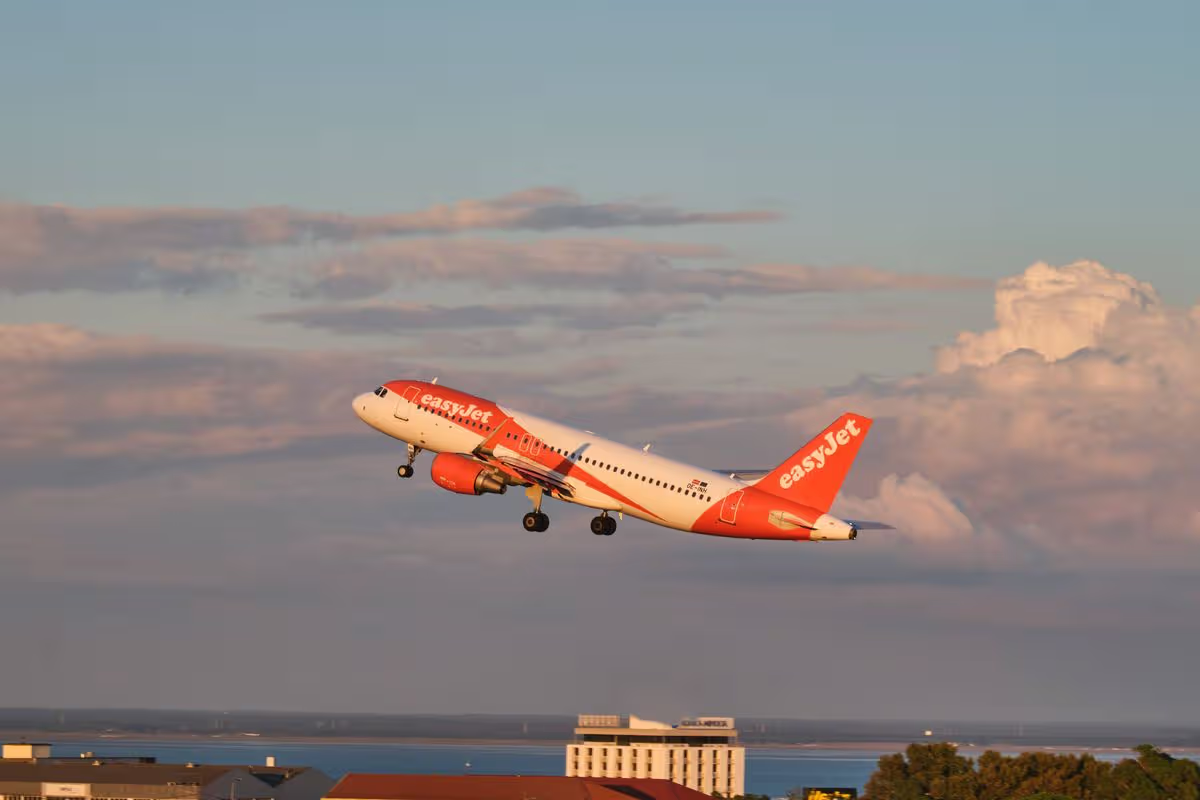
easyJet has apologised to passengers(Image: f9photos via Getty Images)
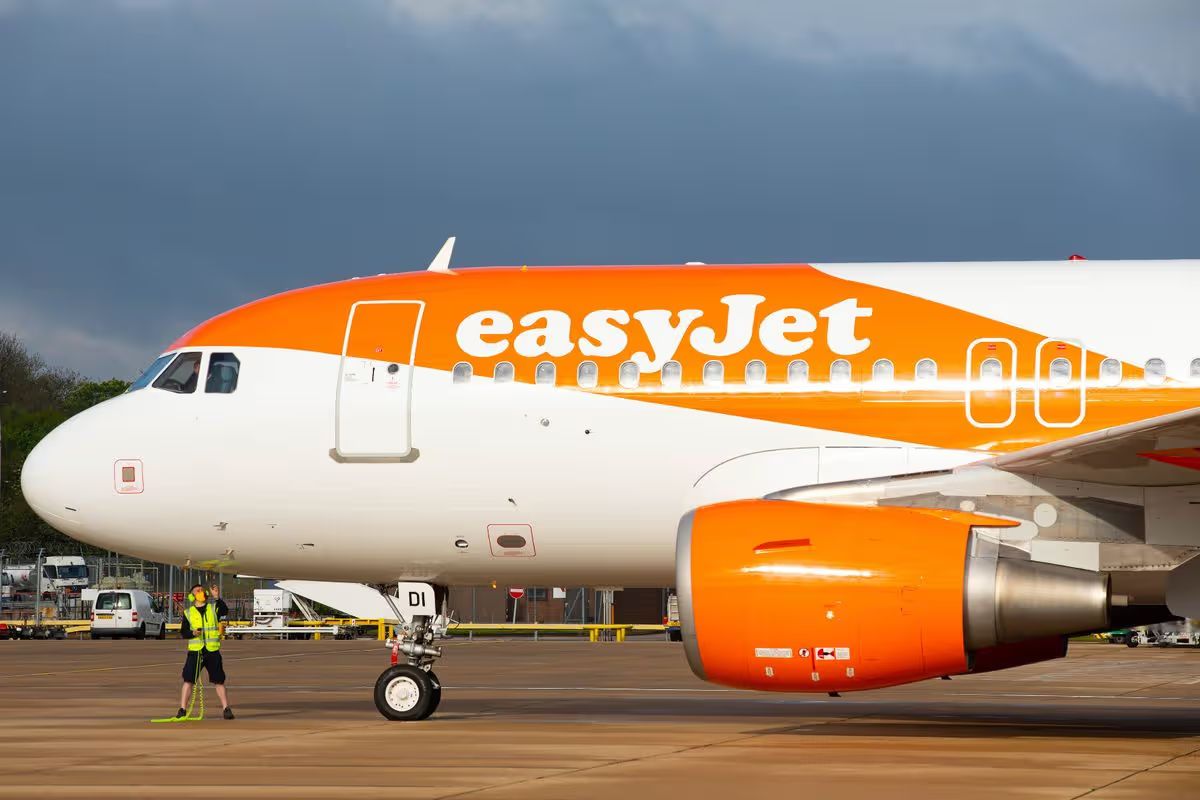
An easyJet flight was forced to turn back and land shortly after departure today (Sunday, March 29) due to an “extraordinary circumstance”.
easyJet flight EZY439 was scheduled to depart from Glasgow at 11.50am and arrive in Jersey at 1.25pm. However, tracking data on Flightradar appears to show the aircraft turning back almost immediately following take-off. easyJet has confirmed the flight returned to the gate due to an “extraordinary circumstance”. Outlining the diversion on its website, the airline said it is “due to a crew welfare issue”.
easyJet added: “The disruption to your flight is outside of our control and is considered to be an extraordinary circumstance. We plan to refuel and continue your flight as soon as possible. Your crew will keep you up to date.”
easyJet encourages passengers to visit its website for entitlements, refund and compensation rights, and additional information. It added: “Once again we’re very sorry for the delay to your flight.”
An easyJet spokesperson said later on Sunday: “Flight EZY439 from Glasgow to Jersey on 29 March returned to Glasgow due to a cabin crew member requiring medical assistance.
“The flight landed normally in Glasgow and was met by medical services on the ground. We plan for passengers to continue their journey to Jersey later today and apologise for any inconvenience.
“The safety and wellbeing of passengers and crew is always easyJet’s highest priority.”
Experts say families could save more than £100, though Ryanair disagrees
09:08, 29 Mar 2026Updated 09:13, 29 Mar 2026
Ryanair has disputed the claims(Image: turbo83 via Getty Images)
Passengers flying with Ryanair are being encouraged to follow several steps to reduce costs on their journeys, though the airline has responded by dismissing the advice as “fake news”.
Consumer champion platform Which? claimed its research revealed travellers may have been spending more than necessary. Last month, Which? suggested families could potentially save over £100 on their next Ryanair flight by simply disregarding the airline’s “recommended” fare option. When arranging a summer journey from London to Alicante for a family of four, Ryanair promoted its “Regular” fare as the “ideal” selection.
But opting for this choice would have cost £59 more than picking the “Basic” fare and adding the identical seats and luggage manually later during the booking process, Which? claimed. The article continues: “If our family decided that we could get by with four cabin bags instead of the eight included in Ryanair’s ‘Regular’ fare, then we could reduce the fare by £163 from Ryanair’s recommendation.
“The Regular fare comes with priority boarding, carry-on luggage and free standard seat selection included, but on around 30 checks over the past two years we’ve only once found it cheaper. We looked at 15 flights to a range of locations in February 2026 and only once was the Regular ticket cheaper, even if we wanted all those extras.”
Ryanair has made its feelings on Which?’s findings abundantly clear. A spokesperson for the airline told Sky News: “This is more fake news from Which? Thankfully no one reads, or takes any notice of Which’s fake recycled news articles or your spurious ‘advice’, as our traffic growth from 200 million to 208 million passengers in 2025 proves.”
The new seat will be installed from 2028 on hundreds of easyJet’s new aircraft, providing an extra two inches of improved knee and shin clearance
The new measure will be introduced in a few years(Image: PA)
As budget airlines attempt to cram more and more passengers onto flights, it can feel as if the seat in front edges slightly closer each time you board a plane.
However, a “next generation” economy seat is on the horizon, which its creators claim will provide travellers with additional legroom without compromising space for airlines.
The seat reshapes a passenger’s back, enabling their hips and spine to sit further back on the cushion so their knees and legs gain additional space at the front.
The back is constructed from carbon fibre rather than the traditional moulded plastic, producing a slimmer seat that provides crucial extra inches for the person behind.
A “fixed recline” of 22 degrees naturally shifts the passenger to the most efficient position in the seat, Mirus claims. Customers cannot manually recline the seat to annoy the passenger behind them.
A standard easyJet seat typically provides between 28 and 29 inches of room, meaning anyone who is six foot or taller will touch the seat in front with their knees. Some airlines on longer haul economy flights offer up to 34 inches of space.
“We’ve always had very comfortable leg room in easyJet,” said Kenton Jarvis, the airline’s chief executive. “This product is exceptionally comfortable, exceptionally light and allows a configuration that creates more space for the customer in the cabin.”
He explained easyJet wouldn’t be retrofitting any of its estimated 350 aircraft, stating: “There’s an expense to ripping off perfectly good seats and putting in and buying new ones.” The seats will instead appear in new orders of the Airbus A320neo and A321neo from 2028.
Research conducted this year by consumer group Which identified the short-haul carriers offering the tightest economy-class seat layout, or pitch, as Jet2, KLM, Lufthansa, Ryanair, SAS, TAP Air Portugal, Vueling and Wizz Air. All featured at least some seats with a 28-inch pitch.
The group noted that seat comfort also hinged on quality factors such as padding. By that measure, easyJet’s current seats achieved two out of five.
David Morgan, easyJet’s chief operating officer, commented: “We are delighted to be introducing the Mirus Kestrel seat across our future fleet.
“On top of the sustainability benefits, the additional legroom and enhanced comfort these seats will provide will also deliver an improved onboard experience for our customers, which we know they’ll love.”
March 20 (UPI) — At least five people were injured Friday after a Delta Air Lines flight hit severe turbulence on its final approach to Sydney, Australia.
Delta told the BBC that Flight 41 from Los Angeles with 160 passengers and crew on board “encountered brief turbulence” as it landed at Sydney Airport, injuring four flight attendants.
The Airbus A350 touched down “safely and normally,” said a Delta spokesperson.
Three of the injured were taken to hospital by ambulance crews waiting on the tarmac after sustaining what paramedics determined were “musculoskeletal and lower back concerns.”
“I believe five were assessed; in total three were transported to Royal Prince Alfred Hospital with minor injuries,” said Lisa Frow, manager of NSW Ambulance’s Mascot station.
Delta said none of those hurt were passengers, but Australian media listed two 71-year-olds, a 60-year-old-woman and a 37-year-old woman among the injured.
In July, more than two dozen passengers aboard a Delta Air Lines Airbus A330 were hospitalized after it was buffeted by “significant turbulence” en route from Salt Lake City to Amsterdam.
The flight diverted and landed safely at Minneapolis-Saint Paul International Airport with 25 passengers taken to area hospitals.
In June, five people were injured when an American Airlines Airbus A321 hit “unexpected turbulence on flight from Miami to Durham, N.C.
Three flight attendants and two passengers were taken to the hospital.
Passengers reported an unconscious man, a flight attendant with a broken arm and another burned by hot water from a drinks cart.
The American Airlines incident is under investigation by the Federal Aviation Administration, as is standard for incidents where there are injuries.
In May 2024, one person died and 71 were injured, seven critically, aboard a Singapore Airlines flight from London to Singapore that ran into unexpected extreme turbulence when it was at cruise altitude.
The flight deck declared an emergency, but landed the Boeing 777 safely at Bangkok’s Suvarnabhumi International Airport. Health officials determined that Briton, Geoff Kitchen, died of a suspected heart attack.
The incident prompted Singapore Airlines to revise its seat belt policy so that it would no longer provide hot beverage or meal service when the fasten seatbelt sign was illuminated
While strong or severe turbulence — where disturbed air pitches an aircraft violently upward or downward, creating G-forces of up to 1.5 — is on the increase, it remains extremely rare, with only one in 7,000 flights affected.
However, experts warned that flying was likely to become rougher more often in the future due to climate change as temperature changes and shifting wind patterns impact atmospheric conditions.
Founder of the Women’s Tennis Association and tennis great Billie Jean King (C) smiles with representatives after speaking during an annual Women’s History Month event in celebration of the 50th anniversary of Title IX in Statuary Hall at the U.S .Capitol in Washington on March 9, 2022. Women’s History Month is celebrated every March. Photo by Bonnie Cash/UPI | License Photo
Singapore Airlines holds the record for the world’s longest flight
Millie Bull Deputy Editor, Spare Time and Luke Chillingsworth
12:29, 14 Mar 2026Updated 12:29, 14 Mar 2026
Business class seats transform into fully flat beds.(Image: Singapore Airlines)
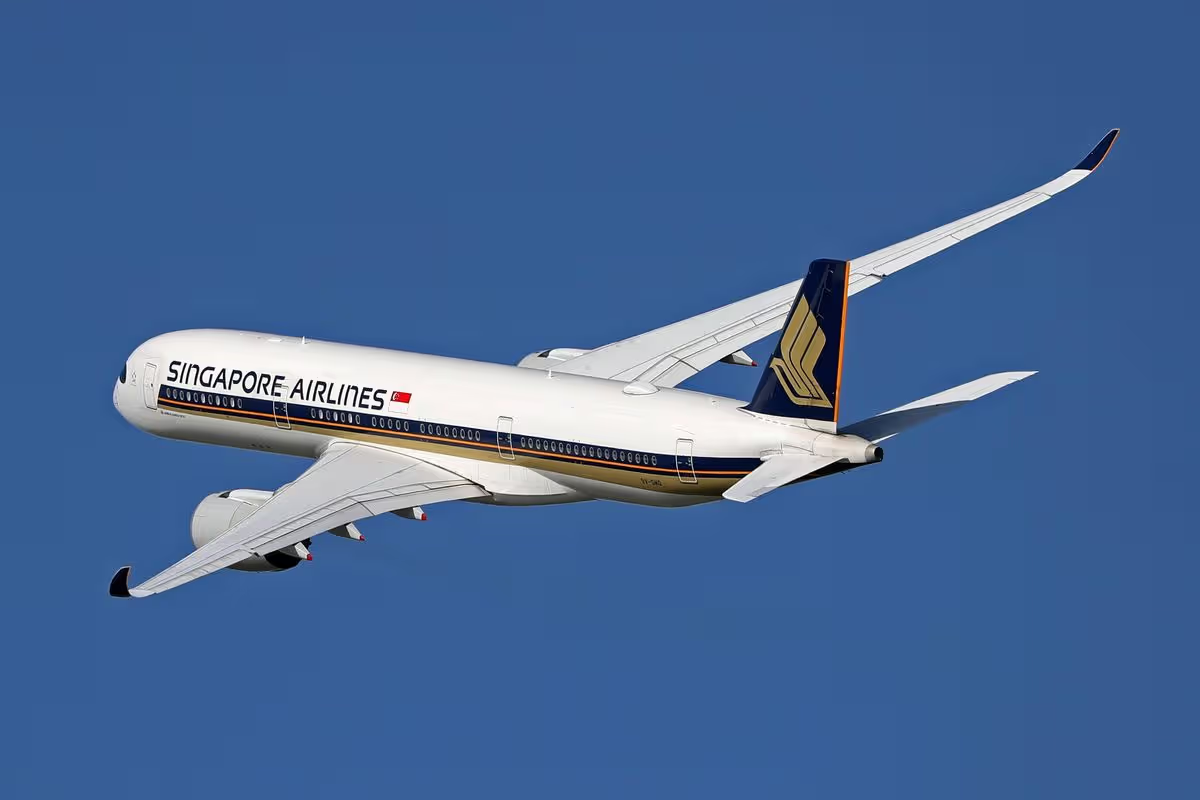
The world’s longest flight connects America to Asia, with travellers spending nearly 19 hours in the air. Singapore Airlines currently holds the record for the longest long-haul route, operating between New York’s JFK Airport and Singapore Changi.
Covering an impressive 9,537 miles, the mammoth journey takes 18 hours and 50 minutes and has been running since the airline launched it in 2018. Singapore Airlines deploys its latest Airbus A350-900ULR on the route, an aircraft engineered to remain airborne for more than 20 hours without needing to refuel.
The aircraft achieves these remarkable flight times thanks to an enhanced fuel system, which increases the plane’s total fuel capacity to an extraordinary 24,000 litres.
However, the service isn’t available to all travellers, as Singapore Airlines has removed economy class from this particular route. Instead, the airline offers 67 Business Class seats and 94 Premium Economy Class seats.
Premium Economy travellers can enjoy extra legroom, a footrest, and an adjustable headrest. They’re also given noise-cancelling headphones and WiFi throughout their flight, reports the Express.
Those flying in Business class enjoy maximum privacy, with their seats converting into fully flat beds for a proper sleep whilst airborne. The aircraft features a host of premium amenities including higher ceilings, larger windows and bespoke lighting designed to reduce jetlag.
The carrier maintains that the aircraft’s cutting-edge carbon composite airframe also delivers exceptional air quality.
Those hoping to book a seat will require substantial funds, as fares routinely reach well into five figures. Singapore Airlines’ Chief Executive, Mr Goh Choon Phong, has previously described the new route as the “fastest way” to journey between the two major cities.
He stated: “Singapore Airlines has always taken pride in pushing the boundaries to provide the best possible travel convenience for our customers, and we are pleased to be leading the way with these new non-stop flights using the latest technology, ultra-long-range Airbus A350-900ULR.
“The flights will offer our customers the fastest way to travel between the two cities – in great comfort, together with Singapore Airlines’ legendary service – and will help boost connectivity to and through the Singapore hub.”
Whilst Singapore Airlines’ aircraft is undoubtedly remarkable, the world’s largest plane remains the Antonov An-225 Mriya, capable of transporting “52 mature elephants”.
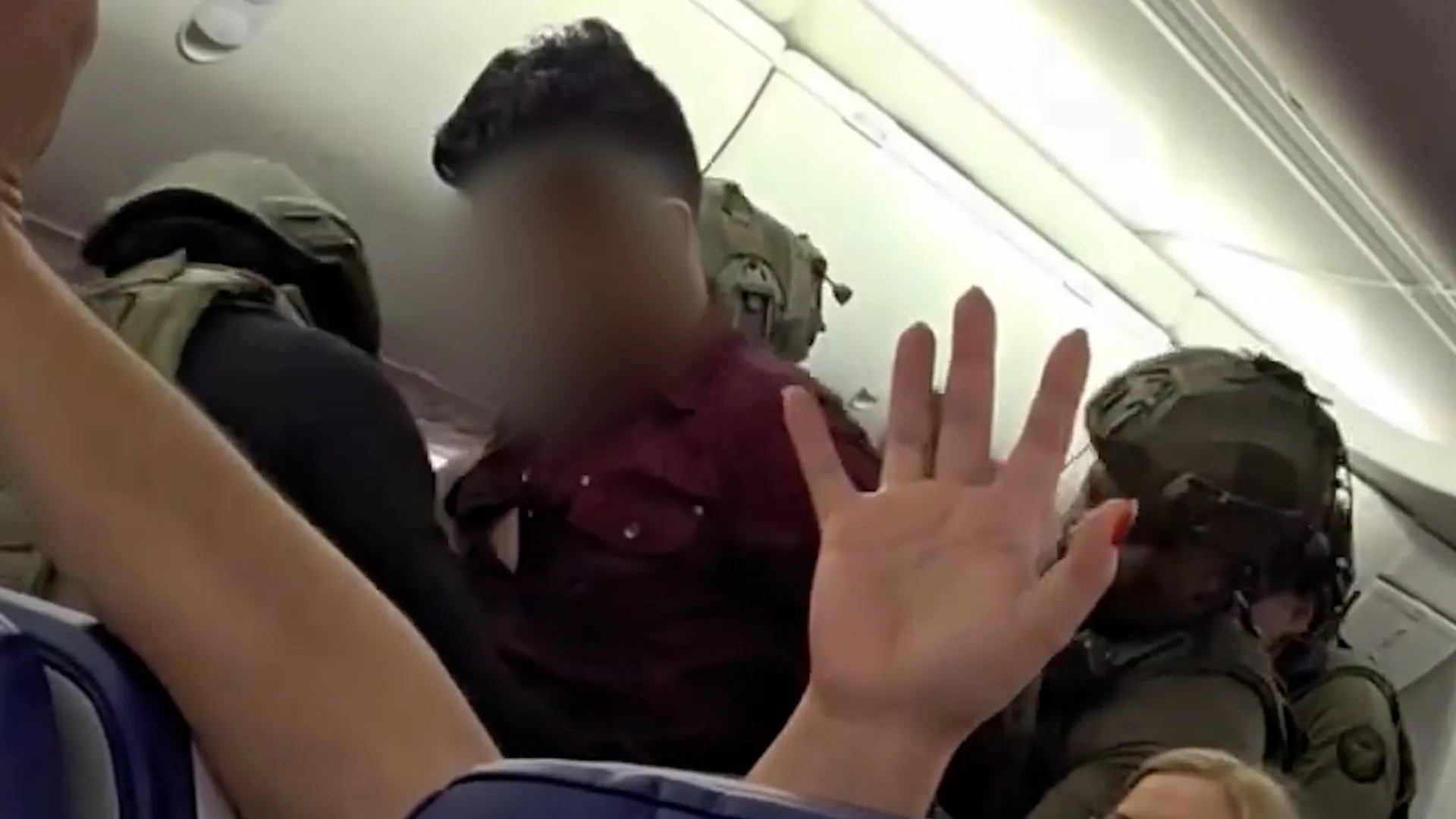
A passenger onboard Southwest Airlines was removed from their flight after their call to prayer was mistaken for a ‘bomb threat’. Officials later called the incident a ‘misunderstanding’ after finding no credible threat, following the Florida-bound flight’s emergency landing in Georgia.
She warned she’s seen ‘diabolical things’ on planes
05:01, 08 Mar 2026Updated 07:40, 08 Mar 2026
An experienced flight attendant has revealed some of her own dos and don’ts of air travel(Image: Getty)
An experienced flight attendant with 11 years under her belt has divulged her personal tips for ensuring the best possible experience when travelling by plane. She cautioned that she’s witnessed some truly “diabolical things” during her time in the air.
With this in mind, one expert has shared her own set of guidelines that she adheres to whenever she takes to the skies. In a video posted on TikTok, flight attendant and US reality TV star Charity Nelms stated: “These are things that you’re not doing on an aircraft that you should do.
“I’m an 11-year flight attendant and I do all of these things when I travel on my own personal time because I’m an expert. This ain’t my first Rodeo.”
Content cannot be displayed without consent
Wiping seatbelts
If you’re the type to bring antiseptic wipes on board, you might be focusing your efforts in the wrong place, according to Charity. She explained: “Number one, you guys all come on board with your little Clorox wipes and your little disinfectants, and you start wiping everything down: that little tray table in front of you, the back of the seat.
“I don’t really get why you’re wiping the back of the seat, because if you’re wearing clothes, nothing really touches that.”
Instead, she advised: “What you should be wiping, that nobody wipes is that seatbelt. The metal part, because everybody touches it.
“And also you should be wiping the fabric part of the seatbelt because everybody pulls on that. The amount of throw up, baby vomit, bodily fluids, liquids that have spilled, random stuff that end up on those seatbelts.
“Wipe them down. I do.”
Wearing full-length trousers
This is the most effective way to avoid direct contact with your seat. She went on: “Second thing you’re not doing is you’re not wearing full pants [trousers].
“I am letting you know from a flight attendant, the amount of things I have seen on the seat.Wear pants. Shorts, skirts, dresses – absolutely not. Wear full pants.
“None of your skin should be touching that seat. I don’t care if you come on board and you disinfect it. Nope, nope, nope.
“Wear full pants. Trust me, I have seen some diabolical things.”
Hand hygiene
According to Charity, cabin crew can tell if you haven’t washed your hands after using the in-flight loo. “Third thing that none of you are doing, you are not washing your hands after you use the lav,” she stated.
“You’re also not flushing the toilet. Did you know that your flight attendants know if you flush the toilet and wash your hands?”.
“We literally know from outside. You’re also not closing the door when it comes to using the lavatory.
“This is what you do. Flush the toilet, you wash your hands, you come out and you close the door with your elbow. Please start doing that.”
Footwear
She encouraged travellers to keep their footwear on when using the lavatory. “Fourth, and also having to do with the lav, you’re not wearing shoes,” Charity stated.
“It is never, ever water on the floor in the lav. And your socks are like two big sponges.”