finding

She swept Sundance but Beth de Araújo is still finding a way forward

“I had seen poison and it was rotting my brain,” says director Beth de Araújo about the traumatic incident that inspired her second feature, “Josephine,” in theaters Friday. “I had to regurgitate it out of me.”

When De Araújo was 8 years old, she accidentally interrupted a rape while walking in Golden Gate Park. Her father, a Brazilian immigrant, bravely chased the attacker until police apprehended him. The life-altering experience served as the frightening basis for a film she knew she would one day need to make.

In the taut, unimaginably personal drama, Josephine (Mason Reeves), is an 8-year-old in San Francisco who, like De Araújo, becomes an eyewitness to a sexual assault. Acting for the first time, young Reeves, who De Araújo found at a San Francisco farmers market, conveys the confusion that plagues the character with devastating honesty.

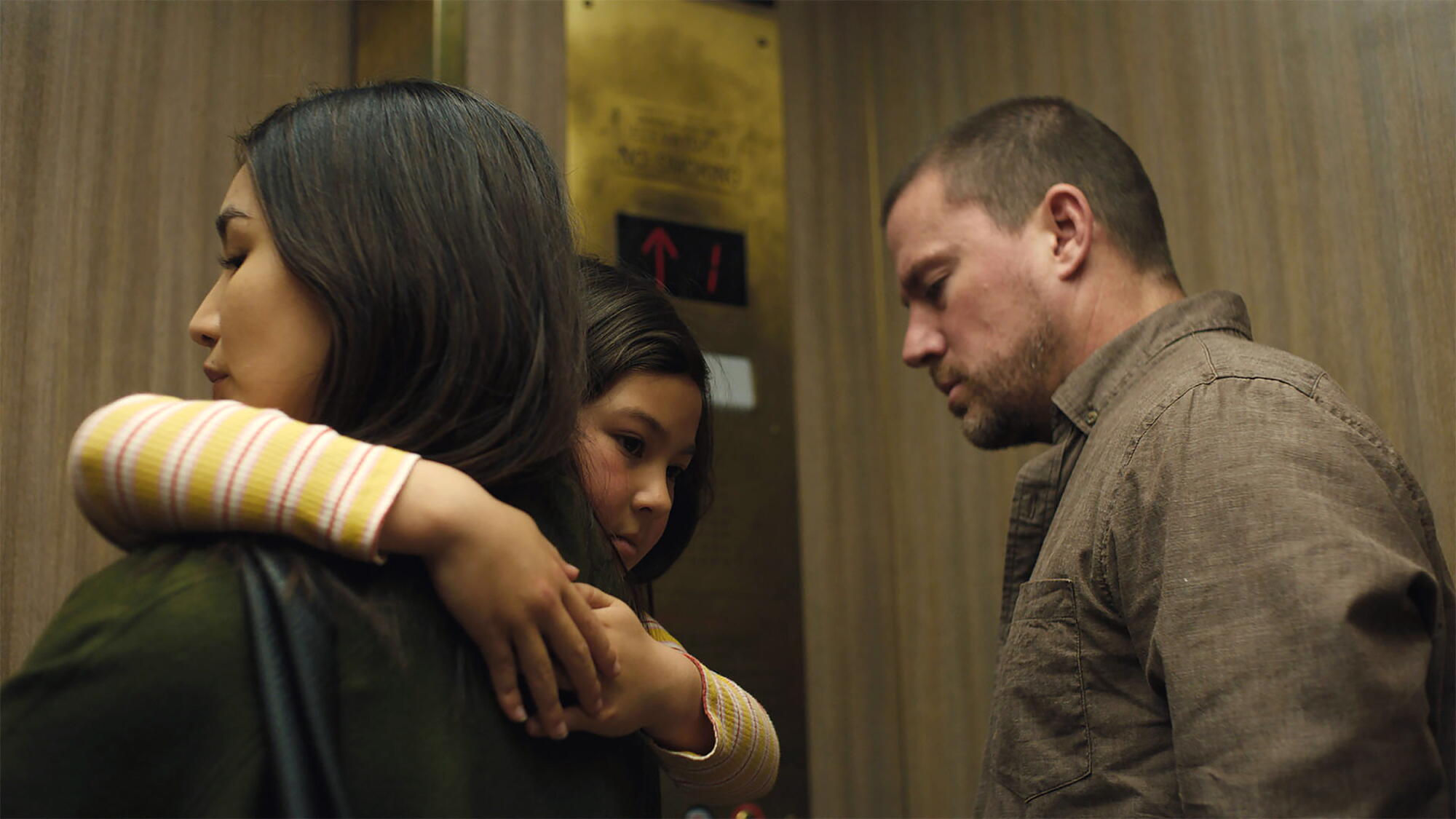
Two parents ride with their child in an elevator.

Gemma Chan, Mason Reeves and Channing Tatum in the movie “Josephine,” directed by Beth de Araújo.

(Greta Zozula / Sundance Institute)

In the aftermath, Josephine’s parents (played by Channing Tatum and Gemma Chan) struggle to provide answers and reassure their daughter, who is asked to testify in court about what she saw but only half-understood. At the Sundance Film Festival, where it premiered in January, “Josephine” made a potent impression, winning both the grand jury prize and the audience award.

Sitting at a coffee shop in Hollywood on a recent morning, De Araújo, 41, admits that discussing “Josephine” and its origins sometimes still elicits a strong emotional reaction from her.

“Some days I can talk about it without getting choked up, and then other days I just can’t help it,” she says. “Now that I feel like it’s in the world, I’m taking in all of these lessons that I’ve gotten from the shoot, from therapy, from being a witness advocate and using these tools to help me be better to myself.”

It was only in her 20s while living in Los Angeles to study filmmaking that another incident triggered her to grapple with that harrowing childhood memory. Inside a movie theater in 2014, a stranger touched De Araújo inappropriately. Her already debilitating hypervigilance skyrocketed.

“I barely slept that week and I called my dad in a fit, sobbing,” she recalls. “We had a conversation about what had happened in the park when I was 8. We had never spoken about it before.”

During that difficult call, De Araújo asked her father why he hadn’t explained to her what rape was when she asked all those years ago. “He said, ‘I didn’t want to scare you.’ And I was like, ‘That makes sense, because what could you have said to make this better?’ Sadly, exactly what he wanted to avoid is exactly what happened. I got really scared.”

Her immediate response was to speed-write a draft of the screenplay that would become “Josephine.” In De Araújo’s case, it also felt like literally purging herself from what she had witnessed.

“I couldn’t write about anything else those days,” she remembers. “I just poured the first draft out of me. It was really not a story, but vignettes and moments that I’ve felt strongly or things I could remember hearing in my household about the case.”

Those memories, which she felt were one-act plays, then started taking shape into a thematically challenging narrative — one with an unlikely cinematic inspiration.

“I quickly started realizing that this was about a young girl’s hypervigilance and her mind spiraling, so I was really inspired by ‘Taxi Driver,’” De Araújo says. “It’s really similar. It’s this mind that is devolving and when I watched ‘Taxi Driver,’ I felt so conflicted at the end because you see how he sees the world. The world’s f— up. But is he really the most objective person who can clean it up?”

In the final version of her film, only an early scene in a police car is exactly per De Araújo’s memory; everything else is “fictionalized, but factual,” as she puts it.

A girl sits in a police car with a woman who has been assaulted.

Mason Reeves and Syra McCarthy, foreground, in the movie “Josephine.”

(Sumerian Pictures)

Besides starting therapy and creatively exploring that chapter of her past, De Araújo also decided to get trained to become a witness advocate. The certification she chose focuses on accompanying victims while they’re getting their rape kit done at the hospital.

For a couple years, De Araújo worked at the L.A. Rape and Battering Hotline and had a shift once a week going to the hospital to be with survivors — often immediately after an attack or within 72 hours “because that’s how long DNA stays on the body,” she says.

“Everything that I learned through that training, more than anything, almost more than therapy, was so beneficial because I had a community of people who I could talk to about sexual assault all the time,” she says, “whereas as a child, I quickly learned that no one wanted me to talk about rape.”

De Araújo had hoped for “Josephine” to become her debut feature. The screenplay was developed in the prestigious Sundance Screenwriters Lab in 2018 and, a year later, with a production company behind it, she almost made it. But the cash flow stopped during preproduction.

“I was honestly so heartbroken that I couldn’t get it off the ground and I didn’t know what to do,” she remembers. “I was like: Why am I trying to be a part of an industry that doesn’t want me?”

Her reaction to the frustration was to write “Soft & Quiet,” an unnerving thriller about a group of white supremacist women carrying out heinous acts. “Soft & Quiet” premiered at South by Southwest in 2022 and caught the attention of the horror distributor Blumhouse Productions, which came on board to executive-produce.

The disparity in how the industry reacted to her work isn’t lost on her, with one of her stories getting fast-tracked while the other more difficult script languished.

“We premiered ‘Josephine’ at Sundance 11 years after I started writing it, but ‘Soft and Quiet,’ I wrote it, got it financed, shot it, edited it, premiered it, sold it in 11 months, which is insane.”

The attention that “Soft & Quiet’ garnered got other artists interested in collaborating with De Araújo. It was during a meeting with actor Zoë Kravitz in 2023 for a different project that “Josephine” came back to the foreground. De Araújo mentioned “Josephine” to Kravitz, who suggested she should reach out to Tatum, Kravitz’s fiancé at the time.

“Honestly, I slept on it for like three months because I was like, ‘Magic Mike’? I don’t know about this very shiny guy,” she recalls with a smile. “But one day, I was just writing and listening to music and then all of a sudden I was like: You freaking idiot. If Channing Tatum wants to be in your movie, you get your movie made. I was like, ‘Let me rewatch ‘Foxcatcher’ and let me meet him.’”

The sinister undertones of Tatum’s performance in 2014’s “Foxcatcher,” in which he plays real-life Olympic gold medal-winning wrestler Mark Schultz, who joins magnate John E. du Pont’s wrestling team, reminded De Araújo of his underexplored talent. Tatum crafts a ferocious portrayal of Schultz, a man of conflicted motivations: He wants to please Du Pont, a father figure, and step out from his older brother’s shadow. The triangle ends in violence.

Yet, it was Tatum’s deference to how she had envisioned the father character, Damien, that sealed the deal.

“The big fear for directors like me going in to meet stars and actors is that they can completely take over your movie at any point,” she says. “They want to be shot a certain way. They want it to be more about them. But he was so protective of my vision.”

De Araújo knows that without Tatum’s involvement, she wouldn’t have been able to get the budget necessary to shoot the film in San Francisco.

“I pitched this hundreds of times, maybe even a thousand — I’m not even exaggerating,” she says. “Sometimes eyes would roll back into their head like, ‘How long do we have to listen to this?’ And then, other people would lean in, but the question was always: Who’s the dad?”

Before production, Tatum and De Araújo’s father spent some time together so that the actor could ask questions about the fateful day in the park. Her father’s decision to take action is something De Araújo doesn’t take lightly.

“My dad was risking so much by chasing [the rapist],” she says. “But thank God that I had that part of the story, that there was someone saying, ‘This is so wrong and I’m going to make sure that this is handled like a crime.’ Had I not seen that, I would have become way too pessimistic and cynical in this life.”

At Sundance, her dad expressed his approval with humor. “The only comment I got was a joke from my dad after the premiere saying, ‘[Channing] is not attractive enough to play me’ — a really bad dad joke,” she says, laughing.

While she is not certain the process of making “Josephine” has brought her catharsis — that notion seems reductive to her — De Araújo believes there is value in self-expression.

“When you make art, when you tell your narrative, you are reclaiming the truth,” she says. “Even though I didn’t testify, part of the reason why I have Josephine do that is because I wanted to say what the truth was from my perspective.”

In reality, De Araújo’s father handled the legal process to protect her from further trauma. After researching how the legal system handles child witnesses, she decided to have Josephine testify in her script.

Now that “Josephine” is out of her system, a positive shift has occurred in De Araújo’s life.

“The word ‘healing’ always feels too small to me,” she says. “How does someone heal from sexual assault or from interrupting it? What does healing really look like? But something good has to have come out of it for me just simply because I started sleeping through the night finally this year. Something in terms of my fear has certainly improved.”

Source link

Georgia May Foote stuns in green bikini during Dubai break after finding love following marriage split

FORMER Coronation Street actress Georgia May Foote looked stunning as she playfully posed in a green bikini.

The star has been enjoying a getaway in Dubai and wowed her followers by opting for the colourful two-piece.

Georgia May Foote looks stunning in a green bikini on her Dubai getaway Credit: Instagram/@georgiamay112
The star looked incredible as she rocked the two-piece with a white sarong cover-up Credit: Instagram/@georgiamay112

Georgia, 35, showed off her killer curves and had a white sarong to cover up whilst taking a stroll on her holiday.

She added to her post: “Swipe for a happy happy girl.”

Her brunette locks fell in front of her face as she left her followers wowing with the jaw-dropping snaps.

Georgia’s trip away comes just weeks after she went public with her new boyfriend following her sudden marriage split last year.

MOVING ON

Georgia May Foote reveals her ‘happiest chapter’ in new home after marriage split


MAY BE LOVE

Georgia May Foote’s new boyfriend revealed as she shares loved-up pic with him

The star playfully posed during her Dubai break Credit: Instagram/@georgiamay112
She shot a playful smile in one of the snaps Credit: Instagram/@georgiamay112

The star split from her husband Kris Evans last year but she has now moved on for good.

Georgia has been romancing a top record producer who has worked with the likes of Aitch and Central Cee.

Taras Slusarenko, who goes by LiTek online, was unveiled by The Sun after he swept Georgia off her feet.

Taras, who is originally from Russia, lives just outside of Manchester and around 30 minutes from where Georgia resides.

Talking of the new romance, a source revealed to The Sun: “Georgia met Taras earlier this year at a running club and they’ve been smitten ever since.

“He has brought the smile back on her face and they’re in a bubble together.”

Source link

80s child star from legendary horror film looks unrecognisable 38 years after finding fame

BACK in 1988, this actor found fame as a child in one of the most terrifying horror films of the decade.

Fast forward 38 years, the movie star, who is now 45, looks completely unrecognisable – but can you guess who it is?

Can you guess who this 80s child star from a huge horror film is? Credit: instagram/@alex_vincent
The actor looked unrecognisable as he plugged a fan event on Instagram Credit: instagram/@alex_vincent

The star in question is Alex Vincent, who played Andy from Child’s Play, which was the first ever Chucky film.

Now all grown up, he looks a far cry from his horror movie days as a kid, as he promoted a recent fan event on Instagram.

The actor was just six years old when he starred in the terrifying movie about a doll that comes to life and goes on a killing spree.

Alex went on to star in all three of the Child’s Play films which ran until 1991.

More on unrecognisable stars

A NEW AGE

Hollywood star unrecognisable in new role worlds away from his action man look


TV LEGEND

Star of 90s’ sexiest ad is unrecognisable as he’s forced to rewatch role by fans

The film star then appeared in the 2013 film, Curse of Chucky, and six years later he starred in the TV show reboot.

These days Alex can often be found doing horror movie conventions, where he gets to meet fans of the famous franchise.

The star in question is Alex Vincent who played Andy in the 1988 film, Child’s Play Credit: Getty
Alex was just six-years-old when he took the lead in the first ever Chucky film Credit: Getty

The original Child’s Play movie was released in 1988 and it went on to become a series with six sequels.

The plot centres around Chucky, a serial killer called the Lakeshore Strangler, who performs a voodoo ritual to transfer his soul into a toy doll.

Alex’s character Andy is relentlessly terrorised by Chucky throughout the Child’s Play franchise, with the doll framing him for his murders.

Speaking about being the main star in such a terrifying film at a very young age, the actor told Indiemacuser.com: “The content didn’t matter much to me, in terms of scaring me.

Now 45, Alex continues to be part of the Chucky franchise Credit: Getty
Evil Chucky terrorised poor Andy and framed him for his murders Credit: Alamy

“I was a bright kid… And nothing about being on that set was scary.”

The former child star added: “It was an incredibly fun and exciting experience for me at six-years-old.

“I got to leave school for a couple months and go work with a super cool electrical puppet in Chicago and LA.”

However, despite being known for one of the most famous scary films ever made, Alex made a surprising revelation.

“I’m not the biggest horror fan!” the star admitted.

However, Alex added: “But I know a lot of horror icons personally, so I am familiar with their films.”

Source link

Support dwindles for wealth tax, voter ID ballot measures, poll shows

California voters are souring on a Nov. 3 ballot measure to impose a one-time tax on billionaires to help fund healthcare programs, a proposal that has triggered one of the most expensive political battles in state history.

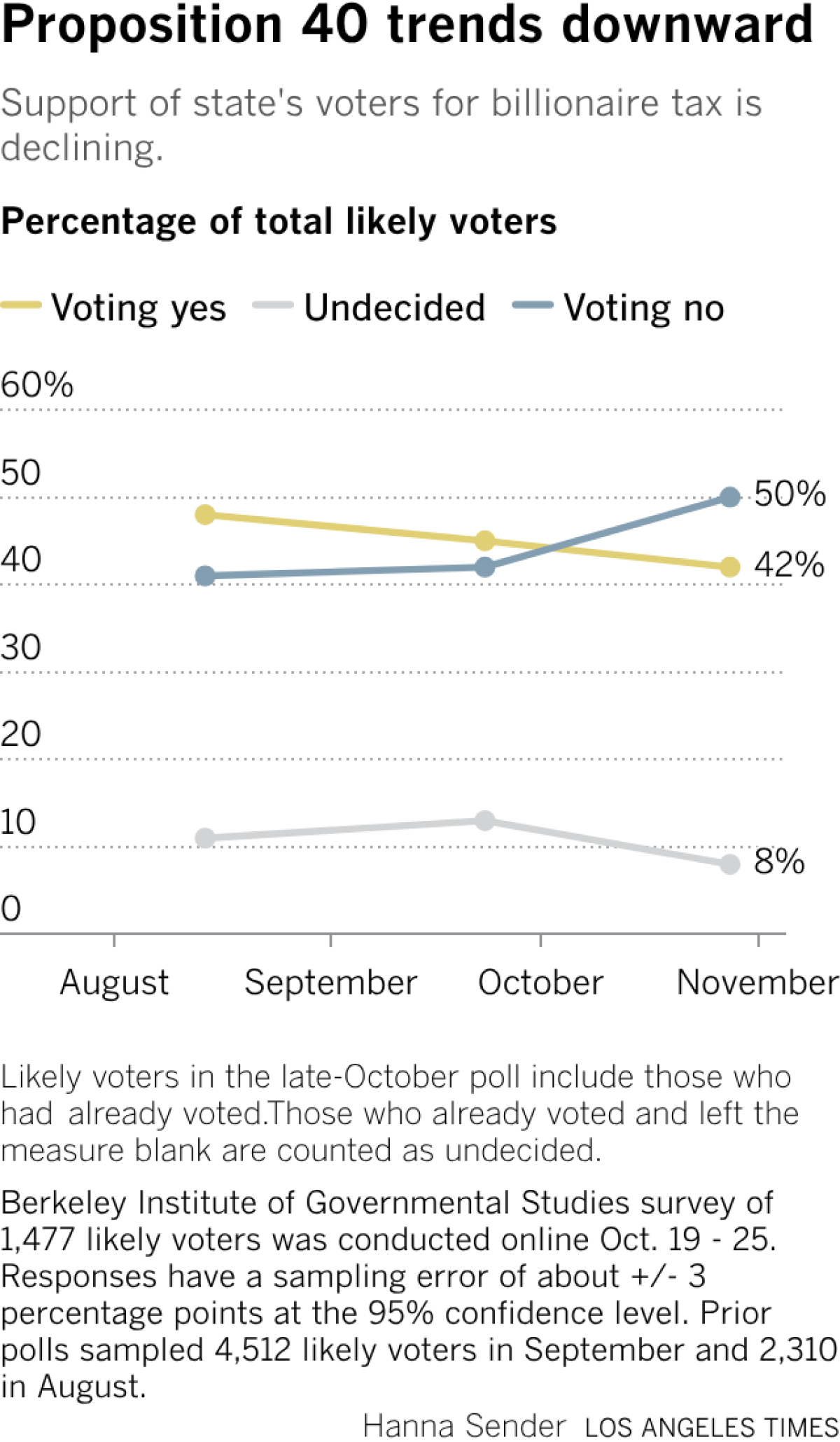
Half of likely voters plan to vote against Proposition 40, the proposed wealth tax on billionaires’ assets, while 42% support it, according to a new poll by UC Berkeley’s Institute of Governmental Studies that was co-sponsored by the Los Angeles Times. The findings mark a significant decline in support of the measure, which was crafted by an influential California healthcare union to compensate for an estimated $100 billion in federal healthcare cuts approved by President Trump and congressional Republicans.

The survey also found that a solid majority of likely voters opposed Proposition 39, which would require Californians to provide identification when voting and election officials to verify registered voters are U.S. citizens. The findings come as the Trump administration continues to attack California as a haven for voter fraud, including unfounded allegations of rampant illegal voting by undocumented immigrants.

Mark DiCamillo, the poll’s director, said previous surveys showed support for Proposition 40 has been fragile, and the most recent shows its prospects have dimmed as election day approaches.

The increase in opposition to Proposition 40 is “broad-based and spans virtually all major segments of the electorate,” DiCamillio said. The ballot measure was leading in a Berkeley poll conducted just six weeks ago, albeit by a slim margin, so its reversal of fortune is significant, he said.

The declining support comes after an onslaught of money spent opposing Proposition 40, including a torrent of television and social media ads airing everywhere from NFL games to “Everybody Loves Raymond” reruns. Nearly $368 million has been contributed to efforts opposing the billionaire tax, while $36 million has been donated to support the proposed levy.

Proposition 40 would impose a one-time 5% tax on the assets of billionaires who resided in California as of Jan. 1, with some exceptions. Democrats and their allies are splintered over the proposal. Some, including Gov. Gavin Newsom, argue it will prompt the wealthy to flee California, further harming its volatile budget, which is dependent on the state’s richest residents. The California Democratic Party and leading progressives support the measure, with Sen. Bernie Sanders (I-Vt.) calling it a modest tax necessary to help Californians struggling because of cuts imposed by Republicans to pay for tax breaks for the wealthy.

While Republican voters overwhelmingly oppose Proposition 40, nearly two-thirds of Democrats support it and more than a quarter opposing it. There is also a generational divide, with 6 out of 10 voters 65 years old or older opposing the measure, while more than two-thirds of those under 30 supporting it, according to the poll.

The findings are similar to a Public Policy Institute of California poll released Tuesday, which found 52% of likely voters would vote against Proposition 40, while 46% supported it.

The campaign against the wealth tax, funded by some of California’s richest tech moguls, is centered on three intertwined ballot initiatives: Proposition 40 and Propositions 41 and 42, both of which would undercut Proposition 40 through a series of changes to state tax laws and spending restrictions.

Proposition 41 would cut wasteful government spending by requiring audits of new state special taxes and would bar new state taxes that are exempt from a state spending limit. Proposition 42 would prohibit new taxes on retirement holdings, individually owned assets and other personal savings. Both Propositions 41 and 42 would nullify the billionaire tax if it passes, provided either measure receives more votes.

A plurality of voters oppose Propositions 41 and 42, a reversal from just six week ago, according to the poll.

In mid-September, voters were closely divided about Proposition 41 — 37% in favor and 33% opposed — with a large number of undecided. In the current poll, 38% of likely voters favor the measure and 47% oppose it. Proposition 42 led by 9 percentage points in the Berkeley/L.A. Times poll in September — 43% in favor and 34% opposed. Now, 43% of likely voters support it and 45% oppose it.

DiCamillo said backers of a ballot measure also should be concerned any time support registers below 50%, since voters who are undecided or unsure tend to vote no.

“It’s below 50%, and it’s trending down. Both of those are ominous signs,” DiCamillo said. Proposition 42 is “still very close. I’m not saying it’s definitely going down, but it’s moving in the wrong direction late in the campaign, and usually movement in a late poll is even more significant than the actual numbers themselves,”

He added that while many voters were unaware the two proposed ballot measures were designed as poison pills to kill the billionaire tax, among those who knew, the opposition was significantly greater.

If all three measures fail, that still would be a victory for the billionaires who spent aggressively to tank the wealth tax.

Another notable finding was voters’ support of Proposition 3, which would make permanent a higher income tax rate on the wealthy that funds education. A majority of voters — 54% — support continuing the levy, while 37% oppose it, according to the poll. DiCamillo says the disparity in support of the proposed billionaire tax and the extension of the existing wealth tax has been consistent in IGS’s polls, and is likely because of the differing foundations of the levies.

“Proposition 3 is already in place, and if you read the fiscal impact, if this were to pass, it maintains $5 billion to $15 billion of annual funding,” he said, “It’s a big revenue generator, and I think that is something that’s already in place.”

“Voters kind of understand the progressive nature of California’s tax system, and they kind of support that, but they don’t support nearly as much the idea of some new kind of tax, the wealth tax, which is taxing assets rather than income,” he said. “So that’s the distinction.”

These ballot measures are among 14 that voters will decide on Nov. 3, as well as statewide, congressional, local and judicial elections.

Among the other controversial measures is Proposition 39, a measure pushed by Republicans that would require all voters in future elections to show government-issued identification every time they vote in person or provide a special PIN or the last four digits of their Social Security number when submitting mail-in ballots.

The measure also would require the California secretary of state and county election officials to verify that registered voters are U.S. citizens by “using government data,” which according to supporters could include information in the federal Social Security Administration database, jury summons information and other government records.

Nearly 6 in 10 likely voters oppose the effort, while more than a third support it, split largely along party lines. More than half of voters who are registered as “no party preference” or with a smaller political party oppose the proposal, which DiCamillo said was an indication of trouble for the proposition given the state’s Democratic majority electorate and the proximity of the election.

“It’s hard for Republicans to push something over the finish line by themselves,” he said.

Other prominent ballot measures:

  • Proposition 43, which would prohibit local governments from imposing certain new special taxes unless two-thirds of voters approve the proposal. Such proposals need a simple majority vote to be approved. While 46% of likely voters oppose the proposal, 36% support it, challenging numbers this close to election day, DiCamillo said. “It needs to get to 50,” he said. “We’ll see how you do that this late in the campaign.”
  • Proposition 4, which would repeal a prohibition of public financing of campaigns, allowing state and local governments to support candidates if they abide by several rules. Likely voters are evenly split about the proposal, with 41% supporting it and opposing it, and 18% undecided. “It’s close, but it’s still below 50%. Most voters tend to vote no in the late going if they’re not convinced,” DiCamillo said, adding that he viewed the lack of support among voters who do not affiliate with a political party as a signal of potential failure.

The poll of 2,787 registered California voters was conducted online in English and Spanish Oct. 19-25 and has a margin of error of about 3 percentage points in either direction.

Source link

The Muslims finding belonging in southern Spain | Longform

Alora, Spain – The train chugs steadily out of Malaga station, its rhythmic clatter carrying it inland towards the mountains of the Guadalhorce Valley, where whitewashed villages cling to hillsides.

Beyond the window, pomegranate trees grow close to the tracks. Palms and cypress trees stand alongside young orange saplings planted in neat rows and, farther out, olive groves whose leaves shimmer between green and silver in the breeze. Above the rugged mountains, small white clouds float across an immense blue sky, like pieces of popcorn.

Over the train’s rattle, an announcement in Spanish comes through the speakers: “The next station is Aljaima.”

The name derives from the Arabic al-khaima, meaning “the tent”, a small echo of another language, another time.

And then Alora, where the town rises around a rocky hill crowned by the remains of an old fortress. Some etymologists suggest the town’s ancient name may derive from the Arabic al-lawra, loosely translated as “the light”.

The railway station is quiet in the midday heat.

A large black pick-up truck rumbles into the station car park and stops. Henrietta Szovati, a British-Hungarian Muslim, steps out, having driven down from the mountains to collect provisions.

Dressed in a loose blue shirt and cream trousers, she offers a warm embrace. Silver earrings dangle beside her face, and a sea-blue scarf is wrapped around her hair like a turban. A pair of red-framed spectacles rests on top.

She apologises for the truck’s state. Dust has settled on the dashboard, and bits of dried grass have found their way inside. “It is a working vehicle,” she says, more accustomed to hauling things across farmland than ferrying visitors from railway stations.

For the past two years, she and her husband, Ajmal Masroor, a therapist and imam, have been transforming an old farmhouse and its surrounding land into the House of Andalus. The project aims to bring people closer to southern Spain’s Islamic history and the natural world.

Nearly 400 olive trees dot the 14 hectares (35 acres). She wants to plant more and make it a thousand-tree olive grove, she says with a smile, glancing out of the truck’s open window.

The road winds higher into the mountains. Wildfires, Henrietta says, swept through parts of the surrounding region at the height of summer, and the landscape still bears the season’s harshness. Reddish-brown earth gives way to patches of parched scrub and exposed rock, while slabs of silvery-grey stone jut sharply from the slopes.

“That’s slate,” Henrietta explains, pointing through the windscreen. The Spanish word is pizarra, she adds, the same name as the neighbouring town.

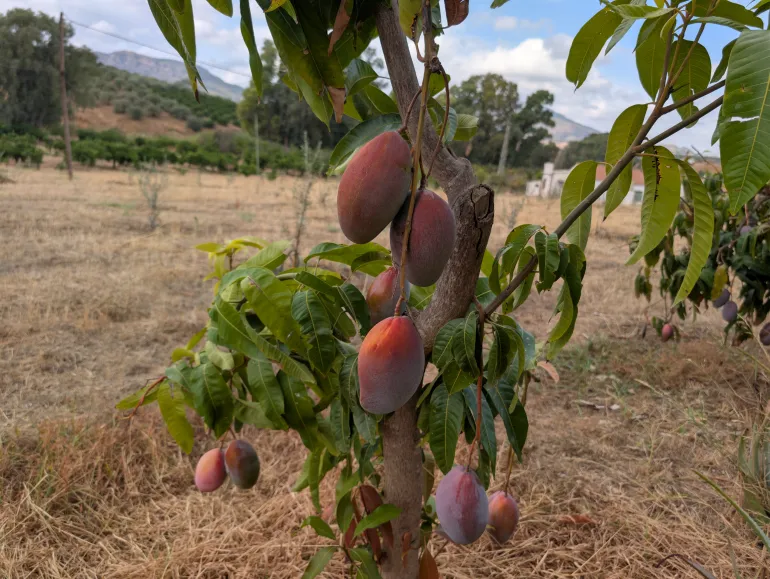
Oranges flourish here, as do figs and avocados. And mangoes that are better than those from South Asia, Henrietta emphatically declares.

Mangoes thrive in the warm climate of southern Spain’s Andalucia region.
Mangoes thrive in the warm climate of southern Spain’s Andalucia region [Indlieb Farazi Saber/Al Jazeera]

As we drive further into the mountains, Henrietta gestures towards a neighbouring property. “That’s my neighbour, Juan Garcia.”

Henrietta buys lemons, avocados and honey from him. Sometimes he comes over to help with the olives. It’s this sense of community and neighbourliness she found harder to come by in Britain, where she has lived since 2001, marrying Ajmal a year later.

“I feel like an outsider there. I’m still not ‘one of us’ after more than 20 years.”

As a Muslim and as a European, she says, Spain feels familiar in a way no other place does. Hungary was never an option, she adds, describing its government as “racist and right-wing”. And in Britain, she says, being Muslim can feel unavoidably political, her faith viewed through headlines and public arguments about Islam.

In the mountains above Alora, she feels her neighbours meet her first as Henrietta: the woman who lives up the track and joins in village life.

“Practising Islam here is just easier,” she adds.

Yet Spain is not immune to the political currents sweeping across Europe. The far-right Vox party has made opposition to immigration and what it calls the “Islamisation” of Spain central to its campaigning, raising questions about how secure that sense of belonging might be.

With a sigh, Henrietta acknowledges that being Muslim can be difficult anywhere in the world today. But she prefers to focus on what she can build, rather than on political circumstances beyond her control. “Circumstances change, but community, connections and faith don’t,” she says.

For her, that means building relationships with neighbours, even when they hold different beliefs. A sense of community, she argues, is forged through everyday encounters rather than political rhetoric.

On a visit to Juan Garcia’s home, his 79-year-old mother, Maria, is curious about the scarf wrapped around Henrietta’s hair.

The women are standing in Maria’s living room, its shutters drawn against the afternoon sun. A portrait of Jesus hangs on the wall.

Henrietta explains that she is Muslim and that covering her hair is part of her faith, a way to feel closer to God. Maria is Catholic. The conversation turns to the Virgin Mary, who also covered her hair.

But Maria insists all that matters is being a good person. If you cannot be good, none of the outward signs of faith means very much.

There is no awkwardness between them, no need to defend or explain their beliefs. The conversation moves on.

It is such ordinary encounters that have made Andalucia feel like home, Henrietta says. But her connection to this part of Spain runs deeper than the friendships she is making. It also stems from a deep respect for a history that stretches back more than 1,000 years.

Henrietta Szovati and her neighbour Juan Garcia overlook the countryside near Alora, southern Spain
Henrietta Szovati and her neighbour Juan Garcia overlook the countryside near Alora, southern Spain [Indlieb Farazi Saber/Al Jazeera]

For British Muslim travel writer and historian Tharik Hussain, author of Muslim Europe, the fascination is understandable. Al-Andalus was the medieval Muslim-ruled territory of modern-day Spain and Portugal. Its heartland lay in the south, in what is now Andalucia, home to cities such as Cordoba, Seville and Granada, where surviving monuments still evoke a period when Muslims helped shape European civilisation.

Its eventual loss, he says, has given it an almost “Atlantis-like aura” in the Muslim imagination, a longing reflected in Muslim literature over the centuries, from the 17th-century historian al-Maqqari to the 20th-century poet Allama Iqbal.

For nearly eight centuries, Muslim dynasties ruled parts of the Iberian Peninsula, leaving behind palaces and fortresses with horseshoe arches, intricate zellij tilework, carved yeseria plasterwork, and curling Arabic calligraphy. Their legacy endured in irrigation channels known as acequias (from the Arabic al-saqiya), scholarship, language and traditions that continued to shape Spain long after the fall of Granada in 1492.

Britons have long headed to Andalucia in search of a place in the sun. But among those putting down roots here are Muslims drawn by something more: The chance to reconnect with a history in which Islam was part of Europe, and to build lives where their faith feels less like a defining difference.

Yet the Andalucia they are entering is not a vanished kingdom waiting to be rediscovered; it is modern Spain, with its own economic pressures, social divisions, and complicated relationship with the past.

What happens when the dream of al-Andalus meets the realities of living here?

Source link