finance

African Fintech Expansion: Why Startups are Moving to the GCC

From MNT-Halan to Zeepay, digital pioneers are building a high-value corridor to the Middle East.

As African fintech matures, companies that once focused on domestic markets are now increasingly seeing Dubai as a strategic base for MENA and international expansion.

Some key players are already on the move. Egypt’s fintech giant MNT-Halan recently launched in Dubai with salary-financing products, while Paymob Technologies has expanded across the United Arab Emirates, Saudi Arabia and Oman — securing a full UAE Central Bank license last year. Nigeria’s Innovate1Pay runs global operations from Dubai’s Jumeirah since 2019. Lagos-based Flutterwave, one of Africa’s first and fastest-growing fintech unicorns, will soon be the latest to set up shop in the UAE after expanding into Saudi Arabia and Bahrain in 2024.

Gulf Remittance Corridor

A key driver of this expansion is the remittance corridor between the Gulf and Africa. Researchers estimate that between 3 million and 5 million African migrants now live and work across the Gulf Cooperation Council (GCC), including large Egyptian, Sudanese, Ethiopian, Kenyan and Ugandan communities. According to the World Bank, global remittances to Africa reached $109 billion in 2024. About a third comes from the GCC, but a lot of transfers remain unrecorded in national data sets.

Currently, a lot of the money still moves around in cash, through operators such as Western Union, MoneyGram or Gulf exchange houses, where the cost for sending funds averages between 8% and 9% — among the highest in the world.

This opens a clear opportunity for lower-cost digital alternatives. A recent Visa study found nearly two-thirds of UAE residents now prefer digital apps over physical locations for sending money abroad. Key drivers include ease of use (50%), followed by safety, privacy and speed (46%). Cashless solutions are heavily encouraged by most GCC governments to increase compliance, traceability and transparency.

Kojo Amofa, Zeepay

Some companies like Zeepay, a Ghana-based payment firm that already operates in 25 countries, are gearing up to tap into that market and the recent war in the Middle East is far from deterring their motivation.

“For us, it’s a new chapter. We are eager to make an impact and become the remittance solution in the Gulf,” said Kojo Amofa, Partnerships Manager at Zeepay. “Many migrant workers want to send money home, and the current volatility creates an even more drastic need that we want to answer.”

For Zeepay, the UAE is the natural entry point. It is the MENA region’s most mature tech hub and the world’s third-largest remittance sender — sometimes described as a financial “switchboard” for Africa-bound flows. To make its first steps, the company is looking for partnerships with digital payment firms already located in Dubai or Abu Dhabi, who would be interested in trying out an African remittance corridor.

“We need to test the appetite. Rather than entering a market we are not native to, we prefer collaboration so that our services can be tried out,” said Amofa. “Once there is a significant level of interest, we can then start to explore creating a physical presence.”

Sovereign Wealth Interest

While exploring options in the GCC, the teams at Zeepay, like many African startups, are also keeping an eye open for funding opportunities.

In 2025, African Fintechs raised $1.5 billion across 150 deals, according to data from global investment platform Partech Partners. A growing number of deals involve GCC investors as sovereign wealth funds and family offices from the UAE and Saudi Arabia are increasing their exposure to African assets. In the past decade, GCC countries have invested more than $100 billion in the continent.

In 2022, Nigeria’s Moove.io — a mobility fintech that provides car loans and operates a green ride-hailing platform — raised a $30 million private credit sukuk arranged by Franklin Templeton Investments in Dubai. It later opened an office in the UAE to oversee its MENA expansion.

More recently, Kenya’s iconic fintech M-Pesa has teamed up with the UAE-based ADI Foundation to explore blockchain. The partnership gains significant weight from ADI’s parent company, IHC — a $240 billion giant chaired by the UAE president’s brother.

Future Growth Markets

For Gulf investors, the appeal is straightforward: Africa remains the fastest-growing fintech market globally, with revenues projected to rise thirteenfold to $65 billion by 2030, according to Boston Consulting Group. For now, digital payment tools still dominate, but the next phase is expected to center on small- and medium-sized enterprise (SME) finance, credit, and broader digital banking services.

In the medium-long term, a Gulf–Africa fintech corridor is taking shape, with companies scaling up and capital circulating between the two regions. In the short term, there are some regulatory bottlenecks and geopolitical challenges ahead. The war in the Middle East might slow down Gulf investments for a while as governments prioritize spending money at home.

Source link

As trade war with China looms, how can the EU defend itself?

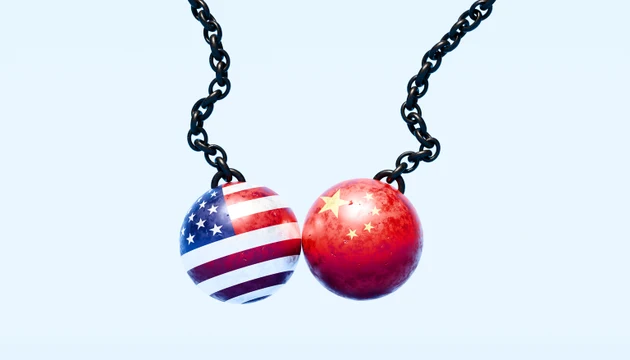
As Chinese-made products are flooding the EU market and threatening thousands of jobs, the European Commission is stepping up its work to protect the bloc’s production from the risks of China’s excess production.


ADVERTISEMENT


ADVERTISEMENT

The move comes as data from Chinese customs showed that, in the first four months of 2026, Beijing accumulated a surplus of $113 billion with the EU-27, up from $91 billion over the same period in 2025. The surplus widened by $22 billion over 12 month, while the EU’s trade deficit with China had already reached €359.9 billion in 2025.

Pressure is also mounting on Brussels as Beijing has repeatedly threatened retaliation in recent weeks over several EU laws limiting access to the single market for Chinese companies.

On Friday, China also banned these companies from engaging with the Commission over EU foreign subsidy investigations.

To address the China issue and try to restore a level playing field, EU Commissioners are set to debate the matter on 29 May. What options does Europe have on the table?

1. Cutting dependence on Chinese components

The Financial Times reported on Monday that a plan to force EU companies to buy critical components from at least three different suppliers was in the pipeline at the European Commission.

The idea would be to set thresholds of around 30% to 40% for what can be bought from a single supplier, with the rest having to be sourced from at least three different suppliers, not all from the same country.

The proposal comes after China last year restricted exports of rare earths and chips, which are critical for key EU industries such as green tech, cars and defence.

2. Targeting strategic sectors with tariffs

In its economic security strategy presented last December, the European Commission also said it would present new tools by September 2026 to strengthen the protection of EU industry from unfair trade policies and overcapacities.

“We will fight tooth and nail for every European job, for every European company, for every open sector, if we see they are treated unfairly,” Maroš Šefčovič told Euronews.

A decision to impose new quotas and double tariffs on global steel imports, dominated by Chinese overcapacities, was already agreed by EU countries and the European Parliament in April.

Now the chemical industry is in the spotlight. Chinese chemical imports have surged 81% over five years. But the EU chemical sector also relies on exports abroad, including to China, the industry’s fourth export market, which makes any measure targeting China complicated.

“As an export-oriented industry, the European chemical industry generates over 30% of its sales abroad. That creates a risk of retaliation from third countries,” Philipp Sauer, trade expert at Cefic, the lobby group of the European chemical industry, told Euronews.

3. Hitting imports with anti-dumping or anti-subsidy duties

The Commission can also impose duties on Chinese companies when import prices fall below those at which they sell their products on their domestic market. It can also investigate companies for receiving unfair subsidies.

However, investigations can take up to 18 months, and cases are piling up at the Commission’s DG Trade, which has only around 140 officials to handle them.

Sauer said that between one third and half of all ongoing investigations relate to the chemical sector.

4. Using the Anti-Coercion Instrument

The Anti-Coercion Instrument is a last-resort tool — the so-called trade bazooka — which can be used in cases of economic pressure from a third country and would allow the EU to hit China with strong measures such as restricting access to licences or public procurement in the EU.

But its use would require the backing of a qualified majority of member states, which is not guaranteed.

Germany opposed tariffs adopted by the EU in 2024 against Chinese electric vehicles. Spanish Prime Minister Pedro Sánchez, who has visited China four times in three years, also supports closer ties with Beijing, seeking to secure major Chinese investment.

5. Unifying member states

At the same time, Brussels faces the risk that its decoupling strategy might face significant resistance from national governments. EU member states remain divided over how to approach China, which could in turn allow Beijing to play capitals against each other.

Such differences are already emerging in the information and communications technology (ICT) sector, where the EU has proposed a new mechanism requiring the phase-out of so-called high-risk suppliers, such as Huawei and ZTE, in strategic industries, starting with telecommunications.

The proposal, included in the revamp of the EU Cybersecurity Act, is sparking controversy among several European governments, most notably Spain and Germany, which have long worked with Chinese equipment now deeply embedded in their digital infrastructure.

This de-risking strategy has also raised financial concerns, since Chinese suppliers tend to be much cheaper than European alternatives such as Ericsson and Nokia, partly because they are publicly subsidised by Beijing.

European telecom operators have asked the EU for financial compensation to replace their Chinese equipment, following the example of the US “rip and replace” programme, but neither the EU nor national governments seem keen to put the money on the table.

In other words, the EU’s full decoupling from China might have high political and economic costs.

Whether European countries are willing to bear it remains to be seen.

Source link

G7 Finance Chiefs Confront Bond Market Turmoil and Global Economic Imbalances

Finance ministers from the Group of Seven met in Paris to address rising global financial instability triggered by a bond market selloff and concerns over inflation linked to the ongoing conflict involving Iran.

The meeting comes at a time when global bond markets from Tokyo to New York are under pressure, as investors anticipate that higher energy prices could force central banks to maintain or increase interest rates.

Officials are also preparing for a broader discussion on structural global imbalances and coordination ahead of an upcoming G7 leaders summit.

Bond Market Pressure and Inflation Concerns

Bond yields have risen sharply across major economies as investors reassess inflation risks. Markets are increasingly focused on whether rising energy costs will translate into sustained price pressures that limit the ability of central banks to ease policy.

French officials have described the current situation as a correction rather than a crisis, though they acknowledge growing sensitivity around sovereign debt levels and fiscal sustainability.

The volatility has raised concerns particularly in highly debt sensitive economies such as Japan, where bond market movements are closely watched for spillover effects.

Diverging Views Within the G7

Despite the shared concerns, divisions remain among G7 members over how to respond to global economic instability.

European officials have emphasized the need for coordinated, temporary, and targeted responses to market shocks, while acknowledging that consensus with the United States may be difficult.

Some members argue that global economic imbalances are becoming structurally entrenched, with consumption and investment patterns increasingly misaligned across major economies.

Global Imbalances and Structural Concerns

A central focus of the discussions is the growing imbalance in global economic activity. European officials argue that long term trends show excessive consumption in some economies, under consumption in others, and insufficient investment in parts of Europe.

These structural disparities are seen as contributing to persistent trade tensions, capital flow imbalances, and financial market instability.

Officials warn that without coordinated policy responses, these imbalances could eventually lead to more severe market corrections.

Critical Minerals and Supply Chain Strategy

Another key agenda item is the global competition over critical minerals and rare earth supply chains, which are essential for electric vehicles, renewable energy systems, and defense technologies.

G7 members are exploring ways to reduce dependence on dominant suppliers, particularly China, through coordinated investment, joint procurement strategies, and diversification of supply chains.

Proposals under discussion include pooled purchasing mechanisms, market monitoring systems, and industrial policy coordination to strengthen supply security.

Analysis

The G7 meeting highlights a convergence of financial instability and geopolitical fragmentation. Rising bond yields and inflation fears are no longer isolated market issues but are now directly linked to geopolitical disruptions in energy supply and global trade routes.

At the same time, disagreements within the G7 reflect deeper structural tensions in the global economy, particularly around debt levels, consumption patterns, and industrial policy priorities.

Efforts to coordinate on critical minerals signal a shift toward more strategic economic alignment among advanced economies, where supply chain security is becoming as important as price stability.

Overall, the meeting underscores a global transition toward a more fragmented and politically driven financial system, where economic coordination is increasingly shaped by geopolitical risk rather than purely market based forces.

With information from Reuters.

Source link

UzNIF debuts on London market in first international Uzbek IPO

Uzbekistan’s National Investment Fund, known as UzNIF, began trading on the London Stock Exchange on Monday, marking the country’s first international equity offering.


ADVERTISEMENT


ADVERTISEMENT

The fund, which is managed by Franklin Templeton, also launched simultaneously on the Tashkent Stock Exchange through a dual listing structure, bringing Uzbek state-linked assets to international equity markets for the first time.

The opening ceremony at the London Stock Exchange brought together executives, investors and Uzbek officials, with speakers presenting the listing as a significant step in the country’s efforts to expand access to international capital markets.

First international equity offering

Speaking during the ceremony, Julia Hoggett, Chief Executive Officer of the London Stock Exchange, described the IPO as “the first ever international IPO out of Uzbekistan” and said the transaction could help “more global investment to flow” into the country’s economy.

Hoggett also said the dual listing marked “a new chapter both in London and in Tashkent”, adding that the offering connected international investors with a portfolio of Uzbek companies through a single fund managed by an international asset manager.

Saida Mirziyoyeva, Head of the Administration of the President of Uzbekistan, said Uzbekistan was preparing “new listings” and expanding private sector participation, while also working on plans linked to the proposed Tashkent International Financial Centre.

Speaking from the London Stock Exchange balcony, Mirziyoyeva said the IPO was “not just about raising capital” but also about “building trust in a new generation of Uzbek institutions”.

Jenny Johnson, President and Chief Executive Officer of Franklin Templeton, described the IPO as “a defining and historic milestone” for both Uzbekistan and Franklin Templeton, saying the transaction had generated more than $2.8 billion in investor demand globally.

Johnson said orders exceeded the initial offering by more than four times during the bookbuilding process, which ran from late April to mid-May. She added that the domestic offering in Tashkent had become the country’s “largest local listing to date”, allowing local investors to participate alongside international institutional funds.

International investors and state assets

Thirty percent of the fund’s shares were offered internationally through global depositary receipts, while part of the allocation was also made available to domestic investors through the Tashkent Stock Exchange.

According to previously released information from the fund and its advisers, international demand reached around $2.9 billion (€2.6bn), with more than 160 institutional investors participating in the offering. Among them were BlackRock, Franklin Templeton and Redwheel.

The IPO raised approximately $603.6 million (€540m), valuing the fund at around $1.95 billion (€1.74bn) at the offer price. The shares were sold by Uzbekistan’s Ministry of Economy and Finance, meaning the proceeds from the transaction will go to the state rather than directly to the fund itself.

The international tranche included more than 23 million global depositary receipts, or GDRs, listed in London under the trading symbols UZNF and UZ20. One GDR represents 64,700 shares in the fund.

Cornerstone investors, including funds and accounts managed by BlackRock, Franklin Resources and Redwheel, as well as treasury companies linked to the Allan & Gill Gray Foundation, committed a combined $300 million (€268m) to the offering.

UzNIF was established in 2024 under a presidential decree and is managed by Franklin Templeton, the US-based investment company that oversees more than $1.4 trillion (€1.25 trn) in assets globally and operates in more than 150 countries.

The fund’s portfolio includes stakes in 13 state-linked companies operating in sectors considered strategic for the Uzbek economy, including electricity distribution, thermal power generation, hydropower, telecommunications, aviation, rail infrastructure, utilities and banking.

Among the companies included in the portfolio are Uzbektelecom, Uzbekistan Airways, Uzbekhydroenergo and several state energy and infrastructure operators.

The listing also reflects broader efforts to develop domestic capital markets in Uzbekistan and increase participation from local investors alongside international institutions.

Source link

China economic slowdown deepens: Retail sales flatline and factory out

Data Concept

ronniechua

China’s economy slowed down sharply in April 2026 as geopolitical fallout from the war in Iran weighed heavily on consumer spending and factory output.

Retail Sales: Growth flattened to just 0.2% year-over-year, marking the weakest performance since late 2022. This was a sharp deceleration

Source link