finance

Senior MEP fears Airbus-Boeing dispute could reignite EU-US tensions

Published on

German MEP Bernd Lange, chair of the European Parliament’s trade committee, has warned that the long-running Airbus-Boeing dispute could jeopardise the EU-US trade agreement struck last summer if transatlantic tensions flare again in the coming weeks.


ADVERTISEMENT


ADVERTISEMENT

The implementation of the Turnberry Agreement, clinched in July 2025 by US President Donald Trump and European Commission President Ursula von der Leyen in Scotland, is entering its final stretch, with EU lawmakers expected to approve it in a vote next Tuesday.

However, the five-year truce between US aerospace giant Boeing and its European rival Airbus over mutual subsidy allegations expires on 11 July, with the Trump administration and the European Commission yet to agree to extend it.

“Will this lead to another escalation? Nobody knows,” Lange, the Parliament’s lead negotiator on the EU-US deal, told journalists on Thursday during a meeting with fellow Socialist lawmakers.

The MEP is concerned that a renewed aerospace dispute could further strain transatlantic trade ties after a year of intense tensions.

“I hope this will not blow up,” Lange told Euronews.

Turnberry deal remains fragile

The battle between Boeing and Airbus dates back more than two decades. The US first brought a case before the World Trade Organization arguing that the EU was illegally subsidising Airbus. Brussels responded with its own complaint, accusing Washington of unlawfully supporting Boeing.

The dispute eventually spiralled into a tariff war, with both sides imposing punitive duties on products ranging from wine and spirits to cheese and tobacco, affecting $11.5 billion worth of trade.

A truce was reached in 2021 under the Biden administration, taking effect on 11 July that year and suspending retaliatory measures for five years. However no extension has been announced since.

“Discussions with the US are ongoing to ensure stability and certainty and to continue the suspension of countermeasures on both sides,” Commission deputy chief spokesperson Olof Gill told Euronews.

In its Trade Policy Agenda 2026, the Trump administration said the US Trade Representative would decide in July “whether to take action in the Section 301 investigation involving the enforcement of US rights in the World Trade Organization disputes involving large civil aircraft”.

The US is able to impose tariffs on trading partners under section 301 of the Trade Act of 1974.

Last week, Washington threatened to impose 10 percent tariffs on EU goods over forced labour following a Section 301 investigation. If implemented, those duties would be added to existing most-favoured-nation tariffs, pushing average US tariffs on EU goods above the 15 percent ceiling agreed under the Turnberry deal.

Under the agreement, which EU lawmakers are expected to adopt next week, the EU committed on its side to eliminate its duties on US goods. However, lawmakers fought hard to include safeguards to protect the deal from future US tariff threats and ensure the 15 percent cap is respected.

The agreement has always appeared fragile. Trump has repeatedly used tariffs as leverage in non-trade disputes, from his push for the acquisition of Greenland earlier this year to his more recent threat to impose 25 percent tariffs on EU cars after German Chancellor Friedrich Merz criticised the war with Iran.

Should the Airbus-Boeing dispute reignite, it could give the US president another pretext to unravel the 2025 agreement.

Source link

European markets open cautiously ahead of ECB rate decision

Investors are bracing for an ECB rate hike on Thursday. Markets expect the European Central Bank to raise rates by 25 basis points, which could weigh on growth and corporate earnings. Investors are also awaiting guidance on whether further hikes will follow.


ADVERTISEMENT


ADVERTISEMENT

ING said in an analysis on Thursday morning that: “We expect the ECB to hike by 25 basis points from 2.0% to 2.25%, supported by a hawkish tone, but the bar has risen to surprise markets. Despite oil prices testing new lows earlier this week, the EUR curve is increasingly set on three rate hikes.”

Stock markets across Europe opened in positive territory despite the drop in Asian shares following another sell-off in AI-related stocks on Wall Street on Wednesday.

The Euro Stoxx 50 opened 1.2% higher but the broader pan-European Stoxx 600 rose was flat in early trading.

Germany’s Dax and France’s CAC 40 were both up by 1%, while the UK’s FTSE 100 led with a 1.2% gain. Meanwhile, Italy’s FTSE MIB rose by 0.7%.

In other dealings, Asian shares mostly fell on Thursday after another sell-off in artificial intelligence stocks weighed on Wall Street, while oil prices rose.

Japan’s Nikkei 225 lost 0.5%, South Korea’s Kospi fell 0.2%, and Australia’s S&P/ASX 200 slipped 0.2%. Taiwan’s Taiex declined 0.4%.

Hong Kong’s Hang Seng index edged 0.2% higher, while Shanghai’s Composite index dropped 0.2%.

On Wall Street, on Wednesday, the S&P 500 fell 1.6%, marking its first consecutive decline in three weeks. The Dow Jones Industrial Average dropped 1.9%, while the Nasdaq Composite lost 2%.

Wall Street has been unsettled since last week, when AI stocks reversed course after hitting record highs. Investors are weighing whether the recent pullback has eased concerns over excessive optimism or signals the beginning of a more prolonged downturn.

Super Micro Computer, which sells AI servers, plunged 28% after announcing late on Tuesday plans to raise $7 billion through sales of common stock and convertible preferred shares. Companies often seek to raise capital when share prices are elevated, though such moves can dilute existing shareholders’ stakes.

Micron Technology swung between gains and losses before ending down 4.7%. The stock has experienced sharp volatility in recent sessions, having fallen 7.7% last Thursday, dropped a further 13.3% on Friday and then rallied 9.9% on Monday. Despite the swings, its shares remain up 212.5% so far this year.

Nvidia, the chipmaker that has grown into a nearly $4.9 trillion company on the back of the AI boom, was the biggest drag on the S&P 500 after falling 3.7%. Broadcom, another major AI beneficiary, lost 5.1%.

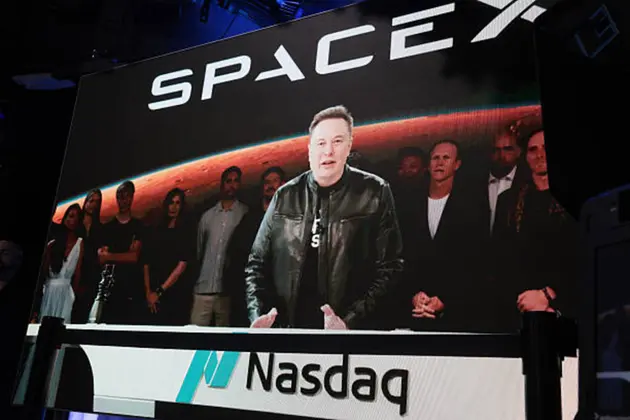
Some pressure on AI-related shares may also be linked to investors raising cash ahead of several high-profile stock market debuts in the United States. SpaceX’s initial public offering could take place later this week.

Weakening stocks for companies with big fuel bills also pulled the market lower. United Airlines sank 6.2%, and cruise operator Carnival fell 6.3% after oil prices rose due to the latest fighting in the war with Iran.

Oil prices and US inflation

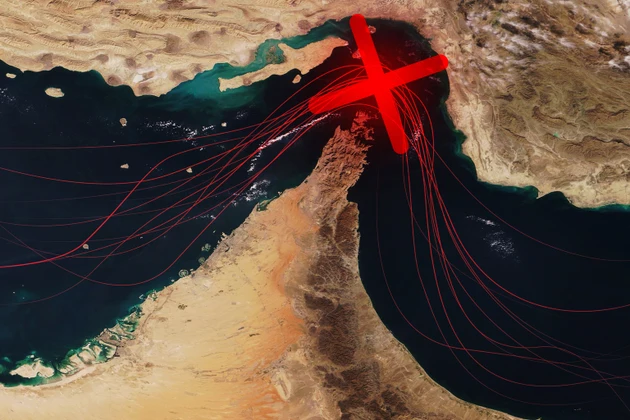
Brent crude rose 1.8% to $93.10 a barrel on Wednesday after President Donald Trump warned that Iran would “pay the price” for stalled negotiations between the two sides over the conflict. The war has effectively closed the Strait of Hormuz to oil tankers, disrupting crude shipments from the Persian Gulf to customers worldwide.

Higher oil prices have added to inflationary pressures. A report released on Wednesday showed US consumer prices rose in May at the fastest annual pace in three years.

Traders are increasingly betting that the Federal Reserve will need to raise its benchmark interest rate at least once this year in response to persistent inflation and a resilient labour market.

Higher yields can slow economic growth and weigh on a range of investments, including stocks and cryptocurrencies. They tend to hit the most highly valued assets hardest, and some critics argue that enthusiasm around AI has inflated a market bubble.

In early European trading, Brent crude was up by 0.5% at $93.60 a barrel, while US benchmark crude gained 0.7% to $90.70.

The US dollar traded at 160.58 Japanese yen in the morning. The euro rose slightly to $1.1542, and the UK pound cost $1.3377.

The gold prices dipped by 0.6% to $4,109.60 an ounce.

Source link

From welder to wealthy: SpaceX IPO could make thousands of employees millionaires

SpaceX’s long-anticipated IPO is hours away from reshaping the fortunes of thousands of employees.


ADVERTISEMENT


ADVERTISEMENT

The listing, set for this Friday, is expected to mint millionaires not only among senior engineers and executives, but also among blue-collar workers, including cooks and welders, who received equity as part of their compensation packages.

The windfall is heavily concentrated around Brownsville, Texas, one of the poorest cities in the US, where SpaceX employs more than 3,000 people at its Starbase facility.

What makes this IPO unusual, even by Silicon Valley standards, is how far down the organisational chart the equity grants appear to have reached.

Some estimates cited by media reports put the total number of newly minted millionaires across the entire company at around 4,000. However, the figures could not be independently verified.

Michael Limas, a financial planner based in Brownsville, told Bloomberg that several of the company’s non-technical workers received stock options as part of their pay.

“SpaceX has been very friendly with options at various levels, from top to bottom. It’s something that’s unique to this area,” Limas stated.

One example cited by the investment research platform Moby illustrates the scale rather starkly. A welder’s initial equity grant of $10,000 (€8,650) is now reportedly valued at close to $880,000 (€762,000) ahead of the listing.

These individual figures reflect a broader picture of generous equity compensation that has been reported consistently across multiple outlets.

The IPO itself features a staggered lockup structure rather than the standard 180-day cliff that most companies employ.

According to the prospectus, it includes multiple early release windows, among them a performance-linked mechanism that would activate if the stock trades 30% above its IPO price on five out of ten consecutive trading days. That would allow some employees to access their new wealth within weeks of the debut.

Brownsville braces for the ripple effects

SpaceX’s impact on the region has already been striking, and the financial gains generated by the IPO are likely to amplify it.

Brownsville has long ranked among the most economically deprived cities in the US, with a median family income roughly a third below the national average, according to government data.

SpaceX arrived about a decade ago, establishing its Starbase launch facility on the Gulf of Mexico shore around 40 kilometres from the city centre.

The transformation since then has reportedly been marked by an influx of professionals from California and elsewhere. Rising housing costs have followed, as they often do when wealth becomes concentrated in a particular area.

According to several realtors and economists, the median housing prices in the broader Brownsville-Harlingen metro area have risen roughly 25% since 2020, from around $185,000 (€160,000) to $233,000 (€201,000).

Long-time residents, many of them on modest incomes, are feeling the pressure.

For many employees, the transition from holding shares they could not easily sell to having access to cash brings its own complications.

According to Bloomberg, wealth managers in the region describe a climate of considerable anxiety among staff, given the sense that this may be their single opportunity to build generational wealth and that getting the timing and tax planning wrong could be costly.

More than 100 SpaceX employees in the region reportedly pooled together to negotiate wealth-management terms collectively with the advisory firm Choreo, a move that helped them secure lower management fees by bringing between $1 billion (€865mn) and $5 billion (€4.33bn) in potential assets to the table.

Brownsville’s mayor, John Cowen, a sixth-generation resident of the area, has sought to frame the transformation in positive terms, arguing to US media that it is great for the city to be known as a place for investment.

Beyond SpaceX itself, other industrial projects have followed in the company’s wake, including building a liquefied natural gas export terminal near the Port of Brownsville.

Back in March, US President Donald Trump also announced the construction of a $300 billion (€260bn) oil refinery at the port, which could reportedly bring 500 full-time jobs.

Whether the IPO ultimately delivers on its promise, and how equitably its benefits filter through a city that has known far more hardship than prosperity, remains to be seen.

Source link

‘Partners and friends’: Trade and defence top of agenda at EU-South Korea summit

European Commission President Ursula von der Leyen, European Council President Antonio Costa and with South Korean President Lee Jae-myung celebrated the signing of new a digital trade agreement at a ceremony in Brussels on Wednesday.


ADVERTISEMENT


ADVERTISEMENT

The event marked the EU and South Korea’s 11th summit, with everything from security and defence to trade on the agenda.

“Korea is one of Europe’s closest partners in the Indo-Pacific region and on the global stage,” von der Leyen said. “In today’s uncertain world, stable and trusted partnerships like ours are more precious than ever.”

The trio released a joint statement extolling the value of the talks and committing the two sides to a firm and friendly relationship.

“We reaffirm our shared commitment to effective multilateralism, and to a stable and predictable rules-based free and fair economic order,” the statement reads.

The semiconductor factor

Both sides have an interest in diversifying their trade relationships at a time of growing tensions with both China and the US, and the EU-South Korea digital trade agreement comes more than a decade after a landmark free trade deal.

Since 2015, trade between the EU and South Korea has doubled, with goods trade reaching approximately €124.25 billion in 2025, according to figures from the European Commission.

“The European Union-Korea Free Trade Agreement remains one of the European Union’s most successful trade agreements since its entry into enforcement in 2011,” European Council António Costa said on Wednesday.

South Korea is becoming an increasingly important investor in Europe, particularly in strategic sectors such as batteries, electric vehicles and semiconductors.

For the EU, a key objective is to secure semiconductor supply chains while attracting further investment from Korean companies into Europe.

“Korea has a global leadership position in semiconductors,” an EU official said. “This is clearly an area with significant potential for cooperation that would benefit both sides.”

The digital trade agreement concluded on Wednesday is expected to complement the broader trade partnership by reducing “unnecessary barriers to digital trade” and providing greater “legal certainty” for businesses operating across the two markets, according to another EU official. It will facilitate cross-border data flows while prohibiting the mandatory transfer of source code.

The deal is also designed to establish robust online consumer protection rules, though both partners intend to maintain their respective levels of protection for personal data and privacy.

Economic security was also high on the summit agenda, with the two sides agreeing to establish a high-level dialogue on supply chain resilience.

Supply chains came under pressure last year following China’s restrictions on exports of strategic materials, including rare earths – essential for green technologies and the defence sector – as well as products linked to the chip industry, which are critical to automotive manufacturing.

Security and defence

One thing that did not get over the line was a security of information agreement, which had been touted by EU officials prior to the summit as a means of strengthening the flow of classified information between Brussels and Seoul.

“I hope that the security of information agreement will be adopted soon, so that Korea and the EU can share confidential information safely, which will allow the two sides to engage in industrial and research cooperation actively through information exchange exchange,” President Lee said on Wednesday.

The agreement would build on the Security and Defence Partnership agreement that South Korea and the EU signed in 2024. That deal was designed to facilitate cooperation in areas spanning maritime security, countering hybrid threats, fighting foreign information manipulation and interference, and more besides.

In the run-up to this week’s talks, a senior EU official said a key topic of the discussions will be nuclear non-proliferation, as North Korea continues to hold a small but concerning stockpile of nuclear-armed warheads.

North Korea (the DPRK) and Russia were considered “big questions” at the summit, the source said, with Brussels ready to share information on its support for Ukraine with Seoul.

The joint statement from the summit reiterates this, with words of condemnation directed at North Korea and other nations who enable Russia to sustain its war of aggression against Ukraine.

“We urge Russia and the DPRK to immediately cease all such activities and abide by the UN Charter and all relevant United Nations Security Council resolutions,” the statement reads.

Source link

Designer Brands anticipates Q2 sales flat to slightly up as full-year EPS trends toward high end of range (NYSE:DBI)

Earnings Call Insights: Designer Brands Inc. (DBI) Q1 fiscal 2026

Management View

Seeking Alpha’s Disclaimer: This article was automatically generated by an AI tool based on content available on the Seeking Alpha website, and has not been curated or reviewed by humans. Due to inherent limitations in using AI-based tools, the accuracy, completeness, or timeliness of such articles cannot be guaranteed. This article is intended for informational purposes only. Seeking Alpha does not take account of your objectives or your financial situation and does not offer any personalized investment advice. Seeking Alpha is not a licensed securities dealer, broker or US investment adviser or investment bank.

Source link

Graham projects fiscal 2027 revenue of $285M-$295M, with adjusted EBITDA of $35M-$40M (NYSE:GHM)

Earnings Call Insights: Graham Corporation (GHM) Q4 fiscal 2026

Management View

  • “Fiscal 2026 was another year of strong execution” and delivered “record annual revenue of $245 million, record orders of $359 million, and record backlog of $533 million and a book-to-bill of 1.5x” (President, CEO & Director Matthew Malone).

Seeking Alpha’s Disclaimer: This article was automatically generated by an AI tool based on content available on the Seeking Alpha website, and has not been curated or reviewed by humans. Due to inherent limitations in using AI-based tools, the accuracy, completeness, or timeliness of such articles cannot be guaranteed. This article is intended for informational purposes only. Seeking Alpha does not take account of your objectives or your financial situation and does not offer any personalized investment advice. Seeking Alpha is not a licensed securities dealer, broker or US investment adviser or investment bank.

Source link

Iran’s oil exports sink to six-year lows amid U.S. naval blockade, analysts say (USO:NYSEARCA)

Jun 06, 2026, 8:15 PM ETUnited States Oil Fund LP ETF (USO), UCO, , , , , , By: Carl Surran, SA News Editor
Iran US Clash

Iranian exports of oil and condensate sank to the lowest level in at least six years in May, falling below 300K bbl/day, as the U.S. naval blockade of the Strait of Hormuz choked shipments and left tens of millions of barrels stranded at

Source link

European markets open mixed as AI stocks sell-off hits Asia, South Korea drops 5%

As the rally in AI stocks fades, investors were cautious at the open on Friday, with European markets opening to mixed sentiment following steep falls in Asian markets.


ADVERTISEMENT


ADVERTISEMENT

Indices in London and Frankfurt quickly moved into negative territory, with the FTSE 100 dropping nearly 0.4% and the DAX losing 0.3% right after the opening. The Paris CAC 40 and the IBEX 35 in Madrid were both up 0.3%, while Milan’s main index was flat. So was the EURO STOXX 50, a benchmark index of 50 blue-chip companies from the eurozone.

Investors are awaiting the latest US non-farm payrolls report and keeping an eye on developments in the Middle East.

The US job data is important for forecasting what the Fed’s next move could be. Kathleen Brooks, research director at XTB, said in a market note, “There is now a near 40% chance of a rate hike by year-end. We expect financial markets to be extremely sensitive to today’s data,” adding that this will be the first such report with Kevin Warsh as chairman of the Federal Reserve.

In the UK, the latest data from Halifax showed that house prices unexpectedly declined in May. House prices fell 0.1% month on month, but were still up 0.5% year on year, missing expectations for a 1% jump.

Oil markets are awaiting further direction

Oil prices stabilised after falling on Thursday. Brent crude, the international benchmark, was slightly down and traded at $94.73 per barrel at 10:00 CET. It had been trading at about $70 per barrel before the start of the war in late February.

Benchmark US crude was little changed at $92.51 a barrel.

Oil prices remain under pressure as the Strait of Hormuz, a narrow waterway crucial for global oil and natural gas transport, remains effectively closed, and the war-induced energy shock is threatening to slow economic growth and fuel inflation in many countries.

American and Iranian negotiators reached a tentative deal last week to extend their ceasefire, but the agreement has not been finalised. Meanwhile, developments in Lebanon have cast doubt on the prospects for a permanent end to the conflict.

On Thursday, the Iran-backed Lebanese militant group Hezbollah rejected the latest ceasefire agreement between the Lebanese and Israeli governments.

“While there are few signs of progress in US-Iran talks, the oil market continues to trade on expectations of an imminent deal that would resume flows through the Strait of Hormuz,” ING commodities strategists Warren Patterson and Ewa Manthey wrote in a report.

Asian markets lose steam as AI craze cools

Wall Street rallied on Thursday after falling oil prices and bond yields eased pressure on US stocks. Banks, small-cap companies and other stocks that had previously been left behind by the euphoria around artificial intelligence led the gains.

Banks also helped lead the market, including gains of 5% for Goldman Sachs, 4.7% for Fifth Third Bancorp and 4.4% for U.S. Bancorp.

They helped to more than make up for losses among some AI stocks, which took a sudden back seat after dominating the market. Analysts have been saying AI stocks may have run too high, becoming too expensive, and that the broader US stock market may be set for a slowdown following an unrelenting streak of nine straight winning weeks for the S&P 500, its longest since 2023.

On Wall Street on Thursday, computer chipmaker Broadcom’s shares sank 12.6% after it issued guidance that fell short of investors’ expectations, raising concerns about the wider AI and technology sector.

US memory chip maker Micron Technology dropped 7.7%, and cybersecurity company CrowdStrike Holdings fell 3.8%.

Still, the benchmark S&P 500 climbed 0.4%, and the Dow Jones Industrial Average gained 1.7% to a record high. The tech-heavy Nasdaq Composite edged 0.1% lower.

But in Asia, investors dumped key AI-related shares, with South Korea’s SK Hynix plunging 8.6% and Samsung Electronics shedding 5.4%.

The Kospi dropped 5.1% to 8,199.44. The index has roughly doubled over the past year, lifted by gains in major technology companies.

Japan’s Nikkei 225 slipped 1.3% to 66,573.85, with technology shares leading the decline, even as official data showed that Japan’s real wages rose for the fourth consecutive month. Chip equipment maker Tokyo Electron’s shares fell 7%.

Hong Kong’s Hang Seng declined 1.2% to 24,948.96, while the Shanghai Composite Index fell 0.3% to 4,045.45.

Australia’s S&P/ASX 200 fell 0.7% to 8,623.50.

Taiwan’s Taiex gave up 1.3%, while India’s Sensex was up 0.1%.

In other trading early on Friday, the US dollar fell to 159.96 Japanese yen from 160.03 yen. The euro was trading at $1.1635, up 0.2%. Gold prices were down 0.3%, trading at around $4,490.70.

Source link