filing

Texas Tech QB sues NCAA to play in 2026 despite gambling infractions

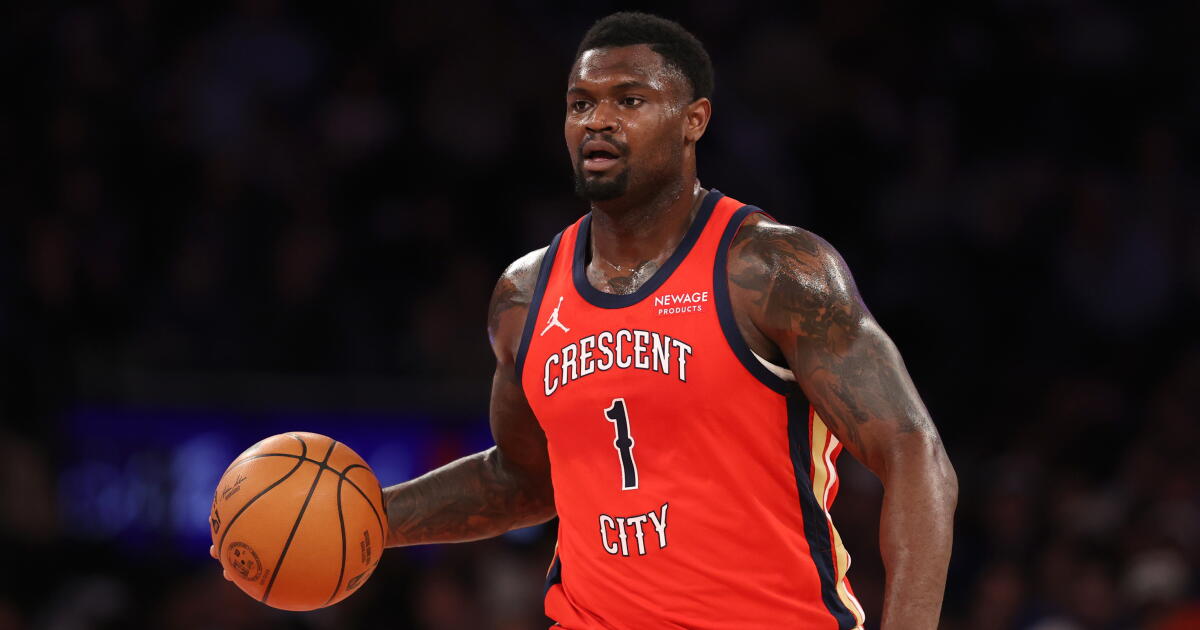
Texas Tech quarterback Brendan Sorsby has sued the NCAA in an attempt to be allowed to practice and play with the Red Raiders in 2026, his final season of college eligibility.

Late last month, Sorsby and the Red Raiders announced that the fifth-year player had entered a residential treatment program for gambling addiction and would be away from the team for an indefinite period of time.

A lawsuit filed Monday in Texas’ Lubbock County District Court requests that Sorsby be declared eligible for all team activities because the NCAA “failed to comply with its contractual commitments” to him as a student-athlete and therefore “is precluded from enforcing its gambling bylaws against Mr. Sorsby to deny or withhold his reinstatement.”

The filing also asks for “temporary and permanent injunctive relief enjoining the NCAA from interfering with his ability to practice, play, and participate fully as a member of the Texas Tech football team for the 2026 season.”

If he remains ineligible for college football, Sorsby intends to declare for this summer’s NFL supplemental draft. Athletes who enter that draft forfeit all remaining college eligibility.

“The relief is narrow: one student-athlete and one senior season,” the filing states. “The NCAA will suffer no cognizable harm from letting Mr. Sorsby play football while this case proceeds. But if this Court does not act, no future judgment can give Mr. Sorsby what the NCAA will have taken from him.”

As a freshman at Indiana and a low-ranked quarterback on the Hoosiers’ depth chart, the lawsuit states, Sorsby “placed small bets — typically between $5 and $50 — on the Indiana football team to win or for teammates to exceed expectations. He was not traveling with the team, and not privy to game plans; betting was his way of feeling connected to a team he could only watch from the sidelines.”

The most recent NCAA guidelines about sports wagering state that student-athletes who bet on their own games or on other sports at their school could “potentially face permanent loss of collegiate eligibility.”

Sorsby stopped betting on Indiana football once he became the backup quarterback, according to the filing, and since then hasn’t bet on any of his teams (he transferred to Cincinnati in 2024 and to Texas Tech this offseason). However, the lawsuit states, “his gambling escalated into a compulsion he could not control.”

According to the filing, Sorsby and Texas Tech were notified by the NCAA in mid-April that it had opened an investigation into the quarterback’s gambling.

“Mr. Sorsby did not deny, deflect, or delay in response,” the lawsuit states. “He immediately admitted to Texas Tech that he had placed bets in violation of NCAA rules, but he also emphasized that he never bet on a game he played in and never took any action to influence the outcome of any game because of a bet. He recognized he had a gambling addiction.

“In response, Texas Tech determined that it would declare Mr. Sorsby ineligible, as required by the Bylaws. But unlike the NCAA, Texas Tech decided to support him in seeking treatment for his addiction and to seek reinstatement of his eligibility in light of the undisputed evidence that Mr. Sorsby had not committed any integrity violation; his gambling was the product of a mental health disorder.”

The lawsuit states that Texas Tech has made multiple attempts to initiate Sorsby’s reinstatement with the NCAA. “Throughout the process, the NCAA has arbitrarily stalled at every turn,” the filing states, “despite the fact that it knows that the clock is ticking for Mr. Sorsby.”

The NCAA said in a statement to media outlets Monday that it “has not received a reinstatement request for this case.”

“The NCAA generally doesn’t comment on pending reinstatement requests, but the Association’s sports betting rules are clear, as are the reinstatement conditions,” the NCAA said. “When it comes to betting on one’s own team, these rules must be enforced in every case for the simple reason that the integrity of the game is at risk. Every sports league has these protections in place, and the NCAA will continue to apply them equally because every student-athlete competing deserves to know they’re playing a fair game.”

Texas Tech said in a statement emailed to The Times: “After finalizing an agreed-upon stipulation of facts between Texas Tech University, the NCAA and Brendan Sorsby, the University has declared Sorsby ineligible for competition. Texas Tech intends to quickly initiate the reinstatement process.

“Texas Tech’s primary focus remains supporting Sorsby’s health and well-being.”

Source link

D4vd murder case: Singer to face key hearing on charges he killed teen

A preliminary hearing the murder case against David Anthony Burke, the 21-year-old singer better known as D4vd, will go forward at the end of June, setting a timeline for when more detailed evidence about the gruesome murder and dismemberment of 14-year-old Celeste Rivas Hernandez will become public.

Burke — who prosecutors say sexually abused the teen for a year before stabbing her to death and mutilating her corpse last year — will face the hearing on June 29, attorneys said during a brief hearing Tuesday morning.

After the singer’s arrest in April, his legal team pushed for an immediate preliminary hearing — where a judge determines if prosecutors have enough evidence to bring a case to trial — but they backed off after prosecutors began turning over what they have described as a massive amount of digital evidence linking Burke to the teenager’s brutal slaying. Burke has pleaded not guilty in the case.

The hearing is expected to last at least five days. A status conference hearing will take place on June 17.

Questions about the singer’s connection to Hernandez’s grisly end have circled since last summer, ever since her badly decomposed and dismembered body was found in the trunk of a Tesla linked to Burke. Late last month, prosecutors filed a nine-page brief laying out what they believe to be Hernandez’s final moments and Burke’s alleged horrific actions after her death.

In the filing, prosecutors said Burke stabbed Hernandez to death inside a Hollywood Hills residence after she threatened to go public about the ascendant singer’s continual sexual abuse. After killing her, Burke ordered a chainsaw, a “burn cage,” a shovel and other implements he used to dismember her remains in his garage, prosecutors alleged last week.

The motion also laid out the dramatic steps Burke went to in order to continue his relationship with the teen. In February 2024, Hernandez was reported missing to the Riverside County Sheriff’s Department by her parents, who were concerned about her involvement with Burke, according to the filing. Hernandez went home and had her phone taken away, but Burke allegedly paid a junior high school student $1,000 to give her a new device so they could stay in touch.

Prosecutors also said they found images of Hernandez naked and performing sex acts on Burke’s phone, according to the document. Deputy Dist. Atty. Beth Silverman said in court last month that search warrants turned up “a significant amount of child pornography” on Burke’s devices.

Burke’s lawyers have not commented on their defense strategy.

Source link

Disney’s ABC challenges FCC, escalating fight over free speech

Walt Disney Co.’s ABC is forcefully resisting Federal Communications Commission efforts to soften the network’s programming, accusing the federal agency of an overreach that violates 1st Amendment freedoms.

Last week, the FCC took the unusual step of calling in the licenses of eight Disney-owned television stations for early review. The move — widely interpreted as an effort to chill the network’s speech — came a day after President Trump demanded that ABC fire late-night talk show host Jimmy Kimmel over a joke about First Lady Melania Trump.

The FCC separately has taken aim at ABC’s daytime discussion show, “The View,” which delves deeply into politics.

The FCC has questioned whether the show, which prominently features Trump critics Whoopi Goldberg and Joy Behar, could continue toclaim an exemption to rules that require broadcasters to provide equal time for opponents of political candidates.

In its filing this week with the FCC, Disney’s Houston television station raised the stakes in the dispute over “The View,” calling the commission’s actions “unprecedented” and “beyond the Commission’s authority.” The ABC station’s petition for a declaratory ruling said “The View,” has long qualified as a “bona fide” news interview program with freedom to conduct interviews of legally qualified political candidates.

“The Commission’s actions threaten to upend decades of settled law and practice and chill critical protected speech, both with respect to The View and more broadly,” the Houston station KTRK-TV said in the filing.

The network’s firm stance sets up a clash with the Trump administration, including the president’s hand-picked FCC Chairman Brendan Carr, who has made no secret of his disdain for Kimmel and other ABC programming. Earlier this year, Carr announced that decades-old exemptions from the so-called “equal time rule” for news programs, including “The View,” were no longer valid.

ABC’s strenuous arguments mark a departure for the Disney-owned outlet.

In December 2024, a month after Trump was elected to a second term, the network quickly settled a lawsuit over statements made by news anchor George Stephanopoulos that Trump found offensive. ABC agreed to pay Trump $15 million to end his legal fight — sparking an outcry among free speech advocates, who accused the network of caving on a case it could have won.

“Some may dislike certain—or even most—of the viewpoints expressed on The View or similar shows,” the station said in its filing. “Such dislike, however, cannot justify using regulatory processes to restrict those views. The government does not get to decide ‘what shall be orthodox in politics, nationalism, religion, or other matters of opinion.’”

The station noted that, while the FCC has questioned the exemption for “The View,” which dates back to 2002, the FCC hasn’t showed interest in regulating programs on other networks, “including the many voices — conservative and liberal — on broadcast radio.”

“The danger is that the government will simply decide which perspectives to regulate and which to leave undisturbed,” ABC said.

On April 28, Carr called for a review of Disney’s broadcast licenses two years before any of them were set to expire, citing the agency’s year-old inquiry into Disney’s diversity, equity and inclusion policies and whether they violated federal anti-discrimination rules.

Source link

Exelixis outlines December PDUFA timeline for ZANZA CRC filing while adding $750M buyback authorization (NASDAQ:EXEL)

Earnings Call Insights: Exelixis (EXEL) Q1 2026

Management View

  • Michael Morrissey (CEO, President & Director) said the company’s strategy is “to build a multi-franchise business in solid tumor oncology focused on GU and GI histologies,” anchored by cabozantinib and “the potential breadth of the zanzalitinib opportunity,” and added that “CABOMETYX

Seeking Alpha’s Disclaimer: This article was automatically generated by an AI tool based on content available on the Seeking Alpha website, and has not been curated or reviewed by humans. Due to inherent limitations in using AI-based tools, the accuracy, completeness, or timeliness of such articles cannot be guaranteed. This article is intended for informational purposes only. Seeking Alpha does not take account of your objectives or your financial situation and does not offer any personalized investment advice. Seeking Alpha is not a licensed securities dealer, broker or US investment adviser or investment bank.

Source link