fbi

Trump administration proposes NDAs for federal employees to stop leaks

The Trump administration wants all current and future federal employees to sign nondisclosure agreements, part of a continuing crackdown on leaks to the media.

The notice in the Federal Register from the Office of Personnel Management posted Tuesday asked for comment on a draft NDA to be used by federal agencies for “both new and existing employees.”

“The form is intended to document Federal employees’ acknowledgment of, and agreement to comply with, current legal obligations to safeguard non-public, confidential, or proprietary information, created or obtained through their official duties, while expressly preserving the right to make disclosures authorized by law,” the notice said.

The Office of Personnel Management noted “several recent instances” where internal agency communications related to rulemaking and policy development were disclosed without authorization. It also discussed specific instances in which federal employees at the FBI and the Department of Homeland Security disclosed information without authorization about planned immigration enforcement actions.

In one case, the New York Times and Washington Post received unauthorized information on the U.S. raid on Venezuela in January and delayed “publishing what they knew to avoid endangering U.S. troops,” the request for comment said.

Representatives for the two newspapers did not immediately respond to a request for comment.

Ferreting out leaks that the administration deems harmful to its messaging has been a priority across multiple agencies since President Trump returned to the White House. As part of that crackdown, the FBI in January seized the electronic devices of a Washington Post reporter, a move that alarmed media organizations and advocates of press freedom.

One other notable incident occurred last year when dozens of reporters turned in their access badges at the Pentagon, rejecting new rules imposed by Defense Secretary Pete Hegseth that would leave journalists vulnerable to expulsion if they sought to report on information — classified or otherwise — that had not been approved by Hegseth for release.

The American Federation of Government Employees did not immediately respond to requests for comment.

Source link

FBI: $200k reward for American spy who defected to Iran in 2013

May 15 (UPI) — The FBI is offering a reward for information leading to the arrest of a former Air Force counterintelligence specialist who defected to Iran in 2013.

Monica Elfriede Witt, 47, of El Paso, Texas, is accused of spying for Iran. She was indicted in February 2019 by a federal grand jury in Washington, D.C., on espionage charges. The charges allege she transmitted classified defense information to Iran.

Witt served in the military between 1997 and 2008 before working as a U.S. government contractor until 2010. She had access to top secret information, including the true names of Americans working undercover, an FBI press release said.

She “allegedly betrayed her oath to the Constitution” by “defecting to Iran and providing the Iranian regime National Defense Information and likely continues to support their nefarious activities,” said Daniel Wierzbicki, special agent in charge of the FBI Washington Field Office’s Counterintelligence and Cyber Division.

“The FBI has not forgotten and believes that during this critical moment in Iran’s history, there is someone who knows something about her whereabouts,” he added.

The press release said that “Witt allegedly intentionally provided information endangering U.S. personnel and their families stationed abroad. She also allegedly conducted research on behalf of the Iranian regime to allow them to target her former colleagues in the U.S. government.”

Source link

Emails show FBI Director Kash Patel’s Hawaii trip included ‘VIP snorkel’ at a Pearl Harbor memorial

When Kash Patel visited Hawaii last summer, the FBI took pains to note the director was not on vacation, highlighting his walking tour of the bureau’s Honolulu field office and meetings with local law enforcement.

Left out of the FBI’s news releases was an exclusive excursion that Patel took days later when he participated in what government officials described as a “VIP snorkel” around the USS Arizona in an outing coordinated by the military. The sunken battleship entombs more than 900 sailors and Marines at Pearl Harbor.

The swim, revealed in government emails obtained by The Associated Press, comes to light amid criticism of Patel’s use of the FBI plane and his global travel, which have blurred professional responsibilities with leisure activities. The FBI did not disclose the snorkeling session or that Patel had returned to Hawaii for two days after his initial stopover on the island.

“It fits a pattern of Director Patel getting tangled up in unseemly distractions — this time at a site commemorating the second deadliest attack in U.S. history — instead of staying laser-focused on keeping Americans safe,” said Stacey Young, who founded Justice Connection, a network of former federal prosecutors and agents who advocate for the Department of Justice’s independence.

With few exceptions, snorkeling and diving are off-limits around the USS Arizona. The battleship, now a military cemetery reachable only by boat, has stood as one of the nation’s most hallowed sites since Japan bombed and sank it in 1941. Marine archaeologists and crews from the National Park Service make occasional dives at the memorial to survey the condition of the wreck. Other dives have been conducted to inter the remains of Arizona survivors who wanted to rest eternally with their former shipmates.

Still, since at least the Obama administration, the Navy and the park service have quietly allowed a handful of dignitaries, including military and government officials responsible for management of the memorial, to swim at the site. The Navy and park service declined to provide details of those permitted to take such excursions.

Former FBI directors have visited Pearl Harbor on official business, but none going back to at least 1993 has gone snorkeling at the memorial, according to those familiar with their activities and a former government diver who spoke to AP on condition of anonymity for fear of retribution. The diver said it was unusual for a director or anyone not connected to the memorial to be granted such access because the swims come with physical risks and present security, safety and logistical challenges.

Patel has faced scrutiny over his leadership for the past year, with his use of government resources emerging as a recurring storyline of his tenure. The issue flared in February when video surfaced of Patel partying in the locker room  with members of the U.S. men’s hockey team after their gold medal win at the Winter Olympics in Milan.  Patel defended the trip as recently as this week as “purposely planned” in connection with a cybercrime investigation involving the Italian authorities.

Unanswered questions about exclusive outing

Patel’s excursion was in August as he spent two days in Hawaii on his return to the United States from official visits to Australia and New Zealand. On his way to those countries, he stopped in Hawaii to visit the Honolulu field office. An FBI spokesman did not answer questions about the snorkeling session.

The FBI said in a statement that top regional commanders hosted Patel at Joint Base Pearl Harbor-Hickam “as they commonly do with US government officials on official travel.” The Pearl Harbor visit, the spokesman said, “was part of the Director’s public national security engagements last August with counterparts in New Zealand, Australia, our Honolulu Field Office, and the Department of War.”

It was not clear how Patel’s snorkeling session was arranged. A Navy spokesperson, Capt. Jodie Cornell, confirmed the outing but said the service was not able to track down who initiated it.

Participants in Patel’s swim were told “not to touch/come into contact with” the sunken ship in any way, Cornell said. She added that the snorkelers were also briefed about “the historic significance of the Memorial as the final resting place/tomb for hundreds of service members.”

A ‘VIP Snorkel’

Government emails obtained by the AP through a public records request show military officials coordinated logistics and personnel for the “VIP Snorkel.”

The National Park Service, which administers the site in coordination with the Navy, told AP it was not involved in Patel’s swim and declined to comment on the excursion. It also declined to answer questions about any other such outings.

Among those afforded invitations to snorkel have been Navy admirals, secretaries of defense and interior, according to the former government diver. The diver added that the swims were intended to provide officials with insights into the memorial and its operations.

The Navy declined to provide examples or numbers showing how frequently it organizes such excursions. It described Patel’s outing as “not an anomaly.”

Hack Albertson, a Marine veteran, is part of a select group from the Paralyzed Veterans of America trained to dive on the Arizona annually to check on the condition of the wreck. He said it was inappropriate for Patel and other political figures to snorkel or dive at the memorial.

“It’s like having a bachelor party at a church. It’s hallowed ground,” he said. “It needs to be treated with the solemnity it deserves.”

Some family members don’t object to snorkeling

Some family members of Pearl Harbor survivors said they were not bothered by such official excursions, though some expressed a desire to also be permitted to snorkel at the site. They said they have not been permitted to do so.

“I have not heard of anyone who would object to these visits as they are very rare and there aren’t any survivors of the Arizona left alive,” Deidre Kelley, national president of the Sons and Daughters of Pearl Harbor Survivors, wrote in an email. “Their children might have some objections but I haven’t heard any.”

Patel visited Pearl Harbor several years ago during a trip he made to Hawaii while serving as chief of staff to Christopher Miller, then the acting secretary of defense, according to the former government diver.

Miller said he snorkeled over the Arizona during an official visit to the base, but Patel was not present for that excursion. Miller said he was invited to snorkel by regional military officials and was told such a tour was for “special occasions and for special visitors, of which you’re one.” He called it a “meaningful” experience.

“It was a very somber and meaningful event,” Miller said in an interview. “It was a historical tour. It wasn’t a recreational thing.”

FBI will not discuss Patel’s return to Hawaii

Beyond the snorkeling excursion, it is not clear what else Patel did during his second stop in Hawaii.

Flight tracking data for the Gulfstream G550 typically used by the FBI director show the jet remained on the island two nights during that stay before flying on to Las Vegas, Patel’s adopted hometown. The jet has a published range of about 7,700 miles, meaning the plane would have needed to refuel somewhere between New Zealand and Washington.

The snorkeling session happened one day after Patel stopped in Wellington to open the FBI’s first  standalone office  in New Zealand. The visit sparked controversy after the AP revealed that Patel had gifted that country’s police and spy bosses inoperable 3D-printed replica pistols that were  illegal to possess  under local gun laws.

Mustian, Tucker and Biesecker write for the Associated Press. Mustian reported from New York. AP writers Audrey McAvoy in Honolulu, and Konstantin Toropin contributed to this report.

Source link

FBI Director Kash Patel fires back at drinking allegations | Donald Trump

NewsFeed

FBI Director Kash Patel and Senator Chris Van Hollen had a heated exchange during a Senate budget hearing after Van Hollen questioned Patel about drinking allegations first reported by The Atlantic magazine. Patel called the claims “unequivocally, categorically false.”

Source link

FBI Director Kash Patel denies drinking allegations in heated Senate exchange

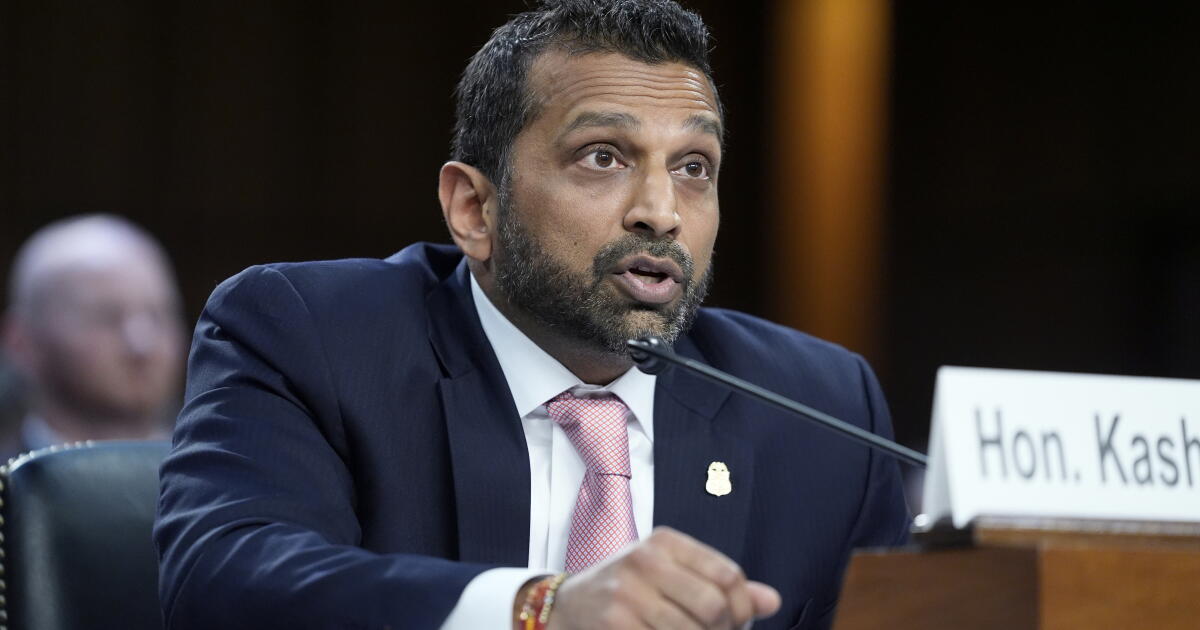
FBI Director Kash Patel angrily lashed out at a Democratic lawmaker at a budget hearing Tuesday, calling allegations that he drinks excessively on the job and has been unreachable at times to his staff “unequivocally, categorically false.”

“I will not be tarnished by baseless allegations,” Patel told Sen. Chris Van Hollen when the Maryland Democrat confronted him about a recent article in the Atlantic magazine that painted an unflattering portrait of his leadership of the nation’s premier federal law enforcement agency. Patel has sued over the story. The Atlantic has said it stands by its reporting and will vigorously defend against the “meritless lawsuit.”

Patel shouted over Van Hollen and sought to turn the tables by accusing him of “slinging margaritas” in El Salvador, a reference to a visit the Democrat paid last year to Kilmar Abrego Garcia while he was jailed there following his arrest in Maryland.

The testy exchange occurred at an annual Senate committee budget hearing featuring Patel and other senior law enforcement leaders.

Tucker writes for the Associated Press.

Source link

FBI searches Virginia Senate leader’s office as part of corruption probe, AP source says

The FBI searched the Virginia state Senate leader’s office on Wednesday as part of a corruption investigation, a person familiar with the matter said. Federal agents also were seen at the senator’s nearby cannabis business.

The search at Virginia Sen. L. Louise Lucas’s district office in Portsmouth comes after the Democrat helped lead the state’s recent redistricting effort.

The FBI said only that it was conducting a court-authorized search warrant in Portsmouth. The person who confirmed the FBI’s search was not authorized to discuss an ongoing investigation by name and spoke to the Associated Press on condition of anonymity.

Besides the search at Lucas’ office, agents in FBI T-shirts also went into the nearby Cannabis Outlet, which she opened in 2021. Several entrances to its cannabis store parking lot were blocked by unmarked vehicles with flashing blue lights.

Lucas — a prominent backer of legalizing marijuana — has said the store sells legal hemp and CBD products. It has drawn scrutiny from local media amid allegations that some products were mislabeled.

Virginia has legalized pot possession, but retail sales of recreational marijuana remain illegal in the state.

A message seeking comment was left Wednesday on a cellphone for Lucas, who has been a state senator for 34 years.

State House Speaker Don Scott said he was deeply concerned by the FBI search.

“Right now, there is far more theatrics and speculation than actual information available to the public,” Scott, a Democrat, said in a statement, adding that more facts were needed “before anyone rushes to political conclusions.”

Gov. Abigail Spanberger declined to comment. Some other Virginia Democrats were quick to note that the search comes as the FBI and Justice Department have opened a spate of politically charged investigations into perceived adversaries of President Trump.

The context “must be acknowledged,” U.S. Rep. Bobby Scott said in a social media post.

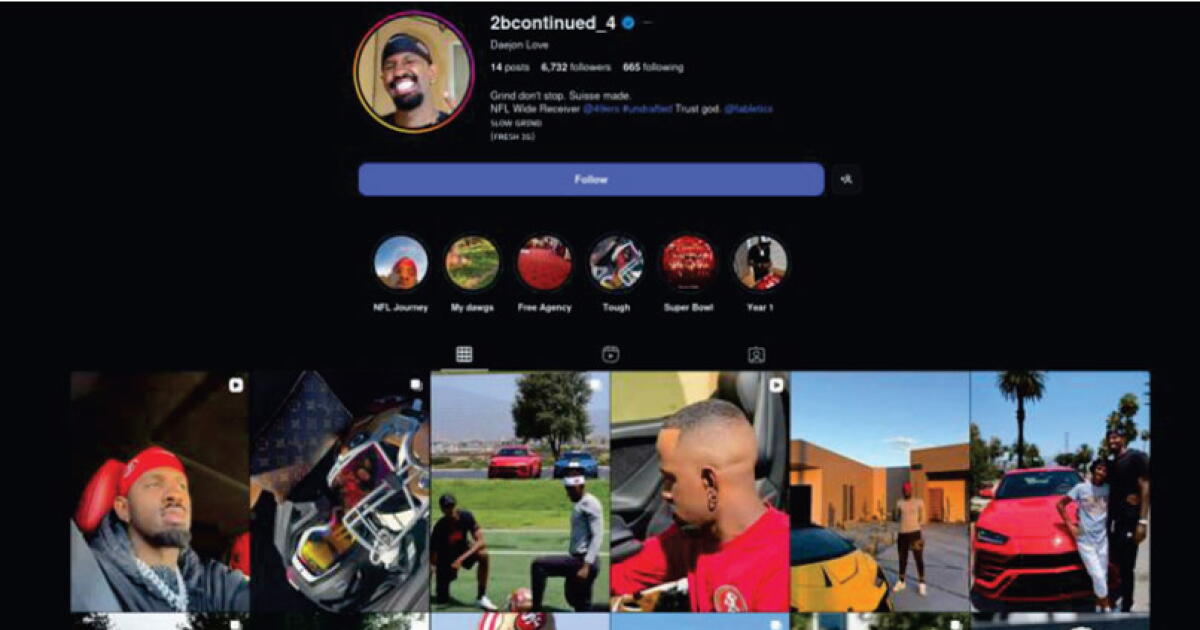
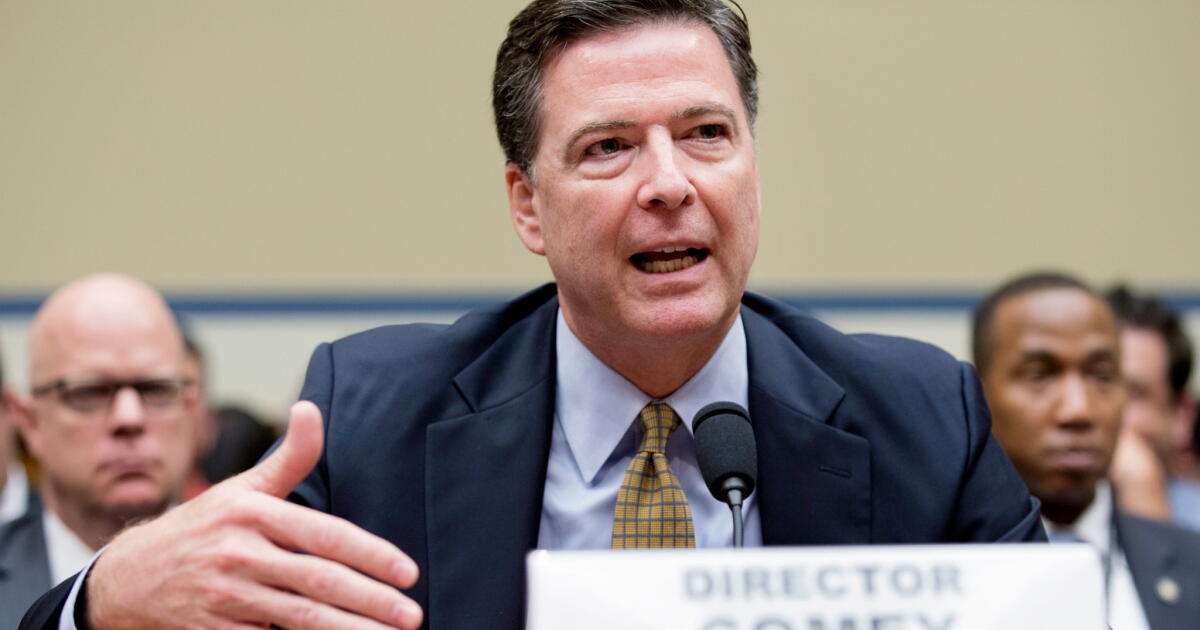
Last week, the Justice Department charged former FBI Director James Comey with making a threatening Instagram post against Trump, an accusation that Comey — who for nearly a decade has drawn the president’s ire — has denied. A separate mortgage fraud case, ultimately dismissed by a court, targeted Democratic New York Atty. Gen. Letitia James, who had brought a major civil fraud lawsuit against Trump and his business.

The FBI and Justice Department have also provoked concerns among Democrats about ongoing election-related investigations, including the seizure by agents of ballots and other information from Fulton County, Ga.

Lucas has been a vocal leader of Virginia’s redistricting effort, which voters approved last month. A sign urging people to “vote yes” to “stop the MAGA power grab” still hung Wednesday on a fence separating her office’s parking lot from the parking for the cannabis shop.

Amid a national, state-by-state partisan redistricting fight kicked off by Trump’s desire to aid his fellow Republicans, Virginia voters OK’d a Democrat-backed constitutional amendment authorizing new U.S. House districts. The plan could help the party win up to four additional seats.

“We are not going to let anyone tilt the system without a response,” Lucas said after the vote. Trump, meanwhile, denounced the results.

The state Supreme Court let the referendum proceed but has yet to rule whether the effort is legal. The court is considering an appeal of a lower-court judge’s ruling that the amendment is invalid because lawmakers violated procedural requirements.

Voting districts typically are redrawn once a decade, after each census. But Trump last year urged Texas Republicans to redraw House districts to give the GOP an edge in the midterms. California Democrats reciprocated, and redistricting efforts soon cascaded across states.

Lucas, 82, has been a figure in Virginia politics since the 1980s, when she became the first Black woman elected to a City Council seat in her native Portsmouth. She now is the first woman and first African American to serve as the body’s president pro tempore.

Earlier in life, she was the Norfolk Naval Shipyard’s first female shipfitter, according to her biography in the state library. The job entails making, installing and repairing sometimes enormous metal assemblies for vessels.

In recent years, she has been the chief executive of a Portsmouth business that runs residences, day programs and transportation for intellectually disabled adults.

Tucker, Breed and Peltz write for the Associated Press. AP writers Dylan Lovan in Louisville, Ky.; Jake Offenhartz in New York; and Claudia Lauder in Philadelphia contributed to this report.

Source link

FBI raids business of Virginia state Sen. L. Louise Lucas who led redistricting efforts

May 6 (UPI) — The FBI raided the offices of and a cannabis business co-owned by L. Louise Lucas on Wednesday in Portsmouth, Va.

Lucas is a Virginia state senator, president pro tempore of the state Senate and a vocal leader of Virginia redistricting efforts.

Officials told The Washington Post that the investigation has to do with corruption and bribery allegations involving the business. Lucas was not arrested, and an FBI spokesperson said the investigation was ongoing.

Democrats called in question the motivation behind the raid; Lucas has often criticized President Donald Trump and was instrumental in the successful Virginia referendum in April to redraw the state’s congressional maps. However, The Washington Post, NBC News and The New York Times reported that sources familiar with the case claimed the investigation was opened during the Biden administration and has to do with the marijuana dispensary.

Rep. Robert C. “Bobby” Scott, D-Va., said that the raid “occurs in the broader context of President Trump’s repeated abuse of the Department of Justice to target his perceived political opponents.”

Don Scott, speaker of the Virginia House of Delegates, emphasized that Lucas has not been charged with anything.

“I am deeply concerned by today’s raid,” he said, WAVY-TV reported. “Given the politicization of this administration — an FBI led by Kash Patel and a Justice Department led by President Donald Trump’s former personal attorney — I think people should take this with a grain of salt and allow the facts to come out before jumping to conclusions,” he said.

Scott said he spoke with Lucas after the search, The New York Times reported.

“She basically said, ‘They’re not going to find anything there and I didn’t do anything wrong,’ ” he said. “She’s very upset and she’s very angry and she won’t back down.”

Lucas was elected to the Virginia General Assembly in 1991.

Source link

FBI probes cases of missing or dead scientists, including four from the L.A. area

Amid growing national security concerns, the FBI said Tuesday that it has launched a broad investigation in the deaths or disappearances of at least 10 scientists and staff connected to highly sensitive research, including four from the Los Angeles area.

“The FBI is spearheading the effort to look for connections into the missing and deceased scientists. We are working with the Department of Energy, Department of War, and with our state and state and local law enforcement partners to find answers,” the agency said in a statement.

The FBI’s announcement comes after the House Oversight Committee announced that it would investigate reports of the disappearance and deaths of the scientists, sending letters seeking information from the agencies involved in the federal inquiry as well as NASA, which owns the Jet Propulsion Laboratory in La Cañada Flintridge, where three of the missing or dead scientists worked.

“If the reports are accurate, these deaths and disappearances may represent a grave threat to U.S. national security and to U.S. personnel with access to scientific secrets,” Reps. James Comer (R-Ky.), chairman of the committee, and Eric Burlison (R-Mo.) wrote in the letters.

President Trump told reporters last week that he had been briefed on the missing and dead scientists, which he described as “pretty serious stuff.” He said at the time that he expected answers on whether the deaths were connected “in the next week and a half.”

Michael David Hicks, who studied comets and asteroids at JPL, was the first of the scientists who disappeared or died. He died on July 30, 2023, at the age of 59. No cause of death was disclosed.

A year later, JPL physicist Frank Maiwald died at 61, with no cause of death disclosed.

Two other Los Angeles scientists are part of the string of deaths and disappearances.

On June 22, 2025, Monica Jacinto Reza, a materials scientist at JPL, disappeared while on a hike near Mt. Waterman in the San Gabriel Mountains.

On Feb. 16, Caltech astrophysicist Carl Grillmair was fatally shot on the porch of his Llano home. The Los Angeles County Sheriff’s department arrested Freddy Snyder, 29, in connection with the shooting. Snyder had been arrested in December on suspicion of trespassing on Grillmair’s property.

Snyder has been charged with murder.

There is no evidence at this point that the deaths and disappearances, which occurred over a span of four years, are connected.

A spokesperson for NASA, which owns JPL, said in a statement on X that the agency is “coordinating and cooperating with the relevant agencies in relation to the missing scientists.

“At this time, nothing related to NASA indicates a national security threat,” agency spokesperson Bethany Stevens wrote. “The agency is committed to transparency and will provide more information as able.”

Representatives from Caltech did not immediately respond to a request for comment.

Source link

FBI Director Kash Patel sues the Atlantic over article alleging he drinks excessively

FBI Director Kash Patel sued the Atlantic magazine for $250 million on Monday, claiming an article that talked about his alleged excessive drinking was false and a “malicious hit piece.”

The Atlantic, in response, said it stood by its reporting and would vigorously defend against the “meritless lawsuit.”

In the article, posted on the magazine’s website on Friday, author Sarah Fitzpatrick said Patel is deeply concerned about losing his job and that “he has good reasons to think so — including some having to do with what witnesses described to me as bouts of excessive drinking.”

His behavior, including “both conspicuous inebriation and unexplained absences,” has alarmed officials at the FBI and Department of Justice, the Atlantic said. Fitzpatrick was named as a defendant in the lawsuit.

Patel, in the lawsuit filed in district court in Washington, denied the allegations of his behavior and criticized the magazine for relying on anonymous sources. Fitzpatrick wrote that she interviewed more than two dozen people and granted them anonymity to “discuss sensitive information and private conversations.”

“Defendants cannot evade responsibility for their malicious lies by hiding behind sham sources,” the lawsuit said.

Bauder writes for the Associated Press.

Source link

DOJ recovers millions of dollars in Colonial Pipeline ransom

The Justice Department recovered $2.3 million in cryptocurrency ransom that Colonial Pipeline paid to hackers whose cyberattack last month shut down its major East Coast pipeline, leading to gas shortages up and down the East Coast, authorities said.

Deputy Atty. Gen. Lisa Monaco said the FBI on Monday seized the majority of the ransom that Colonial Pipeline paid to hackers who used malware developed by DarkSide, a Russia-linked hacking group, to encrypt and lock up the company’s computer systems. The company, which Monaco credited with quickly alerting the FBI to the attack, said it paid the hackers $4.4 million in bitcoin to regain access to its systems.

“Today we turned the tables on DarkSide,” Monaco said, calling such ransomware attacks an “epidemic” that poses a “national security and economic threat” to the U.S. “This was an attack against some of our most critical infrastructure.”

Though the malware did not affect systems that operate the company’s pipelines, which stretch from New Jersey to Texas, Colonial discovered the hack on May 7 and closed its spigots for five days out of an abundance of caution. The pipeline supplies about 45% of the jet fuel, gasoline and heating oil consumed on the East Coast, and the shutdown sparked panic from drivers, who raced to top off tanks, leading gas stations to run out of fuel.

The Justice Department did not disclose how much Colonial paid in ransom, but the company’s chief executive told the Wall Street Journal last month that it made a $4.4-million payment in bitcoin. Colonial CEO Joseph Blount said the company paid the extortion demand because he was concerned a prolonged disruption of the pipeline would hurt the nation.

“I know that’s a highly controversial decision,” Blount told the newspaper. “I didn’t make it lightly. I will admit that I wasn’t comfortable seeing money go out the door to people like this.”

Ransomware hackers typically trick unwitting employees into opening an email and clicking on an attachment or a link, which then infects computer servers with malware that encrypts data and locks the systems. Victims must pay a ransom to the hackers to obtain a decryption key to unlock and recover the information. DarkSide’s malware poses a double whammy — it can also siphon out information, giving hackers more leverage because they can threaten to disclose sensitive data if they are not paid.

FBI Deputy Director Paul Abbate said DarkSide produces ransomware that it sells to hackers who conduct cyberattacks and share a percentage of their proceeds with the malware’s developers. DarkSide’s product is one of about 100 ransomware variants the FBI is investigating, Abbate said.

The bureau has been investigating DarkSide since last year, Abbate said, and has identified more than 90 victims of its ransomware in manufacturing, legal, insurance and healthcare industries. Working with other U.S. government agencies, the FBI identified “a virtual currency wallet” that the DarkSide hackers were using to collect payment from a victim, Abbate said.

The Justice Department then obtained a warrant to seize those bitcoins, officials said.

“The old adage ‘follow the money’ still applies,” said Monaco, the deputy attorney general. “That’s exactly what we do.”

The Colonial Pipeline attack was the latest in a series of ransomware assaults that has crippled government agencies, hospitals and businesses, including a major meat producer that was forced last week to idle plants, sparking concerns about potential increases in meat prices and shortages. A task force of more than 60 experts from industry, government and nonprofits issued a report in April that calls ransomware “a flourishing criminal industry that not only risks the personal and financial security of individuals, but also threatens national security and human life.”

The report, published by the nonprofit Institute for Security and Technology, estimates that nearly 2,400 governments, healthcare facilities and schools were victims of ransomware attacks last year. Ransom payments rose to $350 million last year, a 300% increase over 2019, the report says. The average such payment topped $300,000.

Cybersecurity experts and former federal prosecutors and agents blamed several trends for the increase. The rise of difficult-to-trace cryptocurrency has made it far easier for criminal gangs to collect payments, the experts said. Cybercriminals have also begun to increasingly operate within the borders of U.S. adversaries, particularly Russia. The Kremlin, for example, allows hackers to operate with impunity if they do not target Russian businesses or citizens and focus their energy on sowing chaos and confusion in the West.

The Biden administration is seeking to find ways to combat the rise. President Biden said he will discuss ransomware attacks this week with U.S. allies during a European trip, and bring up the subject during a June 16 meeting with Russian President Vladimir Putin. The Justice Department has launched a task force to better coordinate its approach to the crime wave. Justice Department officials said the Colonial Pipeline ransom seizure was the first such payment recovery by the task force. Justice Department officials could not say how many other ransoms they have recovered.

“This is a big deal,” said Scott Jasper, a lecturer at the Naval Postgraduate School and author of “Russian Cyber Operations: Coding the Boundaries of Conflict.” “The question is: Will this be big enough to change the behavior of DarkSide or of other cyber actors? It’s too early to tell. It’s a slow game, a long-term game. This is a significant, big business. This is a big enterprise.”

Source link