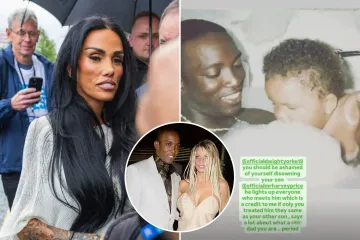
KATIE Price has slammed “beggy” women after Lee Andrews is sent a saucy snap from a fan asking him to “forget” his wife.
The Sun revealed how the self-proclaimed ‘billionaire businessman’ – who had spent the last month locked up in Dubai’s notorious Al-wir prison –was freed earlier this month.
Sign up for the Showbiz newsletter
Thank you!
Katie Price has slammed “beggy” women after Lee Andrews is sent a saucy snap from a fan asking him to “forget” his wifeCredit: Instagram/KatiepriceThe Sun revealed how the self-proclaimed ‘billionaire businessman’ – who had spent the last month locked up in Dubai’s notorious Al-Awir prison –was freed earlier this monthCredit: wesleeeandrews/Instagram
Katie recently shared another recovery pic of her bruised lips after lip surgeryCredit: Katie Price/Facebook/BackgridKatie explained in her post that she was embarrassed for the woman who sent the messageCredit: SplashYesterday, Katie made a cryptic post about the hardship couples who are meant to be together sometimes faceCredit: mistraesthetics/InstagramKatie’s husband Lee has been advertising a ‘new money-making scheme’ as he sends ‘fans’ birthday wishes on videoCredit: Instagram
Lee had not accepted or replied to the message and Katie slammed the woman in her Instagram stories.
Posting the conversation, she said: “Why are some girls so beggy messaging my husband?
“Have some decorum, says a lot about @***.*****, I’m embarrased for you.”
TIJUANA — About 150 miles from SoFi Stadium, south of the Mexican border, sits the hotel housing Iran’s World Cup team for its games at the Inglewood venue.
The entrance to the Marriott in Tijuana is barricaded, flanked by police and members of the Mexican National Guard, guns held close. No one enters without a hotel reservation or special pass.
Despite the tensions and challenges surrounding Iran’s participation in the World Cup, early Saturday morning finds the mood inside the four-star hotel relaxed, even jubilant. Several dozen fans mingle and bond over their shared excitement to see the squad’s players before they depart for their second group-stage match at SoFi.
“I wanted to come down to support Iranian soccer, and cheer for them when they exited the building and make them happy,” says Lucas Zarrabi, 13. The teen, who attended Monday’s 2-2 draw with New Zealand and has a ticket for Sunday’s match against Belgium, is one of several fans from Los Angeles who made the drive to stay with the team. Others flew in from San José and even Miami, turning up at the hotel not quite four miles from the U.S. border crossing.
Showing up is important, some said, because of what they describe as unfair conditions imposed on the team. After the outbreak of war, the Iranian team was forced to move its base camp from Tucson to Tijuana. Eleven team officials and staff members did not receive U.S. visas. The Trump administration has also denied Iran’s requests to arrive two days before matches — and mandated that the team must leave immediately after each game.
“Every little technicality is making it difficult for the team,” says Abbas Eftekhari, 65, who was born in Iran and has lived in the U.S. for more than 40 years. “I think this is going to drain them psychologically and also physically.”
Iran’s soccer federation has been vocal about the obstacles, saying it would lodge a complaint with FIFA.
“Football shouldn’t lose its power to politics,” Hedayat Mombeini, secretary-general of the Iran Football Federation, said Friday. He added that the restrictions “are certainly having a negative effect on us, but we are trying to overcome these problems with our Iranian pride.”
Since the team landed on June 7, Ali Eslami has visited the hotel gates nearly every day.
“It’s the best pleasure for me. I wished them the best luck. I told them it’s hard but they’re doing excellent things,” said Eslami, who splits his time between Southern California and Tijuana.
He was there again Friday, waiting for the players to return from afternoon training blocks away at the Estadio Caliente, home to the Liga MX’s Xolos.
“I have been in America for 50 years — this has been the most emotional thing, to see the team that I have not seen in 50 years,” he said.
Some Iran fans fear reprisal from fellow members of the diaspora for supporting the team, insisting they were in Tijuana for the love of soccer and the players, not politics. Eftekhari worries that the mood at Iran’s first match, where fans and protesters clashed, affected the players.
“As soon as they see that their countrymen have slogans against them, it also has a negative psychological effect on them. But, that’s how things are at this time,” Eftekhari says.
Just over 24 hours until Sunday’s noon kickoff, it’s not just Iranian fans contributing to the atmosphere. A group of flight attendants from China staying at the hotel embrace the excitement, donning jester hats and waving scarves colored red, white and green. And soccer fans from Tijuana are eager to show some local hospitality. Iran has diplomatic ties with Mexico, unlike with the U.S., and sought to move its group-stage matches to the country where it has an embassy.
“We love the Mexican people very much, and for us, the best situation is for our games to be held in Mexico,” Abolfazl Pasandideh, the Iranian ambassador to Mexico, said at the time.
Leonardo Ramirez Lopez, a 10-year-old soccer fanatic from Tijuana, clutches his autograph album in hopes he’ll get new signatures.
“It’s a new team that I don’t have experience with how they play,” he says. But Iran is already his third-favorite team, behind Colombia and Argentina.
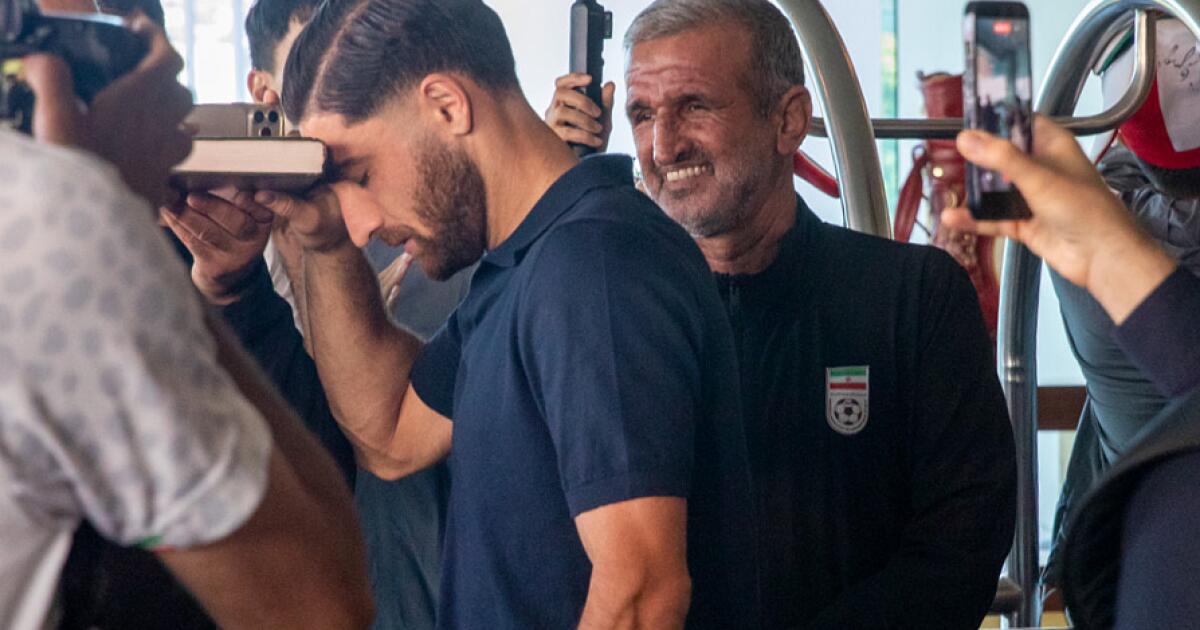
After more than two hours of waiting, several dozen fans break into cheers as players finally file through the lobby. The squad smiles and waves, stopping for a few autographs. As each player leaves, he kisses a Quran, pressing his forehead against it before boarding the bus to Tijuana’s airport.
“Iran, Iran! Whoop, whoop!” fans cry, breaking into song.
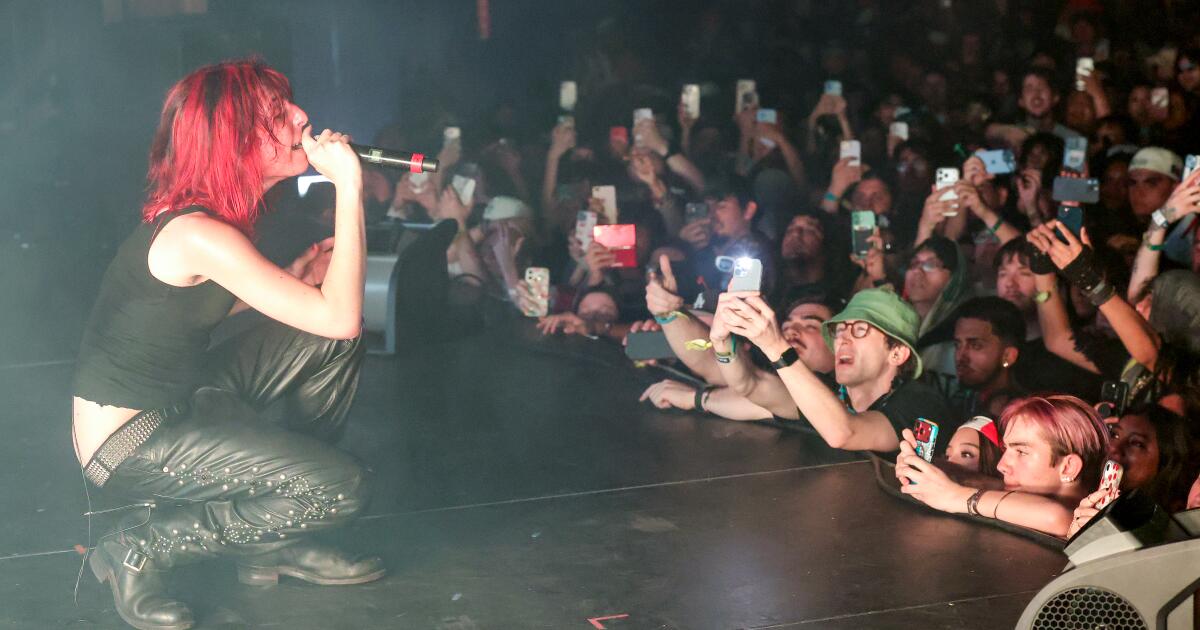
As the noise-rap-electro act Jane Remover shrieked and pleaded through a 90-minute marathon set at the Fonda on Thursday night, one very young couple dressed right out of a conservative‘s nightmare — gender-ambiguous, purple hair, facial piercings — tapped me on the shoulder. They politely asked if I could mind their newly bought vinyl for a bit as they thrashed in the heaving crowd. Of course, this unc obliged them.
Anyone who laments that L.A. crowds don’t dance should go to one of the last sets of Jane Remover’s three-night stand at the Fonda this weekend. It had the most genuinely raucous pit I’ve seen in 2026, made all the more feral for how sweet and earnest it was. After a hotly tipped Coachella set, this Live Exhibit tour affirmed that the subculture Jane Remover built may or may not have wider pop potential, but it’s getting big enough to count for stardom in the fractured music world of today.
Jane Remover is a trans polymath producer and singer-songwriter with influences across rave, shoegaze, trap and beyond. They’ve built up a ferocious elaboration on the hyperpop of predecessors like Sophie, who similarly packed so many good ideas into songs they became talismanic to fans, a tonic to reinvent yourself (new Charli XCX opener Underscores is another fellow traveler).
The music itself sounds like reverse-engineering the moment in the 2000s when metalcore kids discovered EDM. Only now it’s Discord-disaffected youth ramping up hardstyle techno, autotuned girlypop ballads and rage-rap to an explosive fusion point. “Census Designated,” Jane’s brash and dramatic 2023 coming-out LP, tipped them as a force beyond the underground. But they soon eclipsed it with 2025’s “Revengeseekerz,” a deliriously overheated mix of romantic yearning, internet score-settling and virtuosic production prowess.
Backed by just a DJ (Dazedgxd, who opened the set) and a retina-scorching light rig up front, Jane acknowledged on Thursday that the stakes were getting much higher. They joked that they’d played the El Rey like three times before this tour, and to judge by the wild-eyed passions out in the audience, the Fonda will probably be the smallest venue they’ll play for some time. “It gets so cold this high up,” Jane sang on “Turn Up or Die.” “Can’t go to hell but I can drop you off.”
The sentiments driving the music are ultramodern: self-aware, vicious and desperately vulnerable. The hilariously zesty “Angels in Camo” (home to the all-time banger of a line: “Jesus never had it with a freak b—”) wrapped up with a bloodletting plea that “I can’t let you b— win.” Jane wields that word like the flaming sword on the “Revengeseekerz” album cover, with all the casual lustiness of Future but also the wrath of a reclaimed slur.
On “Professional Vengeance,” they grappled with the weird lures of celebrity and intimacy, where no one really knows anyone but desire still courses; “Experimental Skin” found them craving and fighting off God and nihilism and technology and addiction all at once.
The tension in these tracks are the binding agent for Jane’s fan base — the music is full of contradictions and incompatibilities smashing together that just feel like being young right now. Other than a quick affirmation that fans of all identities and backgrounds will always be welcome at their shows, they let the contorting, violent music speak for itself about the way queer fans are feeling about life under siege in the United States.
If the set was a bit too long for the limited setup onstage, it was because Jane simply had that much music to let out — that caliber of emotion to unburden, that much want to acknowledge. It seemed like the set was closing with “In the Dark,” an aching ballad from their Venturing side project, plainly declaring “I still dream of us” through a fog of effects. But instead they ramped it back up for one last cathartic blast to close, sending their faithful out onto Hollywood Boulevard, sweaty and filthy and fundamentally known.
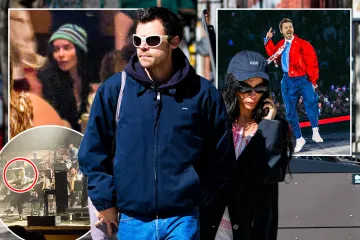
HARRY Styles dramatically stopped his Wembley gig midway through a song to help a fan in distress.
The 32-year-old halted singing Taste Back when he realised a concert-goer needed support.
Sign up for the Showbiz newsletter
Thank you!
Harry Styles halted his show to help a fanCredit: The SunThe Watermelon Sugar singer is performing a 12-night Wembley Stadium tourCredit: Shutterstock Editorial
“You can’t find your sister?”, Harry said over the mic as he spoke to a member of the audience.
He then beckoned over security who rushed to their aid.
Harry added: “You looked very concerned.”
Asking if everything was OK, Harry said: “You’re good? We’re good.”
Harry kicked off a record-breaking 12-night run atWembley Stadiumon Friday for his Together, Together tour.
Harry released his latest album — Kiss All The Time. Disco Occasionally — in March and it immediately shot to No1 in the charts.
Addressing crowds, this week the pop star said: “Just outside of this building 16 years ago, my sister brought me to London for the very first time for my X Factor audition.
“So driving here today, and anytime I come through Wembley, means so much to me.
“It was in that building that I was put into a band, my sister is here tonight. It means a lot to be here tonight.”
He added: “My mum entered me into the X Factor without me knowing and I wouldn’t be here today if she hadn’t done that, so thank you so much.
“You changed my life, all of you, so thank you so, so much.”
He held his hand up in the air as he flagged securityCredit: The SunThe pop star performed in front of 80,000 fansCredit: Shutterstock Editorial
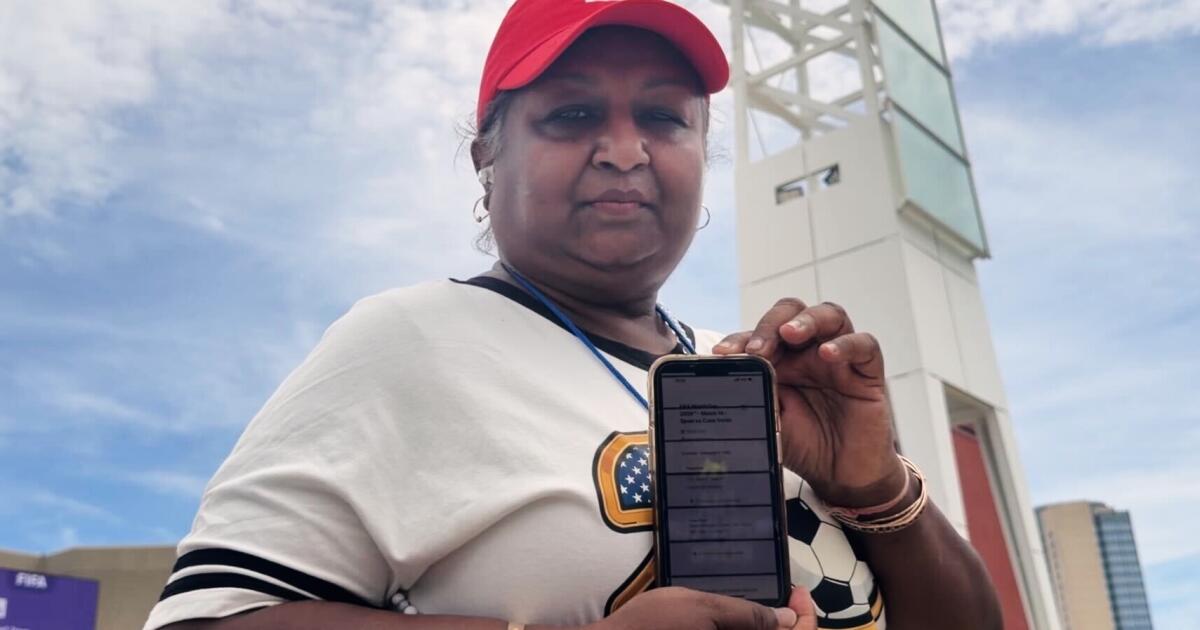
ATLANTA — Bina Ramroop broke down in tears when she realized she wasn’t going to get the World Cup tickets she had bought for her grandson’s 13th birthday.
As thousands poured into Atlanta Stadium on Monday to see Spain face Cape Verde in what turned out to be a remarkable scoreless draw, Ramroop stood outside, increasingly stressed as she went back and forth for hours between StubHub representatives on the phone and FIFA representatives in the ticket booth. Each blamed the other.
No one could figure out why the tickets Ramroop bought months ago on StubHub for $485 apiece couldn’t be transferred from the original seller to the FIFA ticketing app. StubHub offered her a refund and, as Ramroop heard the crowd roar for the start of the match, she knew she had no choice but to give up and take the offer.
“I didn’t want a refund, I didn’t want my money back,” Ramroop said. “I wanted to go to the game.”
The World Cup has delivered thrills on the pitch, but fans have flooded social media with complaints about tickets that never arrived, orders that were canceled at the last minute and hours they spent trying to sort out problems between FIFA’s ticketing system and outside resale platforms.
The vast majority seem to be about industry titan StubHub, but people who bought through competitors such as SeatGeek and Vivid Seats have also reported issues. Interviews with fans and industry experts show that some cases stem from technical glitches in the transfer process, while others could involve sellers who never had tickets to deliver in the first place, though StubHub denies such sales happen on its platform.
A grandmother’s disappointment
FIFA has urged fans to buy resale tickets through its own marketplace, where it slaps a 30% surcharge on every resold ticket — 15% each from the buyer and seller. But many fans bought through other resale sites, either out of habit or because those sites have lower prices or are easier to navigate.
Ramroop didn’t realize she was taking a risk when she bought through StubHub, which she had used in the past without issues.
As she and her grandson Elijah Gomes took the long, lonely train ride back to the Atlanta suburbs, Elijah followed the score on his phone. The match had ended scoreless, and he tried to cheer up his devastated grandmother by telling her they hadn’t missed much after all (Cape Verdeans would beg to differ ).
“He’s telling me, ‘Grandma, it’s OK, Grandma.’ And he’s trying to console me,” Ramroop said the next day.
She was hardly alone. An Associated Press journalist witnessed more than a dozen frustrated fans at the match who said they were stuck in similar situations.
StubHub blamed FIFA for the transfer problems that buyers like Ramroop have experienced. In a statement, it said FIFA has “poor technology infrastructure,” enacted last-minute transfer restrictions and didn’t launch its new ticketing app until a few weeks before the tournament. The company also called out organizers that “take anti-competitive actions” that limit where fans can buy and sell tickets.
Asked about the technical issues, FIFA on Wednesday reiterated that sales through its official site are guaranteed to go through.
An industry’s longstanding problem
Industry observers say the problems appear to stem from more than one cause. For some, it may indeed be technical glitches — an issue that StubHub says is “very, very rare” and one that it is hard at work to solve. For others, they say it’s likely a more longstanding scourge: speculative sellers.
Scott Friedman, an industry veteran and co-founder of a consultancy called the Ticket Talk Network, said some sellers list tickets before they actually have them, betting that prices will fall closer to the event so they can buy the tickets at a better price later. But because World Cup ticket prices have surged since the tournament began, those sellers have been forced to either buy expensive tickets to fulfill their orders or cancel and accept penalties from resale platforms. StubHub’s penalties are typically 200% of the ticket price, Friedman said.
“This is not new at all,” said Friedman, pointing to other high-profile events where frustrated fans were left empty-handed, including Taylor Swift’s Eras tour. “This has been going on, but it’s making global news because it’s the World Cup.”
StubHub says it requires sellers to prove they have tickets before they list them.
But regardless of the reason for the canceled sales, Friedman said “StubHub should fill every single order to make sure fans get in the biggest global sporting event that happens every four years.”
That’s what many fans say they expected when they purchased through StubHub.
StubHub’s FanProtect Guarantee promises replacement tickets or a refund if tickets fail to arrive. But the policy repeatedly says those remedies are provided at StubHub’s “sole discretion,” meaning the company can choose a refund instead of securing replacement seats.
“That is pretty explicit language,” said Michael McCann, a sports law expert at the University of New Hampshire. McCann noted that a buyer could try to challenge the language under state consumer protection laws, but it would be an uphill battle.
A father’s regrets
Pape Ndaw is crestfallen that the high school graduation gift he got for his son — tickets for them to see the Netherlands and Japan near their home city of Dallas — never arrived.
He bought the tickets for about $550 apiece in December. Then, two days before the June 14 match, he received an email from StubHub telling him, “The seller can’t deliver your original tickets.”
Ndaw accepted store credit rather than a refund, thinking he would use the funds to quickly get replacements, only to then realize that the cheapest last-minute tickets were going for more than $1,500 each. Not only were they not going to get to go to the game, but Ndaw said StubHub rejected his belated request for a refund instead of store credit.
Breaking the news to his soccer-obsessed son was brutal, Ndaw said.
“It was a disastrous thing,” he said. “He had told all his friends that he was going to that game. He literally cried. I mean, he is a 17-year-old kid, but he cried.”
A family’s attempt to make the best of it
Others fared somewhat better.
Patrick O’Neil of Pittsboro, North Carolina, traveled to Atlanta with his wife, son and relatives after purchasing five tickets through StubHub for the Spain-Cape Verde match. Two tickets transferred successfully, but three never arrived.
O’Neil’s 15-year-old son and his uncle ended up using the two tickets, while O’Neil, his wife and another relative watched from a nearby bar.
After local media caught wind of their ordeal, O’Neil said StubHub contacted the family and offered tickets to another game. Since the family had already bought tickets to one, though, he and his wife asked the company to instead give the seats to local nonprofit Soccer in the Streets so they could go to people who otherwise might not be able to attend a match.
“StubHub is not evil, but they’re part of the whole system that makes it really hard for just normal kids and people who might want to see a match get to go,” O’Neil said.
On Thursday, a StubHub representative confirmed to the AP that the company would honor the O’Neils’ request and send tickets to the nonprofit.
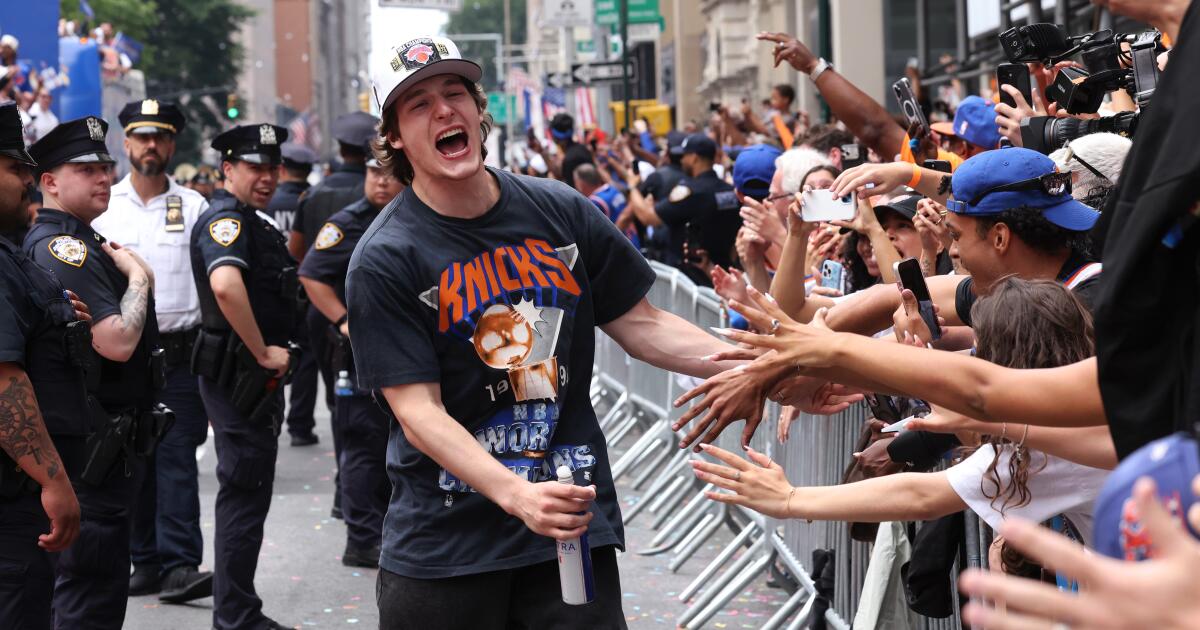
That was what the backup point guard wrote on X, followed by three laughing-until-crying emojis, soon after he was stopped by two police officers who apparently did not recognize him as a Knicks player during the team’s championship parade in Lower Manhattan.
A video that has gone viral on social media shows Kolek skipping along the parade route next to a barrier meant to keep fans off that part of the street, using one hand to hold a beer and the other to slap hands with fans.
At one point, an officer stepped in front of Kolek to block his path while another gently grabbed him by the shoulders and motioned for the confused player to go back in the direction from which he came.
An unidentified man who had been accompanying Kolek quickly stepped in, and then officers allowed him to pass.
To be fair to the officers, Kolek — wearing a Knicks hat, Knicks T-shirt and gym shorts — looked like he could have been one of the estimated 2 million fans attending the parade.
And he’s not the most recognizable player on the team. Kolek has made one start in 103 game appearances during his two years with the Knicks, averaging almost 10 minutes a game. He did not make it into an NBA Finals game but played in eight postseason games this year, averaging 3.5 points and 6.6 minutes a game.
It doesn’t appear that the very brief run-in with the law dampened Kolek’s mood, based on the parade videos he posted on his Instagram. One showed his view of the massive crowds on either side of the street; another showed him throwing confetti while singing along to “New York, New York;” and another showed him standing outside the railing on a moving float while dancing and cheering.
And, yes, one showed the incident with parade security, along with the caption “I hoop bro I swear” and four laughing-until-crying emojis.
Unprecedented sports feats and historical firsts are usually joyous affairs. Something to celebrate, fun trivia to tuck away for later.
On Monday in Inglewood, the history was much more fraught, and not at all trivial.
Iran’s national soccer team played on American soil — this time on SoFi Stadium’s natural turf — for the first time in 26 years. And for the first time, a country hosted a World Cup participant with which it is mired in an on-again, off-again war.
There was, in the days and hours leading up to the match, protest and pushback from portions of the large, local Iranian diaspora who didn’t think it was possible to support the country’s football team without supporting the oppressive regime.
But inside SoFi Stadium, thousands of L.A.’s Iranian supporters gave the team its full-throated support. So did many new Mexican fans who’ve adopted Team Melli, which has been staying and training in Tijuana between matches as it was barred from the United States except for game days.
Most of the near-sellout crowd of 70,108 were there cheering Iran, helping propel this team under so much pressure to an entertaining 2-2 tie with New Zealand.
And there, among the thousands of enthusiastic Iran supporters swept up in the match, was my son’s favorite soccer coach, Narbé Mansourian, with his son, 13-year-old Daniel.
Narbé’s brother got his hands on a pair of nosebleed tickets and immediately handed them over to his soccer-loving relatives.
And Narbé — a fifth- and sixth-grade social studies teacher in Hollywood — had no qualms about backing these Iranian men. There were no second thoughts about separating the players from the politics in the country with the complicated geopolitical — and personal — history.
Now, know this: Mansourian is no fan of Iran’s Islamic regime. He was 7 in 1983 when his father, a political dissident, was executed in Evin Prison, nine months after he’d been apprehended.
Narbé remembers visiting his dad, Vazgen, at the notorious prison. He remembers the long drive to get there, the long wait to see him and the game he and his mom used to play: “Today you are 4 years old.”
Narbé Mansourian, right, and his son Daniel before Monday’s World Cup match between Iran and New Zealand at SoFi Stadium.
(Mirjam Swanson / Los Angeles Times)
What started as a way to avoid paying bus fares for 6-year-old Narbé became the way to fool guards at prison, where only the small children were allowed to physically touch their imprisoned loved ones.
He remembers being allowed behind the glass, where he’d wait for his dad to emerge, blind-folded.
When his dad was killed at 37, Narbé said his mother didn’t immediately find out. And when she did, she initially told Narbé that he’d been sick. There was no funeral and when they went to visit his father’s grave, they found a dirt field. There were no markers, Narbé recalls.
He has kept Vazgen’s Coke-bottle glasses, his watch and the still-intact little LEGO house they built together before his dad was taken to prison.
Narbé has held onto so many difficult memories, including the nighttime terrors associated with bombings during the Iran-Iraq war. But there are also happier recollections. Like the stories he would make up about good guys going against the greedy. And, yes, memories of going to soccer games with his dad.
So, “absolutely, I’m going to root for the Iranian national team,” Narbé said before Monday’s match, saying that, to him, equating the Iranian national team with the country’s regime is like rooting against the Knicks because you don’t like President Donald Trump, a native New Yorker.
“It’s not like a cartoon good guy, bad guy,” Narbé said. “There’s so much gray. Because they live there. My heart goes out to them. It can’t be easy, to kind of teeter-totter like that.”
A pre-revolutionary Iranian flag is displayed before the World Cup group stage match between Iran and New Zealand at SoFi Stadium.
(Allen J. Schaben / Los Angeles Times)
I should’ve expected this outstanding youth soccer coach would be most concerned with the players on the pitch.
Some fans got into SoFi on Monday with the Iranian Lion and Sun flag, a historic Iranian national and opposition flag that was banned from the stadium because FIFA desires to steer free of politics (unless it’s steering straight into them). It was a strange sight in Los Angeles, seeing stadium workers asking attendees to discard flags in an effort to censor the expression of people here.
Some of those fans turned their backs during the national anthem, which many in the stands jeered at its start. But then, once the game took hold, so did the support.
“There were many Iranians here,” Iran coach Amir Ghalenoei said through an interpreter. “They believe in different political affiliations, different beliefs, but they all wholeheartedly encouraged us, and I think that’s a victory for all of us.”
But on the streets of L.A. over the last week, something very different has happened.
Fans from a kaleidoscope of cultural backgrounds have come together to act out the kind of world — and city — they want to live in.
On the shuttle bus from downtown to Inglewood on Monday, there were scores of people with Farsi-emblazoned shirts and crowds of grinning Kiwis as one would expect for the Iran-versus-New Zealand showdown that evening. However, there were also clusters of striped blue Argentina T-shirts, plenty of Team USA jerseys, and a loud group of fans chanting “Viva Mexico” from the back of the bus.
The mood was joyful before Monday’s match among fans of Iran’s national team. The players, because of restrictions by the Trump administration, have had to commute to the games from Tijuana.
(Allen J. Schaben / Los Angeles Times)
Similar scenes played out on the Metro K Line as World Cup-goers from all over traded stories of how they scored tickets, tips for navigating L.A.’s transit system, and wistful memories of tournaments past.
“This festival is about unity and bringing the whole world together; there are 48 nations and everybody is having a good time,” said Ardy Salem, an Iranian American dentist who traveled from the Bay Area to attend the game, as he surveyed the crowd outside SoFi Stadium on Monday with unabashed glee.
“Just for a moment,” he said, “we get to leave all the politics behind.”
David Leon, 32, of Watts was grinning from ear to ear as he stood outside the stadium entrance in his forest-green Mexico jersey, despite the fact that he initially didn’t support having the World Cup in Los Angeles.
“I thought it was going to be a big issue for a bunch of different people to come here,” Leon said.
Fans of New Zealand show their support as they perform the haka, a traditional Maori dance and chant, at Monday’s match.
(Allen J. Schaben / Los Angeles Times)
Leon worried that people from other countries would be turned off by American politics and fearful about traveling to the U.S.
“It really does bring people together from all these different ethnicities,” Leon said, looking at the lines of people waiting to get into the stadium. “I’ve seen Colombians, I’ve seen Mexicans, people from New Zealand, people from Iran, Germans, Spaniards.”
And for his own community of Mexican Americans, he said the matches had brought a much-needed infusion of joy. This time last year, Immigration and Customs Enforcement raids were roiling Los Angeles, instilling fear throughout immigrant households.
Fans of Mexico are on hand at Monday’s match at SoFi Stadium. Before the World Cup, there were widespread fears of ICE presence at the games.
(Kelvin Kuo/Los Angeles Times)
Just last month, about 2,000 SoFi Stadium workers threatened to strike if they didn’t receive assurance that immigration agents would be kept out of the venue during the World Cup.
Leon said he was definitely worried that ICE would take advantage of crowds gathering for the matches to perform further immigration enforcement.
But, so far, that has not been the case. Instead, many people in his hometown of Watts have been consumed with “World Cup fever,” calling out of work to attend watch parties at local bars and walking down the streets with eyes glued to a livestream of a game on a phone, he said.
While joy was the overriding mood among soccer fans gathered in Inglewood on Monday, the day was not entirely free of tension or pangs of grief for the people who were missing out on the fun.
James Carling, 63, of Ventura said it pains him to know that many fans from countries such as Iran, Haiti and Senegal are unable to attend the matches because of the Trump administration’s travel restrictions.
“Let’s face it, our government hasn’t made it easy for people to visit us, which is a shame,” he said outside the stadium. “There were people from countries whose teams made it [to the World Cup] who were not allowed to come and, sorry, that’s wrong.”
The shadow of the U.S. war with Iran and the anger many Iranian Americans feel over Iran’s current government were also present in Inglewood on Monday. Outside the stadium, some Iranian soccer fans had heated encounters with protesters who felt that supporting the Iranian national team was synonymous with supporting an oppressive regime.
Yet the atmosphere among the Iranians attending Monday night’s game was one of cathartic celebration, where for a few hours they could set aside geopolitical tensions and unite over the simple love of soccer.
In the stadium parking lot, David Arias, a Mexican American resident of Inglewood, gave a fist bump to Kam Pirouz, an Iranian fan who had traveled from Washington, D.C., to see the game.
Mexico and Iran are “homies right now,” Arias said, referencing the fact that the Iranian players are commuting to the Los Angeles games from Tijuana because of restrictions placed on them by the Trump administration.
Fans watch the World Cup group stage match between Iran and New Zealand at SoFi Stadium on Monday.
(Ronaldo Bolanos/Los Angeles Times)
Although Arias did not have tickets to the match, he said he could not resist the chance to meet people from all over the world. So he decided to take his local barbershop to the parking lot outside the stadium and offer free haircuts to fans.
With an hour to go before Monday night’s game, all three seats at his pop-up shop were occupied; Pirouz, the Iranian fan, was getting a fresh fade while seated next to a Mormon missionary from Utah and an Egyptian fan.
“It’s the World Cup, man, the entire world comes together, and it’s beautiful,” Pirouz said mid-haircut. “Best sport in the world.”
Times staff writer Seamus Bozeman contributed to this report.
SAN FRANCISCO — The toughest decision of the Sparks’ season to date is fast approaching.
Within the next few games, the team will have to decide whether they are going to keep fan-favorite Kate Martin around.
She joined the roster on a developmental contract at the start of the season after being waived by the Golden State Valkyries the day of roster releases. Developmental contracts were introduced this year as part of the league’s new collective bargaining agreement.
Each team can carry up to two players on developmental deals. Those players are allowed to practice and travel with the team, but they can only be active for a maximum of 12 games during the season.
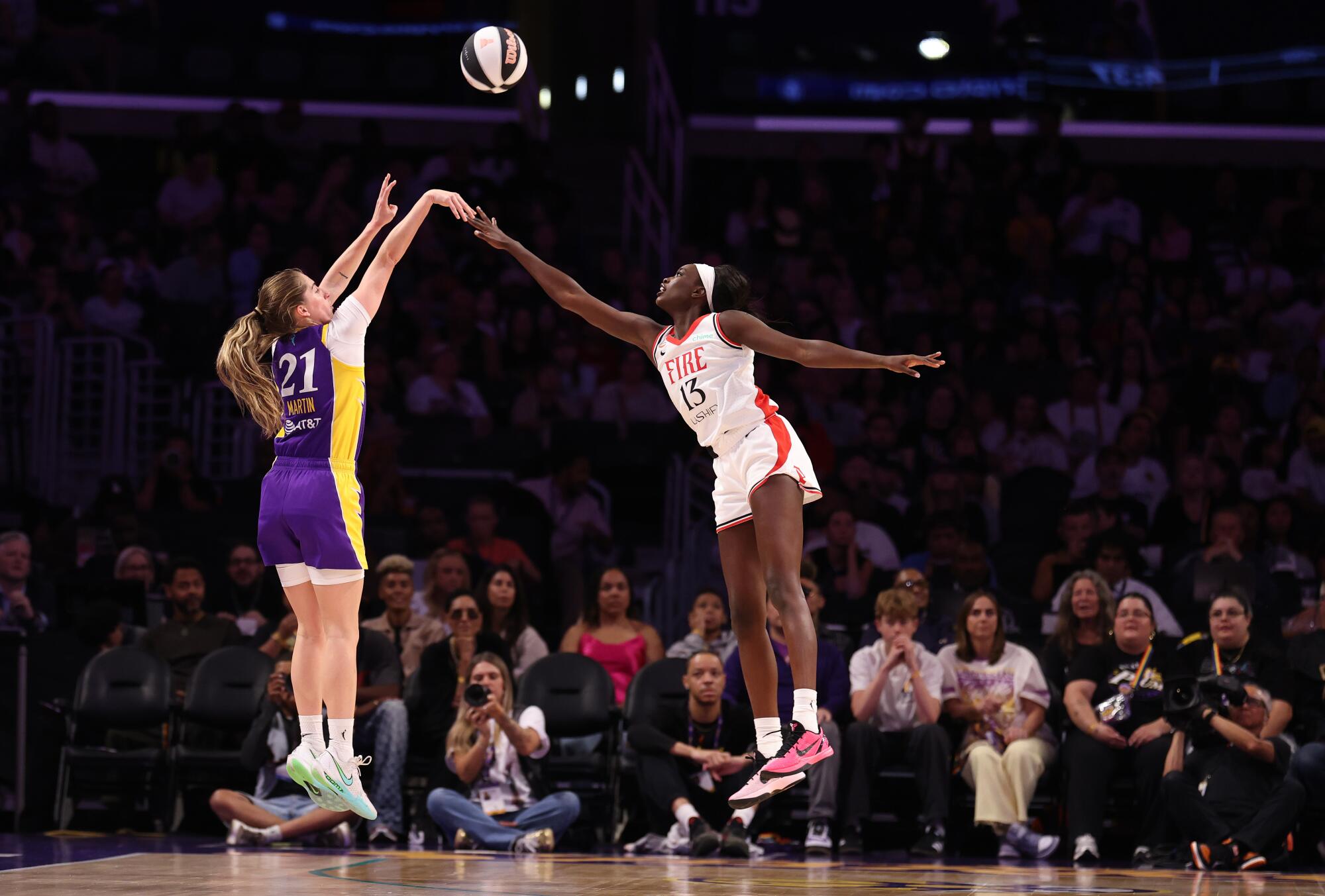
The Sparks’ Kate Martin shoots over the Fire’s Nyadiew Puoch at Crypto.com Arena on June 7.
(Luiza Moraes / Getty Images)
Typically, developmental players are used as emergency depth, stepping into the lineup only when injuries create a short-term need. That hasn’t been the case for Martin, who has been active for eight of the Sparks’ first 13 games, making her a regular part of the team’s plans.
“I’ve been activated for quite a few games and that is a blessing,” Martin said. “I feel very grateful to have been activated for so many games so far, but I think just like not knowing until like game day, trying to figure out, like, ‘Oh, am I going to be activated, am I not?’ I think that’s probably the biggest difference, but you know, they don’t treat me any differently.”
When given the opportunity, Martin has brought energy and impact off the bench. She is shooting 47.4% from the field and taking 1.6 shots from three-point range per game despite playing just 7.4 minutes. Martin often receives the loudest cheers from fans during home games.
She delivered her strongest offensive performance in a loss to the Tempo on May 17, scoring 11 points on 4-of-7 shooting, but since then she has been used as a first-half rotation player to rest the Sparks guards as a reliable shooter and defender.
Even with the Sparks at full strength against the Portland Fire last week, Martin still earned eight minutes of play. Then she played four minutes in Saturday’s overtime win against Phoenix.
“We’re figuring it out in real time,” Sparks coach Lynne Roberts said. “These are new positions, and so each player only gets 12 games, but Kate does have experience. She is a spark off the bench. Everyone out there trusts her. There’s value to that. It’s hard, though, as a [developmental] player, to play one game and not play the next, and like it’s just hard for the rest of the group. So that part’s been tricky, and we’re figuring it out as we go.”
With seven active appearances already used, Martin has just four games remaining under the terms of her developmental contract. The Sparks must either preserve those appearances for later in the season or make a long-term commitment by signing her to a standard contract or she will become a free agent again.
The challenge is that Los Angeles does not currently have an open roster spot, meaning the team would need to waive a player to make room.
The Sparks’ Dearica Hamby and Kate Martin chest bump to celebrate after scoring against the Dallas Wings at Crypto.com Arena on June 5.
(Luiza Moraes / Getty Images)
Rookies Jihyun Park and 2026 second-round draft pick Ta’Niya Latson have both appeared in fewer games than Martin, as have veteran Emma Cannon and second-year forward Sania Feagin, who was injured earlier this season but hasn’t claimed a rotation spot since her return.
Martin was a regular part of the rotation with the Valkyries in her one season with the franchise, playing in 42 games and averaging 6.2 points per game and 31% shooting from three-point range. She was inconsistent at times, but also provided a spark off the bench and it was a surprise when they cut her.
After an emotional few days after being waived, Martin joined the Sparks, where she was excited for the opportunity to develop. Now, she sees herself as a fit beyond the 12-game limit.
“The system that we want to run at a very fast pace,” Martin said. “Spread the floor and shoot a lot of threes, and I think that I am good at spacing the floor, and I think that what they want to run here offensively benefits my game in a lot of ways, and I think I fit kind of seamlessly in that way.”
Olivia Rodrigo has officially begun her new era, and this time she invited her fans to experience it alongside her.
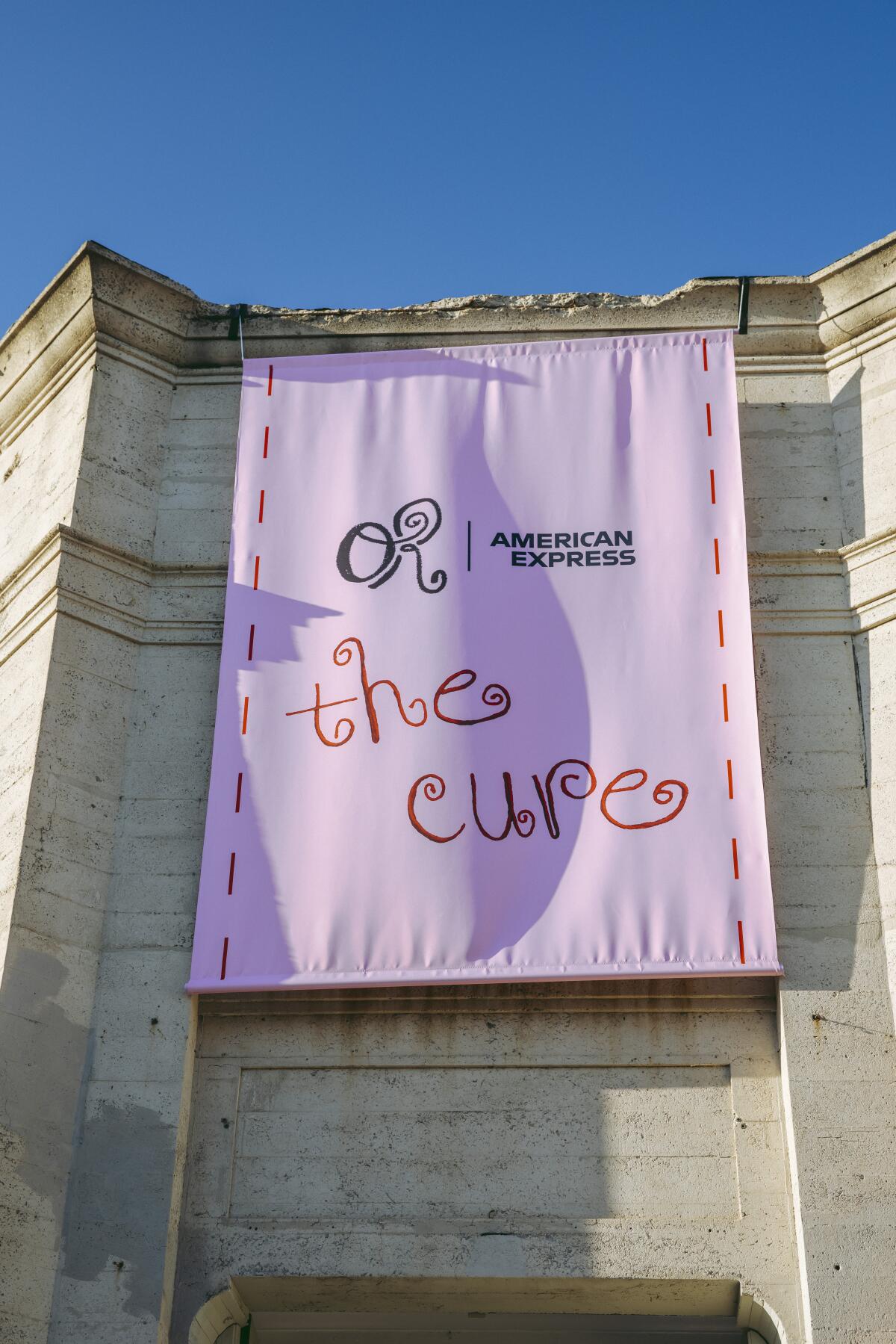
To celebrate the release of her latest album, “You Seem Pretty Sad for a Girl So in Love,” Rodrigo collaborated with American Express to re-create the set of her music video for “The Cure.” The pop-up event, which opened last Thursday and ran until Sunday at Mica Studios, featured props from the video, storyboards, exclusive merchandise and several photo ops for fans.
With a beating felt heart and lab beakers to pose with, the pop-up transformed an industrial studio space in the Arts District into a pastel-painted cardboard hospital. Ahead of the public opening, Rodrigo surprised a small group of AMEX cardholders and select fans.
“I have an album that’s coming out today in about one hour, which is crazy,” Rodrigo said, wearing a blue “Nurses Do It Better” baby tee. “I figured since we’re all here, maybe we should just listen to a few of them together? Would that be cool?”
A little over an hour before the album’s release, Rodrigo played four songs from the album as the room brewed with excitement. She began with “Maggots for Brains,” a song about being so infatuated you can’t focus when your partner is away. Although it was their first listen, the song’s catchy chorus already had fans dancing along.
Banner for Rodridgo’s pop-up event hands above Mica Studios
(American Express)
Rodrigo explained that her next song, “Purple,” paid homage to the aesthetics of her previous albums, “Guts” and “Sour.”
“Obviously, this is my first non-purple album, but I just had to shout out purple somehow,” Rodrigo joked. “This song started out as a love song and sort of devolved from there, so I’ll let you guys be the judge.”
Playing off the somber vibes of “Purple,” Rodrigo played “Less” next. The piano ballad follows the dissolution of a relationship as the couple grows apart.
“I’ve been going back and forth on what the saddest song on the record is, but I think this one might be it,” Rodrigo said.
In a room full of fans, the song struck an emotional chord with many of the listeners. To bring the mood back up, Rodrigo finished the night by playing her new single, “Stupid Song.”
“This next one is a happy one, and it actually has a music video that comes out tonight,” Rodrigo said. “I love this song so much. It’s basically about having such an intense crush on someone that it drives you totally f— insane. I feel like we’ve all been there at some point in our lives.”
Rodrigo was all smiles at her event celebrating her latest album steeped in heartbreak and romance.
(American Express)
After Rodrigo previewed her music, “The Cure” music video exhibition was opened up to the fans. The showcase ranged from interactive photo ops to gallery walls featuring behind-the-scenes photos from the video shoot and Rodrigo’s nurse costume on display. The video’s props, which were primarily designed using cardboard and felt, were displayed in glass cases for visitors to admire.
Dressed in fun fashion including light pink and polka-dot outfits, fans posed throughout the set, re-creating scenes from the music video as “The Cure” played overhead. Many had thrown on a piece of the Los Angeles-exclusive merchandise on sale at the pop-up, with shirts and hats reading “You Seem Pretty Sad for a Girl in Los Angeles.”
So while some fans teared up at her lyrics and others beamed with excitement, everyone was hyped to experience Rodrigo’s new album.
“I really hope you enjoy this little exhibition. It is so gorgeous, and I am so proud of it,” Rodrigo said. “Thank you guys for being here, and I really hope you love ‘You Seem Pretty Sad for a Girl So in Love’ as much as I do.”
If any fan can be excused for using “we” when speaking of their favorite sports team, it would probably be Lee.
The “Do the Right Thing” star, director and screenwriter was 13 when he witnessed the Knicks defeat the Lakers in Game 7 of the 1970 NBA Finals at Madison Square Garden. And he was on hand in San Antonio at age 69 when the Knicks finished off the Spurs with a title-clinching 94-90 victory in Game 5 of the NBA Finals.
In between, Lee has become the Knicks’ most famous and visible fan. He has been a season-ticket holder since 1985, the rookie season of Hall of Famer Patrick Ewing, and has been a courtside fixture for decades. In 2024, he was inducted into the Naismith Basketball Hall of Fame’s superfan gallery.
During a 2020 appearance on ESPN’s “First Take,” Lee laughed when he was informed that his Knicks seats cost around $300,000 a year and that he had spent roughly $10 million on tickets over the years.
So, yeah, he’s considered by many to be an honorary member of the Knicks — and as such, he’s also considered by many to be more than worthy of an NBA championship ring. The idea has taken off on social media, with several celebrities offering their support.
“Give @officialspikelee a CHAMPIONSHIP RING DAMN IT!!!!!!!!” comedian and actor Kevin Hart wrote Sunday on Instagram.
Legendary sports broadcaster Dick Vitale wrote Monday on X: “I agree with Kevin Hart – yes the LOYALTY of SPIKE LEE to the @nyknicks should be recognized & rewarded- Spike is truly a dedicated & genuine LOYAL Knicks fan .YES I agree with Kevin – SPIKE should get a Championship ring !”
“First Take” host and fellow die-hard Knicks fan Stephen A. Smith reposted on X a graphic calling for Lee to receive a ring for his “decades of loyalty.”
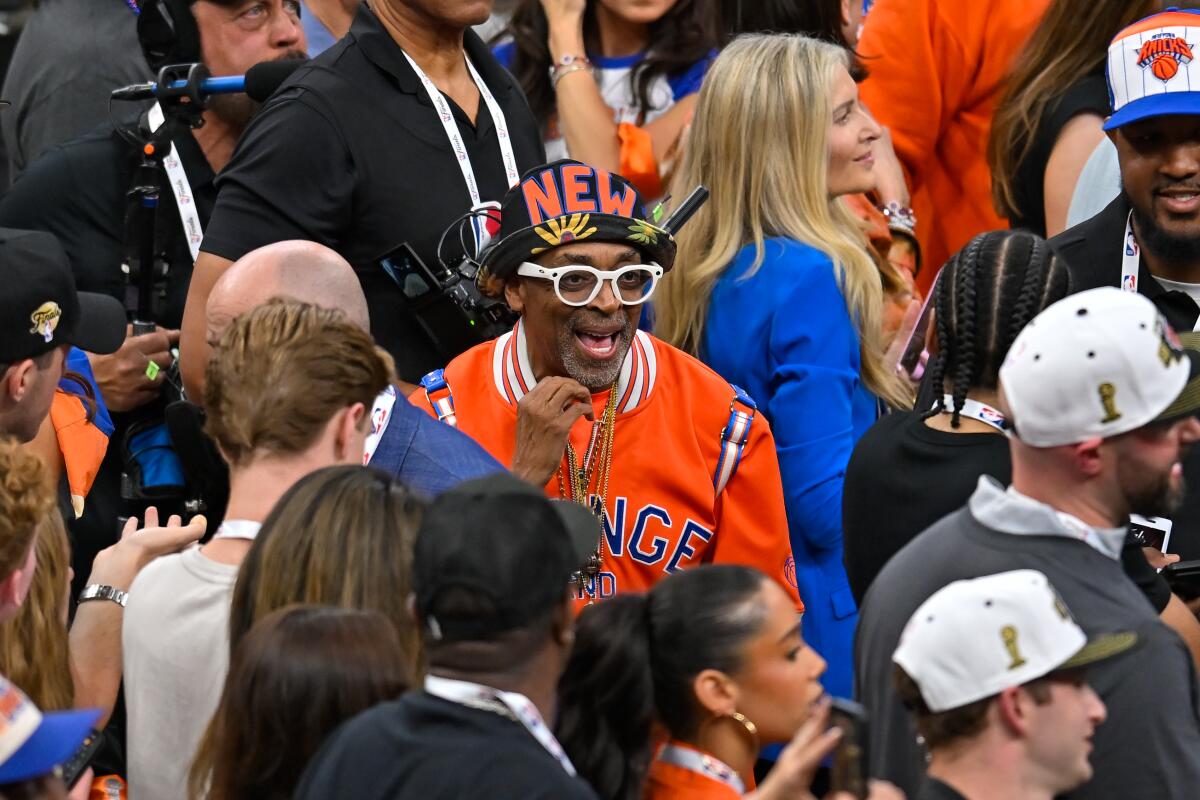
Spike Lee celebrates with a crowd of New York Knicks fans after Game 5 of the NBA Finals on Saturday in San Antonio.
(Darren Abate / Ap Photo/darren Abate)
“I completely support this for Spike Lee,” Smith wrote. “No Knicks’ fan deserves this more than him.”
The Times reached out to a representative for Lee and the Knicks for comment but did not receive an immediate response.
Lee is likely less concerned with a championship ring for himself and more concerned with his beloved team earning another one in 2027.
“You know what I’m thinking?” Lee asked during an on-court interview with WABC-TV in New York immediately following Saturday’s victory, before shouting the answer to his own question: “Back to back!”
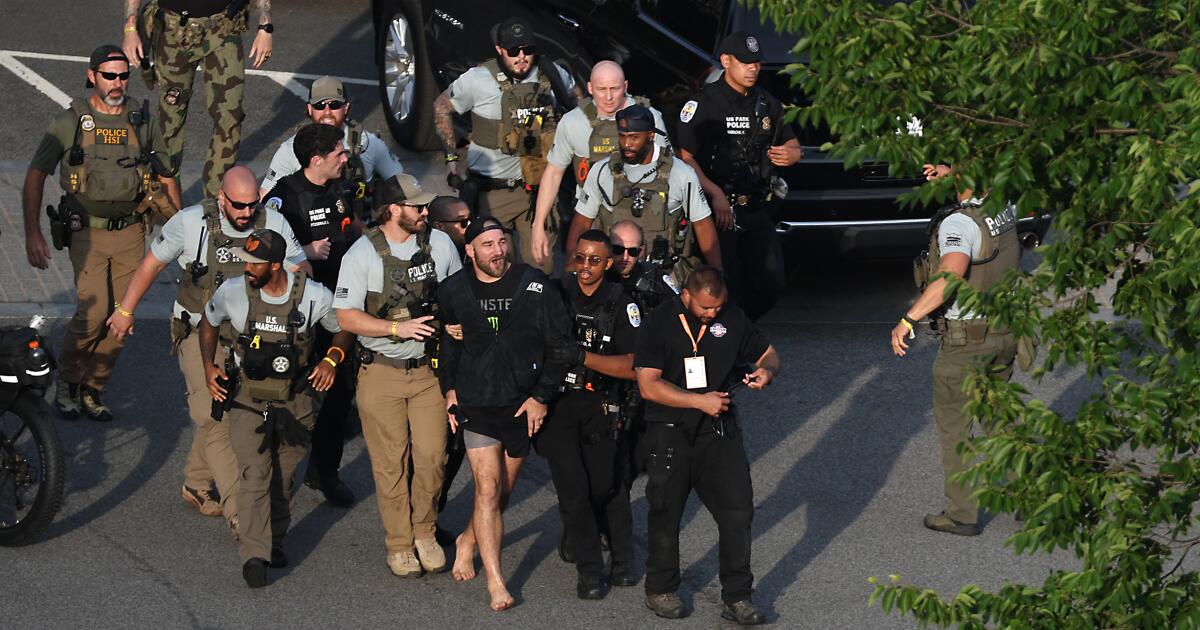
UFC middleweight champion Sean Strickland was escorted out of a UFC Freedom 250 fan fest near the White House on Sunday evening for his own safety and the safety of other attendees, according to the U.S. Park Police.
Strickland was not on the card for the UFC event held on the White House South Lawn in connection with a summer-long celebration of the nation’s 250th anniversary. Instead, the 35-year-old fighter attended a viewing event on the Ellipse, causing a stir among fans as he eventually entered a wrestling ring set up in the area.
“At approximately 7 p.m., the U.S. Park Police received report of a disturbance within the UFC event,” the agency said in a statement emailed to The Times. “The unplanned presence of Sean Strickland drew significant attention from attendees, resulting in disorder. Due to concerns for Strickland’s safety and the safety of event patrons, personnel from the U.S. Marshals Service, U.S. Park Police, and other assisting agencies evacuated him safely from the area.”
In videos posted to his Instagram Story from, during and after the incident, Strickland states he “might be going to jail” and “may have been charged with disorderly conduct.”
However, the Park Police said that is not the case.
“Strickland was neither cited nor arrested in connection with the incident,” the agency said. “However, he was advised not to return to the venue for his own and public safety. USPP escorted him to his hotel without incident.”
Strickland was once a supporter of President Trump but has become a vocal critic over such issues as the Jeffrey Epstein files and the war with Iran. Still, he had expressed interest in attending UFC Freedom 250, which took place on Trump’s 80th birthday, but has said on X that the UFC told him he “wasn’t cleared by the white house.”
UFC president and chief executive officer Dana White has said that nobody, including Strickland, was banned from the event.
On Saturday, Strickland posted on X that he wanted to attend the fan fest on the Ellipse.
The next day, he posted a video on Instagram that shows him doing just that. Apparently filmed by the MMA star as he was being led through the crowd by another man (Strickland later said on X that a fan “snuck me in”), the video shows Strickland trying to avoid being recognized until getting to the ring.
Once there, however, he basked in the attention of a large crowd that chanted, “U-S-A! U-S-A!”
Strickland also posted a photo to Instagram of himself being escorted barefoot out of the event, with the caption “NOT AMERICAN ENOUGH.”
NEW YORK — It was bedlam on Broadway as the New York Knicks won their first NBA championship in 53 years on Saturday night, with exuberant celebrations marred by mayhem and violence, including a shooting in Times Square.
Outside Madison Square Garden, a crowd watching on a big screen roared as the Knicks rallied from a 16-point deficit to beat the Spurs in San Antonio in Game 5 of the NBA Finals.
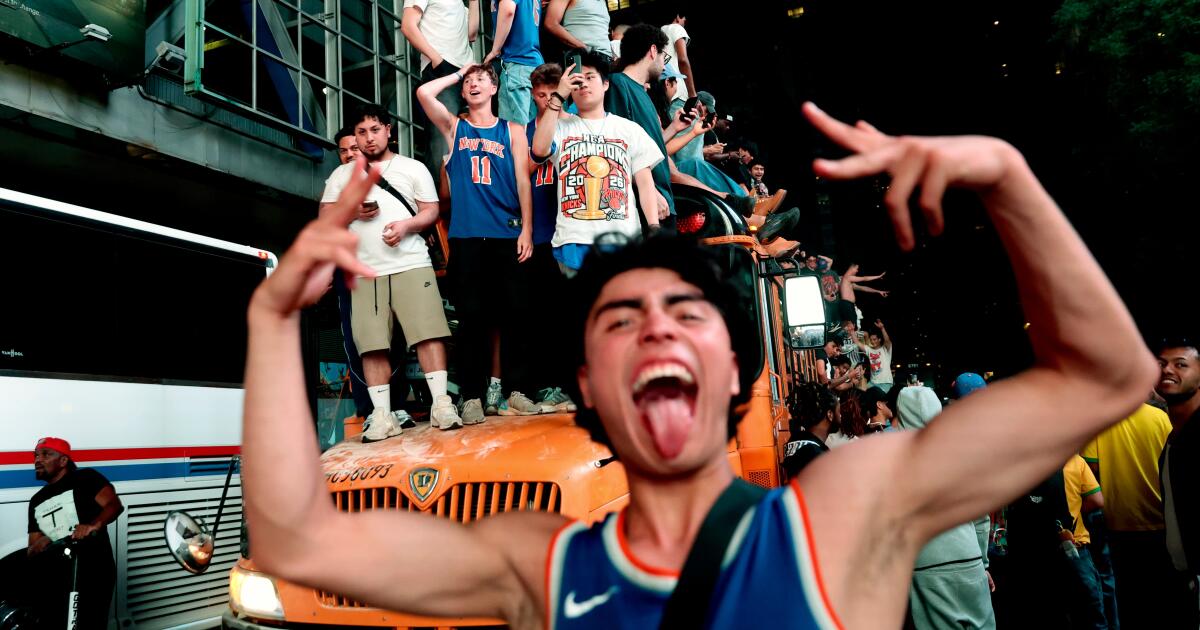
Soon after, tens of thousands of people filled the streets and the rowdiest among them were clashing with police, smashing windshields, scaling scaffolding, light poles and a statue, climbing into and atop school buses in Times Square and trying to hitch a ride on a moving fire truck.
Around 2 a.m., a 17-year-old was shot near 42nd Street and Broadway, police said. Bystander video captured the sound of at least seven shots and showed people crouching and running for cover. Police took the victim to the hospital because an ambulance could not get through the crowds, police said. A gun was recovered and three people were taken into custody.
Four people were stabbed or slashed, and one of the school buses, which was being used for World Cup transportation, was set on fire and engulfed in flames, police said. Other buses and five police cars were also damaged, police said.
In all, 63 people were arrested, with charges including assault on a police officer, criminal possession of a weapon, criminal mischief and disorderly conduct.
Knicks owner James Dolan, speaking in San Antonio after the game, urged fans to stay calm.
“We need to tell everybody in New York that we know that they’re celebrating, we want them to have a great time,” said Dolan, interrupting guard Josh Hart’s news conference. “Please be safe. Don’t get hurt; don’t hurt anybody.”
The city will officially celebrate the Knicks on Thursday with a parade and City Hall ceremony.
As the clock ticked to the final buzzer on Saturday night, anxiety that had dominated the game’s first three quarters gave way to euphoria. An orange-and-blue-tinted fever dream that started with the Knicks’ first playoff game two months ago ended in the third title in their 80-year history.
Fireworks boomed over Brooklyn and Central Park. Fans flocked to Times Square and ran through the streets. Outside the Garden, they sang the team’s anthem: “Go New York, Go New York, Go!”
Police officers and ambulance workers shouted, “Let’s go Knicks!” over loudspeakers in Brooklyn. Strangers shook hands and hugged. In the Lincoln Tunnel, where people were riding buses back from the World Cup at MetLife Stadium in New Jersey, drivers honked their horns in celebration.
“I’m so overwhelmed. I’m so happy,” said Mathieu Ogno of Long Island, who fought back tears as he soaked in the victory at a team-sanctioned watch party at Wollman Rink in Central Park.
Ogno wore the jersey of Knicks captain Jalen Brunson, whose 45 points propelled his team to victory and him to the NBA Finals MVP. Brunson’s gritty determination and chip-on-his-shoulder style have made him a fan favorite, embodying New York’s working-class ethos.
The Knicks’ championship — 19,392 days since their last — capped an extraordinary postseason for a franchise that hadn’t been to the NBA Finals since losing to the Spurs in 1999. Since April 23, the team has won 15 of 16 games, with its lone loss coming Monday in Game 3.
Their last title, in 1973, was also won on the road in a Game 5. Their first, in 1970, was won at home in a Game 7 thriller. Neither was celebrated with a parade.
“I’m happy to see my Knicks finally make it over the hump,” said Shawn Muoneke, 26. “I’ve seen them knock on the door. They were knocking on the door the past few years. But they finally made it over the hump, and I’m so happy to see it and I’m so happy I’m in the city to experience it.”
Muoneke, born a year after the Knicks’ last trip to the NBA Finals, started rooting for them when he was 10. He drove from Maryland to be in the city for Game 5 at the team’s Central Park watch party.
“I saw the ups, the downs and I watched the team come back up, and I was so happy to see them finally reach the highest echelon of stardom as a team,” Muoneke said.
After the Knicks’ win, he said, the vibes in the city “are the highest they’ve ever been.”
President Trump, a longtime Knicks fan who attended Game 3 at the Garden with Dolan, congratulated the team in a post on social media.
“What a year it has been but, even more so, what incredible playoff wins we have all witnessed, especially the last four — Maybe the greatest in the history of basketball,” Trump wrote.
With Brunson’s clutch performance, he added, “a superstar was born.”
After several dozen arrests throughout the playoffs and violence after Games 3 and 4 in New York that left officers injured and a teen in a coma, police girded for unrest as Saturday turned to Sunday.
“As we celebrate, be responsible, look out for one another, stay safe, be smart, and make this a night that reflects the very best of our city,” Mayor Zohran Mamdani said on social media. “Let’s go Knicks.”
Sisak and Lum write for the Associated Press. AP writer Emily Wang Fujiyama contributed to this report.
There was a time in the beginning of Sublime’s recent revival when Jakob Nowell, the son of the band’s late singer Bradley Nowell, saw himself simply as a good son trying to help his adoptive uncles — drummer Bud Gaugh and bassist Eric Wilson — restart his dad’s iconic Long Beach trio. The goal wasn’t to take the place of his frontman father who died of an overdose in 1996. “I’ll never look at it as my band. Sublime is my dad’s band, and I’m helping out, that’s all,” he told The Times in 2024. Luckily, he was wrong.
The journey of finding his own voice through his father’s sly, shambolic poetry and reggae rock anthems, along with his determination on the road with Gaugh and Wilson through a barrage of festivals and tour dates helped him eventually step into his own as a songwriter and Gen Z rock star. It’s all been done with the mission to preserving his dad’s legacy and having fun while doing it. Now it feels as natural as the trio sitting together on the waterfront in LBC’s shoreline marina within earshot of the bellowing horn of the Queen Mary earlier this year as they were finishing the recording of “Until the Sun Explodes,” the first album under the Sublime moniker in 30 years.
Just like the band’s original recipe of shoving punk, dub reggae, hip-hop and ska into a blender, the new songs dutifully stick to the formula along with Jakob’s soulful caterwauls that sound scarily similar to his dad. But what emerges from the 21-song tracklist is the evolution of a trademark sound that gives a nod to the past while standing strong on its own, just like Jakob, despite coming to the interview on crutches while healing from a performance-related knee injury. The band members chatted with The Times about recapturing the effortless essence of their immortal beach-ready sound and looking forward to a second chance to chase an endless summer.
This interview was edited for length and clarity
It’s kind of a rare thing for all three of you guys to be in one place at the same time. What was it like working in the studio together to finish the new album?
Bud Gaugh: Magical. Things are just coming together. We showed up, Jake had an idea for another song, and he sent us a little demo and said “Hey, this is what I’ve been thinking about.” And then we get down to the studio [in San Pedro], and he’s like, “Oh yeah, so I had another idea,” and kind of changed it. We jumped in there [and by the end of our sessions, we had written] brand new songs to the list of songs that we already had.
The band’s revival has been a long time in the making. I remember when you guys had your first show together, a surprise gig a couple years ago as part of a benefit show for the Bad Brains frontman H.R. Do you feel you’ve come a long way since then?
Eric Wilson: I never thought the chemistry would be like it was with Bradley.
Jakob Nowell: Especially now that we’ve been playing together this long, the chemistry is very much there. We’re just comfortable and having fun. Jamming together is the best. We get in there to do a take for a song, and I’m always like “Let’s just do like three more!” It’s just that much fun, and that’s how it feels playing live too.
When did the idea for creating a new album come about?
Gaugh: It was pretty much just while we were playing shows, At first, the idea was that we were getting together to do this benefit for H.R. [at Teragram Ballroom in December 2023]. We went from “How’s this going to work?” and then [after the show] it was like, “Wow, this is something special. We should definitely go out and play some more shows, and get this music out there and get the opportunity to bring the music to the people in the purest form that we possibly could.” As we’re doing that, it’s like we’re seeing the reaction in the fans, and we were feeling it emotionally. We realized this is going to be bigger than we ever thought. That’s when we really decided where it was going to go.
Jakob Nowell, right, once thought Sublime was only his late father’s band; now, fronting the Long Beach trio, he’s leading a new chapter that still honors Bradley Nowell’s legacy.
(Allen J. Schaben / Los Angeles Times)
Were any of the songs on the new album mined from previously unreleased material or did you start fresh?
Nowell: There was that song we did with Stick Figure [“Feel Like That”], so I think that kind of inspired us. [We realized] “Oh s—, there really is some meat on the bone.” And then I had found some old recordings of stuff that were just like jams without even like vocals or whatever. Then it became just this thing during sound check or maybe in the middle of sets, we’d just start jamming these random progressions and stuff, and it kind of just evolved from there naturally.
The new songs that I’ve heard fit right in the vein of what people love about Sublime. What was it like putting some of those new songs in the setlist as you were building them?
Nowell: It was like magic. We were joking yesterday that sometimes we’ll play a new song for the first time just randomly and I’d see people try mouthing the lyrics and stuff and I’ll say “you’ve never even heard this before! I know you haven’t. We don’t even really know what the hell we’re saying.”
Gaugh: You frontin’! [Laughs]
Nowell: But [the new material] sounded like it was supposed to be there, so it was kind of a rad little test in a lot of ways. We almost don’t even have to think about it. That’s always going to be the guiding goal of any band trying to make fun music that’s relatable.
Wilson: What if you’re Slayer? That’s not true if you’re Slayer.
Jakob, it seems like you’ve gotten a lot more comfortable in the frontman role since joining the band. What’s it like just taking the lead, not just for the sake of your dad, but for the fans?
Nowell: Oh, dude, it’s the best. I don’t even have to think about it. We really feel like this is — we’re a band, you know?
Gaugh: It’s [Jakob’s] band too. Now it’s our band. It’s us.
Nowell: It feels like that whenever we’re hanging out, just doing stuff, or at the studio or at these shows. So, this upcoming year feels like a really rad adventure. We got all these different eras [of fans] — people who were in their 50s when [Sublime’s] first stuff dropped, who are still alive, and then their kids and their grandkids and great grandkids. Everybody finds a piece of the discography they can relate to. That’s what is most exciting. It’s not just one or two songs, people sing along to everything.
I was at Warped Tour in Long Beach last year when you guys played and —
Nowell: That was my favorite set!
To me that felt like it encapsulated what you were talking about with the multigenerational groups of fans that have enjoyed you guys and associate you with Long Beach.
Gaugh: It was like a homecoming for me. I remembered playing the Chili Cook off, you know, right over there in the same area [as Warped Tour], and it was just bringing me back 30 years. It’s so meaningful to be in our backyard playing our music again, right there. This is where it all started. It’s come full circle.
Nowell: It was like playing at a local bar in a cool way. I had this huge group of people up front, they were just talking and shouting and saying stuff, like f–ing with us and joking around. I was like “Damn this is great!”
How about you, Eric? How’d you feel playing Warped?
Wilson: [Mumbles] It was f–ing awesome.
Now that you’ve played all these festival shows, from Coachella to No Values, you’ve got your own festival going on. Can you talk a little bit about Sublime Fest and your Sublime Reef Madness Cruise and how you came up with it?
Nowell: We could put on a bunch of the bands we love, and some of our boys, like Vandals, and make it our own vibe.
Gaugh: You walk around Coachella and there’s so many different elements there. Wouldn’t it be neat if we could make like all this like a Long Beach element, a Sublime element. Looking at this thing, it’s like “Oh wow. So we can actually get some of our friends and set up like a tattoo booth, and have our idea of art and everything out there, and mix it all together — food, art, music — bringing all these different elements, and friends of ours that play music. We get to decide who’s going to share the stage with us, so it’s really neat. It’s like planning a high school party or something like that.
Nowell: The biggest backyard party ever seen.
You guys always had your own sound going on, what’s it like to see that the fans still want it?
Wilson: It took a lotta years to catch on, but it did.
Nowell: Yeah, the kids really want that, like ‘90s, Y2K kind of vibe. That was the last era of like cool authenticity and stuff. You can see it when young people make stuff to look retro … when things get so high fidelity, we’re almost losing a little element, so I think these festivals kind of seek to bring some of that back in a way that everybody can get into.
With “Until the Sun Explodes,” Sublime’s first album in three decades, Jakob Nowell, Bud Gaugh and Eric Wilson rediscover their studio chemistry, jamming new songs that feel instantly familiar onstage.
(Allen J. Schaben / Los Angeles Times)
You guys also have the timeless iconography of the Sublime sun logo. The title of the album is “Until the Sun Explodes.” Does that title have any particular meaning to you?
Nowell: It’s almost just another way of saying “forever,” like “Oh baby I’m gonna love you till the sun blows up.” That’s gonna happen in billions of years, if at all. The fact that [Sublime’s] lasted this long and has this many fans is evidence to me that we wanna be here forever. I think that’s what everybody wants for themselves.
Jake, you’ve taken steps to advance your own aspirations and music with your label, Sunburnt Records, how does that fit into where Sublime is right now?
I was inspired by the whole Skunk Records thing [Sublime’s first label], Evan Zinger with [his lifestyle brand] SRH, and just all the local brands I grew up with when I was a kid. So just trying to do a cool, chill local thing that has that vibe of putting on small shows and kind of getting to use this new notoriety to be like, man, I have so many friends in these small bands like Strange Case and Eight Ball, and other bands up and down Southern California. Let’s put on shows and sneak them on a Sunburnt Stage at [Sublime Fest] and if people really like that Sublime sound here’s a bunch of kids who are carrying the torch like Slightly Stoopid did when they started out. Mike Watt always said “start your own band!” So the more we can inspire people to do that and be some small part of that, it’s a dream come true.
Do you feel like this version of Sublime is something Brad would be proud of?
Gaugh: We all kind of brought our own element to the music orignally. So we just kind of followed that recipe. Jake’s his own person, he’s got his own influences, and we just kind of stick with that idea. Jake brings in his feelings, and Eric brings in his and we sat there and recorded this song, and then as we were recording it, we’re coming up with ideas. It’s like, “Oh wait, we should do this here, slow that down there, stop here,” it’s all a conglomeration of ideas, everyone does their part, brings in their own spices and we mix it in a pot like gumbo.
Consider it a save for the tournament, three points for soccer in America and maybe even a win for uniting the States.
The Americans on the pitch did all that, including making sure a sellout crowd of 70,492 fans got their money’s worth for their exorbitantly high-priced seats to watch football under Friday Night Lights at SoFi Stadium.
U.S. forward Folarin Balogun, right, celebrates with Sergino Dest and Chris Richards after scoring during a World Cup win over Paraguay on Friday at SoFi Stadium.
(Robert Gauthier/Los Angeles Times)
It was not a clean sheet. And it wasn’t an elixir for all the issues — visas, tickets, transportation — that ailed the tournament in its buildup.
But the opening statement by the United States confirmed what we thought might be true. Only one thing could save this soccer tournament: soccer.
The U.S. delivered a performance to change the conversation — for the next few weeks and maybe longer.
Making history to alter history.
The United States scored multiple goals in a World Cup first half for the first time since 2002.
It got two of them from Folarin Balogun, the Brooklyn-born, England-raised forward of Nigerian descent who became just the second USMNT player to score two goals in a World Cup game and the first since 1930.
Got a perfect match from Chris Richards, the afro-rocking defender with the long, loping strides, who was 83 for 83 on his passes. That’s better than any player at a World Cup since 1966.
And if possession is nine-tenths of the law of attraction, know that the Americans possessed the ball 71% of the first half, most in the first half of a World Cup game in the modern era.
Landon Donovan, star of the 2002 team that reached the World Cup quarterfinals — a record that still stands — posted on X: “From start to finish, that was the most enjoyable day of soccer I’ve ever experienced.”
That’s the stuff that will get the American people going. Get us invested, get us behind them. That could convert even devout casuals.
Americans love a good underdog story. We also want the best, the finest, the biggest — and this, with its expanded field of 48, is the biggest version of the biggest and best tournament in the world.
And the only thing we love more than winning is dominating. The United States did that Friday against a Paraguayan team that had allowed only 10 goals in 18 World Cup qualifying matches, and whom the United States beat 2-1 in a tense match in November.
Fans cheer during the U.S. win over Paraguay in their World Cup opener Saturday at SoFi Stadium.
“The fans, amazing,” said Pochettino, the team’s accomplished Argentine coach. “On behalf of the whole team, a massive thank you to the fans. Because the energy that they [gave] to the team was amazing. We can do amazing things if the fans are in this as well.”
Friday was so good for soccer in America.
And so good for America. The kind of butt-kicking that’s chicken soup for a nation’s soul.
Maybe it’s idealistic and naive, or apple-pie-in-the-sky wishful thinking, but I believe that they can win. (And by win, I mean make the quarterfinals again.)
There’s no removing politics from this World Cup, but wouldn’t it be fun to all rally behind a team together? Can’t you see the country coalescing behind the right wingers and left wingers on the pitch? Picture people celebrating the freedom inherent in Pochettino’s system? Cheering the all-for-one and one-for-all of this team of dual nationals and Americans raised abroad — or in Alabama?
Postmatch, Pochettino refused to single out any one player, instead giving reporters a recitation of his roster: “[Christian Pulisic] was amazing [setting up two goals]. Balogun was amazing, of course. Tim Ream was amazing, of course. Chris Richards was amazing, yes. Weston McKennie, he was amazing, amazing. Antonee Robinson, Alex Freeman, amazing. Sergiño Dest, amazing …”
Tickets to watch the U.S. dominate Paraguay 4-1 on Friday night at Inglewood’s SoFi Stadium cost a fortune. But roughly nine miles north, fans such as Jose Santiago and Ivan Gonzalez enjoyed the match at a fraction of the price.
The pair each paid $10 for a ticket to watch the Stars and Stripes flourish in their first World Cup game on home soil in 32 years on big screens at the packed Coliseum on Day 2 of the Los Angeles FIFA Fan Festival.
“We bought these tickets [at the] last minute, not knowing what to expect,” said Santiago, of Fullerton. “And so far, we’ve been blown away. We definitely want to come back.”
“It’s dope,” added Gonzalez, of Yorba Linda. “You feel it. You feel the game. You feel the atmosphere. It’s fun. Everyone’s into it right now.”
Food and drink options. Pop-up tents featuring brands such as Galaxy and LAFC. A rare on-field experience at the home of USC football. And, of course, some good ‘ol collective effervescence.
“It makes you still feel like you’re a part of it,” Santiago said of his viewing experience. “It still makes you feel like you’re at the stadium, because we’re all watching the game.”
The U.S. took care of business in its World Cup opener. Presumably, those who could afford the intimidating ticket and parking prices at SoFi Stadium considered the experience worthwhile.
Santiago and Gonzalez, however, spoke for many who cherished their inexpensive night at the Coliseum, in the City of Angels itself, during their nation’s statement victory.
Fans cheer during a watch party at the Coliseum during the U.S. win over Paraguay Friday night.
(Mario Tama / Getty Images)
Several other attendees would agree — even those who aren’t backing the U.S.
Take Charlotte Cabeca, a 37-year-old from downtown L.A., is primarily rooting for Colombia — as well as “anybody from South America” — but was still grateful for the opportunity to watch the beautiful game with other fans at a bargain.
“It’s so fun,” Cabeca said with a laugh, as “USA” chants rang in the background. “It’s a really kid-friendly and family-oriented [environment.] It’s not as hectic as I had anticipated.”
Cabeca said she’ll attend more fan events in L.A. throughout the tournament, as Friday marked “the closest we can get [and] that we can afford” compared to actually attending a World Cup match.
U.S. fans celebrate during a watch party at the Coliseum as Americans beat Paraguay during the World Cup Friday.
(Mario Tama / Getty Images)
Perhaps more important, though, Cabeca appreciates the community engagement unfolding before her eyes.
“I love that the city is coming together,” Cabeca said. “I feel the unity. And even these fanfests, they bring us together. So even if we’re not at the game, it still brings all of us together as a country.
“It’s awesome. The traffic is not helpful, but other than that, it’s exciting. I really feel like everybody is for soccer right now, and that’s what we need right now to heal and be happy together.”
While Friday was a night of smiles, chants and relative affordability, there remain fans who wish FIFA and the U.S. would do more to make the World Cup more accessible, particularly by making everything, well, cheaper.
“Obviously, football is a very hard sport to monetize, because we don’t have the breaks like the NFL,” Kunal Mehrotra, a 25-year-old soccer fan from Koreatown, prefaced before saying, “Without the fans, it isn’t really a World Cup. So, it is disappointing from the U.S., and it’s not just the tickets. … It really shows that the U.S. is in it for the money and not at all for the football, which is disappointing.”
“It’s pretty ridiculous,” added Monica Unzueta, a Maywood resident and fan of Mexico and Spain. “But aye, at least FIFA’s holding some events. I mean, they should be free. But, I don’t know — that’s just FIFA.”
While they’d rather attend a World Cup game live, as Mehrotra and Unzueta noted, that isn’t realistic for most residents.
So, nights such as Friday at the Coliseum are the next-best thing.
A fan wears an American flag during a World Cup watch party at the Coliseum on Friday.
(Mario Tama / Getty Images)
And for fans such as Tyler David, a 24-year-old from Tampa, Fla., the trip to the home of the Trojans couldn’t have gone better.
“Beyond belief,” David said. “And it’s so cool to see everybody and the cultures colliding. Love it.”
Oh, and the USA’s big victory was splendid for fans too.
“Dude, absolutely magnificent,” David said, in disbelief of the U.S. leading 3-0 after 45 minutes against Paraguay. “Christian Pulisic, [coach Mauricio] Pochettino, all the guys, [Timothy] Weah. They’re playing at the top of the charts right now. I love to see it on the home soil in L.A.
“It’s getting me fired up; the fan base, the environment, the atmosphere — through the freaking roof.”
“It’s my favorite city in the world,” says the comedian, musician and actor best known for the beloved sketch comedy series “Portlandia” and for “Saturday Night Live.” “It has a really strong sense of community for such a giant city,” he adds, noting the recent celebration surrounding the new Los Angeles County Museum of Art and Metro’s D Line extension.
In Sunday Funday, L.A. people give us a play-by-play of their ideal Sunday around town. Find ideas and inspiration on where to go, what to eat and how to enjoy life on the weekends.
Armisen enjoys being behind the wheel, which is how he first noticed Hulu’s “Deli Boys,” where he plays casino boss Max Sugar in the show’s second season.
“Strangely, I was a fan before I was a fan of the show,” he says. “I was a fan of the billboards. I saw ads for it, and I was immediately curious. Like, ‘What is that? Why is it called ‘Deli Boys’? Who are these people?’ There was something about the three leads, a sort of chemistry or charisma, that I wanted to be a part of.”
For him, the perfect Sunday involves traversing the city, checking out record stores and visiting museums like the Museum of Jurassic Technology in Culver City. “I fell in love with it as its own art piece,” he says. He also enjoys going to live shows, sometimes performing and spending time at home with his family. For him, the ideal day in L.A. “is a mix of all of those things.”
The one place you won’t find the sun-averse actor is the beach. “Los Angeles is a great place for people who hate the sun,” he says. “There’s a goth quality to it. So many of the best punk bands came out of Los Angeles.” He appreciates that you can avoid the sun by staying in your car. “It feels like I get to confront my hatred for the sun without being in it,” he says.
This interview has been lightly edited and condensed for length and clarity.
5 a.m.: Early rising
I love Los Angeles so much that sometimes, when I wake up, it’s still dark outside. So it’ll be, like, 5 or 6 o’clock in the morning, and it’s dark, but the palm trees are silhouetted in the sky. Right away, I’ll have granola or Grape Nuts with almond milk and blueberries. And then I just like to sit in silence while it’s still dark out, while sipping two mugs of coffee. If I do go out, the Village Bakery and Cafe on Los Feliz Boulevard is really nice for breakfast or if you have to meet someone. There is a scramble there that I really like. But lately, I’ve also been getting granola with yogurt.
8 a.m.: Make it a work day in Elysian Valley, a.k.a. Frogtown
I like to make every day a work day. So even if I have a day off, I still try to do one work-related task. I have a music-and-writing space in Frogtown where I’ve had an office for a while. I had one there when we wrote “Portlandia.” I’ve got my drums set up, and I usually like to get things ready for touring. I have all these flight cases and drums there and I get all my equipment together. I’ll just clean them up a little bit. Sometimes I practice — not practicing to get my rudiments up for drumming — but just because I enjoy drumming so much.
11 a.m:. Lunch in Frogtown
There are a few places in Frogtown where I like to have lunch. There’s a vegan cafe near me called Just What I Kneaded, which is great, or the Spoke Bicycle Cafe, which is a little down the river. I like the chickpea farro bowl with Brussels sprouts and tempeh. Sometimes I’ll go to Wax Paper and order the Kai Ryssdal sandwich. Their sandwiches are really good and are named for National Public Radio hosts. We have to embrace being pretentious. I think in these cafes, we should talk about the Velvet Underground. It’s almost like cosplaying. Like, let’s really be Silver Lake. Well, you know, with bicycles.
1 p.m.: Run errands at the Americana at Brand
I can’t just stay in Frogtown, so I’d next go to the Americana at Brand outdoor mall because sometimes, when a place is devoid of all those pretensions, it’s actually very relaxing. You can walk around and get a lot of errands done. I love the sushi place the Bar — Hand Rolls by Seabutter.
2 p.m.: Take a drive through Griffith Park
I love driving. That’s one thing that I love about Los Angeles. Everywhere I go, I get to be in my car. I like listening to the radio. It’s just a peaceful place to be. There’s something special about it, especially as day turns into dusk. I like going down Sunset Boulevard or Beverly Boulevard. I also love driving Crystal Springs Drive through Griffith Park. It is the prettiest drive. The speed limit is nice and slow. In the summer, there’s a free Shakespeare festival in that same park. I haven’t made it yet because I’m usually traveling, but I’ve always wanted to go.
3 p.m.: Hit the record stores
I know it’s a cliché for me to say I go to record stores, but I do. I like going to Amoeba Music in Hollywood. I’ll get any reissue, like a new box set. And there’s always something that’s just come out. Sometimes I’ll go to a musical instrument store called Caveman Vintage Music in Lincoln Heights just to pick up a few things that I’ll need, you know, drumsticks or whatever. Or sometimes I’ll get a weird little amp or keyboard.
6 p.m.: Sushi dinner in Glendale
If I go out to dinner, I like going to Sasabune in Glendale. It’s on the third floor of a building near the Americana. In my opinion, Los Angeles has the best sushi in the world. Ventura Boulevard in the Valley is amazing, but this place is my favorite restaurant in the world. Wow. I love it.
8 p.m.: See live music
Once a month, although not usually on Sundays, I play covers at a bar and record store called Permanent Records Roadhouse in Cypress Park. Sometimes I do stand-up at Largo at the Coronet. But I love to see live bands. The Bellwether and the Teragram Ballroom are great venues to see bands. Those two, I’d say, are my two favorites to go to because I like a little bit of space, because I can’t be up at the front. You know, I’m so famous that bands stop playing [laughs] when they see me. No, I’m just a patron. I’m a fan. TheGreek Theatre is a fantastic place to see live music. And the Ford amphitheater! The last time I went, I thought, ‘Why don’t I come to every show here?‘ because it’s the perfect size. It’s outdoors. It’s not gigantic. Every seat is good. It’s really, really great. I saw Neil Young there. I saw Paul McCartney at the Fonda Theatre in March, and he was unbelievable. I love that he played there. I like the Hollywood Bowl, obviously, but everybody knows that.
MEXICO CITY — FIFA president Gianni Infantino described Mexico City Stadium as a venue “blessed by the gods” and a “true cathedral of soccer.”
Azteca Stadium, as most people know it, is steeped in soccer history and is now the only venue to host three World Cup opening ceremonies. But the Mexican national team had never much World Cup success at the venue.
On Thursday, spurred on by most of the 80,824 fans in attendance and forwards Julián Quiñones and Raúl Jiménez, Mexico managed to defeat South Africa 2-0 and securing its first opening match victory.
Mexico opened the scoring in the ninth minute when Quiñones capitalized on a defensive error by South Africa and fired a shot down the middle, between the legs of goalkeeper Ronwen Williams. The striker, a top scorer in the Saudi Pro League, immediately ran off to celebrate with the bench, marking the first goal of the tournament. The crowd responded by throwing beer into the air.
Mexico continued to press with numerous chances in the first half, including another shot by Quiñones that hit the post and another great save by Williams, who was South Africa’s best player.
“We were far superior in the first half; we could have been up 3-0,” Mexico coach Javier Aguirre said.
South Africa was reduced to 10 men just as the second half began when Sphephelo Sithole brought down Brian Gutiérrez, who was heading toward the goal unmarked. Brazilian referee Wilton Sampaio showed a red card.
“We played well; there were moments when Mexico didn’t know what to do and our organization was very good,” said Hugo Broos, South Africa’s coach.
It seemed the match was going to be easier for the Mexicans with South Africa short-handed, but fans began to boo the Mexican players after they stopped attacking and appeared nervous.
Seeing his players’ lackluster performance on the field, Aguirre responded with substitutions: bringing on 17-year-old Gilberto Mora, a fan favorite, as well as Luis Chávez, to reshape the midfield.
Mexico’s Raúl Jiménez cries while hugging teammate Roberto Alvarado after scoring against South Africa in Mexico City on Thursday to open the World Cup.
(Natacha Pisarenko / Ap Photo/natacha Pisarenko)
“[It was] the start of the World Cup. It’s an intense atmosphere,” Aguirre said.
“In 25 games, we’ve never had players with cramps — today we had three. It was a very intense, emotional state. It shows that the setting weighed on them a little. Not on everyone.”
Shortly after the substitutions, Roberto Álvarado crossed the ball from the right to Raúl Jiménez, who headed it past South Africa’s goalkeeper, Williams, in the 67th minute.
South Africa was reduced to nine men after Themba Zwane struck Álvarado off the ball. After consulting the video assisted referee, the official gave Zwane a red card.
“I think you can accept the first red card,” said Broos. “I think the second one is debatable. It was a bit harsh on the referee’s part. We have two players who won’t be able to play in the next match.”
After the second red card, Mexico took its foot off the gas again and was met with whistles from the crowd, who were hungry for more goals.
Mexico and South Africa faced off in front of 80,824 fans at Mexico City Stadium, more commonly known as Azteca Stadium, on Thursday to open the World Cup.
(David Ramos / Getty Images)
Mexico’s César Montes was sent off in stoppage time for bringing down Khuliso Mudau outside the box as he was heading toward the goal.
With the win, Mexico leads its group with three points and waited to see the result of South Korea versus the Czech Republic in Guadalajara later Thursday. South Africa has zero points. Mexico’s next match is in Guadalajara on June 18 against South Korea, while South Africa faces the Czech Republic in Atlanta.
“We need the next three days to get over the disappointment and fatigue,” Broos said, before addressing his team’s mere two shots on goal. “We have to work on our offense because it wasn’t enough today.”
The match marked the debut of Mora, the youngest player in the World Cup.
“For his first game, he didn’t disappoint,” said Aguirre.
Krutzsch says the event was designed to be accessible. “It was critical to make sure that there were affordable opportunities for the community and fans of the World Cup, or any of these countries that are participating, to have a place to come be part of these official celebrations,” he says.
Tickets for FIFA Fan Festival are $10 including fees, with free admission for children ages 12 and under when accompanied by a paid adult. (There is a limit of three free child tickets per one adult ticket purchase.)
TikTok content creator Carlos Maciel plays a game at the DoorDash booth during a media preview of the FIFA Fan Festival.
(Allen J. Schaben / Los Angeles Times)
Meanwhile, reserved club seats and loge boxes are $30 including fees. These premium tickets offer access to shaded lounge areas, enhanced seating, food and beverage offerings and elevated viewing locations overlooking the festival grounds and match screens.
Tickets can be purchased online or at the Coliseum box office on event days when the festival is not sold out. The box office is located at Gate 29. General admission entry will be at Gates 1, 4 and 28.
LA28 reserved the first Olympic tickets for locals. To kick off the second round of ticket sales, it’s a sponsorship connection that could help fans get to the front of the line.
Before the second Olympic ticket drop officially begins Aug. 10, LA28 announced Wednesday there will be a presale for Visa cardholders that will run from July 29-31.
Visa has sponsored the Olympics for 40 years and is the only credit card accepted for payment in Olympic zones. For a chance to be selected for the presale, fans need to first confirm their status as a Visa cardholder. Fans who have already registered can log into their existing LA28 ticket account, check the “Visa presale box” and save changes. New registrants must select the Visa cardholder option during the registration process. All ticket sales during the presale must be completed with a Visa credit card.
Fans can register for the second ticket drop at tickets.la28.org until July 22. Those who already registered for Drop 1 but weren’t selected or didn’t purchase their full 12-ticket allotment do not have to sign up again and are automatically entered into the lottery for Drop 2, which will run from Aug. 10-20.
Fans who are randomly selected for the Visa presale will be notified of their time slot on July 27. Those who aren’t selected for the presale remain eligible for a time slot in Drop 2. Email notifications for Drop 2 time slots will go out from Aug. 6-7.
The second ticket drop will offer tickets across all Olympic sports at a range of price points, LA28 said in a statement, subject to inventory availability. Prices start at $28 for individual tickets, but of the total 1 million $28 Olympic tickets, half were scooped up during the Drop 1 presale that was reserved for locals living near venue cities in Southern California and Oklahoma City.
April’s ticketing debut frustrated fans who were surprised by high prices, a 24% service fee on every ticket and limited inventory for key events. Still, LA28 sold 4 million tickets across 85 countries, a historic number that had International Olympic Committee officials giddy for the potential of the 2028 Games.
“What we thought we were going to sell, and what we thought we were going to get for people who registered for interest, we exceeded those by magnitudes,” LA28 Chief Executive Officer Reynold Hoover told The Times on June 4 after IOC members visited L.A. “We were able to set Olympic records in terms of sale, but I think the broader picture about all of that is people want to be a part of something really big and be part of something here in L.A., a part of history.”
LA28, the organizing committee behind L.A.’s first Olympics in 40 years, expects to generate $2.5 billion in ticketing and hospitality to support what has been advertised as a privately funded Games. The estimated $7.1-billion operations budget is also buoyed by $2.5 billion in expected sponsorship revenue. LA28 already has $2 billion in domestic partnership money.
NEW YORK — Donald Trump is set to be the first sitting U.S. president to attend an NBA Finals game, bringing strict security measures that will require New York Knicks fans to navigate an extensive safety perimeter around Madison Square Garden and an expected lengthy wait to get inside the building.
The security for Game 3 between the Knicks and San Antonio Spurs and the scene around the arena more closely resembled New Year’s Eve in Times Square, and for fans, it might seem more akin to a trip to the airport. They were asked to get to the game two hours early and will be required to provide a ticket to get past various checkpoints along with passing through a TSA-style magnetometer.
Trump’s appearance led the New York Police Department and Secret Service to establish a multi-block security perimeter around the arena, cancel a watch party outside and institute a no-bag policy for ticket-holders. Fans had gathered around the Garden to watch games during this playoff run, during which the Knicks have won 13 games in a row to reach the final for the first time since 1999 and move two victories from their first NBA title since 1973.
“The NYPD in coordination with the Secret Service made the decision for Game 3, where we have a presidential visit, that we could not support watch parties right outside of the Garden,” Police Commissioner Jessica Tisch said at a news conference Monday. “We are looking forward to bringing back watch parties for Game 4. But I think New Yorkers are used to presidents coming to town, and they understand that that generally means lockdowns of areas and that’s what you’re going to see tonight at the Garden.”
Trump has attended several major sporting events in his time as president, and the security measures have created major hassles for fans.
Thousands of fans missed the start of last year’s U.S. Open men’s singles final between Carlos Alcaraz and Jannik Sinner because of lengthy security lines. Even though the U.S. Tennis Association pushed back the start of the match by a half-hour, many fans still couldn’t get in because added measures meant that they had to go through screening not only when they arrived at the Billie Jean King National Tennis Center but again in front of the steps into Arthur Ashe Stadium, where Trump watched from a suite.
Asked his thoughts on Trump attending, Knicks center Mitchell Robinson said: “Cool, I guess. We can still get out there and play (no matter) who’s here and who’s not.”
Mayor Zohran Mamdani and other dignitaries are also expected to be at the game Monday night.
It was already hard enough for Knicks fans to get inside Madison Square Garden because of astronomical ticket prices. The get-in price for a ticket is higher than the average cost of monthly rent in New York, surging over $6,000. The best seats are tens of thousands of dollars. Mamdani said he bought his ticket for about $1,000 directly from Madison Square Garden.
The difficulty of seeing the game in-person has prompted fans to crowd bars, streets and watch parties all over the city. The watch party near the Garden has become a major event all through the playoffs, but with Trump attending, that event will be moved a few blocks away outside the security perimeter, at Bryant Park.
“We improvise,” said Knicks guard Jose Alvarado, who is a New York native. “We’re New Yorkers. We’re going to find a way to watch a game, and that’s what we’re doing.”
Whyno writes for the Associated Press. AP writer Brian Mahoney contributed to this report.
As soccer fans await the FIFA World Cup kickoff Thursday — and as criticism of the organization’s ticketing practices and social impact on local communities circulates across North America, where the games will be held — longtime aficionados want to remind the sports community of the real beauty beneath the game.
Last Friday at Espacio 1839 in Boyle Heights, visitors were greeted by the thumping bass of cumbia sonideras, earthy scent of leather trinkets and clothing racks featuring silky screen-printed soccer jerseys. The Latino-centric gift shop reached maximum capacity with a new pop-up art exhibit titled “El Fútbol Es del Pueblo,” featuring over 30 artworks that provide commentary on the global sport.
“It’s reclaiming the sport again, reminding folks that the essence of the game belongs to the people,” said Nico Aviña, owner of Espacio 1839. “With everything that’s going on with the World Cup, everybody’s giving FIFA credit, but I think that we need to reclaim that power. This is a people’s sport and it belongs to us.”
Nico Avina gets ready to start a soccer match at Mariachi Plaza at “El Futbol es del Pueblo,” a community soccer event hosted by Espacio 1839.
(Jill Connelly/For De Los)
Every four years, soccer fans around the globe go berserk over the World Cup, but in host cities like Los Angeles, the worldwide spectacle feels bittersweet and financially out of reach. Fans have paid thousands of dollars for non-premium seating at SoFi Stadium; this does not include parking, which is estimated to be about $250 near the venue.
“ I’m not interested in going into those games or paying these ridiculous amounts,” said Aviña. “It’s more about greed. It’s more about wealth extraction than anything else.”
That sentiment resonated with 42-year-old Antonio Rivera, a Bay Area local who recalled the excitement he felt as a child in Jalisco watching the 1986 World Cup, which Mexico hosted. He remembers his little toy bank shaped like Pique, the anthropomorphic jalapeño pepper that was Mexico’s tournament mascot.
“You hear stories of people going to the World Cup with their whole family. Now you can’t even get a ticket,” he said. “ It’s an important opportunity for people to talk about some of the discomforts that they may have with an organization like FIFA.”
Rivera was at Espacio 1839 on Friday accompanying his son, Marc Rivera, one of the youngest exhibitors, alongside his classmate Miguel Yanez. The tweens came down from Napa, Calif., to showcase their acrylic comic-strip painting featuring Mexican soccer player Alexis Vega, who channels his Mesoamerican ancestors when scoring the victory goal.
Marc Rivera explains the meaning behind his painting on display at “El Futbol es del Pueblo.”
(Jill Connelly/For De Los)
“It’s important to expose our next generation and give them an opportunity to express themselves a little bit,” Antonio Rivera said.
Tijuana artist Vianney Harelly’s piece was hard to miss on the wall. It featured a bloody cross with the Spanish words for “soccer comes with blood and tears.” It also included headlines from articles regarding the Naupan artisans who were allegedly underpaid by Adidas and social-impact brand Someone Somewhere, during its work on the latest embroidered Mexican soccer kit.
“I wanted it to be a piece showing kind of the dark side of the World Cup, because there’s so many things that are buried underneath the whole spectacle,” Harelly said.
The 30-year-old said they are not interested in tuning into the World Cup activities because of the close relationship between FIFA President Gianni Infantino and President Trump. Human rights organizations have called on the FIFA leader to request that the Trump administration declare a moratorium on ICE raids during the soccer tournament; SoFi stadium workers threatened to strike if agents aren’t kept out of the venue.
Artwork on display at “El Futbol es del Pueblo.”
(Jill Connelly/For De Los)
“I know people want to be seen and celebrated and they wanna feel love,” Harelly said. “But I don’t want them to settle and think that the only option for them to feel love and be seen is through corporations that hate us.”
Gerardo Gómez looked mesmerized as he glanced at the wall. Some of his favorite pieces included a scarf that read “Siempre Antifascista” and a banner that featured a masked Indigenous soccer player with the words “Futbol Libertad.”
“I think a lot of us here love the sport, but we are against FIFA,” Gómez said. “What you’re seeing here is a representation of the people’s struggle that comes with the sport.”
The 46-year-old said the soccer organization, as well as the Olympic Games, have a history of displacing marginalized communities; for example, ahead of the 2014 World Cup and 2016 Olympic Games in Brazil, at least 19,000 families were displaced to make way for sporting infrastructure.
That’s why he’d rather put his focus on the Homeless World Cup, an annual international street football tournament that advocates an end to homelessness globally. Players are individuals who have experienced some form of homelessness or social exclusion in their life.
“People that came together [for the Homeless World Cup] recognized that soccer brings people together,” said Gómez. “And it’s the most beautiful thing I have experienced.”
A soccer match at Mariachi Plaza on June 5, 2026.
(Jill Connelly/For De Los)
As the sun went down, the crowd shifted over a block to Mariachi Plaza where a 3-vs.-3 cascarita, or scrimmage, began on the pavement. Onlookers gathered around the makeshift field, which had no clear outer bounds, as the pulsating drumming and anti-ICE chants led by Lxs Tigres del NorthEnd (an independent LAFC supporter group) filled the air.
“It’s very bittersweet,” said 30-year-old Claudia Llontop. “With families being deported.”
Llontop, who grew up watching the World Cup, arrived at the pick-up match with her two children — and even documented her journey getting there on TikTok to her more than 50,000 followers. She had been trying to find ways to kick a ball around when she heard about “El Fútbol Es del Pueblo,” which allowed her to put on a red mesh jersey and run like the wind.
“This is for single moms, this is for kids, this is for high schoolers,” said Llontop. “ I think this alone is a lot more powerful than FIFA, because this is us.”