fading

Cairo’s Shadow War in Sudan: Drones, Borders and a Fading Army Ally

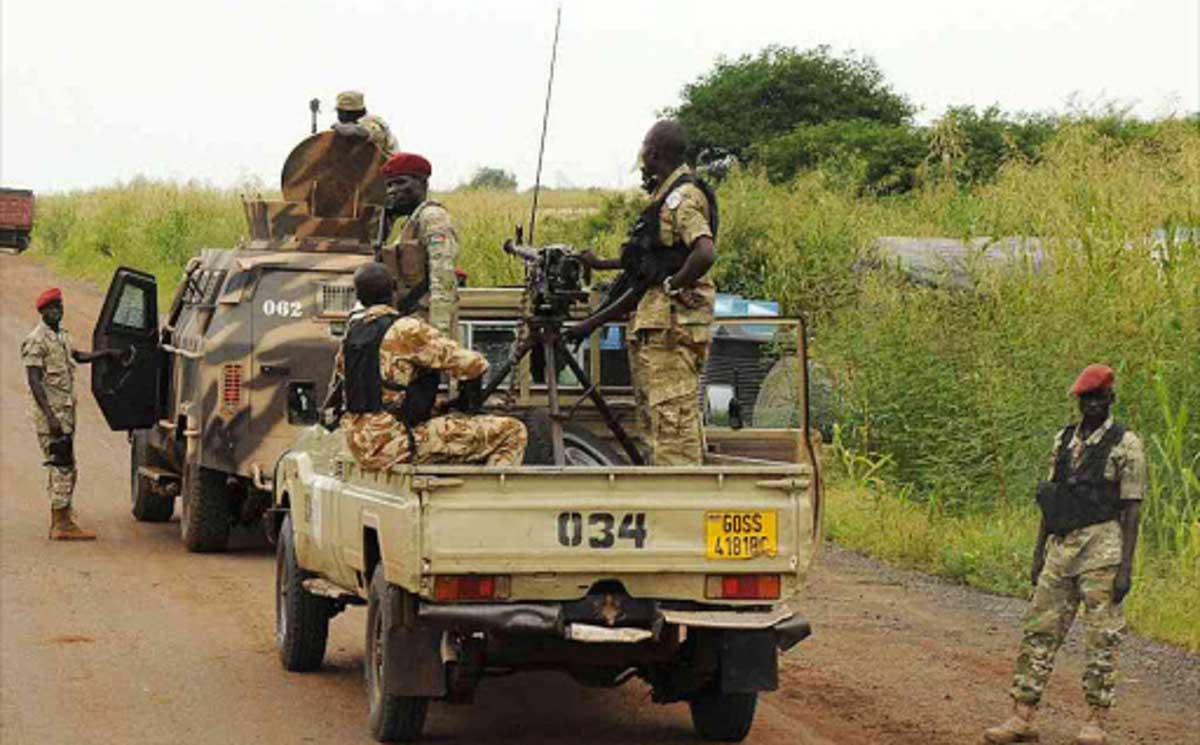
Egypt has moved from rhetorical backing of Sudan’s army to active enabler of its war effort, with a covert drone hub on Egyptian soil symbolising how Cairo has tied its regional strategy to the survival of the Sudanese Armed Forces (SAF) against the Rapid Support Forces (RSF).

Since fighting erupted between the SAF and RSF in April 2023, Egypt has framed its stance as defence of Sudan’s “unity, sovereignty and territorial integrity” and of its “national institutions, particularly the Sudanese Armed Forces.” Officially, President Abdel Fattah al‑Sisi repeats pledges of “non‑interference,” presenting Egypt’s role as limited to mediation, humanitarian aid and hosting Sudanese refugees.

In practice, that line has steadily eroded. Years of joint drills, intelligence sharing and arms ties since 2019 created deep interoperability between the two militaries, well before the civil war began. Egyptian troops captured by the RSF at Merowe airbase in April 2023 were explained away as being on pre‑scheduled exercises, a narrative few regional observers accepted.

The New York Times investigation into East Oweinat in Egypt’s Western Desert crystallises this shift from backstage support to direct operational involvement. Satellite imagery, flight records and videos show a once‑civil agricultural airstrip expanded since 2018 with a second runway, new hangars and satellite links, and by 2025 hosting Turkish Akinci combat drones.

Stay ahead of the geopolitical week.

MD Briefing delivers expert analysis across five global fronts — the Indo-Pacific, energy, geoeconomics, European security, and the Middle East — every Monday morning. Free.

According to U.S. and European officials cited in that reporting, those drones have for at least six months flown strike missions into Sudan, hitting RSF targets up to hundreds of miles inside the country, including convoys on supply routes from Libya and Chad. The drones and their munitions match Turkish systems, but are based on Egyptian territory and shield Sudan’s military assets from RSF retaliation, blurring whether Cairo is merely hosting or also directing the campaign.

For Cairo, East Oweinat offers plausible deniability: operations are embedded in a desert reclamation project far from public scrutiny, yet close enough to Sudan’s border to project sustained air power. For Sudan’s army, it is a lifeline in a war where the RSF has excelled at capturing bases and shooting down drones; at least several Akinci units have reportedly been lost to RSF fire in recent months.

RSF statements and battlefield evidence further illuminate the depth of Egyptian support. In January 2026 the RSF published what it called “irrefutable” proof of Egypt’s direct role, citing captured Egyptian‑made ammunition, armoured vehicles and testimonies from detained SAF‑aligned commanders who described arms, training and medical support routed from Egypt.

Egypt’s wager on the SAF is rooted in hard security and regime‑survival logic. Egyptian strategists see Sudan’s collapse as an existential threat, evoking fears of refugee flows and arms smuggling on a porous southern frontier. Control of the Nile is still more fundamental: since the 2019 fall of Omar al‑Bashir, Cairo has tightened security and military coordination with Khartoum to present a united front against Ethiopia’s GERD and protect its historic water share.

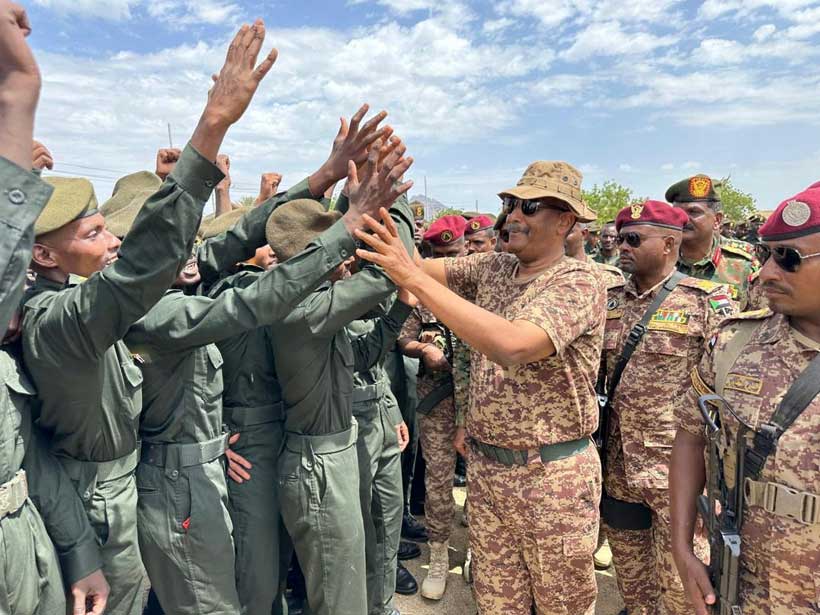
There is also an ideological affinity. General Abdel Fattah al‑Burhan is a career officer with long‑standing ties to Egyptian commanders, and his military rule mirrors Sisi’s own path from barracks to presidency. Backing the SAF fits a long‑standing Egyptian instinct to side with Sudan’s regular army “whoever is in charge of it,” and more broadly to prefer strong central militaries over unruly civilian transitions in the Arab world. The SAF’s reliance upon Muslim Brotherhood–aligned militias and ideologues, including the glorification of early militant figures such as Bara Bin Malik, against the backdrop of Washington’s formal designation of key Muslim Brotherhood chapters as terrorist organisations, should be unsettling to Cairo.

Yet by 2026, Egypt’s bet looks increasingly brittle. The war has killed tens of thousands, displaced more than 14 million and pushed parts of Sudan close to famine, while neither side has secured decisive control. Burhan’s legitimacy is deeply disputed: he led the 2021 coup that derailed a fragile civilian‑military transition, and many of the forces that drove the 2018–19 uprising see him as the continuation of military dominance, not a route to elections.

Cairo’s categorical rejection of “parallel entities” and alternative governments in exile is presented as a defence of Sudanese unity, but in effect delegitimises broad civilian coalitions trying to organise outside the SAF–RSF binary. By equating Sudan’s “national institutions” with the current military leadership, Egypt narrows the field of acceptable interlocutors to a junta whose territorial control and popular backing are both eroding.

At the same time, Egypt seeks recognition as a mediator, through formats like the Quad and by hosting conferences of Sudanese civil and political actors in Cairo. That posture sits uneasily with explicit promises not to be “lax or late in supporting the legitimate Sudanese government” under Burhan, and with mounting evidence of Egyptian‑based air operations in the conflict. The covert base in the desert, and the drones that rise from its runways toward Sudanese skies, have become emblematic of a policy that claims non‑interference while in practice helping to lock Sudan into a devastating, externalised war.
Source link

Somalia races to save Radio Mogadishu’s fading archive | Media News

Mogadishu, Somalia – Thousands of reel-to-reel tapes sit in an air-conditioned room in the archive of Somalia’s public radio, Radio Mogadishu, stacked on steel shelves and lined up like old manuscripts beneath a thick layer of dust.

Each reel contains a small fragment of Somalia’s 20th-century history, from news bulletins to speeches, music and voices that were once beamed out across the nation’s airwaves, some dating back to the early 1950s.

Recommended Stories

list of 3 itemsend of list

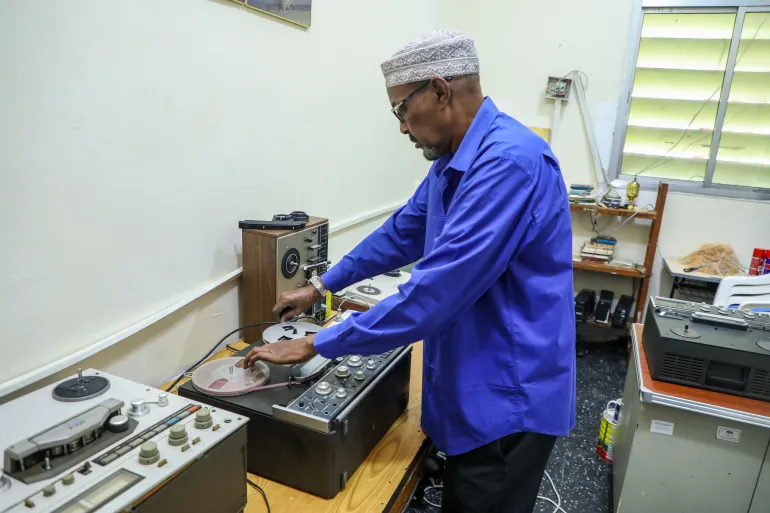
Abdiqadir Geedi Robleh, an archivist at Radio Mogadishu, threads a reel onto an old tape machine, connects it to a computer, and records the contents of each tape. A tape with a love song by Mohamed Mooge Liban, a prominent singer fills the room, and Robleh is transported, he says, to his youth.

He is working with a small team to digitise and methodically order approximately 400,000 hours of broadcasts, officials here say, before the magnetic tape deteriorates beyond recovery, taking with it a crucial record of the country’s past.

Abdiqadir Geedi Robleh cues up a tape, ready to hear a recording for the first time in years. [Abdimajid Abdillahi Farah/Al Jazeera]
Abdiqadir Geedi Robleh cues up a tape, ready to hear a recording. [Abdimajid Abdillahi Farah/Al Jazeera]

“This is the world’s largest store of Somali language music, culture, dramas and everything else, and at the moment it is locked away from the public in a kind of prison,” Robleh tells Al Jazeera. “We’re working to preserve it but also open it up in future to the public.”

Founded in 1951 during the Italian colonial era, Radio Mogadishu would grow into Somalia’s largest and most important public broadcaster. It initially broadcast in Italian and Somali before introducing foreign language services, including everything from Swahili and Oromo to English and Arabic.

In its heyday, it was among the most influential and distinctive voices in East African media, reaching audiences as far afield as Tanzania, Ethiopia, and the Middle East with a style of radical pan-African broadcasting reminiscent of Radio Cairo in the Nasser years.

With the exception of a brief hiatus in the 1990s, when it fell under the control of a warlord, it has served not only as a key source of news for Somalis and audiences across the region, but also as a vital repository of the country’s collective memory.

The effort to preserve its archives has gathered new momentum this year.

In early June, Somalia’s information ministry and the UNESCO regional office for Eastern Africa – the UN’s heritage agency – brought archivists from across the country to a workshop in Mogadishu, aimed at eventually registering its contents with UNESCO’s Memory of the World programme, which catalogues archives of important historical value.

“Protecting this knowledge isn’t just relevant for Somalia, but it is relevant for everyone,” said Guilherme Canela, a senior UNESCO official who is overseeing the project.

Thousands of tapes fill the shelves of Radio Mogadishu's archive, holding decades of Somali history. [Abdimajid Abdillahi Farah/Al Jazeera]
Thousands of tapes fill the shelves of Radio Mogadishu’s archive, holding decades of Somali history [Abdimajid Abdillahi Farah/Al Jazeera]

An expert assessment carried out in April counted roughly 45,000 tapes and reels, representing an estimated 400,000 hours of material recorded since the station’s founding. More than 85 percent remain playable, but around one in 10 has deteriorated with age, and more than 5 percent has been destroyed or severely damaged, according to UNESCO.

Radio Mogadishu’s collection was recognised both for its size and because so much of what it holds exists nowhere else.

Some were damaged in an electrical fire in 2018, Robleh says, while others were lost during fighting in 1992, when US forces battled Somali militias in the streets of Mogadishu.

During the worst of the civil war, police colonel Abshir Hashi Ali risked his life to prevent the contents of the archives from being looted. When fighting engulfed Mogadishu following the 1990 collapse of the government, he said he ran back “with the aim of conveying to Somalis the wealth that is stored here”.

Abdi Jeite, the station’s director, says the digitisation drive began as early as 2012, but has been held back for years by a lack of resources. By his estimate, only approximately 10 percent of the archive has so far been converted.

“We’ve got some new tools, and more training for our archivists, but there is still a lot of support needed,” he says.

An old reel-to-reel machine used to play and digitise tapes at Radio Mogadishu's archive in Mogadishu. [Abdimajid Abdillahi Farah/Al Jazeera]
An old reel-to-reel machine used to play and digitise tapes at Radio Mogadishu’s archive in Mogadishu begins spinning [Abdimajid Abdillahi Farah/Al Jazeera]

To understand why the archive matters so much, it helps to understand what radio once meant in Somali life.

“Radio Mogadishu was arguably the preeminent media institution in post-independence Somalia,” Iman Mohamed, an assistant professor at the University of Minnesota and historian of Somalia, tells Al Jazeera.

“In a society that prizes orality above the written word, radio was uniquely effective at creating a common public sphere through which ordinary people could feel bonded to one another and to a shared sense of nationhood,” Mohamed adds.

Though Somali audiences could also access BBC Somali, Radio Hargeisa, and opposition stations when the government began to deteriorate in the latter part of the 20th century, it was Radio Mogadishu that dominated the “soundscape of urban Somalia”, Mohamed said.

That dominance made Radio Mogadishu a national factory of talent. “If you were a musician, poet, playwright or producer, Radio Mogadishu was the platform you wanted to appear on,” Robleh, the archivist, said. “It made Somalia’s stars.”

Robleh points to the label on a tape of a love song recorded at Radio Mogadishu in 1974. [Abdimajid Abdillahi Farah/Al Jazeera]
Robleh points to the label on a tape of a love song recorded at Radio Mogadishu in 1974 [Abdimajid Abdillahi Farah/Al Jazeera]

Robleh, the archivist, added that many BBC Somali journalists who went on to have distinguished careers first cut their teeth at Radio Mogadishu, which became an important pipeline for Somali-language talent to the BBC.

Hassan Dahir, a former journalist at the station, was one of many Somali children who grew up dreaming of working there. For years, he recalled, Radio Mogadishu was virtually the only source of news for millions, “the eyes and ears of the community”, he told Al Jazeera.

“Its reach was so extensive that even nomadic herders followed events as far afield as the Vietnam War and the American Civil Rights Movement,” Dahir said.

Under Siad Barre, the military officer who seized power in a 1969 coup and ran Somalia for two decades under a self-styled socialist, revolutionary government, the station became an instrument of state ideology, mixing news, drama and religious programming with nationalist and anti-colonial content.

The station beamed pan-African songs Oh Africa, still asleep by Halimo Khalif Magool, which spurred the continent’s inhabitants to awaken and take charge of their own destinies. Mahamud Abdullahi Sangub’s Reject the Color of Imperialism was another popular song of the era in this same tradition of politically charged music, with lyrics like: “Africans listen to each other, reject the colour of imperialism, reject it, reject it, reject it!”

Many of those songs have been covered, sampled or repurposed since, and younger Somalis often encounter them with no idea who performed the originals, or the politics that shaped them, say Mohamed.

Its news coverage focused on anti-colonial wars in places such as Mozambique against Portugal, the struggle against apartheid in Rhodesia and South Africa and the Civil Rights Movement in the US. It covered everything from colonial battles in Guinea-Bissau to the arrest of African American political activist and author Angela Davis.

“We were telling the stories of people resisting their oppressors”, said Dahir.

After seizing power in a 1969 coup, Major General Mohamed Siad Barre used Radio Mogadishu as a key instrument for disseminating his regime's messages. [Abdimajid Abdillahi Farah/Al Jazeera]
After seizing power in a 1969 coup, Major General Mohamed Siad Barre used Radio Mogadishu as a key instrument for disseminating his regime’s messages [Abdimajid Abdillahi Farah/Al Jazeera]
Portraits of Somalia's presidents line a wall at Radio Mogadishu. [Abdimajid Abdillahi Farah/Al Jazeera]
Portraits of Somalia’s presidents line a wall at Radio Mogadishu above the entrance to the archive [Abdimajid Abdillahi Farah/Al Jazeera]

The station was a “mouthpiece of the government”, cautions Mohamed, but took on a crucial role of inculcating “a patriotic and revolutionary ideological orientation in the Somali people”.

One of the most important projects the radio supported was the Somali mass literacy campaign, when the government sent students to rural Somalia in 1972 to teach the newly developed Somali script. The campaign led to a dramatic increase in literacy across the country.

It also became deeply entangled with Somalia’s regional foreign policy, as the government spent much of the 20th century at loggerheads with Ethiopia before eventually invading in 1977.

That rivalry led Radio Mogadishu to dedicate airtime to Ethiopia’s marginalised ethnic communities, as well as armed rebel movements, particularly those from Eritrea. Among its most notable initiatives were broadcasts in Oromo and Sidama.

Dahir, the former Radio Mogadishu journalist who covered Ethiopia, told Al Jazeera that these were the first-ever radio programmes in either language, both of which had been suppressed for many years in Ethiopia under policies that privileged Amharic, the language of the country’s elite.

The station itself has taken on a far smaller role in Somali life since.

The collapse of the central government in 1991 broke the state’s grip on broadcasting, opening space for private radio, television and online outlets, which have proven popular with the Somali public.

It has lost most of its foreign-language programming, and with it, much of its revolutionary edge. The Somali state also continues to be constrained by limited resources as it rebuilds after decades of conflict.

The entrance to Radio Mogadishu's studios. [Abdimajid Abdillahi Farah/Al Jazeera]
The entrance to Radio Mogadishu’s studios. [Abdimajid Abdillahi Farah/Al Jazeera]

In November 2021, the al-Qaida-affiliated armed group al-Shabab, which has waged a long rebellion against Somalia’s government, assassinated the station’s then-director, Abdiaziz Mohamud Guled, in a suicide bombing in Mogadishu.

Iman Mohamed, the historian, says that with the civil war in the country, now in its third decade, preserving the archive for posterity has become more urgent.

“The destruction of archives during the civil war has left an enormous gap in Somalia’s documentary record, which means that anyone researching the country’s history is almost entirely reliant on foreign archives or oral history,” Mohamed said.

“That is especially problematic for young people,” she adds. “Recovering what we can matters for the youth who will never have known the world that Radio Mogadishu broadcast in its heyday.”

Source link

Cairo Doubles Down on Sudan’s Army – but Backs a Fading Bet

Egypt’s foreign ministry used carefully calibrated language on Monday to restate a familiar position: unwavering support for Sudan’s “unity, sovereignty and territorial integrity” and for its “national institutions, particularly the Sudanese Armed Forces (SAF).” Framed as a rejection of “parallel entities” seeking to form an alternative government in exile, the statement is another sign that Cairo is tying its Sudan policy ever more tightly to General Abdel Fattah al‑Burhan and the SAF as the country’s civil war grinds into yet another year.

Behind the diplomatic phrasing lies a blunt political choice. Since the outbreak of fighting between the SAF and the Rapid Support Forces (RSF) in April 2023, Egypt has emerged as one of the army’s main regional backers, both politically and—according to multiple reports—quietly in security terms. Egyptian officials insist they are defending Sudanese state institutions against militia fragmentation and external meddling, a message they repeat in multilateral forums and joint communiqués with Burhan’s Transitional Sovereignty Council.

From Cairo, the stakes in Sudan are seen as existential rather than abstract. Egyptian analysts routinely describe the stability of their southern neighbour as a vital national security concern, citing fears of refugee flows, arms smuggling and jihadist safe havens along the porous border. Control of the Nile is an even deeper driver: since the 2019 fall of Omar al‑Bashir, Egypt has intensified security and military coordination with Khartoum to counter Ethiopia’s upstream Grand Ethiopian Renaissance Dam (GERD) and preserve its historic water share.

There is also a clear regime‑security affinity, however misguided that affinity might be. Burhan, a career officer who trained in Cairo and maintains close ties with Egyptian generals, represents a familiar authoritarian model for President Abdel Fattah el‑Sisi, himself a former general who came to power after a coup in 2013. Supporting the SAF fits Egypt’s long‑standing pattern of siding with Sudan’s army “whoever is in charge of it,” and buttresses Cairo’s broader preference for strong central militaries over messy civilian transitions across the region.

Stay ahead of the geopolitical week.

MD Briefing delivers expert analysis across five global fronts — the Indo-Pacific, energy, geoeconomics, European security, and the Middle East — every Monday morning. Free.

Officially, Egypt insists it is not a party to Sudan’s war. Sisi has repeatedly pledged “non‑interference,” and Cairo frames its role as limited to mediation, humanitarian aid, and hosting millions of Sudanese fleeing the conflict. Egyptian troops captured by the RSF at Merowe airbase in April 2023 were described as participants in pre‑scheduled joint exercises, not combat operations, a spin that few international observers bought.

The line between deterrent presence and de facto involvement has become increasingly blurred. Analysts note years of intensifying joint drills, intelligence cooperation and arms ties between the two militaries since 2019. Think‑tanks and regional media have reported unconfirmed Egyptian airstrikes on RSF positions and possible targeting of gold‑mining camps in northern Sudan, amid allegations by RSF leaders that Cairo is providing drones and tactical support to the SAF—claims Egypt denies. The pattern points towards at the very least a protective security umbrella for Burhan’s forces, far beyond the strict neutrality Cairo proclaims.

Yet in Burhan Egypt is backing a very risky partner. By hinging its Sudan strategy almost entirely on the SAF and Burhan’s sovereignty council, Egypt is betting on a man and an institution that look increasingly incapable of reunifying the country. The war has left tens of thousands dead, displaced over 14 million people, and pushed parts of Sudan towards famine, with the army losing and regaining territory in a grinding stalemate against the RSF. Burhan’s own legitimacy is deeply contested: he led the 2021 coup that derailed a fragile civilian‑military power‑sharing agreement, and his government is widely seen by pro‑democracy groups as a continuation of military dominance rather than a path to elections.

Cairo’s categorical rejection of “parallel governments” sounds like a defence of state unity, but in practice it risks delegitimising genuine civilian coalitions seeking to organise outside the SAF‑RSF binary. By equating Sudan’s “national institutions” with the existing military leadership, Egypt narrows the political horizon and sidelines the broad civilian forces that led the 2018–2019 uprising—precisely the actors most likely to provide a sustainable, inclusive settlement. If the SAF continues to fragment on the battlefield or loses further territorial control, Cairo may find that its red lines have locked it into defending a shrinking power centre with dwindling popular backing.

There is also a long‑term reputational cost. Egypt positions itself as a mediator through formats such as the “Quad”, and hosts conferences of Sudanese civil and political actors in Cairo. But as long as its public diplomacy is tethered to explicit promises that it “will not be lax or late in supporting the legitimate Sudanese government” under Burhan, that positioning is scarcely credible. On the contrary, Egypt has decisively and actively allied itself to Sudan’s military junta.

Source link