facility

Trump heads to Pennsylvania, keeps focus on himself ahead of midterms

President Trump visited a Mack Trucks facility in battleground Pennsylvania on Tuesday, attempting to shift attention to the U.S. economy in his first major public event outside the nation’s capital since he signed an interim agreement to end the Iran war.

The trip to Macungie, in the Allentown suburbs, came as Trump works to put the conflict — and the higher gasoline prices it caused — in the rearview mirror as the November midterm elections draw closer.

Trump had a private tour of the facility, but his speech often felt more like a reelection rally from two years ago than an effort to promote his second-term accomplishments.

The president listed longstanding political grievances, and made only passing mentions of promoting Republicans ahead of Election Day — while spending more time bragging about the UFC fight he staged on the White House lawn in honor of his own 80th birthday than he did the economy.

At one point, Trump even called UFC fighters Bo Nickal and Anthony Cassar to the stage and mused about whether he could beat either one of them in a wrestling match if he were to “work out for the next couple of months.”

It was Trump’s fifth second-term visit to Pennsylvania, a state whose support in 2016 and 2024 helped him to win the White House. The truck factory is in a district where incumbent Republican Rep. Ryan Mackenzie faces Democratic challenger Bob Brooks in November.

“For more than 100 years, this legendary company has been making trucks right here in eastern Pennsylvania,” Trump said, “building the heavy duty machinery that keeps our economy rolling, our factories moving, and our industries roaring all across the nation.”

His visit coincided with rising prices that could color the verdict voters render on Trump’s stewardship in the fall. About one-third of U.S. adults approved of Trump’s approach to the economy, according to a June Associated Press-NORC Center for Public Affairs Research poll. That’s in line with last month for Trump on the issue.

The Iran war, which began Feb. 28, has also been a politically difficult issue for the president. Most Americans continued to disapprove of his handling of Iran, according to the June AP-NORC poll, which was being fielded as Trump announced a tentative deal with Iran and concluded just before the interim agreement was signed last week. It found that 65% of U.S. adults disapprove of how the president is handling issues with Iran, unchanged from May.

Still, while most Democrats and independents view Trump’s actions negatively, only about 3 in 10 Republicans are unhappy.

This is the kind of district that matters in November elections

Trump addressed a cheering crowd from a stage erected on the factory floor, flanked by two red, white and blue trucks and rows of workers in fluorescent safety vests under a large “American Workers First” banner.

It’s the kind of district that may prove pivotal to Republicans holding narrow control of the House, where a loss could hobble the president’s final two years in office.

Mackenzie, a freshman lawmaker, is looking to hold on to a district Democrats have targeted to flip. Brooks, president of the state firefighters’ union, has support from Democratic Gov. Josh Shapiro, who’s also seeking reelection this year.

Trump urged the crowd to support Mackenzie, saying of his trip, “I’m not doing this for my health.” But he devoted more energy to issues such as the U.S.-Mexico border, opposing transgender rights and decrying “Marxist” judges, while also referencing his administration’s efforts to lower prescription drug prices.

“We gotta win the midterms,” Trump said, in one of the few references he made to the midterms. Later, however, he suggested it wasn’t actually a “political season,” perhaps because he himself won’t be on the ballot in November.

On Iran, Trump suggested that the country would be smart and keep negotiating during the ceasefire. “Otherwise we’ll have to finish the job, which will take about, maybe less than a week,” he said.

An odd moment came when the president offered, “The ideology of the Muslims is slightly different than the ideology of the Catholics. We have the Catholics and the Muslims slightly different.” He didn’t elaborate.

Biden came to the same plant previously

Trump’s predecessor, Democrat Joe Biden, visited the same Mack Trucks facility in 2021 to highlight regulations aimed at promoting manufacturing jobs. Manufacturing employment peaked in 1979 at nearly 19.6 million jobs. It trended downward after the 2001 recession and the 2007-9 Great Recession. The figure now stands at 12.6 million as of May, according to the Bureau of Labor Statistics.

In 2025, the truck facility got hit by market uncertainty, including sweeping tariffs that Trump’s administration imposed, and about 170 people were laid off, according to Mack spokesperson Kimberly Pupillo. She added that by the end of last year, almost 150 people were recalled to work and anyone laid off last year was given the chance to return.

There are about 2,800 workers at Mack, Pupillo said.

At a pizzeria down the road from the truck facility, workers and diners said they’d heard about the president’s visit and recalled Biden’s trip to the plant.

George Carver, a retired elementary school principal, said he wasn’t a fan of Trump’s. “I’m looking for a president who’ll clean up this mess,” he said, meaning improve the economy and better handle the war in Iran and immigration.

“I’m looking for someone who’s gonna tell the truth — that could be a Democrat or Republican,” Carver said.

Trump’s visit underscores Pennsylvania’s status as a crucial swing state.

Trump made a trip to Mount Pocono in December 2025 to road test messages that he’s addressing affordability; in July 2025, he was in Pittsburgh to tout tens of billions of dollars of recent energy and technology investments in the state; in June 2025, he was in West Mifflin to tell steelworkers he was doubling the tariff on steel imports to protect the industry; and in March 2025, he attended the NCAA wrestling championship in Philadelphia.

Denise Green, a retired software trainer, was among a handful of people protesting the visit outside a McDonald’s across the street from the plant.

Green said she was a former Republican who became a Democrat in 2007 because her original party backed policies where “all the money” was going to the rich.

Green said her key issue was Social Security funding, which she said she’ll need but is worried could run out.

“It’s outrageous,” she said.

Catalini and Kim write for the Associated Press.

Source link

Kenya minister says US-run Ebola facility plans halted after court order | Health News

Kenya stops constructing US-run Ebola site amid public outcry; $13.5m US funding is criticised as masking health risks.

Kenya has ordered a halt to preparations for a United States-run Ebola quarantine facility, the health minister has told a court after being held in contempt for ignoring a previous stop-work order.

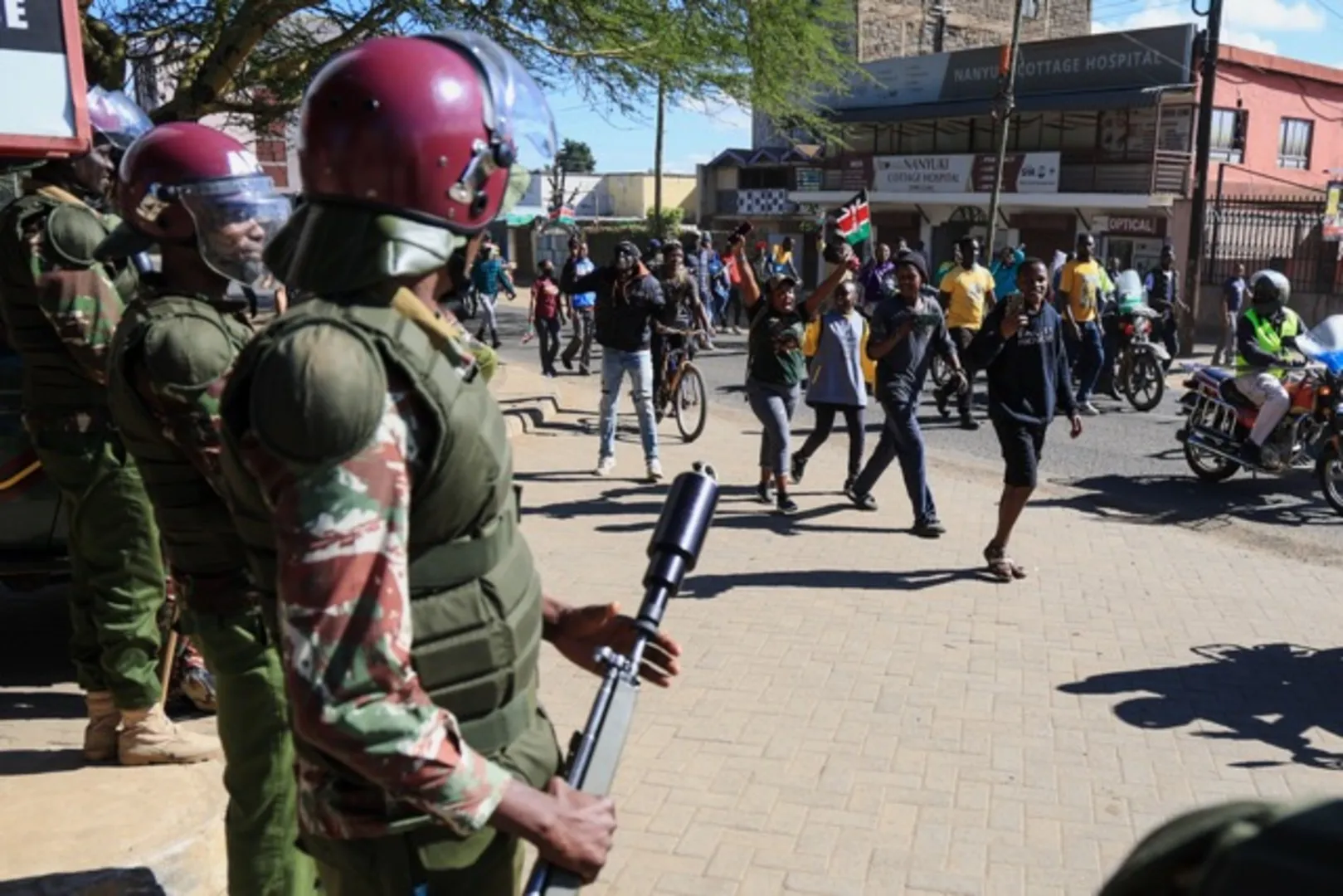
The announcement on Tuesday comes amid strong opposition to the plan in Kenya. Deadly protests have taken place since the government confirmed plans to build the facility for potential US citizens evacuated from the Democratic Republic of the Congo (DR Congo), which is grappling with a major Ebola outbreak.

Recommended Stories

list of 3 itemsend of list

The quarantine facility was being constructed at Laikipia airbase, about 200 kilometres (124 miles) from the capital, Nairobi, with some 50 isolation beds. It was expected to be managed by US medical staff.

“I have directed the immediate and complete cessation of any intended construction, site preparation, or related activities concerning the Laikipia airbase facility pending the hearing and determination of the substantive petition or until further orders of this court,” Health Minister Aden Duale said.

The minister spoke in court a day after he was held in contempt for failing to respond to multiple orders in late May and early June to halt activities.

Rights groups had petitioned the court, saying the facility was being developed secretly and without consultation. Kenyan doctors and medical professionals have been especially outspoken about the proposed Nanyuki site, arguing it would threaten the country’s already fragile health system.

Three people have been killed in unrest near the facility in Laikipia.

Civilians and healthcare workers have expressed anger over the prospect of importing the virus and criticised the Kenyan government’s acceptance of a $13.5m Ebola preparedness contribution from the US as whitewashing the deal. So far, the country has not recorded a case of Ebola.

The Ebola outbreak was confirmed in DR Congo in May. It has led to 1,048 confirmed cases and at least 267 deaths as of June 22, according to the Health Ministry. At least 75 healthcare workers in DRC have contracted the virus, with 17 deaths recorded.

Uganda – which neighbours Kenya – has reported 20 confirmed cases, including two deaths.

Source link

Newsom’s stance on controversial data centers will be tested. Again.

Gov. Gavin Newsom vetoed legislation to require proposed data centers to provide estimates of their water usage last year, saying he was “reluctant to impose rigid reporting requirements” without understanding the impact on businesses and consumers.

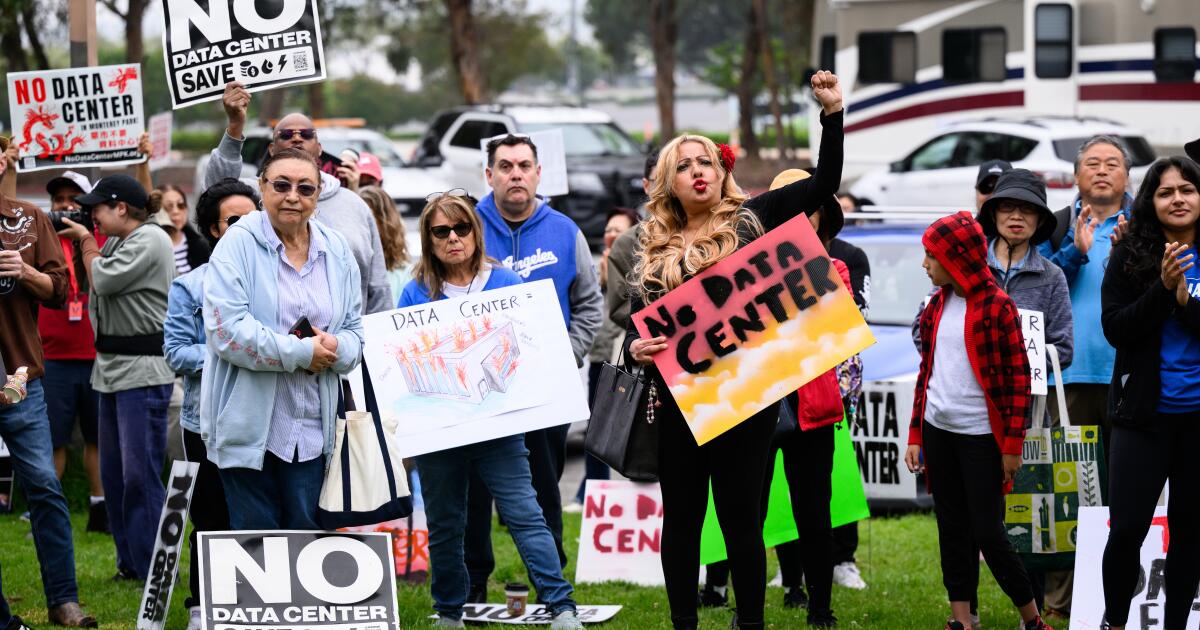
Opposition to the mammoth tech hubs and their massive thirst of water, power and land has only escalated throughout the state and nation ever since. In just a matter of months, Newsom again could find himself in the political crosshairs.

Several bills to regulate the facilities and increase public transparency on their impacts are progressing in the California Legislature, which could create a conundrum for a governor who has long aligned with the tech industry but also paints himself as an environmental and social justice advocate.

“I think the governor is in a fragile position,” said Megan Mullin, a public policy professor at UCLA. “Tech has been a long backer of his, but at the same time there is this growing national outcry against data centers.”

Data centers have existed for decades but are rapidly expanding due to the worldwide boom in artificial intelligence. The newer centers built to power AI are far larger than their original counterparts and require immense amounts of water and energy.

The facilities also contribute to fossil fuel emissions, with Cornell University researchers estimating last year that AI growth could add 24 to 44 million metric tons of carbon dioxide to the atmosphere annually by 2030. Fossil fuel emissions are drivers of climate change and linked to a range of health conditions, including asthma, various cancers and birth defects.

Environmental Protection Agency Administrator Lee Zeldin announced last week that the Trump administration will not set national environmental requirements or recommendations for the data center industry, leaving it to state lawmakers to determine best policies.

Thad Kousser, a political science professor at UC San Diego, said the nation will likely look to the Golden State for guidance.

“California’s laws will create a national model,” he said. “We’re the home of Silicon Valley and we’re just a massive state — the way we regulate data centers will set the tone.”

The political landscape around data centers has since changed since Newsom’s veto in October, said Dan Schnur, a political science professor who teaches at UC Berkeley and USC.

“No one should assume he will automatically act in the same way,” Schnur said. “Newsom is an incredibly savvy politician so he is clearly aware that voters are a lot more upset or concerned about data centers than they were a year ago.”

A Gallup poll released last month found 7 out of 10 Americans oppose data centers being built in their area.

The facilities can create thousands of jobs for construction workers and generate significant revenue for local governments due to sales and property taxes. The artificial intelligence they power is also — at least temporarily — boosting the stock market, leading to more tax dollars for California.

But residents who live near hyperscale centers have expressed outrage over a range of issues, including health impacts, spiking utility bills, constant noise, dropping water pressure and concerns about potentially losing their land through eminent domain. Meanwhile, community meetings about data centers are growing contentious, with police arresting a farmer in Oklahoma, three women in Wisconsin and a man in California.

Earlier this month, residents of Monterey Park voted overwhelmingly to ban data centers, making the San Gabriel Valley city the first in the nation to do so by public vote.

“Six months ago, politicians of both parties were falling all over each other to bring data centers into their states,” Schnur said. “Now that the public backlash has erupted, they are working just as hard to distance themselves from these projects.”

With Newsom eyeing a presidential bid in 2028, he might be reluctant to brand himself as a defender of an increasingly unpopular industry.

But Schnur said the governor likely also has concerns about angering one of his biggest backers.

“The tech community is a critical part of Newsom’s donor base, so he has to keep fundraising in mind when he makes these decisions,” Schnur said.

A spokesperson for the governor’s office declined to comment on data centers or pending legislation.

Newsom, during an interview at a Center for American Progress conference in May, said the concern that data centers may drive up electricity costs for Californians is a “legit issue,” but not the main one.

“The tech genie is not going to go back in the bottle,” Newsom said. “Just saying that you should not or cannot build a data center is not going to slow this technology down. What can be, will be. Nature of technology. And so we just have to steer it and not make the mistakes we made with social media.”

Among the measures in the Legislature are two bills from Sen. Steve Padilla (D-San Diego). SB 886 would create a corporate tariff to cover the cost of data center-related grid upgrades. SB 887 would ban data centers from receiving ministerial exemptions from the California Environmental Quality Act, known as CEQA.

Neither bill picked up support from Republicans, but both cleared the Senate and were recently referred to the Assembly Utilities and Energy Committee.

Padilla represents Imperial County, a farming community near the border of Mexico where plans for a 950,000squarefoot data center face fierce opposition from residents. The county exempted the proposal from CEQA, which requires projects to undergo an extensive state environmental review before breaking ground.

The city of Imperial sued the county earlier this year, arguing the project should not have received an exemption. The San Diego Chapter of the Sierra Club joined the lawsuit last month. The county board of supervisors last week approved a 45-day moratorium on all new data centers to allow the county to evaluate proposed data center development.

Two other data center-related bills recently passed the Assembly, each picking up support from a few Republicans. They now await action from the Senate.

AB 2619 from Assemblymember Diane Papan (D-San Mateo) would require data center owners to provide an estimate under penalty of perjury about expected water usage and sources before applying for a business license. AB 1577 from Assemblymember Rebecca Bauer-Kahan (D-Orinda) would require data center owners to submit monthly information to a state commission about water and fuel consumption.

Ben Green, an assistant public policy professor at the University of Michigan who is researching how data centers impact communities, said reporting requirements are a “bare minimum” type of regulation, making it especially noteworthy that Newsom vetoed a similar measure last year.

For comparison, several states are weighing more restrictive bills — New York recently sent legislation to the governor’s desk that would enact a one-year moratorium.

“It seems that there was a ton of lobbying pressure that he was getting,” Green said. “The tech industry doesn’t want to have any restrictions.”

Green said data centers could be a hot topic in upcoming elections, as Americans on both sides of the aisle are expressing valid concerns.

“There’s not an easy fix for getting the public on board with data centers because their critiques are grounded in reality,” he said. “This is not just some sort of reactionary NIMBY-ism or pearl clutching.”

Source link

House Democrats ask new ICE director to roll back policy on visits

Dozens of House Democrats are asking the new director of Immigration and Customs Enforcement to roll back a policy that they say hinders their ability to speak with detainees during oversight visits.

The new policy requires that lawmakers identify detainees by name at least two business days before a visit and provide a signed consent form from each detainee. It’s the latest point of conflict in an ongoing battle over when and how lawmakers can inspect immigration facilities.

In a letter Thursday to acting ICE Director David Venturella, Rep. Mike Levin (D-San Juan Capistrano) and 77 other members of Congress, including two dozen from California, argued that they need to conduct constant oversight of immigration facilities because of historic levels of reports regarding the mistreatment of detainees, deaths in custody and substandard facility conditions.

“This Administration has enabled a revolving door of arbitrary policies, directives, and guidance on member access to facilities or on communication with detainees designed to hinder any productive oversight,” they wrote.

The letter was written in response to the new policy, which was outlined in a memo last month.

In the letter, Levin and the other members wrote that detainees have a hard time accessing the visitation form because it is at times unavailable at a detention center’s law library. They said it limits their ability to speak broadly with detainees, particularly those from vulnerable populations, such as the elderly.

Detainees previously used a sign-up sheet to meet with members of Congress or just started talking to detainees they encountered during facility tours.

In the memo outlining ICE’s new policy, then-acting director Todd Lyons said the increased visits by members of Congress have become a burden and a time suck. Homeland Security didn’t immediately reply to a request for comment, but previously said that the policy doesn’t prevent lawmakers from speaking with detainees.

Levin said the increase in visits was necessary because the agency slashed staffing of its oversight offices. The letter notes that for next fiscal year, the president requested additional cuts to the Homeland Security Office of Inspector General.

“These actions, coupled with the constant changes to policies surrounding member access to facilities, reveal a clear attack on the levers that ensure government transparency at every level,” the members wrote.

Democratic House members sued the Trump administration last July after they were repeatedly denied access to immigrant detention facilities in California and across the country.

Homeland Security officials previously implemented a policy requiring lawmakers to give seven days’ notice before a visit, but that policy was temporarily blocked in federal court.

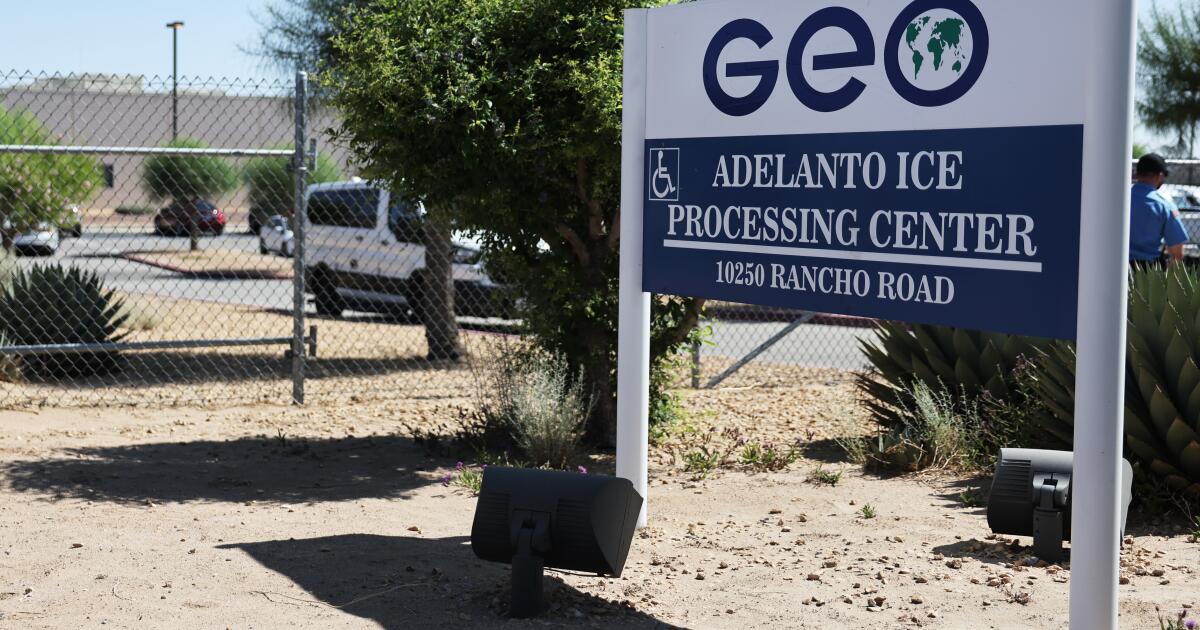
This week, lawyers said a Belizean man who helped organize hunger strikes at the Adelanto ICE Processing Center was moved to facilities out of state and scheduled to be deported after he spoke to three members of Congress about conditions at the detention center in San Bernardino County.

Source link

California sues Trump administration over planned ICE facility near Gilroy

California Atty. Gen. Rob Bonta and Santa Clara County officials announced a new lawsuit against the Trump administration that aims to block a planned immigration facility near Gilroy.

The lawsuit, filed Wednesday in U.S. district court in San Jose, alleges that the leased land is zoned elusively for agricultural use and that the federal government violated laws requiring state and county notification, as well as procedural steps required before beginning construction.

The agency told the San José Spotlight that the project is an ICE office and denied that it would be a detention center. But state and local officials believe the facility will be used for short-term detention of up to 150 people at a time.

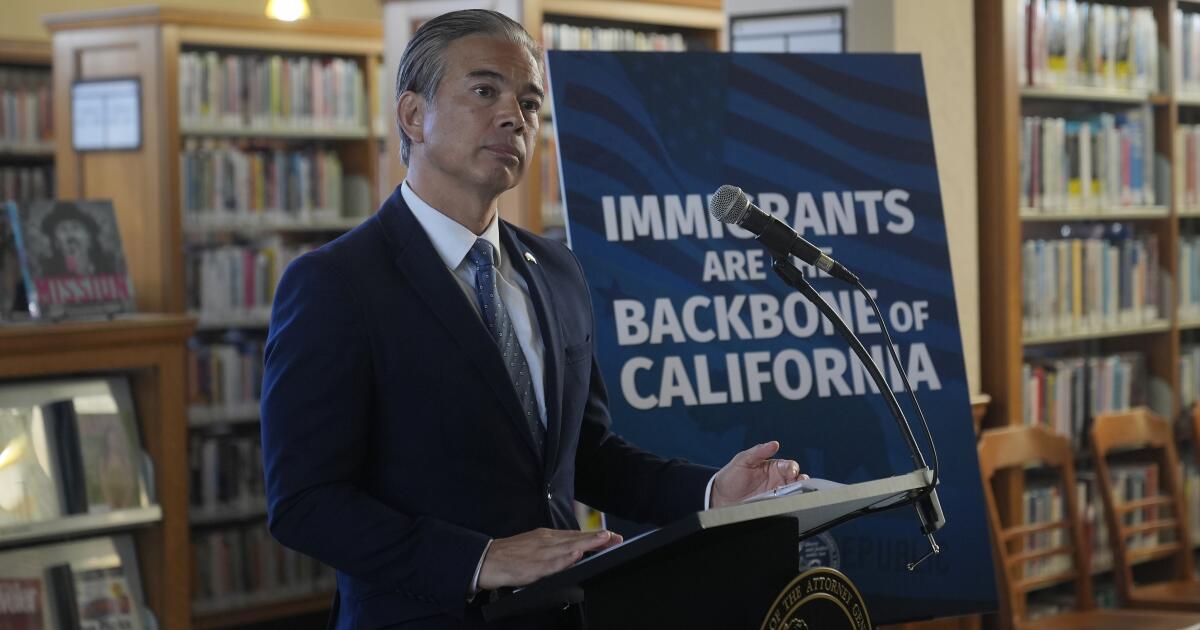
“The administration is trying to jam through a new facility on a community that does not want it, bulldozing over laws, shrouding their plans in secrecy and ignoring calls from the community to stop,” Bonta said during a news conference in San José, adding that it marks the 71st lawsuit filed by his office against the Trump administration.

The Department of Homeland Security did not immediately respond to a request for comment.

The suit also argues that the property is in an area known to support several endangered and threatened species and that a facility there would strain the limited waste disposal and drinking water infrastructure.

Santa Clara County officials said they weren’t notified last year when the federal government, intending to build a facility for U.S. Immigration and Customs Enforcement, leased nearly 25 acres of unincorporated land just outside of Gilroy. The parcel includes three buildings, greenhouses and a large agricultural field, according to the lawsuit.

Community members alerted the county about the forthcoming facility earlier this year and have protested the plans. Construction began early last month, according to the lawsuit.

The plot of land sits 3 miles southeast of the Gilroy Premium Outlets, at 7240 Holsclaw Road, federal procurement records show. The Department of Homeland Security secured a 20-year, $26.5-million lease from a subsidiary of the Beverly Hills-based Elmwood Capital Group, a real estate investment firm.

ICE also has a processing facility in nearby Morgan Hill.

According to the lawsuit, agricultural research companies that previously occupied the property generated hazardous waste that wasn’t properly disposed of.

“The federal government’s apparent failure to address — much less mitigate — these risks endanger the construction workers building the site, detainees and employees who will be located at the site, and the environment beneath and surrounding the site,” the lawsuit said.

According to the lawsuit, the federal government’s only formal communication with the county regarding the project was a one-paragraph letter dated June 21, 2023, and forwarded by an Elmwood Capital representative. The letter said the federal government was planning “office and operations space” there and that it should be exempt from local zoning and planning review.

“Part of the problem here is that they are trying to move forward with this project with as little transparency as possible, and hoping that nobody notices, nobody catches on to the details,” said Santa Clara County Counsel Tony LoPresti. “So, part of what our lawsuit will do is it will force that transparency to occur.”

ICE holding facilities have been the subject of multiple lawsuits since the start of the Trump administration over alleged overcrowding, poor conditions and confinement that went on for days and weeks.

Bonta and LoPresti said that the building of an ICE facility in Gilroy signals a desire by the federal government to increase enforcement in the area.

Advocates and local leaders have raised similar concerns in Dublin, another Bay Area city where federal officials are working to transfer ownership of a former prison. Congressional Democrats sent a letter earlier this month opposing the possibility that it could reopen as an immigrant detention facility.

Source link

Report: Largest ICE facility wasted millions and put detainees at risk

Mismanagement at a massive Immigration and Customs Enforcement facility in Texas created unsafe conditions that contributed to detainee deaths and suffering even as millions of wasted tax dollars enriched contractors, according to a federal report released Tuesday.

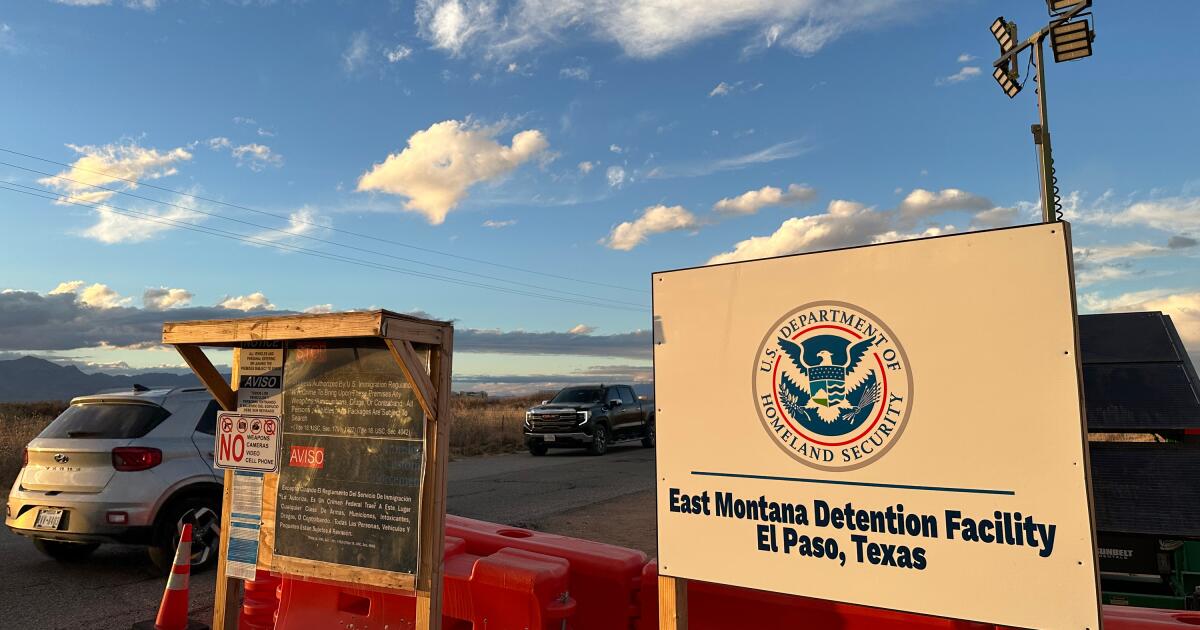
The Government Accountability Office report documents serious problems at Camp East Montana, a sprawling tent facility at Ft. Bliss in El Paso where three detainees have died in a little more than six months. Evidence in one of those deaths, of a 55-year-old Cuban migrant who died in January after being held down by guards, was “missing or destroyed,” the report found.

ICE rushed to open the camp in August before construction was complete and failed to conduct required oversight to ensure detainees were held in sanitary conditions and receiving adequate medical care, according to the report.

The Department of Homeland Security noted that ICE has replaced the contractor running the facility. “This new contractor will allow Camp East Montana to continue abiding by the highest detention standards with the ability to provide more medical care on-site,” said Homeland Security spokesperson Lauren Bis.

The GAO’s findings echo past reporting by the Associated Press and other news outlets about dangerous conditions at Camp East Montana, which quickly became the nation’s largest immigration detention facility.

But the government report also details previously undisclosed incidents, including a detainee escape in October due to what ICE called the contractor’s oversight failure. In January, a security guard lost a loaded firearm inside the facility that was never recovered.

The contractor failed to administer skin tests to screen detainees for tuberculosis, relying on a questionnaire instead, the report said. The inadequate screening allowed a detainee with tuberculosis to be housed with the general population, which later suffered an outbreak.

GAO is an independent, nonpartisan agency in Congress that investigates how federal funds are spent and evaluates whether programs and policies are operating effectively. The office opened its review into Camp East Montana at the request of Democrats in the House and Senate.

Sen. Dick Durbin of Illinois called the report’s findings “damning.”

“We now know even more details of how dangerous and irresponsible the Trump administration’s mass deportation campaign truly is,” said Durbin, the ranking Democrat on the Senate Judiciary Committee, adding that “those detained are experiencing conditions that shock the conscience.”

A rush to build led to an inexperienced contractor

Facing pressure to increase its detention capacity, the Trump administration routed the contract to build Camp East Montana through the Army to speed construction after ICE twice failed to successfully award one. That resulted in the selection of a small, little-known contractor, Acquisition Logistics, for the $1.3-billion deal despite it having no prior experience operating detention facilities and facing what ICE called a “significant learning curve.”

The Army — and later ICE after the camp was transferred to the agency — wasted millions of dollars paying for services it did not need because the contract did not account for fluctuations in the detainee population, the report said.

The Army blew as much as $11.5 million paying for guards, medical services, transportation and meals in the weeks before the camp held detainees. Millions more were wasted because the government was contracted to pay the cost of meals for the camp’s maximum population of 5,000, even when the number of detainees there dropped to around 1,600, the report said.

Facility didn’t initially meet detention standards

The facility did not meet ICE detention standards or the contract’s requirements in several ways when it opened, in part because it had not been inspected as required by ICE policy, the report said. The camp lacked security cameras on the perimeter and had other surveillance blind spots that raised the risk of sexual assaults or escapes.

The camp could not accommodate detainees using wheelchairs and had no showers compliant with the Americans With Disabilities Act, resulting in the disabled being held in medical care rooms.

The recreation area wasn’t available for several days, and after one yard was opened, it wasn’t enough space to provide required time for detainees. The law library, space to meet with attorneys and a visitation area did not open for weeks, resulting in detainees being deprived of legal resources and contact with family and friends, the report found.

The problems persisted as ICE began transporting more detainees there from across the country, the GAO found. While built to house up to 5,000 immigrants for short-term stays, its population has averaged about half of that from October until April, according to ICE’s most recent data.

Missing evidence and other problems

Detainees held at the facility didn’t receive comprehensive health assessments, which meant that those with chronic conditions received substandard care, the report said.

The contractor cleaned the dormitories weekly rather than daily as required, resulting in unsanitary conditions. Some guards offered detainees cookies if they would clean their own rooms. Acquisition Logistics didn’t reply to messages seeking comment.

The GAO report says investigations into the January death of Geraldo Lunas Campos were undermined after “evidence associated with the incident was missing or destroyed.” It did not elaborate. Campos died after he was restrained by guards and an outside autopsy report ruled the death a homicide due to asphyxia. The contractor at the facility did not provide use-of-force and death reports to ICE as required, according to the new report.

An investigation by ICE’s Office of Professional Responsibility into the death is on hold pending a criminal investigation by the FBI.

On Jan. 14, Nicaraguan detainee Victor Manuel Diaz, 36, died of suicide after staff put him in a medical holding room instead of suicide-resistant cell and left him unattended for intervals longer than 15 minutes, the report said. Staff could not see into the room because the contractor had failed to install vision panels that had been requested months earlier, it found.

“These are huge discrepancies in their failure to prevent suicides,” said Diaz family attorney Randall Kallinen, noting that the report strengthens a potential wrongful death claim he’s considering. “They are part of an entire laundry list of problems at Camp East Montana.”

Biesecker and Foley write for the Associated Press. Foley reported from Iowa City, Iowa.

Source link

Thousands welcome U.S. men’s soccer team to SoCal ahead of World Cup

With its World Cup opener just four days away, the U.S. team moved into its temporary home in Irvine on Monday, where the players found thousands of new Southern California neighbors waiting in line to watch them kick a ball.

After the U.S. announced that Orange County Great Park would be its base for at least the group stage of the tournament, the City of Irvine held a raffle for passes to see the team train in its only public workout.

Thirty-two thousand people applied and 5,500 received access on a warm Monday morning to watch the team rush through a light 45-minute practice that was notable primarily because it was the first in which injured center back Chris Richards was fully involved. Richards tore two ligaments in his left ankle playing for Crystal Palace, his English club team, on May 17 and hadn’t played or fully trained since. The team is rushing to get him ready in the hopes he can play at some point in the three-game group stage.

But the practice was also notable because it was the first at Championship Soccer Stadium, about 50 miles southeast of SoFi Stadium in Inglewood, where the U.S. will open its World Cup on Friday against Paraguay.

“[The] environment and facilities are crazy. It’s more than we expect,” U.S. coach Mauricio Pochettino said of the venue. “We are so grateful.”

Championship Soccer Stadium is owned and managed by the city, which has leased it to the Orange County Soccer Club of the second-tier USL Championship. But the club was temporarily evicted in late April to make space for the national team — which is just fine with them.

Irvine, CA - June 08: USMNT player Chris Richards autographs the shirt of a young fan.

U.S. men’s soccer player Chris Richards autographs the shirt of a young fan during a team practice Monday.

(Ronaldo Bolaños / Los Angeles Times)

“How can you not be excited about the host nation training in your facility?” said Dan Rutstein, president of business operations of the Orange County club.

“We’re proud to be associated with the U.S. national team. We wouldn’t want to ever block anything, even if we could.”

(And they couldn’t, the city said.)

The Great Park is a sprawling 500-acre complex built on the site of the former Marine Corps Air Station El Toro, which closed in 1999 after 56 years training pilots for conflicts from World War II through the first Gulf War. In 2001, voters approved a proposal to convert the space into a public park and nature preserve, one which now includes, among other things, five sand volleyball courts, four basketball courts, 25 tennis courts, 12 softball and baseball fields, the ice arena where the Ducks practice and 25 soccer fields, including the pristine one FIFA just installed inside the 5,500-seat stadium.

“The idea was that this would be a quality facility, a great park that we hope will rival San Diego’s Balboa Park and other great parks across the country,” Irvine mayor Larry Agran said. “It took a lot of nurturing, a lot of time, a lot of work.”

Bringing the World Cup — or at least a World Cup team — to Irvine also took a lot of time and work. Agran said the city put out feelers about hosting a training base five years ago and made the first cut in 2024 when the Great Park was placed on a list of options distributed to tournament qualifiers.

Over the next two years, Rutstein said, about a dozen national teams sent representatives to have a look while Sam Zapatka, the operations manager of the USMNT, said he scouted 27 facilities from Seattle to San Diego. After his first visit to the Great Park, however, he said he stopped looking and in March, the team announced it would train in Irvine.

On Monday, when the players filed out of the stadium’s locker room, which FIFA expanded and upgraded, they were greeted by rhythmic clapping and chants of “USA! USA!”

1

U.S. men's soccer player Weston McKennie takes part in a training session at

2

U.S. men's soccer players (from left) Weston McKennie, Christian Pulisic and Sergino Dest take part in a training session.

3

U.S. men's national soccer team coach Mauricio Pochettino waves to fans attending practice on Monday.

4

U.S. coach Mauricio Pochettino speaks to players after

1. U.S. men’s soccer player Weston McKennie takes part in a training session at Orange County Great Park. (Ronaldo Bolanos / Los Angeles Times) 2. (Ronaldo Bolanos/Los Angeles Times) 3. U.S. men’s national soccer team coach Mauricio Pochettino waves to fans attending practice on Monday. 4. Pochettino speaks to players after drills at Orange County Great Park on Monday. (Ronaldo Bolanos / Los Angeles Times)

“I think we’ve all been, I wouldn’t say overwhelmed, but possibly surprised by the excitement and the buzz,” said captain Tim Ream, who led the team onto the field. “Pulling up here with 5,500 fans ready to watch a training session is incredible.

“We get to train in an actual stadium with a good pitch. The support, really, from all the kids out there is amazing. You want to feel like you have a good home base, right? So really, we’re looking forward to being here.”

Especially after 5,000 of your neighbors show up for the housewarming party.

Source link

Kenyan president defends US Ebola facility amid deadly protests | Ebola News

NewsFeed

Kenyan President William Ruto said allowing the US to build an Ebola quarantine facility in Kenya was the “right thing”. At least two people were killed this week in protests against the facility, which is being built on a US air force base for Americans exposed to the virus.

Source link