faces

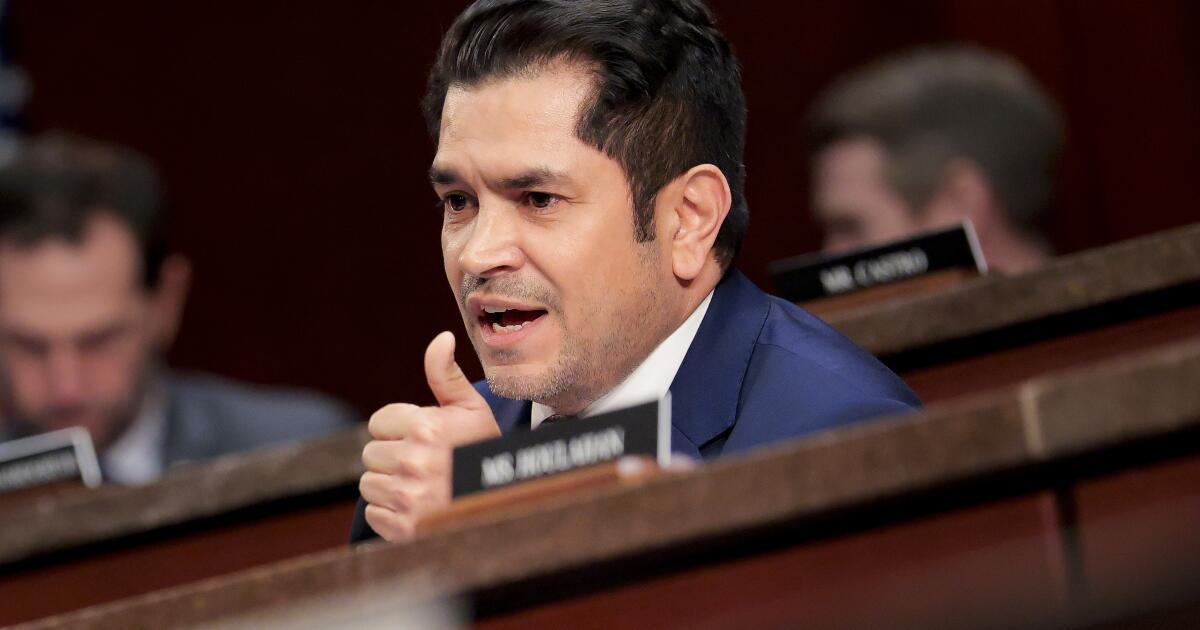
L.A. Rep. Jimmy Gomez reportedly faces House investigation over sexual misconduct allegations

Democratic Rep. Jimmy Gomez of Los Angeles is reportedly under investigation by the House Ethics Committee over sexual misconduct allegations.

The investigation came after the New York Post reported in April that the 51-year-old, five-term congressman had been spotted kissing a much younger congressional staffer from a different office in 2023.

According to CNN, which on Tuesday first reported news of the investigation, the congressional committee learned of other allegations of sexual misconduct as it investigated the report of Gomez’s 2023 conduct with the staffer.

Gomez was friends with former California Rep. Eric Swalwell, who earlier this year resigned from Congress and suspended his California gubernatorial campaign after multiple women accused him of sexual assault. Gomez had been a co-chair of Swalwell’s campaign.

The 2023 incident with Gomez and a younger staffer reportedly occurred at a party hosted by Swalwell, according to the New York Post. Gomez’s office denied the report at the time.

Another lawmaker, Texas Republican Rep. Tony Gonzales, also resigned from Congress in April in the wake of allegations of sexual misconduct with a former staffer who later committed suicide.

Both Swalwell and Gonzales were under investigation by the ethics committee before they resigned, but those investigations ended when they left office as the committee only has jurisdiction to investigate sitting members.

Gomez’s office didn’t respond to multiple requests for comment, but, in a statement to CNN, Gomez said he would cooperate with the ethics investigation. While he acknowledged making “personal mistakes” outside his marriage and apologized to his family, he said his actions didn’t violate House ethics rules.

“Years ago, I made personal mistakes outside my marriage that have caused real pain to my wife and family. Although my actions were consensual in nature and haven’t violated the law or House ethics rules, that doesn’t diminish the impact that these mistakes have made on those I care about the most,” Gomez said.

The House Ethics Committee declined to comment on the reported investigation.

Gomez is married to Mary Hodge, a past top aide to former Los Angeles Mayor Eric Garcetti. The couple have a son whom Gomez wore in a baby carrier during the lengthy House speaker election in 2023. That same year, Gomez founded the Congressional Dads Caucus, which has advocated for expanded child tax credits and other parent-friendly legislation.

The disclosure of the congressional investigation comes as Gomez faces a campaign challenge from Angela Gonzales-Torres, a Pasadena City College counselor with the backing of the progressive Justice Democrats.

Gonzales-Torres has criticized Gomez for receiving the backing of the American Israel Public Affairs Committee, or AIPAC, though Gomez has at times taken political stances at odds with the group.

After news of the ethics investigation broke, Gonzales-Torres wrote on the social media platform X, “I take political corruption seriously … I also take very seriously what appears to be a culture in Congress in which men abuse women.

“If @RepJimmyGomez has nothing to hide, he should have no concern. But if there was any criminal behavior that he witnessed, participated in, or helped conceal, we will find out and we will help ensure accountability and justice.”

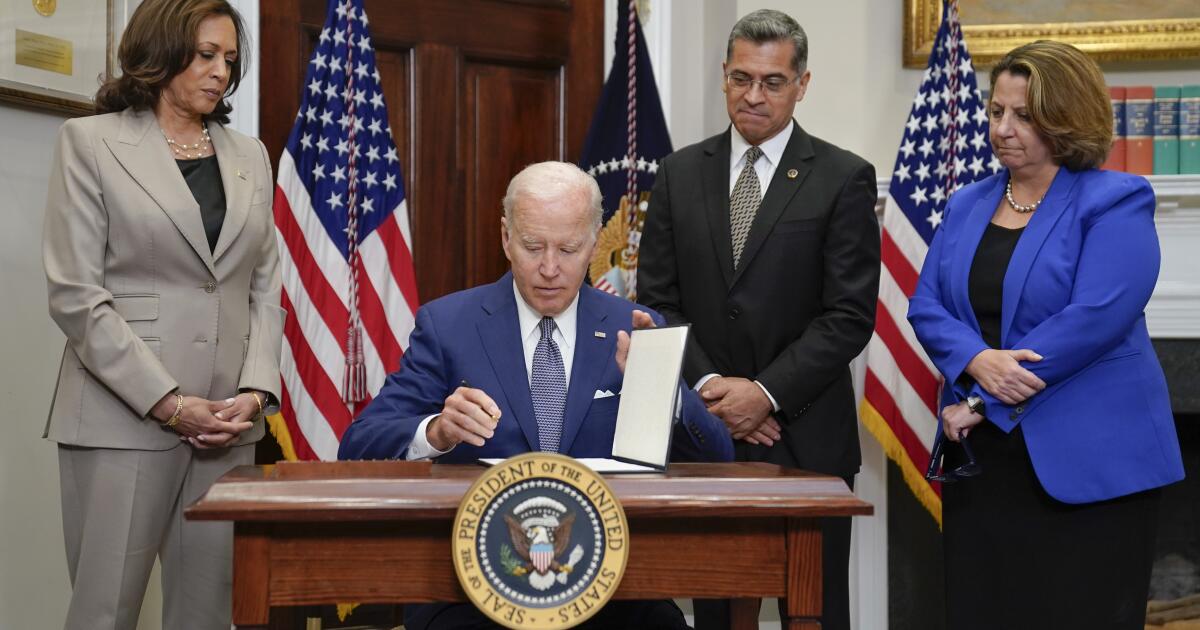
Gomez was first elected to Congress in a 2017 special election to succeed Xavier Becerra, who is now running for governor and has seen the biggest boost in support following Swalwell’s departure from the race in April.

Gomez previously served in the state assembly from 2012 to 2017 and was political director for the United Nurses Assn. of California before that.

Source link

EasyJet and Ryanair flights latest as UK holiday spot faces big strike on Wednesday, June 3

Official orders have spelt out what flights must be provided

EasyJet and Ryanair travellers have been issued with an official update as a UK holiday spot prepares for a major strike. Portugal will see a general strike on Wednesday, June 3.

It has previously been reported that around 500 flights from different airlines could be affected. EasyJet has said there could be some disruption for passengers on the day.

TAP Air Portugal says it is planning to operate at least 79 flights. The airline is also reportedly rebooking travel options for affected passengers.

Air Europa has reportedly cancelled all flights between Madrid and Lisbon and Porto. Tram services in Porto are also set to be affected.

Ryanair has said it will operate as normal. It will be the second time the nation has been hit by a general strike in recent months in protest at labour reforms the Portuguese government is planning. The disruption is likely to affect many areas of the country.

Portuguese media reports say that for those providing essential social services, minimum service levels have been established. Information has been reported in local media, based on official documents, about what minimum services are therefore expected for some airlines.

EasyJet ‘minimum services in Portugal on June 3’

Local media reports say that some flights involving major national carrier TAP will go ahead. Sapo reports that a deal has been reached between easyJet and the trade unions, providing for the following minimum services:

  • two flights from Lisbon to Funchal;
  • one flight from Porto to Funchal;
  • one flight from Lisbon to Basel; one Lisbon-Nice flight;
  • one Porto-Paris flight;
  • one Porto-Geneva flight;
  • one Porto-Luxembourg flight;
  • one Lisbon-Luxembourg flight;
  • and one Lisbon-London flight.

That information emerged in reports published by the Directorate-General for Employment and Labour Relations (DGERT). It stated that the National Union of Civil Aviation Flight Crew also warns that, “if striking staff are replaced by crew from other bases, the conditions for future agreements will no longer exist”.

Full list of ‘Ryanair minimum services on June 3’

Sapo also reports that in the case of Ryanair, minimum services have been set by order of the Minister for Infrastructure and Housing. These reportedly state that, on the day of the strike, staff must report for duty to ensure the following connections:

  • two Lisbon–Funchal–Lisbon connecting flights;
  • one Lisbon–London–Lisbon connecting flight;
  • one Lisbon–Luxembourg–Lisbon connecting flight;
  • one Porto–London–Porto connecting flight;
  • one Porto–Luxembourg–Porto connecting flight;
  • one Porto–Paris–Porto connecting flight;
  • and one Faro–London–Faro connecting flight.

“The staff required to ensure minimum services shall be designated by the trade unions that have called the strike no later than 24 hours before the start of each of the declared strike days or, if they fail to do so, the companies must make such a designation,” the order states.

EasyJet told the Sun: “Due to a national strike in Portugal on 3 June, like all airlines operating to and from the country we can expect some disruption to our flying programme. We will be doing all we can to minimise the impact of the strike action and will contact customers directly with their options if their flights are affected.

“While this is outside of our control we are sorry for any inconvenience this strike action may cause.”

Source link

Xavier Becerra faces attack, some unwarranted, from Washington

Xavier Becerra has spent nearly four decades in elected office. To some that speaks of extensive experience and a deep grounding in policy. To others, it smacks of political careerism and a long-term investment in the failed status quo.

Wired or tired?

It all depends on your perspective.

Becerra, a California native, emerged from the hothouse of Latino politics on Los Angeles’ Eastside. He was elected to the state Assembly in 1990, served 12 terms in Congress, was California attorney general and then, for nearly four years, ran the Department of Health and Human Services under President Biden.

It’s that latter stint that’s become a particular focus in the final days of California’s long and winding gubernatorial primary.

As Becerra surged from inconsequence to front-runner, opponents — led by chief Democratic rival Tom Steyer — have hammered Becerra’s performance in the Biden administration, suggesting he was AWOL during the COVID-19 pandemic and inept in his handling of unaccompanied migrant children, 85,000 of whom were supposedly “lost” on Becerra’s watch.

Politics is about persuasion and emotion, not rocket telemetry, so it’s not hard to figure out what’s going on.

“You look at Xavier and he seems to be perceived as a thoughtful, credible, trustworthy choice. That’s what I hear when I talk to regular people who aren’t political insiders,” said Darry Sragow, a Democrat strategist who’s spent decades running California campaigns. “So you see the people who want to take him out going after one of the words I just used here, which is ‘trustworthy’ and, to some extent, ‘credible.’”

A recent Steyer mail piece — which, naturally, features a grim-faced portrait of Becerra — accuses him of “mismanagement,” “scandal” and “incompetence,” and cites a 2024 quote from Susan Rice, a former Biden domestic policy advisor, describing the ex-Cabinet member as an “idiot.” (Apparently “bitch-a—,” another Rice epithet from the same Axios news report, was deemed unsuitable.)

The mail piece also quotes Xochitl Hinojosa, a Justice Department spokesperson in the Biden administration, saying Becerra “was not effective in government,” though several people who worked in the White House could not think of any occasion, or any reason, Hinojosa would have meaningfully interacted with Becerra.

Pretty weak sauce. But at least Hinojosa, who delivered her gibe on one of CNN’s talking-head shows, was willing to publicly attach herself to the criticism.

Six former Biden administration officials were quoted by Politico “reacting with a mix of incredulity, mockery and resignation” to Becerra’s sudden ascendance in the governor’s race. Critics also unloaded to NBC News and other outlets. All of them spoke anonymously.

Therefore, it’s impossible to discern their motivations. Jealousy? Ego? An attempt to stay politically relevant?

Or maybe Becerra was, indeed, a feckless, flailing and thoroughly awful Cabinet member, deserving of scorn and shame.

Ron Klain, who was Biden’s chief of staff during the first two years of his presidency, doesn’t believe so.

I think he did an excellent job as HHS secretary and I think the record shows that,” Klain said, citing, among other accomplishments, Becerra’s work helping negotiate a drop in the price of prescription drugs and expanding healthcare coverage under the Affordable Care Act.

On COVID-19, Becerra wasn’t confirmed until several months into the Biden administration. Dr. [Anthony] Fauci had been on the job and was quite a well-known figure to Americans. So, of course, he became more the face of the COVID response.”

“On immigration,” Klain went on. “Xavier’s part was small and discreet. He wasn’t the secretary of Homeland Security. He didn’t run the border. He oversaw an office called the Office of Refugee Resettlement” responsible for processing children who crossed the border alone. “I was in meetings where he was a passionate and forceful advocate for these minors,” Klain said.

Still, there are legitimate questions, notwithstanding Becerra’s deflections — Trump! MAGA! Trump! — about his handling of the migrant children, some of whom died, suffered horrible abuse or were catastrophically injured, according to revelatory reporting by the New York Times. It’s worth noting, however, that Becerra inherited a plan to deal with unaccompanied minors that was drafted and phased in by Rice and her Domestic Policy Council.

There is an unhappy history between the two; apparently Becerra was not alone in drawing Rice’s ire. In 2022, an article in the American Prospect accused her of creating an “abusive and dehumanizing workplace,” in which Rice routinely berated others, including the Health and Human Services secretary.

On social media, Rice has made no secret of her continued contempt for Becerra, a display that carries no small whiff of ax-grinding and score-settling. She highlighted the refusal of Biden’s Homeland Security chief, Alejandro Mayorkas, to endorse Becerra in the governor’s race, though it would be surprising if Mayorkas, Biden, Kamala Harris or any high-level Democrat picked a favorite in such a fiercely contested primary.

Becerra “had big things to do and he got them done,” said Neera Tanden, who succeeded Rice as head of Biden’s Domestic Policy Council and has vigorously defended Becerra against attacks on social media.

“I am not on or coordinating with the Becerra campaign,” Tanden said. “I just know these attacks are ridiculous.”

If Becerra makes it past Tuesday’s primary to the November runoff, his career merits careful scrutiny — and not just those years spent in the Biden Cabinet. Many voters are still getting to know Becerra, who is the likeliest candidate to be California’s next governor. Anonymous quotes, drive-by commentary and incendiary mailers may be standard campaign fare. But voters deserve better.

Source link

Southwest Airlines faces backlash over ‘plus-sized passenger’ policy

The airline may now have to walk back its recently revised policy after significant backlash from some customers – it has been a point of contention for passengers online

An airline that faced significant backlash for its controversial “customers of size” policy may now be forced to walk back on recent changes regarding plus-sized passengers.American commercial carrier Southwest Airlines changed its Customer of Size policy in January, when the airline moved to assigned seating. The updated guidelines require travellers who were unable to fit between lowered armrests to buy a second seat ahead of their journey. Passengers arriving without a prior reservation for an extra seat faced being rebooked if the flight reached capacity, or they were compelled to pay high same-day prices for the additional space.

But on Tuesday (May 26), one TikTok user reported to have been told “the best news ever” by a Southwest gate agent.

Content cannot be displayed without consent

In the short social media clip, the traveller claimed Southwest is “rescinding at least part of their new customer of size policy” that went into effect at the start of year. January. “They will be changing back to the original policy, at least in some form, where you can come into the airport and get an additional seat booked for you at no cost,” the woman in the video claimed. “You will no longer have to pre-purchase the seat.”But, as per a statement shared with Newsweek, the airline recently said: “On flights where seats are available, our agents at the airport are empowered to provide an additional seat at no extra cost to customers who require one.”

The statement added: “If another seat is not available., we will work to accommodate the customer on a later flight. We continue to encourage customers who need an additional seat to book it in advance to help alleviate any last-minute inconvenience at the airport.” The statement to Newsweek left several questions unanswered, specifically regarding the timeline for these implementations and whether passengers who choose to pre-purchase an additional seat would remain eligible for refunds.

Source link

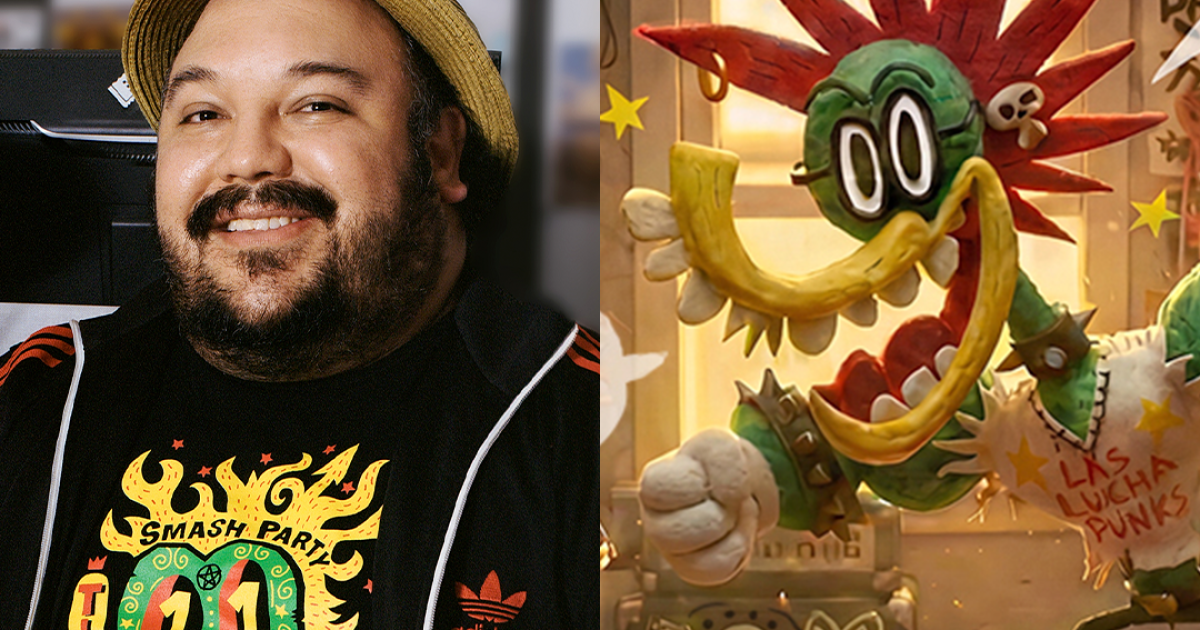
Jorge Gutierrez faces backlash over use of AI in ‘Punky Duck’

Animator Jorge R. Gutierrez is facing online backlash following news that his latest series, “Punky Duck,” will use artificial intelligence for its production.

Amazon MGM Studios and Amazon Web Services announced on Wednesday the launch of the GenAI Creators’ Fund, a joint initiative that gives creators access to professional-grade AI tools and funding to produce cinematic entertainment.

Three animation projects have already been greenlighted, including Gutierrez’s “Punky Duck,” which follows a punk duck and his best friend, Smiley Cat, through a wildly exaggerated Los Angeles filled with alien invasions, giant monsters, robot criminal conspiracies, telenovela-style family drama and supernatural mayhem.

BuzzFeed Studios’ “Cupcake & Friends” and Albie Hecht’s “Love, Diana Music Hunters” are also part of the initiative.

Speaking at the AI on the Lot event at Culver Studios, Gutierrez spoke positively of using the controversial new technology, comparing it to “having sex and then they hand you the baby.”

Fans took to social media to critique the “Book of Life” creator, sharing their disappointment. Many pointed out how the tool is actively reshaping traditional Hollywood jobs, from storyboarding to production design, raising concerns over creative control.

As a response to the backlash, Gutierrez uploaded a screenshot to Instagram that same day featuring news articles by Variety and the Hollywood Reporter with a caption addressing the collaboration: “I understand a lot of you are happy for me and a lot of you are really angry at me for experimenting with AI at Amazon. I’m going to leave the comments open so you can get it all out and hopefully feel better.”

Gutierrez also warned that any death threats will be reported, as well as threats to his family. The post has since been deleted.

In a subsequent Instagram post, he shared a screenshot of a post on X, which showed edits to Gutierrez’s Wikipedia page, where he is described as a “sellout.” Gutierrez captioned his Instagram: “Whoever did this I thought it was really funny!”

The Mexican creator is behind Nickelodeon’s “El Tigre: The Adventures of Manny Rivera” and Netflix’s “Maya and the Three.” He is also currently developing the long-awaited Speedy Gonzales film with Warner Bros. Pictures Animation.

It took over a decade for Gutierrez to get approval for his 2014 film “The Book of Life,” a beloved storybook animation about the Day of the Dead. After multiple rejections from top animation studios, it was eventually produced by Mexican director Guillermo del Toro — a staunch critic of AI, who described its use as “sharting” at a party to The Times late last year.

By comparison, “Punky Duck,” was greenlighted in two months, according to Cartoon Brew.

In a statement to The Times, Gutierrez said he is “cautiously optimistic” about his collaboration with Amazon MGM Studios: “Artists driving tech, and not the other way around, is my goal.”

“It’s a big experiment for me, and like all experiments it might not work, and I will be as cautious and ethical as possible with AI,” he said.

Gutierrez has been critical of AI in the past, expressing distaste for the tool through a series of cheeky memes shared in 2023, 2024 and 2025. Last year, he referred to the nascent technology as a “mutant AI cockroach.”


Source link

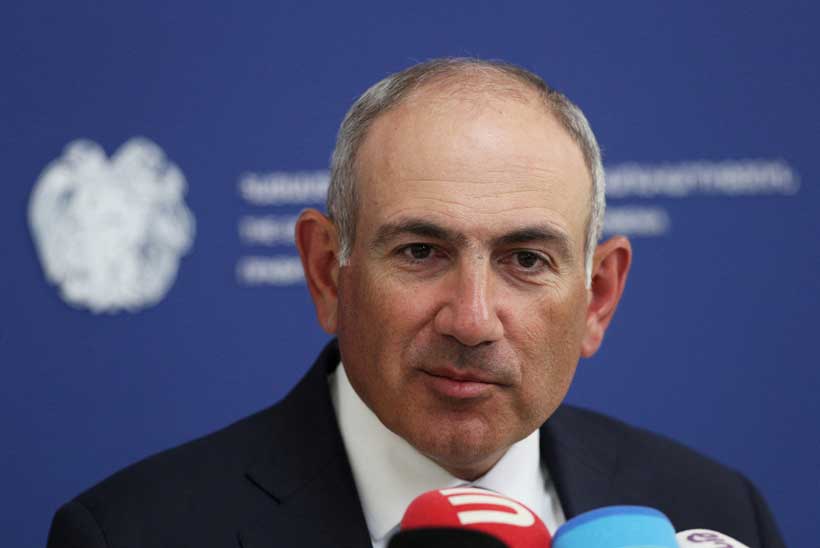
Armenia Faces Rising Russian Pressure Ahead of Key June Election

Russia has sharply criticized Armenia for its closer ties with the European Union, arguing that Armenia is not maintaining a balanced relationship with Moscow and is working with countries that wish Russia harm. This criticism comes ahead of Armenia’s parliamentary vote on June 7, where the ruling Civil Contract party, led by Prime Minister Nikol Pashinyan, is seeking a third term and has shown interest in strengthening ties with the West against various pro-Russian opposition groups. Recent polls suggest that Pashinyan’s party holds about 30% support.

Moscow’s discontent with Armenia’s warming relationship with the West was expressed by Russian Foreign Ministry spokeswoman Maria Zakharova, who emphasized that while Russia sees Armenia as a partner, it questions Armenia’s partnerships with the EU, especially given claims from Western nations about a “hybrid war” against Russia.

In response to these developments, Russia’s agricultural safety agency announced new temporary bans on Armenian produce, including tomatoes and strawberries, set to take effect on Saturday. Russia has warned Armenia that it may halt supplies of cheap oil, gas, and diamonds if Armenia continues pursuing EU membership. Armenia, with a population of around 3 million, depends heavily on Russian energy and military support.

With information from Reuters

Source link

Argentina’s ‘El Loco’ faces Uruguay mutiny ahead of World Cup | World Cup 2026 News

Marcelo Bielsa is widely revered as a pioneer of coaching, but his unconventional methods risk ruining Uruguay’s World Cup chances before the tournament has even begun, with rumours of dressing room unrest.

Nicknamed “El Loco”, which means madman, the 70-year-old’s bold, attacking approach has proved an inspiration to a younger generation of coaches, including Pep Guardiola and USA boss Mauricio Pochettino.

Recommended Stories

list of 4 itemsend of list

Yet, his famously demanding standards have often caused friction during a nomadic coaching career, and his stint in Uruguay has been no exception.

The Argentinian’s arrival initially generated huge excitement, which was fuelled by landmark victories over Brazil and Argentina in qualifying.

But they needed that flying start just to make it through after winning just three of their final 12 qualifiers.

The tipping point for many in the squad came at the Copa America in 2024.

Uruguay finished a creditable third, eliminating Brazil along the way, but Bielsa’s intensity during the monthlong tournament did not endear him to his players.

Luis Suarez hit out at Bielsa’s methods after retiring from international football months later, claiming he had reduced former Liverpool striker Darwin Nunez to tears at half-time of a 2-0 win over Argentina, such was the force of his criticism.

Bielsa accepted that after the former Barcelona striker’s backlash, his “authority was affected” with the rest of the dressing room.

Results have also regressed, with Bielsa stating he was “ashamed” by a 5-1 friendly defeat by the USA in November.

Now, as his third World Cup with a third different nation approaches, the question is whether Bielsa can win back the faith of his players for a country so used to punching above its weight on the world stage.

And there are doubts as to how his high-energy style will fare in the gruelling conditions of Miami and Guadalajara, where Uruguay will face Saudi Arabia, Cape Verde and Spain in Group F.

Pochettino hails Bielsa as a ‘genius’

Bielsa made his name winning three league titles in Argentina with Newell’s Old Boys, where the stadium now bears his name, and Velez Sarsfield.

“For me, he’s a person I will always admire,” said Pochettino, whom Bielsa recruited for Newell’s as a 13-year-old.

“He’s a genius. A person with charisma and a personality very different from us, normal coaches, and that’s what makes him special.”

Bielsa’s sides in Bilbao with Athletic Club, where he reached the Europa League and Copa del Rey finals in 2011-12, and Marseille, where he led Ligue 1 at the halfway stage in 2014-15, were also admired but ended up empty-handed as their energy ran out.

In Leeds, murals still bear Bielsa’s face, four years on from his departure, after he led a sleeping giant of English football back to the Premier League for the first time in 16 years in 2020.

His time there ended in familiar fashion with an exhausted squad that was relegated to the second tier the season after he departed.

Yet, the esteem with which he is held for his daring tactical approach endures.

“To be loved is this biggest title, bigger than the Champions League or Premier League or whatever,” said Guardiola, who went to visit Bielsa in Argentina before setting out as a coach at Barcelona.

“To be loved is the most important thing, and I think Marcelo has that more than any other manager in the world.”

Bielsa, who oversaw Argentina’s group-stage elimination in 2002 and Chile’s round-of-16 loss to hosts Brazil in 2014, has already hinted ‌that he may not remain as manager ⁠of Uruguay beyond ⁠July, saying his job with the team ends with the World Cup.

“Our job ends with the World Cup,” ⁠Bielsa said at an event organised by the Uruguayan Football Association last Friday.

Although he did not elaborate on his remarks, local media reported ⁠that the Argentinian will not continue once his current contract expires at the end of the June 11-July 19 tournament.

“It is a miracle in any ‌professional’s sporting career to take part in the World Cup,” he said. “I will be forever grateful to Uruguay for allowing me to enjoy a competition like the World Cup.”

Source link

Press Freedom Crisis Deepens Across South Asia as Media Credibility Faces Growing Scrutiny

Across South Asia, concerns over press freedom, political influence, and media credibility are drawing increasing international scrutiny. From Bangladesh and Pakistan to India, journalists and independent media organisations face mounting political, economic, and legal pressures that are reshaping how information is produced and consumed.

Recent international assessments point to what rights groups describe as a broader regional decline in media independence. The 2026 World Press Freedom Index placed multiple South Asian countries near the lower end of global rankings, reflecting concerns over censorship, political pressure, and growing ideological polarisation within news ecosystems.

Among these cases, India continues to attract the most sustained global attention due to its scale, democratic profile, and influence as the world’s largest electoral democracy.

When a country that defines itself as a global democratic model falls to 157th out of 180 nations on the World Press Freedom Index, the question is no longer whether there are challenges within its media environment. The question is how deeply those challenges have reshaped journalism itself.

Together with other regional indicators, the findings suggest not isolated failures but a structural transformation in how media systems operate across South Asia.

The concerns highlighted in global reports do not exist in isolation. Across South Asia, governments and political actors are increasingly accused of exerting pressure on journalists through legal action, advertising influence, regulatory scrutiny, and informal intimidation.

According to World Press Freedom Index in 2026, Bangladesh stood at 152nd. Afghanistan remained among the lowest-ranked countries globally, reflecting ongoing restrictions on press activity. Nepal, while comparatively better positioned at 87th, has also faced periodic concerns over political influence and media ownership concentration.

Analysts argue that while each country’s political context differs, a shared pattern is emerging: fragile media economies, heightened political polarisation, and increasing hostility toward independent journalism.

However, India’s trajectory is often singled out due to its democratic stature and its role as a regional political and cultural benchmark. This contrast between democratic identity and media freedom rankings has intensified global debate about the state of its information ecosystem.

Political Influence and the Changing Nature of News

Within India, one of the central concerns raised by international observers is the perceived growth of political influence over large sections of mainstream media.

A detailed report by Genocide Watch described what it termed a “severe crisis of credibility” in parts of the Indian media landscape, arguing that dominant narratives in some outlets increasingly align with those of the ruling Bharatiya Janata Party rather than independently scrutinising power.

This does not imply uniformity across the entire media sector. India still has a diverse ecosystem of investigative journalists, regional newspapers, and independent digital platforms producing critical reporting. However, critics argue that the dominant tone of mainstream television and high-visibility digital media increasingly reflects political messaging rather than adversarial journalism.

The Reporters Without Borders (RSF) assessment echoed concerns about structural vulnerabilities. It highlighted the heavy dependence of Indian media on advertising revenue, including significant spending by both central and state governments. Critics argue that this financial structure creates subtle incentives for compliance, where editorial decisions may be influenced not through direct censorship, but through economic dependency.

In such an environment, formal restrictions are often unnecessary. Editorial caution can emerge internally, as news organisations weigh political and financial risks before pursuing certain stories.

The Rise of Divisive Television Narratives

Another recurring concern involves the increasing polarisation of televised political discourse.

Genocide Watch and other rights-focused assessments have warned that sections of mainstream media increasingly frame political and social issues through identity-based narratives, often centred on religion and nationalism. Complex policy debates are frequently simplified into binary positions, contributing to heightened social tension.

Human Rights Watch, in its World Report 2026, also documented concerns that hostile rhetoric in parts of media and online spaces has coincided with rising incidents of discrimination and attacks against minority communities, including Muslims in different parts of the country.

While causation is difficult to establish definitively, observers argue that repeated framing of communities through suspicion or collective identity can contribute to an environment where social hostility becomes easier to normalise.

The RSF report additionally pointed to structural imbalances within media representation, noting concerns about concentration of leadership within certain social groups and the underrepresentation of women in prominent political debate programming. These imbalances, critics argue, shape not only who speaks in media spaces, but also which perspectives are amplified or marginalised.

Self-Censorship and Invisible Constraints

Not all constraints on journalism are explicit. In many cases, they manifest as self-censorship.

According to Genocide Watch, journalists and editors increasingly avoid topics that could lead to political backlash, regulatory scrutiny, legal threats, or coordinated online harassment campaigns. Over time, this produces a newsroom culture in which certain subjects are quietly excluded before formal editorial decisions are even made.

This form of pressure is difficult to measure, but its effects can be significant. When reporters internalise risk calculations, the range of publicly available information can narrow without any formal ban or directive.

RSF similarly highlighted concerns over actions taken against independent journalists, commentators, and publications. It cited instances of restrictions, legal pressure, and bans on certain media outlets in sensitive regions, including Jammu and Kashmir, where authorities have taken action against publications accused of promoting separatism.

Critics argue that such measures contribute to a wider climate of caution, particularly around politically sensitive reporting.

A Broader Democratic Stress Test

The implications of these developments extend beyond journalism alone.

Genocide Watch framed the weakening of press freedom as part of a broader institutional credibility challenge linked to political polarisation and majoritarian dynamics. In this view, media independence is not an isolated issue but part of a wider ecosystem that includes accountability, governance, and civic trust.

A free press plays a central role in democratic systems by enabling scrutiny of power and facilitating informed public debate. When that role weakens, the consequences extend into how citizens engage with institutions and interpret political realities.

India’s trajectory in the RSF index over recent years reflects this concern. The country ranked 150th in 2022, fell further to 161st in 2023, improved slightly to 151st in 2025, and then declined again to 157th in 2026. Analysts interpret this pattern not as random fluctuation but as part of a longer-term structural challenge.

At the same time, government supporters argue that India remains a robust electoral democracy with active institutions, a vibrant political opposition, and a highly diverse media landscape. They contend that international rankings often fail to capture the complexity of India’s scale, security challenges, and internal diversity.

The debate, therefore, is not solely about classification, but about how democratic quality itself should be assessed.

South Asia in a Global Decline

These concerns are unfolding within a broader global downturn in press freedom. RSF’s 2026 index noted that worldwide media freedom has reached its weakest level in 25 years, with more than half of all countries classified as having “difficult” or “very serious” conditions.

South Asia reflects this global trend particularly sharply. Alongside India, countries such as Bangladesh remain in the lower tiers of the global rankings, highlighting shared regional challenges around political influence, media ownership concentration, and journalist safety.

Yet despite this broader pattern, analysts continue to emphasise that each country’s trajectory is shaped by its own political history and institutional structures. In India’s case, its global influence and democratic identity make developments in its media landscape particularly consequential for international observers.

What Is Ultimately at Stake

The credibility of media systems plays a central role in shaping the health of democratic life. Journalism informs not only public debate but also citizens’ ability to evaluate leadership, understand policy decisions, and hold institutions accountable.

When trust in media declines, democratic accountability becomes harder to sustain.

The findings from Genocide Watch and RSF should therefore be viewed not simply as criticism of individual outlets or governments, but as indicators of broader institutional stress across South Asia.

Addressing these challenges would require a combination of stronger protections for editorial independence, more diversified ownership structures, reduced reliance on state advertising, and greater safeguards for journalists facing intimidation or harassment.

Despite these pressures, the region continues to produce significant investigative journalism and independent reporting under difficult conditions. Many journalists continue to work at considerable personal and professional risk to maintain public access to information.

Acknowledging structural challenges across South Asia is not an indictment of any single democracy. Rather, it is increasingly seen by analysts as a necessary step toward strengthening the democratic principles that the region’s constitutions and institutions claim to uphold.

With information from Reuters.
Source link

Disney faces $5-million lawsuit over use of facial recognition technology.

A visitor has filed a $5-million lawsuit against Disneyland for allegedly failing to properly disclose the use of facial-recognition technology at park and collecting sensitive data on guests.

Summer Christine Duffield of Riverside County filed the lawsuit after a May 10 visit to Disneyland and sister park California Adventure, alleging that the resort violates privacy and consumer protection laws collecting biometric data of visitors, without adequate consent.

“Disney does not adequately disclose the use of their biometric collection, so consumers — which almost always include children — have no idea that Disney is collecting this highly sensitive data,” the plaintiff noted in the lawsuit. “Guests should be able to expressly opt in to this type of sensitive facial recognition technology with written consent — the onus of privacy rights should not be on the victim.”

The suit was filed on May 15 in U.S. District Court in New York. The lawsuit cites an article from The Times on consumer reaction to Disney’s use of facial recognition.

The Walt Disney Company didn’t respond to a request for comment.

“People are getting fed up with being force-fed new tech, new AI, new tracking tools,” said Ari Waldman, Professor of Law at the UC Irvine.

Walt Disney Co. rolled out its facial recognition technology in late April across Disneyland Resort to verify tickets. The way it works is guests’ faces are scanned, converted into a numerical identifier and matched with ticket data.

Disney’s privacy policy notes that the identifiers created for identification are deleted within 30 days unless they need to be kept for legal or fraud prevention purposes.

Guests who don’t want to use the technology can enter through a separate entrance marked with a silhouette of a head and shoulders with a slash through it. However, of the dozens of lines to enter Disneyland and California Adventure, there were only four that didn’t use facial recognition, during an April visit.

The sign saying “Use of this technology is optional,” adorn the security checkpoint entrances.

“This technology facilitates ease of reentry into our parks and helps prevent fraud,” the company noted in its website.

Use of facial recognition technology for crowd management and ticketing has become increasingly commonplace.

Dodger Stadium deploys facial recognition for guests using the “Go Ahead Entry” at certain gates without producing a physical or digital ticket to enter the stadium. At Intuit Dome in Inglewood, visitors can use “GameFaceID” to quickly move through a separate lane with their face as their ID.

The lawsuit comes at a time when there is increasing concern of surveillance in public places, and privacy advocates have rallied against the normalization of surveillance. More recently, concerns of the potentially abusive use of artificial intelligence by government to analyze large quantities of data — from texts to facial scans — to surveil U.S citizens resulted in a high-profile showdown between the Pentagon and Anthropic.

Source link

Spain’s former PM Zapatero faces corruption probe | News

Former Spanish Prime Minister Jose Luis Rodriguez Zapatero is under investigation in Spain over alleged influence peddling and related crimes in the long-running Plus Ultra airline case.

The High Court said on Tuesday that Zapatero’s office in Madrid was searched along with three other premises, adding that the former premier had been summoned to testify on June 2.

Recommended Stories

list of 3 itemsend of list

The investigation is tied to the 2021 state rescue of Plus Ultra, which received 53 million euros ($62m) through the state holding company SEPI during the COVID-19 pandemic.

The case escalated in late December after several arrests, including businessman Julio Martinez Martinez, known as Julito, who is considered key to understanding the links between Plus Ultra and Zapatero.

Zapatero is alleged to have been the driving force behind the airline’s bailout and is accused of having pressed the Ministry of Transport, then led by Jose Luis Abalos, to approve the rescue.

Suspicion also centres on Analisis Relevante, Julito’s company, which allegedly received the same amount Plus Ultra later paid to Zapatero. Víctor de Aldama, a Spanish businessman involved in other corruption probes, has alleged Zapatero received 10 million euros ($12m) in commissions.

The bailout remained politically controversial because critics questioned both Plus Ultra’s financial viability and the company’s ownership links to Venezuelan businessmen seen as close to the government of then-President Nicolas Maduro, raising concerns about transparency and possible political influence.

The court is examining whether the aid was properly approved and whether any improper lobbying or influence was involved.

Speaking to the newspaper El Pais, the president of the Andalusian regional government, Juanma Moreno, said: “There has never been a serious investigation process, much less an indictment of a former president. This is something unprecedented and will shake up the government.”

The conservative opposition People’s Party has used the case to sharpen its attacks on Prime Minister Pedro Sanchez of the Socialist Workers’ Party, to which Zapatero also belongs. Sanchez’s administration is already facing separate corruption probes involving figures close to the prime minister as well as investigations touching his wife and brother.

Zapatero, who governed Spain from 2004 to 2011, has long been a key ally of Sanchez and has also drawn criticism from the opposition over business and political ties with Venezuela after leaving office. He has denied wrongdoing before a parliamentary committee.

Source link

Married At First Sight faces uncertain future as Channel 4 axe original 2026 plans

A new series of Married At First Sight was planned for September but plans are now on hold, according to TV sources.

The 2026 series of Married At First Sight will not air on Channel 4 as planned – after a BBC Panorama investigation raised serious concerns about the programme. Two women who have appeared on MAFS UK in the past alleged they were raped by their ‘husbands’ during the filming.

In light of these serious allegations and other claims raised on the programme about the welfare of those taking part, Channel 4 announced an external review into the show, which is made by CPL productions.

It leaves the future of MAFS UK uncertain, and the 2026 series which has already been filmed, will not currently go out as intended in September. The Mirror understands plans for series are now completely paused, with a final decision of when the series could go out to be made at a later date, once the review presents its findings to Channel 4.

READ MORE: Channel 4 statement in full as MAFS UK is pulled amid rape claims from contestantsREAD MORE: Two Married at First Sight UK brides tell BBC they were ‘raped by onscreen husbands’

In the past few years, the MAFS UK series has always launched in mid-September and that was thought to be the original plan for this year. However those plans have been thrown into chaos by the Panorama investigation and the allegations made.

One source at series makers CPL said they felt the series would “definitely be delayed” whilst a Channel 4 source also confirmed that the broadcasters would be awaiting the results of the lengthy external review before making any firm decisions on the future of MAFS, along with the edit of the new series.

Even if the external review presents their results to Channel 4 before September, a source said they intend to “react responsibly” to the findings and implement any changes that need to be made. This will also take time and is expected to delay any future episodes being transmitted.

On Monday, Channel 4 removed all episodes from streaming and linear services, alongside MAFS UK social channels. Hours before the Panorama investigation was aired on the BBC, Channel 4 also put out a statement.

They insisted MAFS UK was “produced under some of the most comprehensive and robust welfare protocols in the industry”. Their statement added that the show included: “most thorough background checks available, a Code of Conduct which clearly sets out behavioural standards, daily contributor check-ins with a specialist welfare team and access to additional support before, during and after filming.”

But despite this, a number of contributors clearly feel let down and Channel 4 said that in April “Channel 4 was presented with serious allegations of wrongdoing against a small number of past contributors, allegations that we understand those contributors have denied”.

Channel 4’s recently appointed CEO, Priya Dogra has now instructed an external review of contributor welfare on MAFS UK.

This review is now underway and has two elements. The first, conducted by law firm Clyde & Co, is examining the welfare protocols in place on this programme at the time claims were raised, as well as the handling of these claims.

Channel 4 says it expects the review to report in the coming months and will share a summary of findings and recommendations at the appropriate time.

Priya Dogra, Chief Executive of Channel 4 said: “I want to express my sympathy to contributors who have clearly been distressed after taking part in Married at First Sight UK. The wellbeing of our contributors is always of paramount importance.

“It would be wholly inappropriate for me to comment on what are very serious allegations made against some MAFS UK contributors. Those allegations – which I understand are disputed by the contributors accused – are not something that Channel 4 is in a position to adjudicate on. We are also mindful of our ongoing duty of care to all contributors, and the need to preserve the anonymity and privacy of all involved.

“On the claims that Channel 4 may have failed in its duty of care, I believe that when concerns about contributor welfare were raised, and based on the information available at the time, Channel 4 acted quickly, appropriately, sensitively and with wellbeing front and centre.

“Nevertheless, because we aspire to the highest standards of contributor welfare, I felt strongly as Channel 4’s new CEO that it was right that we look again at how we handled issues raised at the time and ask whether changes should be made to further strengthen contributor welfare.

“That’s why last month I commissioned an external review of contributor welfare on MAFS UK. That review will report to me in the coming months.

“We take these issues very seriously and are committed to ensuring that we continue to lead the industry in our duty of care for contributors.”

Production company CPL have yet to release a statement in light of the Panorama findings. But lawyers for CPL, which makes the UK version of the show, said its welfare system is “gold standard” and industry-leading, and that it acted appropriately in all these cases.

The unnamed men accused of sexual misconduct on Panorama all deny all the allegations against them.

There have been 10 series to date on Channel 4 of the British version and it is one of their most popular shows, with consolidated audiences of over two million viewers per episode.

Like this story? For more of the latest showbiz news and gossip, follow Mirror Celebs on TikTok , Snapchat , Instagram , Twitter , Facebook , YouTube and Threads .


Source link