For the first 18 years of post-monarchy Nepal, the country had 14 prime ministers — leaders changing almost every year, with some taking office, being forced out, and then returning again a few years later.
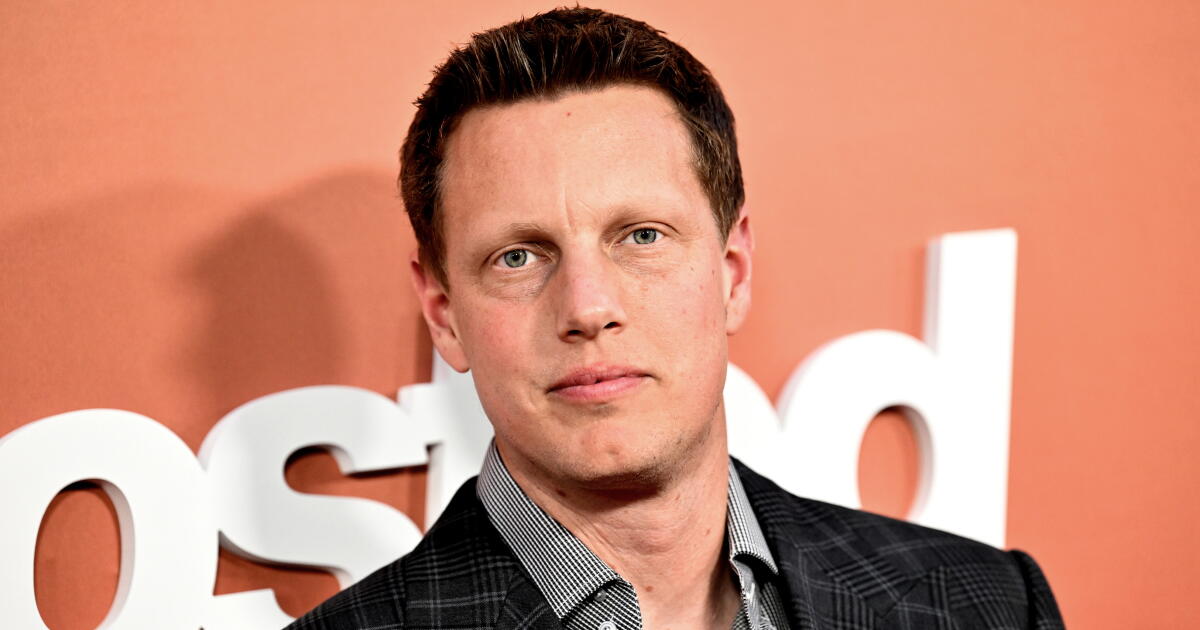
On March 5, Nepal appeared to draw a line in the sand. Months after a Gen Z-led uprising ousted the then prime minister, KP Sharma Oli, millions of voters chose rapper-turned politician Balendra Shah — or Balen as he is widely known — and his Rastriya Swatantra Party (RSP) to lead the nation. On Friday, March 27, Shah was sworn in as Nepal’s prime minister.
The RSP is barely four years old, and Shah’s only prior political experience is as mayor of the capital, Kathmandu.
Now, with a landslide win, analysts and voters say that Shah and the RSP have an historic opportunity to build on the popular 2025 revolt and deliver on the aspirations of young Nepalis. But with that opportunity comes risks, they add.
“There is so much excitement with the heavy mandate. This is a historical and unprecedented opportunity for him to execute his agenda because his party is likely to have close to a two-thirds majority,” political analyst Bishnu Sapkota told Al Jazeera. But, he added, “ expectations are enormous. I do not think it is realistic for him to fully meet them.”
Too big a mandate?
In the election, Shah defeated Oli in a constituency that had been the former prime minister’s stronghold for decades. The RSP won 125 of the 165 first-past-the-post seats in parliament. Seats determined through proportional representation — 110 seats are up for grabs — are yet to be divided among parties, but everything points to a two-thirds majority for the RSP.
That’s a larger mandate than even the RSP itself expected.
“We were expecting just over a 50 percent majority, but a two-thirds mandate was beyond our expectations,” RSP leader Shishir Khanal told Al Jazeera. Khanal, who was a lawmaker in the outgoing parliament, won re-election on March 5.
“The challenge is that such a mandate creates very high expectations among people, who want fast results. Given Nepal’s institutional capacity and almost stagnant economic growth, delivering those results will be extremely difficult.”
One immediate test for Shah will be implementing the findings of the Karki Commission, formed by the interim Sushila Karki government that took charge after Oli’s ouster last year. The commission was tasked with investigating the killings and property damage during the Gen Z movement last year. The panel submitted its report to the government last Sunday. This interim government is expected to hand over the investigation to the incoming Shah government to implement.
“There is a popular demand that the report be made public and implemented quickly,” Sapkota, the analyst, said. “If the interim government hands over the report as promised, implementation will have to happen in stages. As soon as he begins doing that, political reactions will follow, and he will have to manage them carefully.” The protests last year were driven by public anger over corruption, poor governance and lack of accountability, issues that voters expect the new government to address urgently. High-profile corruption investigations involving politicians are likely to be among the upcoming government’s first major tasks.
That won’t be an easy challenge to address.
Shah joined the RSP only weeks before the election, and was nominated as its prime ministerial candidate, while Rabi Lamichhane, the television presenter-turned-politician who founded the party, remains its president.
Lamichhane himself remains a controversial figure, facing allegations of fraud, organised crime and money laundering. He has previously served jail sentences and is currently out on bail. Lamichhane is accused of illegally holding two passports, US and Nepali, which is forbidden under Nepali law.
Two power centres?
The relationship between Shah and Lamichhane — and the balance of power between them — will also come under scrutiny, say experts.
Gehendra Lal Malla, professor of political science at Tribhuvan University in Kathmandu, described their alliance as a “marriage of convenience”.
“Balen needed a party to contest the election, and Rabi needed Balen’s popularity,” he said. “But differences could emerge later.”
Malla said Shah will also face a difficult test in dealing with the ongoing charges against Lamichhane. “We have a culture in Nepal where politicians protect each other,” he said. “Shah must uphold the rule of law and not protect anyone from his own party.”
At the same time, Malla noted that Shah’s popularity was the main factor behind the RSP’s success. “Balen’s appeal was the reason the party gained such a huge mandate,” he said. “He could end up having a stronger grip on the party than its president.”
Analyst Sapkota said that the RSP leadership, including Lamichhane, would need to acknowledge that the overwhelming mandate they received was largely because of Shah’s appeal. “They have to recognise that and give Shah absolute freedom to form the cabinet of his choice. Of course, the party can give their inputs and suggestions,” said Sapkota.
Khanal said, based on the conversation and an agreement they had signed, Shah will lead the government and Lamichhane the party. “From that perspective, they have their individual role sorted out, and both will have to face challenges and manage expectations on their own respective front,” Khanal told Al Jazeera. “I have observed them work very closely together within the last election cycle and campaigning. Their decision-making has also been in collaboration. So, with what I have experienced so far, there wouldn’t be any friction between them.”
The first 100 days
For Sapkota, Shah’s political novelty might work in his favour. “He doesn’t have the baggage of party cadres and internal factions,” Sapkota said. “That gives him more freedom compared to previous prime ministers.”
RSP leaders say the government plans to move quickly. “In the first 100 days, the honeymoon period, people will begin to see changes,” Khanal said.
The party has planned to prioritise anticorruption measures, including investigations into the wealth of senior officials and politicians since 1990. “We want to form a commission to investigate the assets of high-level officials and reopen high-profile corruption cases that were paused,” Khanal said.
These steps respond directly to the demands of last year’s Gen Z protests.
For many young activists who drove the protests, the election result represents hope, but also a new government that must be held accountable.
Gen Z activist Yujan Rajbhandari, 23, said the new government must prioritise good governance and protect civic freedoms, or face pushback from the same movement that enabled its rise. “With the RSP’s large majority, parliamentary opposition will be weak,” he said. “So the streets will play a major role as opposition.”
Beyond immediate reforms, Nepal is in the middle of a debate about whether to introduce broader constitutional reforms — with questions about how decentralised power needs to be.
Khanal said the party plans to establish a committee to review whether amendments may be necessary.
Shah’s critics have also questioned his diplomatic skills, citing past social media posts attacking Nepal’s neighbours, including India and China, and important partners such as the US. As Kathmandu mayor, he briefly banned Indian films and displayed a “Greater Nepal” map that showed Indian territory as part of an aspirational larger Nepal.
Sapkota said those concerns were being overblown.
“When he made those remarks, he was a mayor, not a national leader responsible for foreign policy,” he said. Sapkota argued that Shah’s lack of political baggage could allow Nepal to pursue a more independent diplomacy. “This is a clean slate,” he said. “Previous leaders had historical ties and obligations with different countries. Shah does not have that baggage, which could give Nepal greater independence.”
Neighbouring India has already signalled a willingness to work with Nepal’s new leadership.
Indian Prime Minister Narendra Modi congratulated both Shah and Lamichhane after the election and expressed hopes for stronger bilateral relations. Shah responded by emphasising the importance of maintaining the “historical, close and multifaceted relations” between Nepal and India and congratulating India for their recent T20 Cricket World Cup win.
For Malla, another important element to watch would be Shah’s relationship with the media. “Balen should engage more with the press once he becomes prime minister,” he said. “In the past, he has often said he prefers to work more and talk less. But as a national leader, communication and accountability are essential.”
The 900ft Arctic Metagaz, a charred Russian ghost tanker, has drifted dangerously close to Malta, an archipelago in the central Mediterranean known for its history and culture
23:17, 16 Mar 2026Updated 23:19, 16 Mar 2026
The carrier is adrift between Malta and Lampedusa(Image: Newsbook Malta/AFP via Getty Ima)
Malta — a popular holiday hotspot — is said to be under threat of a “major ecological disaster”.
A charred Russian ghost tanker is believed to be around 50 nautical miles southwest of the island, and is drifting crewless towards the archipelago. The vessel was blitzed two weeks ago by Ukranian drones and has since, the hole-ridden 900ft Arctic Metagaz has moved towards Malta.
And now multiple European countries have warned an ecological threat is imminent. In a letter to the European Commission, seven nations said the “precarious condition of the vessel, combined with the nature of its specialised cargo” posed a “serious risk”. These countries have described the situation as a “dual challenge” – upholding maritime safety and preventing an ecological disaster against the background of EU sanctions imposed on.
Russia claimed that Ukraine used “uncrewed sea drones” to target the Metagaz in the Mediterranean Sea between Libya and Malta. The Security Service of Ukraine has not responded to the accusation.
According to Russia, the attack took place on March 4 and was launched from the Libyan coast. The vessel had previously been sanctioned by the United States and the European Union for being part of Moscow’s so-called “shadow fleet.”
Composed largely of ageing tankers, the fleet moves Russian oil and gas worldwide while bypassing Western restrictions. Authorities in Malta and Italy have been closely monitoring the wreck amid concerns about potential pollution. Rome said the vessel was carrying “significant quantities of gas, heavy oil, and diesel fuel.”
WWF Italy warned in a statement: “A potential spill could cause fires, cryogenic clouds lethal to marine life, and widespread and long-lasting pollution of water and the atmosphere.”
It added: “The affected area is of exceptional ecological value, with fragile deep-sea ecosystems and some of the highest biodiversity in the Mediterranean basin.”
Salvage experts are already in Malta in preparation for the ship’s arrival in Maltese waters, while a specialist vessel is on its way, a maritime source told AFP on Sunday.
Initial reports indicated that the ship sank after explosions sparked a fire on board. Libyan authorities said the tanker went down about 130 nautical miles north of the port of Sirte. Around 30 Russians were on board the Arctic Metagaz, according to Russia’s transport ministry. They were all found “safe and sound in a lifeboat” by Malta’s armed forces, Maltese Home Affairs Minister Byron Camilleri said.
However, Malta’s transport authority said last week that the wreck was still afloat. Ministry of Foreign Affairs of the Russian Federation acknowledged that the vessel was drifting in the Mediterranean and said Russia’s further involvement in resolving the situation would depend on “concrete circumstances”. It added that efforts to address the situation — including surveillance, monitoring and other technical support — could risk “undermining the integrity, effectiveness and the deterrent value of the EU sanctions regime”.
Russian foreign ministry spokeswoman Maria Zakharova said the ship had no crew and was carrying 700 metric tons of various types of fuel along with “a substantial amount of natural gas”.
“The international legal norms applicable to the current situation imply the responsibility of coastal countries … for resolving the situation with the drifting vessel and preventing an environmental disaster,” Zakharova wrote.
“Further involvement by the shipowner and Russia as the flag state will depend on the specific circumstances.”
On the road to this point, he has lost a few warriors – Jamie Ritchie and Jamie Dobie after the Calcutta Cup and now Scott Cummings and Gregor Brown, too.
That’s a stellar cast list in the casualty unit, particularly the three forwards and especially the locks, who have been immense in Scotland’s recovery from the despondency of Rome.
Elliot Millar-Mills, previously unsung, had such a terrific impact off the bench against England and Wales that his injury can now be categorised as a blow.
In keeping with this trippy, but utterly wonderful, championship, Duhan van der Merwe is also out, a loss that would have been seen as an absolute calamity not that long ago.
Now, given his bit-part season, it’s merely regrettable but entirely salvageable. Even on his very best form it’s hard to see how he would have shifted Graham, scorer of two tries against France, and Kyle Steyn, arguably the player of the entire tournament so far.
In the four games, Townsend has started two different full-backs and three different left wings. He has changed his hooker from Italy to England, England to Wales and Wales to France – Ewan Ashman, George Turner and Dave Cherry all getting the nod at different times.
He’s had three different second-row combinations and three different back-rows. Some of this has been forced by injury.
His first three benches have had a 5-3 split before he switched to 6-2 against France, a day when Rory Darge, the brilliant flanker, ended up playing centre alongside the inspirational captain, Sione Tuipulotu.
So what now? Ireland were blown away by France, sneaked home against Italy, were utterly imperious against England and then battled to a win against Wales.
They have issues with their scrum, among other things, but they have home advantage and an astonishing win rate against Scotland.
Does Townsend have many big calls to make for such a momentous game?
As world institutions wobble, The Hague has unexpectedly become the stage for a reckoning long denied in the Philippines.
Proceedings at the International Criminal Court (ICC) in late February offered a rare glimpse of accountability at a moment when global norms feel increasingly fragile. The court held a hearing in the case against former Philippine President Rodrigo Duterte to confirm charges for crimes against humanity committed during the so‑called “war on drugs”.
For the families of those killed in the “drug war” watching tearfully from the public gallery, this hearing marked the first real step towards justice after years of violence, denial, and dehumanisation of their loved ones. As a Filipino lawyer and counsel for the victims, Joel Butuyan, told the court, “Truth is the antidote to the virus of impunity.”
A three-judge panel – women from Romania, Mexico and Benin – heard arguments from prosecutors, victims’ counsel, and Duterte’s defence lawyer. Their task was not to determine guilt, but to assess whether there is sufficient evidence for the case against Duterte to proceed to trial.
The case focuses on 49 incidents of alleged murder and attempted murder, involving 78 victims, including children, between November 2011 and March 2019, when the ICC still had jurisdiction over the Philippines. In March 2018, soon after the former ICC prosecutor announced a preliminary inquiry into the situation of the Philippines, Duterte withdrew the Philippines from the court’s membership, which became final one year later.
The case against Duterte covers his tenure as mayor of Davao City, in the southern Philippines, and the period after he was elected president in 2016. The prosecutors emphasised that the specific incidents they focused on represent only a fraction of the thousands of killings attributed to police and hired hitmen during Duterte’s anti-drug campaign.
I sat in the public gallery alongside victims’ families, activists, clergy, journalists, and lawyers who had traveled from the Philippines to witness a moment many never thought possible. Duterte’s supporters were there, too. But Duterte himself was absent as he waived his right to be present. His written statement declared that he did not recognize the court’s jurisdiction and claimed he had been “kidnapped”. His refusal to appear was obviously a disappointment for the victims’ families, hoping to see him in the dock.
Still, his voice echoed through the courtroom. Prosecutors played video after video of Duterte urging police to kill drug suspects and ignore legal restraints. In one chilling 2016 address, he warned: “If I become the president, I will order the military and the police to hunt down the drug lords, the big ones, and kill them.” Duterte’s lawyer argued that the prosecutors were selective in their approach to the speeches and that they missed critical information that would exonerate Duterte, including references to using force in self-defence.
Human Rights Watch has been reporting on Duterte’s “drug wars” since 2009, when we detailed the operations of the “Davao Death Squad” that targeted street children, petty criminals and drug suspects when Duterte was mayor. A 2017 Human Rights Watch report showed how Duterte’s “drug war” escalated nationwide after he was elected president.
The panel now has 60 days to decide whether the case will proceed to trial. But while the ICC deliberates, drug-related killings in the Philippines continue, though reduced from their peak during the Duterte administration.
Domestic accountability remains woefully inadequate. Nearly 10 years after the nationwide “drug war” began, five cases have resulted in convictions of a total of nine police officers. The vast majority of those responsible, including senior officials, remain untouched.
The political context is also fraught. Sending Duterte to The Hague may have suited the current president, Ferdinand Marcos Jr, allowing him to distance himself from the bloodiest excesses of his predecessor. But several of Duterte’s alleged co‑perpetrators – senior police officers and officials who helped transplant Davao City’s “neutralisation” strategies to the national stage – still wield influence or have gone into hiding.
The security architecture that enabled the killings within the national police force remains largely intact. With the wrong political signal, the violence could easily surge again.
Marcos now faces a defining choice. He can continue outsourcing justice to the ICC while tolerating a culture of impunity at home. Or he can demonstrate genuine commitment to accountability and the rule of law. Doing so would require a clear, public repudiation of the decade-long police operation underpinning the anti-drug campaign, and an explicit assurance that its methods are no longer acceptable state policy.
Marcos should also empower the Department of Justice to pursue investigations and prosecutions in earnest, and take steps to rejoin the ICC, which would, in turn, help strengthen domestic accountability efforts. Without credible domestic action, promises of reform will ring hollow.
This is a moment of reckoning for the Philippines. Families who have waited years for answers deserve more than political convenience; they deserve justice. Whatever the ICC decides in the coming months, the Philippine government need not – and should not – wait. Ending impunity and honouring the dignity of victims begins at home.
The views expressed in this article are the author’s own and do not necessarily reflect Al Jazeera’s editorial stance.
Saudi Arabia’s fixation with megaprojects may be giving way to more pragmatic initiatives better aligned with investor appetite.
The urgent need for foreign investment crystallized last month when a royal decree replaced veteran cabinet member and investment minister Khalid Al-Falih amid broader funding concerns over the kingdom’s signature Vision 2030 development framework.
Foreign investment amounted to just 2.1% of GDP last year, according to Capital Economics. That’s well below the government’s Vision 2030 target. The research firm also forecasts government debt will balloon to 40% of GDP next year. That’s up from just over 30% last year and above consensus.
Vision 2030, which now appears to be under review, represents Crown Prince Mohammed bin Salman’s blueprint for diversifying an economy still heavily reliant on hydrocarbon revenues.
Replacing Al-Falih is Fahad Al-Saif, sometimes also referred to as Fahad bin Abduljalil Al-Saif, a former HSBC banker.
Until his appointment, Al-Saif held various positions at the Public Investment Fund (PIF), Saudi Arabia’s $1.15 trillion flagship sovereign wealth fund. He was also instrumental in overhauling the kingdom’s capital-raising capabilities. Earlier, he played a role in roadshows aimed at mustering investor support for Saudi bond sales.
But the government’s recent signaling suggests Al-Saif will preside over a period of relative austerity while attempting to maintain investor support for a rolling set of reforms. His stewardship is likely to face an early test as policymakers’ attention is focusing on future foreign investment initiatives.
Recent reports imply that the government will soon announce a streamlined set of priorities and a pivot away from nosebleed-inducing megaprojects such as The Line, a 170-kilometer, multibillion-dollar planned smart city that makes up a segment of the ambitious Neom development.
Posts on social media have broadly welcomed Al-Saif’s appointment, variously describing him as a safe pair of hands fit to carry out a shift towards more mundane revenue-generating projects.
The California State Bar has charged a founding partner of Downtown LA Law Group, a law firm at the center of a scandal that has embroiled Los Angeles County’s historic sex abuse settlement, with signing up dozens of clients in states where none of the firm’s lawyers were licensed to practice.
The bar charged Salar Hendizadeh, who left the firm this fall, on March 5 with helping one of Southern California’s largest personal injury law firms sign accident victims across the country, despite lacking attorneys who could litigate the cases in other states. Hendizadeh was charged with eleven counts, including deceptive advertising and charging illegal fees.
State Bar Chief Trial Counsel George Cardona said in a statement the allegations, if proved, “represent dishonest and illegal conduct.”
Hendizadeh and a spokesperson for Downtown LA Law Group did not provide a comment Monday.
The firm had roughly 40 clients in Texas, where it operated under the name “Lone Star Injury Law Firm” and branded itself “Texas’s #1 Injury Law Firm,” according to the complaint.
The firm had one L.A.-based attorney licensed to practice in Texas, Darren McBratney, but he left the firm in early 2022. The bar claims the firm refused to remove the attorney’s name from its website for years, ignoring a cease and desist letter from McBratney’s new employer.
Typically, attorneys can take cases in states where they’re not licensed, but they need to partner with local counsel or get permission from the court. In many cases, the bar alleged, DTLA made no effort to do so and left their out-of-state clients in the lurch.
The firm told a Maryland car crash victim her case was worth $1 million and encouraged her to see a California spinal surgeon who charged roughly $300,000 for surgery, according to the complaint. She fired the firm after she got a settlement offer of $160,000 — not enough, she believed, to cover her medical fees, the complaint said.
Attorneys signed up a Tennessee client who was injured at a Nashville rental car business, but the one-year statute of limitations ran out before they filed the case, the bar complaint said. The firm offered to pay for all of his medical bills and one year of physical therapy “as a form of restitution,” according to the complaint.
The charges come as DTLA faces another pending investigation from the State Bar in connection with thousands of sexual abuse lawsuits the firm filed against Los Angeles County, along with a probe from the district attorney’s office. Both have said they are looking into allegations surfaced by The Times last fall that DTLA paid clients to file claims, some of which were allegedly fabricated, that became part of a $4-billion settlement, the largest of its kind in U.S. history. The firm has repeatedly denied all wrongdoing.
The firm was founded by three longtime friends: Daniel Azizi and Farid Yaghoubtil, who are cousins, and Hendizadeh, a friend from elementary school. They began working together in August 2013, the month Hendizadeh got his California bar license, according to the complaint.
The bar complaint charges only Hendizadeh, though it also mentions Yaghoubtil, who shared the responsibility for marketing and client intake, according to the complaint.
The bar says Yaghoubtil repeatedly asked for a referral fee from a woman injured in a Michigan drugstore after she dropped the firm for allegedly taking too long to file her lawsuit. The client had to find her own attorney, the bar said, eliminating the need for a referral fee.
“Why would you tell the lawyers to not pay us a referral fee? That makes no sense.” Yaghoubtil texted the woman on Aug. 16, 2022. “But why not let us get the referral fee? Very sad. Have a nice night.”
MOLLY-MAE Hague has faced backlash over her Maebe fashion event as an influencer called out a “disturbing” detail.
The former Love Island star, 26, has brought her premium womenswear brand to a one-day pop up in Bayswater, London, giving her fans a chance to check out the clothing in person while immersing themselves in the experience.
Sign up for the Showbiz newsletter
Thank you!
Molly-Mae Hague is facing backlash over her Maebe pop-up eventCredit: GettyInfluencer Nas Ganev has claimed there was a lack of diversity at the pop-up eventCredit: @itsnasg/TikTokHe took to TikTok to share his claims in a videoCredit: @itsnasg/TikTok
However, after visiting the pop up during an influencer event prior to it being open to the public today, TikTok star Nas Ganev has claimed there was a lack of diversity in the room when he was there.
He posted a video of himself at the event and alleged: “You should avoid maybe village and here’s why. I went today and although it’s so pretty inside,
“I saw something very disturbing. There were only white women in the room. There was no diversity at all.
“And in a city like London that immediately stood out to me. Walking to a place that’s meant to celebrate women and seeing a room that looks like that felt really uncomfortable.
“If you booked your tickets because of me, I’d recommend cancelling them. Follow for more London pop-ups.”
The experience is available from 9am to 7pm today and is a ticketed event, with tickets having gone on sale on Thursday 26 February.
Contrary to the claims, the Maebe Instagram account have been posting attendees on their stories and they appear to be from all diverse walks of life.
The Sun contacted Molly-Mae’s representative but they declined to comment.
The mum-of-one and her team previously teased of the experience: “An immersive experience of shopping, coffee, food and wine, celebrating the women who shape Maebe in honour of International Women’s Day.
“It takes a village to create something meaningful, and we’re proud to give back to the women who make it all happen.”
She launched the clothing brand back in September 2024, with the first drop selling out in 24 minutes after being in the works for two to three years.
This isn’t the first time she’s faced backlash with Maebe as fans have previously hit out the high price point as well as the struggles to actually purchase the items due to the high demand.
One potential buyer wrote: “It’s very over-priced for what it is, but I genuinely just liked the set!
“It’s a rubbish experience, it’s just a game of whoever can type the fastest or who has their details saved, most shops allow you a bit of time to check out.”
The one-day experience is happening in London todayCredit: InstagramContrary to the claims, the brand’s Instagram account has been posting women from diverse backgroundsCredit: Instagram/maebestoreThey’ve been reposting stories from attendeesCredit: Instagram/maebestore
Molly-Mae directly responded to the comment on YouTube as she candidly expressed: “couldn’t agree with you more on the stock front, it’s really frustrating.
“Unfortunately I just didn’t back myself enough when we planned these quantities a very long time ago.
“I promise you this is something I am in total agreement with you on and it’s something that in the New Year we will improve upon now that we have an understanding of the demand.
“I’m really sorry you feel let down – I’m learning as I go and will make this a better buying experience for you as soon as we can.”
Despite some backlash, new accounts for her firm MMH International Ltd stated that Maebe made around £300,000 in profit for the 12 months to the end of March last year.
As of December 2025, cash deposits in the firm stood at £231,155, having risen from £65,071 the previous year.
Molly-Mae launched her premium womenswear brand back in 2024Credit: Getty
A pimp whose sex worker allegedly advertised on social media that she was willing to be anything from “arm candy” for a party to a “no strings attached girlfriend” has been charged with a slew of criminal charges in Kern County Superior Court.
The alleged pimp, Kevin Mays, was an assistant men’s basketball coach and former player at Cal State Bakersfield.
Mays faces 11 charges, including pimping, possession of automatic firearms and high-capacity magazines, and possession of methamphetamine and marijuana with intent to sell. An investigation by the Bakersfield Police Department also led to separate charges citing Mays for possession of more than 600 images of youth or child pornography and distribution of obscene matter involving someone younger than 18.
Mays, who was arrested in September 2025, is being held without bail. He has pleaded not guilty, and a preliminary hearing is scheduled for March 13 .
The case, first reported by Shwetha Surendran of ESPN, has upended the athletic department at CSU Bakersfield. Longtime basketball coach Rod Barnes and athletic director Kyle Condor have left their jobs, and Condor filed a lawsuit against the school alleging wrongful termination, according to court documents obtained by The Times.
CSU Bakersfield officials said the allegations against Mays did not involve a student. Nevertheless, the school formed a commission to examine the athletic program and recommend changes.
“When CSU Bakersfield received an anonymous report in August of 2025 that a member of our coaching staff was engaged in human trafficking, we took immediate action in notifying university police and the Bakersfield Police Department,” the school wrote in a statement. “Both agencies launched investigations that resulted in an arrest within days. Shortly after, the university terminated the coach.
“But the nature of the allegations devastated our campus community. We seized the opportunity to strengthen education and prevention efforts around human trafficking. To that end, we consulted with a local human trafficking expert and offered training and education focused on awareness and prevention for our campus community.”
Police said the alleged victim is 23. In the advertisement she posted last summer, she stated that she charged $300 for a half hour and $500 for 60 minutes. Authorities conducted a sting operation in September, arranging to meet her in a hotel room that Mays rented.
In an interview with police after the operation, she referred to Mays as her boyfriend and said he paid for her travel accommodations in Oregon, Washington and Nevada in addition to California.
Those locations were listed in an anonymous email to Barnes last fall titled “IMPORTANT MESSAGE 911 911.”
“HE IS TRAFFICKING A GIRL BY THE NAME OF [redacted],” the email read, according to police records. “HE HAS BEEN TRAFFICKING THIS GIRL SINCE MAY.”
Barnes turned over the email to university police, who attempted to contact the sender and received a subsequent email, according to ESPN. The tipster claimed to have known the alleged victim and Mays through previous travel for sex work. The person said Mays presented himself as a professional gambler and allegedly threatened to take away the tipster’s child if the person exposed his activities.
Mays, who was born in Queens, N.Y., attended high school at St. John’s Military Academy in Delafield, Wis., and played at Odessa Community College in Odessa, Texas, before transferring to CSU Bakersfield ahead of the 2014-2015 season.
“We are excited about signing Kevin as he fits our culture,” Barnes said of Mays at the time.
A year later, as a senior forward, Mays helped CSU Bakersfield to a 24-10 record and scored 14 points and grabbed eight rebounds in the Roadrunners’ first-round NCAA tournament loss to Oklahoma. He later returned to the school as a player-development coordinator.
In his application for the player-development position in 2019, Mays wrote that he was motivated by helping players improve on and off the court, according to school records obtained by ESPN.
“I gained lots of experience dealing with learning to lead young men and help them navigate the Division I experience in a successful manner,” Mays wrote. “CSUB helped me tremendously, and I look forward to giving back.”
Barnes was Mays’ coach, and he hired his former player last fall, paying him $3,000 a month. Now, Mays is in jail awaiting trial and Barnes is unemployed.
“The safety and well-being of our students and all CSU Bakersfield community members remain our highest priority,” the school said in its statement. “This work is sustained every day by the dedication of our faculty, staff and students. Their commitment to one another and to our shared values strengthens the culture of care and accountability we strive to build at CSUB.”
When he became Nigeria’s Inspector-General of Police (IGP) in 2023, Kayode Egbetokun vowed to fight criminality and insecurity with vim and vigour. He seemed determined to reform the police; he promised to improve officers’ welfare and make Nigeria a safer, better country for its people. As Usman Alkali stepped out of the IGP office and Kayode stepped in, Nigerians hoped he could deliver on his promise.
“I really can’t describe how I feel currently, but if I have to tell you anything, I will tell you that right now, I feel like a tiger inside of me, ready to chase away all the criminals in Nigeria. And some other times, I feel like a lion in me, ready to devour all the internal enemies of Nigeria. That’s my feeling right now,” he said during his decoration as acting IGP at the Presidential Villa in Abuja.
On Feb. 24, the reign of the 61-year-old police chief came to an end. He was forced to resign, according to local media reports. His regime appeared to have dampened the high hopes for police reform in Nigeria, leaving the new IGP, Tunji Disu, a highly decorated police chief, with a legacy of a failed policing system.
Disu is a familiar name within the police force, having held various important roles and risen through the ranks. In 2021, for instance, he succeeded Abba Kyari, a Nigerian once-upon-a-time supercop, as head of the Police Intelligence Response Team (IRT). He was an Assistant Inspector-General of Police before emerging as Nigeria’s new IGP.
Born on April 13, 1966, Tunji joined the police force in May 1992. Appointed as acting IGP at 59, he is due to retire in April this year, upon reaching the mandatory age of 60. However, in 2024, the National Assembly amended the Police Act, 2020, enabling him to serve out his full four-year term as IGP, unless the president removes him.
He had led the Rapid Response Squad (RRS) of Lagos State Police Command successfully and presented himself as a diligent supercop throughout his career. While his antecedent might have been thrilling, he’s inheriting the disturbing legacies of his predecessor, leaving him a deep forest to clear.
To understand what lies ahead, HumAngle engaged police officers, journalists, civic leaders, and human rights advocates, who not only reflected on the legacies of the former IGP but also outlined urgent priorities for the new administration. Their insights reveal both the depth of Nigeria’s policing crisis and the expectations riding on Disu to restore trust, improve welfare, and confront systemic failures within the force.
The legacy of human rights abuses
The NPF was infamous for several unlawful activities under the former IGP’s command, including high-handedness towards journalists demanding social justice and accountability. Journalists, whistleblowers, and media practitioners across Nigeria were targeted for simply doing their jobs, creating a climate of fear that undermined press freedom. On many occasions, journalists reported being beaten or threatened during arrests and manhandled at rallies, while editors said they received threatening calls warning them against publishing sensitive stories.
Over 80 incidents of attacks against journalists and media organisations were recorded in 2025, according to a report by the Media Rights Agenda (MRA), a non-profit organisation that promotes and protects freedom of expression, media freedom, and access to information in Nigeria. The report stated that arrests and detentions were the primary tools for suppressing media freedom and freedom of expression, constituting the most common form of attack, with 38 documented cases accounting for over 44 per cent of all incidents.
“In terms of perpetrators of attacks against journalists and violations of other freedom of expression rights, the Nigeria Police Force was identified in the report as the worst offender,” the report stated.
Immediate-past Inspector General of Police, Kayode Egbetokun. Photo: @PoliceNGR/Twitter
The police, under the former IGP, were also accused of weaponising the cyber law to incarcerate journalists seeking public accountability. Sometimes instigated by influential people within and outside government, the police have used this legislation to clamp down on journalists and activists despite the recent amendment. Digital journalists were even more targeted using Nigeria’s Cybercrime Act. In 2024, the National Assembly amended sections of the law following the ECOWAS Court’s declaration that they were inconsistent with Nigeria’s obligations under Article 1 of the African Charter on Human and Peoples’ Rights and with best practices.
The amended Cybercrimes Act 2024 has revised Section 24 of the 2015 law, which was previously used to prosecute individuals for “insulting” or “stalking” public officials. The updated amendment provides clearer definitions of the offences, focusing on computer-based messages that are either pornographic or intentionally misleading. However, despite these changes, the police have still been using this provision to intimidate journalists.
One interesting case, among several others, involved Nurudeen Akewusola, a senior journalist with the International Centre for Investigative Reporting (ICIR). In 2024, Nurudeen’s investigation exposed how two former IGPs, among others, were implicated in a shady multimillion-naira land deal involving property originally designated for police barracks in Abuja. The police detained Nurudeen and his employer, Dayo Aiyetan, over this story, asking the reporter to reveal his sources. He refused to name his sources, upholding journalistic ethics.
The reporter and his employer were detained by the Nigeria Police Force National Cybercrime Centre (NPF-NCCC), which was purportedly probing a “case of cyberstalking and defamation of character” against the reporter and the executive director of the ICIR.
Two years later, Nurudeen told HumAngle that his experience with the police still haunts him. The incident has since made him worried about the safety of journalists and truth-seekers in Nigeria. He remembers how he was detained and mistreated when chasing any similar public interest story.
“The incident also took a toll on those close to me. My family and loved ones were anxious and confused; calls kept coming in as people tried to understand what was happening and what might happen next. Watching them carry that fear because of my work was a heavy emotional burden,” he said.
Scores of journalists in Nigeria faced even worse attacks from police under the former IGP’s leadership. Busola Ajibola, the deputy director of journalism at the Centre for Journalism Innovations and Development (CJID), told HumAngle that at least 40 cases of press freedom attacks were recorded under former IGP Kayode. The media civic leader said there seemed to be a culture of impunity against journalists that predated the former police chief and was more pronounced during his administration.
“We’re building an environment that lacks accountability,” she warned, noting that media oppression by the police could have grave consequences. “We’re denying the public of demanding accountability using the media. Media oppression also has impacts on the right to freedom of expression generally.”
Failed to rein in terrorist attacks
Despite his flowery promises to curb insecurity, the former IGP seemed to have failed to secure lives and property in Nigeria’s most volatile communities. Communal crises lingered for so long that they attracted global attention, and terrorism resurged with terrorists operating brazenly, especially in the northwestern region. Between 2023 and 2024, for instance, Nigeria grappled with widespread insecurity, particularly in the northwestern and north-central regions. Kidnappings for ransom surged, with rural communities and travellers along highways being frequent targets. Armed groups intensified their operations, often overwhelming security forces. The HumAngle Tracker recorded hundreds of deaths during this period, revealing the persistent inability of police institutions to contain violence.
Insurgency intensified within the northeastern region, spreading rapidly to the north-central states, including Nigeria’s capital city. Boko Haram and ISWAP factions raided villages, military bases, and convoys, leading to significant civilian casualties. This period also saw an increase in targeted killings and ambushes.
Get our in-depth, creative coverage of conflict and development delivered to you every weekend.
Subscribe now to our newsletter!
Terrorist attacks expanded beyond the northern regions in 2025, with the South East Nigeria experiencing heightened violence linked to separatist movements and criminal gangs. Attacks on security personnel, government facilities, and civilians became more frequent. The HumAngle Tracker documented a rise in politically motivated violence, especially around election-related activities. Meanwhile, oil-producing areas in the South-South continued to experience militancy and pipeline vandalism, disrupting economic stability. By early 2026, the tracker data showed that insecurity remained entrenched, with no significant nationwide improvement.
Source: HumAngle Tracker (January 2026)
In November 2025, however, the former IGP described how the police were fighting terrorism and armed violence in Nigeria, saying insecurity was not something that could be fought in silos. While addressing reporters at the Lagos Police Command in Ikeja, the police chief said there must be synergy with other agencies and all communities for Nigeria to contain insecurity. He also advised Nigerians to stop spreading misinformation and falsehood about the police and other security agencies.
“When people spread falsehood against security institutions that are providing security, they are weakening the resolve of the nation,” he said. “So, let us all be committed to saying the truth about security agencies who are taking risks and providing security for the country.”
Decentralised the Police Complaints Response Unit
At first, the former police chief introduced a policing model that appeared to prioritise public complaints. Barely four months into his role as acting IGP, he decentralised the Police Complaints Response Units (CRU) to cater to the disturbing trust deficits in the policing system. In August 2023, he ordered police commissioners to establish the state-based police complaint units. The CRU made contact information for police spokespersons available online and set up social media pages to engage with citizens nationwide. He said the purpose of decentralising the CRU was to create a conducive platform for interaction between the police and the public, particularly regarding officers’ unprofessional conduct.
“It is going to enhance police-community collaboration and build confidence with members of the public,” he said, appealing to the public to supply the police with information for transparency. “Officers who are going to man the CRU are going to be carefully selected; they are going to be officers with impeccable integrity.”
Some police officers enforcing order during the #EndBadGovernance protest in 2024 in Jos, Plateau State. Photo: Johnstone Kpilaakaa/HumAngle
The CRU emboldened citizens to hold police officers accountable for their actions. The initiative brought several erring police officers to justice when citizens lodged complaints. However, the CRU decentralisation became defective when the police became reluctant to prosecute some officers caught in shady dealings. Journalists and civic actors who closely monitored the CRU said the initiative was promising at first, but it later flopped.
Daniel Ojukwu, a senior journalist with the Foundation for Investigative Journalism and Social Justice, said that while the former IGP must be commended for decentralising the CRU, he must also be blamed for ignoring significant citizen complaints against the police. Daniel covers police activities, seeking justice for citizens whose rights were violated by high-handed officers. The journalist also had his share of press attacks by police officers. He was arrested and detained – albeit illegally – by the force headquarters for an investigation he had conducted.
“Egbetokun did well with the CRU decentralisation, but of course, there were holes. We hope that the new IG will prioritise making the CRU work better,” he said.
HumAngle spoke with several police officers to inquire about the IGP’s general performance. Many of them believe he lost his way the moment he attained the highest position in the police force. Most of his promises, they said, were unfulfilled. Some of the officers we spoke with said he was a poor administrator who had the chance to reform the police but failed woefully. The officers begged not to be identified by name for fear of retribution.
“His administration made no sense,” one officer said bluntly. “We all thought he would be different, but our leaders are all the same.”
Setting the agenda for the new IG
On Feb. 25, President Bola Tinubu decorated Tunji Disu as the acting IGP, officially signalling a change in authority at the NPF. Interestingly, the newly decorated IGP vowed to enforce a zero-tolerance regime against corruption and human rights abuses. He told journalists after his inauguration that his leadership would ensure that police officers are well-trained to protect Nigerian citizens and engage them with utmost civility.
“I will let them (fellow policemen and women) know that the era of impunity is over,” he declared. “Most importantly, I’m going to drum it into them that we can never succeed without the cooperation of members of the public.”
A police armoured vehicle during the #EndBadGovernance protest in 2024 in Jos, Plateau State. Photo: Johnstone Kpilaakaa/HumAngle.
His declaration seems to be a shift in tone for the police force. Beyond his heavy promises and rhetoric, Nigerians are eager to see how these promises translate into action. Civil society organisations, human rights advocates, and community leaders have long pressed for reforms that prioritise accountability, transparency, and respect for citizens.
As Tunji steps into this role, civic actors are articulating their expectations of the new IG, underscoring the urgency of building trust between the police and the people they are sworn to protect. While some security experts believe the police seem to have neglected their counterterrorism role, other civic actors demand a safe space for journalists and activists to demand transparency in governance without being persecuted by the force.
Busola Ajibola of CJID reiterated that, beyond flowery speeches about fighting impunity, the new IGP must take a clear stand, backed by action, against press freedom violations and investigate officers who unlawfully violate journalists’ rights.
“He should invest in re-training middle-level and low-ranking officers on human rights and press freedom,” Busola noted. “Most times when we engage with senior police officers, we realise that they appear to know the right thing, but the problem is usually the middle-level or low-ranking officers who have little knowledge of press freedom and human rights.”
Speaking about his years of experience covering the police, Daniel said it has become clear to him that the police force is highly underfunded. He asked the current IG to prioritise funding for the police. An officer who asked not to be named confirmed this, saying that a system that fails to properly finance the police automatically sets operatives against the people.
“These officers don’t even have fuel in their vehicles to run operations many times. How do you expect them to be effective?” Daniel asked. “People go to lodge complaints in police stations, they’re asked to pay.” He added that to make the CRU more effective, the police must have a speed dial number that’s responsive and easy to memorise, so citizens can contact the police quickly when they face any challenge.
WASHINGTON — Former President Clinton is testifying Friday before members of Congress investigating convicted sex offender Jeffrey Epstein, answering for his connections to the disgraced financier from more than two decades ago.
The closed-door deposition in Chappaqua, N.Y., will mark the first time a former president has been compelled to testify to Congress. It comes a day after Clinton’s wife, former Secretary of State Hillary Clinton, sat with lawmakers for her own deposition.
Bill Clinton has also not been accused of any wrongdoing. Yet lawmakers are grappling with what accountability in the United States looks like at a time when men around the world have been toppled from their high-powered posts for maintaining their connections with Epstein after he pleaded guilty in 2008 to state charges in Florida for soliciting prostitution from an underage girl.
Hillary Clinton told lawmakers that she had no knowledge of how Epstein had sexually abused underage girls and had no recollection of even meeting him. But Bill Clinton will have to answer questions on a well-documented relationship with Epstein and his former girlfriend Ghislaine Maxwell, even if it was from the late 1990s and early 2000s.
Hillary Clinton said Thursday that she expected her husband to testify that he had no knowledge of Epstein’s sexual abuse at the time they knew each other.
Republicans were relishing the opportunity to scrutinize the former Democratic president under oath.
“The Clintons haven’t answered very many, if any, questions about their knowledge or involvement with Epstein and Maxwell,” Rep. James Comer, the Republican chair of the House Oversight Committee, said Thursday.
“No one’s accusing, at this moment, the Clintons of any wrongdoing,” he added.
Republicans finally get a chance to question Bill Clinton
Republicans have wanted to question Bill Clinton about Epstein for years, especially as conspiracy theories arose following Epstein’s 2019 suicide in a New York jail cell while he faced sex trafficking charges.
Those calls reached a fever pitch late last year when several photos of the former president surfaced in the Department of Justice’s first release of case files on Epstein and Maxwell, a British socialite who was convicted of sex trafficking in December 2021 but maintains she’s innocent. Bill Clinton was photographed on a plane seated alongside a woman, whose face is redacted, with his arm around her. Another photo showed Clinton and Maxwell in a pool with another person whose face was redacted.
Epstein also visited the White House several times during Clinton’s presidency, and the pair later made several international trips together for their humanitarian work.
In the lead-up to the deposition, Bill Clinton has insisted he had limited knowledge about Epstein and was unaware of any sexual abuse he committed.
“I think the chronology of the connection that he had with Epstein ended several years before anything about Epstein’s criminal activities came to light,” Hillary Clinton said at the conclusion of her deposition Thursday.
Comer has pledged extensive questioning of the former president. He claimed that Hillary Clinton had repeatedly deferred questions about Epstein to her husband.
Has a precedent been set?
Democrats, who have supported the push to get answers from Bill Clinton, are arguing that it sets a precedent that should also apply to President Donald Trump, a Republican who had his own relationship with Epstein.
“We’re demanding immediately that we ask President Trump to testify in front of our committee and be deposed in front of Oversight Republicans and Democrats,” Rep. Robert Garcia, the top Democrat on the committee, said Thursday.
Comer has pushed back on that idea, saying that Trump has answered questions on Epstein from the press.
Democrats are also calling for the resignation of Trump’s Commerce Secretary Howard Lutnick. Lutnick was a longtime neighbor of Epstein in New York City but said on a podcast that he severed ties with Epstein following a 2005 tour of Epstein’s home that disturbed Lutnick and his wife.
The public release of case files showed that Lutnick actually had two engagements with Epstein years later. He attended a 2011 event at Epstein’s home, and in 2012 his family had lunch with Epstein on his private island.
“He should be removed from office and at a minimum should come before the committee,” Garcia said of Lutnick.
Comer on Thursday said that it was “very possible” that Lutnick would be called to testify.
California’s landmark single-use plastic law is slowly being eroded by pressures within the state. Now legal attacks from outside threaten to kneecap it entirely.
Earlier this month, a federal district court judge in Oregon put parts of its single-use plastic law, which is similar to California’s, on hold while he decides whether it violates antitrust and consumer protection laws.
At the same time, 10 Republican attorneys general sent letters directly to companies that are taking part in plastic reduction campaigns, telling them to stop.
They threatened legal action against Costco, Unilever, Coca-Cola and 75 other companies for participating in the Plastic Pact, the Consumer Goods Forum and the Sustainable Packaging Coalition. These efforts all include industry as an active partner in reducing plastics, but the letters say the companies are colluding against consumers “to remove products from the market without considering consumer demand, product effectiveness, or the cost and impact on consumers of a replacement product.”
Charges of corporate collusion and conspiracy are central to both cases.
Anti-waste advocates and attorneys well versed in packaging say the lawsuit and the letters to Costco and the other companies highlight vulnerabilities in several of California’s waste laws, including the seminal Senate Bill 54 — the Plastic Pollution Prevention and Packaging Producer Responsibility Act. At issue are what are known as Extended Producer Responsibility laws.
These put the cost of cleanup and waste disposal on the companies that make materials — plastic, paint or carpet — rather than on consumers, cities and municipalities.
In 2024, a report from California Atty. Gen. Rob Bonta estimated that collectively, the state’s cities spend more than $1 billion each year on litter management. In 2023, 2.9 million tons of single-use plastic (or 171.4 billion pieces) were sold or distributed, according to one state analysis.
These producer responsibility laws emphasize the idea of “circular economy”: that the producer of a material must consider its fate — making sure it can be reused or recycled, or at least reduced.
The laws organize companies into entities, called Producer Responsibility Organizations (PROs), that generally oversee the management of the laws, set fees and collect them from members.
In the Oregon lawsuit, the National Assn. of Wholesaler-Distributors alleges a state-sanctioned product responsibility organization levied fees on trade group members that were onerous and opaque.
“Their fee structure was designed in secret by board members of the PRO,” said Eric Hoplin, president and chief executive of the group.
“Oregon is attempting to build a statewide recycling system by granting vast authority to a private entity to impose what amount to hidden taxes on businesses and consumers,” said Brian Wild, chief government relations officer for the wholesalers. “This law raises prices, shields decision-making from scrutiny, and advantages large, vertically integrated companies at the expense of smaller competitors.”
The group he references, the Circular Action Alliance, is the same one that oversees California’s single-use plastic law. Amazon, Colgate-Palmolive, General Mills and Procter & Gamble are part of it.
Others, however, say California’s laws are strong.
People shop at Costco in Glendale, Calif., on April 10.
(Damian Dovarganes / Associated Press)
“Extended Producer Responsibility laws are public policies passed by legislatures and implemented with government oversight,” said Heidi Sanborn, the executive director and CEO of the National Stewardship Action Council, which advocates for the laws and a more circular economy.
She helped craft many of California’s waste laws, including SB 54 and was also involved in Oregon’s law. “They create clear, consistent rules so all producers contribute fairly to the cost of recycling and waste management,” she said.
Sen. Benjamin Allen (D-Santa Monica), who wrote SB 54, said California’s plastic bill was designed to avoid violating antitrust laws.
CalRecycle declined to comment.
Some advocates actually hope the California laws fall. They include Jan Dell, of Last Beach Cleanup, an anti-plastic group based in Laguna Beach.
Extended Producer Responsibility “programs are based on the false premise that plastic is recyclable and are counterproductive because they green wash plastics and preempt proven solutions like strategic bans on the worst forms of plastic pollution (e.g. single use bags, six pack rings),” Dell wrote in an email.
Even those, however, can be problematic if they’re not enforced. Dell pointed to SB 54’s de facto ban on polystyrene, which went into effect on Jan. 1, 2025.
“There is still Styrofoam stuff sold in 250 Smart and Final stores across the state!” she said. “It is totally noncredible and outrageous to claim that CalRecycle will ever enforce regulations on thousands of types of packaging when they can’t enforce the regulations on JUST ONE!”