The US FDA has approved Alcon’s (ALC) Brytly (apraclonidine opthalmic solutions) over-the-counter eye drops.
The company said that a single trops provides 12 hours of redness relief and lasts 50% longer than rival Bausch + Lomb’s (BLCO) Lumify (brimonidine tartrate optholamic solutions) drops.
Studies also found Brytly is associated with a low risk of redness rebound and tachyphylaxis.
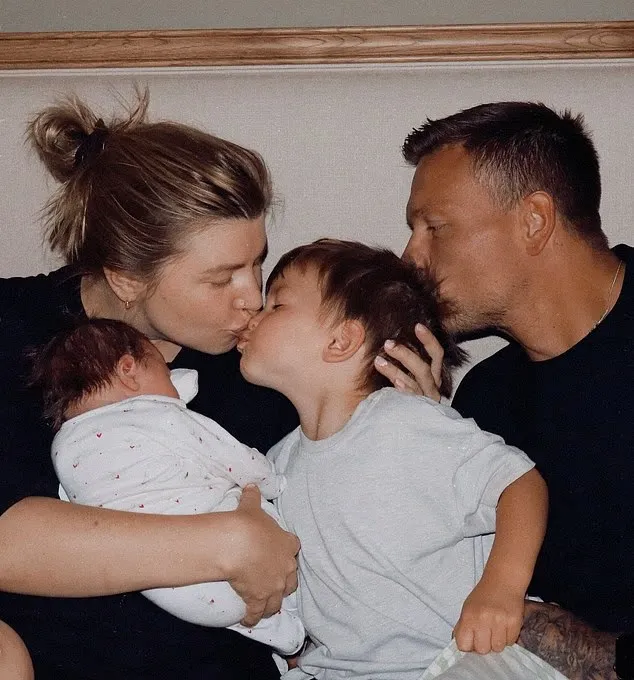
OLIVIA Bowen has revealed her four-year-old son came within millimetres of losing his eye after a freak accident at nursery.
An ambulance was called to rush little Abel to hospital after he impaled his eye with a stick while playing outside last year as part of forest school.
Olivia Bowen revealed son Abel had a horror eye injury last year that nearly cost him his sightCredit: ITV 2Olivia pictured with husband Alex BowenCredit: Splash
Olivia, 32, described the phone call informing her as the “scariest” of her life and she immediately made her way to the school to be by her son’s side.
Speaking exclusively to The Sun, Olivia said: “It was probably his first big accident, and when we got there, he just had a patch over his eye, there was blood everywhere.
Sign up for the Showbiz newsletter
Thank you!
“We didn’t know whether it had gone right into his eye and touched his eyeball, if it had missed it, if it was stuck, we had no clue, because he wouldn’t let us open it.”
Abel needed surgery to fix the wound, which included a sliced tearduct, and had a stent fitted to help with drainage during recovery.
Love Island runner-up Olivia, who is also mum to Siena, one, said it was a “pure miracle” that Abel could still see and a follow-up eye test found he had 20-20 vision.
“I’ve never really thought about how important eyesight is, it’s something we take for granted every single day, especially with the kids, starting school, learning to read, it’s something I’ve never particularly thought about until that moment,” said Olivia.
The terrifying ordeal was the motivation for the mum-of-two to back a new campaign with The College of Optometrists that encourages parents to take their young children for free eye tests before they start school.
New research has found that just five percent of under-fives had an eye test last year.
Now, in a new drive to diagnose conditions early and achieve the best possible outcomes, The College wants parents to book appointments for their little ones.
In the UK all children under 16 are entitled to free eye tests, and this rises up to 19 for those still in full-time education.
And the research shows under-16s fare better than the preschoolers, with close to half having tested their eyes in 2025.
“The opticians, they’re just so kind,” said Olivia. “This is their job, this is what they do, and they want us to be going, because catching things in kids’ eye health early is so important, especially at that stage, before they start school.
“It’s daunting enough starting school, imagine if your child has got an issue with their eyesight? It’s going to make it even harder, so catching it at that point is probably the biggest piece of advice that they want to get through to everyone, and then follow up appointments, every one to two years.”
To capitalize on growing demand for products developed for sensitive skin, Bath & Body Works (BBWI) launched Essentials, a new line of hypoallergenic body washes and lotions developed exclusively for sensitive skin.
When Israeli Prime Minister Benjamin Netanyahu takes to his feet at the United Nations General Assembly (UNGA) in New York later on Thursday, he does so at a critical point in both his political career and in his country’s long and fractious relationship with the international body.
Israel has faced repeated accusations of genocide at the UN, as well as systematic war crimes in Gaza and the occupied West Bank. Those criticisms continue to shape the country’s fractious relationship with the body.
Recommended Stories
list of 4 itemsend of list
For Netanyahu, appearing in front of the UNGA for the 15th time, the stakes have rarely been higher. Addressing a domestic Israeli audience that polls show to be losing faith in him and his Likud party ahead of crucial elections later this year, Netanyahu has already pitched himself as Israel’s primary voice on the international stage.
Nevertheless, analysts say Netanyahu’s address could prove a pivotal moment domestically, amplified by international criticism of Israel and expected to dominate headlines and be carried live across the country’s television networks.
“This is a regular fixture for him,” former Israeli consul general in New York and ex-government adviser Alon Pinkas told Al Jazeera. “It’s his way of being seen in Israel as standing up against the world and of telling members that he will never give up or surrender. He’s also turned the event into some kind of national holiday in Israel, with everyone sitting down to watch the address on television. He’s brainwashed people in Israel into believing his speech is somehow an announcement of policy, stated in defiance of the [rest of the world] who don’t believe a word he says.”
A history of hostility
Israeli leaders have long framed their stance towards the UN as one of defiance in the face of hostility. The UN has long been a platform for critics of Israel’s illegal occupation of Palestinian land and repeated attacks on its neighbours. It has included attempts to censure Israel over what UN investigators have described as apartheid in the West Bank, as well as accusations of genocide and pogroms across the occupied Palestinian territory since October 2023.
There have been numerous UNGA resolutions criticising Israel’s conduct — nearly all dismissed by Israeli lawmakers as evidence of institutional bias — culminating in Israel declaring UN Secretary-General Antonio Guterres persona non grata and severely restricting the operations of the UN’s agency for Palestinian refugees, UNRWA.
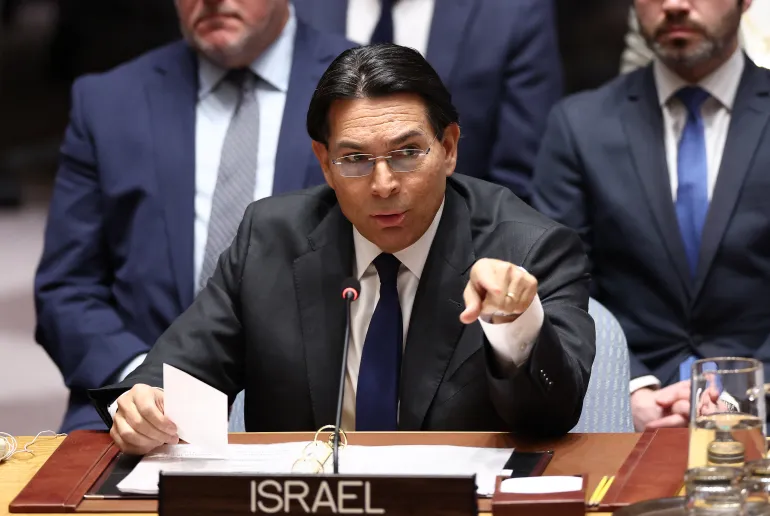
Israel’s Permanent Representative to the UN, Danny Danon, at a United Nations Security Council meeting at UN headquarters in New York [AFP]
“Generally speaking, many Israelis tend to see the UN as anti-Israeli,” Nimrod Goren, the president of the Israeli Institute for Regional Foreign Policy, Mitvim, said.
Against that background, criticism from New York Mayor Zohran Mamdani — already cast as anti-Israel in the Israeli press — has drawn greater public attention to the event. Underscoring the sense of hostility towards Israel are stories within the country’s media suggesting that Netanyahu’s visit to New York has been curtailed due to unspecified security concerns, with the Israeli premier expected to fly out of New York on the same day as his arrival.
In response, Israel’s ambassador to the UN, Danny Danon, who has repeatedly accused the organisation of waging “diplomatic terrorism” against the state called for Mamdani’s arrest for what he said was the mayor’s incitement against New York’s Jewish community ahead of Netanyahu’s visit.
“Netanyahu is going into his UNGA speech with not one but both eyes focused firmly on the upcoming Israeli election,” Goren said. “The speech is usually treated in Israel as a major event, receiving broad coverage and dominating the news cycle. Netanyahu will likely try to leverage this to bolster his image as a close ally of the US and to talk up the threat posed by Iran.”
US backing
Some have interpreted US President Donald Trump’s apparent lack of availability to meet Netanyahu during this trip as a sign of waning support. But US backing for Israel at the UN has remained steadfast since the October 7 attack and has contributed to growing frustration within the UN over what they see as Israel’s ability to resist international censure.
Alongside the creation of the Board of Peace, which shifted significant responsibility for Gaza’s future from the UN to the Trump-founded organisation, Washington has repeatedly used its veto at the UN Security Council to shield Israel from resolutions it opposes. The US has vetoed at least six UN Security Council resolutions on Gaza since October 2023, most of them demanding an immediate ceasefire.
“There seems to be genuine frustration within the UN General Assembly over the body’s failure to play a significant political role in Gaza and the West Bank, but also in its failure to protect its own staff and agencies,” Chatham House Associate Fellow Zizette Darkazally, who previously worked with the UN, said.
“However, it’s worth remembering the context the UN operates within in the occupied territories and the important humanitarian role it plays. The UN continues to get aid and medical support into Gaza and the West Bank, which are both areas where Israel has absolute control over access,” she said. “It’s also worth remembering that the UN is only as strong as the commitment of its member states.”
“That, combined with a system of veto that’s more than 80 years old, has left the organisation weaker now than it had ever been,” she said of the confrontations between the UN and Israel. “And we’re seeing the effects of that, not just in Palestine, but in Yemen, Sudan and Iran, where the UN is playing next to no political role.”
Cassius accepted the hero award from the city of Miami Police Department at a ceremony recognizing his bravery on Wednesday.
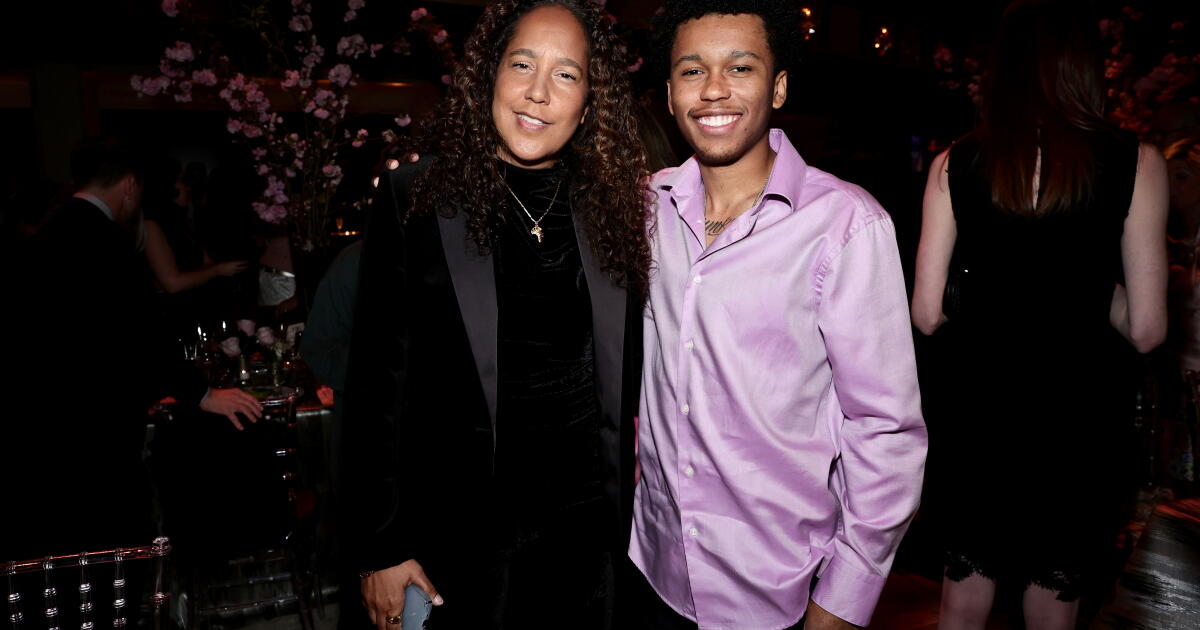
“It’s surreal to be able to be this proud of my child,” Gina told reporters at the event. “I’ve always been proud of him, but this is such an incredible thing that he did.”
In May, Cassius heard the nearby screams of Miami woman Caitlin Dydzuhn, who was walking her dog near her downtown condominium when she was brutally attacked by a man wielding a homemade shank. Cassius, 25, ran toward the screams and jumped in to stop the assault by kicking and shoving the alleged assailant Raydean Johnson, 49, who was arrested at the scene of the incident shortly after the attack.
Dydzuhn was punched and stabbed, and suffered severe cuts and damage to one of her eyes, according to NBC Miami. Doctors told her she would likely never regain her vision in the wounded eye, but she has since recovered.
Cassius told the outlet that he was raised not to panic in intense situations and to help those in need. He also said his lifelong training in martial arts helped equip him to step in.
“Fight or flight,” he said, per 7 News. “I’m glad that fight kicked in.”
“He saved my life,” Dydzuhn told reporters at the ceremony. “My last memory was screaming for my life, kind of blocking punches, blocking stab wounds, and feeling that no one was coming to save me.”
Dydzuhn continued that Cassius guided her to safety and spoke calmly, telling her, “There’s a man here with a weapon. I need to get you out of here.”
Gina Prince-Bythewood, also known for “The Woman King” and “Love & Basketball,” posted coverage of the ceremony on social media, writing, “Firstborn@CassiusMandela living the incredible example set by his pops,” adding a thank-you to her husband, Reggie Rock Bythewood, for “all that you instilled in our sons.”
Reggie added his own accolades for his son in the comments, writing, “My son. So grateful you’re safe. Grateful Caitlin is recovering well. I’m grateful that Mom was able to be with you. I admire how you were calm and empathetic under extreme pressure. Now you know why I call you CHAMP.”
Manchester United are looking at Lens’ Portugal youth international midfielder Mezian Mesloub, 16, as they bid to strengthen their young talent pool. (Teamtalk), external
The Old Trafford outfit remain keen to keep wantaway English forward JJ Gabriel, 15, who has been linked with a move to Real Madrid and Barcelona,with Chelsea now joining the battle to sign the teenager. (Teamtalk), external
Manchester United are monitoring Italian manager Antonio Conte, 57, as a possible replacement for current boss Michael Carrick, should the former England international’s position at the club become untenable. (Hard Tackle), external
AC Milan and Juventus are also keeping tabs on Conte, who is waiting on the right opportunity to begin his next project after leaving Napoli in the summer. (Calciomercato – in Italian), external
Atletico Madrid have reignited their interest in Bayer Leverkusen’s young sensation Ibrahim Maza, 20, as they look to strengthen their midfield. (Goal), external






![Permanent Representative of Israel to the UN Danny Danon at a United Nations Security Council meeting at UN headquarters in New York [File: AFP]](https://i0.wp.com/www.aljazeera.com/wp-content/uploads/2026/03/afp_69a425a45f04-1772365220.jpg?w=640&ssl=1)