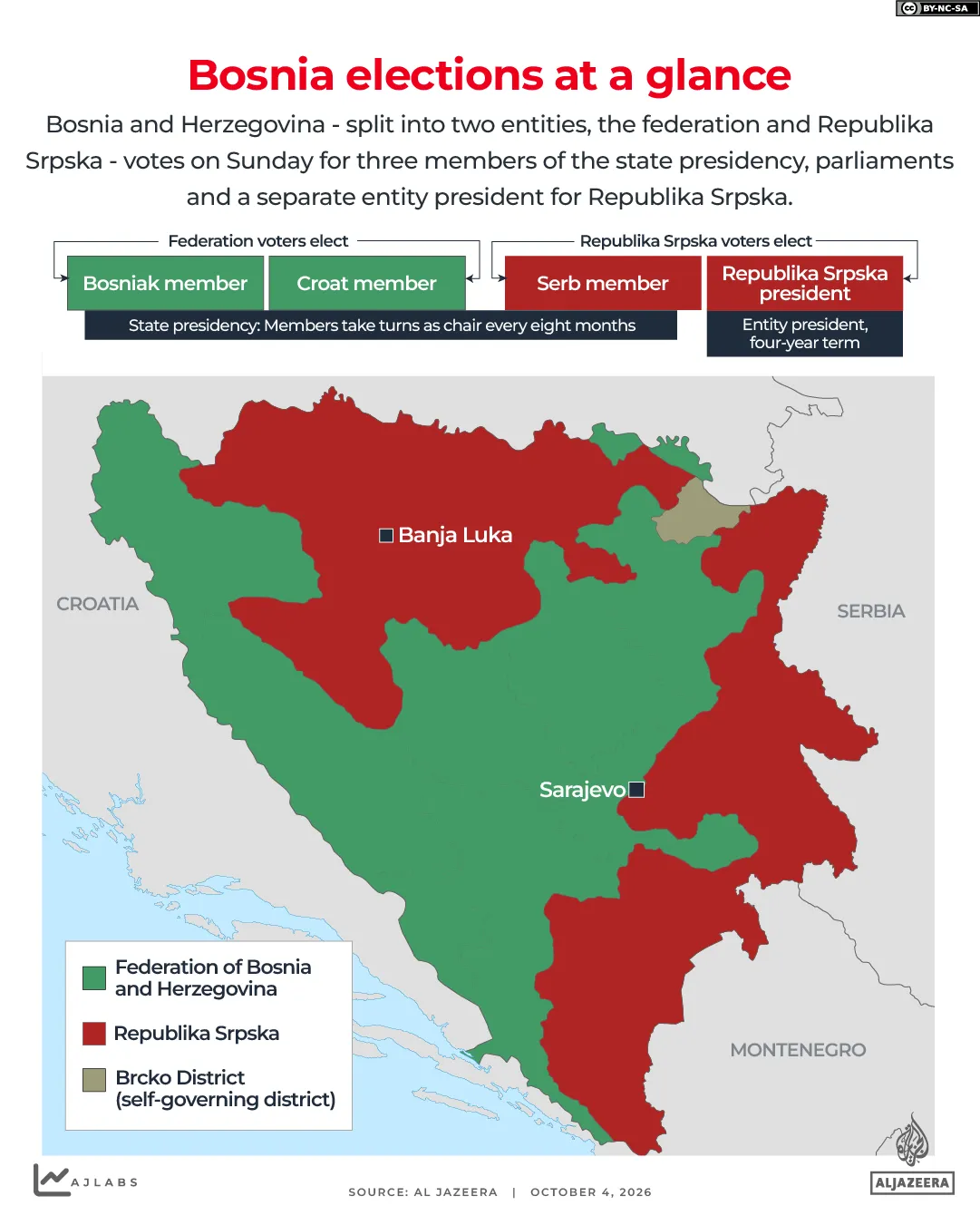
Bosnians are heading to the polls to choose the next government at all three of the state, entity and canton levels. It may seem complicated, but for a country divided into two entities – the Federation of Bosnia and Herzegovina and Republika Srpska, along with Brcko District – this is nothing new.
When do Bosnia’s elections take place?
The general elections are scheduled for Sunday, October 4. More than 3.4 million people are eligible to vote.
[Al Jazeera]
What’s different about this election?
This year, new election technology will be used. Voters will be identified using biometric devices, while ballot papers will be scanned rather than simply placed in ballot boxes.
The use of scanners, however, does not mean voting will be fully electronic. Votes will still be cast and recorded on paper, but verification and counting should be faster and more transparent, while voter identification should be more accurate.
Who is running for the Presidency?
Candidates for the Bosniak representative include current Presidency member Denis Becirovic of the Social Democratic Party (SDP), Bakir Izetbegovic of the Party of Democratic Action (SDA), Semir Efendic of the Party for Bosnia and Herzegovina (Stranka za BiH), and Fahrudin Radoncic of the Union for a Better Future of BiH (SBB).
Izetbegovic, the president of the centre-right SDA, the biggest Bosniak party in the country, is running for his third term after being defeated by Becirovic in 2022.
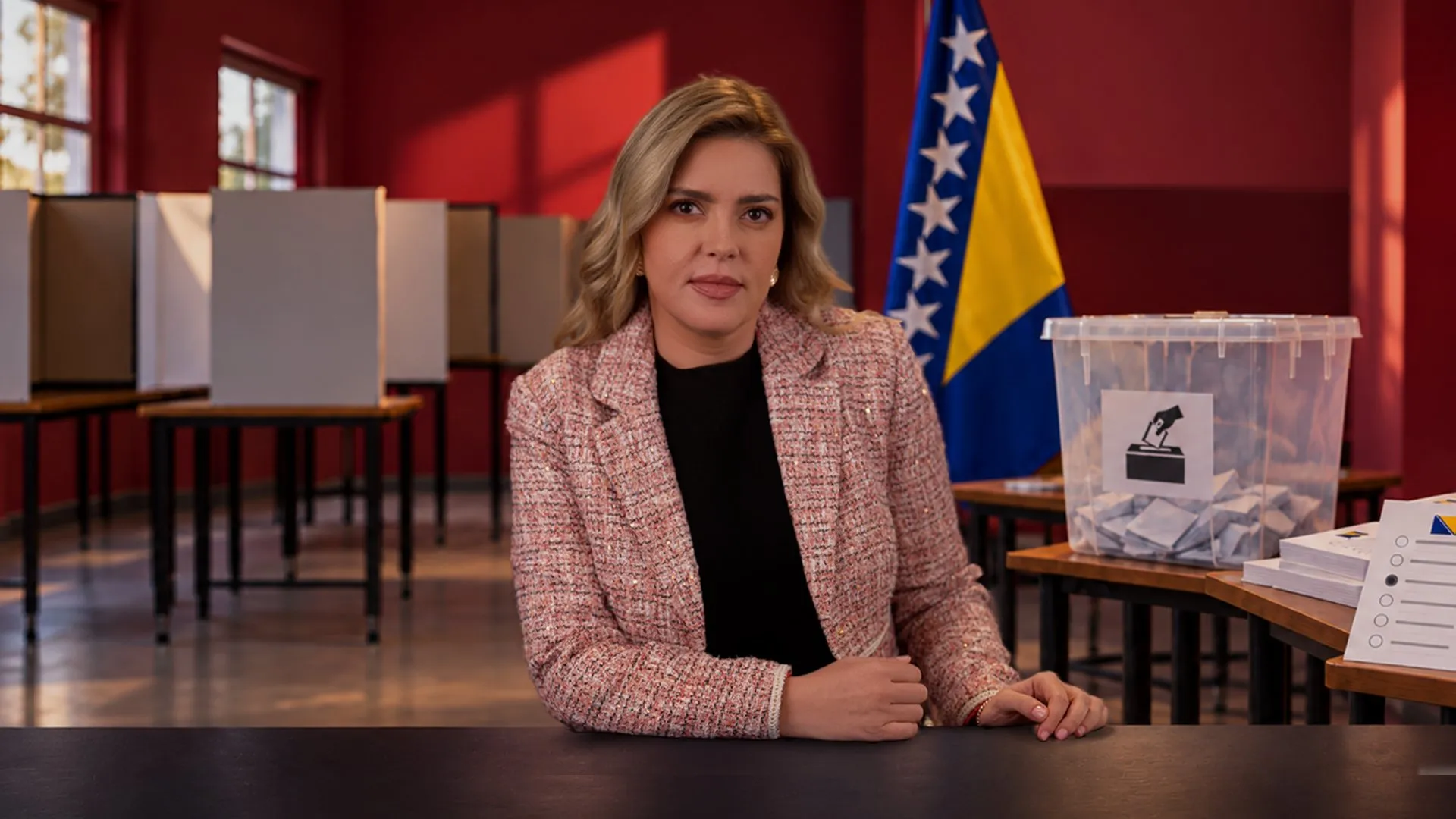
Three candidates will run for the Croat seat in the Presidency: Darijana Filipovic of the Croatian Democratic Union of Bosnia and Herzegovina (HDZ BiH), Slaven Kovacevic of the Democratic Front (DF), and Zdenko Lucic, a candidate supported by a coalition of five Croat parties.
The current Serb member of the Presidency, Zeljka Cvijanovic from the right-wing Alliance of Independent Social Democrats (SNSD), is running for a second term. During her term on the country’s top state body, which began in November 2022, just a few months after Russia’s war in Ukraine started, she maintained close and continuous cooperation with Russia and its president, Vladimir Putin.
SNSD is led by Milorad Dodik, the former president of Republika Srpska, best known for his separatist moves and for challenging the Constitution of Bosnia and Herzegovina and the decisions of former High Representative Christian Schmidt.
Cvijanovic will face Marinko Bozovic of the Serb Democratic Party (SDS) and Nebojsa Vukanovic of the List for Justice and Order.
[Al Jazeera]
Who else is on the ballot?
Voters will be choosing representatives for 14 governments, as well as members of the country’s three-member Presidency.
Each entity has its own president, assembly, prime minister and ministers. The Federation of Bosnia and Herzegovina is further divided into 10 cantons, each with its own government.
For all this to happen, the Central Election Commission (CIK), the main body responsible for overseeing the voting process, earlier said that 75 political parties and four independent candidates were registered and eligible to participate.
How are Presidency members chosen?
When registered voters go to the polls, they do not elect one president, but choose one of three members of the country’s collective head of state. They are the representatives of the three constituent peoples – Bosniaks, Croats and Serbs.
The Bosniak and Croat members are elected from the Federation of Bosnia and Herzegovina, while the Serb member is elected from Republika Srpska.
This is because the majority of Bosniaks and Croats live in the Federation, while most Serbs live in Republika Srpska.
The election of the Croat member has weighed on Bosniak-Croat relations for years and has often been used as a reason for political blockades.
Parties gathered around the centre-right Croatian Democratic Union of Bosnia and Herzegovina (HDZ BiH) are demanding changes to the Election Law, saying they want to prevent Bosniak voters from influencing the election of the Croat member of the Presidency.
But that would also require changes to the Constitution, which allows all citizens in the Federation to choose whether they want to vote for the Bosniak or the Croat member.
[Al Jazeera]
What about citizens who live outside their constituent group’s voting area?
A Serb living in the Federation, or a Bosniak or Croat living in Republika Srpska, who wants to run would not be able to do so, nor can they vote for those they consider to be their own representatives.
That is one of the many paradoxes of Bosnia and Herzegovina’s electoral system.
How is the state-level government chosen?
Citizens elect representatives to the Parliamentary Assembly, which consists of two houses.
Forty-two representatives will be elected to the House of Representatives.
Two-thirds are directly elected from the Federation of Bosnia and Herzegovina, and one-third from Republika Srpska.
A quorum consists of a majority of all members elected to the House of Representatives.
The second chamber – the House of Peoples – has 15 delegates and is elected indirectly through the institutions. It consists of Bosniaks, Croats and Serbs – five from each group.
What happens with the entities?
The election of entity-level authorities works somewhat differently.
In Republika Srpska, citizens directly elect the National Assembly, as well as the entity president and vice presidents.
They do not directly elect the government – it is confirmed by the National Assembly.
In the Federation of Bosnia and Herzegovina, citizens directly elect the House of Representatives of the Federation Parliament and the cantonal assemblies.
Those cantonal assemblies then elect delegates to the Federation’s House of Peoples.
The president of the Federation, the entity government and the cantonal governments are formed after the elections, through parliamentary majorities and political agreements.
Why is it a challenge to form the government?
It is difficult not only because the electoral system is complex, but also because of the lack of agreement among representatives of the three different ethnic communities.
Frequent blockades and obstruction make decision-making difficult at all levels, even though many politicians invoke the politics of compromise.
Elections in Bosnia and Herzegovina, therefore, are not only about who wins, but about whether a system designed to represent everyone can serve its citizens.
Why are the elections important?
New election technologies might reduce potential fraud, but much more will be needed for the country’s path towards the European Union.
The outcome of the election could unblock, or further slow down, the adoption of key laws needed for the country’s progress towards EU membership.
The EU granted Bosnia and Herzegovina candidate status in December 2022 and opened accession negotiations in 2024.
However, the country’s progress has since been assessed as very limited and slowed by political blockades.
These elections will also be a test for the ruling coalition, which promised to focus on social and economic issues amid the rising cost of living.
When are the results?
The first preliminary results are traditionally published by CIK late on election night, on October 4, and are updated every few hours.
In the days after the elections, CIK gradually enters votes from the remaining polling stations, mobile voting teams, as well as ballots received by mail and from diplomatic and consular missions.
The official results will be known no later than November 20.
Saturday Kitchen Live underwent a huge schedule shake-up during the latest episode of the BBC One cooking show
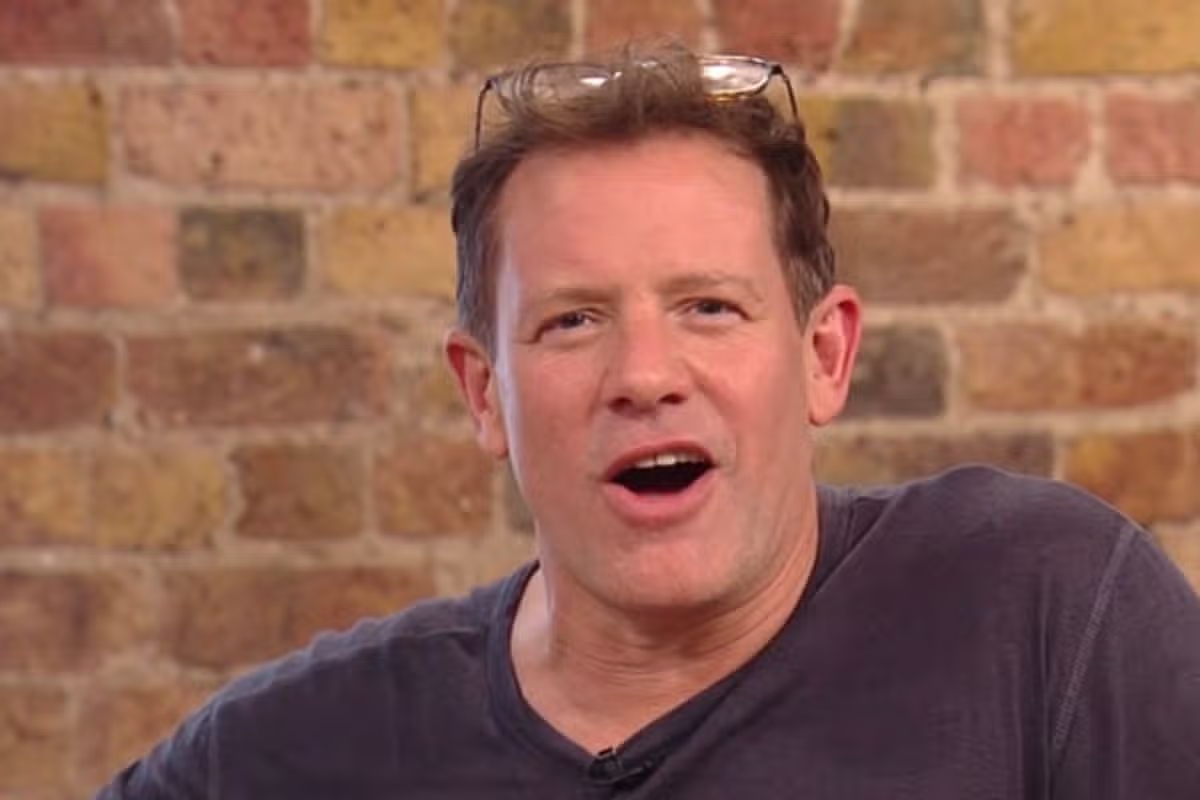
BBC Saturday Kitchen host, Matt Tebbutt, was absent on the latest episode (Image: BBC)
Saturday Kitchen Live saw a new presenter on today’s episode.
The hit BBC One cooking show was back with a new instalment, welcoming chefs Jamie Oliver, Gennaro Contaldo and Julie Lin, as well as Stranger Things actor Gaten Matarazzo, in the studio.
However, viewers expecting host Matt Tebbutt got a surprise to see the presenter absent and instead Donal Skehan in presenting duties.
Addressing Matt’s, 52, absence, Donal, 40, said: “Welcome to the show, Matt is away, so Donal can play!”
It appears that Matt is busy on another project as he posted updates to his Instagram Story about working on The Go To Food Podcast, writing: “Did a fun thing with these two smashers! Coming soooooonnn!”
Prior to Saturday Kitchen Live airing, BBC Breakfast spoke to Donal to hear what the show had coming up, where Naga Munchetty spoke about Matt’s absence.
Naga, 51, said: “Donal! Good morning to you!” with Donal responding: “Good morning, Naga, this might be a nice little palate cleanser for you. You know, no Matt this week, but I’m here!”
With Naga joking: “Well, yeah, this is definitely a palate cleanser, in terms of no Matt!” the BBC Breakfast host then put Donal on the spot, asking if anyone had ever told him his recipe hadn’t worked after releasing an impressive 13 cook books.
A shocked Donal responded: “Never. Why?” with Naga admitting: “Because I don’t think… I don’t think they’re always accurate. Especially when it, you know, comes to time and whatever. What do you think?”
With Donal replying: “Naga! Well, I think you’re completely wrong, firstly, and we have Jamie Oliver in the house to prove you wrong, because we’re going to do 20 minutes of straight-through cooking, showing you can make anything delicious in no time at all!
“So, er, my cookbooks aren’t tested like that, but Jamie’s are, and we’re going to… we’re going to do great things, and hopefully prove you wrong.”
Donal then quipped: “I thought you were going to be nice to me after Matt’s out of the seat!” with Naga joking in response: “That was nice!”
Saturday Kitchen Live continues on BBC One and BBC iPlayer
Bosnia and Herzegovina votes on October 4 in an election that may determine whether the country breaks its political deadlock, strengthens its path towards the European Union or faces fresh divisions that could reverberate across the Balkans.
Harvey Weinstein’s winding legal saga took a new turn this week, one that reaffirmed that the former Hollywood kingmaker — whose alleged history of sexual assault and abuse sparked the cross-industry #MeToo reckoning — will likely spend the rest of his life in prison.
Weinstein, 74, was sentenced on Wednesday to 15 years in prison for a felony sex crime tied to allegations from former “Project Runway” production assistant Miriam “Mimi” Haley. After a retrial last year, a majority-female jury found the disgraced Hollywood mogul and co-founder of the defunct Weinstein Co. guilty of sexually assaulting Haley in 2006 at his New York apartment.
Haley described the lasting and “devastating” effects of Weinstein’s assault as she addressed the court during Wednesday’s sentencing.
“Making the decision to speak up will have me looking over my shoulder for years to come,” she said. “It’s a life sentence for me.”
Weinstein said he has “remorse for Miriam Haley’s pain,” but maintained that he’s innocent.
The New York sentencing this week was not the first time Weinstein received a lengthy prison sentence for sex crimes. Since the damning sexual assault and harassment allegations against Weinstein first entered the legal spotlight in 2017, the Oscar-winning producer has faced convictions for rape and sexual assault over the course of trials — and retrials — from 2020 to 2025.
Weinstein has already served more than six years in New York, leaving him with about nine years left on that sentence. A pending resentencing in California — he was sentenced to more than a decade for a 2013 rape — could keep the mogul behind bars for life, the Associated Press reported.
Here’s a look back on Weinstein’s previous convictions and the prison sentences that followed.
March 2020: 23-year prison sentence in New York
Weinstein was first sentenced for his sex crimes against women in New York almost three years after the #MeToo movement upended his career as a prolific movie producer.
The mogul’s 2020 sexual assault trial, the first in a handful that would follow in the coming years, ended in February 2020 with a jury delivering a mixed verdict. The jury convicted Weinstein of committing a criminal sexual act and third-degree rape based on accusations from Haley and former actor Jessica Mann, respectively. The jury acquitted him on the most serious charges, including two counts of predatory sexual assault.
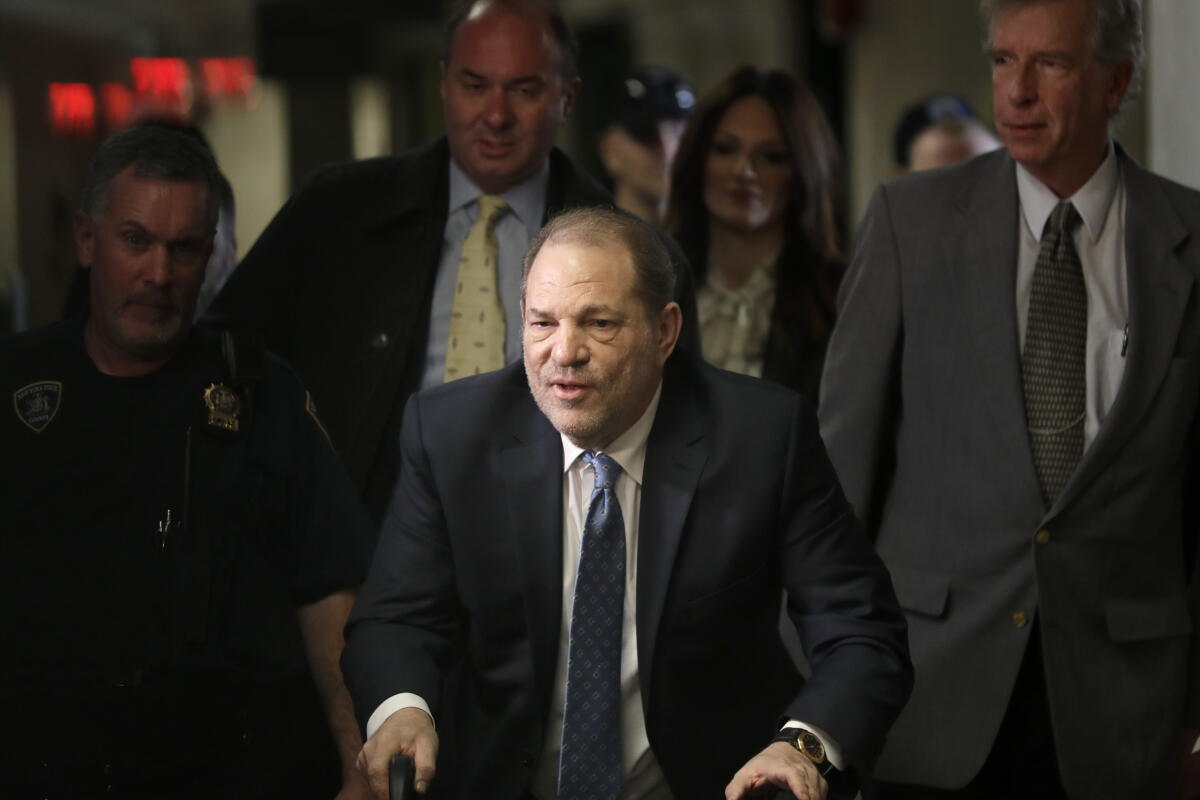
Harvey Weinstein arrives at a Manhattan courthouse for jury deliberations in his rape trial, Monday, Feb. 24, 2020, in New York.
(Seth Wenig / Associated Press)
A month later, New York Supreme Court Judge James Burke announced that Weinstein would carry out a 23-year prison sentence for his crimes. He was ordered to serve 20 years for his 2006 attack against Haley in his Manhattan apartment. The judge added three years to Weinstein’s sentence for raping Mann in a Manhattan hotel in 2013. Weinstein was to serve those sentences consecutively.
At the time, the Miramax co-founder denied all wrongdoing and planned to appeal. Those efforts come into play in 2024.
February 2023: 16 years in California
Weinstein, a movie titan who once dominated Hollywood and produced some of the modern film industry’s most defining titles, including “Pulp Fiction” and the divisive Oscar best picture winner “Shakespeare in Love,” was tried in his stamping grounds in October 2022. He was prosecuted for allegations that he raped and attacked four women in Beverly Hills hotel rooms between 2004 and 2013. Before the trial, Weinstein was indicted on 11 counts of rape, forcible oral copulation and sexual battery in Los Angeles and Beverly Hills. He denied all wrongdoing.
The acrimonious trial, which stretched more than a month, ended in December 2022 with a jury convicting Weinstein of forcible rape, forcible oral copulation and sexual penetration by a foreign object. The jury acquitted Weinstein of the sexual battery of a massage therapist and failed to reach verdicts on counts involving two other women. Los Angeles County Superior Court Judge Lisa Lench declared a mistrial on the charges that left the jury deadlocked.
Weinstein’s conviction hinged on an account from an Italian model and actor identified in court as Jane Doe 1. She said the producer barged into her hotel room in Beverly Hills, where she was staying while attending a film festival, to assault her. He was sentenced to 16 years in prison in February 2023.
Harvey Weinstein appears in court at the Clara Shortridge Foltz Criminal Justice Center on Oct. 4, 2022, in Los Angeles.
(Pool / Getty Images)
“There is no prison sentence long enough to erase the damage,” Doe said during the sentencing. “He deserves to experience the same shame, humiliation and fear as I did.”
Lench ruled at the time that Weinstein cannot serve his New York and Los Angeles sentences concurrently. His attorney said the producer would return to New York to carry out the remainder of that sentence before going to prison in California.
Earlier this year, a three-panel judge from California’s 2nd District Court of Appeal unanimously agreed to deny Weinstein’s efforts to appeal the Los Angeles conviction. The Los Angeles trial judge was also ordered to resentence the mogul.
“This is not the end of the appellate process,” Juda Engelmayer, Weinstein’s publicist, said in June. “We intend to seek review in the California Supreme Court because we continue to believe significant legal errors affected the proceedings and warrant further review.”
Weinstein is awaiting resentencing for this case.
April 2024 to now: New York retrial leads to an updated prison sentence
In a dramatic reversal of the landmark #MeToo case, a state appeals court found that the judge who presided over Weinstein’s 2020 trial prejudiced his case by allowing four women who said Weinstein had assaulted them to serve as witnesses, even though their allegations were not part of the case. The appeals court also ruled the judge made a mistake in ruling prosecutors could cross-examine Weinstein about uncharged and decades-old allegations if he decided to testify.
What ensued was a retrial in 2025 that exceeded a month and featured emotional testimony from former accusers Haley and Mann, and model Kaja Sokola, who did not testify against the mogul in the 2020 trial.
The fallen Hollywood boss was retried on the allegations that led to his original rape and criminal sex act convictions. He was also tried on a new sexual assault charge stemming from Sokola’s allegation that he forced oral sex on her in 2006 when she was 19. Weinstein pleaded not guilty and his defense maintained the alleged sexual encounters were consensual. He did not take the stand, similar to his first trial in New York and his rape trial in Los Angeles.
Before Weinstein was convicted in June 2025 of forcing oral sex on Haley, he declared “it’s just not fair.”
“My life is on the line, and you know what? It’s not fair,” he said at the time. “It’s time, it’s time, it’s time, it’s time to say this trial is over.”
Time, it appears, is of the utmost importance for Weinstein, considering his renewed prison sentences in New York and an incoming sentence in California. Weinstein spoke at length with the Hollywood Reporter in March about carrying out his sentence and the possibility of dying behind bars. The former executive was jailed at the notorious Riker’s Island jail complex in New York at the time of the interview.
“It scares the s— out of me. Cold and heartless,” he told THR. “It’s incredible to have the life that I had and the things that I did for society and not have the leniency to deal with me in a kinder way. Whatever they think I did bad in my life, I didn’t get the death penalty.
OASIS fans who are eager to grab tickets for their 2027 tour must keep an eye on their emails over the next few days.
This is because those who have been selected from the ballot will be given a unique code in order to access the site to buy tickets. Here’s what you need to look out for.
Oasis start their latest tour in May 2027 at Celtic Park, GlasgowCredit: Alamy Live News.
When are Oasis codes released?
Codes for tickets will be released between Thursday 24th and Sunday 27th September 2026.
As published on oasisnet.com, if you have been selected to buy an Oasis Live ’27 ticket, a unique code and full details of how to buy tickets will be sent to the email address and name fans registered with.
Sign up for the Showbiz newsletter
Thank you!
There will be no general sale for the tour, but there is also no set time on when fans will receive their codes.
This means that fans who are invited to buy a ticket on Sunday 27th September may receive their code later.
Fans have been warned to check their junk folders over this period just in case the email with the code attached drops in there.
When do tickets go on sale?
General sale for tickets will be across three dates, but you’ll only be able to access the sale on your allocated day.
Registration closed on Thursday 17th September at 4pm, with fans now having to wait to see if they are lucky enough to have been selected.
The three days the general sale will be on are:
Friday September 25
Saturday September 26
Sunday September 27
Ticket prices are fixed and will range between £71.50 to £266.60. Ticket prices will vary depending on the location of the concert and where you are stood or sat.
What are the confirmed tour dates?
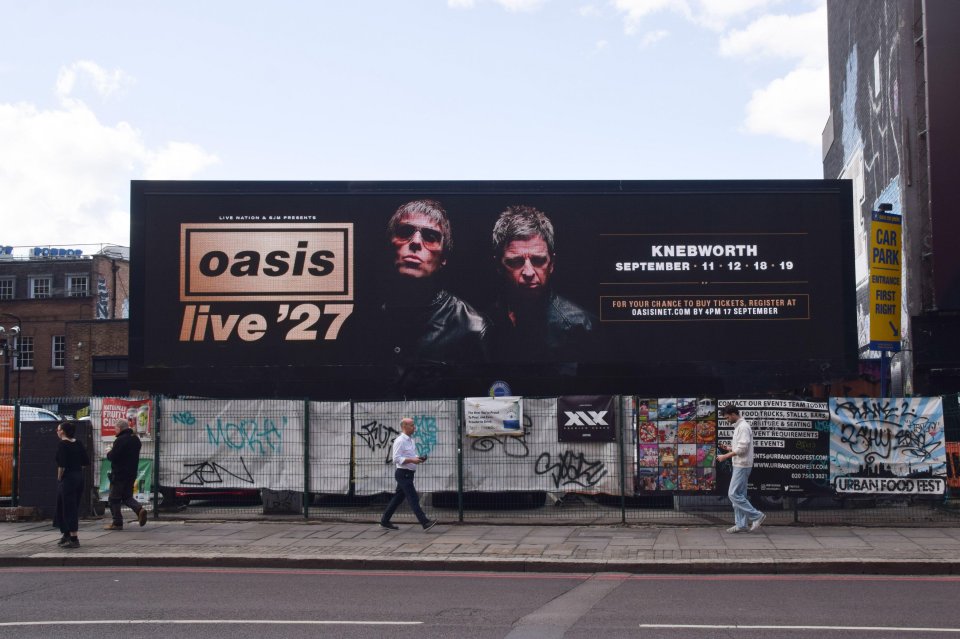
Oasis are returning to Knebworth house in 2027, for the first time since their iconic 1996 gigs which saw 250,000 people attend over two days.
They have 11 nights booked at the Etihad stadium, home of the Gallagher brothers beloved Manchester City, having last played there in 2005.
The icons will also return to France for the first time since their acrimonious split at Rock en Seine festival in Paris in 2009.
Oasis’ 2027 tour schedule revealed
OASIS will play 38 nights across 11 cities in 2027, they announced today at 4pm
May 2027 May 21 Glasgow, Celtic Park May 23 Glasgow, Celtic Park May 25 Glasgow, Celtic Park May 28 Glasgow, Celtic Park May 29 Glasgow, Celtic Park
June 2027 June 04 Manchester, Etihad Stadium June 06 Manchester, Etihad Stadium June 08 Manchester, Etihad Stadium June 11 Manchester, Etihad Stadium June 12 Manchester, Etihad Stadium June 15 Manchester, Etihad Stadium June 18 Manchester, Etihad Stadium June 19 Manchester, Etihad Stadium June 22 Manchester, Etihad Stadium June 25 Manchester, Etihad Stadium June 26 Manchester, Etihad Stadium
July 2027 July 02 Munich, Allianz Arena July 03 Munich, Allianz Arena July 10 Barcelona, Estadi Olímpic Lluís Companys July 11 Barcelona, Estadi Olímpic Lluís Companys July 16 Amsterdam, Johan Cruijff ArenA July 17 Amsterdam, Johan Cruijff ArenA July 23 Paris, Stade de France July 24 Paris, Stade de France July 29 Rome, Stadio Olimpico July 30 Rome, Stadio Olimpico
August 2027 August 10 Boston, Gillette Stadium August 13 Boston, Gillette Stadium August 14 Boston, Gillette Stadium August 20 Las Vegas, Allegiant Stadium August 21 Las Vegas, Allegiant Stadium August 24 Las Vegas, Allegiant Stadium
September 2027 September 04 Slane Castle, Ireland September 05 Slane Castle, Ireland September 11 Knebworth, UK September 12 Knebworth, UK September 18 Knebworth, UK September 19 Knebworth, UK
This time around, all eyes are on Lizzie Borden who was accused of the brutal murder of her dad and step-mother in the late 19th Century before she was acquitted.
Despite Lizzie being set free, her reputation was never restored and for more than 100 years, a gruesome children’s rhyme has immortalised the crimes.
But even though this is why Lizzie Borden remains a familiar name in criminal history, the chant is far from factually correct.
Lizzie Borden rhyme explained
Watch Jose Mourinho Netflix doc with free Netflix subscription
This article contains affiliate links, we will receive a commission on any sales we generate from it. Learn more
Jose Mourinho’s three-part Netflix documentary is available to watch at no extra cost for Sky customers as the provider gives away free subscriptions with each of its Sky Stream TV bundles.
Here is the Lizzie Borden rhyme in full: “Lizzie Borden took an axe, and gave her mother 40 whacks.
“When she saw what she had done, she gave her father 41.”
It states that Lizzie killed her mother and father but the woman was actually her step-mother Abby Borden as her biological mum died when she was just a child.
The rhyme goes on to detail that her parents were “whacked” 40 and 40 times but this is an exaggeration as Abby was killed by 18 or 19 strikes and father Andrew by 10 or 11.
In addition, the rhyme states that the murders were committed with an axe but police and experts believe the weapon was a hatchet, a far smaller and compact tool meant for lighter tasks in comparison to an axe.
There’s also the matter that the children’s song states that Lizzie Borden was the one to commit these crimes.
However, a jury acquitted Lizzie of their murders in 1893, so legally, she didn’t kill Abby and Andrew Jackson Borden.
Despite this verdict, public suspicion remained throughout her life and to this day, especially since it was an all-male jury that didn’t think an upper-class woman could commit such a “feral” crime.
Monster: The Lizzie Borden Story is available to watch on Netflix
Ed Sheeran’s Loop tour, in the span of less than two weeks, became an unexpected lightning rod for controversy and conversation about artist activism amid Israel’s deadly war in Gaza. Still, the show will go on.
Sheeran’s tour will proceed as planned, The Times has learned. He is scheduled to play on Saturday at Lincoln Financial Field in Philadelphia. The venue also confirmed on Wednesday that the Saturday concert is still a go, but that supporting acts have yet to be finalized.
A representative for Sheeran’s tour did not immediately respond to requests for additional information, including who will be the new supporting acts.
In a rapid turn of events since rapper and former opening act Macklemore called for Palestinian liberation onstage earlier this month, Sheeran — the singer of inoffensive hits including “Thinking Out Loud” and “Shape of You” — fell out with the fellow Grammy winner, witnessed all supporting acts drop from his lineup and defended himself against accusations of complicity in silencing criticism of Israel. Additionally, Sheeran confronted scrutiny over his largely apolitical public presence. He attributed this to his longtime desire to “bring people from all backgrounds and cultures together” via his music and performances.
“I am not complicit. I have my personal views on this devastating conflict,” he wrote Tuesday on Instagram. “Just because I choose not to speak publicly, it doesn’t mean I don’t have them, and it doesn’t mean I don’t care. Nor does it mean I don’t support causes in my own, personal way.”
Ahead of Sheeran’s first concert since the scrutiny surrounding Macklemore’s performance, read on for what preceded the fallout of Sheeran’s Loop tour.
Macklemore goes from “Thrift Shop” to “Hind’s Hall”
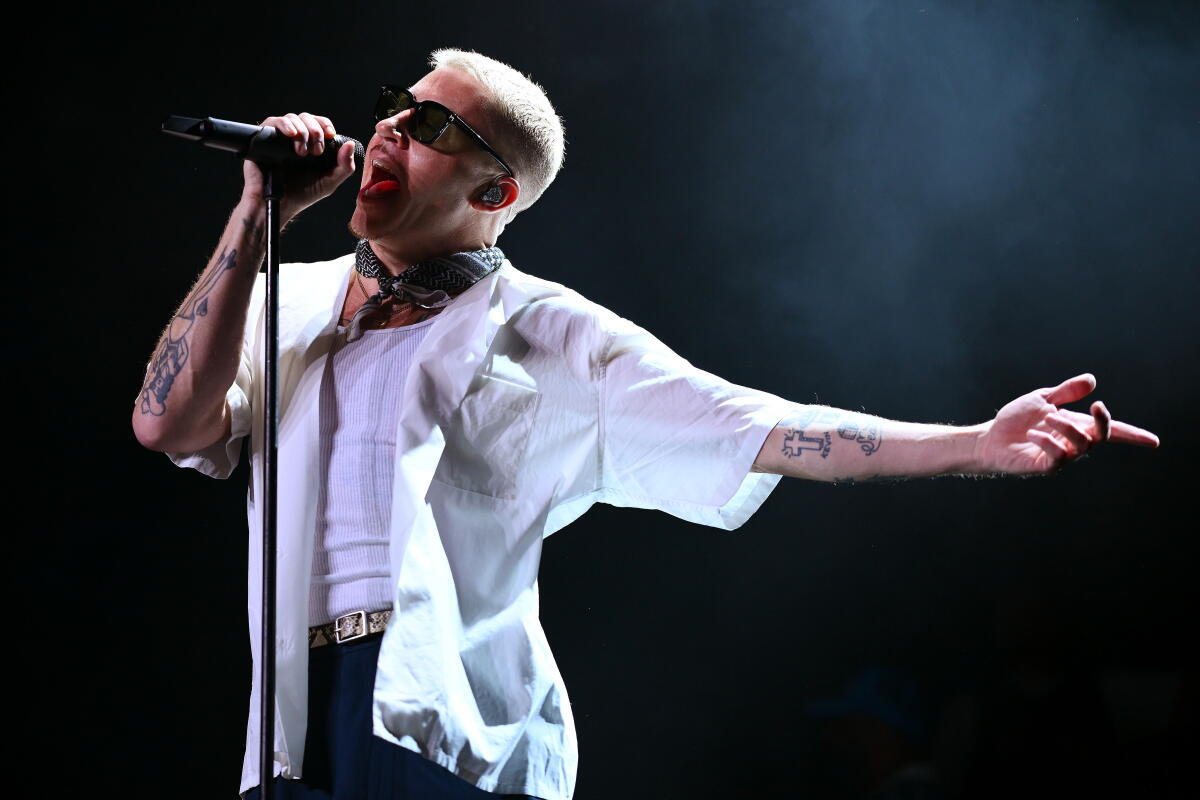
Macklemore performs at Rod Laver Arena on May 15, 2024, in Melbourne, Australia.
(Morgan Hancock / Getty Images)
Before hitting the stage for Sheeran’s Loop tour, Macklemore famously burst onto the music scene in 2012 as part of the duo Macklemore & Ryan Lewis. The pair gained popularity for the then-inescapable hit “Thrift Shop,” the fourth single off their acclaimed debut album, “The Heist.”
The duo gained further notoriety with hits “Can’t Hold Us” and same-sex marriage anthem “Same Love.” They notoriously bested Kendrick Lamar at the 2014 Grammy Awards in the rap album category. Lamar was nominated for his striking debut “Good Kid, M.A.A.D City.”
A year after releasing their 2016 album, “This Unruly Mess I’ve Made,” the duo announced an indefinite hiatus. Macklemore focused on his solo work, including collaborations with Kesha, Lil Yachty and Skylar Grey. In recent years, Macklemore has taken on a new purpose with his platform.
Macklemore, like many musical acts including Kehlani, Finneas and Irish rap group Kneecap, became a vocal supporter of the Palestinian cause after Israel began its offensive in Gaza in the wake of the Hamas attacks on Oct. 7, 2023. The rapper has channeled his views on the conflict into his music, releasing his protest song “Hind’s Hall” in May 2024. The song calls for a ceasefire, an end to Israeli occupation in Gaza and highlights pro-Palestinian protests on college campuses.
Ed Sheeran announces his Loop tour
Ed Sheeran performs during iHeartRadio Kiss 108’s Jingle Ball 2025 at TD Garden on Dec. 14, 2025, in Boston, Mass..
(Scott Eisen / Getty Images for iHeartRadio)
Last September, Sheeran unveiled his plans to hit the road to promote his eighth studio album, “Play.”
The British “A Team” singer announced at the time that his tour would begin June 2026 with a stop at Arizona’s State Farm Stadium and would run through early November. The announcement did not disclose the supporting acts set to share the stage with him, but informed fans the singer would perform shows across large venues including Inglewood’s SoFi Stadium in August and a pair of performances at MetLife Stadium in New Jersey.
The concerts at MetLife Stadium would later embroil Sheeran, his tour, Macklemore — and somehow pop star Pink — in controversy.
Macklemore calls to ‘Free Palestine’: Performance or ‘propaganda?’
When Macklemore took the MetLife Stadium stage as the supporting act for Sheeran’s Sept. 4 and 5 concerts, he did not mince words in his message. During his set, Macklemore criticized Israel for its war in Gaza and accused it of genocide of Palestinians. He also projected an edited version of his “Hind’s Hall” music video, which features footage of pro-Palestinian college encampments and protests and military strikes in Gaza.
Video of Macklemore’s performance spread online, drawing ire from some Jewish advocacy groups including StopAntisemitism, which accused Macklemore on Instagram of turning “a mainstream event into a political nightmare against the Jewish state.” Pop star Pink, who is Jewish, shared StopAntisemitism’s post to her Instagram story. She faced backlash for the repost and later clarified in a three-part statement that she took issue with the imagery Macklemore displayed during his performance. She also accused the rapper of taking “the mic to tell all the Jews in the stadium that it wasn’t about them.”
In the wake of Macklemore’s performance, the Israeli American Council and the Anti-Defamation League also decried Macklemore’s performance on social media, with the former publishing a petition calling on Sheeran to remove the rapper from the remaining shows of his tour.
“Freedom of expression does not give anyone the right to turn someone else’s stage into a platform for political propaganda,” the Israeli American Council said on Instagram.
Amid the mounting backlash, Macklemore defended his stance and shared video on social media of his full address to the MetLife crowd. “I said ‘Free Palestine.’ I want those words to be loud and clear so that the people in Gaza all the way to the occupied West Bank know that we have not forgotten them,” he tells concertgoers in his introduction to “Hind’s Hall.”
“To all my Jewish brothers and sisters, criticism of Israel, criticism of apartheid, being against genocide in no way is a criticism of you,” he adds, according to video of his address. “My message is for peace, love for all human beings to be treated with dignity, respect and equality.”
The fallout begins: Macklemore fired from Loop tour
Whether Macklemore would remain on Sheeran’s tour amid the public outcry remained uncertain, until he confirmed his status earlier this week. He said in a lengthy statement shared to Facebook that his continued, vocal support for Palestinians amid Israel’s war in Gaza has cost him professionally.
The rapper said he was removed after “some difficult conversations” with Sheeran. He also went into depth about the inner workings that led to his removal from the tour, including conversations between Sheeran and wealthy venue owners, including billionaire Robert Kraft, whose Kraft Group owns Gillette Stadium in Massachusetts, where Sheeran is set to play later this month.
“Ed told me that Kraft said I would not be allowed to perform in his stadium,” Macklemore wrote. “Ed also told me that Kraft had rallied some of the other stadium owners and collectively they gave him an ultimatum: if Macklemore stays on the tour, you will not be allowed to play in our venues.”
Sheeran in a separate statement shared on Tuesday confirmed he had conversations with Kraft but did not speak to the alleged ultimatum. The singer also said removing Macklemore from the tour “was the promoter’s decision, it was not mine” and that Macklemore’s contract was with its promoter. Messina Touring announced on Monday it had dropped Macklemore from the remaining tour dates “after discussions with stakeholders.”
Additionally, Macklemore wrote that Sheeran’s “typical apolitical stance was being challenged” amid the public scrutiny and “he couldn’t get past his public facing, ‘I don’t take sides.’”
Sheeran appeared to address that criticism, writing in his missive that attendees at his concerts “do not expect a political forum.” The singer also wrote he thinks there can be different ways to work toward peace.
“If we only focus on shouting the loudest, nothing will ever change,” he wrote.
Macklemore said in his Monday statement he was hopeful this turn of events would not mean an end to his friendship with Sheeran and he was grateful for the opportunity to play on tour, regardless.
“I didn’t need 10 Shows from Ed. I needed 2,” he wrote. “Two chances to stand in front of 90,000 people and say … ‘Free Palestine.’”
Supporting acts depart tour in solidarity
Grammy winner Finneas was among the supporting acts who announced their departure from Ed Sheeran’s tour on Tuesday.
(Monica Schipper / Getty Images)
Hours after Sheeran shared his side to the controversy, numerous musical acts including Grammy winner Finneas and folk band Beoga, Sheeran’s backing band, pulled from the Loop tour in solidarity with Macklemore and in support of Palestinians.
“Artists must not be silenced when they speak up for the oppressed. I have decided to withdraw from my upcoming tour dates with Ed Sheeran,” wrote Finneas, who has been a vocal supporter of Palestinians. “I stand with Palestine and its people.”
Pop band Lukas Graham and Irish singer-songwriter Aaron Rowe, both billed as supporting acts for several upcoming dates on Sheeran’s tour, voiced support for the Palestinian people and spoke against the inner workings that led to Macklemore’s removal.
In its statement, Lukas Graham wrote: “Money doesn’t give you the right to own the conversation. Nobody’s bank balance should decide who gets to speak or which suffering we’re allowed to acknowledge.”
Rowe in his Instagram statement said that Sheeran “has been a friend to me and has changed my life” but that he is sympathetic to the Palestinian cause. “As Irish people we know all too well about genocide, forced famine and violent occupation,” he wrote. The “Hey Ma” singer accused elites of leveraging their power to “silence the rightful voices” and criticism of Israel.
“I need to be true to myself and my ancestors who resisted colonisation, and fought for a freedom that I enjoy today in Ireland,” Rowe continued.
Macklemore announced Wednesday that he will donate his earnings from his shows with Sheeran to charities supporting Palestinians. He also invited Kraft to match his donation and reaffirmed his dedication to the Palestinian cause.
“This is what this has always been about,” he wrote. “Not me. Not a tour. Not the headlines or the controversy.”
The North American leg of Sheeran’s Loop tour is scheduled to end Nov. 7 at Raymond James Stadium in Tampa, Fla. — the same venue that platformed controversial rapper Ye (formerly Kanye West) earlier this summer.
UK airports are experiencing delays after a tech outageCredit: Alamy
What is happening right now at UK airports?
Airports across the UK are experiencing huge delays and cancellations with passengers reporting being stuck parked at gates due to Air Traffic Control outages.
It comes after NATS experienced a technical issue just after 1pm today according to multiple sources, halting departures at UK airports.
Sign up for the Travel newsletter
Thank you!
NATS stated: “We have identified that the issue was in our flight processing system.
“Our engineers are on site and working urgently to resume normal operations as quickly as possible.
“We recognise the ongoing disruption to travel, for which we sincerely apologise.
“Flights are still departing and airspace is open, but recovery will take some time. We will provide further updates as soon as possible.
“Passengers should check the status of their flight with their airline. We will provide further updates as soon as we have confirmed information, at http://www.nats.aero and on X at @NATS.”
Are flights being affected?
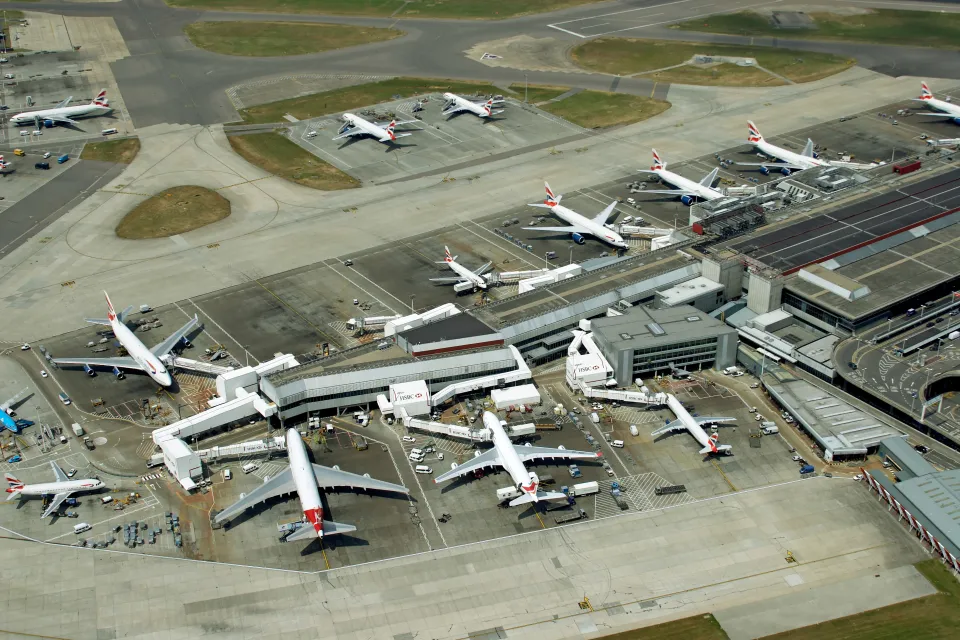
Flights are being impacted across UK airports London Heathrow, London Gatwick and Manchester.
More than 20 flights have been cancelled at London Heathrow AirportCredit: Alamy
More than 50 flights departing London Heathrow have already been cancelled.
Manchester Airport has advised passengers to “check the latest status of their flight with their airline” amid the turmoil caused by the air traffic control failure.
The airport said it would “Continue to monitor the situation and share further updates as more information becomes available.”
At Luton Airport a Ryanair flight to Dublin scheduled to leave at 4.10PM is now estimated to leave at 7PM.
And a Jet2 flight to Alicante scheduled to leave at 4.25PM, is now estimated to leave at 6PM.
What are my rights if my flight is delayed or cancelled?
Airlines have a duty of care they must offer passengers affected by delays or cancellations.
The Civil Aviation Authority states: “If your flight is delayed, and UK261 applies to it, your airline must look after you while you are delayed.
“This includes providing you with food and drink based on how long your delay is, and accommodation if you are delayed overnight.”
If your airline doesn’t provide these and you end up paying for food, a hotel or transport yourself, keep all receipts so you can claim back reasonable expenses later.
If your flight is cancelled, they must also offer a refund or an alternative flight, even with another airline.
If you accept a refund, they no longer need to offer you any additional forms of care, such as hotels or food vouchers.
Can I claim compensation?
Airlines are not required to offer any compensation if the situation is deemed “extraordinary circumstances”.
This can mean anything out of the airline’s control like extreme weather – or air traffic control failures.
As a result, the current NATS technical outage is classed as an “extraordinary circumstance”.
In the last major NATS outage in 2023, travellers did not receive compensation.
The Civil Aviation Authority revealed that around 700,000 passengers were impacted by the last outage.
This included 300,000 people by cancellations, 95,000 by delays of over three hours and a further 300,000 by shorter delays.
Flight compensation rules
A look at your rights if a flight is delayed or cancelled, when your entitled to compensation and if your travel insurance can cover the costs.
What are my rights if my flight is cancelled or delayed?
Under UK law, airlines have to provide compensation if your flight arrives at its destination more than three hours late.
If you’re flying to or from the UK, your airline must let you choose a refund or an alternative flight.
You will be able to get your money back for the part of your ticket that you haven’t used yet.
So if you booked a return flight and the outbound leg is cancelled, you can get the full cost of the return ticket refunded.
But if travelling is essential, then your airline has to find you an alternative flight. This could even be with another airline.
When am I not entitled to compensation?
The airline doesn’t have to give you a refund if the flight was cancelled due to reasons beyond their control, such as extreme weather.
Disruptions caused by things like extreme weather, airport or air traffic control employee strikes or other ‘extraordinary circumstances’ are not eligible for compensation.
Some airlines may stretch the definition of “extraordinary circumstances” but you can challenge them through the aviation regulator the Civil Aviation Authority (CAA).
Will my insurance cover me if my flight is cancelled?
If you can’t claim compensation directly through the airline, your travel insurance may refund you.
Policies vary so you should check the small print, but a delay of eight to 12 hours will normally mean you qualify for some money from your insurer.
Remember to get written confirmation of your delay from the airport as your insurer will need proof.
If your flight is cancelled entirely, you’re unlikely to be covered by your insurance.