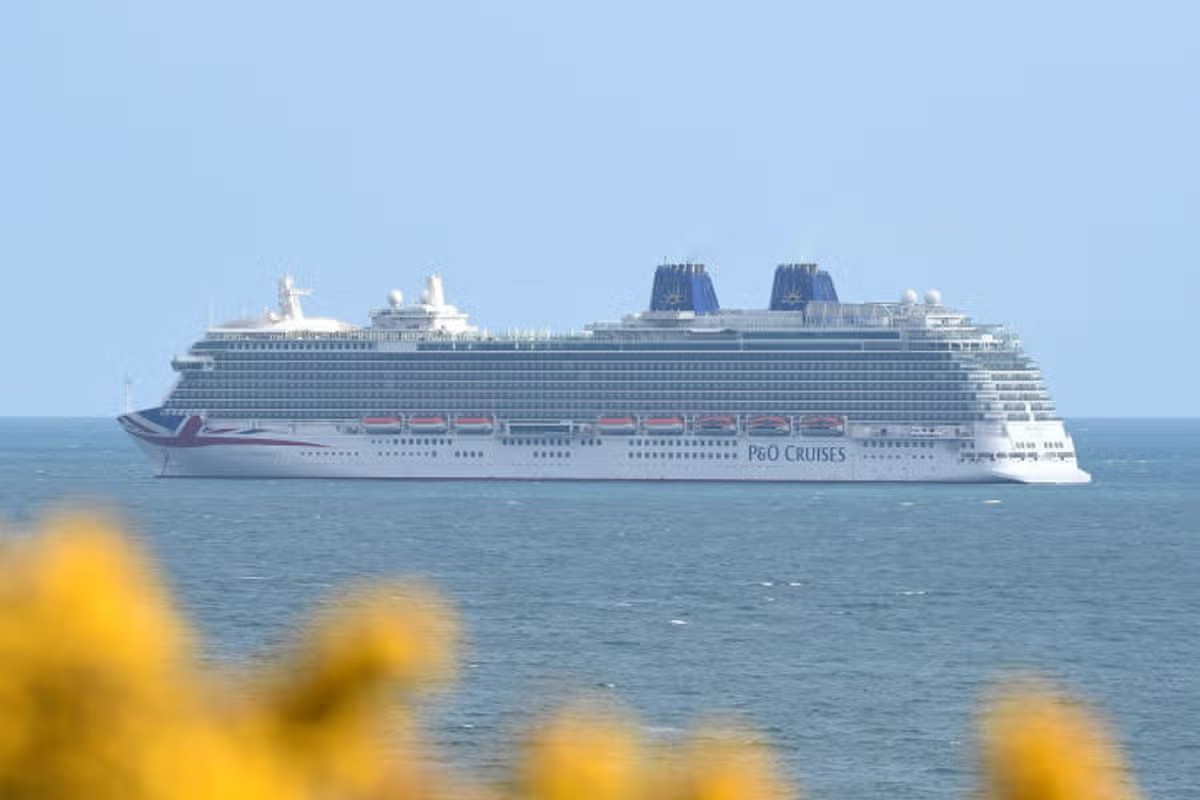
Cruisers are being warned over a common balcony habit that breaks strict P&O rules and could see their holiday terminated early
Certain items are banned or are restricted to certain areas onboard(Image: Getty)
Passengers looking forward to a cruise holiday may have packed their cigarettes or vape without giving much thought as to whether or not they can be used on the ship. But P&O Cruises has strict rules about smoking on board, with some breaches potentially putting the rest of a traveller’s holiday at risk.
Smoking is not permitted in cabins, on cabin balconies or in public rooms across P&O Cruises ships. Instead, guests are restricted to designated smoking areas on the open deck, which can vary depending on the weather and cleaning arrangements.
The same rule applies to electronic cigarettes. P&O says e-cigarettes, including those which do not produce smoke or vapour, can only be used in designated smoking areas and are prohibited in the same public areas.
This means a passenger who steps onto their private balcony for a cigarette is still breaking the cruise line’s rules, despite being outside. Guests are instead told to use the ashtrays and receptacles provided in designated smoking areas and make sure smoking materials are fully extinguished. The permitted locations are signposted, although the cruise line says they can change.
Consequences of breaking P&O rules
P&O’s code of conduct sets out the potential consequences of serious or disruptive behaviour on board. The cruise line says disrespectful or offensive behaviour can result in a holiday being terminated, with onward travel arranged at the guest’s own cost.
Its FAQ separately states that dangerous or violent behaviour may result in an individual guest or an entire party having their holiday terminated and having to make their own way home.
P&O’s published smoking policy does not say that every smoking breach will automatically result in immediate removal from the ship. However, passengers should not assume that breaking on-board rules is consequence-free, particularly where behaviour is considered serious or disruptive.
Beyond the threat of early disembarkation, guests caught lighting up inside their stateroom also risk steep cleaning charges billed directly to their onboard account. Because fire is considered the primary safety threat at sea, cabin smoke detectors are highly sensitive and actively monitored around the clock.
Passengers are advised to check their ship’s daily newsletter or speak to guest services upon embarkation to locate designated smoking zones. Taking a moment to double-check permitted deck areas ensures holidaymakers avoid costly fines or an unwanted confrontation with security.
The travel advice was shared to help prevent disruptions for people with upcoming trips
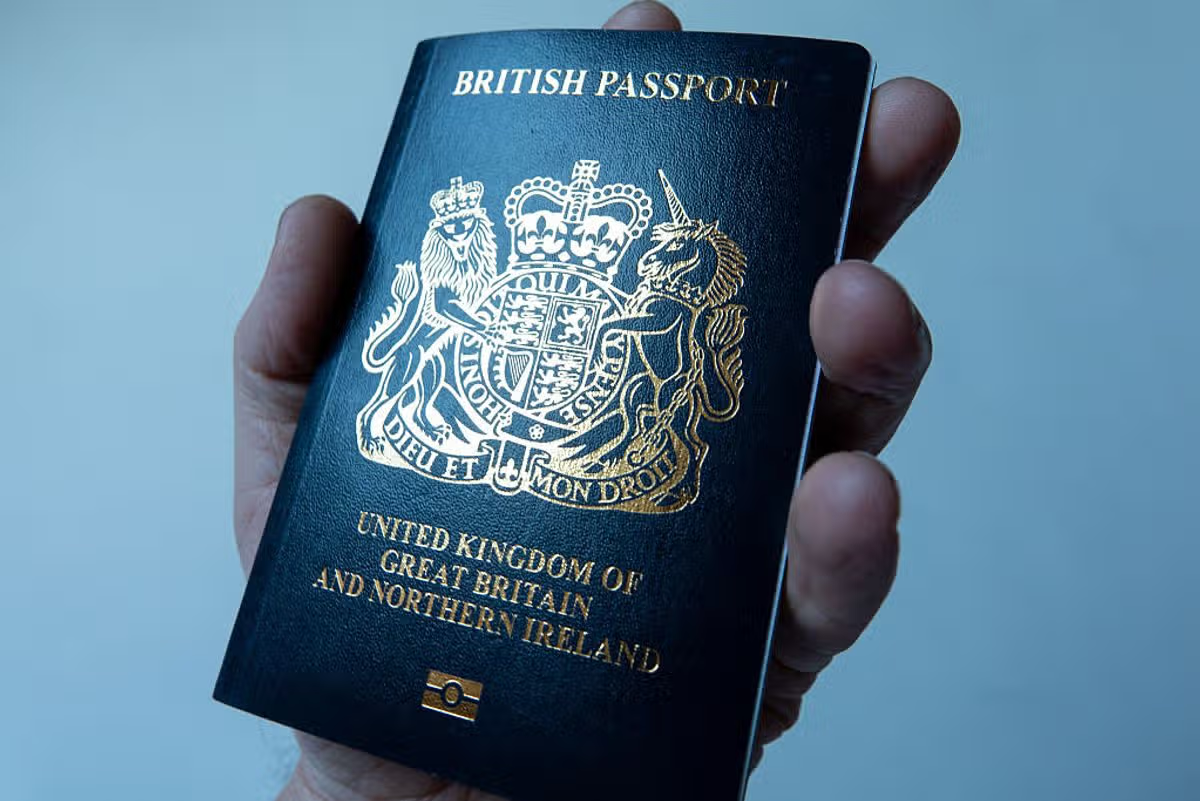
People should be aware of the travel guidance (stock photo)(Image: Getty)
HM Passport Office (HMPO) has shared essential travel advice for anyone travelling abroad. The alert comes amid the busy summer holiday period, when countless families are planning trips.
In a post shared on social media, HMPO urged people not to travel with a passport that they had previously reported lost or stolen. The X alert said: “Found a passport you previously reported lost or stolen? Don’t travel with it. Once reported, it’s cancelled and using it could disrupt your trip.”
Instead, they will need to apply for a replacement. HM Passport Office says it considers passports damaged if any of your details cannot be read, any of the pages are ripped or cut, there are holes in the cover, the cover is coming away, or there are stains on the pages. For instance, ink or water damage is not allowed.
HM Passport Office says it is important to cancel a lost or stolen passport as soon as you can. “This will reduce the risk of anyone else using your passport or your identity.
“You can report a lost or stolen passport for someone else if they cannot do it themselves.” If you have a photo of the lost passport, you can use this to answer the necessary questions.
Content cannot be displayed without consent
The advice continues: “You might be able to apply for an emergency travel document. You’ll need to pay a fee. If you apply for an emergency travel document, you do not need to cancel your passport now. You’ll cancel it as part of your application for the emergency travel document.”
When renewing your passport online, you will need a credit or debit card and a digital photo. It costs £102. If you are replacing a lost or stolen passport, you also need someone to confirm your identity online. More details are available on GOV.UK.
You can also follow @HM_Passport on X for general updates and tips. For instance, another recent post shares tips for taking your passport photos. The advice said: “A suitable passport photo can help avoid delays. Make sure your photo is in focus, against a plain background and meets all requirements.”
GOV.UK says: “In your photo you must: be facing forwards and looking straight at the camera, have a plain expression and your mouth closed, have your eyes open and visible, not have hair in front of your eyes, not have a head covering (unless it’s for religious or medical reasons).
“Do not have anything covering your face, not have any shadows on your face or behind you.”
Turning up at the hotel check-in desk straight away might be harming your chances of getting a more premium holiday experience
Timing is everything when it comes to checking in at your hotel(Image: Getty Images)
Checking into your holiday at the earliest possible opportunity might seem like the savvy move at first, but it could be ruining your chances of getting a luxury hotel room free-of-charge. According to industry analysis from travel experts, checking-in during a specific 90-minute window could be the ultimate strategy.
Graziano Gagliardi at Private Italy Tour claims that turning up at the front desk between 4.30pm and 6pm gives reception staff a much clearer picture of the premium suites that remain available. Arriving too early, say 2pm for instance, means housekeeping is likely still preparing and cleaning rooms, which leaves workers unable to confirm what higher-tier options are unoccupied for the night.
Gagliardi said: “If standard check-in begins at 2pm or 3pm, arriving immediately may not give you the best chance of an upgrade. Housekeeping may still be preparing rooms, while reception staff may not yet know which guests are arriving, cancelling or requesting changes.
“By around 4.30pm, the hotel usually has a much clearer picture of its room availability. If a larger room, a better view or a higher category is likely to remain empty, staff may have more flexibility to offer it.”
Turning up extremely late can also backfire, he claims, particularly at smaller boutique properties that operate limited front desk hours. He said: “Turning up at 10pm without warning is not a clever upgrade trick. If you expect to arrive late, always notify the hotel in advance.”
Holidaymakers booking shorter stays of one or two nights stand a significantly higher chance of being bumped up to a better class of room. Terms outlined by major hotel chains like Hilton confirm that complimentary upgrades strictly depend on space being continuously available for the entire duration of a guest’s stay.
A similar policy is enforced by Marriott, which explicitly states that room improvements are determined upon physical arrival at the front desk. Experts warn that travellers should remain realistic, as an upgrade often means securing a quieter location, higher floor, or better balcony view rather than the top luxury suite.
To maximise your chances, Private Italy Tour recommends using a specific phrase to politely ask front desk staff without sounding overly demanding or entitled. The travel guru suggests asking: “I understand it depends entirely on availability, but if there are any complimentary upgrades available this evening, I would be very grateful to be considered.”
Joining a hotel’s free membership scheme prior to travel can also boost your odds, as many major operators prioritize enrolled guests for empty premium spaces. However, guidelines published by Hilton Honors clarify that simply signing up does not guarantee a better room without holding eligible membership status or rates.
Guests celebrating genuine milestones such as birthdays, anniversaries, or honeymoons are advised to notify the hotel a few days before their arrival date. Mentioning a real special occasion often encourages reception teams to offer a complimentary perk or a room improvement.
Finally, the experts strongly warn holidaymakers against manufacturing fake complaints or inventing faults with their original room just to pressure staff into moving them. Dishonesty is far more likely to harm your chances than help them, meaning a polite, well-timed request during that crucial 90-minute window remains your absolute best bet.
The family holiday has been left in doubt after she discovered her daughter’s passport did not meet strict travel rules
There are strict travel rules for going to EU countries(Image: Getty)
A singer has issued a plea for help after discovering at the last minute that her daughter’s passport could fail strict travel rules. Rules mean there must be a set amount of time available on a passport or the holder will not be allowed to travel.
Under rules following Brexit people travelling to EU countries, except Ireland, along with Switzerland, Norway, Iceland, Liechtenstein, Andorra, Monaco, San Marino and Vatican City must have at least three months left on their passports after the day they plan to leave, warns ABTA. The passport must also have been issued less than 10 years before the date of arrival at the country.
Musician and singer Philippa Hanna turned to Facebook to seek advice after her family holiday to Portugal appeared to be in jeopardy. The Christian music star who has toured with mainstream artists including Lionel Richie, Leona Lewis, Anastacia and Wet Wet Wet, told how she had just discovered that her daughter, Ozma’s, passport would not meet these rules.
She said: “GUYS!! We need help. Do I know ANYONE who works for or is connected to the passport office or something even close? We need emergency advice ahead of our family holiday tomorrow?”
She later went on to explain: “I just found out Ozma has 5 weeks less than needed on her passport for flying to Portugal.” She then added: “We’re only going for 5 days so the week fast track wont work. I’m just wondering if there’s any way of getting an extension or a special permission or something.”
One follower suggested she contact her MP who might be able to speed up getting a new passport. Gayle Hunter, who said she was a former duty manager at an airline, said: “They’re normally strict at least 3 months after the last day you’re leaving on passport. An MP can get you a new one in three hours under parliamentary privilege.”
However this was disputed by another poster who said he worked in the airline industry and travelled extensively. John Dinsdale said he had been stung by the rule himself, and insisted an MP would be unlikely to help. He said: “There is a parliamentary/MP escalation route, but it only applies for compassionate reasons (family death, serious illness) not for holiday travel, so it won’t help here.
“You could try contacting the airline to ask if they’ll allow “OK to board,” but I doubt that’s your best option. Even if they agreed, Schengen countries require a minimum of 90 days’ passport validity, so Portugal border control could still refuse entry on arrival.
“For an airline to allow to board they would need authorisation from the Portuguese immigration department first. If you’re refused entry, the airline will face a fine (amounts vary by country), and you’d likely be liable for the cost of the return flight, airlines won’t board anyone without valid travel documents in the first place.
“I’ve actually been on the receiving end of this myself, I can’t get an ESTA for the US because of my travel history, apparently America don’t like Iraqi stamps in passports, so I know firsthand how strict airlines are about not boarding anyone without the right documents. It’s not something they’ll bend on.
“Realistically, a new passport won’t be issued in time even by fast track. I’d contact your travel insurer now to ask about cancellation/rebooking cover, I know this is not what you want to hear, but it’s the most likely outcome.”
What the government says
So what are the rules? According to the government there are steps you can take – but it usually still takes some time.
It advises: “You can pay to get a passport urgently if you think the standard service will take too long.” It explains there are 2 ways to apply for an urgent passport.
1 day premium
According to the government website the earliest you can get an appointment is 2 days after you apply. It says: “You’ll need to hand in your old passport at your appointment. Your new passport will be ready to collect from the passport office 4 hours after your appointment.
“You can only use this service to renew an adult passport. It costs £239.50 (or £253.50 for a 54-page frequent traveller passport).”
1 week fast track
With this one the earliest you can get an appointment is the next day after you apply. It advises: “Your new passport will be delivered to you by courier 1 week after your appointment.”
You can use this service to:
renew a passport
change personal details on your passport (for example your name, place of birth or gender)
replace a lost, stolen or damaged passport
get a child passport
It costs £192 for an adult passport (or £206 for a 54-page frequent traveller passport). A child passport is £156.50 (or £170.50 for a 54-page frequent traveller passport).
Is there anything any faster?
It advises: “If you need to travel urgently for medical treatment, on government business, or because a friend or family member is seriously ill or has died, call the Passport Adviceline instead.”
Turbulence can be a scary thing, but this is what you need to know
The Jet2 pilot wishes people knew this(Image: Getty)
A Jet2 pilot has shared what turbulence is really like – and what he wishes passengers understood about it.
Reassuring people that turbulence is “normal”, Josh urged people to stay calm, and it’s nothing to panic about – a key fact he wishes more people knew. He explained in the airline’s Ask a Pilot blog that there are “a few things that’ll really help” nervous flyers stay calm and enjoy their trip, whether they’re heading on a short-haul hop or a longer flight.
But first, what is turbulence? Experts at the Flight Radar 24 explains: “Turbulence is a common yet complex weather phenomenon that affects aviation.
“Broadly speaking, it refers to irregular air movements that cause erratic changes in the altitude and/or attitude of an aircraft. Let’s take a look at the various types of turbulence, their causes, and some notable incidents they have played a part in.”
I’m scared of flying, what can I do?
Answering the question: “I’m a nervous flyer! Can you give me some tips on how to relax and enjoy the flight?” Josh set out practical ways passengers can feel more in control and less anxious in the air.
Josh explained “understanding that turbulence is completely normal” is the first step in dealing with nerves. Planes are designed and rigorously tested to cope with conditions far more severe than anything you’re likely to encounter on a routine journey.
If you are worried, “let the crew know if you’re feeling nervous. The team at Jet2 are incredibly customer-focused, and if you mention it, they’ll do everything they can to reassure you and make the journey as comfortable as possible. This might even include a cockpit visit on the ground before departure, which can really help build confidence.”
The pilot also recommends keeping yourself occupied with distractions such as music, films, podcasts or a good book. This can really help take your mind off the flight and make the time go faster.
He stressed: “Remember, flying is one of the safest forms of transport, with multiple layers of training, technology and procedures all working together to keep you safe. If you have any questions while onboard, just ask a member of our friendly crew who will gladly help you.”
What are the types of turbulence?
Flight Radar explains the types of turbulence that can range from light to extreme. However, it stresses: “Whilst turbulence can feel unsettling, especially to nervous flyers, it is important to emphasise that severe turbulence events are generally quite rare. Pilots carry out an extensive weather brief before a flight which identifies areas of known turbulence en-route, which are avoided if possible.”
Light Turbulence
Light turbulence causes slight and erratic changes in altitude and attitude of the aircraft. Passengers may feel a light strain against their seat belts. There is little or no difficulty in walking for crew members, and unsecured objects may be slightly displaced.
Moderate Turbulence
Moderate turbulence results in changes in altitude and/or attitude that are more intense than light turbulence but the aircraft remains under control at all times. Passengers feel a more definite strain against their seat belts and unsecured objects are dislodged. Walking becomes difficult for crew members.
Severe Turbulence
Severe turbulence causes large, abrupt changes in altitude and/or attitude, with large variations in airspeed. The aircraft may be momentarily out of control. Passengers are forced violently against their seat belts, and unsecured objects can become airborne. Walking is impossible. Severe turbulence is generally quite rare.
Extreme Turbulence
Extreme turbulence results in the aircraft being tossed about violently, making it practically impossible to control. This category of turbulence may cause structural damage to the aircraft. Severe injuries to passengers and crew are possible if they are not securely fastened. Extreme turbulence is, as named, extremely rare.
MoneySavingExpert, which was founded by Martin Lewis, shared a tip for plane passengers
Martin Lewis is the founder of Money Saving Expert (stock photo)(Image: ITV)
Some customers could be owed back hundreds after purchasing plane tickets, according to MoneySavingExpert (MSE). The consumer website, founded by journalist and TV personality Martin Lewis, regularly shares advice to help Brits.
In advice for travellers, the money experts pointed out that passengers who book non-refundable plane tickets but don’t end up using them can still request a refund for some of their money. While the refund won’t cover the entire cost of the tickets, they can get the Air Passenger Duty refunded.
In a Facebook post, MSE said: “Air Passenger Duty is a tax only paid by the airline to HMRC if you fly. If you don’t fly, whether you cancelled a non-refundable ticket or you missed your flight, you can request a refund from £8 to £253 per person.” The post also included a real-life success story from MSE Clare.
Clare revealed that her in-laws received a refund of £92 each after realising they needed to change their return flight home after visiting the UK from Australia. The family members had assumed they wouldn’t get any money back from their non-refundable tickets after their plans changed, but a “quick email” to their airline confirmed the good news. Clare said it was “a small consolation, but better than nothing.”
In the comments under the post, MSE added: “There’s no deadline for how far back you can claim – though some airlines impose their own (and a few charge an admin fee).” More information is available on the MSE website.
It said: “When you book a flight departing the UK, your ticket price will include various fees, such as airport tax. However, this isn’t collected by HM Revenue and Customs from the airline until after you actually fly. If you don’t fly – even by choice – you shouldn’t have to pay the tax.”
If you’re looking to make a claim, airlines publish information for passengers explaining exactly how to get it. Skyscanner explains: “The procedures for claiming an airport tax refund vary from airline to airline.
“Some will refund it automatically, whereas others require you to fill out a form. It’s worth noting that some carriers will charge an admin fee for the refund application, and with budget airlines, that fee can often surmount the amount you’ll get back.
“Each airline should publish details of how to claim back APD tax on its own website. If you cannot find this, call the airline and request details.”
Skyscanner added: “Some airlines have commercial agreements with various airports and may not always pay airport taxes. If you didn’t initially pay them, you wouldn’t be eligible for a refund.”
The airline shares tips for budget travellers looking to get the cheapest deal on their flights
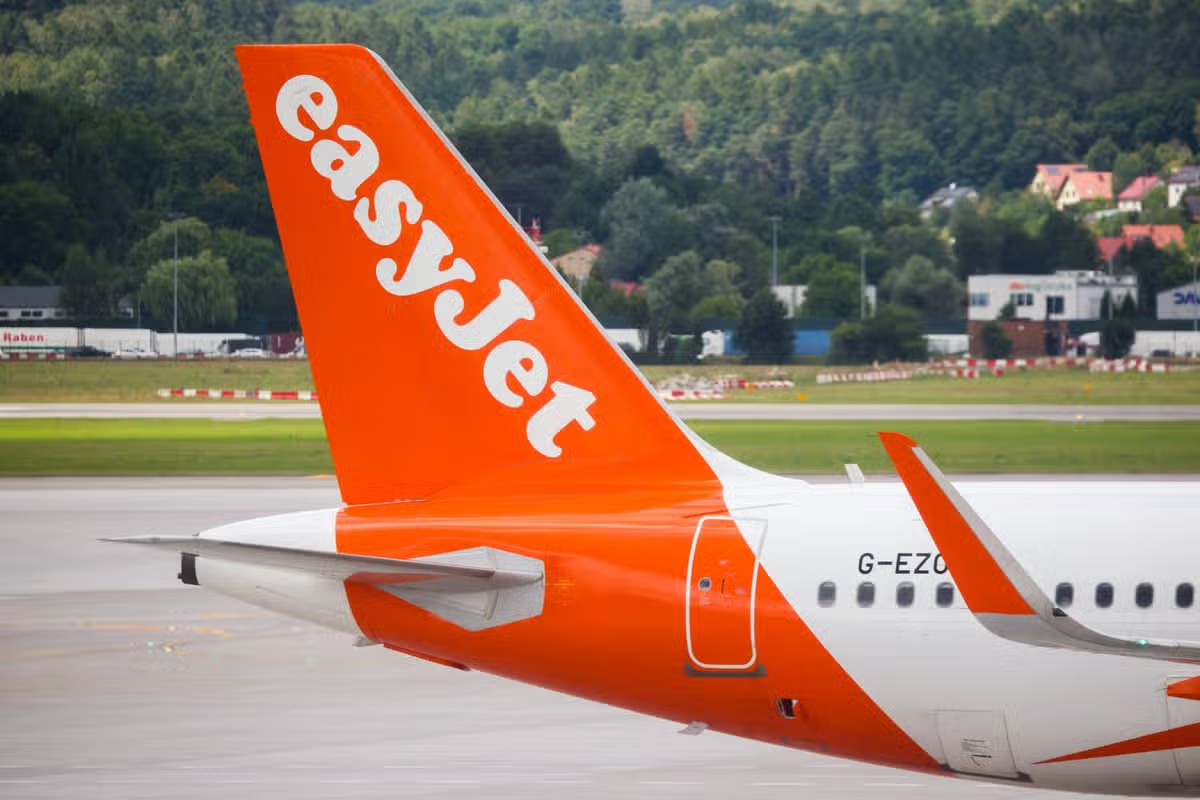
Passengers can save money by following the advice(Image: Getty)
easyJet passengers looking for cheap flights might want to avoid travelling on Fridays. The popular airline, known for its budget-friendly prices, has advice for travellers looking for low-cost tickets.
The airline shares the latest travel advice for passengers on its website, which also features FAQs for customers who want to get the ‘best value’ from their holiday. On the FAQ webpage, easyJet answered a common question often raised by passengers: ‘Which are the cheapest days of the week to fly?’
According to aviation experts, the answer often varies depending on your dream destination, but midweek flights are typically the cheapest. easyJet said: “The cheapest day of the week to fly can vary depending on the destination, flights available, and time of year.
“However, we’d recommend being flexible with your dates and considering flying outside of peak weekend flight times. By booking to fly on Wednesday or Thursday rather than Friday, you can find bargain flights (and get more time at your destination!)”
Passengers can also save by choosing a cheaper month for their destination, as prices can vary depending on the time of the year. easyJet added: “The cheapest month to fly often depends on the destination and the type of trip you’re planning. For traditional warm-weather destinations in Spain or Italy, you can often find the cheapest plane tickets in the winter months of January and February.
“If you’re booking a trip to the mountains or traditional winter destinations like Finland, you’ll often find cheaper flights in November or March. You can use our low fare finder to search for the cheapest flight dates for the destination you have in mind.”
Ultimately, it’s all about being as flexible as you can. If you have to travel on a pricier day, such as a Friday, you might still be able to find a better deal by being flexible with your flight time.
The airline added: “If you can, try to keep an open mind when searching for flights. By booking to fly Friday morning instead of Friday night, or by returning earlier on Sunday than you’d initially planned, you can often snag a much better flight deal.”
easyJet said that waiting until the last minute might not always be the best tactic for cheap flights. However, passengers might strike it lucky using the airline’s ‘Low Fare Finder’ tool.
easyJet explained: “Booking too close to the travel time can result in higher prices, especially during peak seasons, so we’d typically recommend booking your flights well in advance. However, if you’re looking to travel soon, you can use the Low Fare Finder to discover flight prices for your upcoming travel.”
An animal welfare charity has shared advice for holidaymakers who find stray animals
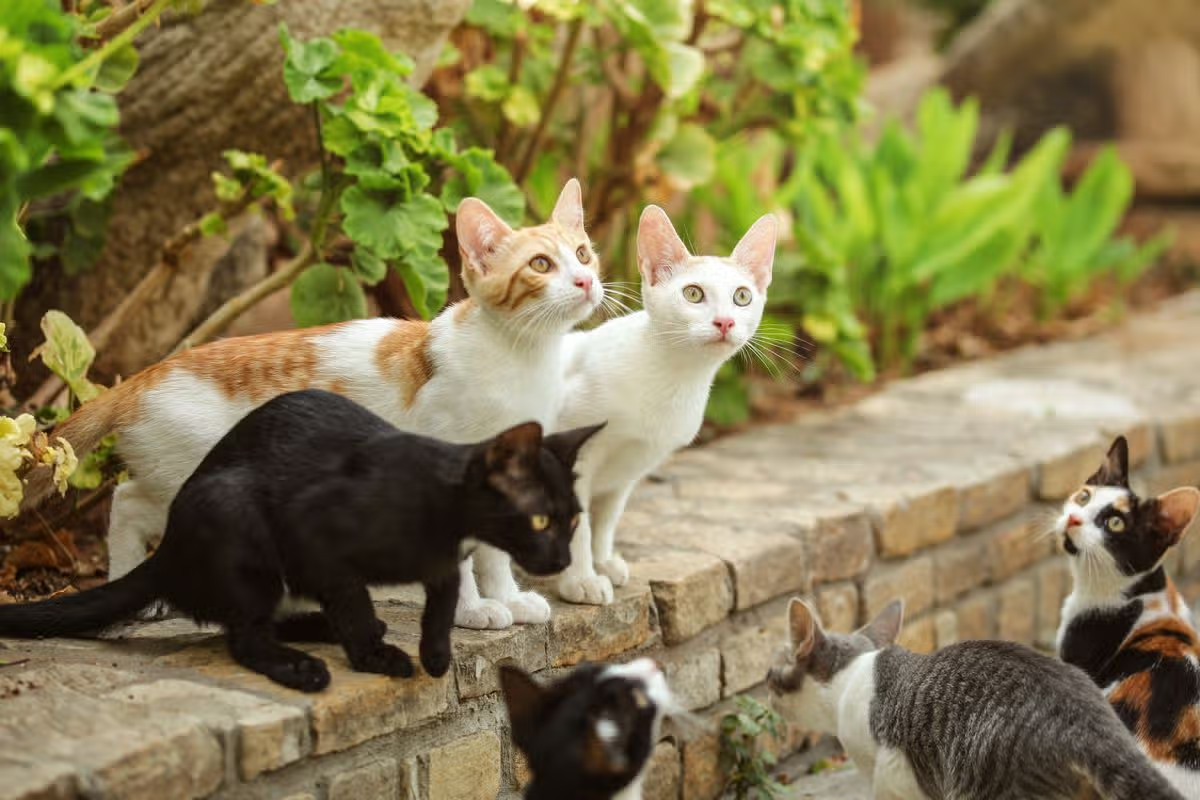
The animal charity has shared advice for cat lovers (stock photo)(Image: Getty)
The RSPCA has shared advice for any travellers worried about stray cats they spot on holiday. The animal welfare charity has urged people to do one thing in such a situation.
The experts explained that it’s important to check if cats look underfed or unwell. In a Facebook post, the charity explained: “It’s common to see street cats while on holiday abroad, but not all cats may need our intervention, and it’s important to know how to help them responsibly, wherever you may be this summer.”
The post was accompanied by a video. In the clip, an RSPCA staff member explained exactly what holidaymakers can do to help stray animals. She told viewers: “Here’s how you can help stray cats abroad this summer. It can be tempting to wish to help cats whilst overseas, but not all cats need our help. Do they look skinny or unwell? Or do they look quite well fed?
“You can also check if the cat has had its ears clipped, and what that means is that the cat has been caught, neutered, and then rereleased back into the area.”
The expert continued: “What you can also do is speak to the local people in the area, who may be able to let you know the organisations, or individuals out there, currently caring for the cats. You may also find that at your local gift shop, at your resort, there is actually cat food in there, and that’s to encourage tourists to buy the cat food and feed the cats.
“What you may also be able to do is make a donation. This donation will probably go towards maybe treatment or even the trap, neuter, and release programme.”
Holidaymakers could also write to tourism boards or public officials. For instance, people could send a letter encouraging the local authority to offer their help, the RSPCA said.
“You could even write to those in power, or even tourist boards. You could explain that you love visiting their country, but were sad to see so many cats in need of help, and would love to see an investment into that line of work in the future.”
In the video’s caption, the RSPCA encouraged animal lovers to ‘share this advice with fellow holiday-goers and check out International Cat Care for more information.’ International Cat Care is a global charity. The charity’s website reiterates that cat lovers can help by finding out who is already helping in the area they are visiting.
It said: “Ask about the local people or organisations who are working in the area. There may be individuals, charities, local municipality activity or non-government organisations (NGOs) working in the area to help the cats.”
Picking the right plane seat can make all the difference to your journey – and one flight attendant says there’s a simple strategy that could leave you with a much more comfortable flight
The flight attendant has shared the best seats to pre-book (stock)(Image: Getty)
Whether it’s a weekend break or a long-haul holiday, most travellers spend at least a little time trying to pick the best seat on the plane that they can find. Now, one flight attendant has shared the plane seats she always recommends booking in economy – along with the ones she avoids at all costs if you want a more relaxing flight.
Air hostess Sandra Jennie Kwon, who posts as @jeenie.weenie on TikTok, explained how she worked out her ideal seat after years of working onboard aircraft. In the video, she says: “The first elimination should be a no-brainer – the middle seats suck.
The back row of every section doesn’t recline. I’m not a tall person, so I don’t need the emergency exit rows. There’s also nowhere to store your personal belongings there. They also have those flimsy tray tables and seats, so let’s scrap them.”
The travel expert then revealed why she prefers sitting towards the back of the plane, explaining that airlines typically fill seats from the front first to help with weight distribution.
Because of this, she believes passengers at the back are more likely to end up with an empty seat next to them.
“For those odds, I prefer the back,” she said. “Seats near a toilet really stink, so I recommend a five-row buffer just to stay in the safe zone.”
She also ruled out window seats for one simple reason.
Content cannot be displayed without consent
“I hate asking people to move so I can use the toilet,” she explained. “So I eliminate all the window seats.”
However, she admitted there’s one advantage to sitting closer to the front.
“Meals are typically served from front to back, so you have a higher chance of getting your first meal choice.”
After weighing up the pros and cons, Sandra revealed her ideal economy seats are 49 C, D, F or G.
Her advice quickly sparked debate online.
One person joked: “No! Now everyone will rush to these seats and they’ll become more expensive than business class.”
Another wrote: “I was listening right up until you scrapped the window seat.”
A third added: “The amount of people that’ll be fighting for seats 49 C/D/F/G after watching this… omg.”
While someone else commented: “Me taking notes even though I probably won’t be on a plane for another year.”
TV presenter and content creator Jordon Cox said the ‘secret’ could help holidaymakers save hundreds
The TV presenter shared a helpful tip for holidaymakers(Image: Jordon Cox/YouTube)
Holidymakers could ‘save hundreds’ on their next hotel booking using a ‘secret’ booking trick. The advice was shared by Jordon Cox, an ITV presenter and content creator, known as the ‘Coupon King.’
Posting on YouTube and Facebook, the deals expert shared a tip for anyone making a hotel booking. He explained how people can save hundreds by taking advantage of the ‘free cancellation’ policy often found on bookings if they find the same booking at a lower price closer to the date.
While it won’t always apply, Jordon said he’s saved £400 in the past using the trick – and shared exactly when he would check back to look for offers. Jordon claimed: “Hotels don’t want you to know this hack.”
In his caption, he explained: “If you book a hotel stay which includes ‘Free Cancellation’ – you could use this as a trick to save you money. Even after you’ve booked, check back at the website you booked through to see if prices change.
“If the price drops, you can cancel your original booking, get your money back, and rebook at the cheaper price! It’s worth having a look at prices around two months, two weeks and five days before you travel (although check when your last day for free cancellation is. Most are up to about 48 hours before).
“I once got £400 off a week’s hotel stay by using this trick. So it could pay a lot to check! It won’t work every time, but set a reminder in your phone, and spend a few minutes to potentially save £100s!”
Sharing another tip in the comment section, Jordon added: “Works on Car Hire too! Always worth a look – set some reminders!” The post delighted social media users, gaining over 20k views and hundreds of likes.
Commenting under the video, a viewer said: “That’s a decent tip tbf.” A second comment claimed: “And that’s why hotels don’t offer cancellation for long.”
Someone else replied: “Recommend doing it the other way round. Make a new booking at the lower price, THEN cancel the original. Much safer in case someone else books.”
MoneySavingExpert also shares similar advice for holidaymakers. On a webpage sharing tips for cheap hotel bookings, the consumer website advises: “You can also save by cancelling if the price drops after you’ve booked. To do this, simply cancel the original booking, then rebook at the cheaper price. Often this can work with the site you booked with.
“Most booking sites and hotel websites give you a non-refundable and a free cancellation option for each room type. Non-refundable rooms tend to be cheaper, so you’ll need to weigh up if paying more for free cancellation is worth it.”
Brits with holidays booked this year to Europe could risk facing issues entering Europe if they don’t check a number on their passport well in advance
15:11, 16 Jul 2026Updated 17:02, 16 Jul 2026
Important advice for anyone with a trip booked over the six weeks holiday (Image: Getty)
Schools across the UK will close for the six-week summer holiday, and thousands of families will be taking the opportunity to spend time together abroad during the peak travel season. However, a travel insurance specialist has issued an alert urging people to check a specific number on their passports before they jet away to avoid risk of being refused entry to Europe.
Travellers with passports issued before 2018 are being warned that they could face issues entering Europe if they don’t check a specific number, thanks to a ’10-year passport rule’. New analysis from Saga Travel Insurance found that the EU and Schengen ’10-year passport rule’ was the most discussed passport concern among travellers on Reddit, with discussions amassing 35,417 upvotes across the platform.
The Schengen area is a group of 29 European countries where travellers can move between countries without routine passport checks. It includes popular holiday destinations such as France, Spain, Italy, Greece and Portugal.
Michelle Cooper, Director of Saga Travel Insurance, said: “EU and Schengen countries require passports to be less than 10 years old on the day of entry. While all new passports last exactly ten years, passports issued before 2018 remain valid for 10 years and nine months.
“If you have an older passport, make sure you check both the issue date and expiry date before travelling to avoid problems at the border.” Michelle warns that passengers travelling with these 10-year and nine-month passports may face issues travelling in Europe if they’re in the final nine months of their passport.”
More tha
The analysis also found that more than three-quarters (80%) of holidaymakers are unaware that different countries have different passport validity requirements, according to Saga Travel Insurance’s survey. Meanwhile, half (50%) believe that every country requires a passport to have six months remaining before travel.
Michelle said: “It’s important to check the specific rules of the country you’re travelling to so that you know how long you need to keep your passport. Some destinations require three months remaining on your passport, while others require six months.
“If you travel to a country without enough time left on your passport, there is a possibility you’ll be denied entry into the country. This could be by your airline, before flying, or by border security, once you reach your destination. If you’re denied boarding or refused entry because your passport doesn’t meet those rules, travel insurance is unlikely to cover costs such as cancelled accommodation, missed flights or return travel expenses.
“This is because the responsibility typically sits with the traveller to ensure their passport meets the entry requirements of the country they’re visiting. That’s why checking your passport carefully before travelling is one of the most important things you can do before a holiday.”
Frequent flyers could be turned away for not having enough blank passport pages
Some countries require travellers to have a minimum number of blank pages remaining in their passports for stamps and visas. Michelle says: “People can sometimes focus entirely on expiry dates and forget to check how many blank pages they have left, but some destinations can refuse entry if there isn’t enough room for official stamps or visa documentation.
“If you’re a frequent traveller, you should regularly check how many blank pages you have remaining in your passport before booking a trip. You might also benefit from purchasing a passport with additional blank pages.
“As travel systems evolve, including the gradual rollout of digital border systems such as the EU’s Entry/Exit System (EES), physical passport stamping may become less common. But for now, requirements can still vary depending on destination and border process.”
What should you do if you lose your passport?
One in 20 (5%) Brits have needed an emergency replacement passport before travelling, according to Saga Travel Insurance’s survey. And, one in 25 (4%) have cancelled a holiday because they couldn’t find their passport before departure.
Michelle says: “If you lose your passport before travelling, you can apply for a one-week fast-track application. This is an in-person application that requires an appointment, so it’s important to factor in booking availability – as well as the additional cost. It’s £76 more than a standard passport but means you should still be able to go on holiday.
“If you lose your passport while abroad, you should report this to the HM Passport Office as soon as possible. You will also need to apply for an emergency travel document online so that you can travel home. You’ll typically need a valid digital passport photo, your phone number, an email address, and a debit or credit card to make the £125 payment.
“If the loss of your passport means that you need to delay or rearrange your journey home, travel insurance may be able to help with some of the associated costs depending on your policy. Check your insurance documents and contact your insurer as soon as possible to understand your next steps.”
Brits warned over new ETIAS travel checks for Europe
From late 2026, British travellers visiting most European countries will need to apply for a new European Travel Information and Authorisation System (ETIAS) before travelling. The new system is similar to the UK’s Electronic Travel Authorisation (ETA) scheme and will apply to visa-exempt travellers visiting 30 European countries for short stays of up to 90 days within a 180-day period.
Michelle says: “Travellers may not realise that visiting Europe will soon involve an additional pre-travel authorisation step. From late 2026, British holidaymakers will need to apply for ETIAS approval before travelling to many popular European destinations. The authorisation will be linked directly to your passport, meaning travellers could be denied boarding if their ETIAS details don’t match their travel document or if the authorisation has expired.
“Most ETIAS applications are expected to be processed within minutes, but it could take longer if additional checks are required. Holidaymakers should apply well in advance of departure to avoid last-minute disruptions.”
She added: “Similar systems already exist elsewhere. For example, UK travellers visiting the United States must apply for an Electronic System for Travel Authorisation (ESTA) before departure. These systems are becoming more common globally, so it’s important to check requirements for each destination well ahead of travel.
“As with passport validity rules, people are responsible for making sure they have the correct travel authorisation before they leave the country. If someone is unable to travel because they failed to obtain valid ETIAS or ESTA approval, travel insurance is unlikely to cover costs associated with denied boarding or cancelled trips.”
Machines that scan our luggage could raise an alarm over this packet
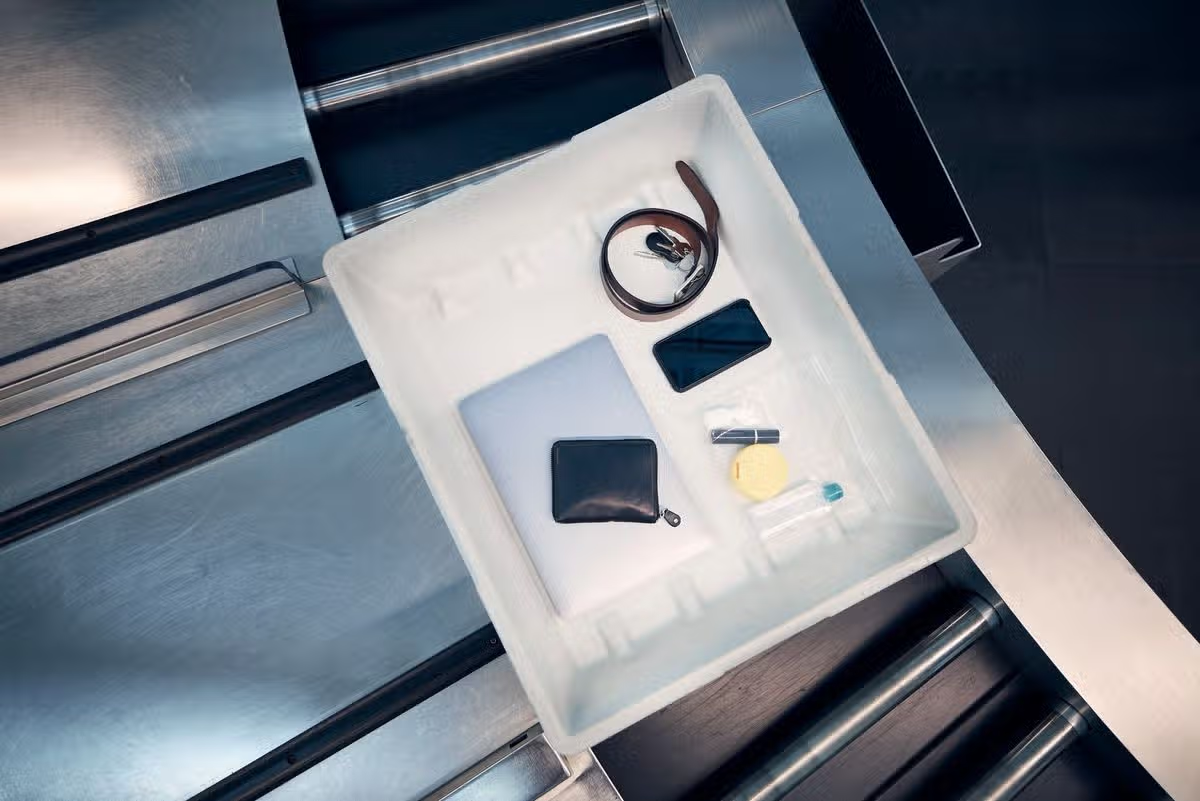
The common item could be flagged as suspicious by airport scanners(Image: Getty)
If you have a long flight ahead or fancy some screen-free entertainment, bringing a pack of playing cards can seem like a good idea to beat boredom. But they can cause a security issue at airports, which could mean you’re held up while items are checked.
Many items are banned for being sharp and potentially dangerous, but even innocuous items such as corkscrews could be confiscated. But, some seemingly harmless items could also raise an alarm with security staff and require further checks.
The Transportation Security Administration (TSA), which oversees airport security in America, told Travel and Leisure that any deck of cards, from classic playing cards to games to collectables like Pokémon, could trigger a security red flag if they are picked up by scanners that notice the suspicious look of the otherwise innocent item.
Ian Cava from the TSA explained that the shape of the cards can trigger additional checks and make them appear as if there’s something hidden inside. He said: “When items are stacked tightly together, like decks, binders, or graded slabs, the X-ray image can make it difficult for officers to confirm there are no prohibited items concealed in or around them.”
Even family-friendly games like UNO have a strong chance of triggering alerts. A standard UNO deck has 112 cards, making it twice as thick as a regular 52-card deck. The X-ray operators cannot see through the thick stack, so they must check it for hidden contraband.
Although the advice comes from the TSA, people travelling from UK airports can also follow the guidance, as the security processes are quite similar. For an X-ray scanner, a tightly packed deck appears as an organic solid block that could be flagged as a potential explosive, electronic device, or dense liquid, all of which require further checks.
A standard bag search usually takes up to 15 minutes once your bag reaches the inspection table. However, during peak travel times, the queue of bags waiting to be manually checked can back up, significantly extending your wait.
Many UK airports are currently upgrading to advanced 3D scanners. If your security lane uses these newer machines, you often do not need to take anything out of your bag, drastically reducing false alerts. Because the rollout is not happening all at once across every UK airport, some lanes still use older X-ray machines that strictly require manual checks for dense items like cards and games.
Tips to get through security faster with playing cards:
To avoid delays, treat playing cards like anything else you’d take out of your bag. Place the card box in a tray to be checked rather than waiting for the security alert to be triggered.
People can also avoid issues by not packing cards in metal tins or carry cases – typically provided or bought for collectables. Use a cardboard or plastic case because metal tins are harder to scan.
Putting any of your board games and cards in hold luggage is the safest way to avoid security delays, as they don’t go through manual bag checks that require you to wait. While this completely eliminates the risk of your hand luggage being pulled aside for a card or game check, passengers risk having their items bent, crushed, or lost if the airline misplaces their suitcase.
It might seem harmless at first glance, but it could lead to unnecessary delays
Reduce the risk of being stopped by airport security(Image: Getty Images)
Packing for a holiday can feel like navigating a minefield, with a long list of rules on what can and can’t go in your luggage. While some banned items are obvious, others seem completely innocent at first glance – yet bringing them to the airport could still result in officials delaying your journey.
There is one everyday item that is allowed by all major airlines, including Ryanair, Jet2, TUI, easyJet and British Airways, but could still attract attention during security screening if officers are unable to identify it clearly on the scanner. To avoid unnecessary delays or having to unpack your luggage at the checkpoint, travellers are advised to pack toiletries in a way that makes them easy to inspect.
A simple bar of soap – buyable at Sainsbury’s for 35p, for example – might seem like one of the most harmless items you could take on holiday. However, it is not the soap itself that can cause concern – it is the way a solid item may appear when passing through security scanners.
Airport security staff do not routinely search luggage simply because it contains a bar of soap. However, dense items can sometimes make X-ray images harder to interpret, particularly when they are packed alongside electronics, cables or other bulky belongings. If officers cannot clearly identify an item, they may carry out additional checks before allowing passengers through.
The government information website GOV.UK says: “Airport security staff will not let anything through that they consider dangerous – even if it’s normally allowed in hand luggage.” While soap clearly is not dangerous, if a bar of soap raises an alert on the scanner, they are legally required to stop the passenger and inspect it.
The US Transport Security Agency (TSA), for instance, says passengers are often asked to separate dense items because they can “clutter bags and obstruct clear images on the X-ray machine.” When a solid block of soap, cheese, or other dense organic material blocks the scanner’s view or mimics a threat signature, protocol requires a physical bag search or chemical swab testing to clear the item.
According to GOV.UK, solid bars of soap are permitted in both hand luggage and checked baggage. Security officers can still manually inspect any item they are unable to identify clearly during the screening process, regardless of whether it is allowed.
To reduce the chances of your bag being opened, experts recommend keeping dense items easy to access and, if requested, placing them in a separate tray during screening. Avoid storing them inside thick metal tins or rigid plastic cases alongside items such as power banks, charging cables and other electronics, as this can make X-ray images harder to interpret.
It’s also important not to confuse solid soap with liquid toiletries. While bars of soap are exempt from liquid restrictions, liquid soaps, shower gels and similar products carried in hand luggage must normally be in containers holding no more than 100ml, unless you’re travelling through an airport that has introduced next-generation security scanners permitting larger liquids.
The rules apply regardless of which airline you’re flying with, as baggage screening is carried out by the airport rather than carriers such as Ryanair, Jet2, TUI, easyJet or British Airways. A manual inspection is simply a precaution and does not mean you’ve broken any rules or packed a prohibited item.
Taking a few moments to think about how you pack everyday toiletries could help make your journey through security a little smoother. Although a 35p bar of soap is perfectly legal to travel with, storing it sensibly could help avoid unnecessary delays before your holiday even begins.
Several major airlines including Ryanair, TUI, easyJet, British Airways and Jet2 ban this item
Make sure you don’t pack this item(Image: Greggory DiSalvo via Getty Images)
Preparing for a summer getaway can seem like an endless to-do list, particularly if you’re jetting off for a birthday, wedding or other special event. However, one budget-friendly item many holidaymakers pop into their suitcase could wind up being seized before they even step onto the aircraft.
Multiple major airlines, including Ryanair, TUI, easyJet, British Airways and Jet2, ban passengers from bringing party poppers. Leaving them behind could spare you needless hassle and hold-ups at the airport.
The item in question is party poppers, and despite appearing innocent, they are forbidden on most commercial flights. They may only set you back a few pence at around £2 for a pack of 20, but they must never be packed in either hand luggage or checked baggage, and doing so could lead to your bags being inspected, with the items likely seized.
This ban exists because party poppers contain a small explosive charge used to create the popping effect. Although the quantity is minuscule, aviation safety regulations classify them as explosive articles and forbid them from being transported on aircraft.
The UK Civil Aviation Authority (CAA) includes party poppers among the dangerous goods that passengers must not carry in either cabin baggage or hold luggage. The regulations also extend to other novelty explosives, including sparklers, fireworks and flares.
If security personnel find banned items during checks, they may confiscate them from your baggage before departure. Depending on the situation, travellers could also experience hold-ups while bags are inspected or further security procedures are undertaken.
Airport security regulations can differ marginally between nations and carriers, but dangerous goods rules are extensively implemented throughout the aviation sector. Passengers are therefore urged to verify both their airline’s luggage policy and official government advice prior to flying.
Party poppers are frequently packed by mistake following birthdays, weddings or other celebrations, especially when families are travelling with youngsters. While they might appear like a harmless addition to your suitcase, they are handled in the same manner as other banned explosive items under aviation safety regulations.
The government also reminds travellers that security personnel have the ultimate say on whether an item is allowed through screening. Even where an object seems innocent, it can still be confiscated if it is deemed a safety hazard or violates airport security rules.
Inspecting your baggage before heading to the airport could help prevent needless delays, extra security checks and the frustration of having belongings seized before your relaxing holiday away even gets underway.
The Money Saving Expert says one thing that is ‘totally free’ could save holidaymakers loads of money
Martin Lewis has shared his holiday advice (file image)(Image: ITV)
Heading to Europe this summer? Before you jet off, Money Saving Expert says there’s one free card every holidaymaker should have in their wallet – and it could save them money.
The Money Saving Expert has issued a reminder to travellers to get the UK Global Health Insurance Card (GHIC) just in case of an emergency. It can help you access state healthcare in many European countries, however he stresses this shouldn’t be a replacement for travel insurance.
Speaking as part of the National Money Assembly held at St Charles 6th Form College in London, Lewis urged anyone heading to the continent to apply for a GHIC before leaving the UK. He explained how the card is “totally free”, and warned people to never pay a third-party website to apply for one.
“First of all, if you’re going to Europe, you always get your GHIC card, your Global Health Insurance Card,” he said. “That’s totally free, never pay for it. This gives you treatment in a state-run hospital in a European Union country or equivalent at the same cost as a local – so if it’s free for them, it’s free for you.
“If you need to go and see the doctor when you’re abroad and local people don’t pay for the GP, you can go to the GP with your GHIC card. So you should make sure that you have one of those.”
The NHS says the GHIC covers medically necessary healthcare during a temporary stay in the EU and certain other countries. However, it does not cover private medical treatment, mountain rescue, being flown back to the UK or costs such as lost or stolen belongings.
For that reason, Martin Lewis says holidaymakers should never rely on the GHIC alone. He urged travellers to arrange travel insurance as soon as they book a holiday, explaining that it protects them both before and during their trip.
Content cannot be displayed without consent
He said basic travel insurance for a young person spending a week in Europe can often cost as little as £7 to £10. Martin added: “If you can afford the holiday, you can afford travel insurance.”
His long-standing rule is to buy travel insurance “ASAB” – as soon as you book. That’s because policies can protect you if illness, injury or another unforeseen event forces you to cancel your holiday before you even leave home.
Applications for a GHIC are free through the official NHS website, and most people can apply online. Anyone using a website that charges a fee is paying for a service they do not need, as the card itself is available free of charge.
A cabin crew instructor has revealed where he would choose to sit on the plane
16:40, 10 Jul 2026Updated 16:40, 10 Jul 2026
Some seats offer plane passengers more legroom (stock photo)(Image: Getty)
A cabin crew member has shared what he claims is the best seat on the plane. The regular flyer dished out advice for passengers looking to make the most of their journey. Wizz Air Cabin Crew Instructor Gabriel Randone shared his favourite seat. He also revealed the best seat for ‘free perks’ – if you’re lucky enough to get it.
Talking to the Mirror, Gabriel shared his preferred seat as a passenger. He said: “I absolutely love the front. Row one gives you extra legroom. There are some perks to staying there as well.
“For example, you would be the first one to disembark. Sometimes you’ll be the first one to come in as well. You have a reserved overhead compartment for yourself.
“So, yeah, row one is absolutely amazing. But to be honest, when I do travel, and I can choose to book a seat, I will book any window seat.
“I just love staring outside during the flight and enjoying the views.” According to Wizz Air’s website, front-row seats are classified as premium seats.
However, it’s not the only good option. Other premium seats include upfront seats at the front of the aircraft and extra-legroom seats in the emergency exit rows. Usually, passengers need to pay more for these seats, but sometimes they strike it lucky and get asked to move to emergency exit rows.
Gabriel explained that customers sometimes get ‘upgraded’ to these seats and get to enjoy the perks for free when the flight is not fully booked. “Sometimes, because the flights might not be fully booked, there would be no one close to the emergency exits”, Gabriel said.
“So what we need to do is to select someone who we call an ABP, an able-bodied person, and select them and to move them close to the emergency exits so that they can help out in case of an emergency”. He added: “Now, statistically, emergencies are quite rare, so that is basically an upgrade.”
Not everyone is eligible for these unofficial ‘upgrades’. The Wizz Air website explains: “For safety purposes, regulations prohibit passengers under 16 years old, overweight passengers, individuals with special needs, expectant mothers, and those travelling with infants (under 2 years old) from occupying Extra Legroom or Front Row seats.”
As Gabriel explained, these policies are implemented to ensure the safety of everyone onboard. In case of an emergency evacuation, passengers seated in the emergency rows will be instructed to open the doors. Any passengers seated in these rows will be briefed at the beginning of their flight.
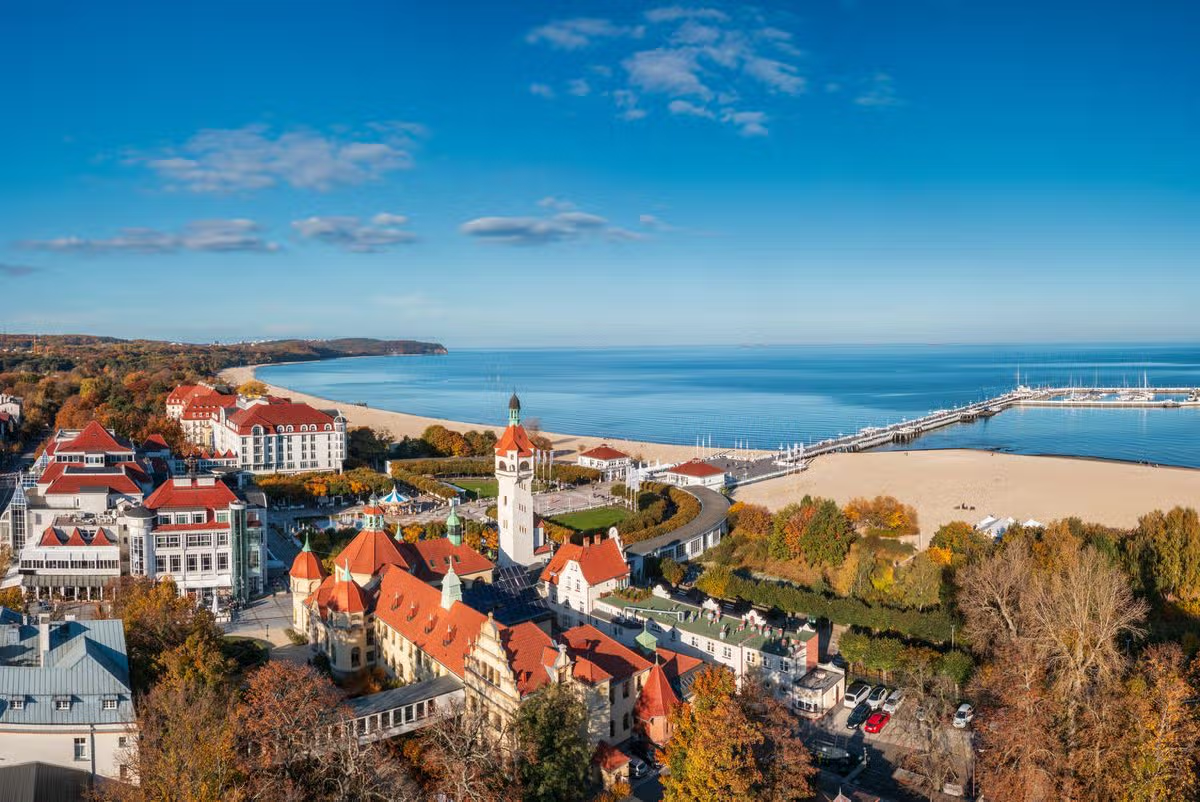
On The Beach’s Rob Brooks has highlighted a city he claims is the ‘Barcelona of Eastern Europe’ that boasts a stunning beach, vibrant streets and architecture, and restaurants that don’t require you to spend a fortune
The location has been described as the ‘Barcelona of Eastern Europe’ (stock)(Image: Patryk Kosmider/Getty Images)
If you’re yet a to book a trip abroad this summer, a holiday expert highly recommends the “best hidden gem beach holiday” in Europe, claiming it comes at a fraction of the price of the most popular resorts on the continent. Rob Brooks, who works for travel agent, On The Beach, took to TikTok with advice for those who’d appreciate all the perks of Barcelona, but without the cost.
“I’ve just found Eastern Europe’s Barcelona, and you’ve definitely never heard of it,” he began in a video. “So here’s some clues – it’s half the price, around a two-hour flight from the UK, it’s brilliant for families and it can even feel like proper luxury if you book smart.”
For anyone wondering where Rob could be referring to, he went on to tease that it’s not in Spain, Portugal, Turkey, Italy or France.
“One destination has suddenly landed on my desk after a sudden explosion in holiday searches,” he continued. “So I went away and did my research, crunched the numbers and dug through the data – and now I’m genuinely convinced this could be one of Europe’s biggest hotspots in a few years.”
Rob admitted that he had previosuly considered the destination a “rogue place” for a beach holiday, but that all changed when he saw the photos of it.
Content cannot be displayed without consent
“It’s got a huge, golden sandy beach, it’s got loads of beachfront bars and restaurants… colourful streets, beautiful architecture and there’s loads of luxury hotels and a massive pier that stretches out right into the sea,” he enthused.
Rob said he then realised why comparisons are being made to Barcelona – only this location is “nowhere near as busy or expensive”, and hardly anyone is talking about it.
Direct flights from UK airports take as little as two hours and five minutes, with Rob finding one for as little as £36.
“It sounds much further away than it actually is, but what really caught my eye is how much variety there is there,” he explained. “You can spend the morning on the beach, wander around beautiful old streets in the afternoon, eat ridiculously well and eat gorgeous food without spending a fortune – and because spending money goes such a long way here, it feels way more luxury than it probably should.”
So where is Rob talking about? “Summer temperatures are sitting at up to 26 degrees… I really don’t think this place will stay a secret for much longer,” he said. “The more I looked into it, the more I realised that this location is only going to get bigger and bigger over the next few years.
“It’s Sopot – a gorgeous seaside town on Poland’s Baltic coast. I even found a deal here I genuinely might book myself.”
Rob closed by highlighting one particular deal – five nights at the Hotel Aqua beside the beach for just £265 per person – which includes flights from London Stansted Airport this September.
“You’re getting Barcelona’s beach culture, but for Poland’s prices,” he declared.
Sopot’s tourism website boasts online: “Sopot is one of the most charming places in Poland and a hugely popular Baltic resort. Here you’ll find not only abundant greenery, beautiful sandy beaches, and the soothing sound of waves, but also a rich history, spa architecture, and top-class hotels and restaurants.”
Writing in response to Rob’s video, one TikTok user exclaimed: “It’s a beautiful place, I was there in May. Gdansk is just along the way which is even better. Definitely worth a visit.”
A second person added: “Sopot is a beautiful town and so is neighbouring Gdynia. Both towns are within a short commute of the larger city of Gdansk, which is also a marvel. Very clean environment, moderate prices to eat out and drink and very well worth a visit.”
While a third wrote: “Sopot is stunning, we had a great time earlier this year. We stayed in Gdansk which is about 15 minutes by train. I couldn’t recommend both places enough.”
Tourists have been told they need change a key phone setting before travelling to airports. Failing to do so could land them with a “major problem”, so it’s best to act
15:41, 22 Jun 2026Updated 07:02, 28 Jun 2026
Tourists need to make a phone setting change (stock image)(Image: Getty Images)
There’s so much to think about when you travel abroad, but something that probably slips your mind is safely using your phone during your journey. It’s something you need to pay attention to, as you are required to follow a few rules to keep safe.
While it may be something that rarely crosses your mind, it should actually be on the top of your travel list, as making some simple mistakes can be super costly when you’re on a holiday adventure. We all use our mobile phones when we’re at airports but, little you may know, some dangers can come with making the decision to use them in certain ways.
Free airport Wi-Fi feels like a small win when you’re killing time before a flight. However, William Thackray, IT expert at AGT Computer Services, claims it’s one of the riskiest things you can do on your phone.
What you need to know
William explained: “The biggest threat isn’t the airport’s actual network. It’s the fake ones sitting right next to it.
“Criminals can set up a hotspot called something like ‘Heathrow Free Wi-Fi’ or ‘Gatwick Passenger Network’ that looks completely legitimate. The moment you connect, they can intercept your data including passwords, emails, anything you’re sending or receiving.”
This technique, known as an “evil twin” attack, is increasingly common in busy public spaces and airports and, with thousands of distracted travellers all hunting for a signal, they are prime targets.
You may not realise, but connecting to airport Wi-Fi can leave your personal data exposed to hackers in seconds. Criminals can set up fake networks designed to look identical to the real thing.
Airport Wi-Fi is rarely considered completely safe. While it is generally fine for browsing the news or checking your flight status, public networks leave you vulnerable to hackers, phishing attempts and rogue “evil twin” hotspots.
You should avoid online banking or entering passwords without taking precautions. This is why the guidance is so essential.
However, one simple phone setting can keep you protected without costing you a penny. It’s easy to sort out once you know what to do.
How to avoid a problem
The fix is straightforward. Before you leave for the airport, go into your phone’s Wi-Fi settings and turn off “Auto-Join” or “Auto-Connect” for public networks. On iPhone, you can also go to Settings > Wi-Fi and toggle off “Ask to Join Networks”.
That way your phone won’t go hunting for a signal without your say-so. “Better still, use your mobile data if you have it,” added William.
“It costs a little more, but it’s your own private connection. If you do need to use airport Wi-Fi, avoid logging into anything sensitive like banking, work email, anything with a password – until you’re somewhere you trust.”
The rule of thumb? If you didn’t set up the network yourself, treat it with caution. This is a rule that’s really worth paying attention to, as failing to follow it could lead to major problems.
A Wizz Air flight attendant explained why cabin crew greet passengers and revealed that they use ‘secret codes’ when everyone is boarding
12:12, 24 Jun 2026Updated 12:25, 24 Jun 2026
Cabin crew use a ‘secret code’ when greeting passengers (stock photo)(Image: Getty)
A cabin crew instructor has revealed that flight attendants often use a ‘secret code’ when greeting passengers. As most travellers know, it’s common to be greeted by cabin crew when boarding a flight. Whether you’re excited for your holiday or a nervous flyer, it’s reassuring to be met by a friendly face and know there’s help available as you find your seat and get ready for takeoff.
While crew members enjoy welcoming passengers on board as part of their service, there’s another important reason passengers are greeted at the door, and it might surprise some. Gabriel Randone, a Wizz Air Cabin Crew Instructor, told the Mirror that flight attendants are trained to greet passengers as part of their safety measures.
He explained that cabin crew complete a “mental scan of passengers” to ensure that everybody is fit to fly. What’s more, he says cabin crew are taught a secret acronym that they check during the process.
While Gabriel couldn’t reveal all of the details, as the acronym is not shared with passengers, he did explain what cabin crew would be looking for. For instance, cabin crew will check whether anyone appears aggressive or intoxicated. They’ll also keep an eye out for any medical conditions that could prevent someone from flying. “The goal is safety,” Gabriel said.
Any passengers seated near the emergency exit rows will also spot cabin crew hanging around in the area for similar reasons, Gabriel said. The instructor explained that the crew are trained to assess passengers, as some “categories of passengers” can’t be seated next to the emergency exit.
While many passengers might try to book the emergency exit rows, as they are classified as extra-legroom seats, Wizz Air’s website makes it clear that they are not suitable for all passengers.
The airline’s website states: “For safety purposes, regulations prohibit passengers under 16 years old, overweight passengers, individuals with special needs, expectant mothers, and those travelling with infants (under two years old) from occupying Extra Legroom or Front Row seats.”
Passengers seated in these rows must be able to open the exits in case of an emergency, and they receive a briefing that makes this clear. This protocol is so important that if nobody books the seat, the cabin crew will find a volunteer to move there.
“Sometimes, because the flights might not be fully booked, there would be no one close to the emergency exits”, Gabriel explained. “So what we need to do is to select someone who we call an ABP, an able-bodied person, and select them and to move them close to the emergency exits so that they can help out in case of an emergency”.
In the event of an emergency, the passenger would need to detach the safety cover from the door and pull a lever to open it. As Gabriel explained, every second counts in an emergency. “In an emergency, our priority is to get you out as quickly as possible,” he said. “We only have 90 seconds to evacuate a full cabin with 239 passengers.”
You can find out more about Wizz Air’s routes on wizzair.com.
The airline offered a reminder to passengers who should check the advice before travel
Jet2 has issued a travel reminder to passengers(Image: Getty)
Jet2 has guidance for all passengers travelling with soft-sided luggage. The airline has an important travel reminder on its website, which shares ‘top tips before travel‘ for all customers. The guidance highlights the importance of checking that baggage is strong and suitable for use before travel.
While many passengers use soft-sided suitcase, Jet2 wants customers to be aware they can be vulnerable. Highlighting the message on the advice page, the airline said: “Please ensure your baggage is strong and fit for purpose, to protect the contents and to withstand the normal baggage handling process.
“Soft sided cases and handles, wheels and locks can be particularly vulnerable.” Nonetheless, many customes might still choose to travel with soft-sided suitcases.
Regardless of their choice, passengers are asked to make sure they label all of their luggage carefully. Jet2 says: “Label each piece of baggage with your name, flight number, and phone number.”
When packing, customers are urged to ensure any important documents and items are packed inside their hand luggage. This includes any essential medications and cash. “Never pack cash, valuable items, perishable goods, important documents or essential medications in your checked baggage,” the advice stated.
Passengers are also urged to add a name tag to their bags and ensure all zips are closed before travel. Jet2’s guidance says: “Secure your baggage and ensure all pockets and zips are fully closed. Please note that the security authorities in some countries may open your bags without you present to make any necessary checks.
“At check-in, each item of checked baggage will be given a destination tag showing your flight number. Do not get rid of your checked baggage receipts (if given) until you pick up all checked baggage at your destination airport. Never carry unidentified items on behalf of other people.
“Take care when claiming your baggage at your destination, as many suitcases look the same. It is best to always check the name on the baggage tag.”
For passengers in need of new luggage, it could be worth browsing high street retailers, such as Dunelm, Primark, Home Bargains, B&M, or TK Maxx. Luggage options typically include both hard-sided and soft-sided suitcases and bags.
While some passengers might prefer to use soft-sided bags because they offer more flexibility than other suitcases, hard-sided suitcases could be preferable when you’re transporting fragile items.
A flight attendant has shared the piece of advice she would give plus-size passengers who are boarding the plane, especially if they’re feeling anxious about the journey
Follow this flight attendant’s advice and you’ll be fine (Stock Image)(Image: South_agency via Getty Images)
A flight attendant has urged plus-size passengers to follow her simple advice when boarding a plane, especially if they’re feeling anxious about what’s ahead.
Flying when plus-size can feel daunting. You may be worried about whether people will be kind to you, or if they’ll cause a scene about sitting next to someone in a bigger body, rather than questioning why plane seats are so small in the first place. But there’s something you can do before you even make it to your seat to ensure the flight is comfortable for you, and you’re not stressing or feeling embarrassed.
Jeenie Weenie, who shares videos about her life as a flight attendant, said she was making content for “all the beautiful plus-size passengers”.
Someone said they feel uncomfortable and have “anxiety” about asking for a seatbelt extender in front of their seatmate.
Of course, in an ideal world, seatbelt extenders wouldn’t be necessary, as belts would be longer and more accommodating for all, but alas, this isn’t the case right now.
However, Jeanie said: “When you’re boarding the plane, ask a crew member at this time for a seatbelt extender. Some airlines keep the extenders at the boarding area, so they’ll give them to you right away.
“And if they don’t have it there, you can give them your seat number, and once boarding is complete, they will give you the extender without you having to ask for it.”
This means the only person who will hear you asking for a seatbelt extender is the crew member, because everyone else “will be busy boarding”.
In the comments, someone praised the professionalism of all the cabin crew members they’d ever dealt with, as one wrote: “I no longer need a seat extender, but when I did, I’d ask when boarding. The flight attendants were always so nice about it and never made me feel ashamed.”
Another shared: “I remember struggling with my weight (still do) after my car accident, and I put on a lot of pounds. As soon as I was given the okay to work out, I went to the pool daily, ate better, etc. I did lose weight, but not enough.
“My first flight since the accident, I could alllllmost click the buckle. I remember being so upset and having to stop myself from crying, as I already hate walking with a limp.
“An attendant -I assume was off the clock- sat down next to me, and as she saw me quietly losing my mind and feeling desperate, she passed me an extender like a ninja and told me ‘it’s okay’ with such a reassuring smile. It was so nice to be treated with genuine care and human respect. I hope she is doing well.”
Someone else commented: “I always ask as I’m boarding. I don’t always need it since seat belt lengths aren’t the same, but I always ask just in case I need it.”
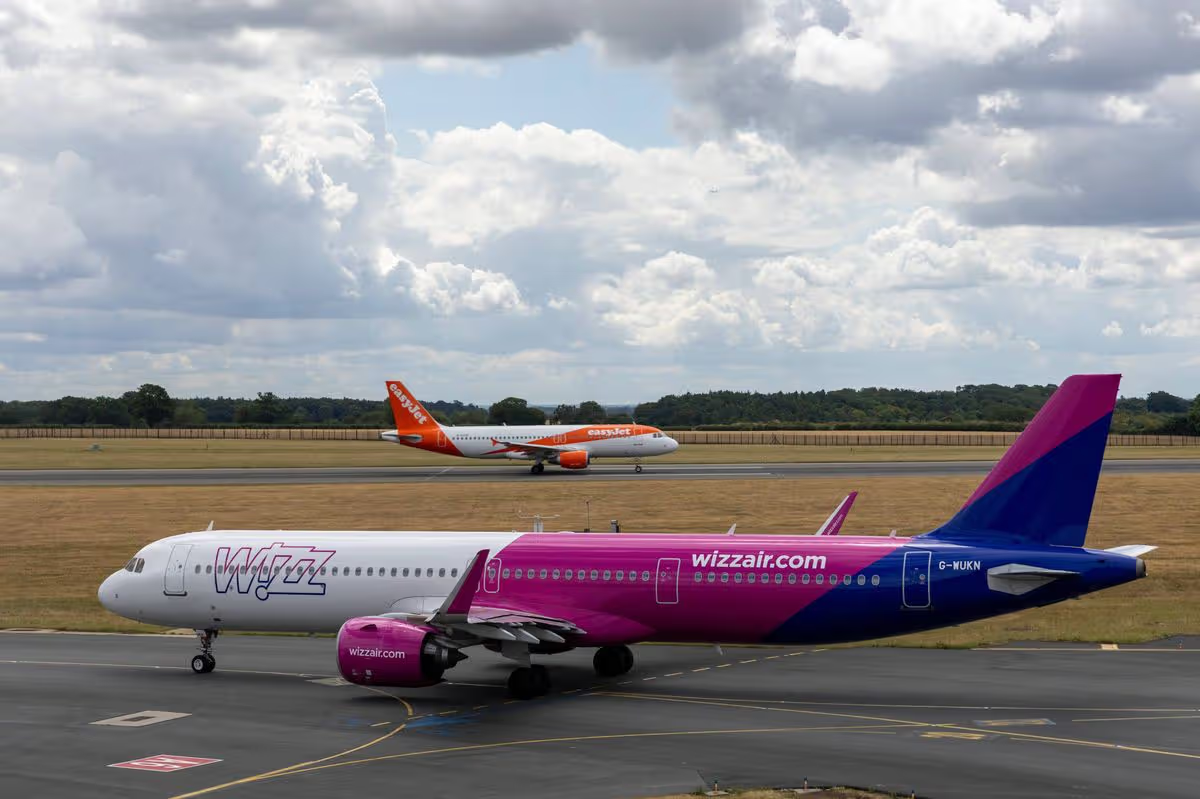
It seems sensible in theory, but thousands of budget travellers won’t benefit
Wizz Air issued the advice to passengers ahead of summer holiday season(Image: Bloomberg via Getty Images)
Earlier this month, budget airline Wizz Air told all travellers to get to the airport three hours ahead of their flight due to new border control checks that have been brought in. Managing director Yvonne Moynihan warns that holidaymakers have missed their return or connecting flights due to lengthy airport queues since the rollout of the Entry Exit System (EES).
Problems were flagged when the travel system was launched in April, but as more people pass through airports this summer for the first time since regulations changed, travellers may face hold-ups. Taking to TikTok, travel specialist Kate Donnelly (@Thedonnellyedit) argues that the latest guidance from the airline is “useless” for most people jetting off this summer.
She said: “We know when you’re travelling short haul that the general advice is to get to the airport two hours before your flight. Wizz Air is advising people to arrive three hours before their departure to beat queues and reduce the risk of missing their flight due to the EES system.
“So, while this advice appears sensible, the reality is that most check-in desks only open two hours before departure, in some cases two and a half hours,” Kate argues that only certain travellers would actually gain from turning up at the airport three hours before take-off.
Details available directly on Wizz Air’s website (as of June 7) state: “Airport check-in and baggage drop-off start two hours and close 40 minutes before departure. It’s worth noting that at some airports, the check-in desk may open or close earlier.”
Content cannot be displayed without consent
Nearly all airports listed with an earlier-than-standard check-in time are international. London Luton Airport was the only UK airport with differing rules, with check-in desks that open “180 minutes (three hours) before the scheduled time of departure” for all travellers, reports the Express.
Kate also suggested that passengers travelling with hand luggage only could be among those who stand to gain the most from arriving early. Without any luggage to weigh and drop off, the whole process becomes considerably faster, and passengers “would be allowed to get straight through security and into duty-free”.
The airport itself remains one of the most significant factors that could cause delays, even for those who arrive earliest. Kate claims: “A lot of airports have more than one border control, meaning that you are still going to have to wait until the announcement is made for your gate so that you know which border control you need to go to.”
What is the general advice on when to arrive at the airport?
To avoid any issues, it is best to double-check with your specific airline about the earliest time check-in opens. Arriving as early as possible can give extra time for delays, but being ready too soon could result in pointless delays just by waiting around.
Kate said: “If you are travelling to the Schengen area this summer, two hours before your departure is enough time, based on the fact that the airport processes have not changed. Unless [airlines] decide to start opening up check-in desks earlier and announcing gates sooner, you might as well stick with the two-hour rule.”
The Schengen area is an extensive, border-free travel zone encompassing 29 European countries. It features numerous popular summer holiday destinations such as Spain, Turkey and Greece – which means many British holidaymakers will encounter EES checks.
Hold-ups are likely to come from first-time EES users who are required to scan their passport, have a photo taken, and submit a 4-fingerprint scan (children under 12 are exempt from fingerprints). This establishes a digital record valid for three years, and during new trips within that timeframe, travellers just need to scan their passport and provide one biometric identifier (photo or fingerprint).