Trump increased investments in drugmakers that benefited from Medicare exemptions, Democrats say
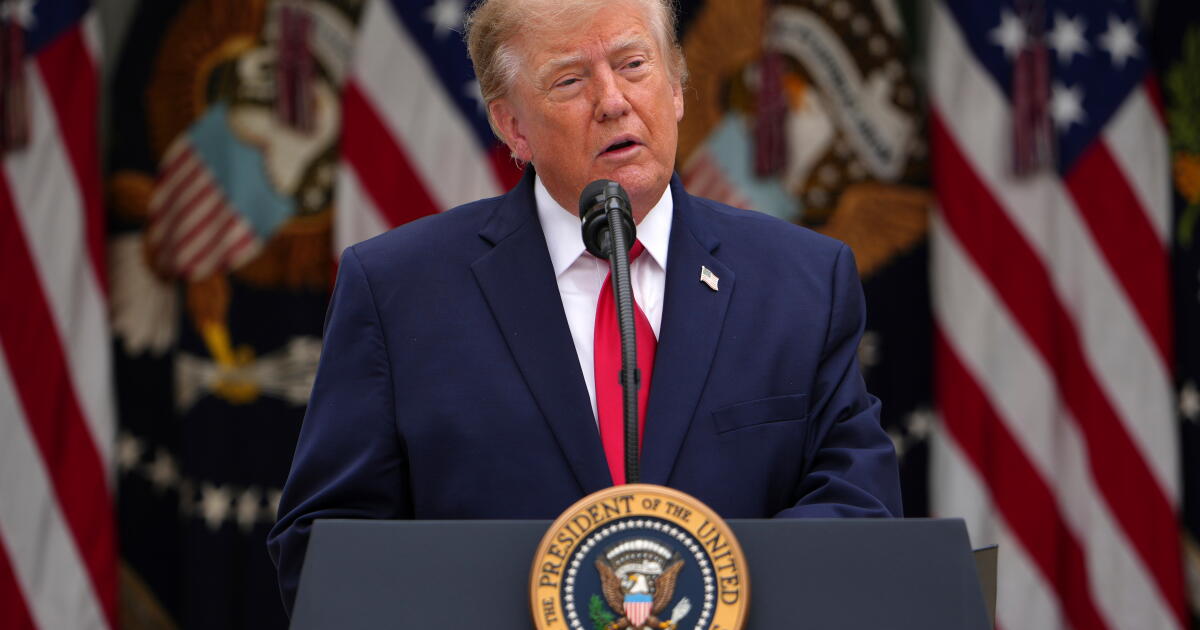
WASHINGTON — Investments in pharmaceutical companies made on behalf of President Trump increased significantly after he returned to the White House last year, with his portfolio adding millions of dollars in stock in firms that benefited from a Republican-backed law that shields certain medications from Medicare price negotiations, according to a report from congressional Democrats.
The report, released Friday by the Joint Economic Committee’s minority arm, found that Trump’s pharmaceutical stock holdings grew from a maximum reported value of $1.7 million in 2024 to as much as $56.2 million at the end of 2025. The report said that included up to $39.1 million worth of stock held in companies that benefited from exemptions to Medicare’s drug price negotiation program, which came through a provision in the Republicans’ 2025 tax and spending law.
Additional analysis of Trump’s financial disclosures provided by committee Democrats showed that his investment portfolio bought as much as $2.55 million in shares of pharmaceutical companies benefiting from the exemptions on three dates before he signed the legislation in July 2025. That included up to $950,000 in purchases on July 1, 2025, the day the Senate passed the bill. His portfolio also bought as much as $1 million in AbbVie stock in August 2025, after the bill became law.
The Republican president’s wealth has grown since he took office last year through a web of business interests, many of which have benefited from the policy moves of his administration. The White House has repeatedly denied any ethics issues and accused Democrats of “attempts to fabricate conflicts of interest.”
The report also noted that the exemptions policy could leave some Medicare beneficiaries paying thousands of dollars more for certain cancer treatments and other medications than they would have if Medicare had been allowed to negotiate lower prices.
The findings come as Trump has made lowering prescription drug costs a central part of his healthcare policy, striking deals with pharmaceutical companies that his administration says will make medications more affordable for Americans, although drug pricing is based on a complicated set of factors.
Recent polling from the Associated Press-NORC Center for Public Affairs Research shows that most Americans think Trump is profiting off the presidency in unethical or illegal ways and is focused more on his wealth than on helping people like them.
Democratic Sen. Maggie Hassan, who leads the Joint Economic Committee’s minority arm, called the report’s findings “outrageous and yet typical from this president, who makes the American people foot the bill again and again for his own gains.”
Davis Ingle, a White House spokesperson, said Trump’s stock and bond portfolio is independently managed by third-party financial institutions. He denied any conflict of interest.
“Neither President Trump nor any member of his family has any ability to direct, influence, or provide input regarding how the portfolio is invested or when investments are bought or sold,” Ingle said in a statement.
A law from President Biden’s Democratic administration allowed Medicare for the first time to negotiate prices for some of the costliest prescription drugs. Republicans’ 2025 tax and spending bill expanded an existing exemption for medications developed to treat rare diseases or conditions, delaying when certain costly drugs could become eligible for negotiations or excluding them entirely, according to healthcare research nonprofit KFF.
Also known as the orphan drug exclusion, the carve out allows drug companies to continue charging lucrative prices that might otherwise have been reduced through Medicare negotiations.
Supporters of the change argued that a broader exemption would encourage drug companies to develop treatments for rare diseases. Critics say it allows makers of blockbuster medications to avoid negotiations that could lower costs for Medicare and its recipients.
The report estimated that Medicare beneficiaries receiving the cancer drugs Keytruda, manufactured by Merck, and Opdivo, by Bristol Myers Squibb, could pay roughly $5,000 more annually than they would if Medicare negotiated prices for the medications. Trump’s portfolio includes stock in both firms.
The report also said that Trump’s portfolio continued to buy and sell pharma company stocks throughout the first eight months of 2026, adding as much as $3.5 million in stock wealth in the sector.
All recent U.S. presidents have dumped their stocks before assuming office, put their money in broadly diversified funds or set up a “blind” trust so they couldn’t even know what they owned.
Trump has put his broader business interests in a trust managed by his sons. But the arrangement rejects the conflict of interest protections that his recent predecessors in office had instituted.
Hussein writes for the Associated Press. AP writer Bernard Condon in New York contributed to this report.