Public executions are the work of tyrants. Now, the U.S. is joining in
Iran. Afghanistan. North Korea. Somalia. And now, the United States.
If Secretary of Defense Pete Hegseth is to be believed, America will soon gain the dubious distinction of joining the only four countries on the globe that carry out executions in public.
Hegseth said Thursday that he wanted the execution of convicted F.t Hood shooter, Army Maj. Nidal Malik Hasan, to be available for public viewing.
“It was a radical Islamist attack … so he’s going to get a firing squad of soldiers, as it should be,” Hegseth said in an interview with far-right political activist Jack Posobiec. “We’ll make sure that people are able to watch it. That it’s public. Because people need to understand that there’s serious consequences for these types of things.”
The execution is scheduled to be live streamed Dec. 3 from the same military base where Hasan opened fire in 2009, killing 13 and wounding 32.
The planned public display is, in a word, barbaric. It’s the archaic act of tyrannical monarchies, staged in the shadow of a looming tower or in the town square. The Taliban and ISIS were big on public executions. So was Nazi Germany. They were either fighting a war on their own soil or had just come out of one. It’s a poor excuse, but the U.S. military can’t even point to that as justification for the animalistic intention of broadcasting a state-sanctioned murder.
Should plans for the livestream of Hasan’s killing become a reality, our peers will be countries that the U.S. has long held up as the worst of the worst. Oppressive “shithole” countries, to use a Trump term, that wield intimidation and the threat of death to keep their people in line.
Iran carries out its hangings in public squares, typically using truck-mounted cranes as makeshift gallows. The Taliban exacts its death penalty in sports arenas. Amnesty International reports that North Korea forced local residents, students and workers to watch the 2008 execution of 13 women and two men as a deterrent. Their crime? Attempting to flee to China.
Hasan, an Army psychiatrist and a Muslim, opened fire on dozens of his fellow soldiers as they were preparing to deploy to Afghanistan. He was reportedly angry about the U.S. involvement in the region and in Iraq. In court, prosecutors argued that he was radicalized online and motivated by an ideology that called for “jihad duty.”
His crimes were horrific, and he should be punished. Whether you believe in the death penalty or not (I do not), turning his execution into a morbid form of entertainment — or a warning to never do what he did — would mark a new low for this country.
And we are pretty low as it is. On Thursday, ICE agents in civilian clothing fired at least seven rounds, at 4 p.m. on a busy Manhattan street, into a car with a 5-year-old boy inside. They hit the driver, who survived, and by some act of god missed the child.
Federal immigration agents have shot at least 21 people, killing seven, since President Trump returned to office less than two years ago with the promise of cracking down on crime and making the country safer via mass deportations. The public execution of Hasan, who is a U.S. citizen, is being sold as part of that tough-on-crime initiative. Hegseth himself said the public killing is meant as a deterrent.
The idea that keeping a population safe requires removing the guardrails of civilized society is absurd, though despots throughout history would have us believe otherwise.
If Hasan’s death is televised, it will be the nation’s first government-sanctioned execution carried out in public since 1939. It will be the first U.S. military execution since 1961 and the first military death by firing squad, or “musketry,” since 1945, according to the Death Penalty Information Center.
The Army had planned a very different type of execution for Hasan. ABC News reported that officials were preparing to use lethal injection if Trump authorized the execution of one of the four prisoners on the service’s death row.
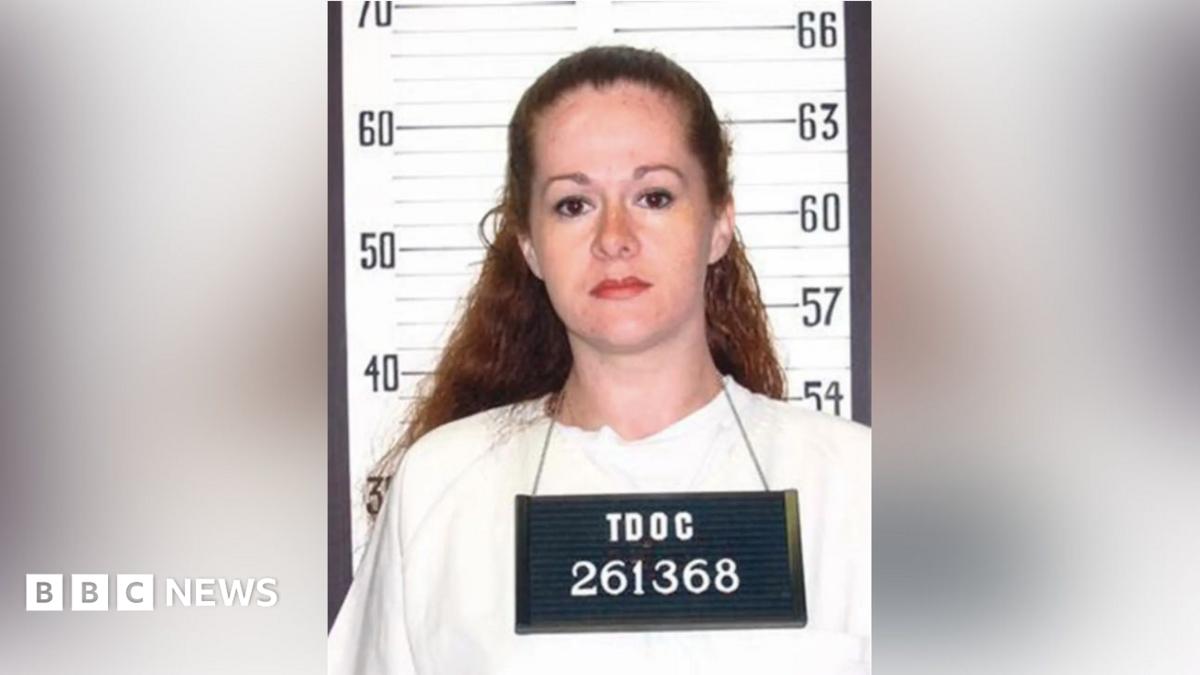
Trump’s approval of Hasan’s execution last Friday came days after a botched lethal-injection execution in Tennessee. Christa Pike, who was sentenced to death for a 1995 murder she committed as a teenager, survived despite being injected with two supposedly lethal doses. She is now said to be lucid and even walking.
Hasan, who is partially paralyzed and uses a wheelchair after being shot by officers who were responding to the Ft. Hood attack, will be put to death in a more dramatic fashion — and for everyone to see.
“The public execution even of one who has done grave harm will only further undermine the moral fabric of our nation and be a blight on the conscience of its people,” Oklahoma City Archbishop Paul Coakley said in a statement Friday. “The word of God exhorts us: ‘do not repay anyone evil for evil’ (Romans 12:17).”
A few congressional Republicans even broke ranks with their party and criticized Hegseth’s plans for the livestream. Sen. John Curtis of Utah posted on X that “a civilization erodes when it cultivates an appetite for executions as a form of entertainment. Secretary Hegseth’s plan to livestream the Fort Hood execution risks feeding that appetite.”
There is no reason the U.S. should stoop to the barbarism of public executions. It’s ghoulish, inhumane and a marker of tyrannical rule. Do we really want to join Iran, Afghanistan, North Korea and Somalia in the global hall of shame?