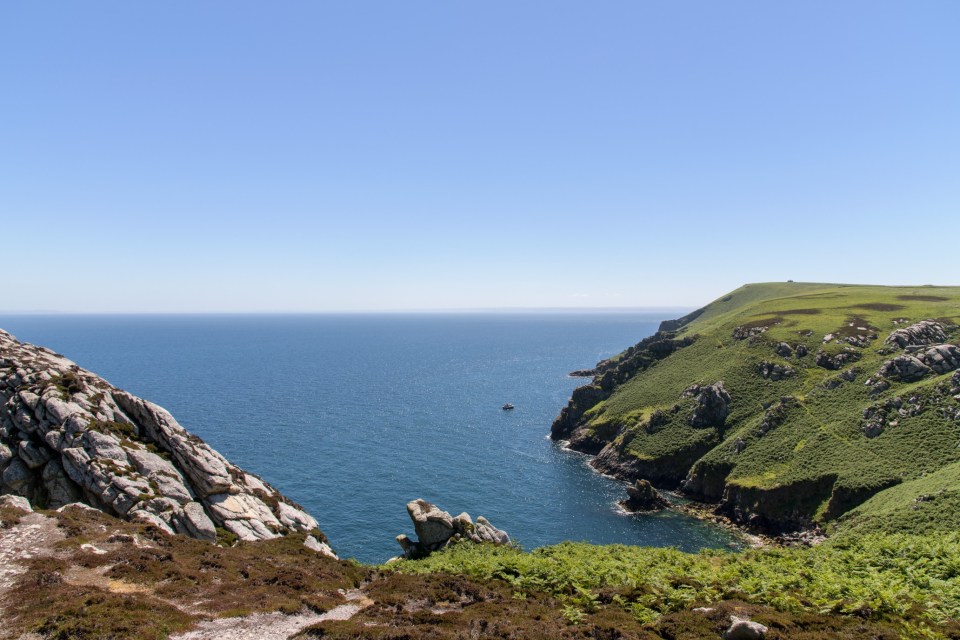
Flames fanned by gale-force winds have spread across a 15-kilometre frontCredit: GettyAt least three emergency responders have lost their lives during the crisis across GreeceCredit: Getty
Flames fanned by gale-force winds have spread across a 15-kilometre front on the island at the peak of the summer holiday season.
Around 8,000 people were ordered to move to safety as flames closed in on southern resort villages, destroying homes, farms, and livestock in their path.
Sign up for the Travel newsletter
Thank you!
The crisis comes as severe heatwaves spark wildfires across Southern Europe and parts of the UK, with firefighters battling blazes from Spain and Turkey to Suffolk.
Where are the wildfires in Crete?
The primary fire zone in Crete is located along the island’s southern coast in the Rethymno region, specifically within the Agios Vasileios municipality.
The island’s main transport hubs – including Heraklion Airport and Chania Airport – remain open and operating normally, outside the fire zone.
Popular northern holiday destinations, including Rethymno’s historic Old Town, Chania, Heraklion, Elounda, and Agios Nikolaos, currently remain unaffected and open for business.
If you are due to travel, tour operators advise checking the exact location of your accommodation.
Anyone staying near the active southern fire zone should contact their hotel or package provider before travelling, follow official 112 emergency text alerts, and ensure travel insurance covers natural disaster disruptions.
Holidaymakers on the island are urged to download emergency alert apps, keep mobile devices charged, and strictly observe local fire bans.
How did the fires start?
Specialist arson investigation teams from the Greek Fire Service have launched formal inquiries into the exact ignition points of the Rethymno fires.
While investigations are ongoing, extreme heat and weather conditions created the perfect storm for rapid ignition.
A prolonged summer heatwave pushed temperatures above 40C, thoroughly drying out low vegetation, pine forests, and olive groves across the island.
Strong gusting winds reaching up to 102 km/h (7 on the Beaufort scale) whipped minor ignitions into runaway blazes within minutes.
Authorities across southern Europe have repeatedly warned that even minor human carelessness – like discarded glass, outdoor barbecues, or unextinguished cigarettes – can instantly trigger a major blaze in these dry conditions.
What is the forecast for Crete?
The weather outlook for Crete remains challenging, with forecasters predicting high temperatures to persist near or above 40C across the Aegean region.
But the primary hurdle for emergency crews has been unpredictable wind.
Violent, changing gusts have forced water-dropping planes and heavy helicopters to temporarily ground operations due to turbulence.
Fire crews are reliant on wind speeds dropping in the coming days.
Lower winds wills allow aerial firefighting squadrons to safely scoop seawater and drop targeted payloads on hot spots in Crete’s steep mountain terrain.
While ground teams continue to build containment lines, civil protection authorities maintain a high wildfire alert across Crete and wider Greece.
Noul hit southern Guangdong province and neighbouring Hong Kong, bringing strong winds and heavy rain to the region.
Published On 26 Jul 202626 Jul 2026
Typhoon Noul has hit southern China, including Hong Kong, bringing strong winds and heavy rain to the region and prompting the evacuation of hundreds of thousands of people in Guangdong province.
China’s national weather centre said Noul made landfall on the coast of Huidong county in Huizhou, southern Guangdong province, at approximately 3:50am local time on Sunday (19:50 GMT on Saturday).
Recommended Stories
list of 3 itemsend of list
China’s official Xinhua News Agency said Noul was the strongest typhoon to make landfall in China so far this year.
Hong Kong’s Observatory said Noul, with maximum sustained winds of 110 kilometres per hour (68 miles per hour) near its centre, was moving Sunday into inland Guangdong and weakening progressively, bringing strong winds and heavy rain to parts of the region.
More than 715,000 people had been relocated for safety by early Sunday in Guangdong province, according to state-owned China National Radio. On Saturday, authorities said some 340,000 people were evacuated.
China’s National Meteorological Centre expected parts of southern Guangdong and southeastern Fujian provinces to experience heavy rain and strong winds over the weekend.
Many trees were seen uprooted in Huilai county, located on the coast of Guangdong province, state broadcaster CCTV reported.
Hong Kong’s airport authority said about 350 flights were cancelled on Sunday. At least nine people were injured across the city during the typhoon period, according to Hong Kong authorities.
As Noul approached Hong Kong, parts of a large scaffolding on a high-rise building collapsed on Saturday afternoon, local police said, although initial reports indicated there were no injuries.
Taiwan’s Central Weather Administration said Noul was bringing rainfall to parts of southern and eastern Taiwan. It was passing over waters south of Taiwan and was moving away from the island Saturday.
Earlier this month, Typhoon Bavi brought strong winds and rain to eastern China, leading to the evacuation of more than two million people. It made landfall on July 11. Another, Maysak, made landfall in southern China on July 3.
In south-west France, authorities have evacuated around 200,000 people after wildfires ripped through the Gironde and Landes regions.
In the early hours of Saturday, four towns near Bordeaux were evacuated “as a precaution”.
The towns were Saint-Médard-en-Jalles, Saint-Jean d’Illac, Martignas-sur-Jalles, and Saint-Aubin de Médoc, which Le Monde reported had a total population of 58,400 residents.
The Gironde blaze, described by local prefect Sophie Brocas as an “XXL fire”, has burned through more than 19,000 hectares (46,000 acres) of forest and destroyed about80 homes.
Officials evacuated the entire Cap Ferret peninsula on the south-west coast, with hundreds escaping by boat after flames swept through the popular tourist destination.
The area has a year-round population of just under 8,000 people, but numbers can increase 10 fold during the summer holiday season.
Fire and rescue chief Marc Vermeulen said conditions were more severe than during the devastating fires that hit the region in 2022, with drought enabling the blaze to continue spreading through the night.
“We have never seen a convective fire of this magnitude,” France’s Interior Minister Laurent Nuñez told French broadcaster TF1, adding that around 50 firefighters had been injured.
He said the blaze was “self-sustaining” and changing direction, with the fire moving east towards Bordeaux on Friday evening.
“We are going to reorganise our response so we can fight it from the ground and prevent it from advancing toward Bordeaux,” he said.
Foreign Office has issued a travel warning for France
12:40, 23 Jul 2026Updated 14:38, 23 Jul 2026
Some tourist accommodation has been evacuated, authorities have said(Image: John Harper via Getty Images)
British holidaymakers are being cautioned about travel to certain regions of France, with millions of Brits expected to visit the popular European destination this year. The Foreign, Commonwealth and Development Office (FCDO) provides guidance for travel to more than 220 countries and territories worldwide, covering everything from entry requirements and safety concerns to health measures and local rules.
In a new alert for France, released on Thursday, the FCDO said: “Wildfires are affecting parts of Gironde (in southwestern France), including areas around Le Porge and Lège-Cap-Ferret. French authorities have evacuated some campsites and tourist accommodation. Access to affected areas may be restricted. Roads may be closed at short notice.
“If you are already in the area or are planning to travel there, follow the advice of local authorities, monitor local media, and contact your accommodation or travel provider for latest guidance. If you are affected by a wildfire or another emergency, call 18 (fire service) or 112 (emergency services).”
Further guidance highlights that the risk of wildfires is considerably elevated during the summer months from April to October. The danger is greatest in the south of the country, particularly along the Mediterranean coastline, in Corsica, and across parts of the south-west during spells of hot, dry weather.
Starting a wildfire is a criminal offence in France, even if it occurs accidentally, and could result in a hefty fine or even a custodial sentence.
An aeroplane had to be sent back to the airport it took off from after an incident mid-air
Robert Rowlands Deputy editor, money and lifestyle, content hub and Maria Ortega
14:18, 01 Jun 2026
TUI, easyJet and Jet2 planes pictured at Manchester Airport – file image(Image: Getty)
Air travellers are being forced to think carefully about Bluetooth rules on flights after a plane was sent back to an airport and evacuated. The incident has reportedly led to the arrest of a passenger.
Headlines today suggest that refusing to follow the rules may result in the flight returning to the airport for safety reasons. On Saturday afternoon, a flight took off for Palma de Mallorca in Spain from Newark Liberty International Airport in New Jersey. Yet some time later, while over the Atlantic, it was forced to return to the airport it set off from due to a security emergency, reports say.
For UK travellers, the incident will emphasise the importance of following airline rules. It will also require many to check them to make sure they adhere to the guidance.
easyJet rules on Bluetooth use
easyJet’s website states that you can use portable electronic devices on board for activities such as playing games, reading e-books, watching movies and listening to your favourite music. The airline says passengers can use most devices during all parts (take-off, the flight and landing) of the journey.
The site adds: “All devices must be in ‘flight safe’ mode for taxi, take-off, inflight and landing and held securely in your hand or in your pocket. During the taxi-in to the arrival gate the cabin crew will let you know when you can make telephone calls or send text messages.”
The airline also notes that some devices can be used for boarding and in-flight provided they are in “flight safe” mode. However, this is not the case during taxi, take-off and landing – as they must then be safely stowed away in the overhead locker. These are:
All Bluetooth accessories (wireless keyboard, headphones etc)
Notebooks
Large music players
Ultra books
Laptops
DVD players
Large electronic games
easyJet says that devices that do not have a “flight safe” mode will need to be turned off for the duration of the flight. There may be times when the pilot or cabin crew may ask for all electronic devices to be switched off so please follow their instructions, the airline says.
In the incident in America on Saturday, according to some passengers who spoke to the website AirLive, the crew had ordered passengers to immediately disconnect all Bluetooth devices. However, after repeated requests, at least two devices remained on.
The pilots decided to return to USA, Spanish news website El Diario reports. Reports say the threat originated from a device referred to by “a certain four-letter word.”
Passengers reportedly told aviation media that the message read ‘BOMB’. After landing back at Newark, the plane was evacuated while security staff inspected the aircraft.
The authorities later said it was the name of a device and arrested the suspect. According to media reports, he was a teenager.
Ryanair, Jet2 and TUI rules on Bluetooth use
Airline rules for UK travellers on popular carriers are clear on what passengers need to do. Ryanair’s website has a a section entitled “Will I be able to use my phone/device/electronics on board?”
It says: “Yes. You may use your laptop, tablet, smartphone and other electronic devices on board Ryanair flights. Your device will need to be switched to flight mode for the entire flight duration.
“Laptops and larger electronics can be used once the fasten seatbelt sign has been turned off. For safety reasons, these items must be kept in the overhead locker or stored in your bag under your seat when the aircraft is taxiing (moving towards the runway for take-off or towards the terminal after landing), take-off and landing stages of your flight.”
Jet2’s website also offers guidance for passengers. It says: “You can use all handheld electronic devices and Bluetooth gadgets, such as headphones, throughout the flight, as long as they’re switched to flight mode while onboard.
“Larger gadgets, such as laptops, must be switched off and put away for take-off and landing. If there are any changes to this, the captain or our cabin crew will let you know.”
TUI’s website has a similar section about using personal electronic devices on a flight. Its guidance states that passengers can use things like MP3 players, e-books, smartphones, and other handheld personal electronic devices at any time during a flight, unless they are told otherwise by the crew – “as long as they’re switched to ‘Flight Safe Mode’ or ‘Airplane Mode’.”
The site adds: “That said, please make sure you listen carefully to the safety briefing by the cabin crew. You’ll not be able to use any type of clip-on product to hold your phone or tablet on TUI flights, as you’re not allowed to attach anything to your tray tables or seats.”
The airline says that if you are carrying larger devices like laptops and larger tablets, you will be able to use them during the flight. However, it emphasises that they will need to be switched off for take-off and landing and stowed away.
The airline says: “You’ll need to take these items out of your hand luggage before you get to the security search point. This is because they’ll need extra screening. If any of your electronic devices can’t be switched to ‘Flight Safe’ or ‘Airplane Mode’, they’ll need to be switched off completely throughout the flight. Please also be aware that you won’t be able to charge your laptop on the flight.”
The first flight carrying around 300 Ghanaians evacuated from South Africa following anti-immigrant tensions and reported attacks on foreign nationals has arrived in Accra. Authorities welcomed returnees with reintegration support and transport assistance.