In a trip that included visits to Saudi Arabia, Qatar and the UAE to discuss tensions brought about by the US-Israeli war on Iran, Italian PM Meloni emphasized the importance of the Gulf to Italian and European national security.
One city has been crowned Europe’s chocolate capital in a new study analysing chocolate culture across the continent
Isobel Pankhurst Audience Writer
14:14, 02 Apr 2026
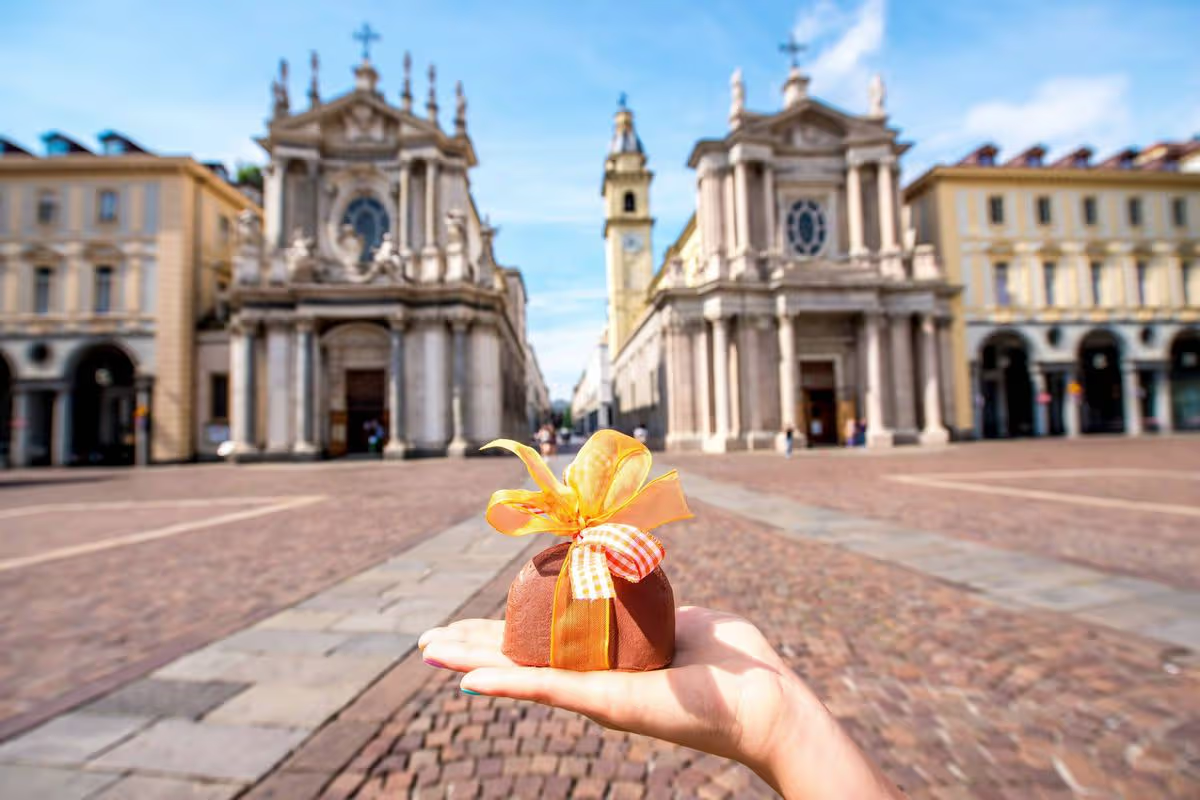
Turin has been known for its chocolate since the late 1500s(Image: Getty)
When you think of chocolate, your mind might wander to the Belgian capital of Brussels, or perhaps the Swiss Alps, yet neither has claimed the top spot on Europe’s list of “chocolate capitals”. Instead, that coveted title belongs to the Italian city of Turin.
Ahead of the bustling summer tourist season, Avis examined European cities for their chocolate culture, taking into account the number of chocolatiers and shops listed on Yelp, chocolate-related attractions such as museums and factory tours, and consumer ratings.
Their research placed Turin firmly at the top, closely followed by Perugia, also in Italy, with Austria’s Salzburg taking third place.
Two British cities also featured on the list, with one securing fourth place and London coming in eighth.
Turin boasts 233 chocolatiers and five chocolate attractions; regarded as Europe’s historic chocolate capital since 1585, the city is the birthplace of gianduja and bicerin – iconic hazelnut-chocolate specialities.
There’s also the Pfatisch Chocolate Museum and factory tours from renowned brands such as Caffarel.
The city’s annual CioccolaTò festival further solidifies its standing as a must-visit destination for immersive chocolate experiences.
Taking to TripAdvisor, one recent visitor to the Pfatisch Chocolate Museum wrote: “Beautiful audio guided tour, interactive for families. The children had a great time with the interactive games.
“Very cosy and realistic environment recreated for the tour. Exhaustive on the subject. It involved all the senses.
“Small taste of the three chocolates (dark, milk, white) and finally the king Gianduiotto.”
Meanwhile, another visitor who enjoyed a trip to the Pfatish Museum remarked: “This place looks it belongs on a movie set. Everything looks so good and so perfect. Even if you don’t buy anything here, it is well worth a visit.”
A BEAUTIFUL resort on a lesser-visited Spanish island has been named the best in the country.
The luxury hotel, Paradisus Melia, which sits on the southern coast of Fuerteventura, has just named the ‘Best Resort in Spain for 2026′.
Sign up for the Travel newsletter
Thank you!
The newly renovated Paradisus Melia has been named the ‘Best Resort in Spain’Credit: Jet2It has four swimming pools and adult-only areas that look over the beachCredit: Jet2
The luxury resort was awarded the title last week by Forbes just a few months after rebranding and reopening in October 2025.
While it’s on the luxe side of a holiday you can book it with the likes of Jet2, TUI and On the Beach from £136 per person per night.
In the summer months, Fuerteventura has average highs of 26C and at the Paradisus Melia, you can cool off in one of its four swimming pools.
Three are freshwater, one saltwater and there’s a children’s section with a slide too.
There’s also a chance to upgrade to the ‘Reserve Pool‘ which is adult-only.
It comes with other perks too like use of the pretty cabanas, access to the exclusive lounge and concierge service along with premium drinks.
All the pools are surrounded by sunloungers, straw woven umbrellas and palm trees.
When it comes to eating and drinking, which you can take advantage of with an all-inclusive package, the hotel has multiple bars and restaurants.
Grab a drink at the cocktail bar, lounge bar or snack bar.
And for food, you can take your pick from one of the eight restaurants.
These include one which is buffet-style, two that are adults-only, and all have dishes that are traditionally Spanish, local, Italian and international.
When it comes to activities, guests can take advantage of the air-conditioned gym.
Or have a go at aqua aerobics, Pilates, table tennis and yoga.
There’s entertainment too and during the evening there’s live music and professional shows.
It’s a luxury stay on an all-inclusive basisCredit: Jet2
Here’s another hotel in Fuerteventura – and it’s set out like a small village…
*If you click on a link in this box, we will earn affiliate revenue
Hotel Club Jandia Princess, Fuerteventura This resort is set up like a small village, with low-rise buildings set among palm trees and six different swimming pools. Entertainment spans from DJ nights to bingo and live sports screenings, plus sports on offer include water polo, rifle shooting and shuffleboard.
When it comes to rooms, each has been newly made over and kept in a minimalist style with relaxing neutral colours and balconies for enjoying the evening sun.
The only board package guests can book is ‘All Inclusive Plus’ which includes buffet-style breakfast and dinner as well as lunch, snacks and drinks.
One holidaymaker said: “We had such a fabulous holiday at this resort. It has definitely raised our bar for all-inclusive holidays.”
With Jet2, two adults can head to Paradisus Melia on May 13, 2026 for a seven-night all inclusive break with transfers and return flights to London Gatwick from £953 per person.
The hotel is fairly isolated, but is minutes from incredible island beaches.
It has beautiful views across Plaża Sotavento and it takes just a minute to get onto the golden sands.
Also nearby is Playa de Sotavento de Jandía which one visitor said is “undoubtedly one of the most beautiful beaches on the island.”
For those who want to head further afield, the nearest town is Costa Calma – you’ll need to take a transfer or taxi here which will take around six-minutes.
While it’s not as vibrant as other Spanish towns, it does have shopping centres, restaurants and beach bars.
A YouTuber who visited Riga, Latvia, was stunned by the four-star hotel prices in the city voted one of Europe’s cheapest by Post Office Travel
13:41, 26 Mar 2026Updated 13:41, 26 Mar 2026
Ed Chapman travelled to Riga in Latvia(Image: YouTube/@EdChapman23)
A YouTuber who toured Europe‘s most affordable city was taken aback by the cost of one item he purchased during his journey.
Ed Chapman, who shares his adventures on his eponymous YouTube channel, visited Riga, the capital of Latvia, and filmed a video about his experiences in the city after it was named one of Europe’s cheapest in a survey by Post Office Travel.
His primary reason for visiting Riga was to compare it with one of the priciest cities in Europe, Oslo, Norway. According to Skyscanner, flights to Riga can be purchased for as little as £28 from Leeds Bradford Airport.
One of the most striking differences between the two, Ed pointed out, was the disparity in hotel prices.
In Oslo, he stayed at a three-star hotel for one night, while in Riga, he lodged at a four-star hotel, but the price difference was significant, reports the Express.
After exploring and commenting on his hotel room, he remarked: “We’re in the heart of the city centre, literally one street away from the main stuff. Four-star hotel. £62 a night. Now that’s tasty. For a capital city, for the middle of the city centre that’s a bit mad isn’t it?
“Bearing in mind in Oslo I stayed in a three-star hotel, also bang in the city centre and that was £140 for a night there. Less than half price that’s crazy.”
Ed isn’t alone in highlighting Riga’s charm. The city, home to approximately 600,000 residents, is located at the centre of the Gulf of Riga where the Daugava River flows into the Baltic Sea.
Additionally, the city’s historic centre has been designated a UNESCO World Heritage Site, with its Jugendstil and Art Nouveau architecture standing out as two of its main attractions.
Among Riga’s most distinctive landmarks is the Riga Central Market. Built using repurposed German Zeppelin hangars, these structures rank amongst the city’s most recognisable buildings, spanning 778,000 square feet and housing approximately 3,000 trading stalls.
Furthermore, Riga offers convenient access to nearby coastal areas such as Jurmala. The Mirror previously reported that one visitor was impressed not just by the affordability, but by the amenities available.
They commented in a review: “Changing pods are available on the beach and the sand is soft and flat. We paid €5 each for a sun lounger for the day, although in the afternoon people could help themselves to ones that were left or that people had finished with.
“Well worth the journey from Riga which is about 25 mins by train from central Riga and very cheap. We booked the day before online and it cost us about €6 return for both of us – amazing value.”
A new ranking compares international tourist numbers to locals in European cities – and one tops the list with a staggering 16,250 visitors for every 100 residents
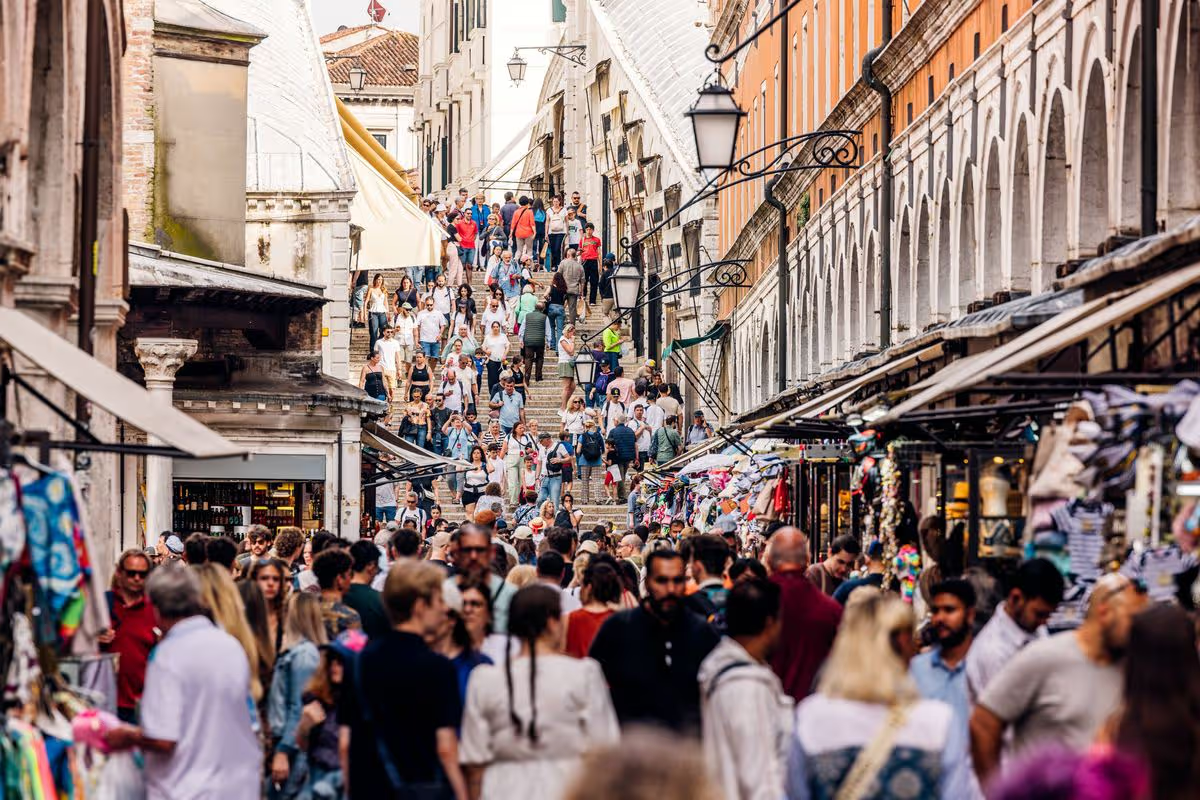
These destinations are the most crowded in Europe(Image: Alexander Spatari via Getty Images)
Summer is on the horizon, and folks are starting to map out their holiday plans. Being based in the UK, we’re fortunate to have some of the world’s most stunning destinations within easy reach, with iconic cities just a short flight away.
However, many of these sought-after spots are now swamped with tourists – in fact, some now host more visitors than locals. DiscoverCars.com has compiled a new ranking that contrasts the number of international tourists with the local population in European cities. Five of the top holiday hotspots now boast more tourists than residents.
Topping the list is Dubrovnik in Croatia. This breathtaking historical city gained even more fame after serving as the backdrop for King’s Landing in the HBO series Game of Thrones.
Last year, this fortified city welcomed 6.5 million tourists – an astounding figure compared to its 40,000 inhabitants. That equates to 16,250 tourists for every 100 locals.
Taking second place is Reykjavik in Iceland, reports the Express. This Arctic city attracted even more tourists than Dubrovnik, with 7.4 million visitors compared to its 140,000 residents, resulting in 5,286 tourists per every 100 locals.
The city is renowned for its Blue Lagoon thermal baths and, of course, the opportunity to witness the Northern Lights illuminating the sky.
Securing third place is the floating city of Venice in Italy. Arguably one of the most famous cities globally, Venice played host to 10.6 million tourists last year.
Compared to its population of 250,000, that’s a whopping 4,240 international visitors per 100 residents. The city is a hit with tourists for its stunning architecture and the opportunity to glide along its canal streets by gondola.
Switzerland’s Geneva secured fourth place on the list, welcoming 7.8 million tourists in 2025. With a local population of 200,000, this equates to 3,900 visitors per 100 residents.
Renowned for its breathtaking views of the Alps, Geneva serves as an excellent base for day trips into the mountains and exploring the picturesque villages scattered throughout them.
Porto in Portugal claimed fifth place. The city attracted seven million international tourists in 2025, against its population of 250,000.
With 2,800 tourists for every 100 residents, it’s a highly sought-after destination. The narrow streets are adorned with beautiful architecture and striking Portuguese tiles, providing a perfect backdrop for photos.
With the river slicing through the city, you can discover both sides of the city in a day – just remember to bring your walking shoes.
WHEN it comes to city breaks, some of the cheapest in Europe are found a bit further east.
And Romania‘s Bucharest is not only affordable, but is getting more flights too.
Sign up for the Travel newsletter
Thank you!
The Romanian city has just got new UK flights – and you can get there for less than £20Credit: Getty Images – GettyOne of the biggest draws to Bucharest is its Therme spa and waterparkCredit: Alamy
Romanian airline, AnimaWings, has started six new weekly flights from London Gatwick to Bucharest.
This isn’t the only option though as there are also cheap flights with Ryanair from London Stansted with one-way journeys starting from £18.99.
Wizz Air also offers cheap flights to the city from London Luton.
With a flight time of just over three hours, Bucharest is the ideal city break destination.
Last year, The Telegraph even named Bucharest as being one of Europe’s ‘last great cheap cities’.
It added that Bucharest has everything you need for a good city break with “expansive, tree-lined avenues, lively bars and characterful museums.”
Bucharest is inexpensive, according to Numbeo – a pint of local beer costs on average £2.55 and an average meal is around £10.18.
For a three-course meal, you’re looking at around £50 and a cappuccino is just £2.45.
It’s not just food and drink that’s on the cheaper side as public transport is the same – a typical single journey on the tram and metro network is as little as 85p.
One of the most popular places in the city to go is Therme Bucharest, a spa and waterpark.
Split into three parts, the Galaxy area is a more family-orientated with 17 water slides, a wave pool and water playground.
The Palm zone is where people go to relax – with three mineral pools and swim-up bars, it has been created for relaxation.
And Elysium is a ”restoration area’ with lots of traditional and modern treatments from hammams to infrared light therapy beds.
Sun Writer Steve Corbett visited Therme and called it one of ‘Europe‘s greatest secrets’.
He compared it to Center Parcs’ Subtropical Swimming Paradise as he tried out the water slides, high-tech treatments and poolside bars.
It also has cheap beer with a pint costing £2 on averageCredit: AlamyThe city even has it’s own Van Gogh-inspired cafeCredit: Alamy
One woman even flew to Bucharest for a spa break at the Therme because it was cheaper than one in the UK.
Kara Wildbur booked her and her mum in at the Therme for £64 after finding out a spa break would be £400 back home.
Even with the flights being £157 return for the two of them, with the hotel costing £94 – it worked out cheaper than a UK spa day.
Another attraction is the Museum of Senses, which is an interactive museum – especially good if you’re visiting the city with kids.
It’s full of optical illusions, infinity rooms and hands-on exhibits.
Tickets for adults start from £9.33, and £6.79 for children.
When it comes to eating, there’s plenty of quirky cafes within the city.
Some top spots include The Grand Café Van Gogh in Bucharest which some visitors have said reminds them of Amsterdam.
It’s an art-themed cafe filled with Van Gogh artwork in the Old Town.
Another is Dulcinella which sells éclairs, New York-style rolls and is known for having an ‘Instagrammable-vibe’.
Caru’ cu Bere is considered the most famous restaurant and beerhouse in Bucharest and was founded in 1879.
Its house beer, called Berea casei, is brewed on-site and is still made from the original recipe – you can pick up 400ml from £4.30.
The best times of year to visit Bucharest are between April and October, with highs of 31C in June and July.
Just skip the winter months – the average temperature in December and January is around -2C.
“Then they arrive on Pag and feel like they’ve landed on the Moon, or even Mars. It’s raw, dramatic and completely unexpected.”
The Mars comparison can be seen via the ‘Life On Mars Trail‘ which starts at the village of Metajna, with multiple trails around the island passing bays and beaches along the way.
One hiker said: “I loved it, it’s just magnificent” and added “bring something to swim in because it is hard to resist.”
While the island is known for its otherworldly natural beauty, the northern part of the island is also famous for nightlife.
Zrće Beach in particular, which is near the main town of Novalja has even been called “Europe‘s party beach”.
Some of the most famous and biggest clubs includePapayawhich is open-air on the beach – it has multiple pools, bars, and dancefloors, and holds summer festivals.
Aquarius is another, which is a bar and restaurant during the day, but from 3pm, hosts huge beach parties.
Papaya is an open-air beach club that opens during the summertimeCredit: TripAdvisor
Meanwhile, the southern side is more peaceful and family-friendly.
Grad Pag, also known as Pag town, is the largest destination in the south and is known for being much more quiet and calmer than the northern town of Novalja.
Vlašići Beach is on the south of the island – it’s quieter than beaches in the north and is known for having pretty clear waters.
When it comes to getting to Pag, the easiest way to visit is by heading to Zadar where visitors can then take an hour car or bus ride.
The cheapest ticket price for a bus trip is as little as £5.
If you hire out a car, you can reach the island by driving across the Pag Bridge from the mainland to the south side.
For anyone wanting to stay on the island, there are Airbnbs starting from £52 per night.
April is a great time for Brits to visit, as the weather is milder than in the height of summer with temperatures around 18C.
It’s when flights are cheap too – in April, flights to Zadar are as little as £15 with Ryanair from London Stansted.
The Observation Wheel is returning to Weymouth BeachCredit: GettyOther rides like the helter skelter will open the weekend afterCredit: Alamy
Visit Weymouth announced that Weymouth’s Observation Wheel will be opening tomorrow.
In a social media post, it said: “After a successful debut year in 2025, Weymouth’s Observation Wheel will be open again this Saturday 21st and Sunday 22nd March at 11am.
“It looks like we are in for a sunny weekend, so get ready for some amazing views! The attraction will then be open every day from Friday 27th March.
“From 10.30am on Saturday 28th March, the other beach rides will be open daily – just in time for the Easter holidays.”
This is Europe’s ‘most walkable city’ according to one study(Image: Getty)
When holidaying abroad, it’s far more enjoyable to explore your destination on foot rather than relying on vehicles or public transport. Whether wandering between landmarks or hunting for restaurants, being in a genuinely walkable location can significantly reduce travel anxiety.
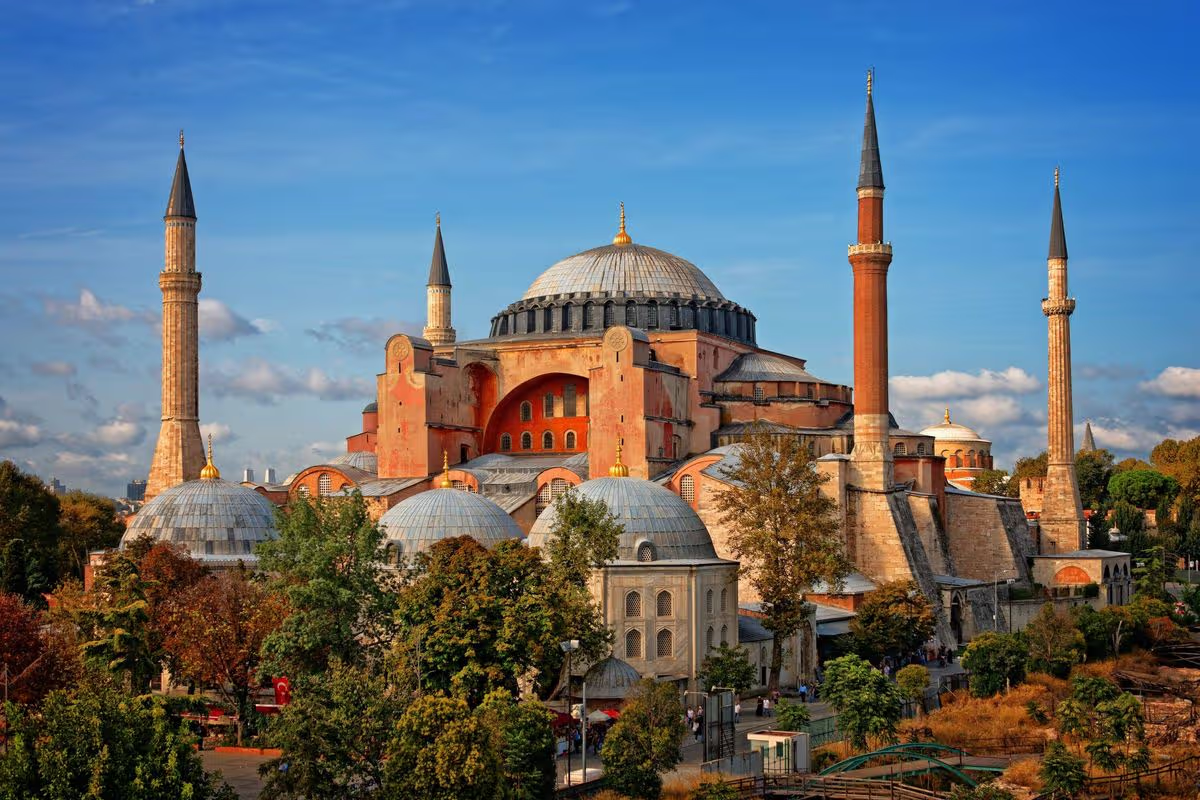
Bearing this in mind, Braw Scottish Tours examined the walking distances and step counts between five principal attractions across 30 of Europe’s most visited cities. Their findings revealed that the Turkish metropolis of Istanbul ranks as Europe’s most walkable city.
There, a mere 2.5km stroll connects major sites including Hagia Sophia and the Grand Bazaar. Exploring this area requires roughly 3,250 steps and approximately half an hour’s walk.
On TripAdvisor, one traveller to the metropolis commented: “Istanbul is a magical city. Phenomenal and historical buildings pepper this amazing place. Literally, it takes days to soak in the nuances and atmosphere of Istanbul. Take your time and don’t be afraid to get lost.”
Another visitor added: “Istanbul is a magnificent city… one full of beauty, history, spectacular architecture, amazing restaurants, views to die for, wonderful little family-owned hotels, exceptionally kind and honest people, fun-filled nightclubs, exotic sounds, exotic smells, and many other fabulous things too numerous to mention.”
A third person said: “There are so many cliched phrases used to describe Istanbul – ancient and modern, where east meets west, old world blended with new world, etc., etc., and they are all true. There is history, culture, shopping, sightseeing, museums, galleries, boat trips. There is SO much!”
For those who have already explored Istanbul, or perhaps feel it’s not quite their cup of tea, fear not, there are numerous other pedestrian-friendly destinations across Europe.
Weekly insights and analysis on the latest developments in military technology, strategy, and foreign policy.
As part of its seemingly never-ending search for new fighters, the Indian Ministry of Defense says it wants to team up with one of the two rival European next-generation combat aircraft programs. Faced by the twin challenges of China and Pakistan’s modernizing air arms, Indian defense officials are now looking at sixth-generation fighters, although buying into either of these programs would be fraught with difficulties.
The development was revealed in a report on 2026 defense budget plans tabled in India’s parliament yesterday. Such a move would provide an alternative to India’s domestically developed next-generation fighter, the Advanced Medium Combat Aircraft (AMCA), which looks entirely unlikely to meet its timeline.
BREAKING ⚠️
India will join either the Tempest or FCAS 6th generation fighter programs, Indian MoD tells Parliamentary Standing Committee on Defence pic.twitter.com/EC9N4d8zSS
The two European efforts identified by the IAF are the British-led Global Combat Air Program (GCAP), the centerpiece of which is the Tempest next-generation stealth fighter, and the pan-European Future Combat Air System (FCAS) program, at the heart of which will be the crewed New Generation Fighter (NGF). Both are expected to be in service by 2035, although that target is questionable in both cases.
As well as the United Kingdom, Italy, and Japan have joined the GCAP program, and other potential partners have been mentioned. Meanwhile, the pan-European FCAS program is led by France and Germany, with Belgium and Spain on board as junior partners. This may well change, however, with the program riddled by infighting.
The budget report states that the Indian Ministry of Defense has told the parliament’s Standing Committee on Defense that the Indian Air Force (IAF) wants to join one of these programs “right away.”
The result of such a partnership, the defense ministry contends, would help the IAF “ensure that they do not lag behind in achieving the target for advanced aircraft.”
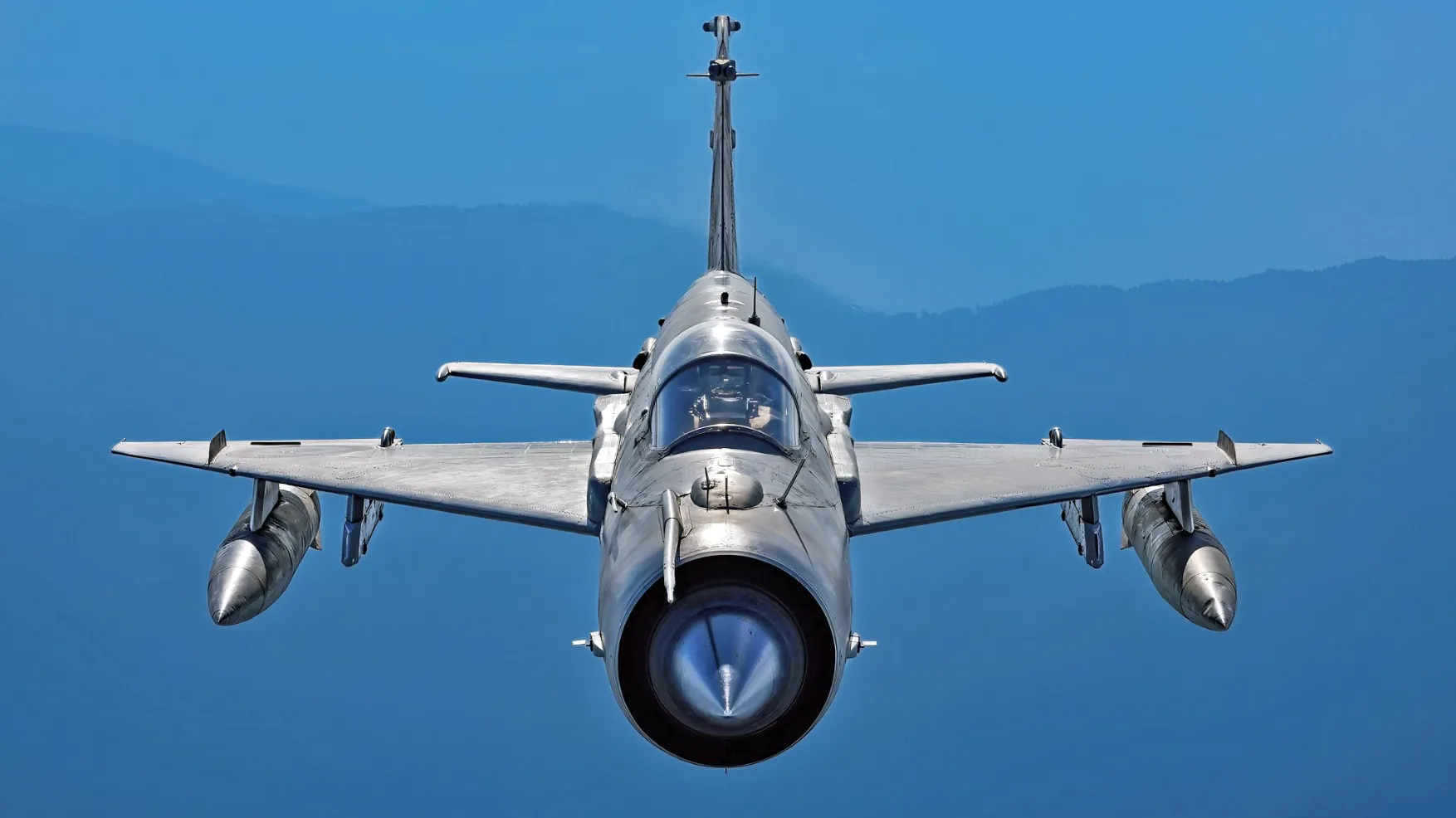
As we described at the end of last year, the Indian government has said that the IAF needs at least 42 squadrons of combat aircraft. Currently, it has just 29, meaning the service is operating its smallest combat force since it went to war with China in 1962. This problem has been exacerbated by the retirement of the veteran MiG-21 Fishbed.
The upgraded MiG-21 Bison was the last version of the iconic Fishbed in Indian Air Force service. Indian Air Force
Meanwhile, the Tejas Light Combat Aircraft program, which should have provided a successor to the MiG-21, has been mired by delays.
An initial-production version of the Tejas Mk 1 during air combat maneuvers. Indian Ministry of Defense
In the background, India faces the dual threats of China and Pakistan.
Shenyang Aircraft Corporation’s (SAC) J-XDS, also referred to unofficially as the J-50. via X
The question of how the IAF shapes up against the Pakistan Air Force (PAF) has long underpinned its status and planning. After the brief conflict last year, both services claimed success with contradictory reports from official channels and rampant speculation across social media.
Pakistan Air Force personnel in front of 14 dual-seat JF-17B fighters rolled out at a ceremony which coincided with the launch of JF-17 Block III aircraft at the Pakistan Aeronautical Complex in Kamra, in December 2020. Photo by AAMIR QURESHI/AFP via Getty Images AAMIR QURESHI
All of this piles on the pressure to modernize the IAF’s aging combat fleet.
At one point, the IAF appeared set on a fifth-generation fighter.
The twin-engine AMCA is planned to feature low-observable characteristics and — in later versions — a supercruise capability, among other advanced features. Bearing in mind that construction is yet to begin, the possibility of putting this aircraft production by 2035, as has been suggested, seems entirely far-fetched. The saga of the Tejas program, in particular, must cast doubt on the future of the AMCA, at least in terms of meeting schedules.
A full-scale model of the Advanced Medium Combat Aircraft (AMCA) is displayed during the 15th edition of Aero India 2025 at Yelahanka Air Force Station in Bengaluru in February 2025. Photo by Idrees MOHAMMED / AFP IDREES MOHAMMED
In the meantime, both the United States and Russia have pitched alternative fifth-generation fighters to India.
Last year, in something of a surprise announcement, U.S. President Donald Trump offered the F-35 to India, while Russia has long sought India as a customer for its Su-57 Felon. As long ago as 2003, the Prospective Multirole Fighter (PMF) was planned as an India-specific version of the Su-57, before New Delhi exited the program, as you can read about here.
A Russian Su-57 (left) and a U.S. Air Force F-35A during Aero India 2025, a military aviation exhibition at the Yelahanka Air Force Station in Bengaluru. Photo by Arun SANKAR / AFP ARUN SANKAR
The budget report indicates that the Indian Ministry of Defense would like to at least have the option of leapfrogging fifth-generation fighters like the AMCA, F-35, and Su-57, and move directly to the sixth generation.
In terms of keeping pace with China and Pakistan, that is an understandable aspiration.
On the other hand, joining either GCAP or the FCAS program would bring challenges of its own.
At this point, GCAP — involving the United Kingdom, Italy, and Japan — might look more promising. Compared to FCAS, the relationship between the three partners is relatively peaceful. There has been talk of Saudi Arabia possibly joining in some capacity, and, more recently, Poland has been reported as being interested in buying the aircraft, too.
But the possibility of India participating more directly in GCAP/Tempest is somewhat remote, since workshare arrangements have already been agreed between the three partners. The IAF would likely be forced to buy the aircraft off the shelf.
The latest concept configuration for the Tempest reveals a design tailored for long-range performance combined with a significant payload capacity. Leonardo
And that is if the British-led program survives the considerable challenges, both technical and political, that lie ahead.
After all, the process of creating an all-new fighter, especially one incorporating stealth technologies, brings very lengthy development times and high costs. The prospect of the Tempest entering service long after 2035 is likely, and the IAF needs new fighters sooner rather than later.
The same goes for the FCAS program, of course.
With FCAS, however, the chances of the program actually making it as far as operational hardware currently seem much slimmer.
For months now, there have been reports of significant rifts between France and Germany on the course that FCAS should take, especially when it comes to workshare, which has yet to be resolved.
French and German officials have repeatedly tried to get the program back on track, in the face of a bitter standoff between the two primes, France’s Dassault Aviation and Germany’s Airbus Defense and Space.
Concept artwork of the NGF fighter that is the centerpiece of the pan-European FCAS. Dassault Aviation
Most recently, it has been reported that France and Germany will have one more go at finding common ground on the program in April.
In the meantime, Germany has raised the possibility of taking its own path to developing a future combat aircraft, something it hasn’t done for decades, and which France has campaigned against.
Whatever happens next month, India’s joining FCAS would be a big risk. Some Indian media reports have suggested that, as a Dassault customer (for the Rafale multirole fighter), India might be able to take Germany’s place in the FCAS program, although it’s equally unclear whether it would be able to negotiate the kind of workshare deal it might want.
An Indian Air Force Rafale. Dassault Aviation
In the best-case scenario, it might be able to buy a much-delayed aircraft that is not necessarily tailored to its own requirements. In the worst case, the program may fall apart entirely and force the various partners to start again from scratch or look for alternatives.
If there is a way for India to enter GCAP or FCAS, that could bring a huge financial windfall for either program. This is what each program needs more than anything else, while increased production rates would mean lower unit costs, preventing the program from entering a death spiral should it mature.
Then there is the future of the AMCA to consider. If India genuinely wants to push ahead with a fifth-generation fighter, which can be developed according to its own particular needs, and over which it retains sovereignty, this program will need to be urgently kick-started. It seems unlikely that it would be possible if India had one foot in either the GCAP or FCAS camps.
Finally, it needs to be acknowledged that it is the Indian Ministry of Defense — acting upon the IAF’s wishes — that wants to join GCAP or FCAS, not necessarily a reflection of what the government wants. As one long-standing Indian defense observer told TWZ, “the standing committee has no teeth.” Until the government signs off on it, the Indian Air Force joining an existing sixth-generation fighter program remains just an aspiration.
It’s the perfect place for an Easter or summer holiday, as there’s so much to see and do, and it’s very easy to get around.
Nicola Roy Multimedia content creator
12:54, 18 Mar 2026
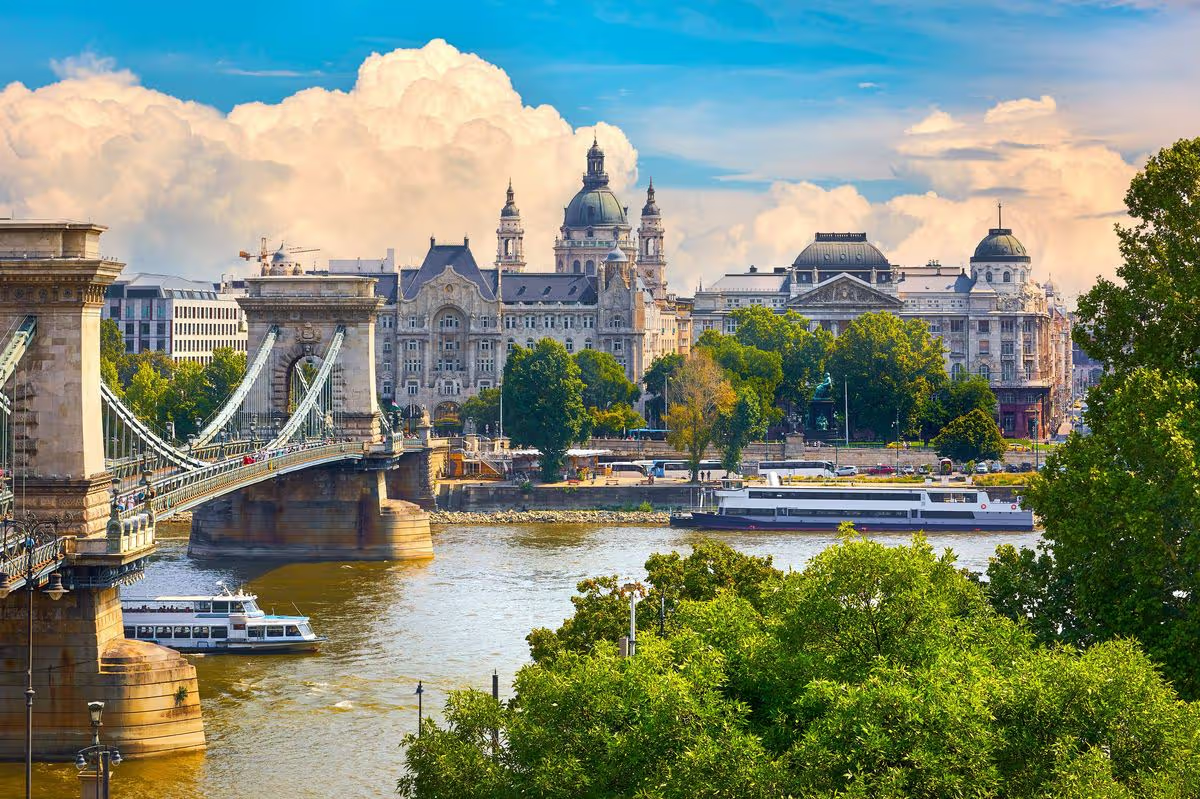
Budapest is home to the Danube river, a stunning place to walk(Image: Yasonya via Getty Images)
A stunning European capital has been crowned one of the most walkable, making it ideal for a summer or Easter break with countless attractions to explore. Better still, it’s affordable to reach, with UK flights available from just £19 in April.
Budapest in Hungary has repeatedly featured in conversations about great holiday destinations. There’s good reason for its popularity – getting around on foot is effortless, it’s steeped in fascinating history and brilliant attractions, plus the cuisine is great . In fact, travel experts at Freetour named it the top city to visit in 2026.
The specialists explained: “If there is one city that tops every travel ranking time and time again, it’s Budapest. The Hungarian capital claimed first place across all FREETOUR.com destinations in 2025, and 2026 is shaping up to be no different.”
They continued: “It has everything a curious traveler could want: the medieval Castle Hill and the ruin bars of the Jewish Quarter, fin-de-siècle thermal baths and street food at the Great Market Hall, the misty Chain Bridge at dawn and a symphony of lights over the Danube at night. Budapest is a city where every free walking tour feels like a genuine discovery.”
Budapest often appears in lists about the most pedestrian-friendly cities globally. In Guru Walk’s rankings last year, it secured second place, with Rome claiming the number one position, reports the Express.
The professionals noted: ‘Known as the “Pearl of the Danube”, Budapest blends imperial architecture with a vibrant cultural scene.’
Two of Budapest’s main attractions – St Stephen’s Basilica and the Houses of Parliament – are conveniently located just a 15-minute stroll apart. However, if you’re not keen on exploring entirely by foot, the city boasts an efficient public transport system, complete with trams, buses and metros.
Undoubtedly, one of Budapest’s standout attractions is the Szechenyi Thermal Baths. It’s one of the largest complexes in Europe, supplied by two thermal springs, with the indoor and outdoor pools tracing their history back to 1913.
The waters are rich in health-enhancing minerals and temperatures vary from a comfortable 27°C to a warm 38°C.
After your relaxing soak, you can indulge in Budapest’s lively street food scene.
Karaván, nestled in the heart of the Party district, is a must-visit for those eager to sample local delicacies, such as Lángos, a deep-fried flatbread garnished with garlic, cheese and sour cream.
Flights to Budapest start from just £19 from Gatwick in April.
Eighteen days into the war in Iran, and the scorecard for global equity markets makes for uncomfortable reading.
ADVERTISEMENT
ADVERTISEMENT
European benchmark indices have shed around 7% since hostilities began — the Euro STOXX 50 down 6.5%, Germany’s DAX off 7%, France’s CAC 40 down 7.2%, and Italy’s FTSE MIB lower by 6.4% — dwarfing the more modest 2.5% decline in the US S&P 500, which benefits from America’s status as the world’s largest oil producer and its relative insulation from the energy shock.
Yet the headline numbers tell only half the story.
Beneath the surface, an extraordinary divide has opened up — between European companies that thrive on expensive energy, and those being crushed by it.
The energy shock reshaping the continent
The conflict’s most immediate economic consequence has been a seismic repricing of energy.
Iran’s effective closure of the Strait of Hormuz — through which 20% of the world’s petroleum flows — caused Brent crude to surge from around $70 to nearly $120 per barrel within days.
As of Tuesday, Brent sits at approximately $105, a 42% rally from pre-war levels.
In an attempt to cap the oil price surge, the International Energy Agency coordinated a historic intervention.
More than 30 nations in Europe, North America, and northeast Asia agreed to release a combined 400 million barrels of oil from emergency reserves — the largest such action in the IEA’s 50-year history.
Yet the oil market has sent a clear signal that even this enormous release is nowhere near enough to address the unprecedented supply disruption, with crude prices surging more than 17% since the announcement.
Natural gas has been hit even harder. The Dutch TTF benchmark — Europe’s most important gas price reference — has surged 60% to €52 per megawatt-hour.
In a note this week, Goldman Sachs energy analyst Samantha Dart warned this week that approximately 80 million tonnes per annum of LNG supply — 19% of the global total — is currently offline following the Strait’s disruption and the shutdown of Qatar’s LNG production facilities.
Her team maintains a TTF forecast of €63/MWh for the second quarter of 2026, warning that tightening European physical balances could push prices into the gas-to-oil switching range before the conflict resolves.
The winners: Energy, renewables and fertilizer
The clearest beneficiaries have been European oil and gas producers, whose revenues move in lockstep with the commodity the war has repriced so dramatically.
Norwegian energy giant Equinor has surged 23.7% since the start of the month, as investors pile into one of the continent’s largest oil and gas producers with substantial assets well outside the conflict zone.
Fellow Norwegian producer Vår Energi is up 19.9%, while Aker BP has gained 17.1%. Italy’s Eni is up 14.7%, and Portugal’s Galp Energia has added 13.6%.
The most striking gains, however, have come from an unexpected corner: biofuels.
German renewable fuels producer Verbio SE has shot up 30.4%, and Finland’s Neste Oyj — the world’s largest producer of renewable diesel — has gained 28.1%.
As conventional fossil fuels become more expensive and supply chains more precarious, energy alternatives become dramatically more attractive to both buyers and investors.
German gas utility Uniper SE, which has spent recent years diversifying away from Russian supply, has rallied 19.1%.
The fertiliser sector has also attracted significant gains, with K+S rising 15.3% and Yara International rising 15.0%.
The moves reflect a commodity supply crisis hiding in plain sight: around one third of global seaborne fertiliser trade — roughly 16 million tonnes — passes through the Strait of Hormuz, including 43% of seaborne urea exports, 44% of sulphur, and over a quarter of traded ammonia.
The losers: Steel, airlines and construction
On the other side of the ledger, the losses have been equally dramatic. Energy-intensive industries and businesses exposed to higher costs with little pricing power have been savaged.
Airlines have taken some of the heaviest punishment. Wizz Air — the Budapest-based low-cost carrier with heavy exposure to Central and Eastern European routes — has collapsed 31.2%.
Air France-KLM has lost 22.1% and easyJet has dropped 21.8%. All three face the same brutal arithmetic: jet fuel costs have surged, hedging programmes offer only partial and temporary protection, and there is limited ability to pass costs on to passengers quickly enough to protect earnings.
Steel producers have been hit with similar force. Salzgitter has fallen 27.9%, thyssenkrupp is down 27.3%, and ArcelorMittal has shed 19.1%, joined by stainless steel specialist Aperam, which has dropped 24.5%.
Steel production ranks among the most energy-intensive industrial processes on earth, and mills operating on thin margins face an immediate profitability crisis when gas prices surge 60% in such a short period.
Spanish engineering contractor Técnicas Reunidas has dropped 23.7%, a casualty of its deep exposure to Middle Eastern energy infrastructure projects now thrown into uncertainty by the conflict.
Construction group Webuild has fallen 26.6%, reflecting broader fears that an energy-driven slowdown will freeze infrastructure investment across Europe’s most exposed economies.
Mining company Hochschild rounds out the list, down 21%, rising energy costs compress margins and risk appetite for smaller extractive names evaporates.
Europe enters this crisis in a structurally vulnerable position.
Despite having dramatically reduced its dependence on Russian pipeline gas since the invasion of Ukraine, the continent remains acutely sensitive to energy supply disruptions — and gas storage levels heading into 2026 offer less of a buffer than in prior years.
Connected to the German mainland by a single rail causeway, Sylt is just over three hours from Hamburg by direct train. The largest of the North Frisian islands, it slices through the North Sea and the Wadden Sea, with salt marshes and mudflats to the east and 25 miles of white sands sweeping along the western coast, grassy dunes buffering the bracing winds.
Relatively unknown to UK visitors, the island has long been a popular destination for Germans and appeals to an affluent crowd, although not exclusively. Luxury hotels and pioneering health resorts sit side by side with multistorey apartment blocks, modest campsites and laid-back surfing schools.
Trains from Hamburg – soon to be upgraded with the new intercity (ICE L) fleet – arrive in Westerland, the largest town on the island, which expanded significantly during the 60s and 70s. Alternative bases include well-heeled Kampen or Keitum, the latter known for its maritime history and traditional thatched houses. Designated nature reserves cover other parts of the island, from the shifting dunes in List to the vast Braderup Heath, partly managed by a hardy breed of sheep.
Grab a coffee from Kaffeerösterei Sylt, order the herring sandwich from Hafenkiosk 24 and don’t miss the salty Sylter Royal oysters from Germany’s only commercial oyster farm. The restaurant Oma Wilma focuses on hearty fare, while the shop and bistro Käseklub, located on an old goat farm, serves a curated selection of cheeses. Where to stay: Villa Klasen is a recently renovated boutique hotel in a charming art-nouveau style building with doubles from €120B&B Kate Mann
Sherkin, Ireland
The ruins of a Franciscan friary on Sherkin. Photograph: David Lyons/Alamy
It takes an hour and three-quarters by car, plus another 10 minutes by ferry, to get from Cork city, with its lively markets and revelrous pubs, to the relative tranquillity of Sherkin, one of the seven inhabited islands off the coast of West Cork.
None of these islands is especially large – the biggest, Bere Island, takes up about seven square miles – but they are all remarkably different, from sheltered little Garinish with its fine Edwardian gardens, to the ruggedness of Dursey, exposed to the elements at the tip of the Beara peninsula.
Sherkin is the one I know best. A few years back, I joined a group of friends who go there for a fortnight every summer, staying at a simple but appealing retreat called Sherkin North Shore. The kids do sailing courses down on Roaringwater Bay while the adults generally lounge around and enjoy life in a lower gear. There’s a sauna and a cafe where owner Michael O’Connor and his family cook terrific communal dinners. They also stage a (by all reports excellent) music festival, Open Ear, on the June bank holiday weekend.
Sherkin has three marked walking trails, taking you through the lush interior to white-sand beaches and a stunning horseshoe-shaped cove. Down towards the harbour, you’ll find the island’s only pub, the Jolly Roger, which serves chowder and toasties, and hosts music sessions in the busier months. And dotted around the island are artists’ studios (opening times vary, but you can call ahead to arrange a visit).
The buzzy mainland town of Baltimore is the gateway to Sherkin and also to Cape Clear farther south.
The other islands all have separate access points. For Heir or Hare Island, drive to Cunnamore Pier, half an hour west of Baltimore, and hop across on the ferry. You’ll be rewarded in the summer months by a brilliant restaurant and cookery school called Island Cottage – I had the good fortune to go for lunch in 2019 and the food was hearty and delicious. Where to stay: Sherkin North Shorehas rooms from €65 a night per adult, €30 for under-13s) and camping from €80 for a bell tent, €15 for a pitch Killian Fox
Torcello, Italy
The Ponte del Diavolo (devil’s bridge) on Torcello Photograph: PhotoFires/Getty Images
Venice is a city full of attractions, from its beautiful bridges to its Renaissance galleries and hidden spots to enjoy cicchetti or small plates. After a few days, however, the narrow streets and winding canals packed with tourists often spur a desire to escape the island. For many that will mean a trip to Murano, famous for its glass-making heritage, or even Burano, with its wildly coloured houses, both a short boat journey away. But for a real change of pace, switch to a smaller boat at Burano for the short ride to the sparsely populated island of Torcello, at the northern end of the Venetian lagoon.
The first thing that strikes you as you disembark is the sense of space. Following a wide path through the centre of the island, with water on one side and trees on the other, will bring you past green fields and quaint houses to the Ponte del Diavolo,or devil’s bridge, a rare example of an old Venetian bridge without parapets. If you find yourself feeling peckish, stop off at Taverna Tipica Veneziana, where you can get a selection of fried seafood and vegetarian meals. If you sit in the garden, you can see the restaurant’s goats and guinea pigs.
Continuing on the path will lead you to the main attraction: the Basilica of Santa Maria Assunta, founded in 639. It is unassuming from the outside, but the interior walls are decorated with stunning 11th-century mosaics, including a depiction of the last judgment.
Finish your visit by enjoying an ice-cream next to the church by the water’s edge, before retracing your steps back to the buzz of the city or, better still, stay overnight to enjoy the peace of the island once the day trippers have left.
Where to stay: Junior Suites Venezia has a restaurant, coffee shop, garden and doubles from £183 for a two-night stay Kitty Croft
Frioul islands, France
Pomègues in the Frioul islands is an easy day trip from Marseille. Photograph: Yann Guichaoua /Getty Images
Just 20 minutes by boat from the Vieux Port of Marseille, the Frioul islands, part of the protected Calanques national park, make a great day trip from the city – but it’s even better to stay longer to enjoy the wild beauty.
The two main islands, Rattoneau and Pomègues (each about 1.5 miles long), are linked by a 19th-century dyke, and hiking trails wind across the white limestone landscape to secluded swimming coves, pretty creeks and viewpoints back across the sparkling Med to town.
The ferry arrives at Rattoneau, where a few restaurants, shops and houses cluster around the harbour. Eat here or stock up on supplies, as there’s little elsewhere. Ou Sinon restaurant is a good choice for fresh seafood (try organic sea bass farmed on Pomègues).
About half an hour on foot from the port, Saint-Estève is the biggest beach on Rattoneau – sheltered, sandy and good for snorkelling (and there’s a small bar). Nearby, the 19th-century Hôpital Caroline, once used to quarantine travellers, is sometimes used for concerts today, while the old fort and second world war bunkers reveal the islands’ strategic importance. Across on Pomègues, it’s worth taking the long hike to the picturesque, remote cove Calanque de la Crine.
There are two other islands in the archipelago: tiny, rocky Tiboulen, used mostly for diving, and If island, home to a 16th-century fortress turned prison, the Château d’If (made famous by Alexandre Dumas’s The Count of Monte Cristo). Some ferries stop here en route to Rattoneau. Where to stay: accommodation is limited to mainly rental apartments near the harbour. La Daurade du Frioul is a one-bed apartment right on the beach, from £70 a night Jane Dunford
Cíes islands, Spain
Praia de Rodas. Photograph: Jarana Creatives/Getty Images
For a Caribbean-like break on a camping budget, it’s hard to beat the car-free Cíes islands in north-western Spain. This archipelago off the Galician city of Vigo has the white-sand beaches, the turquoise sea and even the exclusivity – visitor numbers are limited as the islands are part of a national park, and overnight stays are allowed only at Easter and in summer (15 May to 14 September). Admittedly, the illusion is shattered when dipping a toe in the chilly Atlantic …
To reach the islands, visitors must request a free authorisation code up to 90 days in advance (at autorizacionillasatlanticas.xunta.gal), then use it to buy a boat ticket (details at turismodevigo.org). There are daily crossings from Vigo to Monteagudo island (45 minutes), which is linked to Faro island by a sandbar across a lagoon; the third island, San Martiño, can only be reached by private boat.
Rodas, the biggest beach, is a short walk from the pier, and has kayaks and snorkels to rent – there are no tropical fish, but plenty of octopuses, lobsters and crabs, and often bottlenose dolphins. Seven quieter beaches can be discovered along four hiking trails, which link lighthouses, viewpoints, forests and a bird observatory. The beachside Restaurante Playa de Rodas specialises in seafood – scallops, razor clams, Galician barnacles – and local albariño wine. Where to stay: Camping Islas Cíes on Faro island has an excellent restaurant, tents with beds and pitches from €10.90, plus €10.90 per adult, €7.90 per child, booking essential Rachel Dixon
Forget Paris and Venice for an intimate getaway, as there’s another city that has been ranked as the most romantic in Europe, with rooftop bars to catch the sunset and a serene boating lake
This beautiful European city has been named the most romantic (Image: Getty Images)
Europe’s most romantic city has been named, but it’s not where you might think.
Paris, France, has long been hailed as the ‘city of love’, with proposals in the masses, while Venice, Italy, offers sunset gondola rides along the canals. Yet, according to one new ranking, they’ve both been overshadowed as the most romantic cities in Europe.
Instead, the sun-soaked capital of Spain, Madrid, has taken the crown with its historic charm and intimate settings. There are cosy restaurants, rooftop bars, luxury hotels, along with majestic landmarks, vibrant street art, and passionate flamenco performances, all making for a truly spectacular getaway.
Some of the most notable places to visit include hiring a rowing boat on the serene, picturesque lake at El Retiro Park, or taking a leisurely stroll around the enchanting El Capricho Park or the beautiful Sabatini Gardens at the Royal Palace. The city offers some of the best spots to catch the sunset, including the restaurant Azotea del Círculo, which offers panoramic views from its rooftop terrace, and the gardens in Cerro del Tío Pío, perfect for a sunset stroll.
However, one popular area that has been hailed as the ‘best sunset spot in Madrid’ is the ancient Egyptian temple, Templo de Debod. Catching the sunset last year, one traveller shared on TripAdvisor: “The magic hour to visit is sunset!.. The temple’s ancient stones turn a rich orange, and the reflective pools surrounding it create a mirror effect that is a photographer’s dream.”
For a break away from exploring the city, there’s the Arab baths at Hammam Al Ándalus for a relaxing soak and a step back in time among its historic buildings, or lively flamenco shows at Corral de la Morería. Couples can enjoy a glass of wine and tapas at the Mercado de San Miguel, a fresh food market, or ride the cable car, the Teleférico de Madrid, which crosses the river.
But a stroll around the city is enough to leave you enchanted, with vibrant graffiti decorating its quaint streets lined with tapas bars and coffee shops, and magnificent architecture. From the iconic Plaza Mayor, Plaza de la Villa, and Puerta del Sol square, to the Royal Palace and the Prado Museum, it’s easy to spend hours exploring this bustling yet charming city.
Madrid was named the most romantic European city following research by Icelandair. The airline analysed data from various European cities, comparing their location, nightlife, single population, inclusivity and happiness, along with Tripadvisor romance ratings and sunset visibility, with Madrid topping the list.
The list proves even more valuable, as Icelandair found that 1 in 10 Brits, in a study of 3,000 people, said travel is the best way to meet a partner. Meanwhile, 1 in 5 Brits said they’ve fallen in love while flying, and further research found that most holiday romances occur while volunteering abroad, during a work trip, or while solo travelling.
Most romantic European cities
Madrid, Spain
Prague, Czech Republic
Lisbon, Portugal
Barcelona, Spain
Zurich, Switzerland
Amsterdam, Netherlands
Helsinki, Finland
Vienna, Austria
Copenhagen, Denmark
Rome, Italy
Athens, Greece
Geneva, Switzerland
Oslo, Norway
Berlin, Germany
Reykjavik, Iceland
Do you have a travel story to share? Email webtravel@reachplc.com
WHILE prices for the most popular Mediterranean resorts keep rising, you can get the same turquoise seas, mountain drives and warm hospitality in Albania – for a fraction of the cost.
Visit in the shoulder season and you’ll enjoy golden light and near-empty beaches at an unhurried pace.
Sign up for the Travel newsletter
Thank you!
The town of Berat is nicknamed ‘city of a thousand windows’Credit: GettyEnjoy paddleboarding on crystal clear watersCredit: Getty
Flying in to capital Tirana makes a good start for a road trip to explore the country.
Pick up a hire car at the airport and within minutes you’re twisting through mountain passes, gliding along coastal bays and pulling over in centuries-old towns.
Highways are good, but off the main roads expect to be swerving around goats and making stunning switchback turns. It’s all part of the adventure.
White Ottoman houses stack up the hillside like sugar cubes, their wooden shutters glinting in the sun, giving it the nickname “city of a thousand windows”.
You can stay inside the Berat castle walls, living among ancient ramparts while children play football in cobbled lanes and grandmothers sell olive oil at their doorsteps.
It feels like stepping into another century.
Just outside Berat lies Alpeta Winery, run by the Fiska family.
The vineyards grow local grape varieties and the owner, Peter, walks among the tables at dinner, greeting guests and sharing his stories of the vines.
The wine-tasting tour takes you through reds, whites and fruit brandy rakia, partnered with local cheeses and olive oil.
This is Albania’s farm-to-table story in full swing.
After this, most tourists seeking sun and sea will race to Saranda, but Vlora makes a brilliant, less crowded alternative.
From here, you’re just a short drive from the Green Coast, home to some of the most beautiful beaches in Albania.
Turquoise coves framed by pine-covered hills and crystal-clear shallows rival anywhere in the Med.
Back in the capital, Tirana surprises with its creative energy, street art and cafes.
It’s got its own story — rugged, authentic and full of surprises.
From fortress towns perched on hillsides to empty coves by the sea, and from vineyard dinners to city nights that refuse to quit, you can have the kind of road trip that really stays with you.
If you’re chasing adventure, authenticity and excellent value for money, Albania is waiting, keys in the ignition.
GO: ALBANIA
GETTTING THERE:Wizz Air flies from Gatwick and Luton to Tirana (under three hours).