Who: South Korea vs Czechia What: FIFA World Cup 2026 Group A match Where: Estadio Guadalajara, Zapopan, Mexico When: Thursday, 8pm local time (02:00 GMT Friday) How to follow: Keep up with all updates on Al Jazeera Sport
South Korea, Asia’s most successful team at the World Cup, begin their 2026 campaign with a game against Czechia, who are back at the tournament after a 20-year absence.
Recommended Stories
list of 4 itemsend of list
With a talented squad featuring Son Heung-min, Lee Kang-in and Kim Min-jae, former semifinalists South Korea – who are ranked 25th in the world – are favourites in the Group A clash and will be keen for an early win in a tough group that also includes cohosts Mexico and South Africa.
But 40th-ranked Czechia are no pushovers. With players like Adam Hlozek, Patrik Schick and Pavel Sulc, they are more than capable of pulling off an upset.
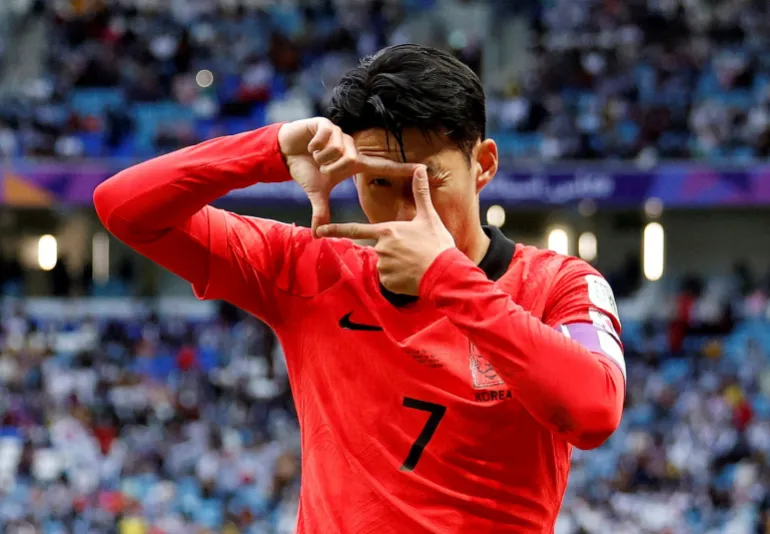
Son Heung-min will be leading South Korea in his fourth World Cup appearance [File: Thaier Al-Sudani/Reuters]
Son leads South Korea’s charge
As always, all eyes will be on South Korea’s superstar Son Heung-min, who now plays his club football for Los Angeles FC.
Set for his fourth appearance at the finals, the 33-year-old former Tottenham winger could be appearing in his final tournament, though it’s not confirmed.
Fans will be hopeful of the captain featuring on the scoresheet after he scored twice in a recent friendly.
The Koreans reached the last 16 in 2022, with Hwang Hee-chan scoring a stoppage-time winner against Portugal to take his team into the knockout rounds. The Wolverhampton Wanderers forward is now keen for a repeat performance at the upcoming tournament.
“If I can have another play like that, it will be great for myself and for our team,” said Hwang, who will be appearing at his third World Cup. “I am working hard for a moment like that.
“Every match is important, but the first match is especially so.”
Czechia: Two-time runners-up
As Czechoslovakia, the Czech team finished runners-up in 1934 and 1962. But since then, their record has been poor, with only four appearances, including just one past the group stage – a quarterfinal run in 1990.
The Czechs are now back at the World Cup after 20 long years, having navigated their way to the finals through dramatic penalty shootout wins in the UEFA qualifiers.
The appointment of coach Miroslav Koubek in December 2025 turned around their fortunes as they went from having a crisis-hit campaign to finishing the job with flying colours.
Czechia’s Tomas Chory heads in a goal during the 3-1 tournament tune-up match against Guatemala on June 6 [File: David W Cerny]
Now, after two decades, as they return to football’s grandest stage, the Czechs will hope to sneak into the knockouts.
With two-metre (6ft 7-inch) Slavia Prague striker Tomas Chory at their disposal, Koubek’s side will seek to impose their physicality on the South Koreans.
They are blessed with more attacking firepower in Bayer Leverkusen striker and Euro 2020 joint top scorer Schick, while Hoffenheim striker Hlozek offers another experienced option up front.
Koubek will also lean on West Ham midfielder Tomas Soucek and 35-year-old Vladimir Darida to provide experience and stability.
How does the World Cup group stage work?
South Korea, Czechia, Mexico and South Africa are in Group A.
The top two teams from each of the 12 groups – along with the eight best third-placed teams – proceed to the next phase, the round of 32, which has been introduced at the World Cup for the first time.
All square in head-to-head record
South Korea and Czechia have met three times, winning one match each, while the other game ended in a draw.
Their last meeting dates back to June 2016 – exactly a decade ago – when South Korea emerged 2-1 winners in a friendly in Prague.
Form guide:
(Last five games, latest first)
South Korea: W-W-L-L-W
Czechia: W-W-W-W-W
Czechia are in fine form heading into the opener, having beaten Kosovo and Guatemala in their pre-World Cup friendlies. Before that, they beat Denmark and Ireland on penalties in the UEFA qualifying playoffs, and also thrashed Gibraltar.
South Korea, on the other hand, are in mixed form. They beat El Salvador and thrashed Trinidad and Tobago in the pre-World Cup friendlies, but lost to Austria and the Ivory Coast.
Where to watch South Korea vs Czechia?
Fans in South Korea can watch the game on platforms Chzzk and JTBC, with kickoff scheduled at 11am local time on Friday.
In Czechia, CT Sport Plus, CT Sport and Nova Action will show the game, which is set to begin at 4am local time on Friday.
Viewers in the United Kingdom can watch it on ITV, while those in the United States can tune in to Fox.
South Korea and Czechia team news
Coach Koubek has a selection headache awaiting.
With Hlozek recently recovering from injury, and Sulc and Lukas Provod also in the mix, Koubek needs to make the tough call on which two attackers will support Schick.
Meanwhile, South Korea’s coach Hong Myung-bo has to contend with some concerns.
Winger Bae Jun-ho – one of the youngest players in the squad – is a major doubt due to an ankle injury, but left-back Lee Tae-seok has returned to team training after a sore calf.
South Korea’s predicted starting XI
Kim Seung-gyu (goalkeeper); Kim Min-jae, Lee Han-beom, Lee Gi-hyuk; Seol Young-woo, Lee Tae-seok, Hwang In-beom, Paik Seung-ho; Lee Kang-in, Lee Jae-sung; Son Heung-min
Czechia’s predicted starting XI
Matej Kovar (goalkeeper); Vladimir Coufal, David Doudera, Tomas Holes, Ladislav Krejci, Jaroslav Zeleny; Tomas Soucek, Michal Sadilek; Adam Hlozek, Pavel Sulc, Patrik Schick
Watch out for Patrik Schick, Czechia’s main attacking threat [File: David W Cerny/Reuters]
You can follow the action on Al Jazeera’s dedicated FIFA World Cup 2026 page with all the latest news, match build-up and live text commentary, and keep up to date with group standings, real-time match results and schedules.
Protesters chant ‘Albania is not for sale’ as demonstrations swell against Kushner-backed luxury resort plan.
Published On 11 Jun 202611 Jun 2026
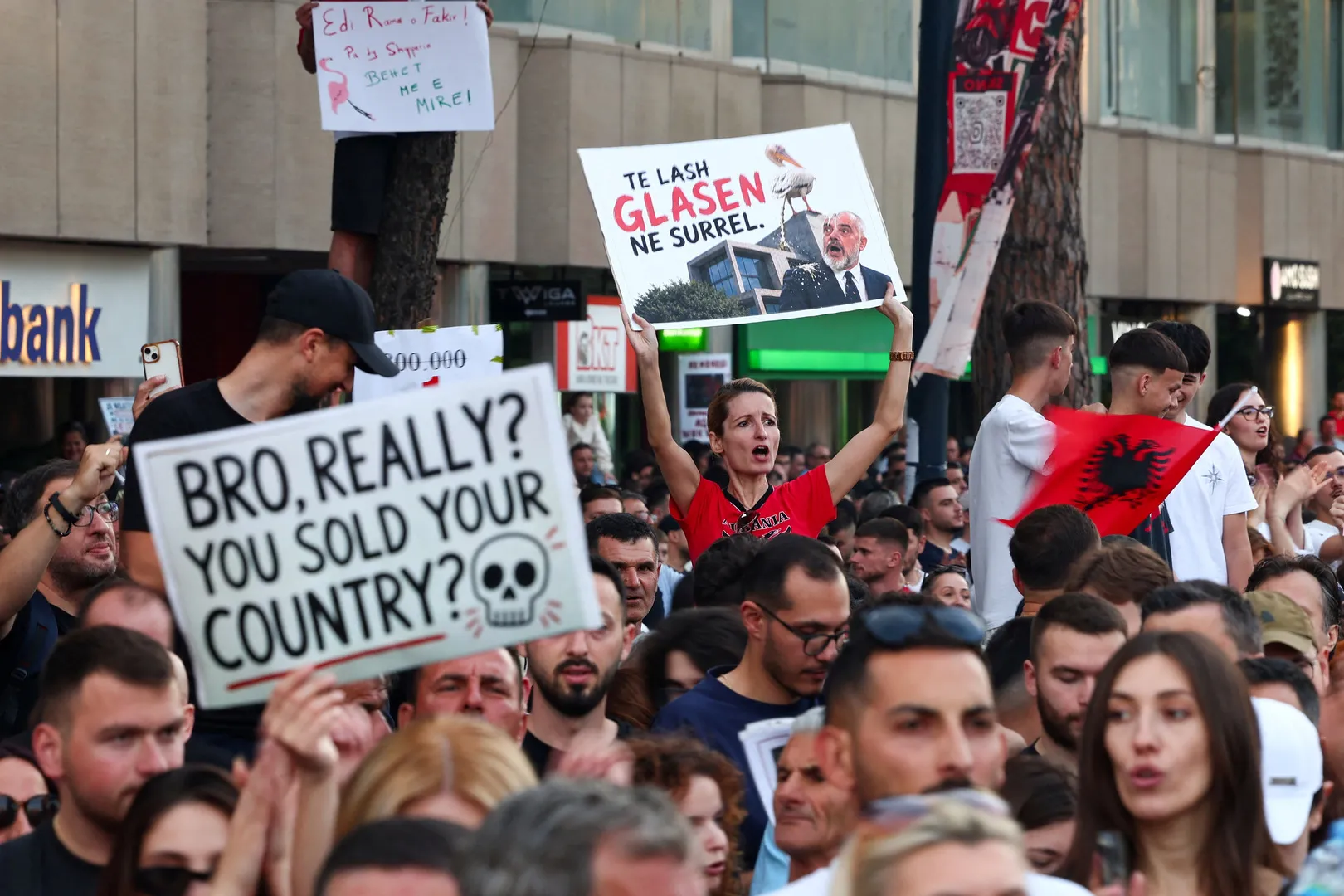
Thousands of Albanians have taken to the streets of the country’s capital, Tirana, in the largest protest yet against a luxury resort development backed by United States President Donald Trump’s son-in-law, Jared Kushner.
Protesters on Wednesday held signs that said “Albania is not for sale” and chanted “New Albania” outside Prime Minister Edi Rama’s office as the crowd stretched half a mile down one of the city’s main boulevards.
Recommended Stories
list of 3 itemsend of list
The project, expected to cost about 5 billion euros ($5.8bn), has provoked outrage in the Balkan country because of its location near a protected wetland home to flamingos, seals and sea turtle nesting sites.
Critics have also raised concerns about a lack of transparency surrounding the plans designed by foreign investors.
“This is the prime example of what has been happening in Albania for the last 35 years,” protester Leand Lakrori told the Reuters news agency. “So today, enough is enough.”
Protesters hold inflatable flamingos as part of a ‘Flamingo Revolution’ against Jared Kushner’s planned property in Albania, June 10, 2026 [AFP]
The protests, which erupted in the village of Zvernec on the southern coastline where the resort is planned, have been dubbed the Flamingo Revolution, in reference to the protected wetland at the development site that serves as a migratory stop for the birds.
Rama has sought to play down the ecological concerns, saying an environmental impact assessment would be completed and that the project would proceed responsibly.
“We are very proud of what we have done for the wildlife in Albania,” he said. “The European Commission has no reason to doubt our firm will to protect whatever has to be protected when it comes to wildlife and nature.”
EU warning
The European Union, which has said it could admit Albania and other Balkan countries by 2030, warned that alignment with European environmental law would be a condition of accession.
“Albania should refrain from action that could undermine the fulfilment of the closing benchmark,” said EU spokesman Guillaume Mercier. “We expect the Albanian authorities to act without delay.”
The protests are the latest test for Rama, who has been in power since 2013 and who many now blame for not eradicating widespread corruption or doing enough to improve basic services like healthcare.
Rama said he has made strides to deal with corruption by creating a special prosecution office, which has opened a series of high-profile investigations.
Still, clashes also broke out earlier this year as protesters demanded the resignation of Rama’s deputy, Belinda Balluku, over alleged corruption. Rama fired Balluku, but the mistrust remains.
“I’m here to protest, to finish this saga of the Albanian government. It’s always the same two parties,” protester Fabio Bracaj told Reuters. “We want a new era. We want a better country.”
The resort development is the brainchild of Kushner and his wife, Ivanka Trump, who described falling in love with Albania a few years ago while visiting on a yacht.
Opposition ignited last month when developers erected a fence around part of the Zvernec site. The fence was later removed following an outcry.
Rama has said the project will go ahead regardless.
The UK’s only direct flight to a destination known as the ‘pink city’ has been launched by Wizz Air, and flights start from £45.99 with no visa required for Brits
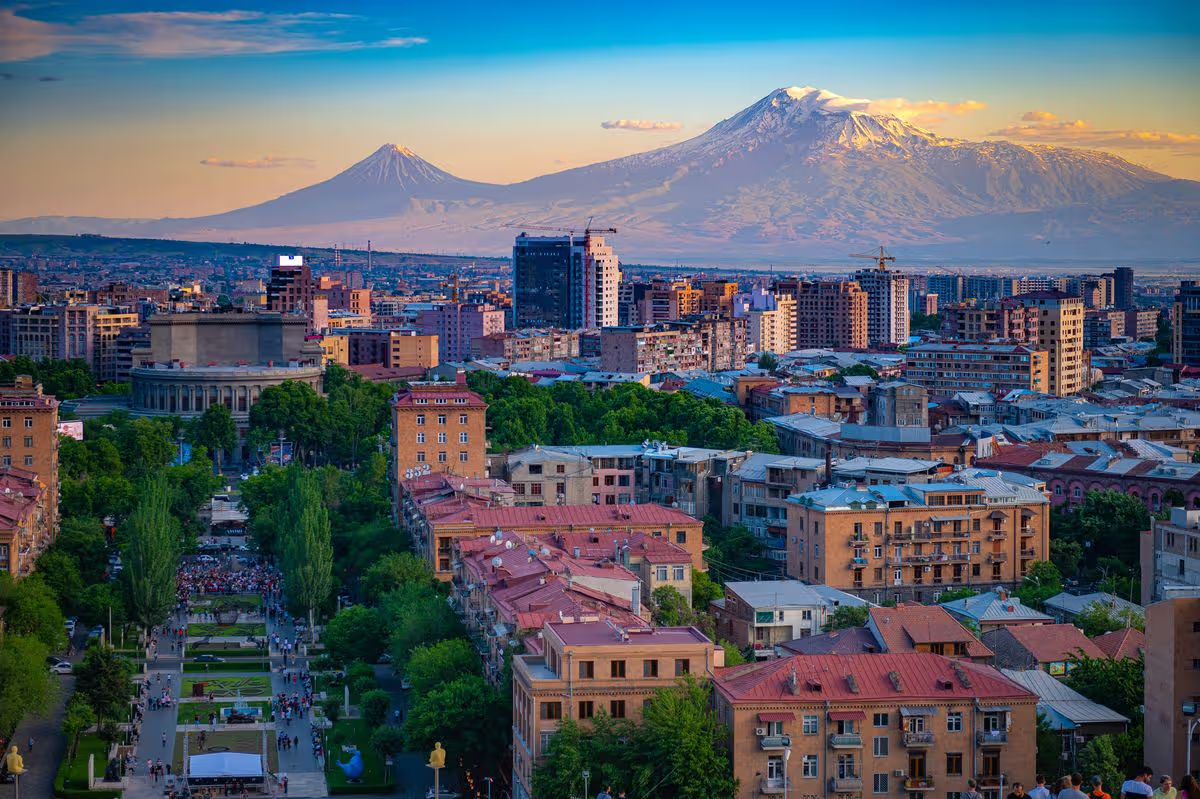
The ‘pink city’ is said to be an undiscovered destination(Image: Getty Images)
Wizz Air has launched the UK’s only direct flight to a walkable destination dubbed the ‘pink city’, which has ditched visa requirements for Brits.
In an exciting addition for the budget airline, holidaymakers can now jet off from London Luton Airport to Yerevan, with flights starting from just £45.99. The Wizz Air route launched on Tuesday, 9 June and is the only direct flight available from the UK to Armenia.
Flights will operate from London Luton to Yerevan, Armenia, twice a week on Mondays and Fridays throughout the year. The direct route takes just over five hours, and after that time, travellers will be rewarded with the dramatic landscapes of mountains and historic architecture in a destination known as the ‘Pink City’.
The city earned its moniker due to the rose-hued stone that characterises its buildings, in addition to its tree-lined boulevards and lively public squares. There are historic monasteries, museums, galleries and markets, along with a thriving café culture.
On the UK’s first direct route to Armenia, Wizz Air pilot, Tom Copestake, exclusively told the Mirror: “I’m really excited about landing in Yerevan, Armenia. It’s a new destination for us, but it’s surrounded by big mountains, and it’ll be an interesting experience to fly around there.”
Adding to the appeal of a trip to Armenia in Asia, British holidaymakers can visit without a visa for up to 180 days a year. Whereas a list of Asian countries still requires Brits to obtain a visa at an additional cost.
Following the new flights, Yvonne Moynihan, Managing Director of Wizz Air UK, said: “Today [9 June] marks an exciting moment for Wizz Air as we launch the UK’s only direct route to Armenia, opening up a destination that remains largely undiscovered by British travellers. At Wizz Air, we’re committed to making travel more accessible and helping our customers explore beyond the obvious. Yerevan is a city rich in history, culture and character, offering an incredible experience for travellers looking for something different, all at an affordable price.
“The response to our Let’s Get Lost campaign showed there is real appetite among travellers to step outside their comfort zones and discover destinations they may never have previously considered. We’re proud to be making Armenia more accessible than ever before and can’t wait to welcome more passengers on board as they experience everything this remarkable country has to offer.”
Alberto Martin, Chief Executive Officer at London Luton Airport, said: “We are delighted to welcome Wizz Air’s new service to Yerevan, marking the UK’s first direct link to Armenia and further strengthening London Luton Airport’s increasingly diverse route network. This exciting new destination in the South Caucasus is a unique city that offers a fascinating cultural scene of contrasts to suit all tastes.
“As well as reinforcing our long-standing partnership with Wizz Air, the addition of Yerevan to our departure boards signals our commitment to offer even greater choice as part of our simple and friendly passenger experience.”
Do you have a travel story to share? Email webtravel@reachplc.com
MoneySavingExpert has shared important safety advice for holidaymakers
Millions of holidaymakers could be affected (stock photo)(Image: ITV)
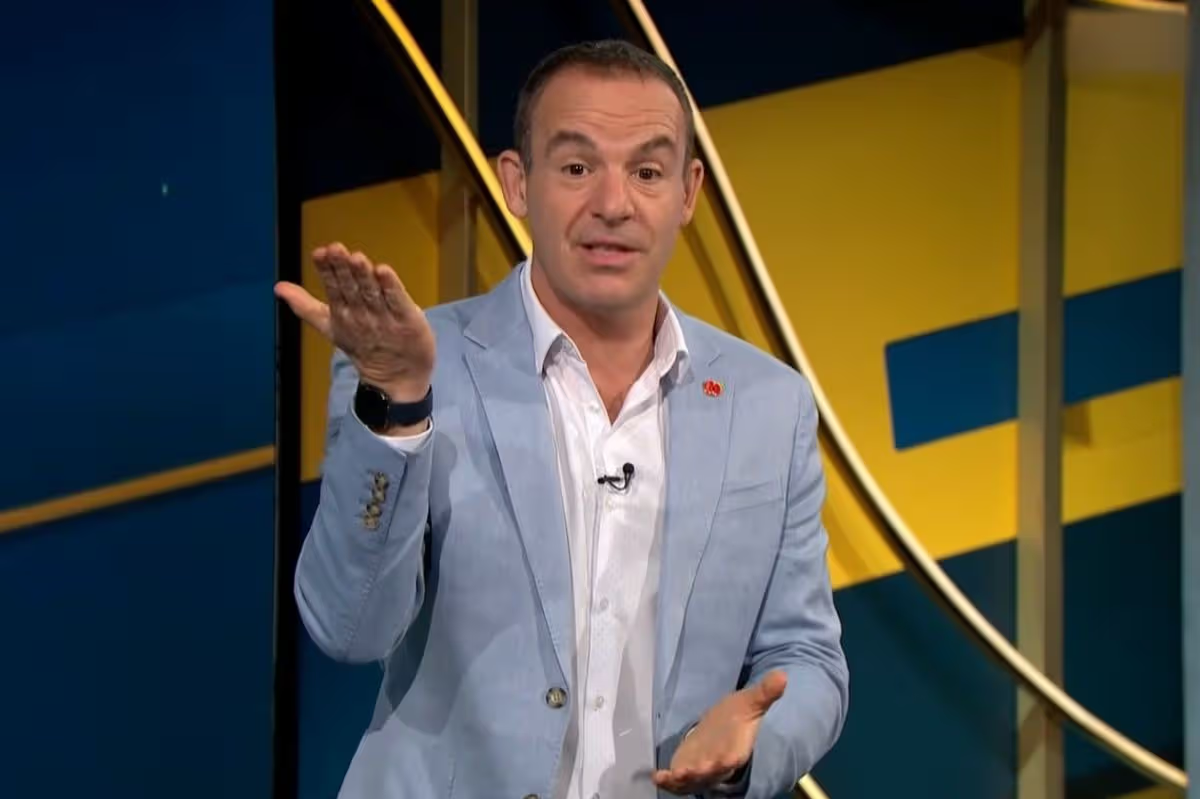
MoneySavingExpert (MSE) has issued a travel warning to millions of people. Founded by journalist and broadcaster Martin Lewis, MSE regularly posts consumer advice for Brits. In the latest Money Tips Email, the experts offered advice for anyone booking holidays.
In the email, the team told readers: “Summer is coming, and if you’re booked to go away and haven’t got your insurance yet, you need to do it NOW, today, straight away!” As the experts pointed out, booking travel insurance as soon as you book your holiday offers the maximum protection, including cover if something happens that prevents you from travelling.
Before setting off, it’s also advised to get a Global Health Insurance Card if you’re travelling to Europe. In the alert, MSE revealed that over two million cards are expected to expire this year. As a result, millions could miss out on the benefits if they don’t renew ahead of upcoming holidays.
The UK Global Health Insurance Card enables holidaymakers to access healthcare without paying more than a local resident would while travelling in the European Economic Area.
The NHS explains: “The UK Global Health Insurance Card (GHIC) lets you get necessary state healthcare in the European Economic Area (EEA), and some other countries, on the same basis as a resident of that country. This may be free or it may require a payment equivalent to that which a local resident would pay.
“The UK GHIC has replaced the existing European Health Insurance Card (EHIC). If you have an existing EHIC you can continue to use it until the expiry date on the card. Once it expires, you’ll need to apply for a UK GHIC to replace it.”
While people are advised they should also take out travel insurance, it could help you avoid paying the excess if you need medical treatment during your trip. MSE said: “Going to the EU? Ensure you’ve a valid (free) GHIC/EHIC – over 2m expire this year.
“The ‘Global Health Insurance Card’ (GHIC) and its predecessor, the EHIC, give access to state-run hospitals or GPs, mainly in European countries, for the same price as a local. So if they don’t pay, you don’t either. Over two million expire this year, check yours.”
A UK GHIC is free, and you can apply through the NHS website. The NHS advises avoiding unofficial websites, which may charge an application fee. People can apply for a new card up to nine months before their current card expires.
The NHS says: “You can apply for a UK GHIC if you’re a resident in the UK. You can also add your family members to your application when you apply.”
Anti-immigration protesters have torched buildings and vehicles in the capital of Northern Ireland, a day after a knife attack was captured in a graphic video.
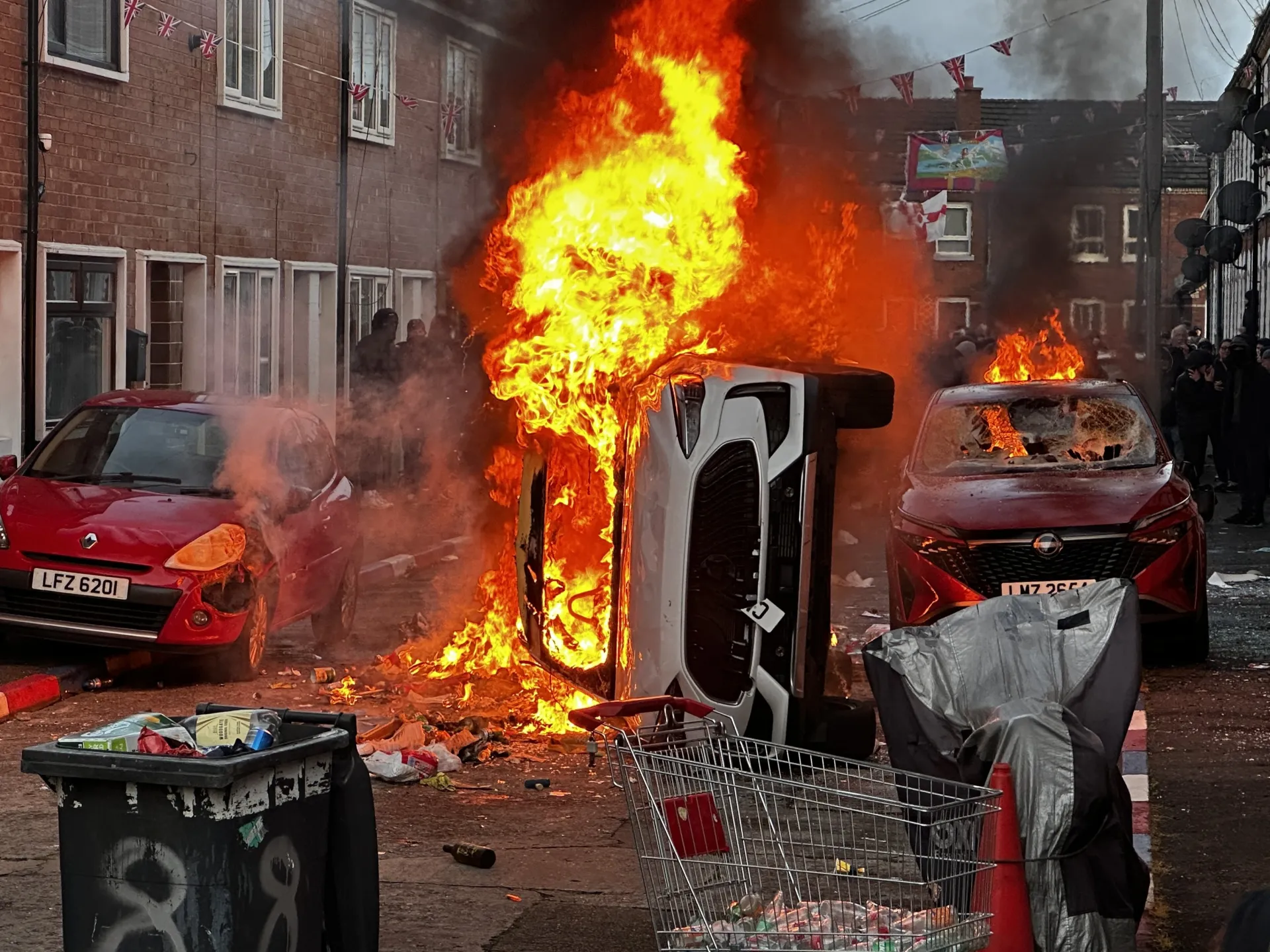
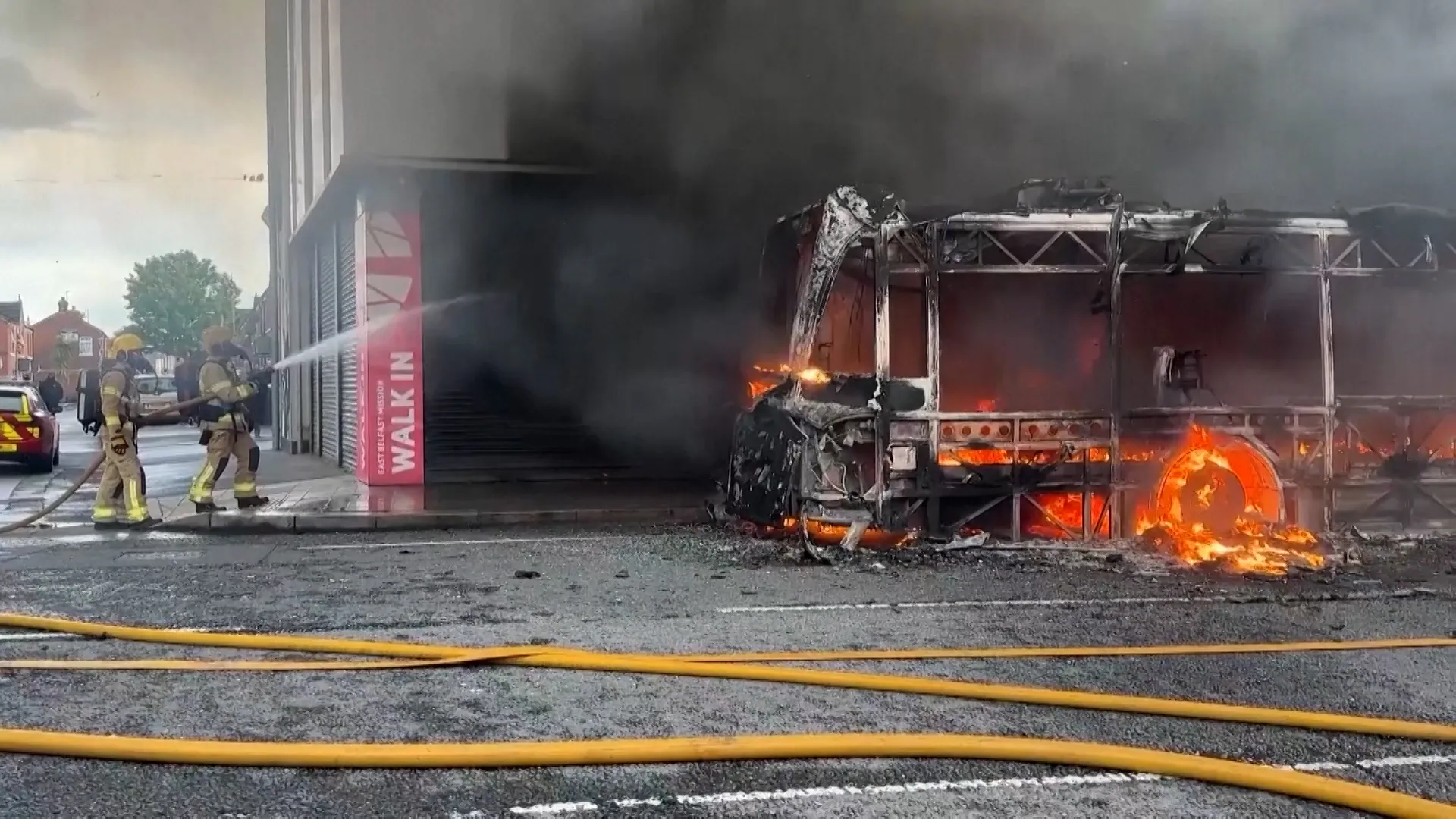
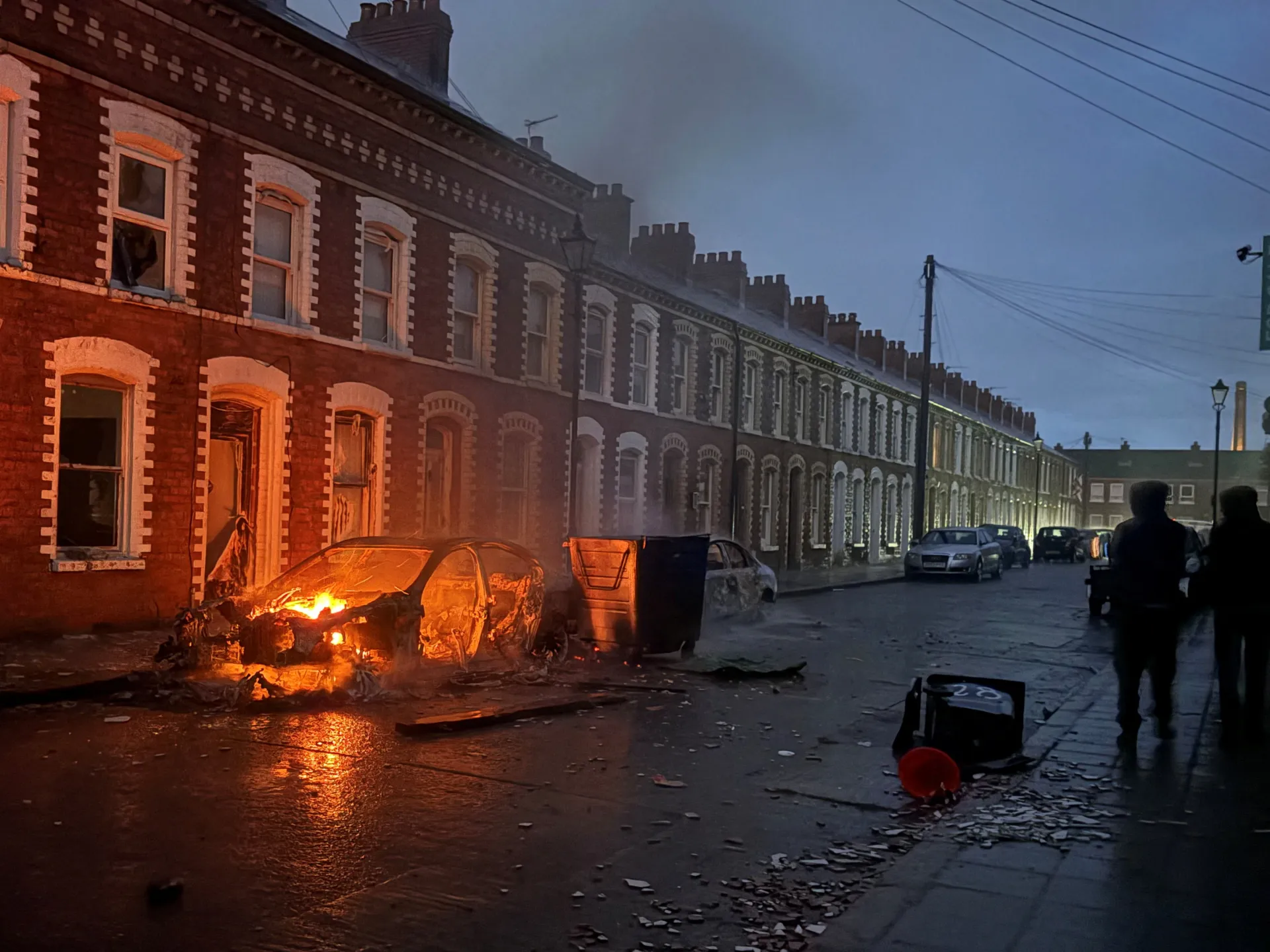
Hundreds of protesters, many of them masked, gathered at several locations across Belfast on Tuesday evening. A bus and several cars were set alight, while a building on the edge of the city centre caught fire and its residents had to be evacuated.
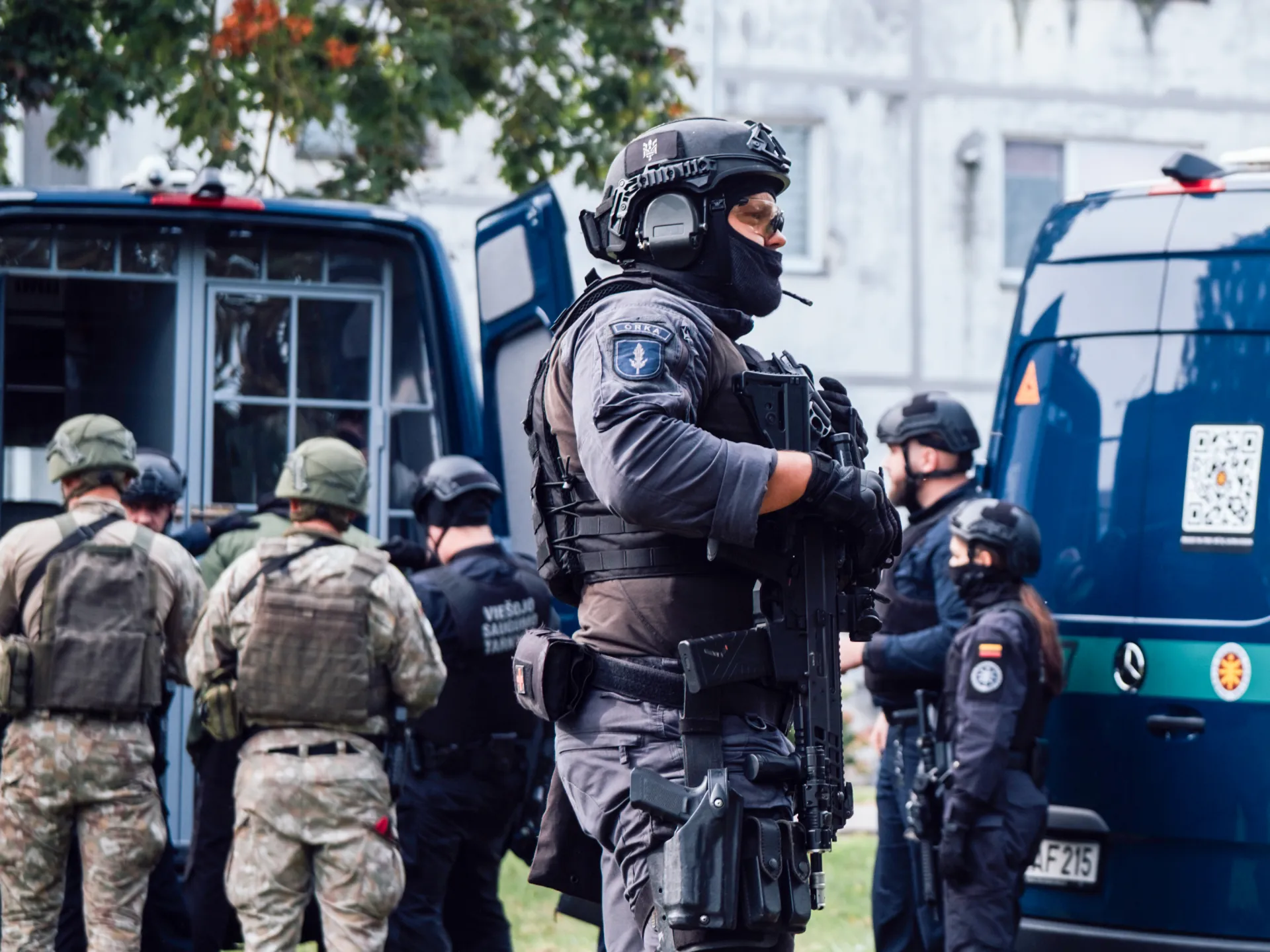
Police helicopters patrolled above the city, and shops closed early.
British Prime Minister Keir Starmer described the initial knife attack, which took place in north Belfast late on Monday evening, as “sickening”.
The attack comes at a time of heightened tensions in the United Kingdom following the murder of a student who was handcuffed by police as he lay dying from stab wounds after his killer falsely alleged a racist attack.
It also follows repeated protests over immigration, with populist parties saying the UK’s asylum policy has allowed dangerous men into the country. There was anti-immigration rioting in Northern Ireland last year amid anger over an alleged sexual assault.
Immigration has become a highly charged political issue and has helped fuel the rise of the hard-right Reform UK and Restore Britain parties in opinion polls.
Northern Ireland’s political leaders and the region’s chief constable have urged people not to incite hate and fear or target particular communities.
Estonia, the smallest of the Baltic states, has experienced some dramatic incidents.
In September, Tallinn said Russian MiG-31 fighter jets entered its airspace for 12 minutes. NATO scrambled Italian F-35s stationed in Estonia as part of the Baltic Air Policing mission. Russia denied violating Estonian airspace.
In March, a stray Ukrainian military drone crashed into Estonia’s Auvere power station.
In April and May, Estonian authorities said drones entered their airspace, grounding flights and prompting warnings issued to citizens.
Estonia’s intelligence services have said that the country does not believe Russia is preparing an imminent military attack on NATO, but that Moscow may be rebuilding its forces for the long term while engaging in hybrid attacks through drones, cyber operations, and sabotage.
Tallinn claims one such hybrid method is the so-called “Narva People’s Republic”, a pro-Russian separatist narrative that casts Estonia’s Russian-speaking border region as a distinct political entity, echoing the Donetsk and Luhansk “people’s republics” used by Moscow as a pretext for intervention in Ukraine.
Estonian authorities say it is part of a disinformation campaign rather than a credible separatist movement.
Its military has, at times, been bellicose in its statements.
In May, Estonia’s Lieutenant General Andrus Merilo argued that Russia is rebuilding its military much faster than many Europeans realise and that Estonia must be ready for a renewed military threat within the next few years, marking 2027 as a critical benchmark for readiness.
In September 2024, in an interview with the Estonian public broadcaster ERR, Estonian General Vahur Karus stated that if Moscow showed signs of preparing for an attack, Estonia could strike the Russians first.
“Our capability to neutralise the enemy on its own territory is crucial,” he said.
However, the government’s rhetoric has been more measured.
In April, Ukrainian President Volodomyr Zelenskyy suggested in an interview that a new wave of Russian mobilisation may be used to launch an attack on the Baltic states.
But Estonian politicians, including the foreign minister, warned that the remarks echoed Moscow’s objective of stoking fears and made cooperation difficult.
“We do not see Russia concentrating its forces or preparing in any way militarily to attack NATO or the Baltic states; rather, it is the opposite. Russia is not in a very strong position on the Ukrainian front, and economically as well,” Estonian Foreign Minister Margus Tsahkna told ERR.
“No one is in the streets panicking,” Tony Lawrence, a research fellow at the International Centre for Defence and Security in Tallinn, told Al Jazeera.
The air incursions have “put people on edge”, but there is a sense that Russian forces are too preoccupied in Ukraine, he said.
Al Jazeera’s Milena Veselinovic reports from Belfast, where protests over a recent stabbing have escalated into violent riots. Tensions flared after a Sudanese asylum seeker was charged with attempted murder. Riot police have deployed to the scene as buses and vehicles are set alight.
Anti-immigrant protesters in the city of Belfast in the United Kingdom have torched vehicles and buildings after a Sudanese man was arrested over a knife attack that left one person with serious injuries.
Hundreds of protesters, many of them masked, gathered at several locations across the city on Tuesday, setting fire to a bus and several cars.
Recommended Stories
list of 3 itemsend of list
A building near the city centre was also set alight, with residents telling the AFP news agency that the protesters started a fire in the bins and went on to throw petrol bombs.
Crowds also gathered in Antrim, about 25km (15 miles) west of Belfast.
Michelle O’Neill, the first minister of Northern Ireland, slammed the protests and urged calm.
“Groups of masked men burning families out of their homes is nothing less than disgusting cowardice,” she wrote on X.
“Racism, intimidation and violence are wrong wherever they occur. There can be no excuse and no justification for these attacks tonight. No one wants to see this on our streets and I again appeal for calm”.
Appeals for calm
The suspect in the knife attack, which took place in north Belfast late on Monday, was charged late on Tuesday with attempted murder, possession of a bladed weapon in a public place, and making threats to kill.
The 30-year-old man, whose name has not been released, is due to appear in court on Wednesday.
The victim, a man in his 40s, suffered significant injuries to his eyes and slash wounds to his face and back during the attack with a kitchen knife found at the scene, police said.
“I understand that last night’s attempted murder will leave people feeling a range of emotions, from fear to anger,” Northern Ireland’s Assistant Chief Constable Ryan Henderson told a news conference, as he declared the unrest a “critical incident”.
“I appeal for calm and the safety of all of our communities in response to this”, he said.
Footage of the knife attack in north Belfast showed several members of the public trying to fight off the attacker before police arrived, and they were credited by senior officers with saving the man’s life.
UK Prime Minister Keir Starmer called the attack “horrific” and “sickening” on X. “I have absolutely no tolerance for abhorrent scenes of violence like this on our streets,” he said.
His office said that “it is time for calm”, adding: “It’s important that police have the time and space to investigate appropriately.”
Heightened tensions
The attack, which is not being treated as terrorism, comes at a time of heightened tensions in the UK following the murder of a student in Southampton who was handcuffed by police as he lay dying from stab wounds after his killer, a Sikh man, had falsely alleged a racist attack.
Although the victim and convicted killer were both British, protesters on Tuesday stood outside a Southampton hotel that had housed asylum seekers, holding signs that read, “Illegal Migration Is Destroying Our Civilisation”.
The attack in Belfast, meanwhile, sparked immediate questions about the suspect’s immigration status, including from some politicians.
Gavin Robinson, the leader of the Democratic Unionist Party, urged authorities to curb “uncontrolled immigration”, while anti-immigration figures, including Reform UK party leader Nigel Farage and Restore Britain leader Rupert Lowe, demanded details about the attacker.
Northern Ireland’s chief constable, Jon Boutcher, told reporters that the suspect was living in the UK on a five-year visa granted in September 2023.
Boutcher said he was believed to have travelled from Sudan to Paris and Dublin before claiming asylum in Belfast.
“There is no trace of this suspect on any of our national security databases, and he was not known to the Police Service of Northern Ireland,” he added.
Northern Ireland’s main political party leaders jointly condemned the knife attack, calling it “horrific” and saying that “there is no place in our society for this kind of brutality”.
They also called for calm, saying that disturbances would only damage their communities.
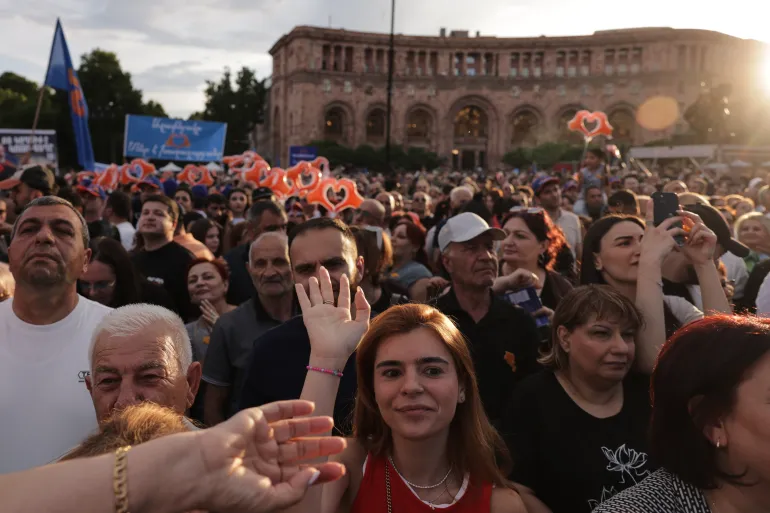
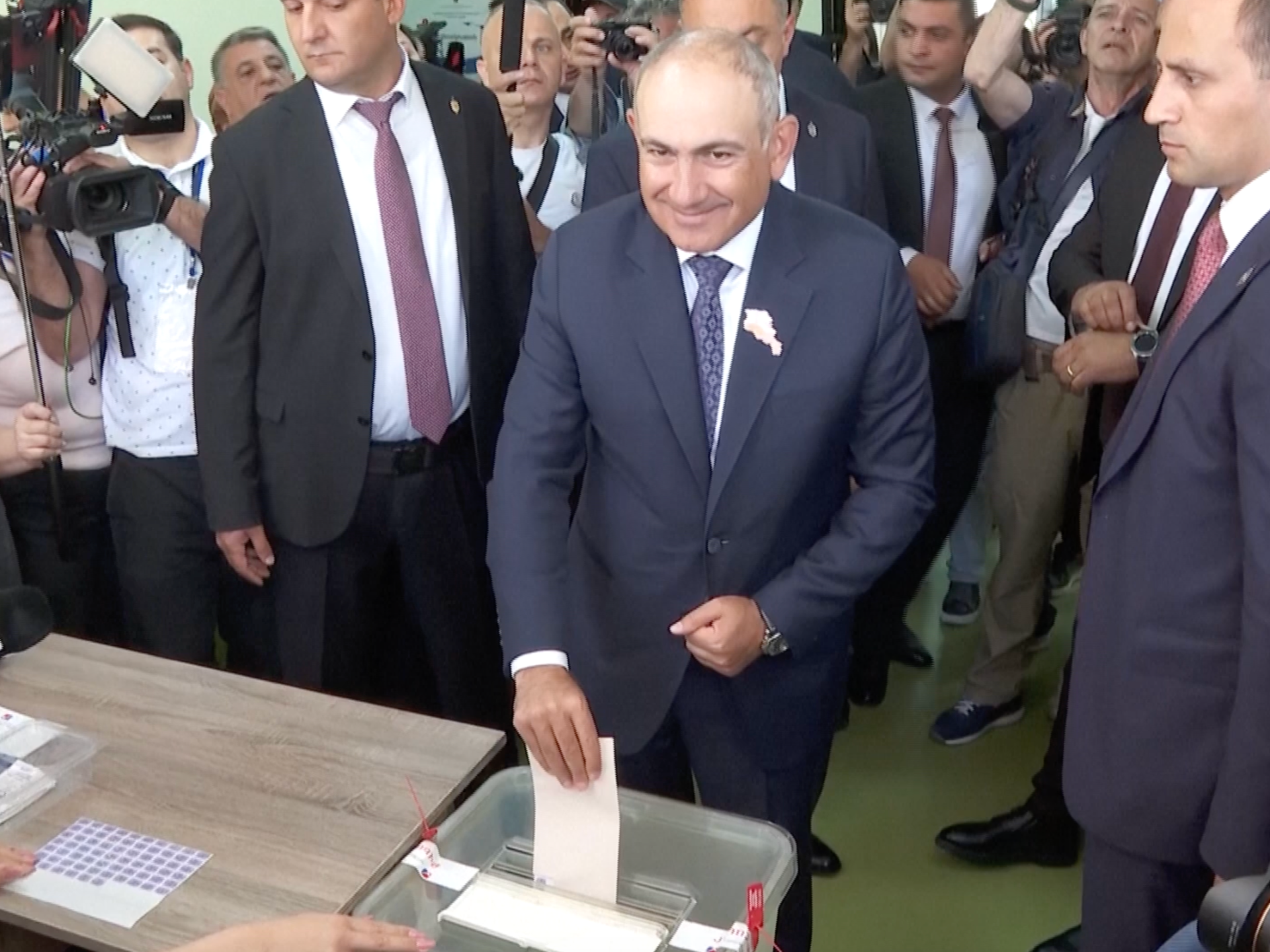
At a campaign rally in Armenia’s capital, Yerevan, on Saturday, one day before Armenia’s election, Prime Minister Nikol Pashinyan, outfitted in a white button-up shirt and a red-brimmed baseball cap, held a look of determination.
Flanked by supporters waving their arms and flashing his campaign’s signature heart-shaped hand gesture, Pashinyan was perched centre stage, pounding away on a drum kit for the crowds – literally drumming up support.
Recommended Stories
list of 4 itemsend of list
By election day, his governing Civil Contract party appeared to have drummed up something more consequential: public backing for his vision of Armenia’s future following the loss of the disputed region of Nagorno-Karabakh to a crushing military defeat by Azerbaijan in 2023.
Pashinyan, who formed a band earlier this year and campaigned with a series of concerts around the country, secured 49.8 percent of the vote in Sunday’s ballot, enough to retain a parliamentary majority.
His victory is seen as a test of his handling of the loss of the Nagorno-Karabakh region and his ability to steer the country away from Russian influence.
He has ultimately prevailed despite Russian meddling in Armenian politics, and the country now looks set to reorient itself away from its former ruler – signalling Armenians’ willingness to embrace a new direction, analysts say.
“Many Armenians are prepared to give his new vision a chance: an Armenia less defined by conflict, more open to normalising relations with Azerbaijan and Turkiye, and increasingly focused on building its future within its internationally recognised borders,” Zaur Shiriyev, an analyst at the Carnegie Russia Eurasia Center, told Al Jazeera.
‘Tired of conflict and war’
The loss of Nagorno-Karabakh could have spelled political doom for Pashinyan. By handing him a second term, Armenians have signalled that they are ready to put the conflict that has intermittently reared its head for decades behind them, analysts say.
“Nationalism no longer resonates among the public, which is demonstrably tired of conflict and war,” Richard Giragosian, director of the Yerevan-based Regional Studies Center, told Al Jazeera, even if the loss of the region remains an “open wound”, he said.
Nagorno-Karabakh, meanwhile, no longer features at all in the Armenian government’s defence reform, nor in its national security strategy, “a final confirmation of the new strategy of diversification”, Giragosian explained.
Peace efforts instead took centre stage in Pashinyan’s campaign, including the agreement he signed at the White House last August with Azerbaijan, finally ending the on-again-off-again war that had raged since the late 1980s.
Unlike in 2021, when Pashinyan’s campaign was shaped by the immediate aftermath of war and questions of political survival, Sunday’s vote became a clearer test of public support for his peace agenda, Shiriyev said.
Peace over nationalism
The result also demonstrates that the nationalist mantras peddled by opposition leaders have not been able to sway the majority of Armenians, said Svante Cornell, director of the Institute for Security and Development Policy and its Central Asia-Caucasus programme.
“The opposition represented a return to oligarchy, nationalism and forever conflict,” Cornell told Al Jazeera.
“While the Pashinyan government has its flaws, it represents something different than the past.”
The election saw the two main opposition forces – Strong Armenia and Armenia Alliance – win 41 seats combined in the new parliament, against the 64 seats the government holds, out of a total 105.
But Giragosian cautioned against overstating the opposition’s strength as, he said, the two opposition parties are unlikely to cooperate given the friction between their leaders – Russian-Armenian oligarch Samvel Karapetyan, whose Strong Armenia took 29 seats, and former President Robert Kocharian, whose Armenia Alliance won just 12.
“The division and dissent within the opposition will present a profound obstacle,” he said.
Although united in their shared pro-Russian leanings, Karapetyan is seen by Kocharian as an “interfering interloper”, with Kocharian himself resenting his third-place position behind Karapetyan, the analyst said.
“This is further exacerbated by Kocharian’s sense of entitlement, and his frustration of being rebuffed by Moscow in his prior attempts to gain direct Russian backing and support,” Giragosian added.
Still, Cornell said, the persistence of pro-Russian, nationalist sentiment in Armenia generally should not be taken lightly.
Until 2020, Armenia was governed by successive administrations that spent three decades pushing a nationalist identity, he said.
“To expect such views, such sentiments would just disappear – would be unrealistic,” Cornell noted.
Supporters of Armenia’s ruling Civil Contract party led by Prime Minister Nikol Pashinyan gather in Republic Square in Yerevan, Armenia, Friday, June 5, 2026, for the party’s final campaign rally [Anthony Pizzoferrato/AP]
Russian influence weakened – but not gone
In the lead-up to Sunday’s election, international observers had accused Russia of attempting to interfere – but its inability to change the result reflects Moscow’s limited reach in the country today, analysts say.
“Moscow still has tools in Armenia, but it no longer has the authority it once had,” Shiriyev said.
“In today’s Armenia, being seen as Russia’s preferred candidate can mobilise voters against you as much as for you.”
As Armenia strives to resist what Shiriyev refers to as the “gravitational pull” of the “Russian orbit”, a window of opportunity has been created by Moscow’s preoccupation with its invasion of Ukraine and a new openness from Western partners.
“The larger risk is from not altering strategy, and the benefits of a pivot to the West are both demonstrable and popular in Armenia today,” Giragosian said.
Russia, he added, is now increasingly viewed in Armenia as a “dangerously undependable so-called partner”.
Benyamin Poghosyan, an Armenia analyst at the Italian Institute for International Political Studies, argues that the primary foreign policy drivers of the election, however, were regional actors – not Russia or the West.
“The reality on the ground is far more nuanced,” Poghosyan told Al Jazeera. Armenia’s future relations with Azerbaijan and Turkiye, as well as the regional fallout from the conflict in Iran, are far greater influences, he said.
There are good reasons not to count Moscow out completely, however. While pro-Russian forces did not prevail this time, they will continue to assert their influence, Cornell said. He referred to the cautionary tale of another Caucasus country.
“In Georgia, the work of undermining a reformist and pro-Western government and turning the country around to a more pro-Russian line took over 15 years,” he said.
At the same time, Moscow still holds massive economic leverage over Yerevan, said the analysts.
Russia remains the primary export destination for Armenian agriculture and wine, is the main source of critical imports like wheat, and supplies the country with heavily discounted gas, Poghosyan noted.
“Because Russia has the capacity to inflict severe economic pain, Yerevan must tread carefully to protect its core interests without completely rupturing its relationship with Moscow,” he said.
Shiriyev added that many Armenians work in Russia, with families depending on remittances, and business ties running deep.
“By contrast, Western integration can still feel abstract and uncertain to many voters. That is why pro-Russian forces can still gain traction, even as Russia’s political image in Armenia has weakened,” he said.
A constitutional hurdle
But while Pashinyan’s re-election has strengthened his hand in the country’s peace process, it has not resolved one key sticking point for constitutional change to ensure it, said Shiriyev.
Azerbaijan has demanded a change to Yerevan’s constitution as a means of guaranteeing that no future Armenian government might revive claims related to Nagorno-Karabakh or Azerbaijan’s territorial integrity.
“But Pashinyan lacks the two-thirds majority needed to move easily toward a referendum, and even a referendum would be politically uncertain,” said Shiriyev.
This election, Cornell said, was “a necessary but not sufficient condition for the peace process to advance”.
Poghosyan warned that if Baku refuses to drop these preconditions, “the peace agreement will remain stalled, leaving both nations trapped in a volatile state of ‘no war, no peace’”.
On the question of regional normalisation, however, the outlook has shifted.
Since the bilateral peace treaty was signed at the White House last August, Azerbaijan has lifted restrictions on trade and transit with Armenia and restarted talks on border demarcation – moves that Giragosian said have also accelerated the opening for Armenia-Turkiye normalisation.
“For Armenia,” said Shiriyev, “the West may offer the road, Russia increasingly acts as the roadblock, and normalisation with Azerbaijan and Turkiye is the real prize.”
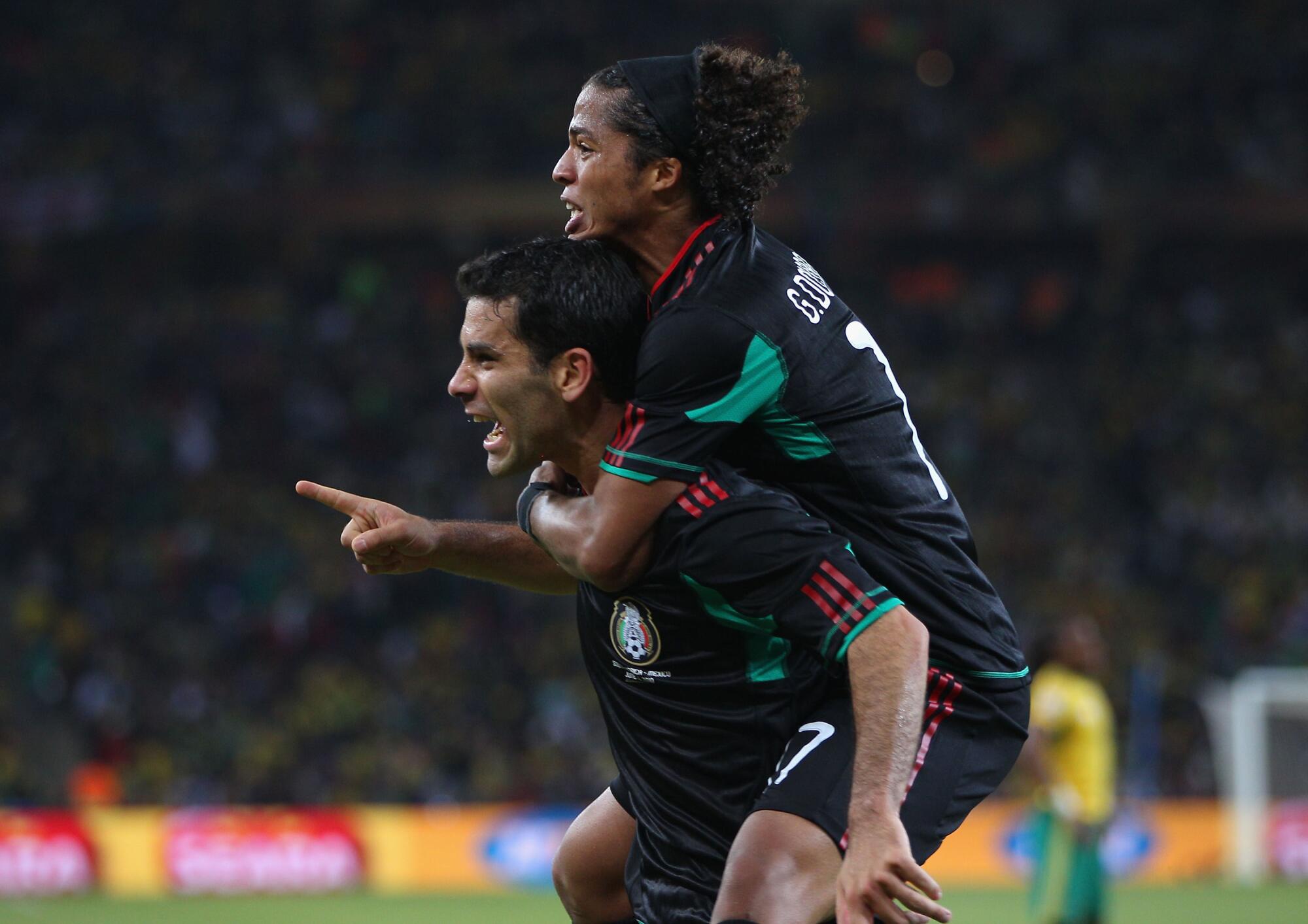
History tends to repeat itself at the World Cup. Such is the case with Mexico and South Africa, two teams that will face off in the World Cup opening match for the second time in history, just as they did in Johannesburg on June 11, 2010. The score that night was 1-1.
Many still remember Siphiwe Tshabalala and his powerful shot into the top corner that beat Mexican goalkeeper Óscar Pérez, and a celebration that remains etched in the collective memory of the soccer world. Unfortunately for the South African team that night, Rafa Márquez equalized for El Tri with 11 minutes remaining during what turned out to be a disappointing World Cup for the host nation.
Sixteen years later, the 2026 World Cup kicks off, curiously enough, with the same matchup, but with the roles reversed. Mexico is now the host at Azteca Stadium, known during this competition as Mexico City Stadium, at 7,216 feet above sea level. It will be the third World Cup the venue has hosted.
“It won’t be easy at all,” South Africa coach Hugo Broos said last December upon learning his team would debut against one of the hosts. “It’s a great thing to play in front of 80,000 people. We have nothing to lose.”
Mexico’s Giovani Dos Santos jumps on the back of Rafael Marquez after Mexico scored against South Africa during a World Cup group match on June 11, 2010, in Johannesburg, South Africa.
(Michael Steele / Getty Images)
On the Mexican side, the similarities to 2010 are striking — and not necessarily for the right reasons. Coach Javier Aguirre is back on El Tri’s bench — the same coach who led that campaign in South Africa — which, at first glance, might seem curious, though in practice it reflects the stagnation of a soccer team that has gone eight consecutive World Cups without advancing past the round of 16.
Former Barcelona player Márquez, who scored the equalizer, also remains connected to the national team, now as an assistant coach, with the mandate to take the reins of the team once the Aguirre era concludes after the World Cup. The squad has seen more than a dozen coaches come and go since 2010, including a qualification for Brazil 2014 that nearly ended in tragedy before a goal by the United States rescued the Mexican team and sealed its admission into the tournament.
“Javier [Aguirre] was a firefighter in 2002, he was a firefighter in 2010 and he stepped in as a firefighter again then — it’s the same old story,” said John Sutcliff, a journalist who has covered Mexico for more than 36 years. “[The federation officials] aren’t working in the best interest of the national team. There’s a lot of interest in bringing in foreigners [to the Mexican league] for business purposes and we don’t have players in Europe’s top leagues.”
Mexico’s recent record speaks for itself. It was eliminated in the World Cup round of 16 in 2010 by Argentina, by the Netherlands in 2014, by Brazil in 2018 and failed to even advance past the group stage in Qatar in 2022. Considered the “Giant of CONCACAF,” Mexico has remained dominant in its region since 2010, with five Gold Cups, although it has lost ground to the United States in the Nations League.
Outside the region, its participation in 2010 has been limited mainly to two editions of the Copa América held on U.S. soil, in which it has failed in both, reaching the quarterfinals in 2016 and being eliminated in the group stage in 2024.
“I think it’s been a roller coaster ride over these 16 years; for a moment it seemed like it was making progress, but then there were spectacular crashes,” said Gibrán Araige, a journalist who has followed El Tri through several World Cup cycles.
Mexico’s Raúl Jiménez celebrates with teammates after scoring against Serbia during a friendly at Nemesio Diez Stadium on June 4 in Toluca, Mexico.
(Agustin Cuevas / Getty Images)
For Araige, the level of the 2010 squad is similar to the current one, with players who are not yet established but have solid European experience.
Of the 26 players called up by Aguirre, 10 play in Europe, but few play for elite clubs or get significant playing time on their teams, mostly hampered by injuries, as is the case with Santi Giménez (AC Milan, Italy), César Huerta (Anderlecht, Belgium), Luis Chávez (Dinamo, Russia) and Edson Álvarez (Fenerbahçe, Turkey).
For its part, South Africa has not made significant progress since 2010.
After being eliminated in the group stage, finishing behind Uruguay and Mexico in a tournament held in its own country, it became the first host nation in a World Cup to fail to advance past that stage — a record that Qatar matched in 2022.
Bafana Bafana failed to qualify for the next three World Cups. In fact, this is the first time they have qualified since 2002, as they did not have to qualify in 2010, having hosted the tournament.
They were eliminated as group runners-up behind Ethiopia on the road to Brazil in 2014, they finished last in their group on the road to Russia in 2018 and finished second behind Ghana in the qualifiers for Qatar in 2022.
South African players run during a World Cup training session at Estadio Hidalgo on June 3 in Pachuca, Mexico.
(Manuel Velasquez / Getty Images)
They have also lacked consistency in the Africa Cup of Nations, missing the 2012 and 2017 editions.
Broos, who took over as South Africa’s head coach in 2021, sought to instill discipline and relied on local talent, which was vital in securing a spot in this year’s World Cup. During the qualifying round, South Africa won its group by finishing ahead of Nigeria and advanced despite starting the campaign with a loss due to an ineligible player used in a match against Lesotho.
Broos faced criticism for strategic errors early on, but ultimately built a competitive team that achieved historic qualification, aided by nine direct World Cup spots in the expanded tournament field.
“It’s a truly excellent group of players. We got through a very tough qualifying phase, which I think helped polish the team,” said Mark Gleeson, a journalist specializing in African soccer.
For Gleeson, South Africa missed a major opportunity to strengthen its league by failing to retain investors and wealthy clients after the 2010 World Cup and continued to operate in the same way — a trend reflected in the league’s stagnation and the scarcity of talent playing abroad.
Lwethu Makhanya (Philadelphia Union, USA), Ime Okon (Hannover 96, Germany), Mbekezeli Mbokazi (Chicago Fire, USA), Sphephelo Sithole (CD Tondela, Portugal) and Lyle Foster (Burnley, England) are among the few South African players competing abroad for a national team reliant on domestic soccer.
South Africa huddle during a training session at Estadio Hidalgo on June 3 in Pachuca, Mexico.
(Manuel Velasquez / Getty Images)
However, with the World Cup’s new 48-team format, the task of advancing proved less daunting for teams in the qualifying phase and at the World Cup, there will also be more opportunities to advance beyond the group stage because the best third-place finishers move on. That math could benefit South Africa even if it loses its opening match.
Should Bafana Bafana lose to Mexico, they would have to beat the Czech Republic in their second match on June 18 in Atlanta and would likely play for qualification on June 24 against South Korea in Monterrey.
“The Czechs are among the weakest in Europe, and there’s a good chance of beating them. Furthermore, South Korea is well below its own historical standards, as was evident in March with very poor results in high-pressure matches,” Gleeson said.
To prepare for the altitude in Mexico City, Broos, a former Belgian player who competed in the 1986 World Cup in Mexico, brought his team in early and, starting May 30, held training camp in Pachuca, a city at higher in elevation than the capital. Several of his players are already accustomed to some altitude from playing for clubs in Johannesburg, at 5,751 feet.
“South Africa has a chance; we can compete,” Tshabalala said in an interview after the draw. “I think the pressure will be on Mexico because they’re the hosts. That gives us a real opportunity to pull off an upset.”
A scoreless draw against Nicaragua in Johannesburg days before the World Cup isn’t exactly encouraging, but it also fits with the team’s expectations and the mindset of “having everything to gain and little to lose.”
“We have to enjoy it, and when you enjoy something, you can achieve great things,” said Broos.
The worst-case oil scenario has been avoided, but inflation and slower growth continue to weigh on the global economy.
More than 100 days into the Iran conflict, 20 percent of the world’s energy flows remain disrupted, with the scenario described as the biggest supply shock in history.
For now, the nightmare scenario has been avoided. Oil prices are still at approximately $100 a barrel.
Many analysts have warned that a prolonged disruption to the Strait of Hormuz could send oil above $200 a barrel, triggering a global economic crisis.
Various countries have released their strategic reserves, exporters have found alternative routes and weaker demand has helped contain prices. But the buffers are thinning.
The Organisation for Economic Co-operation and Development (OECD) warns the economic impact could linger well into 2027, even if the conflict ends tomorrow.
Karim Khan rejects suspension as ICC governing body refers him to disciplinary proceedings before member states.
Published On 9 Jun 20269 Jun 2026
The International Criminal Court’s chief prosecutor, Karim Khan, has been suspended from his duties, the tribunal’s governing body said, following a probe into sexual misconduct allegations.
In a statement on Monday, the Bureau of the Assembly of States Parties said it will refer Khan to disciplinary proceedings before all 125 ICC member states, which will vote on his fate in a special session.
Recommended Stories
list of 4 itemsend of list
“This suspension is not an indication of the final outcome,” it said.
The bureau, which is the executive committee of the court’s oversight body, said it referred Khan after making its own decision on the disciplinary proceedings involving the prosecutor.
It said the decision was based on a report of a United Nations investigation, the advice of an ad hoc panel of judicial experts, and written submissions, but did not give details about what it had decided.
“The decision of the Bureau and the related documentation will remain confidential,” the statement said.
Khan’s lawyers said in a statement that he rejected the decision in the strongest terms, and repeated his denial of any wrongdoing.
“The decision is unlawful, procedurally unfair and unsupported by evidence,” the statement said.
Khan, 56, drew international attention when he applied for warrants against Israeli Prime Minister Benjamin Netanyahu and then-Minister of Defence Yoav Gallant for war crimes and crimes against humanity committed in Gaza.
He also sought warrants for Hamas leaders, including Yahya Sinwar, for the October 7, 2023, attack on southern Israel.
Khan was among the first to be sanctioned by Israel’s ally, the United States, which expressed outrage over the arrest warrants.
He has maintained that the misconduct probe is a politically motivated smear campaign.
According to Reuters and the Associated Press news agencies, the UN probe found a “factual basis” for the allegations of sexual misconduct made by a female aide. However, a three-judge panel selected by the executive committee for a legal assessment of the findings found that the investigation was not conclusive enough.
Khan’s lawyers had previously told Reuters that the judges had unanimously concluded that the “factual findings do not establish misconduct or breach of duty”.
Khan has not led the ICC’s Office of the Prosecutor since last May, when he took a voluntary leave of absence pending the outcome of the inquiry.
He is the first ICC prosecutor to be formally suspended from his role by the court’s oversight body.
Only the Assembly of States Parties has the authority to remove Khan from office, a move that would require a majority in a secret ballot of its 125 member states.
Sixty-three countries would need to support a measure to remove him.
No date was immediately set for the session.
Khan’s suspension will have little practical impact on the functioning of the court, given his existing leave of absence.
He has already been removed from pleading in the ICC’s most high-profile current case, against former Philippine President Rodrigo Duterte.
The drone entered Latvian airspace due to ‘Russian electronic warfare’, the military says.
Published On 8 Jun 20268 Jun 2026
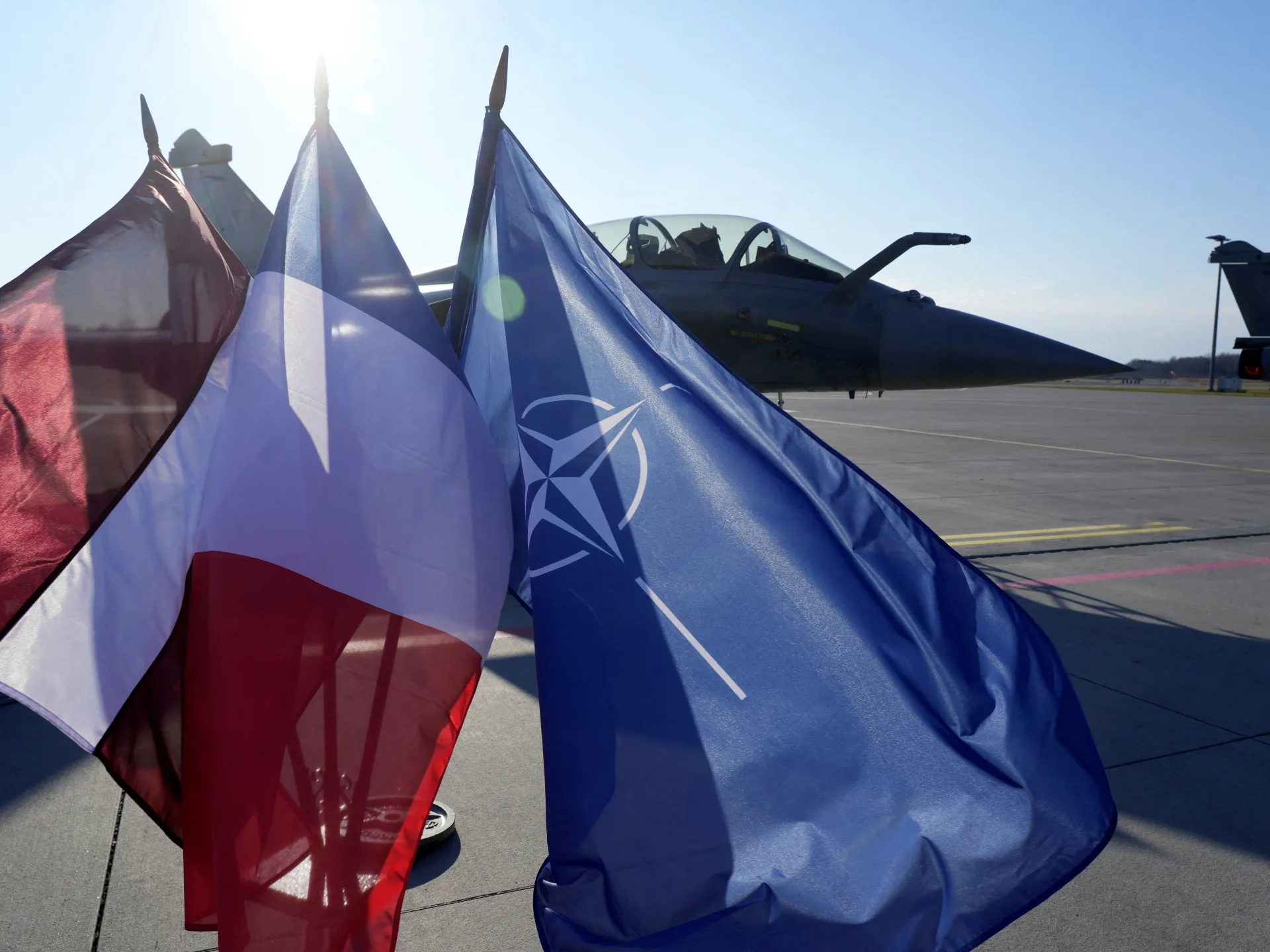
NATO fighters have scrambled to shoot down a drone that entered Latvian airspace from Russia.
The Latvian military said on Monday that French aircraft had destroyed “a foreign unmanned aerial vehicle that had entered Latvian airspace as a result of Russian electronic warfare”, without saying where the drone originated.
Recommended Stories
list of 4 itemsend of list
The incident adds a growing list of incursions from the Russia-Ukraine war into neighbouring countries that are part of the NATO alliance, sparking fears of escalating spillover effects as Moscow’s siege on Ukraine continues apace.
“Thank you to our French allies for shooting down the drone that penetrated Latvian airspace!” Riga’s Foreign Minister Baiba Braze wrote on social media.
Latvian Prime Minister Andris Kulbergs heralded the “swift decision-making and professional action”.
Defence Minister Raivis Melnis told reporters the drone was shot down just after 9am local time (07:00 GMT) near the village of Berzgale, located about 30km (18 miles) from the Russian border. No one was hurt, and no property was damaged, Melnis said.
The French military said in a statement that the jets took off from Siauliai airbase in northern Lithuania and destroyed the drone “over an uninhabited area”.
It added that the incident demonstrated France’s “commitment to contributing to the security of Europe’s eastern flank”.
Authorities had previously warned residents in some parts of eastern Latvia to shelter in place because of the threat.
Ongoing threat
Countries in the region have reported repeated drone incursions from air and sea in recent months, spawning concerns over the widening impact of Russia’s war on Ukraine.
The issue has raised the political pressure in Latvia, leading to the resignation of Prime Minister Evika Silina last month.
The increased frequency of the reports comes as Ukraine has increased its attacks on Russia, with Moscow deflecting drones using electronic jamming. The statement from the Latvian military regarding “Russian electronic warfare” appears to suggest the drone shot down likely came from Ukraine.
Fragments of a Ukrainian drone were also found in a field in Moldova on Monday after it entered from Ukraine, an incident that officials also blamed on Moscow.
Last week, a maritime drone exploded in Romania’s Constanta port. Kyiv later confirmed it involved a Ukrainian drone that was knocked off course by Russian electronic interference.
However, it was a Russian drone that hit an apartment building in eastern Romania in late May, injuring two people and prompting Bucharest to call for NATO to speed up the transfer of anti-drone capabilities.
European Commission President Ursula von der Leyen warned after that crash that Russia’s war on Ukraine is “increasingly becoming a direct threat to countries on our Eastern border” and said solidarity with them was “absolute”.
The French military jet that shot down Monday’s drone is part of the NATO Baltic Air Policing mission, which has patrolled the skies of Latvia, Lithuania and Estonia since they became part of NATO in 2004.
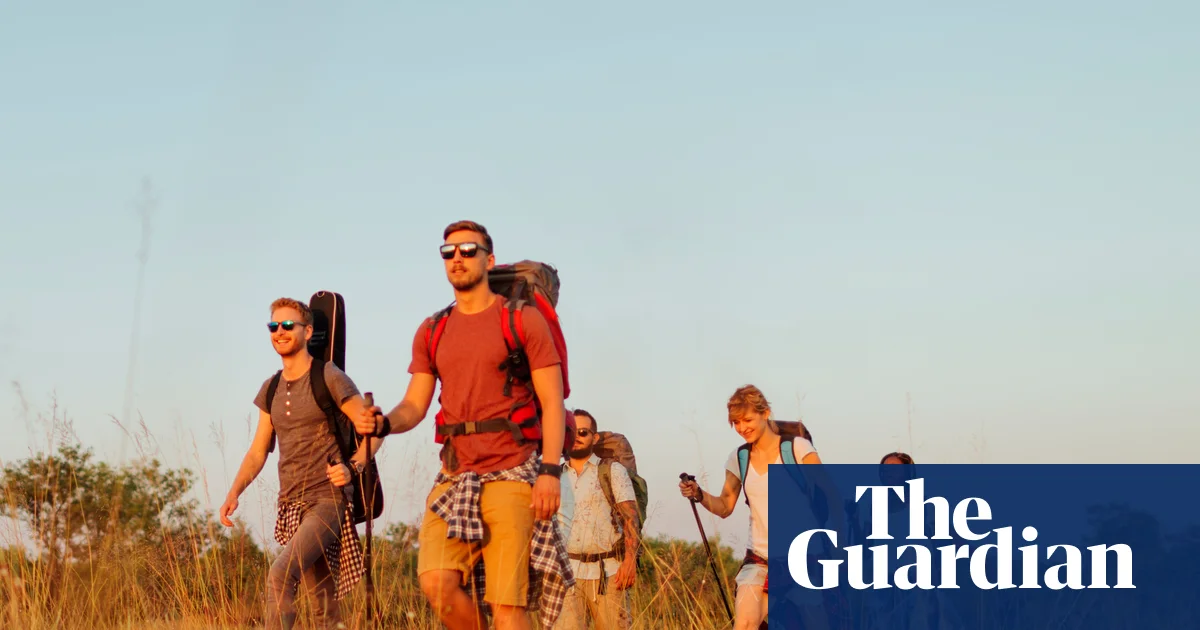
Exploring on foot is one of the best way to discover new landscapes and enjoy spending time in the great outdoors. We want to hear about your memorable European summer hikes, whether it was a multi-day mountain trek or a more gentle walk along a river or around a lake.
The best tip of the week, chosen by Tom Hall of Lonely Planetwins a £200 voucher to stay at a Coolstays property – the company has more than 3,000 worldwide. The best tips will appear in the Guardian Travel section and website.
Keep your tip to about 100 words
If you have a relevant photo, do send it in – but it’s your words we will be judgingfor the competition.
We’re sorry, but for legal reasons you must be a UK resident to enter this competition.
The competition closes on Monday 15 June at 10am BST
Your responses, which can be anonymous, are secure as the form is encrypted and only the Guardian has access to your contributions. We will only use the data you provide us for the purpose of the feature and we will delete any personal data when we no longer require it for this purpose. For alternative ways to get in touch securely please see our tips guide.
If you’re having trouble using the form click here. Read terms of service here and privacy policy here.
Alexander Zverev has finally secured his maiden Grand Slam title with a dramatic five-set victory over Italy’s Flavio Cobolli in the French Open final on Sunday.
The second seed became the first German man to win a major tournament since Boris Becker at the 1996 Australian Open with a 6-1, 4-6, 6-4, 6-7 (5/7), 6-1 victory after four hours and 16 minutes.
Recommended Stories
list of 4 itemsend of list
“This court is so special to me in so many ways… but now finally, it’s a happy end,” said Zverev, who suffered a season-ending ankle injury in the 2022 semifinal against Rafael Nadal on Court Philippe-Chatrier, where he was also edged out in five sets by Carlos Alcaraz in the 2024 final.
It was Zverev’s fourth Grand Slam final and second at Roland-Garros after some heartbreaking near misses in his career.
“We’ve been through losses, we’ve been losers at times as well in the most important moments,” he said during the trophy presentation, turning to his team.
“But at the end of the day, we’re Grand Slam champions now, and that’s what counts.”
Cobolli, the 10th seed, was bidding to become the first Italian man since Adriano Panatta to win the French Open in 50 years.
The 24-year-old had never even played a Slam semifinal before, let alone a final, after his last-four opponent Matteo Arnaldi withdrew from the tournament due to illness.
“It’s not easy for me to talk right now,” said Cobolli after receiving his runner-up trophy from Panatta, before addressing Zverev.
“I’m happy for you, but I’m also sad because I was close and I feel it. So now you’ve achieved your dream, let me win the next time.”
Both players appeared to struggle with nerves at various points in the match, especially Cobolli during an error-strewn first set.
But Zverev’s greater experience showed in a deciding set that was far tenser than the scoreline suggested, as he managed to get over the line.
The 29-year-old was handed a golden opportunity to break his Grand Slam duck by the injury-enforced absence of reigning champion Alcaraz and surprise early exits for Jannik Sinner and Novak Djokovic.
The world number three was not always in control, making 54 unforced errors, but did enough to finally shed the tag of being one of the best players to have never won a major.
Zverev had previously also lost in six Slam quarterfinals and seven semifinals, alongside his three final defeats.
The most agonising miss of all was his first major final, when he blew a two-set lead and failed to serve for the championship against Dominic Thiem at the 2020 US Open.
The now-retired Thiem was watching on from the stands at Roland-Garros as Zverev belatedly put the memories of that match to bed six years later.
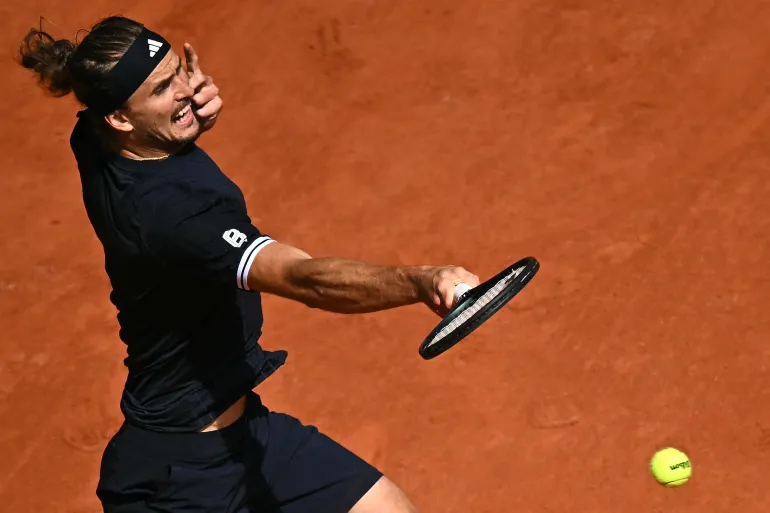
Alexander Zverev plays a forehand return to Italy’s Flavio Cobolli during the final [Julien de Rosa/AFP]
Cobolli’s nervy start
Cobolli made a nervy start and appeared to be struggling to deal with the occasion as the first set quickly got away from him in 39 minutes and he made 16 unforced errors.
He managed to settle into the match with three successive holds of serve in the second set, and then made his move out of nowhere to break in the seventh game.
Zverev had been completely untroubled on serve previously, but produced a scrappy game featuring two double-faults and a wild forehand on break point before turning to gesticulate angrily towards his coaching staff.
Cobolli started to grow in confidence and served out the set to breathe life into the final.
A higher-quality third set disappeared from Cobolli’s grasp in the 10th game, though, as from 30-0 up, he lost four points in a row, including a poor forehand that flew well wide on set point.
The world number 14, who will climb into the top 10 for the first time next week, hit straight back with a break in the opening game of the fourth set.
He could not pull away in the set, though, as both players ended up being broken twice, including Cobolli when he served for it at 5-4.
But the Italian rallied himself to push it into a tie-break, which he took to force a decider with a blistering forehand winner on his second set point.
Following a delay before the start of the final act after Cobolli left the court, Zverev struck first blood with a break in the first game.
Cobolli’s hopes were finally all but extinguished when he missed a break-back point and then dropped serve again to slip 3-0 down.
Zverev staved off three more break points in the fourth game and eased to victory from there, falling to the clay in celebration after Cobolli shanked an overhead on his second championship point.
Flavio Cobolli and Alexander Zverev embrace at the end of their five-set thriller [Dimitar Dilkoff/AFP]
Antonelli takes his fifth Grand Prix win in a row in race interrupted by crashes after asphalt breaks apart.
Published On 7 Jun 20267 Jun 2026
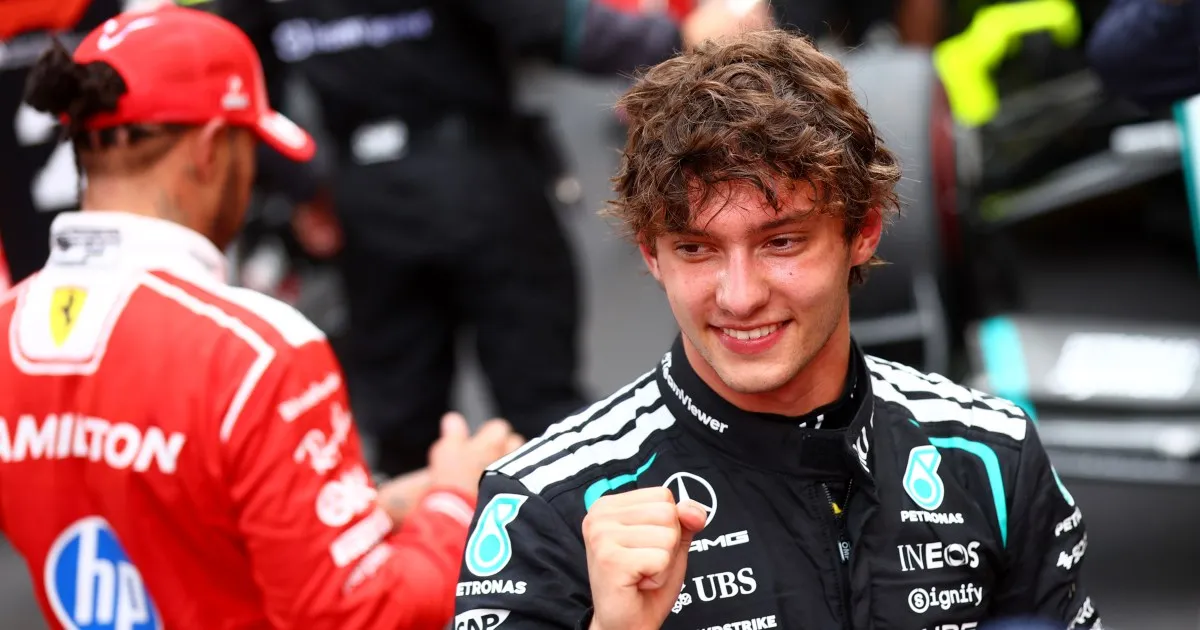
Formula One championship leader Kimi Antonelli stayed ice-cool to win a chaotic Monaco Grand Prix and extend his run of victories this season to five.
The 19-year-old Italian built a commanding lead on Sunday after starting from pole in his Mercedes but that evaporated after a late red flag to inspect a crumbling surface at the final corner following a crash that took out Ferrari’s Charles Leclerc.
Recommended Stories
list of 4 itemsend of list
After a delay of about 40 minutes while repairs were carried out, the race resumed with a standing start but Antonelli remained unfazed as he became the youngest-ever winner of the iconic race.
Ferrari’s Lewis Hamilton was runner-up for the second successive Grand Prix with Red Bull’s Isack Hadjar provisionally third, although he was one of a number of drivers under investigation for a variety of infringements.
Hamilton, who equalled the late Ayrton Senna’s eight Monaco podiums, moved above Antonelli’s teammate George Russell into second place in the standings, 66 points behind Antonelli.
“It’s been an incredible weekend and an incredible race,” said Antonelli, who was not even born the last time an Italian won the Monaco Grand Prix – Jarno Trulli in 2004.
“We had incredible pace and it all came so natural and that gave me the confidence to push.”
A year after finishing last on his F1 debut at Monaco, Antonelli showed incredible poise to shrug off the red flag drama that meant he effectively had to win two races.
“I wasn’t super keen on re-starting but once the notification came out I just gathered my emotions and re-focused again. Once I got away and was P1 into the first corner I could enjoy the last few laps.”
The pontiff praises Madrid as a beacon of inclusion as about 1.2 million people gather for Sunday mass.
Published On 7 Jun 20267 Jun 2026
An oceanic crowd has filled the streets of the Spanish capital Madrid with chants, cheers and applause to greet Pope Leo XIV on the second day of a weeklong apostolic journey to mainland Spain and the Canary Islands.
The Vatican and local organisers said about 1.2 million people braved the heat to be present in the landmark Cibeles Square on Sunday in what is expected to be the largest event during his visit to the country.
Recommended Stories
list of 3 itemsend of list
Throngs of people pressed along barriers near the square – best known as the rallying point for Real Madrid football fans celebrating the club’s titles – waving flags and shouting “Long live the pope”, as Leo arrived in his white popemobile for the event. Some tossed flower petals marking his arrival.
“May Madrid continue to be a welcoming and inclusive city, where social life is inspired by true human values,” the pontiff wrote in the guestbook as he was handed the key to the city by its mayor.
Faithful attend a mass held by Pope Leo XIV at Plaza de Cibeles, during his apostolic journey in Madrid, Spain [Mohammed Salem/Reuters]
Leo began his trip on Saturday, meeting migrants and the homeless and attending a vigil with about 600,000 young people in Madrid. His June 6-12 visit also includes stops in Barcelona and the Canary Islands, where he will meet migrants and refugees who risked their lives crossing there from West Africa.
He said he hoped the visit, his first to a European Union country outside Italy, would set an example to the world about respecting “every human being” and urged leaders to stop dividing electorates.
“I am delighted that he is praying for us migrants and for our safety,” said Andrea Margarita, a 72-year-old Peruvian who arrived in Spain six months ago, as she waited in the crowd in a wheelchair with her daughter.
After mass, Leo was scheduled to hold a private meeting with fellow members of his Augustinian religious order in the afternoon before meeting figures from the world of entertainment, sport and culture at a concert venue in central Madrid.
Pope Leo XIV leads the mass in the Plaza de Cibeles in Madrid [AFP]
Formula One racing sensation Kimi Antonelli made a mockery of suggestions that the Monaco Grand Prix would stall his incredible start to the season by producing a stunning qualifying lap to stick his Mercedes on pole position.
The qualifying battle lived up to expectations, with provisional pole changing hands several times before the 19-year-old championship leader snatched it with his final lap on Saturday.
Recommended Stories
list of 4 itemsend of list
He edged out Red Bull’s Max Verstappen by 0.043 seconds to become the first Italian since Jarno Trulli in 2004 to take pole position in the principality.
“It was one of those laps that we call a magic lap. I was able to put it all together. It was such a close qualifying with Max,” Antonelli, who clocked 1:12.051 (1 minute and 12.051 seconds) to claim his fourth pole in six races this season, said.
“I knew the last lap was good; I was just hoping that it would be enough, but it was very close.”
Antonelli is the youngest driver to lead the championship, having won the last four races, but the unique nature of Monaco’s twisting circuit, full of slow corners, was supposed to take away the Mercedes power advantage.
Ferrari pair on second row
Ferrari have been strongly tipped as race favourites but had to be content with the second row on Sunday’s grid, with Lewis Hamilton third quickest, 0.228 seconds slower, and local favourite Charles Leclerc, winner of the race in 2024, fourth.
Leclerc had been on provisional pole with time running out in Q3 – the third and final session of qualifying – but clipped the wall on his final lap as he tried to wrestle it back, stopping his car at Rascasse.
Ferrari dominated Friday’s two practice sessions, with Hamilton and Leclerc first and second in both, although Antonelli was quickest in Saturday’s final practice.
“Congrats to Kimi. Mega, mega job. Having your first pole here is so special,” three-time Monaco champion Hamilton, who is yet to win a race for Ferrari, said.
“It was tough for us. We were looking so strong in practice, and we barely changed anything, but the car was drastically different once we got to qualifying for some reason.”
Isack Hadjar, in the second Oracle Red Bull, bounced back from a nasty crash in Friday practice to qualify fifth, with Antonelli’s teammate George Russell, who trails him by 43 points in the standings, a disappointing sixth.
Reigning world champion and last year’s Monaco winner Lando Norris will be on the fourth row alongside fellow McLaren driver Oscar Piastri, with the team’s hopes of victory in their 1,000th Grand Prix now looking slender.
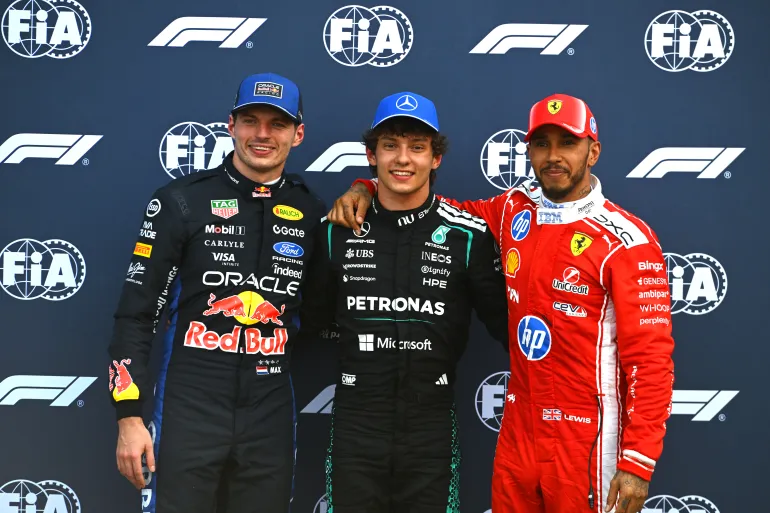
Antonelli, Verstappen and Hamilton after the qualifying round for Monaco GP [Rudy Carezzevoli/Getty Images]
‘The walls start coming closer’
Antonelli finished 18th and last at the Monaco Grand Prix 12 months ago, and he was expected to feel the pressure of leading the standings on his return.
But he now has a golden chance to continue his dream start to the season by emulating Trulli, who converted his pole into a victory in his Renault in 2004.
“I think this is one of the most intensive, if not the most intense, qualifying sessions of the year, and it takes a massive effort,” he said. “When it is about finding the last two tenths, it is not easy because the walls start coming closer.
“But I felt great this morning, and I am happy that we could finish the job today.”
Of the last 22 Monaco Grands Prix, only six have been won by a driver who did not start on pole, such is the extreme difficulty of overtaking on the narrow, twisty circuit that snakes round the stunning Mediterranean playground.
The last three editions have all been won by the top driver in qualifying, but Hamilton did win from third on the grid in 2016, and with Verstappen showing great speed here this year, Antonelli will be taking nothing for granted.
“If you would have told me yesterday I would be on the front row, I would have taken it,” Verstappen said.
For the sixth-straight day, thousands of protesters have rallied in the Albanian capital against a proposed luxury beach development linked to Ivanka Trump and Jared Kushner. Environmental groups accuse authorities of lacking transparency and allowing for the destruction of protected biodiversity on the country’s Adriatic Coast.
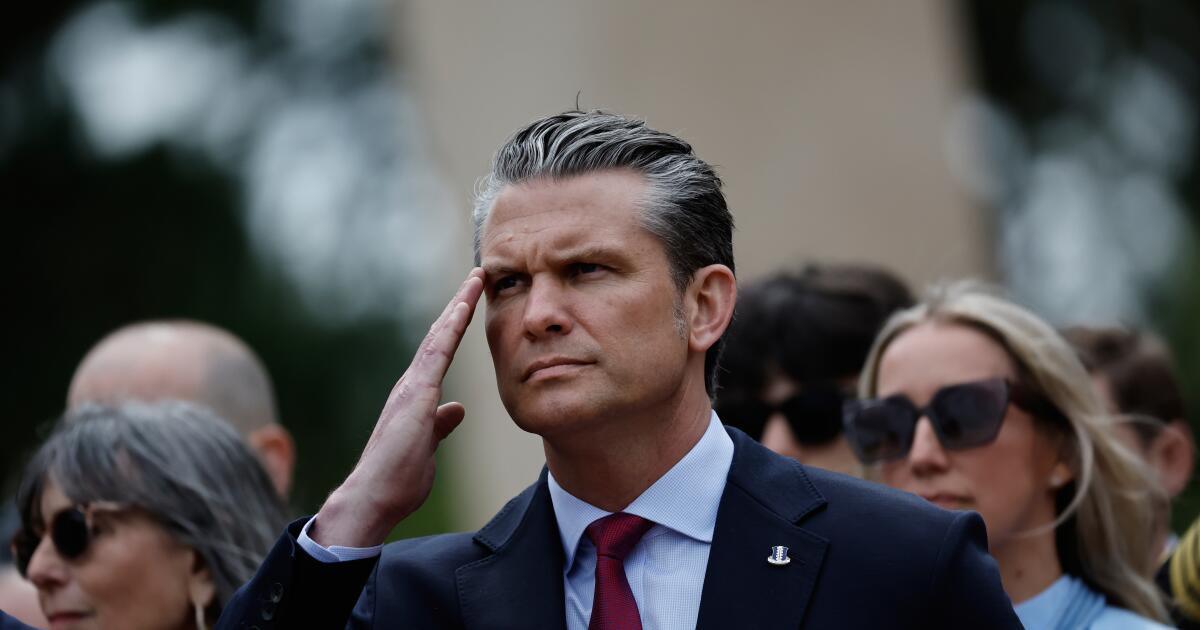
PARIS — U.S. Defense Secretary Pete Hegseth gave a D-day anniversary speech Saturday that appeared to link immigration by sea to the wartime liberation of Europe, warning that the freedom won by Allied troops could prove temporary if leaders failed to defend it against today’s “invasion.”
Hegseth, speaking at the Normandy American Cemetery in Colleville-sur-Mer overlooking Omaha Beach in northwestern France during commemorations for the 82nd anniversary of the June 6, 1944, landings, said that today, “different European beaches are stormed by different dangerous ideologies.”
“Beaches in Spain and Italy and Greece and Bulgaria. Boats and men arrive,” he said.
“When will European capitals do something about that invasion? Or is it too late?” he added. “I pray not, and I believe not.”
Hegseth did not use the word “immigration,” but his remarks echoed broader Trump administration criticism of Europe over migration, borders and what U.S. officials have described as censorship of nationalist and far-right voices.
On Saturday, British Prime Minister Keir Starmer’s office condemned Vice President JD Vance’s remarks blaming immigration for the killing of Henry Nowak, an 18-year-old British student stabbed to death in Southampton, even though both Nowak and his killer were British.
In December, the Trump administration’s national security strategy warned that Europe faced the “prospect of civilizational erasure” and could become “unrecognizable” within 20 years.