Protesters gathered outside the US embassy in Madrid as sanctions pushed Cuba into an electricity blackout. They called for an end to US intervention in Latin America and the Middle East.
A new UN report confirms the past decade was the hottest on record, warning that rising temperatures driven by fossil fuels demand urgent climate action.
United States President Donald Trump has shared a Truth Social video of a TV comedy skit showing a panicked United Kingdom Prime Minister Keir Starmer trying to avoid his call, on the same evening the two leaders spoke about the US-Israel war on Iran.
The skit, aired on the premiere of the new British version of Saturday Night Live (SNL), adapted from the long-running US show, shows Starmer, played by George Fouracres, panicking inside 10 Downing Street at the prospect of a call with Trump.
Recommended Stories
list of 4 itemsend of list
Starmer turns to a fake David Lammy, his deputy prime minister, and says, “What if Donald shouts at me?”
When Trump picks up the phone, Starmer immediately hangs up, asking why it is so difficult to talk to “that scary, scary, wonderful president”.
“Sir, just be honest and tell him we can’t send any more ships to the Strait of Hormuz,” Lammy says, the vital shipping lane effectively blocked by Iran since the US and Israel launched strikes on Iran on February 28.
“I just want to keep him happy, Lammy. You don’t understand him like I do – I can change him,” Starmer says.
Trump did not post any comment alongside the video.
Trump has lashed out at his NATO allies, including Starmer, for not joining the US efforts to break the de facto blockade of the Strait of Hormuz, through which 20 percent of global oil passes. A week ago, he asked the UK to be more supportive of the US war efforts because Washington spends “a lot of money” on NATO.
The US president last week called the NATO countries “cowards” for their refusal to join the war. This, after European leaders rejected Trump’s demands to help ensure freedom of navigation in the Strait of Hormuz.
“Now that fight is militarily WON, with very little danger for them, they complain about the high oil prices they are forced to pay, but don’t want to help open the Strait of Hormuz, a simple military maneuver that is the single reason for the high oil prices. So easy for them to do, with so little risk,” he wrote on the Truth Social platform.
Separately, on Sunday evening, Starmer spoke with Trump to discuss escalating tensions in the Middle East, his office said in a statement. It was not clear if the call took place before or after Trump posted the SNL skit on Truth Social.
In a readout of the call, the Prime Minister’s Office said the two leaders focused on “the need to reopen the Strait of Hormuz to resume global shipping” amid growing concerns over energy security and regional stability.
“They agreed that reopening the Strait of Hormuz was essential to ensure stability in the global energy market,” the statement said.
The leaders also agreed to remain in close contact as the situation develops and “to speak again soon”, it added.
On Monday, Starmer said there had been no assessment that mainland Britain was being targeted by Iran.
Starmer asserted that any attempt to reopen the Strait of Hormuz needed careful consideration and a viable plan, and that his number one priority was to protect British interests and de-escalate.
‘Not Winston Churchill’
The US leader has repeatedly railed against Starmer since the start of the war, accusing him of not doing enough to support the US.
“This is not Winston Churchill that we’re dealing with,” Trump said earlier this month, after Starmer initially declined to let US warplanes use UK bases to strike Iran.
“I’m disappointed with Keir,” Trump has also said, slamming Starmer’s “big mistake”. “I like him, I think he’s a nice man, but I’m disappointed.”
On Friday, the UK government gave authorisation for the US to use its military bases to carry out strikes on Iranian missile sites that were attacking ships in the Strait of Hormuz.
Starmer initially rejected a US request to use British bases for the strikes on Iran, saying he needed to be satisfied that any military action was legal.
But the prime minister modified his stance after Iran conducted strikes on British allies across the Middle East, saying the US could use RAF Fairford and Diego Garcia, a joint US-UK base in the Indian Ocean.
Gregoire headed a list uniting the traditional left, the Greens and the Communists to victory in French capital.
Published On 22 Mar 202622 Mar 2026
The Socialist Party’s Emmanuel Gregoire has won the Paris mayoral race, as the results of nationwide municipal elections showed gains for the traditional left and right, and a major win for the far right in the city of Nice.
Sunday’s run-off votes in more than 1,500 communes saw Gregoire on course to become mayor of the French capital, with exit polls showing that the far-right National Rally (RN) fell short of taking control of the key southern cities of Marseille and Toulon.
Recommended Stories
list of 3 itemsend of list
Gregoire, who headed a list uniting the traditional left, the Greens and the Communists, clinched the prized mayoralty with an estimated 51 to 53 percent of the vote, according to pollsters, seeing off Conservative rival Rachida Dati, who conceded defeat.
The 48-year-old son of a teacher and civil servant is stepping into the spotlight after previously serving as deputy to outgoing mayor and fellow Socialist Anne Hidalgo. During his bid, he had promised that Paris would stand as a “city of refuge” and a “bastion against the right and the far right”.
In Marseille, the second-largest city in the country, Socialist Mayor Benoit Payan was on track to be re-elected with 56.3 percent of the vote, according to an Elabe poll for BFM TV. RN’s chances of winning the coveted prize took a hit after the withdrawal of a hard-left candidate from France Unbowed (LFI) aimed at uniting left-wing voters.
Socialist Party chief Olivier Faure hailed the wins in Paris and Marseille, positioning his party as a bulwark against the far right. “Only the left can prevent France from this regression,” he said.
In Toulon, an Elebe poll showed centre-right candidate Josée Massi leading at 53.5 percent, with RN candidate Laure Lavalette conceding defeat. Yet, senior RN officials rejected suggestions that the party’s loss indicated it had hit a “glass ceiling” ahead of next year’s presidential election.
“The National Rally and its candidates have achieved tonight, in this municipal election, the biggest breakthrough in its entire history,” RN chief Jordan Bardella said, alluding to wins in local constituencies where it previously had no presence.
In the first round, Bardella’s anti-immigration party won re-election in the southern city of Perpignan, and it won in smaller cities, too. And on Sunday, exit polls indicated that Eric Ciotti, a former mainstream conservative who is now an ally of the RN, won in Nice, France’s fifth-biggest city.
Former Prime Minister Edouard Philippe was re-elected mayor in his northern city of Le Havre, according to the TF1 and LCI broadcasters, delivering a better-than-expected performance that boosts his hopes of running for president in 2027.
Philippe, a centre-right politician who served as prime minister under centrist President Emmanuel Macron, made a speech with a clear national message, saying his victory showed that “there were reasons to be hopeful” in the values of France and that the extremes can be beaten.
Turnout at 5pm local time (16:00 GMT) was just higher than 48 percent in France’s mainland, more than than in the 2020 vote held during the COVID-19 pandemic, but four points lower than in 2014, according to the Ministry of Interior.
Real stay within four points of league leaders Barcelona with hard-fought win in Madrid derby.
Published On 22 Mar 202622 Mar 2026
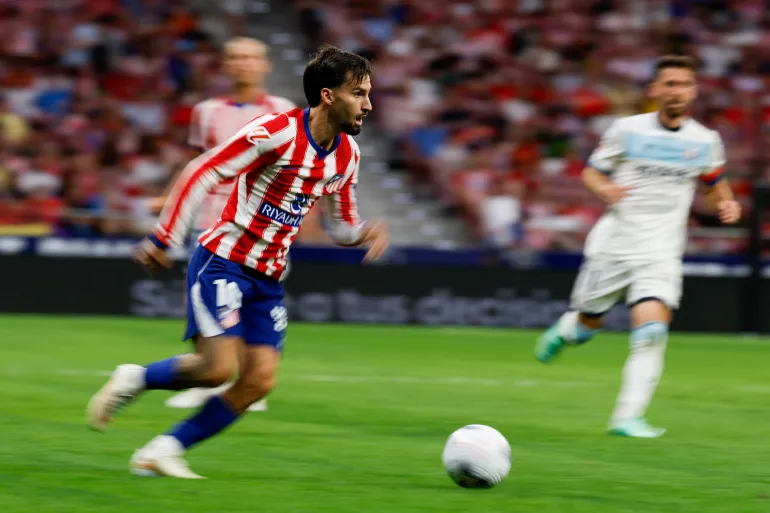
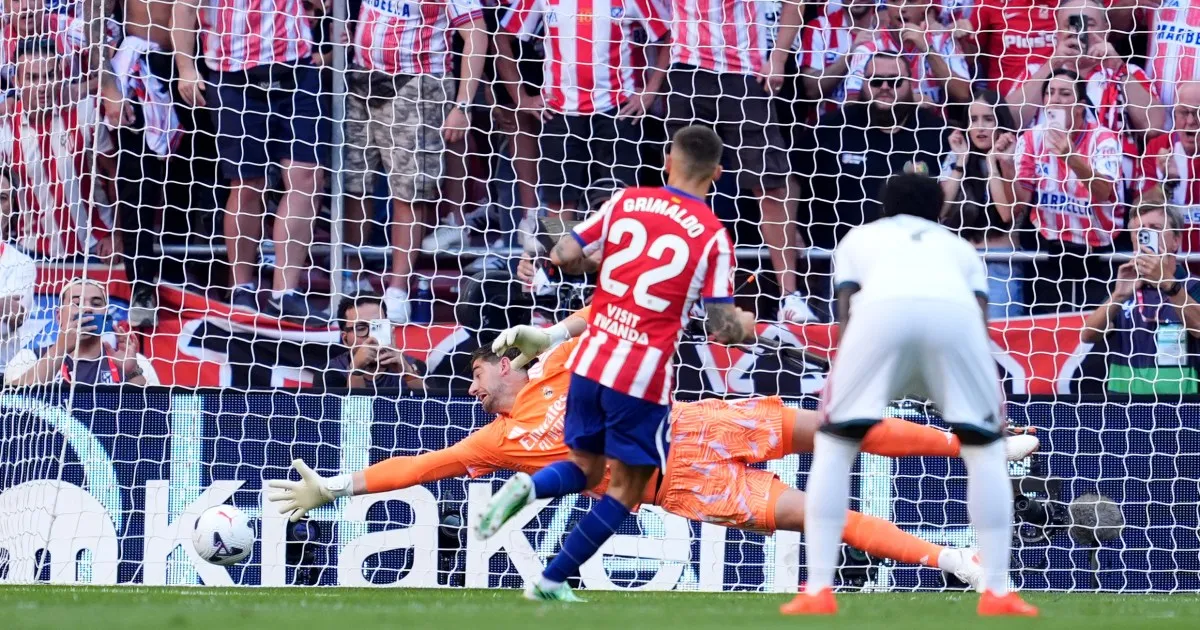
Vinicius Jr scored twice as Real Madrid fought back to beat Atletico Madrid 3-2 in a breathless Spanish capital derby on Sunday, keeping Alvaro Arbeloa’s side within four points of La Liga leaders Barcelona.
Atletico’s Ademola Lookman opened the scoring in the 33rd minute on Sunday, finishing a slick counterattack involving Matteo Ruggeri and a delightful backheel from Giuliano Simeone.
Recommended Stories
list of 4 itemsend of list
Vinicius equalised from the penalty spot in the 52nd minute after David Hancko clumsily tripped Brahim Diaz, and Federico Valverde capitalised on a Jose Maria Gimenez error three minutes later to make it 2-1 to Real.
Nahuel Molina silenced Real’s Bernabeu stadium with a thunderous 30-metre strike in the 66th minute, but Vinicius restored Real’s lead with a cracking solo effort six minutes later.
Valverde then saw red for an inexplicable challenge on Alex Baena, and Julian Alvarez struck the post as Atletico pressed, but Real held firm.
Arbeloa praised his side for showing “pure Real Madrid mentality” to emerge with a difficult win.
“We’re in a good moment, it wasn’t an easy match at all. The opponent made it very difficult for us,” he said.
“We had to show a very strong mentality, they equalised again fiercely and we had to press again. That’s what I liked the most – the mentality of this team.”
Atletico Madrid boss Diego Simeone said his side deserved to come away with more from the game.
“We could have defended their goals better and done more in attack,” he said.
“We’re facing teams that play well, and if you give them anything, they’ll hurt you. We deserved more.”
Earlier on Sunday, Barcelona edged Rayo Vallecano 1-0 as Ronald Araujo headed in the winner in the 24th minute at Camp Nou, and Barcelona goalkeeper Joan García’s impressive performance showed why he is most likely heading to the World Cup with Spain.
Araújo jumped over his marker and scored after Joao Cancelo’s corner to the far post.
Raphinha came close on three occasions to also scoring for the hosts in the first half. He shot wide on the break, forced goalkeeper Augusto Batalla to tip a shot over the bar, and hit the woodwork shortly after Araújo’s goal.
Garcia saved a shot by Carlos Martin in the game’s opening minute, blocked Unai Lopez’s header early in the second half and got just enough on a low strike from Jorge de Frutos in the final moments to push it wide.
Garcia was included in Spain’s squad for the first time on Friday ahead of two friendly matches which will serve as warmups for this summer’s World Cup.
Elsewhere on Sunday, Alaves achieved one of the club’s most memorable wins after it erased a three-goal deficit at Celta Vigo to secure a 4-3 victory. The stunning result lifted Alaves out of the relegation zone.
In Bilbao, Dani Vivian and Oihan Sancet scored to give Athletic a 2-1 win over Real Betis in the first match since Athletic coach Ernesto Valverde said he would leave the Basque club at the end of the season.
Governing liberals edge ahead of opposition conservatives in a race too close to call, according to exit poll.
Published On 22 Mar 202622 Mar 2026
Slovenia’s governing Freedom Movement (GS) is on track to win a parliamentary election but will need to find more coalition partners to form a government, according to an exit poll.
GS was set to secure 29.9 percent of the votes, or 30 seats in the country’s 90-seat parliament, in a dip from its previous result of 41 seats, according to the poll, published by TV Slovenia and Pop TV on Sunday.
Recommended Stories
list of 3 itemsend of list
The opposition Slovenian Democratic Party, led by populist Janez Jansa, is expected to come second and secure 27 seats in parliament, according to the Mediana polling agency.
As he voted, incumbent Prime Minister Robert Golob, 59, called on citizens to cast their ballots.
“Democracy and Slovenia’s sovereignty cannot be taken for granted any more,” he told reporters.
Jansa welcomed the exit poll results and said he would wait for the final result.
“If someone wants a government like the one we’ve had so far, then they are probably satisfied with what these parallel results indicate,” Jansa said.
“Whoever wants change will likely have to wait for the final results, just as we will, and then we will analyse the situation. But we have done everything that was within our power,” he said.
The opposition party leader has served as prime minister three times, most recently from 2020 to 2022.
Ahead of the vote, the election had been marred by controversy after a report last week alleged that Jansa met with officials from the Israeli spy firm Black Cube in December.
Golob told journalists after the report: “The fact that … foreign services are interfering in the elections of a democratic member state of the European Union is something unheard of.”
With US-Ukraine talks set to resume in Florida, Volodymyr Zelenskyy warns that Russia is increasing its oil revenues through shadow fleets.
Published On 22 Mar 202622 Mar 2026
President Volodymyr Zelenskyy has urged allies to keep up sanctions pressure on Russia’s economy ahead of a second day of talks between Ukraine and United States officials on ways to end the more-than-four-year Russia-Ukraine war.
Russia’s representatives were not present at the talks, which opened on Saturday in Florida. They were originally expected to attend the negotiations, which had been due to take place in the United Arab Emirates, before the US-Israeli war on Iran.
Recommended Stories
list of 3 itemsend of list
The US delegation is being led by special envoy Steve Witkoff and Jared Kushner, US President Donald Trump’s son-in-law.
In a post on X on Sunday, Zelenskyy called for tougher action against Moscow’s so-called shadow fleet of tankers and for it to be denied oil revenues.
“Over the past week, Russia launched nearly 1,550 attack drones against Ukraine, more than 1,260 guided aerial bombs, and two missiles. Over that same week, due to the easing of sanctions, Russia increased its crude oil sales to finance its war,” Zelenskyy wrote.
“Revenues give Russia a sense of impunity and the ability to continue the war. That is why pressure must continue, and sanctions must work. Russia’s shadow fleet must not feel safe in European waters or anywhere else,” he said.
The Ukrainian president added that tankers that “serve the war budget can and must be stopped and blocked, not just let go”.
The so-called shadow fleet is a network of vessels that continue to export oil and gas despite Western sanctions due to the ongoing war with Ukraine.
Last week, the French Navy seized an oil tanker in the Western Mediterranean, which France’s President Emmanuel Macron said was part of Russia’s shadow fleet, a network of vessels used to export oil despite Western sanctions.
The shadow fleet, which has grown following Western sanctions on Russia aimed at curbing Moscow’s oil revenues, has helped to keep Russian oil exports flowing.
Talks continue
The last time the Ukrainian and Russian delegations met was in February in the Swiss city of Geneva, but no progress was made, as key issues surrounding territory remain unresolved.
Moscow has repeatedly said it will not agree to a peace deal that gives up the Ukrainian territory it has captured during the war. In contrast, Kyiv has said it will not agree to a deal that does not lead to the return of its territory.
Elements of the peace plan being promoted by the US include a presidential election in Ukraine, alongside territorial concessions.
Zelenskyy, whose term has already expired, is under renewed pressure from Trump to hold a vote as Washington pushes Kyiv towards a peace deal.
Ukrainian law bars wartime elections, but Zelenskyy has said Ukraine would be ready to hold democratic elections if the US secured a two-month ceasefire to allow time to prepare infrastructure and put security guarantees in place.
What role has the United Kingdom played in Israel’s war on Gaza? We meet those who say it’s complicit in atrocities committed there.
During the Gaza war, protesters have flooded the streets of major British cities, calling on their leaders to cut off the supply of weapons and other military hardware to Israel.
The United Kingdom’s relationship with its ally is under scrutiny. Jeremy Corbyn, a British MP, set up the Gaza Tribunal to examine whether the UK’s support for Israel amounts to complicity. Doctors and aid workers gave emotional accounts of the horrors they saw while working in the Gaza Strip, and journalists presented evidence of weapons shipments and spy flights allegedly operating from a nearby British air force base. All were making the case that the UK’s unwavering support for Israel is no longer legally or morally justifiable.
In its final report, published on March 16, the Gaza Tribunal said the UK has failed in its duty to prevent genocide and has been complicit in atrocities. It also recommended that the UK end all military cooperation with Israel.
The UK government has yet to comment on the allegations.
Tehran, Iran – Military and political authorities in Iran are projecting a message that “victory” is near as war with the United States and Israel continues to escalate, and air strikes and assassination attempts are reported across the country.
Massive joint US-Israeli air raids were recorded in multiple areas of the capital Tehran overnight into Sunday, and in central Iran’s Isfahan city in the morning, a day after Dezful and Andimeshk in western Khuzestan and several other cities were hit.
Recommended Stories
list of 4 itemsend of list
Israeli warplanes also conducted two separate sets of precision strikes on privately-owned residential units located in small towns in the green provinces of Gilan and Mazandaran to the north on Saturday, which appeared to be assassination attempts on officials.
Local authorities confirmed that several people were killed, but did not elaborate. Israeli and US media said a senior drone commander is believed to have been killed.
Nevertheless, top officials in Tehran said they were unyielding and focused on retaliatory attacks.
Parliament speaker and former Islamic Revolutionary Guard Corps (IRGC) commander Mohammad Bagher Ghalibaf said the fact that Iranian missiles struck Israel’s Dimona overnight shows that a “new stage of battle” has started where “Israel’s skies are defenceless”.
Majid Mousavi, aerospace commander of the IRGC, echoed the same statement about control over Israeli skies in a post on X on Saturday night, which came in response to the US and Israel declaring dominance over Iranian airspace.
“Pinpoint precision Seyed Majid, hit Dimona again,” chanted flag-waving pro-establishment supporters shown on state television broadcasts, calling on Mousavi for action.
Israel said more than 180 people were injured in Dimona, a southern city where its key nuclear facilities are also located, in addition to nearby Arad.
Ahmad-Reza Radan – Iran’s hardline police chief, who has been cited by Israeli media as being a target for assassination along with Mousavi, Ghalibaf and others – was seen briefly addressing a group of supporters in Tehran on Saturday night.
“Trump first threatened the European Union, then begged. Today, he has said he will come take Greenland if the Europeans don’t come. I want to tell the European Union that if they can’t hold on to Greenland, then send a request and we will come preserve it,” he said, followed by chants of “Alla akbar” (God is greatest).
Defence Ministry spokesman Reza Talaei-Nik said in a statement that attacks across the region will continue “until the complete halt and surrender of the enemy”.
The taunts are in line with the state’s messaging in recent days, including a written statement attributed to Mojtaba Khamenei, who was selected as the supreme leader after his father Ayatollah Ali Khamenei was assassinated on the first day of the war, but who has not been seen or heard.
The message said Iran’s enemies were being “defeated” and there is “particular unity” among supporters of the theocratic establishment.
Over the past week, the country’s top security official, commanders of the paramilitary Basij force of the IRGC, the government’s intelligence minister, and a number of other military and security personnel have been among those killed.
The government reports that a large number of residential buildings, hospitals, schools and other civilian facilities have also been impacted during the war, as state supporters control the city streets, squares and mosques to counter potential anti-government protests.
‘Say goodbye to electricity!’
The Iranian rhetoric quickly escalated on Sunday after US President Donald Trump issued a 48-hour ultimatum for Tehran to reopen the strategic Strait of Hormuz, a key water route for global energy export, or face strikes on its power plants.
In response, Iranian politicians and armed forces said they would strike back harder against the region’s energy facilities.
The IRGC-affiliated Mehr news agency released a map with graphics that showed power plants across the region, including in the United Arab Emirates, Saudi Arabia, Qatar and Kuwait, that could be attacked if Iranian facilities are hit. An accompanying message read, “Say goodbye to electricity!”
On Saturday night, state and IRGC-affiliated media circulated a different map, showing Doha and also marking the central offices of Al Jazeera network as potential targets, and said all residents of the Qatari capital were advised to evacuate immediately.
State television quickly issued a retraction and cited unnamed sources as saying the map was not official, but no explanation was provided about who circulated the image and why.
Iranians attend the funeral ceremony of Islamic Revolutionary Guard Corps (IRGC) spokesman Ali Mohammad Naini, who was killed in US-Israeli strikes, in Tehran on March 21, 2026 [AFP]
The all-around promises of escalation, particularly around bombing electricity facilities and other critical civilian infrastructure, have created additional concerns among many Iranians about the impact on daily lives and implications on the country’s future.
“If the main power plants are bombed, it’s not going to be just a brief disruption; it could stop the flow of everything from water to gas,” a Tehran resident told Al Jazeera, asking to remain anonymous due to security concerns. “It would be foolish to just punish the population like that.”
The US-Israeli forces have also struck natural gas facilities in southern Iran and bombed fuel reserves across Tehran, but authorities said fires and damage were contained quickly without creating major disruptions.
In an Instagram post to mark Nowruz, the Persian New Year, iconic footballer and nationally respected figure Ali Daei said this year’s celebrations were different because Iran is grieving for its people killed in the war.
“Wishing for a prosperous and free Iran, away from war and bloodshed, all about welfare and calm,” he wrote, drawing the ire of a number of state media, including the IRGC-affiliated Tasnim, which criticised Daei for not specifically condemning the US and Israel.
Proclamations, warnings under blackout
Meanwhile, the internet remains cut for more than 92 million Iranians for a 23rd day, becoming the longest shutdown in the country’s history, trailed only by a 20-day blackout imposed during the killing of thousands of anti-government protesters in January.
State media outlets continue to focus on successful IRGC attacks and present Iran as a country on the brink of being recognised as a world power, as they refrain from communicating details about the US and Israeli attacks or significant damage sustained.
Alaeddin Boroujerdi, a member of the national security committee of Iran’s parliament, told the state television on Sunday that the IRGC’s overnight attacks against Israel “opened a new page in shifting the balance of power and showed the victory of the Islamic Republic in this imposed war”.
The parliamentary committee’s spokesman, Ebrahim Rezaei, stretched the same line of thinking even further, and said in a post on X that Iran should demand to become a veto-yielding permanent member of the United Nations Security Council as a condition for ending the war. The lawmaker did not say how or when he expected that to happen.
Iran’s government has also demanded war reparations and guarantees against future aggression, but the US and Israel have been pushing to overthrow the Islamic Republic that came to power in a 1979 revolution.
Intelligence authorities advised the Iranian population on Saturday that even being a member of foreign-based news and war footage channels on Telegram and all other social media outlets banned by the state could violate national security laws.
The Iranian judiciary said that such channels are considered “terrorist” outlets and that sending any videos of impact sites or armed state checkpoints on the streets to them could carry maximum penalties like confiscation of assets and even execution.
State security authorities have emphasised that anyone who engages in anti-establishment protests will be treated as an “enemy”.
Voters choosing between incumbent PM Robert Golob and pro-Trump Janez Jansa, with neither likely to win parliamentary majority.
Published On 22 Mar 202622 Mar 2026
Slovenians are voting in a tight parliamentary election, as incumbent liberal Prime Minister Robert Golob takes on right-wing populist Janez Jansa, who is eyeing a comeback.
Polls opened at 7am local time (06:00 GMT) on Sunday and will close at 7pm (18:00 GMT), with exit poll results to be released after voting.
Recommended Stories
list of 4 itemsend of list
A return of Jansa, an admirer of United States President Donald Trump, could see the former Yugoslav nation, a European Union member of two million people, take an illiberal turn again after four years of centre-left rule under 59-year-old Golob.
Neither is likely to win a parliamentary majority in the vote, which could be decided by smaller coalition partners.
Latest opinion polls confirm Jansa’s Slovenian Democratic Party (SDS) and Golob’s Freedom Movement (GS) are set for a close race after an eleventh-hour campaign drama involving allegations of foreign meddling and corruption.
Golob, left, and Jansa at the last televised debate ahead of the election, in Ljubljana, March 20, 2026 [AFP]
The last government of three-time premier Jansa, who is pro-Israel and an ally of nationalist Hungarian Prime Minister Viktor Orban, saw mass protests and EU criticism over rule-of-law concerns.
Under Golob, a political newcomer when he took over from Jansa in 2022, Slovenia legalised same-sex marriage and became one of the few EU countries to describe Israel’s war in Gaza as genocide.
Analysts say Jansa, 67, has a devoted voter base, and the lower the turnout, the higher the chances of him winning the election.
At stake is the domestic and foreign agenda of Slovenia, where the outgoing government focused on social and health reforms but delivered mixed results, resulting in a fall in popularity for Golob’s governing coalition.
Jansa has promised to introduce tax breaks for businesses and cut funding for civil society, welfare and media.
Slovenia, an Alpine country with a developed industrial base, emerged stronger from the collapse of Yugoslavia than other states such as Serbia or Bosnia and Herzegovina, which have been held back by war, economic sanctions and political infighting.
Jansa would also likely change Golob’s foreign policy under which Slovenia was one of the few European countries that recognised an independent Palestinian state and last year imposed an arms embargo on Israel.
Movsar Evloev rallies after a point deduction against the unbeaten Lerone Murphy to win the contest in London.
Published On 22 Mar 202622 Mar 2026
Russia’s Movsar Evloev overcame a point deduction for a foul to edge a majority decision win over Lerone Murphy at Saturday’s UFC Fight Night 270 at the O2 Arena, likely punching his ticket to a title fight against featherweight champion Alexander Volkanovski in his next bout.
With the two fighters putting their undefeated records on the line to decide who will face the 37-year-old Australian Volkanovski for the belt, the bout turned into an intriguing clash of styles.
Recommended Stories
list of 3 itemsend of list
Evloev, who is known for his wrestling, tried to showcase his striking, while Murphy displayed some superb defensive work on the ground.
Murphy evaded the fearsome grappling attack of his Russian opponent for the first two rounds of the five-round bout, using a selection of stiff right hands to keep him at bay. Evloev took the chance to exhibit some of the dangerous spinning strikes he has added to his repertoire since his last fight in December 2024.
Evloev finally managed to take the fight to the mat early in the third round, but Murphy was quickly back to his feet, uncorking a spinning back kick of his own shortly afterwards.
However, it was his opponent who finished the frame strongest with a big overhand right, followed up by a flurry of strikes.
Evloev, right, lands a punch against Murphy during the UFC Fight Night 270 main event at the O2 Arena [Peter van den Berg/Imagn Images via Reuters]
His momentum was derailed somewhat when he landed a second kick to Murphy’s groin early in the fourth round, and referee Marc Goddard deducted a point from Evloev for the foul.
Knowing that the deduction could be decisive if the fight went to the judges’ scorecards, Evloev turned up his energy-sapping grappling attack in the fifth and final frame as he chased a finish, but again Murphy was able to get back to his feet with relative ease.
Despite not really threatening to submit his opponent on the ground, it proved to be enough for the 32-year-old Evloev, with two of the judges scoring the fight 48-46 in his favour and the third scoring it a draw 47-47 after the point deduction was taken into account.
Murphy reacts following his first career defeat in UFC [Jasper Wax/Getty Images]
Karim Khan has denied the allegations and took voluntary leave from his position in May.
Published On 21 Mar 202621 Mar 2026
Judges have cleared the chief prosecutor of the International Criminal Court (ICC), Karim Khan, of all wrongdoing after an investigation into alleged sexual misconduct, Middle East Eye reports.
A report by Middle East Eye published on Saturday said a panel of three judges submitted a confidential report to the court’s oversight body, the Bureau of the Assembly of States Parties (ASP), on March 9.
Recommended Stories
list of 3 itemsend of list
“The Panel is unanimously of the opinion that the factual findings by [The UN’s Office of Internal Oversight Services] OIOS do not establish misconduct or breach of duty under the relevant framework,” the report concluded, according to the sources cited by Middle East Eye.
The OIOS investigation was commissioned by the head of the ASP in November 2024 after a member of Khan’s office accused the prosecutor of sexual misconduct.
In August last year, a second woman came forward and alleged that Khan had abused his power over her while she was working for the British lawyer.
The woman had described his behaviour to UK newspaper The Guardian last year as a “constant onslaught” of advances.
Khan has denied the allegations and took voluntary leave from his position at the ICC in May, while awaiting the inquiry’s results. His deputy prosecutors have been in charge of his office in his absence.
According to Middle East Eye, the ASP met on Monday to discuss its response to the panel’s report. Under the court’s rules, if the bureau determines that no misconduct has occurred, the investigation should be closed.
The ASP has 30 days from receiving the report to make its preliminary assessment of the alleged sexual misconduct. Khan will then have 30 days to respond, and the bureau will have another 30 days to make its decision.
Khan declined to comment on the report, the outlet said.
The allegations of sexual misconduct came as Khan’s office was pursuing an investigation into alleged war crimes and genocide by Israeli officials and forces in Gaza and the occupied Palestinian territory.
Khan sought arrest warrants for Israeli Prime Minister Benjamin Netanyahu and his then-defence minister, Yoav Gallant, over “criminal responsibility” for alleged war crimes and crimes against humanity in Gaza.
He also sought arrest warrants for Russian President Vladimir Putin and other Russian officials over the alleged unlawful deportation of Ukrainian children during Moscow’s ongoing war on Ukraine.
War, which saw Iran attack Qatar facility, has caused ‘high, volatile’ gas prices that could hit EU storage projections.
Published On 21 Mar 202621 Mar 2026
The European Union has urged member states to start early on meeting next winter’s gas storage targets after Iranian attacks on Gulf energy facilities caused prices to surge on global markets.
Energy Commissioner Dan Jorgensen sent a letter Saturday urging the bloc’s members to get to work “as early as possible” in the coming months to “mitigate pressure on prices and avoid [an] end-of-summer rush”, asking them to consider cutting their so-called filling target by 10 percentage points to 80 percent.
Recommended Stories
list of 3 itemsend of list
The move came days after Iran attacked Qatar’s Ras Laffan Industrial City complex, which provides about 20 percent of global supplies of liquefied natural gas (LNG). The attack, which came amid the US-Israeli war on Iran, was in retaliation for an Israeli attack on the Iranian South Pars gasfield.
State-owned QatarEnergy said that Iran’s attack on Qatar, which has been targeted throughout the duration of the war, knocked out 17 percent of Doha’s export capacity and would affect exports for up to five years.
The slowdown will mainly harm Asian buyers, including China, Japan, and India, which buy some 80 percent of QatarEnergy’s LNG.
But Europe, which only sources around 9 percent of its LNG from Qatar, will nevertheless be exposed to increased competition, with tanker traffic leaving the Gulf via the Strait of Hormuz throttled by the war.
Natural gas prices in the EU have risen by more than 30 percent since the start of the war on February 28, spiking after Israel’s attack on Iran’s critical South Pars gasfield and subsequent Iranian attack on Qatar’s Ras Laffan.
Jorgensen said that the EU’s gas supply, which has mainly been furnished by the United States since the bloc weaned itself off Russian energy over the Ukraine war, remained “relatively protected at this stage”.
“But, as a net energy importer on global markets, the resulting high and volatile global prices may also impact the EU gas storage projections,” he cautioned.
Jorgensen warned that developments “threaten regional and global security”, urging member states to refill stores early over a longer period.
The EU requirement for member countries to maintain gas reserves at 90 percent of capacity to meet winter heating and power demand underpins the region’s energy security.
Having cut that target by 10 percent, the energy commissioner noted that, in case of “difficult conditions” and a commission assessment, the countries could deviate by up to 20 percent.
Oil prices have also soared since the start of the war by more than 50 percent.
Former FBI chief Robert Mueller, who probed the alleged Russian interference in the 2016 United States election, has died at age 81.
“With deep sadness, we are sharing the news that Bob passed away” on Friday night, his family said in a statement Saturday.
“His family asks that their privacy be respected.”
Mueller was appointed as director of the FBI by then-President George Bush in September 2001, a week before the 9/11 attacks that would push him into the centre of a national crisis.
He became the key figure behind changing the FBI from combating crime to now countering national security risks following the attack on New York’s World Trade Centre.
In 2013, Mueller stepped down from the bureau and later by 2017 was appointed as special counsel to oversee the Justice Department’s probe into possible Russian interference in the election, which saw Donald Trump secure his first term over Democratic nominee, Hilary Clinton.
Following the announcement of his death, Trump took to his Truth Social platform to write: “Robert Mueller just died. Good, I’m glad he’s dead. He can no longer hurt innocent people!”
Who: Real Madrid vs Atletico Madrid What: La Liga Where: Santiago Bernabeau, Madrid, Spain When: Sunday, March 22 at 9pm (20:00 GMT) How to follow: We’ll have all the build-up on Al Jazeera Sport from 17:00 GMT in advance of our live text commentary stream.
Madrid host rivals Atletico on Sunday at the Santiago Bernabeu, aiming to stay in touch with champions Barcelona, who currently hold a four-point lead.
Recommended Stories
list of 4 itemsend of list
Los Blancos will be seven points off the summit if Barcelona beat Rayo Vallecano earlier on Sunday.
Alvaro Arbeloa’s Madrid side dispatched Manchester City in the Champions League last 16 with two victories after entering the tie as underdogs, and it could be a turning point for a season hobbled by inconsistency.
Before the win over City, Madrid had faltered with back-to-back league defeats to Osasuna and Getafe.
Madrid will be seeking some vengeance for the 5-2 drubbing Atletico dealt them in their first league meeting at Metropolitano Stadium in September and will be hoping that Atletico’s main focus is on cup competitions – their main chances of silverware this season.
A top-four spot is virtually guaranteed for Atletico, who sit third in La Liga – 13 points clear of fifth place Real Betis.
Atletico – who will play Real Sociedad in the Copa del Rey final – are also into the last eight of the Champions League after overcoming Tottenham Hotspur.
Last up for Madrid
Real Madrid’s Vinicius Jr scored twice as the Spanish side eased into the Champions League quarterfinals, beating 10-man Manchester City 2-1 at Etihad Stadium to complete a 5-1 aggregate victory.
Vinicius put the visitors ahead from the penalty spot in the 22nd minute, after the VAR judged Bernardo Silva to have handled his shot on the line, a decision that also reduced City to 10 men and made an already daunting task seemingly impossible.
Pep Guardiola’s City were not waving the white flag, however, and Erling Haaland levelled in the 41st minute when he tapped in a pass from Jeremy Doku from close range.
City’s Doku and Rayan Ait-Nouri, and Real Madrid’s Federico Valverde and Vinicius had second-half goals chalked off before Vinicius completed his brace with the last kick of the game from the edge of the 6-yard box in the 93rd minute.
Vinicius’s goals were an answer to the Premier League team’s fans mocking him with a banner last season, referring to Rodri beating the Brazilian to the Ballon d’Or.
“Football is good for that, it always gives you another chance,” said Vinicius.
Vinicius Junior celebrates scoring the opening goal against City on Wednesday [Paul Ellis/AFP]
Arbeloa basks in ‘happiness and joy’ of win
Madrid march into the quarterfinals to face Barcelona after defeating City.
“It was a really tough tie against a team like this who have such talent,” Arbeloa after the game. “There’s happiness, there’s joy because of the performance and this continues.”
Asked about beating Guardiola, Arbeloa deflected praise to his players.
“I wouldn’t dare to say I can beat Pep Guardiola in terms of a tactical way, he’s an elite coach, he’s won thousands of trophies in his career, and what we’ve won is a tie,” he said. “I believe [the players] deserve the recognition for the work they put in.”
Last up for Atletico
Atletico Madrid held off Tottenham’s bid for an epic Champions League escape as they reached the quarterfinals despite a 3-2 defeat in the last-16 second leg on Wednesday.
Diego Simeone’s side trailed three times in north London but they did just enough to go through 7-5 on aggregate.
Randal Kolo Muani put Tottenham ahead in the first half before Julian Alvarez levelled immediately after the break.
Xavi Simons netted to give spirited Tottenham a glimmer of hope, but David Hancko’s equaliser extinguished any chance of an incredible comeback.
Simons’ stoppage-time penalty came too late for Tottenham to complete their mission impossible.
Alvarez scores against Spurs [David Klein/Reuters]
Numbers speak for themselves, says Simeone
Atletico Madrid coach Diego Simeone said the “numbers speak for themselves” after guiding his side into the Champions League quarterfinals for the eighth time in 13 seasons.
“Sometimes you don’t need to say anything, the numbers speak for themselves,” Simeone told reporters.
“It’s a moment to be happy as a club, as a team, with the joy of our fans, who will celebrate this step towards the quarterfinals.
“When you get here, the road will be tough, as in previous situations where we reached the final.”
Head-to-head
Real Madrid and Atletico have locked horns on 242 occasions, with Real Madrid winning 124 matches, Atletico winning 60, and 58 games ending as draws.
Atletico thrashed Madrid 5-2 when the clubs last met in La Liga in September 2025.
Indeed, Atletico are unbeaten in their last six league games against Madrid, with four of those games finishing in draws, and they have only lost one of their last eight games in La Liga against their rivals.
Their last encounter in any competition was a Spanish Super Cup semifinal in January, which Madrid won 2-1 courtesy of goals from Federico Valverde and Rodrygo.
Real Madrid’s team news
Kylian Mbappe made his return from a knee injury as a substitute in the second leg against City and is set to start up front alongside Vinicius Jr.
Madrid’s biggest absence may be goalkeeper Thibault Courtois, who will be out for about six weeks after picking up a muscle injury against City in midweek. Andriy Lunin is set to deputise for the big Belgian in goal.
Eder Militao, Dani Ceballos, and Rodrygo have also been ruled out with injuries. However, Alvaro Carreras, Ferland Mendy, David Alaba and Raul Asencio could all be available after recovering from their issues.
Jude Bellingham is back in full training after recovering from a hamstring injury and may make the bench.
Pablo Barrios and Rodrigo Mendoza are unavailable due to injuries, and goalkeeper Jan Oblak is a major doubt due to a hip problem, with Juan Musso likely to start between the sticks.
Defender Marc Pubill is also a doubt as rib pain caused him to miss out on the midweek game against Spurs, as well as a call-up to the Spanish national team for the upcoming international break.
Planning your summer holiday but want to avoid crowded tourist hotspots? These three stunning European destinations offer beautiful beaches and coastal charm without the crowds.
La Gomera has some gorgeous beaches(Image: Getty)
Spring has finally sprung, meaning summer is just round the corner. Britain is fortunate to have countless stunning countries within easy reach, and if you’re pondering where to head this year, you’re in for a treat.
One of the most frustrating aspects of arranging a holiday is deciding on a destination – and with hordes of tourists flocking to all the popular spots, finding somewhere peaceful and relaxing can prove even more challenging.
If you’re after coastal beauty without thousands of holidaymakers crowding the beaches with towels and parasols, these are the three European locations you need to consider, reports the Express.
In contrast to Tenerife or Lanzarote, this stunning island remains relatively undiscovered and experiences fewer crowds during peak season than the British favourites.
Laura Evans-Fisk from eurochange commented: “It’s the perfect tranquil, peaceful alternative to the more popular islands. You could stay here for a restful few days or make a day trip from Tenerife by hopping on the ferry.
“La Gomera is also a great spot for hikers and nature lovers, home to the lush UNESCO-listed Garajonay National Park.
“Its beaches are much more secluded than the ones you’ll find on the other islands, and you’ll encounter no large-scale resorts or nightlife.”
“Like other islands in the region, La Gomera benefits from pleasant temperatures throughout the year too. And, its low light pollution means it’s an excellent spot for stargazing.”
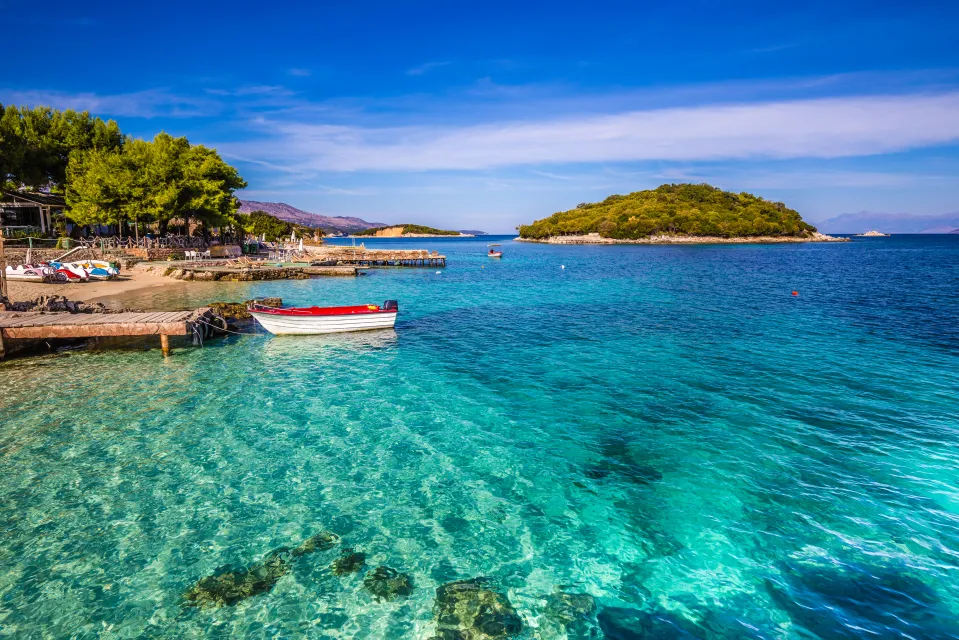
Renowned for its breathtaking turquoise waters and pristine sand beaches, this stretch of Albania is known as the “Albanian Riviera”. It’s becoming increasingly popular with holidaymakers, yet sections of it remain largely undiscovered.
Laura explained: “Ksamil, an area often coined the ‘Maldives of Europe’, is one of the most beautiful and popular beaches, with white sands and strikingly clear waters.
“For a more relaxed vibe, visit Porto Palermo – this stunning bay has a small peninsula connecting it to the mainland, and an impressive 19th-century castle, Ali Pasha.”
The Algarve is frequently packed with tourists, but further north in Alentejo there’s a far more laid-back atmosphere. With its picturesque coastal landscapes and gorgeous beaches it provides the ideal summer getaway.
Laura commented: “Further North than the Algarve, this coastline surrounds the city of Lisbon, making charming towns like Cascais, Estoril and Azenhas do Mar perfect day excursions from the capital.”
Europe is under pressure as Trump pushes allies to support the Iran war. How are they responding?
As US President Donald Trump pushes deeper into war with Iran, Europe is keeping its distance, calling it “not our war”. But as strikes on Gulf energy facilities send oil and gas prices soaring, that distance is being tested. In a rare joint move, leaders from across Europe and Japan have pledged to help stabilize energy markets and ensure safe passage through the Strait of Hormuz. Can Europe stay out of the fighting while being pulled in by its economic consequences?
In this episode:
Sven Kühn von Burgsdorff, Former EU Diplomat
Episode credits:
This episode was produced by David Enders and Chloe K. Li, with Spencer Cline, Sonia Baghat, Tuleen Barakat, Catherine Nouhan and our host, Malika Bilal. It was edited by Sarí el-Khalili.
Our sound designer is Alex Roldan. Our video editors are Hisham Abu Salah and Mohannad al-Melhem. Alexandra Locke is The Take’s executive producer.
Volodymyr Zelenskyy says ‘clear dates’ needed as Ukrainian negotiators prepare for discussions in US.
Published On 20 Mar 202620 Mar 2026
Ukraine’s President Volodymyr Zelenskyy says Ukrainian negotiators will push for a clear timeframe for the next round of Russia talks, as diplomatic efforts to end the conflict have been paused amid the US-Israeli war on Iran.
Speaking to reporters on Friday, Zelenskyy said Kyiv wants “clear dates – at least approximate ones” for the negotiations.
Recommended Stories
list of 3 itemsend of list
“Everyone understands that the situation in the Middle East, the war, is affecting the postponement of this date,” he said.
Zelenskyy’s comments come as Ukrainian negotiators are set to hold talks in the United States on Saturday on US-brokered attempts to reach an agreement to end the more than four-year Russia-Ukraine war.
Previous rounds of negotiations between Kyiv and Moscow in Geneva and Abu Dhabi failed to yield a breakthrough.
The main sticking point has been territory, with Russia pushing for Ukraine to give up the remaining 20 percent of the eastern region of Donetsk that Russian forces have failed to capture.
Kyiv has refused that demand while calling for robust security guarantees from its Western allies to prevent any other Russian attack should an agreement to end the war be reached.
“We have received signals from the US side indicating readiness to continue working within the existing negotiation formats to bring an end to Russia’s war against Ukraine,” Zelenskyy said in a social media post on Thursday.
“There has been a pause in the talks, and it is time to resume them. We are doing everything to ensure that the negotiations are genuinely substantive.”
A senior Kremlin official indicated on Friday that a new round of US-mediated negotiations between Moscow and Kyiv will likely take place soon.
“The pause is temporary, we hope it’s temporary regarding the continuation of the trilateral format,” he said.
Amid the Iran war, Ukraine’s European allies have sought to reassure Kyiv that their attention remains focused on maintaining pressure on Russia to end the war.
“There is obviously a conflict in Iran going on, in the Middle East, but we can’t lose focus on what’s going on in Ukraine and the need for our support there,” British Prime Minister Keir Starmer said this week after meeting with Zelenskyy in London.
European countries also have raised concerns about a decision by US President Donald Trump’s administration to waive sanctions on some Russian oil supplies in a bid to offset soaring energy costs linked to the Iran war.
On Friday, Zelenskyy said Ukrainian officials at the US talks on Saturday would discuss the recent “dangerous” decision to ease those sanctions on the Russian energy sector.
Russian oil is emerging as a key beneficiary of the US-Israeli war on Iran, as countries scramble to charter tankers following United States President Donald Trump’s decision to temporarily ease sanctions, analysts say.
Following a phone call with Russian President Vladimir Putin on March 10, Trump said the US would waive Russian oil-related sanctions on “some countries” to ease the shortage caused by Iran’s closure of the Strait of Hormuz, which in peacetime carries 20 percent of the world’s oil and gas from producers in the Gulf.
This week, it was reported that a number of tankers carrying Russian oil bound for China had changed course and were heading for India instead.
According to figures from the Centre for Research on Energy and Clean Air (CREA), Russia earned an additional 672 million euros ($777m) in oil sales in the first two weeks of the war on Iran, which began on February 28 when Israel and the US launched strikes on Tehran, killing Ayatollah Ali Khamenei and other senior Iranian officials.
Iran has since struck back, launching thousands of missiles and drones towards Israel as well as US military assets and infrastructure in neighbouring Gulf countries. The war stepped up a level this week, when Israel bombed Iran’s critical South Pars gasfield, and Iran hit back with strikes on Gulf energy assets, including Qatar’s Ras Laffan Liquefied Natural Gas (LNG) facility – the world’s largest.
(Al Jazeera)
This week, the average price of Urals oil – the Russian benchmark – was significantly higher than the pre-war price of less than $60, at around $90 per barrel.
Here’s more about who is buying Russian oil and which other nations might benefit from the oil crisis.
Why is Russian oil benefitting from the Iran war?
Iran’s effective closure of the Hormuz Strait, which is the only sea route from the Gulf to the open ocean, has “walled in” 20 million barrels of Gulf oil per day, George Voloshin, an independent energy analyst based in Paris, told Al Jazeera.
This has prompted the US to, at least temporarily, ease sanctions on shipped Russian oil to slow the ensuing energy crisis and potential global price collapse. The price of Brent crude, the international benchmark, has risen to above $100 a barrel since the closure of the strait, compared with about $65 before the war began.
“Russia has emerged as a primary beneficiary of the Middle East conflict due to the massive supply vacuum created by the closure of the Strait of Hormuz,” Voloshin said. “Global refiners are desperate for alternative medium-sour crudes, a need that Russia’s Urals grade specifically meets.”
He added that the US decision to grant a temporary reprieve for shipped Russian oil “has provided Moscow with a critical window to maximise export volumes and oil revenues, essentially allowing Russian crude to act as the world’s primary swing supply during the Iranian blockade”.
(Al Jazeera)
How has the price of Russian oil been affected so far?
The price of Russian Urals has surged significantly, experts say. As a result of US sanctions, the oil had been trading at below $60 a barrel for some time. However, while “Urals historically traded at a significant discount to Brent due to Western sanctions”, Voloshin said, “that gap has narrowed as demand outstrips supply”.
“Since the beginning of the year, the price of Russian oil is estimated to have risen by nearly 80 percent – most recently close to $90 per barrel – and consistently trading well above the G7 price cap of $60 as buyers prioritise energy security over regulatory compliance in a high-volatility environment,” he added.
Are ships changing course to deliver Russian oil to new buyers?
Earlier this week, Bloomberg reported that at least seven tankers carrying Russian oil had changed course mid-voyage from China to India, citing data from Vortexa, the data analytics group.
Then, Indian media quoted Rakesh Kumar Sinha, special secretary in the Ministry of Ports, Shipping and Waterways, confirming that the Aqua Titan, a Russian oil-laden tanker originally destined for China, is now expected to arrive at New Mangalore port on March 21 having been chartered by Mangalore Refinery and Petrochemicals Limited (MPCL).
India was the first country to receive a time-limited exemption from the US Treasury to import Russian oil that is already at sea, Voloshin said.
“There is clear evidence of a massive logistical redirection of Russian oil cargoes mid-voyage. Several tankers originally bound for Chinese ports have, indeed, switched trajectory to India. This shift is driven by India’s aggressive pursuit of discounted distressed cargoes to fill its strategic reserves and meet domestic demand, as well as the increased risk and insurance costs associated with long-haul shipments to East Asia via contested waters.”
Until recently, Trump had been strongly pressuring India to stop buying Russian oil, even slapping additional 25 percent trade tariffs on India last year in punishment for doing so. This was lifted earlier this year when Trump claimed he had received assurances from India’s Prime Minister Narendra Modi that India would start buying US oil, or even Venezuelan oil seized by the US, instead.
Which countries are buying Russian oil now?
Indian media has reported that India’s purchases of Russian crude have surged in the past three weeks, since the war on Iran began and the Strait of Hormuz was closed.
“The primary buyers of Russian oil continue to be India and China, who together now account for the vast majority of Russia’s seaborne exports,” Voloshin said.
Turkiye is also a significant buyer, he added, now using Russian crude to stabilise its domestic market amid the gas shortages caused by the Israeli strikes on Iran’s South Pars field.
“Additionally, a shadow fleet of ageing tankers continues to move Russian oil to smaller, less-regulated refineries across Southeast Asia and the Middle East, often through complex ship-to-ship transfers designed to obscure the origin of the crude,” he added.
He said this shadow fleet is becoming the primary delivery mechanism for oil in several contested regions, meaning more buyers could appear. “Additionally, the degree of cooperation between the US and its European allies remains a wild card. If the EU continues to refuse participation in military operations near Iran, the diplomatic and economic pressure on the US to maintain the Russian oil reprieve will likely increase.”
A French Navy helicopter hovers over the Deyna vessel, which is believed to be a member of the Russian shadow fleet, during an operation in the Western Mediterranean Sea, in this handout image obtained by Reuters on March 20, 2026 [Prefecture maritime de la Mediterranee/Etat Major des Armees/Handout via Reuters]
Will Russian oil remain in demand if the US re-imposes sanctions?
If there is nowhere else to readily source oil, countries may continue to seek Russian crude even if the US reimposes sanctions, Voloshin said. The International Energy Agency (IEA) says the closure of the Hormuz Strait has caused a shortage of 8 million barrels of oil per day.
If that persists, “major importers like India may feel they have no choice but to continue buying Russian oil to prevent domestic economic collapse”, Voloshin said.
If secondary sanctions on Russian oil are reintroduced, he added, buyers may demand much lower prices to compensate for the increased legal and financial risks of dealing with Moscow. “At the same time, in the presence of a continued severe market disruption, the US is very likely to roll over [extend] current exemptions,” Voloshin said.
Which other energy-producing nations could benefit?
Two other major non-OPEC energy producers that could benefit are Norway and Canada, experts say. However, this will largely depend on their capacity to increase production.
“Norway has already signalled its intent to maintain maximum gas and oil production to support European energy security, primarily selling to EU nations seeking to replace lost Iranian and Russian volumes,” Voloshin said. “Canada is exploring ways to increase its export capacity to the US Gulf Coast. However, like Russia, its ability to significantly ramp up production in the short term is constrained by pipeline throughput and infrastructure bottlenecks.”
Slovenia heads to the polls on Sunday in a closely contested race between incumbent Prime Minister Robert Golob and right-wing former Prime Minister Janez Jansa.
Opinion polls currently suggest no clear winner between Golob’s Freedom Movement (GS) and Jansa’s Slovenian Democratic Party (SDS), with the outcome likely to hinge on smaller parties and coalition-building.
Recommended Stories
list of 4 itemsend of list
Jansa has served three times as prime minister, between 2004-2008, 2012-2013 and 2020-2022.
Golob’s domestic agenda has been broadly reform-driven and welfare-focused, with a mix of social policy, green transition, and institutional reforms, something Jansa has promised to reverse by introducing tax breaks for businesses and cutting funding for welfare programs.
The election will also decide which direction the Alpine nation, which gained independence in 1991, will take on foreign policy, especially given the wildly divergent views on Israel and Palestine.
Slovenia’s government has been an outspoken critic of Israel’s war; in contrast, Jansa is a staunch supporter of Israel.
Slovenian then Prime Minister Janez Jansa and Israeli Prime Minister Benjamin Netanyahu met in Jerusalem on December 8, 2020 [Ohad Zwigenberg/Pool via Reuters]
Diverging views on Israel-Palestine
For a small nation – roughly the size of New Jersey in the United States – home to two million people, the Israel-Palestine conflict has played a significant role in its politics.
Slovenia’s current government has openly criticised Israel’s actions in Gaza and the occupied West Bank, even introducing a ban on imports of goods produced in the occupied Palestinian territory.
In May 2024, the country recognised Palestinian statehood, raising a Palestinian flag alongside the flags of Slovenia and the European Union in front of a government building in downtown Ljubljana.
A Palestinian flag flies next to a Slovenian and an EU flag, at the government building in Ljubljana, Slovenia, May 30, 2024 [Borut Zivulovic/Reuters]
In May 2025, Slovenia’s President Natasa Pirc Musar told the European Parliament that the EU needed to take stronger action against Israel, condemning “the genocide” in Gaza.
Later in the year, it banned far-right Israeli cabinet ministers Itamar Ben-Gvir and Bezalel Smotrich from entering the country and became the first country in the EU to ban all weapons trade with Israel over its genocidal war on Gaza.
It has also backed Slovenian International Criminal Court (ICC) Judge Beti Hohler, after she was sanctioned by the US for her role in issuing arrest warrants for Israeli Prime Minister Benjamin Netanyahu and former Defense Minister Yoav Gallant.
In a letter sent to the EU heads of state on March 13, Golob and Musar warned that Europe’s refusal to condemn the sanctions indicated that “concern for economic consequences has taken precedence over a principled defence of judicial independence and international justice … at a moment when armed conflicts rage, when international law is being violated, when the victims of the gravest crimes look to the ICC as their last hope for justice.”
Palestinian Foreign Minister Varsen Aghabekian Shahin meets with Slovenia’s Prime Minister Robert Golob, at the Office of the Prime Minister of the Republic of Slovenia, in Ljubljana, Slovenia, August 25, 2025 [Borut Zivulovic/Reuters]
Nika Kovac, a Slovenian sociologist and cofounder of the 8th of March Institute, a nongovernmental organisation focused on human rights, told Al Jazeera that support for Palestine is in part rooted in the fact that Slovenia is “a very young country”, which means “there is … solidarity with countries that want to be independent, and they cannot be.”
However, the country’s approach to Palestinian rights could shift if pro-Israel Jansa were to be elected.
Jansa has been a close ally to Israeli Prime Minister Benjamin Netanyahu and lambasted Slovenia’s decision to recognise the state of Palestine, with a statement from his party claiming it was tantamount to “supporting the terrorist organisation Hamas”.
A woman votes during the early voting before national elections, in Ljubljana, Slovenia, March 17, 2026 [Borut Zivulovic/Reuters]
Accusations of ‘foreign information manipulation’
In the lead-up to the election, a series of covertly recorded conversations was published online, featuring a Slovenian lobbyist, a lawyer, a former minister and a manager.
The videos purportedly show the individuals discussing ways to influence decision-makers in Golob’s coalition to expedite procedures and secure contracts.
On Tuesday, Golob accused “foreign services” of interfering in Slovenia’s elections, after a report by the 8th of March Institute and investigative journalists claimed that representatives of the Israeli private spy firm Black Cube had visited the country in December and Jansa’s headquarters in the weeks leading up to the leaks.
On Wednesday, Slovenia’s Intelligence and Security Agency confirmed the arrival of Black Cube representatives in Slovenia and presented a report on foreign interference in elections, which the agency’s director said was alleged to have been carried out at the behest of people in Slovenia.
The State Secretary for National and International Security in the Office of the Prime Minister of the Republic of Slovenia, Vojko Volk, made a statement following the announcement, saying, “According to information available to date, representatives of Black Cube have stayed in Slovenia on four occasions over the past six months.”
On Thursday, Golob sent a letter to European Commission President Ursula von der Leyen notifying her of “alarming information regarding what appears to constitute a grave instance of foreign information manipulation and interference currently unfolding in the Republic of Slovenia”.
French President Emmanuel Macron told reporters on Thursday that Golob “was the victim of clear-cut interference” by “third countries”.
“Today, in every election in Europe, there is interference that disrupts electoral processes,” Macron said.
Jansa has admitted to meeting with a Black Cube representative but denied any wrongdoing.
Several European nations and Japan have issued a joint statement saying they would take steps to stabilise energy markets, a day after several strikes on energy facilities in the Gulf region sent oil and gas prices soaring amid the United States-Israel war on Iran.
The leaders of Britain, France, Germany, Italy, the Netherlands and Japan issued a joint statement on Thursday expressing their “readiness to contribute to appropriate efforts to ensure safe passage through the [Hormuz] Strait.”
Recommended Stories
list of 3 itemsend of list
They did not specify what those efforts may entail but urged for “an immediate comprehensive moratorium on attacks on civilian infrastructure, including oil and gas installations”.
The International Energy Agency (IEA) last week authorised a coordinated release of its members’ strategic petroleum reserves, the largest in its history, in an attempt to counter rising global energy prices. “We will take other steps to stabilise energy markets, including working with certain producing nations to increase output,” the statement said.
Markets have been hammered since the start of the war on February 28, with Tehran hitting sites across the Gulf and effectively closing the Strait of Hormuz, through which a fifth of global oil and gas flows.
European leaders have rejected demands by United States President Donald Trump to help ensure freedom of navigation in the Gulf’s key oil chokepoint by deploying warships as part of a naval coalition.
Thursday’s joint statement came ahead of a long-scheduled White House meeting between Trump and Japan’s Prime Minister Sanae Takaichi, aimed at burnishing the decades-old security and economic partnership between Washington and its closest East Asian ally.
US Treasury Secretary Scott Bessent said before the meeting on Thursday that he would expect that Japan, which gets 95 percent of its crude oil supplies from the Gulf, would want to ensure its supplies are safe.
Takaichi has sought to move Japan away from a pacifist constitution imposed by Washington after World War II, but with the Iran war unpopular at home, she has so far not offered to assist in clearing the Strait of Hormuz.
The Japanese prime minister told parliament on Monday that Tokyo had received no official request from the US, but was checking the scope of possible action within the limits of its constitution.
Soaring energy prices
Major economies have been scrambling to cushion the impact of soaring energy prices after the de facto closure of the Strait of Hormuz by Iranian forces.
QatarEnergy reported “extensive damage” from Iranian missiles in Ras Laffan, which produces about 20 percent of the world’s LNG supply and plays a major role in balancing Asian and European markets’ demand for the fuel.
The company’s CEO, Saad al-Kaabi, said Iran’s attacks damaged facilities that produce 17 percent of QatarEnergy’s LNG exports and that it would take three to five years to repair.
Qatar’s Prime Minister Mohammed bin Abdulrahman bin Jassim Al Thani said Iran’s claims that it is targeting US bases are “unacceptable and unjustified”, as the attack on Ras Laffan shows that it is targeting energy infrastructure that is vital for Qatar and the entire world.
Energy prices have soared and stocks sunk amid the region’s protracted instability, reigniting fears over global supplies and inflation as well as the likely damage to economic growth.
European gas prices were up 25 percent and Brent crude oil futures nearly 6 percent at $113 at 13:00 GMT on Thursday after briefly surging about 10 percent. European gas prices have leapt by over 60 percent since the war began on February 28.
James Meadway, co-director of the Verdant economic policy think tank, said this would not be “a temporary blip” in the prices of oil and gas.
“In addition to the Strait of Hormuz being blocked, we now have a severe disruption to the basic production of oil and gas,” Meadway told Al Jazeera.
“At this point, this looks like it will be a significant rise in those prices stretching off into the distance.”