Syrian official says ‘no plans’ to establish Turkish military presence | Military News
The foreign minister says in an interview that Turkish military officials had visited the airbase as part of training.
Published On 20 Aug 2026
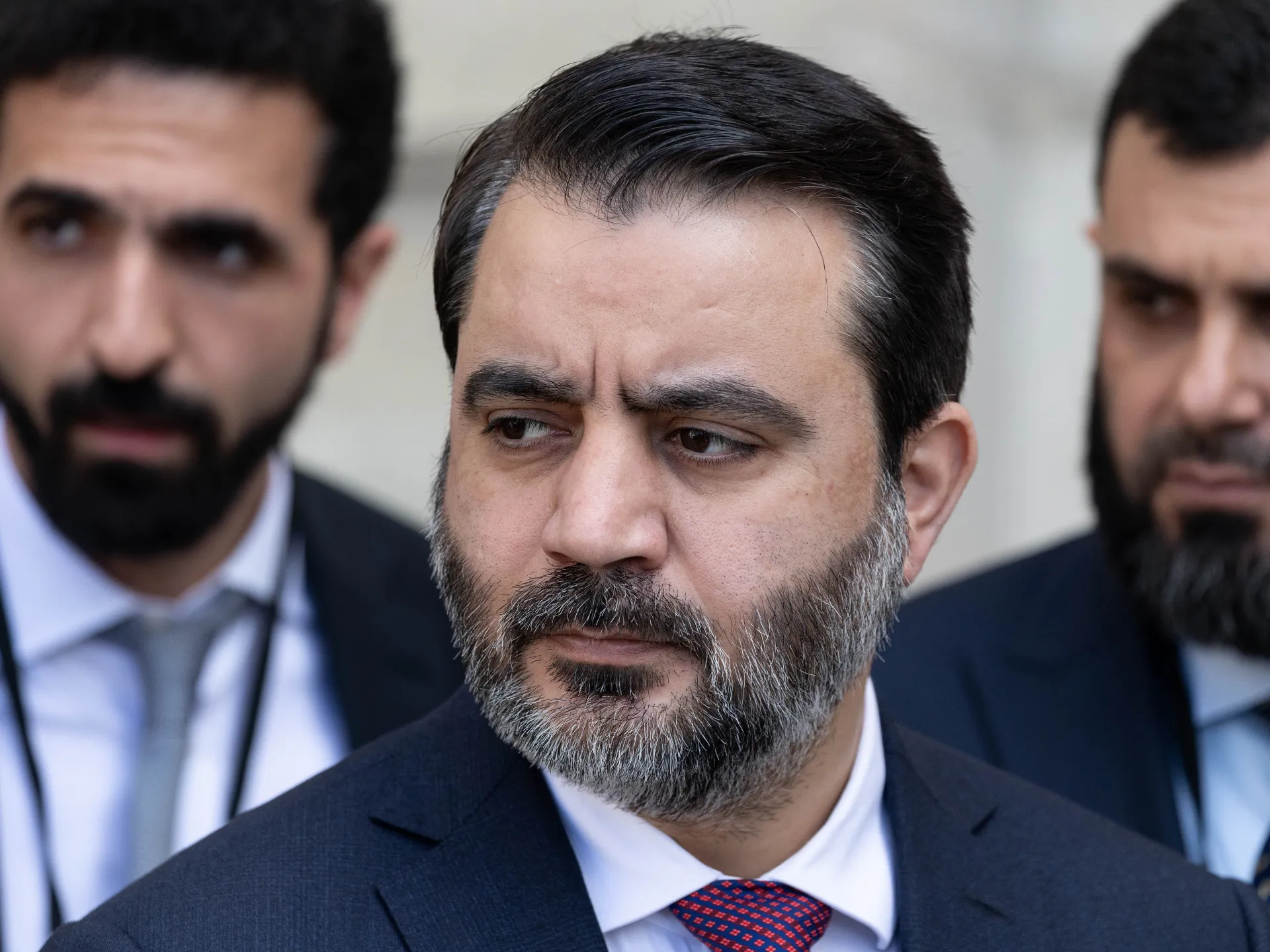
Syria has no plans to establish a Turkish military presence at the Abu al-Duhur airbase attacked by Israel earlier this week, Foreign Minister Asaad al-Shaibani has said.
Al-Shaibani said in an interview with the US news outlet Axios on Wednesday that while Turkish military officials had visited the site as part of training and broader military cooperation, he denied any Turkish military build-up, explaining that the facility was largely empty.
Recommended Stories
list of 3 itemsend of list
“There was no intention to establish a Turkish base there, nor to establish a permanent Turkish military presence or deploy Turkish forces at the site,” al-Shaibani said, adding that he had made this clear to Israel.
On Tuesday, Israel carried out eight air strikes on the runway and storage facilities at the Abu al-Duhur base near Aleppo, state media reported, in what appeared to be Israel’s first attack on Syrian government assets since March.
No casualties were reported from the attack, which drew international condemnation.
Al-Shaibani said Israel had no legitimate justification for attacking the facility.
He said that while Syria remained open to negotiations with Israel on de-escalation, any future deal must address the security concerns of both countries, reiterating that Israeli military operations would increase regional instability.
The strikes came amid worsening security tensions between Israel and Turkiye over Syria, where both countries’ militaries are active.
Israeli Prime Minister Benjamin Netanyahu said Israel warned Syria ahead of the strike not to allow a Turkish presence at the base.
“Our message was very clear. Don’t. I guess they didn’t quite understand the message,” Netanyahu said on Wednesday.
On Thursday morning, Israeli Defence Minister Israel Katz claimed that Turkish President Recep Tayyip Erdogan was “dragging Turkiye into dangerous adventures in Syria”.
“Israel will not allow any entity to threaten its security,” he said.
“It is preferable for Erdogan to continue delivering empty, delusional speeches against Israel in the Turkish parliament rather than testing Israel’s resolve to defend itself,” Katz added.
Turkiye has rejected what it called “untenable allegations” by Israel over its military position in Syria.
The Turkish defence ministry said on Thursday that Ankara would continue supporting Syria’s efforts to develop its own military capacity and infrastructure.
It said there was no military delegation at the air base hit by Israel before or during the attacks, calling for the international community to take more concrete and effective measures against Israel’s actions, which it said threatened regional peace and stability.
Turkiye, a NATO member, has emerged as one of Syrian President Ahmed al-Sharaa’s main allies and has accused Israel of trying to destabilise Syria and undermine its new administration.
It has also repeatedly called for international pressure and measures on Israel to respect Syria’s territorial integrity.
Last year, Turkiye and Israel established a line of communication to avoid any incidents in Syria.