



From this month the new rule will start coming in at all UK airports with it fulling in force by early 2027

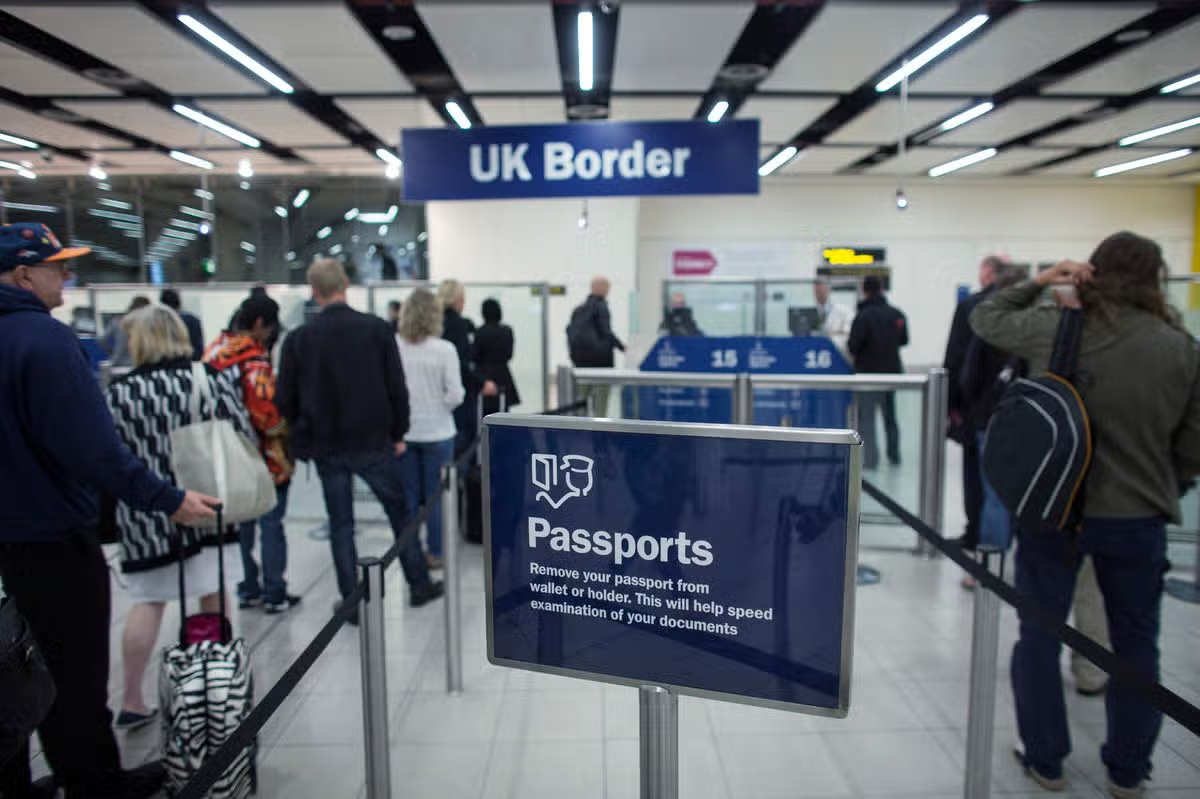
Passengers arriving in the UK will be able to pass through e-gates without showing their passports(Image: Getty Images)
Anyone with a passport has been warned of a major change for all travellers – coming in early 2027. People who may hve been hit by delays getting back into the UK and tryin to use an eGate has been told of the rule change.
From early 2027, passengers arriving in the UK will be able to pass through the gates without showing their passports, according to the Home Office. East Midlands Airport became the first to offer the new system this week, which uses facial technology to scan passengers on approach.
After taking a photo, the system checks the passenger against verified immigration, travel and passport information. The gate then opens automatically once the checks are complete, meaning passengers do not need to place their passport on the e-gate reader.
If further checks are needed, travellers will need to put their passport on the reader or may be directed to a Border Force officer. After opening at the Leicestershire hub, the Home Office said all UK airports will have contactless e-gates by early 2027. Passengers must still carry their passports, though.
Here’s how it works:
- passengers approach an eGate and have their photo taken
- the system checks this live image against verified immigration, travel and passport information
- the eGate opens automatically once these checks are complete
The system uses state-of-the-art facial technology to verify a passenger’s identity before the UK’s robust border security checks are carried out in full. Legitimate travellers can then simply walk through, without needing to place their passport on the eGate reader.
If further checks are needed, passengers will need to place their passport on the reader or may be directed to a Border Force officer, as happens today. Border Force officers will continue to monitor all eGates offering assistance, and passengers should keep their passport with them at all times.
Testing shows the new contactless system is up to 25% faster than using a passport on an eGate.
The phased rollout starts at East Midlands Airport, initially for British citizens, before expanding to more airports and other nationalities already eligible for eGates over the coming months.
Phil Douglas, Director General of Border Force, said: “This is a win for travellers coming to our brilliant country. By using state-of-the-art technology, we are making journeys smoother and faster, all while fully maintaining the UK’s robust border security.
“Our digital transformation also builds on our work this summer to extend eGates to children aged eight and above, making life a little easier for families.
Karen Dee, chief executive of AirportsUK, the trade body for UK airports, said: “This will be excellent news for the passenger and demonstrates how UK airports continue to be at the forefront of new technologies to keep our borders safe, while improving the travelling experience.
“It is vital that we have the fast, efficient borders that arrivals into the UK now expect, and we will work closely with our members and government officials to ensure a smooth rollout.”
Chris Wilson, Head of Terminal & Capacity Planning at Birmingham Airport, said: “We’re pleased to be one of the first airports in the UK to introduce UK Border Force’s contactless eGates.
“Working closely with our industry partners and government agencies, we have actively supported the rollout of the new UK Border Force system here at Birmingham Airport.”
Customers arriving into the UK will benefit from this new speedier and smoother arrival through the border. Millions of people already use eGates every year – the fastest way for legitimate travellers to enter the UK. This marks the latest step in the government’s efforts to modernise the UK border, delivering on the Immigration White Paper.
Earlier this year to e-gates at UK airports were expanded to include younger children allowing, children aged eight and nine returning to the UK to use e-gates.
The gates use facial recognition technology to check passengers’ identities against the photo in their passport, which is generally quicker than manual inspections. Children must be at least 120cm tall so they can be seen by biometric scanners, and accompanied by an adult.
Under previous rules, only passengers aged 10 and above were allowed to use the gates, forcing families with younger children to queue for passport booths.
In addition to the 13 UK airports with e-gates, children aged eight and nine are also now permitted to use them at ports in Brussels and Paris, where juxtaposed checks take place.