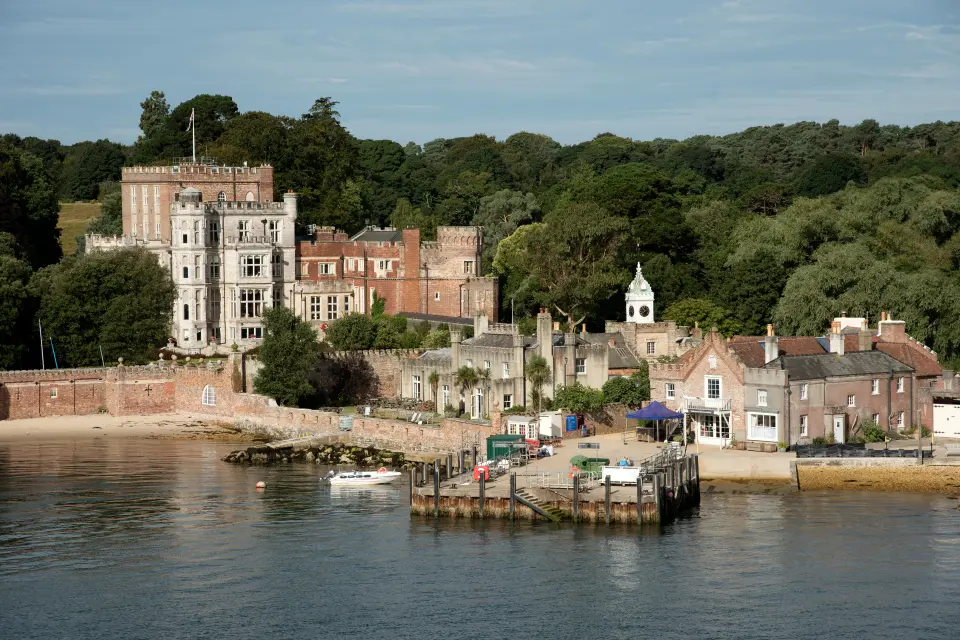
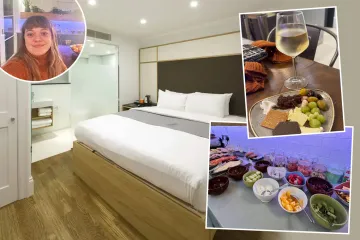
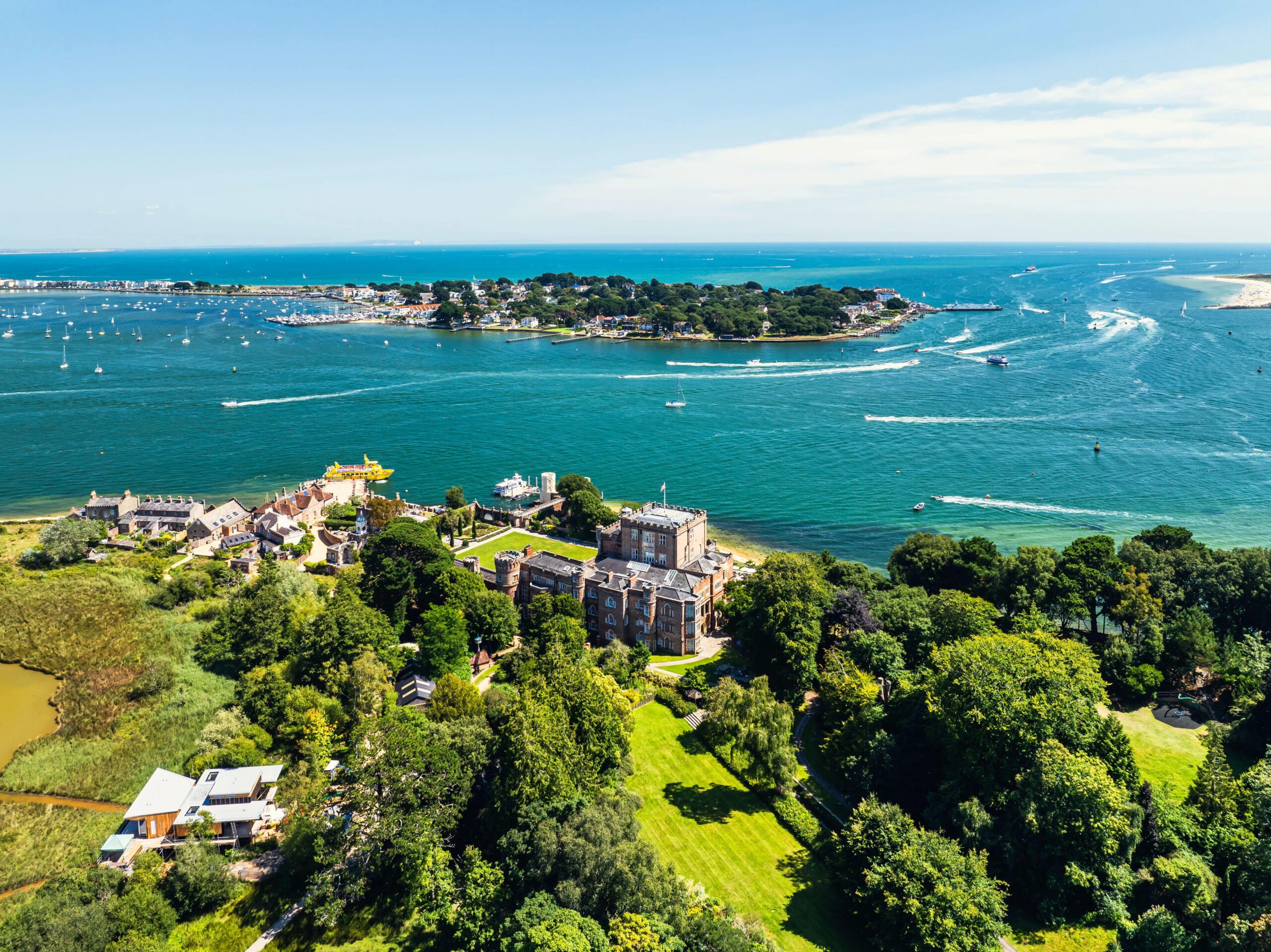
Brownsea Island is soon closing to the public until next yearCredit: Alamy
Brownsea Island in Poole Harbour will be closed on Friday, October 23 due to Storm Austen.
It is still unclear if the National Trust owned isle will open on Saturday.
Sign up for the Travel newsletter
Thank you!
A spokesperson for National Trust Brownsea Island also told Bournemouth Echo: “We apologise for any disappointment or inconvenience this may cause.
“The safety of our visitors, volunteers and staff is our top priority and this decision has been made to ensure everyone remains safe during the adverse weather conditions.”
Typically, it costs £12 to visit but National Trust members can enter for free.
It comes as the Met Office has issued weather warnings for wind and rain across parts of the UK, with two named storms due to bring disruption.
Storm Austen is expected to affect south-west England on Friday – with an amber warning for wind issued in parts of the region.
Over the weekend, Storm Boelo will affect Northern Ireland, Scotland and parts of northern England with what the Met Office described as “impactful winds”.
New Zealander Stephen Fleming, England’s new Test coach, has suggested the national team should be led by someone from England.
Fleming, who will take charge of his first series in South Africa in December, is the latest overseas coach to lead the England men’s team.
Since 1999, only two Englishmen – Peter Moores (twice) and Chris Silverwood – have been in charge of the Test side, while Ashley Giles had a spell as white-ball coach.
In the same time period England have been led by two Zimbabweans, in Duncan Fletcher and Andy Flower, and Australian Trevor Bayliss – while Fleming has succeeded his fellow Kiwi Brendon McCullum, who remains white-ball coach. Another Australian, Matthew Mott, also had time in charge of the white-ball team.
Fleming’s backroom team, announced last week, is heavily weighted towards homegrown coaches.
Former England opener Marcus Trescothick, who was in interim charge of the Test team earlier this year, is joined by ex-England wicketkeeper James Foster and former spinner Richard Dawson.
Jonathan Trott, an Ashes winner with England, is about to begin a spell in charge of England Lions. Both Trott and Dawson were in the running for the Test job before Fleming was appointed.
Speaking on BBC Radio 5 Live, former New Zealand captain Fleming said it will be a “priority” of his tenure to help develop English coaches.
“I do believe that primarily the national team should be coached by a national representative,” said Fleming.
“I’m grateful for the opportunity, but there will be some development in terms of the coaching, and you can see by our staff.”
As well as Fleming and McCullum filling the head coach roles for the men’s national teams, England’s selector, Marcus North, is Australian.
In September it was announced that another Australian, Leah Poulton, will become the managing director of England women. Between 2020 and 2023 England women’s head coach was Lisa Keightley, the former Australia international.
In addition to developing the coaches on his own staff, Fleming said he will also occasionally invite county coaches and former England players into the set-up.
“There are some really key people who have come back into the system and I’m really pleased about that,” he said.
“I look forward to working with them, but it is a real focus and it’s an ambition as well that you will also get county coaches who will be introduced at certain times and you will get past players that will be asked to come back as well.
“It’s really inclusive and a comfortable nature of using what’s around, but also driving what should be driven within the county game and the English game.”
I’LL admit it. I’m a scaredy cat. So it was rather out of character for me to be tip-toeing through a churchyard in the pitch black, led by a stone-faced monk and the Witchfinder general.
I was on a Ghostly and Macabre tour in the quiet Suffolk town of Bury St Edmunds.
Jenna Stevens experienced a Ghostly and Macabre tour in the quiet Suffolk town of Bury St EdmundsCredit: SuppliedThe Nutshell, which claims to be the UK’s smallest pub, measuring just 15ft x 7ftCredit: Supplied
Costumed guides John and Mike had been recalling gruelling stories of local murders and the paranormal before we made our way, squelching through soggy maple leaves, to the charnel house.
“This is usually when the owls join us” said Mike. Just then, an owl hooted back, right on-cue.
Sign up for the Travel newsletter
Thank you!
The house was built to store bones when graveyards became full. And what happened when the crypt piled up? Well, that’s where ‘bonfire’ comes from (bone-fire in old English).
“Usually, no one is allowed in here” whispered Mike. “But on tours with us, you can come in.” I gulp.
I was starting to become convinced these animals were paid actors. I’ll keep it secret what I saw inside. Just know that I darted back to my hotel room in a flash afterwards.
Luckily, the ivy-clad Angel Hotel, where Charles Dickens penned The Pickwick Papers, is nothing like the eerie building I’d been exploring.
My room had a free-standing copper bathtub and plump bed, while downstairs, the kitchen was cooking up hearty dishes such as braised-beef ‘Pickwick Pie’.
The 1,000 year-old abbey ruins and gardens, where once stood one of Britain’s most powerful monasteriesCredit: SuppliedStay at the Angel Hotel, where Charles Dickens penned The Pickwick PapersCredit: Supplied
It was also perfectly positioned for exploring the rest of this quaint town and its quirky thrills.
That includes the 12th-century Moyse’s Hall Museum, which is set to open a new gallery named Crime And Superstition on Halloween this year.
The gallery explores Bury’s deep-rooted ties with witchcraft, including everything from 17th century voodoo poppets to hand-made wands.
The centrepiece is A Tryal Of Witches, the best-documented English witch trial, detailing a 1662 case in which two Suffolk women were found guilty of bewitching children.
Slightly less spooky is the 1,000 year-old abbey ruins and gardens.
Visitors enter via a huge, 14th century Abbey Gate under an imposing portcullis into the remains of what was once one of Britain’s most powerful monasteries.
Opposite here, on Abbeygate Street, you will find a truly thriving high street with boutiques including chocolatiers, tailors and antique shops.
I was visiting on a Saturday, when the local market was in full swing and the independent cafes and restaurants were packed, including Italian spot PrimaVista, where the fresh tomato spaghetti easily rivalled dishes I’ve had in Italy.
Make sure to swing by The Nutshell, which claims to be the UK’s smallest pub, measuring just 15ft x 7ft.
It’s delightfully quirky, with a 400-year-old mummified cat displayed above the bar along with a mummified rat.
“It’s to tease the cat”, flat-capped local Chris smirked.
Bury locals are fiercely proud of their brilliantly bizarre town, and after my time here I admit, I’m under its spell, too.
The minuscule yet distinctly humanoid figure of a fairy flaps its wings as it flies into the ancient ruins of a bygone kingdom. Guiding a young heroine to meet a mysterious faun, for a moment, the fantastical creature looks as though it might cross the threshold of the screen.
It is in that instant that Guillermo del Toro — wearing 3D glasses while sitting at the Academy Museum of Motion Pictures’ imposing David Geffen Theater for a tech check — chuckles with pride as if to say, “Look at that.” Later that night, almost 1,000 fans were transported into his entrancing 2006 masterwork, “Pan’s Labyrinth,” (a.k.a. “El Laberinto del Fauno”) at the premiere of the new 3D version.
Back in theaters across the country on Friday (which is also Del Toro’s 62nd birthday), “Pan’s Labyrinth” is celebrating its 20th anniversary with a new 4K restoration, available in both 2D and in the aforementioned 3D transfer that Del Toro himself oversaw.
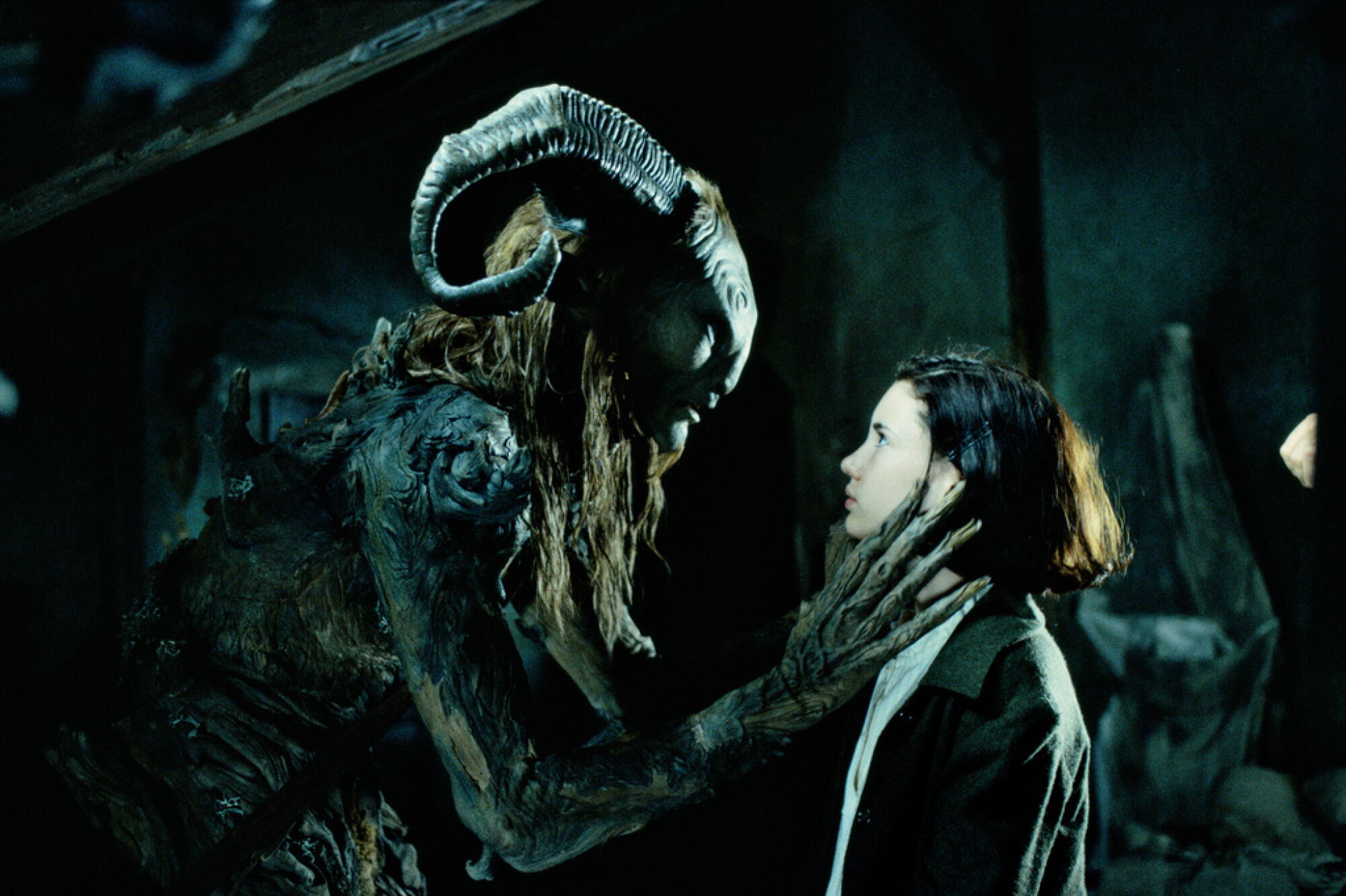
Doug Jones, left, plays the faun that beckons to Ofelia, right, played by Ivana Baquero in “Pan’s Labyrinth.”
(Scott A. Garfitt / Andreea Alexandru / Invision / AP)
As brutal as it is spellbinding, the Mexican filmmaker’s modern classic unfolds during the Spanish Civil War — more precisely, in 1944 — as young Ofelia (Ivana Baquero) and her pregnant mother move into the camp run by the ruthless Capt. Vidal (Sergi López).
Amid the bloodshed, Ofelia discovers an underworld of magical entities, including the alluring faun (Doug Jones), who convinces her that she is a princess who must reclaim her royal status.
By winning three Academy Awards and being nominated for two more — one for Del Toro’s screenplay, the other for foreign language film, representing Mexico — “Pan’s Labyrinth” signified an artistic watershed moment in Del Toro’s career. These accolades came after he directed two comic-book adaptations for Hollywood studios: “Blade II” and “Hellboy.”
Beyond the recognition, the experience felt spiritually transformative for the Guadalajara native; not the least because of the hurdles he overcame to bring it to fruition.
“‘Pan’s’ marks a big divide in what I did before and what I did after. I became invested in a different way in filmmaking,” Del Toro tells me. “I don’t know how to describe it, but filmmaking became a religion, as opposed to something that I could do. It fused with me.”
Though the film is now regarded as one of the greatest works of the 21st century, when Del Toro set out to make it, the industry was not receptive to his ideas.
“Everything I thought I wanted to say about war in ‘Devil’s Backbone’ seemed obsolete, because we had gone through 9/11 and the world had changed,” Del Toro recalls. “I didn’t want to do an American movie. I was being offered a lot of comic- book movies and said, ‘I got to do a companion piece for “Devil’s Backbone” no matter what.’ But nobody wanted to do the movie.”
One key objection was the mature tone of the narrative, in which the child protagonist is directly confronted and endangered by the evils derived from fascist ideologies.
“They said, ‘If it’s a fairy tale then it should be a family movie,’ because I’d been offered ‘Narnia’ a year before by [former Walden Media chief executive] Cary Granat,” Del Toro tells me.
“He said, ‘Why don’t you do ‘Narnia’?’ And I said, ‘Because I want to do my own version of a fairy tale where the lion doesn’t resurrect and it’s about a pitiless world against a boundless imagination.’”
Del Toro’s interest in stories where the woes of children are taken seriously was spurred by ‘Los Olvidados,’ Luis Buñuel’s classic from 1950, about a group of neglected children surviving a harsh reality in the streets of Mexico City.
“When I saw ‘Los Olvidados,’ I was in my early teens,” says Del Toro. “I thought every time somebody told a story about a child that was unsentimental and that was a little brutal — it could be ‘The Spirit of the Beehive’ or ‘Los Olvidados’ or ‘The Red Balloon’ or even Bobby Driscoll in ‘The Window’ — whenever you saw a child in real danger, a child in jeopardy, a child in moral dilemma, like ‘The Fallen Idol,’ I really was transported.”
Children, Del Toro believes, are often invisible to adults. They are “cartoons” in the eyes of “regular adults.” Thus, when his mother started reading child psychology books to better understand a young Del Toro, he read them as well, so that he could try to manipulate her.
Del Toro laughs mischievously as he remembers his antics. “I would do exactly what the book said, and I realized I could work within that preconception and make my grandma buy me horror comic books or make my mom allow me to miss school,” Del Tor recalls. “Ofelia is very strong. That was the point of the movie for me. I wanted to see the clash of wills between a young kid and a fascist captain, and I wanted to see the kid win.”
(Teresa Isasi / Picturehouse)
Del Toro’s mother, Guadalupe, died in 2022. But she lives on in cinema, thanks to the 1985 landmark queer Mexican film “Doña Herlinda and Her Son,” by director Jaime Humberto Hermosillo, where she played the titular Doña Herlinda.
And if you look closely, you’ll also find Del Toro in the movie, which was filmed in Guadalajara.
“I have a cameo with my ex-wife in it. Lorenza. She’s the receptionist and I appear dancing in Chapala, but I’m super thin, so you can never recognize me,” he says. “I’m dancing with a girl that I liked, but I was already in the throes of dating the one who became my wife, Lorenza.”
Then there was the question of the picture’s language. Del Toro wouldn’t waver on making “Pan’s Labyrinth” in Spanish.
“Many of them said, ‘We’ll do it if you do it in English — set in Spain, same ending, the girl dies, no problem, but in English.’ And I said, ‘I can’t. It’s not true to the movie.’ I’m not saying you can never do that, but it’s always this ‘Zorro’ thing like, ‘Are you in a hurry, señor?’ or ‘Come to the hacienda,’” he says, doing a funny, exaggerated accent on the Spanish words.
“If you’re trying to contrast reality versus fantasy, the reality has to be in its language, in its location,” Del Toro adds, emphasizing his resolve to make the movie in his native tongue. “I thought, ‘This is about the reality clashing with the fantasy. I have to make the reality stylized, but I don’t want to do it in English, because then everything is a construct. Everything is just an idea.’”
In 2026, the film’s bilingual appeal is a major component of the marketing strategy that Cineverse — the entertainment company that Del Toro approached to handle the restoration and rerelease of “Pan’s Labyrinth” — is implementing to reach audiences across the country.
“A lot of our messages are in English and in Spanish. The messaging around the making of the 3D — Guillermo likes to say ‘F— AI,’ but we positioned it as ‘Made for humans, for humans. Hecho por humanos, para humanos,’” says Yolanda Macias, chief motion pictures officer at Cineverse. “That’s a really strong message that has resonated with our fans.”
A Mexican American woman whose parents emigrated from Jalisco, Macias sees “Pan’s Labyrinth” as a timeless movie that’s as relevant today as it was two decades ago.
“We are not ignoring a very important segment of the audience, which is the Latino population who have always, in my experience, shown an interest in creators from Mexico or from Latin America,” Macias says. “And we are so proud of Guillermo for being that person for this audience.”
When first envisioning “Pan’s Labyrinth,” Del Toro found himself grappling with existential concerns related to the meaning and relevance of what each person leaves behind when they are gone. Can anything we mortals create stand the test of time? Does it matter?
(Gina Ferazzi / Los Angeles Times)
“One of the things I was going through was I thought, ‘Is making movies worth it? You give them years and years and years, and then they just move down the current into the oblivion of the culture,’” Del Toro says. “A central theme in the film is, ‘Can we give our lives to something that doesn’t change the world?’ That’s why the movie ends with a little flower blooming in a dried tree. That’s all that is left of her story in the real world.”
His films will one day too become flowers left not only as proof of his time on earth, but perhaps as messages for those to come who have the sensibility to appreciate them.
“You can say, ‘Ofelia lived in the other kingdom,’ but in the real world, there’s only one tiny flower. And that’s why it says, ‘For those that know where to look.’ Because that’s what we do as filmmakers. When you ‘discover’ a filmmaker, you say, ‘I discovered this guy Fellini.’ Well, he’s been there for a while, but sure. Or you discover Miyazaki or Mamoru Oshii … They’re continents, but they are only in maps that are very secret. I like that image.”
So long as they are found, Del Toro doesn’t worry that much about how people encounter them.
“[Films] live on to a certain degree. Like when we were shooting ‘Frankenstein,’ I said, ‘We will live forever in the Netflix queue,’” he recalls, trying not to laugh. “Theatrical is the best. There’s no comparison. But I remember my childhood, I saw all the Universal monster movies on TV, and they were monumentally important for me. There’s something to be said about accessibility that is also important.”
I agree with him — and mention that some of the most revelatory movie-watching experiences for me as a young cinephile happened thanks to bootleg DVDs, which I would buy as a teen in Mexico City.
“I love the pirate DVDs in Mexico,” says Del Toro with a laugh. “I’ll tell you a little story: We went to promote ‘Hellboy’ in Mexico City, and we were having coffee. A guy came in and said, ‘You want to buy movies?’ And he had ‘Hellboy’ already, opening week … and it didn’t have a cover either!”
Another distinction that “Pan’s Labyrinth” holds is that it was the last film in Spanish that Del Toro directed. But that could change, he says; he still has another project he’d like to make in Mexico.
“I actually have an idea that I would love to shoot, but I want to make it a drama. I don’t want to make it a fantasy movie,” he explains. “I have a great story that I want to shoot one day. It’s a kidnapping scene from three points of view. The victim, the people doing the pickup, and another component that I will not reveal.” (Del Toro’s late father, Federico, was famously kidnapped in Guadalajara in the late 1990s.)
The thought of Del Toro making another Mexican film in the future, reminded me that the original screenplay for his period ghost story, “The Devil’s Backbone,” was set in Mexico, but a lack of funding forced him to shift the production to Spain, with the help of Pedro Almodóvar’s company El Deseo.
“It was about a traveling circus during the [Mexican] revolution with a mother, a father and a boy. It was full of jarred fetuses. The boy was a clown, and the father was a magician. I was trying to do Bergman’s ‘Hour of the Wolf’ or ‘The Magician’ — modest but creepy,” he explains. “But it was very different. I had the orphanage, I had the legend of the fetuses and a ghost; and I had the devil live in the monastery.”
In any language, Del Toro is a fierce advocate against the use of generative AI in artistic creation. He believes that anything touched by humans has a better chance to endure. The love audiences still hold for “Pan’s Labyrinth” is a testament to this sentiment.
“[Pan’s Labyrinth”] is very truthful to who I was. And whenever you are able to be truthful, people feel that it matters to you,” Del Toro says. “And when you think it matters to someone, you cherish it.”
THE historic Birnbeck Pier is currently undergoing an enormous renovation and will open next year for the first time since the 90s.
First look images have been revealed to show what it could look like when visitors can finally step foot onto the structure again.
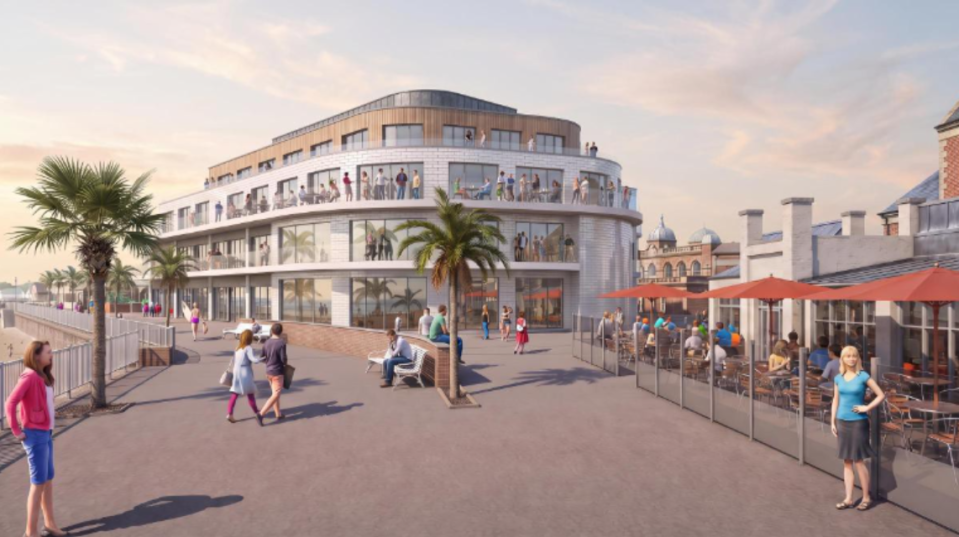
Birnbeck Pier is currently being restored at the cost of £44millionCredit: Haverstock ArchitectsThe Pier Master’s Cottage will have a cafe and terrace with views of the pierCredit: Haverstock Architects
Birnbeck Pierconnects the mainland to a rocky island in Weston-super-Mare, but has been closed to the public since 1994.
The pier is being restored at a cost of £44million and it has been well-received by locals and visitors who are calling it “excellent news”.
Sign up for the Travel newsletter
Thank you!
In recently revealed images, it shows that along with work on the pier structure, surrounding buildings will be restored too like the Pier Master’s Cottage.
This will become a visitor centre and shop which will also be connected to a new modern cafe building and terrace, which will offer impressive views to the pier.
Nearby, the Pier View building which has previously been a café, tea room, dress shop, and even military offices during World War Two, will also be restored.
As for what it will become, that’s yet to be decided, but one option being explored is an ice cream parlour.
The Toll House that’s known locally as the ‘shell shop’, will be restored and has potential to reopen as a concession stand.
As for the island, this will also eventually reopen to the public, but it may not be finished in time for when the pier reopens.
When it is complete, visitors will be able to see the restored clock tower and pavilion.
Also on the island will be the refurbished 1888 Boathouse, which will become a cafe on the top floor and an events space below.
Birnbeck Pier has been closed since the mid-1990sCredit: Alamy
Boats will even be able to dock thanks to the restored North Jetty on the island.
The island used to be very popular thanks to its theme park which had small rides including a miniature railway and water chute.
Mike Bell, leader of North Somerset Council, told the BBC last month that work on restoring the pier is already a quarter of the way through.
He added: “When people will be able to walk on the pier for the first time, I think it will be a magical moment for the many people like me who were born in Weston and have lived here all their lives.
The Boathouse will be restored to become top floor cafe with food and drink and sea viewsCredit: Haverstock ArchitectsBelow will be a community and event spaceCredit: Haverstock Architects
He continued: “People who have seen this crumbling jewel will be delighted to see it restored.
“The North Jetty will enable us to bring in passenger and other ferry services to Weston.”
Water restrictions have also been placed on tourists – including the removal of plugs to prevent visitors from taking baths.
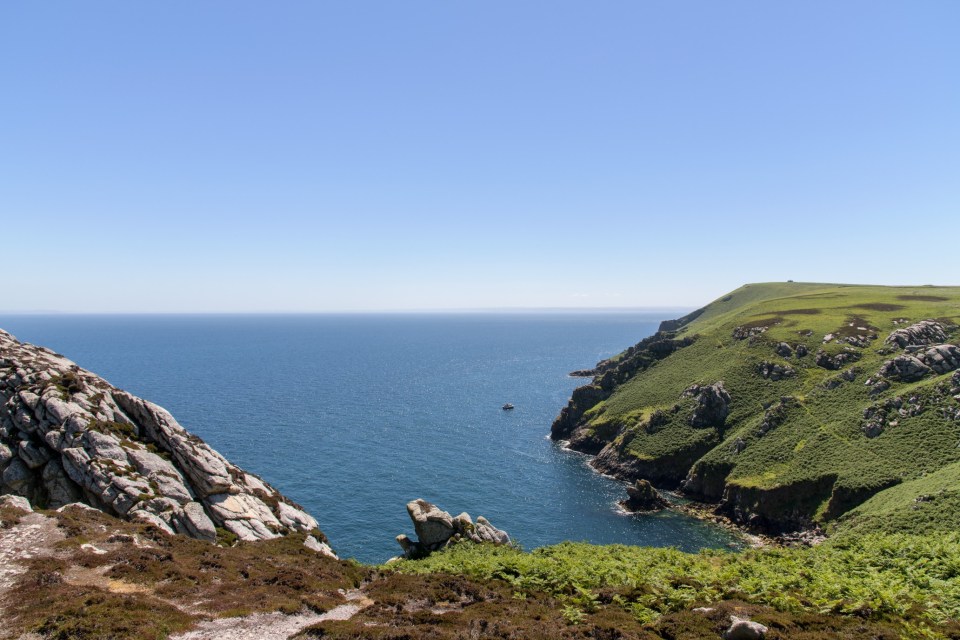
Pumping water from ponds used by wildlife to a treatment works is being used as a “last resort”, according to Lundy managing director Derek Green.
He told the BBC: “Bringing in pond water is something we’ve never had to do before.
“If we didn’t do this, we would be facing the reality of closing Lundy…it would be devastating for us.
“We’ve got a working farm here and the animals need water every day… so to evacuate those animals, those people and to cancel all those holidays is something that has never happened in the history of Lundy before.”
Green added that there had been “no significant rainfall” on the island since April, contributing to the severe water shortage.
The area is known for its abundant puffin and seal colonies, as well as whale and dolphin spotting.
The 3.1 mile long isle can be reached from Devon’s mainland in less than two hours by ferry, and remains popular among holidaymakers for its picturesque beaches and adventurous hikes.
ONE of the longest piers in the UK has unveiled its latest restoration update after being forced to close four years ago.
Southport Pier in Merseyside has been closed since 2022 after being deemed unsafe but is currently undergoing a huge £20million restoration project.
Southport Pier is currently undergoing a £20million restoration projectCredit: Jason Williams / UK Drone ShotsThe pier is the second longest in the UKCredit: Jason Williams / UK Drone Shots
As part of the project, sections of the pier are being stripped back including the decking.
There will also be replacement steelwork, such as restoring the existing handrails and tramlines.
Sign up for the Travel newsletter
Thank you!
A total of 27 lighting arches have been removed as well as a half-way house and kiosk that have been taken down.
The pier, which is one of the longest in the UK and dates back to 1860, will undergo construction and reconstruction work until around September next year.
Sefton Council previously said: “The first task contractors will have is to assess the current condition of the existing paintwork on the structure’s columns. We want to ascertain if there has been any deterioration since previous assessments were undertaken.
“If the condition is good it can be left as is, however if not we will also need to repaint the whole structure as part of the repair works.
“This pre-construction work will take at least five days to complete.
“Following this we’ll shortly be moving onto the ground investigation stage within the coming weeks, which checks the stability of the ground underneath and around the Pier for materials like scaffolding.”
The pier has been closed to the public since 2022Credit: Jason Williams / UK Drone Shots
The pier originally opened in 1860 but the pavilion was destroyed in 1897 by a fire.
Another fire damaged the deck in 1959.
Then in 1975, it was awarded a Grade II listed status and a £7million tramway was added in 2002 running along the pier.
Notably figures associated with the pier include Charlie Chaplin, who performed there during his early career.
This beautiful city offers a quieter alternative to the UK’s busiest festive destinations, with a magnificent medieval cathedral, riverside walks and traditional pubs to warm up in.
Beautiful city in England is a ‘cosy’ destination for a winter staycation(Image: Yackers1 via Getty Images)
Christmas markets might put Bath, York and Edinburgh high on your winter travel wish list, but Norwich has plenty to tempt anyone seeking a quieter staycation.
With its medieval landmarks, independent shops and welcoming pubs, the city combines festive atmosphere with opportunities to slow down and explore. Spend a day browsing for gifts, strolling beside the river or admiring the cathedral before settling in somewhere cosy.
Norwich is Britain’s only city located within a national park — one of its major draws.
Norwich was among the leading UK staycation destinations picked by specialists at StressFreeCarRental.com in 2024. The company’s CEO, John Charnock, said: “As the nights draw in and the temperatures plummet, it’s inevitable that many of us start to feel a little down at this time of year.
“The picturesque Broads National Park has miles and miles of footpaths for visitors to truly feel at one with nature and help to keep active. Norwich is a great city to connect with the outdoors and practice ecotherapy.”
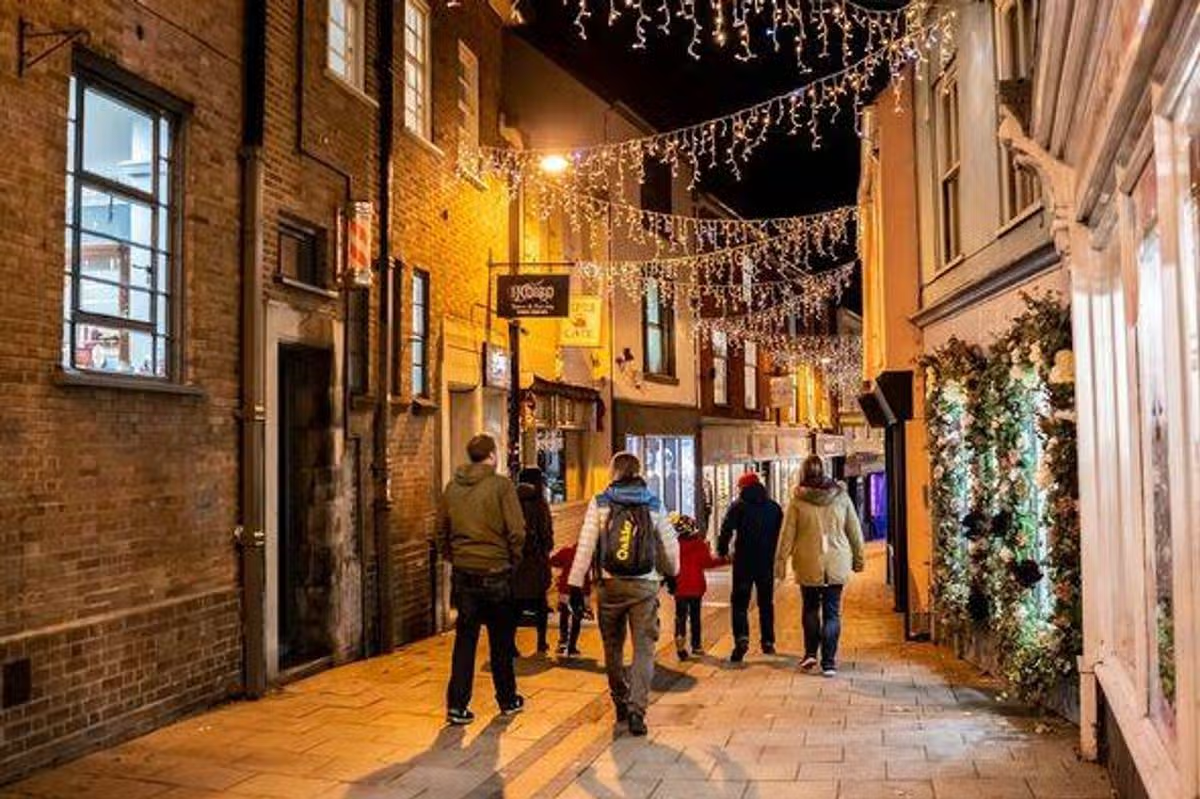
Back in the city, Norwich Cathedral is a highlight for visitors drawn to its medieval architecture. Its appeal extends beyond the building itself, with Christmas services, concerts and a light show adding to the festive experience.
On TripAdvisor, one recent visitor to the cathedral said: “Visited early on a Friday morning as the Cathedral was being prepared for the weekend with Flower arrangers busy creating displays. We had a lovely chat with one of the volunteers.
“A lovely building made of Caen Stone. We visited the grave of brave Edith Cavell. There is small gift shop if you wish to purchase something. Beautiful grounds around the building.”
While another recent visitor added: “An outstanding cathedral. Well worth visiting. Entry fee is a suggested £5. Wonderful cloisters and some very interesting and historic graves and monuments. I would definitely go back as there is so much to see.”
For Christmas shopping, Norwich offers a mix of independent retailers and familiar high street names. Its bustling marketplace, shopping centres and Norwich Lanes provide plenty of places to hunt for gifts and keepsakes.
Rather than one huge Christmas market, the city has a collection of smaller festive events showcasing local creativity. There are also multiple Christmas markets and late-night shopping on Thursdays in the run-up to Christmas.
Seasonal lights and decorations brighten the streets, while historic venues including The Assembly House and The Maids Head Hotel add to the celebrations.
When it’s time for a break from browsing, the decorated Norwich Lanes make an inviting setting for a leisurely wander. Alternatively, head out from Norwich railway station for a walk beside the River Wensum.
Along the riverside, sights include Pull’s Ferry, Cow Tower and Norwich Cathedral, with pubs such as the Compleat Angler and The Red Lion offering somewhere to stop for a drink.
For a longer dose of history, try the city’s circular walking route, which follows the Wensum and crosses ancient bridges. Medieval city walls, the imposing castle and churches are among the landmarks to look out for.
Norwich’s oldest pub, The Adam and Eve, is conveniently placed along the route. And after a day spent exploring in the winter air, one of the city’s traditional pubs with a crackling fire could be just the place to finish.
DOES everything feel a bit much at the moment? If so, I can let you in on the perfect way to escape the turbulence of 2026.
My family and I have just taken a step back in time to a bygone era — The Black Country Living Museum in the West Midlands.
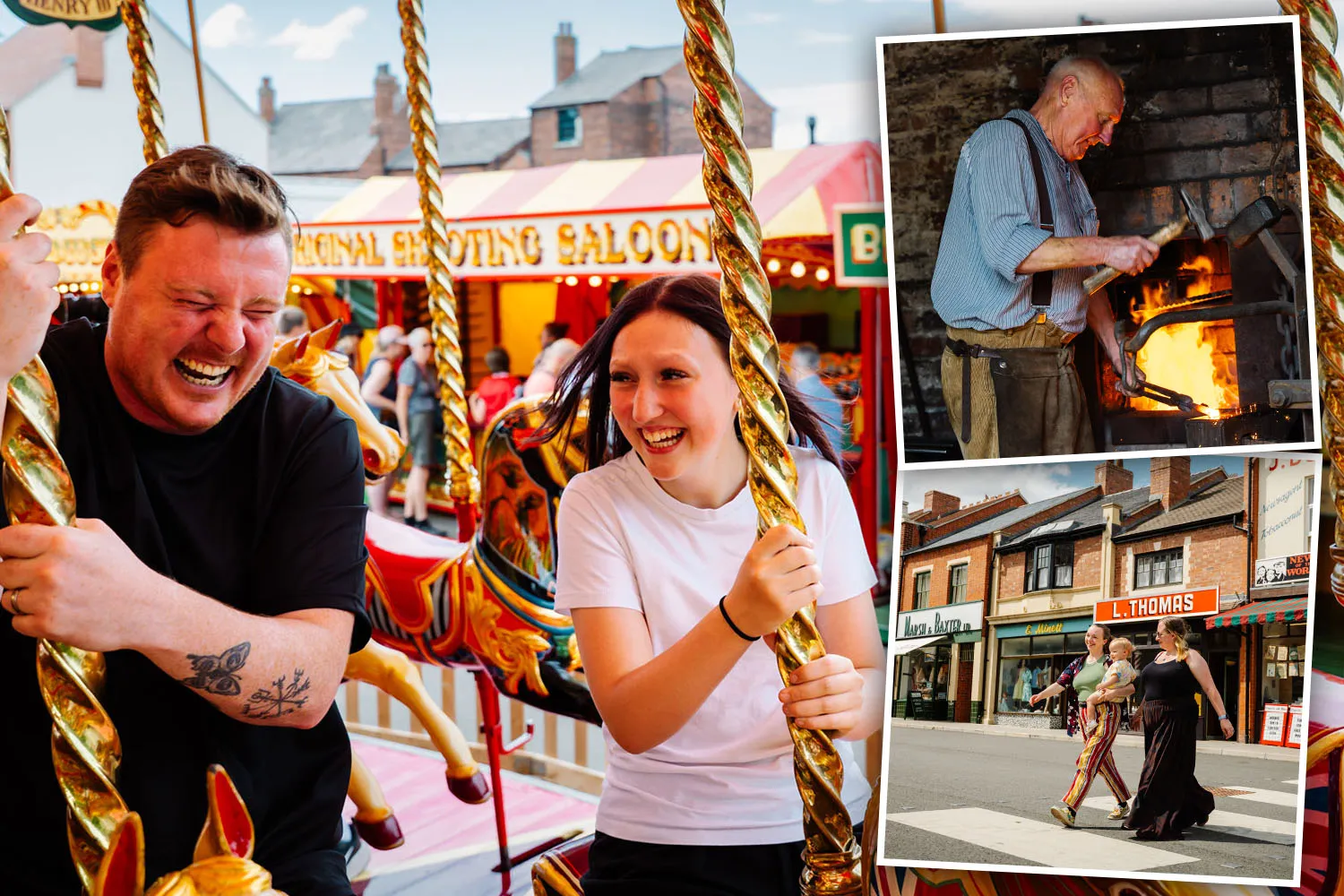
The Black Country Living Museum in the West Midlands is like travelling back in time to a bygone eraCredit: SuppliedBoys Jasper (left) and Wilf with grandad Dave Watkins, enjoyed exploring the 26-acre attractionCredit: Supplied
This gem is genuinely one of the most fascinating attractions I have ever experienced with my boys Wilf, nine, and Jasper, six. And it is a masterclass in escapism.
The open-air attraction spans 26 acres and is packed with history.
Sign up for the Travel newsletter
Thank you!
It’s so much more than your average museum, though. This is an extremely immersive way for families to experience, first-hand, the Black Country — a region in the West Midlands with a history of coal mining, ironworking and brickmaking.
There are life-sized streets, dockyards and blacksmiths, laid out as they would have been at the height of the Industrial Revolution.
Visitors can wander among more than 80 original shops, houses and buildings, with actors recreating what life was like inside — and the historic characters will chat to you as if they are really in the past.
It will take at least three hours to get around, but I would give it five.
Our day began with a double-decker bus taking us down the winding, cobbled streets as the old-time conductor gave my boys authentic tickets for their journey.
To make the experience more exciting for the lads, I brought along their grandad, Dave Watkins, 70, a Brummie who has lived and worked in the Black Country his whole life — and supports local football team, West Bromwich Albion.
The Blacksmith’s Workshop gave onlookers a demonstration of chain-making in a furnaceCredit: SuppliedAn old traditional English street features old school sweet shops and fish and chip shopsCredit: Supplied
In one shop, he was delighted to find the brand of cigarettes his dad used to smoke. But it’s not just the sights of history you experience, it’s the tastes, too.
We ordered lunch at the Hobbs & Sons fish and chip shop — a reconstructed 1930s store that originally stood in this very town.
It was, hands down, the best cod and chips any of us had ever had. Chefs follow a traditional recipe and the novelty of eating from chip paper on a picnic table beside the canal that runs through the museum got extra wow points, too.
If you’re not a fan of a chippy supper, you can bring your own picnic — or there’s the Workers’ Institute Cafe, where we grabbed a cheese sandwich for the boys to share on the car journey home.
There’s also the T. Cook’s sweet shop, where costumed staff weigh out classic sweets, like mint humbugs, into paper bags.
Next-door is the cute Veal’s bakery, where the boys gobbled down a brownie.
The museum captures authentic smells, too. The industrial scent of coal filled the air, the homes you can go inside smelled authentically lived-in and even the outdoor lavvies were stinky, which my boys obviously found hilarious.
As is the way with primary school kids, the lads were delighted to hear the gross facts the dressed-up characters cheerily shared.
The barman in one of several old-fashioned pubs was happy to answer their questions about why there was sawdust sprinkled on the floor (it was, disgustingly, to soak up the spit of the working men).
Wilf thought the best part was the tour of the faithfully-rendered boat docks — the dock worker was so charismatic.
Jasper, on the other hand, was most enamoured with the historic fairground filled with a few of the beautiful, vintage rides (which cost an extra £2.50 each), as well as the Blacksmith’s Workshop, where we all enjoyed watching an extremely engaging demonstration of chain-making in a furnace.
Fans of Peaky Blinders will get a thrill walking round the museum as its historic streets and buildings have been used as filming locations in all six series of the BBC show.
There really is so much to fit in that we didn’t have time to try the retro putting green or join in with an authentic Edwardian school lesson — we were kicking ourselves for only allowing ourselves three hours.
But the bonus of the Black Country Living Museum is that if you buy a day ticket, you have unlimited return visits for 12 months.
Grandad Dave and I vowed to have a pint together when we return.
These old-fashioned pubs really are the perfect place to distract yourself from the modern day.
GO: BLACK COUNTRY LIVING MUSEUM
ADULT tickets cost from £27.95 when booked in advance, while child tickets cost from £15.50.
Day tickets come with an UnChained Annual Pass, which gives unlimited return visits for 12 months. See bclm.com.
A PRETTY English seaside town could soon get a massive upgrade.
Gorleston in Norfolk is home to Gorleston-on-Sea Beach which was recently named one of Europe’s best beaches in Tripadvisor’s Travellers‘ Choice Awards.
Gorleston in Norfolk could be getting a new waterfront attraction with a soft play area and wellness centre
And now the seaside destination could be getting even better with a new waterfront attraction.
The Ocean Room used to be a thriving nightclub with bands like Blur and Pink Floyd performing there.
Sign up for the Travel newsletter
Thank you!
Now, the council has sold the building for £500,000 with future plans looking to replace the building with a soft play area, indoor games space, a coffee shop and a wellness centre with a spa.
The surrounding area would be redeveloped too with connections to the nearby Gorleston Pavilion Theatre and the bandstand.
If The Ocean Room was to be saved, the local council has estimated it would cost £1million to repair the building.
According to the BBC, the developer said: “The Ocean Room holds a special place in the hearts of many and the team recognises the building’s removal will be a source of genuine disappointment for the community.
“However, it should be noted that the council itself identified significant structural concerns with the building before the site was sold.”
While formal plans have not been submitted to the council yet, the round, Art Deco building could be facing its last days.
It would be built where the current Ocean Room is
The Ocean Room originally opened back in 1939 and used to host dinner dances, boxing events, nightclub evenings and concerts.
It then closed in 2024 after its tenants went into administration and the building has remained empty since.
But the island is popular with wildlife lovers, with exotic birds, deer and free roaming peacocks.
It has a huge red squirrel population too, with around 250, best spotted in the morning.
The 16th century Brownsea Castle, built by Henry VIII, is the main building on the island, but you won’t be able to stay there as it is sadly privately owned.
Instead there is the Brownsea Island Campsite, with 40 pitches in the summer, or a number of lodges sleeping from 2 to 12 people.
It will reopen again in March 2027Credit: Alamy
There is an adventure playground for kids, with everything from den building to obstacles.
You’ll have to leave the dogs at home sadly, as only assistance pets are allowed.
Daily guided tours take place too twice a day.
Otherwise you can fill your stomach at the Vilano Cafe which has snacks, drinks and a snack van in the summer.
A bloke moaned that his full English breakfast at a cafe in Benidorm, which was under five pounds, was too expensive, and it led to a brutal response from the owner
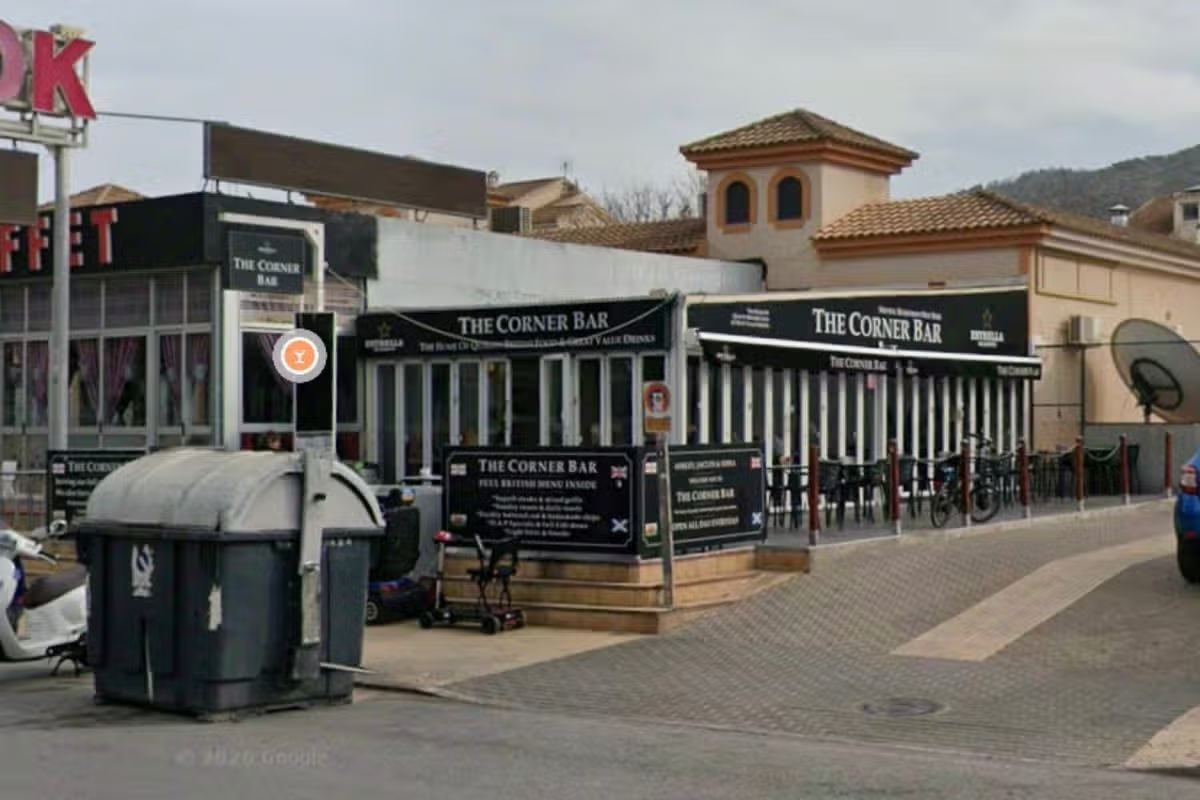
The Corner Bar Benidorm (Image: GoogleMaps)
The family behind a British-owned restaurant in Benidorm have hit back at a customer’s damning one-star review — after being floored by the price of his full English breakfast.
The Corner Bar is a favourite for both expats and holidaymakers looking for a taste of home but one customer, Peter Jones, recently shared his disapproval. He wrote: “Careful of the OAP discounts, especially at breakfast (€5.50). You can get a full English breakfast elsewhere for €4.50 (£3.86) or less.”
However, Ashley, who runs the cafe, shared the review online, before telling Peter to “have a day off” because she was “not having that” about the cost.
Defending her business in a Facebook post, she wrote: “I’m sure Peter is “fishing” here…surely he’s got to be…and I’m gonna be honest…he’s caught me. I mean. You can maybe not like our food. Not like our service. Not like us… maybe all 3, and honestly, I don’t mind, we try our best, every day, and that’s all you can do…
“But to give us a 1 Star Review on our prices…to suggest to the public you need to be careful of our prices. Nah, not having that. The breakfast in question…a No4 (pictured below).
“That’s 1 English Bacon, 1 Irish Sausage, 1 Black Pudding, 1 Fried Egg, 1 Roberts Bread Toast, Heinz Beans, Fresh Mushrooms & Tinned Tomatoes…and it’s €5.50.
“Cooked Fresh to Order by the Owner or the same 2 British Cooks who have been on The Corner for years…And apparently you need to be careful of our prices! Have a day off, Peter!”
The post soon took off and led to hundreds of comments from loyal customers who also defended the prices. One man, who has had the €5.50 (approx £4.70) full English before, wrote: “You cannot beat a No 4 at the Corner for value.”
Another person added: “Peter needs to give his head a shake! He wants €4.50 then bye bye mate! It will certainly not be as good.”
One person sarcastically said “wow a whole €1 less” before Ashley wrote another post in the comments thanking everyone for the support.
She said: “Cheers Everyone. Some lovely comments. We know we’re well supported and it’s massively appreciated. Just sometimes them review sites after a hard days work can be hard to read. We’re a small family business, currently have 5 WORKING members of staff plus us. We do our best. Thankfully, clearly the majority appreciate what we do.”
The Corner Bar has received 585 reviews on TripAdvisor with an average score of 4.2 out of five. They’ve also had 1,170 reviews on Google with an average score of 4.5 out of five.
And after the viral post, Michelle Baker, who has lived in Benidorm for more than 40 years, also shared it to her Benidormforever Facebook page. She said: “LOVE that Ashley from The Corner Bar Benidorm called this chap out… there’s just no pleasing some people!”
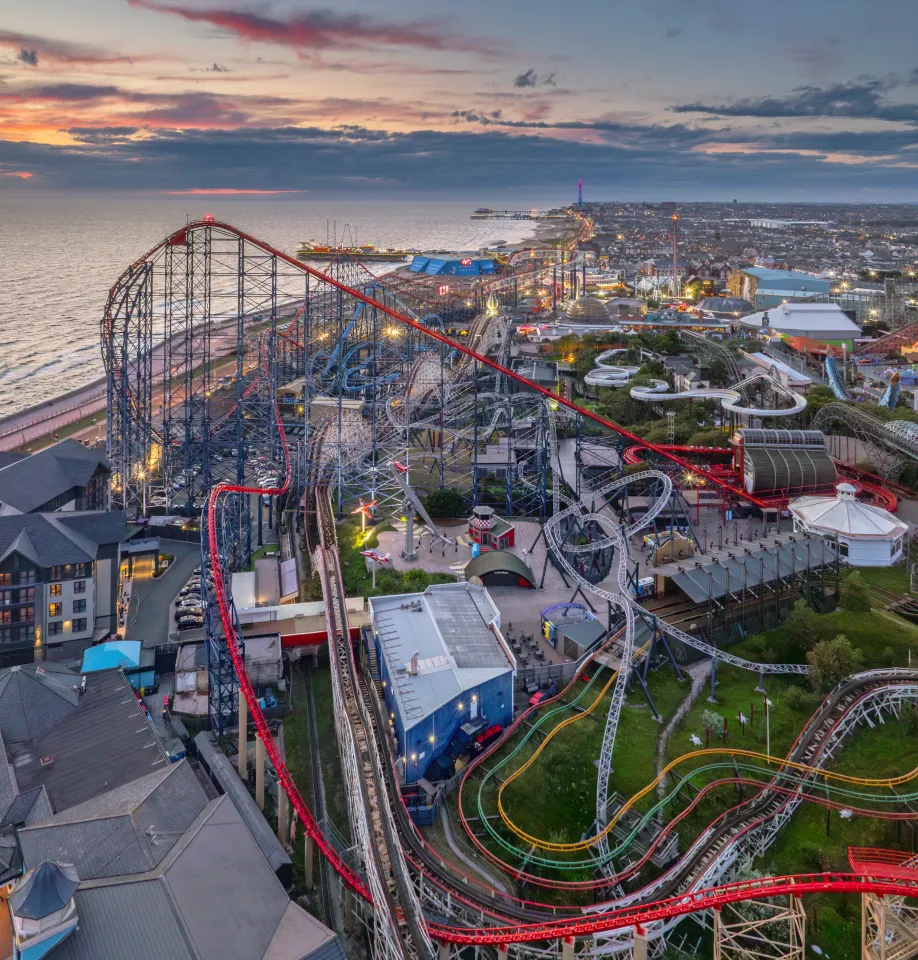
The £8.7million ride is the largest ride of its kind in the UK, swinging riders 42 metres into the air on a rotating pendulum.
Amanda Thompson OBE, CEO of Pleasure Beach Resort said: “To be named Best of the Best is a massive achievement for our park.
“Our industry is full of so much talent, so to be recognised among the best speaks volumes on the dedication and hard work that has kept us moving forward for 130 years.
“Aviktas has been a hugely valuable addition to the park and I’ve been delighted by its reception so far.
Earlier this year a new ride opened at the park as well, which has been named the bestCredit: Pleasure Beach
“If they haven’t already I’d absolutely encourage people to visit Pleasure Beach and give our ride, now recognised as one of the world’s best a go!”
If you fancy heading to the theme park this autumn, Pleasure Beach Resort will remain open for most of September and October.
In October, you could also head to the theme park’s Halloween event – Journey to Hell – where you head through an immersive scare experience with three new scare mazes.
The winners of the Park World Excellence Awards
HERE are the top winners:
Best Roller Coaster of the year: Falcons Flight at Six Flags Qiddiya City
Best rollercoaster (limited budget of the year): Fireline Redwood, Fraispertuis City at Jeanménil, France
Best Ride(s) of the Year: Skywatch at Six Flags Widdya City and Aviktas at Blackpool Pleasure Beach Resort
Best Ride(s) (limited budget of the year): Seesaw Swing at Bellewaerde and Rush Water Canyon and Gold Rush at O’Fun Park
Best Dark Ride or Media-Based Experience of the Year: Rally Flaklypa at Hunderfossen Eventypark
Best Water Park Experience: Aquaticar at Legend of the Glowing Gaurdians, Aquarabia Qiddiya City
Best Large Park of the Year: Europa Park
Best Regional Park of the Year: Bellewaerde and Nigloland
Best Waterpark of the Year: Aquarabia Qiddiya City