England

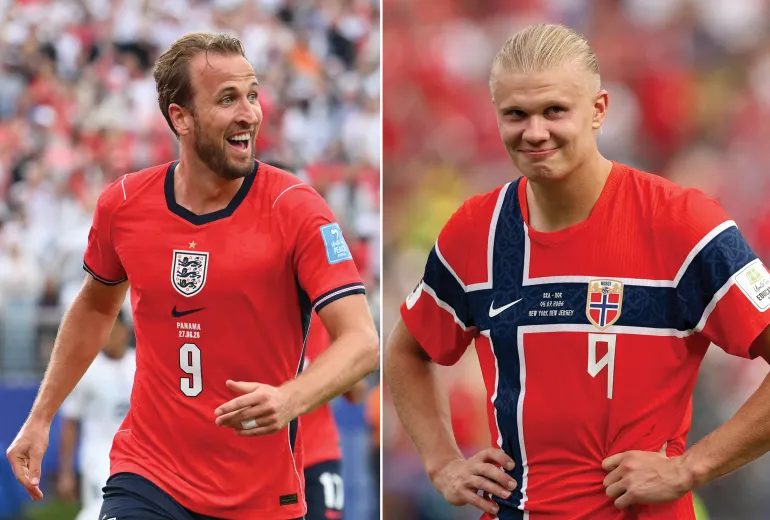
World Cup 2026: Why Erling Haaland is the man England will fear the most as Norway make history

Long before kick-off, thousands of Norway supporters had gathered outside the stadium, many draped in Viking helmets, waving giant red flags and singing songs that have become familiar throughout this World Cup.

There was excitement, naturally, but also something else – belief. A quiet confidence that this team could compete with anyone.

For years, Norway have watched major tournaments from afar despite producing world-class talent.

This is only their fourth World Cup appearance – the first since 1998. And the furthest they had gone before this year were two last-16 finishes 50 years apart, in 1938 and 1998.

They had not won a World Cup knockout tie until last Tuesday. Now they have won two in a row – the latest against the five-time winners and most-decorated side in the tournament.

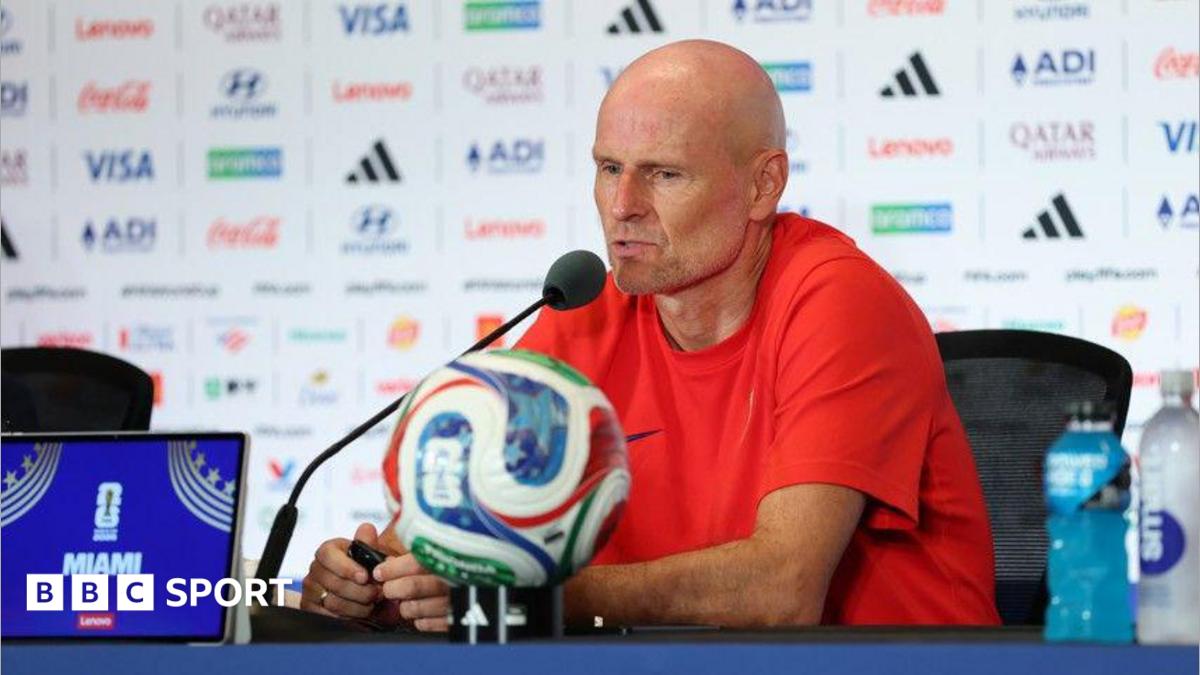
“I said to the boys that I don’t think it’s 50-50, but we have a fair chance if we play at our best and have match-winners, and we had that,” Norway boss Solbakken said.

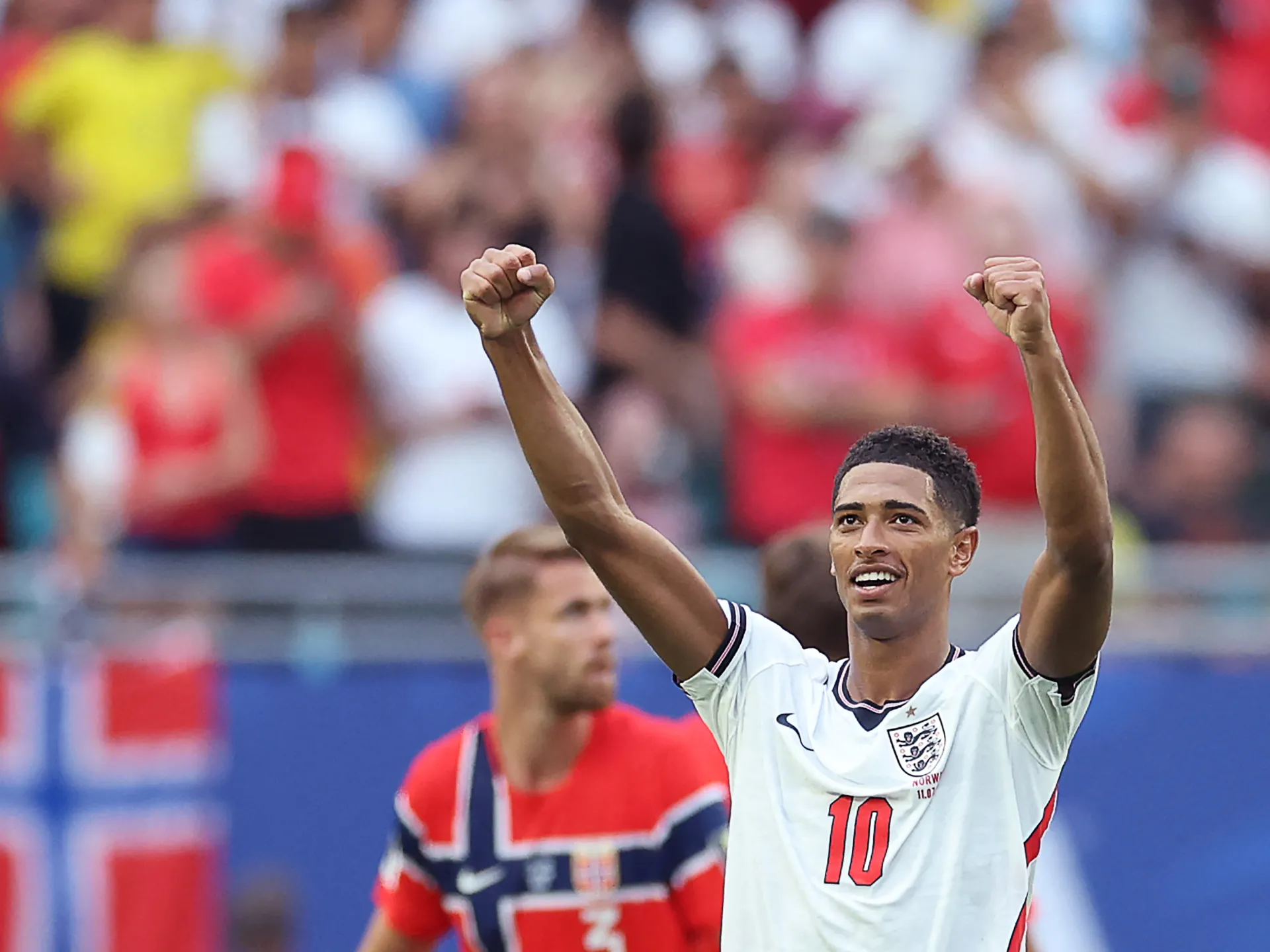
At full-time, it was Haaland who led the celebrations, banging the drum as he and his team-mates performed the iconic Viking Row with their supporters.

“This is just an insane day,” said Haaland. “It is one of the most insane days in Norwegian history.”

Warnock said: “He is hugely emotional and rightly so. He plays in one of the best teams in world football, in terms of clubs.

“But when you play for Norway they’re not a huge name. Norway are starting to make history for themselves, and he is at the forefront of that.”

Solbakken said: “The whole nation is rowing together, and with that, I mean that we are having a great party here and in Oslo and in all the other big and small cities all the way through Norway.

“The rowing is in a way a symbol of that, and that we are all together. So I think it’s great days, it’s a great summer to be a fan – I think it’s better to be a fan than a coach.”

The rowing has taken over the World Cup. And now Rooney will have to row down the River Mersey, external after promising he would if Norway made the quarter-finals.


Source link

World Cup 2026: Penalty? Red card? Why were they given against England?

England were reduced to 10 men in their crucial World Cup last-16 match with Mexico and also had a controversial penalty awarded against them in a lively encounter at the Azteca Stadium.

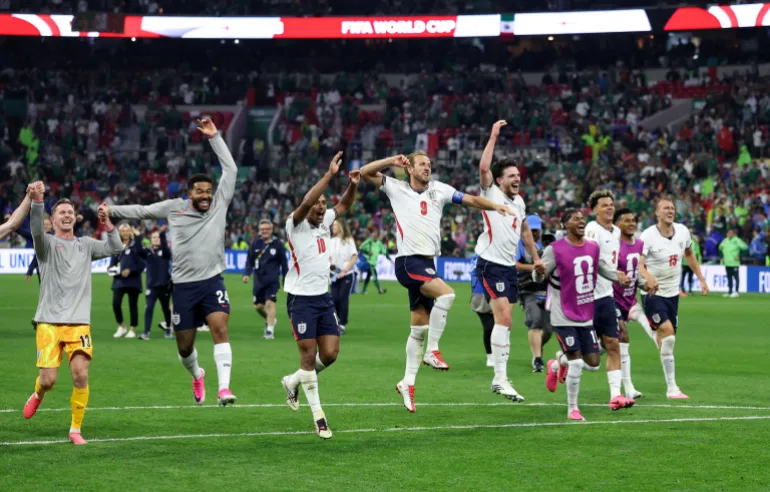
The Three Lions led 2-0 in the first half thanks to two goals in as many minutes from Jude Bellingham, but Julian Quinones pulled a goal back just before the break.

However, the game exploded into life in the second half with two big moments.

First Jarell Quansah was sent off in the 54th minute after a review by the video assistant referee showed he clearly went in on Jesus Gallardo with his studs up.

The moment briefly buoyed Mexico’s fans but England soon went 3-1 up when Harry Kane converted a penalty.

“It is a clear red card,” Darren Cann, the 2010 World Cup final assistant referee said on BBC One.

“Quansah does play the ball first but that doesn’t matter in the laws of the game.

“He goes through and you can clearly see the studs on the shin. The referee has no choice but to show the red card.

“100% a red card.”

England restored their two goal advantage when Harry Kane converted a penalty, but Mexico again fought back when they were awarded a spot-kick.

Kane appeared to clip Brian Gutierrez and after referee Alireza Faghani went to the monitor to review the incident he awarded a penalty, which Raul Jimenez converted.

“It is a penalty,” added Cann.

“Kane unfortunately does kick the Mexico player’s foot. It is a little bit similar to the [Luka] Modric kick which England got a penalty for in the first group game. Kane is unaware of the player coming in behind.”

Former England goalkeeper Joe Hart felt all the key decisions made were correct.

“I think the referee has come to the right decision on all three [both penalties and the red card],” he said on BBC One.

“I felt every single one… as soon as I saw the replays, my heart was in my mouth. Quansah deserved to go, Kane didn’t get the ball and Gordon [for the England penalty] got to the ball first.”

Source link

Mexico vs England: Azteca Stadium issues shelter-in-place order because of severe weather

The Azteca Stadium has issued a shelter-in-place order because of severe weather before the last-16 World Cup tie between Mexico and England.

The match in Mexico City is set to kick off at 18:00 local time on Sunday (01:00 BST Monday).

There has been heavy rain in the city during the day and reports of lightning above the stadium.

The current advice for supporters and media inside the ground is to remain in their seats.

Fifa held talks with the English and Mexican football associations on Friday after proposing the match be moved to 19:00 BST on Sunday (12:00 local time) before a U-turn resulted in the kick-off time remaining unchanged.

Source link

Mexico vs England: England’s Jarell Quansah set to start at right-back

Jarell Quansah is set to start at right-back for England against Mexico in the World Cup last-16 tie at the Azteca Stadium.

Wingers Bukayo Saka and Anthony Gordon are also expected to come into the side in place of Noni Madueke and Marcus Rashford.

Bayer Leverkusen defender Quansah starts ahead of Djed Spence, who complained of a muscle niggle on Sunday morning.

BBC Sport expects the England XI to be: Jordan Pickford; Jarell Quansah, Ezri Konsa, Marc Guehi, Nico O’Reilly; Declan Rice, Elliot Anderson; Bukayo Saka, Jude Bellingham, Anthony Gordon; Harry Kane.

Quansah, 23, is available for selection having returned to full training after suffering an ankle injury in the group-stage win over Panama.

Monday’s game from Mexico City kicks off at 01:00 BST, live on BBC One and iPlayer.

Source link

World Cup 2026: England players’ sleep undisturbed by Mexico fans letting off fireworks outside hotel

Mexico supporters attempted to wake up England players with music and fireworks close to their hotel the night before the sides’ last-16 World Cup tie, but were moved back by police.

Footage published on social media appears to show a group of fans chanting, playing music and letting off fireworks on a street nearby England’s hotel in Mexico City.

Early indications from the England camp are it had minimal impact on the players.

Police in riot gear have been lining the streets immediately surrounding the hotel, with anyone attempting to get close being moved away.

The increased security presence comes because Ecuador – beaten 2-0 by Mexico in the World Cup last 32 – lodged a noise complaint with world governing body Fifa after fans with loudspeakers, motorbikes and horns disrupted their sleep last week.

The World Cup co-hosts play England at Mexico City’s Azteca Stadium on Sunday evening local time (01:00 BST, Monday).

On Saturday, the team were met with a mixture of cheers and jeers from fans as they left their hotel for training under enhanced security measures.

England boss Thomas Tuchel dismissed concerns over his side’s treatment in Mexico, saying it had been “nicer” than he expected and that home fans were “friendly and respectful”.

Source link

Mexico v England: How Thomas Tuchel could change tactics to win World Cup tie

But England do not have to remove direct play from their game entirely.

By managing the space and speed of the game, they can pick their moments to release the likes of Noni Madueke, Anthony Gordon, Marcus Rashford and Jude Bellingham.

If England do opt to play more slowly, they will also be hoping these ‘boring’ spells of play work to silence the Mexican home crowd.

The decision to pick a squad of similar profiles might be one of the more astute decisions Tuchel has made as England boss when it comes to this game too.

With a tactical plan in mind, making five substitutions that do not alter the dynamic of the game greatly, but instead reinforce the plan with freshness and energy as Mexico begin to tire could be the difference.

This could indeed be a match full of mini-games and picking moments in which to change things will be key.

Tuchel, as we’ve seen throughout his club career, and most recently against DR Congo, has a knack for getting mid-game tweaks right but the many variables of the game against Mexico make this one of his toughest challenges yet.

Source link

England faces Mexico on hostile turf with World Cup glory at stake

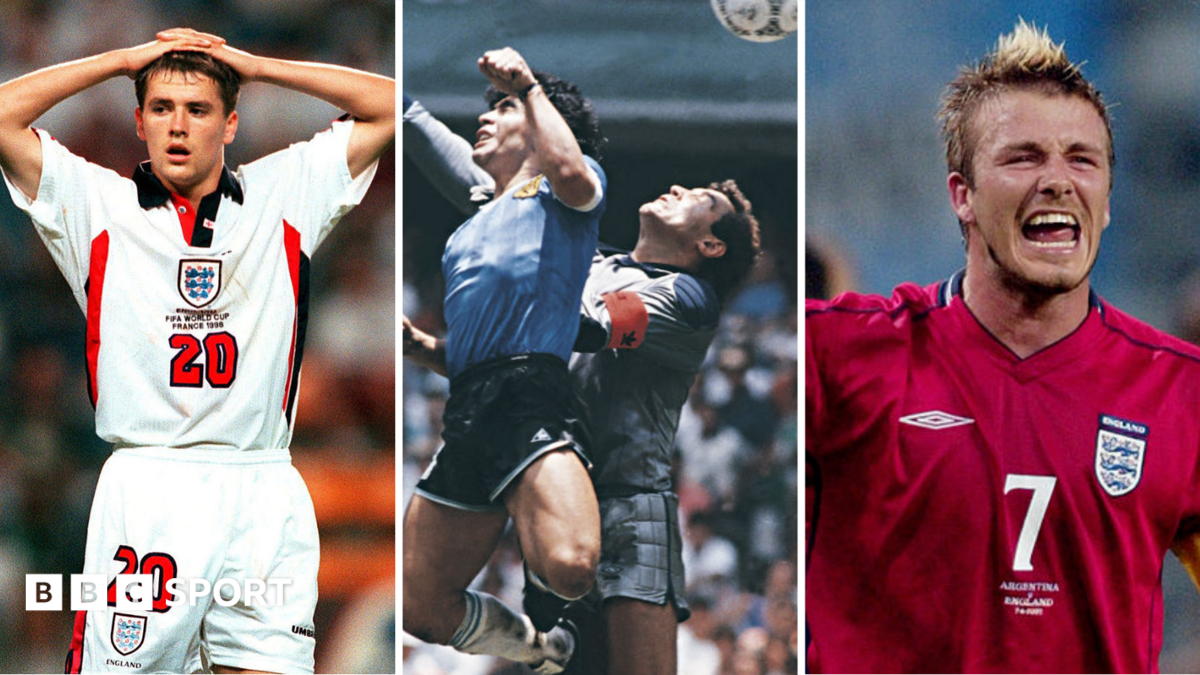
England famously found itself on the wrong side of World Cup history at Azteca Stadium, surrendering Diego Maradona’s iconic “Hand of God” goal and another strike known as the tournament’s “most beautiful goal.”

Maradona and eventual champion Argentina eliminated England 2-1 in the quarterfinals of the 1986 World Cup, leaving the Brits to stew over their link to a soccer legend.

England will return to Azteca Stadium on Sunday to take on World Cup co-host Mexico in a round-of-16 match kicking off at 5 p.m. PDT and airing on Fox and Telemundo.

England coach Thomas Tuchel said during interviews before their departure for Mexico that this will be a way to “make amends” with the stadium that hosted a goal Maradona punched in with his fist, and “karma will come back for us.”

Argentina's Diego Maradona punches the ball past England goalkeeper Peter Shilton to score his "Hand of God" goal.

Argentina’s Diego Maradona punches the ball past England goalkeeper Peter Shilton to score his “Hand of God” goal during a 1986 World Cup match at Azteca Stadium.

(Getty Images / Getty Images)

“It’s one of the most beautiful, most exciting matchups you can have — playing Mexico at the Azteca,” Tuchel said during a news conference after defeating the Democratic Republic of the Congo in the round of 32.

But the road to Azteca Stadium hasn’t been easy for England.

England enters this matchup after a hard-fought victory over Congo. The African team took the lead and had chances to extend it, but ultimately paid dearly for squandering those opportunities. Top England scorer Harry Kane stepped up with two decisive goals that helped his team advance. It was England’s first World Cup victory after trailing 1-0 since the 1966 final, which the English team won as a tournament host.

The English have to contend with not only the ghost of Maradona’s two goals, but also the altitude in Mexico City, which is about 7,350 feet above sea level.

Mexico has lost only two of 89 matches at Azteca Stadium, winning 70 and tying 17. The last time it lost an official match there was a 2-1 defeat to Honduras in a 2013 World Cup qualifier.

“There will be many obstacles — the altitude will be a major disadvantage because we can’t acclimate to it,” Tuchel said. “Let’s hope that when we face difficulties along the way, we’ll find the answers.”

Mexico players celebrate after the team's World Cup win over Ecuador at Azteca Stadium on Tuesday.

Mexico players celebrate after the team’s World Cup win over Ecuador at Azteca Stadium on Tuesday.

(Luke Hales/Getty Images)

Tuchel noted his team got accustomed to heat and humidity while training in the United States.

“At the end of the day, it’s a soccer game,” said England’s Marcus Rashford, who also plays for Manchester United. “We’ve all been playing soccer since we were kids, and we’ve played in different environments and under different conditions — some more difficult than others, some in terrible places. But it’s up to us to find a way to win and to work as a team.”

England expects to face an intense atmosphere, with the majority of more than 80,000 fans backing Mexico.

“It’s one of the great stadiums in soccer. Playing there is a blessing. Mexico is probably the favorite. They’re at home, playing on their home turf; it will be a big challenge for us, but we’ll be ready,” England’s Marc Guehi told the BBC.

The match also will pose a significant challenge for the Mexican team, which has not conceded a goal during the World Cup but will face an English side that excels in aerial play, with lethal scorers like Kane and Jude Bellingham. Mexico’s defensive performance has been credited to the direction of Rafa Márquez, a former Barcelona player who is one of Mexico’s assistant coaches.

“They’re high-caliber players who can make a difference at any moment, and we have to take advantage of playing at home and maintain our current level of play because no one has given us anything for free,” said veteran backup goalkeeper Guillermo Ochoa, another key voice supporting Mexico’s defensive effort.

Less than 72 hours before the game, FIFA explored moving the evening kickoff to noon local time — a change that would have completely disrupted the sporting, logistical and emotional planning of both teams.

FIFA first weighed the unprecedented change reportedly because of the threat of thunderstorms. The Athletic and media outlets covering both teams later reported security concerns after the death of four Mexico fans during round-of-32 postgame celebrations triggered the potential change, but both team pushed back, and Mexico’s security officials assured FIFA they could keep fans safe. FIFA relented and did not change the start time.

Mexico's Álvaro Fidalgo celebrates after scoring against Czechia during a World Cup match at Azteca Stadium on June 24.

Mexico’s Álvaro Fidalgo celebrates after scoring against Czechia during a World Cup match at Azteca Stadium on June 24.

(Silvia Izquierdo / Ap Photo/silvia Izquierdo)

“No one wants a celebration — such an important moment, a once-in-a-lifetime moment — to turn into a sad occasion because of certain things. We don’t want anyone to lose a loved one,” Mexico midfielder Álvaro Fidalgo said.

Contrary to what many experts expected, Mexico has breezed through the group stage and the second round at home. Coach Javier Aguirre has eased some of the pressure on himself by leading the team to its fifth World Cup match — a feat Mexico had not achieved in eight consecutive World Cups. Two of those failed attempts came under Aguirre’s leadership: in 2002, when Mexico lost to the United States, and in 2010, when it lost to Argentina — both in the round of 16.

“We’ll try to keep this momentum going at home,” Aguirre said. “We’ll try to play a complete game.”

With the support of its fans and a sense of hope that grows with every game, the Mexican team will seek to match its best performances from 1986 and 1970 — World Cups it hosted, though with fewer participating teams.

Mexico's Raúl Jiménez celebrates after scoring against South Africa during a World Cup match at Azteca Stadium.

Mexico’s Raúl Jiménez celebrates after scoring against South Africa during a World Cup match at Azteca Stadium on June 11.

(Carl Recine / Getty Images)

“We have to let them know that we’re just as good,” said Raúl Jiménez, Mexico’s leading scorer. “That we can compete on equal terms, we can play a good game, and we have the support of the fans. It doesn’t matter which goalkeeper is in front of us — if we put it in the corner, no goalkeeper can stop it.”

Advancing past England would mark the first time Mexico defeated a past champion in a knockout round, and it also would be the first time the team strung together two knockout-round victories in a World Cup, after beating Ecuador in the round of 32.

Mexico defeated past champions France and Germany in 2010 and 2018, respectively, but those wins came in the group stage.

“It’s a match everyone always dreams of. Being in the round of 16 at the Azteca — not just saying it, but even thinking about it — is incredible,” Fidalgo said. “We have to rise to the occasion.”

Source link

Mexico vs England: Why the Azteca is a legendary World Cup stadium

The power of the people is what makes the Azteca truly special.

Whether cheering on Mexico, home club sides Club America or Cruz Azul, or hosting neutral sides in the World Cup, the Azteca crowd is renowned for generating a ferocious soundtrack like nowhere else.

“It is next to impossible to communicate on the pitch because the Azteca is full of sound swirling all around you”, says Jason de Vos, one of the few men to have both played and coached against Mexico at the stadium, doing so with the Canadian national team.

“The Mexicans know they have an advantage because of the crowd and they try to swarm you on the pitch too.

“When you arrive the team bus drives under the stadium, down a ramp and then you walk to the dressing room.

“When you walk to the pitch you have to go through a very tight tunnel and you can hear a buzzing sound, like a swarm of bees.

“To get outside, you approach the pitch from below, going up a staircase, and when you crest the top and see the light, you realise that the buzzing is the people.

“It’s the vibration of the horns, the screaming, the jumping. It’s crazy

“But that’s exactly why you want to play football.”

Source link

On America’s birthday, U.S. soccer team embodies founders’ dreams

James Wilson, one of just six men who signed both the Declaration of Independence and the Constitution, never could have imagined how grand the country he was founding would become. But he knew how it could get there.

Wilson envisioned a steady stream of foreigners coming to America every year, reinvigorating the energy and vitality the nation needed if it were to survive, much less thrive. Which is why Wilson, who moved to the colonies from Scotland at 22, argued against barriers on immigration that would “deprive the government of the talents, virtue and abilities of such foreigners as might chose to remove to this country.”

What Wilson had in mind, then, is something such as the U.S. national soccer team, which gathered to train Saturday morning, on the country’s 250th birthday.

Six of the 26 players on the team, which will face Belgium in a World Cup elimination game Monday, are foreign-born. Five others were born to immigrant parents and two others have immigrant grandparents or great-grandparents. Nearly half have dual nationality.

U.S. coach Mauricio Pochettino jumps into the arms of his players after their World Cup win over Paraguay.

U.S. coach Mauricio Pochettino jumps into the arms of his players after their World Cup win over Paraguay at SoFi Stadium on June 12.

(Allen J. Schaben/Los Angeles Times)

Yet they all play with the U.S. flag stitched over their hearts. What could be more American than that?

“It is special,” U.S. captain Tim Ream said of having the team together on Independence Day. “Obviously, doubly special because it’s during a World Cup and triple special because it’s here in the U.S. “As a group, with all our different backgrounds, it’s a true representation of what America is. It’s a melting pot of, of people, of personalities, of characters.”

And it’s led by a country-music-listening Argentine coach, Mauricio Pochettino, who first learned to throw a baseball last week so he could perform first-pitch duties at a Seattle Mariners’ game. (He threw a strike.)

“That sort of stuff can only happen in America,” said striker Folarin Balogun, who grew up in England with Nigerian parents but plays for the U.S. because he was born in Brooklyn, qualifying for birthright citizenship through the 14th Amendment to the constitution Wilson helped write.

It would be hard for the U.S. soccer team to more closely resemble the architects who founded the country, nor the vision those architects had for their creation.

Eight the 56 signers of the Declaration of Independence and eight of the 55 framers of the Constitution were immigrants. That’s about the same percentage of immigrants on this summer’s World Cup roster. Another 20 of the Founding Fathers were the sons of immigrants; again, the same percentage as the national team.

“That is the U.S. experience of taking different people from all over the world, the immigrant experience, and mixing it into something that the world has never seen,” said Adam Sawyer, a co-founder of Relevant Research, a Baltimore firm which provides support to immigration researchers and organizations.

“One in seven Americans was foreign-born. Our soccer team is like one in four. I always think of soccer [as] leading society and it’s pulling us with it,” continued Sawyer, who recently published an analysis of the role global migration has played on World Cup success. “Our sporting teams push us forward towards further integration.”

The signers of the Declaration of Independence never foresaw a World Cup, much less an American World Cup team. But they did see immigration as such a fundamental strength, they used America’s founding document to condemn King George III for endeavoring “to prevent the population of these States; for that purpose obstructing the Laws for Naturalization of Foreigners.”

Without that naturalization, Christian Pulisic might not be playing for the U.S.; in fact, he might not even be in the U.S. His paternal grandfather Mate immigrated from the former Yugoslavia in search of opportunity and was later naturalized as a U.S. citizen. The paternal ancestors of goalkeeper Matt Turner became naturalized citizens after fleeing to the U.S. to escape religious persecution in Lithuania and midfielder Cristian Roldan’s parents escaped civil wars in El Salvador and Guatemala, then gained permanent residency through President Reagan’s amnesty program.

“This soccer team is reflecting America at its best,” said Faisal Al-Juburi, co-chief executive of RAICES, a Texas-based humanitarian aid and immigration services nonprofit. “Its global roots, its shared purpose, its one jersey.”

Soccer in the U.S. has long been an immigrant sport. In the years after World War II, when soccer was still an amateur and semi-pro game, the best teams in the country had names such as the Philadelphia Ukrainian Nationals, New York German-Hungarian SC and the Los Angeles Danes. Joe Gaetjens, one of the country’s first stars and the man who scored the goal that beat England in the 1950 World Cup, was a Haitian immigrant.

In recent years, however, the national team has begun recruiting dual-nationals from overseas, among them World Cup midfielder Malik Tillman, who was born to a U.S. serviceman in Germany, and Antonee Robinson, who was born in England to a naturalized U.S. citizen father, and Sergiño Dest, a Dutch native whose father is Surinamese American.

“It is definitely a team that embraces their diverse backgrounds, and that’s quite meaningful, especially now,” said Al-Juburi, the son of Iraqi immigrants. “This notion that we are stronger with impenetrable walls that divide us is definitely not reflected in this team. It credits a lot of its success to its immigrant roots.

“And I think that’s incredibly powerful to see that and to see a nation cheering and getting behind that diversity. It is a reminder that we are stronger from that coexistence.”

But Al-Juburi doesn’t see the result as a melting pot, which burns away the unique flavors and characteristics of each ingredient. For him, it’s more a gumbo in which every ingredient changes and improves the mix.

U.S. players huddle seconds before playing Bosnia-Herzegovina during a World Cup knockout round match at Levi's Stadium.

U.S. players huddle seconds before playing Bosnia-Herzegovina during a World Cup knockout round match at Levi’s Stadium on Wednesday.

(Robert Gauthier/Los Angeles Times)

“You’re looking at lineage from Nigeria, from Guatemala, from El Salvador, from Mexico, from Liberia, Jamaica, Croatia,” he said. “All these disparate ingredients work together so beautifully and in such a balanced way.”

And when that team succeeds, as the U.S. has this summer, it not only underscores the wisdom of the Founding Fathers, but it offers a lesson for today as well.

“This team contains a different picture of inclusion really mattering, just by being exactly who they are,” said Jules Boykoff, a political science professor at the University of Portland (Ore.) and a former U.S. youth international. “They don’t have to say anything. They just have to be who they are and do their best on the pitch.”

Source link

World Cup 2026: England head coach Thomas Tuchel on Mexico match

Thomas Tuchel has dismissed concerns over England’s treatment in Mexico as they prepare to face the World Cup co-hosts – saying it had been “nicer than I expected” and that home fans were “friendly and respectful”.

Tuchel’s side take on Mexico in a last-16 match that kicks off at 18:00 local time on Sunday (Monday 01:00 BST, live on BBC One, iPlayer and Radio 5 Live).

On Saturday, the team were met with a mixture of cheers and jeers from fans as they left their hotel for training under enhanced security measures in Mexico City.

Ecuador – beaten 2-0 by Mexico in the World Cup last 32 – lodged a noise complaint with Fifa after fans with loudspeakers, motorbikes and horns disrupted their sleep last week.

As a result, members of Mexico’s National Guard lined the entrance to England’s hotel, while police officers in riot gear stood next to barriers on the road outside.

“We had no issues tonight and I think Fifa took care of the situation,” head coach Tuchel said. “We have security around the hotel so we expect a good night’s sleep.

“I don’t want to talk about problems that don’t exist yet. If they come, we will accept them. The best way to approach is to be relaxed and calm.

“We have a six o’clock kick-off, so if we miss some hours of sleep we will have time to get some other hours in the late morning.

“What I experienced until now was very respectful and emotional and very supportive to towards our teams so are very respectful towards everyone. We expect to be treated with respect and that was the case.

“It was even nicer than I expected.”

Tuchel said he had felt the energy in Mexico City.

“It just catches you straight away once you land here and saw the excitement and the emotions,” he said.

“This will be a proper World Cup match. We are in an iconic place, an iconic stadium and a massive knockout game.

“It is a big stage and we feel it. It makes you sharper and brings the best out of you. It makes you feel alive.”

Source link

Newspaper headlines: Storm threat to England match and ‘bid to block Miliband’

The Times says senior officials in the Trump administration have urged Andy Burnham not to appoint the energy secretary, Ed Miliband, as chancello, externalr – because of his opposition to further drilling in the North Sea. The paper notes that Miliband’s allies insist he is the only candidate to lead the Treasury who is radical enough to turn around the economy. The Daily Telegraph carries a warning from the City, external that Burnham risks stifling investment unless he names his chancellor soon. The i Weekend says the former Greater Manchester mayor is being urged by some Labour MPs to “introduce a wealth tax on home owners in the South”, external, by replacing council tax and stamp duty with a proportional charge based on property values.

The Daily Express reports that armed police have formed a “ring of steel” around the England football team’s hotel, external in Mexico City. The Sun says the authorities there “seem determined” to prevent a repeat of the disorder that greeted Ecuador’s World Cup squad – who were kept awake by crowds “setting off fireworks, playing drums and chanting”. The Daily Mirror quotes a Mexico fan who warns England “will get a traditional Mexican welcome”., external

The Daily Mail says the family of the late Bobby Moore have launched a High Court “crusade” to get back the red football jersey he wore, external when he led England to their 1966 World Cup victory. According to the paper, his former wife, Tina Moore, has lodged a case against a businessman she believes either “has or has had possession of the shirt, or can help her recover it.” He denies having the garment.

The Guardian has a double-page spread on Taylor Swift’s wedding to Travis Kelce., external It notes the celebration “caused the closure of 11 streets” in Midtown New York – and says that on Friday the “first class lounges of Heathrow and JFK airports were crawling with celebrities” who were on their way to to the event.

The FT Weekend reports that two World War II foes have united, external, after a German defence company bought a firm that supplied gears for Spitfires. The paper says Huddersfield-based David Brown has been purchased by Renk, which created gearboxes for tanks in Nazi Germany.

Source link

The schools starting late after England v Mexico ‘to help parents’

And Alistair Wilson, deputy headteacher at Whipton Barton Federation primary school in Exeter, Devon, is opening at normal time but running a non-uniform day and showing match highlights in classrooms after breakfast.

“It’ll be a wonderful way to celebrate the day, World Cup fever has definitely hit them,” Wilson says.

Even among the schools opening late, teachers are still advising pupils to get some sleep.

Oaks Park High School, a secondary in Carshalton, south London, which is opening at 09:45 “strongly” encouraged sleep before the game to avoid being “extremely tired”.

Some on social media, including teacher and podcaster Lee Parkinson, have called for some “common sense” leniency on attendance figures on Monday.

Others point out many schools across the country already shuttered for multiple days during last week’s heatwave, bringing disruption to learning.

Back in Wolverhampton, Kelly Wall has noticed a lot of positive chatter at the school gates.

She says she can understand the point of view of any naysayers, but adds: “It’s so rare that we get to have these special moments with he kids, because our lives are always so busy.

“Really, let the children join in, watch the game and let them have a bit of family time.”

Source link

World Cup 2026: England v Mexico could move because of storm threat

Asked at England’s training session on Friday about the possibility of the game being moved, winger Marcus Rashford said it was “not ideal” but the squad would deal with it.

“I think for us it’s the same how we prepare for the game,” he said. “It has to be the same.

“We have to be focused. We have to be ready for anything. I think it’s one of our strengths as a group.

“Everyone, including the players and staff… we are ready for whatever challenges get thrown at us. So obviously it’s not ideal but also it doesn’t really matter.”

The build-up to Sunday’s fixture has been dominated by talk about Mexico’s record at the Estadio Azteca and how England’s players will deal with the altitude.

The arena sits 7,220ft (2,240m) above sea level, and Mexico have lost just twice in 89 matches at the iconic stadium.

At that altitude, the Earth’s barometric pressure is lower, making the air thinner and meaning less oxygen is taken into the bloodstream with each breath.

Even for professional footballers, that has a potentially significant impact – increased heart rate, shortness of breath, dehydration, quicker and more intense fatigue.

The fixture had been set to start in the early evening, when temperatures were forecast to be about 20C.

However, a midday kick-off is expected to see temperatures hit highs of about 26C, which will theoretically make conditions even more difficult.

France’s group-stage fixture against Iraq was delayed for over two hours because of safety concerns amid adverse weather conditions in Philadelphia.

Last summer’s Club World Cup, which was also hosted by the United States, had six major weather delays across the 63 matches played.

Source link

Where to watch England vs Mexico in Sunday’s World Cup clash

It was my great fortune to be in Mexico City for the first few weeks of this tournament. Here, I’m sharing some tip on my experience to help out any of you lucky enough to be heading to Mexico City for England’s Last-16 game.

England are set to play Mexico at the world-famous Azteca Stadium, one of the most iconic locations in the history of the World Cup. Few places in the world can rival Mexico City for the passion of its fans.

You feel it on the streets even hours before a game. The music, the singing, the drinking, it all builds up and erupts for every goal and at the final whistle, as fans spray crazy foam in every direction.

The street parties after the game are nothing like what we have here. Even a run-of-the-mill group game brought hundreds of thousands onto the streets to celebrate for hours on end earlier in this tournament. Think you’ve seen crazy parties after England wins back home? Think again.

It was my great fortune to be in Mexico City for the first few weeks of this tournament. Here, I’m sharing some tip on my experience to help out any of you lucky enough to be heading to Mexico City for England’s Last-16 game.

Where to watch the game?

Tickets are going to be hard to come by, so if you’re just in the city to absorb the atmosphere- and it’ll be some atmosphere – you’ll need to know where to head.

Word of warning – whatever the weather, you may want to pack a waterproof of some kind as the Mexicans love to spray crazy foam before, during and after games. You will get wet.

The fan zone

The Zocalo is the main square in the heart of Mexico City’s historic centre. It’s on a scale that has to be seen to be believed, dwarfing anything we have in England. The enormous screen stands in front of the city’s cathedral, providing a dramatic backdrop for the game. Mexican fans will flock to the square early though, so if you’re planning on going you should try to get there long before kickoff.

One word of warning though – no alcohol is sold in this fan zone. There is beer, but it’s all 0.0%. If you’re wanting to have a few drinks during the game then you’ll need to find somewhere else to watch.

Angel of Independence

El Angel is historically where locals head to celebrate Mexican victories. And they head there in numbers. Originally there were no big screens at the site, but such is its popularity that they were installed for the Ecuador Last-32 game. It led to an estimated 1.4 million people partying at the site on the night of the match. In terms of food and drink, you’ll be relying largely on street food stands and people selling beers out of cool boxes. There’s very little in the way of toilet provision, so many revellers try to find a secluded spot on the street to relieve themselves.

There’s also very little in the way of crowd management and crushes are common (as experienced by this writer). After the Ecuador match, four people were killed due to suffocation.

Bars

Mexico City has no shortage of bars, cantinas and restaurants, all with TVs to watch the game (many of which are very new and suspiciously still have their original wrapping on). Local fans will be out in numbers on Sunday though, so like the Zocalo you’ll want to find yourself a bar early.

Fans may want to try The Dog House, an English pub in the Roma district. It’s not a large place, though, so getting there early would be advised. Just around the corner is La Cervecería de Barrio, which attracts a large crowd. I was there for Mexico-Ecuador and the atmosphere was electric, with a mariachi band paying a visit before kickoff. McCarthy’s Irish Pub in Roma is a cavernous place with plenty of TVs. It’s also located near Mercado Roma, a food hall that has TVs and a number of places to grab some Mexican food. These bars are all located in the Roma Norte area, which is nearby El Angel where most Mexicans will head to after the match.

Pinche Gringo BBQ Warehouse is also popular with tourists and expats in the area.

Calle Regina in the historic centre is lined with plenty of bars, all of which have TVs showing the game.

Partying after the match

Angel of Independence

El Angel is the main place to head after the game is over. You’ll see the craziness of Mexico firsthand. There’ll be fireworks, people being thrown in the air. Plenty of music, lots of dancing andeven more singing. If you want to be a star, try to learn the words to the folk song Cielito Lindo. The key line is “¡Ay, ay, ay, ay, canta y no llores!” which translates to “Sing and don’t cry”.

Crowds will be huge here though, particularly after the game. Crushes are common.

Clubs and bars

Head down to either Roma Norte or Zona Rosa for after-game drinks. They’re conveniently located just by El Angel, so make a good place to head if the crowds there get too busy. Calle Genovia in Zona Rosa is pedestrianised and has plenty of bars and clubs to go to. In Roma, Departamento is popular with locals and tourists alike, but you won’t be short of other options in the area.

Tourist trips

The canals of Xochimilco are a fun way to spend a couple of hours. There’s a real party atmosphere on a weekend, with boats playing music, sharing drinks, hiring mariachi bands and generally having a good time. Hire a boat and your captain will take you on a tour of the ancient canals. Mariachi bands cost about 300 pesos per song. You can book tours that will provide food and drink, or simply turn up on your own and buy a bag of cans from a local shop. A taxi to Embarcadero Nuevo Nativitas will take about an hour from the city centre.

The pyramids of Teotihuacan. The ancient pre-Aztec pyramids are around an hour’s drive out of town and a must-see of any trip to Mexico City. The temple complex is huge, with the Sun Temple dominating the local skyline. As with the canals, you can either book a tour or head there under your own steam. Local buses are available, or if you’re in a group you can split the cost of a cab. Entry is around 100 pesos per person.

Source link

World Cup: Police criticise timing of decision on pubs staying open for England match

Police have criticised the timing of the government’s decision to let pubs stay open until 05:00 BST on Monday for England’s World Cup match against Mexico.

The National Police Chiefs’ Council said the “late announcement” meant officers would have to be taken away from other duties and work longer hours, even though the team’s likely route through the tournament “has been known for a considerable time”.

It asked fans to be “considerate” and “drink within sensible limits” while watching the crucial last-16 match in which the losing team will be eliminated.

The government has said a previous relaxing of licensing laws for the tournament had not covered the eventuality of England playing so late.

A Downing Street spokeswoman said that after England’s progression was confirmed on Wednesday evening, the government “announced plans as quickly as possible following this”.

The spokeswoman added: “And more broadly, we have engaged with policing partners throughout preparations for the World Cup and we are grateful for their flexibility and professionalism throughout.”

Kick-off for the knock-out game is not until 01:00 in the UK and the match is not expected to end until at least 03:00. It could finish even later if it goes to penalties.

Knock-out games in previous tournaments have led to an increase in violent incidents and domestic abuse, the policing body said.

“This is directly linked to alcohol consumption,” the NPCC’s football and alcohol policing leads said in a joint statement.

“We will continue to work with partners and venues to support a safe and enjoyable evening for everyone.”

Licensing hours had already been extended for the international football tournament and the government had initially said it would not relax the laws further.

But late on Thursday, Prime Minister Sir Keir Starmer said pubs could remain open until the end of the game.

Local Government Secretary Steve Reed told broadcasters the previous measures “hadn’t covered the eventuality of England playing so late in the night”, adding it was “one of the fastest changes in the law that we’ve seen”.

England was not guaranteed to play in Monday’s match, only earning a place in the round of 16 after beating DR Congo 2-1 on Wednesday.

The hospitality sector welcomed the government’s decision. Emma McClarkin, chief executive of the British Beer and Pub Association, said: “We all know the best place to watch the match is down the local.”

Michael Kill, chief executive of the Night Time Industries Association, said it was “fantastic news” that would be “hugely welcomed by operators”.

Pub chain Greene King has said more than 600 pubs across England will be staying open late to show the match, while Marston’s has said more than 400 of its pubs will also be open.

Priyesh Bathia, who runs the Elephant and Barrel pub in Stockwell, south London, and said he is “so thankful” for the late licensing on Monday.

“I’m really excited,” he added, and said so far they have had between 100-150 people book tables for the game.

Source link

World Cup fans in Benidorm horrified after being ‘attacked for wearing England shirts’

World Cup fans in Benidorm were left floored after they were allegedly “attacked for wearing England shirts”. Natalie Brookfield shared the story as she opened up about the incident

The World Cup has got many football fans hooked, but some people actually venture to Benidorm to enjoy the sporting event while soaking up the party atmosphere. However, for one group of Brits, it seems things didn’t go to plan, as they were allegedly “attacked for wearing England shirts”.

Natalie Brookfield detailed what reportedly happened after the incident unfolded at the popular holiday destination, and it clearly left her and her friends pretty shocked. In a candid TikTok video, she explained what took place in Benidorm, while filming their red and soar-looking eyes, and it’s left people in total disbelief as they can’t believe such an incident occurred during the World Cup.

It’s not the first time the travel hotspot has hit the headlines recently either. Previously, it was reported sunbeds were empty at the destination for a totally unlikely reason.

Over footage of the group in their England shirts, Natalie wrote: “Wearing an England top to Benidorm? Apparently that’s a sprayable offence.

“Three girls and two guys pepper sprayed us for no reason. To anyone in Benidorm wearing England shirts, stay alert. We weren’t the only ones this happened to.”

In the clip, you see the three friends donning their England shirts and looking quite uncomfortable. It looks like their eyes were stinging following the alleged attack, and they appeared totally stunned too.

The video has since gone viral, after being viewed more than 50,000 times. Over 1,000 people also commented to share their thoughts and well wishes.

Content cannot be displayed without consent

One said: “Benidorm in 2026 is crazy.” Another added: “Me and my friends wore NUFC tops in Benidorm and only received love from everyone. I’m sorry to hear this.”

A third replied: “It’s a terrible shame. Benidorm was once the party and fun centre. Very sad world we live in.”

Meanwhile, a fourth commented: “I have been going Benidorm for 10+ years and unfortunately, over the past two years, I have seen more of this. I won’t stop going, but I will say don’t let it put you off going back and hope you are good.”

Someone else also noted: “I was in Benidorm on Monday. Loads wearing England tops! No problems.”

It’s something that got a lot of people talking, as people seem to have encountered mixed experiences at the party destination. However, for Natalie, it’s evident the group had a bit of a shock, but it’s unclear if they reported the incident.

Do people travel to Benidorm to watch the World Cup?

Little you may know, thousands of British tourists flock to Benidorm to watch the World Cup. Many fans choose the Spanish resort over travelling to host cities.

A five-night holiday in Benidorm often costs less than a single match ticket in the US, and flights from the UK to nearby Alicante see massive spikes during the tournament.

Source link

Russia “Highly Likely” Behind Drone Incursions Over U.S. Bases In England Report Concludes

Back in November 2024, TWZ broke a story about a series of incursions over U.S. bases in England by drones of mysterious origin. While the source of these uncrewed aerial vehicles does not appear to have been officially determined, a new report suggests they were launched by Russian ships

Produced by the International Institute for Strategic Studies (IISS), the report investigated a spate of drone incursions across Europe that began in August 2024 and found that “it is highly likely that the Kremlin conducted a UAV campaign over Europe.”

“We assess it is likely that Russian-linked vessels and the ‘shadow fleet’ were used as launch/recovery platforms for UAVs as part of the Kremlin’s wider unconventional war on Europe,” the report added.

Investigators rely heavily on circumstantial evidence and open-source information. TWZ cannot independently confirm these findings, which offer new insights, if not concrete answers, about who could have been behind the flights.

The drone incursions over the bases we were the first to write about were among the earliest in the wave over Europe investigated by IISS. Around this same time, there were also flights over Ramstein Air Base in Germany, the report notes. We covered those incidents as well.

As we reported at the time, drones of an unknown origin were first spotted over RAF Lakenheath and then over RAF Fairford, RAF Feltwell, and RAF Mildenhall.

RAF Lakenheath. (Google Earth)

The report makes particular note of the importance of RAF Lakenheath, which is being readied to host nuclear weapons, a topic we previously covered.

“A public appeal for information drew roughly 170 reported sightings, about half of which were deemed credible, either corroborated by multiple witnesses or backed by imagery that couldn’t be explained away as ordinary air traffic.”

“Operational security appeared sophisticated,” IISS posited. “The UAVs entered the airspace around the RAF bases at low altitude with their lights visible and departed at higher altitudes. Arrival and departure directions varied across the incident period.”

Witness reports “indicate more than one platform type may have been involved,” the report proffers. “Some observations were consistent with multirotor UAVs; others with fixed-wing platforms. The propulsion noise of the UAVs was inconsistent across accounts, with some observers describing sounds more typical of petrol engines than electric motors.”

“Notably, the Hav Dolphin, a vessel later linked to a 2025 drone incident in Germany, happened to be docked in the UK at the time,” the investigators found.

That vessel was one of many either operated by Russia as part of its so-called “dark fleet” of sanctioned ships, or those connected to Russia, that the report goes into great detail to link to drone incursions throughout Europe after the incidents at U.S. bases there. The report describes these vessels as “Russian-linked commercial vessels, including shadow-fleet tankers, coastal freighters, and smaller craft.”

IISS

IISS suggested that the Russian Orlan-10 drone could have been one of the platforms used during the incursions.

“Orlan-10, a compact, multi-purpose UAV in service with Russian Armed Forces since 2010, has a range and payload profile consistent with stand-off collection against coastal and inland targets and fits the deck space of a mid-sized commercial vessel,” IISS stated. 

“Commercial specifications for the platform, including those published by Russian geospatial firms using the Orlan-10 for civilian aerial survey operations, document an operational range of 500 kilometers, endurance of up to 12 hours, and speeds of 90–130 km/h, performance parameters consistent with maritime launch from a vessel operating well beyond visual detection range of the European coastlines in question.”

Moreover, “the Orlan-10’s power is an internal combustion engine, a detail that may be relevant in light of witness accounts from November 2024 incidents at RAF Lakenheath, where propulsion noise was described by some observers as more characteristic of petrol engines than the electric motors typical of consumer and first-person view (FPV) drones.”

In addition, the Orlan-10’s available payloads “include a satellite navigation spoofing module and a Global System for Mobile Communications network monitoring module alongside optical and thermal sensors, indicating the Orlan-10 family has active electronic warfare capability as well as passive ISR.”

The Orlan-10 has been widely used as an intelligence, surveillance and reconnaissance drone by Russia in its ongoing war on Ukraine. Given that, however, using it for a clandestine operation like this seems very strange. The report critically recognizes this, stating “the use of identifiable Russian UAV platforms carries inherent attribution risk.”

“An alternative, and operationally credible, hypothesis is that commercially available or modified platforms were used precisely to preserve deniability, including long-range [first-person view] FPV systems, home-built fixed-wing aircraft or commercial UAVs modified to use cellular rather than radio frequency (RF) communications,” IISS added.

Russia uses 'Orlan-10' drones to help detect and attack Ukrainian military positions thumbnail

Russia uses ‘Orlan-10’ drones to help detect and attack Ukrainian military positions


The think tank acknowledges that its maritime-launch hypothesis “rests on a convergence of opportunity, demonstrated capability and a consistent geographic pattern — but no European government has yet publicly tied a specific shadow-fleet vessel to a specific incident, despite officials suggesting privately that they could. The rest of this report treats the maritime-UAV link as the most plausible explanation for where and when the incidents occurred, while acknowledging that confirming it will require evidence that isn’t yet public.”

IISS

This is not the first time Russia was accused of being behind the drone incursions.

In February 2025, the U.K.-based The i Paper made similar allegations in its investigation, however, they suggested the flight could have been carried out by Russian operatives on the ground.

That investigation spurred some politicians to call for further investigation.

“Julian Lewis, the former Tory Chair of the Defense Select Committee said: ‘When the US and British authorities detected the drone intrusions at both airbases last November, they stated that investigations were underway,’” the outlet reported. “‘Meanwhile, there is credible evidence here of the possible presence of GRU-linked operatives near Lakenheath and Mildenhall. I shall be asking Ministers to consolidate the findings of all these investigations and to make a Statement in the Commons as soon as possible.’”

Tom Tugendhat, the former Security Minister, told The i Paper that the findings “demand urgent investigation by the MOD and UK intelligence services.”

Still, the MoD investigation into the RAF Lakenheath incidents concluded with no suspects identified, according to the Bury Mercury newspaper.

RAF Lakenheath. (RAF)

Less clear are results from investigations into the other three bases involved.

“The UK takes the security of military bases seriously and works closely with allies, law enforcement partners and other authorities to protect Defense people, sites and capabilities,” the U.K. MoD told us Thursday morning when we asked about the allegations made by IISS that the Russians were likely behind the drone incursions and for their assessment of who was operating them.

“Through the Armed Forces Bill, we’re giving our defense personnel greater powers to defeat drones threatening our bases and we have invested significantly in counter-drone capabilities. We continue to strengthen our ability to detect, deter and respond to potential threats,” MoD added.

MoD declined to provide further details, saying it “does not comment on intelligence matters or on the specific security arrangements at Defense sites.”

A U.S. Air Force F-16 Fighting Falcon from the 555th Fighter Squadron, Aviano Air Base, Italy, taxis out to the runway in preparation for takeoff for a training flight prior to the start of Cobra Warrior 24-2 at Royal Air Force Mildenhall, England, Sept. 11,2024. Combined exercises between the U.S., NATO, and Partners for Peace nations are conducted to improve coordination, collaboration and interoperability among allies. (U.S. Air Force photo by Karen Abeyasekere
A U.S. Air Force F-16 Fighting Falcon from the 555th Fighter Squadron, Aviano Air Base, Italy, taxis out to the runway in preparation for takeoff for a training flight prior to the start of Cobra Warrior 24-2 at Royal Air Force Mildenhall, England, Sept. 11, 2024. (U.S. Air Force photo by Karen Abeyasekere Karen Abeyasekere

We also asked U.S. Air Forces in Europe-Air Forces Africa (USAFE) whether the IISS allegations about Russian involvement in these events were accurate.

“We can confirm small Unmanned Aerial Systems activity took place over several of our UK installations in 2024,” a spokesperson told us. “These events were monitored, and it was determined there was no impact on personnel or operations.”

“Due to operational security, we cannot speak to intelligence matters,” the spokesperson added. “We continue to work closely with our UK partners to ensure the safety and security of our installations.”

The command said it is working on a response to our question about who was behind these incursions, but that it would not be ready before the July 4 holiday.

The issue of drone incursions is not unique to Europe, as we have frequently reported. There have been numerous incursions at military installations across the U.S., including some near the water, like Langley Air Force Base in December 2023 that The War Zone was the first to report. More recently, Barksdale AFB in Louisiana, home of B-52 strategic bombers and nuclear weapons, experienced a similar series of very troubling incursions. Off the cost of California, American warships were swarmed sporadically for days in the summer of 2019. There are many other examples, as well, and as is case in Europe, it remains publicly unknown who operated those drones in all those instances.

The IISS report does not go into any of the cases outside of Europe. It does, however, clearly point the finger at Russia as the culprit behind the drone overflights that have bedeviled Europe, including U.S. bases in England and Germany.

Contact the author: howard@twz.com 

Howard is a Senior Staff Writer for TWZ. He writes frequently about conflict, focusing heavily on the Middle East and Ukraine, and interviews with military and intelligence officials and industry leaders from around the globe. He lives near Tampa, Florida, home of U.S. Central Command, U.S. Special Operations Command.


Source link

England v Mexico: How parents and schools are preparing for the World Cup match

“Write an excuse for school and let them watch.”

That was England coach Thomas Tuchel’s advice for parents on whether children should be allowed to stay up to support England in their early morning World Cup match against Mexico on Monday.

The time difference means the round of 16 clash against the co-hosts in Mexico City will not kick off until 01:00 BST – and would not finish until closer to 04:00 should it go to penalties.

Speaking to the media after the Three Lions’ victory over DR Congo on Wednesday, a smiling Tuchel said: “There’s so much school to go to, but the World Cup is every four years. Let them watch.”

But some parents and teachers are concerned about the knock-on impact.

In the past, some schools have suspended lessons to allow children to watch games in the knockout stages of tournaments – but the awkward timing of the Mexico match poses some tricky logistical questions.

Let children stay up and risk a wasted school day on Monday – or force young fans to miss what could be a vital victory on the way to World Cup glory?

Unsurprisingly, parents are divided.

One mum, from Epping in Essex, said of the prospect of her two young children staying up: “They couldn’t even if they wanted to.

“They struggled to make it to the 21:00 kick off for the Ghana match.”

Another parent said they would allow the kids to watch the match live, but expected them to be ready for school the next morning.

They wrote on X: “Mine will be watching and still going into the school the next day.

“What’s the big deal? The recent thunderstorms woke then up at 2am and kept them awake for hours and they were fine the next day going to school.”

A third parent praised Tuchel’s comments and called for every pupil to be given Monday off of school.

Source link