The tournament opened with Italy shocking Scotland in Rome to put Gregor Townsend under pressure.
His side then delivered an emphatic win over England at Murrayfield to end their rivals’ 12-game unbeaten run.
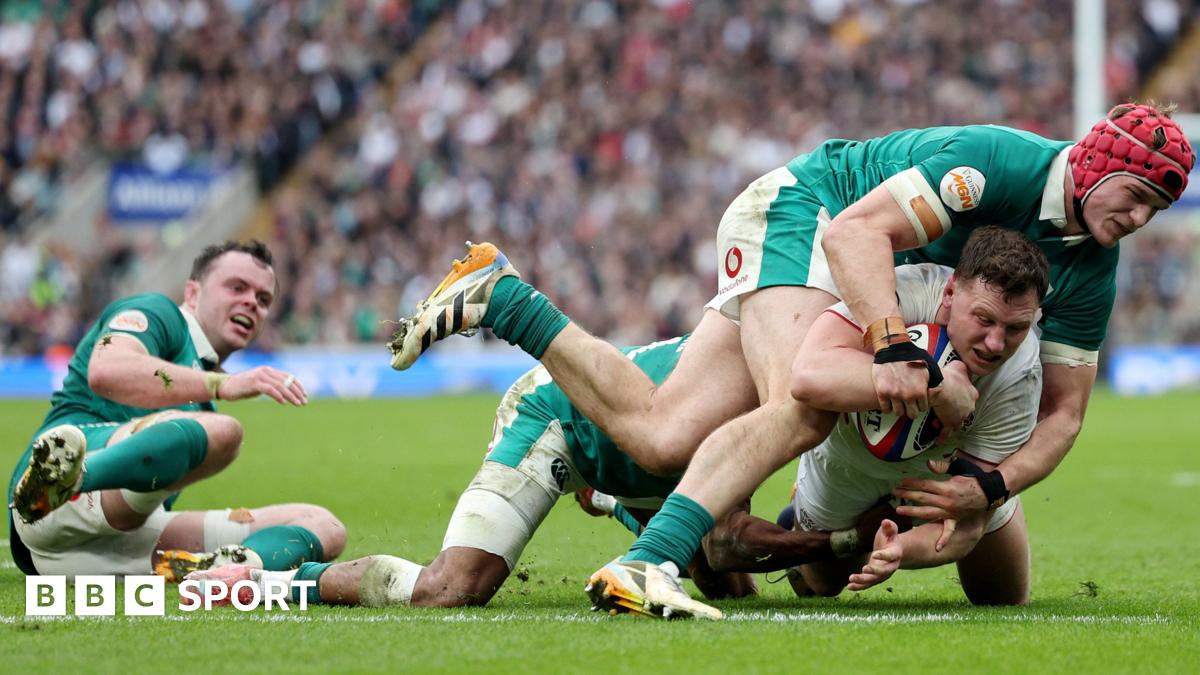
The pressure then mounted on Borthwick as his side were outclassed by Ireland at Allianz Stadium.
While all that was happening, France cruised past Ireland, Wales and Italy to start a narrative that anything other than a Grand Slam would be a failure.
Scotland then blew away Galthie’s side, before conceding a late flurry of tries, to head into the final round with a genuine shot of a first Six Nations title.
To add more drama into the mix, Italy overcame England in Rome to mount further pressure on Borthwick.
Wales may have lost their opening four games, but they improved as the championship went on, producing an impressive bonus-point win over Italy to end the tournament.
They finished with a third consecutive Wooden Spoon – but a first win in the championship since 2023 offered huge relief.
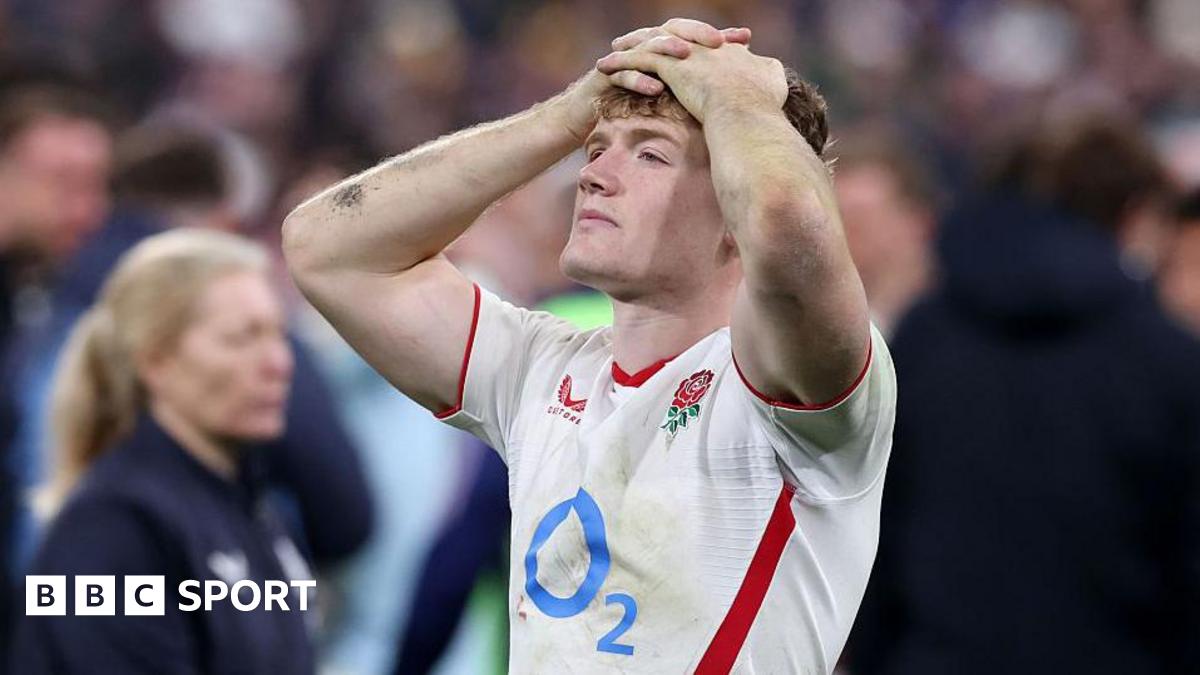
Despite an improved display in Paris, England finished the tournament with four defeats – their worst-ever campaign.
“It was one of the most captivating Six Nations in history, fitting it came down to one final moment of drama,” BBC rugby correspondent Chris Jones said.
The 2015 Six Nations has been regarded as the greatest tournament for entertainment because of the three-team Super Saturday title race.
It similarly went right down to the wire.
However, this year’s competition delivered from round one right to the final kick, with each nation having their own story – and surely leaps to the top of the list.
“England were blistering – their pace, their skill, their intensity, their physicality and they had a genuine chance of winning,” said former England scrum-half Matt Dawson on BBC Radio 5 Live.
“I feel for the players because they are going to be down, but I want them to be super, super positive because if they carry on playing like that for the next 18 months they are going to challenge in big tournaments and big games, and they are going to win big games.”
And yet. When the adrenaline levels drop, questions will also be raised.
Should England have made victory stick?
With the restart regathered by Chessum, the ball safely at the base, Sam Underhill, Henry Pollock and Chandler Cunningham-South on their feet as a potential pod, and only two minutes left on the clock, could England have kept ball in hand and run down the clock?
Instead, Jack van Poortvliet, who had brought some zip off the bench, opted to kick the ball away and infield. Matthieu Jalibert, a broken-field fiend, accepted the invite to run back and England were back under the pump.
Closing out victories was a repeated failing in a series of close defeats in autumn 2024. It is a habit that England don’t want to reacquire.
One they definitely haven’t kicked yet is indiscipline. Only one of the 162 team campaigns in Six Nations history – Italy 2002 – has picked up more cards than England have this year.
Eight yellows, two of which combined to make Henry Arundell’s 20-minute red against Scotland, have hobbled England throughout.
Ellis Genge was dispatched to the sin-bin seat of shame in Paris, adjudged to have cynically dragged down a France driving maul that was destined for the line.
It may have been a marginal call, but, backed up to their own line, England knew the stakes were high and the punishment for any infringement would be heavy.
France raced back into the lead in the prop’s absence.
Wood has been plagued by injuries during his career – including multiple knee and elbow operations – which have robbed England for periods of one of their finest strike bowlers.
He spent seven months rehabilitating his knee in order to be fit for the Ashes and lamented not being able to play some games for his county before heading to Australia for the series.
“I tried to get back at certain points but my knee wasn’t quite ready,” he said.
“It’s easy in hindsight, even if I was at 80% then at least the game would have given us an indicator of where I was.”
He was thought to have been close to a return in the home summer, but ultimately did not take the field until England’s only Ashes warm-up game against the Lions at Lilac Hill in November.
He bowled eight overs but was only cleared to play in the first Test following a hamstring scan.
For now, although focused on his recovery, Wood said he has been thinking about life after cricket: “I’ve started thinking about other things, doing podcasts, doing my coaching badges.
“I’ve now started to try and think for the first time about what I should do if this doesn’t go well.”
Wood – regarded as one of the fastest bowlers to play for England – has taken 119 wickets in 38 Tests since making his debut in 2015.
He was part of the 2015 Ashes-winning side, lifted the 2019 50-over World Cup and won the T20 World Cup in 2022.
Weekly insights and analysis on the latest developments in military technology, strategy, and foreign policy.
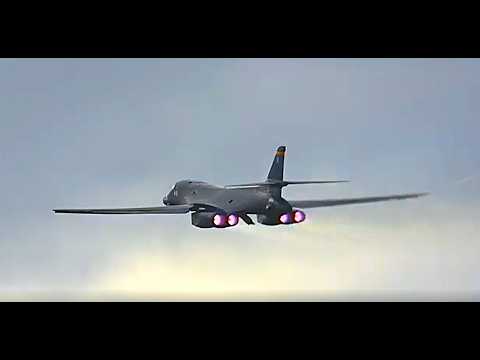
A video out of RAF Fairford in England shows American B-1Bs getting prepped for a strike mission against Iran. In addition to the staple AGM-158 JASSM cruise missiles being readied for loading onto the ‘Bones,’ we see GBU-31 Joint Direct Attack Munitions (JDAMs) equipped with BLU-109 2,000-lb bunker buster warheads. We can also see the revolving weapons rack being extracted from the B-1’s weapons bay. The move from cruise missiles to JDAMs, at least for some targets, is a sign that air supremacy over Iran is becoming more assured, at least in some areas. You can read all about how the U.S. and Israel had not achieved air supremacy last week in our report linked here.
The videos were posted on X by journalist Richard Gaisford and can be seen below:
Missiles delivery systems are being removed from the B1 Lancers at RAF Fairford this afternoon, to be replaced by JDAM bombs. For those asking, the US Airforce has positioned these aircraft close to the fence in full view of media. @AJENewspic.twitter.com/fWtDRfV5g4
US Airforce ground crew work under hatches of a B1 Lancer at RAF Fairford today. What appear to be cruise missiles sit by the warplane. Three B1 bombers returned this morning, on what is believed to be the first attack on Iran from a British base during this conflict. @AJENewspic.twitter.com/80YkxHL5rT
The bomber force at RAF Fairford has expanded even larger over the last couple of days. There were nine American bombers at Fairford — three B-52s and six B-1s — as of the start of this week. Now there are 15 total — three B-52s and 12 B-1Bs.
Bomber aircraft can achieve far greater and more varied effects if they are allowed to directly strike targets instead of relying on cruise missiles fired at standoff ranges. This is especially true for delivering withering assaults on large target areas via a belly full of JDAMs. It also allows the aircraft to do this against targets that require bunker-buster capabilities. So far, we only know of the B-2 that has executed large-scale bunker buster attacks in Iran, using its stealth capabilities, as well as support from the total force, to ensure it can safely return from the mission. Fighters have been able to deliver much smaller numbers of these weapons onto targets deeper in Iran. Opening up these same target sets to forward-deployed B-1s and B-52s would help change the pace and impact of the air campaign.
NEW: At least three U.S. B-52 bombers have landed at RAF Fairford in the U.K., signaling preparations for potential sustained heavy bomber strikes against Iran.
Potential targets include large industrial complexes used for long-range weapons production and development, command and control bunkers, nuclear-program related sites, and, maybe most likely, keeping Iran’s underground ‘missile cities’ entombed by bombing their entrances so that the weapons that are housed inside can not be put to use.
B-1s first mission to Iran out of RAF Fairford UK
Still, B-1s and B-52s will likely operate over western Iran, where degradation of enemy air defenses has been the focus for nearly two weeks. Venturing into the eastern part of the country, which has seen far less attention, probably remains too risky. This is underscored by the map below, which the Pentagon released yesterday, showing the distribution of strikes across Iran during the first 10 days of the conflict (February 28 to March 9).
US Military
We still don’t know if the U.S. military will activate Diego Garcia as another forward operating location for its bombers. The U.K. government approved the use of both Fairford and Diego Garcia last week after denying that access leading up to the war. We have seen some heavy transport movements in satellite imagery to the remote island outpost in the Indian Ocean, and KC-135 tankers and force protection F-16s are still there, so it’s possible this could occur or has already happened. Cloud cover has kept the island obscured in satellite imagery for the last few days. Of course, such a deployment all depends on how long this campaign will actually last, with conflicting signals from the Trump administration as to its planned duration and exit strategy.
Regardless, it looks like the B-1s are going to be using their extremely large payload capacity to directly attack hardened Iranian targets in the very near future.
THE top 50 cities to visit in 2026 have been revealed, and the UK hasn’t done too badly.
Time Out has teamed up with Intrepid for its annual Best Cities of 2026, speaking to 24,000 people living in cities around the world.
Sign up for the Travel newsletter
Thank you!
Time Out’s annual Top Cities study has named Melbourne as the best in the worldCredit: AlamyLondon squeezed into the top five best citiesCredit: Alamy
A panel of 100 Time Out city experts were also asked about the most exciting cities in the world, looking at data from 44 different criteria.
This includes food and drink, green spaces, culture, sense of community and Gen Z appeal.
While Melbourne came out on top, Edinburgh came in third, followed by London in fourth.
Edinburgh was praised for its famous Fringe Festival, as well as its “cherry-blossom-lined parks, cobbled alleyways and distinctive neighbourhoods that offer hours of exploration”.
It was also one of the happiest cities in the survey, with it highly rated for both food and green spaces.
When it comes to London, its the new attractions that were praised such as the Museum of London in Smithfield.
And 99 per cent of Londoners praised its art and culture.
Bath snuck into the full top 50 at number 26, praised for its new hotels, good community feel and the celebration of 20 years of the Thermae Bath Spa.
Time Out Travel Editor Grace Beard said: “Every year, we survey locals in cities all over the planet to create our definitive annual ranking.
“Now in its tenth anniversary year. Time Out’s Best Cities with Intrepid Travel is not only a global snapshot of city living, but a celebration of the fun, culture and community that defines urban life.
“For 2026, we expanded our survey to reach 150 cities and added questions that dig deeper into the everyday lives of locals, including new categories for love, romance and community feel.
“The result is a truly diverse and exciting list of destinations, deeply informed by local insight and Time Out expertise, with smaller and second cities slotted between the world’s major metropolises.”
Outside of the UK, the highest rated city in mainland Europe was Zurich, coming in 11th place.
This was followed by Copenhagen (13), Krakow (16) and Porto (17).
Zurich was the highest rated city in mainland EuropeCredit: AlamyThe best Spanish city was Madrid, in 19th placeCredit: Alamy
Top 50 Best Cities in the World, according to Time Out
Melbourne, Australia
Shanghai, China
Edinburgh, United Kingdom
London, United Kingdom
New York, United States
Cape Town, South Africa
Mexico City, Mexico
Bangkok, Thailand
Seoul, South Korea
Tokyo, Japan
Zurich, Switzerland
Rio de Janeiro, Brazil
Copenhagen, Denmark
Sao Paolo, Brazil
Hong Kong, Hong Kong
Krakow, Poland
Porto, Portugal
Guadalajara, Mexico
Madrid, Spain
Valencia, Spain
Sydney, Australia
Paris, France
Singapore, Singapore
Marrakesh, Morocco
Hanoi, Vietnam
Bath, United Kingdom
Bilbao, Spain
Berlin, Germany
Adelaide, Australia
Beijing, China
Antwerp, Brussels
Chiang Mai, Thailand
Naples, Italy
Amsterdam, Netherlands
Medellin, Colombia
Lima, Peru
Vancouver, Canada
Ho Chi Minh City, Vietnam
Osaka, Japan
Athens, Greece
Chicago, United States
Cairo, Egypt
Buenos Aires, Argentina
Vienna, Austria
Dublin, Ireland
San Francisco, United States
Lagos, Nigeria
Auckland, New Zealand
Lisbon, Portugal
Bogota, Colombia
The Spanish cities of Madrid and Valencia snuck into the top in 19th and 20th, respectively.
For long-haul destinations, New York, Bangkok and Tokyo all made the top 10.
Shanghai was praised for being easier to travel to this year, following the scrapping of visas until the end of 2026, while Seoul was one of the most popular with Time Out staff.
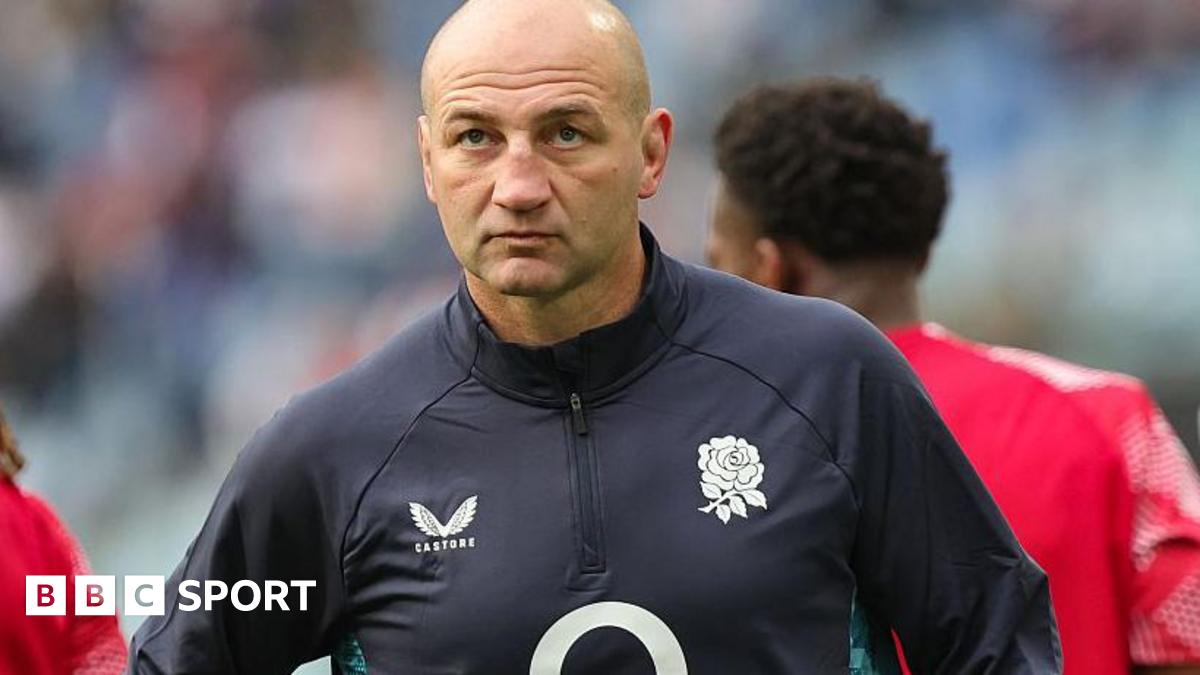
Steve Borthwick’s boss has given the England coach his backing, but says there will be a full examination of the woeful Six Nations campaign after the team’s final-round match against France on Saturday.
England are fifth in the table and well out of the title running after successive defeats by Scotland, Ireland and Italy – which was the first ever loss to the Azzurri – ruined their ambitions and prompted questions over Borthwick’s future.
“After a 12-match winning run, these past three results have been hugely disappointing, and we feel that just as much as everyone else,” said Rugby Football Union chief executive Bill Sweeney.
“Steve and his coaching team are working tirelessly to make improvements, and we remain fully committed to supporting them and the players as they face France this weekend and then look ahead to the Nations Championship.
“Part of that support is being open about what hasn’t gone right during this Six Nations and making sure everyone has a clear sense of how we move through those challenges together. That’s something we’ll be talking through and working on in the days and weeks ahead.
“We will work together to understand and rectify why we have been unable to meet the expectations and anticipation going into these games.
“England fans rightly expect a team that learns and grows through adversity, and we’re confident this group will do everything they can to deliver that.”
Borthwick defended his record and the direction of the team after Italy, who had lost their previous 32 games against England, ran out 23-18 winners in Rome.
“Absolutely,” replied the 46-year-old when asked if he was the right man for the job.
“Right now this is a tough period, but what we will do is learn from it and make sure we are stronger going forward.
“It is tough right now and we are not hiding away from the fact it is tough.”
In the build-up to the match, Borthwick had urged his side to chance their arm and throw one more pass. But Italy looked quicker witted and more ambitious throughout.
A pair of clever kicks from fly-half Paolo Garbisi – the second, a well-weighted sideways nudge to release Ioane – set up the field position from which the fly-half kicked the first points of the match on 21 minutes.
An accurate long line-out throw and an Earl rumble gave England the momentum to put Tommy Freeman in for his ninth Test try, although Smith pushed the kickable conversion wide and Italy lurked dangerously as England continued to splutter.
Five minutes before the break, Menoncello – Italy’s leading metre-maker, clean-breaker and defender-beater so far in the championship – made good on the threat.
The 23-year-old carved past a startled Heyes on the fringe of a breakdown and galloped over to put Italy 10-5 in front.
England recovered. Albeit briefly.
A smart kick from Smith switched play to Tom Roebuck, and the Sale wing showed deft footwork to scamper in on the stroke of half-time.
A pair of Smith penalties after the break stretched England’s lead out to 18-10 and England seemed to be turning the tide of the contest, with Underhill and Itoje both burrowing deep for turnovers.
However, with 25 minutes to go and the match seemingly there for the taking, England’s contrived to hand the initiative back to Italy.
Underhill and Itoje watched on grimly from the sidelines as first Garbisi’s boot and then their backline’s all-court brilliance – Ioane stepping Roebuck in a sliver of space, Menoncello bullocking on and Marin gleefully scampering in – wrenched the contest out of their grasp.
England found some late urgency as they vainly chased the game. Ollie Chessum bust a hole to spin the Italian defence, but the scramble snuffed out the danger.
England looked dazed and at the end of days, as the clock went red, the ball went dead and the Stadio Olimpico lit up and leapt to its feet around them.
Defeat by France in Paris next weekend would mark only the third time in the 115-year history of the Five and Six Nations that England have lost four games in a single campaign.