Energy

Not ‘a litre of oil’ to pass Strait of Hormuz, expect $200 price tag: Iran | US-Israel war on Iran News

Warning comes as 400 million barrels of oil are being released from global reserves during waterway’s closure.

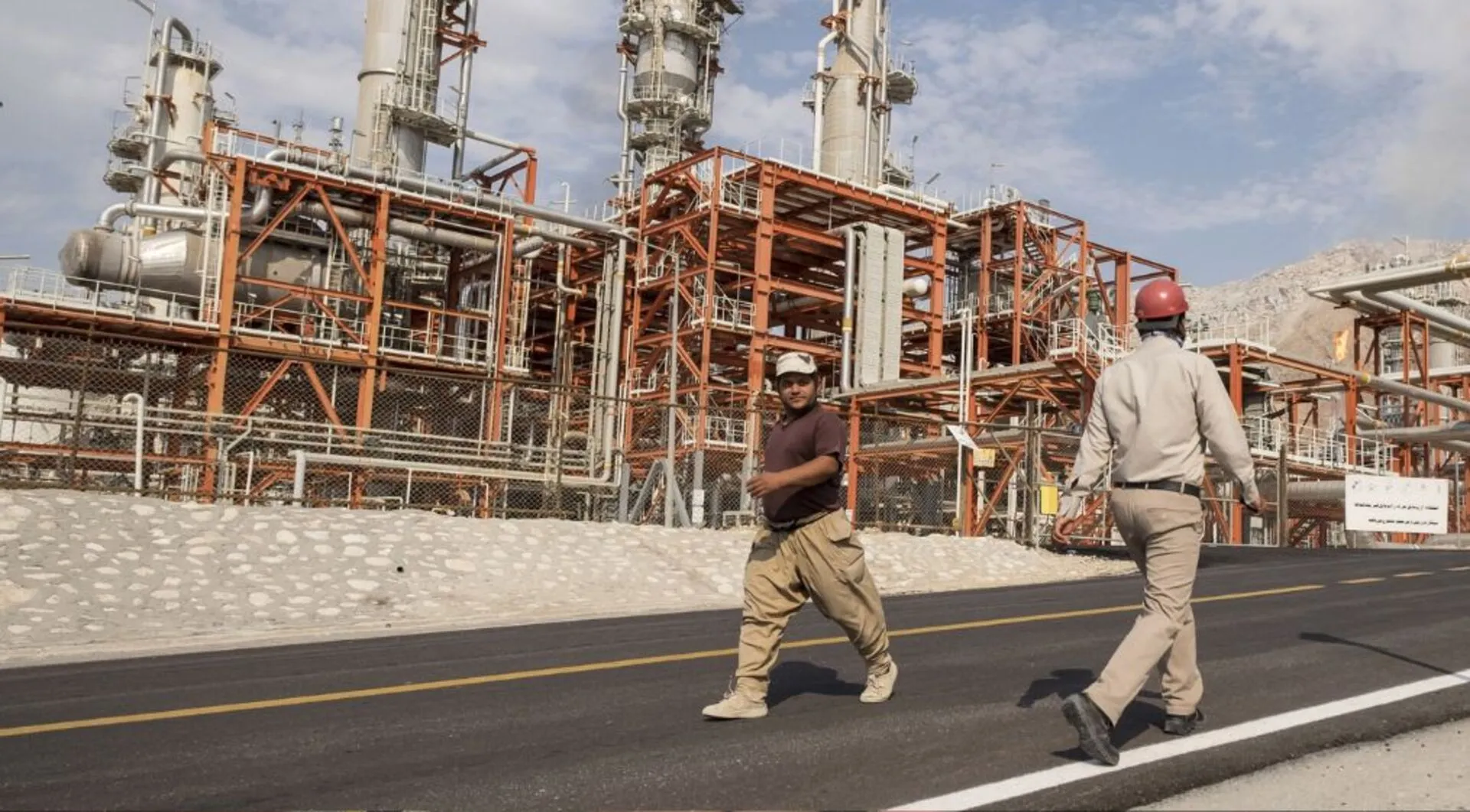
Iran’s Islamic Revolutionary Guard Corps (IRGC) says it will not allow “a litre of oil” through the Strait of Hormuz as the closure of the key Gulf waterway continues to roil global energy markets during the US-Israeli war on Iran.

A spokesperson for the IRGC’s Khatam al-Anbiya Headquarters said on Wednesday that any vessel linked to the United States and Israel or their allies “will be considered a legitimate target”.

Recommended Stories

list of 3 itemsend of list

“You will not be able to artificially lower the price of oil. Expect oil at $200 per barrel,” the spokesperson said in a statement. “The price of oil depends on regional security, and you are the main source of insecurity in the region.”

Global oil prices have fluctuated wildly this week during continued US-Israeli attacks against Iran, which has retaliated by firing missiles and drones at targets across the wider Middle East.

The closure of the Strait of Hormuz, through which about one-fifth of the world’s oil supplies transit, and production slowdowns in some Gulf countries have raised concerns of further disruptions.

Concerns around the duration of the war, which began on February 28 and has shown no sign of abating, are also adding to uncertainty, sending oil prices soaring.

On Wednesday, three ships were hit by projectiles in the Strait of Hormuz, maritime security and risk firms said, including a Thai-flagged cargo vessel that came under attack about 11 nautical miles (18km) north of Oman.

Release of oil reserves

World leaders, including members of the Group of Seven (G7) and the European Union, have been mulling what action to take in response to the war’s impact on global economies.

Christian Bueger, a professor of international relations at the University of Copenhagen and an expert in maritime security, said Europe will be facing “a major energy supply crisis” if the Strait of Hormuz is not reopened.

“For the shipping industry right now, it’s impossible to go through the Strait of Hormuz,” Bueger told Al Jazeera. “And if there are not stronger signals in the near future that they can at least try to go through the strait, then we are looking at a major shipping crisis, which can last weeks if not months.”

On Wednesday, the International Energy Agency (IEA) announced that its 32 member countries had unanimously agreed to release 400 million barrels of oil from their emergency reserves to try to lower prices.

“This is a major action aiming to alleviate the immediate impacts of the disruption in markets,” IEA Executive Director Fatih Birol said during an address from the agency’s headquarters in Paris.

“But to be clear, the most important thing for a return to stable flows of oil and gas is the resumption of transit through the Strait of Hormuz,” he added.

The reserve supplies will be made available “over a timeframe that is appropriate” for each member state, the IEA said in a statement without providing details.

German Economy and Energy Minister Katherina Reiche said earlier in the day that the country would comply with the release while Austria also said it would make part of its emergency oil reserve available and extend its national strategic gas reserve.

Meanwhile, Japan’s Ministry of Economy, Trade and Industry said it would release about 80 million barrels from its private and national oil reserves.

Japanese Prime Minister Sanae Takaichi said the country, which gets about 70 percent of its oil imports through the Strait of Hormuz, would begin releasing the reserves on Monday.
Source link

Which countries have seen the highest petrol prices since the Iran war? | US-Israel war on Iran News

Motorists around the globe are already feeling the impact of the United States and Israel’s war on Iran, with fuel prices sharply rising since the war began.

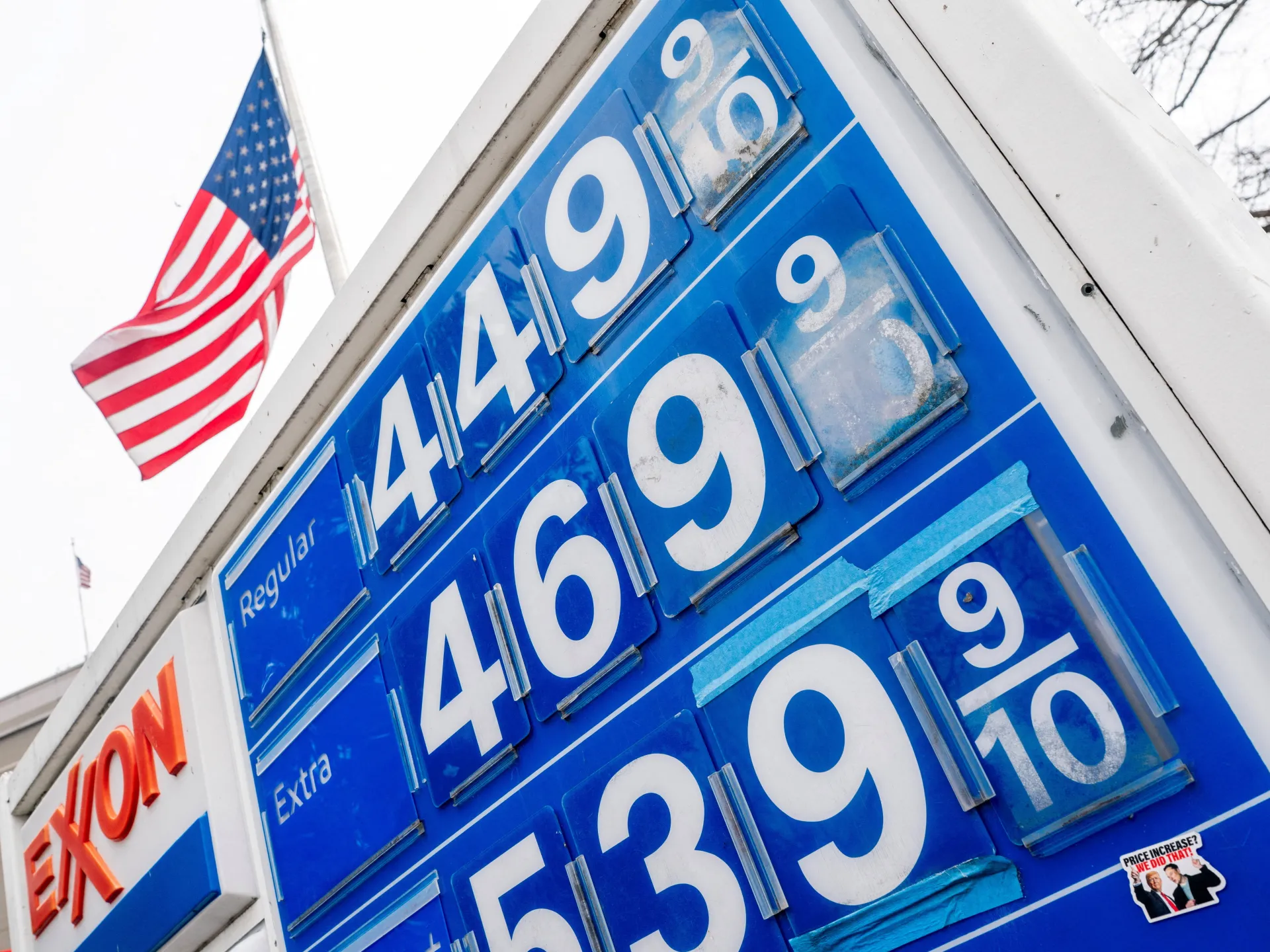
In the US, a gallon of regular petrol that averaged $2.94 in February now costs $3.58, marking a 20 percent increase, according to data from AAA Fuel Prices, a retail fuel price tracker from the American Automobile Association (AAA).

While each US state sets its own petrol prices, several states have surpassed $4 per gallon, with California exceeding $5 per gallon, the highest level it has been in more than two years.

Which countries have the sharpest petrol price increases?

According to data analysed from Global Petrol Prices, a data platform that tracks and publishes retail energy prices across approximately 150 countries, at least 85 countries have reported increases in petrol prices following the initial attacks on Iran by the US and Israel on February 28. Some nations announce price changes only at the end of each month, so higher prices are expected for many others in April.

Vietnam recorded the highest petrol price increase of nearly 50 percent, rising from $0.75 per litre of 95-octane on February 23 to $1.13 on March 9. Laos follows with a 33 percent increase, then Cambodia at 19 percent, Australia at 18 percent, and the US at 17 percent.

The table below shows the countries that have increased petrol prices at the pumps.

Asian countries pay the biggest price

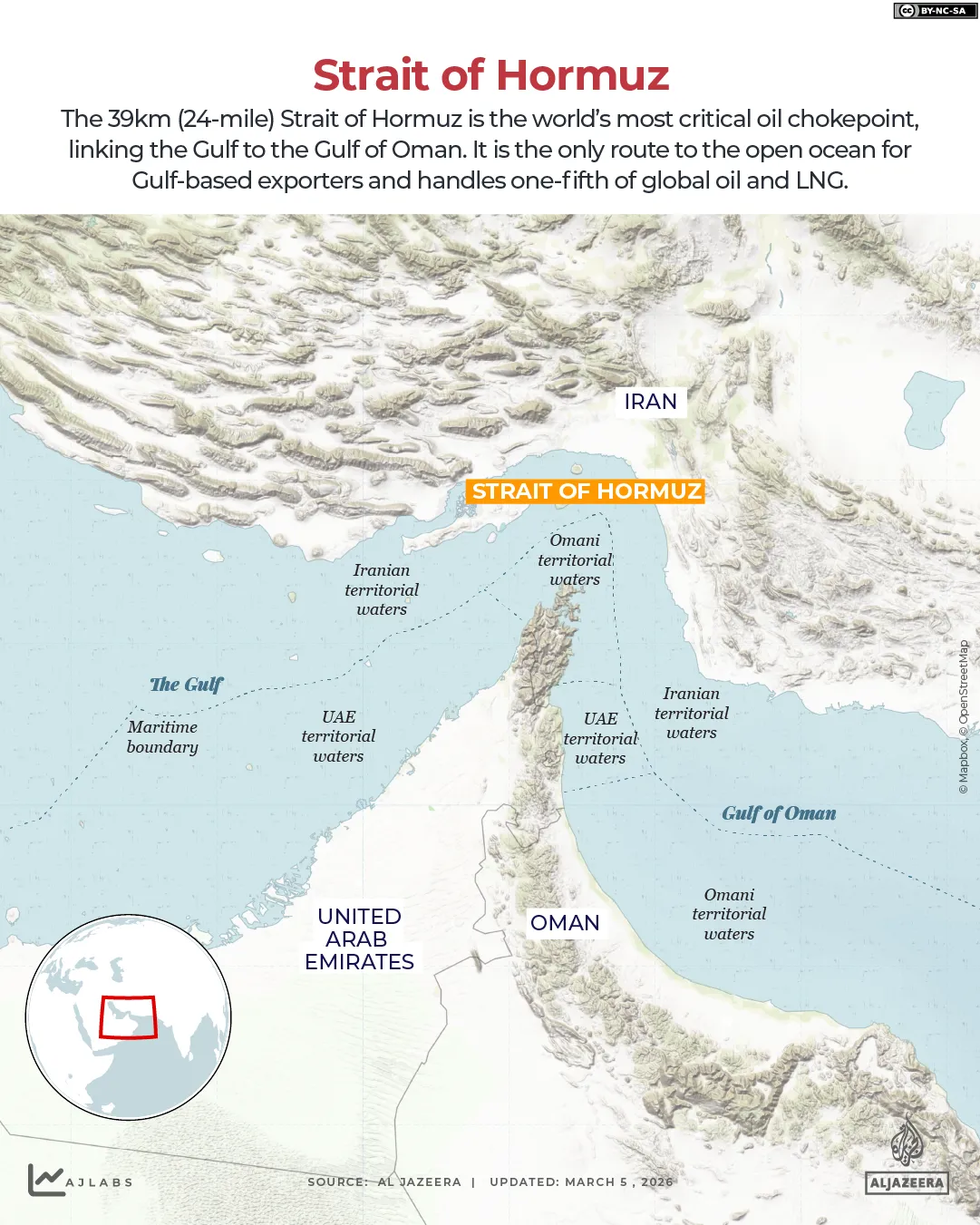
Asia is disproportionately dependent on the Strait of Hormuz for the delivery of its oil and gas, which has been effectively closed since the start of the war. The strait joins the Gulf – also referred to as the Persian Gulf and the Arabian Gulf – to the Gulf of Oman and is the only passage for the region’s oil producers to the open ocean.

INTERACTIVE - Strait of Hormuz - March 2, 2026-1772714221

Japan and South Korea are among the most vulnerable, importing 95 percent and 70 percent of their oil from the Gulf, respectively.

Both East Asian nations have enacted emergency measures to stabilise their energy markets. On March 8, Japan instructed its oil reserve sites to prepare for a potential release of strategic reserves. The next day, South Korea introduced a maximum price cap on petrol and diesel for the first time in 30 years.

In South Asia, the impact of the war is more severe than in East Asia because countries like Pakistan and Bangladesh have much thinner financial buffers and smaller strategic reserves.

In an attempt to conserve energy, Bangladesh‘s government has ordered all public and private universities to close immediately. In Pakistan, government offices will now operate a four-day workweek, while schools have closed, and a 50 percent work-from-home policy has been enacted to save fuel.

In Europe, the Group of Seven finance ministers convened an emergency meeting to discuss rising prices, with French President Emmanuel Macron raising the possibility of releasing 20-30 percent of emergency strategic reserves to ease the pressure on consumers.

How high oil costs drive up the price of food

Oil prices and food prices move in lockstep, with energy prices affecting every stage of the food supply chain, from the fertilisers used in the fields to the trucks that carry food from field to supermarket shelf.

Rising oil prices also directly affect shipping and the cost of transport.

“The lifeblood of the global economy is transport,” economist David McWilliams told Al Jazeera. “It’s getting stuff from A to B – it’s a logistics problem, a supply chain problem, and ultimately transportation is the energy of the global economy.”

Fears of stagflation – increasing inflation and rising unemployment, which major oil shocks have historically summoned – are rising. Economists point to the crises of 1973, 1978 and 2008 as evidence that every significant spike in oil prices has been followed, in some form, by global recession.

In lower-income countries, where populations spend a far greater share of their income on food and import large quantities of grain and fertiliser, rising oil prices could rapidly translate into food shortages.

Interactive_Cost_OilPrices_Food-1773140062

What products are made from oil and gas?

Oil and gas are used for far more than just fuel. They are raw materials for thousands of everyday products.

Plastics, including water bottles, food packaging, phone casings and medical syringes, are all derived from crude oil.

Crude oil is also the hidden ingredient in synthetic fabrics such as polyester, nylon and acrylic, which are used to make everything from sportswear to carpets. It also underpins the cosmetics industry, as it is used to make products such as petroleum jelly (Vaseline), lipsticks and concealers.

Household items also rely on oil-based ingredients, with laundry detergents, dishwashing liquids, and paints all derived from petroleum products.

The global food supply is essentially built on natural gas in the form of fertilisers, used to enhance crop yields and ensure that food production can meet demand.

INTERACTIVE-CRUDE OIL-USED-MARCH 9-2026-1773138980

Source link

G7, EU Leaders to Hold Talks on Soaring Energy Prices Amid Iran War

G7 energy ministers will hold a call on Tuesday to discuss sharply rising energy prices triggered by the ongoing war in Iran, officials said. A separate call later in the day will see European Union leaders addressing similar concerns, reflecting heightened global anxiety over fuel supply and costs.

Oil prices surged to their highest levels since mid-2022 on Monday, driven by fears of reduced Gulf output and disruptions to tanker traffic through key shipping routes. Even before the Iran conflict, European energy prices were generally higher than those in the United States and China.

G7 Prepares Response, But Stops Short of Releases

G7 finance ministers signalled readiness to take “necessary measures” in response to the price surge but did not commit to coordinated emergency releases of strategic oil reserves.

The G7, which includes United States, Canada, Japan, Italy, Britain, Germany, and France, will hold the call at 1245 GMT. French Finance Minister Roland Lescure, whose country holds the G7 presidency this year, said that Europe and the U.S. currently do not face immediate supply shortages.

EU Leaders Target Competitiveness and Energy Costs

Later on Tuesday, EU leaders will discuss energy prices and competitiveness, joining German Chancellor Friedrich Merz, Italian Prime Minister Giorgia Meloni, Belgian Prime Minister De Wever, and others.

The EU is highly exposed to global energy volatility, importing more than 90% of its oil and roughly 80% of its gas. EU Commission President Ursula von der Leyen has pledged proposals at next week’s EU summit to address rising prices.

Officials have already discussed measures including adjustments to energy taxes and potential amendments to the EU carbon price, which contributes around 11% to industrial power costs.

Coordinated Action Sought but Uncertain

The calls by the G7 and EU reflect a growing urgency to manage energy price shocks caused by the Iran war. While governments have the tools to intervene, officials are balancing the need to stabilize prices with broader fiscal and strategic considerations.

With oil and gas markets highly sensitive to geopolitical developments, both G7 and EU leaders face pressure to act quickly to prevent price spikes from translating into economic slowdowns or political unrest across their regions.

With information from Reuters.

Source link

Is control of Iran’s natural resources a factor in US strategy? | Energy News

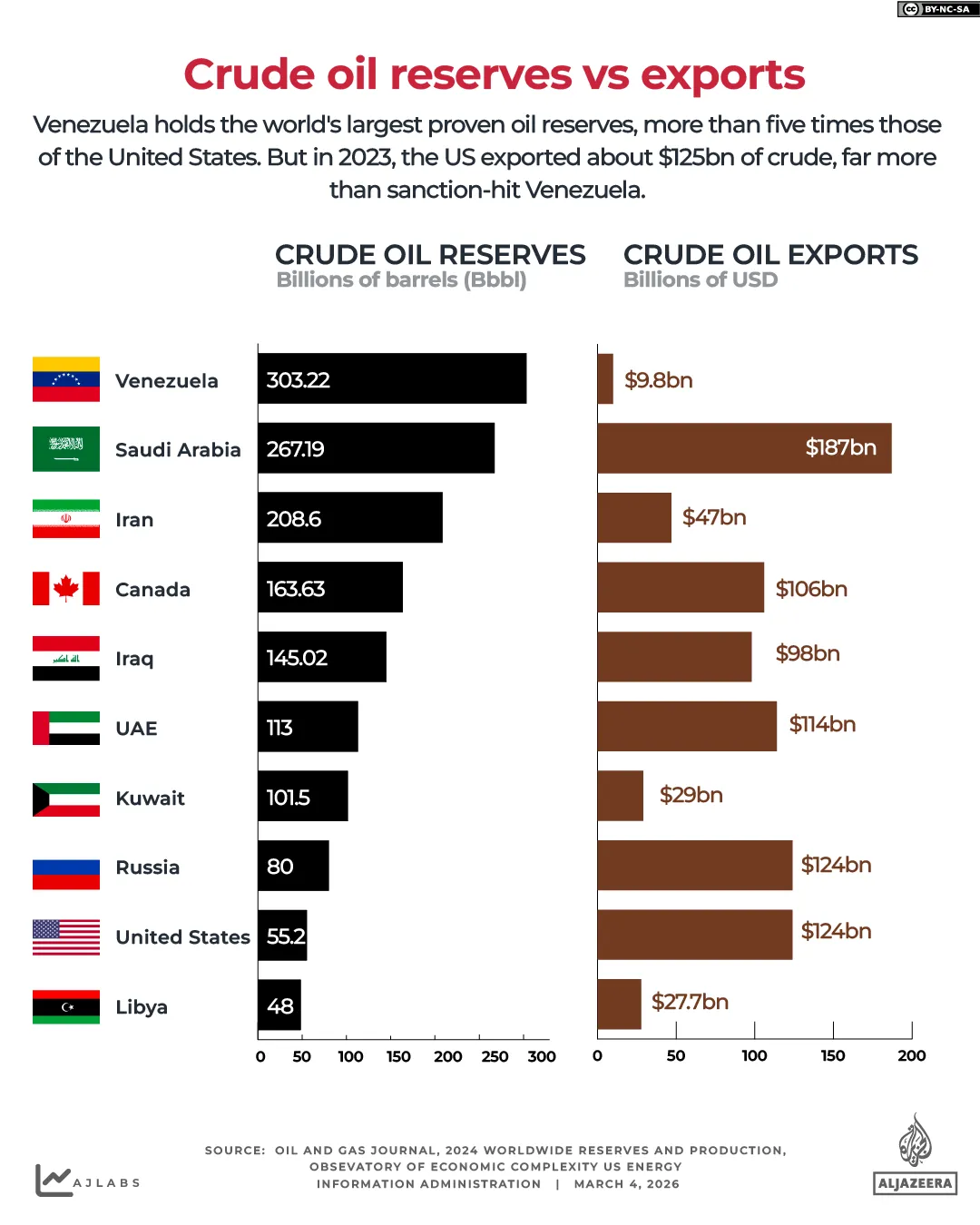
Iran has vast oil as well as gas reserves and is a key supplier to China.

Iran has significant oil and gas reserves, and is a key supplier to China.

A member of US President Donald Trump’s inner circle has said control of those reserves is a key United States aim amid the country’s war against Iran.

So, how valuable are Iran’s natural resources? And could they be a factor in US thinking?

Presenter: Imran Khan

Guests:

Foad Izadi – Professor in the faculty of world studies at the University of Tehran

Mohammad Reza Farzanegan – Professor of Middle East economics at Marburg University

Paolo von Schirach – President of the Global Policy Institute, an independent think tank

Source link

IEA due to meet as member states mull releasing oil reserves amid Iran war | US-Israel war on Iran News

International Energy Agency chief says talks aim to assess conditions as US-Israel war on Iran fuels global uncertainty.

The International Energy Agency (IEA) is set to hold an emergency meeting to assess the situation in the Middle East as the US-Israeli war on Iran continues to roil global energy markets.

Fatih Birol, the agency’s executive director, said representatives of IEA member states would meet on Tuesday to assess “the current security of supply and market conditions” amid the conflict.

Recommended Stories

list of 3 itemsend of list

“I have convened an extraordinary meeting of IEA member governments, which will take place later today to assess the current security of supply and market conditions to inform a subsequent decision on whether to make emergency stocks of IEA countries available to the market,” Birol said.

This week, oil prices hit their highest levels since mid‑2022 amid concerns of prolonged shipping disruptions linked to the war and reduced output from some key producers in countries that have been targeted by retaliatory Iranian strikes.

While the market reversed late in the day on Monday, with benchmarks falling below $90 a barrel, uncertainty persists around how long the United States-Israel war will drag on.

The Strait of Hormuz, a critical Gulf waterway through which about one-fifth of the world’s oil supplies passes, has effectively been shut down as a result of the war.

“If this drags on, it is not just going to be energy prices” that are affected, Al Jazeera’s Osama Bin Javaid explained. “It is going to have an impact on global economies.”

Bin Javaid noted that the extraordinary IEA meeting comes after Group of Seven (G7) countries met to discuss possible actions to help stabilise global energy markets.

European governments have been on edge about the prospect of a repeat of the energy crisis they faced in 2022, when prices surged to record peaks after Russia’s full-scale invasion of Ukraine.

“The IEA will ⁠be presenting an ⁠in-depth analysis of the pros and ⁠cons of releasing stocks ⁠now,” the European Union’s Energy Commissioner ‌Dan Jorgensen said before the agency’s meeting.

Earlier on Tuesday, G7 energy ministers stopped short of deciding on the release of strategic oil reserves in a call, instead asking the IEA to assess the situation before acting.

“Everyone is willing to take measures to stabilise the market, including the United States,” French Finance Minister Roland Lescure told reporters after the latest talks.

“We have asked the IEA to elaborate scenarios for a potential oil stock release; we need to be ready to act at any moment,” he added.

EU leaders also will discuss competitiveness, including energy prices, on a call later in the day with German Chancellor Friedrich Merz, Italian Prime Minister Giorgia Meloni, Belgian Prime Minister Bart De Wever, and others.

Source link

Russia the only ‘winner’ of US-Israel war on Iran: EU Council president | US-Israel war on Iran News

Antonio Costa says Russia benefits from soaring global energy prices and attention being diverted from war in Ukraine.

European Council President Antonio Costa has said Russia is the only country benefitting from the US-Israeli war on Iran, as global energy prices soar and attention from Moscow’s four-year conflict with Ukraine is diverted.

Now in its 11th day, the war has spiralled rapidly throughout the region as Iranian forces hit back at US and Israeli targets, as well as facilities in the Gulf. It has also slowed oil and natural gas flows through the strategic Strait of Hormuz to a near standstill, pushing fuel prices upwards and threatening far-reaching impacts on a number of industries.

Recommended Stories

list of 3 itemsend of list

“So far, there is only one winner in this war – Russia,” Costa said in a speech to European Union ambassadors in Brussels on Tuesday.

“It gains ‌new resources to finance its war against Ukraine as energy prices rise. It profits from the diversion of military capabilities that could otherwise have been sent to support Ukraine. And it benefits from reduced ⁠attention to the Ukrainian front ⁠as the conflict in the Middle East takes centre stage.”

Costa stressed the need for the EU to protect ⁠the international rules-based order, which he said was now being challenged ⁠by the United States, ⁠and for all parties in the Middle East to return to the negotiating table.

“Freedom and human rights cannot ‌be achieved through bombs. Only international law upholds them,” he said. “We must avoid further escalation. ‌Such ‌a path threatens the Middle East, Europe, and beyond.”

The US and Israeli attack on Iran triggered the biggest spike in oil prices on Monday since the turmoil following Russia’s invasion of Ukraine in 2022.

INTERACTIVE - Strait of Hormuz - March 2, 2026-1772714221

Costa’s comments came as the Kremlin said all parties wanted to continue US-mediated Russia-Ukraine peace talks, but that no date or venue had been agreed yet for the next round.

Russia and Ukraine held three rounds of talks in Turkiye last year and have conducted several more US-mediated sessions in Abu Dhabi and Geneva this year. But they remain far apart on key issues, especially on Russia’s demand for Ukraine to cede control of the whole of its eastern Donetsk region.

On Monday, US President Donald Trump and his Russian counterpart, Vladimir Putin, held their first phone call of the year, during which they discussed the wars in Iran and Ukraine.

The Kremlin said the possibility of lifting US sanctions on Russian oil had not been discussed in any detail with Washington, but that US actions were aimed at stabilising global energy markets.

Following this call, Putin said Russia, the world’s second-largest oil exporter and holder of the biggest natural gas reserves, was ready to work again with European customers if they wanted to return to long-term cooperation.

Before the Ukraine war, Europe was buying more than 40 percent of its gas from Russia. By 2025, combined sales of pipeline gas and LNG from Russia accounted for only 13 percent of total EU imports.

Also on Monday, Trump said his administration would lift some sanctions on oil-producing countries to keep energy prices down – though he did not say which ones.

Washington currently maintains sanctions on the oil sectors of Russia, Iran and Venezuela.

The Reuters news agency, citing multiple unnamed sources, reported that Trump was considering easing sanctions on Russia as part of his plans to keep oil prices down.

US Treasury Secretary Scott Bessent last week announced a 30-day waiver on sanctions on Russian oil sales to India to help it cope with the cuts to Middle East supply.

Source link

US consumers express dismay over rising gas prices after attack on Iran | US-Israel war on Iran News

Surging energy prices caused by the US-Israel war on Iran could ripple across the United States economy, heaping further strain on consumers at a time when cost-of-living issues are already a primary concern.

The price of crude oil increased from about $67 per barrel before the war began on February 28 to nearly $97 on Monday, as the conflict snarls production and transport in one of the most energy-rich regions on earth. Oil temporarily passed $100 per barrel on Sunday before slightly easing back.

Recommended Stories

list of 3 itemsend of list

The price tracker GasBuddy reported on Monday that the average price of gas in the US has risen by 51 cents per gallon over the last week.

“Yes, yes, definitely,” said 52-year-old Alma Newell when asked if she was worried about price increases at a gas station in the coastal city of Goleta, California.

Newell said she is out of work with a shoulder injury and worried that rising costs could stretch her already limited budget.

“The prices have a big impact because I’m not working right now,” she said. “Food and rent are already very expensive.”

“It’s crazy,” she added. “Because the war is so unnecessary.”

Cost of living issues

Rising prices could deepen frustration with the administration of US President Donald Trump and put greater political pressure on the White House, already struggling to address cost-of-living issues with the crucial midterm elections set to take place later this year.

“I think the current price increase in oil suggests the US will see $3.50 to $4 gasoline by next week, and $5 diesel this week,” said Gregory Brew, a senior analyst on Iran and oil at the Eurasia Group.

The highest recorded average for gas prices at the pump was in June 2022, when prices soared to $5.034, months after the Russian war on Ukraine started, according to Gas Buddy, which tracks fuel prices going back to 2008.

“The impact 1773123967 is more political than economic, as high gasoline prices generate negative press and can add to the perception that the government is not properly handling the economy. That means Trump will feel more political pressure to end this war quickly.”

A Pew Research Center poll in early February suggested widespread anxiety about the rising cost-of-living before the US and Israel launched attacks on Iran, with 68 percent of respondents saying they were very or somewhat concerned about gas prices.

“I’m not too worried myself because I have a hybrid car and ride my bike,” said 72-year-old Bjorn Birmir at the gas station in Goleta, California. “But for people in general, it will make life more expensive. Prices are already high, and it will make them even higher.”

Ongoing disruptions

The disruptions caused by the war include the shuttering of the Strait of Hormuz, a key node in global transit and shipping. Iran has long said that it could close down the strait in the event of a showdown with the US and Israel.

About 20 percent of global oil and a significant portion of natural gas pass through the strait, predominantly to Asia, supplies that are now stranded as traffic through the narrow waterway has ground to a halt. Iranian attacks on energy infrastructure in countries across the region have also led some countries to scale back production.

Other economic sectors are also feeling the squeeze.

Goods such as fertiliser, vital for agricultural production, are seeing price increases just ahead of the spring planting season in the Northern Hemisphere. About one-third of the global fertiliser trade passes through the Strait of Hormuz.

Effects of the war could ripple throughout the global economy, with poor countries especially hard-hit. Pakistan announced a series of austerity measures and cuts to fuel subsidies on Monday, while Bangladesh shuttered universities and announced restrictions on fuel use as a result of the war.

US officials and countries around the world have already discussed measures to help ease the shock of rising energy prices, including the potential release of strategic oil reserves in a bid to temporarily boost global supply.

The G7 said on Monday that it would take “necessary measures” to support energy supplies, but held off on announcing the release of strategic reserves, with energy ministers set to meet on Tuesday to discuss the matter further.

The US has a strategic oil reserve of more than 415 million barrels, one of the largest in the world, that it could release in coordination with allied countries.

But it is unclear when these measures would kick in and how long such steps could help fill the gaps created by the war.

Rachel Ziemba, adjunct senior fellow at the Center for a New American Security, says that much depends on whether the war is brought to a speedy conclusion or continues on for weeks or even months, with the possibility of further escalation.

Thus far, neither the US and Israel nor Iran has suggested it are willing to stop the war anytime soon, although Trump told CBS News on Monday that “the war is very complete, pretty much”, comments that helped ease some of the price swings in oil and stocks.

“If the war continues, we would see oil prices not only remain elevated, but perhaps rally further as markets price in a more protracted outage,” said Ziemba. “There’s also the question of, when it does end, how much damage will be done to infrastructure and just how quickly supplies could come back online.”

Initial polling has suggested that the war is unpopular in the US, with a Quinnipiac University poll released on Monday finding that 53 percent of voters who responded oppose Trump’s military action in Iran, including 60 percent of political independents.

That lack of popular support could present a political headache for Trump and his Republican Party if voters connect the war to increasing prices. Thus far, Trump has largely dismissed concerns about the war’s possible impact on the rising cost of living.

“Short term oil prices, which will drop rapidly when the destruction of the Iran nuclear threat is over, is a very small price to pay for USA, and World, Safety and Peace,” Trump said in a Truth Social post on Sunday. “ONLY FOOLS WOULD THINK DIFFERENTLY!”

Source link

Putin says Russia can supply oil, gas to Europe as energy prices soar | US-Israel war on Iran News

Russian president spoke as oil prices surged past $100 per barrel, reaching levels unseen since start of Ukraine war.

Russian President Vladimir Putin has said that Russia is ready to conditionally supply oil and gas to Europe as the US-Israeli war on Iran brings shipments through the Strait of Hormuz to a halt.

The Russian president said in televised comments on Monday that Moscow was ready to work again with European customers, which largely stopped buying from his country in a bid to stop funding its war on Ukraine, if they wanted to return to long-term cooperation.

Recommended Stories

list of 3 itemsend of list

European countries, however, have spent the past four years sharply reducing their reliance on Russian oil and gas in response to Moscow’s war in Ukraine and subsequent European Union and Group of Seven (G7) sanctions.

The EU banned maritime imports of Russian crude in 2022, while Russia’s pipeline exports to Hungary and Slovakia have been effectively halted since January due to damage to the Druzhba oil pipeline via Ukraine.

“If European companies and European buyers suddenly decide to reorient themselves and provide us with long-term, sustainable cooperation, free from political pressures, free from political pressures, then yes, we’ve never refused it. We’re ready to work with Europeans too,” said Putin at a meeting with government officials and heads of Russia’s top oil and gas producers.

He said that Russian companies should take advantage of conflict in the Middle East, which has seen Iran effectively halt shipping in the Strait of Hormuz, one of the world’s key oil transit chokepoints that carries roughly a fifth of global oil and liquefied natural gas.

The Russian president spoke as oil prices exceeded $100 per barrel on Monday, reaching peaks unseen since he launched his country’s full-scale invasion of Ukraine in 2022.

Brent crude, the international benchmark, rose by more than 30 percent on Sunday, at one point topping $119 a barrel, as fears grew of prolonged disruption to global energy supplies.

G7 nations said on Monday that they were prepared to implement “necessary measures” in response to surging global oil prices, but stopped short of committing to release emergency reserves.

Putin’s comments came hours after Hungarian Prime Minister Viktor Orban urged the European Union to suspend sanctions on Russian oil and gas to counter prices sent soaring by the war in the Middle East.

Last week, Putin had instructed the government to consider switching remaining Russian oil and gas flows away from Europe, before the European Union starts enforcing its decision to completely ban Russian fossil fuels.

Before the Ukraine war, Europe was buying more than 40 percent of its gas from Russia. By 2025, combined sales of pipeline gas and LNG from Russia accounted for only 13 percent of total EU imports.

The loss of the European market during the Ukraine war forced Russia to sell oil and gas at steep discounts to Asia.

Source link

EU ministers eye oil reserves to contain energy prices and inflation as Iran war rages

EU economy and finance ministers are gathering in Brussels on Monday and Tuesday to discuss how to respond to surging energy prices and anticipated inflation amid the ongoing strikes and counter-strikes in the Middle East.


ADVERTISEMENT


ADVERTISEMENT

“We are ready to take necessary and coordinated steps in order to stabilise markets, such as strategic stockpiling,” French Economy Minister Roland Lescure told journalists on Monday after chairing a meeting of G7 finance ministers.

Asked whether G7 finance ministers had agreed on releasing the system’s strategic stockpile, Lescure said: “We are not there yet.”

“What we’ve agreed upon is to use any necessary tools to stabilise the market, including the potential release of necessary stockpiles. The work is going to keep being done in the next couple of days”, the French minister said.

German Vice-Chancellor Lars Klingbeil said on Monday that his country is open to unlocking the oil reserve, but that “this is not the right time”.

The International Energy Agency’s member countries currently hold over 1.2 billion barrels of public emergency oil stocks, with a further 600 million barrels of industry stocks held under government obligation.

Oil prices have rocketed since the Israeli and US attacks on Iran on 28 February, which killed some 40 Iranian leaders, including the country’s supreme leader, Ayatollah Ali Khamenei. The conflict has now expanded into other countries in the region, including Lebanon and Gulf countries, with retaliatory attacks by Iran hitting civilian energy facilities and US bases.

Mojtaba Khamenei, the former Ayatollah’s son, was elected as successor on Monday, providing continuity in leadership for the current regime.

The price for a barrel of Brent crude, the international benchmark, surged to $119.50 early on Monday, but later traded around $107.80 after the Financial Times indicated that the use of reserve oil to respond to the crisis was on the table.

Leading European stock market indexes started the week with a big sell-off, following a major drop across Asian markets and surging oil prices.

The war is showing no sign of de-escalation. On 4 March, Qatar announced the suspension of its LNG production; then, over the weekend, Israel struck Iranian energy infrastructure while passage through the critical Strait of Hormuz remained suspended.

Energy prices in Europe will be affected, and inflation is likely to rise in the coming months. However, some EU diplomats and the European Commission indicates that the current situation presents significant differences from the energy crisis Europe experienced when the war in Ukraine started in February 2022.

“Thanks to the decisive actions we have taken over the past years, Europe’s energy system is better prepared and way more resilient today. Our energy sources are more diverse and cleaner. Our coordination is stronger,” European Commissioner for Energy Dan Jorgensen wrote on X on 6 March.

He called on the bloc to double down on the energy transition and continue to expand clean and homegrown renewable energy and energy efficiency efficients, all while modernising Europe’s energy infrastructure.

Spanish Economy Minister Carlos Cuerpo told journalists on Monday that the EU should take inspiration from the response to the 2022 crisis as it formulates its response to the war.

A different crisis?

This crisis is also structurally different from the one that exploded in 2022, an EU government official told Euronews.

When Russia’s full-scale invasion of Ukraine began, Europe needed an “infrastructure reset” with a new portfolio of suppliers, the official said – whereas in the current case, “the release of reserves and re-opening of routes could see prices going down faster”.

However, the situation remains extremely volatile, as it is highly dependent on when the Strait of Hormuz will reopen and when production will resume in top LNG-exporting countries.

Discussions on Monday and Tuesday among EU ministers are expected to touch upon energy prices with the European Commission, while euro-area ministers are set to discuss with the European Central Bank how the war could impact inflation and the overall macroeconomic outlook.

While EU ministers are not expecting to put forward a common strategy on the table by the end of the meetings, the EU institutions will present an update of the situation. Most of the member states will likely present their remarks based on their national assessment of the war’s impact, an EU diplomat told Euronews.

Maria Tadeo contributed reporting.

Source link

G7 finance ministers meet to discuss releasing emergency oil reserves

March 9 (UPI) — G7 finance ministers were set to hold an emergency meeting first thing Monday to discuss oil prices after Brent crude surged above $100 per barrel, with an option to release strategic reserves to calm the market on the table.

The virtual meeting, due to get underway at 8.30 EST, comes amid fears that disruption to oil and gas shipments from the Gulf via the Strait of Hormuz, which Iran has closed, could continue for some time, sending energy prices soaring and rattling financial markets.

The joint release of “emergency reserves,” if agreed, would be coordinated by the International Energy Agency, according to the Financial Times.

If G7 nations do release oil reserves, it would be the first time in four years since a crisis triggered by Russia’s full scale invasion of Ukraine triggered similar price shocks, although gas was hit the worst.

Exacerbated by escalating attacks on Gulf countries’ oil fields, refineries and storage plants — impacting their ability to produce and store product, as well as export it — Bent crude jumped more than 25% in Asian trade Monday, hitting a $119.50 per barrel high, before falling back with the price of West Texas Intermediate making similar moves.

Investors also reacted to fears that the crisis will push inflation and borrowing costs higher, with negative impacts for the global economy.

The key Nikkei 225 index in Japan slumped by more than 5% to end Monday down 2,892 points lower, with the jitters spilling over into Europe when the markets there opened.

At lunchtime Monday, the FTSE 100 in London was down 1.4%, Germany’s DAX was down 1.6% and the CAC 40 in Paris was off by more than 2.2%.

Former IEA head Neil Atkinson warned that unless there was a resolution to the situation in the Gulf and flows of oil resumed “very soon” the world faced a “potentially game-changing and unprecedented energy crisis,” even if the reserves were made available.

“Though there are oil stocks around the world, the point is that if this closure of the Strait persists, those oil stocks if they are deployed will be depleted and we are going to be in a situation where, with the oil production actually shut in, in Iraq and possibly in Kuwait and maybe even in time in Saudi Arabia, that we are going to be in a crisis the likes of which we have never seen before,” Atkinson told CNBC.

Source link

Oil soars past $100 a barrel amid Iran war | Oil and Gas

DEVELOPING STORY,

Crude oil prices rise by as much 20 percent as sprawling regional conflict threatens global energy supplies.

Oil prices have surged past $100 a barrel for the first time since Russia’s invasion of Ukraine, amid the widening fallout of the United States and Israel’s war on Iran.

Brent crude, the global benchmark, rose by as much as 20 percent on Sunday, topping $111 a barrel, as fears grew of prolonged disruption to global energy supplies.

Recommended Stories

list of 4 itemsend of list

US President Donald Trump, who campaigned heavily on cost-of-living concerns in the 2024 election, brushed off the surge.

“Short term oil prices, which will drop rapidly when the destruction of the Iran nuclear threat is over, is a very small price to pay for U.S.A., and World, Safety and Peace,” Trump said in a post on Truth Social.

“ONLY FOOLS WOULD THINK DIFFERENTLY!”

Crude oil prices have surged by about 50 percent since the US and Israel launched joint strikes on Iran on February 28.

Iranian threats and attacks in response have brought an effective halt to shipping in the Strait of Hormuz, a conduit for about one-fifth of the global oil supply.

Iraq, the United Arab Emirates and Kuwait, three of the biggest producers in The Organization of the Petroleum Exporting Countries (OPEC), have been forced to cut production amid dwindling crude storage capacity due to the collapse of shipping through the waterway.

Iran and Israel have also launched strikes on key energy facilities in Iran amid the sprawling regional conflict.

Stocks in Asia fell sharply on Monday morning, as investors braced for the fallout of rising energy prices.

Japan’s Nikkei 225 plunged about 6 percent in early trading, while South Korea’s KOSPI tumbled nearly 7 percent.

US stock futures, which are traded outside regular market hours, also saw substantial losses.

Futures tied to Wall Street’s benchmark S&P 500 were down by 1.7 percent, while those for the tech-heavy Nasdaq Composite fell by 1.90 percent.

Source link

Iran war threatens prolonged impact on energy markets as oil prices rise | US-Israel war on Iran News

The United States-Israeli war on Iran could leave consumers and businesses worldwide facing weeks or months of higher fuel prices even if the conflict, which is now in its eighth day, ends quickly, as suppliers grapple with damaged facilities, disrupted logistics, and elevated risks to shipping.

The outlook poses a global economic threat and a political vulnerability for US President Donald Trump leading into the midterm elections, with voters sensitive to energy bills and unfavourable to foreign entanglements.

Recommended Stories

list of 4 itemsend of list

Global oil prices have surged by more than 25 percent since the start of the war, driving up fuel prices for consumers worldwide.

The national average petrol price reached $3.41 per gallon ($0.9 a litre) on Saturday, according to the American Automobile Association (AAA), rising by $0.43 over the past week. Goldman Sachs warned oil prices could climb above $100 per barrel if shipping disruptions continue.

The US crude oil settled at just below $91 per barrel on Friday – its largest weekly gain on record in data dating back to 1983, indicating prices could continue to rise.

“The market is shifting from pricing pure geopolitical risk to grappling with tangible operational disruption, as refinery shutdowns and export constraints begin to impair crude processing and regional supply flows,” JP Morgan analysts said earlier this week, according to the Reuters news agency.

The conflict has already led to the suspension of about a fifth of global crude and natural gas supply, as Tehran targets ships in the vital Strait of Hormuz between its shores and Oman, and attacks energy infrastructure across the region.

A nearly complete shutdown of the strait means the region’s top oil producers – Saudi Arabia, the United Arab Emirates, Iraq and Kuwait – have had to suspend shipments of as much as 140 million barrels of oil – equal to about 1.4 days of global demand – to global refiners.

More than 80 percent of global trade moves by sea, according to the World Bank, meaning disruptions in the waterway could increase freight costs and delay deliveries of goods.

Storages in the Gulf filling

As a result, oil and gas storage at facilities in the Gulf is rapidly filling, forcing oilfields in Iraq and Kuwait to cut oil production, with the UAE likely to cut next, analysts, traders and sources told Reuters.

“At some point soon, everyone will also shut in if vessels do not come,” a ⁠source with a state oil company in the region, who asked not to be named, told Reuters.

INTERACTIVE_IRAN_GCC_OIL AND GAS SUPPLY-CRUDE_OIL_MARCH4_2026

Oilfields forced to shut in across the Middle East as a result of the shipping disruptions could take a while to return to normal, said Amir Zaman, head of the Americas commercial team at Rystad Energy.

“The conflict could be ended, but it could take days or weeks or months, depending on the types of fields, age of the field, the type of shut-in that they’ve had to do before you can get production back up to what it once was,” he said.

Iranian forces, meanwhile, are targeting regional energy infrastructure, including refineries and terminals, forcing them to shut down too, with some of those operations badly damaged by attacks and in need of repairs.

Qatar declared force majeure on its huge volumes of gas exports on Wednesday after Iranian drone attacks, and it may take at least a month to return to normal production ‌levels, sources told Reuters. Qatar supplies 20 percent of global liquefied natural gas (LNG).

Saudi Aramco’s mammoth Ras Tanura refinery and crude export terminal, meanwhile, has also closed due to attacks, with no details on damage.

Economists warn that the situation could create a combination of higher prices and slower growth.

Source link