Anyone who’s jetting off this summer will want to know about a fairly new safety rule that you must follow when you’re on board.
01:48, 25 Jul 2026Updated 08:22, 25 Jul 2026
Several airlines enforce the little-known rule(Image: Getty Images)
Going on holiday is always an exciting time, but there’s a lot of reasons that they can be stressful too. For many people, the flight itself is a source of anxiety, while others aren’t keen on the packing, the security process or the bag regulations.
I love a trip abroad, and although I can sometimes get nervous during takeoff and landing – as I’m sure many people do – I try to push it aside because I know there’s a holiday waiting for me at the other end.
If I can afford it, I’ll go on two or three holidays a year, so I like to think I’m pretty savvy when it comes to knowing what to pack, how big your bag can be, and just having a general know-how about the process. But on my most recent holiday, I was shocked to hear a safety announcement onboard that I’d literally never heard before, and it really threw a spanner in the works.
Picture the scene – it’s 5.30am, I’ve had three hours of sleep, two coffees down in Manchester Airport and I’m about to board my flight to Bilbao. Because I’ve desperately been trying to keep myself awake, I’ve been scrolling endlessly, so by the time I’m sat in my seat, my phone battery is looking a little unhealthy.
Luckily I’ve got a portable charger in my bag, ready to give my phone a much-needed boost. It’s been a rule for a while now that you can’t pack these in your checked luggage due to the potential danger from lithium ion batteries, but it’s always handier to have them in your hand luggage anyway.
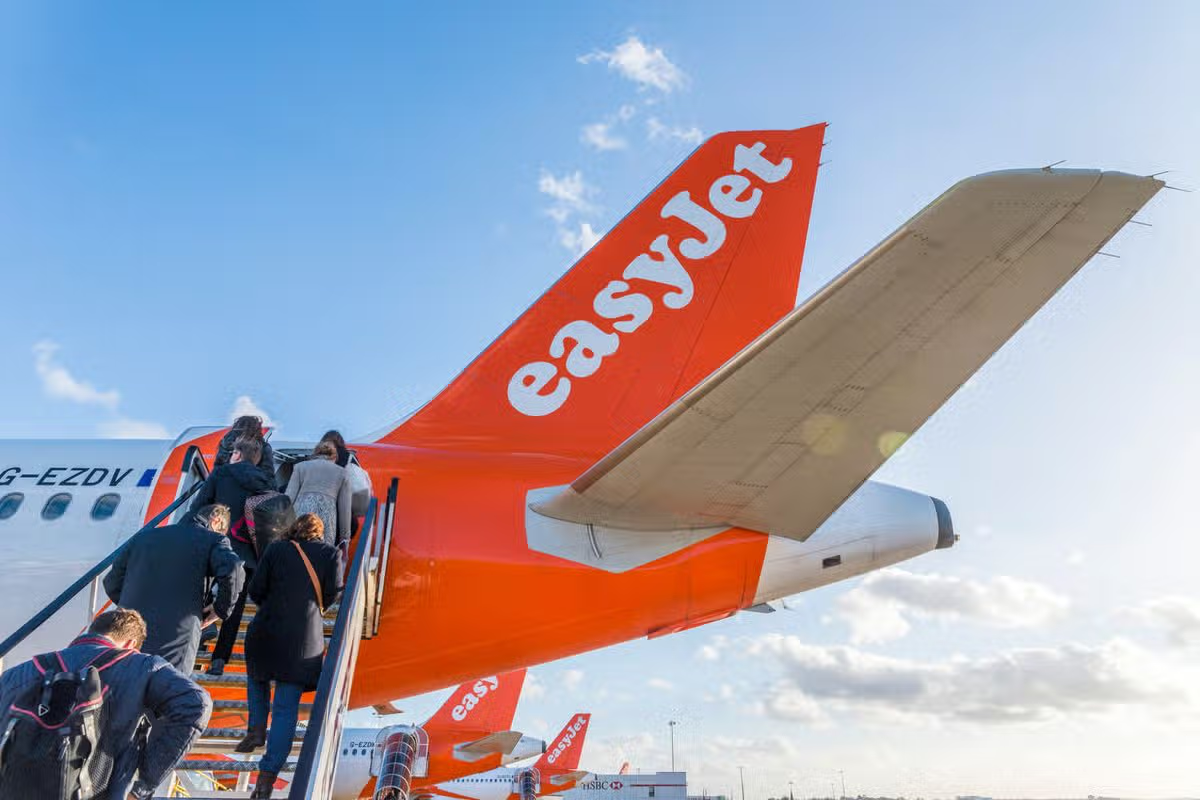
But as the safety announcements kicked off, I was very surprised to hear that on this easyJet flight, you couldn’t use portable chargers at all.
Why can’t you use portable chargers on flights?
This was the first I’d heard of power banks being completely banned from use onboard flights. However, it’s clear to see in the ‘dangerous goods’ section of the easyJet website, which says they can’t be used to charge other devices.
They also must be ‘individually protected’ like placed in original retail packaging or a plastic bag, and customers are only allowed a maximum of two each.
Explaining why the rules are so strict, Jonathan Nicholson from the Civil Aviation Authority told BBC News that compared to the likes of digital cameras and laptops, “power banks have a much bigger battery, much stronger and get a lot hotter”.
“These things, when they catch fire, they go – they really go – they are big, big issues and big fires,” he added.
This makes total sense, and it obviously explains why most airlines have banned portable chargers in hold luggage – it was only a matter of time before they were banned from being used on planes too.
It’s worth noting that they are not outright prohibited – you just can’t use them, on easyJet flights anyway. So it’s definitely worth making sure you’re fully charged before you board, and don’t make the same mistake I did.
Which airlines have banned power banks?
As well as easyJet, several other airlines have started to enforce strict rules surrounding power banks. British Airways recently tightened its regulations – they must display the capacity rating information, they can’t exceed exceed 100Wh and they must be stored either in the seat pocket or in a bag placed under the seat in front.
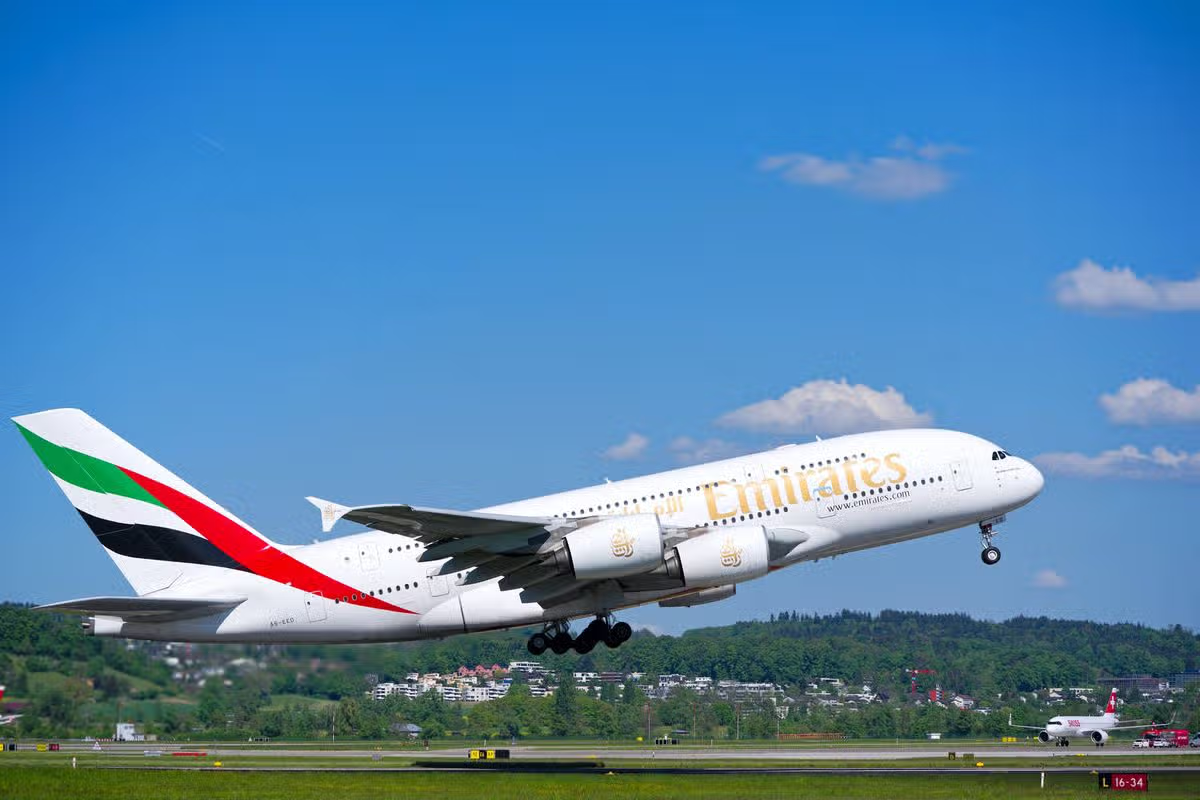
Emirates has outright banned the use of power banks on all flights, nor can you plug the power bank into the seat’s power supply to charge it.
Most other airlines, such as Ryanair, Jet2 and TUI, do allow you to use them on board – just not during taxi, takeoff and landing, and restrictions can apply on the wattage. And you’re definitely not allowed to pack them in your hold luggage under any circumstances.
It’s recommended to check with the airline you’re flying with if you’re not sure, but always better safe than sorry.
While the company is known for offering a more luxurious travel experience for passengers in business and first class seats, Emirates has now revealed a brand new upgrade for economy travellers
14:34, 24 Jul 2026Updated 14:34, 24 Jul 2026
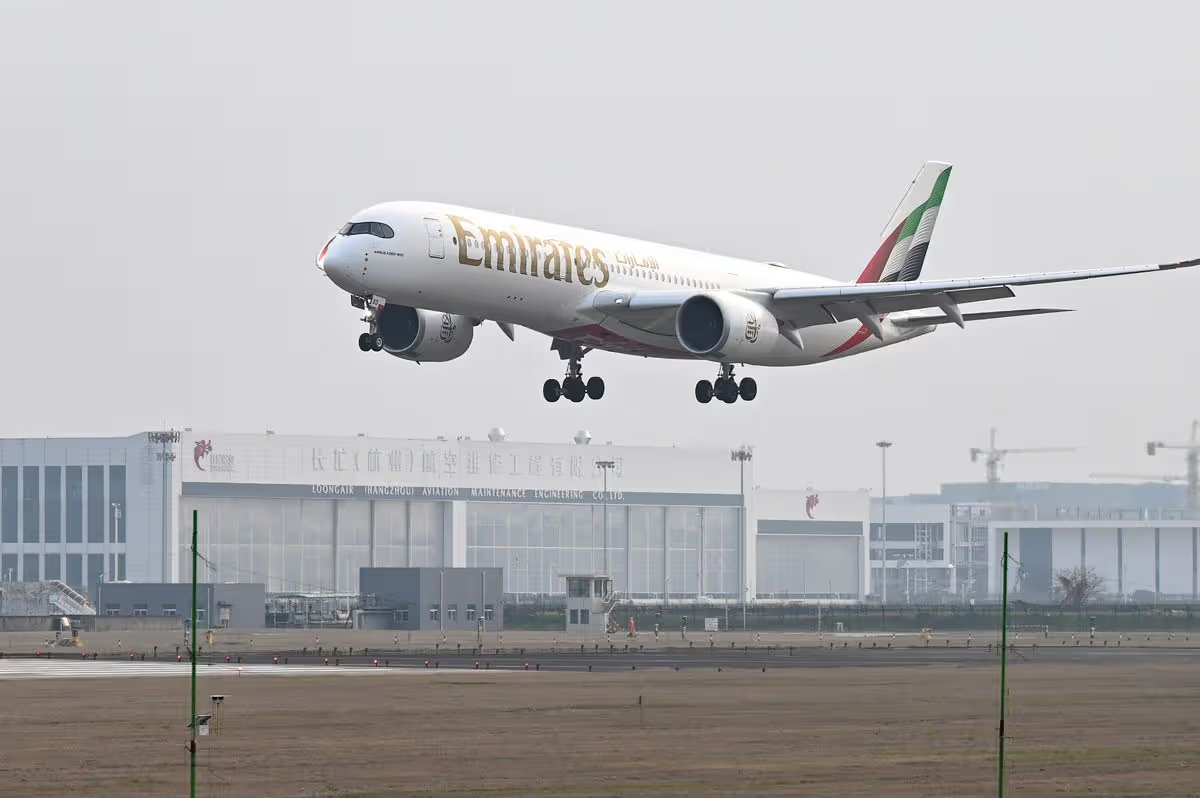
Emirates has upgraded the seats in its cheaper economy class (stock image)(Image: Getty Images)
But that doesn’t mean its cheaper, economy class is uncomfortable. The airline has upgraded economy seats in its newer A350 planes to provide more legroom. The on-screen entertainment system has also been given an upgrade. Passengers can also choose to pay an extra fee to enjoy Wi-Fi services on their flight – something budget airlines like Ryanair don’t always offer.
But now, the airline has revealed one more upgrade to their economy seats, and claims to be the first in the world to have upgraded seats’ pillows to provide more support for the passengers’ heads.
Emirates upgrades economy class seats
Taking to Instagram, the airline shared a video with the reveal, writing in the caption of the post: “Emirates just added something to Economy that no other airline has.
“Introducing the U-Dream adjustable headrest – just one of the many ways we’re continuing to invest in Emirates Economy. From thoughtful comfort to award-winning in-flight entertainment, every detail is designed to make your journey even better.”
Content cannot be displayed without consent
The clip showed a female passenger seated in an economy seat aboard an Emirates plane, before pulling down two sections of cushioning behind her head, one on either side, creating a makeshift travel pillow that makes nodding off on the plane considerably easier. The clip went on to explain that, while the carrier is widely recognised for its more premium offerings in business and first class cabins, it is equally committed to delivering a comfortable journey for those travelling in economy.
Branded the U-Dream, the ground-breaking adjustable headrest boasts flexible inward-folding wings designed to cradle the head and neck, enabling passengers to unwind in comfort throughout their journey.
To date, the headrests have been fitted on three A350 aircraft, with plans to install them across all of the airline’s A350s and the majority of its Airbus A380s and Boeing 777s.
Fans have different responses to the news
Viewers were quick to flock to the comments section to share their opinions. While the majority seemed to be happy with the upgrade, some also pointed out some of their worries with the headrests, such as how hygienic they would be.
“Personally, I will never use this new tool as they are never cleaned,” one person wrote. Another said: “U dream: Pre-seasoned headrests, comes with free dried drool flavor from previous passengers.”
Someone else also pointed out: “This doesn’t address the root issue. When people sleep/doze on the plane, their heads fall forward, not sideways; therefore, they really need something that supports the front of their neck and head/face.”
But despite the skepticism, the majority of fans seemed to be excited about the upgrade, with one person saying: “THANK YOU EMIRATES.”
Someone else said: “@emirates taking things up a level AGAIN!” A third person also commented: “”Honestly a simple but beautiful solution.”
The discount chain claims this bag is ‘approved by over 30 airlines’ around the world
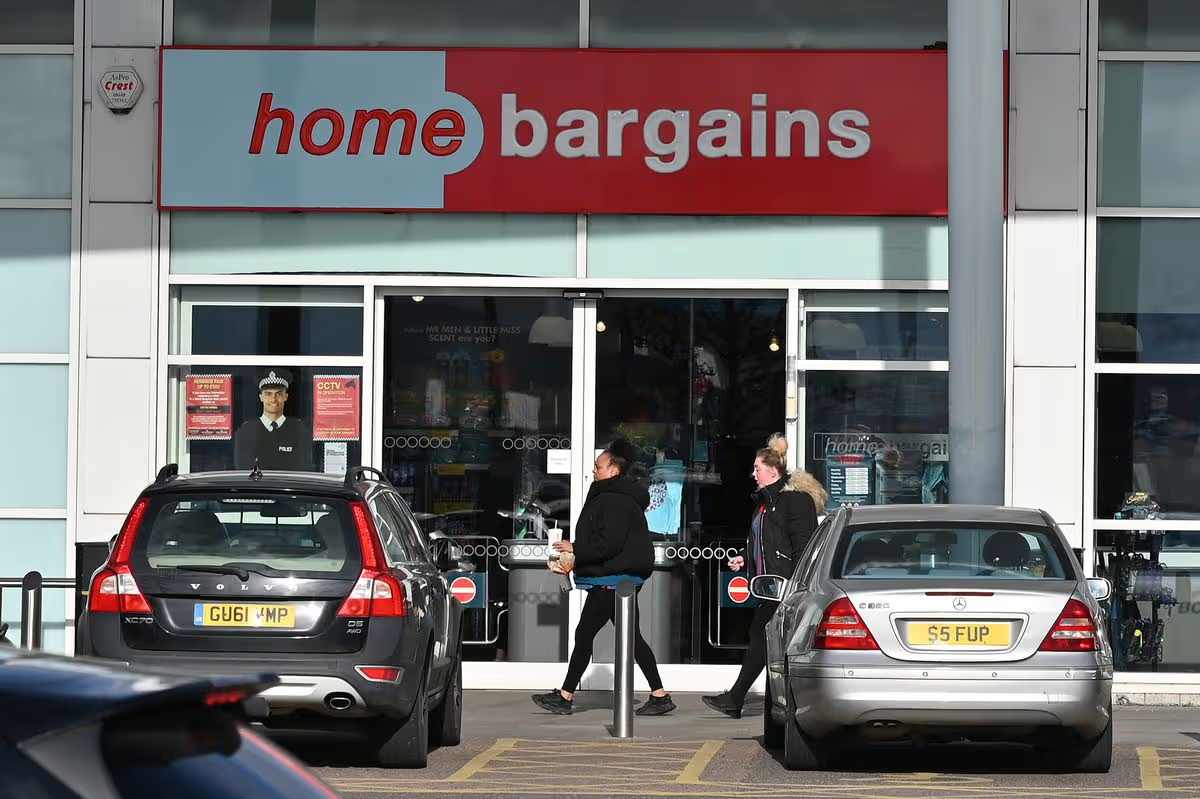
Home Bargains claims that ‘up to 30 airlines’ should accept this bag size without issue(Image: John Keeble/Getty Images)
A ‘compact’ yet ‘stylish’ travel bag is available at Home Bargains, which the store says could help take the stress and worry of overpacking out of holidaymakers‘ minds this summer. It has been approved to comply with the luggage dimension rules of up to 30 airlines worldwide.
People can pick up the Bordlite Under Seat Cabin Bag in an online sale, down from £14.99 to £5.99 (a 60% saving). Shoppers can choose between black and navy for the same price at Home Bargains.
Describing the travel bag online, the store said: “The Bordlite Under Seat Cabin Bag is a lightweight and compact travel essential, approved by over 30 airlines. With three external pockets and a long shoulder strap, it keeps your journey organised and hassle-free.”
According to the Home Bargains website, the bag measures in at “approximately” 40 x 30 x 20cm. Using the provided dimensions, shoppers can confidently pack and use this underseat bag on a variety of airlines.
Home Bargains claims that “over 30” will approve this for travel, including Ryanair, Wizz Air, EasyJet, Jet2 and British Airways. Because the bag fits in with some of the strictest size guides, it automatically works for airlines that offer slightly larger allowances.
Below is a full list of the 30 airlines which accept this size (or bigger) when booking. In most cases, airlines include a free personal or underseat item within the ticket price – but always double-check with the airline itself before getting caught out with an extra airport fee.
For more Home Bargains deals, click here. Some are online-only, meaning shoppers who shop only at their local store could miss out on certain major deals.
What airlines accept this size bag?
UK & Europe:
Ryanair (Up to 40 x 25 x 20cm)
Wizz Air (40 x 30 x 20cm exactly)
FlyOne (40 x 30 x 20cm exactly)
easyJet (Up to 45 x 36 x 20cm)
Jet2 (Up to 45 x 36 x 20cm)
British Airways (Allows a large cabin bag up to 56 x 45 x 25cm for free)
Lufthansa (Up to 40 x 30 x 10cm for personal item, but easily fits their free overhead limit of 55 x 40 x 23cm)
Air France / KLM (Up to 40 x 30 x 15cm for personal item, but easily fits their free overhead limit of 55 x 35 x 25cm)
Norwegian Air (Up to 38 x 30 x 20cm)
Iberia (Up to 40 x 30 x 15cm for personal item / 56 x 45 x 25cm for overhead)
TAP Air Portugal (Up to 40 x 30 x 15cm for personal item / 55 x 40 x 20cm for overhead)
Aegean Airlines (Up to 40 x 30 x 25cm)
Vueling (Up to 40 x 30 x 20cm)
Eurowings (Up to 40 x 30 x 25cm)
Pegasus Airlines (Up to 40 x 30 x 15cm for personal item / 55 x 40 x 20cm for overhead)
SAS (Scandinavian Airlines) (Up to 40 x 30 x 15cm for personal item / 55 x 40 x 23cm for overhead)
Swiss International Air Lines (Up to 40 x 30 x 10cm for personal item / 55 x 40 x 23cm for overhead)
Middle East and Asia
Emirates (Allows an overhead bag up to 55 x 38 x 20cm for free on all tickets).
Qatar Airways (Allows a cabin bag up to 50 x 37 x 25cm for free).
Etihad Airways (Allows a cabin bag up to 56 x 36 x 23cm for free).
Singapore Airlines (Allows a personal item up to 40 x 30 x 10cm or a main cabin bag up to 55 x 40 x 20cm)
Turkish Airlines (Allows a personal item up to 40 x 30 x 15cm or a main cabin bag up to 55 x 40 x 23cm)
American and Transatlantic
Delta Air Lines (no specific personal item dimensions, must fit under the seat)
United Airlines (Up to 43 x 25 x 22cm)
American Airlines (Up to 45 x 35 x 20cm)
Air Canada (Up to 43 x 33 x 16cm for personal item / 55 x 40 x 23cm for overhead)
JetBlue (Up to 43 x 33 x 20cm)
Spirit Airlines (Up to 45 x 35 x 20cm)
Frontier Airlines (Up to 45 x 35 x 20cm)
WestJet (Up to 41 x 33 x 15cm for personal item / 53 x 38 x 23cm for overhead)
The Foreign Office has lifted its no-go travel warning after Iran and the US signed a deal
Simon Calder says airlines will be desperate for people to ‘take summer holidays’ after the easing of travel advice
A travel expert has provided an update on journeys to and from the Gulf region following the US and Iran reaching an agreement to cease hostilities between the two nations. Speaking outside the Foreign, Commonwealth & Development Office (FCDO), Simon Calder confirmed that travel insurance was ‘once again valid’ after both the Iranian and American presidents put pen to paper on a deal to end the conflict.
Mr Calder stated that those wishing to visit the region could now do so ‘with some confidence’. He said: “I’m at the Foreign Office which has just changed its advice for travellers going to the Gulf region, in particular Dubai, which last year was visited by 1.4 million British travellers.
“As from now, the no-go warning which prevailed for the whole of the UAE, including Dubai and Abu Dhabi, as well as to the countries of Qatar, Bahrain and Kuwait, has been lifted. The Foreign Office still warns that you need to be ready for trouble to resume at any time, but it means that travel insurance is once again valid and anybody planning a trip to the UAE or Qatar or elsewhere in the region can do so with some confidence.
“The immediate effect, I think, is going to be a big marketing campaign by the giant airlines: Emirates of Dubai, Etihad of Abu Dhabi, and Qatar Airways based in Doha. They will be wanting to get people to both connect through their hubs, but also to take summer holidays. Be warned, it is extremely hot with average daily highs around 40°C.”
Content cannot be displayed without consent
Not only do millions of holidaymakers head to the Gulf states, but countless others use them as a stopover for journeys to Asia and Australia. That meant the tourism industry took a particularly severe blow when the US and Israel launched strikes on Iran in late February.
The FCDO decision means tourists can now return without putting their travel insurance at risk. But that doesn’t mean flights will restart straight away.
Virgin Atlantic halted flights until winter 2027 after the conflict began, and a spokesperson confirmed on Thursday that this ‘remains the case’.
British Airways announced earlier in June that it wouldn’t restart flights to the UAE until October 2026. Emirates has maintained flights to and from the region throughout the hostilities.
Mr Calder continued: “The immediate effect, I think, is going to be a big marketing campaign by the giant airlines: Emirates of Dubai, Etihad of Abu Dhabi, and Qatar Airways based in Doha. They will be wanting to get people to both connect through their hubs, but also to take summer holidays. Be warned, it is extremely hot with average daily highs around 40°C.”
“But it means that anybody who’s planning to travel perhaps to Asia or to Australia now will be able to travel with confidence through one of the Gulf hubs. In addition, I imagine that airfares will fall because the Asian carriers will not be able to command such a premium.
“Stand by for some really good holiday offers, but I personally won’t be seeing you on the beach in Dubai until about November.”
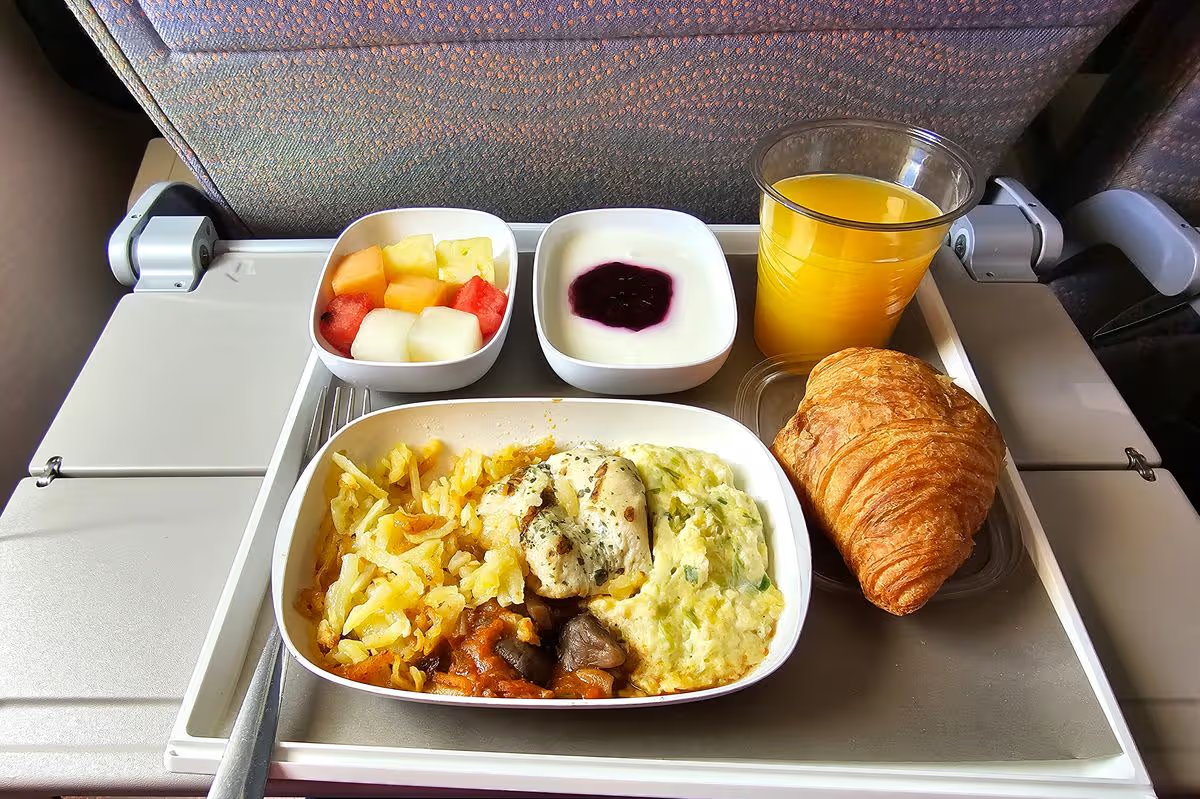
A YouGov survey has ranked budget airlines by food quality, with results likely to surprise some UK travellers
Airline with the worst food named — and it’s ‘awful’
A recent YouGov survey has revealed the worst airline food on offer, with budget carrier Ryanair topping the list for all the wrong reasons. Travel expert Mr Plane Guy weighed in on the findings, saying: “Unfortunately, not every airline hits the mark when it comes to in-flight dining.
“At the bottom of the list is Ryanair, where only 21% of passengers had good things to say about their snacks and drinks. Worse yet, just 17% found the meals satisfactory, and a staggering 50% labelled them as ‘poor’. Not far behind is Wizz Air, with just a quarter of passengers giving their snacks and drinks a thumbs-up, and 40% rating the meals as bad. easyJet also struggled, with only 35% of travellers enjoying their snacks and 29% happy with the meals.”
He went on to say: “If food is an important part of your flying experience, choosing the right airline can make all the difference! Emirates and Qatar Airways seem to be the safest bet for delicious meals, while budget carriers like Ryanair and Wizz Air might leave your stomach rumbling.”
One Ryanair passenger took to Tripadvisor to share their experience, writing: “Why is the food so bad!? We usually pack a lunch for our flight. In this case, we didn’t, and I ordered the fresh sandwich, which in this case was Turkey and Stuffing. It was truly awful and cost me 5€. I couldn’t finish it. This is not only an issue with Ryanair, but with other low-cost airlines. It must be as easy to source good food as bad. I really don’t understand it.”
Not everyone agrees, however, with some passengers saying Ryanair’s food is acceptable. One traveller recommended the vegan lasagna: “As a vegan, I massively appreciate the vegan lasagna; it’s not bad at all.” Another chimed in with: “The cheese toasties are actually ok, I’ve had it a few times.”
The Civil Aviation Authority today said ‘more awareness’ was needed as travellers ‘not aware’
The Civil Aviation Authority said portable chargers carry ‘serious risks’ of overheating or catching fire in luggage(Image: Getty)
Airlines have banned very common electrical items from flights – as news emerged of a surge in problems on flights caused by the items. Some carriers have begun to completely ban power banks that people use to charge their phones and tablets due to safety concerns. Generally, power banks are only permitted in carry-on, not checked luggage, amid fears they could explode and catch fire mid-flight.
The Civil Aviation Authority (CAA) today said ‘more awareness’ was needed as portable chargers carry ‘serious risks’ of overheating or catching fire. Jonathan Nicholson from the CAA told BBC News that restrictions such as not putting the devices in checked luggage were not “somebody being pedantic” or “for the sake of it”, with passengers urged “to do the right thing”.
Concerns are rising that people are ignoring the bans and simply taking the devices on board. Power banks have become popular because they offer essential, portable, and fast-charging power for smartphones and other devices while on the move, easing battery anxiety. They are affordable, compact, and versatile, enabling users to remain connected without needing a wall outlet, making them perfect for travel.
It comes after a UK-bound easyJet flight was diverted to Rome last week because a passenger had packed a charging power bank in hold luggage. The airline said the captain had decided to divert “in line with safety regulations” after a passenger informed crew during the flight that the portable charger was in the hold of the aircraft. Many airlines have toughened rules on power banks, often requiring that they be stored in hand luggage because of the risk of lithium-ion batteries catching fire.
The flight touched down safely at Rome Fiumicino and was rescheduled to the next day. A survey by the CAA of 1,000 UK passengers in November 2025 suggested more than a third know what lithium batteries are and are aware rules exist, but are unsure what the rules involve. Over-55s typically knew the rules better.
Mr Nicholson said the “basic set of international rules” all passengers must follow on power banks are:
Take them with you on board the aircraft, not in checked luggage
A maximum of two power banks per passenger
When on board the aircraft, don’t use them and “absolutely do not charge the power bank itself because that’s when they become really hot and most susceptible to having an issue”
Mr Nicholson said incidents involving power banks were “certainly on the rise” as portable chargers grow in popularity, alongside vapes which are not allowed in checked luggage either.
Vietnam Airlines, Vietjet Air and now Emirates have banned the batteries. Emirates states, like many airlines, the devices cannot be used during flight. In certain circumstances, they will be permitted on planes provided they are switched off and stored under your seat – not in the overhead cabin – with these rules coming into effect in October.
According to UK Civil Aviation Authority (CAA) safety experts, lithium batteries pose a danger on planes primarily because of their potential to enter “thermal runaway,” a phenomenon where a battery undergoes a rapid, uncontrollable rise in temperature, leading to fire, explosion, and the release of toxic fumes. Ryanair, easyJet and TUI all have regulations in place concerning power banks, batteries and electrical devices.
Ryanair
You may carry up to 15 personal electronic devices (this includes but not limited to: smartphones, tablets, laptops, cameras, handheld game consoles, headphones, power banks). Spare lithium batteries (including power banks) must be individually protected to prevent short circuits by placement in the original retail packaging or by otherwise insulating terminals by taping over exposed terminals or placing each battery in a separate plastic bag or protective pouch and carried in carry-on luggage only.
You may also carry up to 20 spare lithium batteries, provided they do not exceed 100Wh each.
Spare lithium batteries including power banks brought into the cabin should not be used to charge or power other portable electronic devices during taxi, take-off, or landing, not exceed 100Wh. They should not be placed in the cabin baggage loaded in the overhead storage locker. Be placed in cabin baggage under the seat in front, or on your person. Devices or batteries over 100Wh are not permitted in the cabin or the hold with the exception of Electric Wheelchair batteries.
Spare batteries, including power banks are not permitted in checked baggage.
EasyJet strictly requires all lithium-ion batteries, spare batteries, and power banks to be carried in cabin hand luggage only, prohibited in hold luggage due to fire risks. Power banks under 100Wh (roughly 27,000mAh) are allowed without approval; items between 100-160Wh require airline approval. Batteries contained in portable electronic devices should be carried as carry-on baggage.
Should these items be packed in checked baggage, steps must be taken to prevent accidental activation and to safeguard the devices against damage; all devices must be completely switched off (not in sleep or hibernation mode). EasyJet imposes a limit of 15 portable electronic devices per passenger. Portable electronic devices containing non-spillable batteries must not exceed 12V or 100Wh, and passengers may carry no more than 2 spare batteries.
Where Smart Baggage is being brought into the cabin, the customer must be able to easily disconnect and remove the lithium battery / power bank, but it can remain in the bag. Smart baggage must not be accepted for travel if the lithium battery / power bank cannot be readily disconnected and removed by the customer. If smart luggage is to be checked in and placed in the hold, the lithium battery/power bank must be disconnected from the smart luggage at Bag Drop and taken into the cabin. Any exposed terminals should be protected from short circuit. The lithium battery/power bank needs to be disconnected, so if you are unable to remove it from your luggage, we won’t be able to accept the bag on board.
TUI’s regulations forbid passengers from carrying loose lithium batteries, power banks, or spare batteries in checked-in luggage. These items must be kept in hand luggage only. Power banks must generally not exceed 100Wh, and terminals must be shielded from short circuits. Devices should not be recharged while on board. Dry AA(A) batteries (type Alkaline, NiMh, NiC) for small personal items such as a pocket torch or a radio are permitted, provided they are inside the device or enclosed in sturdy packaging.
Where devices are stored in hold baggage, precautions must be taken to safeguard the device from damage and to prevent accidental activation; the device must also be completely switched off (not in sleep or hibernation mode). Loose batteries and power banks should be individually protected against short circuits by storing them in their original packaging, with terminals taped or placed in a plastic bag in hand luggage.
Airline permission is always required for medical devices. For further details, see section Baggage – Medical baggage. TUI fly requires all power banks to be carried in hand luggage, never in checked baggage. They must be packed to prevent short circuits (original packaging or taped terminals). Generally, capacity is limited to 100 Watt-hours (Wh) per battery, with power banks not permitted to be used for charging devices or recharged onboard.
Hand Luggage Only: Due to fire risk, all lithium-powered battery packs must be in the cabin. Capacity Limits: Power banks up to 100 Wh (roughly 27,000 mAh at 3.7V) are generally permitted.
Safety Requirements: Terminals must be protected against short circuits, such as by taping them or keeping them in individual plastic bags.
In-flight Usage: Power banks cannot be used to charge phones or laptops during flight, nor should they be recharged using aircraft power outlets.
Storage: Keep them in your seat pocket or under your seat, not in overhead bins
This European carrier serves regionally inspired dishes at 35,000ft
Andrea Blazquez Editor of Spare Time
14:56, 03 May 2026Updated 14:56, 03 May 2026
Airline with the best food named – not British Airways, Virgin or Emirates
A Greek airline boasting a fleet of 83 aircraft has been named the top carrier for in-flight dining, beating major rivals including Emirates, Virgin Atlantic, Qatar Airways, and British Airways. A study by Canstar Travel Insurance analysed passenger reviews and meals from the world’s top 100 airlines, concluding that Greek carrier AEGEAN serves up the finest food, earning an impressive score of 7.82 out of 10.
AEGEAN treats passengers to authentic Greek cuisine and regionally inspired dishes, while in business class, meals are lovingly prepared by acclaimed Greek chefs and sommeliers. The airline’s culinary philosophy is rooted in the concept of filema, which champions “love and kindness through food”. Other carriers delivering exceptional onboard dining include Qatar, Asiana Airlines and EVA Air.
On Tripadvisor, one traveller who recently flew with Aegean wrote: “Aegean Airlines is simply amazing! The level of service is very high, and it is incredibly easy to reach their call centre whenever you need help or extra information. On board, they offer food and drinks, and everything was delicious.”
A second passenger added: “I have used British, Virgin, easyJet, Ryanair… but no one is better, always on time and sometimes even earlier at the destination than Aegean Airlines.
“Although I’m Italian, I use it instead of Alitalia when I’m travelling to my country. Warm and delicious food and choices of wines and a particular menu for any kind of dietary or religious needs.”