Elon Musk

Analysis: Will Big Tech’s colossal AI spending crush Europe’s data sovereignty?

Several Big Tech companies have reported earnings in recent weeks and provided estimates for their spending in 2026, along with leading analysts’ projections.


ADVERTISEMENT


ADVERTISEMENT

The data point that seems to have caught Wall Street’s attention the most is the estimated capital expenditure (CapEx) for this year, which collectively represents an investment of over $700bn (€590bn) in AI infrastructure.

That is more than the entire nominal GDP of Sweden for 2025, one of Europe’s largest economies, as per IMF estimates.

Global chip sales are also projected to reach $1tn (€842bn) for the first time this year, according to the US Semiconductor Industry Association.

In addition, major banks and consulting firms, such as JPMorgan Chase and McKinsey, project that total AI CapEx will surpass $5tn (€4.2tn) by 2030, driven by “astronomical demand” for compute.

CapEx refers to funds a company spends to build, improve or maintain long-term assets like property, equipment and technology. These investments are meant to boost the firm’s capacity and efficiency over several years.

The expenditure is also not fully deducted in the same year. CapEx costs are capitalised on the balance sheet and gradually expensed through depreciation, representing a key indicator of how a company is investing in its future growth and operational strength.

The leap this year confirms a definitive pivot that began in 2025, when Big Tech is estimated to have spent around $400bn (€337bn) on AI CapEx.

As Nvidia founder and CEO Jensen Huang has repeatedly stated, including at the World Economic Forum in Davos last month, we are witnessing “the largest infrastructure build-out in human history”.

Hyperscalers bet the house

At the top of the spending hierarchy for 2026 sits Amazon, which alone is guiding to invest a mammoth $200bn (€170bn).

To put the number into perspective, the company’s individual AI CapEx guidance for this year surpasses the combined nominal GDP of the three Baltic countries in 2025, according to IMF projections.

Alphabet, Google’s parent company, follows with $185bn (€155bn), while Microsoft and Meta are set to deploy $145bn (€122bn) and $135bn (€113bn) respectively.

Oracle also raised its 2026 CapEx to $50bn (€42.1bn), nearly $15bn (€12.6bn) above earlier estimates.

Additionally, Tesla projects double the spending with almost $20bn (€16.8bn), primarily to scale its robotaxi fleet and advance the development of the Optimus humanoid robot.

Another of Elon Musk’s companies, xAI, will also spend at least $30bn (€25.2bn) in 2026.

A new $20bn (€16.8bn) data centre named MACROHARDRR will be built in Mississippi, which Governor Tate Reeves stated is “the largest private sector investment in the state’s history”.

xAI will also expand the so-called Colossus, a cluster of data centres in Tennessee that has been described by Musk as the world’s largest AI supercomputer.

Furthermore, the company was acquired by SpaceX in an all-stock transaction at the start of this month.

The merger valued SpaceX at $1tn (€842bn) and xAI at $250bn (€210bn), creating an entity worth $1.25tn (€1.05tn), reputedly the largest private company by valuation in history.

There are also reports that SpaceX intends to IPO sometime this year, with Morgan Stanley allegedly in talks to manage the offering that now includes exposure to xAI.

Elon Musk stated that the goal is to build an “integrated innovation engine” combining AI, rockets and satellite internet, with long-term plans that include space-based data centres powered by solar energy.

Conversely, Apple continues to lag in spending with “only” a projected $13bn (€10.9bn).

However, the company announced a multi-year partnership with Google last month to integrate Gemini AI models into the next generation of Apple Intelligence.

Specifically, the collaboration will focus on overhauling Siri and enhancing on-device AI features. Therefore, one could say that Apple is outsourcing a lot of the investment it needs to be competitive on AI development.

As for Nvidia, it will report earnings and release projections on 25 February.

The company is primarily in the business of selling AI chips, and is expected to get the lion’s share of the Big Tech’s spending. Particularly, for the build-out of data centres.

In last August’s earnings call, CEO Jensen Huang estimated a cost per gigawatt of data centre capacity between $50bn (€42.1bn) and $60bn (€50.5bn), with about $35bn (€29.5bn) of each investment going towards Nvidia hardware.

The great capital rotation

Wall Street has had mixed feelings about the enormous spending Big Tech companies have planned for 2026.

On the one hand, investors understand the necessity and urgency of developing a competitive edge in the artificial intelligence age.

On the other, the sheer scale of the spending has also spooked some shareholders. The market’s tolerance hinges on demonstrable ROI from this year onwards, as the investments are also increasingly financed with massive debt raises.

Morgan Stanley estimates that hyperscalers will borrow around $400bn (€337bn) in 2026, more than double the $165bn (€139bn) that was loaned out in 2025.

This surge could push the total issuance of high-grade US corporate bonds to a record $2.25tn (€1.9tn) this year.

Currently, projected AI revenue for 2026 is nowhere near matching the spending, and there are valid concerns. For instance, the possibility of hardware rapidly depreciating due to innovation, and other high operational costs such as energy usage.

It can be confidently stated that the numbers have a heavy reliance on future success.

As Google CEO Sundar Pichai acknowledged this month, there are “elements of irrationality in the current spending pace”.

Back in November, Alex Haissl, an analyst at Rothschild & Co, became a dissenting voice as he downgraded ratings for Amazon and Microsoft.

In a note to clients, the analyst wrote “investors are valuing Amazon and Microsoft’s CapEx plans as if cloud-1.0 economics still applied”, referring to the low-cost structure of cloud-based services that allowed Big Tech firms to scale in the last two decades.

However, the analyst added “there are a few problems that suggest the AI boom likely won’t play out in the same way, and it is probably far more costly than investors realise”.

This view is also shared by Michael Burry, who is best known for being among the first investors to predict and profit from the subprime mortgage crisis in 2008. Burry has argued that the current AI boom is a potential bubble pointing to unsustainable CapEx.

Big Tech’s AI race is funded by a tremendous amount of leverage. Whether this strategy will pay off, and which companies will be the winners and the losers, only time will tell.

At the moment, Nvidia certainly seems to be a great beneficiary. Moreover, Apple has a distinct approach by increasing third party reliance, through a partnership with Google, instead of massively scaling their spending. It is a different trade-off.

Europe’s industrial deficit

Amid all this spending, urgent questions have also been raised about Europe’s ability to compete in a race that has become a battle of balance sheets.

For the European Union, the transatlantic contrast is sobering. While American firms are mobilising nearly €600bn in a single year, the EU’s coordinated efforts do not even match the financial firepower of the lowest spender among the US tech titans.

Brussels has attempted to rally with the AI Factories initiative, and the AI Continent Action Plan launched last April, which aim to mobilise public-private investments.

However, the numbers tell a stark story. Total European spending on sovereign cloud data infrastructure is forecast to reach just €10.6bn in 2026.

While this is a respectable 83% increase year-on-year, it remains a rounding error compared to the US AI build-out.

Last year, at the time when the initiatives mentioned were being discussed, the CEO of the French unicorn Mistral AI, Arthur Mensch, stated that “US companies are building the equivalent of a new Apollo program every year”.

Mensch also added that “Europe is building excellent regulation with the AI Act, but you cannot regulate your way to computing supremacy”.

Mistral represents one of the only flickers of European resistance in the AI race. The French company is employing the same strategy as most of Big Tech and aggressively expanding its physical footprint.

In September 2025, Mistral AI raised a €1.7bn Series C at a valuation of almost €12bn, with the Dutch semiconductor giant ASML leading the round by singly investing €1.3bn.

During the World Economic Forum in Davos last month, Mistral’s CEO confirmed a €1bn CapEx plan for 2026.

Just last week, the company also announced a major €1.2bn investment to build a data centre in Borlänge, Sweden.

In a partnership with the Swedish operator, EcoDataCenter, the facility will be designed to offer “sovereign compute” compliant with the EU’s strict data standards, and leveraging Sweden’s abundant green energy.

Set to open in 2027, this data centre will provide the high-performance computing required to train and deploy Mistral’s next-generation AI models.

This is an important move for the company, as it is the first infrastructure project outside France, and it is also a core venture for European data sovereignty.

Meanwhile, US tech titans are attempting to placate European regulators by offering “sovereign-light” solutions. Several Big Tech projects have been rolled out for “localised cloud zones”, for example in Germany and Portugal, promising data residency.

However, critics argue these remain technically dependent on US parent companies, leaving the European industry vulnerable to the whims of the American economy and foreign policy.

As 2026 unfolds, the stakes are clear. The US is betting the house, and its credit rating, on AI dominance.

Europe, cautious and capital-constrained, is hoping that targeted investments and regulation will be enough to carve out a sovereign niche in a world increasingly run on American technology.

Source link

Musk merges SpaceX and xAI firms, plans for space-based AI data centres | Elon Musk News

Musk says solar powered and space-based data centres are the only way to meet AI’s burgeoning energy demands.

Elon Musk’s SpaceX has acquired his AI company xAI as part of an ambitious scheme to build space-based data centres to power the future of artificial intelligence.

The billionaire, who is also the CEO of Tesla, announced the merger in a statement on Tuesday on the SpaceX website.

Recommended Stories

list of 4 itemsend of list

Musk said the merger will help to address the emerging question of how to meet the power-hungry demands of artificial intelligence.

AI demand will require “immense amounts of power and cooling” that are not sustainable on Earth without “imposing hardship on communities and the environment,” he said.

Space-based data centres that harness the power of the Sun are the only long-term solution, according to Musk.

“In the long term, space-based AI is obviously the only way to scale. To harness even a millionth of our Sun’s energy would require over a million times more energy than our civilisation currently uses!” he wrote.

“The only logical solution therefore is to transport these resource-intensive efforts to a location with vast power and space,” he continued, predicting that within the next “2 to 3 years, the lowest cost way to generate AI compute will be in space”.

The merger of SpaceX and xAI will bring several of Musk’s space, artificial intelligence, internet, and social media projects under one roof.

SpaceX operates the Falcon and Starship rocket programmes, while xAI is best known for developing the AI-powered Grok chatbot. Last year, xAI also acquired X, the social media platform known as Twitter, until it was bought by Musk in late 2022.

Both companies have major contracts with US government agencies such as NASA and the Department of Defense .

SpaceX’s Starshield unit specifically collaborates with government entities, including military and intelligence agencies.

Musk is not the only tech CEO looking to space as a solution to AI’s energy quandary.

Jeff Bezos’s Blue Origin and Google’s Project Suncatcher are both working on solar-powered space-based data centres.

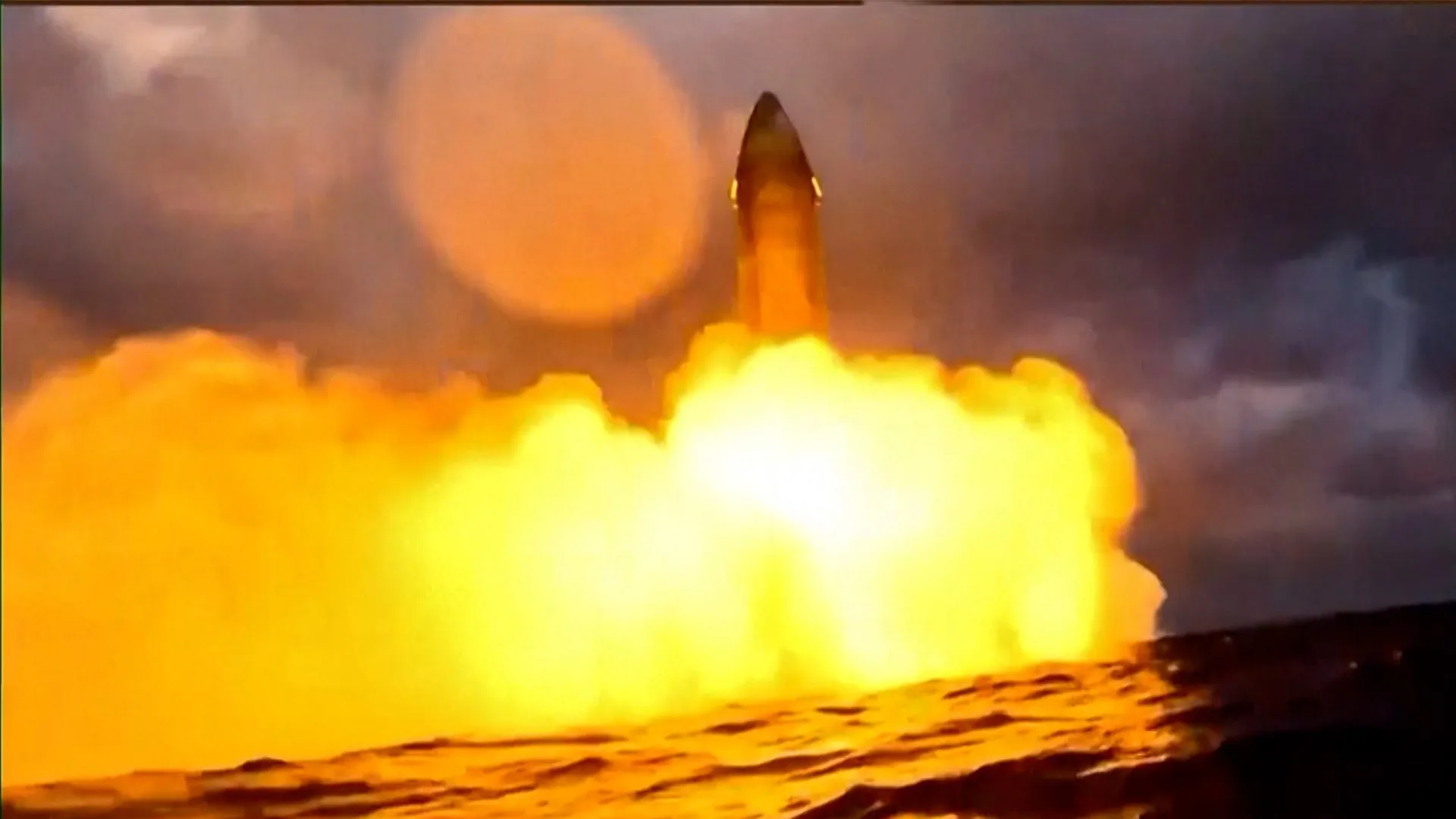
“In the history of spaceflight, there has never been a vehicle capable of launching the megatons of mass that space-based data centres or permanent bases on the Moon and cities on Mars require,” Musk wrote.

Musk also said his long-term plan for SpaceX is to launch a million satellites.

To achieve this aim, SpaceX’s Starship rocket programme aims to one day launch one flight per hour with a 200-tonne payload, he said.

Musk said Starlink, a subsidiary of SpaceX that offers satellite-based internet service, will soon get a major boost with the launch of SpaceX’s next generation of V3 satellites.

They will each add “more than 20 times the capacity to the constellation as the current Falcon launches of the V2 Starlink satellites”, he wrote.

Source link

A £15.6trillion tunnel could go from London to New York in under an hour

An ambitious transatlantic tunnel connecting London and New York could see travellers make the journey in just 54 minutes, though the project carries an estimated £15.6 trillion price tag.

Travelling from London to New York in less than an hour might one day become reality. Bold proposals could materialise following suggestions for a tunnel linking the two cities across the Atlantic.

The concept isn’t fresh, as countless visionaries have imagined such an achievement, though it’s long been deemed unfeasible. Nevertheless, Elon Musk weighed in on the notion, claiming his firm, The Boring Company, could turn it into reality.

Technological advances have progressed significantly, thanks to vacuum tubes and pressurised vehicles.

Despite carrying an eye-watering price tag, the journey could potentially come to fruition. Estimates for excavating beneath the Atlantic Ocean have exceeded £15trillion.

However, Musk insisted he could deliver it for considerably less. In 2024, he posted on X: “The @boringcompany could do it for 1000X less money,” responding to the cost projections, reports the Express.

The proposals might appear outlandish, but vacuum technology could be edging it towards reality. Newsweek reported that a vacuum within the tunnel could enable trains to achieve speeds exceeding 3,000 mph.

This would slash the London to New York journey time to just under an hour. The train could prove more environmentally sound as it may reduce air pollution from aviation.

The technology behind a vacuum tunnel resembles superloop trains, which Swiss engineers believe will “change the future of travel”. Yet, numerous companies have attempted and struggled to perfect the hyperloop technology.

Plans for the tunnel have prompted some engineers to suggest it should be constructed below the seabed, whilst others argue that suspending it using cables or supports would prove superior.

The Channel Tunnel serves as the closest comparison to the Transatlantic proposals, linking Britain to France.

It spans merely 40 miles in contrast to the 3,000 miles separating Britain from New York.

Moreover, it required six years to build. Should the proposed tunnel connecting Britain and America proceed at an identical pace, it would demand an extraordinary 782 years to finish.

Source link

Elon Musk’s Tesla reports first-ever annual decline in revenue | Elon Musk

Musk’s electric car company says it will invest $2bn in artificial intelligence start-up as part of pivot away from auto market.

Tesla has reported its first-ever decline in annual revenue on a busy day for corporate earnings that also saw the release of results from Microsoft, Meta and Samsung Electronics.

Elon Musk’s electric car company said on Wednesday that revenue fell 3 percent year-on-year to $24.9bn in the final quarter of 2025. Revenue for all of 2025 was $94.8bn, down from $97.7bn the previous year.

Recommended Stories

list of 4 itemsend of list

Net profit fell 61 percent to $840m in the quarter, taking profit for the year to $3.8bn, down sharply from $7.1bn in 2024.

The Austin, Texas-based company also revealed that it had agreed to invest $2bn in Musk’s artificial intelligence start-up xAI – the developer of Musk’s controversial Grok chatbot – as part of a push to lessen its reliance on the auto market.

“Together, the investment and the related framework agreement are intended to enhance Tesla’s ability to develop and deploy AI products and services into the physical world at scale,” the company said in its earnings report.

Tesla shares rose about 2.2 percent in after-hours trading.

Also on Wednesday, tech giants Microsoft, Meta and Samsung reported strong earnings in their latest reports to shareholders.

Meta, the parent company of Facebook and Instagram, reported a profit of $22.8bn on revenue of $59.9bn in the October-December period, a 6 percent rise year-on-year.

Meta shares surged nearly 7 percent in extended-hours trading.

Microsoft said profit rose 60 percent to $38.5bn in the final quarter, based on revenue of $81.3bn.

“We are only at the beginning phases of AI diffusion and already Microsoft has built an AI business that is larger than some of our biggest franchises,” Microsoft CEO Satya Nadella said in a statement.

“We are pushing the frontier across our entire AI stack to drive new value for our customers and partners.”

Despite its strong earnings, Microsoft’s announcement that capital spending hit a record $37.5bn in the second quarter stoked fears of an AI investment bubble, sending stock prices sharply lower.

Microsoft’s shares fell more than 6 percent in after-hours trading on Wednesday.

Samsung Electronics, the biggest producer of memory chips globally, reported a profit of 20.1 trillion won ($13.98bn) on revenue of 93.8 trillion won ($65.6bn), a more than three-fold rise from the previous year.

Source link

Tesla profits are down despite record levels of production

Tesla on Wednesday reported decreased revenues and profits during the fourth quarter of 2025 despite record production levels and increased global demand for electric vehicles. File Photo by Divyakant Solanki/EPA

Jan. 28 (UPI) — Electric vehicle maker Tesla’s revenue and profits fell during the fourth quarter of 2025 despite record levels of production.

Tesla officials on Wednesday reported the Elon Musk-owned company’s adjusted income dropped by 16% during the final quarter of 2025, while net income fell 61% for the quarter and 46% for the entire year.

The quarterly and final revenue report for 2025 reflects Tesla’s largest year-to-year revenue drop as its quarterly global sales of electric vehicles declined despite an increased global demand for EVs.

Partly to blame is the end of a $7,500 federal tax credit for those who bought qualifying EVs, combined with opposition by those who opposed Musk leading the Department of Government Efficiency and his general support of the Trump administration earlier in 2025.

Tesla also is facing increased competition from other EV makers, including Chinese EV firm BYD.

Despite the decline in revenues, Tesla shares rose in value by about 3% during after-hours trading on Wednesday and peaked at $449.76 per share before declining to $437.02.

Tesla officials reported that it produced a quarterly record 434,358 EVs during the final three months of 2025 and delivered 418,227. It also produced a record 14.2 GWh of energy-storage products.

For the year, Tesla produced 1.66 million EVs, delivered 1.64 million and produced 46.7 GWh of energy-storage products.

Source link

Treasury Department drops Booz Allen Hamilton contracts

Jan. 26 (UPI) — Treasury Secretary Scott Bessent announced Monday that the department canceled all contracts with consulting firm Booz Allen Hamilton because of a data leak that included President Donald Trump‘s tax returns.

The department has 31 contracts with Booz Allen for a total of $4.8 million in annual spending and $21 million in total obligations, a press release said.

“President Trump has entrusted his cabinet to root out waste, fraud, and abuse, and canceling these contracts is an essential step to increasing Americans’ trust in government,” Bessent said in a statement.

Between 2018 and 2020, a Booz Allen employee, Charles Edward Littlejohn, “stole and leaked the confidential tax returns and return information of hundreds of thousands of taxpayers.”

The breach affected about 406,000 taxpayers, including Trump, Amazon founder Jeff Bezos and Tesla CEO Elon Musk.

“Booz Allen failed to implement adequate safeguards to protect sensitive data, including the confidential taxpayer information it had access to through its contracts with the Internal Revenue Service,” Bessent said.

Littlejohn pleaded guilty in October 2023 to one charge of disclosure of tax return information and was sentenced to five years in prison. He admitted to leaking Trump’s tax information to The New York Times and leaking other tax information to ProPublica.

Booz Allen’s stock price dipped by 8% on the news, CNBC reported.

Source link

EU launches probe into Grok AI feature creating deepfakes of women, minors | Technology News

Commission President Ursula von der Leyen says Europe will not ‘tolerate unthinkable behaviour, such as digital undressing of women and children’.

The European Commission has launched an investigation into Elon Musk’s AI chatbot, Grok, regarding the creation of sexually explicit fake images of women and minors.

The commission announced on Monday that its investigation would examine whether the AI tool used on X has met its legal obligations under the European Union’s Digital Services Act (DSA), which requires social media companies to address illegal and harmful online content.

Recommended Stories

list of 3 itemsend of list

Brussels said the investigation would examine whether X had properly mitigated “risks related to the dissemination of illegal content in the EU, such as manipulated sexually explicit images, including content that may amount to child sexual abuse material”.

In a statement to the AFP news agency, European Commission President Ursula von der Leyen said Europe will not “tolerate unthinkable behaviour, such as digital undressing of women and children”.

“It is simple – we will not hand over consent and child protection to tech companies to violate and monetise. The harm caused by illegal images is very real,” she added.

Grok has faced a recent outcry after it was uncovered that users could ask the chatbot to create deepfakes of women and children by simply using prompts such as “put her in a bikini” or “remove her clothes”.

EU tech commissioner Henna Virkkunen said the rights of women and children in the EU should not be “collateral damage” of X’s services.

“Non-consensual sexual deepfakes of women and children are a violent, unacceptable form of degradation,” Virkkunen said in a statement.

X has been under investigation by the EU over its digital content rules since December 2023.

This month, Grok said it would restrict image generation and editing to paying customers after criticism of the tool’s capabilities.

A nonprofit organisation, the Centre for Countering Digital Hate, published a report last week that found Grok had generated an estimated 3 million sexualised images of women and children in a matter of days.

In December, the EU ordered X to pay a 120-million-euro ($140m) fine for violating the DSA’s transparency obligations.

The EU is not the only body investigating Grok’s tool; the United Kingdom’s media regulator, Ofcom, announced it had launched an investigation into X to determine whether it had complied with requirements under the UK’s Online Safety Act.

Source link