

Electric cars

Brits are opting for more ‘micro-cations’

An aerial view of Portloe, a small coastal town in Cornwall, England, nestled in a valley with white houses and a small harbor.

Brits prefer several UK-based micro-cations across the year – over a holiday abroad

More than four in 10 now prefer several UK-based micro-cations throughout the year – over one annual holiday, according to research.

Over two in five (44 per cent) are now taking more micro-cations than they were five years ago Credit: SWNS
The study, commissioned by Smart Energy GB, also found 49 per cent have taken a micro-cation in the past year alone Credit: SWNS

A poll of 2,000 adults found they’d rather put the money one big getaway would cost towards multiple tiny breaks throughout the year.

With 20 per cent planning one of these short breaks – set within 100 miles of their home – this bank holiday weekend.

It emerged 76 per cent appreciated these types of holidays as they’ve helped them discover local hidden gems, such as historical landmarks, coastal towns, and British countryside.

Over two in five (44 per cent) are now taking more micro-cations than they were five years ago, compared to only 27 per cent who are upping the number of overseas trips.

The study, commissioned by Smart Energy GB, also found 49 per cent have taken a micro-cation in the past year alone, while 58 per cent agreed micro-cations are now part of their annual travel plans.

And 44 per cent would choose them as a first-choice option rather than a backup.

Victoria Bacon, director at Smart Energy GB, said: “With household budgets under pressure, shorter breaks closer to home offer the chance to relax, recharge and create lasting memories without travelling far and often at a lower cost.”

The study also found 69 per cent agreed a micro-cation was more affordable than visiting somewhere overseas, and of those who have swapped a holiday abroad for a micro-cation, 67 per cent did so to cut down on costs.

Of those who’ve saved money by doing this type of holidaying, 34 per cent have used the extra cash to take more short breaks, while 47 per cent put it straight into savings.

The study also polled 593 EV drivers and found almost half (47 per cent) said owning an electric vehicle has made them more likely to take a micro-cation.

Two in five (39 per cent) enjoyed the simplicity of leaving home with a fully charged car, and not having to hunt for a service station or public charging point.

Based on public data verified by New Automotive, a 200-mile round trip costs £36.57 in fuel in an average family car.

While it costs as little as £14.92 to charge an EV at home on a standard electricity tariff to cover the same distance – a saving of 59 per cent.

Smart meter owners could reduce costs even further by turning that already-lower cost of £14.92 into just £4.57 on average by charging overnight on a flexible EV tariff.

The OnePoll.com data also revealed 37 per cent of electric car drivers are already displaying this behaviour, versus only 14 per cent who choose public charging points.

Victoria Bacon added: “By using a smart meter to access an EV tariff that fits your needs best, you can save a significant amount on travel costs by charging during cheaper, off-peak periods.”

Double Olympic champion and EV enthusiast, Helen Glover OBE, said: “Some of our best family adventures haven’t involved travelling hundreds of miles – they’ve been spontaneous trips that are less than a couple of hours away by car.

“Whether it’s the rolling countryside of Devon, the dramatic coastline of Cornwall or the peaceful trails of Dartmoor, there are so many hidden gems waiting to be discovered.

“As an EV driver, those local adventures can be more affordable, convenient and sustainable too.”

HELEN’S BUDGET-FRIENDLY TIPS ON HOW TO MAKE THE MOST OF A MICRO-CATION:

  • Plan ahead: Pack the essentials and plenty of equipment – from a picnic to bikes or paddleboards – so you can enjoy a full day out and keep active without breaking the bank.
  • Swap expensive attractions for the great outdoors: Some of the best days out don’t cost a thing.
  • Save before you set off: For those who drive an EV, charging at home with a smart meter can unlock access to flexible tariffs, meaning you can charge when electricity is cheaper, keeping travel costs down before you even leave the house.
Based on public data verified by New Automotive, a 200-mile round trip costs £36.57 in fuel in an average family car Credit: SWNS

TOP 10 REASONS BRITS ARE PACKING FOR A MICRO-CATION:

1.    Explore more of the UK
2.    Discover places closer to home
3.    Lower travel costs
4.    Avoid hassle of overseas travel
5.    More travel flexibility
6.    Easier to organise than a longer trip
7.    To make holiday budgets go further
8.    Easier to fit around work
9.    Spend more time exploring
10.    Easier to fit around family commitments

Source link

Could magnesium become the new lithium for electric vehicles?

In the last few years, lithium has emerged as one of the most crucial metals for the global electric transition.


ADVERTISEMENT


ADVERTISEMENT

This is mainly due to its widespread usage in electric vehicles (EVs), through lithium-ion batteries. These provide high energy density, a lightweight structure and fast-charging capacity, along with a long cycle life, which supports modern driving range and performance.

As such, it has become key to achieving widespread, practical advancements in automotive electrification.

However, lithium continues to face vital long-term structural supply challenges, which has led to more EV producers considering other alternatives like manganese and magnesium.

Why magnesium?

Magnesium, another critical metal for electric vehicles and energy storage batteries, could potentially be a key alternative to lithium in EVs.

This is because it is cheaper, abundantly found across the world and also stores more energy. It is also considered to be safer than lithium, as it does not form the sharp spikes known as dendrites that cause lithium batteries to sometimes short or catch fire.

A magnesium battery can also hold more energy in a smaller space, which could have significant size and efficiency benefits for EV makers who want to make more compact vehicles.

It is also one of the most common elements found both in seawater and in the ground, which could help makers bypass potential supply constraints with lithium down the line.

Magnesium ions also carry double the charge of lithium ions, at a +2 charge, which can help support a higher volumetric capacity, enabling more compact, energy-dense power storage for both EVs and other devices.

China produces the overwhelming majority of the world’s magnesium, accounting for around 87% to 95% of the world’s primary magnesium in 2025, coming up to anywhere between 830,000 and 950,000 metric tons, according to Visual Capitalist’s Elements.

This is mainly from extensive dolomite reserves, with the largest magnesium reserves being in the Liaoning province.

The second top producer of magnesium is Israel, which extracts the metal mainly from the Dead Sea. Russia and Brazil are other major producers, with some key magnesium reserves being located in Satka and Brumado.

Manganese is also emerging as a support to lithium batteries, rather than fully replacing them. This is due to manganese batteries having a much lower energy density and not being easily rechargeable hundreds of times. They also provide lower voltage.

As such, they work well to support lithium systems in hybrid setups but fail under heavy power demands.

Why lithium supplies are fickle

One of the biggest challenges facing lithium supply is slow project timelines. This is because opening a new lithium mine takes an average of 16 to 18 years, from initial discovery to first production. This is mainly due to complex permitting rules, exploration rights and financing issues in many regions of the world.

Hard rock mining also produces significant waste and brine extraction consumes vast amounts of water in the arid regions lithium is usually found in. This leads to more scrutiny from local communities and environmental groups as well.

Similarly, due to lithium prices having crashed recently, following previous oversupply, mining investment and exploration budgets have now reduced somewhat. This significantly threatens the pipeline for future production and the global green transition.

The majority of lithium is also concentrated in Australia and South America’s “Lithium Triangle,” whereas China controls a significant portion of the refining capacity required to make battery-grade material.

Magnesium batteries?

Currently, most magnesium batteries still in the testing phase by entities like the University of Waterloo.

However, some major automakers are increasingly developing and experimenting with magnesium-rich or manganese-doped alternatives like Lithium Manganese-Rich or LMFP cells or long-term magnesium chemistry.

MG (SAIC Motor) has recently deployed new Lithium-Manganese-Oxide (LMO) semi-solid-state SolidCore battery tech in models like the MG4 EV Urban, which is scheduled to hit UK and European markets by the end of 2026.

General Motors and LG Energy Solution are currently aiming for a 2028 commerical launch for advanced lithium manganese-rich (LMR) battery cells. These use high manganese content to decrease costs and raise energy density for future electric trucks and SUVs.

Similarly, Toyota has also funded long-term dedicated research into replacing standard lithium chemistry with high-capacity magnesium alternatives. However, it is still unclear when commercial vehicles could be using this technology, as researchers are still awaiting further electrolyte stabilisation.

Great Wall Motor also uses semi-solid magnesium casting technology to reduce component weight, while Tesla integrated selective magnesium alloy components inot the Model 3 and Model Y.

Why magnesium batteries are not as widespread yet

While magnesium batteries are seeing more interest as potential alternatives to lithium now, significant challenges remain before they can be mass-adopted yet.

One of the biggest drawbacks of magnesium is slow ion movement, which means that magnesium particles move more slowly inside the battery materials.

This causes very slow charging times and weak power during fast acceleration, along with poor cold-weather performance. These factors could make it much harder for magnesium batteries to match fast-charging and high-power lithium EV batteries.

Finding a liquid, solid or electrolyte that lets magnesium move easily without breaking down is hard too, currently, as electrolytes that successfully move magnesium ions efficiently end up corroding the internal battery components.

Similarly, finding a cathode material that can withstand insertion and removal of magnesium ions without breaking down remains incredibly complex.

Source link

The UK’s best staycation destinations for EV drivers

The UK’s best staycation destinations for EV owners have been revealed – spanning Cornwall to the Highlands.

The UK’s best staycation destinations are Cornwall, the Cotswolds and the Scottish Highlands, according to EV owners, because of their easy-access charging points. EV charging point company Fastned polled motorists to get their say on which destination appealed to most.

Top of the list is the UK’s southernmost county, Cornwall, which is home to the scenic likes of St Ives, Falmouth, Penzance, Land’s End, and a stunning shoreline. The Cotswolds, another heavily rural area, came second, while the vast Scottish Highlands secured third spot. Norfolk, the Kent Coast and County Durham also feature in the top 10, along with the Suffolk Coast and the North East Coast.

The research of 2000 drivers, including 1,000 purely EV drivers, found nearly nine in 10 (87%) have or would travel to a staycation destination using an electric vehicle.

Eight in 10 EV motorists in particular are confident the UK’s public charging infrastructure would now enable them to complete a long-distance journey in the eco-friendly form of transport.

It also emerged 51% have a greater inclination to holiday within the UK now than they did five years ago, with last weekend (August 7) the weekend those polled were most likely to begin their main summer getaway this year.

Tom Hurst, UK country director for the EV charging network powered by 100% green energy, said: “We wanted to explore how travel habits are shifting gears for UK motorists, including EV drivers, from where people are heading to what makes a great staycation destination, and what’s powering the next generation of road trips.

“Across mainland Europe, ‘Black Weekend’ or ‘Black Saturday’ describes the moment millions of people hit the roads for their summer getaway. Think ‘Black Friday’, but for summer travel.

“We wanted to find out whether Britain is developing its own version and how EV drivers are helping shape a new era of electric travel. As more people switch to electric, understanding journeys will be key to the UK’s transition.”

The study also found 56% have consciously moved towards a lifestyle more traditionally associated with countries like Spain, France, Monaco and Italy.

Exactly four in 10 eat outdoors more frequently than they used to, while more than a quarter (26%) have adopted a slower pace of life.

Around three in 10 (28%) now take more time to enjoy and savour meals and 37% like spending more time outdoors and enjoying their surroundings.

Carried out through OnePoll, the research found 90% of EV drivers are solidly behind ultra-rapid charging, which enables motorists to charge their vehicle up to 300 miles in 20 minutes – as they can get to the countryside or coastal areas faster.

Tom Hurst, spokesperson for Fastned, which has 39 hubs and over 420 ultra-rapid chargers across the UK, added: “We’re seeing more people embrace staycations, longer road trips and electric vehicles as a more sustainable and indeed accessible way to travel.

“We also wanted to understand whether those trends are beginning to converge, and how they’re changing the way people in the UK think about summer journeys.

“With fast charging available near all of the staycation destinations featured in our research, drivers can spend less time worrying about where and how long it’ll take to charge and more time enjoying the journey.

“After all, the best road trips aren’t about standing still; they’re about where the road takes you next.”

Top 10 best staycation destinations for EV owners

  1. Cornwall – e.g. St Ives, Falmouth, Penzance, Land’s End
  2. Cotswolds – e.g. Burford, Bourton-on-the-Water, Stow-on-the-Wold, Bibury
  3. Scotland / Gateway to the Highlands – e.g. Loch Lomond, The Trossachs, Glencoe, Scottish Highlands
  4. Norfolk – e.g. North Norfolk Coast, Hunstanton, Wells-next-the-Sea, Sandringham
  5. North East England – e.g. Northumberland, Bamburgh, Alnwick, Holy Island
  6. Kent Coast – e.g. White Cliffs of Dover, Deal, Folkestone, Sandwich
  7. North East Coast – e.g. Whitley Bay, Tynemouth, Newcastle
  8. Suffolk Coast – e.g. Aldeburgh, Southwold, Woodbridge
  9. County Durham – e.g. Durham City, Beamish Museum, North Pennines
  10. West London – e.g. Windsor, Richmond, Kew Gardens
Source link

These are the BEST staycation destinations in the UK for EV car drivers

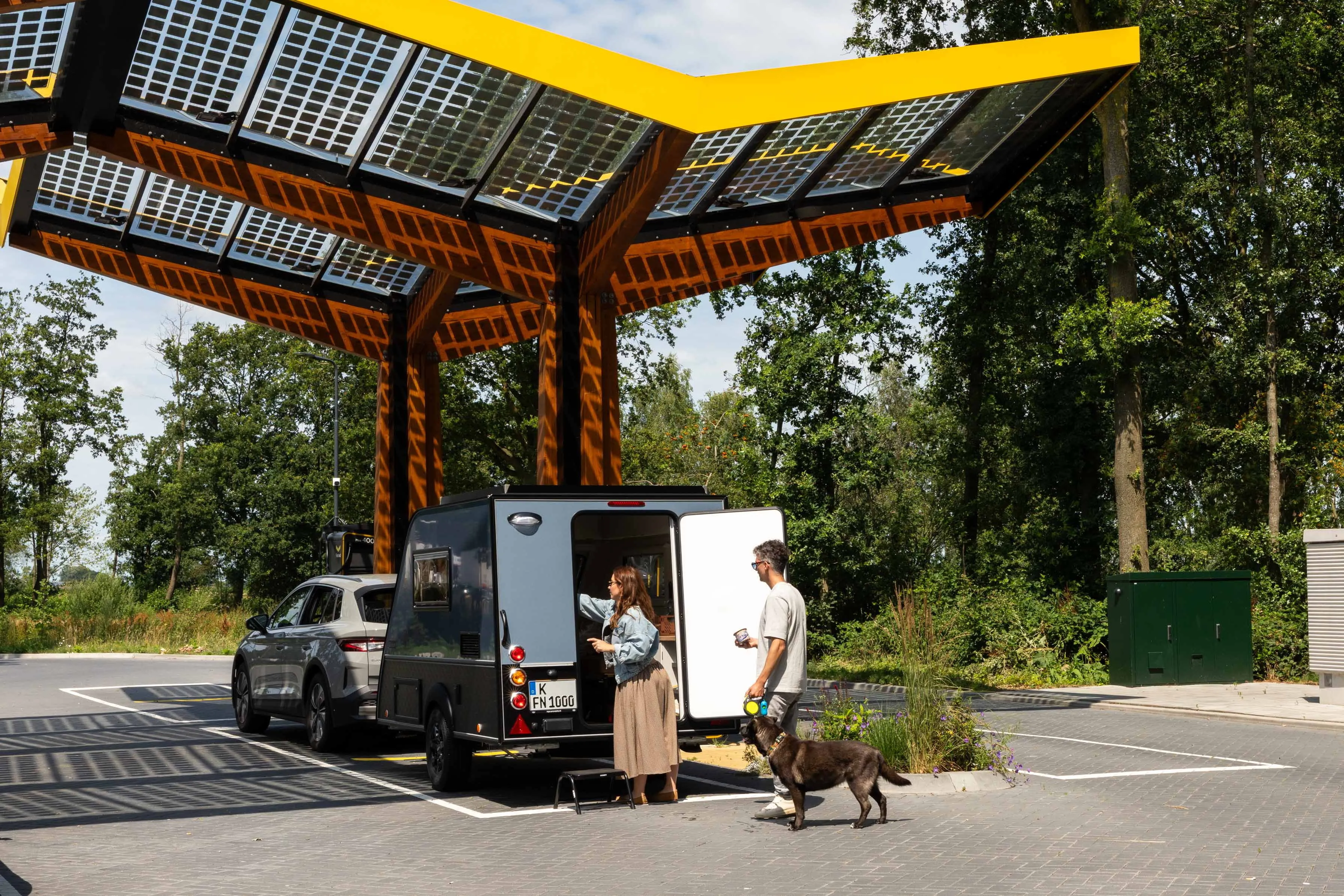
A family with a car, trailer, and dog at an EV charging station.

THE UK’s best staycation destinations are Cornwall, the Cotswolds and the Scottish Highlands, according to EV owners, thanks to their easy-access charging points.

EV charging point company Fastned polled motorists to get their say on which destination appealed to most.

A family with a car, trailer, and dog at an EV charging station.
The UK’s best staycation destinations are Cornwall, the Cotswolds and the Scottish Highlands, according to EV owners Credit: FASTNED
A woman and her dog interacting through a car window at a Fastned charging station.
EV charging point company Fastned polled motorists to get their say on which destination appealed to most Credit: FASTNED

Top of the list is the UK’s southernmost county, Cornwall, which is home to the likes of St Ives, Falmouth, Penzance, Land’s End, and a stunning shoreline.

The Cotswolds, another heavily rural area, came second, while the vast Scottish Highlands secured third spot.

Norfolk, the Kent Coast and County Durham also feature in the top 10, along with the Suffolk Coast and the North East Coast.

The research of 2000 drivers, including 1,000 purely EV drivers, found 87 per cent have or would travel to a staycation destination using an electric vehicle.

While 81 per cent of EV motorists in particular are confident the UK’s public charging infrastructure would now enable them to complete a long-distance journey in the eco-friendly form of transport.

It also emerged 51 per cent have a greater inclination to holiday within the UK now than they did five years ago, with last weekend (August 7) the weekend those polled were most likely to begin their main summer getaway this year.

Tom Hurst, UK country director for the EV charging network powered by 100 per cent green energy, said: “We wanted to explore how travel habits are shifting gears for UK motorists, including EV drivers, from where people are heading to what makes a great staycation destination, and what’s powering the next generation of road trips.

“Across mainland Europe, ‘Black Weekend’ or ‘Black Saturday’ describes the moment millions of people hit the roads for their summer getaway. Think ‘Black Friday’, but for summer travel.

“We wanted to find out whether Britain is developing its own version and how EV drivers are helping shape a new era of electric travel. As more people switch to electric, understanding journeys will be key to the UK’s transition.”

The study also found 56 per cent have consciously moved towards a lifestyle more traditionally associated with countries like Spain, France, Monaco and Italy.

With 40 per cent eating outdoors more frequently than they used to, while 26 per cent have adopted a slower pace of life.

Around three in 10 (28 per cent) now take more time to enjoy and savour meals and 37 per cent like spending more time outdoors and enjoying their surroundings.

Carried out through OnePoll, the research found 90 per cent of EV drivers are solidly behind ultra-rapid charging, which enables motorists to charge their vehicle up to 300 miles in 20 minutes – as they can get to the countryside or coastal areas quicker.

Tom Hurst, spokesperson for Fastned, which has 39 hubs and over 420 ultra-rapid chargers across the UK, added: “We’re seeing more people embrace staycations, longer road trips and electric vehicles as a more sustainable and indeed accessible way to travel.

“We also wanted to understand whether those trends are beginning to converge, and how they’re changing the way people in the UK think about summer journeys.

“With fast charging available near all of the staycation destinations featured in our research, drivers can spend less time worrying about where and how long it’ll take to charge and more time enjoying the journey.

“After all, the best road trips aren’t about standing still; they’re about where the road takes you next.”

TOP 10 BEST STAYCATION DESTINATIONS FOR EV OWNERS

1. Cornwall – e.g. St Ives, Falmouth, Penzance, Land’s End
2. Cotswolds – e.g. Burford, Bourton-on-the-Water, Stow-on-the-Wold, Bibury
3. Scotland / Gateway to the Highlands – e.g. Loch Lomond, The Trossachs, Glencoe, Scottish Highlands
4. Norfolk – e.g. North Norfolk Coast, Hunstanton, Wells-next-the-Sea, Sandringham
5. North East England – e.g. Northumberland, Bamburgh, Alnwick, Holy Island
6. Kent Coast – e.g. White Cliffs of Dover, Deal, Folkestone, Sandwich
7. North East Coast – e.g. Whitley Bay, Tynemouth, Newcastle
8. Suffolk Coast – e.g. Aldeburgh, Southwold, Woodbridge
9. County Durham – e.g. Durham City, Beamish Museum, North Pennines
10. West London – e.g. Windsor, Richmond, Kew Gardens

Source link