Eiffel Tower

Brits are more likely to have visited the Eiffel Tower than the Tower of London

New research shows more Brits have visited the Eiffel Tower than some of Britain’s most iconic landmarks, with cost of living and lack of time cited as the main barriers to exploring closer to home.

Sand sculptures on Blackpool promenade

Britons are more likely to have visited landmarks overseas than those on their own doorstep, according to new research.

A survey of 2,000 adults found that more people have laid eyes on the Eiffel Tower (55%) than some of Britain’s most beloved landmarks, including the Tower of London (54%), Tower Bridge (53%) and Trafalgar Square (52%). The findings also revealed that people were better at identifying foreign landmarks than those closer to home.

More than three quarters (78%) of respondents could identify the Eiffel Tower, while 71% recognised the Leaning Tower of Pisa and 61% could identify Rome’s Colosseum. By contrast, fewer people were able to recognise St Paul’s Cathedral (58%), Westminster Abbey (53%) and Edinburgh Castle (52%).

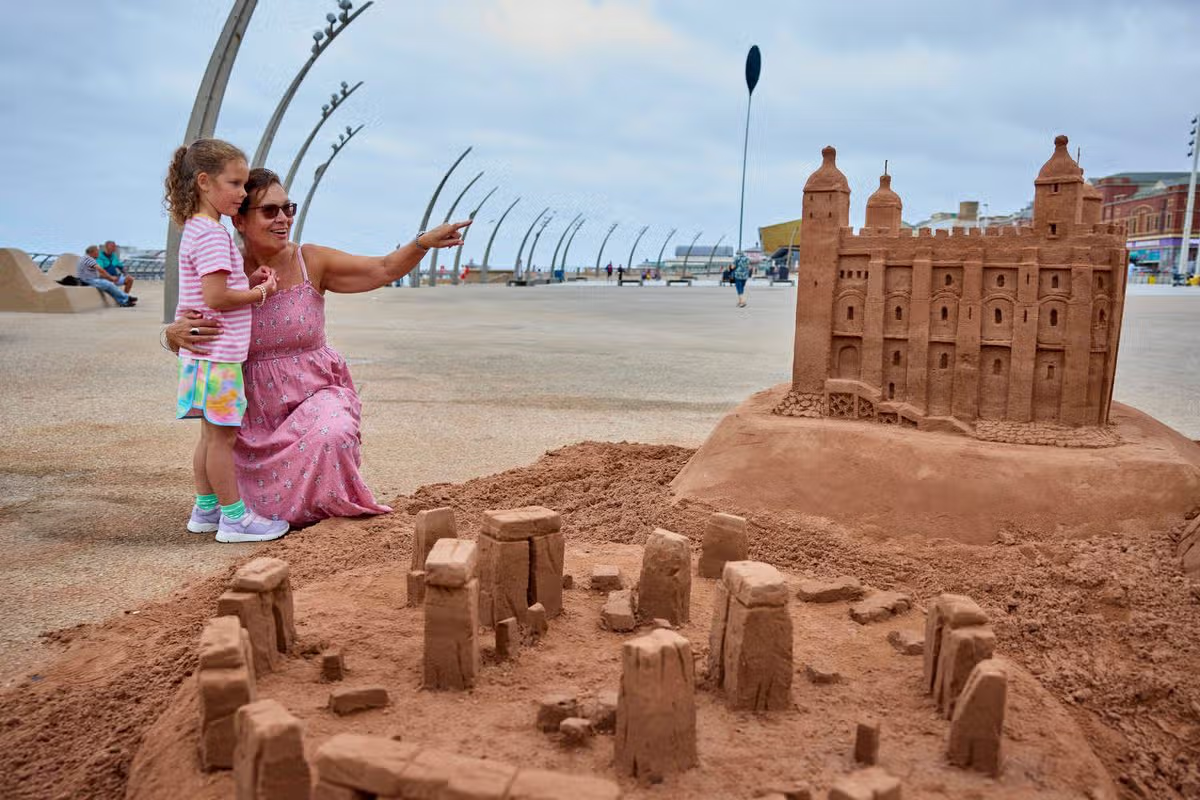
In honour of these landmarks, Railcard.co.uk, which commissioned the research, collaborated with ‘Sand in Your Eye’ to craft a variety of attractions and famous sights from across Britain in sand. The sculpture was revealed on Blackpool promenade and will stay there for the public to view until the weekend.

Constructed using 12 tonnes of sand and taking three days to complete, the creation showcases the attractions topping Brits’ wish lists: Tower of London (22%), Edinburgh Castle (18%), Stonehenge (18%), Eden Project (18%) and Scotland’s Loch Ness (18%).

Catherine Lyver, from railcard.co.uk, which commissioned the research to encourage Brits to make the most of British landmarks by offering a third off travel for adults and 60% off for children, said: “It’s easy to overlook the iconic landmarks and hidden gems on our doorstep, yet Great Britain is full of incredible places to explore.

“We’re encouraging people to do a third more with their break, making it easier and more affordable to tick off some of the bucket-list-worthy destinations closer to home.”

“Whether you’re still looking to tick off historic favourites like the Tower of London or have added the modern Eden Project to your list, there are plenty of opportunities to make your summer go further when you travel by train.”

The overwhelming majority in the OnePoll.com survey for railcard.co.uk (79%) said they would like to discover more British landmarks – but the cost of living (43%) and lack of time (33%) are the primary obstacles preventing them.

When visiting British landmarks 23% will travel by train, because it’s relaxing (59%), more convenient (46%) and don’t have to worry about parking (43%).

THE 10 MUST VISIT ATTRACTIONS IN BRITAIN:

  1. Tower of London
  2. Edinburgh Castle
  3. Stonehenge
  4. Eden Project
  5. Loch Ness
  6. The British Museum
  7. Buckingham Palace
  8. Lake Windermere
  9. Windsor Castle
  10. Jurassic Coast

Source link

World’s tallest bridge is higher than the Eiffel Tower and cost £345million

It even has special features to ensure drivers don’t feel like they’re ‘floating’

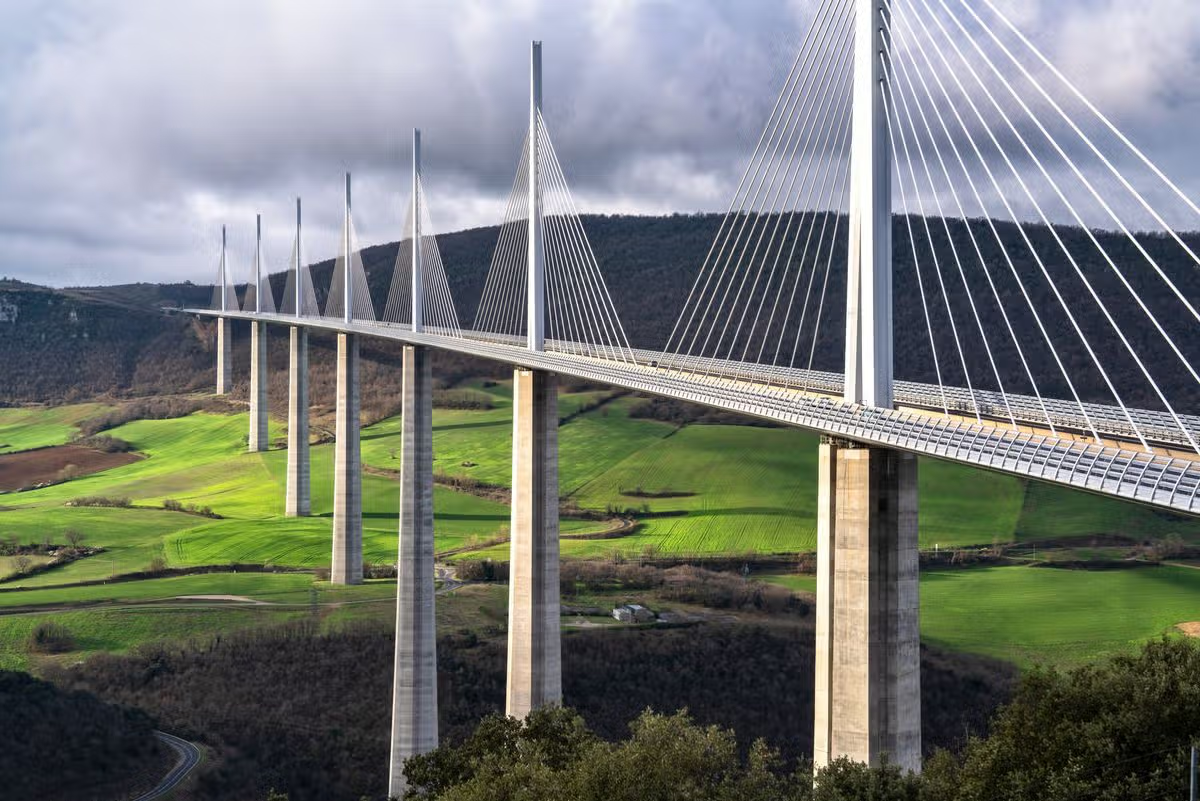
The world’s tallest bridge is so high that an entire skyscraper could fit underneath it. While many would expect the highest bridge to be in the likes of China or the US, it is actually in France.

The Millau Viaduct is part of a motorway that connects Paris to the Mediterranean. It was designed by British architect Norman Foster and is in Southern France.

Work completed in 2004 and the cost of construction was approximately €394 million (£345 million). It has an impressive height of height of 343 metres (1,125 ft), which is higher than the iconic Eiffel Tower.

The Paris skyscraper stands at 330 metres (1,083 feet). Millau Viaduct is 2460 metres long and touches the bottom of the Tarn valley just nine times along its length.

Le Shuttle said: “Plans for a road crossing to alleviate the traffic through the town of Millau date from the 1980s.

“British architect Sir Norman Foster was among the team that designed the viaduct, which was considered the most viable solution to cross the valley and river, with the least ecological impact on the area. Construction of the viaduct began in 2001.”

There is no pedestrian access to the viaduct as it is a high-speed motorway. However, it does attract tourism and there are guided informational tours.

Tours include taking a designated nature path to a viewing platform below the bridge and even inside one of the tallest pylons. A marathon takes place every year over the viaduct, and the Tour de France has passed under the viaduct a number of times.

The viaduct features a slight curve that extends up to 20km on the road on either side. It helps drivers settle the feeling of “floating” when driving on a long, straight bridge.

Enjoy Travel explained: “It has two lanes in each direction and interestingly, the bridge is not straight as this could induce a sensation of floating for drivers.

“To remedy this, the architects designed the bridge to have a slight curve, which is 20km in range. Another design feature that improves safety, is the road’s slight incline of 3%, which improves visibility and reassures the driver.

“The bridge is exposed to strong gusts of up to 151km/h, so designers installed side screens that cut the wind’s impact by 50 per cent.”

Visitors have left positive reviews about their experience of the viaduct on TripAdvisor. One said: “Love bridges. This is one not to be missed. Be sure to take a look at it from below to get a real sense of it. Real engineering feat.”

Another added: “An absolutely superb place! The viaduct and the surrounding landscape are so beautiful that you feel like you are part of a painting or drawing! It is truly a work of engineering of the highest level.”

Someone else commented: “Visited today after it been on my bucket list. Great visitors centre, cafe and toilets. Parking is free and you can walk up a 470m path to an awesome view point. You can see the viaduct and surrounding areas. Drove over the bridge with stunning views.”

Source link

Spain, France, Italy and Greece on alert after deaths over weekend

Events and public transport have been cancelled with public drinking banned

Health warnings have been issued for peopel across Europe including in France, Italy, Spain and Germany. France has been cancelling trains, concerts and sports events and cracking down on public drinking as an exceptional heat wave unfurled across parts of Europe.

Multiple drownings were reported as people sought relief in whatever water they could find About a third of France is under “red alert″ heat and temperatures reached 40C in some areas, in a country where air-conditioning is not widespread.

The forecast for Monday is even hotter. The Eiffel Tower and other Paris venues set up misting stations to cool crowds, among a raft of measures introduced by authorities to minimise risks. Tourists in Rome dunked in fountains.

Spain’s Basque Country cancelled some sports and cultural events. More than 200,000 people across Europe died from heat-related causes over the last four years, and most of the fatalities were preventable, the World Health Organisation’s Europe office said this month.

More above-average temperatures are expected this summer, which can cause heat exhaustion and life-threatening heat stroke. Human-caused climate change is tied to increasing extreme weather events and UN climate agency projections say the next five years should shatter more heat records.

A rapid study found that human-caused climate change was responsible for killing about 1,500 people in an unusually early European heat wave in May. In this latest European hot spell, French media reported that four children drowned on Saturday.

Summer drownings are an annual problem that health authorities say worsens during hot spells. France’s annual Music Day on Sunday was of particular concern. The nationwide summer solstice celebration involves thousands of concerts in village squares, rave venues and Paris clubs, bringing communities together and increasingly drawing British and other international visitors.

Some of the concerts outside Paris were cancelled. The French government banned public drinking in “red alert” zones, and ordered organisers of music day events to limit alcohol consumption to “preserve emergency services and allow medics to concentrate on taking care of the most vulnerable”.

Scores of French trains were cancelled, and the national rail authority dispatched thousands of extra staff to deal with potential problems as the heat threatened rails and electrical cables. Authorities are notably worried about people living in the baking streets, and elderly people in nursing homes or isolated in their homes.

About 15,000 older people died in France in a 2003 heat wave that became a national reckoning. The government mobilised emergency services and military forces for reinforced wildfire readiness, imposed tightened surveillance of water supplies to France’s many nuclear reactors, and ordered 845 schools to close on Monday.

Spain kicked off the summer with large parts of the country on alert because of temperatures expected to hover around 40C — even in the interior of Basque Country, a northern region that typically experiences cooler temperatures. Authorities have suspended outdoor sports and cultural activities in the region.

The heatwave is expected to scorch Spain at least until Wednesday. In Italy, authorities expanded heat warnings — referred to locally as “red flags” — to eight cities on Sunday in northern and central parts of the country.

Temperatures there are mostly in the upper 30s. At one farm outside Milan, owners set up fans and sprinklers to keep cows cool, while visitors to Milan Fashion Week huddled under parasols and clutched fans.

In Rome, tourists dunked their arms and occasionally their faces into the city’s famed fountain pools. The German Weather Service is forecasting temperatures of up to 37C for Monday and Tuesday, and up to 39C on Wednesday.

A 23-year-old man drowned on Saturday in a lake near Rheinstetten in the south-western region of Baden-Wurttemberg, the German news agency dpa reported. Three other people are missing after swimming in the Rhine River, a police spokeswoman told dpa.

Thunderstorms also threatened regions in Germany and Poland. French Prime Minister Sebastien Lecornu is convening a new government heat crisis meeting on Sunday, and ordered government ministers to plan for better adapting France to heat waves in the future — including “via air conditioning, if necessary”.

Source link