Egypts

Why China Is Closely Watching Egypt’s Military and Defense Strategy

The Ninth Bureau of the Chinese Ministry of State Security (MSS) and the People’s Liberation Army’s (PLA) military think tanks are closely monitoring the movements of the current Egyptian Minister of Defense, Lieutenant General Ashraf Salem Zaher, and tracking the activities of the Egyptian Ministry of Defense. PLA websites are officially monitoring the activities and movements of the Egyptian Ministry of Defense, particularly the important air event for China: the El Alamein International Aerospace Exhibition (EIAS 2026), especially as the Egyptian Air Force and Ministry of Defense prepare to launch the second edition of the exhibition (EIAS 2026) at El Alamein International Airport from September 8 to 10, 2026.

As an Egyptian expert specializing primarily in Chinese politics and the policies of the ruling Communist Party of China, I can deconstruct, analyze, and evaluate the perspective of Chinese intelligence, military, defense, and security circles regarding the role and actions of the Egyptian Ministry of Defense and its minister, Lieutenant General Ashraf Salem Zaher, as follows:

– First: The Chinese People’s Liberation Army and its affiliated military research and analysis centers are closely monitoring and analyzing the activities of the Egyptian Ministry of Defense in hosting the El Alamein International Aerospace Exhibition.

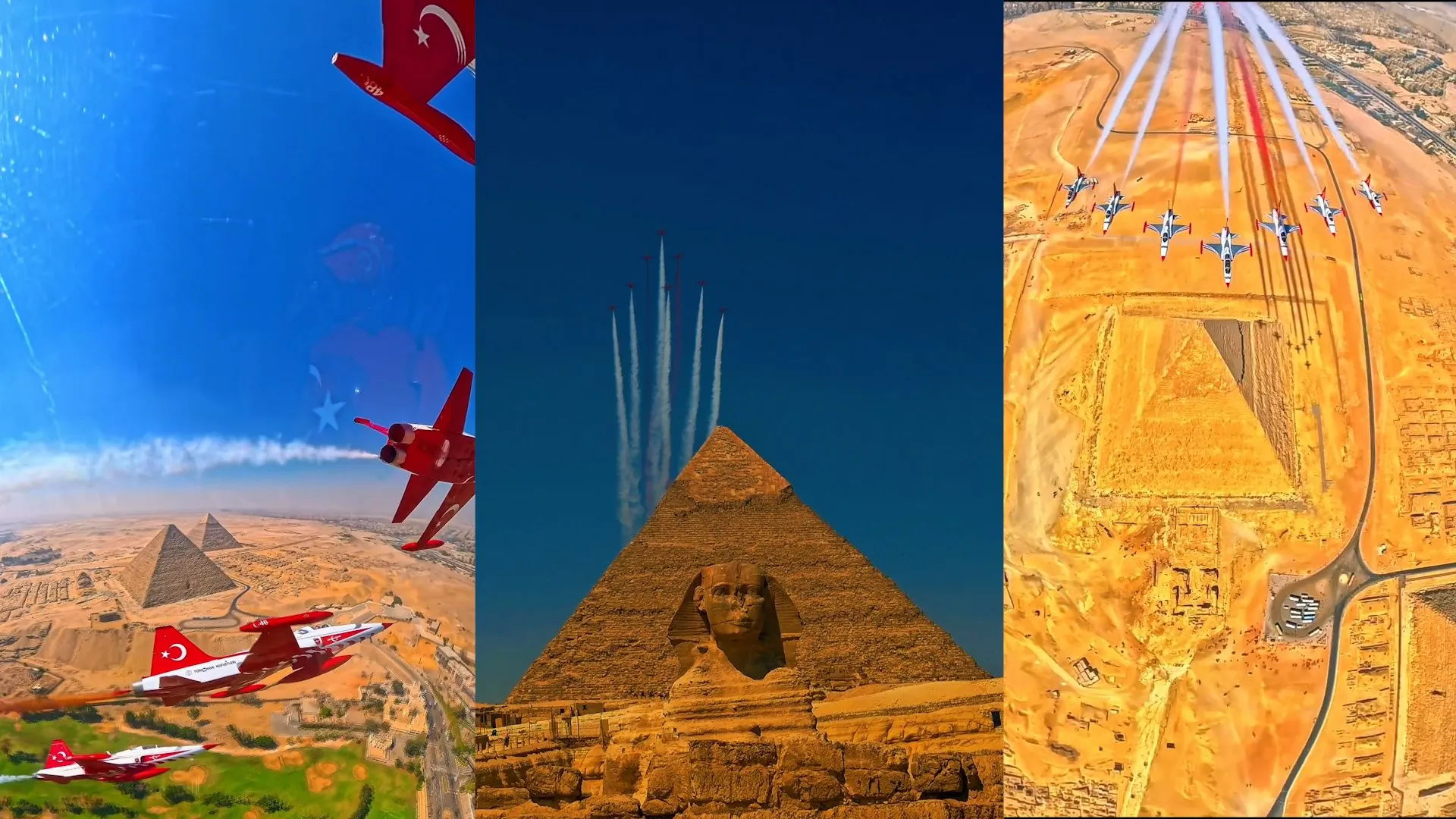
This event is considered regionally significant for China, serving as a platform to connect defense and space organizations in Africa and the Middle East. This edition has garnered considerable international and Chinese interest, particularly from leading figures in the Chinese arms and defense industries, who are showcasing their latest aircraft and drones.  China’s interest in the inaugural El Alamein International Air and Space Exhibition in 2024 was marked by significant historical participation: the Chinese Air Force performed spectacular air displays, their first official air show outside of China. This first-ever air show featured Chinese aircraft performing unique aerobatic maneuvers in the skies above El Alamein, a first for China. Furthermore, the exhibition served to strengthen Chinese-Egyptian military cooperation. China’s interest in the Egyptian air show reflected the strength of bilateral military relations and the two countries’ desire to bolster their aviation and defense sectors. The Chinese People’s Liberation Army and its affiliated military research and analysis centers focused on evaluating and analyzing the Egyptian Ministry of Defense’s activities in hosting the El Alamein International Air and Space Exhibition. The Egyptian Air Force also announced the launch of the second edition of the exhibition, aiming to explore avenues for joint military cooperation and advanced military technologies between Egypt and China.

Stay ahead of the geopolitical week.

MD Briefing delivers expert analysis across five global fronts — the Indo-Pacific, energy, geoeconomics, European security, and the Middle East — every Monday morning. Free.

–             Second: The Role of the Ninth Bureau of the Chinese Ministry of State Security in Monitoring the Activities of the Egyptian Ministry of Defense to Secure Chinese Belt and Road Initiative Projects and Protect Chinese Strategic Interests

The Ninth Bureau of the Chinese Ministry of State Security (the Counter-Espionage and Infiltration Bureau) is concerned with the activities of the Egyptian Ministry of Defense in securing Chinese Belt and Road Initiative projects and protecting China’s growing strategic interests in the region from foreign intelligence penetrations. The dimensions of Chinese security and intelligence interest are focused on protecting vital waterways, particularly securing navigation in the Suez Canal and the Red Sea, which are essential maritime arteries for China’s Maritime and Military Silk Road. Furthermore, the Ninth Bureau of the Chinese Ministry of State Security seeks to secure major Chinese investments through intelligence oversight of joint Chinese logistical and economic projects, such as the Suez Canal Economic Zone and the TEDA projects. With close monitoring by Chinese intelligence circles, specifically the role of the Chinese Ninth Bureau in countering external threats, the activities of rival intelligence agencies targeting Chinese military technologies or economic presence in North Africa are being tracked and neutralized.

Therefore, think tanks affiliated with the Chinese People’s Liberation Army (PLA) have been paying close attention to the Egyptian defense minister’s foreign trips aimed at strengthening Egyptian military partnerships with countries around the world. This is of profound significance and military importance to China and the PLA, given its connection to China’s Belt and Road Initiative through the military cover for trade. Beijing relies on developing military coordination with Cairo and advanced arms deals, such as air defense systems, to ensure a stable regional environment that protects its long-term investments. This is achieved through a comprehensive strategic partnership between Egypt and China, transforming their cooperation from traditional trade to security and defense integration, thus guaranteeing the safe flow of global trade through Egypt. Therefore, the Chinese military has shown keen interest in tracking the movements of Egyptian Defense Minister Lieutenant General Ashraf Salem Zaher around the world, particularly his important official visit to Turkey in July 2026 and his meeting with the Turkish Defense Minister to sign a letter of intent for defense cooperation and the expansion of joint exercises. This is in addition to his on-site monitoring of the development and training of personnel at the Military Academy and other educational institutions affiliated with the Armed Forces, which intelligence and military circles in Beijing are keen to monitor closely.

– Third: The interest of Chinese military platforms and websites in covering news and activities of the Egyptian Ministry of Defense through official and semi-official military and news portals affiliated with the Chinese government that focus on defense and Middle Eastern affairs

In this context, several Chinese military platforms and websites specialize exclusively in covering news about the Egyptian Ministry of Defense or Lieutenant General Ashraf Salem Zaher individually. However, his strategic movements are also followed through official and semi-official Chinese government military and news outlets that focus on defense and Middle Eastern affairs. The most prominent of these Chinese websites and platforms include the China People’s Liberation Army Online (cn/China.81 Military Online). This is the official website of the Chinese armed forces, focusing on official meetings and joint cooperation. Also included is the website of the Ministry of National Defense of the People’s Republic of China, which is known as mod.gov.cn. This covers military diplomacy and protocols between Egypt and China. Additionally, there is (Xinhua Military). This is the official news arm that translates and publishes extensive reports on the restructuring of military leadership and the strategic moves of the Egyptian Minister of Defense, Ashraf Salem Zaher. And the Guancha Platform, which is militarily known as Guancha.cn. This is a leading Chinese analytical website that focuses on international military and geopolitical affairs. It analyzes Egyptian arms deals and military cooperation with regional and international powers, particularly China. Chinese media coverage of news from the Egyptian army and the El Alamein International Air and Space Exhibition in Egypt demonstrates broad strategic interest through Chinese military platforms such as the People’s Liberation Army Online (China Military Online) and the website of the Chinese Ministry of Defense. This coverage focuses on joint military cooperation, modern Egyptian military technologies, and potential areas of military cooperation between Egypt and China during the El Alamein International Air and Space Exhibition. This is especially significant given the participation of major Chinese military companies in the second edition of the exhibition, companies operating in the fields of defense, armaments, space technology, and commercial aviation. Therefore, specialized Chinese military platforms and agencies highlight displays of modern aircraft and drones, trends in military technological development in Egypt, and areas of mutual military benefit between Egypt and China.

Here, Chinese intelligence, military, political, and strategic circles, represented by the Ninth Bureau of the Chinese Ministry of State Security and all the aforementioned Chinese military sites, are monitoring all Egyptian military and field movements and activities. This includes, most notably, the movements of Lieutenant General Ashraf Salem Zaher, Commander-in-Chief of the Armed Forces and Minister of Defense and Military Production (who assumed his position in February 2026). His recent intensive activities and initiatives aimed at enhancing combat readiness and strengthening Egyptian-international military cooperation, particularly with China and the People’s Liberation Army, are of particular interest. Among the most prominent movements and activities of the Egyptian Ministry of Defense, which have been the focus of analysis and evaluation by Chinese military circles, are the Egyptian defense minister’s field and diplomatic activities, including his official visit to Turkey in July 2026 at the head of a high-level Egyptian military delegation to discuss joint defense cooperation with the Turkish side. In addition to the interest, analysis, and evaluation by Chinese intelligence, military, defense, and security circles of the significance of the Egyptian Ministry of Defense’s invitation and reception of African defense ministers at the Egyptian Ministry of Defense’s headquarters and their analysis of its connection to maintaining the security and stability of Chinese investments and opening new footholds and ports, especially in the Horn of Africa region, which is sensitive to Chinese logistical interests, relevant circles in Beijing are also monitoring the Egyptian side’s reception of the deputy prime minister and minister of defense of the Democratic Republic of Congo to discuss regional conditions and security in Africa, linking this to Chinese interests from a Chinese perspective.

– Fourth: The interest of intelligence, military, and security circles in Beijing in the recent Egyptian military activity in Africa and the significance of inviting and receiving African defense ministers at the Egyptian Ministry of Defense’s headquarters, from a precise geopolitical perspective as a strategic pillar serving vital Chinese interests

Intelligence, military, and security circles in Beijing view Egypt’s recent military activity in Africa as a strategic pillar directly serving vital Chinese interests. Beijing analyzes the invitation and reception of African defense ministers at the Egyptian Ministry of Defense headquarters, headed by the Commander-in-Chief of the Armed Forces and Minister of Defense and Military Production, Lieutenant General Ashraf Salem Zaher, from a precise geopolitical perspective that links regional security to China’s Belt and Road Initiative. This analysis considers the connection between Egyptian activity in East Africa and the Horn of Africa and Chinese logistics efforts to secure vital maritime routes for China’s interests. Beijing believes that strengthening Egyptian military influence in the sensitive Horn of Africa region acts as a safeguard for maritime traffic in the Red Sea leading to the Suez Canal, the main artery of China’s Maritime Silk Road, in addition to its importance for protecting China’s ports. Here, Chinese defense circles welcome any efforts to stabilize the Bab El-Mandeb Strait, thus protecting Beijing’s logistics base in Djibouti and opening up prospects for securing new Chinese ports and investments. These investments depend on the stability that Cairo, as a regional power center, can contribute to establishing.

– Fifth: Beijing’s interpretation of the reception of the Democratic Republic of Congo’s defense minister in Egypt to promote calm and stability in the Great Lakes and Nile Basin region, which is crucial to Chinese logistical interests.

Beijing’s interpretation of the reception of the Democratic Republic of Congo’s defense minister in Egypt is that relevant circles in Beijing followed with great interest the Egyptian side’s reception of the deputy prime minister and minister of defense of the Democratic Republic of Congo (DRC), Guy Kabombo Mwadiyamvita, to discuss regional security conditions. Chinese intelligence, military, political, and strategic circles analyze this in order to secure Chinese mining investments in the Democratic Republic of Congo, given that China has massive investments worth billions of dollars in the minerals and cobalt sector in the Democratic Republic of Congo (DRC). Beijing believes that security and stability in Congo, which Egypt supports through African Union institutions and bilateral cooperation, protects vital supply chains for Chinese technology industries from the risks posed by rebel groups. Furthermore, the Chinese Ninth Bureau and Chinese think tanks and military intelligence affiliated with the People’s Liberation Army analyze that strategic coordination in the Nile Basin region is essential for China’s interests and investments. Beijing considers the Egyptian-Congolese consensus to enhance calm and stability in the Great Lakes region and the Nile Basin, thus reducing the likelihood of armed conflicts that could threaten construction and infrastructure projects implemented by Chinese companies in those countries.

– Sixth: Chinese military circles are closely monitoring Egyptian President Abdel Fattah El-Sisi’s meetings with leaders of the Egyptian Ministry of Defense to secure the Chinese Maritime and Military Silk Road.

In addition to closely monitoring Egyptian President Abdel Fattah El-Sisi’s meetings with the leaders of the Egyptian Ministry of Defense, Chinese military circles are following the security situation and developments in the armed forces’ modernization plans, given the particular importance of these matters to China in safeguarding its interests. Chinese military and strategic circles are keen to follow these meetings due to Egypt’s pivotal role in the stability of the Middle East and its crucial importance to China’s economic interests and investments in the Maritime and Military Silk Road. The dimensions of Chinese interest in President al-Sisi’s role lie in his coordination with the Egyptian military establishment to protect Chinese investments and secure major infrastructure projects and the Chinese economic zone northwest of the Suez Canal. This strengthens the Chinese military partnership with Egypt, paving the way for further defense cooperation agreements, increased military partnership and joint exercises, and the diversification of Chinese arms sources for Cairo. This serves to maintain China’s regional security and to monitor the security situation and its impact on global trade and maritime navigation routes.

– Seventh: Chinese military analyses and assessments focus on monitoring and observing the Egyptian Ministry of Defense’s training, military, and educational activities, such as nighttime missile firing exercises and the Badr 2026 tactical project.

Chinese military analyses and assessments focus on monitoring and observing the Egyptian Ministry of Defense’s training, military, and educational activities, such as nighttime missile firing exercises. They pay particular attention to the final stage of the nighttime missile-firing exercise conducted by the Egyptian Air Defense Forces, attended by the Chief of Staff and commanders of the main branches. Chinese officials also observe the Egyptian Military Science Day, the activities of the Military Technical College’s Science Day, and the conclusion of its scientific and engineering competitions. Furthermore, Chinese circles evaluate the Egyptian Ministry of Defense’s Badr 2026 tactical project, especially the main phase of the Badr tactical exercise, which involved live ammunition and was conducted by (units of the Egyptian Third Field Army). This evaluation assesses the Egyptian army’s strength in defending the security and stability of vital waterways and axes of importance to China. Chinese military analyses and assessments focus on monitoring and observing the Egyptian Ministry of Defense’s training, military, and educational activities, such as nighttime missile firing exercises, and they pay particular attention to the final stage of the nighttime missile firing exercise conducted by the Egyptian Air Defense Forces, attended by the Chief of Staff and commanders of the main branches. With the Chinese interest in the Egyptian Military Science Day, the activities of the Military Technical College’s Science Day, and the conclusion of its scientific and engineering competitions, Chinese circles are also evaluating the Egyptian Ministry of Defense’s tactical project (Badr 2026), particularly the main phase of the Badr tactical project, which involved live-fire exercises conducted by units of the Egyptian Third Field Army. This evaluation aims to assess the Egyptian army’s strength in defending the security and stability of vital corridors and axes of importance to China. Chinese military circles and analysts are closely following the training and educational activities of the Egyptian Armed Forces, specifically the Badr 2026 tactical project with live ammunition conducted by the Egyptian Third Field Army, night air defense firing exercises, and the scientific activities of the Military Technical College. This is all part of assessing the Egyptian army’s readiness to protect vital axes. Furthermore, relevant circles in Beijing are keen to conduct further monitoring and evaluation of Egyptian military field training activities within the framework of the Badr 2026 tactical project to accurately assess the main phase with live ammunition conducted by units of the Third Field Army in support of the Air Force and to penetrate defenses.  With the interest of Chinese military think tanks and research centers affiliated with the People’s Liberation Army in the (nighttime missile firing) exercises in Egypt, they observed the efficiency and capabilities of the Egyptian air defense forces in operating effectively at night under cover of defense and in the presence of Egyptian military leaders.

With the Chinese military circles monitoring the graduation ceremony of the Egyptian Military Academy and the graduation ceremonies of new classes of students from the Military Academy for Postgraduate and Strategic Studies and understanding and studying the impact of these events on China through the desire of Chinese intelligence, military, political, and strategic circles to develop military curricula in Egypt and Africa. This reflects the Chinese interest in Egyptian military education and scientific research and the Egyptian Military Science Day through the monitoring of the activities of the Egyptian Military Technical College’s Science Day and engineering competitions, and following the conclusion of the scientific and engineering competitions and linking them to the technological development of the combat capabilities of Egyptian military academies and institutions, and understanding what is lacking in these activities in order to fill it in the future through military educational partnerships with Egypt and its Ministry of Defense.

With close monitoring by Chinese defense and security circles of the joint Golden Eagle exercises between Egypt and Turkey, given their importance to China’s military and maritime Silk Road and to protecting Chinese interests in maintaining the security of the region and its vital waterways necessary for global supply chains. The focus and attention of think tanks affiliated with the Chinese People’s Liberation Army have also been on Egypt. The With You initiative is primarily an Egyptian military initiative concerned with coordinating the Martyrs’ Recognition Fund of the Egyptian Ministry of Defense to disburse the first phase of the presidential initiative to care for the children of martyrs and wounded veterans. Chinese circles are interested in this Egyptian presidential initiative to understand its implementation mechanism, in coordination with the Egyptian Ministries of Defense, Interior, and Social Solidarity, and in cooperation with the Central Bank of Egypt and Misr Life Insurance Company. China is seeking to understand the Egyptian system and its operational and implementation mechanisms regarding all presidential initiatives.

– Eighth: Chinese military bodies and departments are monitoring the mechanisms for developing military education in Egypt, understanding and analyzing the system for preparing and qualifying students at the Egyptian Military Academy, in order to assess Egyptian military and elite human resources and build an accurate Chinese database to understand the size and number of elites with military and technological backgrounds in Egypt.

Furthermore, Chinese military bodies and departments are monitoring the mechanisms for developing military education in Egypt and understanding and analyzing the system for preparing and qualifying students at the Egyptian Military Academy in order to share their expertise with the Egyptian military. They are also monitoring announcements of new admissions to the Military Academy and graduates of technological colleges to understand the total number of individuals with military backgrounds in Egypt, reflecting China’s future desire to transfer its expertise in military education curricula and leadership and elite training to Egypt and its military academies. An analytical reading of China’s monitoring of the Egyptian military education system reveals profound strategic dimensions that extend beyond mere routine observation for the Chinese. This Chinese interest in the Egyptian military education system can be broken down as Beijing’s focus on monitoring Egyptian military and elite human resources. By monitoring the admission requirements and announcements for the Egyptian Military Academy and Egyptian military technology colleges, Beijing aims to build a precise database and understand the size and number of elites with military and technological backgrounds in Egypt. This contributes to anticipating the future leadership structure of the Egyptian state and helps Chinese intelligence, military, defense, and security circles assess the combat and administrative efficiency of Egyptian military elites. Here, the Chinese side seeks to analyze the preparation and qualification curricula for students in Egyptian military academies to determine the development of Egyptian training doctrine and its adaptation to modern warfare and smart systems. This facilitates the evaluation of the most prominent military partner in the Middle East and Africa region. This can be considered a gateway for transferring Chinese military-diplomatic expertise to Egypt, reflecting China’s future desire to introduce its leadership and elite training methodologies. This is part of China’s persistent effort to enhance its strategic influence (soft power) in Egypt and build long-term ideological and tactical alignment between the Egyptian and Chinese militaries through sharing its advanced military doctrine.

    Accordingly, we understand the extent of Beijing’s interest in the role of the Egyptian Ministry of Defense within its strategy to strengthen the comprehensive strategic partnership between the two countries. This includes securing vital economic interests and maritime routes for China, such as the Suez Canal, and developing mutual military and arms cooperation with Cairo. This stems from China’s keenness to coordinate with Cairo, given its central position in global trade and regional security. This helps diversify Chinese military partnerships with the Egyptian military establishment and its Ministry of Defense, as Beijing presents itself as a reliable strategic military alternative in the Middle East.

Source link

Egypt’s IPO Pipeline Grows as Cairo Courts Private Capital

Cairo accelerates state asset sales under an IMF plan, targeting up to four major listings by summer 2027.

This article appears in the July/August issue of Global Finance Magazine.

Egypt, Africa’s second-largest economy after South Africa, plans to list up to four state-owned companies on the Egyptian Exchange (EGX), the continent’s largest stock exchange by the number of listed companies, within the next 12 months.

The June 5 announcement is part of Cairo’s $8 billion International Monetary Fund (IMF) reform program and the government’s State Ownership Policy (SOP).

The planned transactions include the sale of a 20% stake in state-owned Misr Life Insurance, which is expected to raise about 14 billion Egyptian pounds (about $277 million). Investment and Foreign Trade Minister Hassan El Khatib said the government also expects more than seven public offerings — including private-sector companies — to reach the market within the next year.

“Over the next 12 months, the priority will be to make it easier for businesses to operate, raise capital, and complete mergers and acquisitions,” El Khatib told Reuters during a London visit.

In October 2024, the government floated shares in United Bank, marking the first state-owned bank listing in years. Since then, the EGX has approved the temporary listing of six additional state-owned enterprises, including Sinai Manganese Company and El Nasr Housing and Development. Officials are also preparing about 10 state-owned petroleum companies, along with firms in other strategic sectors, for future listings.

The drive toward privatization follows reforms introduced in March 2024, when Egypt adopted a flexible exchange-rate regime and allowed the Egyptian pound to float freely, ending the parallel foreign exchange market. In its February review, the IMF said inflation had fallen from a peak of 38% in September 2023 to the low-double-digit range, while Egypt’s net international reserves had risen to about $53 billion, reflecting stronger external buffers.

The reform program targets one of the most state-dominated economies in the Middle East and Africa. According to the IMF, Egypt’s state-owned enterprises account for assets equivalent to about half of the country’s gross domestic product. The government directly owns or controls more than 300 commercial enterprises across sectors, including banking, energy, manufacturing, transport, and telecommunications. The SOP came about in 2023. Subsequent legislative reforms include Law No. 170 of 2025, which established a central framework for the divestment of state assets.

Charles Wachira is a contributing writer based in Kenya.

Source link

World Cup 2026: The fury and heartbreak of Egypt’s stunning World Cup collapse

With 12 minutes of normal time remaining Egypt stood on the cusp of their greatest ever World Cup result.

The Pharaohs led Argentina, the reigning world champions, 2-0 in Atlanta Stadium.

A quarter-final spot – their first – beckoned for the football-mad African country.

Then it went wrong. Horribly wrong.

When Cristian Romero reduced the deficit in the 79th minute, it was a case of Egypt digging in. But they looked panic-stricken when captain Lionel Messi – who else? – made it 2-2 four minutes later.

Enzo Fernandez then completed a remarkable turnaround with a header in the second minute of stoppage-time.

Egypt were down and out – and downright furious after the video assistant referee (VAR) ruled out a second goal by Mostafa Zico for a foul after midfielder Marwan Attia was penalised for slightly stepping on Lisandro Martinez at the start of the move, when they were leading 1-0.

They were also adamant Mohamed Salah was fouled in Argentina’s penalty area, seconds before the reigning champions broke for the winner.

“There is so much inconsistency at the moment with VAR and decisions and how far you go back to pull a decision,” Egyptian football expert Ahmad Yousef told BBC Radio 5 Live.

“There was such a long distance that had gone by and the foul was so minimal so I completely understand why the Egyptian coaching staff and squad are so disappointed.”

When French referee Francois Letexier signalled full-time, many of Egypt’s players slumped to the floor in disbelief at what had just happened.

Salah swapped shirts with his former Liverpool team-mate Alexis MacAllister before walking off the pitch with his head bowed, while other players stood shaking their heads.

“There were so many subplots and stories to this game,” said former England goalkeeper Paul Robinson, who was in the ground working for BBC Radio 5 Live.

This match had everything – a penalty save, a disallowed goal, a red card as well as a thrilling comeback.

BBC Sport unpicks a game that will go down in World Cup history for featuring a team who were two goals down so late on, but who went on to win without needing extra time.

Source link

FIFA World Cup: Mohamed Salah and the ghosts of Egypt’s ‘golden generation’ | World Cup 2026 News

For some Egyptian football fans, watching Mohamed Salah qualify with Egypt for two World Cups in 2018 and 2026 will never make up for the fact that the “golden generation” did not get their shot in 2006, 2010 or 2014.

“It is unfair to compare the two generations,” Ahmed Elshiekh, a former national team player who now covers the World Cup for Modern MTI TV, told Al Jazeera.

Recommended Stories

list of 4 itemsend of list

“The golden generation did everything but get to the World Cup. They beat Italy [when they were World Cup champions]. The draw in qualification was just unkind to them.”

Salah is the captain and leader of the current generation. He won every trophy on offer while playing for Liverpool in a glittering nine-year career that saw him become the highest scoring foreigner in the history of the English Premier League.

Given his status, it is perhaps no surprise that Salah shouldered the blame for an AFCON drought that stretches back to 2010. His achievement in dragging Egypt to the 2018 World Cup in Russia is brushed aside due to the fact that Egypt was the first team to be eliminated. A half-fit Salah, who had dislocated his shoulder in the UEFA Champions League final, scored twice, but Egypt lost all three matches, including to Saudi Arabia.

The failures were compounded when Egypt lost the 2021 AFCON final to Senegal on penalty kicks. Thirteen months later, Egypt met Senegal in a World Cup playoff and once again lost on penalty kicks. In the first shootout, Salah was designated as the fifth taker but never got a chance to take his penalty. For the second shootout, perhaps realising his mistake, he went first and missed.

Salah might have been one of the best players in the Premier League, but Egypt fans were frustrated. To soothe their pain, they hung on to the memories of a team that was crowned African champions in 2006, 2008 and 2010 – successes that were spearheaded by the legendary midfielder Mohamed Aboutrika, who is equally famous for his “Sympathise with Gaza” T-shirt as he is for his immaculate first touch.

The despondence was so deep that fans had lost hope for their national team. AFCON 2023 was blighted by an injury to Salah, who elected to return to Liverpool for rehabilitation but promised to return should the team advance to the final. Egypt’s tournament ended shortly after that statement, courtesy of a penalty shootout defeat in the round of 16.

Working at that time as an analyst for Egyptian TV, now-Egypt manager Hossam Hassan said that if Salah had done that on his watch, he would “never pick him for the national team again”.

A couple of weeks later, Hassan was appointed to lead the national team after Rui Vitoria’s dismissal.

It was widely speculated that the only reason the Egyptian Football Association hired Hassan was because the currency crisis had prevented them from attracting a foreign manager.

“Hossam Hassan as a player has achieved everything you can imagine,” Elsheikh said, referencing the former striker’s record 69 goals for Egypt and three AFCON titles.

“But as a manager, we saw what he can produce, and the results were not great. … Also he brought problems and created crises.”

The crises Elsheikh referred to have been a hallmark of Hassan’s journeyman coaching career marked by brawls and altercations with fans.

But the appointment proved to be a stroke of unintended genius.

Mohamed Salah in action.
Salah shoots and scores in a penalty shoot-out during the 2026 World Cup round of 32 football match between Australia and Egypt at the Dallas Stadium in Arlington on July 3, 2026 [Paul Ellis/AFP]

Salah finds form under Hassan

Instead of falling out with Salah, he and Hassan became joined at the hip. If there was anyone who could understand the pressure of Salah’s position, it was Hassan, who had lived it all before but with the added pressure of having played mostly in Egypt and having crossed the Cairo divide when he left Al Ahly to sign with bitter rivals Zamalek.

“Hassan does have a captain’s personality and is very energetic. He might not be the strongest tactically, but he does provide a solid defensive base” Elsheikh said.

Salah has enjoyed a rich vein of form under Hassan’s tutelage. Egypt qualified for the 2026 World Cup undefeated, winning eight out of their 10 matches. The team also reached the semifinals of the 2025 AFCON tournament – not that the achievement silenced any of the doubters.

Of course, it’s not all about Salah. Egypt have a raft of talented players, including Man City’s Omar Marmoush and Al Ahly’s Emam Ashour.

Their undefeated team is going into the round of 16 to face defending champions Argentina on Tuesday. Egypt have overcome a great deal of adversity to reach this stage of the tournament as well.

A second-half comeback against New Zealand in the group stage was needed to secure the nation’s first win at a World Cup. Salah exited the final group game against Iran with a hamstring injury but played all 120 minutes of the penalty shootout win over Australia in the last 32. The 34-year-old converted his kick with a Panenka against Socceroos goalkeeper Mat Ryan.

In the aftermath of that victory, Aboutrika, now an analyst for beIN Sports, did his best to pass the baton to the new generation.

Goalscorer Ashour had expressed his joy at being compared to Aboutrika, saying his ambition was to be “as half as good or even a quarter as good as him”.

Later on in the studio, Aboutrika responded by saying: “You are better than [me]. You’ve scored two goals in a World Cup,” and insisting that this was the biggest night in the history of Egyptian football.

Not everyone is so convinced.

“This Egypt team is better than any we have seen in years yet is still remarkably fragile,” opined Karim Zidan, a writer focused on the intersection of sports, power and politics.

Salah, meanwhile, was once again asked who was the greatest Egyptian player of all time and again deferred to Aboutrika, saying “there is absolutely no discussion.”

Source link

‘This time’: The World Cup commercials capturing Egypt’s soaring hopes | World Cup 2026 News

The advertisements all start the same way. It could be a barber, an aunt or a family member in discussion with others about the FIFA World Cup, but in each case, they assume Egypt will be heading home after the group stage.

Then an Egyptian footballer pushes back: “To all the doubters, this time we’re staying longer.”

It’s a line that’s resonating like never before in the nation of 120 million people, as Egyptian football fans wait with bated breath for the final round of group stage matches that could send The Pharaohs, as the national team are known, into uncharted territory: the knockout stages.

Here’s why these commercials have captured the zeitgeist in Egypt:

Egypt’s poor World Cup track record

Egypt was the first African and Arab nation ever to play in a World Cup, back in 1934. It has won the Africa Cup of Nations a record seven times. Football in Egypt isn’t just a sport, it’s a national identity, and The Pharaohs have long been a source of genuine pride and belief.

But the World Cup has always told a different story. Before this tournament, Egypt had qualified just three times — in 1934, 1990 and 2018.

It had never won a single match. Fans still carry the painful memories of a penalty shootout loss to Senegal that kept Egypt out of the Qatar World Cup 2022 entirely.

Egyptian children play soccer in front of the Giza Pyramids in Giza Friday, May 17, 2002 ahead of the World Cup soccer tournament which kicks off May 31 in Korea. Egypt has qualified twice for the World Cup in the last 60 years, 1934 and 1990. (AP Photo/Amr Nabil)
Egyptian children play football in front of the Giza Pyramids in Giza, on Friday, May 17, 2002 [Amr Nabil/ AP Photo]

What’s different this time?

Everything — at least, so it seems.

After two games at the World Cup, Egypt sits at the top of Group G, above Iran, Belgium and New Zealand.

The 26th ranked Egypt drew 1-1 with Belgium — ranked 10 in the world — in its first match. Then, it beat lower-ranked New Zealand 3-1.

Its four points are the most Egypt has ever earned at a World Cup. Its four goals are the most Egypt has ever scored at a World Cup.

Now, on Friday night in Seattle — early Saturday morning in Egypt — the team faces Iran in their final group game. A win or a draw would guarantee that Egypt’s national team goes into the knockout stages for the first time.

If Egypt loses to Iran, they might still make it to the round of 32, but their fate will depend on what happens in the Belgium-New Zealand match that will be held at the same time, and potentially, on the outcomes of matches in other groups. Eight of the 12 teams places third in their groups will also move into the next round.

So in a nutshell, Egypt is on the cusp of going where it never has before — and only a rare set of permutations can deny it that chance.

Egyptian striker Hossam Hassan maneuvers the ball during a friendly international match against Zambia in Cairo January 9, 2001.
Hossam Hassan, now the Egyptian coach, seen here manoeuvring the ball during a friendly international match against Zambia in Cairo January 9, 2001 [Reuters]

But it isn’t just the performances. Part of what makes this year feel different, to many fans, is the identity of the main man standing outside the pitch, next to the Egyptian dugout.

Hossam Hassan is Egypt’s all-time top scorer and one of the most iconic figures in the country’s football history. In 1990, he scored the goal that ended a 56-year wait and sent Egypt to the World Cup in Italy. Now, more than three decades later, he is the national team’s coach, making him the first Egyptian ever to reach the World Cup as both player and manager.

For older fans, his presence carries the memory of a time when Egypt genuinely believed it could make its mark on the world stage.

Jun 21, 2026; Vancouver, British Columbia, CAN; Egypt forward Mohamed Salah goal scoring during the second half against New Zealand during a Group G match in the 2026 FIFA World Cup at BC Place Vancouver. Credit: Anne-Marie Sorvin-Imagn Images
Mohamed Salah scored during the second half against New Zealand in the 2026 FIFA World Cup in Vancouver on June 21, 2026, as Egypt registered its first-ever win at the tournament [Anne-Marie Sorvin /Reuters]

So what are the advertisements really about?

They aren’t really making fun of the team. They’re making fun of the deeply ingrained expectation that Egypt won’t go very far. And that expectation, many argue, goes beyond football. Years of economic hardship and political uncertainty have made expecting the worst feel like common sense for many Egyptians. They protect themselves from disappointment. They assume it won’t work out before it doesn’t.

That’s what has also made the campaigns somewhat divisive. For some viewers, the humour felt honest — a reflection of a habit fans know they have. It prompted real questions about why low expectations have become so normal. Others argued the advertisements risked making those same low expectations feel permanent, even acceptable.

Either way, they underscore how the 2026 World Cup has reignited faith among Egyptian fans, as they wait for the Iran match. An advertisement campaign challenging doubters has come to reflect the broader hopes, doubts and debates surrounding The Pharaohs.

Source link