Egypt

Egypt qualify for FIFA World Cup 2026 with win over Djibouti | Football News

Two goals from Salah and one from Adel make Egypt the third African country after Morocco and Tunisia to book a berth.

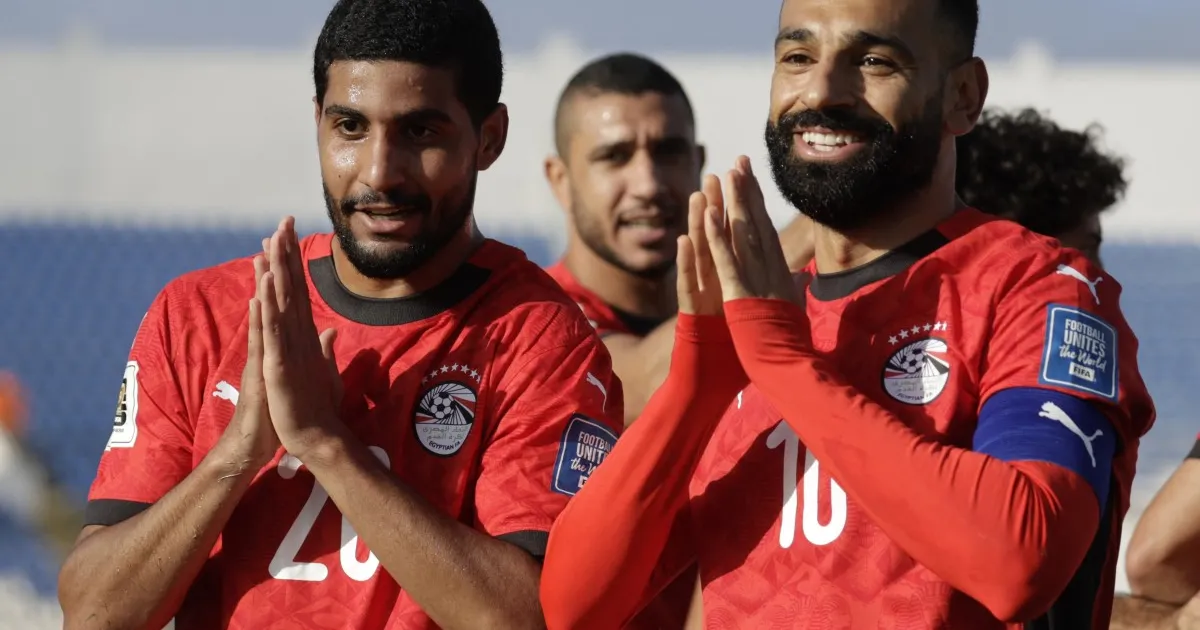
Egypt have booked a berth at the FIFA World Cup 2026 with an easy 3-0 win over Djibouti in Casablanca that gave them top place in Group A with one game remaining.

Liverpool star Mohamed Salah scored twice and Ibrahim Adel claimed the other goal for the Pharaohs on Wednesday, as they became the third African country after Morocco and Tunisia to book their place in next year’s finals in North America.

Recommended Stories

list of 3 itemsend of list

Salah has scored nine goals in Egypt’s marathon qualifying campaign that began two years ago.

Egypt have competed at three previous World Cups but failed to qualify for the 2022 edition in Qatar, where Morocco had their best run as semifinalists and Tunisia were knocked out in the group stage.

Meanwhile, Thomas Partey was on the scoring sheet as Ghana trounced the Central African Republic 5-0 in Meknes, and they need one point from their final match at home to Comoros to qualify.

Mohammed Salisu, Alexander Djiku, captain Jordan Ayew, and Kamaldeen Sulemana were the other scorers for the Black Stars, who led 1-0 at half-time.

Cape Verde came from two goals behind in Tripoli to draw 3-3 with Libya and edge closer to a first World Cup appearance.

The island nation of about 550,000 inhabitants off the coast of Senegal will clinch first place in Group D if they defeat Eswatini in Praia on Monday.

Known as the Blue Sharks, the Cape Verdeans are two points ahead of Cameroon, who beat Mauritius 2-0 in Saint-Pierre with Manchester United striker Bryan Mbeumo among the goal scorers.

Cape Verde have 20 points after nine rounds, two more than Cameroon, whose eight World Cup appearances are an African record.

Cameroon, firm pre-qualifying favourites to win the group, had to secure maximum points in Mauritius to keep alive their hopes of overtaking Cape Verde, but needed 92 minutes to ensure success. They complete their schedule at home to Angola in Yaounde and must win to have any hope of automatic qualification.

Should Cape Verde finish first, Cameroon would hope to finish among the four best-ranked runners-up and qualify for the playoffs in November.

The winners of the African mini-tournament, comprising single-match semifinals and a final, advance to six-nation inter-continental playoffs next March with two World Cup places up for grabs.

The 2026 tournament will be co-hosted by the United States, Mexico and Canada from June 11 to July 19.

Source link

Hamas seeks ‘guarantees’ that Israel will end Gaza war as talks continue | Israel-Palestine conflict News

Hamas and Israel have concluded a second day of indirect negotiations on United States President Donald Trump’s proposal to end the war on Gaza, as senior Qatari and US officials headed to Egypt to join the talks.

Speaking at the White House on the second anniversary of the start of the war, Trump said that there was a “real chance” of a Gaza deal, as Tuesday’s talks wrapped up in the Egyptian resort town of Sharm el-Sheikh.

Recommended Stories

list of 3 itemsend of list

However, the day had opened with an umbrella of Palestinian factions – including Hamas – issuing a statement that promised a “resistance stance by all means”, stressing that “no one has the right to cede the weapons of the Palestinian people” – an apparent reference to a key demand for the disarmament of the armed group contained in Trump’s 20-point plan.

Senior Hamas official Fawzi Barhoum said that the group’s negotiators were seeking an end to the war and “complete withdrawal of the occupation army” from Gaza. But Trump’s plan is vague regarding the exit of Israeli troops, offering no specific timeline for the staged rollout, which would only happen after Hamas returns the 48 Israeli captives it still holds, 20 of whom are thought to be alive.

A senior Hamas official who spoke to Al Jazeera on condition of anonymity after Tuesday’s talks indicated that the group intends to release captives in stages linked to the withdrawal of Israel’s military from Gaza.

The official said that Tuesday’s talks had focused on scheduling the release of Israeli captives and withdrawal maps for Israeli forces, with the group stressing that the release of the last Israeli hostage must coincide with the final withdrawal of Israeli forces.

Hamas’s top negotiator, Khalil al-Hayya, said the group did “not trust the occupation, not even for a second”, according to Egyptian state-linked Al Qahera News. He said Hamas wanted “real guarantees” that the war would end and not be restarted, accusing Israel of violating two ceasefires in the war on Gaza.

Israeli Prime Minister Benjamin Netanyahu released a statement to mark the anniversary of the Hamas-led attack on southern Israel on October 7, 2023, that sparked Israel’s war on Gaza, calling the last two years of conflict a “war for our very existence and future”.

He said that Israel was “in fateful days of decision”, without alluding directly to the ceasefire talks. Israel, he said, would “continue to act to achieve all the war’s objectives: the return of all the hostages, the elimination of Hamas’s rule, and ensuring that Gaza will no longer pose a threat to Israel”.

Staying flexible

Despite signs of continued differences, the talks appear to be the most promising sign of progress towards ending the war yet, with Israel and Hamas both endorsing many parts of Trump’s plan.

Qatar’s Ministry of Foreign Affairs spokesperson Majed al-Ansari said the mediators – Qatar, Egypt and Turkiye – were staying flexible and developing ideas as the ceasefire talks progress.

“We don’t go with preconceived notions to the negotiations. We develop these formulations during the talks themselves, which is happening right now,” he said.

Al-Ansari told Al Jazeera that Qatari Prime Minister and Foreign Minister Sheikh Mohammed bin Abdulrahman bin Jassim Al Thani will join other mediators – including Steve Witkoff and Jared Kushner for the US – on Wednesday in Egypt.

Sheikh Mohammed’s “participation confirms the mediators’ determination to reach an agreement that ends the war”, al-Ansari said.

Even if a deal is clinched, questions linger about who will govern Gaza and rebuild it, and who will finance the huge cost of reconstruction.

Trump and Netanyahu have ruled out any role for Hamas, with the former’s plan proposing that Palestinian “technocrats” run day-to-day affairs in Gaza under an international transitional governance body – the so-called “Board of Peace” – that would be overseen by Trump himself and the divisive former United Kingdom Prime Minister Tony Blair.

Hamas’s Barhoum said the group wanted to see “the immediate start of the comprehensive reconstruction process under the supervision of a Palestinian national body”.

Israeli attacks continue

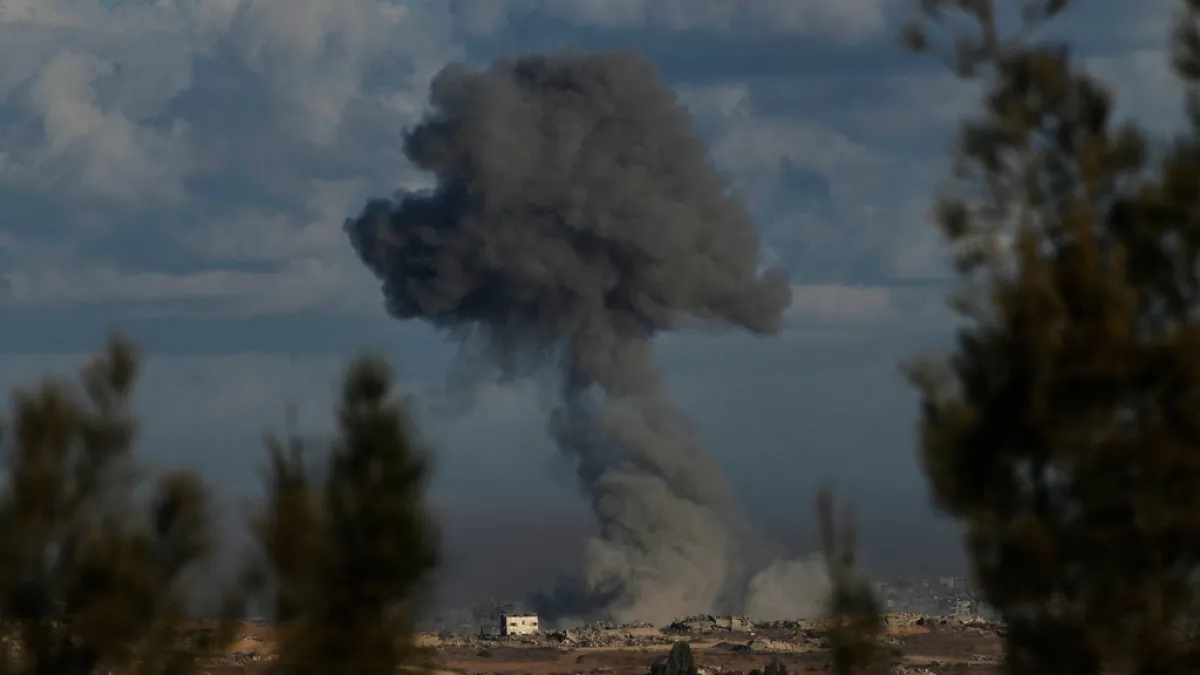
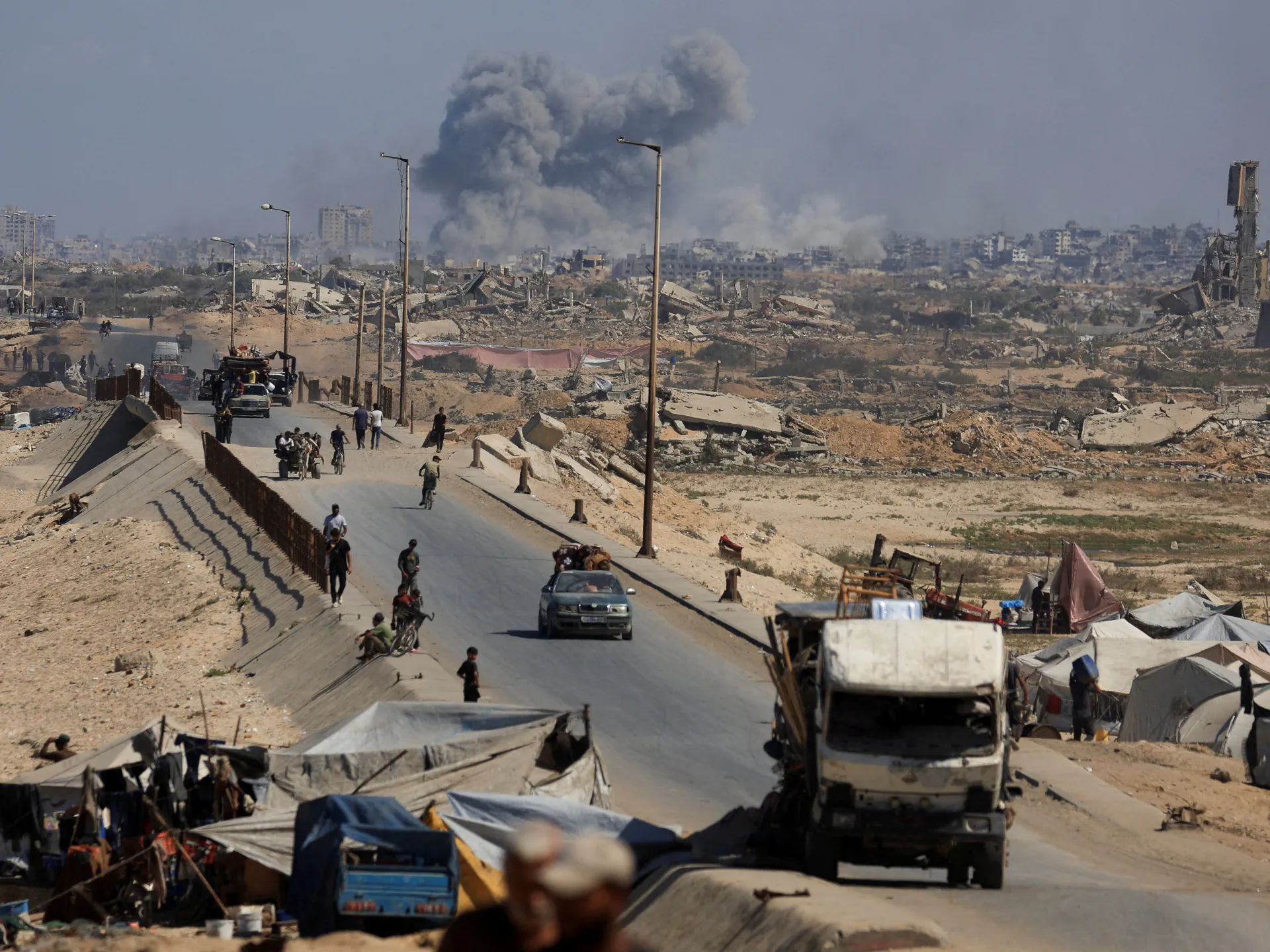
The second anniversary of the war, which was sparked by deadly attacks on Israel that were led by Hamas on October 7, 2023, saw Israel pressing on with its offensive in Gaza, drones and fighter jets strafing the skies, targeting the Sabra and Tal al-Hawa residential areas in Gaza City and the road to nearby Shati camp.

At least 10 Palestinians were killed in Israeli attacks across Gaza on Tuesday, according to the official Palestinian news agency Wafa, adding to the grim toll of more than 66,600 deaths over the entire conflict. At least 104 people have been killed in Gaza by Israeli forces since Friday, the day Trump called on Israel to halt its bombing campaign.

Al Jazeera’s Hind Khoudary said on Tuesday that a boy had been shot in the head in eastern Gaza and that at least six Palestinians were killed in separate attacks across Khan Younis in the south of the Strip.

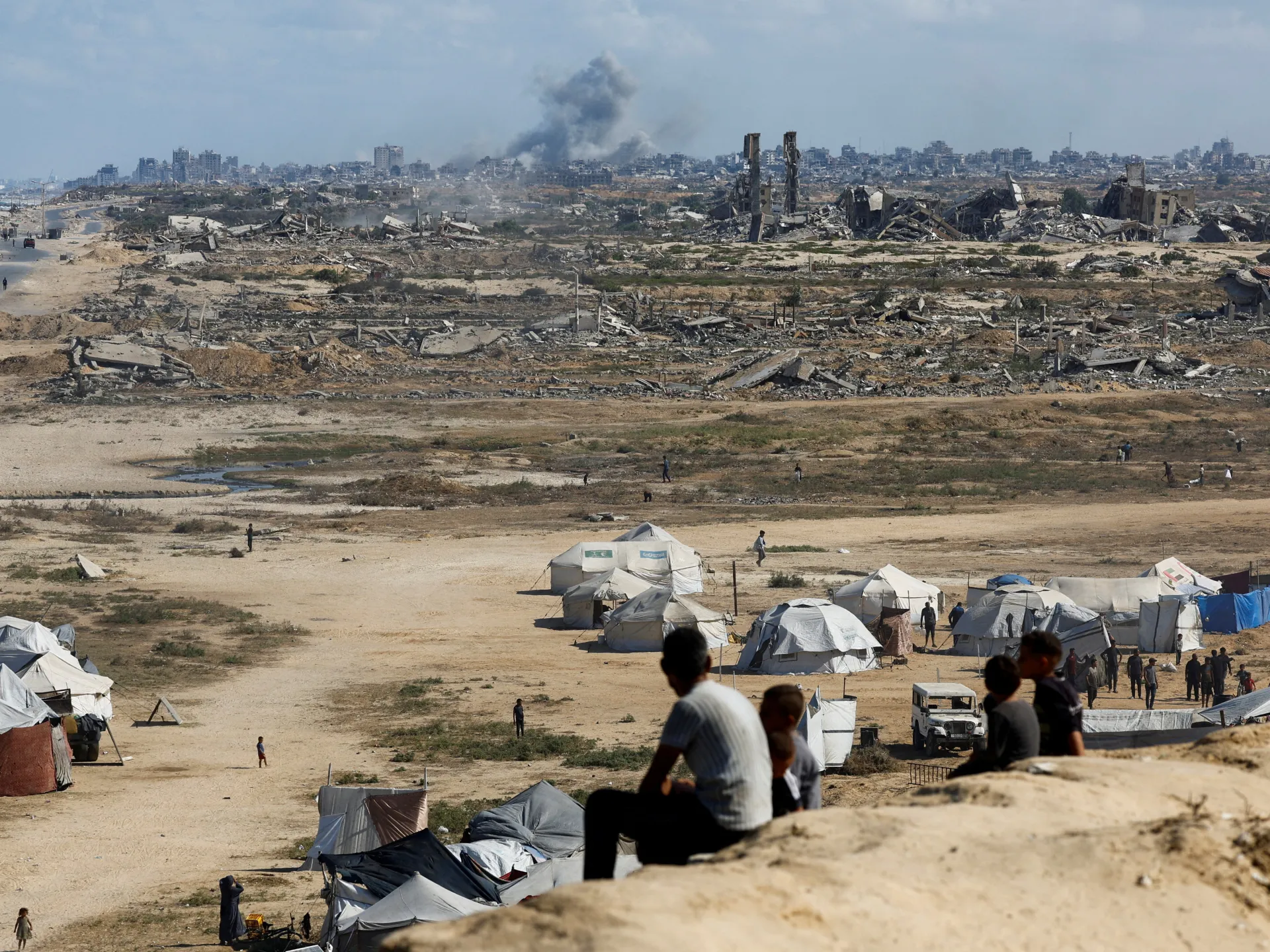
“Everyone’s waiting for a peace deal as the bombs continue to fall,” she said, reporting from az-Zuwayda in central Gaza. “The Israeli forces continue destroying entire residential neighbourhoods and residential areas where Palestinians thought they would go back and rebuild their lives.”

Marking the anniversary, ACLED, a US-based conflict monitor, said Gaza has endured more than 11,110 air and drone strikes and at least 6,250 shelling and artillery attacks throughout the war. Gaza’s dead accounted for 14 percent of total reported deaths from conflicts worldwide over the past two years.

The Gaza Health Ministry said 1,701 medical personnel had been killed in Gaza during the war.

Source link

UNESCO board backs Egypt’s Khaled el-Enany as its next chief | United Nations News

The Egyptologist and former minister of antiquities will be the first Arab to lead the UN’s cultural organisation.

The board of the United Nations Educational, Scientific and Cultural Organization (UNESCO) has nominated Egypt’s Khaled el-Enany, an academic and former minister of tourism and antiquities, as its next head, ahead of the organisation’s general conference next month.

If confirmed, el-Enany, a professor of Egyptology at Cairo’s Helwan University, would become the first Arab director-general of the organisation, which oversees the UN’s handling of cultural heritage, alongside international cooperation efforts in other areas including science and education.

Recommended Stories

list of 4 itemsend of list

The former minister campaigned widely for the role, which was also contested by Firmin Edouard Matoko of the Democratic Republic of Congo, and Gabriela Ramos of Mexico, who withdrew from the race earlier this year.

The decision by the board, which represents 58 of the agency’s 194 member states, is expected to be finalised at a meeting of UNESCO’s general assembly in Uzbekistan next month.

The organisation’s next leader will replace France’s former Minister of Culture Audrey Azoulay who has served in the role since 2017.

Azoulay notably helped lead a high-profile effort to rebuild the ancient Iraqi city of Mosul after it was devastated during fighting between the ISIL (ISIS) armed group and combined US and Iraqi forces.

El-Enany’s nomination comes as the Paris-based UN body continues to face political challenges, including in its work of choosing which cultural heritage sites to help preserve from threats including wars, pollution and climate change.

The organisation is also set to face an eight percent funding cut at the end of 2026, when the United States again formally withdraws its membership, along with its funding.

It will be the second time that the Trump administration has pulled the US out from the UN cultural organisation in protest at its members’ decision to admit the State of Palestine as a member in 2011.

The State of Palestine is also a Permanent Observer State member of the United Nations General Assembly, where more than 80 percent of member states now back its full membership.

Explaining the US decision to withdraw again, US State Department spokesperson Tammy Bruce claimed that allowing Palestine to remain a member of UNESCO had “contributed to the proliferation of anti-Israel rhetoric within the organisation.”

Israel left UNESCO at the end of 2018.

The organisation has been remotely monitoring damage to cultural heritage sites in the Gaza Strip during Israel’s war, and says that it has verified damage to a total of 110 sites since October 7, 2023, including 13 religious sites, 77 buildings of historical or artistic interest, three depositories of movable cultural property, nine monuments, one museum and seven archeological sites.

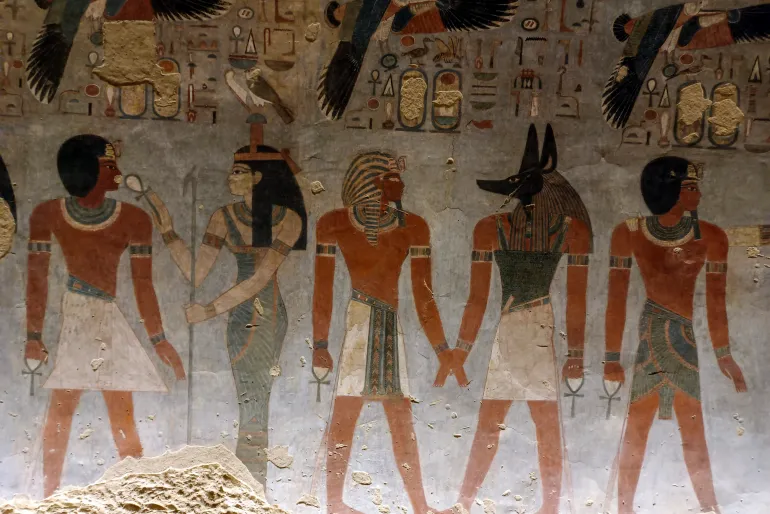
epa12429705 Ancient Pharaonic drawings inside the newly-opened Tomb of Pharaoh Amenhotep III in Luxor, Egypt, 04 October 2025. The tomb, first discovered around 1799, was opened to the public on 04 October following two decades of restoration led by UNESCO. EPA/STRINGER
Ancient Pharaonic drawings inside the newly-opened Tomb of Pharaoh Amenhotep III in Luxor, Egypt, on October 4, 2025 [Stringer/EPA]

El-Enani, 54, worked earlier in his career as a tour guide at ancient Egyptian sites, earned a doctorate in France and became a famed Egyptologist prior to serving in government.

He was minister of antiquities, and later tourism, under Egypt’s President Abdel Fattah el-Sisi from 2016 to 2022.

El-Sisi welcomed the news of el-Enani’s nomination, calling the nomination a ‘’historic achievement that shall be added to Egypt’s diplomatic and cultural record and to the achievements of the Arab and African peoples.”

During his tenure in government, el-Enani oversaw the start of mega-tourism projects including the National Museum of Egyptian Civilisation in Cairo, the Jewish Temple and multiple ancient discoveries that helped revive the country’s battered tourism sector.

He is expected to focus on UNESCO’s cultural programs, and has pledged to continue UNESCO’s work to fight anti-Semitism and religious intolerance according to the Associated Press news agency.

Source link

Day one of Gaza peace talks ends on ‘positive’ note in Egypt | Israel-Palestine conflict News

Sources familiar with the mediated talks between Israel and Hamas say that progress was made on Monday, with negotiations to continue.

The first day of resumed indirect talks between Israel and Hamas in Egypt ended on a positive note, amid hopes of a potential deal to implement US President Donald Trump’s 20-point plan to end the war on Gaza, multiple sources told Al Jazeera and other media outlets.

Negotiators are set to return for more discussions on Tuesday.

Recommended Stories

list of 4 itemsend of list

Sources told Al Jazeera Arabic that the meeting in the Red Sea resort city of Sharm el-Sheikh on Monday was “positive” and that a roadmap was drawn up for how the current round of talks would continue.

The Hamas delegation told mediators that Israel’s continued bombing of Gaza poses a challenge to negotiations on the release of captives, Al Jazeera Arabic reported.

The Hamas delegation included Hamas leaders Khalil al-Hayya and Zaher Jabarin, two negotiators who survived an Israeli assassination attempt in central Doha that killed five people last month.

Talks on day one covered the proposed exchange of prisoners and captives, a ceasefire, and humanitarian aid entering Gaza, according to Egypt’s state-linked Al-Qahera News.

White House Press Secretary Karoline Leavitt also said Trump was pushing for an early exchange of Israeli captives and Palestinian prisoners, in a bid to build “momentum” to implement other parts of his plan to end the Gaza war.

“The technical teams are discussing that as we speak, to ensure that the environment is perfect to release those hostages,” Leavitt said, adding that teams were “going over the list of both the Israeli hostages and also the political prisoners who will be released.”

Trump, speaking to reporters from the Oval Office on Monday afternoon, said that “we have a really good chance of making a deal”, while also noting that he still has his own “red lines”.

“But I think we’re doing very well. And I think Hamas has been agreeing to things that are very important”, Trump added.

Al Jazeera’s Rosiland Jordan reporting from Washington, DC, said that Trump had not “not given any details of how he thinks the discussions are going beyond his general positive assessment.”

“The US President also was very complimentary of the joint Arab-Turkish support to keep Hamas at the bargaining table, he was complimentary of the Israeli people and of course, he was complimentary about his own special envoy, Steve Witkoff, who was leading the US delegation in these negotiations,” said Jordan.

Trump’s son-in-law Jared Kushner, a real estate developer, is also reportedly part of the US delegation.

Egypt’s Al-Qahera News, meanwhile, confirmed that the talks were expected to continue on Tuesday, which marks two years since the Hamas attack on Israel that killed 1,139 people and saw about 200 people taken captive.

Since then, Israeli forces have killed at least 67,160 Palestinians and wounded 169,679 in Gaza, in a war that has been described as genocidal by a United Nations inquiry, leading genocide scholars and leading human rights groups — including Israeli non-profits.

And even as the talks were held on Monday, Israeli forces killed at least 10 Palestinians in attacks across Gaza, including three who were seeking humanitarian aid, according to Al Jazeera sources.

UN Secretary-General Antonio Guterres shared a social media post late on Monday, New York time, acknowledging the two year anniversary of Hamas’s “abhorrent large-scale terror attack on Israel”, on October 7, 2023.

Guterres also said that the “recent proposal” put forward by Trump “presents an opportunity that must be seized to bring this tragic conflict to an end.”

“A permanent ceasefire and a credible political process are essential to prevent further bloodshed and pave the way for peace,” the UN chief wrote.

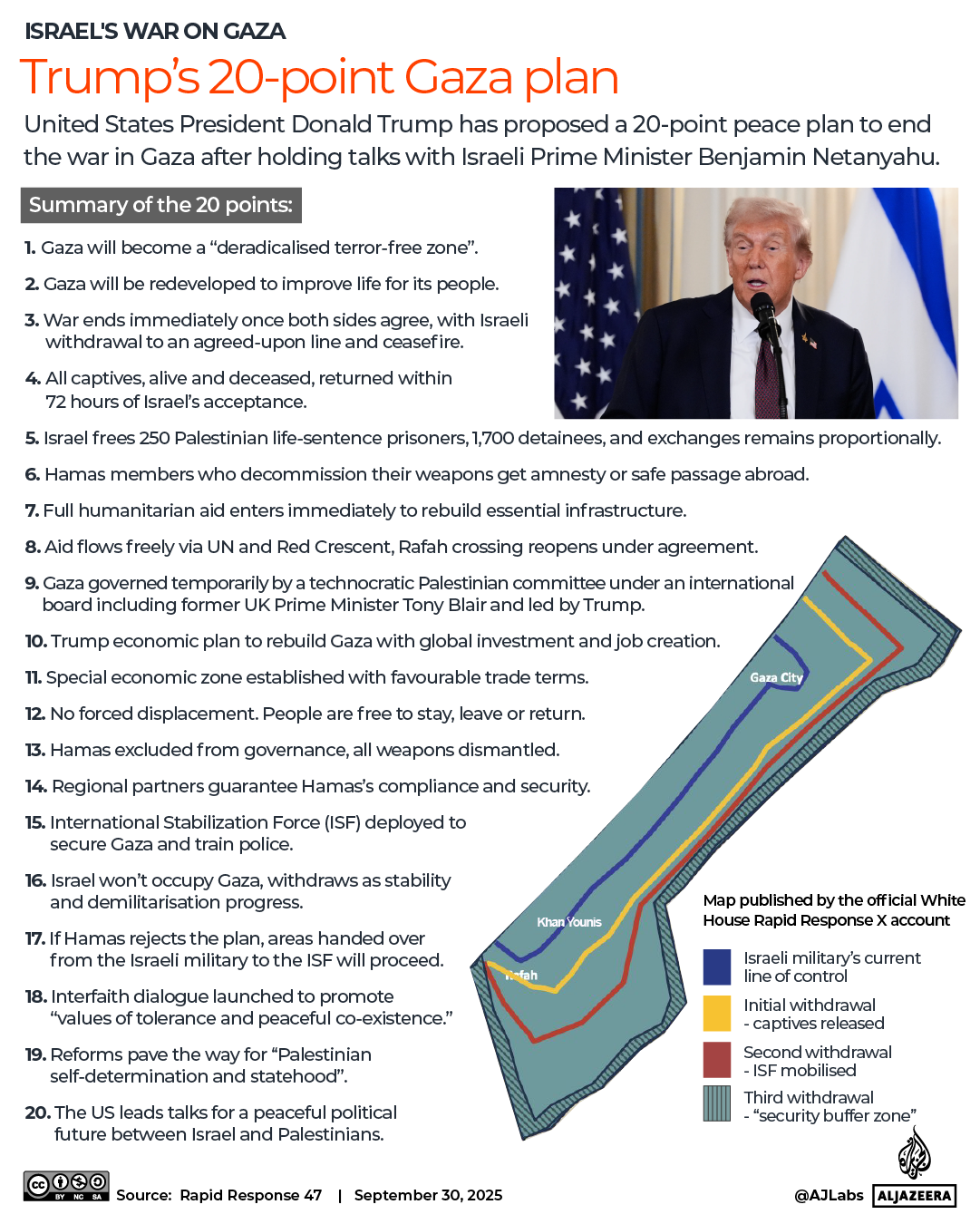
INTERACTIVE Trump 20-point Gaza plan-1759216486

Source link

Potential hurdles litter road as Israel and Hamas head to Gaza peace talks | Israel-Palestine conflict News

Delegations from Hamas, Israel and the United States are due to convene in Egypt for talks on US President Donald Trump’s proposal to end the war in Gaza.

Indirect negotiations between Israel and Hamas over the 20-point plan are due to begin in Egypt’s Red Sea resort of Sharm el-Sheikh on Monday.

The talks, which come on the eve of the second anniversary of the Hamas attacks on Israel that led to the war, have raised hopes that the devastating conflict, which has killed tens of thousands in Gaza, could soon end. But at the same time, there are plenty of potential obstacles to sealing a deal.

Trump has insisted that both sides are on board with his peace framework and has called for the negotiations to “move fast” in reaching an agreement.

Despite the failure of several initiatives to try to end the conflict, including two brief ceasefires that collapsed, the bombardment of Gaza, which has now killed at least 67,160 people, wounded 169,679, and pushed the enclave’s two million or so people towards starvation, Trump said “the first phase should be completed this week”.

In a post on his social media platform Truth Social, Trump said there had been “very positive discussions with Hamas” and other governments over the weekend “to release the Hostages, end the War in Gaza but, more importantly, finally have long sought peace in the Middle East”.

“These talks have been very successful, and proceeding rapidly,” he said. “I am asking everyone to move fast … time is of the essence, or massive bloodshed will follow.”

Israeli Prime Minister Benjamin Netanyahu also appeared to buoy expectations when he said the release of the 48 Israeli captives held by Hamas – 20 of whom are believed to be alive – could be announced this week.

Under the plan, Hamas would release the captives in exchange for the release of Palestinian prisoners held in Israeli jails.

Hamas has also agreed to give up power in Gaza, while Israel has agreed to withdraw its forces from the enclave.

Lacking details

However, numerous issues remain under the proposal, which lacks details.

There is no timescale given for the disarmament of Hamas, while a vague reference to the establishment of a Palestinian state has put many on both sides of the deal on edge.

Meanwhile, with the talks set to commence, Israeli forces have continued their assault in Gaza.

Seven people were killed on Monday morning, including three who were seeking humanitarian aid, according to Al Jazeera sources.

Nour Odeh, reporting for Al Jazeera from the Jordanian capital, Amman, said that, for all Trump’s comments talking up the prospects of the plan, significant obstacles remained.

“There are a lot of details that could potentially derail” the negotiations, she said.

Potential sticking points include Israel’s insistence that it wants all captives released at the same time within 72 hours.

It also wants to retain freedom to pursue Hamas, despite the withdrawal agreement, and insists that its withdrawal lines and timelines have already been set.

“All of these things need to undergo delicate talks,” she said.

Perhaps reflecting such doubts, the Israeli media reported on Monday that the negotiation process would now begin with Hamas representatives speaking with mediators, with Israeli and US representatives not participating until Wednesday.

Trump has demanded that Israel stop bombing Gaza so that the talks can play out, but strikes have continued across the territory.

Israeli government spokesperson Shosh Bedrosian told reporters on Sunday that the military would continue to act for “defensive purposes” and that there was no ceasefire in place.

Speaking on ABC’s This Week, US Secretary of State Marco Rubio described two phases that would occur once Hamas accepted Trump’s framework.

First, the Israeli captives would be released by Hamas, and then Israel would pull back in Gaza to the “yellow line”, where its military was positioned in August.

Rubio said Hamas should release captives as soon as they were ready, and that Israel’s bombardment needed to end so they could be released.

Hamas’s future a sticking point

The question of Hamas’s future also looms as a major potential obstacle.

Trump’s plan calls for Gaza’s demilitarisation and rules out any future governing role for Hamas, though it allows its members to remain if they renounce violence and disarm.

Hamas has responded positively to the plan, saying it was ready to negotiate the captives’ release, and form part of a “Palestinian national framework” that would shape Gaza’s future.

However, the prospect of Hamas remaining in any form has enraged Netanyahu’s far-right coalition allies. They have threatened to topple the government over the issue.

“Alongside the important goal in and of itself of releasing the hostages, the central goal of the war, which stems from the October 7 massacre carried out by Hamas monsters, is that the terrorist organisation Hamas cannot be allowed to remain in existence,” National Security Minister Itamar Ben-Gvir said in a social media post.

He said he and his party, Otzma Yehudit, had told Netanyahu that they would quit the government if Hamas continued to exist after the captives’ release.

“We will not be part of a national defeat that will bring eternal shame to the world, and that will become a ticking time bomb for the next massacre,” he said.

However, Yair Lapid, leader of the opposition, on Sunday offered to lend Netanyahu’s government support to prevent a collapse at the hands of his “extremist and irresponsible partners” while the plan is negotiated.

Source link

Israel strikes Gaza ahead of Egypt talks on Trump’s peace proposal

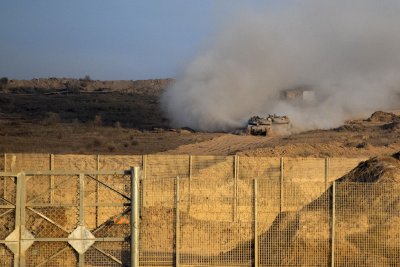
1 of 3 | Two Israeli tanks inside the Gaza Strip approach the border fence as seen from inside southern Israel on Sunday. Israel continues fighting inside the Gaza Strip as Israel hopes to see all its hostages returned “in the coming days”, under the first phase of U.S. President Trump’s plan to end the war. Photo by Jim Hollander/UPI | License Photo

Oct. 5 (UPI) — Israel continued its airstrikes on Gaza on Sunday, even as negotiators headed to Egypt for talks on a U.S.-proposed peace plan that calls for Hamas to release all hostages and seeks new governance for the Palestinian territory.

The Hamas-run Gaza Health Ministry said Sunday that 63 Palestinians were killed and another 153 wounded in bombings carried out by Israeli forces in the last 24 hours, reported Haaretz. The strikes come despite Israeli officials agreeing to ease their offensive on Gaza City and President Donald Trump calling for the bombings to halt as his peace plan to end the two-year conflict is put to the test.

Israeli officials believe there are still 20 living hostages being kept in Gaza following the Oct. 7, 2023, attacks by Hamas militants that triggered Israel’s military campaign in the Palestinian enclave, which has drawn growing international condemnation.

Negotiations will begin Monday in Sharm el-Sheikh, focusing on the first phase of the plan that calls for Hamas to release the remaining hostages and for Israel to withdraw its troops in Gaza to a line agreed upon with Hamas.

U.S. Secretary of State Marco Rubio told ABC News Sunday that “this is the closest we’ve come to getting all of the hostages released.”

“But there’s a lot of pitfalls along the way,” he added.

The initial talks will be “technical” and will focus on working out specific details of the negotiation’s first phase, Israeli government spokesperson Shosh Bedrosian said in a video posted to X.

But she added that Israeli Prime Minister Benjamin Netanyahu has said the talks will last for just a few days and he will not tolerate Hamas attempting to delay the release of all hostages past the 72-hour deadline.

“The prime minister is in regular contact with President Trump, who stressed Hamas must move quickly ‘or else all bets will be off,'” she said.

The Palestinian militant group signaled Friday that it was ready to release all Israeli hostages living and dead, but said it needed more than 72 hours to arrange their release.

Hamas is eager to end the conflict and begin a prisoner exchange with Israel, a senior Hamas official told the Saudi newspaper Asharq Al-Awsat. The official added that Israel’s occupation of Gaza must not obstruct the implementation of the peace plan.

President Donald Trump said in a social media post Sunday that there had been positive discussions with Hamas and other countries on ending the war.

“I am told that the first phase should be completed this week, and I am asking everyone to MOVE FAST,” he said.

Source link

Israel strikes Gaza, killing 24 before Egypt talks on Trump ceasefire plan | Israel-Palestine conflict News

Israel and Hamas are preparing for indirect negotiations in Egypt, amid hopes for a possible agreement on ending the Gaza war based on Donald Trump’s 20-point ceasefire plan.

Palestinian group Hamas said on Sunday that its delegation, headed by Khalil al-Hayya, had arrived in Sharm el-Sheikh and would begin the negotiations on Monday “on the mechanisms for a ceasefire, the withdrawal of [Israeli] occupation forces and a prisoner exchange”.

Recommended Stories

list of 3 itemsend of list

The Israeli delegation, led by top negotiator Ron Dermer, will leave on Monday for the talks, the office of Prime Minister Benjamin Netanyahu said. Hopes for a possible ceasefire in Gaza grew after Netanyahu said on Friday that he was hopeful a deal to release all the remaining captives could be announced this week.

United States President Trump said the talks were advancing quickly. “These talks have been very successful, and proceeding rapidly. The technical teams will again meet Monday, in Egypt, to work through and clarify the final details,” he said in a social media post on Sunday. “I am told that the first phase should be completed this week, and I am asking everyone to MOVE FAST.”

Despite a call from Trump for Israel to pause its Gaza offensive, the Israeli army has continued its bombing campaign. At least 24 Palestinians were killed by Israeli troops on Sunday, sources told Al Jazeera Arabic. Among the victims were four asylum seekers who were shot near an aid distribution centre north of Rafah, the Nasser Medical Complex said.

Al Jazeera’s Hani Mahmoud, reporting from the town of az-Zuwayda in central Gaza, said attacks were continuing both in the areas where people have been displaced to and in Gaza City, where the majority of Israeli military assaults and the ground offensive have taken place in recent weeks.

“The Palestinians were hoping for a good night’s sleep, but that didn’t happen,” Mahmoud said.

Gaza’s Government Media Office said more than 2,700 families, comprising more than 8,500 people, have been wiped off the civil registry in two years of conflict. At least 1,015 children under one year old have been killed, along with 1,670 medical staff, 254 journalists, and 140 civil defence rescue workers.

US Secretary of State Marco Rubio said on Sunday that the war in Gaza had not yet ended despite the situation being “the closest we’ve come to getting all of the hostages released”.

Rubio urged Israel to stop bombing Gaza ahead of the discussions in Egypt. “You can’t release hostages in the middle of strikes, so the strikes will have to stop,” he told US broadcaster CBS. “There can’t be a war going on in the middle of it.”

According to Trump’s plan, Hamas would release the remaining captives and Israel would pull back troops in Gaza to the “yellow line”, where it was in August.

Despite the terms of the deal clearly stipulating Israel’s withdrawal, Israeli media quoted Defence Minister Israel Katz, saying that Israel would remain in control of the Strip. “Hamas will be disarmed, the Gaza Strip will be demilitarised, and the [Israeli army] will remain in controlling areas to protect the communities,” he said.

Arab backing for Hamas in negotiations

The foreign ministers of Egypt, Jordan, Indonesia, Pakistan, Qatar, Saudi Arabia, Turkiye and the United Arab Emirates issued a joint statement on Sunday, in which they welcomed the steps taken by Hamas on Trump’s Gaza plan, including the release of all Israeli captives and the immediate launch of negotiations on implementation mechanisms.

“The Foreign Ministers also welcomed President Trump’s call on Israel to immediately stop the bombing and to begin implementation of the exchange agreement, and they expressed appreciation for his commitment to establishing peace in the region,” the joint statement said.

They also welcomed Hamas for stating “its readiness to hand over the administration of Gaza to a transitional Palestinian Administrative Committee of independent technocrats”.

Izzat al-Risheq, a senior member of Hamas’s political bureau, said the statement marked an “important support” for efforts to end the war. He also welcomed the “clear backing for the Palestinian position in the negotiations, [which] strengthens the chances of reaching a lasting ceasefire agreement”.

“We look forward to further Arab and Islamic support in order to stop the aggression and genocide being inflicted on our people in the Gaza Strip, leading to an end of the occupation and the realisation of our Palestinian people’s aspirations to establish their independent state with Jerusalem as its capital,” al-Risheq said.

Trump has dispatched two envoys to Egypt, according to the White House, sending his son-in-law Jared Kushner and his main Middle East negotiator, Steve Witkoff.

The US president has told Hamas that once it agrees to Israel’s initial military withdrawal line in Gaza, an immediate ceasefire would be triggered.

The talks are being held after Hamas agreed to release the Israeli captives and accept some other terms in Trump’s Gaza plan, but questions surround vexing issues, such as Israel’s withdrawal from the Strip and Hamas’s disarmament.

Asked by reporters whether there was any flexibility on his 20-point Gaza plan, Trump suggested on Sunday that some changes would still be possible. “We don’t need flexibility because everybody has pretty much agreed to it. But there’ll always be some changes,” he said.

Source link

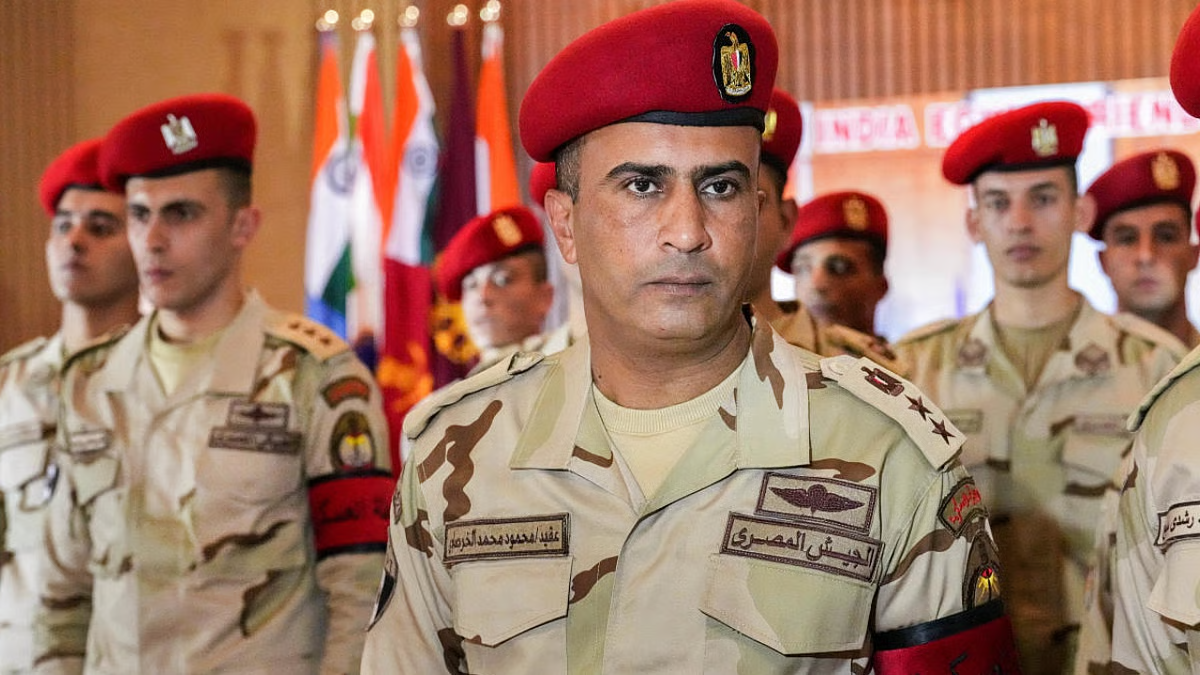
Monday 6 October Armed Forces Day in Egypt

During the Six-day War with Israel in June 1967, Egypt had lost control of the Sinai Peninsula.

In an attempt to regain the territory, Egyptian President Anwar Sadat carried out a surprise attack on 6 October 1973. The attack was supported by the Syrians and met with initial success when more than 80,000 Egyptian troops breached the fortifications set up by the Israelis and took control of the Sinai territory. After two days, the Egyptians were forced to retreat when the Israeli army counterattacked and surrounded the Egyptian forces.

The war ended in a cease-fire brokered by the United States. The assault proved unsuccessful in liberating the Sinai Peninsula, but the conflict directly led to talks at Camp David organised by US President Jimmy Carter. These talks resulted in the Israeli-Egyptian peace treaty of 1979 which eventually saw the return of the Sinai Peninsula to Egypt.

The holiday is marked by large military parades and fireworks. It was during one of the parades on Armed Forces Day in 1981, when President Anwar Sadat was assassinated by opponents of the peace with Israel.

Iran says nuclear cooperation with IAEA ‘no longer relevant’ | Politics News

Iranian FM warns that Europe has ‘eliminated justification for talks’ with UN nuclear watchdog after triggering snapback sanctions.

Iran’s foreign minister has declared that cooperation with the United Nations nuclear watchdog is “no longer relevant” after Western countries reinstated international sanctions on the country.

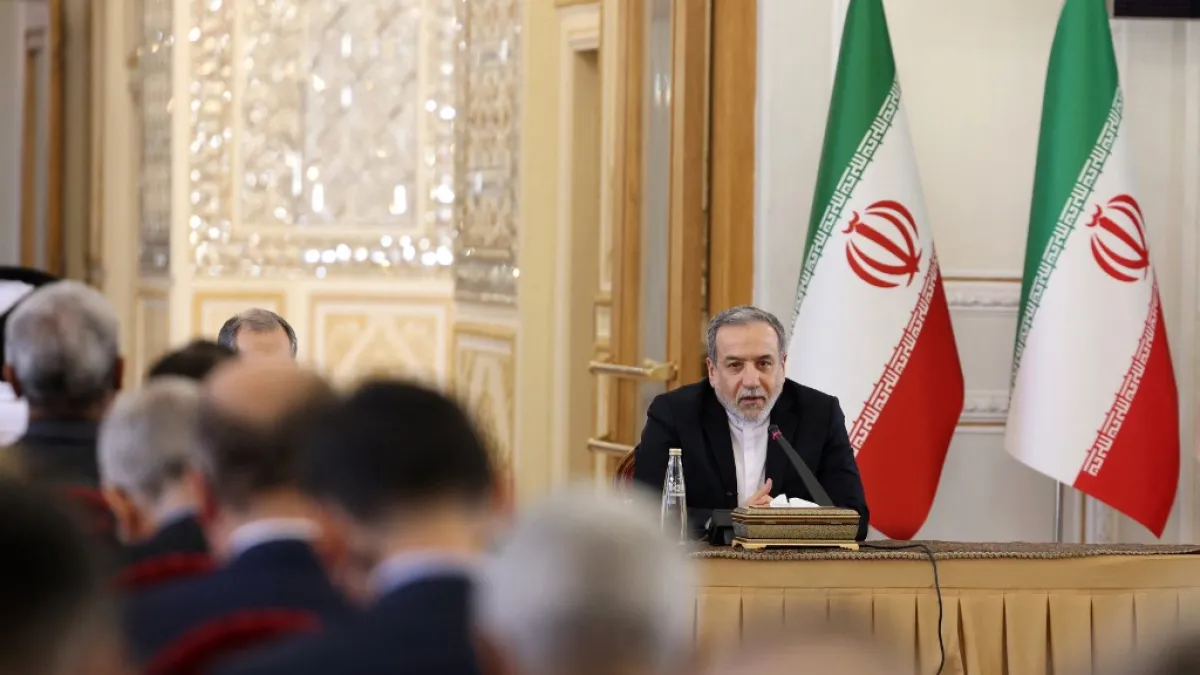
“The Cairo agreement is no longer relevant for our cooperation with the IAEA,” Foreign Minister Abbas Araghchi said on Sunday, referring to a deal signed last month with the International Atomic Energy Agency (IAEA).

Recommended Stories

list of 3 itemsend of list

That agreement had laid out a framework for renewed inspections and monitoring after Tehran suspended cooperation following Israeli and United States attacks on its nuclear facilities in June.

However, the deal lost significance after Britain, France and Germany – all signatories to the 2015 nuclear accord – triggered the return of UN sanctions, accusing Iran of breaching its commitments, claims which Tehran has rejected.

“The three European countries thought they had leverage in their hands, threatening to implement a snapback,” Araghchi told foreign diplomats in Tehran. “Now they have used this lever and seen the results. The three European countries have definitely diminished their role and almost eliminated the justification for negotiations with them.”

He added that the European trio “will have a much smaller role than in the past” in any future talks over Iran’s nuclear programme.

Double standards

Tehran has accused the IAEA of double standards, saying the agency failed to condemn Israeli strikes on Iranian nuclear sites despite its obligations under the Nuclear Non-Proliferation Treaty (NPT).

Western states, led by the US and supported by Israel, have long accused Iran of seeking nuclear weapons – allegations Tehran strongly denies. Iran insists its programme is purely civilian and that it retains the right to enrich uranium under the NPT.

Some Iranian lawmakers have suggested withdrawing from the NPT altogether, though President Masoud Pezeshkian has maintained that Iran will remain committed to its treaty obligations.

Araghchi said Tehran’s “decision regarding cooperation with the agency will be announced”, without elaborating, but noted that “there is still room for diplomacy”.

Talks between Iran and the US that began in April to revive a broader nuclear agreement collapsed after Israeli attacks in June targeted Iranian nuclear, military and residential sites.

Tehran has since accused Washington of sabotaging diplomacy and demanded guarantees and recognition of its rights before any potential resumption of negotiations.

Iran has repeatedly denied seeking a nuclear weapon, while Israel is widely believed to possess an undeclared nuclear arsenal of dozens of atomic bombs.

Source link

Pakistan FM says Trump’s plan to end Israel’s Gaza war was altered | Benjamin Netanyahu News

The United States’s 20-point plan to end Israel’s war in Gaza is not the same as the draft proposed by a group of Arab and Muslim countries, Pakistan’s Foreign Minister Ishaq Dar has said.

“I made it clear that the 20 points that President (Donald) Trump made public are not ours. Changes were made to our draft. I have the record,” Dar said, speaking to politicians on Friday, according to remarks carried by Dawn news.

Recommended Stories

list of 3 itemsend of list

His comments come after the White House on Monday released a plan with fanfare that would include a ceasefire, the return of all captives, Hamas disarmament, and a new political architecture for post-war Gaza – one that would exclude the Palestinian group.

Its release came a few minutes before Trump and Israeli Prime Minister Benjamin Netanyahu stood next to each other at the White House to announce the plan. There, Trump told Hamas it had 72 hours to accept the proposal. On Tuesday, he gave the Palestinian group three to four days to agree to the plan.

Meanwhile, Hamas political bureau member Mohammad Nazzal told Al Jazeera on Thursday that the group was discussing Trump’s plan and would soon announce its position on the proposal. “We are not dealing [with the plan] under the logic that time is a sword pointed at our neck,” Nazzal said.

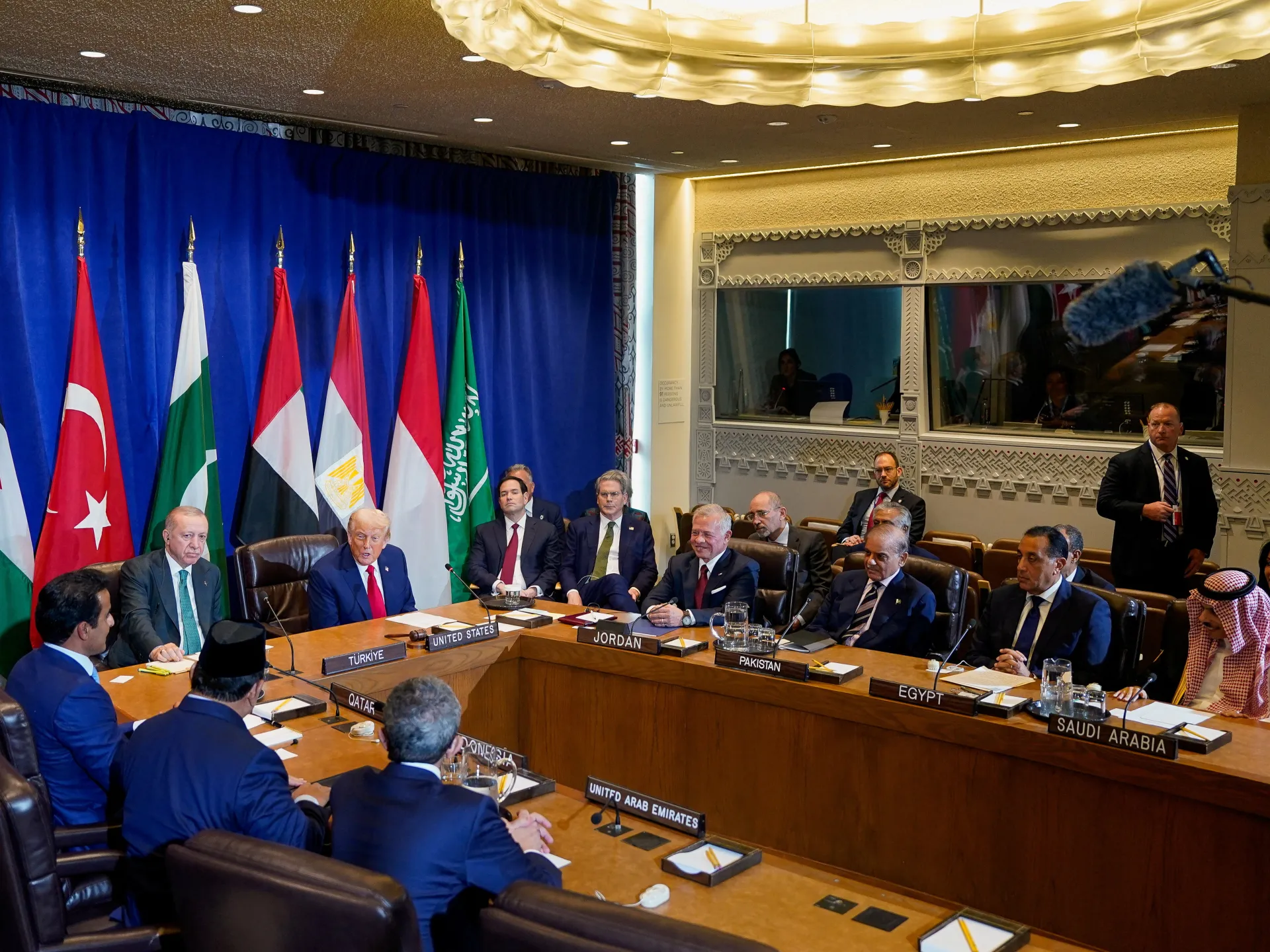
The published document was presented as a joint effort between Israel, the US and a number of Arab and Muslim countries. Last week, several leaders from the Arab and Muslim world discussed the plan at a meeting on the sidelines of the United Nations General Assembly in New York.

But while there are no official records of what was discussed at that mini-summit, Axios reported that the proposal announced by the American and Israeli leaders earlier this week contained “significant changes”, requested by Netanyahu, to the draft that had been agreed on by the Arab leaders and Trump.

The amendments were made during a six-hour meeting between Trump’s son-in-law, Jared Kushner, US Special Envoy Steve Witkoff and Netanyahu, the report said. The revised version ties Israel’s withdrawal to Hamas’s disarmament and allows Israel – after a withdrawal in stages – to remain within a buffer zone inside the enclave until there are no risks of any “terror threat”, it added.

A group of eight Arab and Muslim countries, including Pakistan, Qatar, Turkiye and Saudi Arabia, welcomed Trump’s announcement in a joint statement.

Qatar has said that it agrees with the aims of the plan, and seeks further discussions on its details.

“If we speak of the main objectives, there are objectives that it [the US plan] achieves, such as ending the war, and there are things that need clarification, which certainly need discussions and negotiations,” Qatar’s Prime Minister Sheikh Mohammed bin Abdulrahman bin Jassim Al Thani told Al Jazeera.

Egypt’s Foreign Minister Badr Abdelatty also said that more talks were needed. According to the US proposal, an international body chaired by Trump would have oversight, while a Palestinian technocratic committee would handle civilian governance until the Palestinian Authority reforms itself. To take care of security, according to the proposal, a stabilisation force would be deployed.

“There are a lot of holes that need to be filled; we need more discussions on how to implement it, especially on two important issues – governance and security arrangements,” Abdelatty said on Thursday.

Experts pointed out that there are sticking points. There are questions on whether Hamas will agree to disarm since it has repeatedly said it would not, as the main face of Palestinian armed resistance.

The current proposal also nods vaguely at how reforms may open a pathway to Palestinian statehood, which is not recognised as a right but as the “aspiration of the Palestinian people”.

The plan does not mention the forced displacement of Palestinians from Gaza – a significant shift from Trump’s earlier lambasted position when he suggested the relocation of the population outside the enclave to turn it into the “Riviera of the Middle East”, which was heavily criticised as ethnic cleansing.

It also ruled out the occupation of Gaza and the annexation of the occupied West Bank – actions that Netanya’s far-right coalition members are pushing for.

Should Hamas refuse the deal, Trump ominously told Netanyahu, “You will have our full backing to do what you have to do.”

Source link

Egypt says it is seeking Hamas approval for Trump plan to end Gaza war | Gaza News

Egypt’s foreign minister says his country is working with Qatar and Turkiye to convince Hamas to accept United States President Donald Trump’s proposal to end Israel’s nearly two-year war on Gaza, and warned that the conflict would escalate if the Palestinian group refused.

Speaking at the French Institute of International Relations in Paris on Thursday, Badr Abdelatty said it was clear that Hamas had to disarm and that Israel should not be given an excuse to carry on with its assault on Gaza.

Recommended Stories

list of 3 itemsend of list

“Let’s not give any excuse for one party to use Hamas as a pretext for this mad daily killings of civilians. What’s happening is far beyond the seventh of October,” he said, referring to the Palestinian group’s 2023 attack on Israel, in which 1,129 people were killed, according to Israeli tallies.

The Palestinian Health Ministry says Israel’s offensive on Gaza has killed more than 66,000 people, mostly women and children, but experts believe the actual death toll could be up to three times higher.

“It is beyond revenge. This is ethnic cleansing and genocide in motion. So enough is enough,” Abdelatty said.

Earlier this week, the White House unveiled a 20-point document that called for an immediate ceasefire, an exchange of captives held by Hamas for Palestinian political prisoners held by Israel, a staged Israeli withdrawal from Gaza, Hamas disarmament and a transitional government led by an international body.

On Tuesday, Trump gave Hamas three to four days to agree to the plan.

Palestinians long for the war to end, but many believe the plan heavily favours Israel, and a Hamas official told The Associated Press news agency that some elements were unacceptable, without elaborating.

In past negotiations, Hamas has insisted on a full Israeli withdrawal from the famine-struck enclave and said it was seeking a permanent ceasefire, with guarantees that displaced families can return to their homes, particularly in the north of Gaza, where Israeli forces are intensifying attacks.

Many ‘holes that need to be filled’

Qatar and Egypt, two key mediators, said Trump’s plan requires more negotiations on certain elements.

Abdelatty said Cairo was coordinating with Qatar and Turkiye to convince Hamas to respond positively to the plan, but he remained very cautious.

“If Hamas refuse, you know, then it would be very difficult. And of course, we will have more escalation. So that’s why we are exerting our intensive efforts in order to make this plan applicable and to get the approval of Hamas,” he said.

Abdelatty said while he was broadly supportive of Trump’s proposal for Gaza, more talks were needed on it.

“There are a lot of holes that need to be filled; we need more discussions on how to implement it, especially on two important issues – governance and security arrangements,” he said. “We are supportive of the Trump plan and the vision to end war and need to move forward.”

When asked whether he feared the Trump plan could lead to the forced displacement of Palestinians, he said Egypt would not accept that.

“Displacement will not happen, it will not happen because displacement means the end of the Palestinian cause,” he said. “We will not allow this to happen under any circumstances.”

Meanwhile, the White House said Trump expects Hamas to accept his Gaza proposal, stressing that the US president could impose consequences if the group does not do so.

Since Israel’s war on Gaza began, the US has often pushed Israel-backed proposals unlikely to garner Palestinian support and then blamed Hamas as the primary obstacle to ending the conflict.

“It’s a red line that the president of the United States is going to have to draw, and I’m confident that he will,” White House Press Secretary Karoline Leavitt said in an interview with Fox News.

For her part, Kaja Kallas, the European Union’s foreign policy chief, called on Hamas to accept the proposal.

“We urge Hamas to follow the plan, release all remaining hostages and lay down its arms.  The EU calls on those who have influence to bear to pass these messages to Hamas,” a statement read.

Meanwhile, President Vladimir Putin said Russia was willing to support the plan, but only if it leads to a two-state solution.

Jean-Noel Barrot, France’s foreign minister, said Hamas “has lost”.

According to the plan, Hamas members who commit to peaceful co-existence and to relinquish their weapons will be given amnesty, while those who wish to leave Gaza will be provided safe passage to receiving countries.

“Hamas bears a very heavy responsibility for the catastrophe experienced by the Palestinians,” Barrot told the AFP news agency. “It must accept its own surrender.”

Experts say the move echoes past Western attempts to reshape the Middle East without local input.

“With this agreement, it’s clear that what they’re presenting is a formula that they tried to use before in Iraq, and I think they utterly failed,” political analyst Xavier Abu Eid told Al Jazeera.

Abu Eid noted that the involvement of figures such as Tony Blair, who joined the US war in Iraq while serving as British prime minister in 2003, in Trump’s proposal is concerning for many in the region.

“The fact that they’re trying to bring in a group of foreigners led by someone with a very dark history in our region, like Tony Blair, is not something that would make people very enthusiastic,” he said.

Source link

Gorgeous destination 5 hours from UK is 29C in October with bargain luxury hotels

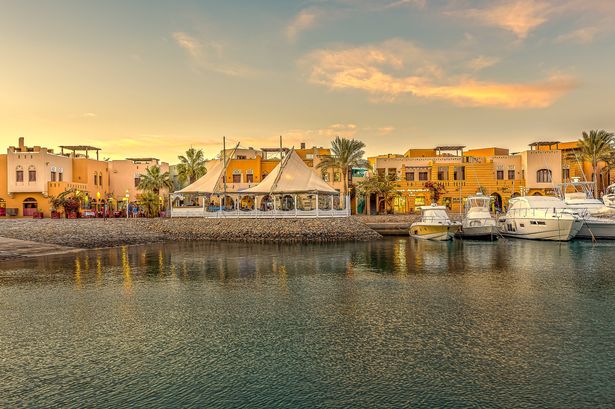
El Gouna, just 30 minutes north of Hurghada, Egypt, is a luxurious self-contained resort town offering a plethora of activities and a variety of opulent hotels catering to all sorts of holidays, from honeymoons to family trips and golfing breaks.
The Red Sea, renowned for its winter sunshine destinations such as Sharm El Sheikh and Hurghada in Egypt, remains a top choice for those craving winter warmth.

Boasting glorious weather throughout the year and reasonably short flight times, it’s a perfect option for UK holidaymakers. Moreover, the abundance of package deals makes organising a spontaneous escape incredibly straightforward.

However, if you’re seeking something rather more distinctive, whilst still accessible, there’s a destination that’s well-known among Egyptians and kitesurfing enthusiasts, but remains largely undiscovered by many Brits.

READ MORE: UK’s prettiest train station once ‘left for dead’ – it’s like going back in time

El Gouna, merely 30 minutes north of Hurghada, Egypt, is an upmarket self-contained resort town providing countless activities and an array of lavish hotels suitable for all types of breaks, from romantic getaways to family holidays and golfing retreats, reports MyLondon.

Melanie Kaidan, senior lifestyle reporter at the Express, experienced El Gouna first-hand. She said: “During my 5-night holiday, I was able to sample only a few of the many excursions and comforts this town has to offer, starting with a thrilling desert quad bike safari, where I visited a Bedouin encampment at sunset.”

She added: “Staying at the Steigenberger Golf Resort gave me an outlook into the more mature, relaxed side of the resort, where crowds vary from families with young children to seniors golfing on the hotel’s own 18-hole championship golf course located on the other side of the lagoon.”

For those craving a more energetic break, the celebrated Mangroovy Beach draws kitesurfers from far and wide, whilst the stylish Casa Cook Hotel sits conveniently beside a kite centre which Melanie described as ideal for visitors “who like to get up and go”.

El Gouna offers far more than its stunning golden sandy shores – it boasts magnificent coral reefs and shipwrecks, including the celebrated Sha’ab El Erg and Careless Reef. These aquatic treasures await discovery through snorkelling and diving excursions.

Navigating the resort proves effortless, with journeys lasting no longer than 20 minutes. Melanie recommended: “For those seeking a truly local experience, tuk-tuks are a whimsical way to explore the town that makes spontaneous stops much easier and fun.”

READ MORE: ‘I escaped the rainy UK to tax-free Qatar – both life and the weather is much better’

She also highlighted the vibrant evening entertainment. Melanie explained: “When it comes to dining and nightlife, Abu Tig Marina and the Downtown area are the places to be, with local shops and restaurants offering something for everyone. At dawn, these areas come to life, becoming a hotspot for visitors looking to try different cuisines, from the top-rated African eatery Bongoyo, to Camino, a lively Latin restaurant.”

Another top-rated activity in El Gouna is crafting your own fragrance. Melanie said: “I’d strongly recommend anyone going to El Gouna create their own scent to remember their holiday at Norshek, a little store selling hair and body products made with natural oils. Here, you can customise your body butter, hand wash, perfume or hair conditioner to your liking. Try oud and pomegranate for a sweet and indulgent, long-lasting mix.”

For lovers of Indian food, Melanie suggested Tandoor as essential, “not only for its privileged location overlooking the entire marina but also for its superb fare, featuring all the classics as well as a few unique fusion dishes.”

Melanie also suggested Fanadir Marina for a more sophisticated, peaceful setting, enabling guests to enjoy uninterrupted views of moored boats whilst dining. She also put forward Villa Caracas for traditional Lebanese cuisine, whilst its neighbour, Marzipan, offers “authentic Egyptian fare in abundant portions that are ideal for sharing”.

Another outstanding aspect of El Gouna is its proximity to Luxor. A day excursion here starts with an otherworldly journey through the desert and showcases some of Egypt’s most breathtaking monuments, including the colossal Karnak Temple and the Valley of the Kings, an ancient Royal burial ground from Egypt’s New Kingdom period.

For those choosing to spend the night in Luxor, an early morning hot air balloon ride offers a unique chance to spot many of the ancient landmarks, including the imposing mortuary temple of Hatshepsut. The stark contrast between the lush, cultivated fields along the Nile River and the surrounding desert and mountains is truly a sight to behold.

READ MORE: UK seaside town brought back to life with vibrant event that locals love

Getting there

Travelling to El Gouna from the UK is simple. You’ll need to catch a flight to Hurghada (HRG) airport, with a flight time of around five hours.

British airlines fly to Hurghada from several UK airports, including Gatwick and Luton. Once there, it’s a 30-minute drive to El Gouna either by transfer or taxi.

Return flights in October start at around £147 per person, although this might change depending on the time of purchase. According to Booking.com, last-minute hotel bookings start at around £100 per night for highly-rated, five-star accommodation.
Source link

Egyptian-British activist Alaa Abd El-Fattah freed after Sisi pardon | Human Rights News

Prominent Egyptian-British human rights activist Alaa Abd El-Fattah has been freed after spending most of the past 12 years in prison, his family said, a day after Egyptian President Abdel Fattah el-Sisi pardoned him and five other prisoners.

“I can’t even describe what I feel,” Abd El-Fattah’s mother, Laila Soueif, said from her house in Giza early on Tuesday as she stood next to her son, surrounded by jubilant family and friends.

“We’re happy, of course. But our greatest joy will come when there are no [political] prisoners in Egypt,” she said.

Considered to be among the most high-profile political prisoners in Egypt, Abd El-Fattah’s lengthy imprisonment and repeated hunger strikes had prompted international pleas for the Egyptian government to release him.

The former blogger had been detained before the Arab Spring uprising that toppled Egypt’s hardline leader, Hosni Mubarak, in 2011 and during the years of upheaval that followed.

But it was his criticism of government crackdowns on political dissidents after then-army chief el-Sisi gained power in Egypt in 2014 that landed him his lengthiest prison stints by far.

In 2014, he was sentenced to 15 years in prison for protesting without permission. He was briefly released in 2019, but remained on parole, and was arrested again later that year and sentenced to another five-year term.

Friends, family and supporters shared photos on social media of the activist after his release, showing a smiling Abd El-Fattah embracing his mother and other relatives.

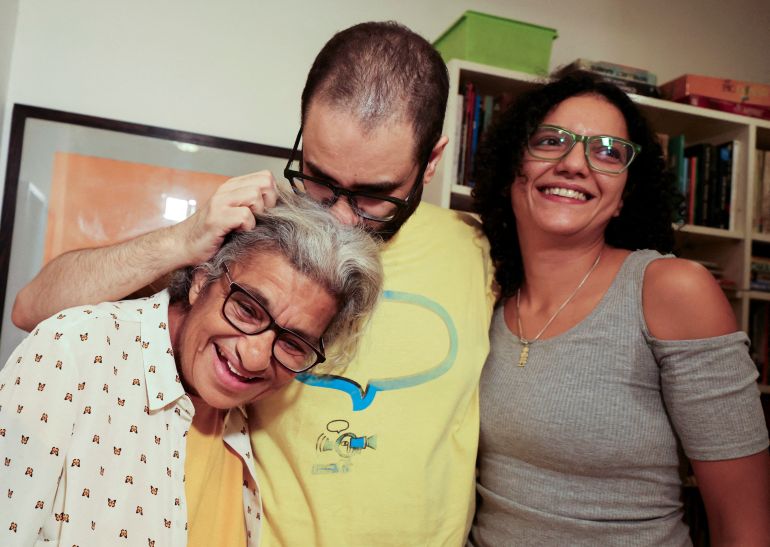
 Prominent British-Egyptian activist Alaa Abd el-Fattah, who was released from prison after Egyptian President Abdel Fattah al-Sisi issued a presidential pardon for him, stands next to his mother, Laila Soueif, and sister, Sanaa, at their home in Giza, Egypt, September 23, 2025. REUTERS/Mohamed Abd El Ghany TPX IMAGES OF THE DAY
British-Egyptian activist Alaa Abd El-Fattah, centre, who was released from prison after Egyptian President Abdel Fattah el-Sisi issued a presidential pardon for him, stands next to his mother, Laila Soueif, left, and sister, Sanaa, at their home in Giza, Egypt, on September 23, 2025 [Mohamed Abd El Ghany/Reuters]

His sister, Mona Seif, celebrated her brother’s release on social media: “The world is full of nightmares, injustice, violence, and many things that break the heart.. but we can take a breath and give happiness a chance to fill our hearts.. and keep going.”

“Oh Lord, the same joy for the families of all the detainees,” she wrote in a separate post.

“Can you imagine if this happened, how much beauty and happiness would fill our world in a single moment?”

Abd El-Fattah’s lengthy detention had become emblematic of the fraying of Egypt’s democracy.

“I strongly welcome the news that Alaa Abd El-Fattah has received a Presidential pardon,” United Kingdom Foreign Secretary Yvette Cooper said.

“I’m grateful to President Sisi for this decision. We look forward to Alaa being able to return to the UK, to be reunited with his family.”

Abd El-Fattah, who obtained UK citizenship through his mother in 2021, comes from a family of well-known activists and intellectuals who had launched several campaigns for his release.

His mother met UK Prime Minister Keir Starmer earlier this year to lobby for her son’s release.

Intensifying her campaign in September 2024, when she was expecting her son’s release due to the time he spent in pre-trial detention, Soueif staged a lengthy hunger strike in the UK, ending it only after pleas from her family as her health significantly deteriorated.

Starmer had promised he would do everything he could to secure the release of Abd El-Fattah, who has also staged multiple hunger strikes in detention, most recently in early September, to protest against his imprisonment and in solidarity with his mother.

But his most dramatic hunger strike was in 2022, as Egypt hosted the annual United Nations climate summit in the Red Sea resort of Sharm el-Sheikh. The strike ended when Abd El-Fattah lost consciousness and was revived with fluids.

Egypt’s National Council for Human Rights, a state-funded body, also welcomed his release, saying it signalled a growing emphasis on swift justice for Egyptian authorities.


Source link

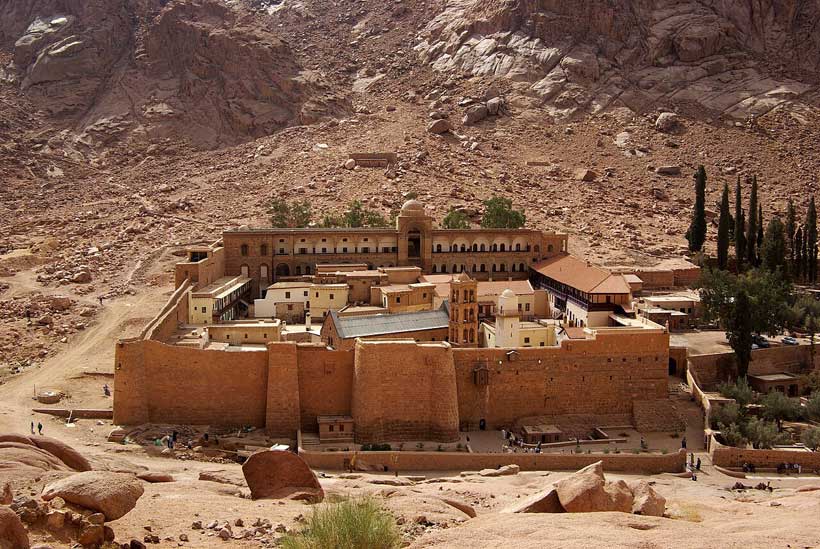
St. Catherine’s Monastery at Sinai: A Power Game of Ecclesiastical Influence

The announcement of Archbishop Damianos’ resignation from St. Catherine’s Monastery in Sinai, after decades of leadership, has brought to light more than an internal monastic dispute. It has exposed a larger power struggle at the intersection of ecclesiastical diplomacy and international politics. The controversy surrounding the monastery, one of the most historic centers of Orthodoxy in the Middle East, has turned into a stage where rival patriarchates, foreign influence, and states assert their presence.

For many observers, Damianos’ departure was not simply the end of an era but the culmination of months of escalating tension between the Monastery, the Patriarchate of Jerusalem, and wider Orthodox dynamics influenced by Moscow.

Jerusalem’s contested claims

At the heart of the dispute lies the claim of the Patriarchate of Jerusalem over Sinai. In its official response, Jerusalem characterized Damianos’ statements as “anti-ecclesiastical” and questioned even the authorship of his lengthy announcement, suggesting manipulation by third parties. Ecclesiastical circles interpret this as a deliberate strategy of delegitimization, portraying the elderly Archbishop as incapable of independent action in order to undermine his authority.

Beyond rhetoric, Jerusalem has consistently sought to present Sinai as canonically dependent on its patriarchal throne, despite the historic sigillion of Patriarch Gabriel IV in 1782, which sealed the monastery’s autonomy. For Damianos and his supporters, such attempts constitute ecclesiastical encroachment and a direct violation of centuries-old canonical order.

Moscow’s shadow over Sinai

Damianos’ final announcement did not spare Moscow either. He accused the Russian Church of fueling division within Orthodoxy and exploiting internal fissures of the Sinai brotherhood. According to his account, networks and organizations aligned with Russian influence attempted to capitalize on the crisis, promoting narratives foreign to Orthodox theology and tradition.

For ecclesiastical diplomacy analysts, this dimension is crucial. It situates the Sinai crisis within the broader confrontation between Constantinople and Moscow over primacy in the Orthodox world, extending the arena of contestation from Ukraine to the deserts of Sinai. The monastery thus becomes more than a spiritual center; it is a geopolitical outpost in the struggle for influence.

Athens and Cairo as indispensable actors

The role of Greece has emerged as pivotal. Damianos repeatedly underlined that without the active involvement of Athens, the monastery would have faced existential threats. The recent law 5224/2025, combined with constitutional guarantees, was presented as a shield of protection for the monastery’s legal and institutional identity.

At the same time, Egypt remains a decisive interlocutor. The court decision of Ismailia in May 2025 that challenged elements of the monastery’s status placed the issue squarely within the Egyptian legal framework. Damianos himself acknowledged that any durable solution requires a tripartite understanding between Athens, Cairo, and the monastery’s leadership.

This triangular dynamic underscores that the future of Sinai cannot be separated from Greek–Egyptian relations, a strategic partnership already central in the Eastern Mediterranean. The monastery, therefore, becomes both a symbol and a test of bilateral trust.

Ecclesiastical diplomacy at a crossroads

The broader Orthodox world has also been drawn into the crisis. Several patriarchates expressed support for Sinai, including Constantinople, Bulgaria, Cyprus, and Serbia, while Jerusalem remained isolated in its claims. The silence of Moscow, combined with its indirect involvement, reinforced perceptions that Sinai has become a flashpoint in the Orthodox fragmentation that Russia has often been accused of exacerbating.

For Constantinople, Sinai’s autonomy is not negotiable. For Jerusalem, asserting control is both a matter of prestige and regional influence. For Moscow, exploiting divisions serves its wider strategy. And for Athens, safeguarding the monastery is part of its cultural diplomacy and historical responsibility toward the Eastern Christian heritage.

A power game with lasting implications

The resignation of Damianos closes a personal chapter but opens a much larger one. The crisis of Sinai illustrates how monastic autonomy, canonical tradition, and national diplomacy intersect. What appears as an ecclesiastical quarrel is, in fact, a power game of influence that involves patriarchates, states, and international alignments.

The outcome of the succession process, and whether a unified brotherhood can emerge, will determine not only the monastery’s internal cohesion but also the credibility of Greek–Egyptian partnership and the balance within Orthodoxy.

For analysts of ecclesiastical diplomacy, Sinai has become a microcosm of the wider struggle shaping the Orthodox world: the tension between autonomy and control, between local tradition and geopolitical leverage. The desert of Sinai, where Moses once received the Law, is today a battlefield of influence where spiritual heritage collides with political ambition.

Source link

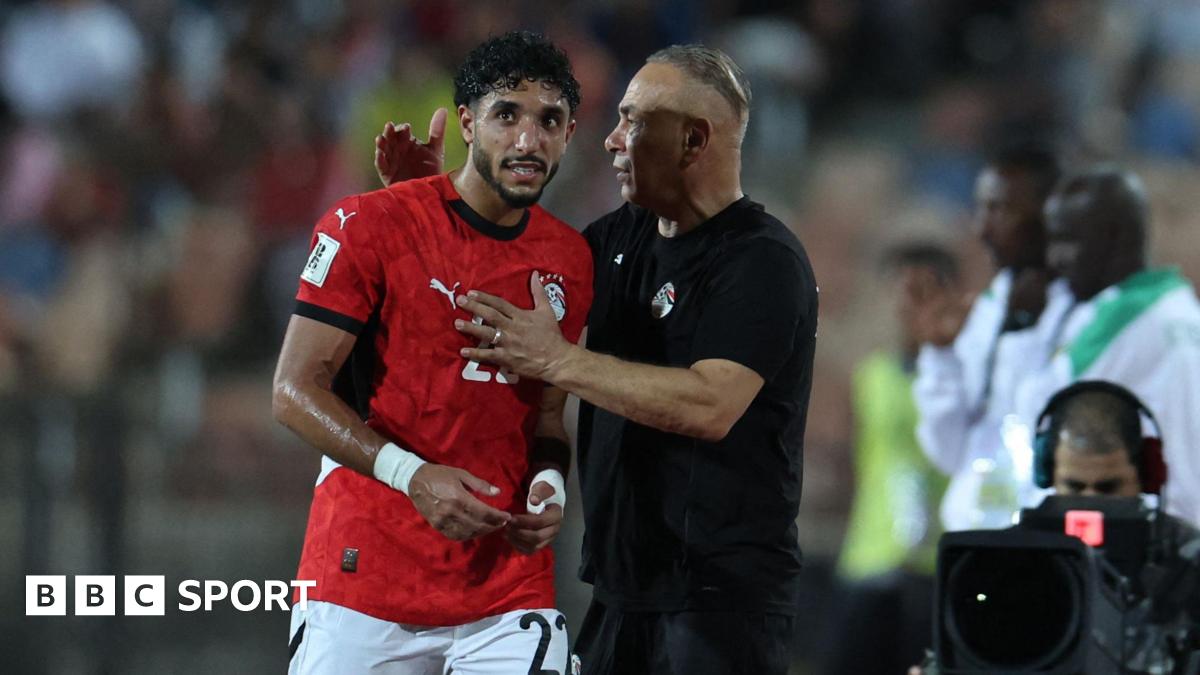
Omar Marmoush: Manchester City set to assess Egypt forward after knee injury on international duty

Manchester City are set to assess forward Omar Marmoush before Sunday’s Manchester derby after he suffered a knee injury while on international duty with Egypt.

The 26-year-old was substituted in the ninth minute of his country’s World Cup qualifier with Burkina Faso – which finished in a goalless draw – in Ouagadougou on Tuesday.

Marmoush, who joined City from Eintracht Frankfurt for £59m in January, was hurt following a robust fourth-minute challenge.

He initially played on after receiving treatment on the field before being replaced by Osama Faisal shortly afterwards.

A picture of the player leaving the pitch with medics was posted on the Egyptian Football Association’s X account with the message: “Omar Marmoush suffers a bruised knee ligament.

Source link

Ethiopia inaugurates GERD dam amid downstream tensions with Egypt, Sudan | Energy News

Ethiopia celebrates Africa’s largest hydroelectric dam as Egypt and Sudan express fears over water security.

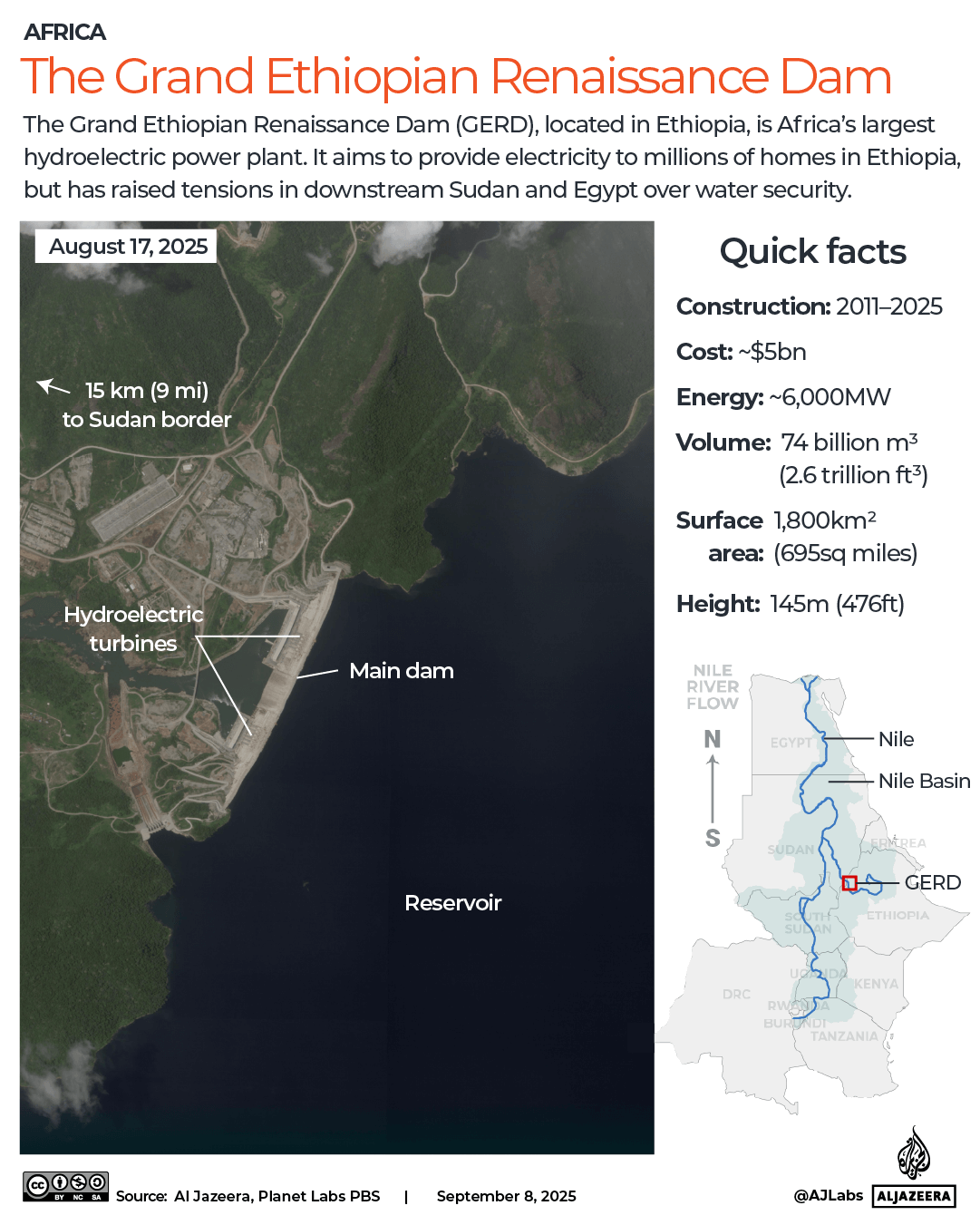
Ethiopia has inaugurated Africa’s largest hydroelectric dam on the Blue Nile, as the $5bn project continues to sow dismay with downstream neighbours Sudan and Egypt.

Prime Minister Abiy Ahmed has hailed the Grand Ethiopian Renaissance Dam (GERD) as a “shared opportunity” for the region that is expected to generate more than 5,000 megaWatts of power and allow surplus electricity to be exported.

Recommended Stories

list of 3 itemsend of list

A handful of regional leaders, including Kenya’s President William Ruto and Somalia’s President Hassan Sheikh Mohamud, attended the festivities in person on Tuesday, which kicked off the night before with lantern displays and drones writing slogans such as “geopolitical rise” and “a leap into the future”.

But Sudan and Egypt – who rely heavily on the Nile for water supplies – have expressed fears that the dam will threaten their water security and even breach international law. Their leaders did not attend the inauguration of the dam.

The Blue Nile, one of the Nile’s two main tributaries, flows north into Sudan and then Egypt. The dam is located just 14km (9 miles) east of the Sudanese border, measuring 1.8km (1.1 miles) wide and 145 metres (0.1 mile) tall.

“I understand their worries, because of course, if you look at Egypt from the sky, you see that the street of life is existent” thanks to the Nile, Pietro Salini, the CEO of Italian company Webuild that constructed the dam, told Al Jazeera. But “regulating the water from this dam will create an additional benefit” to neighbours, he added.

INTERACTIVE - GERD The Grand Ethiopia Renaissance Dam NILE-1757338145
(Al Jazeera)

‘Continuous threat to stability’

GERD has spawned regional tension since it was launched in 2011, with years of cooperation talks between Ethiopia, Sudan and Egypt still stalled.

Last week, Sudan and Egypt released a joint statement calling Ethiopia’s actions “unilateral” and saying the dam posed a “continuous threat to stability”.

Sudan’s Roseires Dam, located about 110km (70 miles) downstream of GERD, faces potential future effects if Ethiopia were to perform large water releases without coordination, reports Al Jazeera’s Mohamed Vall.

“Roseires is the closest, it’s 60 years older, and when constructed was 25 times smaller – and will likely bear the brunt of the fallout if anything goes wrong at the Ethiopian dam,” Vall said.

But GERD may also provide benefits such as regulating the annual flow of the river and reducing potential flooding in villages on the banks of the Nile.

Abdullah Abderrahman, Roseires Dam administration manager, told Al Jazeera that GERD has helped to control overflow at Roseires that “used to be extremely big”.

“Then there is the reduction of the huge amounts of silt and trees that the rainy season used to bring into Roseires, causing its storage capacity to shrink by a third,” Abderrahman added.

Dessalegn Chanie Dagnew, associate professor of water resources at Bahir Dar University in Ethiopia and a member of the Ethiopian parliament, told Al Jazeera the dam’s benefits could eventually reach beyond assuaging flooding and silt.

Rather than creating tension, he said, GERD “will also serve as a project that can really bring about regional integration and cooperation”.

Source link