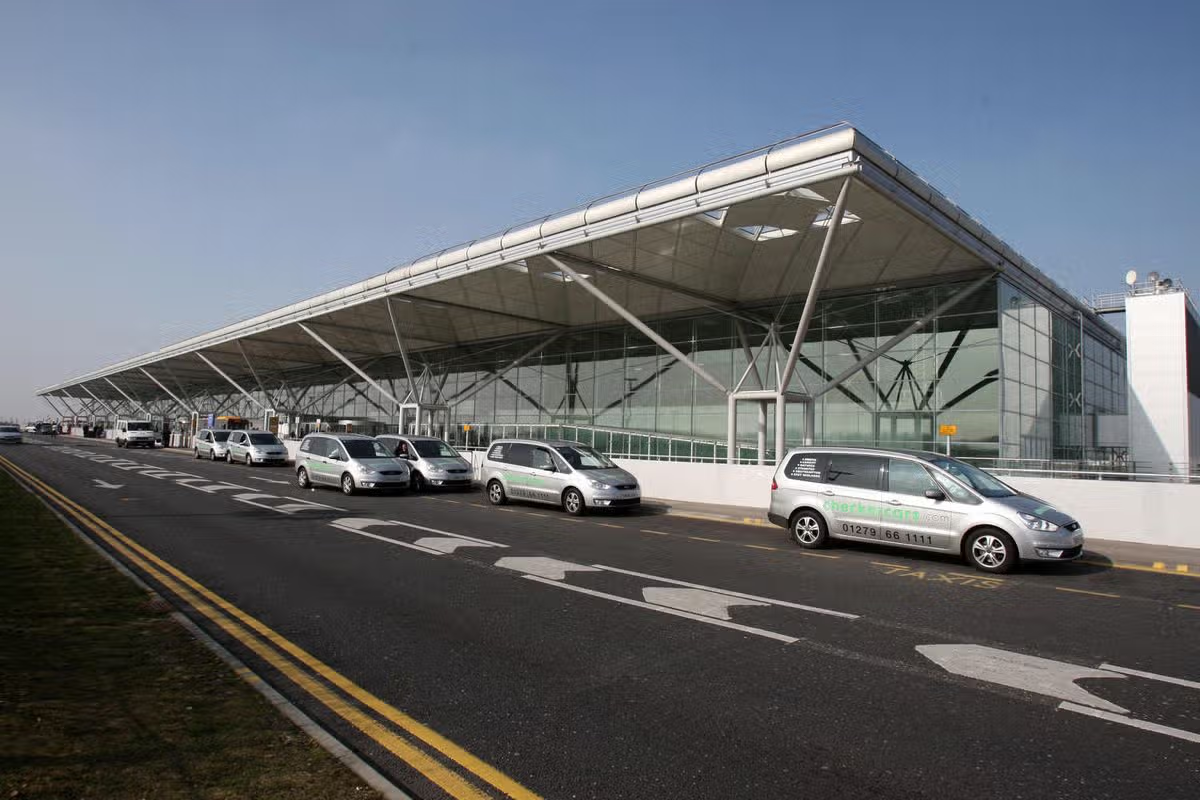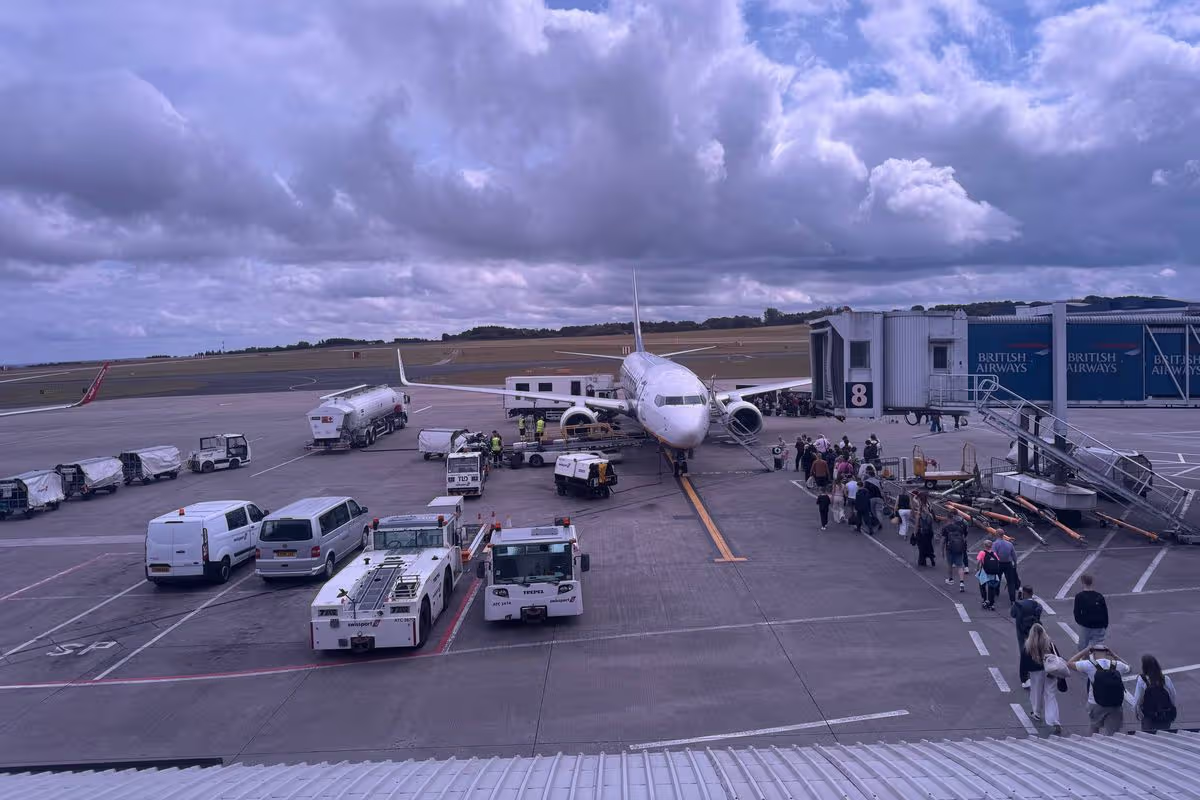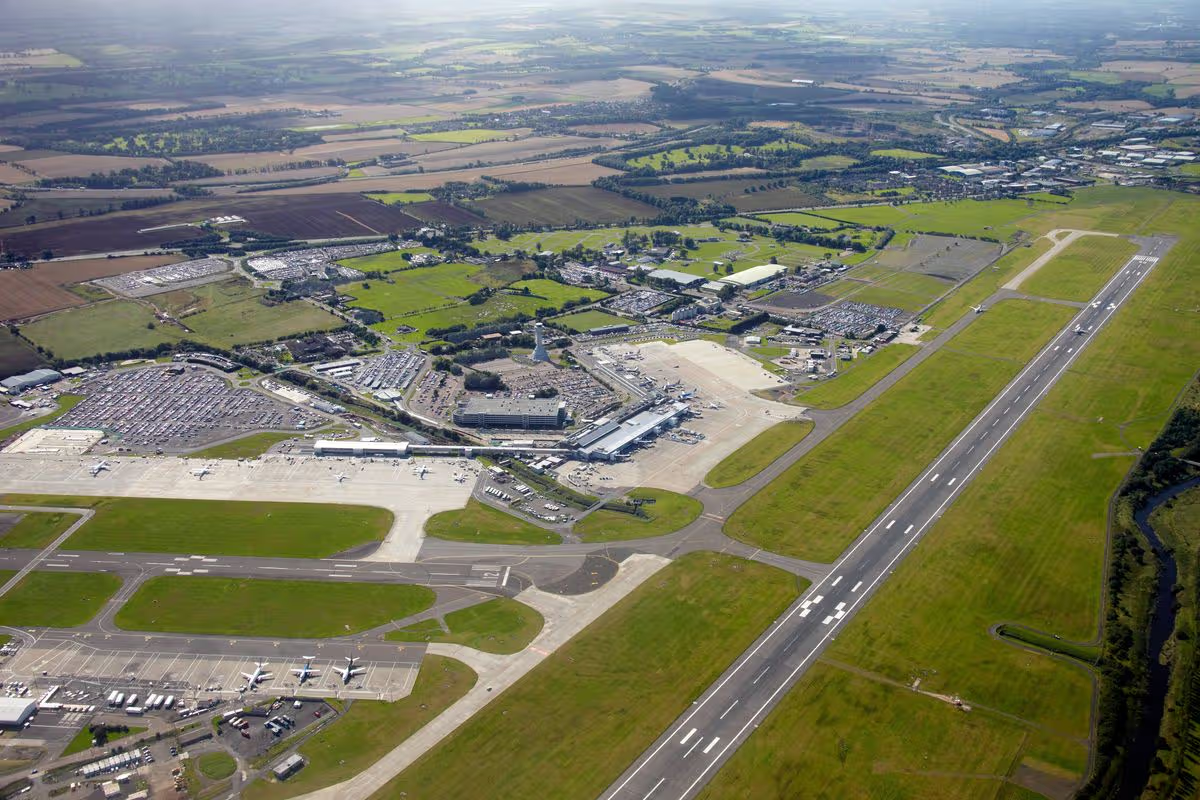
Edinburgh Airport has said operations have no returned to normal (Image: undefined via Getty Images)
Flights were delayed at two major UK airport because of jet fuel supply issues on Sunday evening. Passengers on ten flights flying out of Glasgow and Edinburgh airport faced delays.
The two Scottish airports have now said their operations are returning to normal after issues with the supply of jet fuel on Sunday evening.
The situation around the Strait of Hormuz, where shipping has been severely constrained since the outbreak of the Iran war, has led to a reduction in the global supply of jet fuel. However the issues at the two Scottish airports are understood to be linked to a shortage in drivers for fuel lorries rather than the global market.
A spokesperson for Edinburgh Airport said 10 flights were delayed on Sunday, but deliveries had resumed on Monday.
A spokesperson for Glasgow Airport said: “A short‑term staffing issue has affected one of the fuel suppliers used by airlines at the airport, with work underway to return stock levels to normal. There have been no related flight cancellations, and the airport remains fully operational.”
The spokesperson said fuel stocks are now returning to normal and there was no widespread disruption despite delays to some flights. Jet fuel is purchased by airlines, while the airports provide storage and infrastructure.
Airport security stainless steel bottle ‘rule’ all UK travellers must know – The Mirror
Need to know
Some UK airports are relaxing the rules, with this one being the exception for all passengers
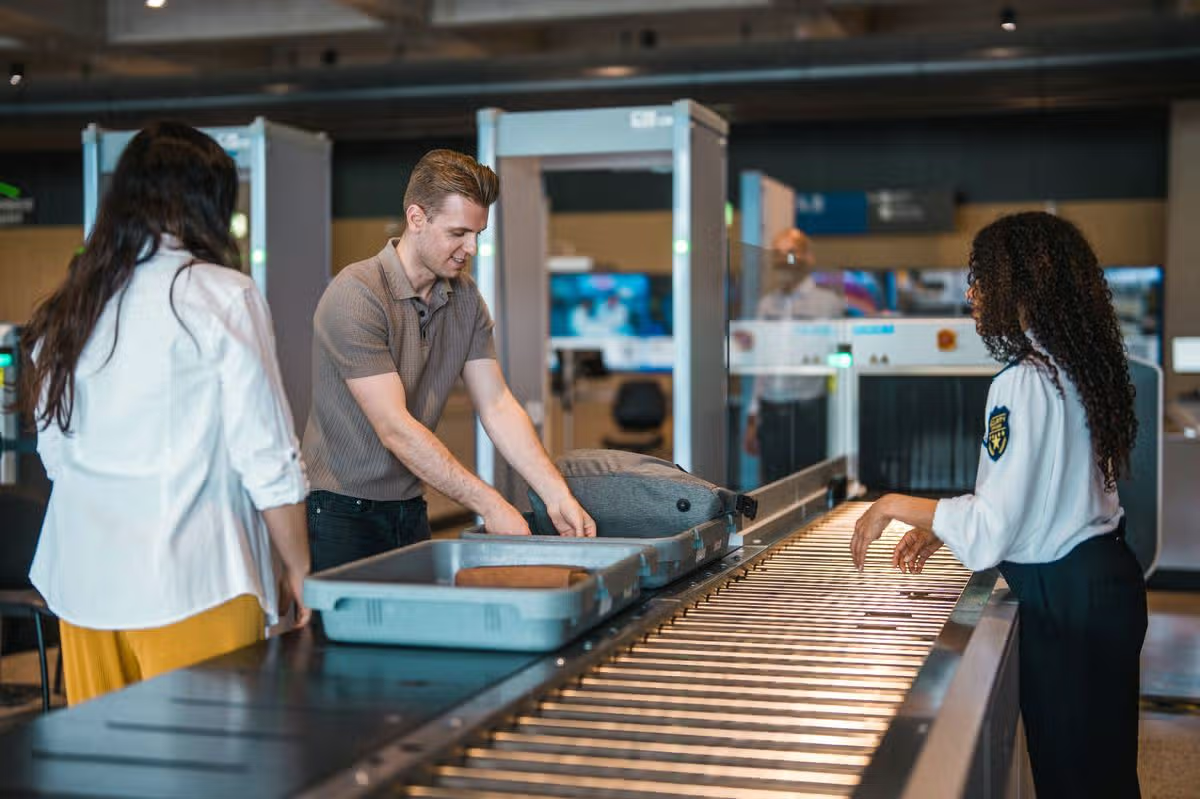
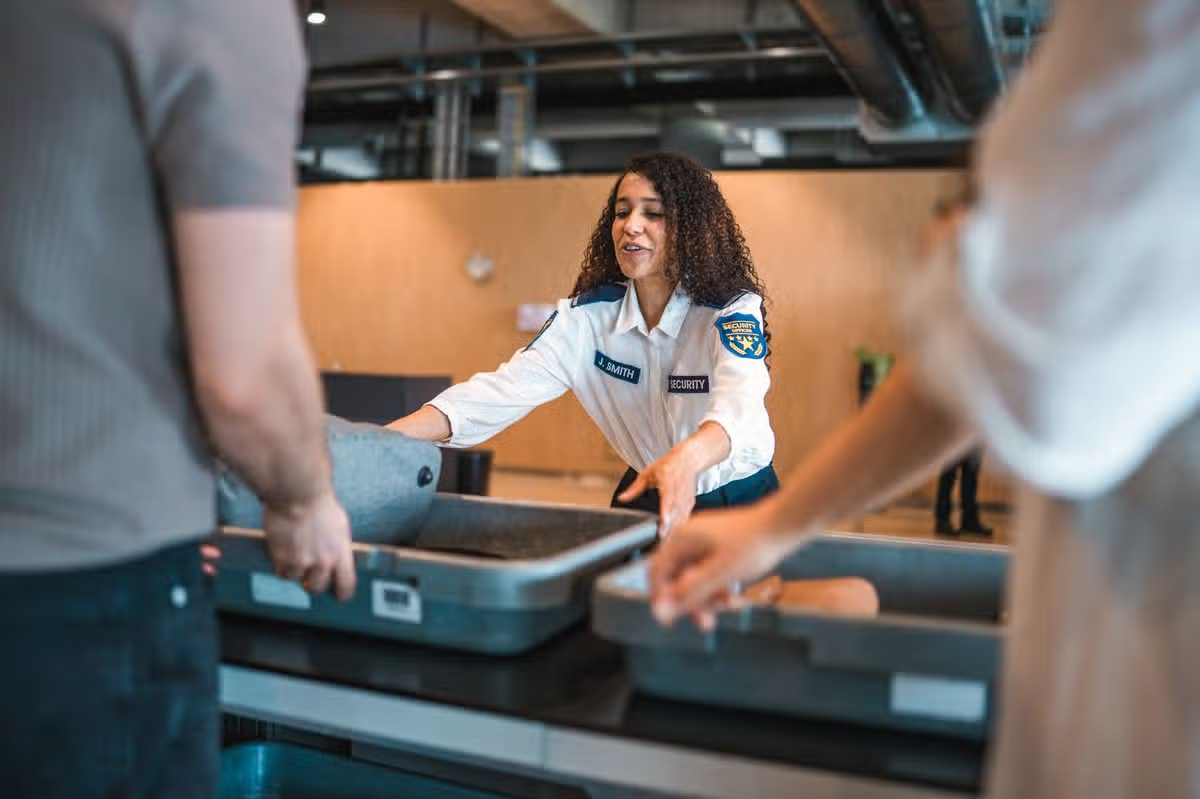
This could lead to delays at the security checkpoint(Image: Getty)
Airport security rules: How water bottles and playing cards could cause delays
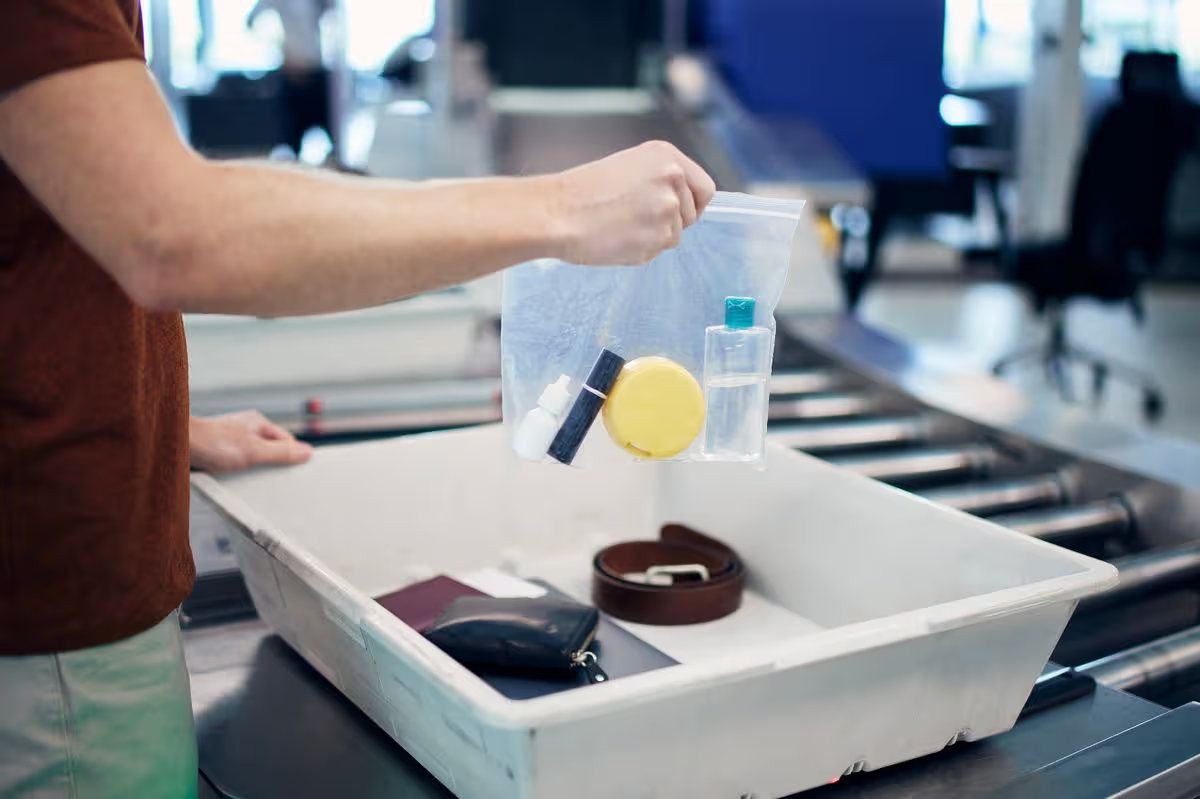
Holidaymakers jetting off this summer need to be aware of some basic airport security rules that could catch them out at the scanners. Despite many UK airports scrapping the 100ml liquid rule thanks to cutting-edge scanners, there’s one crucial exception that could trip up travellers
Metal water bottles are allowed through, but must still be emptied before security. The new scanners can’t penetrate the double-layer insulation on stainless steel bottles and thermos flasks, meaning they need to go through empty for safety reasons.
The good news is that most airports offer free water refill stations after security. This way, travellers can top up their empty bottles after going through the scanners.
Major airports, including Heathrow, Gatwick, and Birmingham, have all introduced the relaxed liquid rules as of May 2026. Edinburgh Airport warned passengers: “If you are carrying metallic or double-walled containers (including vacuum flasks, thermos flasks and metallic water bottles), please ensure the container is empty prior to the security checkpoint.”
It’s not just water bottles causing delays at security – playing cards are also flagging up problems at security checkpoints. The innocent-looking deck can trigger additional screening because its stacked shape and density can give the impression that something’s hidden inside.
TSA expert Ian Cava advised airline passengers to remove cards from hand luggage and place them in the tray separately. “This helps speed up the process and reduces the likelihood of delays,” he said.
easyJet passengers are being warned they could face serious consequences if they don’t completely switch off certain electronic devices
EasyJet customers must make sure of one thing while on board(Image: BrasilNut1 via Getty Images)
Holidaymakers travelling with easyJet this summer are being warned that they could unknowingly fall foul of strict cabin rules unless they fully switch off a commonly used electronic device before stepping on board. The trouble is that many passengers only discover the rule once they’ve already reached the airport or are on the verge of boarding, where last-minute slip-ups could spell serious problems.
According to EasyJet, the warning relates to e-cigarettes and vaping devices, which must be carried in hand luggage only and are strictly forbidden from being stowed in hold baggage under any circumstances. The airline’s official policy states: “All electronic cigarettes and vaping devices must be carried in the cabin, re-charging is strictly prohibited and the device must be completely switched off.”
It also advises passengers to keep their devices on their person where they can be kept an eye on throughout the flight, reducing the risk of accidental activation. These rules are in place due to concerns over lithium-ion batteries, which are used to power vaping devices and are well known for posing a fire risk if they become damaged or overheat.
The UK Civil Aviation Authority categorises lithium batteries as a significant safety risk in aviation due to their potential for ‘thermal runaway’, producing intense heat and flames that are notoriously difficult to extinguish in confined spaces. The International Air Transport Association has highlighted a worldwide rise in lithium battery-related incidents, which has gone hand in hand with the increasing prevalence of portable electronic devices, prompting airlines across the globe to tighten their rules considerably.
EasyJet also warns that passengers must take precautions to prevent their vaping devices from being switched on accidentally during flights, including ensuring they are fully powered down before boarding. The airline stipulates that travellers may carry no more than two spare batteries in their hand luggage, and that these must be properly protected to prevent them from coming into contact with metal objects.
Under UK aviation rules, vaping devices must be kept in hand luggage at all times. Official government guidance states that e-cigarettes are strictly prohibited from hold baggage.
Industry experts point out that confusion often arises because rules can vary between airlines and destinations, which can leave passengers unknowingly packing the wrong items before they even reach airport security. Aviation safety specialists also warn that using or charging vaping devices while on board flights is strictly prohibited by all major airlines, with penalties ranging from confiscation to fines or even travel bans in severe cases.
As summer travel demand picks up, holidaymakers are being urged to check airline regulations before they set off to avoid delays, confiscations, or being refused entry at the boarding gate.
68 Ryanair passengers missed their flight to Edinburgh from Lanzarote on Monday, reportedly due to issues with the airport’s new Entry/Exit System (EES) used to register third-country nationals including British travellers
A Ryanair flight(Image: PA)
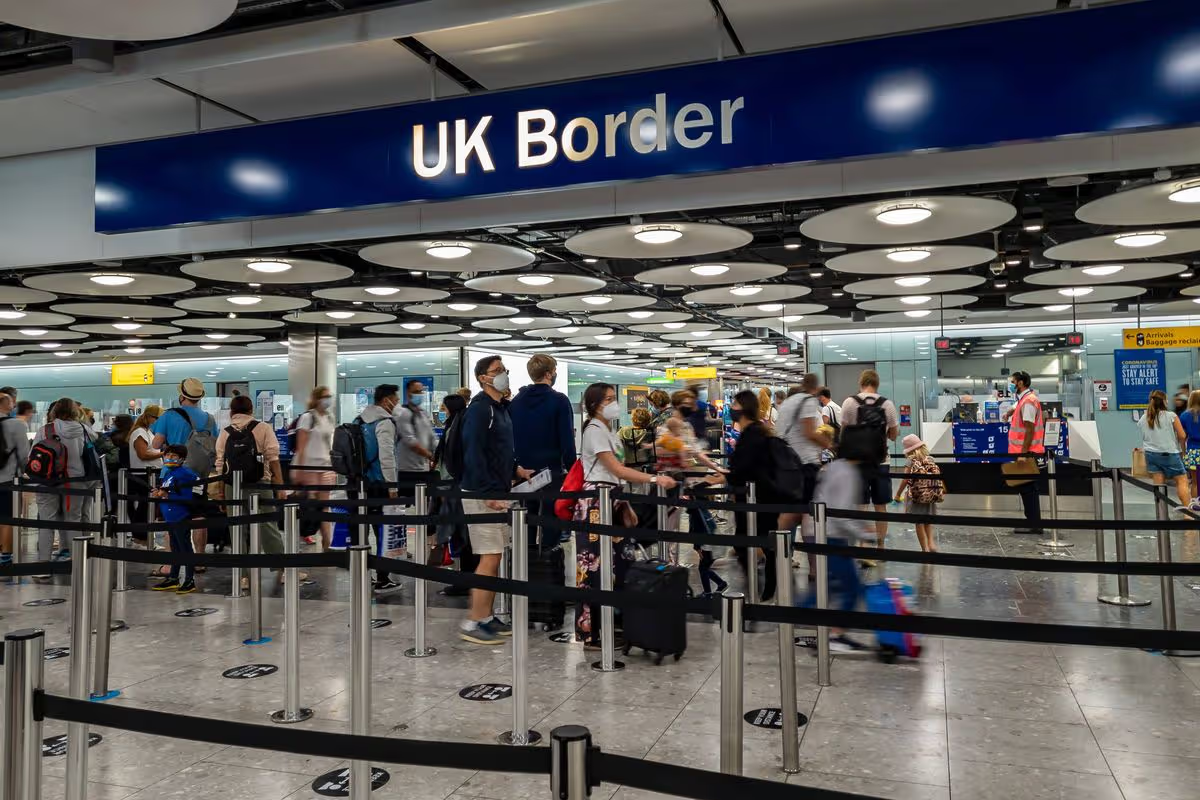
Almost 70 Ryanair passengers missed their flight to Edinburgh from Lanzarote on Monday, reportedly due to delays at border control.
Those travelling back to the Scottish capital were left stranded at Lanzarote Airport on May 4, owing to passport control system failures, with several flights believed to have been affected.
Ryanair confirmed all passengers who presented at the boarding gate before departure were accommodated and travelled without incident.
According to local publication Canarian Weekly, the disruption affected those travelling to destinations outside the European Union, reports Edinburgh Live.
Under the EES, travellers are required to provide biometric data, including fingerprints and a photograph, to establish a digital record valid for three years, replacing the traditional passport stamping system.
The system is intended to streamline passport checks and track how long visa-free travellers remain within the EU, however it has been beset by delays, with lengthy queues reported at passport control across various locations.
Now Lanzarote Airport has become the latest to face disruption. Operations were reportedly thrown into chaos by 11am, “causing delays and confusion in departure areas”. Canarian Weekly reports that the disruption was triggered by “a failure in the passport control system” according to National Police sources, while other sources “suggested a wider disconnection issue across Europe, which slowed systems at multiple airports”. The issue was resolved by midday.
Ryanair has recently pressured EU governments to abandon the EES during the peak travel season, writing to administrations in 29 countries demanding they halt the new entry requirements.
The airline’s chief operations officer Neal McMahon said: “Governments across Europe are attempting to roll out a half-baked IT system in the middle of the busiest travel season of the year, and passengers are paying the price, being forced to endure hours long passport control queues and in some cases, missing flights.
“The solution is simple and already provided for under EU law (EU Reg. 2025/1534) – Governments should suspend EES until September when the peak summer travel season has subsided, just as Greece has done. This would allow passengers – many of whom are travelling with young families – a smoother airport experience for their summer holidays.”
The Spanish National Police Force were contacted for a response.