edge

New £15m train station is coming to pretty English market town on the edge of a national park this summer

A NEW £15million train station is set to open this summer in a pretty English market town, making it easier than ever to reach a stunning national park.

Excitement is already building ahead of its launch, with a brand new billboard unveiled, teasing a summer opening.

Aerial view of Okehampton Castle ruins surrounded by lush green trees, with a town in the background.
A new station is currently under construction in OkehamptonCredit: Alamy Stock Photo

The new Okehampton Interchange station is currently under construction in Okehampton, right on the edge of Dartmoor National Park.

Posting online, Devon & Cornwall’s Great Scenic Railways said: “Hurrah! Shiny new billboard in Okehampton to promote the town’s second station, which opens this summer.”

They added the sign will be updated once the official opening date is announced.

Rail bosses say the long-awaited addition will make it far easier for visitors to reach the scenic beauty spot and surrounding countryside.

GOLDEN YEARS

Britain’s prettiest town with hilltop castle where people ‘live the longest’


JET OFF

The cheapest family summer holiday destination from every region of the UK

Thanks to its vicinity to the National Park, the scenic town is the perfect place for anyone who enjoys outdoor activities such as riding, swimming, fishing and golf.

It’s also home to the second oldest Norman Castle in the county. It lies in ruins now but is still a place to marvel at for any history buffs.

The £15million project forms part of wider upgrades to the Dartmoor Line, linking the town with Exeter and beyond.

Once open, the new station is expected to boost tourism by improving access to Dartmoor’s rolling hills, walking trails and outdoor activities.

It will sit close to the A30 and aims to serve the growing eastern side of the town, while easing traffic in the centre.

The interchange will also help reduce pressure on parking at the existing Okehampton station, which will remain open.

Plans for the site include cycle parking, electric vehicle charging points, and better walking and bus links to encourage greener travel.

Construction is well underway, with a footbridge, lift shaft and platform already taking shape.

Meldon Viaduct, a former railway structure now part of the Granite Way cycle route around Dartmoor.
The new station is expected to boost tourism by improving access to Dartmoor’s rolling hillsCredit: Alamy Stock Photo

Source link

Redistricting battle narrows for U.S. House as states seek partisan edge in November elections

The battlefield is narrowing and the timeline is tightening in a congressional redistricting contest among states seeking a partisan advantage ahead of the November midterm elections.

The end of Maryland’s legislative session this week marked the demise of Democratic efforts to reshape the state’s U.S. House districts. But Florida lawmakers are to begin a special session Monday for a Republican attempt at congressional redistricting. And Virginia voters are deciding Tuesday on a Democratic redistricting plan that could help the party win several additional House seats in this year’s election.

Voting districts typically are redrawn once a decade, after each census. But President Trump triggered an unusual round of mid-decade redistricting last year when he urged Texas Republicans to redraw House districts to give the GOP an edge in the midterm elections. California Democrats reciprocated, and redistricting efforts soon cascaded across states.

So far, Republicans believe they could win nine additional seats in states where they have redrawn congressional districts, while Democrats think they could gain six seats elsewhere because of redistricting. But that presumes past voting patterns hold in November. And that’s uncertain, especially since the party in power typically loses seats in the midterms and Trump faces negative approval ratings in polls.

Democrats need to gain just a few seats in November to wrest control of the House from Republicans, potentially allowing them to obstruct Trump’s agenda.

Where redistricting remains in play

Officials in more than a dozen states debated or floated redistricting proposals. The immediate focus is on two states — one led by Republicans, the other by Democrats.

Florida

Current map: eight Democrats, 20 Republicans

Proposed map: Republican Gov. Ron DeSantis has called a special legislative session to begin Monday on congressional redistricting. Republicans haven’t yet publicly released a specific plan.

Challenges: The state constitution says districts cannot be drawn with intent to favor or disfavor a political party or incumbent.

Virginia

Current map: six Democrats, five Republicans

Proposed map: A new U.S. House map passed by the Democratic-led General Assembly could help Democrats win up to four additional seats. For the map to take effect, voters would have to approve a constitutional amendment allowing mid-decade redistricting. That amendment is on Tuesday’s ballot.

Challenges: The state Supreme Court ruled the referendum can proceed, but it has yet to rule whether the effort is legal. The court is considering an appeal of a Tazewell County judge’s ruling that the amendment is invalid because lawmakers violated their own rules while passing it.

Where new House districts were approved

New U.S. House districts have been adopted in six states since last summer. Four took up redistricting voluntarily, one was required to by its state constitution and another did so under court order.

Texas

Current map: 13 Democrats, 25 Republicans

New map: Republican Gov. Greg Abbott signed a revised House map into law last August that could help Republicans win five additional seats.

Challenges: The U.S. Supreme Court in December cleared the way for the new districts to be used in this year’s elections. It put on hold a lower-court ruling that blocked the new map because it was “racially gerrymandered.”

California

Current map: 43 Democrats, nine Republicans

New map: Voters in November approved revised House districts drawn by the Democratic-led Legislature that could help Democrats win five additional seats.

Challenges: The U.S. Supreme Court in February allowed the new districts to be used in this year’s elections. It denied an appeal from Republicans and the Department of Justice, which claimed the districts impermissibly favor Hispanic voters.

Missouri

Current map: two Democrats, six Republicans

New map: Republican Gov. Mike Kehoe signed a revised House map into law last September that could help Republicans win an additional seat.

Challenges: A Cole County judge ruled the new map is in effect as election officials work to determine whether a referendum petition seeking a statewide vote complies with constitutional criteria and contains enough valid petition signatures. The Missouri Supreme Court rejected a lawsuit claiming mid-decade redistricting is illegal. It’s scheduled to hear arguments in May on claims the new districts violate compactness requirements and should be placed on hold pending the potential referendum.

North Carolina

Current map: four Democrats, 10 Republicans

New map: The Republican-led General Assembly gave final approval in October to revised districts that could help Republicans win an additional seat.

Challenges: A federal court panel in November denied a request to block the revised districts from being used in the midterm elections.

Ohio

Current map: five Democrats, 10 Republicans

New map: A bipartisan panel composed primarily of Republicans voted in October to approve revised House districts that improve Republicans’ chances of winning two additional seats.

Challenges: None. The state constitution required new districts before the 2026 election, because Republicans had approved the prior map without sufficient Democratic support after the last census.

Utah

Current map: no Democrats, four Republicans

New map: A judge in November imposed revised House districts that could help Democrats win a seat. The court ruled that lawmakers had circumvented anti-gerrymandering standards passed by voters when adopting the prior map.

Challenges: A federal court panel and the state Supreme Court, in February, each rejected Republican challenges to the judicial map selection.

Where redistricting efforts were denied

Governors, lawmakers or partisan officials pushed for congressional redistricting in numerous states. In at least five states, those efforts gained some initial traction but ultimately fell short in either the legislature or court.

Maryland

Current map: seven Democrats, one Republican

Proposed map: The Democratic-led House in February passed a redistricting plan backed by Democratic Gov. Wes Moore that could help Democrats win an additional seat.

Challenges: The legislative session ended in April without the Democratic-led Senate voting on the redistricting plan. The state Senate president said there were concerns it could backfire on Democrats.

New York

Current map: 19 Democrats, seven Republicans

Proposed map: A judge in January ordered a state commission to draw new boundaries for the only congressional district in New York City represented by a Republican, ruling it unconstitutionally dilutes the votes of Black and Hispanic residents.

Challenges: The U.S. Supreme Court in March granted Republicans’ request to halt the judge’s order, leaving the existing district lines in place for the 2026 election.

Indiana

Current map: two Democrats, seven Republicans

Proposed map: The Republican-led House passed a redistricting plan in December that would have improved Republicans’ chances of winning two additional seats.

Challenges: Despite pressure from Trump to adopt the new map, the Republican-led Senate rejected it in a bipartisan vote on Dec. 11.

Kansas

Current map: one Democrat, three Republicans

Proposed map: Some Republican lawmakers mounted an attempt to take up congressional redistricting.

Challenges: Lawmakers dropped a petition drive for a special session on congressional redistricting in November, after failing to gain enough support.

Illinois

Current map: 14 Democrats, three Republicans

Proposed map: The Democratic Congressional Campaign Committee in October proposed a new U.S. House map that would improve Democrats’ chances of winning an additional seat.

Challenges: The Democratic-led General Assembly declined to take up redistricting, citing concerns about the effect on representation for Black residents.

Lieb writes for the Associated Press.

Source link

Jim Whittaker, first American climber to scale Mt. Everest, dies at 97

For 20 minutes of his life, Jim Whittaker was on top of the world.

He was the first American to summit Mt. Everest, reaching the highest point on Earth on May 1, 1963, with Sherpa Nawang Gombu.

“We were standing in the jet stream, on the edge of space,” Whittaker wrote in his 1999 memoir, “A Life on the Edge.”

He returned home a hero, with his picture on the cover of Life magazine, a White House fete and unexpected celebrity. And though life off the mountain didn’t always go smoothly, he disdained regret.

“If you stick your neck out, whether it’s by climbing mountains or speaking up for something you believe in, your odds of winning are at least fifty-fifty,” he wrote. “On the other hand, if you never stick your neck out, your odds of losing are pretty close to 100%.”

An adventurer until the end, Whittaker died Tuesday at his home in Port Townsend, Wash., his son Leif confirmed to the New York Times. Whittaker was 97. .

Men on top of a mountain

On March 24, 1965, Robert F. Kennedy, left, stands atop Mt. Kennedy in Canada after placing a black flag in memorial to his late brother, President John F. Kennedy. With him were Jim Whittaker; William Allard, a National Geographic Society photographer; and George Senner, a ranger.

(Doug Wilson / Associated Press)

He was 34 when he scaled Everest, a feat that shaped much of the rest of his life. His Washington state license plate read 29028, the generally accepted height of Everest when he climbed it. (GPS surveys later put it at about 29,035 feet.)

He was chosen for the expedition by its leader, Swiss mountaineer Norman Dyhrenfurth, because of his experience in climbing under icy conditions, including numerous summits of Mt. Rainier near his Seattle-area home.

But Everest, first scaled in 1953 by New Zealander Edmund Hillary and Nepalese Sherpa Tenzing Norgay, was a far more formidable and dangerous beast. And even if the Dyhrenfurth expedition was successful, only a chosen few of its 19 team members would reach the top. Still, Whittaker thought his chances were good.

“I’d trained hard, put 60 pounds of bricks in my backpack,” he told National Geographic Adventure magazine in 2003. “I swam in Lake Sammamish in winter to build up to the cold we would encounter.

“I didn’t know anyone who was in better shape.”

On only the second day of the group’s climb from base camp, tragedy struck when a giant section of an icefall — a glacier formation resembling a frozen waterfall — shifted, crushing team member Jake Breitenbach.

“I had told everyone back home that Everest was not a difficult climb technically; the only problem was the lack of oxygen and the weather,” Whittaker wrote in “Life on the Edge.” “Now it had killed one of us, and we’d only just begun.”

Because the only way to get back to base camp was via that icefall, Whittaker chose to stay above it on the mountain for five steady weeks as more camps were established up Everest. He lost 25 pounds and a considerable amount of strength due to the thin air.

Still, he was in better condition than many of the other climbers, and Dyhrenfurth chose him for the final assault. He and Gombu left the last camp in the middle of a windstorm, with a scant supply of oxygen.

How hard was it to breathe? “Put a pillow on your face, run around the block, and try and suck oxygen through that pillow,” he said. It was so cold, one of his eyeballs froze, making it unusable.

Reaching the summit after several hours, they stayed only long enough to take pictures and plant flags as 50-mph winds whipped around them.

“When you are up there, you are not ecstatic, you are not afraid,” he told the Los Angeles Times in 2013. “You’re really not anything. But in the back of your mind, you know one thing: You gotta get off. Half of the climb is getting up, the other half is getting down.”

James Whittaker was born on Feb. 10, 1929, in Seattle, about 10 minutes before the birth of Louie, his twin brother. As the boys grew up, they took to rough-housing around the house, much to the chagrin of their mother.

“I believe that command to ‘Go outside and play’ is what started Louie and me on the path we have taken every since,” Whittaker wrote.

He was active in Boy Scouts and as a teenager joined a mountaineering club that sponsored climbs on the nearby Olympic and Cascade ranges. He tested himself on increasingly higher peaks, relishing moments such as breaking through cloud layers.

“I think nature is a great teacher,” he told the Seattle Times in 2013. “Being in nature that way is a good way to find out who the hell you are.”

After finishing West Seattle High School, Whittaker went on to Seattle University, graduating in 1952. He was promptly drafted into the Army, but his mountaineering experience led him to be assigned to the Mountain and Cold Weather Training Command in Colorado instead of combat duty in Korea.

In 1955, he became the first full-time employee of the Recreational Equipment Cooperative (later called REI) when it was housed in a 20-by-30-foot space above a Seattle restaurant. In his first year, he expanded the co-op’s offerings into ski equipment and introduced new concepts — such as opening on Saturday mornings so customers could pick up equipment for weekend trips — that boosted sales.

A man in front of climbing gear.

Whittaker, pictured on April 12, 1975, in Seattle, shows some of the gear he would be taking for an expedition to climb K2 on the China-Pakistan border.

(Associated Press)

Because of his connection to the co-op, he was appointed equipment coordinator of the Everest climb, and REI agreed to keep him on the payroll during the expedition.

In July 1963, he and other members of the Everest team, including Gombu, were presented the Hubbard Medal of the National Geographic Society — which partially sponsored the expedition — by President Kennedy, four months before the president was assassinated.

Two years later, Whittaker led a climb up Mt. Kennedy, a nearly 14,000-foot Canadian peak named for JFK, with Sen. Robert F. Kennedy in the climbing party. The two men forged a close friendship that extended to the wider Kennedy clan. In subsequent years, Whittaker went on ski vacations with the Kennedys, was a guest at the family compound in Hyannis Port, Mass., and hosted gatherings in Seattle that included mountain climbing.

Whittaker organized Robert Kennedy’s 1968 presidential campaign efforts in the Pacific Northwest and spoke to him by phone only minutes before the candidate was fatally shot in Los Angeles. Whittaker caught a flight to L.A. and was at the senator’s hospital bedside when he died and then served as a pallbearer at the funeral.

In mountaineering, Whittaker was closely involved in more high-profile ventures. He led a 1975 expedition up the world’s second-highest mountain, K2, that failed to reach the top. His return expedition in 1978 was successful, though he chose not to go to the summit himself.

That same year, he decided to quit REI, partly because of friction with the co-op’s board. He had been president and chief executive since 1971, and when he left, the co-op was a $46-million business with more than 700 employees.

Whittaker throws out the ceremonial first pitch before a baseball game between the Mariners and the Angels in 2013.

Whittaker throws out the ceremonial first pitch before a baseball game between the Mariners and the Angels in 2013.

(Elaine Thompson / Associated Press)

Income from an endorsement agreement helped keep him financially sound, but an investment in a new outdoor gear company proved to be a disaster. The financial irregularities of a partner, who was convicted of felony bank fraud, doomed the venture, and Whittaker was left holding the financial bag.

He was nearly wiped out but got back on his financial footing when a venture capitalist asked him in 1986 to be chairman of the board, with stock options, of a new company called Magellan. It was a pioneer in GPS consumer electronics and holds numerous patents in the field.

Appropriately, Whittaker called one of the chapters midway through his book “Roller Coaster.” But he finished it with “Life Well Lived.”

“If you aren’t living on the edge,” he wrote, “you’re taking up too much space.”

Whittaker is survived by his wife, Dianne Roberts, and children Bobby, Joss and Leif.

Colker is a former Times staff writer.

Source link

Coventry City edge towards Premier League promotion – who will join them?

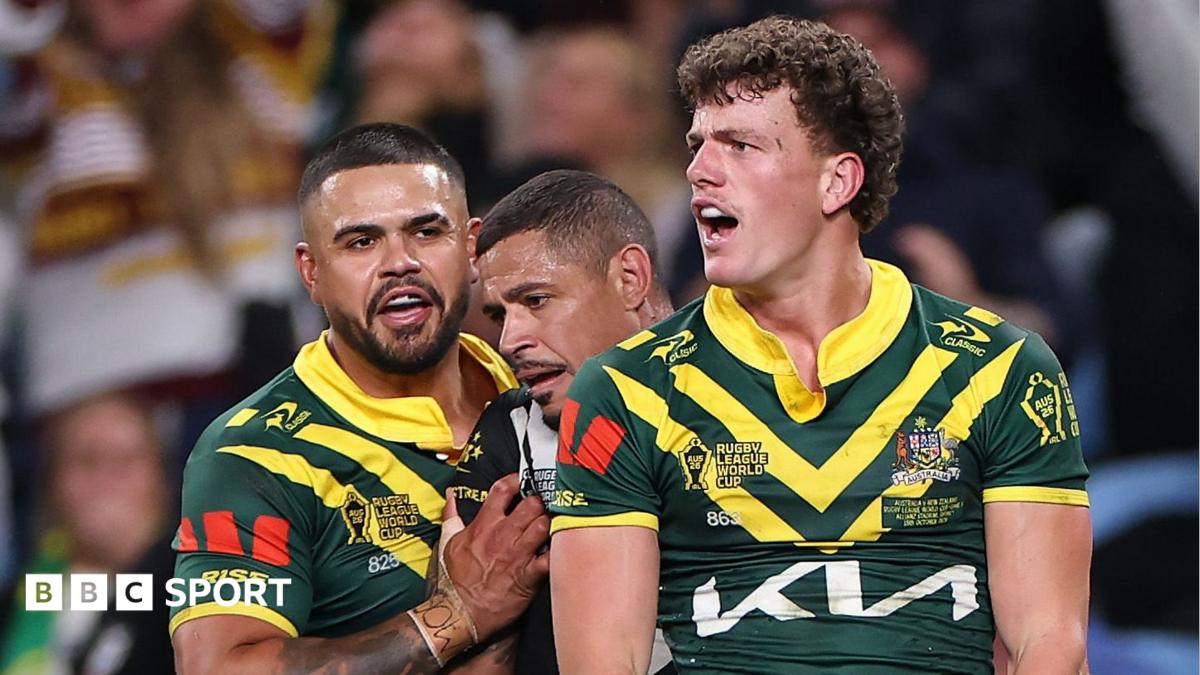
Middlesbrough, who went into the Easter weekend in the top two, still had the opportunity to end it there with victory at Swansea City in the 17:30 BST game.

Alex Bangura set them on their way with a 12th-minute goal but, after two Zan Vipotnik penalties put the Swans in front, Boro needed a Tommy Conway spot-kick to rescue a point.

Boro are floundering with two wins in their past 10 matches and while they scored more than once for the first time in five games, the feeling remains they are a frustrating and inconsistent proposition in front of goal.

Manager Kim Hellberg said after the match there would be more “twists and turns” to come in the fight for promotion – after a day of such similar rollercoaster emotions.

“You’ve got three teams on 72 points – Ipswich have some games in hand, so they’re in a better position than the other two, but we are in a better position than Millwall because of our better goal difference,” he told BBC Radio Tees.

“There will be twists and turns. No team will just go and win games. It’s difficult and you need to just try in this period to get those points and wins.

“We have to keep fighting. It’s tough we didn’t win, because we thought we were good enough in the game to win, but then you have to do it.

“The easy answer at the moment is that we’re not being clinical enough or smart enough in different ways.”

With a four-point deficit to Ipswich, and a vastly inferior goal difference, plus the games in hand the Tractor Boys hold, Hull can be considered the outsiders in this race.

But the Tigers showed against Coventry they can match anyone in the division and once again reaffirmed the fantastic job Sergej Jakirovic has done in his first season in English football under a transfer embargo.

Although when asked about what that point means in terms of the wider context of Hull’s season, Jakirovic was talking more play-offs than automatic promotion.

“Somebody said it is 73, 74, 75 [to reach the play-offs] but God knows how many. Until we are in this position we will just look at ourselves and try to take points in every game,” Jakirovic told BBC Radio Humberside.

“Norwich are coming, Derby is there, Southampton… but, no matter, we must look at ourselves.”

Source link

Buchanan Poised at the Edge of Political Credibility Gap : Campaign: No matter what polls and receptive New Hampshire voters say, GOP pols insist he’s not electable.

The problem for Patrick J. Buchanan, the silver-tongued Republican who would be President, is people like George Anthes.

“It seems that Pat Buchanan has truly caught fire,” says Anthes, the king of talk radio at station WMVU, introducing the candidate to a listening audience of flinty New Englanders. “There seems to be a change brewing.”

And so Buchanan begins his spiel: The national polls–three of five in August–that peg him No. 2 behind Senate Majority Leader Bob Dole of Kansas in the race for the GOP nomination. His recent endorsement by the Manchester Union Leader, the paper of record for New Hampshire’s hard-core conservatives. A credible showing in the recent Iowa straw poll–in his eyes, No. 3 with a bullet.

“We have crossed the threshold,” said a confident Buchanan, “of credibility and electability.”

Not so fast. Thirty minutes later, with the microphone off and the candidate heading quickly for the door, Anthes gets a little more honest. “I’d love to see Pat as President, but I have my doubts.” A pause. “He is picking up though.”

Well, sort of. Somehow, even when they suffer setbacks or fail to make headway in the polls, Texas Sen. Phil Gramm, ex-Tennessee Gov. Lamar Alexander and California Gov. Pete Wilson get taken seriously as potential nominees. Even when Buchanan is on a roll–like the one that fuels his hopes today–he is rarely accorded the same respect.

The reasons are plentiful. Buchanan rose to prominence as a commentator and author; although he ran for President in 1992, he has never won an elected office. He is an unabashed, uncompromising conservative, and thus a polarizing figure to many. And the disdain he does not hide for some in his own party has cut into his ability to raise money.

Buchanan and his followers are “outsiders, they’re populists,” said political analyst Kevin Phillips. “In terms of the Republican power elite, they’re not Buchananites. He could never be the nominee.”

Striving for Second

Buchanan, 56, is undeterred by such naysayers. And his quest, at least for now, is not to be No. 1, but to come in second in the early primaries and caucuses of 1996–a crucial three weeks, Buchanan contends, that will decide if he can raise the money to continue campaigning.

“I’ve got the resources to go three weeks,” said the candidate, who so far has raised about $3 million and spent an estimated $2.5 million. A bad showing in those crucial contests and contributions will dry up, leaving him at great disadvantage to his cushier competitors who have the money “to sustain the kinds of defeats I can’t.”

Indeed, as of June 30, in the most recent Federal Election Commission statistics available, Dole had raised $13.5 million and had $6.5 million cash on hand; Gramm had raised $16.8 million and had $7.3 million left.

Dole’s and Gramm’s years in public office have given them extensive lists of big-money campaign donors. Buchanan, on the other hand, appeals to ideologically inspired small donors and reports an average contribution of less than $40. “We are appealing to the grass-roots,” said K. B. Forbes, Buchanan’s deputy press secretary.

Buchanan is struggling mightily to claim the crown of true conservative in a crowded field of candidates, to fuse together the disaffected, the religious, the working class, Ross Perot voters, gun owners, the Christian Coalition. He is striving to be second.

“Dole might be ahead of me,” Buchanan contended, “but then the conservatives will say: ‘It’s Buchanan or Dole.’ If they say that, then I can beat Bob Dole.”

Hanging over the upbeat campaign for the past month was the ill health of Buchanan’s mother, Catherine, 83, who was injured in a fall. She died Monday, and Buchanan headed home from a campaign swing in the West.

One recent Sunday morning, he could be found striding into Washington’s National Airport, fresh from a hand-clapping, foot-stomping success at the Christian Coalition’s annual meeting. He was armed with a newspaper and briefcase, garbed in the politician’s standard-issue blue suit. He was headed to New Hampshire for three days of campaigning. No one paid a bit of attention.

This is the conservative made famous by his 1992 declaration of a cultural war “for the soul of America,” a battle that he will likely wage as long as he can breathe–and talk.

“Have you read that U.N. report?” he asked supporters at a Republican town hall meeting in New Hampshire later the same day. “They say there aren’t two sexes, there are five genders.”

He paused for laughter, warmed to his crowd and continued: “They started with heterosexual; I followed them there. They went on to homosexual; I was slowing down. They said transsexual, that’s the third one. I don’t understand the last two. I tell you this: God created man and woman, I don’t care what Bella Abzug says.”

In the circles Buchanan travels, that one always goes over well. So do his stands on affirmative action (against), abortion (vehemently against), the death penalty (oh, yes), the Department of Education (oh, no).

He would bury the North American Free Trade Agreement and erect an ideological wall around the nation to rival the actual wall he would build along the U.S. border with Mexico. No more foreign aid, no more global free trade. In Buchanan’s brand of economic nationalism, “we must stop sacrificing American jobs on the altar of transnational corporations.”

And he would tell the nation about his economic platform, unveiled in a recent Wall Street Journal essay, if only people would tear their attention away from his stand on social issues. His program, he contends, will make America “the enterprise zone for the entire industrialized Western world.”

The highlights: A flat tax on personal income. A flat tax for big corporations. A much lower tax for small ones. No more inheritance tax on family businesses and family farms. He will pay for the plan with a 10% tariff on Japanese imports and a 20% tariff on Chinese goods.

In New Hampshire, with its recent memory of economic privation, of local industries fleeing oversees, the Buchanan plan resonates.

Norma Moreau, 38, stands in front of Martha’s Exchange restaurant and brew pub here in Nashua, waiting for a friend so they can map out the future of her small-business career. Moreau said that she is likely to cast her ballot for Buchanan, even though she disagrees with his rock-solid stand against abortion. Everything else, she says, she likes–particularly the tariffs.

“I think there should be tariffs put on anything from another country,” said the owner of Imprints Ink, a struggling silk-screening firm. “We have to protect our own jobs. All we do is help other countries. Why don’t we take the money and help the United States?”

She has too many friends who have lost their jobs, run out of unemployment assistance, lost their homes. “It’s sad,” she said.

Familiar Territory

Buchanan used this New Hampshire despair, coupled with Republican anger at the 1991 tax increase shepherded by then-President George Bush, to garner an unimaginable 37% of the vote in the 1992 GOP primary here.

He still considers the region his, with its picket fences, clapboard houses, and guys named Charlie who wear shirts and ties when they go to work pumping gas at the local Shell station.

People here still smoke in restaurants; adults are not required to wear seat belts or motorcycle helmets. The state motto is, “Live Free or Die.”

At St. Marie Parish in industrial Manchester, where Buchanan took in Sunday Mass, the homily began with a tale about how burdensome laws in New York City required Mother Teresa to install an elevator for the handicapped in her refurbished community center. The result, according to the priest: She left.

“I notice Pat Buchanan is here,” said Father Marc Montminy to great applause. “Welcome in our midst.”

Charles M. Arlinghaus, executive director of New Hampshire’s Republican State Committee, contends that the race here is still wide open and that Buchanan still has a shot. “Anyone could win New Hampshire,” he said, “with a couple of exceptions I won’t name.”

Phillips concedes that Buchanan was underestimated in New Hampshire in 1992.

But the author of the American Political Report figures that a GOP presidential nomination for the conservative commentator and author is “unlikely.” Chances are, Phillips says, Buchanan will not even win 25% of the vote in the upcoming New Hampshire primary.

“I think 25% would be doing very well,” Phillips said. “It would probably put him second place, clearly put him third. He does have a chance of going that high. On the other hand, the chance of Pat lasting with a lot of pep into March is not very good. He doesn’t have the budget.”

But the lengthy race to choose a President is still in its very early stages, as was painfully evident as Buchanan campaigned in Concord Sept. 11.

Performing the mandatory New Hampshire dance of meet and greet the voters, he introduced himself to Bea McGinnis, 76, a loyal Republican, shook her hand and went on his way. And who does McGinnis like in the Republican race? “Well, you got Bill Wilson, running, right? He’s a Republican. And I like John over there,” she said, glancing at Buchanan’s receding back. “That’s his name, right?”

La Ganga reported this story while on assignment in New Hampshire.

Source link

Vinicius strikes twice as Real Madrid edge Atletico 3-2 in pulsating derby | Football News

Real stay within four points of league leaders Barcelona with hard-fought win in Madrid derby.

Vinicius Jr scored ⁠twice ⁠as Real Madrid fought back to beat Atletico Madrid 3-2 in ⁠a breathless Spanish capital derby on Sunday, keeping Alvaro Arbeloa’s side ⁠within four points of La Liga leaders Barcelona.

Atletico’s Ademola Lookman opened the scoring in the 33rd minute on Sunday, finishing a slick ‌counterattack involving Matteo Ruggeri and a delightful backheel from Giuliano Simeone.

Recommended Stories

list of 4 itemsend of list

Vinicius equalised from the penalty spot in the 52nd minute after David Hancko clumsily tripped Brahim Diaz, and Federico ⁠Valverde capitalised on a ⁠Jose Maria Gimenez error three minutes later to make it 2-1 to Real.

Nahuel Molina silenced Real’s ⁠Bernabeu stadium with a thunderous 30-metre strike in ⁠the 66th minute, but ⁠Vinicius restored Real’s lead with a cracking solo effort six minutes later.

Valverde then saw red ‌for an inexplicable challenge on Alex Baena, and Julian Alvarez struck the ‌post ‌as Atletico pressed, but Real held firm.

Arbeloa praised his side for showing “pure Real Madrid mentality” to emerge with a difficult win.

“We’re in a good moment, it wasn’t an easy match at all. The opponent made it very difficult for us,” he said.

“We had to show a very strong mentality, they equalised again fiercely and we had to press again. That’s what I liked the most – the mentality of this team.”

Atletico Madrid boss Diego Simeone said his side deserved to come away with more from the game.

“We could have defended their goals better and done more in attack,” he said.

“We’re facing teams that play well, and if you give them anything, they’ll hurt you. We deserved more.”

Earlier on Sunday, Barcelona edged Rayo Vallecano 1-0 as Ronald Araujo headed in the winner in the 24th minute at Camp Nou, and Barcelona goalkeeper Joan García’s impressive performance showed why he is most likely heading to the World Cup with Spain.

Araújo jumped over his marker and scored after Joao Cancelo’s corner to the far post.

Raphinha came close on three occasions to also scoring for the hosts in the first half. He shot wide on the break, forced goalkeeper Augusto Batalla to tip a shot over the bar, and hit the woodwork shortly after Araújo’s goal.

Garcia saved a shot by Carlos Martin in the game’s opening minute, blocked Unai Lopez’s header early in the second half and got just enough on a low strike from Jorge de Frutos in the final moments to push it wide.

Garcia was included in Spain’s squad for the first time on Friday ahead of two friendly matches which will serve as warmups for this summer’s World Cup.

Elsewhere on Sunday, Alaves achieved one of the club’s most memorable wins after it erased a three-goal deficit at Celta Vigo to secure a 4-3 victory. The stunning result lifted Alaves out of the relegation zone.

In Bilbao, Dani Vivian and Oihan Sancet scored to give Athletic a 2-1 win over Real Betis in the first match since Athletic coach Ernesto Valverde said he would leave the Basque club at the end of the season.

Source link

Flyers edge the Ducks in overtime

Noah Cates scored on a deflection off goalie Lukas Dostal’s skate at 2:17 of overtime and — after a review for offsides on the play — the Philadelphia Flyers beat the Ducks 3-2 on Wednesday night.

The Pacific Division-leading Ducks forced overtime on Leo Carlsson’s goal with 1:54 left in regulation.

Dan Vladar made 34 saves to help Philadelphia rebound from a 2-1 shootout loss to Columbus at home Saturday night. The Flyers are six points behind Boston and Detroit for the two Eastern Conference wild-card spots.

Luke Glendening had his first goal of the season and Owen Tippett also scored for Philadelphia. Trevor Zegras was held off the scoresheet in his first game in Anaheim since his offseason trade. He scored twice in Philadelphia’s 5-2 home victory over the Ducks on Jan. 6.

Cutter Gauthier also scored for the Ducks, and Dostal stopped 24 shots. The Ducks beat Montreal 4-3 on Sunday night to finish 2-2 on a Canadian swing.

Ducks defenseman Radko Gudas served the third game of a five-game suspension for kneeing Auston Matthews in a loss at Toronto on March 12. Matthews tore the medial collateral ligament in his left knee and will miss the rest of the season.

Defenseman John Carlson played his second straight game for the Ducks after a trade-deadline deal with Washington. His debut was delayed by a lower-body injury.

Glendening opened the scoring at 2:50 of the first period, his first goal in 57 games this season with New Jersey and Philadelphia. Tippett made it 2-0 at 7:53 of second with his 23rd of the season. Gauthier cut it to 2-1 on a power play with 38 seconds left in second with his 35th goal of the season.

Philadelphia’s Nick Seeler fought Jansen Harkins in the third period.

Source link

Have Liverpool lost ‘chaotic’ edge that made them so feared?

This season however Liverpool have not had the same luck with injuries as they did last season. They have also consistently struggled to see games out.

After a 1-1 draw against Burnley in January, Virgil van Dijk said: “After 60 minutes, we started to become sloppy and it’s not the first time. We have to address that.”

As positive as Slot’s changes were in his first season, there is a possibility that they were so effective because they were stacked upon the physical base that Klopp had built through an approach that might be considered too strenuous on its own.

For a team to succeed, tactics and the skillset of the squad have to be considered together. Simply put, a team’s style has to suit their players.

Liverpool’s squad overhaul in the summer should have resulted in an improvement on the success of last season. In actuality, it appears now that some of the players Liverpool lost had the necessary traits needed to elevate Slot’s ideas.

Picking specific moments to press is not inherently a bad tactic but it requires aggression and co-ordination throughout the squad.

The tragic loss of Diogo Jota will have undoubtedly impacted Liverpool’s ability to complete an optimal pre-season.

Alongside the sales of Darwin Nunez and Luis Diaz, Liverpool are without three attackers who could press well, often winning the ball high, even if they did not engage as often under Slot, as they did under Klopp.

This season Liverpool’s forward line has not been able to minimise the potential flaws of Slot’s press – often slower to apply pressure, failing to cut out easy passing lanes and not back-pressing to tackle opposition midfielders.

Florian Wirtz’s 86.7 pressures per 90 minutes this season are similar the numbers Jota (104.1) and Nunez (93.6) boasted last season but the likes of Hugo Ekitike (73.3), Alexander Isak (70.0) and an ageing Mohamed Salah are different types of players.

Source link

NFL mock draft: Tom Brady’s Raiders won’t pass on quarterback

NFL teams are living on the edge.

Sure, it’s a quarterback’s league, but a major focus of the upcoming NFL draft will be about getting to the quarterback. This class is loaded with talented pass rushers, and teams figure to take advantage of that early and often. This mock draft has edge rushers off the board with the second, third and fourth selections.

How appropriate that the April 23-25 draft will be held for the first time in Pittsburgh, birthplace of the Steel Curtain.

The Steelers, incidentally, take a receiver in this mock — and there are lots of talented prospects at that spot, too. This contemplates the Rams selecting USC receiver Makai Lemon, although it’s entirely possible that the sure-handed Trojans star will already be gone by the time the 13th pick rolls around.

The Chargers, meanwhile, take an offensive lineman to address the need that haunted them all last season after they were ravaged by injuries up front.

One look at how the draft could unfold:

1. Las Vegas Raiders: QB Fernando Mendoza (Indiana) — Tom Brady loves him. The Raiders are trying to build something, and this Heisman winner figures to be a cornerstone.

2. New York Jets: Edge Arvell Reese (Ohio State) — Jets had zero interceptions and four takeaways last season, both NFL records, and think Reese has some Micah Parsons qualities.

3. Arizona Cardinals: Edge David Bailey (Texas Tech) — As pass rushers go, the Cardinals have Josh Sweat, who isn’t particularly happy, and a bunch of young guys who have struggled to stay healthy.

4. Tennessee Titans: Edge Rueben Bain Jr. (Miami) — Although they have been collecting defensive linemen, the Titans still need help at the edge. Also could use a supporting cast for Cam Ward.

Notre Dame running back Jeremiyah Love carries the ball against Pittsburgh in November.

Notre Dame running back Jeremiyah Love carries the ball against Pittsburgh in November.

(Gene J. Puskar / Associated Press)

5. New York Giants: RB Jeremiyah Love (Notre Dame) — John Harbaugh doesn’t always draft for need, and he loves to pound defenses with a running game. Love is the best in this class.

6. Cleveland Browns: OT Monroe Freeling (Georgia) — The Browns are completely rebooting their offensive line and had hoped to sign Packers free agent tackle Rasheed Walker, instead nabbed by Carolina.

7. Washington Commanders: S Caleb Downs (Ohio State) — The Commanders could use help at virtually every position — everything but QB — and a game-changing defensive back would get a warm welcome.

8. New Orleans Saints: LB Sonny Styles (Ohio State) — Saints might go receiver here, but Saints need a defensive stalwart too. If Love and Downs are gone — as they are in this mock — Styles would be a fit.

9. Kansas City Chiefs: WR Carnell Tate (Ohio State) — The cupboard is bare at receiver with just Xavier Worthy and Jalen Royals, so the Chiefs are desperate for some help there. Not the first time.

10. Cincinnati Bengals: CB Mansoor Delane (Louisiana State) — The Bengals are bringing back virtually their entire offense and have spent the offseason coming up with ways to improve their historically bad defense.

11. Miami Dolphins: WR Jordyn Tyson (Arizona State) — The Dolphins are trading Jaylen Waddle to Denver for another pick, so they immediately address their need for another playmaking receiver.

12. Dallas Cowboys: CB Jermod McCoy (Tennessee) — The Cowboys traded for Rashan Gary, which addressed their need at edge. Here’s a chance to upgrade at corner.

Wide receiver Makai Lemon runs with the ball during USC's pro day on March 12.

Wide receiver Makai Lemon runs with the ball during USC’s pro day on March 12.

(Kyusung Gong / Associated Press)

13. Rams: WR Makai Lemon (USC) — Having raided Kansas City’s defensive backfield, the Rams can stay put and take a receiver, or maybe trade up for a long-term bookend to Puka Nacua.

14. Baltimore Ravens: G Olaivavega Ioane (Penn State) — The Ravens have an opening at both guard and center, so they turn their attention to the interior of their offensive line.

15. Tampa Bay: Edge Keldric Faulk (Auburn) — The Buccaneers are sorely lacking when it comes to generating pressure off the edge, and Haason Reddick hasn’t been the answer.

16. New York Jets: WR Omar Cooper Jr. (Indiana) — The Jets need a No. 2 receiver to line up opposite Garrett Wilson and command some attention on the outside.

17. Detroit Lions: Edge Akheem Mesidor (Miami) — The Lions need someone they can pair with Aidan Hutchinson to put pressure on opposing quarterbacks, and Mesidor has a lot of potential.

18. Minnesota Vikings: S Dillon Thieneman (Oregon) — Harrison Smith is 37 and the Vikings need to start planning for the future at that position; they need another defensive back.

19. Carolina Panthers: OL Spencer Fano (Utah) — Fano can play all five positions on the offensive line, and that’s awfully enticing for a franchise with an injured left tackle and in need of a center.

20. Dallas Cowboys: LB Jacob Rodriguez (Texas Tech) — Micah Parsons is gone, and the Cowboys allowed 6.1 yards per play last season, second worst in the league. They need help all over.

21. Pittsburgh Steelers: CB Avieon Terrell (Clemson) — A receiver would be nice, but the Steelers can get one later. Terrell gives the Steelers depth and potentially a long-term bookend to Joey Porter Jr.

Miami offensive lineman Francis Mauigoa prepares for a snap against Louisville in October.

Miami offensive lineman Francis Mauigoa prepares for a snap against Louisville in October.

(Doug Murray / Associated Press)

22. Chargers: OL Francis Mauigoa (Miami) — With all the problems the Chargers have had cobbling together an offensive line, they need to focus on protecting Justin Herbert.

23. Philadelphia Eagles: S Emmanuel McNeil-Warren (Toledo) — Reed Blankenship, a fixture in Philadelphia’s defense and a QB in the secondary, signed with Houston as a free agent.

24. Cleveland Browns: CB Colton Hood (Tennessee) — The Browns addressed their offense with the sixth pick and now can focus on a defensive position of need. Corner is key.

25. Chicago Bears: CB Chris Johnson (San Diego State) — Tyrique Stevenson is the fourth-most-targeted corner in the league. The Bears need to upgrade at that spot opposite Jaylon Johnson.

26. Buffalo Bills OL Kadyn Proctor (Alabama) — Buffalo wants to run the ball, and Proctor is an outstanding downhill run blocker. He can also move inside and benefit a team that needs interior help.

27. San Francisco 49ers: OT Blake Miller (Clemson) — The 49ers have to plan for their future at both tackle spots. Miller is durable and a particularly adept pass blocker.

28. Houston Texans: OT Caleb Lomu (Utah) — Houston’s offensive line has been a problem for years and that’s not going away. Lomu is young but terrific in pass protection. Good news for C.J. Stroud.

29. Kansas City Chiefs: Edge Cashius Howell (Texas A&M) — Kansas City’s pass rush has declined two years in a row. The Chiefs need help in a lot of areas, but getting to passer is vital.

30. Miami Dolphins: Edge T.J. Parker (Clemson) — The Dolphins have an underwhelming cluster of pass rushers, led by Chop Robinson. They need help pressuring the quarterback so they will be looking for an edge rusher.

31. New England Patriots: TE Kenyon Sadiq (Oregon) — Mike Vrabel has already tipped his hand about his interest in this class of tight ends. Give Drake Maye another weapon at the position.

32. Seattle Seahawks: RB Jadarian Price (Notre Dame) — Two ball carriers from the same college backfield in the opening round? The defending Super Bowl champions need to start reconstructing a backfield.

Source link

Ending a corporate tax break pitched to offset federal healthcare cuts

A corporate tax policy that costs California billions in lost tax revenue each year could be coming to an end as the state struggles to backfill federal cuts and resolve a looming budget deficit.

The proposed legislation, Assembly Bill 1790, would repeal the so-called “water’s edge” tax break, a filing option that allows multinational corporations to exclude the income of their foreign subsidiaries from state taxation.

“The tax bills of the wealthiest, most powerful corporations in the world are at all-time lows,” Assemblymember Damon Connolly (D-San Rafael), one of the primary sponsors of the bill, told The Times. “Meanwhile, we’re struggling to fund programs that feed children — I think everyone understands that now is the time for long-term budget solutions.”

Republican Sen. Roger Niello, vice chair of the Senate Budget and Fiscal Review Committee, said the bill to repeal water’s edge won’t receive support from GOP lawmakers. He said the legislation would lead to double taxation, meaning the same income would be taxed twice by different countries, and compared taxing corporations’ foreign profits to enacting tariffs.

“California already has the reputation of being not particularly business friendly,” said Niello (R-Fair Oaks). “This would really just compound that.”

A spokesperson for Gov. Gavin Newsom did not respond to a request for comment about the governor’s views on the proposal. Newsom, however, has largely shunned new tax increase proposals.

Legislation to increase taxes requires a two-thirds approval vote instead of a simple majority. Democrats in California hold a supermajority in both the Assembly and Senate, meaning the bill could still pass without Republican support, but it would require backing from the progressive and moderate wings of the party.

Kayla Kitson, a senior analyst at the California Budget and Policy Center, said the measure has a decent chance of winning support among moderate Democrats due to the state’s budgetary woes.

“The stakes are really high this year,” she said. “With any tax policy, it’s certainly hard to get folks beyond the progressive community on board, but there are a lot of discussions happening behind closed doors given the challenges that the state knows it’s going to have to deal with in the next few years.”

When filing taxes, a multinational corporation in the United States can currently choose between two methods. Worldwide reporting takes into account all of the corporation’s global profits or losses, while the water’s edge option allows the U.S.-based parent company to exclude the income of foreign subsidiaries. This can help corporations that own profitable foreign companies pay less taxes in the United States.

California is scrambling for solutions as the state is facing an estimated $18-billion budget deficit and fallout from federal cuts that slashed healthcare. A Republican-backed tax and spending bill signed last year by President Trump shifted federal funding away from safety net programs and toward tax cuts and immigration enforcement.

Carl Davis, a research director for the Institute on Taxation and Economic Policy, said the idea is picking up momentum nationwide, with states like Maryland, Minnesota and New Hampshire also considering a repeal in recent years, due to a growing awareness about profit shifting — a loophole in the water’s edge tax break that some corporations use to reduce their tax burdens by shifting profits made in a high-tax country into tax havens.

“Folks are outraged when they hear that these companies are pretending that they are earning their profits in the Caymans or in Switzerland and are skipping out on paying U.S. taxes as a result,” he said. “That feels insulting to a lot of people who are paying the taxes they owe every day.”

During an informational hearing at the Legislature last month, Rowan Isaaks, an economist with the nonpartisan Legislative Analyst’s Office, said the state does not know the extent to which corporations use profit shifting, which makes it impossible to determine exactly how much revenue California would gain by eliminating the water’s edge tax exemption. But he estimated it would bring in “single digit billions” for the state each year.

“While there would be revenue gains, the Legislature also faces a trade-off between broadening the tax base but also managing additional uncertainty,” said Isaaks, explaining it could increase budget volatility because foreign income is more sensitive to global economic conditions.

Issaks added that the Legislative Analyst’s Office has found no strong evidence that companies would flee California if the water’s edge tax break was repealed.

Jennifer Barton, director of the legislative services bureau for the California Franchise Tax Board, told legislators that mandating worldwide reporting wouldn’t be difficult for the state from an administrative standpoint, only requiring some additional outreach or educational efforts.

California Tax Foundation visiting fellow Jared Walczak said that the water’s edge option exists for a reason and that it would be unfair to mandate worldwide reporting. “The vast majority of the activity abroad is true economic activity abroad,” he told lawmakers. “Companies don’t just exist in the United States; they have sales, they have manufacturing, they do things abroad.”

A survey last year from the nonpartisan Pew Research Center found 63% of adult Americans believe large corporations or businesses should pay more in taxes, while 19% want corporate taxes to be lower and 17% believe corporate tax policy should remain the same.

Tech companies appear to be particularly aggressive with profit shifting. Six U.S. multinational corporations — Apple, Cisco, EBay, Facebook, Google and Microsoft — may have underpaid their U.S. corporate income taxes by $277 billion over varying periods from 2009 through 2022, according to a report from the Center on Budget and Policy Priorities.

Repealing the water’s edge tax break isn’t the only tax-related proposal being considered as the state seeks to increase revenue. The Billionaire Tax Act is a controversial proposed state ballot initiative that would levy a one-time, 5% tax on the state’s billionaires to help offset federal cuts. Newsom is among its critics.

Davis believes it will continue to be a hot topic regardless of the bill’s outcome this year.

“There is very good reason to think this [repeal] is going to happen at some point,” he said. “This is a debate that is certainly not going away.”

Source link