Bringing Austen to life in a new and natural ‘Sensibility’
LONDON — It’s the day after the London premiere of “Sense and Sensibility,” and its stars, Daisy Edgar-Jones and Esmé Creed-Miles, have shed the glamour of the evening before. Both are curled in chairs in an otherwise empty room in an upscale Hyde Park Corner hotel, modestly dressed in jeans, sneakers and casual tops. Each drinks from an enormous glass bottle of water rather than wasting time with a cup.
The spectacle of a blockbuster red carpet is familiar for Edgar-Jones, whose career took off after the 2020 limited series “Normal People” and has since included “Where the Crawdads Sing” and “Twisters.” But last night marked the biggest such occasion so far for Creed-Miles, best known for the Prime series “Hanna.”
“I was a bit nervous with my friends and family all there,” admits Creed-Miles, who plays the more emotional of Jane Austen’s Dashwood sisters, Marianne. “I’m very lucky because Daisy has done it before and she’s so cool about it.”
“Absolutely not,” says Edgar-Jones, who plays the sensible Elinor. She grins sheepishly. “If anything, I think I’m getting more nervous.”
Both actors understood the high stakes of remaking Austen’s 1811 debut novel, most famously adapted in 1995 by screenwriter and star Emma Thompson and director Ang Lee — a movie that became a generational touchstone nominated for seven Oscars. The new version, in theaters Friday, was adapted by Diana Reid and directed by Georgia Oakley, best known for her evocative 2022 feature debut, “Blue Jean.”
Oakley wanted to re-create the emotions of reading the book as a teenager.
“In comparison to other Austen novels, I remember it feeling quite wild,” Oakley says, speaking separately over Zoom. “I also wanted to capture the spirit of the two older sisters as the beating heart of the story. My memory of it was that their story was the main love story of the book.”

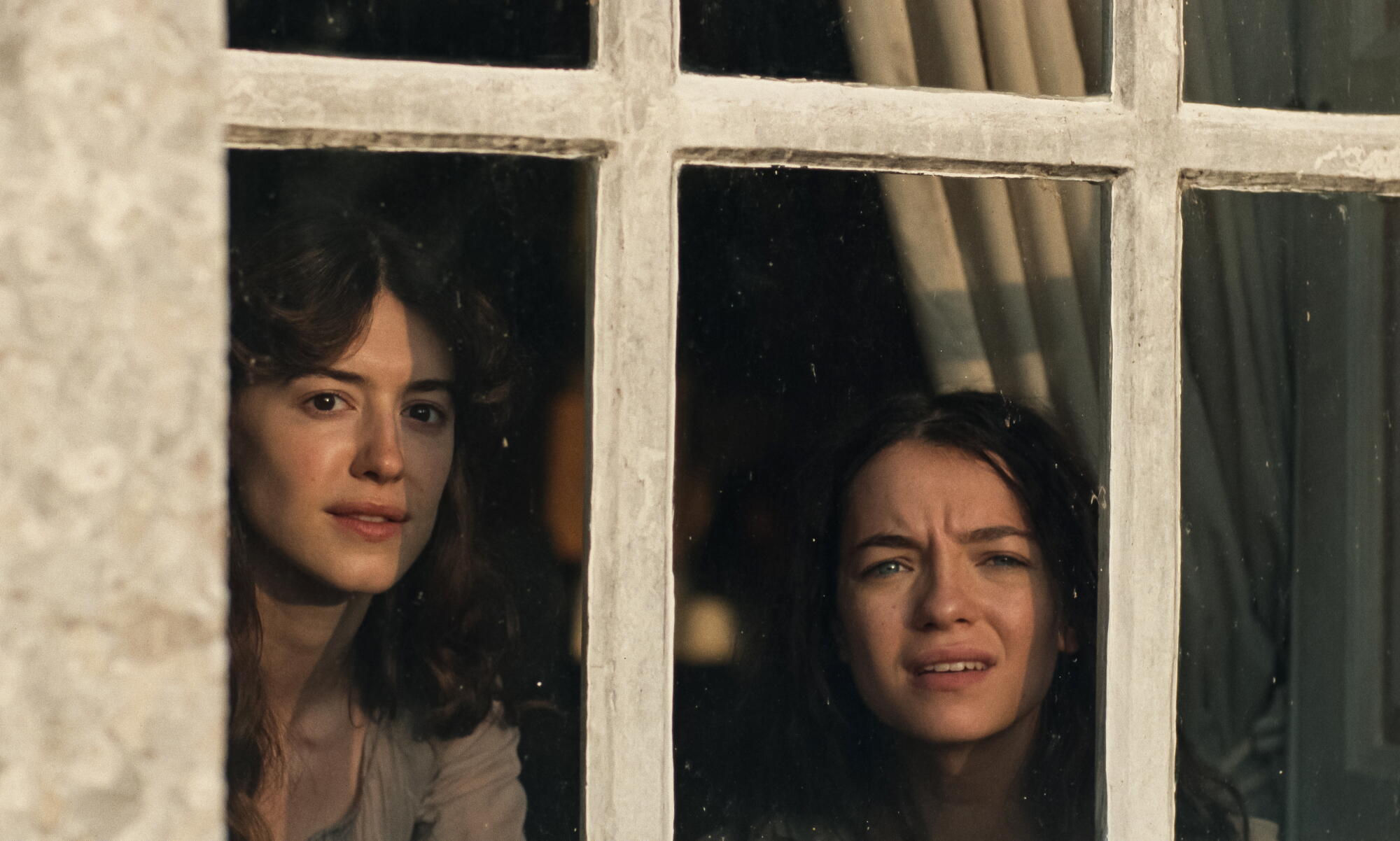
Daisy Edgar-Jones, left, as Elinor and Esmé Creed-Miles as Marianne in a new version of “Sense and Sensibility.”
(Focus Features)
Oakley’s “Sense and Sensibility” emphasizes that relationship between Elinor and Marianne. Although they approach the world differently, they find common ground in each other. It was essential to find the right actor for each role, but also to ensure there was both tension and chemistry between them. Edgar-Jones, 28, was cast first without an audition. There was never any question as to which sister she would play.
“I have played a significant Marianne before,” Edgar-Jones says in a nod to affluent, tortured outcast Marianne Sheridan, her role in “Normal People.” “And I love both characters, but I’m moving into my late 20s now. Elinor has a maturity and a wise older soul quality that I really liked and felt I was right to occupy. I have always been attracted to characters who don’t necessarily have the words to express how they feel.”
Oakley appreciated Edgar-Jones’ restraint. “She is able to show so much by seemingly doing very little,” Oakley says. “Elinor has a lot on her shoulders, so I was looking for an actor who could give a sense of that from the very beginning.”
Creed-Miles, 26, faced a more uphill climb to become Marianne. She describes her first audition as awful.
“It was really bad,” she says. “Maybe I was nervous. I can be a bit of a mess. But someone saw something in me, I guess, and they called me back. This time I worked my ass off and spent days preparing the scenes. They liked that audition enough to bring me in for chemistry reads with Daisy and some of the boys.”

“There’s an earthy, undone nature to the world Georgia made,” Edgar-Jones says of director Oakley’s take on Austen.
(Erik Carter / For The Times)
“The first audition didn’t go exactly to plan,” says Oakley, who didn’t expect to see the actor again. “But [the second time] I was so moved by Esmé performance. We have this idea of how we think people are supposed to speak in a period drama, and Esmé seemed to not be affected by any of that.”
Edgar-Jones and Creed-Miles had previously worked together on the 2018 drama “Pond Life,” which was an asset going into “Sense and Sensibility.”
“It’s a summer I have never forgotten,” Edgar-Jones says of the experience, her first film role. “I met Esmé and we fell in love. We watched a lot of ‘Love Island.’ And then COVID happened and we weren’t reunited until our chemistry read.”
Although they hadn’t completely stayed in touch, there was a natural rhythm between them. “We had so much history and nothing was ever overly discussed,” Edgar-Jones adds. “It was instinctual. That level of intimacy takes time to develop and the fact that I already had years with Esmé meant that it felt very lived in.”
“Sense and Sensibility” was filmed entirely on location around England, primarily in the sweeping countrysides and dramatic coasts of Devon and Dorset. Oakley wanted to emphasize nature and to show how the Dashwood women’s emotional landscapes evolved alongside the shifting landscapes around them, both in the countryside at Barton Cottage and in the more confining social landscape of London. There is a naturalistic aesthetic to the film, augmented by the locations, the costumes and the hair and makeup design. The characters wear muted, sweeping gowns, their hair often loose.
“There’s an earthy, undone nature to the world Georgia made,” Edgar-Jones says. “Sometimes there’s distance you can sometimes get from watching a period drama because obviously we no longer wear corsets and bonnets and ride in horse-drawn carriages. But even though this feels very much of the Regency time, it also feels very close.”
“I loved how authentic everything felt,” Creed-Miles adds. “It didn’t feel frilly for the sake of itself. The clothes helped me find a sense of Marianne. I needed the costumes to close that gap.”
“We wore no makeup, even to the point where sometimes I’d put on some lip balm and Georgia would be like, ‘Take it off,’ ” Edgar-Jones recalls.

“The characters started to feel like real people in my life who I knew,” says Creed-Miles. “It was almost like a split personality.”
(Erik Carter / For The Times)
Creed-Miles says the unbuttoned aesthetic felt more true to the time, even if some commenters online have claimed it’s not period accurate.
“We don’t have depictions of women’s internal lives in the way that we do now,” she says. “When you look at a portrait there’s a composure that’s not the same as having a phone picture of someone when they’re getting out of bed in the morning.”
Oakley fills the screen with a palpable yearning. The camera often lingers over the actors’ faces, revealing Elinor’s inner turmoil and Marianne’s dramatic heartbreak. For many scenes, Oakley asked the cast to do silent takes.
“We wanted to tell a story that had space for some quieter moments,” the director says. “The actors were free to speak or make noises, but they couldn’t say the words of the scene.”
“In making this, I realized Elinor isn’t devoid of emotion,” Edgar-Jones says. “She’s full of it, but she’s learned how to govern it. Realizing that she was an extraordinarily passionate person and not a stone was really important for me. By the end, I felt completely marinated in it.”
“The characters started to feel like real people in my life who I knew,” Creed-Miles agrees. “It was almost like a split personality.”

“Circumstances have changed for young women quite drastically over the past 200 years,” director Oakley says. “But the fundamental contradictions around what it means to be a young woman haven’t changed nearly as much as we would like to think.”
(Erik Carter / For The Times)
Oakley’s interpretation of “Sense and Sensibility” has a wistful, almost Brontë-like quality. You can feel each character’s pain and joy and hopefulness. At the premiere, the audience audibly gasped and cheered, even though Austen’s story is well known to many. Oakley didn’t want to make her film overly contemporary, but she feels the story resonates today because Austen is so timeless.
“Circumstances have changed for young women quite drastically over the past 200 years,” Oakley says. “But the fundamental contradictions around what it means to be a young woman haven’t changed nearly as much as we would like to think. There’s this enormous gap between what we tell young women that they can reasonably expect from their lives and what the world is prepared to offer them.”
Creed-Miles admits that she’s recently fought with someone on Instagram about whether Austen was a feminist.“They didn’t have that terminology back then, but she was a rebellious author in that she used these sociocultural structures to explore the trials and tribulations of femininity,” Creed-Miles says. “It was really important to Georgia that we kept that alive. Reading Austin as an adult, I have so much respect and admiration for the themes she was exploring with a really deft hand. It’s never rammed down your throat.”
Edgar-Jones, an Austen fan, agrees that she captured a truth about the human experience. That’s what allows the author’s work to be retold and reimagined over decades.
“The joy of adaptation is that every new person who says these words will bring a piece of themselves and give it new meaning,” Edgar-Jones says. “And every time we explore something again, it will be colored with the context of today. Great art, like this, should be brought to life again and again.”