Eurasian Economic Union (EAEU) countries are moving towards deeper economic integration through digitisation and AI, as leaders of the bloc met in Astana for a two-day summit.
ADVERTISEMENT
ADVERTISEMENT
During the high-level talks, member states discussed creating a unified digital environment to build a seamless market across a shared economic space of more than 20 million square kilometres.
Delegations focused on trade, joint projects and the development of shared digital tools and AI systems designed to strengthen cooperation and reduce fragmentation across the bloc.
Last year, trade within the union more than doubled, while turnover with third countries rose by 72%, while around 90% of settlements are now conducted in national currencies, as EAEU states also mull a single transit system.
With digitisation driving developments across the union, Kazakhstan’s President Kassym-Jomart Tokayev said trade turnover between EAEU members could increase by around 6%, exceeding €85 billion this year, compared with €80 billion last year.
He added that GDP growth across EAEU countries is projected at around 2.5% for 2026–2027.
Now in its 12th year, the EAEU functions as a single integrated market and free trade zone for its five members – Russia, Belarus, Kazakhstan, Kyrgyzstan and Armenia.
The bloc already has agreements in place with a number of countries including Serbia, Vietnam, the UAE, Mongolia and Indonesia. China remains the bloc’s key partner, accounting for around one-third of external trade.
Integration through AI
Kazakhstan’s Tokayev said that during its chairmanship of the EAEU, the country has proposed the practical use of AI to help implement the bloc’s so-called four freedoms, with the aim of strengthening the competitiveness of member states.
Member states also proposed developing common principles for the responsible use of AI, as well as shared computing capacity and joint model development.
Meanwhile, Russia proposed a high-level AI get-together next year to further cooperation on domestic AI models and connecting its IT and energy infrastructure, according to Russian President Vladimir Putin.
On the ground, pilot projects are already being tested at the EAEU level.
In Kazakhstan, several AI-powered digital assistants have been developed by both government agencies and startups to help citizens navigate legal and regulatory systems more easily.
According to Deputy Minister of Artificial Intelligence and Digital Development Dmitry Mun, these AI legal assistants are designed to simplify legislation, reduce bureaucracy, and make regulatory systems more accessible for citizens and businesses.
Some of these tools are now being tested to streamline processes across member states.
Trade corridors and logistics modernisation
Around 85% of goods travelling from China to Europe are routed through the Middle Corridor, according to officials.
Artificial intelligence is increasingly being deployed alongside the TDN and the Digital Transport Corridor along the Trans-Caspian International Transport Route. Together, these measures are expected to increase non-commodity exports by around 30% over the next two years.
Kazakhstan’s Minister of Trade and Integration Arman Shakkaliyev said the country also aims to leverage major transport routes, including the Middle Corridor and the North–South Corridor, to build a fully integrated logistics ecosystem.
The goal, he said, is to position Kazakhstan as a key regional hub where transport routes converge and large export flows are consolidated.
The ambition is to develop a fully functioning system by 2030, with cargo volumes reaching around 10 million tonnes. Work is already under way, including railway modernisation and new infrastructure development.
Putin visit and bilateral agreements
The summit followed Putin’s state visit to Kazakhstan, during which the two countries signed seven key pillars of bilateral cooperation, along with a broader package of agreements covering energy, transport, finance, education and industrial development.
Russia remains Kazakhstan’s largest investor, with nearly €25 billion already invested and plans to increase that figure further. It is also building Kazakhstan’s first nuclear power plant, valued at around €14 billion.
Putin said the plant would account for around 20% of Kazakhstan’s electricity consumption, adding that financing conditions for such projects are in line with international practice.
He noted that the project supports Russian industrial capacity through equipment orders and long-term maintenance contracts, while also strengthening cooperation between the two countries in uranium and nuclear technology.
For Kazakhstan, officials say the project represents both energy security and a step towards moving beyond raw-material exports to high-value technological cooperation.
The incident is the latest setback for Jeff Bezos’s space venture as it seeks to narrow the gap with Elon Musk’s SpaceX.
By AFP, Reuters and The Associated Press
Published On 29 May 202629 May 2026
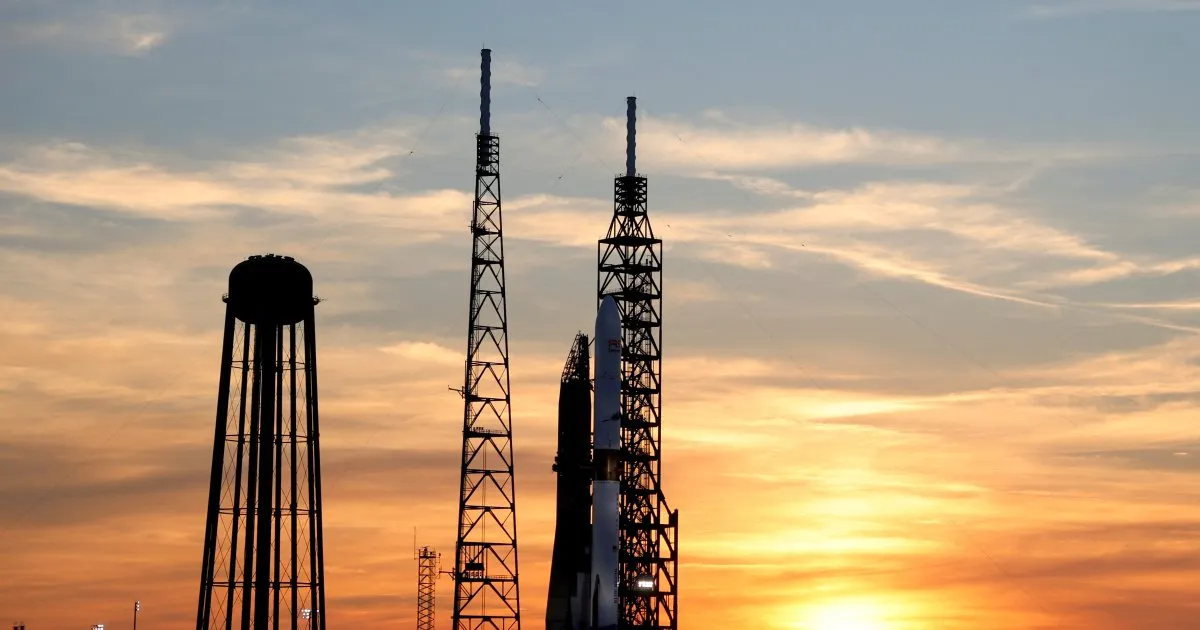
Blue Origin’s New Glenn rocket has exploded on the launchpad during a test in the US state of Florida.
The incident on Thursday evening is the latest setback for Jeff Bezos’s space venture as it seeks to narrow the gap with Elon Musk’s SpaceX.
Recommended Stories
list of 4 itemsend of list
Footage of the incident shows smoke emerging from underneath the rocket before it erupts into a massive fireball that billows skyward, sending a towering plume of flames and smoke into the air.
Emergency crews remained at the scene more than an hour later, but officials said there was no threat from fumes or other potential hazards.
No injuries have been reported.
“We experienced an anomaly during today’s hotfire test,” Blue Origin said in a brief statement posted on X, adding that “all personnel have been accounted for”.
A hot-fire test is where a rocket engine is fired up while anchored to the ground.
In a separate X post, Bezos said it was “too early to know the root cause” of the incident.
“Very rough day, but we’ll rebuild whatever needs rebuilding and get back to flying. It’s worth it,” Bezos added.
US House Representative Mike Haridopolos, whose Florida district includes the launch site at Cape Canaveral, said in a statement on X that he has been in contact with NASA Administrator Jared Isaacman regarding the explosion.
“I am grateful there were no reported injuries and thankful for the first responders, engineers, and launch crews who acted quickly,” Haridopolos said.
Blue Origin is preparing the New Glenn rocket to launch 48 Amazon Leo satellites into low-Earth orbit, part of efforts to build a broadband constellation to rival Musk’s Starlink network.
Musk responded on X to a video of the New Glenn explosion, saying: “Most unfortunate. Rockets are hard.”
Last month, the New Glenn rocket failed a mission to deliver a communications satellite into the correct orbit, prompting an investigation.
Perplexity unlawfully copied thousands of CNN stories, videos and images to power its products, CNN said in its lawsuit.
Published On 28 May 202628 May 2026
United States news channel CNN has filed a lawsuit against Perplexity in New York federal court, alleging the AI search engine provider is unlawfully distributing its copyrighted content, marking the latest legal tussle between the AI firm and a news publisher.
The complaint, filed on Thursday, said that Perplexity unlawfully copied thousands of CNN stories, videos and images to power its products and distribute “identical or substantially similar” competing content.
Recommended Stories
list of 4 itemsend of list
“You can’t copyright facts,” Perplexity spokesperson Jesse Dwyer said in response to the lawsuit.
CNN is asking for an unspecified amount of monetary damages and a court order blocking Perplexity from violating its intellectual property rights.
“CNN’s lawsuit stands for the proposition that Perplexity, a company valued at tens of billions of dollars, should not be able to steal from entities that create the original content Perplexity exploits,” the Warner Bros-owned news company said in a statement.
“By exploiting CNN’s reporting in this manner, Perplexity violates the protections afforded by copyright law and undermines the economic incentives that make original newsgathering possible,” CNN said in the complaint.
Since the launch of OpenAI’s ChatGPT in 2022, news publishers and writers have worried about their content being repurposed to appear in the results of a chatbot query, triggering battles over copyright, compensation and ownership.
CNN’s lawsuit is one of dozens of high-stakes US cases brought by copyright owners, including news outlets, authors and publishers, against tech companies over alleged misuse of their work to train large language models. Anthropic was the first AI company to settle one of these cases last year, agreeing to pay $1.5bn to resolve a class action lawsuit from a group of authors.
The CNN suit is the latest in a series of legal challenges brought against Perplexity, which uses AI to scour websites and answer users’ queries, alleging the company has infringed copyrights and unlawfully scraped data to train its technology.
Perplexity is also facing lawsuits from The New York Times, Reddit and Dow Jones, among others.
Several news firms have now signed licensing deals and partnerships with Big Tech and generative AI companies to ensure that their models have access to verified sources of news, while also compensating publishers and linking back to original articles.
Michele Spagnuolo allegedly used insider information to profit from bets on people on Google’s most-searched list.
Published On 28 May 202628 May 2026
A Google software engineer has been charged with fraud by US authorities after allegedly using insider information to win more than $1.2m in bets on the prediction market platform Polymarket.
Michele Spagnuolo, an Italian citizen residing in Switzerland, is accused of using confidential information to wager on the results of Google’s annual most-searched list, according to a criminal complaint unsealed on Wednesday.
Recommended Stories
list of 3 itemsend of list
US prosecutors accuse Spagnuolo of using an account named “AlphaRaccoon” to make trades on various markets linked to the results of Google’s 2025 Year in Search.
The total sum of the bets was approximately $2.75m, according to the complaint, filed in federal court in New York.
Among the bets, Spagnuolo successfully predicted that indie pop musician d4vd would top the list for the most-searched for person last year, hours after accessing confidential data at Google, according to prosecutors.
Spagnuolo, 36, faces charges of commodities fraud, wire fraud and money laundering.
“Today’s charges reinforce a decades-old message: corporate insiders cannot use confidential business information to turn a profit in our markets,” US Attorney for the Southern District of New York Jay Clayton said in a statement.
“Insider trading compromises the integrity of our markets, and the American people want this greed-driven conduct investigated and prosecuted,” Clayton added.
Bets on Maduro’s capture
Google said in a statement that it is working with law enforcement and that using confidential information to place bets is a serious breach of company policy.
Spagnuolo has been placed on leave, according to a Google spokesperson.
A Polymarket spokesperson said the company had worked closely with the US Attorney’s Office on the investigation and that the firm “is the only prediction platform to date whose cooperation has led to insider trading charges in the United States”.
“We are committed to maintaining accurate, fair, and transparent markets as well as enforcing our rules and working with our regulators and law enforcement,” the spokesperson added.
Last month, a US soldier was charged with using classified military information to place bets on Polymarket regarding the abduction of Venezuelan President Nicolas Maduro.
Prosecutors accuse Gannon Ken Van Dyke, 38, of cashing in on the US operation against Maduro, to the tune of more than $400,000.
Canada has announced plans to buy a fleet of early warning planes from Sweden’s Saab rather than a competing option from Boeing as it seeks to reduce its reliance on the United States.
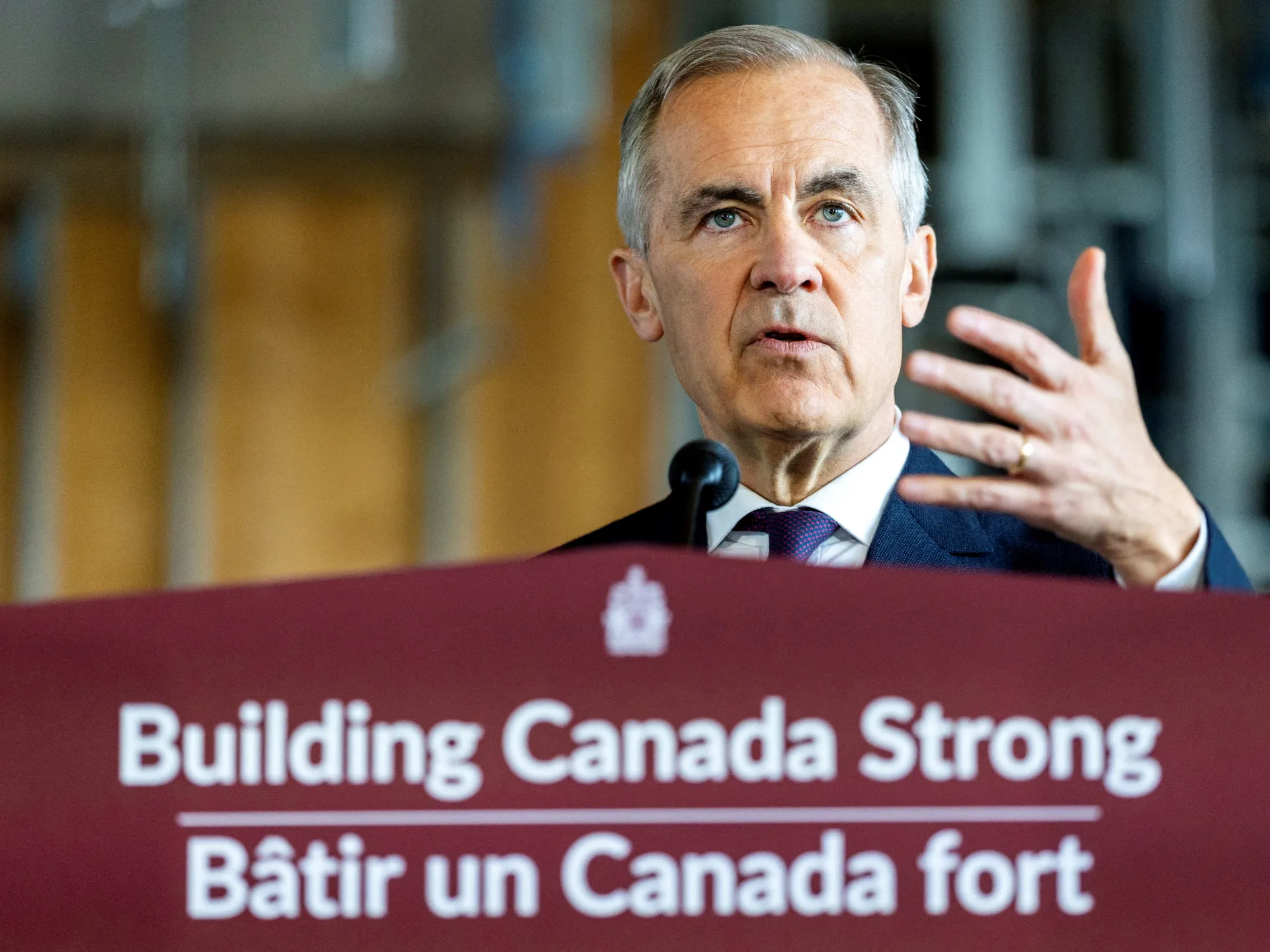
Prime Minister Mark Carney said on Wednesday that Canada would opt for Saab’s GlobalEye, which is based on Bombardier’s Global 6500 jet. Boeing’s E-7 Wedgetail plane – which has suffered from delays and cost overruns – had also been in contention.
Recommended Stories
list of 4 itemsend of list
“With a suite of advanced sensors and mission systems, Saab’s GlobalEye will be a key resource for the Canadian Armed Forces to detect and deter threats across the Arctic,” Carney told a defence conference in Ottawa.
The Prime Minister pledged in March that Canada would take full responsibility for protecting its vast Arctic territory, after relying for decades on a partnership with the US to monitor its more than 4.4 million square km (1.7 million square miles) of land and sea, a territory larger than India.
Carney’s Liberal government last year announced plans to ramp up defence spending. The US and other allies had complained for years that Canada was not meeting longstanding NATO targets on military expenditure; Carney announced in March that Canada hit that target of spending 2 percent of its GDP on defence last year.
In a statement, Saab said it planned to invest in research and development work in Canada as part of any deal.
Although Carney did not give details of the fleet size or the cost of a potential contract, military officials had earlier said they were looking to buy six early warning aircraft.
Philippe Lagasse, associate director of international affairs at Ottawa’s Carleton University, said Canada’s decision to buy the GlobalEye planes was “an important test case for the Carney government’s policy of pivoting away from American military capability”.
He said in a statement that the decision confirms Canada’s relationship with Sweden, a new NATO ally that has also been eager to strengthen its ties to the Canadian military.
Canada has previously said it wants to work more closely with the Nordic countries in the Arctic on defence and other issues, in a global environment in which the US has become a less reliable partner.
“GlobalEye is already creating jobs in Canada, and working with the Canadian supply chain. This decision ties our two nations even closer together,” Swedish Prime Minister Ulf Kristersson said in a social media post.
Saab is also in the running to sell Canada some of its Gripen fighters.
Canada has a deal to buy 88 F-35 jets from Lockheed-Martin, but last year, after the US slapped tariffs on key Canadian imports, Carney asked the military to probe whether it could cut back the order and buy some planes from another manufacturer.
Carney later told reporters Ottawa would make a decision on the fighter fleet in due course and declined to comment when asked whether the military would be operating two jets.
Last week, a Pentagon official, speaking after Washington suspended planned biannual defence talks with Canada, said the delay in making a decision on the F-35s showed how Ottawa was prioritising politics over defence issues.
Still, Lagasse of Carleton University said he expected Canada would ultimately decide to stick with a fleet of F-35 jets rather than splitting the fleet by buying some Saab Gripens.
“If the government was determined to buy Gripens, I would have expected them to make the announcement alongside this [GlobalEye] decision,” he said.
Trade tensions
The announcement came amid ongoing trade tensions between US and Canada after US President Donald Trump slapped tariffs on Canada after taking office last year, alongside multiple comments threatening to annex the country and make it the 51st state of the US.
Historically, nearly 80 percent of Canada’s exports have been to the US. While the vast majority of those were protected under the USMCA, the trade agreement between the two countries that also includes Mexico, that is now due for a review, which starts on July 1, and Trump has said the US does not really need that deal.
While the US has announced bilateral talks with Mexico, there has been no mention of Canada.
Deputy US Trade Representative Jeffrey Goettman will lead bilateral talks in Mexico City on Thursday and Friday focused on “economic security and rules of origin for key industrial goods,” the department said in a statement on Wednesday.
USTR said the US and Mexico will hold a second round of negotiations in Washington on June 16-17, focused on agriculture and “a level playing field,” with a third set of talks in Mexico City scheduled for the week of July 20.
The first Trump administration held trilateral negotiating rounds with both Mexico and Canada to create the existing USMCA, which replaced the 1994 North American Free Trade Agreement in 2020.
But so far, there have been few discussions between US Trade Representative Jamieson Greer and his Canadian counterpart, Canada-US Trade Minister Dominic LeBlanc, since early March, and no formal launch of a US-Canada negotiating process.
Eid al-Adha, one of the most important dates in the Islamic calendar, comes at a critical time for Iranians this year.
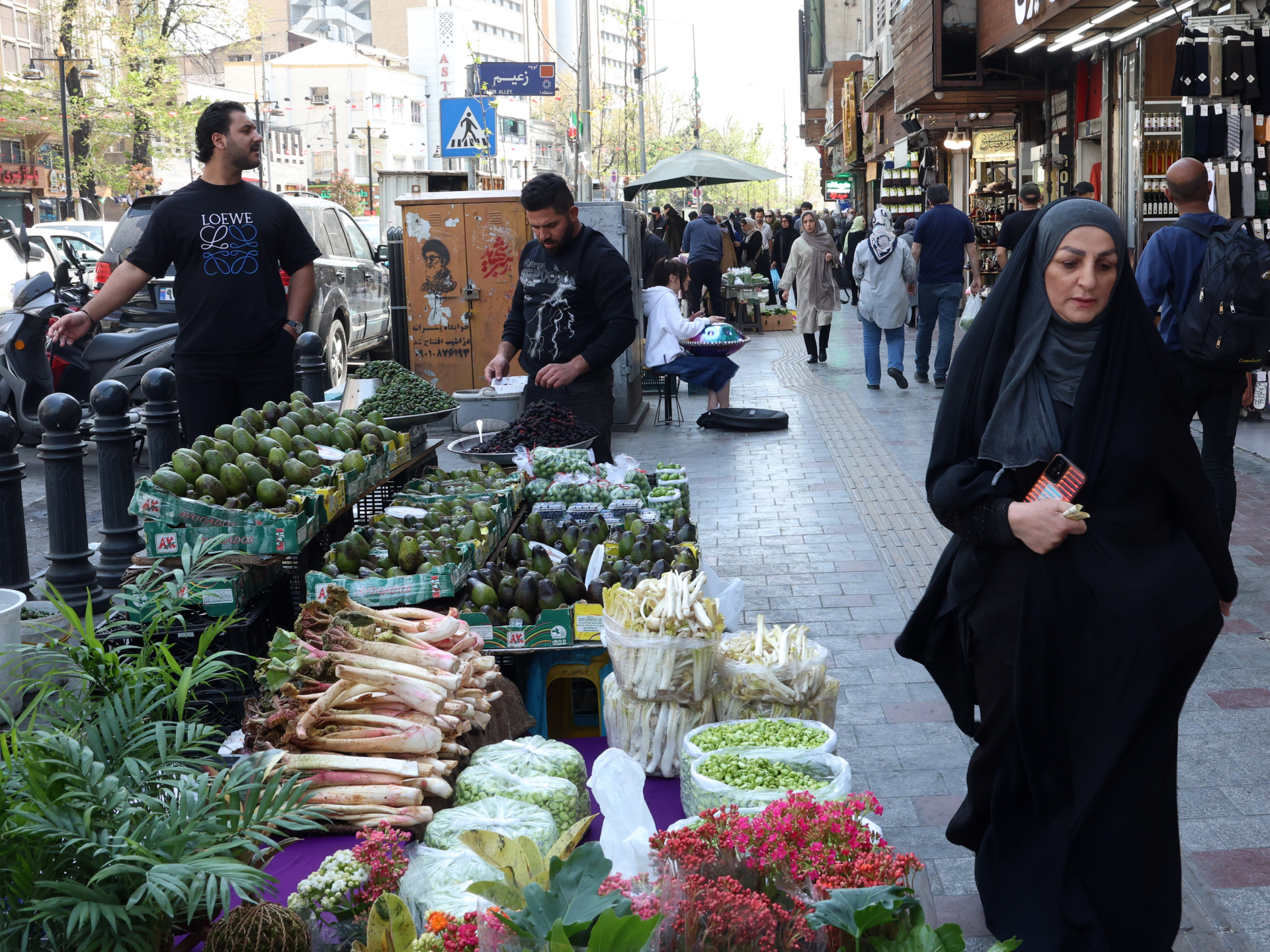
Meat from sacrificed animals is often eaten at Iranian tables, but a blockade on Iranian ports and sanctions by the US has led to escalating costs across the country.
Unlike Nowruz, the Persian New Year, Eid al-Adha is not as widely celebrated in Iran, but mosques and other institutions still observe the ritual of animal sacrifice, known as qurbani, through authorised livestock and slaughter centres.
Here, animals are sacrificed according to Islamic law in a hygienic environment. But another goal of the network is to control runaway inflation by offering meat at lower prices than market rates.
Meat substitutes
A Tehran municipality body announced on Tuesday that each kilogramme of sacrificial meat would be sold at 7.4 million rials ($4.30) at designated shops.
The price for a similar cut on the market can be more than three times that, depending on its quality and the location of the butchers. The minimum wage is currently less than $100 per month in Iran.
“I usually buy meat for a stew or a few dishes around every three weeks; for some families in the neighbourhood, it has become a sort of luxury,” said a middle-aged woman, who lives with her husband and son in Tehran.
She told Al Jazeera that chicken, eggs and legumes have become replacements for red meat, but the costs of these staples have significantly increased, too.
Masoud Rasouli, a meat-packing industry representative, told the state-linked Mehr news agency earlier this week that demand for red meat has decreased by 50 percent compared with last year.
He said some meat was imported to counter any effects of the US blockade, but local demand is currently so low that “existing livestock population is enough for all the needs of the market”.
Data released by the state-linked Iranian Labour News Agency this week showed that the current cheapest government-announced price for one kilogramme of meat during Eid is equal to the price of a 50kg live sheep 10 years ago.
According to the Statistical Center of Iran, year-on-year inflation stood at more than 73 percent in the first month of the Persian calendar year that ended in late April.
Iranian rice was up by 173 percent and chicken by 191 percent in that month compared with a year before, while liquid cooking oil more than quadrupled. Figures for the next month are expected to be worse.
Controlling inflation
Price-control measures – which have been implemented by authorities to fight a decade of rampant inflation – have been unable to adequately compensate for the ever-decreasing purchasing power of Iranian households living under local mismanagement and US sanctions – and now war and a blockade.
A young man working at a butcher shop in southwestern Tehran said they have had to increase prices several times over recent months after suppliers announced hikes.
“Our sales were a bit higher today because of the Eid, but we see even our most frequent customers far less these days. Most of the conversations with the customers are about the prices,” he told Al Jazeera.
Iran and the US have been holding negotiations through regional mediators to potentially end the war. But amid exchanges of fire and inflexibility over demands, no breakthrough has emerged even as both sides say a memorandum of understanding has mostly been negotiated.
Religious messaging
Beyond greetings and congratulatory phone calls with regional peers, Iranian authorities also used the Muslim festival this year to issue political messages.
On Wednesday morning in the capital, the authorities organised a large prayer to mark Eid at the University of Tehran, which was led by ultraconservative Ayatollah Ahmad Khatami.
He said that “submitting to humiliation” is an example of “evil” and the height of vice, at a time when he believes the other side, the US, seeks a surrender from Iran.
“Your enemies, the Iranian nation’s enemies, and this mad enemy sitting in the Black House – which is wrongly referred to as the White House – want your humiliation. But this madman will take that wish to his grave,” he said about US President Donald Trump.
Khatami, a member of the powerful Guardian Council and the clerical Assembly of Experts, also praised the supporters of the government who have taken to the streets every night for almost three months and said this “unprecedented” phenomenon would be repeated on the nights of Eid al-Adha.
President Masoud Pezeshkian had a relatively softer approach, but his comments were still laden with religious symbolism.
“In today’s turbulent world, where the fire of tyranny, occupation, and the arrogance of the hegemonic powers burns bright, Eid al-Adha conveys the message of dignity, liberty, and fearlessness in the face of the pharaohs of our time,” he said.
Foreign Minister Abbas Araghchi said in a message on Wednesday that he hoped for harmony in the Muslim world, amid this difficult time for the region.
“We pray that, by the auspiciousness and blessing of this great Eid, we will witness the deepening and strengthening of Islamic solidarity for cooperation and mutual assistance in confronting war, discrimination and occupation, especially in the West Asia region, and that our world will return to the path of reviving peace and justice,” he said.
Taipei, Taiwan– For Li, an engineer at Taiwanese computer giant ASUS, the AI boom sweeping Taiwan has made it an exciting time to work in tech.
Taiwan is a semiconductor powerhouse, producing about 90 percent of the most advanced chips used to power leading AI models such as ChatGPT and Claude.
Recommended Stories
list of 4 itemsend of list
“I’ve felt Taiwan’s tech and computer industry becoming more vibrant,” Li, who asked not to be identified by his real name, told Al Jazeera, pointing to events such as the upcoming Computex tech and AI expo running from June 2 to 6.
Still, Li worries that the spoils of Taiwan’s AI windfall are not being shared equally.
“Most industries unrelated to tech don’t seem to be feeling the benefits, so it doesn’t feel evenly distributed at the moment,” Li said, explaining that many of his former classmates working outside of tech do not appear to be doing as well.
“It’s mainly the industries at the front of this tech wave that are benefitting.”
Taiwan’s economy is growing at a pace that would be the envy of any country.
Gross domestic product (GDP) rose 8.63 percent in 2025, followed by a heady 13.69 percent expansion in the first three months of this year.
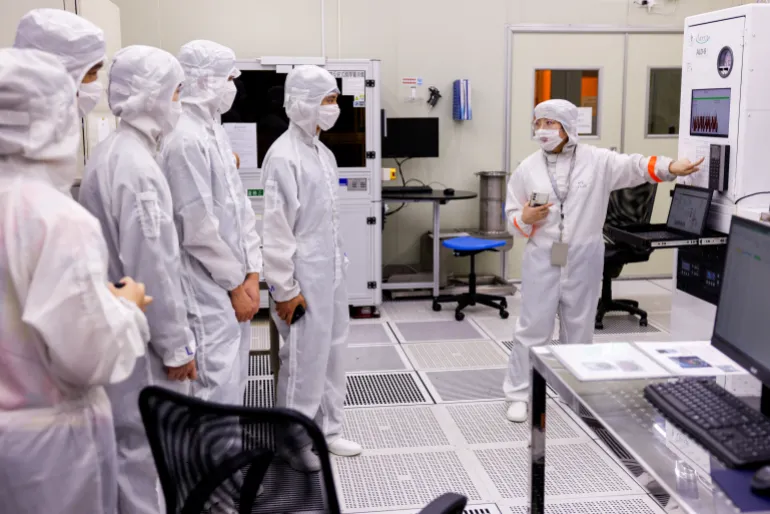
Students dressed in white protective suits and face masks visit a clean room as part of a summer camp organised by US chip designer Synopsys with the goal of attracting more youth to Taiwan’s semiconductor industry, in Hsinchu, on July 18, 2025 [Ann Wang/Reuters]
Exports surged 34.9 percent last year to $640.7bn, with more than two-thirds of the total being tech-related goods and services.
Semiconductors alone account for more than 20 percent of Taiwan’s GDP, according to US trade data, with the vast majority of production handled by Taiwan Semiconductor Manufacturing Company (TSMC), whose top customers include Nvidia and Apple.
TSMC by itself accounts for more than 40 percent of the value of the island’s stock market.
While impressive, the rapid economic expansion has raised concerns about being overreliant on the growth of AI.
Taiwan’s Central Bank Governor Yang Chin-lung has sounded the alarm about an emerging “K-shaped economy,” where certain sectors grow rapidly while others fall into stagnation.
While critical to Taiwan’s economy, the semiconductor industry is far from the largest source of jobs.
The sector employs only about 300,000 people in a workforce of 11 million, according to data compiled by Dachrahn Wu, director of National Central University’s Research Center for Taiwan Economic Development.
The broader electronics and IT manufacturing industry employs about one million people, compared with about seven million working in the service sector, according to Wu’s data.
The heavy reliance on a single industry for growth marks a shift from the Asian Tiger era of the 1960s to 90s, when Taiwan’s economy was driven by hundreds of thousands of small and medium-sized enterprises (SMEs), according to James Lin, a historian who specialises in Taiwan’s post-war economic transformation.
“From the 1970s to 1990s, economic growth was concentrated in the hands of small and medium family enterprises that exemplified the ‘living room factory’ model, where family-owned businesses focused on producing one part for a consumer product,” Lin told Al Jazeera.
“The benefits of this period were thus more widely distributed across Taiwanese society,” Lin said.
“By contrast, today, wealth inequality is growing in Taiwan as land is becoming more expensive and large corporations like TSMC attract the lion’s share of foreign capital investment rather than small corporations.”
Alicia Garcia Herrero, chief economist for Asia Pacific at French investment bank Natixis, said Taiwan’s economic model has left it at risk of becoming a “dual society” where tech sweeps up talent, funding and resources at the expense of other industries.
“It’s very hard if you’re not in [the semiconductor] sector in Taiwan right now,” Garcia Herrero told Al Jazeera, pointing to low wages for workers in non-tech roles and rising costs for businesses.
Some of Taiwan’s challenges are out of its control, said Chao-Hsi Huang, associate dean at the Taipei School of Economics and a former director at Taiwan’s central bank.
Those challenges include US President Donald Trump’s tariffs, which have partially exempted semiconductors but hit exporters in non-tech industries.
“The traditional [manufacturing] sector suffers higher tariffs than other competing countries like Korea or Japan, or even Southeast Asian countries, due to the fact we are not able to sign free trade agreements,” Huang told Al Jazeera.
“We are treated differently, and that’s a difficulty we are facing.”
Critics have placed other issues on the shoulders of the government, including a weak currency that has made exports more competitive but chipped away at consumers’ purchasing power.
Taiwan’s government denies engaging in currency manipulation, though it acknowledges intervening in the market to smooth out “volatility” when the new Taiwan dollar falls or rises sharply against other currencies.
After two decades of stagnation through the 2010s, wages are growing again – albeit unevenly.
Real average wages grew 1.4 percent in 2025, while median wages rose 1.35 percent, according to the Directorate-General of Budget, Accounting and Statistics (DGBAS).
Still, 70 percent of Taiwanese earned less than the average, a statistic attributable to the distorting effect of much higher salaries in the tech sector, where pay is nearly double the national average.
A miniature-sized wafer sorter machine model by Rorze on display at the Science Park Exploration Museum in Hsinchu, Taiwan, on February 6, 2023 [Ann Wang/Reuters]
For Taiwanese frustrated with stagnant pay, Taiwan’s soaring stock market has offered some consolation.
Riding the AI boom, the Taiwan Stock Exchange (TWSE) more than doubled in value between 2019 and 2025 to $2.2 trillion, according to HSBC.
Regulatory changes introduced in 2020 made it easier for small-time investors to buy single stocks, encouraging a rush of everyday Taiwanese into the market.
In January, the TWSE reported that the number of trading accounts had reached 13.77 million – equivalent to 60 percent of Taiwan’s population – while hailing the bourse as a “cornerstone for inclusive prosperity and shared growth”.
Though more equal than neighbours such as Singapore, Hong Kong and China, Taiwan’s wealth divide has grown over the decades.
In 1980, Taiwan had a Gini coefficient of 0.308 – a measurement of wealth distribution where 0 indicates perfect equality – putting it on par with contemporary Norway, according to the DGBAS.
By 2024, Taiwan’s Gini coefficient had grown to 0.341 – lower than many countries but still a significant rise.
“I feel that the benefits of economic growth haven’t been distributed evenly,” Ryan, an engineer in the local tech sector who asked not to be identified by his real name, told Al Jazeera.
“Some industries or asset holders benefit significantly, but ordinary office workers often experience a rise in prices and housing costs, rather than an easier life,” he said.
Wei-ting Yen, an assistant research fellow at the research institution Academia Sinica, said while the semiconductor and stock market booms have helped some Taiwanese, they have heightened the angst of others.
In a survey of 1,195 Taiwanese voters carried out last month, 40 percent said their household was financially either “anxious” or “very anxious” due to rising living costs, particularly housing.
“I think subjectively, they’re anxious that they’re not accumulating wealth and it’s not enough to help them buy a house or an apartment,” Yen told Al Jazeera.
“Housing prices have been going crazy worldwide, and the stock market has been going crazy, [but] for people who do not have extra money to invest in those two options, it creates even more frustration and anxiety around them,” she said.
Coffee chain has seen ‘very significant’ drop in sales after campaign that evoked deadly crackdown, local operator says.
By Reuters and The Associated Press
Published On 26 May 202626 May 2026
Starbucks Korea has suffered a “very significant” drop in sales after a marketing campaign that evoked a brutal 1980 military crackdown on pro-democracy protesters triggered a public outcry, according to the coffee chain’s local operator.
Shinsegae Group, whose subsidiary E-Mart owns the coffee chain in South Korea, has faced mounting criticism over its so-called “Tank Day” campaign, launched on the anniversary of the May 18 Gwangju Uprising, when the military government deployed troops and tanks to suppress pro-democracy demonstrations.
Recommended Stories
list of 4 itemsend of list
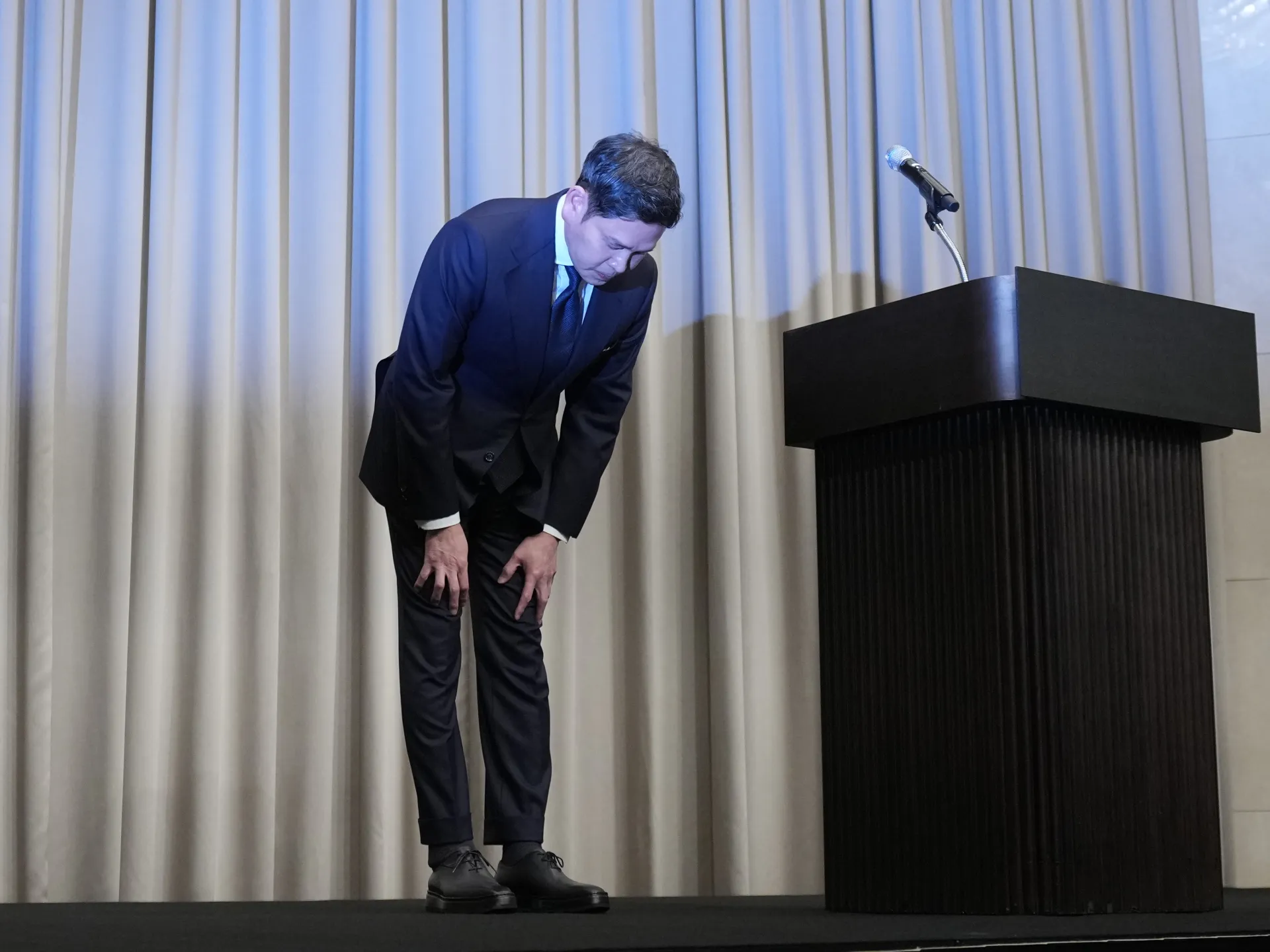
In a news conference on Tuesday, Shinsegae Group chairman Chung Yong-jin made a public apology and asked people not to take out any anger on Starbucks Korea employees and front-line staff.
“I take it very seriously, the fact that many people felt deep pain and anger because of Starbucks Korea’s inappropriate marketing campaign,” Chung said.
“I will take all responsibility for the incident.”
Chung also asked people not to take out their frustration on staff at Starbucks shops, saying the responsibility lies with management. There were no immediate reports of major incidents at stores.
Chung issued his first apology on May 19, saying in a statement that the campaign caused “deep pain to the victims and bereaved families of the May 18 Democratization Movement as well as to the public”.
Shinsegae fired the head of Starbucks Korea last week after apologising over the campaign. Starbucks Global also apologised and said that an investigation had begun.
A Shinsegae official said sales had fallen sharply since the marketing controversy.
“While sales are not our main concern at the moment, we have seen a very significant drop,” said the official.
At Tuesday’s news conference, Jeon Sangjin, a senior Shinsegae Group executive, said the company had yet to find conclusive evidence that Starbucks Korea marketing employees intended to mock the pro-democracy movement, an accusation the employees have denied.
However, he said some employees refused management requests to hand over their smartphones during a weeklong internal review.
Jeon said the company would look at the results from the police inquiry, and any employee found to have intended to ridicule protesters would be fired.
The anger over the campaign has triggered public calls for boycotts, amplified by government officials, including Interior and Safety Minister Yoon Ho-jung, who said Starbucks products will no longer be used at government events and lamented the chain’s “anti-historical behaviour”.
The country’s president, Lee Jae Myung, said on X last week that the campaign displayed “inhumane and disgraceful behaviour by cheap profiteers who deny the values of the South Korean community, basic human rights and democracy”.
Hundreds of people are estimated to have died or gone missing when Chun Doo-hwan’s military government cracked down on the protests in Gwangju.
Many details remain unconfirmed, including who gave the order to open fire.
Japan’s stock market surges to record high on hopes of an end to US-Israel war on Iran.
Published On 25 May 202625 May 2026
Oil prices have fallen sharply amid tentative hopes for a deal to end the US-Israel war on Iran.
Brent crude, the primary benchmark for global oil prices, fell about 5 percent on Sunday as US President Donald Trump gave mixed signals on the prospects for a permanent end to the conflict.
Recommended Stories
list of 4 itemsend of list
Brent futures for July stood at $98.47 a barrel as of 01:05 GMT, down about 9 percent from a month ago but still up by more than a third compared with before the start of the war.
Japan’s benchmark stock index, the Nikkei 225, surged more than 3 percent in morning trading, hitting an all-time high after closing at a record peak on Friday.
Trump said in a social media post on Sunday that negotiations with Tehran were proceeding in an “orderly and constructive manner”, but he had instructed officials “not to rush into a deal”.
“Both sides must take their time and get it right. There can be no mistakes!” Trump wrote on Truth Social.
Trump’s remarks came after he raised hopes for a breakthrough on Saturday by announcing that a deal had been “largely negotiated,” with the terms including the reopening of the Strait of Hormuz.
“Fundamentally, there is no change to the underlying picture, where 10-11 million barrels per day of crude oil continue to be shut-in for every day the Strait of Hormuz remains shut,” June Goh, a senior oil market analyst at Sparta in Singapore, told Al Jazeera.
“However, markets are expecting a gush of 100 million barrels of crude oil from the stranded ships to flow out once the deal is in place.”
Goh said markets are likely to remain on edge for some time after any deal is finalised.
“Sparta estimates still about three to six months required to get everything back to status quo, including time to bring production and refineries back online,” Goh said.
Iran has effectively blockaded the strait since the start of the war in late February, disrupting about one-fifth of the global oil trade.
The US has imposed its own blockade of Iranian ports since mid-April, further disrupting commercial shipping in the waterway.
In his Truth Social post on Sunday, Trump said the US blockade would remain “in full force and effect until an agreement is reached, certified, and signed”.
Cuba has announced the first shipment in an expected donation from China of about 60,000 tonnes of rice, as the Caribbean island contends with an ongoing humanitarian crisis.
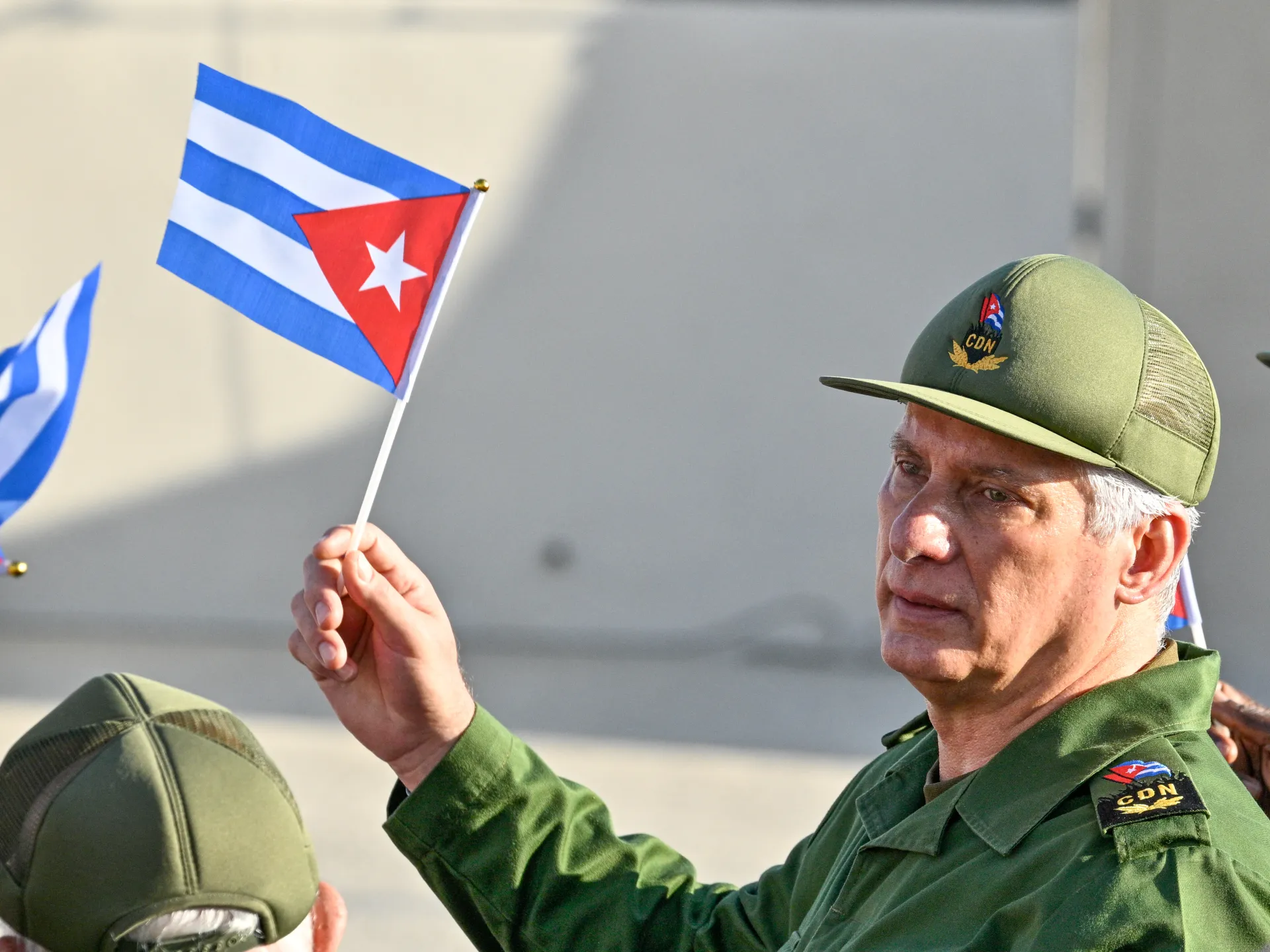
In a series of social media posts on Sunday, Cuban President Miguel Diaz-Canel confirmed that the first load of 15,000 tonnes had arrived a day earlier in the port of Havana.
Recommended Stories
list of 3 itemsend of list
He also expressed “deep gratitude” to China, as well as to members of the European Parliament who denounced the pressure campaign his government faces.
Since January, the United States has increased its sanctions against Cuba, as part of a hardline turn under the second term of President Donald Trump.
“Thank you very much for the solidarity, and for the firm and unequivocal condemnation of the collective punishment to which our people are being subjected,” Diaz-Canel wrote, likening Cuba’s situation to “genocide”.
While Trump has sought to check China’s growing influence on Latin America, Cuba has increasingly relied on the Asian superpower for assistance.
Already, China has donated solar panels to Cuba to help update its ageing energy grid and transition the island away from fossil fuels. Currently, Cuba relies on imports for nearly 60 percent of its oil supply, according to the International Energy Agency.
But since the start of the year, the Trump administration has largely blocked the export of oil to Cuba.
The de facto oil blockade began shortly after January 3, when the US launched a military operation to abduct and imprison Venezuelan President Nicolas Maduro.
Trump followed that operation with the announcement that no more oil or funds would be transferred from Venezuela to Cuba.
By the end of the month, he had also issued an executive order identifying Cuba as an “unusual and extraordinary threat” to the US and threatening economic penalties to any country that supplies it with oil.
Since then, only a single Russian tanker has been permitted to reach the island. Earlier this month, Energy Minister Vicente de la O Levy announced that the island had exhausted its oil supplies.
While Cuba is no stranger to power outages, the recent crisis has caused island-wide blackouts and has brought public services — including transportation and medical care — to a standstill in many areas.
But Trump has continued to impose sanctions on the island’s communist government, in an apparent effort to force regime change.
Media reports have indicated he has sought Diaz-Canel’s resignation and would be open to a situation akin to Venezuela’s, where Maduro’s government has been left largely intact, though Maduro himself has been replaced.
Trump has also repeatedly suggested he may consider a military response should Cuba fail to give in to his demands, though his administration has sent mixed messages about possible intervention on the island.
“Other presidents have looked at this for 50, 60 years, doing something, and it looks like I’ll be the one that does it,” Trump said last week from the Oval Office.
Negotiations between the two countries, however, are likely to be strained after the Trump administration unveiled a murder indictment against Cuba’s former president, Raul Castro, for the 1996 downing of two planes run by Cuban exiles.
Since the 1960s, Cuba has been under a sweeping US trade embargo that has weakened its economy.
US officials, however, have blamed the Cuban government for economic mismanagement and the oppression of its people, particularly political dissidents.
Earlier this month, US Secretary of State Marco Rubio disclosed that the Trump administration offered $100m in humanitarian aid to Cuba, on the condition it implement “meaningful reforms”.
In Sunday’s posts, however, Diaz-Canel sought to project defiance in the face of Trump’s “maximum pressure” campaign.
“The ‘maximum pressure’ strategy — which some in the US morbidly trumpet — is part of a strategy intended to justify the false narrative of an impending collapse, and thereby pave the way for military intervention,” he wrote.
Diaz-Canel added that Cuba would continue to strengthen its ties with the US’s economic and political rival, China.
“The cherished bonds of friendship and cooperation that unite us grow stronger in these crucial times,” he said.
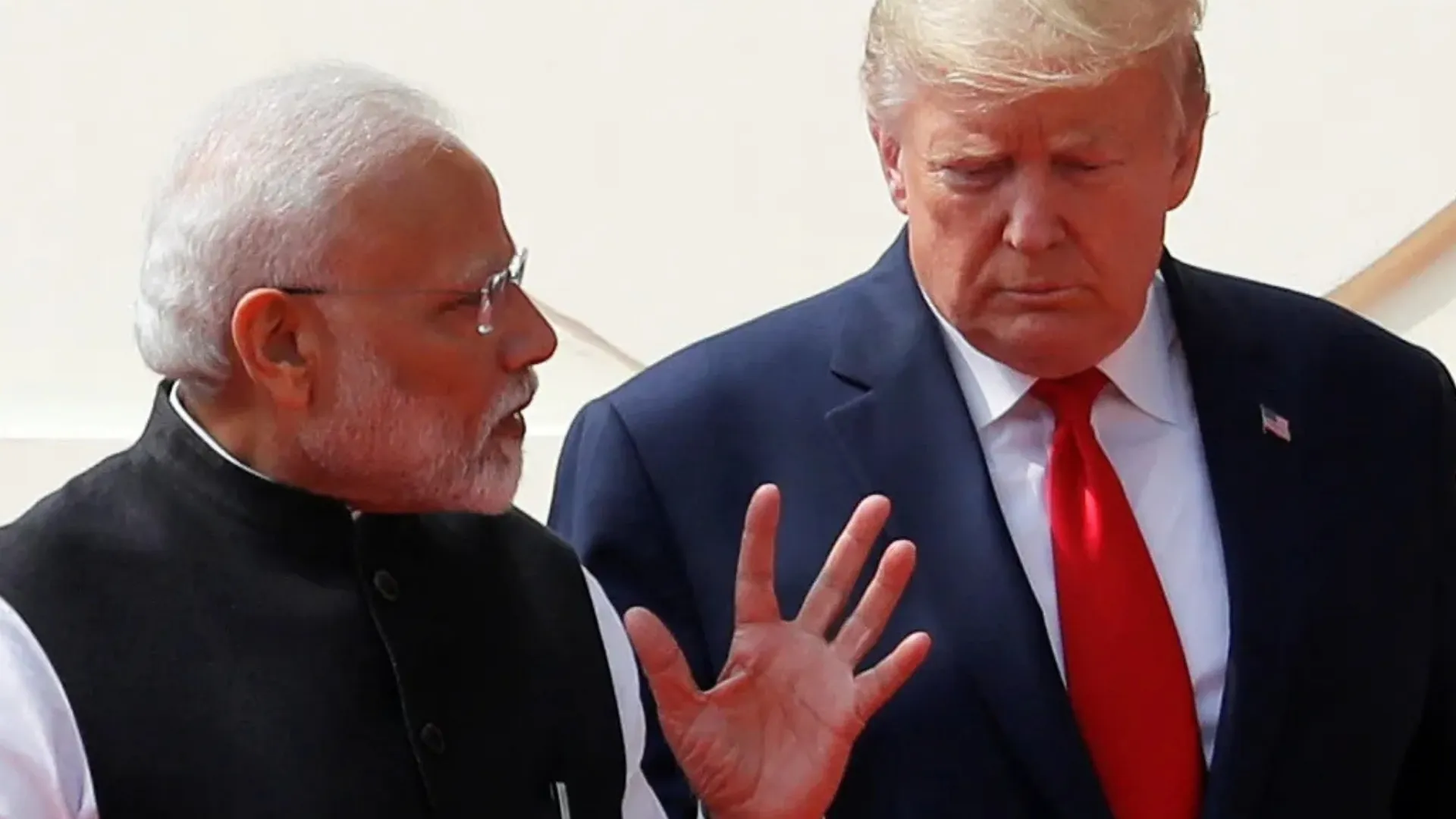
The United States and India are seeking to mend ties after a year of diplomatic see-saw during which tariffs were imposed and then quickly scrapped because of the US-Israel war on Iran.
This is just one example of how international relations and conflict have become more complex and interlinked in recent years.
So, is pragmatism replacing ideology in today’s diplomatic world?
Presenter: Scott McLean
Guests:
Brahma Chellaney – Professor emeritus of strategic studies at the Centre for Policy Research
Chris Weafer – Chief executive officer at Macro-Advisory strategic consultancy
Shaun Rein – Founder and managing director of the China Market Research Group
A union worker holds a sign with the message “No more starvation wages” at a May Day rally in Caracas, Venezuela, on May 1, 2026. (Graphic by Truthdig; images by AP Photo, Adobe Stock)
More than 1,000 workers, union members and retirees marching toward downtown Caracas were blocked by riot police during a May Day demonstration. Chanting, “A bonus is not a salary,” they took to the streets in Caracas to protest the only-modest increase in the so-called comprehensive minimum wage, from the equivalent of $190 per month to $240. A short distance away, a small group of workers — convened by the Bolivarian Socialist Workers Federation of Venezuela — celebrated the raise. For the first time in over 20 years, the government had not organized a large rally. Instead, it provided a concert — a Festival for Peace — featuring dozens of international performers.
“People are really happy. They are dancing in the streets because there is a lot of money coming in through the big oil companies,” U.S. President Donald Trumpsaid a few days later. His administration is still managing a political transition process following U.S. military attacks and the abduction of Venezuelan President Nicolás Maduro earlier this year.
But even ultraright-wing polling firms such as Meganálisis suggest Trump is wrong about the mood in Venezuela. According to the firm, the proportion of Venezuelans who are “grateful” to the U.S. for its intervention has dropped from 92% in January to just 47% in April. Trump’s attempt to cast himself as the savior of Venezuela’s economy isn’t working — especially as Venezuelans say they haven’t seen any improvements since January, nor since the U.S. imposed economically devastating sanctions in 2015.
Venezuelan workers demanded better wages at a May 1 protest in Caracas. (Jessica Dos Santos Jardim)
Wages are too low
Rafael Venegas, Jacques Derose and Yrma Rivero have different work situations. Venegas works in the public sector, Derose is in the private sector and Rivero is self-employed. But all three have something in common: Their income is not enough to live on.
Venegas is 70 years old and has spent 14 years teaching undergraduate and graduate courses at the Central University of Venezuela, the country’s oldest and largest higher education institution. However, his latest proof-of-employment document, seen by Truthdig, shows his salary is the equivalent of $1.37 a month. Any benefits like severance pay, end-of-year bonus and holiday pay are calculated based on that amount.
At the same time, Venegas, who survived a stroke and who is looking after his 93-year-old mother, receives — as all public sector workers do — a monthly food bonus of $40, and what is called an “economic war bonus” worth $150. The explanation is as simple as it is complex: Venezuela’s legal minimum wage has been frozen at 130 bolivars (about 27 cents) a month for four years. To bring actual take-home income closer to a living wage, workers get monthly bonuses paid in bolivars at the official exchange rate. Together, these amounts are known as the “comprehensive wage” and are only for formal workers.
Thirty kilometers away, Derose, a 27-year-old who dropped out of the university to work at a hardware store in La Guaira, receives a comprehensive wage of $200 a month, which may sometimes go up to $230 or $260 if he takes on extra work loading or moving merchandise.
Jacques Derose, 27, earns around $200 a month working in a hardware store. (Jessica Dos Santos Jardim)
Derose, who does not have children, tells Truthdig that his income goes to food, transit and paying rent for a single room. The room costs $120, while an apartment in Caracas costs at least $250 a month.
“That’s why my other two brothers, though they’re older, are still living with our parents,” he says.
Meanwhile, Rivero travels around the city cleaning apartments to support herself, as well as her son’s university studies.
“He got into a public university, but we spend a lot on transportation and food, not to mention medical expenses. Right now, my son has severe sinusitis, and an MRI of his sinuses costs $300,” she says.
She charges $30 to $40 for each deep clean, depending on the size of the property. She tries to have at least four clients a week in order to earn around $400 a month. As the highest earner of the three, Rivero’s situation illustrates why many young people are choosing not to study but to work informally or in trades instead.
All three workers tell Truthdig they use the same strategy to get by: working multiple jobs. Venegas earns intermittent extra income by proofreading books or giving workshops, Derose works as a bricklayer some weekends and Rivero sometimes irons or cooks. They all say that no one can get by on less than $400 a month, and a family of five requires at least $1,500.
According to the Caracas-based, union-run research center Center for Documentation and Social Analysis, the basic food basket for a family of five, which includes 61 essential products, reached $703.11 in March, a 7.2% increase from February. Venezuelans must also pay for transportation or gasoline, utilities, rent or condominium fees, medicine, clothing and much more.
Thousands of workers, especially in sectors like education, healthcare and public services, share this sentiment and have been protesting in the streets of Caracas for weeks, demanding a living wage. But how would that be achieved?
“It would be difficult to have a salary — not bonuses, but a legal minimum wage — that covers basic needs. But there are no ethical or economic reasons to keep it at 27 cents,” Hermes Pérez, economist and former head of the Exchange Desk at the Central Bank of Venezuela, tells Truthdig.
He says the legal minimum wage should be at least $300, but that’s not feasible for either the public or private sector. “The resources simply aren’t there, and since wages are practically zero, raising them to that level would be very expensive. But at least $70 or $100 would be possible. Furthermore, it’s estimated that Venezuelan revenues will grow significantly in 2026 compared to last year. We received $18 billion in oil revenues alone in 2025, and that amount could rise to $33 billion,” Pérez says. Despite attempts at diversification, oil remains Venezuela’s primary source of foreign currency, and the country is dependent on oil revenue to finance public spending.
Pérez stresses that a key indicator must be addressed regardless of how much salaries increase: inflation. “According to the Central Bank, Venezuela ended 2025 with an annual inflation rate of 465%, and by March 2026 it was already at 650%. That’s enormous. In Colombia, for example, inflation is around 5%, and in Latin America, in general, it’s in the single digits,” he says.
“It’s not just the isolated [price] increase of one or two things; it’s the generalized increase across the board. Given this context, it’s very difficult for the average worker to actually perceive any economic improvement.”
Economist Asdrúbal Oliveros agrees. He believes the country will enter a phase of recovery in purchasing power this year, but a “notably slow” one, as Venezuela must first increase incomes, sustainably reduce inflation and stabilize the exchange rate.
Venezuelan government response
On April 8, acting President Delcy Rodríguez took a stance for the first time on low wages and precarious working conditions in the country. She acknowledged some of the problems and noted that there are more pensioners (5.7 million) than formally employed workers (5.3 million), a figure that reveals the extremely high rate of informality that now prevails in Venezuela.
On May 1, Rodríguez then announced a 26% income increase through the country’s bonus system. This raised the comprehensive minimum wage — which includes the official minimum wage and bonuses — from $190 to $240 per month by increasing the economic war bonus by $50. For pensioners, the war bonus increased from $58 to $70. She also announced a one-off “professional recognition” bonus for the education, health and security sectors of around $195, with the exact amount varying by job.
Organizations such as the Professors Association of the Central University of Venezuela rejected “the policy of replacing salaries with bonuses,” which they argued do not affect workers’ social security contributions and “ignore merit, experience and seniority.” The workers also demanded respect for salary scales and collective bargaining agreements.
Miguel Monserrat holds a sign with a message in Spanish, “Yankees, get out of the Caribbean,” at a May Day rally by union workers, retirees and teachers in Caracas, Venezuela, on May 1, 2026. (AP Photo/Ariana Cubillos)
The acting president acknowledged that the $240 increase is “insufficient” but said it is “a responsible increase” to improve purchasing power “without generating an excessive inflationary impact.” According to the Central Bank, annual inflation in Venezuela reached 130,000% in 2018, the peak of a four-year hyperinflationary period that ended in 2021. It was then that the government decided to freeze wages and implement a bonus policy to avoid a relapse.
However, some economists also attribute the high inflation rates to the uncontrolled issuance of money by the Central Bank to finance the fiscal deficit. Unions argue that the economy will not collapse from paying off labor liabilities like wages and benefits.
“For the past four years, salaries have been frozen and increases through bonuses have been meager. So, clearly, workers’ salaries or benefits haven’t contributed to causing the current inflation rates,” Venegas says. “There are millions of us in the public sector, but benefits are only received by those who retire, resign or are dismissed — a small amount per year.”
Venegas believes the government and business leaders are currently colluding to try to reform the Organic Law of Labor and Workers (LOTTT) in order to eliminate the country’s social benefits system.
The LOTTT, passed by then-President Hugo Chávez in 2012, is considered a bastion of workers’ rights. Among its provisions, it prohibits unjustified dismissal and subcontracting, provides 26 weeks of maternity leave, guarantees the right to work for women and people with disabilities and extends retirement pensions to all workers, including full-time mothers and the self-employed.
Now, businesspeople have argued at the Council of the International Labour Organization for reform of the LOTTT, especially Article 104, which defines what constitutes a salary, and Article 122, which establishes the basis for calculating social benefits and severance pay. They say the current model of accumulating social benefits would be structurally unsustainable if the legal minimum wage is increased.
The U.S. decides
Amid these debates, the acting Venezuelan president has said that the economic situation of workers will improve “progressively” thanks to restored relations with the U.S. and the recovery of oil production, which — after some relaxing of sanctions — has exceeded 1.2 million barrels per day.
“In 2025, Venezuela produced a similar average number of barrels, but they were sold at a 30% to 35% discount to get around the sanctions,” sociologist and political analyst Franco Vielma said on X. These discounts acted as a key economic incentive for private buyers and intermediaries to assume the high legal and financial risk of violating the sanctions imposed by the U.S. Furthermore, the price per barrel exceeded $126 at the end of April 2026, reaching its highest level in four years due to the conflict between the United States and Iran.
Rodríguez has said the latest salary increase is backed by oil and fuel oil income. But Venezuelans still do not know how much oil revenue they are receiving, where it is deposited, what percentage the U.S. is getting or what the new agreements mean.
Acting Venezuelan President Delcy Rodriguez smiles standing next to U.S. Charge D’affaires Laura Dogu after signing an agreement to allow Chevron to expand its oil operations in Venezuela in Caracas, Venezuela, on April 13, 2026. (AP Photo/Ariana Cubillos)
In January, Trump stated that the U.S. would control Venezuelan oil sales, saying Venezuela would submit monthly budgets to the White House, which would then be reviewed by auditors. Rodríguez said at the time that citizens could track every oil dollar through a new website. However, this website has not materialized.
The United States, after attacking Venezuela four months ago and, according to the Venezuelan Anti-Blockade Observatory, having imposed 1,081 sanctions on the country since 2015, has argued that increased oil income will benefit Venezuelans. Trump asserted in January that Venezuela would experience “an unprecedented economic upswing … It will earn more money in six months than in the last 20 years.”
In this regard, the U.S. Office of Foreign Assets Control issued 14 licenses in April that allow for the development of the Venezuelan oil sector and the possibility of conducting banking transactions with Venezuela, although each transaction requires OFAC approval. Payments in gold or cryptocurrencies are prohibited; Venezuela cannot trade with China, Russia, Iran, North Korea or Cuba; and the country’s frozen assets will not be released. Crucially, all revenues from oil and mineral exports must be deposited into accounts controlled by the U.S. Treasury Department, which then decides when and how much to return to Venezuela from its own resources.
Although the international media has framed this as a “lifting of sanctions,” the licenses granted by the U.S. are only conditional and temporary permits that allow some oil and banking operations in Venezuela. Executive orders blocking state assets and controlling and supervising the operations of the state oil company PDVSA remain in place, limiting the legal certainty that is necessary for long-term investments.
Many Venezuelans did believe the economic situation would improve after Jan. 3. In fact, some pollsters claimed that 70% to 80% of the population then had “hope for the future.” Now, in April, according to an AtlasIntel poll, 77% of Venezuelans rate the current economic situation as “bad,” and 76% hold a negative opinion about the state of the labor market.
According to Datanálisis, economic despair also prevails, with 55% of those surveyed identifying inflation and low wages as their main problems. These worries are followed by devaluation and failures in the electrical system.
Datanálisis also found in April that 65% of the population agrees that Venezuela’s priority should be resolving the economic crisis above any political transformation or electoral process. However, Trump hinted on May 12 that beyond the current intervention, he’s also “seriously considering” making Venezuela the 51st U.S. state, posting a map of the country with a U.S. flag. Joke, threat or a reflection of how Trump already sees Venezuela, Venezuelans have much to worry about.
The views expressed in this article are the author’s own and do not necessarily reflect those of the Venezuelanalysis editorial staff.
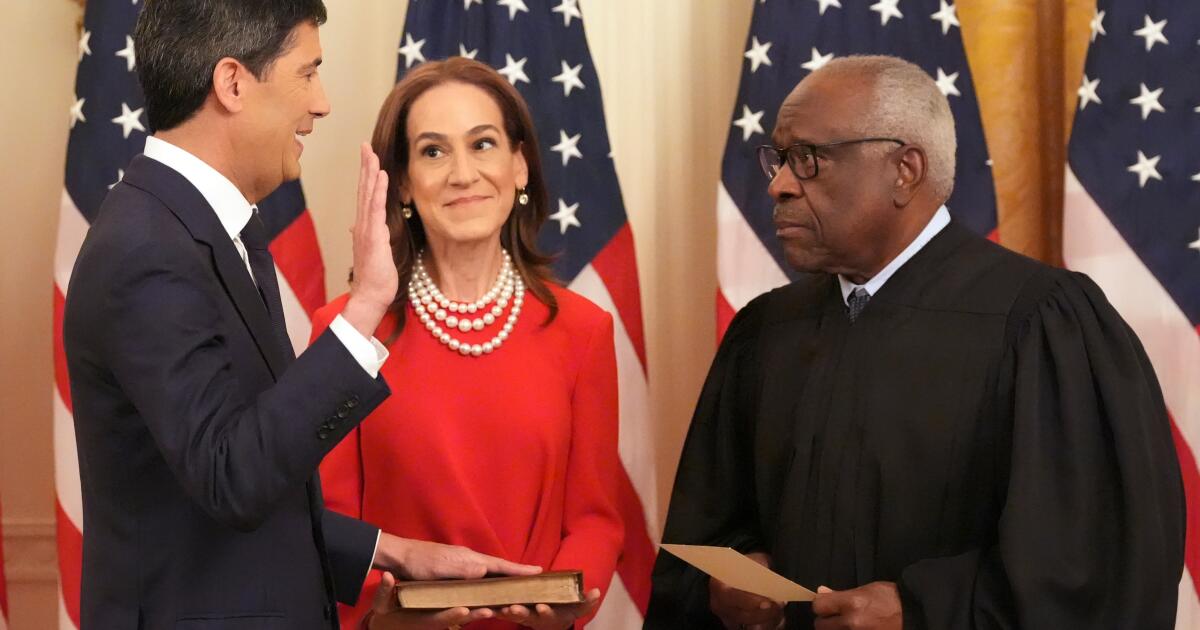
WASHINGTON — President Trump on Friday oversaw the White House swearing-in of the new Federal Reserve chair and said he would like Kevin Warsh’s help in stimulating the economy even as he tried to emphasize that the nation’s central bank would remain independent.
Trump spent months criticizing Warsh’s predecessor, Jerome Powell, for being reluctant to cut interests rates, with the Republican president arguing that lower borrowing costs would provide an economic boost. By taking the unusual step of holding the ceremony in the East Room and not the Fed, Trump made clear his pleasure that Warsh is now in charge.
The war with Iran has caused gas prices to spike, unsettled financial markets and driven inflation concerns across the economy. Those developments have led to recent doubts about whether Warsh might heed Trump’s calls and push the Fed to lower rates.
Still, Trump said he had faith that Warsh would prioritize a strong economy.
“Thankfully, unlike some of his predecessors, Kevin understands that when the economy is booming, it is, that’s a good thing,” the president said. Trump said it was not necessary “to go crazy. Just let it go. We want it to boom.”
Supreme Court Justice Clarence Thomas administered the oath of office. Also on hand were House Speaker Mike Johnson (R-La.), Justice Brett Kavanaugh, CIA Director John Ratcliffe and Cabinet members.
“I expect he will go down as one of the truly great chairmen of the Federal Reserve that we’ve ever had,” Trump said of Warsh.
Republican President Reagan swore in Alan Greenspan as Fed chair at the White House in 1987. Republican President George W. Bush attended the 2006 ceremony at central bank headquarters when Ben Bernanke became chair.
But having the event at the White House raises more questions about the Fed’s independence at a time when Trump has constantly sought to bend the independent central bank to his will.
Trump’s Department of Justice began an investigation into Powell and the Fed’s extensive building renovations. That drew backlash from lawmakers and the department scrapped the investigation. The Fed’s internal watchdog is now handling the matter. Powell’s term as chair ended last week, though he has opted to remain on the Fed board for now.
Trump made a point of saying during his remarks, “Honestly, I really mean this. This is not said in any other way: I want Kevin to be totally independent.”
“I want him to be independent and just do a great job,” Trump said. “Don’t look at me, don’t look at anybody. Just do your own thing.”
In the next breath, however, Trump said that “in the eyes of many, the Fed has lost its way in recent years” under his predecessor, Democratic President Biden. Trump also suggested that Warsh is looking to lead policies that promote “positive economic growth” and that doing so did not have to mean higher inflation.
Trump also noted that the stock market had risen Friday. “That means they like you,” he said of Warsh.
Warsh once harshly criticized Fed’s policies, including its low interest rate policies coming out of the pandemic, which he says contributed to the largest U.S. inflation spike in four decades in 2021-22. More recently, he has sometimes echoed Trump’s demands for lower rates.
Warsh says productivity gains from artificial intelligence will help the economy grow more quickly without spurring inflation, enabling the Fed to reduce borrowing costs. Many Fed officials, however, disagree that AI’s development will support rate cuts, especially because the technology has also been blamed for large-scale layoffs in the computer sector and other parts of the economy.
On Friday, Warsh promised “to lead a reform oriented Federal Reserve, learning from past successes and mistakes, both escaping static frameworks and models and upholding clear standards of integrity and performance.”
He told Trump that he believes “these years can bring unmatched prosperity that will raise living standards for Americans from all walks of life. And the Fed has something to do with it.”
Warsh further noted that the Fed’s mandate “is to promote price stability and maximum employment. When we pursue those aims with wisdom and clarity, independence and resolve, inflation can be lower; growth, stronger; real take home pay, higher and America … more prosperous.”
As he left the ceremony, Treasury Secretary Scott Bessent reinforced Trump’s message, predicting to reporters that Warsh will “do the right thing for inflation and growth.”
Weissert and Price write for the Associated Press.
Warsh will lead the central bank at a time when its independence has come under scrutiny amid political pressure.
Published On 22 May 202622 May 2026
Kevin Warsh has been sworn in as the new chair of the United States Federal Reserve Board of Governors, succeeding Jerome Powell, who has held the position since 2018.
Warsh took the oath of office on Friday, following a contentious nomination period, with the Senate voting along party lines on both his confirmation to the Board of Governors and as chairman. Only Pennsylvania Senator John Fetterman broke with his Democratic colleagues to advance his nomination.
Recommended Stories
list of 4 itemsend of list
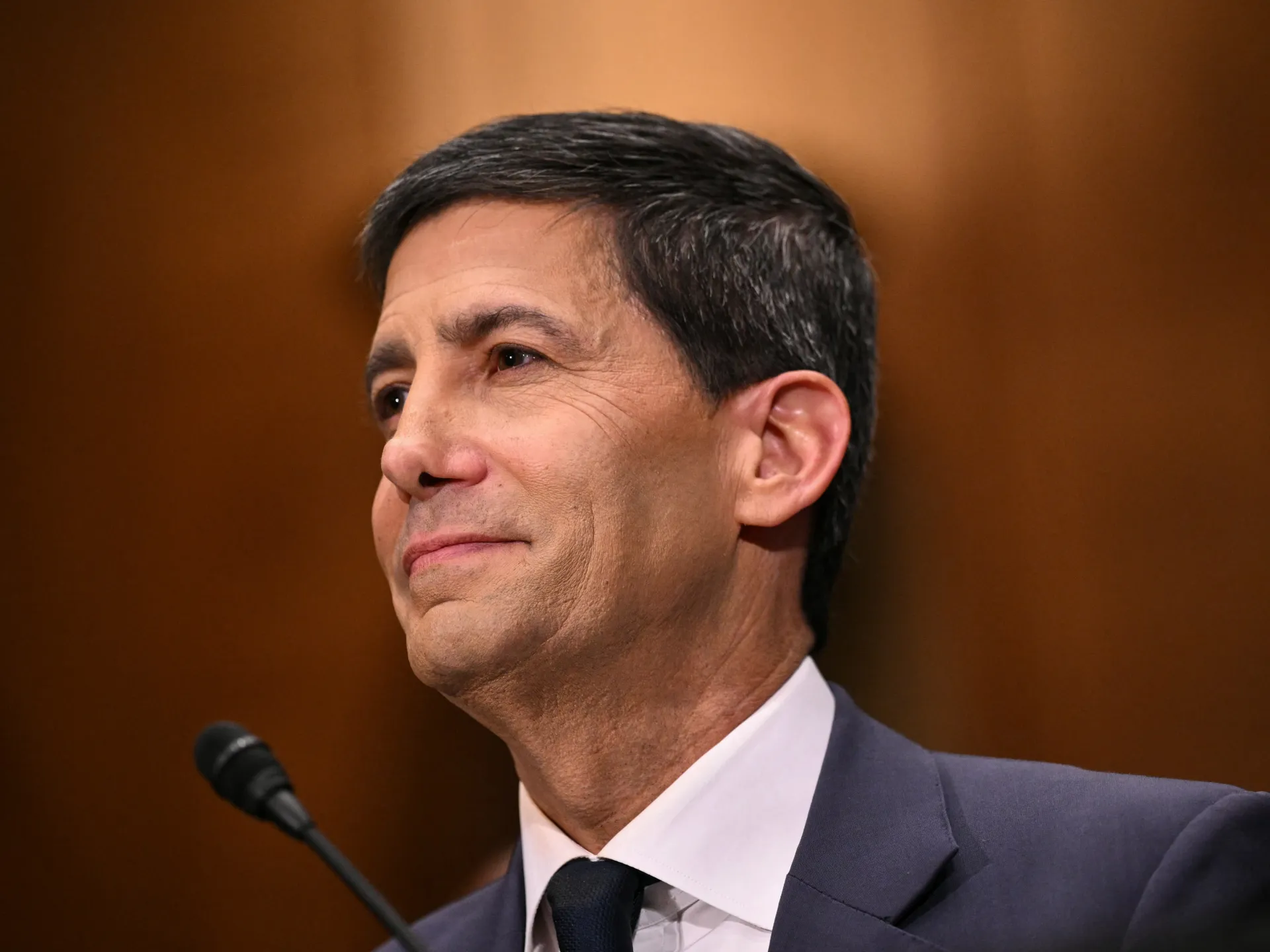
Warsh, 56, will lead the central bank at a time when its independence has come under scrutiny amid political pressure on the historically non-partisan institution.
US President Donald Trump, aware of that critique, in his opening remarks said, “I want Kevin to be totally independent and do a great job. Don’t look at me and don’t look at anybody. Just do your own job”.
During his confirmation hearing before the Senate Banking Committee, ahead of a vote by the full Senate, Democratic Senator Elizabeth Warren accused Warsh of being a “sock puppet” for Trump. Warsh denied the allegations and said he would remain independent in his monetary policy decisions.
When Joe Biden was president, Warsh advocated against cutting interest rates, but changed his tune when Trump took office. In December 2025, Trump said that he would only appoint someone to lead the central bank who agreed with him on cutting rates.
Regardless, Warsh cannot unilaterally make policy decisions. He is one of 12 voting members.
The first policy meeting Warsh will lead will be on June 16-17.
Inflationary pressures
Pressure from the White House to cut rates comes amid rising inflation in the US economy.
Consumer prices increased 0.6 percent in April after a 0.9 percent rise in March, according to the most recent Consumer Price Index report released by the Labor Department’s Bureau of Labor Statistics earlier this month.
On an annual basis, prices were also higher, rising 3.8 percent compared with the same month in 2025, marking the largest increase in three years. The largest surge has been in energy prices, which have risen 17.9 percent over the last year.
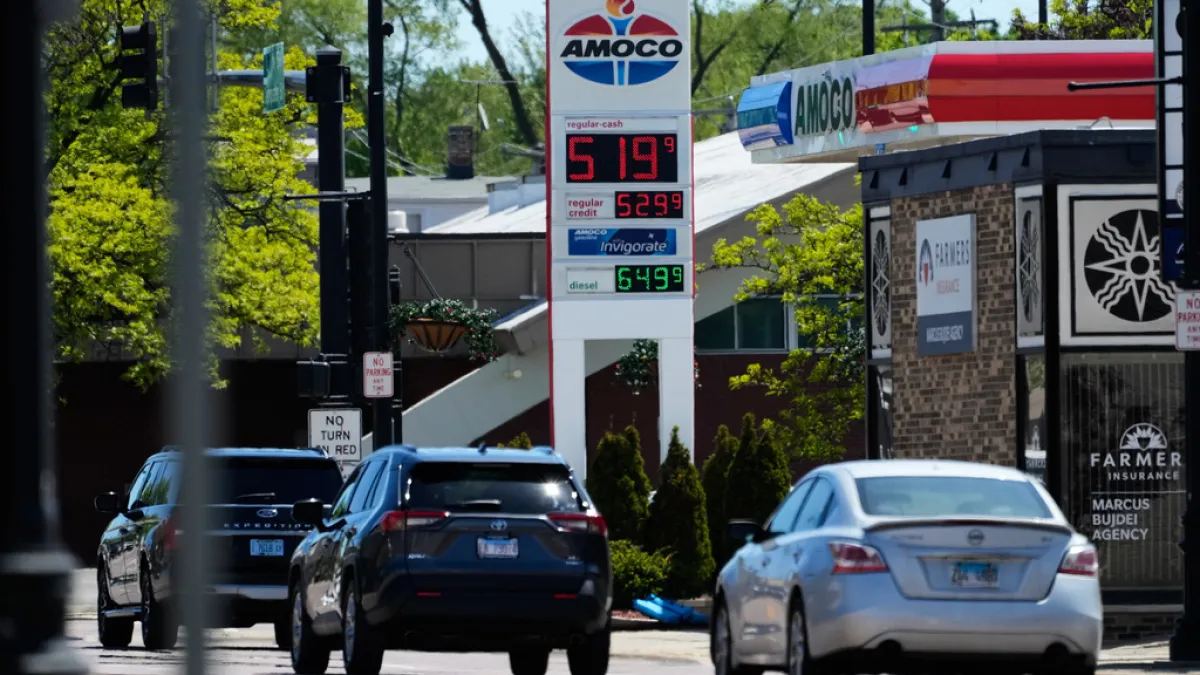
US consumers are feeling the strain at the pump. The average price for a gallon of petrol (3.78 litres) is $4.56, according to the American Automobile Association (AAA), which tracks daily petrol prices. That is up from $2.98 per gallon on February 28, when the US and Israel first struck Iran.
After he was sworn in, Warsh said he was “not naive” about the challenges facing the US economy, and that inflation can be lower and growth strong.
Surging prices could put pressure on the central bank not to cut rates. Analysts from JPMorgan Chase forecasted last month that rates will likely remain unchanged until mid-2027 and anticipated then that rates could rise rather than be cut.
“With inflation having run significantly above 2 percent over the past five years, with further increases in inflation likely to occur as a result of the conflict in the Middle East, and with emergent price pressures in a few categories that appeared unrelated to tariffs or energy prices, the staff viewed the possibility that inflation would be more persistent than anticipated as a salient risk,” the central bank said in the newly released minutes of its April policy meeting.
CME Group’s FedWatch tool, which tracks the likelihood of monetary policy decisions, says there is a 97 percent chance that rates will remain unchanged at the next policy meeting.
As petrol prices rise, new survey suggests economic confidence in the US is at -45, the worst since 2022.
Published On 22 May 202622 May 2026
Only 16 percent of Americans view the economy in the United States as “good” or “excellent”, a new Gallup poll suggests, as inflation continues to rise amid the war on Iran.
The survey, released on Friday, deepens US President Donald Trump’s political woes ahead of the midterm elections in November, which will determine whether his Republican Party can retain control of Congress.
Recommended Stories
list of 3 itemsend of list
The survey, dubbed Gallup’s Economic Confidence Index, showed confidence in the economy has dropped to -45.
Forty-nine percent of respondents said economic conditions are poor and 34 percent rated them as fair. At the same time, 76 percent said they think the economy getting worse, while 20 percent said it is getting better.
The index averages the results on economic conditions, currently at -33 and economic outlook, currently at -56.
It was the worst set of findings on the economy that the index recorded since 2022 when the cost of living rose after the COVID-19 pandemic and Russia’s invasion of Ukraine.
Petrol costs in the US have skyrocketed since the start of the conflict with Iran late in February. The average price of one gallon (3.8 litres) of gasoline has risen to $4.55 from less than $3 before the US and Israel launched the war.
According to official government reports, consumer prices overall rose in March and April due to the energy crisis.
Iran has responded to the US and Israeli strikes – which killed several top officials, including Supreme Leader Ali Khamenei, as well as hundreds of civilians – by closing the strategic Strait of Hormuz, sending oil and gas prices soaring.
The US has also imposed a naval siege on Iranian ports, deepening the strain on energy supplies across the world.
Despite the ceasefire that began in April, the blockades have persisted in the absence of a permanent end to the war, and Iran is now claiming sovereignty over Hormuz, which operated as a free international passageway before the war.
Parts of the strait run through Iranian and Omani territorial waters.
Although the US is one of the world’s largest oil producers, energy prices are set globally, so the disruption has spiked costs for American consumers.
As a candidate, Trump promised to be a president of “peace”, saying he would pursue “America first” policies that would prioritise domestic issues over foreign interventions.
But the US president joined Israel in attacking Iran without direct provocation. His administration argues that the military campaign is necessary to prevent Tehran from obtaining a nuclear weapon.
Iran denies seeking nuclear weapons. And Trump’s own intelligence chief Tulsi Gabbard has said that Tehran is not building a nuclear bomb.
Trump has repeatedly argued that the cost of the war is worth it, stressing that petrol prices will drop rapidly once the conflict is over.
Last month, the US State Department released a legal justification of the war, saying that Washington joined the conflict “at the request of and in the collective self-defence of its Israeli ally, as well as in the exercise of the United States’ own inherent right of self-defence”.
The Gallup survey on Friday is the latest in a series of negative polls for the Trump administration.
A New York Times/Sienna poll released earlier this week suggested that only 31 percent of voters approve of Trump’s handling of the war with Iran.
Earlier this month, the US president suggested the economic fallout from the war and its effect on people in the US do not play a role in his approach to Iran.
“I don’t think about Americans’ financial situation. I don’t think about anybody,” he said. “I think about one thing: We cannot let Iran have a nuclear weapon. That’s all. That’s the only thing that motivates me.”
Watchdog instructs social media giant to strengthen moderation following circulation of ‘grossly offensive’ content.
Published On 22 May 202622 May 2026
Malaysia’s internet watchdog has ordered TikTok to take action against “offensive and defamatory” content about the country’s monarchy.
The Malaysian Communications and Multimedia Commission (MCMC) said on Thursday that it had instructed the video-sharing platform to take “immediate remedial measures” in response to an account purporting to be linked to King Sultan Ibrahim.
Recommended Stories
list of 4 itemsend of list
The MCMC said its order requires the social media company to strengthen its moderation policies and provide a “formal explanation” for its failure to block the “grossly offensive, false, menacing and insulting” content, including AI-generated videos and manipulated images.
The regulator said it takes a “serious view” of online platforms being used to disseminate content that is false or “detrimental to public order”, particularly as it relates to the monarchy.
It added that it issued the order after finding TikTok’s response to previous notifications to be “unsatisfactory”.
TikTok, founded by Chinese tech company ByteDance, did not immediately respond to a request for comment.
“MCMC will continue to take firm and proportionate action where necessary to ensure digital platforms operating in Malaysia uphold their responsibilities in maintaining a safe, secure and respectful online environment,” the watchdog said in a statement.
Malaysia, a constitutional monarchy, penalises speech deemed to inspire “hatred or contempt” against the royal family under a sedition law passed in 1948.
The watchdog’s order against TikTok is the latest move by authorities in the Southeast Asian country to regulate social media platforms.
In January, the MCMC briefly blocked access to the AI assistant Grok amid a global backlash over its use to create sexually explicit images of people without their consent.
Malaysia’s government is also currently preparing to enforce legislation passed last year to prohibit social media use by under-16s, following similar moves by countries including Australia, Indonesia and France.
The European Commission on Thursday cut its 2026 growth forecast for the European economy, as the ongoing conflict in the Middle East drives energy prices sharply higher.
ADVERTISEMENT
ADVERTISEMENT
The EU economy is now expected to grow by just 1.1% in 2026, down from the 1.4% projected in the Commission’s autumn forecast. The eurozone outlook was revised down further to 0.9%.
In its report, the Commission warned that disruption to global energy markets — caused by escalating tensions around the Strait of Hormuz, one of the world’s key oil and gas shipping routes — has significantly worsened Europe’s economic outlook.
“Before the end of February 2026, the EU economy was expected to continue expanding at a moderate pace, alongside a further decline in inflation,” the report said. “However, the outlook has changed substantially since the outbreak of the conflict.”
Inflation is also expected to rise sharply due to the disruption around Hormuz.
EU inflation is forecast to reach 3.1% this year — a full percentage point higher than previously expected — driven mainly by soaring energy costs after oil and gas prices surged amid fears of supply disruptions in the Gulf.
For EU officials, the shock recalls 2022, when Russia’s invasion of Ukraine triggered Europe’s worst energy crisis in decades.
The Commission described the latest turmoil as “the second such shock in less than five years”, warning that Europe’s dependence on imported fossil fuels leaves it highly vulnerable whenever geopolitical tensions threaten global energy supplies.
Consumer confidence has already fallen to a 40-month low, according to the forecast, as households prepare for higher heating and fuel bills while businesses face rising operating costs and weaker demand.
Investment is also expected to slow as companies confront tighter financing conditions and growing uncertainty. Export growth is weakening as global demand softens.
Despite the deteriorating outlook, Brussels said the bloc is better prepared than during the Ukraine-related energy crisis, thanks to years of investment in renewable energy, lower gas consumption and efforts to diversify away from Russian supplies.
“The push towards supply diversification, decarbonisation and lower energy consumption has left the EU economy better placed to absorb today’s shock,” the Commission said.
However, EU officials acknowledged that risks remain heavily skewed to the downside.
The report warned that prolonged disruption in the Strait of Hormuz or across wider Middle Eastern supply chains could drive energy prices even higher, derail the expected easing of inflation in 2027 and potentially stall Europe’s recovery altogether.
The Commission also cautioned that shortages of refined oil products, fertilisers and other industrial inputs could spread through global supply chains, increasing food and manufacturing costs across Europe.
Meanwhile, European governments are preparing for growing fiscal pressure. Public deficits across the EU are expected to widen as governments increase spending to protect households from rising energy bills while also boosting defence expenditure amid mounting geopolitical instability.
Italian Prime Minister Giorgia Meloni has recently urged the European Commission to relax fiscal rules for households and industries struggling with soaring energy costs, arguing that energy security should be treated with the same urgency as defence spending.
At the centre of Rome’s request is the EU’s national escape clause, adopted on 8 July, which allows member states temporary fiscal flexibility to increase defence spending under exceptional circumstances.
Meloni said Brussels had already shown a willingness to loosen budget rules in response to Russia’s war in Ukraine and growing concerns about Europe’s military preparedness. Italy is now seeking similar flexibility for emergency energy measures.
The deal, valued at more than $300m, gives Murdoch control of a storied magazine and a podcast division with a reach valued by advertisers.
Published On 20 May 202620 May 2026
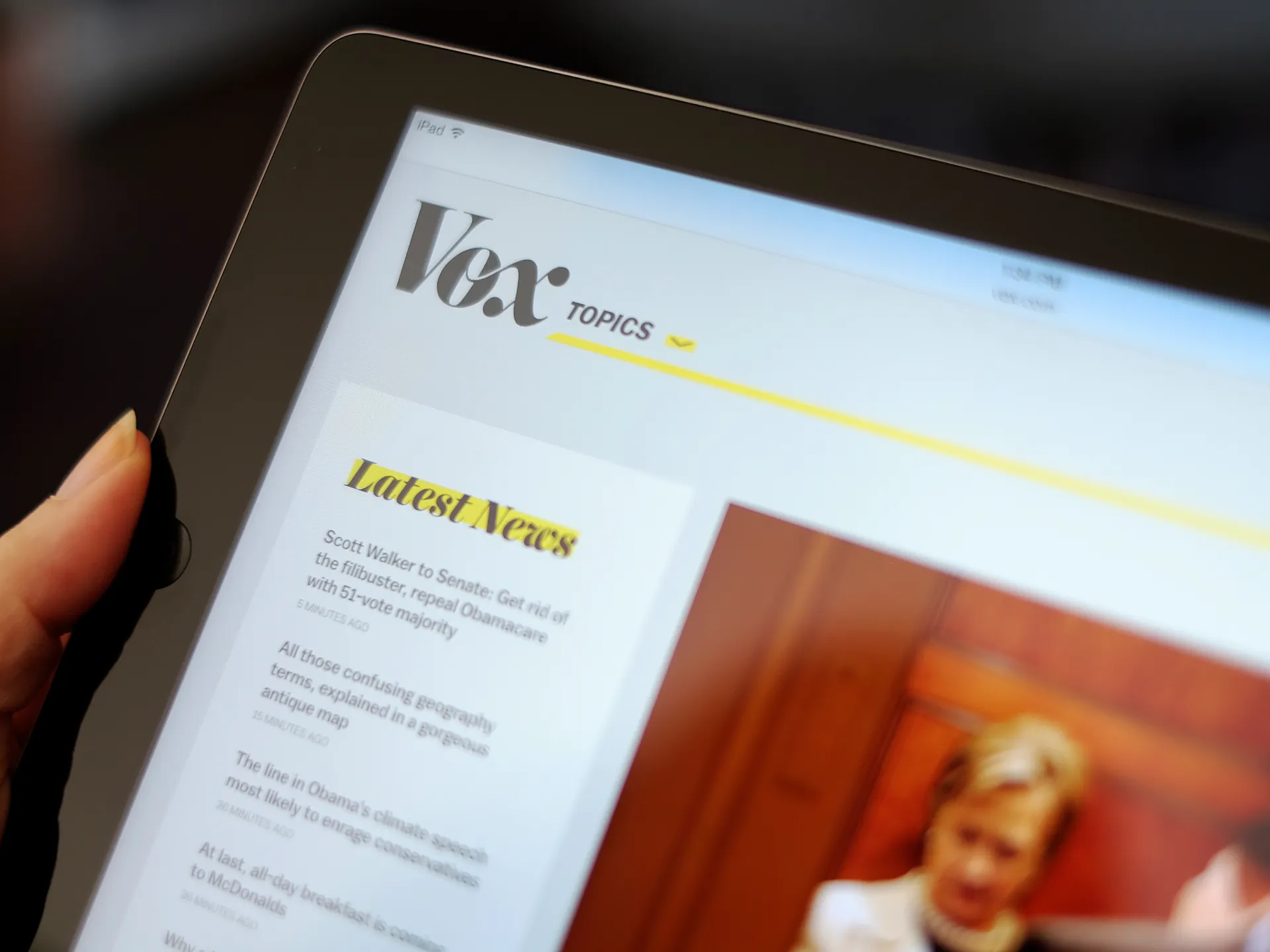
Media scion James Murdoch has agreed to acquire New York Magazine and the Vox Media Podcast Network in a deal that will significantly expand his portfolio and stands to boost his influence over news and entertainment.
“This acquisition reflects both our interest in the forward edge of culture and our deep commitment to ambitious journalism,” Murdoch, the younger son of media mogul Rupert Murdoch, said in a statement on Wednesday announcing the transaction. His company Lupa Systems will buy both properties from Vox Media.
Recommended Stories
list of 4 itemsend of list
The deal, valued at more than $300m, gives Murdoch control of a storied magazine known for its coverage of culture, politics and fashion, and a podcast division whose reach, among a demographic coveted by advertisers, rivals that of cable television news networks, according to several people with direct knowledge of the acquisition. The politics news site Vox.com is also included.
Murdoch and his wife Kathryn Murdoch were intimately involved in courting key talent from Vox, specifically Kara Swisher and Scott Galloway, stars of the popular Pivot podcast, as well as several other programmes on the company’s podcast network.
“I like James and Kathryn,” Swisher said in a phone interview. “Unlike many other media owners these days, they’re savvy about the business and willing to take smart risks.”
Vox’s podcast division was valued much higher than New York Magazine in the transaction, two of the people said, spotlighting the importance of making sure top programmes were locked in. Pivot, for example, has three years remaining on its contract, which will continue under Murdoch. Swisher met with the investor and his wife Kathryn several times before the deal came together.
“In a company like Vox, if its talent doesn’t like something, it’s not gonna happen,” Galloway said in an interview. He added, “James is the only Murdoch that this deal could have happened with.”
Several years ago, James was locked in a fierce dispute with his father over the editorial direction and future control of the family’s media empire. In 2019, he founded Lupa after stepping down as chief executive of 21st Century Fox. In 2020, he resigned from the board of News Corp, the publishing arm of the family’s media empire, citing “disagreements over certain editorial content”.
Vox’s podcast and publishing assets will operate as a subsidiary of Lupa Systems, which also owns Art Basel, which hosts annual events in Paris, Miami, Hong Kong, and Doha, and Tribeca Enterprises, the media and entertainment company cofounded by Robert De Niro and Jane Rosenthal.
Vox Media CEO Jim Bankoff will join Lupa Systems and will continue to lead the brands under the Vox Media label, he said in a note to the company’s staff, adding the deal is expected to close in four to six weeks.
New York Magazine’s publications include The Cut, Vulture and Intelligencer, with a digital audience of tens of millions and more than 400,000 paying subscribers currently.
The acquisition does not include other Vox Media brands such as Eater, Popsugar and The Verge. These brands, along with SB Nation and The Dodo, will become an independent company under a new corporate name.
James’s father, Rupert Murdoch, once owned New York Magazine from the late 1970s till he sold it in 1991.
WASHINGTON — Republicans are unhappier with President Trump’s handling of the economy than they were a few months ago, but they’re largely continuing to stand behind him as the war with Iran continues, a new AP-NORC poll finds.
The poll comes as the Mideast war fuels higher gasoline prices, while the U.S. and Iran struggle to move toward a permanent ceasefire. Trump’s hold on the GOP remains strong, as he demonstrated Tuesday when his handpicked candidate defeated Rep. Thomas Massie, a critic of the president, in a primary election challenge. The findings highlight Trump’s continued strength within the Republican Party, even as economic frustration grows.
Ariel Gutierrez, a 55-year-old Republican in Wisconsin, usually requires his teenage children to pay for their own gas. But with spiking gas costs, he’s helping out his 15-year-old, who’s just learning to drive.
“The whole Iran issue has just exacerbated it,” he said. “Maybe we were seeing it in groceries before, but now — with this push on gas and travel and all that — that is how people want to live the leisure part of their lives … and it is directly impacting us there now. And yes, that is, I believe from Trump’s policies, not from his predecessors.”
Trump remains unpopular outside his base. Most Americans continue to disapprove of Trump’s approach to both Iran and foreign policy. His overall approval rating in the new poll stands at 37%, up slightly from 33% in April. Nearly all Democrats disapprove of his performance as president, as do about 7 in 10 independents.
The economy remains a struggle
About one-third of U.S. adults approve of how Trump is handling the economy. That’s in line with an AP-NORC poll conducted in late April, but down slightly from the start of his second term, when 40% of U.S. adults approved.
The economy was a strength for Trump in his first term, but he’s struggled with skepticism about his handling of the issue since his return to the White House last year, after repeatedly promising to bring prices down. His second-term economic approval has fallen among Republicans, in particular. While a majority, 63%, still approve, that’s down from 79% in February, a few weeks before the war with Iran began.
Richard Baumgartner, a 77-year-old Republican from Las Vegas, believes higher costs are a necessary side effect of the war, which he supports.
“Unfortunately, because of the war, the economy is a little bit off-kilter,” Baumgartner said. “I think it’ll fall back into place after things resolve over there. Temporary price increases — it’s unfortunate, but it’s something that has to be confronted in a situation like this where you have a very serious problem.”
Trump regains some strength on immigration
Although economic promises were pivotal to Trump’s reelection, so were his goals of stricter immigration enforcement — and this issue may be reemerging as an asset.
Immigration emerged as one of Trump’s strengths early in his second term, with about half of U.S. adults saying they liked his approach, but approval of his handling of the issue dipped to 38% in January and February, after months of aggressive immigration enforcement that led to the shooting deaths of two U.S. citizens in Minneapolis.
Now, just under half of U.S. adults, 45%, approve of how he is handling that issue.
Brenda Theiss, an independent from Cullman, Ala., doesn’t like everything Trump is doing. But she gives him credit for being willing to disrupt the status quo to reduce the flow of immigrants who are in the country illegally, compared with Democratic Presidents Obama and Biden.
“I liked Obama; I voted for Obama — but Trump was the only one that did something. All of the other presidents sat back and went, ‘Well, there’s nothing we can do,’” the 73-year-old said. “He’s closing the border. He did it. Biden didn’t do it. For that, I give him one hundred.”
Over the last few months, the Trump administration has appeared to recalibrate its approach on immigration, moving away from aggressive, public-facing tactics toward a quieter approach to enforcement.
Immigration remains one of Trump’s stronger issues among Republicans. About 8 in 10 approve of his handling of the issue, which is roughly 10 points higher than the share who say he’s doing a good job as president.
Few approve of Trump on Iran or issues abroad
Trump’s handling of the war with Iran remains unpopular.
Only about one-third of U.S. adults approve of how he is handling Iran. Roughly two-thirds of Republicans approve, though an AP-NORC poll conducted last month found that younger Republicans are more likely to disapprove of Trump’s performance on the issue than older ones.
Similarly, about one-third of Americans approve of Trump’s approach to foreign policy. Though Trump has zeroed in on a more aggressive international approach this year — including capturing the leader of Venezuela and threatening Cuba — Americans’ views of his overall handling of foreign policy have not shifted significantly in recent months.
Amanda Wylie, a 22-year-old who lives in Athens, Ga., says Iran is one of the few issues where Trump doesn’t have her support.
“I feel like we’re wasting resources over there at this point and not for the benefit of the American people,” said Wylie, who identifies as a Republican-leaning independent. “Especially if everyone is worried about gas prices and the ultimate goal of this is to prevent Iran from having a nuclear weapon. Yes, that’s important, but at what cost?”
Sanders and Thomson-Deveaux write for the Associated Press. The AP-NORC poll of 1,117 adults was conducted May 14-18 using a sample drawn from NORC’s probability-based AmeriSpeak Panel, which is designed to be representative of the U.S. population. The margin of sampling error for adults overall is plus or minus 3.8 percentage points.
Hotel operators avoid a ‘very real threat’ by signing a deal with 25,000 workers as the city hosts the 2026 tournament.
Published On 20 May 202620 May 2026
New York City hotel operators and unions have reached an eight-year labour deal covering about 25,000 workers, averting a strike over wages, workloads and staffing levels that had threatened to disrupt the city before the FIFA World Cup, said the head of the Hotel Association of New York City.
Vijay Dandapani, the association’s president and chief executive, said on Tuesday that the mood among owners was “overall positive” after weeks of negotiations, though the industry made significant concessions.
“We came a long way from where things were,” Dandapani said.
The United States will cohost the tournament with Canada and Mexico from June 11 to July 19.
While FIFA, football’s global governing body and tournament organiser, was not involved in the talks, the prospect of an influx of fans raised the stakes.
A union campaign had warned of a possible strike and urged visitors to avoid affected hotels.
The potential walkout was a “very real threat”, Dandapani said, noting recent labour actions in US cities including Los Angeles and Boston.
Dandapani said a figure of about $200,000 reflected compensation at the end of the agreement, not at the outset.
Hotel owners entered the talks aiming to preserve profitability, arguing New York’s lodging market has not fully recovered from the pandemic. Occupancy remains below 2019 levels, and inflation-adjusted room rates have yet to catch up, he said.
He also cited broader pressures, including the US-Israel war on Iran, tariffs and visa issues.
The deal follows the withdrawal of a proposed city measure that operators said would have sharply raised labour costs by limiting room attendants’ workloads and requiring double pay beyond certain thresholds. Owners estimated it could have lifted wage costs by about 40 percent.
The new pact will still add costs, though operators expect tourism demand and major events to support revenue.
HAVING racked up nearly 60 countries in just a couple of decades, it’s fair to say I’ve been on a LOT of flights.
But at the same time, I’ve been cursed with the double whammy of being unable to sleep on public transport, and old knee injuries that swell up on planes. Not ideal for a Travel Editor.
Sign up for the Travel newsletter
Thank you!
I fly every month and there is a great economy seat more people need to know about
So when it comes to choosing a seat on a plane, I think I’ve got it down to a fine art.
But my favourite seat is the one behind the bulkhead row on either the left or the right side of the plane.
Some of the bulkhead rows only have two seats on either side of the centre, due to the layout of the aircraft door.
This seat feels like a bulkhead but has no one walking in front of you
That means the seat behind these by the window has a crazy amount of legroom, but is more tucked away than the bulkhead.
Bulkhead seats, while often the best for legroom in economy, also come with the downside of lots of passenger traffic of people using the toilet or stretching their legs.
But this tucked away seat is a gem when it comes to economy.
In fact, I think it can be even better than premium economy, especially when you factor in the price.
Unlike other rows, seats 68A and 68K are tucked away but with legroom
I paid around £65 to pick this seat, whereas Premium Economy seats can be hundreds of pounds more expensive.
Not only that, but a lot of Premium Economy seats have built in arm rests you can’t lift.
If I lucked out with no one next to me on this seat, I could even lift the arm rests and have a double set to myself.
As a non-sleeper, I managed to get about five hours on and off of sleep, something unheard of for me normally on planes.
Not all planes will have this seat, so if it doesn’t I still recommend paying for the bulkhead seat if they are still available.
Democratic lawmakers blast move, which follows the establishment of a controversial ‘Anti-Weaponization Fund’.
Published On 20 May 202620 May 2026
United States President Donald Trump, his family, and his businesses have been granted immunity from any ongoing audits into their tax affairs, according to a directive by the Department of Justice.
The move on Tuesday came as an addendum to Trump’s agreement a day earlier to settle a $10bn lawsuit against the Internal Revenue Service (IRS) over the leak of his tax information to media outlets between 2018 and 2020.
Recommended Stories
list of 4 itemsend of list
In a one-page document, signed by acting Attorney General Todd Blanche, the Justice Department said authorities would be “FOREVER BARRED and PRECLUDED” from “prosecuting or pursuing” tax claims against Trump, members of his family, and his businesses.
The document, which was posted on the Justice Department’s website without any official announcement or press release, stipulates that the waiver applies to inquiries that are “currently pending or that could be pending,” including any related to tax returns filed by Trump before Monday’s settlement.
Democratic lawmakers immediately blasted the move.
Senator Adam Schiff of California accused the Trump administration of engaging in corruption and “self-dealing”.
“The tax-dodging President gets himself and his whole family a tax break, thanks to Todd Blanche,” Schiff said in a statement on social media.
Richard Painter, the chief White House ethics lawyer under former President George W Bush, said that exempting Trump from any tax obligations would be unconstitutional.
“If the president or his family owe the IRS money, this is a violation of the domestic emoluments clause of the US Constitution, which specifically says that the president cannot receive any profits or advantages from the US government other than his salary appropriated by Congress,” Painter told Al Jazeera.
The Justice Department and the Trump Organisation did not immediately respond to requests for comment.
The Justice Department’s directive marks a dramatic expansion in Trump’s settlement, which established a so-called “Anti-Weaponization Fund” to compensate people who claim to have been victims of politically-motivated “lawfare”.
Critics have likened the initiative to a “slush fund”, warning that it is likely to be used to reward Trump’s allies.
Decisions on distributing money from the $1.776bn fund will be made by a five-member commission, four of whom will be directly appointed by Blanche, a Trump appointee who formerly acted as his personal lawyer.
In heated exchanges with Democratic senators on Tuesday, Blanche denied that Trump had directed him to establish the fund or that it would be used in a partisan manner.
“Anybody in this country is eligible to apply if they believe they were a victim of weaponisation,” Blanche said.