ECB

ECB selects 36 payment providers for digital euro pilot as the project moves ahead

The European Central Bank (ECB) took the digital euro project into its next operational stage on Tuesday by naming 36 payment service providers to help test the future currency in a large-scale pilot programme beginning in the second half of 2027.


ADVERTISEMENT


ADVERTISEMENT

According to the ECB, the participants were selected from more than 50 applicants across the euro area and will work alongside the ECB and 19 of the euro area’s national central banks, excluding Bulgaria and Malta, during a 12-month testing exercise.

The pilot is intended to assess the digital euro’s technical infrastructure, operational processes and user experience, allowing person-to-person and person-to-business payments to be tested in both online and offline environments, before any decision is taken on issuing the currency.

The announcement moves the digital euro closer to practical testing with consumers, merchants and payment providers, making it one of the project’s most significant milestones since the ECB launched its preparation phase in late 2023.

The selected providers include traditional banks, digital banks and payment companies, with several of Europe’s largest financial institutions among those taking part, including Deutsche Bank, UniCredit, Revolut, Adyen and Stripe.

ECB Executive Board member Piero Cipollone said the level of interest demonstrated that the payments industry was ready to help shape the project’s next phase.

“The strong market interest in the pilot shows the private sector’s readiness to engage actively and quickly advance with the digital euro project to strengthen the European payments landscape,” Cipollone stated.

“We look forward to deeper engagement as we work with and learn alongside European payment service providers in developing a secure, efficient and inclusive digital euro,” Cipollone concluded.

Legislative approval remains the decisive milestone

The pilot comes as negotiations continue between the European Parliament, the Council and the European Commission on legislation that would establish the legal basis for a digital euro.

The ECB has consistently maintained that it cannot issue the currency unless the legislation is adopted by EU lawmakers.

Current planning foresees formal approval in 2027, followed by completion of the pilot and a possible public launch in 2029, although those timelines remain dependent on the legislative process.

The digital euro would be available free of charge to consumers through supervised payment providers and the ECB has repeatedly sought to counter concerns that it could lead to the disappearance of physical money or weaken privacy protections.

In the current plan for the launch, the digital euro would not pay interest and holdings would likely be capped to avoid significant outflows from commercial bank deposits.

Speaking to Euronews exclusively last week, ECB President Christine Lagarde welcomed the European Parliament’s decision to begin negotiations on the legislation and reiterated that the digital is intended to complement, rather than replace, cash.

“Cash and the digital euro will both be legal tender, which means that nowhere in Europe can someone say, ‘Sorry, I’m not taking your banknotes’,” Lagarde told The Europe Conversation with Maria Tadeo, reaffirming that cash would remain a permanent feature of Europe’s monetary system.

The digital euro is also designed to reduce Europe’s dependence on international payment providers and strengthen the bloc’s strategic autonomy in payments.

Lagarde also told Euronews that the project is about reinforcing Europe’s economic sovereignty as much as modernising payments, pointing to the bloc’s continued reliance on foreign-owned payment networks.

“We depend predominantly on US, but also sometimes Chinese, networks to organise payments. We need to have a European solution because we want to be sovereign at home,” Lagarde stated.

Source link

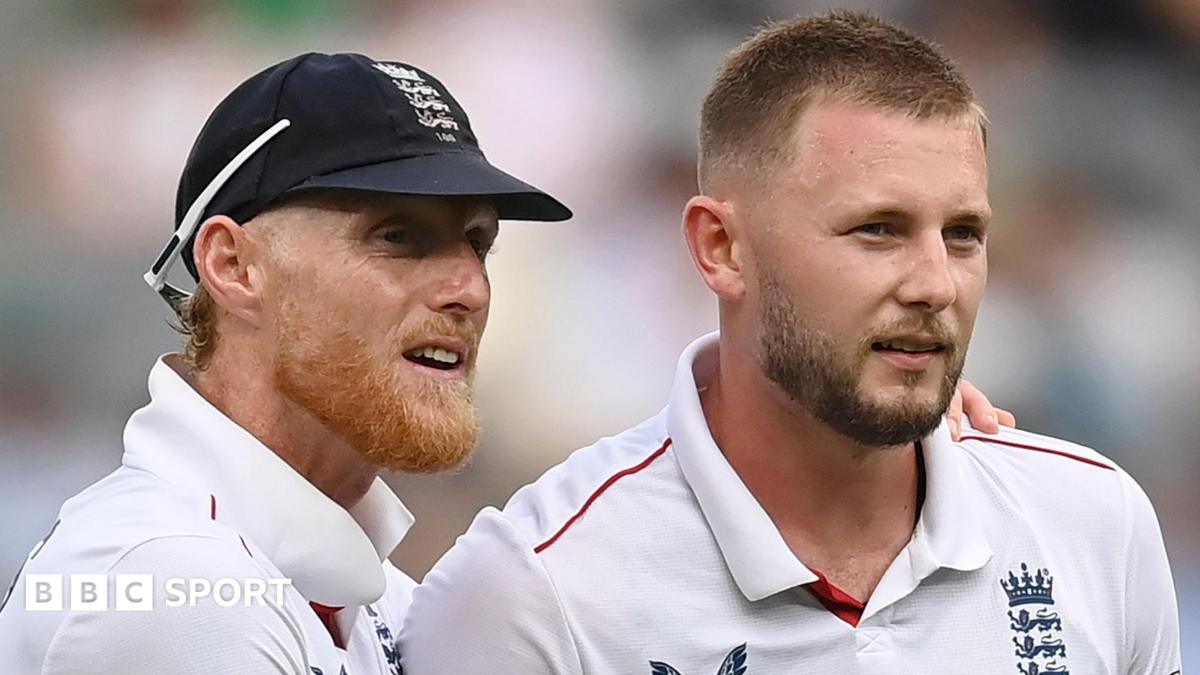
Ben Stokes and Gus Atkinson ‘blameless for violent conduct’ – ECB

The decision on Stokes and Atkinson brings an element of closure to an extraordinary period, as English cricket has had to deal with yet another off-field controversy.

Without Stokes and Atkinson, an inexperienced England team showing five changes to the one that won the first Test was soundly beaten in the second.

It means Stokes will be back for a crucial decider at Trent Bridge, with England desperate for a series win to alleviate pressure that has grown over the dismal Ashes winter and this latest chaotic episode.

And while Stokes’ return as a leader and all-rounder is vital for his team, there will be renewed scrutiny on his relationship with the rest of the England hierarchy, in particular head coach Brendon McCullum.

All of Stokes, McCullum and director of cricket Rob Key denied the captain and coach were at odds during the Ashes, when England were hammered 4-1.

Speaking on Sunday, after the loss at The Oval, McCullum said he is ready to work with Stokes again.

“We’ve worked together intimately for four years,” said McCullum. “We’ve achieved some cool things and let ourselves down in other things.

“Our motivation, belief and ambition for this side has not wavered. We have robust conversations all the way through and I think that is to be expected when you’re in positions of leadership. There is a mutual respect to how we operate with those.

“I anticipate we’ll be able to work together really well in the week coming and I’m sure that both of us have that same vision for this cricket team.”

Source link

European markets open cautiously ahead of ECB rate decision

Investors are bracing for an ECB rate hike on Thursday. Markets expect the European Central Bank to raise rates by 25 basis points, which could weigh on growth and corporate earnings. Investors are also awaiting guidance on whether further hikes will follow.


ADVERTISEMENT


ADVERTISEMENT

ING said in an analysis on Thursday morning that: “We expect the ECB to hike by 25 basis points from 2.0% to 2.25%, supported by a hawkish tone, but the bar has risen to surprise markets. Despite oil prices testing new lows earlier this week, the EUR curve is increasingly set on three rate hikes.”

Stock markets across Europe opened in positive territory despite the drop in Asian shares following another sell-off in AI-related stocks on Wall Street on Wednesday.

The Euro Stoxx 50 opened 1.2% higher but the broader pan-European Stoxx 600 rose was flat in early trading.

Germany’s Dax and France’s CAC 40 were both up by 1%, while the UK’s FTSE 100 led with a 1.2% gain. Meanwhile, Italy’s FTSE MIB rose by 0.7%.

In other dealings, Asian shares mostly fell on Thursday after another sell-off in artificial intelligence stocks weighed on Wall Street, while oil prices rose.

Japan’s Nikkei 225 lost 0.5%, South Korea’s Kospi fell 0.2%, and Australia’s S&P/ASX 200 slipped 0.2%. Taiwan’s Taiex declined 0.4%.

Hong Kong’s Hang Seng index edged 0.2% higher, while Shanghai’s Composite index dropped 0.2%.

On Wall Street, on Wednesday, the S&P 500 fell 1.6%, marking its first consecutive decline in three weeks. The Dow Jones Industrial Average dropped 1.9%, while the Nasdaq Composite lost 2%.

Wall Street has been unsettled since last week, when AI stocks reversed course after hitting record highs. Investors are weighing whether the recent pullback has eased concerns over excessive optimism or signals the beginning of a more prolonged downturn.

Super Micro Computer, which sells AI servers, plunged 28% after announcing late on Tuesday plans to raise $7 billion through sales of common stock and convertible preferred shares. Companies often seek to raise capital when share prices are elevated, though such moves can dilute existing shareholders’ stakes.

Micron Technology swung between gains and losses before ending down 4.7%. The stock has experienced sharp volatility in recent sessions, having fallen 7.7% last Thursday, dropped a further 13.3% on Friday and then rallied 9.9% on Monday. Despite the swings, its shares remain up 212.5% so far this year.

Nvidia, the chipmaker that has grown into a nearly $4.9 trillion company on the back of the AI boom, was the biggest drag on the S&P 500 after falling 3.7%. Broadcom, another major AI beneficiary, lost 5.1%.

Some pressure on AI-related shares may also be linked to investors raising cash ahead of several high-profile stock market debuts in the United States. SpaceX’s initial public offering could take place later this week.

Weakening stocks for companies with big fuel bills also pulled the market lower. United Airlines sank 6.2%, and cruise operator Carnival fell 6.3% after oil prices rose due to the latest fighting in the war with Iran.

Oil prices and US inflation

Brent crude rose 1.8% to $93.10 a barrel on Wednesday after President Donald Trump warned that Iran would “pay the price” for stalled negotiations between the two sides over the conflict. The war has effectively closed the Strait of Hormuz to oil tankers, disrupting crude shipments from the Persian Gulf to customers worldwide.

Higher oil prices have added to inflationary pressures. A report released on Wednesday showed US consumer prices rose in May at the fastest annual pace in three years.

Traders are increasingly betting that the Federal Reserve will need to raise its benchmark interest rate at least once this year in response to persistent inflation and a resilient labour market.

Higher yields can slow economic growth and weigh on a range of investments, including stocks and cryptocurrencies. They tend to hit the most highly valued assets hardest, and some critics argue that enthusiasm around AI has inflated a market bubble.

In early European trading, Brent crude was up by 0.5% at $93.60 a barrel, while US benchmark crude gained 0.7% to $90.70.

The US dollar traded at 160.58 Japanese yen in the morning. The euro rose slightly to $1.1542, and the UK pound cost $1.3377.

The gold prices dipped by 0.6% to $4,109.60 an ounce.

Source link

Iran War Could Deepen Euro Zone Economic Anxiety as ECB Warns of Lasting Consumer Scars

New research from the European Central Bank suggests that the economic impact of the Iran war may be affecting euro zone consumers more deeply and rapidly than previous geopolitical crises, raising concerns about inflation, slowing growth, and long term economic uncertainty across Europe.

According to ECB economists, European consumers appear to be reacting more sensitively to rising prices and economic instability because many households are still psychologically affected by the financial stress caused by the Russia Ukraine war and the energy crisis that followed in 2022.

The latest conflict involving Iran, triggered after United States and Israeli airstrikes earlier this year, caused major disruptions to global energy supplies and reignited fears of another inflation shock throughout Europe.

ECB researchers found that consumers quickly became more attentive to price increases even while inflation remained close to the central bank’s 2 percent target. Economists believe this reaction reflects growing public anxiety over repeated geopolitical and economic disruptions.

Why It Matters

The findings raise serious concerns for Europe’s economic recovery because consumer confidence plays a critical role in spending, investment, and overall growth.

When households become highly sensitive to inflation and uncertainty, they often reduce spending, delay purchases, and increase savings out of caution. This behavior can weaken economic activity and slow recovery across key sectors including retail, manufacturing, housing, and services.

ECB researchers warned that Europe may now face the risk of a more persistent stagflation environment, where inflation remains elevated while economic growth slows simultaneously.

The Iran war also exposed Europe’s continuing vulnerability to global energy shocks. Despite efforts to reduce dependence on Russian energy after the Ukraine conflict, Europe remains heavily exposed to disruptions in global oil and gas markets.

Although oil prices have recently eased amid hopes for diplomacy, they surged sharply earlier this year during the height of the Iran conflict, intensifying inflationary pressure across the euro zone.

Key Stakeholders

Several major stakeholders are directly affected by the growing economic uncertainty surrounding the Iran war and Europe’s inflation outlook.

European Central Bank

The ECB faces increasing pressure to balance inflation control with economic stability. Policymakers are now widely expected to continue raising interest rates in an effort to prevent inflation expectations from becoming entrenched among consumers and businesses.

European Consumers

Households across Europe remain at the center of the crisis. Rising living costs, energy prices, and borrowing expenses continue placing pressure on disposable incomes and consumer confidence.

Businesses and Industries

European businesses, particularly energy intensive industries, face higher operating costs and weaker consumer demand. Continued uncertainty may reduce investment activity and slow hiring across multiple sectors.

Energy Markets

Global oil and gas markets remain highly sensitive to developments in the Middle East. Any renewed escalation involving Iran could rapidly push energy prices higher again, directly affecting inflation and economic stability in Europe.

Governments Across Europe

European governments may face growing political pressure if inflation remains persistent while economic growth weakens. Policymakers could be forced to increase public spending or introduce additional support measures for households and industries.

Future Outlook

The coming months are likely to become a critical period for the euro zone economy as European policymakers attempt to manage the combined effects of geopolitical instability, inflation concerns, and slowing growth.

Much will depend on whether tensions in the Middle East continue easing or whether new disruptions emerge in global energy markets. A stable diplomatic environment could help reduce inflationary pressure and restore consumer confidence gradually.

However, ECB researchers warn that the psychological impact of repeated crises may continue shaping consumer behavior long after energy prices stabilize. Many Europeans who experienced financial stress during the Ukraine war now appear quicker to react to fears of inflation and economic instability.

The ECB is therefore expected to maintain a cautious but firm monetary stance in the near term, with additional interest rate increases remaining highly likely.

If inflation remains elevated while economic growth weakens, Europe could face a prolonged period of economic stagnation combined with reduced consumer spending and higher borrowing costs.

The situation highlights how modern geopolitical conflicts increasingly influence not only energy and security policy but also consumer psychology, market behavior, and long term economic confidence across global economies.

With information from Reuters.

Source link

Samit Patel would not have played in disapproved league if he knew of ECB ban

Samit Patel, who has announced his retirement from domestic cricket, says he “probably wouldn’t have played” in a disapproved T20 league earlier this year had he known it would result in a ban.

Former England all-rounder Patel, 41, and Australian bowler Peter Siddle are both unable to play in the T20 Blast this summer after competing in the World Legends Pro T20 League in Goa.

The England and Wales Cricket Board (ECB) says players cannot play domestic cricket for 12 months if they have participated in a “disapproved” league such as this.

As a result, Patel has retired from domestic cricket in England but says he will still be playing franchise cricket elsewhere in the world.

“I probably wouldn’t have played it [the World Legends League],” Patel told BBC Sport’s Strategic Timeout programme.

“There was a lot of uncertainty about whether we could play or not but we can’t get past that now. It just brought this stuff forward for me.”

Patel played 60 times for England between 2008 and 2015 and made 629 appearances for Nottinghamshire over 22 years.

He then joined Derbyshire on a two-year white-ball deal in 2024 and was out of contract when he left the club at the end of last year’s T20 Blast, but said he would have liked “one more year” of domestic cricket if he had not been dealt the ban.

“I would have played this summer,” he said. “I had some chats with some counties, we weren’t quite at a contract signing but we were in talks, so probably would’ve got a last-minute deal somewhere.”

Patel and Ravi Bopara, who also retired earlier this year, are the only two players to have featured in every year of the Blast since it began in 2003.

Source link