eaten

Boeing Has Now Eaten $3B In Air Force One Cost Overruns

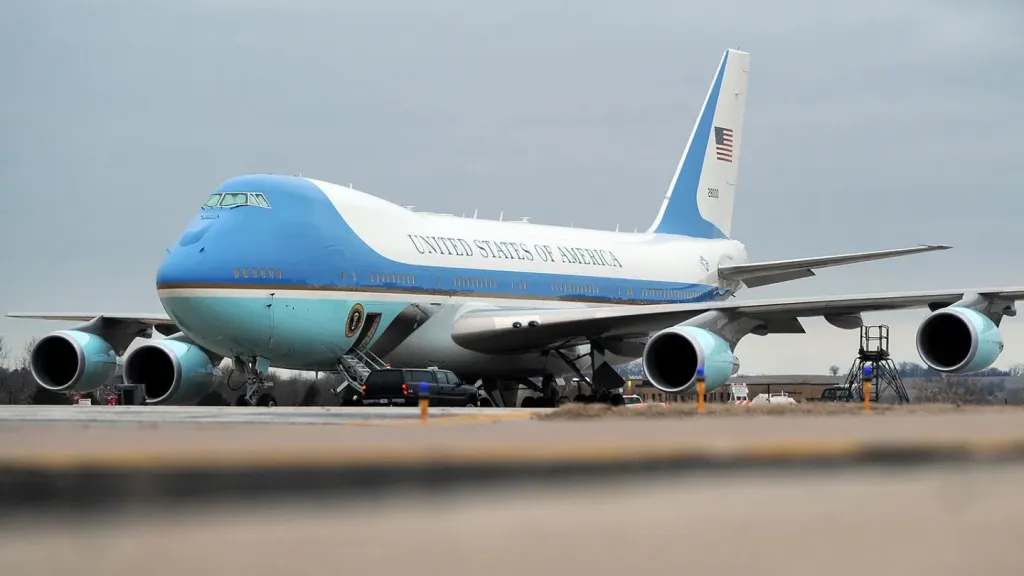
Boeing has taken a fresh $280 million loss on work to deliver two newly converted and fully equipped VC-25B Air Force One presidential aircraft to the U.S. Air Force. The company says the new cost growth reflects investments to help it keep on track to finally deliver the first of these planes in 2028. The program remains years behind schedule, as well as over budget, with Boeing now having paid more than $3 billion out of pocket. This all also follows last week’s announcement that the Qatari-gifted VC-25B Bridge jet will be pulled from service for roughly a month to receive additional upgrades amid concerns that it lacks adequate defensive and other capabilities.

The new loss, or “charge,” on the VC-25B effort was announced during a quarterly Boeing earnings call this morning. Steve Parker, President and CEO of Boeing’s Defense, Space, and Security division, had first disclosed new cost growth on the program in an interview with Aviation Week earlier this month, but did not provide a specific dollar figure at that time. The Air Force has been actively working to acquire the two VC-25Bs as one-for-one replacements for its aging VC-25A Air Force One aircraft since the late 2010s.

One of the Air Force’s existing VC-25A Air Force One jets. USAF

Boeing is doing the VC-25B conversion work under a firm, fixed-price contract, and has already absorbed billions of dollars in losses since the program began. As of 2024, Boeing had reported some $2.8 billion in charges, according to Aviation Week. The new $280 million charge would push that figure to over $3 billion.

The Air Force has infused some additional funding into the effort, as well. This includes a $15.5 million contract modification to support communications systems work in December 2025. In a report published in June, the Government Accountability Office (GAO) said the total estimated acquisition cost of the program on the U.S. government side had risen from $6.263 billion to $6.608 billion between December 2018 and August 2025.

“We’ve made the decision to add significant resources to support the build and test schedule on VC-25B. We have also aligned with the Air Force on moving from an FAA [Federal Aviation Administration] to a military certification basis,” Boeing President and CEO Kelly Ortberg said during today’s earnings call. “These additional resources will also help mitigate potential risks during certification and flight tests. Since this program is in a reach-forward loss, these additional investments resulted in a $280 million charge during the quarter.”

“Results include $280 million of losses on the VC-25B program primarily driven by an investment in additional production and certification resources,” Boeing added in a press release put out today. “The company continues to anticipate first delivery in 2028.”

Boeing first announced last year that it was aiming to deliver the first fully-equipped VC-25B by mid-2028. GAO’s report in June said the Air Force hopes to receive the aircraft by March of that year. If Boeing holds to this timeline, it will represent a slight improvement in the program schedule. However, the original goal was for the Air Force to have the first of these new Air Force One jets in hand by December 2024.

Another look at one of the older VC-25A Air Force Ones. USAF

“In September 2025, Boeing provided a revised schedule that would accelerate the aircraft delivery, to mid-2028 and mid-2029, respectively. Program officials said the revised schedule reflects changes to the airworthiness certification approach and aircraft requirements, including interior designs, weight limitations, and storage,” per GAO’s report in June. “They said that the supply chain is ramping up to ensure that parts are delivered on time to support the schedule. They also noted that they are exploring use of the organic industrial base to mitigate supply chain risks and ensure a diversity of suppliers.”

“Repairs of the VC-25B stress corrosion cracks are ongoing and are expected to be completed in 2026, according to officials. They are planning ongoing inspections after delivery,” the report added. “The Air Force plans to upgrade mission communications systems after the aircraft are delivered, but the timelines are still being developed, according to program officials.”

Cracking is a known issue that has been impacting 747-8s worldwide, regardless of their configuration. The FAA issued a formal airworthiness directive to all operators regarding these problems back in 2023.

The additional work required on the communications systems also speaks to the fact that delays on such a complex program inherently mean that certain technologies intended to be incorporated originally have become out of date.

“The program is developing 80 certification plans to demonstrate aircraft airworthiness,” GAO also noted. “The Air Force approved seven of these plans as of October 2025. The Air Force has yet to determine when operational testing will begin.”

Delays and cost growth in the conversion of the two fully fledged VC-25Bs are deeply intertwined with what is now known as the VC-25B Bridge aircraft. Issues related to Air Force One had already been of personal interest to President Donald Trump since he was just a candidate back in 2015. Reports that he was looking for ways to speed up the acquisition of a new Air Force One plane emerged soon after he started his second term last year. The Qatari government subsequently made the highly irregular donation of the 747-8i jet to the U.S. military, after which the Air Force announced it would be turned into an interim presidential aircraft. Defense contractor L3Harris did the conversion work in a span of roughly 10 months.

The VC-25B bridge aircraft seen at its official rollout. USAF

The basic justification for needing the Bridge VC-25B at all remains a subject of intense debate, and the aircraft has been a source of criticism and controversy from the start. This has been further fueled by a recent chain of events that began with the Bridge jet’s official entry in service in the Air Force One role earlier this month.

Trump took his first trip on the plane on July 1, traveling to Montana for events surrounding the 250th anniversary of the United States. Just days later, the President traveled to the NATO summit in Turkey on the aircraft, but then made an unexpected swap back to an older VC-25A on the return flight home. It has since been reported that a credible threat to Trump emanating from Iran prompted the Secret Service to advise the switch in aircraft. There were reports before and after saying the ex-Qatari 747 lacked key self-defense features and other capabilities that are found on the VC-25As and that will be included on the future VC-25Bs from Boeing.

TWZ had repeatedly raised serious questions about potential defense capabilities, as well as the overall feasibility of using the former Qatari plane in the Air Force One role, since the plan first emerged. Before the Turkey trip, whether the Bridge jet would ever fly overseas in the Air Force One role was an open question.

The VC-25As do certainly have defensive and other capabilities that are not so plainly visible, and the VC-25Bs could, as well. The White House, the Air Force, and L3Harris have consistently pushed back on any operational security concerns.

At the same time, President Trump announced last week that the Bridge aircraft will be sent off to have its capabilities “maxed out.” The White House subsequently confirmed this and that the jet is expected to be out of service for roughly a month. This has raised a host of new questions about the aircraft’s configuration and what risks may have been accepted to meet the original delivery schedule, as TWZ has previously laid out in detail.

It is worth noting here that there have also been signs that the requirements for the fully-equipped VC-25Bs have been watered down over the years, at least to a degree, to try to accelerate that program. This includes the notable lack of an in-flight refueling capability on the jets that Boeing is converting now. The VC-25As have the ability to refuel in flight, and the Air Force has described this as a key capability in the past, as you can read more about here.

In the meantime, the VC-25As look set to continue to serve at least through 2028. It is also worth noting that one of the service’s Boeing 757-based C-32A aircraft took President Trump on a trip to Michigan on Monday. The use of the C-32As in the Air Force One role is not at all uncommon, especially on domestic trips to smaller airports. However, use of the C-32s for presidential travel has increased as VC-25A availability has waned due to the age of those aircraft.

Despite the financial loss announced today, Boeing is still pressing ahead to finally deliver the first fully-equipped VC-25B, now hopefully set to come in 2028. What will happen to the Bridge aircraft afterward, and how it will continue to be utilized between now and then, remains to be seen.

Contact the author: joe@twz.com
Joseph is TWZ’s Deputy Editor, helping to oversee the site’s highly experienced and dedicated team, while also writing informative and impactful defense and national security content. He lives right in the thick of it in the Washington, D.C. area.


Source link

The best cinnamon bun I’ve ever eaten and more reasons why we travel

I’m Laurie Ochoa, general manager of L.A. Times Food, with a packed summer vacation edition of Tasting Notes.

On a roll

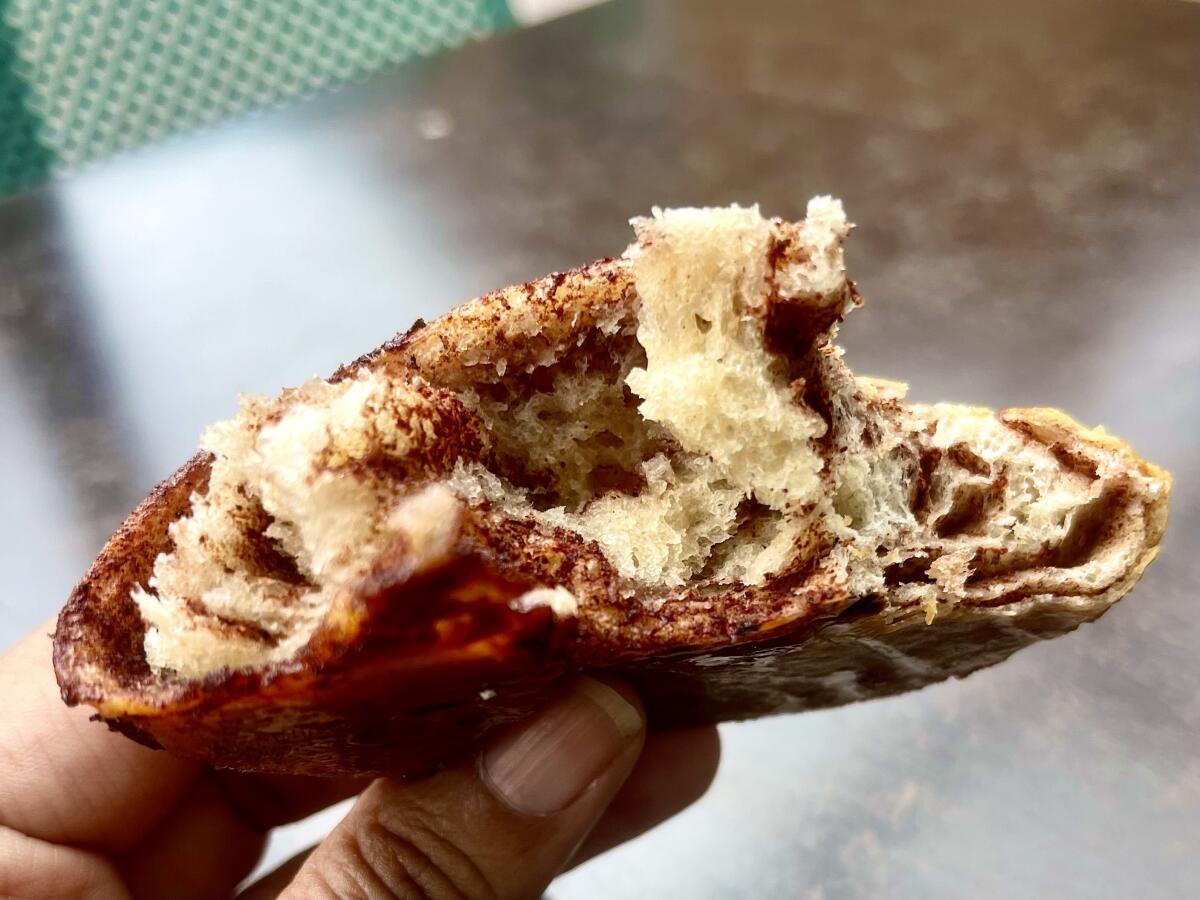
The sourdough-enhanced interior of the cinnamon bun at Daegens in Oslo, Norway.

The sourdough-enhanced interior of the cinnamon bun at Daegens in Oslo, Norway.

(Laurie Ochoa / Los Angeles Times)

Norway is not only the land of the Viking Row, one of the most captivating national fandom displays to emerge during this year’s World Cup — and certain to be seen when Erling Haaland and the Martin Ødegaard-led team battle five-time champs Brazil. Norway is also home to one of the world’s greatest cinnamon rolls.

Until I went to Oslo recently, the best cinnamon roll I’d ever eaten was in Chicago — at the venerable Swedish-American diner Ann Sather, where a milky sugar glaze used to be drizzled onto the still-warm, pillowy pastry right at the table. (These days the rolls are glazed in the kitchen after they’re baked.)

Los Angeles, of course, also has show-stopping cinnamon rolls. This spring, Food senior editor Danielle Dorsey, with help from Stephanie Breijo, Jenn Harris and Angela Osorio, put together a guide to 11 of L.A.’s most intriguing cinnamon rolls, including the hip-hop-inspired over-the-top creations at All About the Cinnamon, the sweet-savory buns with honey and sesame seeds at Modu and the tallboy “cinnamon goo”-filled rolls topped with caramel-toffee sauce from SweetBoy. Harris also recommends the especially decadent cinnamon roll served during brunch at Baltaire in Brentwood, where the cake-size roll is wheeled out on a cart and “slathered with frosting at the table.”

In Oslo, however, I discovered a cinnamon bun that stripped away the excess and let the essence of the spiced dough reveal itself.

Daegens, a tiny cafe and bakery hidden away in Oslo’s pretty Lilleborg neighborhood, is run by Anta Stinnerbom, a young entrepreneur who spent several months sharpening his coffee knowledge and barista skills at the acclaimed roastery Tim Wendelboe and is now deep into his explorations of sourdough baking. It’s the sourdough, in fact, that gives the Daegens cinnamon bun its character.

Baker and barista Anta Stinnerbom at his Daegens cafe in Oslo.

Baker and barista Anta Stinnerbom at his Daegens cafe in Oslo.

(Laurie Ochoa / Los Angeles Times)

Even more than Stinnerbom’s cardamom bun — which some praise as the best in Oslo — the more elemental cinnamon notes, enhanced with lemon zest and juice, allow the sourdough’s multifaceted dimensions to come through. Not just tang, but the taste of time.

When you can't decide between Anta Stinnerbom's cardamom bun, front, or cinnamon bun at Daegens in Oslo ... get both.

When you can’t decide between Anta Stinnerbom’s cardamom bun, front, or cinnamon bun at Daegens in Oslo … get both.

(Laurie Ochoa / Los Angeles Times)

OSLO--Daegens' BMO (bolle med ost), a good seeded sourdough roll topped with fresh butter and cheese.

Daegens’ BMO (bolle med ost), which the Oslo bakery makes with a good seeded sourdough roll topped with fresh butter and cheese.

(Laurie Ochoa / Los Angeles Times)

The discovery of a great sourdough cinnamon bun is just one of the reasons I love to travel.

Lately, I’ve been absorbed in the world of Norwegian writer Karl Ove Knausgaard, both for his most recent novel, “The School of Night,” which features a grand-scale narcissist captured in a Faustian downfall, and for “So Much Longing in So Little Space,” which documents the author’s search for the meaning of art through his encounters with the work of Edvard Munch. At Oslo’s boldly vertical, 13-story Munch museum and Bergen’s more contemplative Munch collection at the Kode museum’s Rasmus Meyer galleries, I was able to see for myself the wild stylistic leaps taken by the artist before and after “The Scream,” including the paintings he did for the women’s cafeteria at Oslo’s Freia chocolate factory.

But it was only after the first of many good meals in Oslo that I started to get a feel for the city. As I wrote in the introduction to our new collection of summer vacation dining guides, traveling with an eater’s mindset gives us a deeper understanding of places we’ve read about in cookbooks and novels or seen in movies and paintings. Wandering markets, eating at food stalls, sitting among locals and fellow travelers at the restaurants that embody a city or its surrounding countryside … these are the ways we absorb the rhythm of a place. Its flavors and ways of living are revealed to us over dinner or even a simple morning coffee accompanied by a beautifully baked cinnamon bun.

If you go …

Illustration of soba noodle bowl against Tokyo backdrop

(Giacomo Bagnara / For The Times)

For those of us lucky enough to write about food for a living, each vacation is a chance to add one more spot on our individualized maps of the world’s great places to eat. And this year, we’re sharing our personal maps and notes on places we’ve loved during our wanderings with readers.

Restaurant critic Bill Addison explored Melbourne, whose “modern dining moment,” he says, “derives from the immigrant communities that have rooted in the city since its founding,” making it “innately familiar to Angelenos, and also something wholly distinct to experience.” Then he shared 25 Melbourne restaurants, coffee shops and bars that showed the ambition of its dining scene.

Collage of stew and croissant with Paris type

(Photo illustration by Los Angeles Times)

Addison, restaurant critic Jenn Harris, deputy food editor Betty Hallock and I shared a personal list of 33 Paris restaurants and bars we love. Reporter Stephanie Breijo and senior food editor Danielle Dorsey wrote about their 15 favorite London pubs, food halls and bake shops. Addison and Hallock detail 17 splendid Tokyo dining suggestions. I detail 9 reasons Michelin-ignored Lima is one of the world’s greatest restaurant cities and came back from Hong Kong with 10 great eating experiences. And food editor Daniel Hernandez filed three reports from Mexico: an updated guide to 17 new and old favorites in Mexico City, a to-do list for exploring often-overlooked Colima, Mexico’s smallest state, and a fascinating look at how palm wine from Colima is at the heart of “a flourishing culinary movement rooted in its 250 years of trade with the Philippines.”

Given that these suggestions are not meant to be definitive — they are our personal favorites — we know that there are many other worthy places to explore. We’d love to hear from you if you have your own personal picks. We’ve built a form for entering your favorites from around the world and will publish the results in the coming weeks.

And if you’re staying closer to home, check Danielle Dorsey and Stephanie Breijo’s guide to the 23 best new L.A. bars, Dorsey’s choices for the best new L.A. rooftops for drinking and eating and the entire food team’s picks for 50 essential L.A. dining experiences.

We’ve also introduced a new way to save your favorite recommendations and build your own custom guides. Times senior product manager Jeff Poirier explains the new feature, which includes maps and is as simple to use as hitting the “save” button on any individual entry.

Introducing …

Los Angeles Times cooking editor Cody Reiss

Los Angeles Times cooking editor Cody Reiss

(Stephanie Breijo / Los Angeles Times )

We are thrilled to introduce our new cooking editor Cody Reiss, who learned most of what he knows about cooking professionally at Alice WatersChez Panisse Cafe in Berkeley and did time behind the counter at Murray’s Cheese in New York. He also had a part in Eva Victor‘s “Sorry, Baby” and played himself in the very funny “narrative cooking short” Breakfast for Liz.” Read more about Cody in his hello to readers, which describes the teaching approach he’s aiming for in the food videos he’ll be doing. And check out the videos he released this week on why you should throw away your salt shaker and how to cut a tomato. Finally, with Cody taking over our Cooking Newsletter — which is moving from Sundays to Fridays so that you can have more time to plan your weekend cooking — now is an excellent time to sign up for the free weekly dispatch if you’re not already a subscriber. This week, he provides two crucial lessons on salt and why you might be using it wrong.

Chilaquiles heaven

Pico Rivera, CA - June 10, 2026 : Chilaquiles Divorciados, Mollete, salsas at Taquearte a Mexican restaurant

Chilaquiles, molletes and salsas at Taquearte in Pico Rivera.

(Jason Armond / Los Angeles Times)

Restaurant critic Jenn Harris’ latest review is about Pico Rivera’s Taquearte, which happens to be one of my favorite places to get chilaquiles and a loaded Mexico City-style taco campechano, which made our 101 Best L.A. Tacos list. I first heard about Taquearte from my mom and her friend Pablo. (She went to high school in Pico Rivera and lives in nearby Whittier.) Harris bookmarked the place when Eater’s Bill Esparza wrote about the chilaquiles as L.A.’s best. Harris wholeheartedly agrees and loved how “the chips … were noticeably thin, delicate but sturdy enough to retain their crunch. They hovered in a magical state of limbo between wet and dry, crisp and wilted.”

More restaurants recommendations: 7 L.A. spots for bandeja paisa, Colombia’s classic lunch platter by Angela Osorio, 9 great places to try Midwest-style tavern pizza in L.A. by Kelly Dobkin and the best places to eat and drink in July, according to our Food writers.

The loss of two trailblazers

Chef Joshua Gil, sitting down, holding a cup of chai looks at the camera

Chef Joshua Gil, pictured January 17, 2024.

(Tharini Shanmugarajah)

Joshua Gil, who “helped recontextualize and reimagine Mexican food in L.A.,” as reporter Stephanie Breijo wrote, died last week after a four-year fight with cancer.

Gil, who is credited with helping the late Joe Miller‘s now-closed Joe’s Restaurant in Venice gain a Michelin star, and went on to co-found the much-missed Tacos Punta Cabras and Hamburguesas Punta Cabras, as well as the pop-up Supper Liberation Front, established the Alta California restaurants Mírame in Beverly Hills, which closed in 2023, and the still-running Mírate in Los Feliz, which Gil left after a legal dispute. He also established the rooftop raw bar Mother of Pearl, which is closed at the moment, and the teppanyaki restaurant Maison Kasai, both at the downtown L.A. dining collection Level 8.

In an extensive story about Gil opening the now-closed Three Flames in the midst of cancer treatment and his drive to continue mentoring chefs, such as Macheen‘s Jonathan Perez, he told Breijo, “I’m a very stubborn a—. I like telling people, ‘I’m Mexican. I don’t know how to give up.’”

LOS ANGELES, CA - JUNE 15: Chef Katsuya Uechi prepares a bluefin tuna at Katsuya Brentwood Celebrates A Decade

Chef Katsuya Uechi in 2016 at the 10th anniversary celebration of the Brentwood location of Katsuya.

(Michael Kovac / Getty Images for Katsuya)

Late last week, we also got word that Katsuya Uechi, the sushi master whose name has become synonymous with the global Katsuya brand, has died at the age of 67.

“The Okinawa-born chef altered the DNA of the L.A. sushi scene with his innovative, genre-bending creations,” writes Melody Xu of the chef who first came to prominence for many L.A. diners at Sushi Katsu-ya in Studio City, which he opened in 1997. “Spicy tuna crispy rice, which he debuted in the early 2000s, has since become a modern staple in sushi restaurants across the U.S.”

You’re reading Tasting Notes

Our L.A. Times restaurant experts share insights and off-the-cuff takes on where they’re eating right now.

Also …

LOS ANGELES, CA-May 30, 2026: Visitors walk amid the stands and businesses of Olvera street, in Los Angeles,

Amid the puestas of Olvera Street in downtown Los Angeles.

(Etienne Laurent/For The Times)

Eat your way across L.A.

Like what you’re reading? Sign up to get it in your inbox every week.

tasting notes footer


Source link