Duty Free

Hand luggage hack doubles your carry-on and avoids extra airline fees

The traveller shared her top hand luggage hacks to avoid having to check in a bag, and it’s inspired other holidaymakers to reveal their favourite airport tips and tricks

A savvy traveller has been praised for her ‘genius’ hack to effectively double her hand luggage allowance without forking out for additional fees when flying.

The holidaymaker, known as @lifeofjazz_ on social media, has revealed her top trick for getting away with hand luggage only, dodging the need to check a bag in at the airport. First and foremost, she makes sure her suitcase meets the required dimensions and weight restrictions to avoid any headaches at check-in. She went on to explain: “I have a few tricks that I do when travelling with only hand luggage.

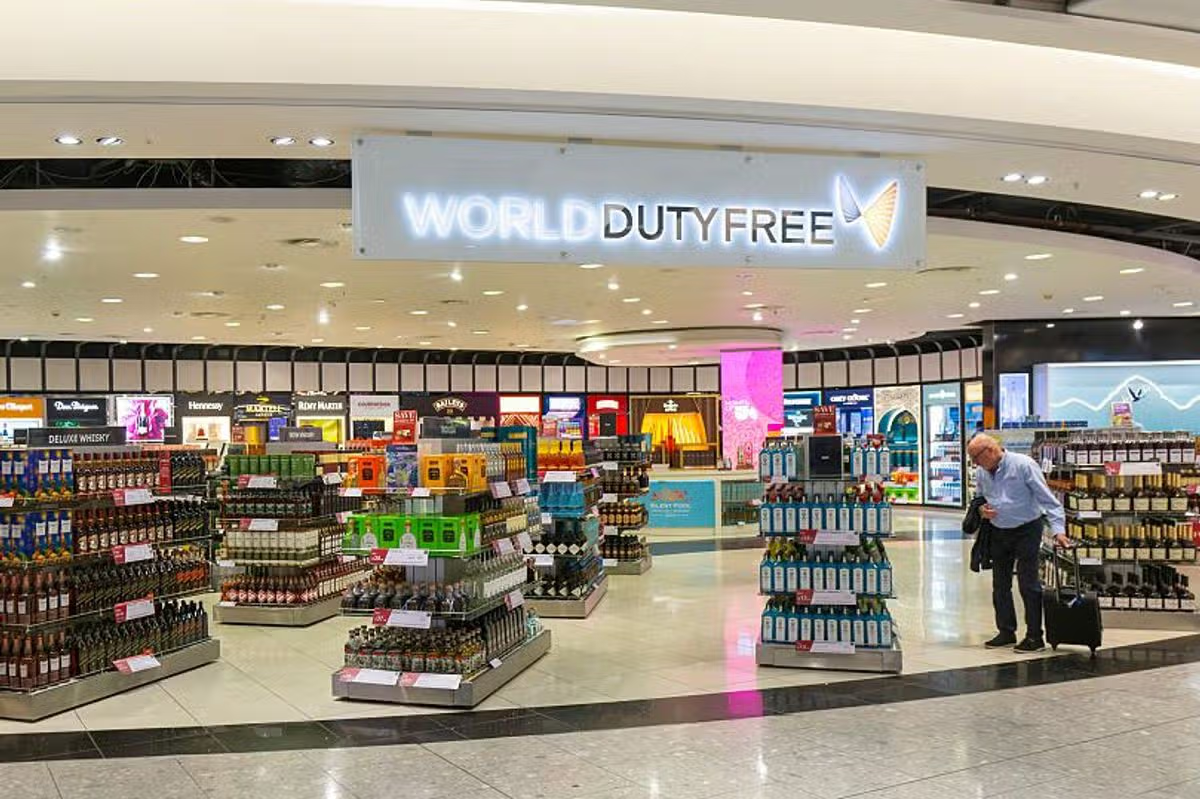
“Number one, I put a bag inside a bag. You see this bag [referencing her video], there’s another bag inside of it. I usually go to Boots or Duty Free, and get a bag because they are not allowed to touch anything inside something you’ve bought already within the airport.

“I have a crossbody bag, obviously that’s fine, it’s tiny. Then I have my small suitcase, make sure you roll everything within your suitcase so it can fit.”

She also advises getting on the plane early to secure overhead locker space rather than having to cram your bag beneath the seat in front.

Responding to her post, one follower commented: “I do the duty thing too. Get a cheeky meal deal from Boots and ask for the biggest bag.”

Another added: “People also don’t realise you don’t need to use those plastic bags for toiletries, you can use your own see through makeup bag, doesn’t matter how big.”

Content cannot be displayed without consent

A third user said: “But nowadays you can even bring a cabin wheeled bag, just a rucksack. I do the duty free bag but Ryanair told me they have limitations on duty.”

One more user added: “I always bring a pillow case put some clothes in.”

This follows other passengers revealing their tricks to enhance the airport experience overall, with one user saying: “You can’t bring a full water bottle through airport security, but you can bring an empty one.

“Most airports have water bottle fillers installed at drinking fountains after security. Beats paying six dollars for bottled water.”

Adding to the discussion, another traveller recommended speeding up security screenings by taking off bottle lids, thereby demonstrating to officials the bottles are completely empty.

Meanwhile, someone else chimed in with: “You can bring ice in a bottle though as long as it’s not melted. I like to do that and then fill it up inside the airport. I love ice water.”

Another comment advised against using the first water refill station immediately after security – typically congested due to high traffic – suggesting instead to look for the next available one for a swifter top-up.

A different user contributed yet another travel tip, advising travellers to pack compression socks for longer journeys, explaining: “For personal comfort, I find compression socks to really help during longer flights/trips. I also carry an empty water bottle through security, then refill it before boarding in order to have plenty of water for the flight.

“I carry a light sweater or thin-down vest in my bag (too many cold flights). Noise-cancelling headphones. I also carry a small external battery pack. Always plan for the worst (long lines, delays) allow plenty of time and arrive early.”

Source link

UK duty-free limit ‘rule’ passengers may not be aware of

When travelling, it’s important to know what won’t get you in trouble at customs

Travellers could face fines or worse if they overlook an airport ‘rule’ that puts a limit on certain items. It could catch Brits off guard if they end their latest getaway with a last-minute spending spree on various common products or high-end items.

When going to or from the European Union (EU), it is important to understand the regulations regarding the duty-free allowance passengers are permitted. Failing to comply with these restrictions could result in goods being seized, along with potential fines or legal proceedings.

The duty-free allowance applies to both EU and non-EU nationals, including holidaymakers and business travellers. Following Brexit, the UK has been adhering to the regulations for non-EU nationals.

Why is there a duty-free allowance?

Duty-free allowance is the authorised quantity of goods, such as alcohol, tobacco, and gifts, that travellers can bring into a country without incurring customs duty, value-added tax (VAT), or other levies. As a result, people face a strict limit on how much they can observe, or risk being perceived as exploiting the system, reports the Express.

What are the duty-free limits?

Duty-free allowances are split into two categories – restricted and unrestricted goods. Unrestricted goods are those without any special regulations or caps, such as clothing, electronics, or personal belongings, while restricted items are subject to specific limitations, including alcohol, tobacco, and perfume.

The restrictions in place also vary depending on how you’re returning to the UK. Shoppers are often caught out by the deals on offer in airports – but identical rules apply to those travelling by sea.

You’re also unable to pool your allowance with fellow passengers, which means people need to be mindful of their own spending habits. According to ETIAS Visa Europe, Brits returning to the UK via air or sea travel have the following allowances on ‘restricted’ items:

  • 200 cigarettes (or 100 cigarillos or 50 cigars or 250g of tobacco)
  • Four litres of still wine and 16 litres of beer and one litre of spirits or two litres of fortified or sparkling wine
  • Other goods up to a value of €430 per person

The thresholds are reduced for non-EU citizens travelling by rail or road. The website explains that travellers should bring no more than:

  • 40 cigarettes (or 20 cigarillos or 10 cigars or 50g of tobacco)
  • One litre of spirits or two litres of fortified or sparkling wine and four litres of still wine and 16 litres of beer
  • Other goods up to a value of €300 per person

ETIAS warned that, when goods go beyond the duty-free allowance, customs duty, value-added tax (VAT), and other taxes may be applied on the excess amount. The total of duties and taxes owed depends on various factors, such as the type of goods, their value, and the country of origin.

A spokesperson said: “To avoid overpaying taxes and duties, travellers should be aware of the duty-free allowances for the type of goods they are bringing into the EU. They should accurately declare all goods they are bringing in and their value.

“If unsure about the value of an item, travellers can check online or with customs officials. Additionally, travellers should keep all receipts and documentation to show the value of their goods.”

In other news, holidaymakers could face fines of up to £5,000 for bringing certain goods into England, even if those items were purchased at a duty-free price. The Department for Environment, Food and Rural Affairs (DEFRA) released an update at the end of March, calling on travellers to take this “simple step” to protect against diseases.

Source link