In Yemen, war at home and in the region drives up prices | Humanitarian Crises News
Sanaa, Yemen – Ahmed Yahya, 28, fills his taxi with 10 litres of petrol as he begins his workday early in the morning.
“I feed my taxi with fuel first so that it can help feed my family,” Yahya, a taxi driver, said as he wiped the dust from his front window at a petrol station on the outskirts of Sanaa.
Recommended Stories
list of 3 itemsend of list
Up until earlier this week, Yahya used to pay 4,750 Yemeni riyals, the equivalent of roughly $8.90 in Houthi-controlled areas of Yemen. The price had remained unchanged for about four years in territory under the rebel group’s control – including the capital Sanaa.
But then, on Monday, the Houthis announced a roughly 10 percent increase in the price of petrol, up to 5,250 Yemeni Riyals ($9.80). After years of economic misery, Yahya described the price hike as another “painful surprise to an already devastated people”.
The Houthi-run Yemen Petroleum Company said the diesel and petrol price increase was the result of a “global increase in fuel prices”, and promised that it would be temporary. The increase in global oil prices this year comes off the back of the impact of the United States-Israel war on Iran. But, more recently, the Houthis’ own capture of Yemen’s southern Red Sea coast from government forces last week, and attacks on Saudi Arabia, have played a major role in increasing prices.
“When I heard the announcement of the new fuel price, I was shocked and frustrated. We’re hardly surviving, and this price increase will make survival even harder,” said Yahya, as he lamented another burden in a country where 18 million already face acute food insecurity – a lack of reliable access to enough food.
‘Rent or food?’
Yahya, a father of three, has been working as a taxi driver for five years. Although the job helps make ends meet, he feels financially insecure, especially with the ongoing changes in food and fuel prices.
“My family spend about 75,000 Yemeni riyals [$140] a month on food expenses such as flour, rice and cooking oil. With the fuel price rise, we will need at least 85,000 Yemeni riyals [$159] a month for the same food items,” said Yahya.
The resumption of fighting in Yemen in the past few months, after a four-year period of relative calm in the country’s war, has contributed to the price rises. But for Yahya, relatively safe in Sanaa, it’s the increased expenses that are the more troubling development.
“When prices rise, they affect what we eat, drink, and how we live,” he said. “Let me give you an example: I pay 25,000 Yemeni riyals [$47] in rent every month. With the increase in food prices, putting money aside to pay the rent has become more challenging. What is the priority? Rent or food?”
An April report by the International Monetary Fund (IMF) said that Yemen’s internal conflict has led to significant macroeconomic vulnerabilities and a marked decrease in income per capita, leaving more than half of the population in urgent need of humanitarian assistance.
“It [the conflict] has caused widespread food insecurity, disease outbreaks, mass family displacement, and limited access to clean water,” the report said.
Risky and costly transportation
One of the links between the renewed fighting and the increase in prices is the longer distances needed to transport products across the country, as truckers avoid roads near the front lines.
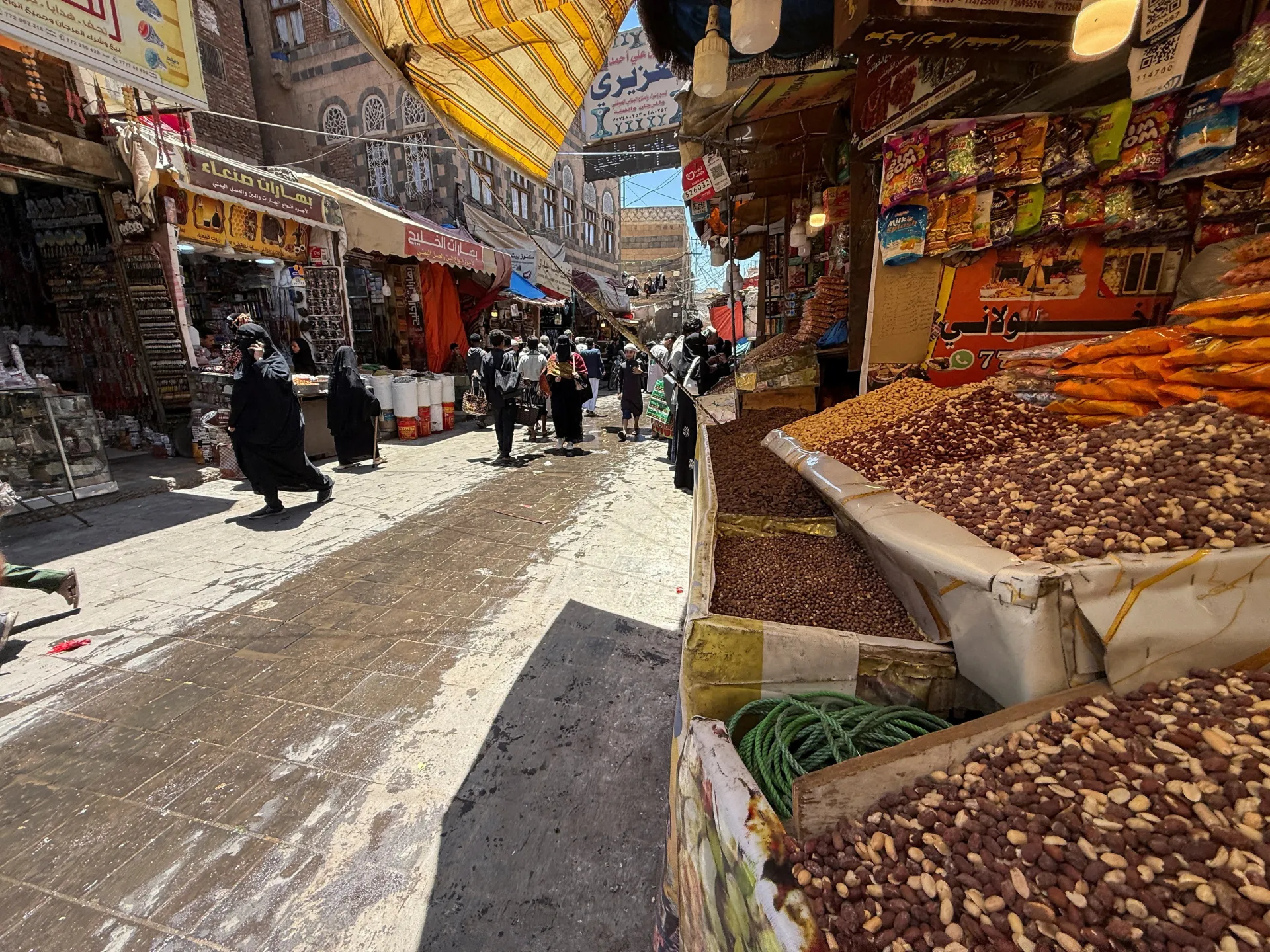
“A truck carrying goods from the south to the north or vice versa now takes up to a week to reach its final destination. Before the renewed fighting, a similar journey would have taken three days or less,” explained Saleh Abdullah, a shopkeeper in Sanaa.
The increased transportation costs, including the higher fuel prices, are passed on to the consumer.
“This means no family is immune to this trouble,” Abdullah said. “Whether it is the flour, the baby milk, the fruits, the vegetables, or anything else, families will feel the pain of price increases.”
“Some customers become angry at us when we sell products at a higher price,” he added. “We didn’t impose prices. We just react and adapt to the changes in the country or the region.”
Ibrahim Abdu, an employee at the Nehm customs checkpoint in Sanaa governorate, said the number of trucks arriving in the capital has declined over the past few weeks.
“Fighting has cut off many roads, and merchants have avoided risking their products and drivers,” he told Al Jazeera.
‘A hunger multiplier’
Years of war have taken a heavy toll on Yemen’s economy, disrupted businesses, and pushed millions of people into poverty and food insecurity. Against this bleak backdrop, the country’s humanitarian tragedy has been worsening.
Ahmed Mohammed, a former humanitarian worker in Hodeidah, describes the fuel price rise as a “hunger multiplier” in war-torn Yemen.
“If a breadwinner struggles to buy a family three meals a day, he may be able to afford only two given the rising price of food commodities. This will deepen hunger among families,” said Mohammed.
He added: “War is ugly, and one of its ugliest aspects is seeing a family unable to afford a kilogramme of flour, sugar or rice.”
The UN Refugee Agency (UNHCR) warned this week that the violence threatens to trigger a humanitarian crisis as more people are displaced, pressuring communities with limited resources.
A multi-faceted impact
Wafiq Saleh, an economic researcher and executive director of the Taiz Centre for Yemeni-Gulf Studies, said the 10 percent hike in fuel prices in Houthi-controlled areas deals a blow to Yemeni consumers.
“Its impact will manifest as a major inflationary wave, placing a heavy burden on the most vulnerable and income-deprived segments of society,” Saleh told Al Jazeera.
While this price increase may appear modest in percentage terms, its effects extend far beyond the petrol station, rippling through various goods and services and creating new hardships, according to Saleh.
“Petroleum products serve as intermediate inputs for a wide range of goods and services. Consequently, a 10 percent rise in fuel prices does not merely increase people’s expenses by 10 percent; it triggers a cascading effect on prices,” he said.
“The most severely affected sectors include agriculture – which relies on diesel for crop irrigation – and the transport and services sectors, where rising costs immediately drive up passenger fares and food prices.”
He added that the increase would also affect water and electricity services, many of which rely on diesel-powered generators, further increasing the cost of basic services.
Small- and medium-sized enterprises are similarly affected.
“Small enterprises are operating on narrow profit margins, and they may be forced to either cease operations or pass the increased costs on to the final consumer,” Saleh said.