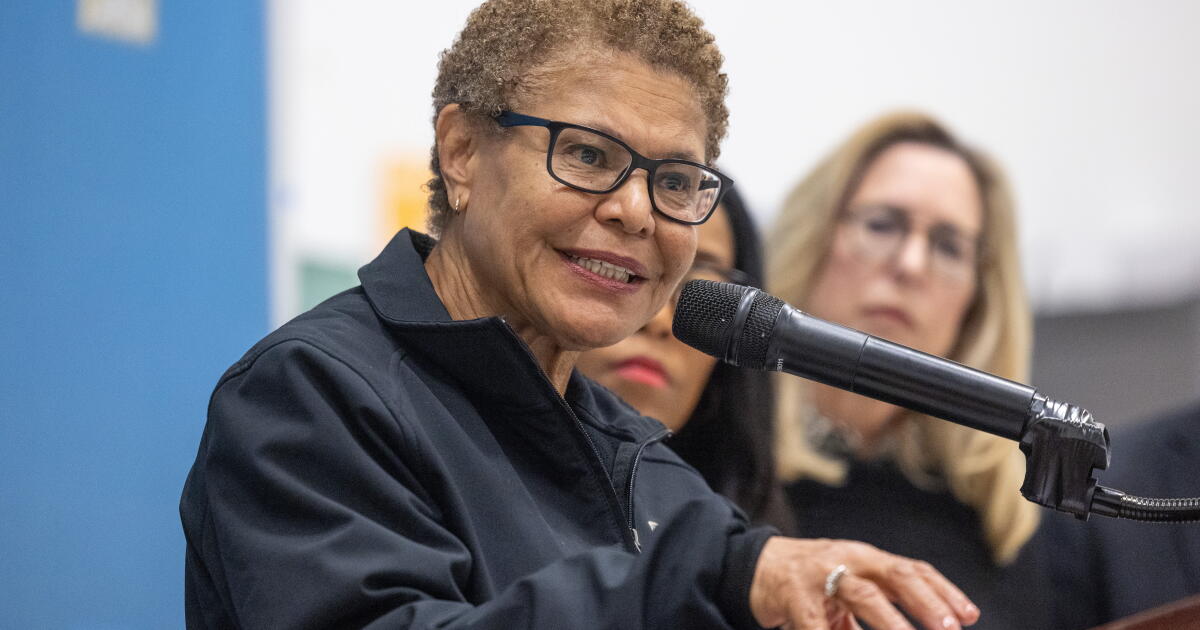
Kenneth Mejia, 35, is a certified public accountant who lives in Westlake. In 2022, he won the most votes of any controller candidate in city history, despite lacking name recognition and running against a sitting city council member, Paul Koretz.
He’s well-known online, and his two corgis, Killa and Kirby, are a constant presence in his campaign as well as on the official controller’s website. He points to his audits of city spending on homelessness, police, housing and animal services.
“We said we were going to provide more financial transparency and accountability and oversight, and we’ve done that,” Mejia said in an interview.
The controller’s waste, fraud and abuse team began investigating a homeless service provider after receiving a phone call alleging fraud. Mejia said it became the catalyst for a federal investigation into Alexander Soofer, who in January was charged with wire fraud amid allegations that he took $23 million in public funds meant for homeless people.
“Because of the work that we do, it also forces agencies to better look at their internal controls, to hold service providers accountable,” Mejia said. “These events can lead to systemic change, and that’s what it did.”
Zach Sokoloff, 37, lives in Westwood with his wife, two kids and two rescue dogs. He was born and raised in the Westwood area. He graduated from Yale University, received a master’s in education policy and administration from Loyola Marymount University and an MBA from Harvard University before teaching algebra at a middle school in Boyle Heights and a high school in Watts.
Since joining Hackman in 2018, he has worked on multibillion projects transforming legacy studio lots. The company is considered one of Hollywood’s largest landlords.
Sokoloff points to his experience managing large-scale projects as key to navigating the city’s budget and bureaucracy. He said he would work collaboratively across different departments.
“Angelenos are tired of reports. They want results, and so my approach balances accountability and collaboration,” Sokoloff said.
Every Democrat on this list could be expected to work in general harmony with a Democratic governor and in opposition to key Trump administration policies.
There are differences in their backgrounds, but only minor policy divergences, including on the participation of trans athletes in women’s and girls’ sports.
Listed in alphabetical order, with an excerpt from their survey responses:
Richard Barrera, 59, is a longtime school board member in San Diego Unified, the state’s second-largest school system, a senior advisor to Thurmond and before that was a local labor union executive.
“The three experiences that best qualify me for this office are the ones that required me to govern a public school system, execute policy inside the state agency, and understand workforce realities in practice,” Barrera said.
Wendy Castañeda-Leal, 42, has pursued a career in more rural areas, currently serving as superintendent for the Semitropic Elementary School District, which has one TK-8 school with about 140 students off Highway 46 in Kern County. She’s also been director of whole child education for Roseland School District and a secondary alternative school principal.
“I lead districtwide efforts aligned with California’s priorities by advancing equity, strengthening academic achievement, and expanding supports for the whole child, including multilingual learners and underserved student populations,” Castañeda-Leal said. “I also bring extensive site leadership experience as a principal at the elementary, middle and high school levels, where I improved student outcomes.”
Nichelle Henderson
(Courtesy of Nichelle Henderson.)
Nichelle Henderson, 57, is an elected trustee of the Los Angeles Community College District. Her education career began as a teaching assistant. She later taught sixth grade math and science in Compton Unified. She’s currently a faculty advisor and clinical field supervisor in a Cal State teacher preparation program.
“What it is clear among Democratic candidates is that there are candidates that are seeking this position because they want a safe place to land after having termed out,” Henderson said. “My goal is to build the capacity of our TK-12 public schools to prepare students for higher education and to participate in the local and global workforce.”
Ainye Long, 41, a San Francisco Unified middle school math department chair, ran four years ago with no significant resources and came within less than 1 percentage point of making the runoff. It helped then that no Democrat ran against Thurmond and that Republican challengers divided the Republican vote. Long also had then — and still has — the ballot designation: “public school teacher.” She also is a past senior administrator at a charter-school group.
“One job of the [state superintendent] is to measure the effectiveness [in practice — what actually happens] of our laws, and help to find better ways to educate our body,” Long said. “The people closest to the work are closest to the problems of practice, so they’re the first to see the solution.”
Al Muratsuchi
(Photo courtesy of Al Muratsuchi)
Al Muratsuchi, 61, represents the 66th Assembly District, encompassing parts of the South Bay, and has been the chair of the state Assembly education committee. He taught briefly at the college level and served as an elected board member of the Torrance Unified School District.
“I am the only candidate running for State Superintendent of Public Instruction with the combined experience of statewide education policy leadership, … local school district governance as a former Torrance Unified School District board trustee, and classroom educator,” Muratsuchi said, adding that he authored 23 education-related bills that were signed into law.
Josh Newman
(Josh Newman)
Josh Newman, 61, has been a state senator, including chairing the education committee, and a technology company executive. He served in the Army and taught briefly both at the college and middle school levels.
“Among the Democrats in this race, the most significant distinction is between candidates whose approach to this office is primarily organized around labor relationships and funding advocacy, and my own, which emphasizes accountability, outcomes, and the full range of students’ needs alongside continued investment,” Newman said.
Anthony Rendon
(Photo courtesy of Rendon campaign)
Anthony Rendon, 58, was state Assembly Speaker from 2016-23, previously directed Plaza de la Raza Child Development Services and served as chief operating officer for Mexican American Opportunity Foundation.
He spoke of “the role that technology is playing in the degradation of youth mental health and happiness. The next superintendent needs to properly implement California’s ban on phones in classrooms, be ahead of the curve in establishing policies on generative AI use, and make sure teachers have the training and support they need to make sure the classroom is about learning.”
No candidate received enough votes to win the Democratic Party endorsement. The tally was as follows: Henderson: 24.75%; Muratsuchi 21.97%; Rendon 17.43%; Newman 16.82%; Barrera 12.77%.
McOsker said Mayor Karen Bass’ Inside Safe program has been effective in clearing homeless encampments and moving the residents inside. He supports reducing costs by doubling people up in rooms and cutting underutilized contracts.
“It’s unsustainable as it is to spend this much, and I think everyone recognizes that,” he said.
McOsker said he supports “no encampment” zones, per Municipal Code 41.18, around places like schools, day care centers, libraries and homeless shelters.
It’s especially important to keep encampments away from shelters, he said, so people can get help without distractions nearby.
“We really need to make that break and give folks an opportunity to put their lives together,” he said.
Rivers equated the no-encampment zones to federal immigration operations in the city, arguing that they enable law enforcement to snatch people off the street without giving them a place to go.
“Just moving homelessness doesn’t all of a sudden solve it,” he said.
Instead, Rivers wants to establish “safe shelter” zones where people can get their needs met instead of being chased out.
Rivers believes that Inside Safe contractors should be audited and that there should be “full transparency” in the amount of money spent to house each person.
“We need to actually have a track record of where these funds are going to,” so it’s clear the money actually is helping to resolve homelessness, he said.
Three seats — two contested — are on the June 2 primary ballot for the seven-member Los Angeles Unified School District Board of Education.
The nation’s second-largest school system, with close to 400,000 students, faces evolving challenges and uncertainties that could alter the direction of the district for years.
In mid-April L.A. Unified officials barely averted a strike by agreeing to significant employee raises, rescinding about 200 layoffs and agreeing to hundreds of new hires of counselors, school psychologists and other student support staff. The contracts with three district unions, including teachers, will cost nearly $1.2 billion a year, and board members now must find a way to pay for them amid budget pressures.
Standardized test scores have trended upward since the nadir of the COVID-19 pandemic, recovering faster than the state average, but the pace remains too incremental for critics.
The future of L.A. schools Supt. Alberto Carvalho is uncertain. He’s on paid administrative leave following FBI raids of his San Pedro home and downtown office. At least part of the investigation centers on a failed chatbot project that was supposed to revolutionize and individualize education.
Carvalho said he’s done nothing wrong and would like to return to work. If he does not return — and cannot serve out his new four-year contract — board members would select a superintendent.
L.A. Unified also faces declining enrollment — which reduces state funding and increases pressure to save money by closing many campuses.
Heightened federal immigration enforcement also has affected enrollment and attendance while creating anxiety that spills over into the classroom. Officials responded by declaring L.A. Unified a sanctuary district — both for immigrants and for the LGBTQ+ community, which also has been a target of some conservative groups.
Carvalho’s central focus on improving test scores has led to increased tutoring, repeated diagnostic measures and phonics training. In addition, the district put a successful school bond on the ballot to continue renovations, worked to lower student absenteeism and emphasized greener campuses.
The board majority consists of candidates elected with the endorsement of the powerful teachers union — United Teachers Los Angeles. This election will not change that balance because five seats are held by union-friendly incumbents. But the outcome will determine whether UTLA can further strengthen its hand or whether other constituencies will gain a measure of power at the union’s expense.
UTLA is the most reliable funder of school board campaigns — and the union’s spending is not controlled by candidates.
Also exerting influence in recent elections is the district’s other largest union: Local 99 of Service Employees International Union. It represents some 30,000 bus drivers, teacher aides, custodians, gardeners, cafeteria workers and technical support staff. This union has yet to endorse candidates.
A potential but diminished source of election-funding firepower would be charter school advocates — who once routinely outspent the unions. Retired businessman Bill Bloomfield — a charter school ally who makes his own calls about whom to support — has been a big spender in recent elections, typically as a counter to teachers-union-endorsed candidates. He has not committed to being involved in this school board election cycle.
The material below was assembled through reporting and surveys provided to candidates. Some responses are paraphrased for clarity or condensed for brevity.
A nonprofit advocacy group, Social Equity LA, organized with local cannabis business owners to oppose the measure in letters to Mayor Karen Bass.
Luis Rivera, executive director of the nonprofit, said Measure CB risks legitimizing the illegal cannabis industry while linking city finances to the tax revenue the businesses would generate. The measure also would undermine Proposition 64, the state law that requires cannabis businesses to be licensed, he said. And amid the city’s struggles to track and close illegal cannabis businesses, Rivera said it will be difficult to force them to pay up.
“There’s no guarantee or mechanism to assure that illegal operators will pay the taxes or fulfill their obligations,” Rivera said.
Even if they pay taxes, illegal operators could undercut legal businesses by selling unregulated products and avoiding requirements, such as code inspections and safety tests for merchandise, that legal businesses must fulfill to keep their licenses, he said. For an already struggling industry, the answer isn’t taxing more businesses, he said — it’s lowering taxes.
Lindsey Horvath was a West Hollywood city councilmember in 2022 when she ran for L.A. County supervisor in a six-person primary that featured a pair of state senators, Bob Hertzberg (D-Van Nuys) and Henry Stern (D-Malibu).
As a supervisor, Horvath helped lead a historic push to remake county government. Measure G, passed by voters in 2024, will nearly double the size of the Board of Supervisors and create an elected chief executive position as well as an independent ethics commission. But the passage of Measure G had the unintended effect of wiping out Measure J, which funds anti-incarceration programs, leaving county officials scrambling for solutions.
Tonia Arey is a real estate agent who said she decided to “enter public service out of concern for the direction of Los Angeles County and a desire to bring stronger accountability to local government.”
She calls herself a “Jewish woman challenging the incumbent” and is centering her campaign on public safety, including law enforcement, fire and probation, emergency preparedness and confronting antisemitism.
Tomás Sidenfaden is a software developer and startup founder who has lived in Los Angeles for nearly three decades.
“Three generations of my family have called this region our home, and I’m tired of waiting around for other people to fix it,” he said.
Carmenlina Minasova is a San Fernando Valley reform advocate who did not respond to requests for comment.
Katy Young Yaroslavsky is running for L.A. City Council District 5.
(Campaign of Katy Young Yaroslavsky for City Council)
Yaroslavsky, 45, was named the council’s budget committee chair at the beginning of last year, a job that carries immense influence over city spending and that requires her to balance lofty political expectations with fiscal reality.
Yaroslavsky began her career as a land use attorney and lobbyist and later worked as a top aide to former Los Angeles County Supervisor Sheila Kuehl for more than six years. She is the daughter-in-law of former Fifth District City Councilmember Zev Yaroslavsky, who later served on the county board of supervisors.
“We need people in office who are interested in problem solving, not focused on gotcha politics. Who are not super ideological but are just really there to solve problems. And that’s what I’m there for,” Yaroslavsky said.
Henry Mantel is running for L.A. City Council District 5.
(Handout from Matt Mantel)
Mantel, 33, has worked on a handful of political campaigns, according to his campaign website, including Carolyn Ramsay’s unsuccessful campaign for the 4th District council seat in 2015. Mantel graduated from the McGeorge School of Law in Sacramento in 2020. As a lawyer, he says he has represented tenants in disputes with landlords, including contesting evictions.
“The extent of the crisis really weighed on me, and watching the City Council continue to refuse to do nothing was just unbearable,” Mantel said.
Morgan Oyler is running for L.A. City Council District 5.
( Cory Aycock)
Oyler, 42, is a longtime accountant for Haus of Portraiture, a fine art portrait studio in Santa Monica. He was born and raised in L.A., attending high school in Santa Monica, and returned to live in Westwood about a decade ago. He sought election to the Washington statehouse in 2010 and 2012, running as a Republican and losing both times. He says he became a Democrat a decade ago, after becoming uneasy with President Trump’s influence on the GOP.
Oyler felt compelled to run because he sees Yaroslavsky’s policies as a barrier to sustainable housing growth.
Jason Gibbs: Republican, Santa Clarita City Council member, mechanical engineer
Gibbs has been a member of the Santa Clarita City Council since 2020 and was chosen by his peers to serve as the city’s mayor in 2023. He earned his bachelor’s and master’s degrees in mechanical engineering at Cal Poly and went on to work in the aerospace industry, according to his campaign website. He has lived in Santa Clarita for nearly a decade while raising two young children, his bio says, and has served on the local boards of the Boys and Girls Club, the Valley Industry Assn. and the Salvation Army.
George Whitesides: Democrat, incumbent
Whitesides defeated Republican incumbent Mike Garcia to represent the 27th Congressional District in 2024. Whitesides worked on President Obama’s transition team in 2008 and served as NASA chief of staff during the Obama administration, according to his campaign bio. He was the first chief executive of Virgin Galactic, co-founded Megafire Action, a nonprofit that advocates for legislation to address the growing problem of massive wildfires, and was a board member for the Antelope Valley Economic Development and Growth Enterprise, his bio says.
Across the country, debates over voter identification laws have become a flash point in broader fights about election security and voting access.
Supporters of voter ID laws say they are needed to prevent election fraud and ensure only eligible voters cast ballots. Critics argue there is little evidence of noncitizens voting and say the requirements instead would reduce voter participation in elections.
Under California law, voters in the state are not required to show or provide identification when casting a ballot in person or by mail. The state does require ID when registering to vote, and residents must swear under penalty of perjury that they are eligible to vote and they are a U.S. citizen.
Weber has opposed proposals that would require voters to show identification in order to cast a ballot. She and many Democratic leaders argue that voter ID laws can create barriers for eligible voters, particularly those who may not have easy access to government-issued identification.
Weber believes Voter ID efforts are meant to sow doubt in the integrity of the elections system.
“When you really get to it, Voter ID is a smoke screen for trying to create the idea that this is a corrupt system,” she said.
Weber instead supports policies aimed at expanding participation among eligible voters, including vote-by-mail ballots and automatic registration.
Conversely, Wagner wants the state to require voters to show ID at the polls. He argues that requiring identification would strengthen public trust in election results and align California with practices used in many other states. He said it’s patronizing to minorities when critics argue it’s hard for them to get identification.
“You need an ID to drive,” he said. “You need an ID to fly in a plane. You need one to buy alcohol. You need it to buy tobacco.”
Wagner has been working with proponents of the Voter ID ballot measure to raise money and helped gather signatures. That statewide ballot measure would require state or local elections officials to verify that Californians registering to vote are U.S. citizens by “using government data,” which according to supporters could include information in the federal Social Security Administration database, jury summons information and other government records.
“What I’m pledging the people of California is that if they pass voter ID, I will protect it. I will sue if I have to,” Wagner said. “If I am secretary of state, I will implement it and hold the registrars accountable and hold my office and myself accountable for doing the will of the people.”
Robert Luna seeks a second term as L.A. County Sheriff but faces nine challengers, including predecessor Alex Villanueva, whom he defeated in 2022.
(Eric Thayer/Los Angeles Times)
Robert Luna is hoping to be the first L.A. County Sheriff to win a second term in more than 10 years. He points to a reduction in crime for the county during his term and says he brought stability after a series of one-term sheriffs since 2014.
Last year, deputy-patrolled areas of the county experienced a 12.5% drop in serious crimes from the previous year, including a drop of 12% in murders and 20% in auto thefts.
Perhaps the most vocal and well-known of Luna’s opponents is his predecessor, Alex Villanueva, who paints a picture of a department in disarray, with low morale and trouble in recruiting. Villanueva claims his return would keep deputies from leaving and appeal to new hires.
Former sheriff’s Lt. Eric Strong, who also served as chief of campus safety and security operations at the county probation office, has entered the fray once again after finishing third in 2022. Strong has called for increased transparency by the department, advocating for the agency to work with oversight bodies like the Office of Inspector General and the Civilian Oversight Committee.
“Nothing has really changed, and that’s why I’m running,” Strong said.
Mike Bornman, a retired former captain, also is vying for the job. He’s looking to lift morale inside the department, which he said has faced a series of challenges with social movements that have been “anti-cop,” such as the George Floyd protests of 2020 and calls to defund the police.
“There’s been no real pushback from law enforcement; there’s been nothing coming from this office relative to that,” Bornman said.
He said the department is struggling with difficulty in recruitment, significant overtime hours and deputies at risk of burnout.
Sgt. Karla Carranza is running again after an unsuccessful campaign in 2022. At one point assigned to the Twin Towers Correctional Facility in downtown L.A., Carranza has made jail reform one of her top campaign focuses, promising to reduce violence and lower the risk of lawsuits and what she says are preventable inmate deaths.
Brendan Corbett, also running for the job, served as assistant sheriff during Villanueva’s tenure. He’s looking to restructure the department, focus resources on patrol and line functions and increase the reserve program.
Lt. Oscar Martinez, assigned to the department’s Palmdale station, is running to unseat his boss and criticizes Luna for fostering relationships with the county board of supervisors and oversight bodies, saying his focus should be on law enforcement, not politics .
“The sheriff is more interested in protecting the political establishment,” Martinez said. “Under my leadership, the mission of the sheriff’s department is to fight crime. Our job is not to fix politics.”
Andre White, a detective with about 11 years at the department, also vowed to take a “community-oriented approach” if elected.
Some voters may recognize Sonia Montejano, a former senior deputy in the department’s court services division, as the court bailiff in the television court program “Judge Joe Brown.”
Montejano filed paperwork for the position and listed her personal website on campaign forms. Her website, however, makes no mention of her campaign or position on issues involving the department. She did not respond to requests for comment.
Black members of Congress are bracing for a crippling shake-up of their ranks after a Supreme Court ruling gutted a key section of the Voting Rights Act that had protected minority communities in political redistricting and helped boost their representation.
Wednesday’s decision clears the way for Republican-led states to redraw U.S. House districts without regard to race, potentially creating many more GOP-friendly seats.
Rep. Yvette Clarke, chair of the Congressional Black Caucus, told reporters that its members and Democrats would fight the effects of the ruling.
“The Supreme Court has opened the door to a coordinated attack on Black voters across the country,” Clarke said. “This is an outright power grab.”
Under Section 2 of the Voting Rights Act, voters could challenge electoral maps that appeared to dilute the ability of minority communities to elect representatives of their choosing. The expected wave of congressional redistricting by Republican-controlled states after Wednesday’s ruling, especially for the 2028 election and beyond, is likely to result in a much smaller Black Caucus.
Changes are coming, but how quickly is unknown
Clarke was joined by over a dozen of the 60 Black Caucus members, including Democratic House Minority Leader Hakeem Jeffries. Their responses to the court’s decision ranged from outrage to defiance to mourning.
It’s not clear how many seats will ultimately be affected by the ruling, but redistricting experts predict that more than a dozen now held by minorities could be swept away.
Rep. Troy Carter, one of two Black Democrats from Louisiana, the state at the center of the case, called the ruling “a devastating blow to our democracy, plain and simple.”
Republican leaders in several Southern states already have been discussing how to apply the ruling and create new GOP-friendly congressional maps. In Florida, Republicans wasted no time approving a new U.S. House map, part of which redrew one district created to elect a Black representative.
“I would be surprised if we do not see former slave-holding states moving at lightning speed to target districts that provide Black voters and other voters of color an equal opportunity to elect candidates,” said Kristen Clarke, general counsel for the NAACP and the first Black woman to be assistant attorney general in the U.S. Department of Justice’s civil rights division.
It’s not clear whether state-level voting laws or constitutional prohibitions against racial discrimination will provide any protection, she added.
Republican officials and Black conservatives praised the decision as a victory against race-based mandates. Linda Lee Tarver, of the Project 21 Black Leadership Network, said in a statement civil rights laws were not intended “to institutionalize racial line-drawing as a default feature of our political system.”
Voting Rights Act expanded Black representation
The Congressional Black Caucus was formed in 1971 as court-ordered redistricting under the Voting Rights Act, passed just six years earlier, sent more minorities to Congress.
The number of Black representatives in Congress jumped from nine to 13. Shirley Chisholm, the first Black woman elected to Congress, decided to expand the Democracy Select Committee created in the 1960s by Democratic Rep. Charles Diggs into the more formal Congressional Black Caucus.
The CBC raised its profile in its first year when it boycotted President Nixon’s State of the Union address after he refused to meet with the group. Nixon eventually acquiesced. The group created a list of over 60 recommendations to help the Black community, including counteracting racism and building adequate housing. It earned the nickname the “conscience of the Congress.”
“That caucus has had such an important voice in American politics — the things that we’ve been able to achieve together, the creation of equity and access,” Democratic Sen. Raphael Warnock of Georgia said during a separate news conference Wednesday. “And I’m afraid that with this ruling, we could see that caucus shrink in a hugely significant way.”
What can Black constituents do
The ruling upset Thomas Johnson when he heard about it while visiting Louisiana’s Capitol in Baton Rouge. Johnson, who is Black, is from New Orleans and represented by Carter. He fears Republicans could redraw the state’s congressional map in a way that dismantles predominately Black districts.
“I feel like this is an embarrassing attack upon the minorities, particularly the Black community,” Johnson said. “We have very little [voice] in Congress.”
Antjuan Seawright, a Democratic strategist who advises the Black Caucus, said he expects the group will be involved in multiple legal fights for members whose districts will be targeted after the Supreme Court ruling. He also said the ruling makes voter turnout efforts even more important “if we want to change course on some of the things that are likely to happen because of this decision.”
Democratic Rep. Terri Sewell of Alabama, whose state was at the center of a major Voting Rights Act case decided in favor of Black representation nearly three years ago, agreed that the party now needs to focus on getting voters motivated ahead of this year’s midterm elections.
“Now more than ever, we need communities across this nation to mobilize — in state legislatures, in the courts and at the ballot box,” Sewell said. “We need to vote like we’ve never voted before.”
Tang writes for the Associated Press. AP writers Leah Askarinam, Matt Brown and Ali Swenson in Washington and Sara Cline in Baton Rouge, La., contributed to this report.
Three seats — two contested — are on the June 2 primary ballot for the seven-member Los Angeles Unified School District Board of Education.
The nation’s second-largest school system, with about 390,000 students, faces evolving challenges and uncertainties that could alter the direction of the district for years.
In mid-April L.A. Unified officials barely averted a strike by agreeing to significant employee raises, rescinding about 200 layoffs and agreeing to hundreds of new hires of counselors, school psychologists and other student support staff. The contracts with three district unions, including teachers, will cost nearly $1.2 billion a year, and board members now must find a way to pay for them amid budget pressures.
Standardized test scores have trended upward since the nadir of the COVID-19 pandemic, recovering faster than the state average, but the pace remains too incremental for critics.
The future of L.A. schools Supt. Alberto Carvalho is uncertain. He’s on paid administrative leave following FBI raids of his San Pedro home and downtown office. At least part of the investigation centers on a failed chatbot project that was supposed to revolutionize and individualize education.
Carvalho said he’s done nothing wrong and would like to return to work. If he does not return — and cannot serve out his new four-year contract — board members would select a superintendent.
L.A. Unified also faces declining enrollment — which reduces state funding and increases pressure to save money by closing many campuses.
Heightened federal immigration enforcement also has affected enrollment and attendance while creating anxiety that spills over into the classroom. Officials responded by declaring L.A. Unified a sanctuary district — both for immigrants and for the LGBTQ+ community, which also has been a target of some conservative groups.
Carvalho’s central focus on improving test scores has led to increased tutoring, repeated diagnostic measures and phonics training. In addition, the district put a successful school bond on the ballot to continue renovations, worked to lower student absenteeism and emphasized greener campuses.
The board majority consists of candidates elected with the endorsement of the powerful teachers union — United Teachers Los Angeles. This election will not change that balance because five seats are held by union-friendly incumbents. But the outcome will determine whether UTLA can further strengthen its hand or whether other constituencies will gain a measure of power at the union’s expense.
UTLA is the most reliable funder of school board campaigns — and the union’s spending is not controlled by candidates.
Also exerting influence in recent elections has been the district’s other largest union: Local 99 of Service Employees International Union. It represents some 30,000 bus drivers, teacher aides, custodians, gardeners, cafeteria workers and technical support staff. This union has yet to endorse candidates.
A potential but diminished source of election-funding firepower would be charter school advocates — who once routinely outspent the unions. Retired businessman Bill Bloomfield — a charter school ally who makes his own calls about whom to support — has been a big spender inrecent elections, typically as a counter to teachers-union-endorsed candidates. He has not committed to being involved in this school board election cycle.
The material below was assembled through reporting and surveys provided to candidates. Some responses are paraphrased for clarity or condensed for brevity.
Three seats are on the June 2 primary ballot for the seven-member Los Angeles Unified School District Board of Education, but the District 6 race is essentially a foregone conclusion: The only name on the ballot is two-term incumbent Kelly Gonez.
The nation’s second-largest school system, with close to 400,000 students, faces evolving challenges and uncertainties that could alter the direction of the district for years.
In mid-April L.A. Unified officials barely averted a strike by agreeing to significant employee raises, rescinding about 200 layoffs and agreeing to hundreds of new hires of counselors, school psychologists and other student support staff. The contracts with three district unions, including teachers, will cost nearly $1.2 billion a year, and board members now must find a way to pay for them amid budget pressures.
Standardized test scores have trended upward since the nadir of the COVID-19 pandemic, recovering faster than the state average, but the pace remains too incremental for critics.
The future of L.A. schools Supt. Alberto Carvalho is uncertain. He’s on paid administrative leave following FBI raids of his San Pedro home and downtown office. At least part of the investigation centers on a failed chatbot project that was supposed to revolutionize and individualize education.
Carvalho said he’s done nothing wrong and would like to return to work. If he does not return — and cannot serve out his new four-year contract — board members would select a superintendent.
L.A. Unified also faces declining enrollment — which reduces state funding and increases pressure to save money by closing many campuses.
Heightened federal immigration enforcement also has affected enrollment and attendance while creating anxiety that spills over into the classroom. Officials responded by declaring L.A. Unified a sanctuary district — both for immigrants and for the LGBTQ+ community, which also has been a target of some conservative groups.
Carvalho’s central focus on improving test scores has led to increased tutoring, repeated diagnostic measures and phonics training. In addition, the district put a successful school bond on the ballot to continue renovations, worked to lower student absenteeism and emphasized greener campuses.
The board majority consists of candidates elected with the endorsement of the powerful teachers union — United Teachers Los Angeles. This election will not change that balance because five seats are held by union-friendly incumbents. But the outcome will determine whether UTLA can further strengthen its hand or whether other constituencies will gain a measure of power at that union’s expense.
The material below was assembled through reporting and a survey provided to Gonez. Some responses are paraphrased for clarity or condensed for brevity.
The small Little Lake school district, which serves mainly low-income families in southeast Los Angeles County has become the setting for one of the longest teacher strikes in state history — reaching the the 10-day mark on Wednesday — as its 200-member union takes on significant issues straining districts throughout California.
The teachers have walked out over health costs increasing by $14,000 a year for some, crowded special education classes and proposed class size increases in a district grappling with declining enrollment and unsustainable past spending. The teachers aren’t asking for a pay raise — but their high-cost benefits are tantamount to a big pay cut.
While a settlement appeared close with negotiations to resume Wednesday afternoon, the dispute has taken a toll. Although schools are open with substitutes, the strike has consumed about 6% of the academic year. Most parents have kept children home, while scrambling to manage disrupted work and home routines — especially difficult in a school system where about 80% of students qualify for a free or reduced-price lunch because of family poverty. Teachers have typically lost several thousand dollars of pay that they are unlikely to get back.
“We’re trying to stay positive but every day feels like a punch to the gut,” Sabrina Ireland, a 6th grade math and science teacher, said on the picket line Wednesday in front of her campus, Lake Center Middle School. “I’m losing sleep… We have some teachers that both the husband and the wife teach here. They have no income right now.”
It’s hard for Little Lake to be noticed alongside the mammoth L.A. Unified School District, which has about 390,000 students. An L.A. Unified strike was dramatically averted with hours to spare on April 14 in a conflict that commanded local and national attention for weeks.
But this district — with seven elementary and two middle schools — is enduring a crippling strike, affecting about 3,400 students drawn from Santa Fe Springs and parts of Norwalk and Downey.
In terms of lost instructional days Little Lake ranks high. Earlier this school year, teachers went out for 12 days in the sizable Twin Rivers Unified School District in north Sacramento County. Teachers in New Haven Unified in Union City in Alameda County struck for 14 days in 2019. And an Oakland teachers strike in 1996 lasted about a month.
Teacher demands statewide
Numerous shorter walkouts and near strikes have unfolded throughout the state this year, part of a loosely coordinated effort by the California Teachers Assn. to align unions’ contract expiration dates and benefit from collective force. The union dubbed the effort as “We Can’t Wait.”
The issues surfacing in Little Lake echo the dynamic in L.A. Unified and elsewhere.
“Up and down the state, educators have won life-changing healthcare benefits and support for special education and have forced districts to create the safe and stable classrooms our students deserve,” said Gabriella Landeros, a spokesperson for the California Teachers Assn.
In the broad picture, district budgets throughout the state are likely to be a little larger, level or somewhat smaller — and schools could yet receive a big boost by the time the state’s budget is adopted in June.
Martin Gonzalez,13, left, a seventh-grade student at Lake Center Middle School, and Sebastian Escobedo, 11, a sixth-grade student at Lake Center Middle School, join striking Little Lake teachers at Lakeland Elementary School on Wednesday in Norwalk.
(Gary Coronado/For The Times)
But cost pressures have escalated quickly in many regions. In Little Lake, as in L.A. Unified, the cost of services for students with disabilities and percentage of students identified as having disabilities has risen sharply. Healthcare costs also have gone up fast.
Meanwhile, enrollment is declining, offsetting the benefit of state increases in spending per pupil. Inflation hit hard in recent years, while prompting employee groups, especially in urban areas, to fight for wage boosts to keep pace. This comes as one-time pandemic relief aid has expired.
Thousands more for healthcare
In Little Lake, strike supporters say they are fighting over issues that justify the sacrifice. Starting in January, the monthly premiums for the health plan used by many teachers rose from zero to $1,400 a month paid over 10 months each year — an enormous reduction in take-home pay.
To back off from that charge, district officials proposed raising average class sizes in kindergarten through fourth grade from 24-to-1 to 28-to-1, according to the district. Union negotiators want to keep class sizes where they are.
District officials acknowledge their proposals are painful, but said they face an unsustainable financial situation.
“We are at a point fiscally where the district can no longer support 100%,” of healthcare premiums, said Acting Supt. Monica Martinez-Johnson, a career district employee who started as a teacher.
A fact-finding report endorsed that account, but also noted that the district suddenly ended health subsidies on January 1, when a previous agreement expired. Employees were immediately forced to pay about 40% of the cost of their monthly premiums.
“This decision … has soured the relationship and [affects] all aspects of this reopened negotiations,” said Donald S. Raczka, who prepared a fact-finding report, issued April 12, as chair of a panel that included district and union representatives.
Jennifer Conforti, center, a teacher at Lake Center Elementary, pickets at Lake Center Middle School in Santa Fe Springs on Wednesday.
(Gary Coronado/For The Times)
Dollars and sensitivities
The financial implications of the strike are difficult to calculate at this juncture, but the district doesn’t necessarily lose money. Subs are making $500 a day, but there are fewer subs than teachers and striking teachers forfeit pay.
In-person student attendance has ranged from 18% to 31%, which will mean lost funding linked to student attendance. The annual operating budget of the district is $73 million, of which salaries and benefits are $53 million, according to the district.
Many parents and students have joined teachers on picket lines.
“We’ve stuck it out this long, we wouldn’t want them to fold on an agreement that doesn’t benefit them,” said Melissa Maggard, who has two daughters at Lakeland Elementary.
Therapist Sherry Gonzalez has kept her fourth-grade son at home, rescheduling work hours, hiring babysitters. Her son receives special services for a disability at Lake Center Elementary, and home routines are harder without this support.
“I don’t feel comfortable taking him in during a strike with subs who do not know my son’s needs,” Gonzalez said. “As a parent it’s just been hard. It’s been so frustrating. We feel worn down, tired, and we feel like we’re being ignored and unheard.
“To see this drive a wedge between the community, it feels hurtful,” she added. When asked how she’s been trying to cope, she responded: “Crying.”
What’s next?
The turmoil has included the sudden resignation of then-Supt. Jonathan Vasquez a week into the strike. After a 10-hour negotiating session on Monday, an altercation or a feared altercation — accounts vary — resulted in the district calling police.
A potential deal in the works includes employees paying zero to $630 a month in healthcare premiums — depending on their choice of health plan. Class size would not rise. Budget cuts would be necessary. On the chopping block are six intervention teachers serving students who need intensive academic help.
The union this week was pushing for a one-time $4,000 bonus for its members, but not a permanent increase. The pay scale for teachers ranges from $58,752 to $118,363.
Negotiations resumed Wednesday afternoon at a location considered more secure than district headquarters.
A much-anticipated debate featuring leading candidates in the Los Angeles mayor’s race is set for Cinco de Mayo before the Sherman Oaks Homeowners Assn. But it won’t include all the leading candidates.
The influential homeowners group has invited just incumbent Karen Bass and City Councilmember Nithya Raman, and not the three other top contenders Spencer Pratt, Adam Miller and Rae Huang.
The group explained its decision by saying that big, crowded debates can often feel chaotic.
“Rather than hosting a stage filled with a long list of candidates, we have chosen to invite these two leaders specifically because they represent Sherman Oaks on two critical — and complementary — levels of government. This format allows for a deeper, more meaningful discussion about the issues that directly impact our neighborhood and our city,” the group wrote in its description of the debate.
Some of the other top candidates took issue with being excluded.
“If the SOHA wanted a real debate on topics like public housing, a public bank, free and fast transit, and the things that matter to Angelenos all over the city, they should call off their gate-keeping process that keeps the system and the establishment protected,” Huang spokesman Emel Shaikh said in a statement.
From the Miller camp, spokesperson Jaime Sarachit called it “a missed opportunity for these voters not to hear directly from a candidate offering a different approach to solving L.A.’s biggest issues, especially on housing, homelessness and public safety.”
Pratt didn’t respond to a request for comment.
Angelenos could have a chance to see more of the major candidates the next day, May 6, for a televised debate featuring Colleen Williams and Conan Nolan of NBC4 and Enrique Chiabra of Telemundo 52. KNBC hasn’t yet confirmed the lineup, but the station said to participate candidates must have received at least 5% support in two reliable 2026 polls.
You’re reading the L.A. on the Record newsletter
Sign up to make sense of the often unexplained world of L.A. politics.
By continuing, you agree to our Terms of Service, which include arbitration and a class action waiver. You agree that we and our third-party vendors may collect and use your information, including through cookies, pixels and similar technologies, for the purposes set forth in our Privacy Policy such as personalizing your experience and ads.
Homeless camp skirmish
Raman scouted out a Harbor Freeway overpass in South L.A. last month after parents at nearby 61st Street Elementary voiced concerns about a homeless camp that students had to pass on their way to school. Raman documented her visit with a post on Instagram, saying “these parents have tried again and again to get someone to listen to their needs — and again and again their concerns have fallen on deaf ears.”
But when City Councilmember Curren Price on Tuesday proposed making the area an anti-encampment zone under the city’s municipal code 41.18, Raman voted against the motion, which passed anyway.
Raman routinely votes against 41.18 zones, saying that reducing homelessness requires connecting people to housing.
“This provision at best shifts encampments around a neighborhood.” Raman said in a statement. “Our working protocols are dependent on that. However, enforcement alone does not drive reductions in homelessness. What works is connecting people to shelter and housing.”
That explanation didn’t stop Bass and Curren, who represents the area in question, from throwing shade Raman’s way.
“It is frustrating when efforts to move forward are met with opposition from those who are not fielding these calls, not hearing from parents, and not seeing these conditions firsthand,” said Price spokesperson Angelina Valencia-Dumarot.
Bass campaign spokesman Alex Stack chimed in: “Raman went to this very school to make an Instagram post about how nobody was helping them, and then turned around three weeks later and voted to allow the encampments to return.”
It’s Miller Time!
Adam Miller has scooped up a couple of names from Bass’ past.
Bill Burton, Miller’s senior advisor, who was a deputy press secretary under then-President Barack Obama — also moonlighted for Bass’ 2022 mayoral campaign as a stand-in for Rick Caruso during Bass’ debate prep, though he didn’t work for the campaign in a formal role.
Now, Burton is running the campaign for Miller, who voted for Caruso in 2022, though he describes himself as a lifelong Democrat.
Separately, Sarah Sheehan, who worked as Bass’ communications director on her 2022 campaign, is working as a consultant for the Miller campaign.
Sheehan said in a statement that the city needs an outsider.
“That is why I decided to work with Adam Miller,” she said.
Lauren Perez-Rangel, who also worked on Bass’ 2022 campaign as a spokesperson, is also working for Miller.
State of play
— BUDGET: Mayor Bass released her $14.9-billion spending plan Monday, which included a proposal to hire 510 police officers — roughly enough to cover retirements and resignations. The budget must be approved by the City Council, and will be the subject of weeks of hearings.
— COVER UP: The Department of Water & Power has drained the Santa Ynez Reservoir in Pacific Palisades to replace the damaged floating cover, frustrating residents who fear there won’t be water to fight potential wildfires.
— EYE OF THE STORMWATER: Los Angeles officials announced a $40-million project at MacArthur Park this week that’s aimed at turning rainstorm runoff into lake water — and maybe improving the park’s tarnished reputation as well. The project will also include new landscaping, walking paths and other features to enhance the location’s appeal as a park.
— LAHSA LAYOFFS: The Los Angeles Homeless Services Authority announced Monday it plans to lay off nearly 300 employees, citing the county’s decision to withdraw funding and set up its own homeless services department.
— INTO THE BREACH: After the massive leak of LAPD files due to a data breach in the L.A. city attorney’s office, officials are seeking explanations from the city’s top lawyer. City Councilmember Ysabel Jurado said she expected City Atty. Hydee Feldstein Soto to appear before a council committee this week about the data leak. “When did the city attorney’s office become aware, what actions were taken, and why were city officials not notified promptly?” Jurado said. “Right now, we’re still left to question and trying to assemble the information.”
— CULTURE OF FEAR: In the LAFD, firefighters rarely question orders because doing so could invite retribution from bosses. That culture was evident in firefighters’ testimony about the Lachman fire, which reignited into the Palisades fire days later.
QUICK HITS
Where is Inside Safe? The mayor’s signature program was in Echo Park and Venice this week, bringing inside more than 40 Angelenos and clearing eight RVs and trailers off the streets.
On the docket next week: The City Council will continue to meet to speak about Bass’ proposed budget.
Stay in touch
That’s it for this week! Send your questions, comments and gossip to LAontheRecord@latimes.com. Did a friend forward you this email? Sign up here to get it in your inbox every Saturday morning.
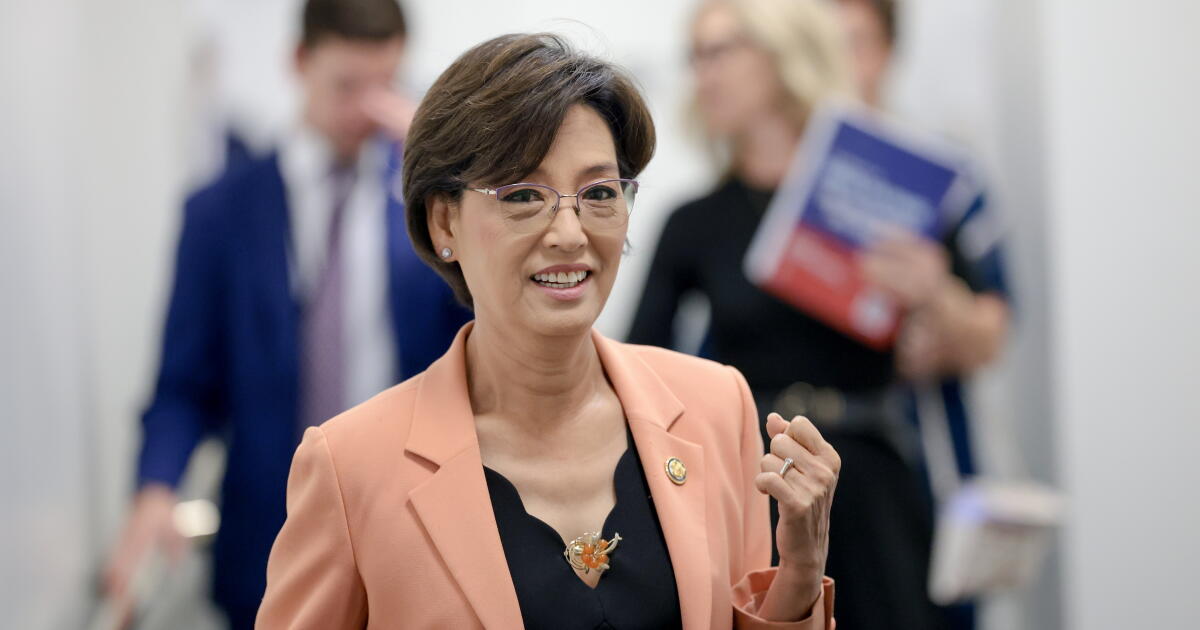
Los Angeles City Council member Traci Park has raised more than $1.2 million for her reelection campaign in the city’s June 2 primary, more than double the amount collected by challenger Faizah Malik, according to finance reports filed this week.
Malik, a civil rights attorney, reported raising roughly $454,000 in her bid for the District 11 seat that skirts along the Westside, including Mar Vista, Pacific Palisades, Venice and Westchester, the reports show.
At nearly $1.7 million, the money raised in the race is the highest for the eight council seats, out of 15 total, on the ballot in the June 2 primary. Any candidate who wins a majority in the election will win the seat outright, otherwise the top two vote-getters will compete in the Nov. 3 general election.
Two of the eight races are open seats to replace termed-out incumbents, and in five other races, incumbents Eunisses Hernandez, Park, Hugo Soto-Martínez, Tim McOsker and Katy Yaroslavsky posted large fundraising leads against their challengers. One incumbent, Councilmember Monica Rodriguez, is running unopposed.
In the west San Fernando Valley’s 3rd District, three candidates are seeking to replace termed-out Councilmember Bob Blumenfield.
Insurance company founder Tim Gaspar was leading the pack in fundraising, reporting nearly $430,000. Barri Worth Girvan, an aide to Los Angeles County Supervisor Lindsay Horvath, has raised about $235,000. Tech entrepreneur Christopher Robert “CR” Celona was far behind with about $12,300.
In Council District 1, which includes Highland Park and Pico-Union, incumbent Hernandez topped the field with about $319,000 in contributions. Challenger Maria Lou Calanche, a former Los Angeles police commissioner, reported raising about $182,000.
Among other challengers in the race, Sylvia Robledo, a small-business owner and longtime City Council aide, reported about $75,000 in contributions. Raul Claros, founder of a nonprofit called California Rising, listed $70,500 in contributions and entrepreneur Nelson Grande reported raising about $55,000.
There are six candidates vying to replace incumbent Curren Price in the 9th District, which includes USC and communities along the Harbor Freeway corridor.
Jose Ugarte, a former deputy chief of staff for Price, led the field in reported financial contributions, amassing $477,000.
Estuardo Mazariegos, head of the Alliance of Californians for Community Empowerment Los Angeles, reported roughly $200,000 in contributions and Elmer Roldan, director of a nonprofit, has raised about $114,000.
Entrepreneur Jorge Nuño and therapist Martha Sanchez trailed with about $25,000 and $13,000, respectively. Educator Jorge Hernandez Rosas did not report any contributions.
In the other races:
Yaroslavsky reported raising about $431,000 for her 5th District seat, which includes Westwood, Palms and Hancock Park. None of her opponents, Henry Mantel and Morgan Oyler, reported raising more than $35,000.
McOsker reported raising 242,000 for his 15th District seat in San Pedro. Challenger Jordan Rivers, a community organizer, told The Times he did not raise any funds.
Soto-Martínez reported raising more than $170,000. The three challengers in the race — Colter Carlisle, Dylan Kendall and Rich Sarian — reported a combined $152,000.
The outcome of the Park-Malik contest in District 11 will be determined in the June 2 primary because there are only two candidates in the race.
In a statement, Councilmember Park credited her fundraising lead to her efforts to clear homeless encampments.
“I raised an historic number of donations from local Westside residents because I’ve been on the ground since Day One solving our number one priority: getting people off the streets into housing and treatment and removing dangerous encampments from our neighborhoods,” Park said. “Residents, workers and visitors all see the difference.”
Kendall Mayhew, communications director for Malik’s campaign, said in a statement that Park and her supporters are spending unprecedented money because “we are winning and they simply don’t know what else to do.”
“What our campaign has demonstrated so far, and what we will demonstrate at the ballot box in just a few weeks, is that corporate money cannot defeat an honest, people-powered campaign,” Mayhew said.
The fundraising totals reported this week represent money given by individual donors, who are limited to contributions of no more than $1,000 in this election cycle. While the reports offer a glance at fundraising, money is also coming in through independent expenditures, which have no limit on how much can be given.
For example, in District 1, the L.A. County Federation of Labor has reportedly spent more than $226,000 in support of Hernandez. Calanche is also receiving supporting funds: the Fix Los Angeles PAC Supporting Calanche, Ugarte and Park for City Council 2026 has spent about $46,000 on her campaign to unseat Hernandez.
WASHINGTON — The Justice Department has ended its probe into Federal Reserve chair Jerome Powell, clearing a major roadblock to the confirmation of his successor, Kevin Warsh.
U.S. Attorney for the District of Columbia Jeannine Pirro said on X that her office was ending its probe into the Fed’s extensive building renovations because the Fed’s Inspector General would scrutinize them instead.
The decision ends an investigation, one of several undertaken by the Justice Department into President Trump’s perceived adversaries, that for months had failed to gain traction as prosecutors struggled to articulate a basis to suspect criminal conduct.
A prosecutor handling the case conceded at a closed-door court hearing in March that the government hadn’t yet found any evidence of a crime, and a judge subsequently quashed subpoenas issued to the Federal Reserve. The judge, James Boasberg, said prosecutors had produced “essentially zero evidence” to suspect Powell of a crime. Boasberg prosecutors’ justification for the subpoenas as “thin and unsubstantiated.”
More recently, prosecutors made an unannounced visit to a construction site at the Fed’s headquarters but were turned away, drawing a rebuke from a defense attorney in the case who called the maneuver “not appropriate.”
The move could lead to a swift confirmation vote by the Senate for Warsh, a former top Fed official whom Trump, a Republican, nominated in January to replace Powell, whose term as chair ends May 15. Sen. Thom Tillis, a North Carolina Republican, has said he would oppose Warsh until the investigation was resolved, effectively blocking his confirmation.
Warsh said Tuesday that he never promised the White House that he would cut interest rates, even as the president renewed his calls for the central bank to do so.
“The president never once asked me to commit to any particular interest rate decision, period,” Kevin Warsh, a former top Fed official, said under questioning by the Senate Banking Committee. “Nor would I ever agree to do so if he had. … I will be an independent actor if confirmed as chair of the Federal Reserve.”
Warsh’s comments came just hours after Trump, in an interview on CNBC, was asked if he would be disappointed if Warsh didn’t immediately cut rates and responded, “I would.”
WASHINGTON — A man who stole a purse from then-Homeland Security Secretary Kristi Noem while she dined at a restaurant under the protection of Secret Service agents was sentenced on Wednesday to three years in prison for a string of thefts in the nation’s capital.
Mario Bustamante Leiva did not recognize Noem when he grabbed her Gucci handbag from the floor of a restaurant where she was eating with her family in April 2025, according to the U.S. attorney’s office. Noem’s purse had credit cards and about $3,000 in cash. Police recovered it from Leiva’s motel room.
Bustamante Leiva, a 50-year-old native of Chile, is facing deportation after his sentence imposed by U.S. District Judge Trevor McFadden.
“Bustamante Leiva came to Washington illegally to prey on citizens of the district,” said Jeanine Pirro, U.S. attorney for the District of Columbia, in a statement. “His pattern of theft ends here.”
Noem, who is identified only by her initials in court filings, acknowledged the incident in a statement last year that referred to Bustamante Leiva as a “a career criminal who has been in our country illegally for years.”
He pleaded guilty in November to three counts of wire fraud and one count of first-degree theft. He was charged and convicted of robbing two other people and charging fraudulent purchases to their credit cards.
Bustamante Leiva was charged along with a second suspect, Cristian Montecino-Sananza, who was sentenced in March to 13 months of incarceration for his role in one of the other thefts.
Investigators said they identified Bustamante Leiva as a suspect in the thefts after he used a stolen gift card to make a purchase.