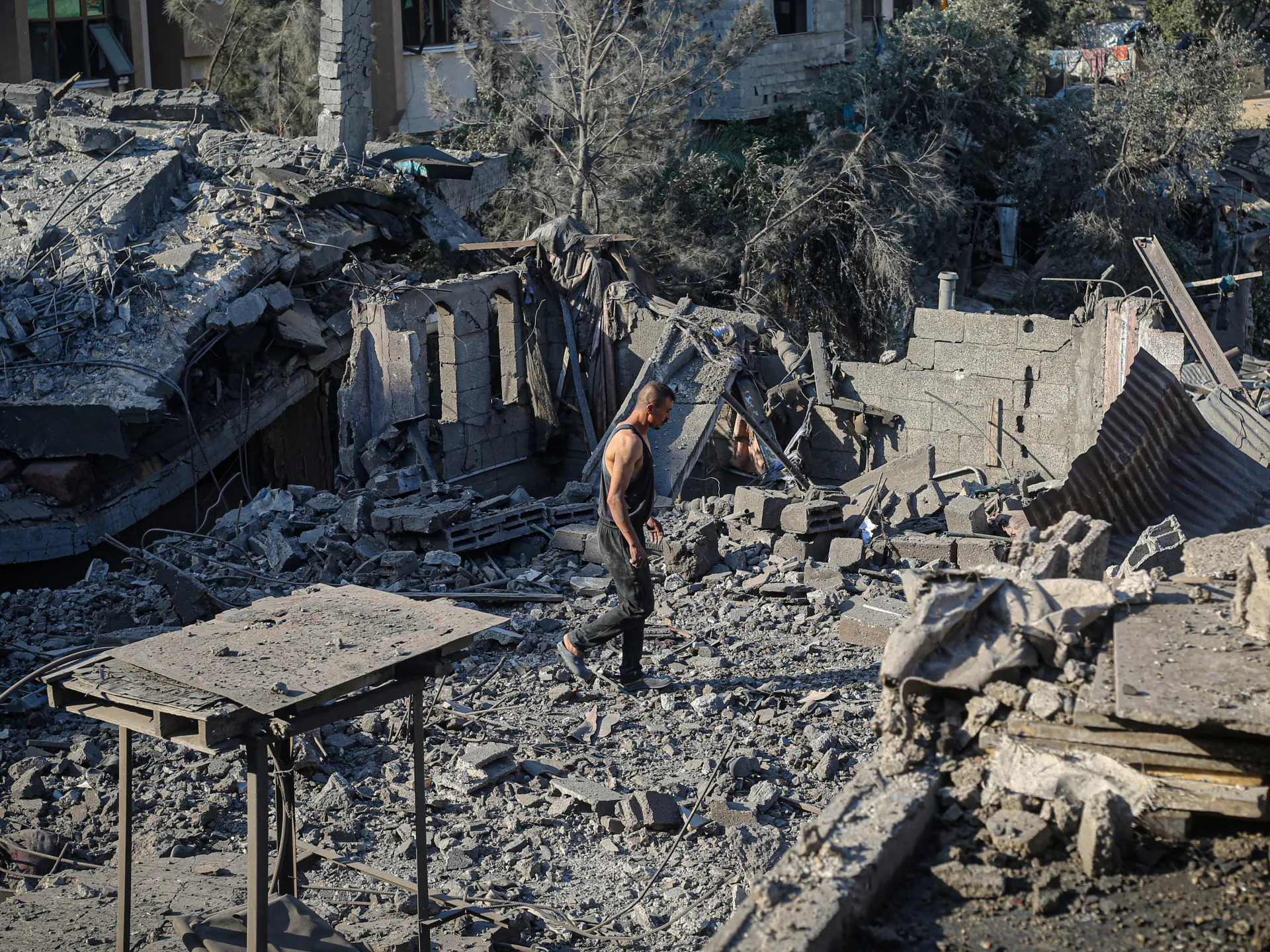
Strikes hit Gaza homes two days after US unveiled plan for Hamas disarmament, Israeli withdrawal.
Published On 2 Aug 20262 Aug 2026
Israeli forces have killed at least five Palestinians in strikes across the Gaza Strip.
At least two people were killed and several wounded in a strike on a house in central Deir el-Balah, while three others were killed in a strike on an apartment in northern Gaza City, according to local officials.
Recommended Stories
list of 3 itemsend of list
The strikes came on Sunday, two days after US President Donald Trump’s Board of Peace published a 15-point roadmap for implementing last year’s Gaza ceasefire agreement, extending a pattern of continued Israeli strikes despite diplomatic breakthroughs.
The roadmap has yet to be implemented on the ground. Hamas has said it will hand over its weapons for storage only after Israel halts military operations and withdraws its forces in line with last year’s agreement. An Israeli official told the Reuters news agency there would be no withdrawal from current positions unless Hamas undergoes “genuine disarmament”.
Israeli Prime Minister Benjamin Netanyahu has not publicly commented on the initiative, but far-right National Security Minister Itamar Ben-Gvir has called it unacceptable and said Israel should continue targeting Hamas leaders.
Former senior Fatah official Mohammed Dahlan, based in the United Arab Emirates, said Jared Kushner, Trump’s son-in-law and a senior adviser on the US initiative, told him he was working with Israel to halt the attacks on Gaza. Dahlan said talks with Washington were continuing, and that the agreement’s success now depended on Israel fully ending its daily strikes.
Separately, Israeli strikes destroyed a medical supply warehouse in central Gaza on Saturday, leaving a crater 20 metres (66ft) wide and 10 metres (33ft) deep, part of a broader wave of attacks that has continued despite the ceasefire push.
Some Palestinians in Gaza and Israelis have been giving their reaction to the plan to the BBC.
Tala, an 18-year-old who has been living in a tent in Gaza since her home was destroyed in air strikes, said “every time people hear about a possible ceasefire, we hope that it will finally end”.
“But when these promises are broken, it creates more fear,” she told BBC Newsbeat.
The university student said daily life remains “very challenging”, adding: “Every day comes with a new difficulty, and we are constantly thinking about safety and basic needs.”
“What matters most is stopping the fighting, protecting civilians and setting a new chapter of re-building,” she said.
In Israel Jonny said he “prays” that the ceasefire in Gaza can work. “I don’t see an ending to this cycle, but I pray it’s the case,” he told the BBC.
Israel’s ambassador to the UN, Danny Danon, told CNN that Israel is “looking forward to implementing” the deal, but added: “We have to verify what they [Hamas] are doing, not what they are saying.”
UN Secretary General Antonio Guterres described the proposed agreement as “the only good news in recent days”.
UK Foreign Secretary Ed Miliband said the focus must be on implementing the full 20-point peace plan, including “withdrawal of the IDF from Gaza and respect for the ceasefire by all parties”.
He added that conditions “remain appalling” in Gaza and said Israel “must immediately end the unacceptable restrictions on aid”. Israel denies it is restricting the entry of aid.
The war in Gaza was triggered by the Hamas-led attack on southern Israel on 7 October 2023, in which about 1,200 people were killed and 251 others were taken hostage.
Israel responded to the attack by launching a military campaign in Gaza, during which more than 73,290 people have been killed, according to the territory’s health ministry whose figures are considered reliable by the UN.
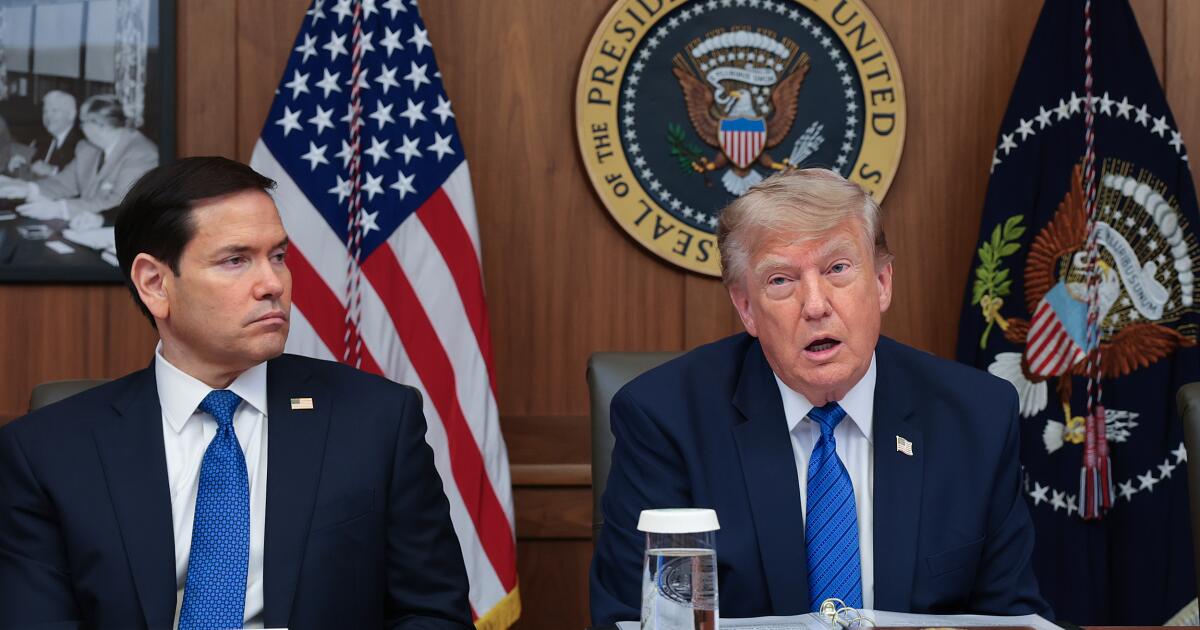
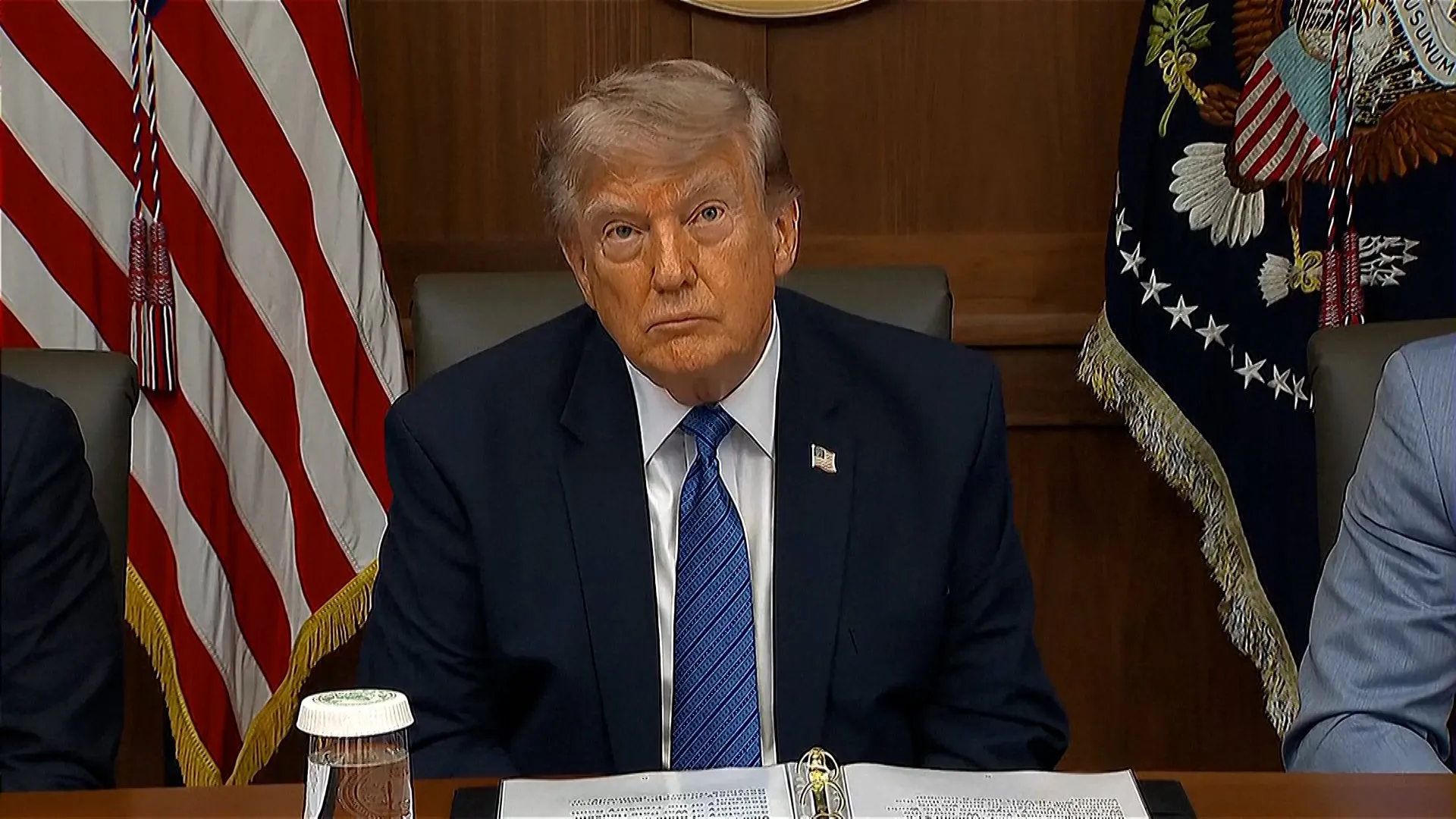
WASHINGTON — President Trump reaffirmed Friday that Hamas has agreed to disarm and relinquish control of Gaza to a newly created Palestinian government, a milestone he cast as a critical step in the long-stalled effort to end the war in the territory.
The agreement, which the president initially announced in a Truth Social post Thursday evening, capped months of negotiations overseen by the Board of Peace, a body created by the Trump administration last year to oversee talks with Hamas and Israel over the future of Gaza.
“As disarmament is completed, Israeli forces will withdraw, and the International Stabilization Force will work with a new Palestinian police force to take responsibility for Gaza being safe for its residents and its neighbors,” Trump wrote.
But uncertainty looms over the agreement, with Hamas saying Friday it would begin disarming only if Israel halts all military operations in Gaza and Israeli officials expressing skepticism about the deal in news interviews Friday. Trump, during a Cabinet meeting Friday at Camp David, Md., acknowledged the possibility of the deal going awry, saying it is likely the agreement’s implementation could go through its “ups and downs.”
“It’s a very complex situation over there,” Trump said. “The people are very complex and difficult.”
Trump added that Israel was “very happy” with the deal. He also said that the Board of Peace intends to take possession of Hamas’ weapons when it relinquishes them.
Trump, who faces public pressure over his handling of a broadening war in Iran and the economic impact it is having on Americans, downplayed the unpopularity of his policies and said he hopes Americans vote for Republicans when they head to the polls in November.
At the same time, he defended his military strategies in the Middle East, even as he was unable to provide a clear timeline for when the conflict in Iran will end.
“We’re in for five months, and we have obliterated their military capacity. Again, they’ve got some left, but soon they won’t have some left,” Trump said. He added that he was “losing faith” in Iranian leaders amid negotiations because he said they “lie.”
Trump, however, argued that the deal with Hamas is an indication that his administration’s strategy will succeed in Iran.
“Nobody thought that it would be possible to disarm Hamas. That shows you how much success we’re having with Iran, because if you went four months ago or five months ago, a deal like that would have been impossible,” Trump said.
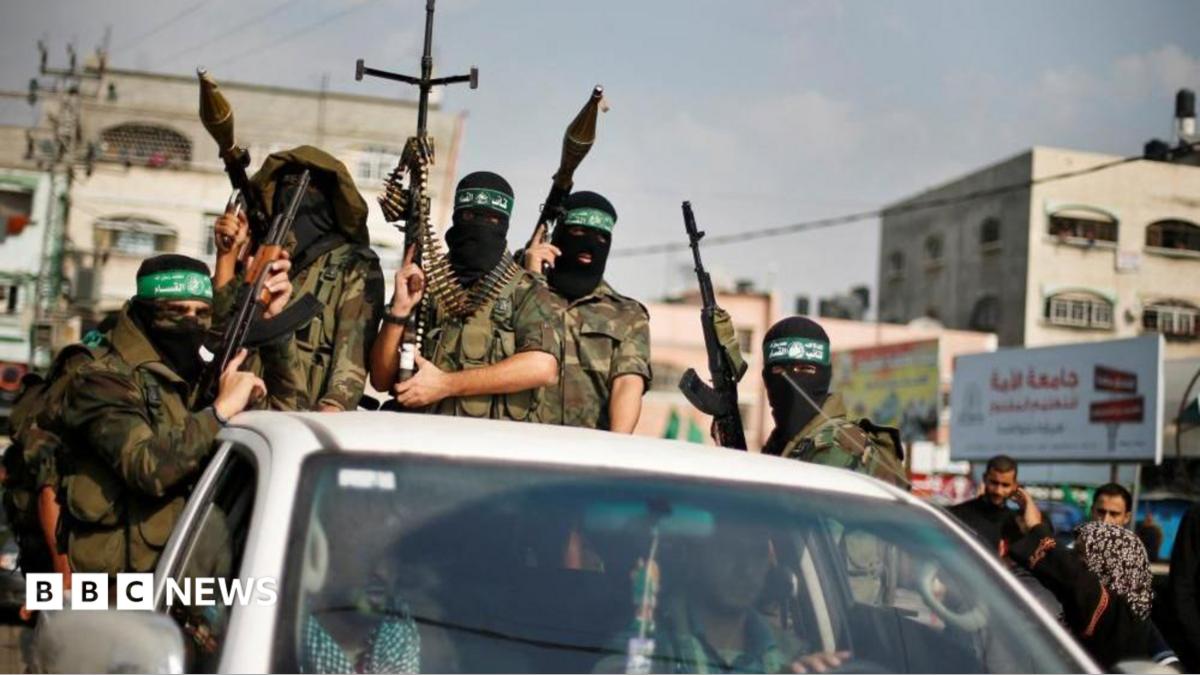
Hamas, for its part, has confirmed it would begin disarmament, but in a statement Friday said it was contingent on Israel halting all attacks in Gaza and fulfilling provisions of the first phase of a ceasefire deal that was signed in October 2025.
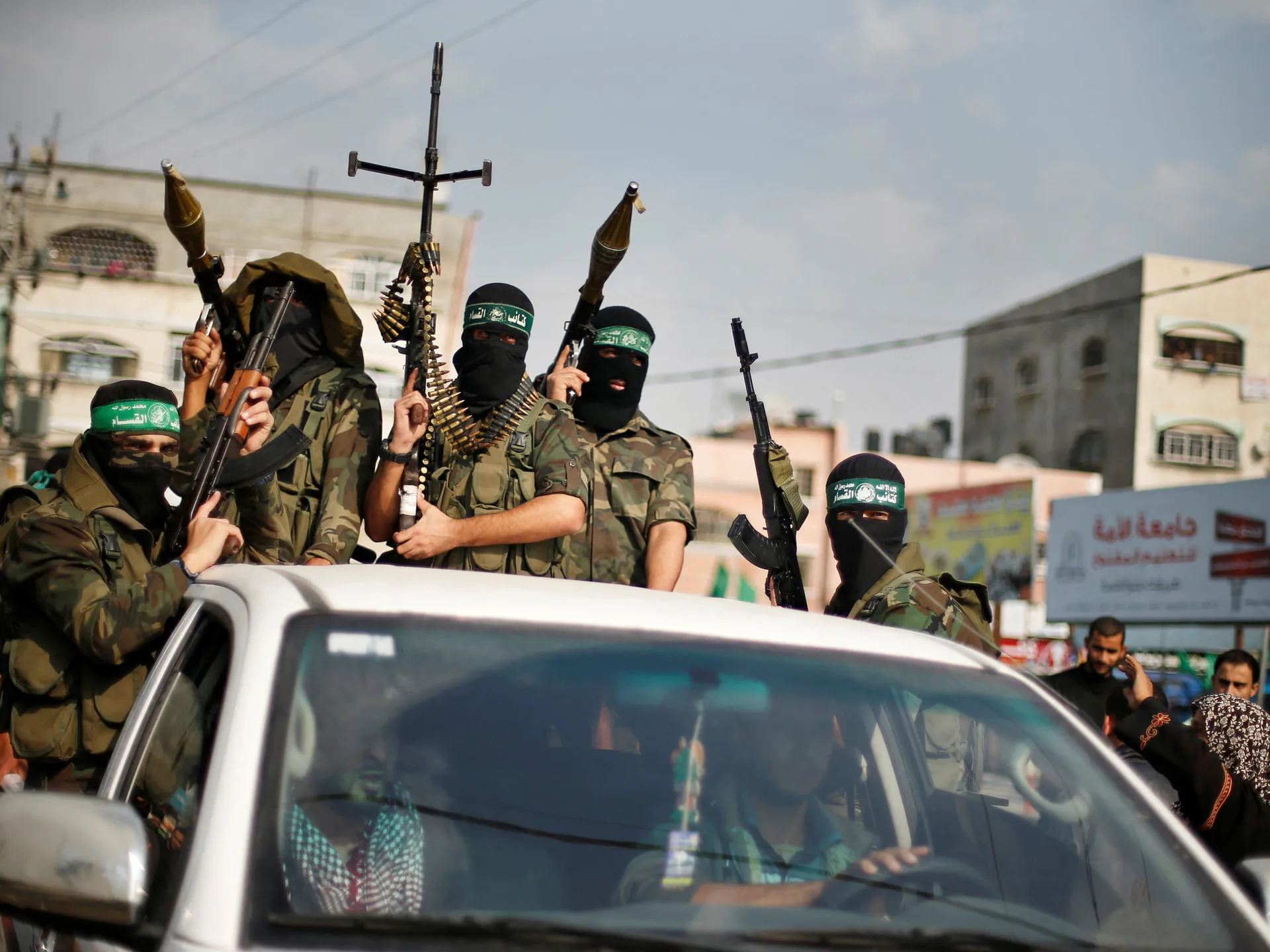
Hamas, which said it was approaching the proposal with “responsibility and positivity,” also took the unprecedented step of agreeing to a sequenced decommissioning of a range of armory, described to include: “police weapons, heavy weapons, military production sites, weapons depots and tunnels, personal weapons and the weapons of militias.”
But the group linked it to a raft of processes, including Israel’s withdrawal from the enclave and the establishment of an independent Palestinian state — both nonstarters for Israel’s government.
Israeli Prime Minister Benjamin Netanyahu had yet to comment on the proposal by Friday afternoon, but several Israeli officials expressed skepticism if not outright rejection of the proposal.
“In response to various publications this morning about political progress in the Gaza Strip, Israel has reiterated that there will be no IDF withdrawal from the current Yellow Line without the genuine disarmament of Hamas,” a senior Israeli official was quoted as saying in the Times of Israel newspaper.
The official referred to the demarcation line behind which Israeli troops withdrew under the ceasefire agreement. When the agreement went into effect in October 2025, the Yellow Line marked off territory comprising about 53% of Gaza. But Israel has repeatedly shifted the line westward, swallowing up more of the enclave with the intent to control 70% of it, according to Israeli officials.
Speaking to CNN on Friday, Danny Danon, Israel’s ambassador to the United Nations, said Israel would have to verify what Hamas is doing with regard to disarmament, “not what they are saying.”
“Disarmament means the weapons are out of Gaza,” he said. He added that the idea of a Palestinian state was “not on the table.”
And in an example of the fervent opposition the deal is likely to face in Israeli political circles, Israeli National Security Minister Itamar Ben-Gvir — a hard-line member of Netanyahu’s government — dismissed the deal as “unacceptable” and that suspending Israel’s attacks on the enclave would only allow Hamas to reconstitute itself.
“The assassinations in Gaza must continue, the encouragement of [Palestinian] emigration [from the enclave] must happen. Israel must win,” he said in a post on Telegram.
The agreement as laid out by the Board of Peace involves a 15-point “roadmap” with several provisions, including security, governance, reconstruction, the deployment of international peacekeeping forces and Israeli withdrawal. Those points, which were agreed to Thursday, are meant to carry out Trump’s broader plan for the territory.
All parties reaffirm their commitment to the “comprehensive plan” announced by Trump in September, which involves stopping the fighting in Gaza, complete Israeli withdrawal from the strip, and “a credible political path that achieves self-determination and [Palestinian] Statehood.”
Israel should “without delay” fulfill its remaining commitments in phase one, including cessation of military attacks. Hamas too should stop all attacks “without delay,” the agreement says.
Once those milestones are reached, the Palestinian-led National Committee for the Administration of Gaza, or NCAG — which Israel has thus far prevented from entering Gaza — would take on responsibilities in the strip, along with an International Verification Committee that will certify progress on both sides.
The NCAG administers the police force and controls its weapons, and will eventually become the only party in Gaza with arms. It will also administer and implement a process to decommission and store heavy weapons, military production sites, depots of weapons, and tunnels.
The process will be linked to a phased Israeli withdrawal.
Regional and Western governments welcomed the proposal’s announcement while acknowledging the difficulties facing its implementation. It also brought a measure of cautious hope in Gaza, where more than nine months after the ceasefire was signed conditions remain nightmarish.
Since Oct. 7, 2023, when Hamas launched an assault on southern Israel in which 1,200 people were killed and 250 others were kidnapped, the enclave has been the target of a furious Israeli military campaign that has killed more than 73,000 people and displaced nearly all of Gaza’s 2.1 million residents. Much of Gaza is a rubble-encrusted moonscape, spurring rights groups and the U.N. to accuse Israel of genocide.
Despite Trump’s optimism, the deal comes at a delicate moment for Israel’s leaders, as the country gears up for an acrimonious election fight at the end of October that could see Netanyahu — who is on trial for corruption charges and could be imprisoned if he loses — dethroned.
Already trailing in the polls, he can ill afford appearing soft on Hamas, especially among a pool of candidates eager to excoriate him for his post-Oct. 7 legacy.
“The outrageous gap between Netanyahu’s promises and reality is exposed. After the heavy prices, the fallen and the wounded, he has capitulated in his political weakness without achieving the war’s objectives, instead of ending it from a position of strength,” said Gadi Eisenkot, an election contender and the former military chief of staff responsible for the Dahiyah Doctrine, the Israeli military’s strategy of targeting large-scale civilian infrastructure.
“The State of Israel must not accept a reality in which Hamas survives, rearms, and waits for the opportunity to carry out the next massacre!” Eisenkot wrote on X.
At the same time, with Trump already facing criticism for joining the Israeli leader in assaulting Iran, Netanyahu can’t be seen as scuttling a Trump-brokered agreement in Gaza.
Ceballos reported from Washington, Bulos from Beirut.
Trump said Israel strongly supports an agreement for the complete disarmament of Hamas, describing it as a major breakthrough that marks a significant step for the Middle East. He cautioned the process would likely face “ups and downs” because of the complexity of the situation.
Hamas has agreed to gradually disarm in Gaza as part of Donald Trump’s 20-point peace plan. The US president called the deal ‘historic’. Here’s what we know.
Israel and Lebanon have agreed on a new framework agreement after four days of marathon talks in Washington, DC, brokered by the United States, trying to end the months-long conflict.
Israel has been occupying almost 20 percent of Lebanese territory in the south and has killed more than 4,000 people since fighting erupted on March 2. A previous bout of fighting ended in a ceasefire in November 2024, but Israel carried out almost daily attacks and refused to end its occupation in breach of the deal.
The new deal, however, does not specifically call for the withdrawal of the Israeli forces and instead ties it to the disarmament of Hezbollah – a condition repeatedly rejected by the Iran-backed armed group.
Hezbollah chief Naim Qassem on Saturday rejected the framework agreement, calling it “null and void”. Hezbollah has demanded that Israel first end its occupation.
Hezbollah supporters flooded the streets of the capital, Beirut, on Friday evening to oppose the deal.
So, what is the new agreement, which does not include Hezbollah, and can it lead to peace in Lebanon?
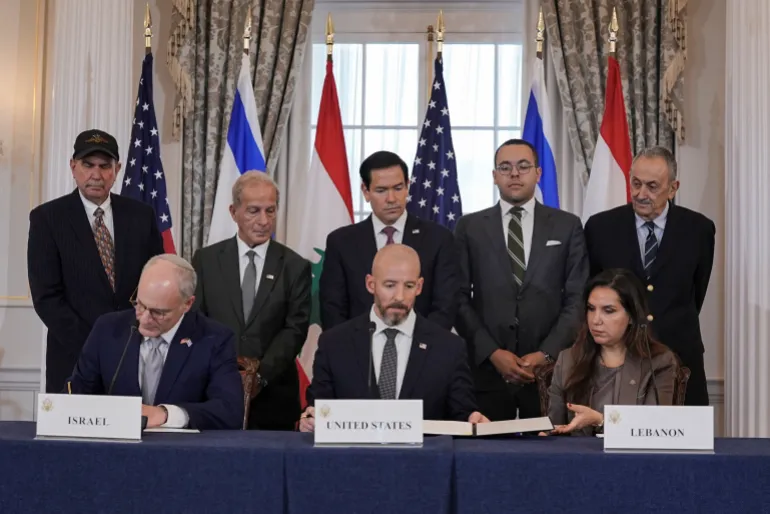
US Secretary of State Marco Rubio looks on as State Department Counsellor Daniel Holler, Israel’s ambassador to the US, Yechiel Leiter, and Lebanon’s ambassador to the US, Nada Hamadeh, sign a framework agreement between Israel and Lebanon, at the State Department in Washington, DC, June 26, 2026 [Ken Cedeno/Reuters]
What’s in the Israel-Lebanon agreement?
After the trilateral signing in Washington, the US Department of State released the text of the agreement, which talks of a “sequenced process” that will see the Lebanese army restore “effective sovereign authority over all Lebanese territory, pending the verified disarmament of non-state armed groups” – a clear reference to Hezbollah.
The deal does not mandate Israeli withdrawal from the fifth of Lebanese land it occupies. Instead, the framework notes that Israel shall “progressively redeploy” out of Lebanon, offering two “pilot zones” where the Lebanese military “will gradually assume full and effective security responsibility”.
“One [pilot zone] is south of the Litani River and outside the security zone altogether, and the other is north of the Litani – a small area in the expanded security zone that we conquered in the last two weeks, and which the [Israeli military] says it does not need,” Israeli Prime Minister Benjamin Netanyahu later said in a statement.
Once these conditions are met, “Lebanese civilians will be able to safely return to these areas under the exclusive control of Lebanese state authorities,” the framework says. More than 1.2 million people have been forcefully displaced.
Israel says that successfully returning southern Lebanon to Lebanese government control would “eliminate any future need for [Israeli military] action or presence in Lebanon” and “[declared] that it has not territorial ambitions in Lebanon”.
The Lebanese government has signed that it rejects “the claims of any state or non-state actor to use force on its behalf without its explicit authorization,” deeming such attacks “illegal” and “contrary to Lebanese national interests”.
Hezbollah supporters block the old airport road in the southern suburbs of Beirut, with burning tyres to protest against the trilateral agreement that was signed between the US, Israel and Lebanon on June 27, 2026 [Ibrahim Amro/AFP]
How have parties to the conflict reacted to the agreement?
Israel
Netanyahu issued a video statement shortly after the agreement was announced, stressing that the framework would allow the Israeli military to remain in the occupied Lebanese land.
“We will maintain [the buffer zone] until Hezbollah disarms and as long as there is a threat to the State of Israel,” Netanyahu said.
It is also a partial, momentary win for Netanyahu, who faced intense domestic criticism after the US and Iran sidelined Israel to sign the Islamabad Memorandum of Understanding, which mandates an end to hostilities in Lebanon as well.
Lebanon
President Joseph Aoun expressed gratitude to Trump and other regional mediators after the signing of the trilateral agreement, which he hailed as “the first step on the path to restoring Lebanon’s sovereignty”.
In a statement from the Lebanese presidency, Aoun noted that the framework also “marks the beginning of the road to fructify [Lebanese citizens’] sacrifices, so that they may return to their fully liberated land”.
His statement has done little to tamp down the tensions in the capital, where supporters of Hezbollah took to the streets, burning tyres and blocking a road leading to the airport.
People react, as they watch Hezbollah chief Naim Qassem deliver a televised speech on a giant screen at the burial site of former Hezbollah leader Hassan Nasrallah, on the outskirts of Beirut, Lebanon, June 17, 2026 [Mohamed Azakir/Reuters]
Hezbollah
Though the armed group is not a party to the agreement, and was not present at the negotiating table, its posture and actions will dictate where the conflict heads in the future.
The Hezbollah leader on Saturday condemned proposals to tie the Israeli withdrawal to the group’s disarmament. “Linking the Israeli withdrawal to the disarmament of the resistance throughout Lebanon is a very dangerous proposition that crosses all red lines,” he said.
“The framework agreement in Washington is humiliating, shameful, and a surrender of sovereignty,” he said.
He added that the framework agreement should be replaced by the Iran-US Memorandum of Understanding (MoU) signed on June 15.
Earlier, Hassan Fadlallah, a Hezbollah representative in the parliament, said Lebanese authorities would not be able to enforce the framework agreement unless, with US support, “they go to civil war”.
In a televised speech before the agreement was signed, Qassem said that Hezbollah would hold its weapons closer, ready to fight Israel for Lebanon, if the Lebanese state fails to do so.
The Iran-US MOU called for the “territorial integrity and sovereignty of Lebanon” – a similar wording has been used in the framework agreement.
United States
US Secretary of State Marco Rubio, Washington’s point person in Israel and Lebanon talks, announced an “immediate” $100m donation by the US towards humanitarian assistance in coordination with the UN.
At the signing ceremony at the State Department in Washington, Rubio appeared to acknowledge the limited scope of the agreement, calling it “the beginning of the beginning.”
“There’s a lot of work ahead. We don’t in any way underestimate the difficulty of the task ahead, but we understand the importance of it, how vital it is, and we are honored to have played a part in bringing this together,” he said.
Two previous ceasefire agreements brokered by Washington failed to stop the fighting in Lebanon, as well as the Islamabad MOU, signed by President Trump and his Iranian counterpart Masoud Pezeshkian, earlier this month.
Iran
Though Tehran is yet to officially react to the agreement, its state media has been pressing against the deal.
Fars news agency noted that the agreement is essentially the US permitting Israel to violate the first clause of the Islamabad MOU, which mandated the cessation of hostilities on all fronts, including Lebanon.
Does the Israel-Lebanon agreement contradict the Islamabad MOU?
Analysts point towards two direct contradictions between the preliminary deal signed by the US and Iran, and the latest agreement between Israel and Lebanon.
In short, the Islamabad MOU mandates the end of hostilities on all fronts, including Lebanon, with no conditions – while the Israel-Lebanon agreement ties it to Hezbollah’s disarmament.
Israel has not adhered to any of the ceasefire agreements, including earlier ones, and continued with its assault on Lebanese territories. On Saturday, Lebanese state news agency NNA reported that the Farah amusement park intersection in Nabatieh al-Fawqa was targeted by an Israeli drone strike.
Israel has killed at least 4,192 people in Lebanon since the start of the war on Iran four months ago.
Secondly, the Islamabad MOU does not refer to or mention any of the Iran-backed proxy armed groups among its listed clauses to take forward the negotiations to end the war.
Tahani Mustafa, a visiting fellow on the Middle East and North Africa programme at the European Council on Foreign Relations, told Al Jazeera that Israel and Washington would “definitely use the fact that Hezbollah refuses to disarm and capitulate to blame Hezbollah for derailing the entire process”.
Mustafa further added that Israel “has also proven that it is acting in bad faith, which really gives no confidence to Hezbollah to disarm or capitulate in the way that is being demanded.”
Washington is not blame-free either, she noted, arguing that “the American negotiators actively work behind the scenes to try and decouple Lebanon and Iran.”
“This has really just been something that both the Israelis and the Americans have attempted to cook up behind the scenes and once again obfuscating the blame for its failure,” she told Al Jazeera.
Mourners put wreaths on the grave during the funeral of Israeli soldier Alexander Filin, who, according to the Israeli army, was wounded and later died in an explosive attack by Hezbollah in southern Lebanon, in Haifa, Israel, June 21, 2026 [Shir Torem/Reuters]
Can a deal work if Hezbollah rejects?
This is not the first time that Hezbollah’s disarmament is on the table – and the existing challenges remain. The 2024 deal also called for Hezbollah’s disarmament, but it could not be achieved as Israel continued to attack Lebanon and refused to withdraw its troops in breach of the deal.
Alon Pinkas, an Israeli former ambassador and consul general in New York, says he is “very doubtful and sceptical” that this will work out because the deal is between Israel and Lebanon with the US; the issue here is Hezbollah.”
Iran’s linking of the Lebanon conflict to the maturation of an agreement with the US, Pinkas says, “complicates things [because] Netanyahu said that [Israel] would not yield to any linkage to Iran and that Israel would defend itself in Lebanon”.
Al Jazeera’s Ali Hashem said that the agreement is an “existential threat” to Hezbollah’s presence.
“Without Hezbollah’s consent, this is not going to happen,” Hashem said. “This is going to be a recipe for another confrontation. The Lebanese government isn’t capable of imposing this deal. It’s not the de facto force on the ground.”
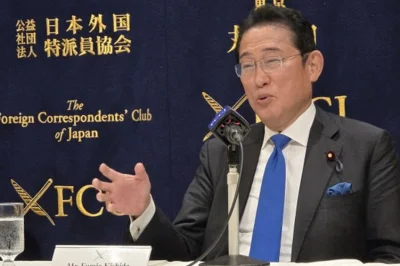
1 of 2 | Former Japanese Prime Minister Fumio Kishida speaks at the Foreign Correspondents’ Club of Japan in Tokyo on June 26, 2026. Photo by Asia Today
June 26 (Asia Today) — Former Japanese Prime Minister Fumio Kishida said Friday that North Korea’s nuclear weapons and missile programs have made the pursuit of nuclear disarmament increasingly difficult, but Japan must not abandon its goal of a world without nuclear weapons.
Speaking at the Foreign Correspondents’ Club of Japan in Tokyo, Kishida said East Asia is facing its most severe security environment since the end of World War II.
“Japan must strengthen its defense capabilities and further reinforce the Japan-U.S. alliance,” Kishida said. “At the same time, we must not give up the ideal of pursuing a world without nuclear weapons.”
Kishida, a lawmaker whose constituency is in Hiroshima, made nuclear disarmament a major diplomatic priority during his tenure as prime minister.
He cited Russia’s invasion of Ukraine, instability in the Middle East and North Korea’s nuclear and missile programs as evidence that the international security situation surrounding nuclear weapons is “undeniably severe.”
Kishida said stronger national security and nuclear disarmament should not be viewed as mutually exclusive goals.
“Reality and ideals are not incompatible,” he said. “The issue is not choosing one or the other, but determining how to bring reality closer to the ideal.”
Kishida recalled becoming the first Japanese prime minister to attend a review conference of the Treaty on the Non-Proliferation of Nuclear Weapons in 2022.
At the conference, he presented the Hiroshima Action Plan, a series of practical steps intended to advance nuclear disarmament while acknowledging the international security environment.
The plan calls for maintaining the record of non-use of nuclear weapons, increasing transparency surrounding nuclear forces, continuing reductions in global nuclear stockpiles, strengthening nuclear nonproliferation and promoting the peaceful use of nuclear energy.
“We must narrow the gap between reality and the ideal one step at a time,” Kishida said.
Ukraine warning for East Asia
Kishida linked the war in Ukraine to security concerns in East Asia.
He recalled his unannounced visit to Kyiv in March 2023, when he met Ukrainian President Volodymyr Zelensky and expressed Japan’s solidarity with Ukraine.
Kishida said he delivered the message that “Ukraine today may be East Asia tomorrow.”
Russia’s invasion demonstrated that security in Europe and the Atlantic cannot be separated from security in the Indo-Pacific, he said.
East Asia faces overlapping concerns including North Korea’s nuclear and missile development, China’s growing military power and tensions across the Taiwan Strait.
Kishida said Japan’s vision of a free and open Indo-Pacific seeks to improve regional connectivity, promote prosperity, reject coercion and intimidation and uphold freedom and the rule of law.
Kishida stresses U.S. alliance and international rules
Addressing U.S. foreign policy under President Donald Trump, Kishida said “America First” should be regarded as a structural trend rather than a temporary development.
He said countries such as Japan, which have limited natural resources and relatively constrained domestic markets, depend on international law, multilateralism, free trade and the rule of law.
Kishida emphasized the importance of maintaining the Japan-U.S. alliance while preserving an international system governed by widely accepted rules.
Dialogue with China remains necessary
Kishida also called for continued dialogue with China despite security concerns and political tensions between Tokyo and Beijing.
China is Japan’s largest trading partner, while Japan remains one of China’s major economic partners, he said.
“That is precisely why dialogue is important,” Kishida said.
He recalled meeting Chinese President Xi Jinping twice during international gatherings while serving as prime minister. Kishida also held talks with Chinese Premier Li Qiang during meetings connected to Southeast Asian nations and a trilateral summit involving Japan, China and South Korea.
“It is regrettable that fewer people are now willing to engage in dialogue between Japan and China,” Kishida said.
He called for communication not only between governments but also through business, people-to-people exchanges, sports and culture.
Stable relations between Japan and China would serve both countries’ national interests and contribute to regional peace and stability, he said.
![US Secretary of State Marco Rubio looks on as State Department Counselor Daniel Holler, Israel's Ambassador to the US Yechiel Leiter and Lebanon's Ambassador to the US Nada Hamadeh sign a framework agreement between Israel and Lebanon, at the State Department in Washington, DC, June 26, 2026. [Ken Cedeno/Reuters]](https://i0.wp.com/occasionaldigest.com/wp-content/uploads/2026/06/2026-06-26T175227Z_1896892704_RC2T1MA2VJJ9_RTRMADP_3_IRAN-CRISIS-LEBANON-ISRAEL-1782496481.jpg?w=640&ssl=1)