Digital Features

How toxic behaviour & scams are finally being tackled by dating app… now others MUST follow, says Georgia Harrison

AFTER finally securing his match on a dating app, a young man attempts to craft the ‘perfect’ message to show he’s an alpha male, a provider, and the best sex she’ll ever have. 

He types out a message saying “I know women find it hard to make a decision, but you should hook up with me tonight for great sex”, but before it sends, AI flags it as potentially inappropriate and he gets a message from the app, saying: “Are you sure you want to send? Think twice – your match may find this language disrespectful.”

Georgia has praised Match Group for prioritising women’s safety online Source: Olivia West
Most people meet their partner through a dating app or online Source: Getty
Georgia Harrison joined Match Group CEO Spencer Rascoff to talk about safer dating Source: Supplied
The company has safety features across all of their platforms to stop abusive behaviour Source: Getty

It’s the first time the young man has been confronted with the idea that his ‘manosphere’ rhetoric – typically used to promote aggressive masculinity and anti-feminist messages – might cause upset.

He deletes the inflammatory and types out “Hi, how are you? What’s your ideal date?”

The AI is trained to pick up words and phrases that are known to be offensive, and as of March 2026 it now recognises harmful tones of messages. It also has a “does this bother you” counterpart which asks the recipient of a dodgy message how they are doing.

And this is exactly how Georgia Harrison, 31, wants all social media apps to work – putting the safety of women and girls first while challenging the impact of toxic online views.

ENOUGH!

Manosphere is the even greater criminal, says Georgia – as Bear convicted again


GEORGIA HARRISON

We should feel safe sharing kids online WITHOUT fear of sexual predators

Data from Match Group shows that more than 700 million harmful messages haven’t been sent since 2021 after receiving the prompt, and one in five users rewrite their message after getting an are you sure message.

“It’s so powerful,” she tells The Sun. 

“The app is subconsciously questioning them on some things they are saying which are misogynistic. 

“This might be one of the first times that a lot of these young men have actually been questioned on the wording that they’re using. 

“It’s not only preventing the young woman from receiving a message that could offend her.

“It’s making them question how they speak to women and what is the best way to speak to women and how they want to be spoken to and treated.

“I’ve been told by Match Group a significant number of people rewrote their messages after seeing the prompts. So they actually deleted that and changed the way they speak. 

“And that could change the way that they view the way that they use their terminology in their entire future.

“I think that’s a really powerful tool and something that really stood out for me as a campaigner for women.”

Former The Only Way Is Essex star Georgia has vowed to take on the manosphere with the Georgia Harrison Foundation, which will aim to tackle the toxic online culture that the younger generation is growing up with.

Match Group’s Spark Report, a survey of adults dating online, found that a third of Brits didn’t meet anyone new in person in the last month and spend 4.7 hours each week doing their socialising through a screen, her mission is more important than ever. 

Georgia, who gained widespread fame on Love Island, is asking social media to take more responsibility for the content posted on their apps – just like Match Group is. 

The company, which also runs Hinge, Match, Plenty of Fish among others, has brought in verification requirements for all users to increase trust. 

As of this year, the verification process requires users to take a video selfie to show that they’re a real person, not a deepfake or borrowing someone’s pictures.

Then, the app uses facial geometry to confirm that your photos match the video you have submitted. Two screenshots from the initial video are held on file to ensure future photos are of the person who made the account. They are deleted once the account is closed.

Their recent Spark study of 3,007 single adults found that the majority of people meet their romantic partner online. 

It also found 69 per cent of singles would feel more confident meeting up with matches if they have a verified profile.

When dating sites and apps first launched, there were limited ways to verify who you were talking to, until you met in person. 

Something scam artists and serial predators happily took advantage of. 

Scot Christopher Harkins found multiple victims to defraud and in some cases abuse on Tinder and other dating apps, even at one point changing his name.

Scam alerts are now live across the Match Group platform and prompts will pop up when a conversation shows signs of a scam such as asking for money, or a push to swap contact details off the platform.

He was convicted and sentenced to 12 years in jail in July 2024 for defrauding his victims of more than £214,000, as well as charges including rape, assault, and physical abuse.

Known as the Tinder Swindler, Simon Leviev also used Tinder to pose as a wealthy playboy and is alleged to have defrauded singletons out of an estimated £7.4million. He is banned from all Match Group platforms. 

The safety features would help prevent predators like Harkins from finding victims on their apps Source: Police Scotland
Tinder Swindler Simon Leviev used dating apps to find victims to defraud Source: Instagram

Match Group CEO Spencer Rascoff said: “It’s incumbent upon us to apply technology and resources to make our apps as safe as possible. 

“We’ve done that through photo verification to confirm users are a real human and you match your photos. 

“We also share ‘bad actor bans’ between our apps. This means someone who is a scammer, a fake profile, an organised crime group or someone who caused harm to someone on or off platform using Tinder will be banned on Hinge and Match.com and vice versa.

“My daughter uses our apps, so have my brother and sister. It’s a family affair. Keeping users safe is so important.”

Bad actors are people that can be flagged by AI or users to Match Group who will then investigate, and if required create the ban of a certain person across the portfolio of dating apps.

Alongside facial recognition, users can report people for on-platform harm, such as abusive or aggressive messages, as well as off-platform harm including behaviour on dates or when messaging outside the dating app. 

Spencer added: “If I could wave a magic wand and change one thing to improve society and our business results, it would be to make men behave better. That’s what we’re hoping to do with the Are You Sure? feature.”

He also told The Sun his team works closely with law enforcement across the globe when there are reports of dangerous behaviour. 

Georgia said: “Younger people find it really hard to meet people the way we used to. 

“But dating apps shouldn’t feel like they could be dangerous. If anything it should be safer. 

“Women should feel safe knowing that whoever they’re messaging isn’t a catfish. That they’re not going to be a victim of sextortion because this person is verified that they are who they say they are to be on the platform. 

“I’ve had messages on Instagram of people who have become victims of financial fraud and sextortion after meeting someone online.”

Dating by numbers

Match Group surveyed British daters to find out more about how they date. Here are the key takeaways from The Spark Report.

  • 49 per cent of Gen Z are looking for a life partner or a long-term relationship.
  • 34 per cent of Gen X are looking for a life partner or a long term relationship. 
  • 43 per cent would build their ideal first date around a coffee. 
  • 68 per cent think the dating apps that succeed in the future will be the ones with the best safety features.
  • 77 per cent of dating app users have dated or been in a relationship with someone they met on an app.
  • 47 per cent agree it has never been harder to really connect with people, both online and in person.
  • 52 per cent neither asked anyone out in person in the past year, nor were asked out themselves.
  • Four per cent of Gen Z met their most recent partner in a pub, bar or club.
  • £104 is the average cost singles say a date costs them, including clothes, grooming and travel as well as the date itself. 
  • Three is the average number of safety precautions a woman takes before a first date from an app. They tend to be telling someone of the plan, meeting in public and sharing a live location

“This can be avoided with something as simple as verification. Dating is meant to be fun, not something that you’re scared or worried about.”

Georgia met her partner Jack on a dating app back in 2024, and the couple now share daughter Sahara. 

He’s been by her side during her campaigning journey against intimate image abuse initiated by her own experience.

In 2023, Georgia’s ex-boyfriend Stephen Bear was sentenced to 21 months and handed a five-year restraining order after sharing sexually explicit photos without her consent. 

Then in August this year, he was jailed again for 16 months after repeatedly breaching the restraining order by harassing and posting about Georgia on social media. 

Back in 2023 Georgia struggled to get the video taken down from OnlyFans and other sites, leaving her determined to get change for future victims of intimate image abuse. 

And while she’s got a long way to go, she’s hoping big companies will take their cue from Match Group. 

“Over my experience campaigning for the last five years, I’ve just felt like so many tech platforms are more concerned about their traffic and their numbers rather than their actual users,” she said. 

Match Group say they have stood firm on safety measures despite the company seeing a drop in user numbers since introducing photo verification. 

Georgia said of the company: “I really hope that a lot of other tech platforms take the same approach and make sure that their users are more important by far than just a spreadsheet.”

Source link

Did ‘master manipulator’ Russell Brand use lovers as pawns in fame game? Spice Girl fling to ‘world famous’ woman plot

DESCRIBED as “ruthless, calculated and manipulative”, the depravity of Russell Brand has appalled the nation as every chilling detail of his sex attacks played out in court.

By his own admission, he was a “hedonist” and “an exploiter of women” who used his celebrity status and every emotional tool in his arsenal to achieve what he considered to be “my birthright” – having an “orgasm”. 

Russell Brand rose to fame on Big Brother’s Big Mouth and MTV shows Source: Rex
He was jailed for nearly 11 years this week after being found guilty of three sexual assaults and one rape Source: Getty
Brand spent two years married to Katy Perry until 2012 Source: Getty
During their romance, Brand was called ‘cruel’ for sharing an unflattering photo of Perry online Source: Twitter

Brand, who was jailed for 10 years and six months this week, said he had “dedicated a lot of [his] life” to “beyond reckless philandering” – acts that saw him be “persuasive, seductive, begging and flirting” and even pretend to be gay to sleep with women. 

Now, in the wake of him being convicted for three sexual assaults and one rape, more questions have emerged about this master of manipulation and what else he sought to control. 

It has been speculated that even his romances may have had a calculated nature behind them – apparently benefiting his career, status, wealth or a combination of them all.

Most notable in this theory is his relationship with Katy Perry. Before dating and then marrying the popstar, all within the space of 10 months, an ex-girlfriend claimed Brand told her his aim was to find a world-famous girlfriend in order to make him a global superstar. 

WARD BEASTS

Toilet attacks & gloveless exams truth behind 33 hospital sex attacks each week


SCAM HELL

OAP mum sent £200k to SCAMMER boyfriends including ‘Johnny Depp’… she won’t stop

At the time in 2010, Brand was famous in the UK for his stand-up specials, hosting Celebrity Big Brother spin-off Big Mouth and had parodied himself in films including Forgetting Sarah Marshall, Get Him To The Greek and St Trinian’s. 

But the comedian was barely known stateside and no doubt, a relationship with Perry – who was quickly becoming the world’s most famous popstar thanks to mega hits I Kissed a Girl, Hot N Cold and Teenage Dream – would help him to achieve that. 

Brand himself admitted that he “pushed to get married early” due to feeling “inadequate and insecure” and according to Perry, he longed to be “an equal” both in their relationship and to be seen as one by the outside world. 

But this determination to be considered on the same level manifested itself in a dark way. It led him to “mock her and be mean behind her back,” according to one source, who claimed he “just couldn’t cope with her star eclipsing his”.

It also led him to share a deliberately unflattering, make-up free photo of Perry to his 1.8million followers on Twitter, now known as X, in 2010 – an act decreed as “cruel”, “mean” and “disrespectful” by fans. 

While Brand deleted the snap within 48 minutes of posting, it had already gone viral and exposed his wife to bile from online trolls across the globe, who eagerly branded her “ugly” among other hurtful comments. 

A source who knew the couple told The Times that Brand “found himself resenting her success” while “her career rocketed” and his was waning – most notably after his film Arthur, which he had been “given full rein on”, flopped at the Box Office in 2011.

Brand would later admit he “didn’t handle [their] marriage very well” due to his insecurity and loneliness while Perry was “pursuing her dream of … becoming the world’s most famous pop star”. They divorced in 2012. 

Yet the romance with Perry wasn’t the only time Brand has faced claims of having weaponised his love life for fame and financial gain.

Back in 2006, Brand’s career was still in its early days. He was a BBC Radio host, presenter on Big Brother Efourum – later known as Big Mouth – and had appeared on shows like Richard & Judy, Kings of Comedy and The Bill. 

That soon changed after he was photographed with world-renowned supermodel Kate Moss following a one night stand and the subsequent war of words in the love triangle involving them and Libertines frontman Pete Doherty. 

The publicity from those snaps coupled with the attention garnered from fuming Doherty calling him a “hairy t***” and “no replacement”, gave Brand’s star a huge bump. 

A year on from their romp, Brand had made a whopping 19 appearances on TV shows including on The Royal Variety Performance, The Big Fat Quiz Of The Year and Soccer AM.

He had also presented The BRIT Awards and released his first memoir My Booky Wook.

Brand would also capitalise from the Moss tryst by boasting about it in his second autobiography, My Booky Wook 2, where he described Moss as like “an angel of my own devising”.  

Prior to those feats, Brand seemed keen to distance himself from bad boy, lothario image and paint himself in a more wholesome light by claiming he was ready for lasting love.

He told the Mirror in 2006 about having sworn off sex and his master plan: “I’d like to settle down and have children.”

Yet at the same time, Brand – who claimed to have deleted 784 numbers from his phone to avoid temptation – ferociously flirted with his female interviewer.

When asked how long his abstinence, then at 22 days, would last, he replied: “Is that an offer? Because it’s incredibly indiscreet!”

Brand would later tell her: “You’re quite attractive and it’s making me think I should maybe face the other way a bit more.

“I think it’s the tights, your hair, the cleavage, the boots. And you’re all cute and blushy and Northern and sweet.”

Brand would tell her “blushing is an indication of sexual availability” and quizzed her about cheating multiple times, including asking: “Are you faithful at the minute?”

That was the same year, that Brand was accused of drugging and raping a 20-year-old student at an Edinburgh flat he was renting.

Brand denied any knowledge of the 2006 claims and, later, his friend Trevor Lock was charged with rape. The case was later dropped by police and prosecutors. 

Russell Brand admitted that he dedicated a lot of his life to ‘beyond reckless philandering’ Source: E4
He star rose after being caught in a love triangle with Kate Moss and singer Pete Doherty Source: Getty – Contributor

‘Constant reinvention’ helps manipulators like Brand ‘escape from their previous crimes’

PSYCHOTHERAPIST Susie Masterson warns The Sun that the type of behaviour displayed by Russell Brand fits into the predators’ playbook:

As a trauma informed therapist, having trained and worked for Rape Crisis, I’ve observed the patterns of behaviour exhibited by predators such as Russell Brand for over a decade.

Ultimately, these behaviours stem from entitlement. In my upcoming book, Female Loading: How To Survive And Thrive In The Age Of Outrage, I explore the psychology of entitlement in relation to Jeffrey Epstein. 

The Epstein files showed us the extent of entitlement across men in positions of power. It wasn’t only presidents and princes, the extensive list also included financiers and academics. 

What these men all have in common is authority. 

Authority leads to power and control over the actions of others. Over time, compliance from others reinforces the belief of superior competence and worth. As a result, the privileges, exceptions and special treatment that initially came as external perks of the job, become internalised as personal rights. 

Personal rights often manifest as entitlement to rewards including access to financial resources and career advancement, but also to relationships and sex. 

Manipulators and predators require constant affirmation, validation and compliance from others. In psychoanalytic theory this is called ‘narcissistic supply’. To maintain this supply over a period of time, usually requires reinvention. When one well runs dry, the predator needs to find a new source of attention. 

The pivot to wellness, spirituality, or anti-establishment rhetoric is rarely accidental – these communities are often deeply trusting, seek healing, and value emotional openness, making them uniquely vulnerable to charismatic, confident newcomers claiming to hold hidden truths. 

Constant reinvention also helps manipulators minimise their previous actions, by compartmentalising it to a previous era.

He also started dating future wife Laura Gallagher – then a 19-year-old art student, while he was 31 – that same year. They broke up in 2007 after he cheated on her multiple times.

The next known relationship was with Perry, who he spent two years married to before dumping her and demanding a divorce via text message in 2012. 

A source, who knew the couple, claimed the split followed his struggles living stateside and dealing with “her star eclipsing his”.

They added: “He was becoming more disillusioned spending time in Hollywood and the failure of Arthur – a project he had been given full rein on.”

That year Brand returned to the UK and appeared to be attempting to reestablish himself as a British icon, with performances including at the London 2012 Olympic Games Opening Ceremony.

He appeared in a BBC documentary about substance abuse and addiction – which drew heavily from heroin and sex addictions, made a comeback comedy tour called Only Joking and even briefly dated Spice Girl Geri Horner.

The romance was over in less than two weeks but was so intense that the singer and Brand apparently spent three days looking at houses together in North Devon, according to a source.

At the time of the split, Horner said: “It’s been a whirlwind. All I want is to be in a loving relationship. Is he my ideal man? I’m choosy. I want someone who’s trustworthy, sweet and kind.”

By 2014, Brand had reinvented himself again as an activist – following a scandal-hit relationship with Jemima Goldsmith, the then-editor of political magazine The Spectator.

Post Brand’s conviction, she claimed to have suffered “violence, coercive control and abuse” during their year-long romance. She has not reported those claims to the police.

Their split followed an alleged 2014 “violent incident”, which ended with her having to “call the police to have him removed from my house”. 

Prior to the break up, there was more trouble linked to a masseuse hired by Brand, who claimed she was treated “like a prostitute” and was “the victim of wrongful and criminal conduct” – which the couple denied. 

The case was investigated by police but no charges were brought. Masseuse Szilvia Berki was taken to the High Court, where she had no legal representation and would be bankrupted by the £50,000 legal costs she was forced to pay.

She was subjected to a type of gagging order called an anti-harassment injunction, which prevented her from speaking about the case.

While the case was all unfolding, Brand was painting himself as a man of the people and campaigner. 

He released a book titled Revolution, which criticised capitalism and claimed democracy was broken. 

The comedian briefly dated Geri Horner after they met at the London 2012 Olympics Opening Ceremony Source: Twitter
Brand’s ex Jemima Goldsmith claimed she endured ‘violence, coercive control and abuse’ in their relationship Source: Getty

He joined housing and anti-gentrification protests and a group of young mothers who refused to leave their homes after being issued with eviction notices after funding was cut at their hostels. 

Then in 2015, when the case with masseuse Berki was settled, he started dating future wife Laura for a second time – a woman he married two years later and had three kids with.

Recalling how Brand came back into her life, Laura told Grazia in 2020: “My ex had literally moved out of our flat that day, and I was heartbroken, with mascara running down my face

“A friend dragged me out on a walk to the canal in east London, where I’d never been in my life, and as we came on to the footpath, Russell was standing there, like he’d organised it.”

Laura would remain a bedrock who has stood by him through the claims of abuse in Channel 4’s Dispatches in September 2023 and the many police interviews that would follow. 

In the lead up to those years, Brand had already started to raise doubts about the government, police and media online.

He began sharing dangerous myths that the Covid-19 jabs posed a risk to health and peddled anti-establishment narratives.  

Six months after the documentary came out, Brand was baptised in the River Thames by TV adventurer Bear Grylls in a Christian rebrand that would endear him to religious worshippers in America and the UK. 

Since then Brand has peddled false theories about the ‘mainstream media’, claimed those who spoke out are often silenced and pushed extreme far right theories. 

It led to fans championing his cause outside of Southwark Crown Court throughout his trial – including one group with a banner that read: “Christ was crucified for telling the truth, Russell is the truth”.

Those worshippers will likely continue to cast doubt upon the three sexual assault and one rape convictions that a jury found Brand guilty of last week. 

But for all of the many faces adorned by Russell Brand, it was not enough to prevent his past from catching up with him. 

Yesterday, he was sentenced to nearly 11 years imprisonment and will have to serve at least seven years before he can be considered for parole.  

Upon his release, Brand will no doubt emerge as another new man and with another grand plan to rise to fame once more. 

Source link

To Catch A Predator’s Chris Hansen nailed paedos on TV before shock suicide ended show… now film paints HIM as ‘villain’

WHEN crusading journalist Chris Hansen told his guests to “have a seat” they really did need to sit down – because they were men who’d been caught discussing having sex with children.

His hit US TV show To Catch a Predator spawned hundreds of copycats across the globe, where online vigilante groups snare alleged paedophiles in similar stings.

Robert Pattinson as Chris Hansen in Primetime Credit: PA
Chris Hansen confronting a man who stripped naked thinking he was meeting a 13-year-old Credit: FX Channel

Now Hansen is considering suing Robert Pattinson for the way the British actor has portrayed him in a controversial new movie called Primetime.

That’s because the Batman star’s Oscar-tipped film makes the reporter, who confronted potential child sex offenders in front of the cameras, the bad guy rather than the abusers his ground-breaking program exposed.

In the mid-2000s Hansen’s show To Catch a Predator worked with law enforcement and an online vigilante group to reveal the depraved men thinking of having sex with under 16s.

Nearly 200 men were arrested, including an agent for the Department of Homeland Security, a teacher and a firefighter.

‘She understands’

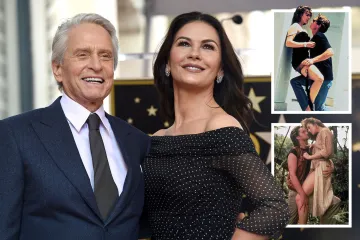
Michael Douglas hopes Catherine accepts confessions about affairs


SAFE WORD

Ali G’s new MeJulie reveals secrets of film woke campaign tried to ban

The NBC show ended in 2007 after a district attorney with an interest in teenage boys shot himself before Hansen could quiz him.

To many predator hunters Hansen is a hero.

But Batman star Pattinson depicts the 67-year-old journalist as an ego driven prima donna chiefly interested in ratings and getting To Catch a Predator onto prime time telly.

Emmy award winner Hansen, who is still bringing alleged child abusers to book on a different show, is angry about Primetime, which is in UK cinemas now.

He raged: “I think it’s an insult to the thousands of men and women who work hard every day to protect children from predators. 

“They turn something that is very positive, very challenging and not without risk into what is essentially a horror film.

“I guess it’s not surprising that a Hollywood studio would act in such an exploitative or predatory manner. 

“We’re talking about an industry that was led by perhaps one of the biggest predators to walk the planet, Harvey Weinstein.”

In 2004 when To Catch a Predator set its first trap, Hansen didn’t even know if any child abusers would fall into it.

Back then social media was still in its infancy, with Facebook only available to university students.

But an US online vigilante group called Perverted Justice realised that depraved men were using chat rooms on sites such as AOL and Yahoo to contact minors.

Hansen decided to link up with them to expose this danger. 

Perverted Justice used adult males and females who looked like children to set up profiles as under 15s in the chat rooms.

They then waited for the men to make the first move, with many of the digital deviants quickly sending explicit questions.

Chris Hansen in the documentary Predators Credit: Paramount +
Chris Hansen with his first wife Mary Joan in 2007 Credit: Getty

Perverted Justice’s decoys strung them along, hoping they would ask to visit them.

Rather than going to the ‘children’s’ homes, though, they were turning up at a suburban house filled with hidden cameras.

The decoy greeted them at the door, led them to the kitchen and made an excuse to leave the room.

At that point Hansen would walk in and ask them to “have a seat.”

He recalled: “In the first investigation, we didn’t know what was going to happen. We had partnered with Perverted Justice and I didn’t know if we were going to get anybody showing up. 

“Yet, there we were over two and a half days in Long Island and 17 guys surfaced, including a New York City firefighter.”

Even more potential sex offenders turned up for the next sting in the capital Washington DC.

One of them was rabbi David Kaye, who was later jailed for six and a half years for trying to solicit sex from a 13-year-old boy over the internet.

Chris made his name by hunting down potential paedophiles Credit: Getty
He would then film the police sting Credit: Paramount +

Wishing to make sure more of these men were brought to book, the NBC show teamed up with the police.

Cops in Harris County, Texas were waiting to arrest the men after Hansen confronted them in 2006.

This was dangerous work for all involved, because two of the alleged offenders were serving soldiers.

When one of the men did a runner he was tasered.

Hansen was praised in Congress for his work, with the show leading the House of Representatives to investigate the threat of online predators.

As To Catch a Predator’s ratings climbed and climbed, human rights lawyers started to question its ethics.

In many parts of the US it was an offence to attempt to entice a minor to have sex, but there were suggestions of entrapment. 

There were calls for catching criminals to be left to the professionals.

That’s exactly what Hansen’s show appeared to do when Perverted Justice realised that Texan prosecutor Bill Conradt was the man messaging someone pretending to be aged 13.

When Conradt wouldn’t go to the To Catch a Predator house in Murphy, Texas in November 2006 the police chief decided to go to him.

District Attorney Bill Conradt shot himself as cops and host Chris Hansen raided his home Credit: Paramount +
Armed police about to enter Conradt’s home in 2006 Credit: Paramount +

With Hansen’s TV crew following them, the armed officers smashed their way into his home.

But when they arrived Conradt shot himself dead.

The prosecutor’s relatives sued NBC, winning a £75million out of court settlement.

Charges against 23 other men in Murphy, Texas were dropped because the online chats had not taken place in the county.

To Catch a Predator was scrapped.

It is the build up to Conradt’s death that forms the tense finale to Primetime, which has been a hit at the US box office.

It depicts Hansen as desperate to snare the powerful district attorney at all costs.

Pattinson’s version of the veteran journalist sneers, snarls and shouts at his team.

Variety magazine described the actor’s portrait of Hansen “as a horror villain” and Hansen thinks it is “unhinged.”

Primetime shows little interest in the sex offenders and focuses more on the journalist’s alleged affair with a younger woman.

In 2011 the paparazzi caught the married father-of-two meeting TV news reporter Kristyn Caddell, who was 21 years his junior.

Hansen denied cheating on his wife Mary Joan, who divorced him seven years later.

He has talked about suing the film’s producers, which include Pattinson, but isn’t keen to get caught up in a legal case.

The actor defended his movie, commenting: “The fact that people are still discussing the ethics of it, of a 20-year-old TV show, it’s absolutely insane.” 

Robert Pattinson in Primetime Credit: Alamy
Academic Mark de Rond joined UK vigilantes trying to catch child sex offenders Credit: Damien McFadden

The reason the ethics of To Catch a Predator are being discussed so keenly is that predator hunting is even more relevant today than it was two decades ago.

According to the children’s charity the NSPCC over 9,000 child sex abuse offences in the UK a year “involved an online element.” 

Hansen continues to name and shame such offenders on an online TV channel called TruBlu.

It is estimated that 140 vigilante groups in the UK are also trying to snare paedophiles online.

Cambridge University academic Mark de Rond, who last year appeared in a documentary titled Predators about the impact of Hansen’s show, spent time working with these secretive organisations.

He questions the way that To Catch a Predator “commercialised” the “public humiliation” of the men the show caught.

But he defends the groups which are trying to expose online sexual offenders, telling The Sun: “Paedophilia is a crime, it’s kind of the lowest of the low and it’s the kind of crime that really almost any means can justify when you are trying to stop it.

”Because what can be more important to keep a kid safe?”

That, though, is not the perspective of Primetime.

Near the end of the film, Pattinson says to one of his doubters “your definition of bad and my definition of bad are vastly different.”

Many cinemagoers watching the movie are likely to think the same thing, but for different reasons.

Source link