designation

‘Arbitrary measures’: Lula slams US ‘terror’ designation for Brazil gangs | Government News

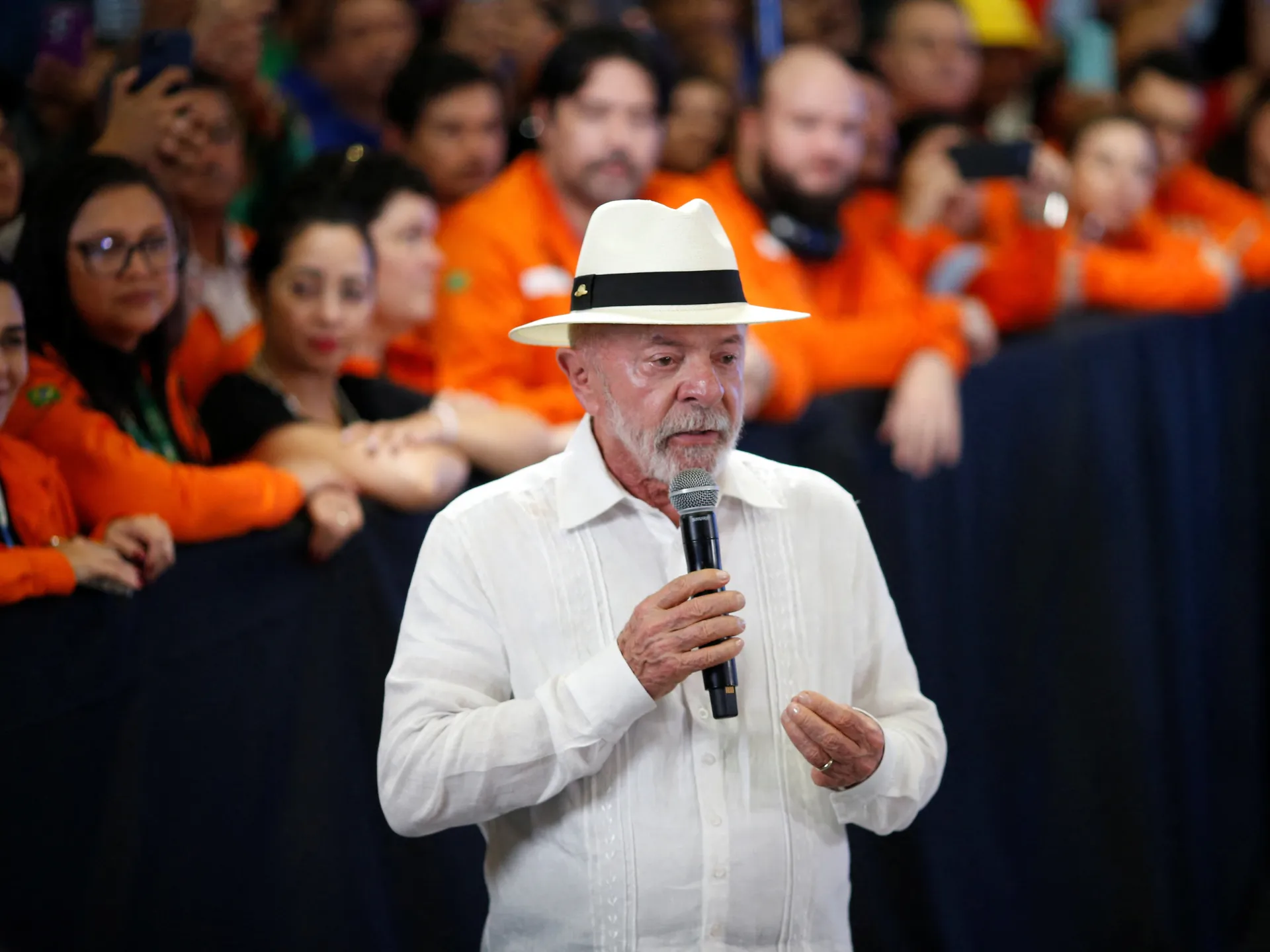
The president of Brazil, left-wing leader Luiz Inacio Lula da Silva, has denounced a decision by the United States to designate two of the South American country’s criminal networks as “terrorists”, warning that the label could be a “setback” for local law enforcement efforts.

The condemnation came in a 435-word message posted to Lula’s social media platforms on Friday.

Recommended Stories

list of 3 itemsend of list

In it, Lula drew a line between criminal activities and international terrorism, which is often understood to use violence for political or social aims.

“The terror inflicted by these organisations upon communities seeks to generate profit through crime — specifically through drug and arms trafficking,” Lula wrote.

Those activities, however violent, “must not be conflated with the ideologically, politically, or religiously motivated actions characteristic of international terrorism”, he added.

Lula’s statements came in response to an announcement a day earlier from the administration of US President Donald Trump.

Pushback against ‘terrorist’ label

On Thursday, US Secretary of State Marco Rubio revealed that he had designated Brazil’s two largest criminal groups — the Primeiro Comando da Capital (PCC) and the Comando Vermelho (CV) — “specially designated global terrorists”.

He also outlined plans to add the two groups to the list of “foreign terrorist organisations”, effective June 5.

Rumours had swirled for months that the Trump administration would apply the “terrorist” label to the two groups. But Lula and his ministers had pushed back, calling on Trump to hold off.

“Terrorist” designations freeze all US-based assets connected to the targeted groups, but they can also be used to penalise anyone who offers “material support or resources” to them.

Experts warn that such restrictions could potentially affect financial institutions and even the victims of such groups, including businesses and individuals who might be forced to pay extortion.

Lula has also expressed concern that the “terrorist” label could pave the way for US military intervention, a fear he reiterated in Friday’s statement, though he never named Trump outright.

“We remain fully prepared to develop joint solutions that yield mutual benefits for all nations involved,” Lula wrote.

“However, we will not tolerate the imposition of arbitrary measures from abroad, nor will we accept their use as a pretext to undermine our sovereignty or our economy. Unilateral, non-negotiated measures can undermine the fight against criminals and trigger actions that endanger the lives of people who have absolutely no connection to crime.”

A tight election in Brazil

A prominent left-wing leader in Latin America, Lula is in the midst of a heated election season, as he seeks a fourth nonconsecutive term as Brazil’s president.

Previously, he served as president from 2003 to 2011, before being re-elected to a third term in 2022.

In that race, he defeated the right-wing incumbent, Jair Bolsonaro, who would later be convicted of attempting to overturn the results of the race. Bolsonaro is currently serving a 27-year prison sentence.

His eldest son, Senator Flavio Bolsonaro, is thought to have been instrumental in Trump’s decision to issue the “terrorist” designations. The senator is currently running against Lula in the 2026 presidential election, and the two have been locked in a tight race.

This week, as he visited the White House, Senator Bolsonaro confirmed to reporters that he intended to seek “terrorist” designations for both the Primeiro Comando da Capital and the Comando Vermelho.

Trump has close ties to the Bolsonaro family, and he has previously intervened in elections around the world on behalf of right-wing candidates.

In Friday’s post, Lula accused Senator Bolsonaro of leveraging his family connections to “petition foreign authorities” for favour.

“It is deplorable that, once again, members of the Bolsonaro family have travelled to the United States to advocate for foreign intervention in Brazil,” Lula wrote.

He pointed to alleged efforts to stop the criminal prosecution of Jair Bolsonaro. Currently, one of the ex-president’s sons, Eduardo Bolsonaro, is facing obstruction charges related to efforts to lobby Trump to intervene in the case.

Trump ultimately did impose steep sanctions against Brazilian products in August 2025, citing the Bolsonaro trial as a reason.

Concerns about sovereignty

Under Trump, the US has taken an increasingly expansionist view towards the Western Hemisphere, reviving the 19th-century Monroe Doctrine, which described the Americas as Washington’s sphere of influence.

Trump himself has used crime as justification for taking unilateral military action in the region. Since September, his administration has conducted 59 strikes against alleged drug-trafficking boats in the Caribbean Sea and eastern Pacific Ocean, killing at least 196 people.

And on January 3, he launched an early-morning military operation against Venezuela, culminating in the abduction and imprisonment of then-President Nicolas Maduro on drug-trafficking charges.

While the Bolsonaro family has courted Trump in recent months, Lula has criticised those military-led actions as unjustified.

But security is expected to be a dominant issue in October’s presidential race. This week’s “terrorist” designations are likely to put Lula in an awkward position, forcing him to condemn the label without downplaying the extent of the violence.

Lula has attempted to brush off right-wing criticism that he has been lax on crime, pointing to his government’s recent $11bn investment in the “Brazil Against Organized Crime” programme.

That follows a separate $2bn programme in March to bolster the country’s prisons, improve homicide investigations and disrupt arms trafficking and other financial transactions carried out by criminal groups.

Still, Lula and Bolsonaro remain neck and neck in the lead-up to October’s election.

On May 16, the polling firm Datafolha found that both candidates would receive 45 percent of voter support in a one-on-one race, with 9 percent of voters indicating they would cast a null vote.

Another 1 percent identified as undecided.
Source link

Supreme Court will hear Trump’s bid to end legal protection for up to 1.3 million immigrants

The Supreme Court will hear arguments this week over whether the Trump administration may revoke temporary protected status for about 350,000 Haitian and 6,100 Syrian immigrants.

TPS allows people who are already in the United States to legally reside and work here if they are unable to safely return to their home country because of a sudden emergency such as war or a natural disaster. The humanitarian program, enacted by Congress in 1990, has since been used by Republican and Democratic administrations alike.

Since President Trump returned to office last year, his administration has terminated such protections for immigrants from 13 countries. Court challenges on behalf of Haitians and Syrians have been consolidated into a single case, Mullin vs. Doe, which the justices will hear Wednesday.

The high court’s ruling could eventually have sweeping repercussions for all 1.3 million immigrants from the 17 countries that were designated for TPS at the start of this administration. That’s because the federal government is arguing that decisions regarding the program are almost entirely immune from review by courts.

“Temporary means temporary and the final word will not be from activist judges legislating from the bench,” a Department of Homeland Security spokesperson, who did not provide their name, wrote in response to a request for comment.

Lower courts have repeatedly deemed the administration’s actions improper.

“We’re seeing clear gamesmanship from government to insulate all TPS decision-making from any oversight,” said Emi MacLean, a senior staff attorney at the American Civil Liberties Union of Northern California, who is counsel in the case for Syrians and in other cases challenging five of the terminations. “They’ve created a farce of a process to justify the ends that they sought, which was to strip humanitarian protections from over a million people.”

In the Trump administration’s appeal, Solicitor Gen. D. John Sauer argued that Congress gave the Homeland Security secretary the power to grant or end the temporary protected status for troubled countries and barred judges from intervening.

He pointed to a provision that says: “There is no judicial review of any determination of the [secretary] with respect to the designation, or termination or extension of a designation, of a foreign state.”

Citing this hands-off provision, Trump’s lawyers won brief emergency orders last year that allowed the administration to strip legal protections from about 600,000 Venezuelans. In that case, then-Homeland Security Secretary Kristi Noem had quickly reversed an extension granted by the Biden administration three days before Trump was sworn in.

The circumstances surrounding the Syria and Haiti cases are different. Advocates for the immigrants argue that the administration failed to conduct the required process to properly evaluate each country’s conditions.

They point to emails in July from a Homeland Security official to a State Department official. The Homeland Security official listed TPS designations coming up for review — Syria, South Sudan, Myanmar and Ethiopia. In response, the State Department official wrote: “I confirm that State has no foreign policy concerns with ending these TPS designations.”

State Department travel advisories for both countries warn people against traveling to either because of the risk of terrorism, kidnapping and widespread violence. U.S. citizens are advised to prepare a will.

For Syria, the advisory cites active armed conflict since 2011. For Haiti, it says the country has been under a national state of emergency since March 2024.

But Federal Register notices announcing the terminations said country conditions had sufficiently improved. The notice for Syria, for example, says “the Secretary has determined that, while some sporadic and episodic violence occurs in Syria, the situation no longer meets the criteria for an ongoing armed conflict that poses a serious threat to the personal safety of returning Syrian nationals.”

If the government loses, Homeland Security officials would have to reevaluate the TPS decisions in consultation with the State Department and make a decision based entirely on the country conditions themselves.

The government could start over, in that case, and still find that TPS is no longer warranted — if the process bears that out.

In a friend-of-the-court brief led by immigration law scholars at Georgetown and Temple universities, they explained that before TPS existed, similar forms of humanitarian relief were determined by the executive branch “without reference to any statutory criteria or constraints, and with little if any explanation for why nationals of certain countries received protection while others did not.”

With TPS in 1990, Congress sought to end that “unfettered discretion,” they wrote. Instead, the statute requires the Homeland Security secretary to terminate TPS if the review finds that conditions justifying the designation no longer exist. Otherwise, the law states, it “is extended.”

“The point of the TPS statute was to depoliticize humanitarian decisions,” said MacLean, the ACLU attorney. “Secretary Noem in all of her TPS decisions has completely undermined that fundamental goal.”

Ahilan Arulanantham, who is arguing for the Syria case on Wednesday, added that if the government wins, “it also means they could probably grant TPS to countries that don’t deserve it.” Arulanantham, co-director of the Center for Immigration Law and Policy at UCLA, has represented the National TPS Alliance in separate litigation during this administration and Trump’s first.

Top Homeland Security and State Department officials from the George W. Bush, Obama, Trump and Biden administrations filed a brief arguing that the Trump administration’s terminations of TPS for Syria and Haiti were “not based on evidence and sharply departed from past inter-agency practices.”

Haiti was originally designated for TPS in 2010 after a massive earthquake devastated the country and redesignated because of subsequent natural disasters and gang violence. In November, Noem announced that she would terminate TPS for Haiti, effective Feb. 3. She wrote in the Federal Register that “there are no extraordinary and temporary conditions in Haiti” that prevent Haitians from safely returning.

But even if there were, she continued, “termination of Temporary Protected Status of Haiti is still required because it is contrary to the national interest of the United States.”

The Homeland Security spokesperson said TPS for Haiti “was never intended to be a de facto amnesty program, yet that’s how previous administrations have used it for decades.”

Syria, meanwhile, “has been a hotbed of terrorism and extremism for nearly two decades,” the spokesperson wrote, “and it is contrary to our national interest to allow Syrians to remain in our country.”

In the Federal Register notice for Syria, Noem added that maintaining its TPS designation would “complicate the administration’s broader diplomatic engagement with Syria’s transitional government” by undermining peace-building efforts.

The Supreme Court will take up the question of whether the Homeland Security secretary can use national interest as a reason to revoke TPS. Attorneys for the TPS holders believe any decision to revoke TPS must come down to the country conditions alone.

Syria and Haiti are among the countries for which the Trump administration has also paused processing all immigration benefits. If their TPS protections expire, those immigrants would become vulnerable to detention and deportation even if they are eligible for other forms of relief.

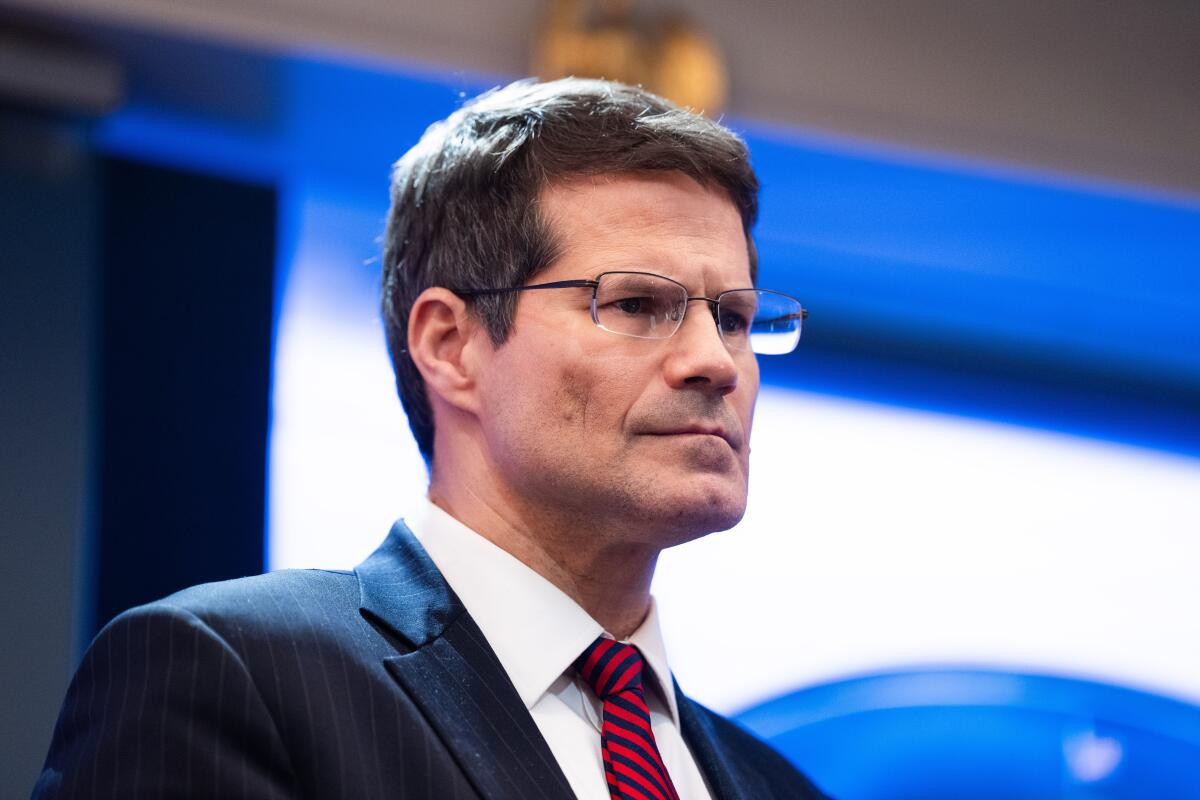
U.S. Solicitor Gen. D. John Sauer attends a press briefing at the White House.

U.S. Solicitor Gen. D. John Sauer argued that Congress gave the Homeland Security secretary the power to grant or end the temporary protected status for troubled countries and barred judges from intervening.

(Aaron Schwartz / Getty Images)

Attorneys for the TPS holders say the terminations were also driven by racial animus. They point to various statements by Trump over the years, including his false claim that Haitians were eating the pets of people in Springfield, Ohio, that they “probably have AIDS” and that Haiti is among the “shithole countries” from which he would permanently pause migration.

Among those affected is a 35-year-old Haitian woman who has lived in the U.S. since 2000 and is raising her four U.S. citizen children in a Southern state. The woman requested to be identified by her middle and last initials, B.B., out of concern for her immigration case.

After graduating high school, B.B. got into nursing school but couldn’t attend because she didn’t qualify for financial aid. She said later getting TPS allowed her to become a certified nursing assistant, and she now works as a medical coordinator while owning a nail salon and three real estate properties.

Though B.B.’s TPS remains active because of the court proceedings, her driver’s license expired Feb. 3 and she has since had to rely on friends and rideshares to get around while repeatedly requesting a renewal.

She said she worries most about her children. If she were deported back to Haiti, she said, she would leave them in the U.S. for their own safety.

“It’s like planning your death,” she said. “I’m 35 and I already have a will — not because I’m going to die but because of the situation.”

On a call with reporters, attorneys and advocates, a Syrian man said he earned his master’s degree in the U.S. and now works in the healthcare industry. The man, who was identified by a pseudonym, said he and his wife are afraid of what their future will look like.

“TPS gave us something we had not had in years: a place to settle and a moment to grieve,” he said, later adding that “telling Syrians to go back right now is not a policy — it’s abandonment.”

Among the public, there is broad support for TPS and other humanitarian programs. According to a poll conducted last month by the firm Equis Research, 68% of Latino and 65% of non-Latino voters support fighting to give back legal protection to those who have lost their temporary protected status or asylum protections as a result of the current administration’s actions.

Earlier this month, the House voted in favor of a bill that would require new Homeland Security Secretary Markwayne Mullin to redesignate Haiti for TPS. Among those who crossed the political aisle to support it were 10 Republicans and Rep. Kevin Kiley, an independent from Rocklin, Calif., who caucuses with Republicans. The measure faces an uphill battle in the Senate.

In an interview with The Times, Kiley said his vote was about common sense and being humane.

“It’s particularly dangerous for people that would be returning where the gangs that are ravaging the country are just lying in wait outside the airport in Port-au-Prince,” he said, referring to the Haitian capital.

And because most won’t return willingly, Kiley added, “really all you’d be doing is removing work authorization from 350,000-some people who are going to mostly remain in the country, who will not be able to work anymore and may end up being more reliant on public assistance in states where they’re eligible.”

At the same time, Kiley said, the TPS system hasn’t worked as intended because most so-called temporary designations drag on.

“The system needs to be reformed,” he said. “But that’s all separate and apart from what we do with the folks who were already given this designation.”

Times staff writer David G. Savage in Washington contributed to this report.

Source link