In a letter outlining 42 questions, UEFA gives FIFA until November 2 to release documents on Infantino’s aborted plans.
Published On 20 Oct 202620 Oct 2026
UEFA has given FIFA a deadline of November 2 to release documents relating to its president Gianni Infantino’s aborted attempts at a secretive investment plan for the World Cup and other governance issues.
The latest move in a power struggle between the global and continental governing bodies was revealed on Monday, days after European football’s top officials were disappointed by what they perceived as a lack of clarity from Infantino over the issues at a FIFA Council meeting last week.
Among the 42 questions to which UEFA is demanding answers are: Infantino’s personal remuneration package, financial payments made to singer Marc Anthony, the handling of USA striker Folarin Balogun’s disciplinary case, business and political relationships involving US President Donald Trump and his family, and the operational independence of FIFA’s judicial, electoral and ethics committees.
UEFA asked US federal courts to authorise subpoenas compelling the production of documents and sworn testimony about the abandoned investment plan called FIFA Forward Enterprise.
FIFA lawyers have claimed UEFA is harassing Infantino.
Al Jazeera reached out to FIFA for a comment but did not receive a response.
Deep dissatisfaction
The formal letter, signed by UEFA general secretary Theodore Theodoridis on behalf of European FIFA Council members, stated Infantino’s apology for his actions and subsequent explanation failed to address their core concerns.
“These explanations have not begun satisfactorily to address a number of fundamental questions raised by Council members. Others remain unanswered, and the information and documentation requested have not been [provided],” the letter said.
“The withdrawal of FFE, the recognition of mistakes, and the announcement of ‘potential governance reforms’ do not answer how the relevant decisions were taken or why the FIFA Council was not involved at the appropriate stage.”
According to media reports, the letter further said: “Any refusal to disclose information or documents should be justified individually, with a clear explanation of the specific grounds relied upon.”
Tight timeline
UEFA submitted 42 detailed questions to FIFA, demanding responses by November 2 — 16 days before the nomination deadline for the presidential election on March 18, 2027.
With the next FIFA Council meeting scheduled for December 16 in Doha, Qatar — after nominations close — UEFA insisted that answers cannot wait.
“These questions require answers now. They cannot be deferred until the next meeting of the FIFA Council — nor can future governance reforms substitute for scrutiny of decisions already taken and accountability for them,” the letter emphasised.
The earlier deadline would give federations time to assess FIFA’s answers — or its failure to answer — while they can still nominate or endorse a challenger.
The U.S. Department of Justice has ratcheted up its pressure campaign on California election officials to ferret out alleged voter fraud ahead of the Nov. 3 midterm election, demanding that officials statewide prove the U.S. citizenship of thousands of voters flagged by the federal government as potential noncitizens, or withhold or set aside their ballots.
Acting Deputy Atty. Gen. Trent McCotter made the demand — which experts called highly questionable at a time when votes are already being cast — in letters to state election officials Tuesday, including Secretary of State Shirley Weber and Dean Logan, head of the L.A. County Registrar-Recorder/County Clerk’s office.
The letters, reviewed by The Times, call on the state officials to respond to the Justice Department within 48 hours.
McCotter wrote that the Justice Department had provided Logan’s office with a “password-protected thumb drive with a list of names the Federal Government believes are likely noncitizens who were sent a vote-by-mail ballot” for the Nov. 3 election.
“We request that you review the list within 48 hours to determine whether any citizens are listed. For individuals whom you cannot independently confirm citizenship status, we request that you immediately instruct the appropriate elections officials to segregate — not cancel — those individuals’ vote-by-mail ballots until their citizenship status can be determined,” McCotter wrote to both Weber and Logan.
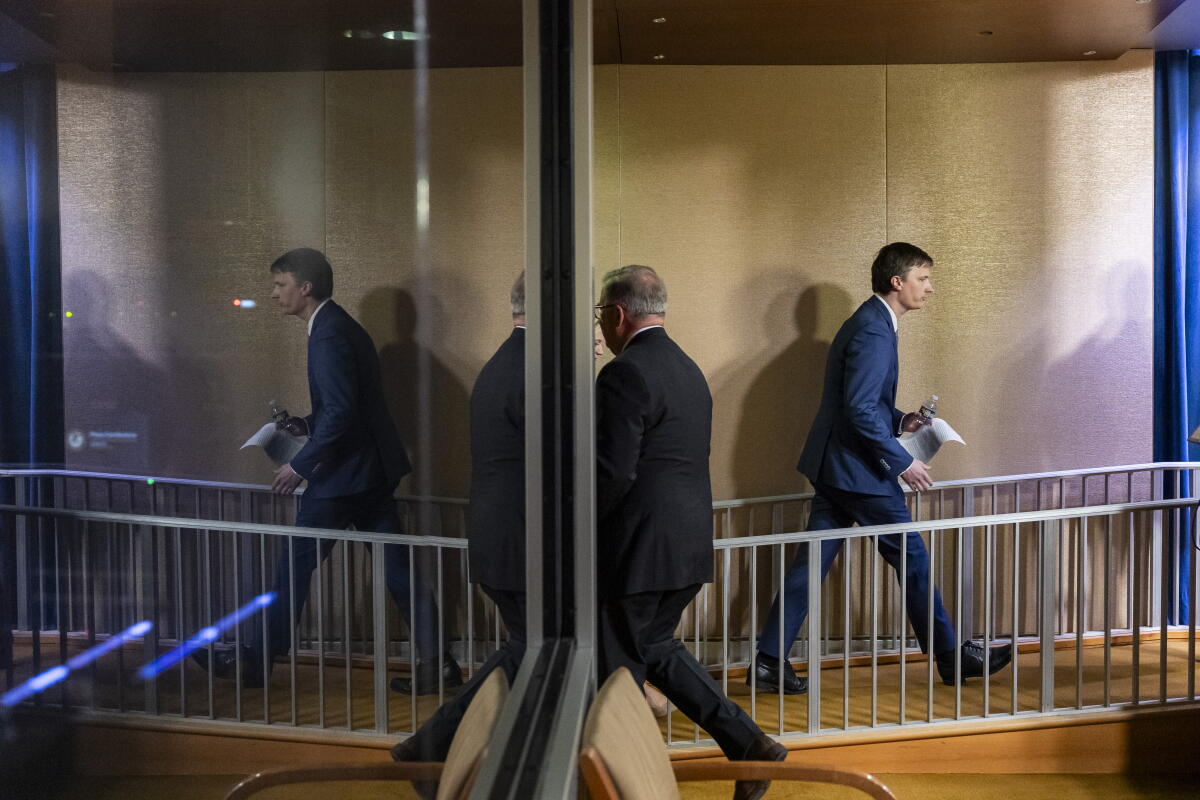
The demand letter came from U.S. Acting Deputy Atty. Gen. Trent McCotter, shown entering a news conference in September 2026 in Washington.
(Finn Gomez / Getty Images)
Voters on the federal list who haven’t already been sent a ballot should not be sent one until their citizenship is verified, while ballots already returned by voters on the list should not be counted until their citizenship is verified, McCotter wrote.
Weber’s office in a statement late Wednesday criticized the Justice Department for telling it to obtain a list of an unknown number of voters it hadn’t been given directly from Logan’s office, investigate all of those voters and “take action” all within 48 hours, based on inaccurate federal data that has led to U.S. citizens being purged from rolls in other states, and under threat of litigation despite the Justice Department providing no legal authority for the demand.
Weber said the Justice Department’s “relentless efforts to unlawfully gain access to states’ protected voter data and purge voter rolls serve only to cause chaos and fuel public distrust in our elections,” and that California already has “robust state law requirements” to ensure only U.S. citizens vote.
Logan said his office was reviewing the Justice Department letter in coordination with Weber and California Atty. Gen. Rob Bonta, but had not accessed the USB drive because state officials “do not consider the device a secure medium” and accessing its contents “would conflict with established data privacy and information security protocols.”
He said that maintaining accurate voter records is a fundamental responsibility of his office, but also that federal and state laws “are clear on how voter eligibility is established — and any action to remove a voter from eligibility must be based on verifiable information, not assertions of unconfirmed data matching.”
Weber previously questioned the basis for a claim by Homeland Security Secretary Markwayne Mullin in July that there may be more than 190,000 noncitizen voters on California rolls, and rebuffed Trump administration offers to work with her office to purge state rolls of such ineligible voters ahead of November without additional information on how it reached its conclusions.
Similar Trump administration lists have been shown in other states to be substantially inaccurate, and to include many voters who are indeed citizens. Election experts say that makes the demand on California — where ballots have already been mailed out — even more concerning.
“One must question why the DOJ would violate its own rules about investigating elections close to election day, and over a week after they knew the state had already mailed ballots out, particularly when their past claims have been full of errors,” said David Becker, executive director of the nonpartisan Center for Election Innovation & Research.
Becker noted the Trump administration alleged that there were nearly 16,000 noncitizens registered in Nevada, later reduced that number to 185 after additional scrutiny, and then determined all of them were in fact citizens.
A Justice Department spokesperson, in a statement to The Times, defended the agency’s demands to California — saying it “should not be controversial, as the criminal statute is clear: only American citizens may vote in federal elections. It is a federal crime for noncitizens to vote in U.S. elections, and the DOJ is asking California to ensure that is not occurring.”
The spokesperson said the agency could not provide the exact number of voters whose citizenship is being questioned, but that it is in the thousands.
California Secretary of State Shirley N. Weber speaks during the state Democratic Party convention in Anaheim on May 31, 2025.
(Damian Dovarganes / Associated Press)
McCotter wrote that if Weber cannot implement his demands for how to segregate ballots and verify voter citizenship for those on the federal list, the Justice Department “will have no choice but to seek emergency relief” — an apparent reference to seeking court intervention.
McCotter copied on the letters First Assistant U.S. Atty. Bill Essayli, the lead federal prosecutor in Los Angeles whose office previously sent Logan’s office a series of grand jury subpoenas for individual voter records as part of a criminal investigation into illegal voting.
Essayli’s office referred questions to the Justice Department. Bonta’s office referred questions to Weber and Logan.
Rick Hasen, director of the Safeguarding Democracy Project at UCLA School of Law, said that he is “not aware of anything like this ever happening this close to an election,” and that it may in fact be illegal under the National Voter Registration Act, which “prevents systematic purges of voters 90 days before the election.”
He said that the question of whether that preclusion against purges applies to the removal of noncitizens is an issue that is currently before the U.S. Supreme Court, in an Arizona case the high court will hear in December, but that the Justice Department’s actions strike him as “legally questionable.”
Hasen said the “whole point of that 90-day rule is to prevent the inadvertent disenfranchisement of eligible voters by mistake in the rush before the election,” and that risk is increased by the inaccuracies of similar lists presented by the Trump administration in other states. “So if there is an attempt to go to court — if DOJ tries to sue over this — they might have a hard time getting a judge to agree that this is something that the registrar must do or even can do.”
The fact that election officials are already busy receiving and preprocessing ballots would only bolster the state’s position in such a case, Hasen said.
“It’s obviously not a convenient time,” he said. “And given the fact that the lists have proven to be wildly inaccurate, at least in other states, it might be sending the registrar on a wild goose chase, when they have more relevant things to do in the election.”
But that “chaos” may be the point, Hasen said. “This is potentially another example of DOJ just making the work of state and local election administrators — which is already quite difficult and stressful — even harder,” he said.
Attorneys with the UCLA Voting Rights Project filed a lawsuit last month on behalf of the Coalition for Humane Immigrant Rights, or CHIRLA, and a California voter named Pedro Trujillo, in which they challenged the Trump administration’s use of unproven federal databases to allege registered California voters are not citizens.
On Wednesday, they told the Justice Department that they would be seeking emergency relief from such practices, given McCotter’s letters.
“The federal government’s attempt to pressure California election officials into acting on lists that may misidentify eligible voters is an alarming abuse of power as election season gets underway. This puts our communities and our fundamental rights at risk,” said Carl Bergquist, a CHIRLA attorney.
The Justice Department in recent weeks has announced scattered arrests of alleged noncitizen voters around the country, and Trump administration officials — including Essayli — have pointed to such arrests as proof that noncitizens are voting illegally.
Such voting does happen, Hasen said, but after months of the administration aggressively searching for such voters, the relatively small number of arrests “belies the contention that it’s widespread” or criminal, with many of the few cases identified the result of “administrative error or misunderstanding” rather than an intent to illegally cast ballots.
In his letters to Weber and Logan, McCotter wrote that allowing “noncitizens to vote cancels citizen votes,” and that ferreting out illegal noncitizen voters is a joint responsibility of state and federal officials.
“States are responsible for voter registration, and the Federal Government is responsible for maintaining immigration records to enable verification of citizenship,” he wrote. “Working together, we can more effectively protect against voter dilution and promote election integrity.”
Documentary draws on 24 anonymous Israeli sources accusing military of killing Palestinians in Gaza using AI systems.
Published On 12 Oct 202612 Oct 2026
Israeli Prime Minister Benjamin Netanyahu has called for an investigation into the anonymous sources featured in a documentary alleging that Israel’s military killed civilians in Gaza using AI-powered targeting systems.
The award-winning film, NAZA, draws on testimony from 24 unnamed Israeli military whistleblowers accusing the army of using the systems to kill numerous civilians in the besieged territory.
Recommended Stories
list of 3 itemsend of list
“I demand that the chief of general staff, the head of the Shin Bet, and the attorney general launch a comprehensive investigation into the participants in the film ‘Naza’ and prosecute them for serious information security violations, criminal libel, and harm to Israel’s diplomatic and security interests,” Netanyahu said on X on Saturday evening.
“The film presents a false, misleading, and biased narrative that defames the State of Israel and the [Israeli military] internationally, severely damaging Israel’s standing,” he added.
In a statement last month, the Israeli military said it “categorically” rejected the whistleblowers’ allegations, calling some of their assertions “absurd’ and contradictory.
It insisted that the selection and approval of strikes “are made by human personnel only”, in line with the military’s guidelines.
Israeli army Chief of Staff Eyal Zamir has called for legal action against the participants to be considered and ordered an investigation into suspected leaks of classified military information used in the film’s production.
NAZA takes its name from the Israeli military term for civilian casualties expected in air strikes, an abbreviated form of the Hebrew phrase for “collateral damage”.
The film was awarded a special jury prize at the Venice International Film Festival and received a historic 25-minute standing ovation.
It has also triggered a political storm in Israel.
The film’s directors, Yuval Abraham and Rachel Szor, have been accused of “treason”. Netanyahu and Culture Minister Miki Zohar have threatened to revoke their Israeli citizenship.
Last week, the head of Israel’s National Public Diplomacy Directorate, Tzipi Hotovely, awarded the creators of another film, NAZA: The Real Story, certificates of recognition for countering the “blood libels” made in the original NAZA film.
According to a statement from the Prime Minister’s Office, NAZA: The Real Story features testimony from soldiers refuting the original claims.
In contrast, 43 Israeli rights groups defended the filmmakers of NAZA and denounced the threats being directed at them, according to Israel’s Channel 12 news.
Israel’s genocidal war on Gaza began on October 7, 2023, after Hamas’s armed wing, the Qassam Brigades, and other Palestinian groups attacked southern Israel, killing 1,139 people and taking about 240 captive.
Since then, Israel has killed at least 74,000 Palestinians, including at least 21,000 children, according to Gaza’s Ministry of Health.
Las Vegas Aces star A’ja Wilson said she apologized to her teammates for getting a technical foul late in an eventual 98-89 playoff loss to the Indiana Fever on Tuesday night in Indianapolis.
But the four-time league MVP is not apologizing for her actions that led to the foul being called.
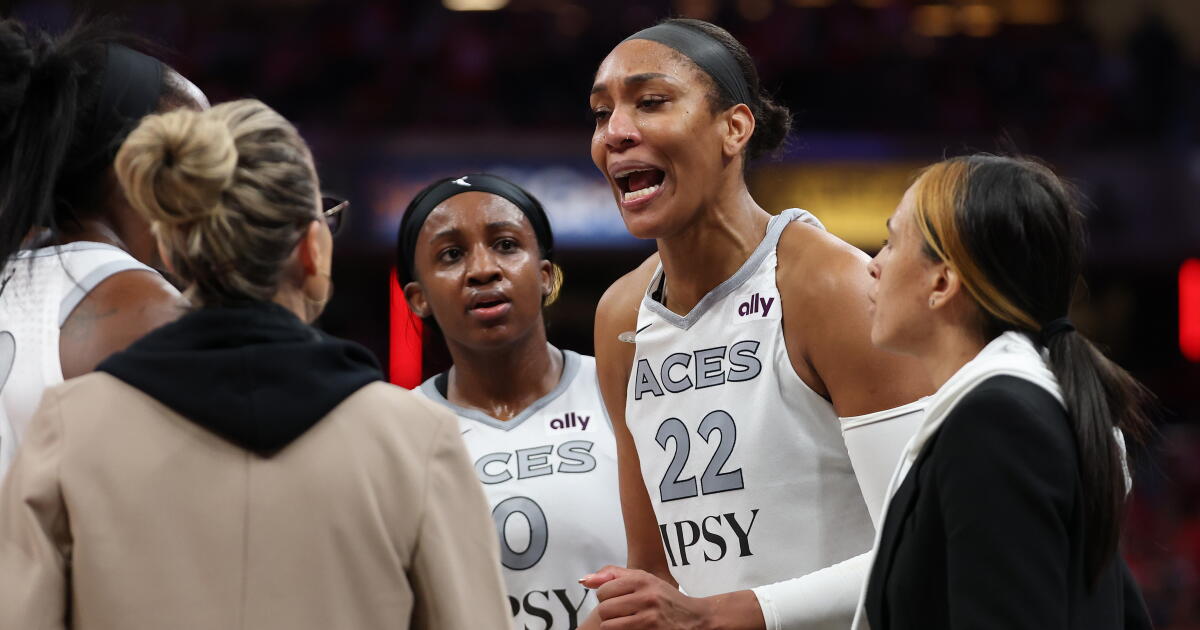
With about 4 minutes left in the fourth quarter and the Aces down by 11, Wilson drew a foul against Indiana’s Sophie Cunningham. As Cunningham protested the call, Wilson walked over to a Fever fan who had been standing in front of his seat in the second row behind the basket and pointing in Wilson’s direction.
Visibly upset, Wilson stood directly in front of the fan, who had been pulled back into his seat by a woman sitting next to him, while yelling at him. She was quickly pulled away by teammate Cheyenne Parker-Tyus, but was still upset as she walked away.
Speaking to reporters after the game, Wilson said that there are “just certain things that I’m not going to allow anymore because it’s just unacceptable.”
“I don’t know if you guys know me, but I don’t really get into the bulls—. I don’t,” Wilson said. “I try to play my game, keep it pushing. But if I’m just walking, because I just got the foul, I’m chilling — and if I see a man come at me, taking steps towards me and pointing at me, I don’t give a damn what you said. I don’t give a damn how you said it, the tone. That is unacceptable.”
Online video footage shot from the stands shows that the man was standing in front of his seat as the play unfolded. He appears to take a step or two while pointing and yelling after the foul was called.
“I didn’t exactly see what happened. I kind of saw the aftermath,” Aces coach Becky Hammon told reporters after the game. “I’ve never seen A’ja Wilson go like that. So whatever was done, I can tell you she felt very disrespected in that moment. I’ve never seen her really react like that ever. So whatever it was, it doesn’t have any place, I don’t think, in an arena.”
The fan eventually was escorted out of the seating area but was allowed to return to his seat. The Fever said in a statement that arena security spoke with the man and witnesses and “determined there was no violation of the Fan Code of Conduct.”
Wilson was assessed a technical foul for unsportsmanlike conduct.
“Yeah, I’m apologizing to my team for that,” she told reporters. But, Wilson added, “you don’t have to like me. You don’t have to love me. You can hate me with all your heart. … But I guarantee you will respect me.”
The decisive Game 3 of the series is Thursday in Las Vegas.
South Korea calls for a formal apology from North Korea over the DMZ explosion that injured three soldiers.
Published On 30 Sep 202630 Sep 2026
South Korea’s military has demanded an apology from North Korea over landmine explosions earlier this month in the border zone between the two countries that wounded three soldiers.
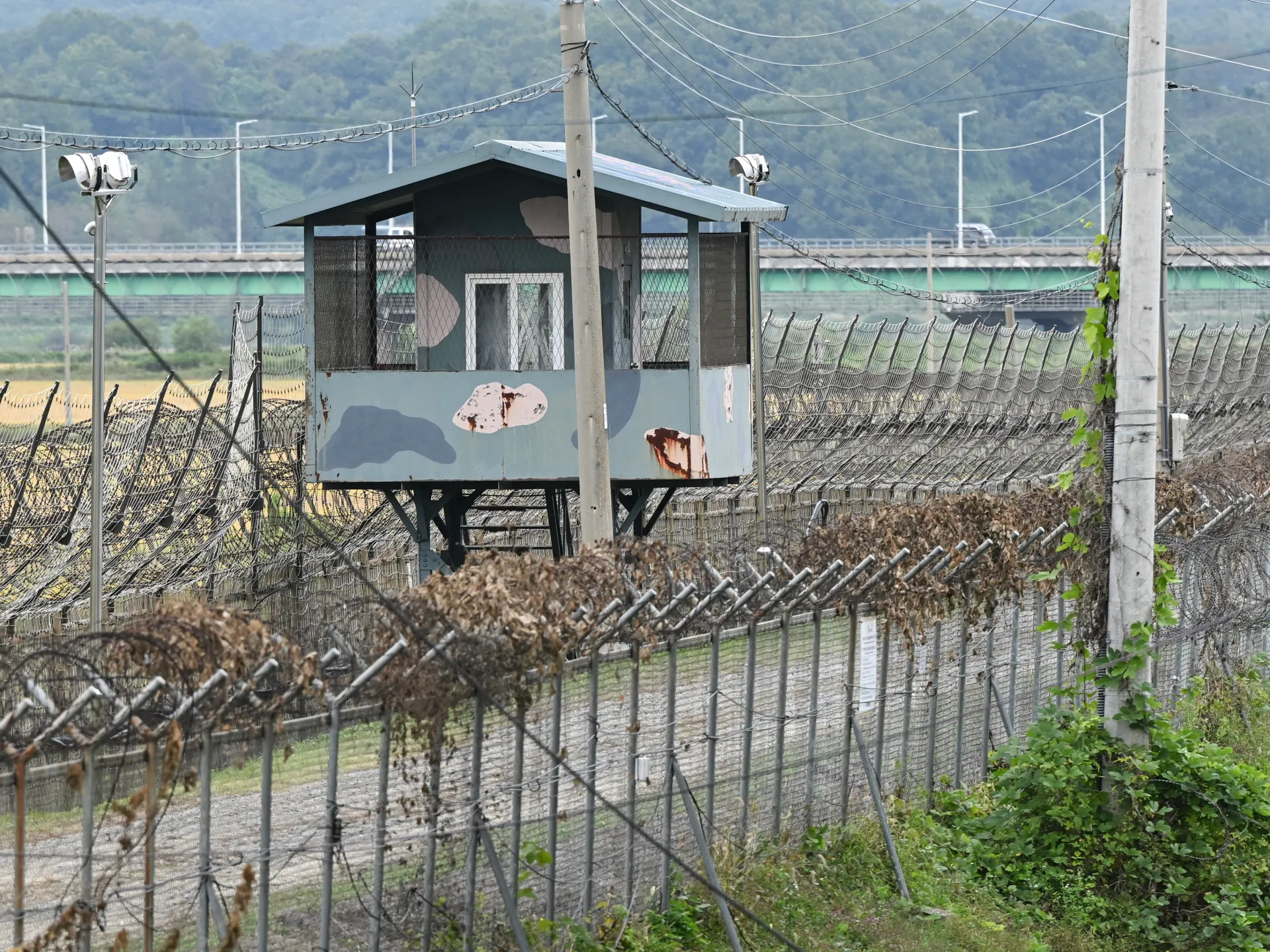
Three South Korean soldiers were injured in two explosions on September 21 near the military demarcation line in the western section of the Demilitarized Zone, a heavily fortified border buffer zone between the Koreas that is commonly known as the DMZ.
Recommended Stories
list of 3 itemsend of list
Kang Hyunwoo, the South Korean joint chiefs of staff’s director of operations, said the military “strongly urges” North Korea to apologise for the blasts and take “responsible measures” to prevent a recurrence.
“This is a clear violation of the Armistice Agreement and undermines the spirit of existing inter-Korean agreements; it must be stopped immediately,” he said on Wednesday, adding “we strongly urge an apology and responsible measures”.
Defence Minister Kang Shin-chul said South Korea would consider unspecified “corresponding measures” if a complete investigation confirms the North was responsible.
Kim Yo Jong, the sister of North Korean leader Kim Jong Un, said the South Korean assessment is a “conspiratorial farce” and accused Seoul of making groundless claims to create a pretext for provocation against Pyongyang.
She also criticised the South for broadcasting warnings and firing warning shots at North Korean troops conducting front-line fortification work, adding “our soldiers have never crossed the border”.
“If the [South Korean] military gangsters fire at our soldiers carrying on the permanent project for the southern border, not warning shots, our border units will take immediate and merciless retaliatory action,” she said.
The United Nations Command said on Wednesday it had “identified an active Democratic People’s Republic of Korea (North Korea’s) anti-personnel mine on the ROK side of the Military Demarcation Line”, in a joint investigation with Seoul’s military.
“Based on the findings of the investigation, UNC determined that an Armistice Agreement violation occurred,” it added.
The UN Command is a US-led multinational military force charged with overseeing the armistice agreement that halted fighting in the Korean War and administers the southern side of the DMZ.
Lebanese Prime Minister Nawaf Salam wants US-brokered ceasefire to be consolidated and for Israel to retreat.
Lebanese Prime Minister Nawaf Salam has called for an end to the Israeli occupation of southern Lebanon and the full enforcement of the ceasefire, as Israeli shelling and demolitions continue.
“We want the war to end and we want the ceasefire [with Israel] consolidated,” Salam said in a speech at the United Nations General Assembly in New York on Friday.
The prime minister demanded a complete withdrawal of Israeli forces from Lebanese territory up to its internationally recognised border and the release of all Lebanese detainees.
As delegates gathered to listen to Salam, on the ground in Lebanon, Israeli forces carried out a large explosion near Taybeh and Deir Siryan, while an Israeli air strike targeted a valley between Froun and Ghandourieh, triggering a large fire.
Al Jazeera’s Zeina Khodr, reporting from Froun, said the reality on the ground is that the conflict is far from over.
“From the ground here in Froun, we can still see Israeli warplanes and drones flying at low altitudes in the skies above and Israeli artillery shelling is still causing uncontrollable fires. Lebanese civil defence and firefighters are not being allowed by the Israelis to reach these areas and put out the flames,” she said.
“More than 60 towns in southern Lebanon are still occupied by the Israeli army, where the Israelis are carrying out a systematic campaign of demolitions,” Khodr added.
Israeli forces are “blowing up people’s homes, despite the framework agreement in which there is supposed to be a ceasefire that they have signed with the Lebanese government,” she said.
Israeli attacks in southern Lebanon have killed at least 4,386 people and wounded 12,407 others since March 2 , when the current Hezbollah-Israel war started. Since then, Israeli forces have occupied up to 600sq km of Lebanese territory up to the Litani River.
A US-brokered framework agreement between Lebanon and Israel in June provides for a gradual Israeli withdrawal from Lebanese territory and the deployment of the Lebanese army in areas vacated by Israeli forces.
Israeli armoured vehicles in the southern Lebanese village of Zawtar al-Charkiyah on Thursday [Ammar Ammar/AFP]
Speaking at the UNGA, Salam said his government had entered into negotiations with Israel, mediated by the United States and President Donald Trump, “to end the war and restore Lebanon’s sovereignty”, adding that the success of any agreement is measured not by intentions but by fulfilment of commitments.
“What is required is to complete the translation of this agreement into practical steps within a clear timetable and with a verification mechanism that ensures the implementation of all its provisions,” he said.
He focused on state sovereignty, saying it “cannot be untouchable in one place and negotiable in another, nor can the rules of international law apply to some but not to others”.
Salam also pledged to oversee the disarmament of Hezbollah in exchange for Israel’s eventual full withdrawal, also saying “weapons must be exclusively in the hands of the state and that decisions on war and peace rest solely with its constitutional institutions”.
Stability in the Middle East can only come with respect for Palestinian rights, he said.
“There can be no lasting stability in Lebanon without lasting stability in our region, and there can be no stability in the region as long as this organisation [the UN] remains unable to enable the Palestinian people to exercise their inalienable right to self-determination, like all other peoples of the world,” Salam said. “No less and no more.”
Youth group threatens return to mass protests, sets deadline for Gyanesh Kumar to quit due to reports of meddling with voter lists.
By Al Jazeera Staff and Reuters
Published On 25 Sep 202625 Sep 2026
India’s ‘cockroach’ party youth movement has threatened to launch nationwide protests unless the country’s chief election officer does not resign by Saturday.
Founder of the Cockroach Janta Party (CJP), Abhijeet Dipke, announced on Friday that protests would begin in Mumbai on October 2 – if Gyanesh Kumar does not step down.
Recommended Stories
list of 4 itemsend of list
The CJP, a satirical outfit born on Instagram in May after India’s chief justice compared unemployed young Indians to “cockroaches” and “parasites”, has shaken the staunchly conservative government of Prime Minister Narendra Modi.
On Thursday, the group demanded that Kumar quit within 48 hours, following a newspaper report linking him to altered voter lists. Opposition parties say the lists have been manipulated to benefit Modi’s Bharatiya Janata Party (BJP).
“If Gyanesh Kumar does not resign by tomorrow, CJP will begin its nationwide protest from Mumbai on 2 October, and take it to cities across India,” Dipke posted on X.
“This Gandhi Jayanti let’s pledge to save democracy,” he added, referring to the October 2 holiday marking independence leader Mahatma Gandhi’s birthday.
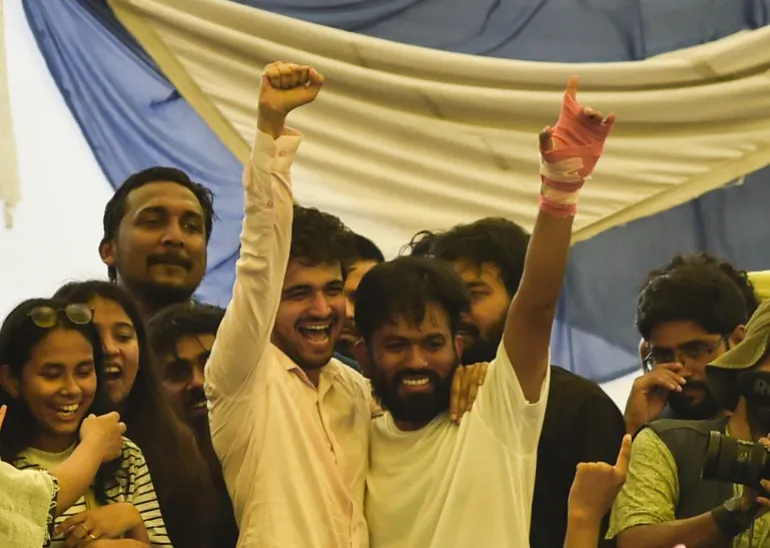
CJP founder Abhijeet Dipke celebrates with supporters in New Delhi after the resignation of India’s Education Minister Dharmendra Pradhan, July 25, 2026 [Ritesh Shukla/Getty]
Report provokes political storm
On Wednesday, the Indian Express newspaper reported that two election commissioners had raised questions or voiced concern with Kumar at least 14 times in 10 months, mostly over the process of updating voter lists that began last year.
The main opposition Congress party announced protest marches on state election offices across India on Friday, demanding Kumar’s arrest, his removal and an independent review of decisions and voter-list changes made under him.
Opposition parties have long accused the commission of deleting the names of millions of voters without warning and adding new voters without verification to favour the BJP.
BJP leaders and supporters at a ‘Drug-Free Punjab’ march in Amritsar [File: Narinder Nanu/AFP]
Election panel rejects claims
The Election Commission of India said that “differing views and observations are a normal part of deliberation in any institution” and that all its actions were lawful.
The BJP has defended the commission, accusing the opposition of a smear campaign because it keeps losing elections.
“Neither the Election Commission of India nor any constitutional body in India is under dictatorial rule,” BJP spokesperson Sambit Patra said on Wednesday.
CJP-led protests in July forced the resignation of Modi’s education minister over exam-paper leaks, one of the prime minister’s biggest political setbacks since coming to power in 2014.
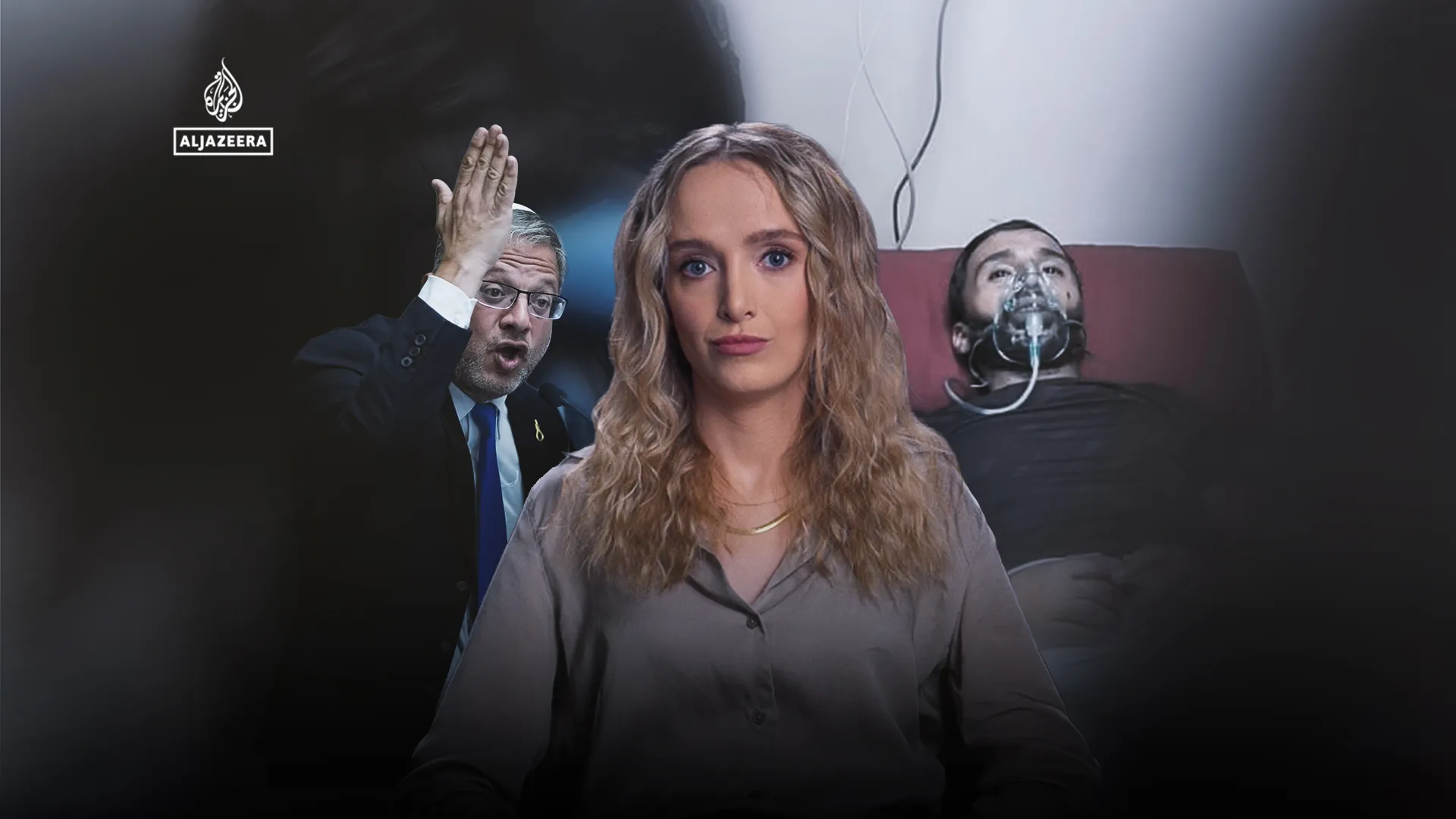
Far-right Israeli minister Itamar Ben-Gvir has called for the death penalty for a Palestinian gunman that fatally shot an Israeli settler in the occupied West Bank, while Israeli forces stormed a hospital in Ramallah in a manhunt for the suspected attacker.
Michael Carrick has struck a defiant tone after Manchester United equalled their worst start to a Premier League season, but a woeful 1-1 draw at Fulham left the beleaguered boss under mounting pressure.
Trailing to Lisandro Martinez’s farcical own goal, United were just moments away from a third successive defeat on another dispiriting afternoon for Carrick on Sunday.
Recommended Stories
list of 4 itemsend of list
Matheus Cunha’s deflected 89th-minute equaliser spared United from new humiliation.
But escaping with a barely deserved point against a winless side placed second-from-bottom of the Premier League was hardly cause for celebration.
With only one win so far this season, United have matched their lowest points total after five matches in the Premier League era.
Sitting in 12th place with five points, Carrick’s men equalled the mark set by Louis van Gaal’s United in 2014-15, when they went on to finish fourth.
The statistics are damning enough in their own right, but the eye test during their moribund performance at Craven Cottage provided an even more insightful look at what ails United.
Lacking a cutting edge in attack, bereft of defensive organisation and, in the words of Cunha, short of energy and drive until they fell behind, this was the kind of flawed display that has scarred so many United seasons since their last title in 2013.
Carrick was expected to build on last season’s climb to a third-place finish during his spell as interim boss.
But having hauled United from the wreckage of Ruben Amorim’s self-destructive reign, Carrick is in danger of losing his way in his first season as permanent boss.
A wretched 2-0 defeat at promoted Hull on the opening weekend set alarm bells ringing among the United faithful.
Beaten in the Manchester derby by an Erling Haaland goal that should have been disallowed last weekend, United then blew a two-goal lead at home for the first time in 50 years in a League Cup meltdown against Brighton.
‘Fine margins’
Already 10 points behind leaders City, Carrick’s team were so underwhelming against Fulham that even one of the manager’s former teammates took a swipe at United.
Commenting on the match for Sky Sports, ex-United defender Gary Neville was scathing in his assessment of their performance at the start of the second half.
“I’ve watched Man United since the age of five and that’s the worst 15 minutes I’ve ever seen. Absolutely pathetic,” Neville said.
The 51-year-old added: “I’ve never seen such a lack of effort. What must Carrick be thinking?”
Carrick does not have the confrontational personality of some of his United predecessors, but he tried his best to quiet the noise as he searched for reasons for optimism.
“It’s not been ideal. It was always going to come at some point, and it’s come at the start of the season,” he said.
“On the other side of it, at Everton, a 25-yard shot, top corner for their equaliser. The City goal that’s not a goal. Today, own goal, that’s one of them things.
“It’s pretty fine margins that have flipped it. I know we can do better; we need to do better at certain things.
“But I’m not despondent because I think we’ve shown some good signs as well.”
Carrick has three weeks to stew on United’s miserable start during an extended international break.
Questions about United’s transfer policy and fitness regime are growing louder.
Calvin Bassey celebrates Fulham’s first goal, an own goal scored by Manchester United’s Lisandro Martinez [Peter Cziborra/Action Images via Reuters]
‘We’ll get back to winning’
The 45-year-old must come up with answers before they return to action with a crucial clash against bottom-of-the-table Tottenham on October 10.
Losing to Roberto De Zerbi’s side would be a huge blow to Carrick’s hopes of turning the tide, especially with tricky trips to Atletico Madrid and Leeds looming after Tottenham visit Old Trafford.
But Carrick is putting his faith in United’s players absorbing the lessons from their painful start.
“You learn about each other, they learn about me, I learn about the individual and as a team, how we respond, what our reaction is,” he said.
“That’s part of growing as a group. You have to go through certain things to get to the end of it.”
Carrick said he had “mixed” reactions to the match but was focusing on the positives and bouncing back after this “first chapter”.
“There are parts we can do better. The way we responded to going down was really pleasing, the boys were really positive and played with good purpose,” Carrick said in a post-match interview.
“I’m convinced we’ll have a good season. We’re having a spell that feels bigger than it actually is to the outside. We’ll get back to winning football matches and we’ll be all right.”