Hundreds of police, some carrying batons and shields, are deployed around the rally site.
Published On 1 Nov 20261 Nov 2026
Thousands of protesters have taken to the streets in India’s capital, New Delhi, to demand the resignation of the election chief over changes to voter lists that opposition parties say favour Prime Minister Narendra Modi’s ruling party.
Indian National Congress party leader Rahul Gandhi led Sunday’s demonstration, the latest in more than a month of protests challenging the revision of electoral rolls and the conduct of Chief Election Commissioner Gyanesh Kumar.
Recommended Stories
list of 4 itemsend of list
Opposition parties alleged the exercise, which removed more than 130 million names from voter lists, disproportionately affected Muslims and other minorities considered unlikely to support Modi’s Hindu nationalist Bharatiya Janata Party (BJP).
The Election Commission has denied favouring any party and said voters whose names were wrongly removed may register again.
The BJP has accused opposition parties of undermining democracy by challenging legitimate electoral procedures. India’s next general election is due in 2029.
Officials ramped up security measures and announced traffic diversions before demonstrators marched from central New Delhi towards the historic Ramlila Maidan ground.
Hundreds of police, some carrying batons and shields, were deployed around the rally site alongside riot-control vehicles. Demonstrators waved Indian and party flags as opposition leaders travelled in an open-top jeep.
Health Minister Jagat Prakash Nadda dismissed the demonstration as a “carefully orchestrated drama”.
“What is unfolding today at Ramlila Maidan is not an act of respect for democracy,” he told the ANI news agency. “It is a calculated conspiracy to plunge the nation into anarchy, all in the name of democracy.”
Opposition parties, student organisations and the youth-led Cockroach Janta Party have staged near-daily demonstrations since late September, calling for Kumar to step down.
The protests began after Kumar’s two deputies raised concerns about revisions to voter lists, registration procedures and digital systems.
Analysts described the demonstrations and growing support for the opposition as Modi’s most serious political crisis since he took office in 2014.
New Delhi, India — India’s main opposition leader Rahul Gandhi has returned to the streets of central New Delhi, leading dozens of members of parliament demanding the election chief’s resignation, as protests gather momentum.
Gandhi, heir to India’s most influential political dynasty, is seeking to turn a summer youth uprising into a broader challenge to Prime Minister Narendra Modi’s decade-long dominance of Indian politics, putting the Hindu nationalist government under growing pressure.
In a press briefing on Monday, Gandhi said the Modi government had put the capital city “in jail”.
The youth-led “Cockroach” movement that forced out the education minister in July has also threatened to protest on Tuesday if it is not allowed to rally at Jantar Mantar in central Delhi, which was the focus of summer demonstrations.
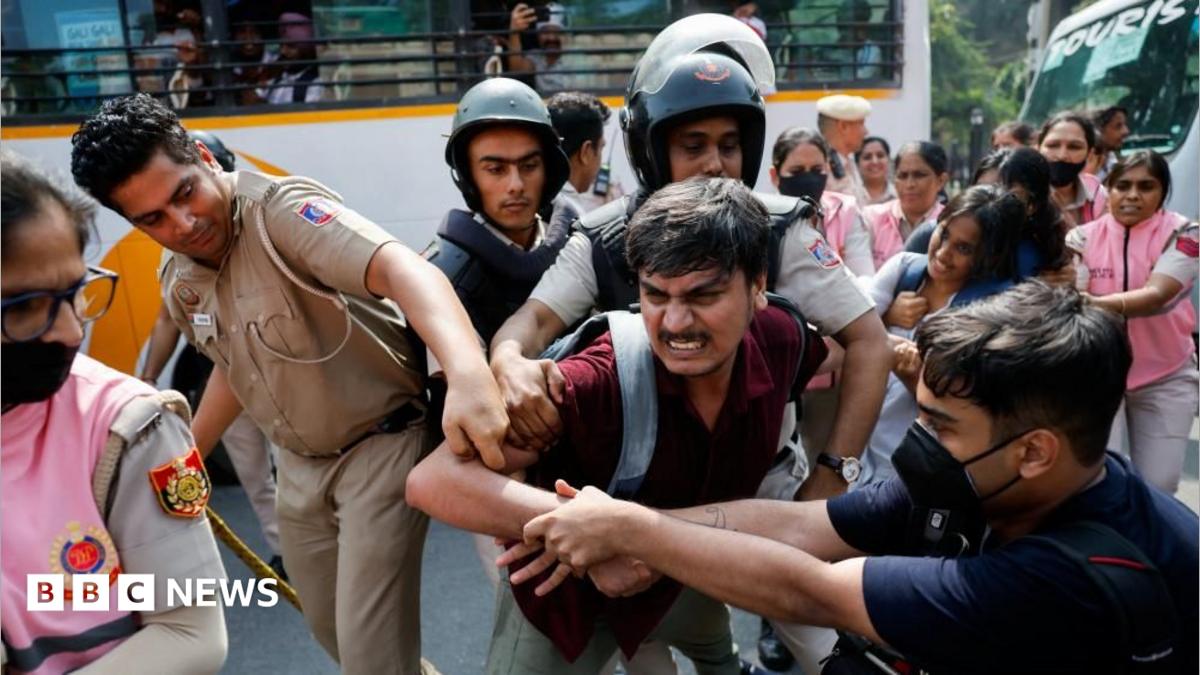
Joining Gandhi’s Congress party, other opposition forces and the Cockroach Janta Party (CJP) are thousands of students from left-wing organisations. As the government braces for further protests, security forces have been detaining thousands of students every day, with allegations of custodial violence casting a climate of fear over the capital.
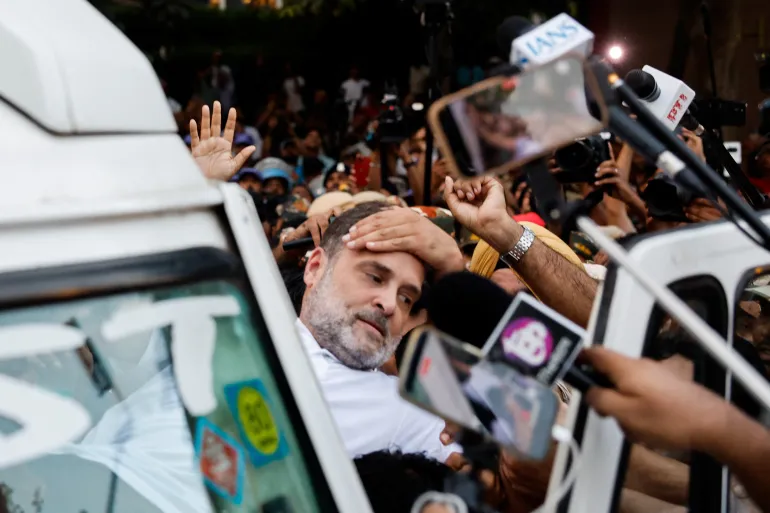
Indian opposition leader Rahul Gandhi is detained by police during a protest organised by opposition parties demanding the resignation of Chief Election Commissioner Gyanesh Kumar, in New Delhi, India, October 7, 2026 [Adnan Abidi/Reuters]
‘No constraints on Modi’
India’s Election Commission, a supposedly autonomous body tasked with overseeing the world’s largest electorate, has been criticised after revelations that its chief, Gyanesh Kumar, frequently overruled concerns raised by the other two election commissioners about the integrity of changes to the voter database.
For months, India’s opposition parties have argued that the election commission is compromised, sabotaging elections at the behest of Modi’s Hindu majoritarian Bharatiya Janata Party (BJP) for its electoral benefit. The BJP denies the allegations.
Since June last year, the commission has been revising and updating statewide voter lists. It has since removed more than 130 million names, which critics say has disproportionately deprived minorities and other vulnerable groups in India of the right to vote.
Gandhi has called for the Chief Election Commissioner to be tried for treason. “We will not spare you,” he said, referring to Kumar, at his Monday press briefing.
Opposition politicians allege that protest rallies by leaders including Gandhi have been met with violent and brutal force, as seen in videos showing them being detained.
“[The protesters] came with love in their hearts, not hatred or anger,” Gandhi said, referring to a protest on Saturday. “They were beaten, both by cops and BJP goons.”
“Narendra Modi … cannot silence India’s voice. These cowards cannot intimidate us. They will have to step aside,” he wrote on X, calling on people from all walks of life to join the protest on Monday.
Analysts say circumstances this time around are starkly different to the summer protests, when CJP-led demonstrators demanded the resignation of then-Education Minister Dharmendra Pradhan.
Asim Ali, a political analyst in New Delhi, told Al Jazeera that the mobilisation of the wider opposition would not stop, but the Modi government was unlikely to back down.
“The crackdown this time on students is making it apparent that it would be tougher for young protesters this time, and students can’t get beaten up and dragged violently daily,” he said. “Going forward, the opposition parties stand to be the front face of the protests, and they need to lead from the front.”
Since 1975, when then-Prime Minister Indira Gandhi imposed a state of national emergency suspending civil liberties, “India saw more civil politics grow into mainstream, where opposition parties were allowed space,” Ali said.
He added that after five decades, “those democratic gains have vanished – and there are no constraints on this government by independent institutions.”
Rasheed Kidwai, a political analyst, said he has seen New Delhi at the centre of “several big opposition political rallies, held in areas near the parliament, hosting hundreds of thousands of people,” when the police did not interfere, unlike the crackdowns this year.
Kidwai said that the violent detention of members of parliament, in particular, was worrying.
“We are seeing a big change from when politicians were more tolerant of dissent,” he added.
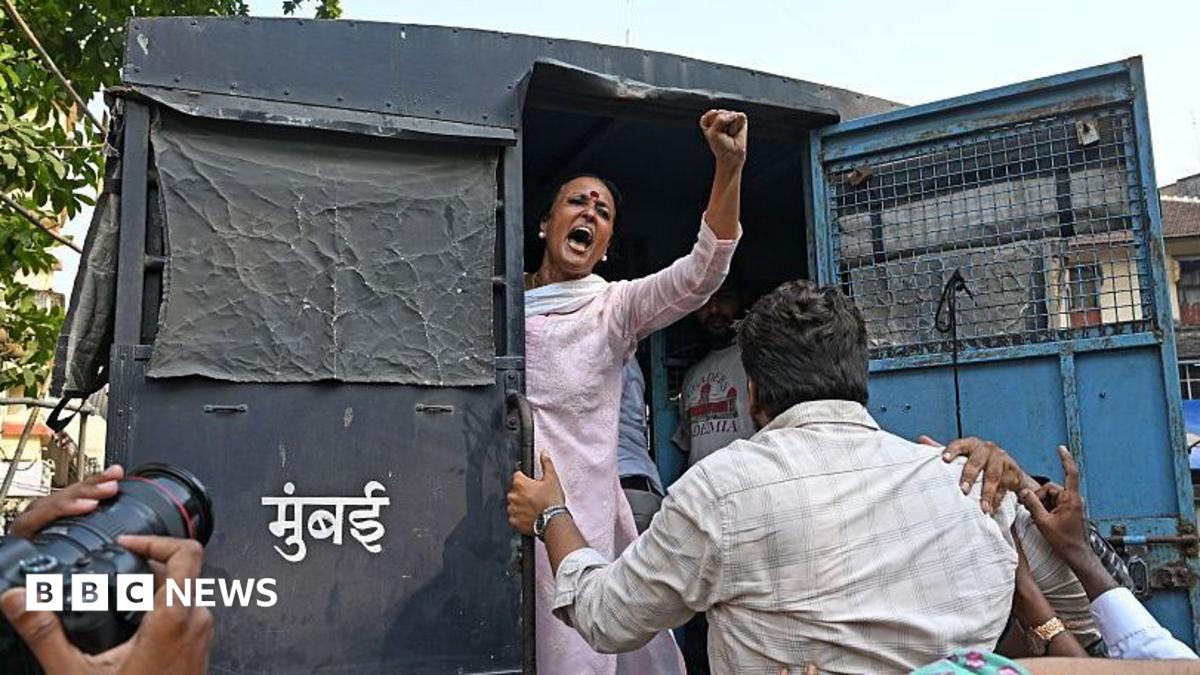
Neha Bora, National President of the All India Students’ Association (AISA), is detained by police during a protest demanding the resignation of Chief Election Commissioner Gyanesh Kumar in New Delhi, India, October 4, 2026 [Bhawika Chhabra/Reuters]
Cat-and-mouse chases
With an unprecedented security deployment in central New Delhi designed to prevent protest, youth leaders are turning to new tactics.
Neha Bora, the president of All India Students’ Association (AISA), a left-wing group affiliated with the Communist Party of India, has often tricked Delhi police in order to stage protests.
Bora, a post-doctoral student of theatre, came to national prominence for her fiery speeches in the July protests, becoming a leading face of the Gen Z movement challenging Modi’s Hindu nationalist politics.
Aditi Thakur, a 23-year-old student in the capital, has turned on notifications for all of Bora’s posts on social media. “A call to protest can come anytime, anywhere,” she told Al Jazeera.
Bora does not reveal when or where she is going to stage a protest until just 30 minutes before, to avoid detentions by the police. Her supporters are alerted via social media to join her at a given location in the capital.
On Sunday, she picked a congested street near central Delhi — and was able to jump several barricades to reach the heavily secured Parliament Street, before being chased down and dragged into a police van.
Even Thakur couldn’t catch her, she told Al Jazeera, laughing. “These are guerrilla times, but peacefully. If the government cracks down on us, we also need to adapt,” she said. “It is a fun cat-and-mouse chase every day. I’m hooked on it.”
The Gandhi-led Congress is also adopting similar measures, holding flash rallies at unannounced venues, then running away from police.
A man walks past members of the Rapid Action Force (RAF) standing guard ahead of a protest planned by the Cockroach Janta Party (CJP) seeking the resignation of India’s Chief Election Commissioner Gyanesh Kumar, in New Delhi, India, October 10, 2026 [Adnan Abidi/Reuters]
The mood is changing
A defining feature of the July protests – a watershed moment for wrestling concessions from the government – was Gen Z’s humour in the face of police brutality.
Now, protesters are prepared for a more serious confrontation, even if demonstrations remain peaceful, say analysts.
“We are seeing that humour changing more into anger this time,” Asim Ali said.
The biggest challenge for the government is disruption in central New Delhi, which, Ali said, the government cannot allow on a daily basis. The area is home to most federal government offices, as well as being a major business hub.
Protesters know that too, and that gives them leverage.
“We are seeing this movement grow into a bigger anti-government, anti-Modi movement,” Ali said.
A court in Indian capital Delhi has released the top leaders of the Gen Z-led Cockroach Janta Party (CJP) as the city sees more protests for a second day with thousands of security personnel deployed and roads barricaded.
Abhijeet Dipke – who began the movement in May after India’s Chief Justice likened some jobless young people to “cockroaches” – and other leaders were arrested on arrival in Delhi on Saturday to lead protests seeking electoral reforms.
In his first comments after his release, Dipke said “the CJP will neither back down nor be intimidated”.
On Saturday, media reports said, 7,000 demonstrators were detained and released late at night.
The CJP – which is not registered as a political party in India – is seeking electoral reforms just months before crucial state elections.
It has also demanded the resignation of Chief Election Commissioner (CEC) Gyanesh Kumar over allegations of manipulating voters’ lists – which the Election Commission has denied.
On Sunday morning, the CJP lawyer Ratna Singh said she had been informed by the police that Dipke and two other senior CJP leaders – Saurav Das and Ashutosh Ranka – would be produced before the magistrate by the police seeking their remand “to maintain public peace”.
She subsequently posted on X that the three had been set free by the court “on the condition that they will not engage in breach of peace for one year” – she later deleted the post about the condition and it’s not clear what that means and whether the CJP leaders can take part in protests.
After his release, Dipke posted on X, external, saying: “Modi, as PM, is an embarrassment to India.”
In another post, external, he said he was going to his village to attend his grandmother’s funeral who died around the time of his arrest yesterday.
“Heading back to my village to be with my family during this moment of grief,” he posted, adding that Das and Ranka would address a press conference in Delhi.
“The CJP will neither back down nor be intimidated,” he added.
Saturday saw dramatic scenes as police officials boarded the flight to detain Dipke, Das and Ranka as their plane landed.
Hundreds of protesters have reportedly been detained in Delhi during the latest demonstration by the Gen-Z led Cockroach Janta Party (CJP) over electoral reforms.
The group said its founder Abhijeet Dipke, who began the movement in May after India’s Chief Justice likened some jobless young people to “cockroaches”, was detained with other leaders shortly after landing in Delhi.
Tens of thousands of security personnel were deployed and roads barricaded ahead of the demonstration, though the CJP insisted it would go ahead.
Delhi Police has not commented on the detentions, but had refused permission for the protest to take place at Jantar Mantar, a landmark in the Indian capital.
The group – who are not registered as a political party in India – are seeking electoral reforms just months before crucial state elections.
It has also demanded the resignation of Chief Election Commissioner (CEC) Gyanesh Kumar over allegations of manipulating voters’ lists – which the Election Commission has denied.
Under Kumar’s leadership, India’s election commission has undertaken a mammoth exercise to update electoral rolls nationwide – it said this was a routine exercise to weed out dead, duplicate or ineligible voters.
But in many states, the exercise has been shrouded in controversy, with tens of thousands of people alleging they have been wrongly removed.
The CJP – and opposition parties – accuse Kumar of favouring Prime Minister Narendra Modi’s Bharatiya Janata Party (BJP) in the way the electoral rolls are being updated.
The Election Commission and the BJP have denied this.
Before arriving in Delhi, the CJP’s founder Dipke said: “If you think you can stop us by threatening us with jail or trying to intimidate us with the fear of imprisonment, you are mistaken.”
He and and two other leaders, Saurav Das and Ashutosh Ranka, were detained on their flight from Mumbai on Saturday.
The group claimed the three men have been taken to an undisclosed location. Delhi Police have not commented.
The Cockroach Janta Party wants Chief Election Commissioner Gyanesh Kumar to quit over changes to voter lists.
Published On 10 Oct 202610 Oct 2026
India has deployed thousands of police and paramilitary personnel in central Delhi and restricted transport in and around the capital ahead of a youth-led protest demanding the resignation of Gyanesh Kumar, the country’s chief election commissioner.
Saturday’s rally, called by the Cockroach Janta Party (CJP), a youth-based political movement, is expected to be the biggest yet in a wave of near-daily protests over a revision of voter lists that critics say favours Prime Minister Narendra Modi’s ruling Bharatiya Janata Party (BJP).
Recommended Stories
list of 3 itemsend of list
Organisers have billed it as a protest to “Save Democracy”.
Shutdown of central Delhi
Police have not authorised a rally at Jantar Mantar in central Delhi, which authorities usually designate for protests, because they said the request was not made on time and that the CJP had violated undertakings given during earlier protests.
Police have also warned that protesters will face a forceful law enforcement response if they violate the ban.
Roads to the site are blocked with multiple layers of metal barricades, as authorities shut 57 metro stations from Friday night, cancelled several long-distance trains and suspended mobile internet within 4km (2.5 miles) of the protest area until Saturday night, the Indian news agency ANI reported.
India’s Supreme Court said on Friday that some trains must still run and that blanket closure of metro stations is unlikely.
“The dictator would rather shut down the entire national capital and inconvenience millions of citizens than allow a peaceful protest at a designated protest site,” CJP chief Abhijeet Dipke said on X.
The CJP says at least 10,000 people, including protesters travelling to Delhi by train, have been detained across the country.
“You can detain the people, you cannot detain the movement,” said Neha Bora, national president of the All India Students’ Association, who has emerged as a leading face of the protests.
What kicked off the protests
Protesters want Chief Election Commissioner Gyanesh Kumar to quit over a voter list revision that has removed more than 130 million names.
The Election Commission says the exercise removes duplicate and ineligible voters and aims to prevent “foreign illegal immigrants” from voting.
Critics say it has disproportionately affected marginalised and minority communities.
The protests escalated after the Indian Express reported that Kumar’s two deputies had formally raised concerns at least 14 times in the past 10 months over the revisions.
The Election Commission and the BJP have denied the allegations. The BJP says the opposition is misleading the country because it cannot win elections.
The CJP began online as political satire in May after Chief Justice Surya Kant called unemployed youth “cockroaches”, sparking nationwide outrage. Since then, the CJP has garnered a large following among India’s youth.
The July protests led Modi’s education minister to resign over exam paper leaks. The latest demonstrations come months before a series of state elections in early 2027, including in Uttar Pradesh, India’s most populous state, which the BJP governs.
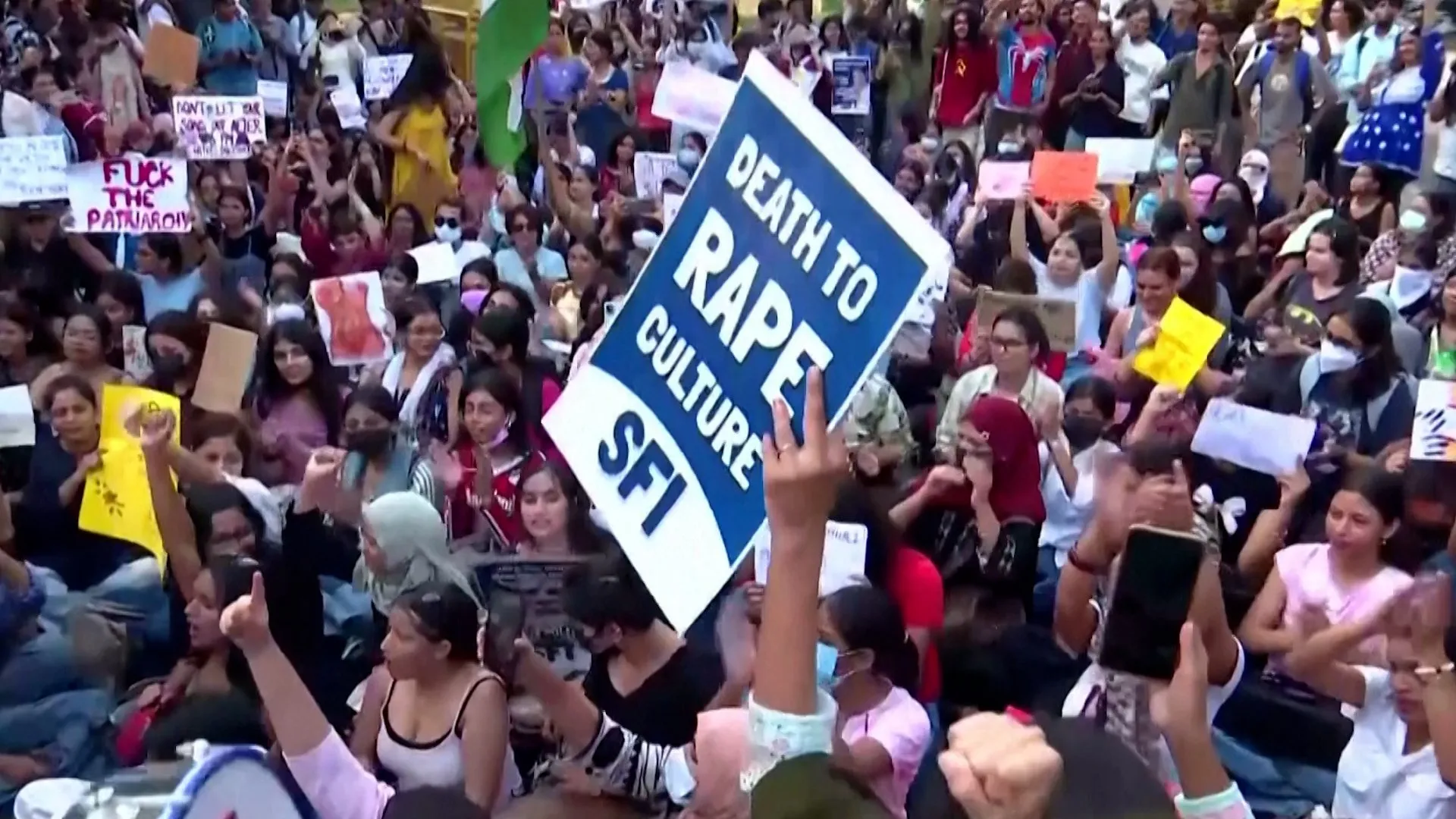
Aditi Subramanian joined protests after the alleged gang rape of a teenager in New Delhi, calling for women’s safety without more restrictions or surveillance. As she and hundreds of others tried to reach the planned protest site, they were detained. This piece was produced in collaboration with Jigyasa Mishra.