delayed

AJ Odudu sparks fears she could quit ITV after shows delayed and axed

Rumours are rife that Big Brother presenter AJ Odudu is considering a move from ITV to the BBC after her reality fashion show M&S: Dress the Nation was axed and CBB got delayed

AJ Odudu has sparked speculation that she may cut ties with ITV to pursue bigger roles at the BBC. The 38-year-old TV presenter has reportedly landed a role on a celebrity version of a hit BBC show – just as ITV has axed and delayed some of her major projects.

A new report has suggested AJ will soon be swapping her stylish gladrags for Lycra as a contestant on the celebrity version of Gladiators. Her casting in the physical trial show comes as ITV has axed reality fashion competition M&S: Dress The Nation, which AJ co-hosted alongside Vernon Kay, 52.

There are also fears that Celebrity Big Brother may never return to screens – having been ditched for 2026 and amid rumours it may not return in 2027. AJ hosts Big Brother and the celeb-packed version of the show alongside Will Best – with the pair helming the franchise since it returned on ITV in 2023.

Celebrity Gladiators would mark a triumphant return to the BBC for AJ, who was a frontrunner to win Strictly Come Dancing in 2021, only for an injury to force her out of the competition. A source has told The Sun: “The timing of this is particularly interesting because, since she did spectacularly well on Strictly in 2021, she hasn’t done any big shows for the Beeb. Instead, she seems to have focused her energies on ITV — but now a couple of her shows are facing the chop, and Gladiators has come along.

“It will leave some people in TV Land wondering whether she might be considering making a long-term move back to where things really took off for her.” The Mirror has contacted AJ’s representatives for comment.

AJ is not the only Big Brother host to be heading to the BBC this autumn, as her co-host Will Best, 41, will also be on the national broadcaster as a contestant on the 2026 season of Strictly.

After his appointment was announced, Will declared: “I can’t quite believe it…I’m doing Strictly! What an absolute dream. Albeit a pretty terrifying one”.

He continued: “I’ve been lucky to do lots of live telly before, but absolutely nothing like this. And I cannot wait! I have no idea if I can actually dance, but bring on the sequins, bring on the quicksteps, bring on the dance floor! I’m going to try to enjoy every minute of it.”

The 2026 season of Strictly will see Emma Willis, Josh Widdicombe and Johannes Radebe take over as hosts following the shock exit of Tess Daly and Claudia Winkleman at the end of last year.

Will will join Paralympic cyclist & swimmer Dame Sarah Storey, EastEnders star Lacey Turner, Australian pop singer Delta Goodrem, hairdresser Chris Appleton and former Love Island contestants Dani Dyer and Cach Mercer in the 2026 line-up. Shirley Ballas, Anton Du Beke, Motsi Mabuse and Craig Revel Horwood are set to return as judges.

The BBC is hoping fans of the long-running dance show will enjoy the new line-up of presenters, with Chief Content Officer Kate Phillips decreeing back in May: “Emma, Johannes and Josh’s chemistry is undeniable. There’s been so much speculation and hype, so I’m relieved we can share the news with the public at last.

“I’d like to thank all the brilliant people we saw before making this tough decision. But the most beloved ballroom in the UK always leads the way, and in a Strictly first we have chosen three outstanding hosts to take up the mantle.

“Along with our amazing Strictly team, who are busy planning fabulous and unforgettable treats for this new series, I know this terrific trio can’t wait to join our judges and pros to bring us must-see TV on the BBC this autumn.”

Like this story? For more of the latest showbiz news and gossip, follow Mirror Celebs on TikTok , Snapchat , Instagram , Twitter , Facebook , YouTube and Threads .


Source link

‘Fast & Furious’ coaster is not delayed by ‘noise complaints,’ Universal says

Universal Studios Hollywood has long been slated to have the biggest theme park opening of 2026 with its new high-speed coaster, Fast & Furious: Hollywood Drift. But with no officially announced opening date, questions have started to intensify and rumors have begun to swirl as to what may be causing the park to go radio silent on what is expected to be its centerpiece attraction.

According to Universal, there is no need for concern.

Yet speculation has zeroed in on the potential noise of the coaster as being a problem for residents of the nearby of Toluca Lake. Rumors were fueled Friday by Fox 11 Los Angeles reporting, via a since-deleted post on social media network X that Hollywood Drift’s opening had been delayed at least until the end of year due to neighborhood complaints. Videos of audible screams of riders on the coaster have gone viral in recent weeks.

A spokesperson for Universal said reports that the coaster’s opening is postponed until the end of 2026 are “not accurate” and disputed the notion that the coaster has been delayed. Fast & Furious: Hollywood Drift, the spokesperson said, is still on target to open before the end of summer.

“We expect to announce an opening date soon,” read an official statement from the company. “The information online is incorrect.”

The summer season lasts through the end of September. The park begins its popular fall Halloween Horror Nights on Sept. 3. Tickets for the latter are currently on sale, and Universal is promising access to Hollywood Drift for those who purchase its line-skipping express pass, which starts at $259.

Sources familiar with the coaster’s operations have also disputed the notion that noise is a cause for the coaster having not yet opened, instead pointing to more routine mechanical issues that have arisen during its test and adjustment phase. One theme park insider, however, stressed that when Hollywood Drift does open, it will likely be considered a “top-5, or top-10 coaster, in the world.”

The view of Fast & Furious: Hollywood Drift from Universal Studios Hollywood's Wizarding World of Harry Potter.

The view of Fast & Furious: Hollywood Drift from Universal Studios Hollywood’s Wizarding World of Harry Potter.

(Todd Martens / Los Angeles Times)

Fast & Furious: Hollywood Drift is unique in that it is a 72 mph ride with vehicles created to rotate 360 degrees through multiple inversions. Designed to mimic the feel of stunt cars, its four-seated vehicles will twist and turn through banks in the track in an effort to create a drifting sensation.

Universal’s own website earlier this summer posted June 26 as an opening date, and while that was once the targeted launch, the date was quickly removed from the site. Universal began hosting media for walkthroughs of the coaster in May.

Fast & Furious: Hollywood Drift has been in the works for than a decade. Built essentially on a cliff between the park’s upper and lower lots, the ride’s existence is a feat of engineering, and Universal has described it as among the most intense attractions in its global park portfolio.

Before land was moved, Universal began a series of tests to track how noise would travel through the surrounding neighborhood. Universal placed speakers on the old special effects and stunt buildings to see how ride screams traveled down the hill.

Ultimately, the tracks would be complemented with multiple sound walls and shields, the latter clear structures designed to block coaster rumbles and audience screams. And because the cars can rotate 360 degrees, Universal can in theory direct rider yells away from the studio below and the neighborhood nearby. The actual track has been filled with pea gravel, designed to minimize noise from any reverberations.

“It’s incredibly quiet,” said Jon Corfino, the lead creative at Universal Studios Hollywood. “We were able to do that by putting materials inside portions of the track to deaden the sound. I’m not sure we would have needed it, but it was important to do the right thing. It’s pea gravel and rocks. It’s quieter than I ever thought it was going to be.”

Fast & Furious: Hollywood Drift isn’t the only notable coaster slated to open in Southern California this year. Buena Park’s Knott’s Berry Farm initially intended to launch its reimagined Montezooma’s Revenge, now known as Montezooma: The Forbidden Fortress, on Monday. Late last night, the park indefinitely delayed its public unveiling, with a spokesperson citing additional fine-tuning that surfaced during its final days of testing.

The delay is not expected to be a prolonged one.

“We appreciate everyone’s understanding and look forward to welcoming media and guests in the coming days when we can showcase the attraction exactly as intended,” read a statement from the park. Montezooma: The Forbidden Fortress has been in development for the past four years.


Source link

Heartbroken reason Jesy Nelson’s twin daughters’ treatment for SMA was delayed

JESY Nelson has revealed the tragic reason her twin daughters’ treatment for SMA was delayed – despite the increased risk of permanent nerve and muscle damage.

The former Little Mix star details the heartbreaking moment Ocean Jade and Story Monroe, who have have Spinal Muscular Atrophy Type 1, are forced to miss out on the gene-therapy infusion earlier this year.

Jesy Nelson opens up about the twins’ health battle in her new Life Changing documentary Credit: Amazon
Story and Ocean were rushed to hospital with pneumonia when they were ready for treatment Credit: Instagram

In her new Prime Video documentary, Jesy Nelson: Life Changing, Jesy says Story was rushed to hospital with pneumonia – just days before Ocean was struck down by another illness.

Speaking in the docu-series, which is released on Friday, July 17, Jesy said: “Not long after we got the diagnosis, they were booked in to have their treatment.

“Then Story got pneumonia and was really struggling to breathe.

“She started choking so we had to rush her into hospital. It breaks my heart because she’s so vulnerable.

JESY’S HURT

Jesy Nelson breaks down in tears as she reveals mum guilt over twins’ struggle


PROUD MUM

Jesy Nelson shares her daughter’s milestone moment amid heartbreaking SMA battle

“That’s when we were told that she can’t have the treatment.”

Any delay in treatment increases the chance of permanent nerve and muscle damage

After close monitoring, it was decided that Story and Ocen were not well enough to receive the gene therapy.

Jesy added: “That was when she got given her breathing machine.

“She came home and then Ocean got ill.”

During the episode, which began filming straight after the cameras stopped rolling on her first series, Life After Little Mix.

Zion Foster celebrates his twin daughters’ 1st birthday Credit: Instagram
Jesy has been documenting the twins’ SMA battle Credit: Amazon

Her partner Zion Foster – who has since split from Jesy – said: “I’m not equipped to deal with this. I’m out of my depth; emotionally, physically and mentally.”

The documentary covers their split, which was revealed by The Sun earlier this year.

Jesy has since thrown herself into work – tirelessly campaigning to raise awareness of SMA and pressure the government to add the condition onto the NHS newborn heel-prick test, which currently screens for ten other conditions.

On Wednesday, April 1, the Department of Health and Social Care announced that England will bring forward the newborn screening of SMA.

A phased rollout will begin in October 2026. However, screening will not be available in all parts of England.

Spinal Muscular Atrophy: Signs and symptoms

Spinal muscular atrophy is a disease which takes away a persons strength and it causes problems by disrupting the motor nerve cells in the spinal cord.

This causes an individual to lose the ability to walk, eat and breathe.

There are four types of SMA – which are based on age.

  • Type 1 is diagnosed within the first six months of life and is usually fatal.
  • Type 2 is diagnosed after six months of age.
  • Type 3 is diagnosed after 18 months of age and may require the individual to use a wheelchair.
  • Type 4 is the rarest form of SMA and usually only surfaces in adulthood.

What are the symptoms?

The symptoms of SMA will depend on which type of condition you have.

But the following are the most common symptoms:

• Floppy or weak arms and legs

• Movement problems – such as difficulty sitting up, crawling or walking

• Twitching or shaking muscles

• Bone and joint problems – such as an unusually curved spine

• Swallowing problems

• Breathing difficulties

However, SMA does not affect a person’s intelligence and it does not cause learning disabilities.

How common is it?

The majority of the time a child can only be born with the condition if both of their parents have a fault gene which causes SMA.

Usually, the parent would not have the condition themselves – they would only act as a carrier.

Statistics show around 1 in every 40 to 60 people is a carrier of the gene which can cause SMA.

If two parents carry the faulty gene there is a 1 in 4 (25 per cent) chance their child will get Spinal muscular atrophy.

It affects around 1 in 11,000 babies.

Source link

New Europe visas for Brits to be delayed AGAIN after ‘chaos’ of entry rule rollout

Newly installed automated border control gates at Henri Coanda International Airport in Otopeni, Romania.

THE rollout of a new visa system for Brits entering Europe is set to be delayed AGAIN.

First announced in 2016, the new ETIAS will be required by all UK travellers visiting countries in the EU.

The rollout of ETIAS is to be delayed to next year Credit: Alamy

Similar to the ESTA required to visit America, it will be a ‘visa-waiver’ that lasts three years, or until the passport expires.

However, the introduction of the scheme has faced years of delays – and is likely to be be delayed even further.

This is due to the chaos of the EES system that launched in April, requiring lengthy biometric checks from all non-EU visitors.

Not only has this led to queues as long as five hours, but hundreds of passengers have even missed their flights.

Read more on Europe travel

EU-R ON

What’s the difference between EES and ETIAS? New travel rules this year explained


LINE UP

Fears of more summer holiday queues as EES border points ‘won’t open’ in time

And this is before the busy peak period, with fears of a “complete collapse of the system” during the summer holidays, according to the head of Europe’s airport trade body.

In response, the launch of ETIAS is now expected to be pushed back to 2027.

According to the FT, EU-Lisa – in charge of the ETIAS rollout – has expressed concerns over it being ready to go this year.

One person said they needed to “clean up EES” before they thought of launching it.

It is now set to be rolled out in 2027 Credit: AFP
Huge queues have already caused chaos across Europe because of the new EES Credit: Alamy

Initially thought to launch back in June, a confirmed launch date is expected to be discussed again in September.

When it does start, all travellers aged 18-70 will have to pay €20 (£18) for the ETIAS.

Anyone outside of this age bracket still need to apply, but will get it free of charge.

Applications will only take a couple of minutes to complete, but it may take up to 30 days to be approved.


Source link

World Cup 2026: England’s match with Mexico delayed by an hour

England’s World Cup last-16 match with Mexico has been delayed by one hour because of severe weather and is set to kick off at 02:00 BST on Monday (Sunday, 19:00 local time).

There has been heavy rain in Mexico City during the day and reports of lightning above the Azteca Stadium, which is staging the match.

Play cannot begin until 30 minutes have passed since lightning was last detected within an eight-mile radius of the stadium.

Fifa held talks with the English and Mexican football associations on Friday after proposing the match be moved to 19:00 BST on Sunday (12:00 local time) before a U-turn resulted in the kick-off time remaining unchanged.

The game will be broadcast live on BBC One, BBC iPlayer, BBC Radio 5 Live and the BBC Sport website and app.

Source link

How Nigerians Absorb the Cost of Delayed Digital Payments

On a hot Tuesday afternoon in Yola, Adamawa State, in northeastern Nigeria, 32-year-old Fidelis Mbai walked to a point-of-sale (POS) stand to withdraw ₦35,000. The POS operator, Abu Sani, collected his Automated Teller Machine (ATM) card and inserted it into a POS terminal. Fidelis entered his Personal Identification Number (PIN). Within seconds, he received a debit alert. The money had left Fidelis’ account, but Abu’s terminal showed that the transaction had not been completed successfully.

The two men stared at their screens. One had seen ₦35,000 withdrawn from his account; the other had received nothing. For nearly 30 minutes, they kept refreshing their mobile bank apps. “I was angry because the money had left my account immediately,” Fidelis said. “As far as I was concerned, the transaction was successful.”

Abu understood the frustration, but he had a problem of his own. “The customer was debited, but I didn’t receive the money,” he said. “If I gave him cash and the transaction eventually failed completely, the loss would be mine.”

Eventually, Fidelis left without cash. His money would later be reversed. But for several hours, ₦35,000 simply disappeared into Nigeria’s digital payment infrastructure. 

This experience has become familiar to many Nigerian residents. As digital payments increasingly replace cash, it is ordinary citizens, not institutions, who bear the cost of failed transactions. The consequences often extend beyond the value of the failed transaction itself. Delayed payments can prevent traders from restocking goods, force customers to borrow money while waiting for reversals, disrupt access to healthcare, transport, or other essential services, and erode trust in digital financial systems. For small businesses and low-income households that depend on immediate access to funds, even a short delay can translate into lost income, missed opportunities, and significant financial stress.

Nigeria’s digital payment revolution

Nigeria’s digital payment ecosystem has expanded rapidly over the past decade. According to data from the Nigeria Inter-Bank Settlement System (NIBSS) – which operates the core infrastructure that processes and settles electronic payments and fund transfers between banks, discount houses, and card companies in Nigeria, and is jointly owned by the Central Bank of Nigeria and all licensed banks – the value of instant digital payments reached ₦1.07 quadrillion in 2024, up from ₦600.36 trillion in 2023. The data also showed that Nigerians conducted 1.38 billion POS transactions worth ₦18.32 trillion during the same period. 

These numbers reflect one of the most successful examples of digital public infrastructure (DPI) in Africa. At its core, DPI refers to the digital rails that allow citizens to identify themselves, make payments, and access services. In Nigeria, these rails include bank transfer systems, mobile money platforms, POS networks, identity systems such as BVN and NIN, and shared payment infrastructure.

Person swiping a Visa card on a blue payment terminal at a counter, with another person observing.
Photo: Andrew Eseibo/Rest of World.

Together, these systems enable millions of transactions every day. For most users, the process appears simple: send money, receive money, and move on. But when something goes wrong, the burden often shifts away from the infrastructure and onto the people who rely on it.

While there is no official national estimate of the total amount Nigerians lose annually to failed digital payment transactions, the scale is substantial. During the 2023 cashless transition, industry reports indicated that as many as 40 per cent of failed e-payment complaints remained unresolved for extended periods, with affected transactions running into millions of naira. 

Given that Nigerians processed over ₦1.07 quadrillion in instant payments in 2024 alone, experts say that even a failure rate of less than one per cent could leave billions of naira temporarily trapped in failed, delayed, or disputed transactions each year.

The last mile bankers of Nigeria

Every morning, Abu begins work with a few simple calculations. How much cash does he have? How much electronic value is in his account? And how much of that money is trapped in pending transactions?

“Almost every week, we experience failed transactions,” he said. “Sometimes two or three times. During network problems, it can happen many times in one day.”

Officially, Abu’s role is to provide financial services. Unofficially, he has become something else: a lender, a mediator, and a shock absorber. He is one of an estimated 1,600 POS operators per square kilometre in Nigeria, according to the International Monetary Fund (IMF). As banks have reduced their physical footprint in some communities, these agents have become the last-mile providers of financial services, connecting millions of Nigerian residents to the formal financial system.

One afternoon, a regular customer named Musa Ibrahim arrived to withdraw ₦50,000. The debit alert arrived immediately, but Abu’s account was not credited. Musa needed the money urgently for a hospital bill, and Abu had to choose between trusting the system and trusting the customer. “I knew him very well,” Abu said. “So I gave him the money from my own cash.”

The confirmation took two days to arrive. For 48 hours, Abu had effectively given Musa an interest-free loan. Nobody paid him for the risk. Nobody compensated him for the anxiety. Yet this informal lending happens every day across Nigeria. Thousands of POS operators use their own money to bridge gaps created by delayed transactions. 

At Jimeta Modern Market in Yola, 38-year-old Aisha Mohammed sells food items. More than half of her customers now pay by bank transfer. Like many traders, she has adapted to Nigeria’s cash-light economy, but that adaptation comes at a cost. Several months ago, a customer purchased a bag of rice worth ₦80,000. He presented a transfer receipt. The money did not arrive. 

Store clerk in a blue apron processing a payment with a card reader while interacting with a customer at the counter.
File: A grocery store attendant operating a POS terminal. Photo: Opay

“The customer looked genuine,” Aisha said. “He showed me everything on his phone.”

She released the goods. The payment did not arrive until the following day. That night, she barely slept. “You start asking yourself whether you have been scammed,” she said.

Delayed transactions create a dilemma for traders like Aisha. If they reject digital payments, they risk losing customers; if they accept them, they risk losing money. Many solve the problem through selective trust. “If I know the customer, I may release the goods,” she explained. “If I don’t know them, I wait until I see the money myself.”

This has created a parallel trust economy operating beneath Nigeria’s digital economy. In theory, transactions are guaranteed by technology; in practice, they are often guaranteed by relationships.

Dr Ibrahim Sule, a financial inclusion expert at the Adamawa State Ministry of Finance described it as a hidden feature of Nigeria’s digital economy. “It shows that people are finding ways to compensate for weaknesses in the system. Personal trust often fills the gaps where technology falls short,” he said. 

Borrowing money while waiting 

For Ibrahim Yusuf, a resident of Damilu, a community in Jimeta, the consequences were far more serious. In October 2025, he transferred ₦43,000 to a shop owner as payment for foodstuffs he had purchased. The money left his account instantly, but the shop owner never received it.

One day passed, then two, three, four, five, and six. During that period, Ibrahim had no extra money with him. “The money was meant for foodstuffs, but I couldn’t leave the market with what I bought because the shop owner didn’t receive an alert,” Ibrahim said.

By the third day, Ibrahim borrowed ₦20,000 from a friend. The irony was difficult to ignore. His own money existed somewhere inside the banking system, yet he needed someone else’s money to survive. “It wasn’t even the financial loss that hurt the most,” he said. “It was the uncertainty. Nobody could tell me exactly where the money was.”

His experience illustrates a hidden cost rarely captured in transaction statistics. When payments fail, people do not simply lose access to money. They lose opportunities, business deals collapse, and relationships become strained.

The financial system eventually restores the funds. But it rarely restores the time, trust, or opportunities lost along the way.

How the money moves

While a bank transfer feels like a simple process for customers, financial experts say that transactions often travel through multiple systems. According to Hakeem Abdulkareem, a tech expert at NIBSS, “When you initiate a transfer on your bank app or through your bank, your bank first authenticates the transaction and verifies the beneficiary’s account details. The payment instruction is then routed through the NIBSS Instant Payment (NIP) platform to the receiving bank, which validates the request before crediting the beneficiary’s account. For the transfer to succeed, each of these systems – the sending institution, the NIP switch, and the receiving institution – must exchange information correctly and in real time,” he explained. “Each stage must communicate properly for the transaction to be completed.”

Any disruption along that chain can create problems. Not every failed transfer originates from NIBSS. Payment experts note that delays can occur at the sending bank, the receiving bank, a fintech platform, telecommunications networks, or the central payment switch. One way to determine where a transaction stalled is through the unique ‘Session ID’ generated for every transfer, which allows institutions to trace the payment through the system.

“Delays often occur when there are network issues, system outages, or communication problems between institutions involved in the transaction,” Hakeem added, noting that NIBSS continues to work with banks and fintech companies to improve transaction monitoring, automate reconciliation processes, and strengthen the resilience of the NIBSS Instant Payment (NIP) platform as transaction volumes continue to grow.

In the first quarter of 2025, electronic payment transactions reached ₦284.99 trillion, a 17.7 percent increase from ₦234.49 trillion recorded during the same period in 2024. POS transactions alone rose to ₦10.45 trillion during the same period, more than double the ₦3.62 trillion recorded in the first quarter of 2024. 

While these figures highlight growth, Hakeem noted that “as transaction volumes increase, maintaining system efficiency becomes even more important.” 

The institutions behind Nigeria’s digital payment system agree on one point: public confidence depends on reliability. As transaction volumes continue to grow, banks, fintech companies, and regulators say they are investing in infrastructure, monitoring systems, and consumer protection to reduce delays and strengthen trust.

Adi Dansanda, Customer Protection Officer at the Central Bank of Nigeria, Yola branch, told HumAngle that “Consumer confidence is critical to the success of Nigeria’s digital payment ecosystem. We continue to work with financial institutions and payment service providers to strengthen compliance, improve service quality, and ensure that customer complaints are resolved within established timelines.”

Gray building with windows, a flag on the right, green plants in the foreground, and a cloudy sky above.
CBN Yola Branch Office. Photo: Obidah Habila Albert/HumAngle.

Despite these commitments, the experiences of everyday Nigerian residents suggest that the gap between policy and practice remains significant. For them, confidence is built every time a transfer arrives on time, every time a complaint is resolved quickly, and every time money moves when it is needed most.

Lessons from elsewhere

Building a reliable real-time payment system is not unique to Nigeria. Countries with some of the world’s most advanced digital payment platforms have also experienced outages and technical failures as transaction volumes increased.

In India, the Unified Payments Interface (UPI), which processes more than 18 billion transactions each month, experienced several nationwide outages in 2025. An investigation by the National Payments Corporation of India (NPCI) traced one of the largest disruptions to excessive transaction-status requests from participating banks that overwhelmed the system. In response, the regulator tightened technical protocols, limited repeated status checks, and strengthened monitoring to reduce the risk of similar failures.

Brazil’s Pix platform has also experienced periodic service disruptions linked to participating financial institutions and network issues. Rather than eliminating failures entirely, authorities have continued to improve interoperability, operational resilience, and incident response as usage has expanded.

Nigeria has already built one of Africa’s largest real-time payment systems through the NIBSS Instant Payment platform. Experts who spoke to HumAngle say the lesson from other countries is not that payment systems can avoid failures altogether, but that maintaining public trust depends on continuously strengthening infrastructure, improving coordination among participants, and responding quickly and transparently to disruptions.


This report is produced under the DPI Africa Journalism Fellowship Programme of the Media Foundation for West Africa and Co-Develop.

Source link

Navy’s New ‘Doomsday Plane’ Delayed As Watchdog Says Developmental Concerns Are Now Realities

The U.S. Government Accountability Office (GAO) says concerns it raised last year about the U.S. Navy’s E-130J Phoenix II program “have morphed into realities.” The timeline for moving from the development of the aircraft to putting it into actual production has already slipped by approximately one year. The E-130Js are set to supplant aging E-6B Mercury jets in support of the Take Charge And Move Out (TACAMO) mission. This involves providing aerial command and control support for nuclear ballistic missile submarines, including the ability to send them orders to launch strikes while they are submerged. Platforms tasked with nuclear support missions like TACAMO are commonly called ‘doomsday planes.’

GAO has provided a new update on the E-130J effort in its latest annual assessment of multiple high-profile U.S. military procurement programs. The Congressional watchdog released this report earlier today.

In last year’s iteration of this report, GAO explicitly called into question the choice of C-130J-30 Hercules aircraft, a four-engine turboprop transport plane, as the basis for the E-130J, warning that it might “not meet operational availability requirements.” The existing 16 E-6B aircraft are based on the larger, jet-engined Boeing 707 airliner, which is now long out of production. It is important to note that the Mercury fleet also supports a U.S. Air Force nuclear mission set called the Airborne Command Post (ABNCP), and more commonly known by the nickname Looking Glass. In that role, the planes provide aerial command and control support to nuclear-capable bombers and silo-based Minuteman III intercontinental ballistic missiles. They are equipped to initiate the launch of Minuteman IIIs while in flight. The forthcoming Phoenix IIs will only be tasked with the TACAMO mission, something we will come back to later on.

An E-6B Mercury ‘doomsday plane.’ USAF

“As we reported in last year’s assessment, the Navy awarded its contract despite significant technical risks it acknowledged the E-130J program faced. A September 2024 independent technical risk assessment highlighted the complexity associated with the program’s planned integration effort, which officials acknowledged could increase as they integrate additional technologies,” per GAO’s latest assessment. “Since our 2024 report, the program has delayed its low-rate production decision by approximately a year as these system integration risks have morphed into realities.”

“For example, program officials said that contractors are now focused on modifying already-existing mission systems to reduce their weight, which the independent assessment anticipated would be necessary to accommodate them on the C-130J-30 airframe,” the report released today adds.

The first C-130J-30 Hercules airframe destined to be converted into a pre-production E-130J is rolled out in 2025. USN

“The program office stated that the E-130J program remains on track to recapitalize TACAMO capability through developing an MVP [minimum viable product], iterating system capabilities through software improvements, and establishing digital frameworks,” according to GAO. “The program office also stated that it is aligned with Secretary of Defense guidance through an acquisition approach that allows for tradeoffs and implementation of a modular open systems approach. The program office did not provide any documentation to substantiate any of these claims, which run counter to our own analyses of E-130J program documentation.”

In its annual assessment last year, GAO said the Navy “acknowledges technical risk,” but also that the service had highlighted “risk reduction contracts with subcontractors to address obsolescence and size, weight, and power-cooling risks.”

The Navy’s Fiscal Year 2027 budget request provides some additional context about the suite of systems the E-130J will need to perform the TACAMO mission.

“A dedicated communications platform, TACAMO aircraft features the ability to communicate on virtually every radio frequency band from very low frequency (VLF) up through Advanced Extremely High Frequency (AEHF) using a variety of modulations, encryptions and networks, maximizing the likelihood an emergency message is received by U.S. strategic forces,” per the Navy’s budget documents. “Included in these efforts are Government and Contractor Systems Integration Laboratories, Contractor System Test Integration Laboratory, Government Furnished Property (National Security Agency approved encryption devices, Ultra High Frequency modems), High Frequency and the Advanced Extremely High Frequency solutions, Top Secret network development and building required infrastructure includes power generation systems, cooling, flight deck avionics, Electric Magnetic Pulse (EMP) hardening, cyber hardening, and structural modifications to support integration of E-130J mission system equipment.”

A particularly notable and critical capability found on the existing E-6Bs is the ability to extend a five-mile-long antenna to communicate with submerged submarines. The E-130J will have a very similar, if not identical, antenna system to support the TACAMO mission.

A rendering of an E-130J Phoenix II. Note the antennas trailing behind. Northrop Grumman

As it stands now, the Navy plans to acquire six pre-production E-130Js in Fiscal Year 2027 to support different aspects of the aircraft’s ongoing development. At least one initial example is already being built. Some portion of those test aircraft might eventually take on operational roles. In its latest report, GAO says a critical design review is expected to come at the end of next year. With the aforementioned delay, the decision to then move into low-rate initial production (LRIP) is now projected to occur in April 2029. The initial LRIP lot is expected to be between three and six aircraft, but the total expected size of the E-130J fleet is unclear.

It is worth remembering that the Navy did previously operate modified C-130s in the TACAMO role before the first E-6A arrived in 1989. The Navy subsequently upgraded those aircraft in the late 1990s and early 2000s to the E-6B standard.

The US Navy operated a fleet of EC-130Q TACAMO aircraft like the one seen here before the arrival of the E-6As. USN

TWZ has previously explored the pros and cons of going back to a C-130-based platform for this critical Navy mission set, writing:

“It’s certainly worth pointing out that the E-6Bs, conversions of what were some of the last and most modern 707 airliners built, were larger and higher performance platforms than the EC-130Qs. The C-130J-30 is certainly a more capable aircraft than the C-130H on which the EC-130Q was based, but it won’t have the base speed and altitude capabilities of an airliner-sized multi-engine jet. Compared to the Mercuries, any TACAMO-configured C-130J-30 would not be able to get on station as quickly, or fly as high, limiting its ability to get above bad weather or establish a better line of sight for its communications systems.”

“At the same time, as the Navy itself has noted, the C-130J-30 platform does immediately open up the ability to use a larger number of air bases, airports, and airfields, including austere ones that the E-6B cannot operate from. This could be very useful in a contingency scenario where an opponent may have destroyed or otherwise rendered unusable many well-established bases, as well as larger secondary dispersal sites, which include large commercial airports. Being able to fly from smaller, tertiary locations could help to ensure that the TACAMO mission continues without significant disruption under such circumstances. This is also true during peacetime as targeting the TACAMOs on the ground would be much harder if they could easily operate from and sit alert at a much larger number of airports.”

“A C-130J-30 configured for the TACAMO mission would certainly have a mid-air refueling capability and the Hercules is already a platform that has demonstrated the ability to loiter over particular areas for long periods of time. Unlike the Boeing 707, the C-130J is still in production, as well, meaning that TACAMO aircraft based on this plane would be inherently easier to maintain and support logistically, and may also be easier to convert to this specialized configuration begin with. As time goes on, the J looks set to increasingly become the default base C-130 model across the U.S. military, as well. Compared to the long out of production 707-based E-6, support for the C-130J is already distributed across the U.S., and beyond. Training C-130J crews is even an easier proposition.”

Another look at one of the current E-6B Mercury aircraft. USN An E-6B Mercury. USN

The issue increasingly looming now is the age of the existing E-6Bs, which are becoming increasingly more challenging to operate and sustain. As noted, the Mercury fleet represents some of the very last 707s ever built before Boeing shuttered that line for good in 1991. The Navy’s plans to phase out the E-6Bs as the E-130Js arrive to help avoid any capacity gaps, which means the Mercury fleet will have to soldier on until that happens.

Last year, the Navy confirmed that it had scrapped plans to convert an ex-Royal Air Force E-3D Sentry airborne early warning and control aircraft, another Boeing 707-based type, into a dedicated TE-6B crew trainer, something TWZ was first to report. The TE-6B was explicitly intended to help relieve strain on operational E-6Bs. The Navy is now utilizing a contractor-owned, but government-operated (COGO) Boeing 737NG airliner to help meet pilot training demands.

The ex-Royal Air Force E-3D seen in the proess of being converted into the TE-6B trainer before that effort was abandoned. USN

To reiterate, the current plan is also for the E-130J to only perform the TACAMO mission. The Air Force is now in the very early stages of a separate effort to acquire what it is currently calling Looking Glass-Next (LG-N) to take over that mission from the E-6B fleet.

Part of that solution may entail integrating ABNCP-specific capabilities onto its future Boeing 747-based E-4C Survivable Airborne Operations Center (SAOC) jets. The E-4Cs are set to replace the service’s four E-4B Nightwatch aircraft, as you can read more about here. The existing E-4Bs already have a ‘doomsday plane’ role, but do not have the exact same mix of capabilities as the E-6B. The Nightwatch jets notably lack the ability to order launches of Minuteman III IBCMs while in flight.

For the Air Force, the LG-N program is tied to larger nuclear command and control modernization plans, which might see more of these functions move to space-based assets, as well. All of this is also heavily intertwined with the ongoing development of the new LGM-35A Sentinel ICBM. Sentinel suffered huge setbacks, delays, and cost overruns, but primarily with the infrastructure side of the program, not the missile, as you can read more about here.

Enabling Peace Through Deterrence thumbnail

Enabling Peace Through Deterrence


When it comes to the Navy’s TACAMO modernization plans, challenges in integrating the necessary capabilities onto the C-130J-30 platform have now set back these efforts at least by a year.

Contact the author: joe@twz.com

Joseph is TWZ’s Deputy Editor, helping to oversee the site’s highly experienced and dedicated team, while also writing informative and impactful defense and national security content. He lives right in the thick of it in the Washington, D.C. area.


Source link

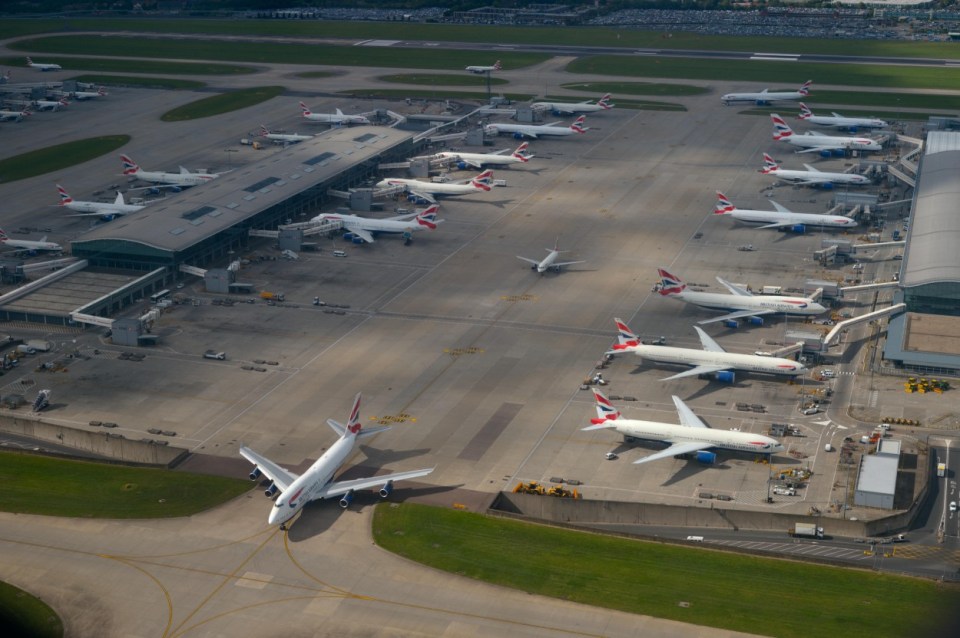
Travel chaos as over 1,000 flights are grounded or delayed at Heathrow and Gatwick Airport after UK hit by thunderstorms

THE ongoing heatwave has caused chaos at the UK’s airports with more than 1,000 flights either delayed or cancelled.

Airports affected on Saturday include Heathrow, Gatwick, and Edinburgh, with 1,019 flights delayed and 160 axed, as air traffic restrictions were put in place overnight.

Passengers wait for their flights at the North Terminal at Gatwick Airport (archive photo) Credit: Alamy
Lightning strikes over London hitting Canary Wharf in the early hours of the morning Credit: Alamy

London Heathrow had 440 flights delayed, Gatwick 425, 120 at Edinburgh, Leeds Bradford had 20 and London City had 14, according to the tracking website FlightRadar.

Heathrow had 103 flights cancelled, while Gatwick had 46, there were six at London City and five at Edinburgh.

A British Airways (BA) flight from Santiago, Chile, was the longest delayed, it had been due to land at 10am but is now expected to arrive at 9pm.

London saw its skies light up as lightning hit and downpours came in following day of extreme temperatures that saw the month’s record temperature broken on three consecutive days.

PHARAOH-WAY ESCAPE

The Egyptian oasis that ‘feels like stepping back in time’


ON A BURJ-ET

How to do Dubai on a budget AND with some cash to spend as UAE hols back on

London Heathrow had 103 flights cancelled and 440 flights delayed (archive photo) Credit: Alamy
Impressive lightning storm over the Rampion Offshore Wind Farm late last night Credit: Story Picture Agency

Thunderstorms forced airports to limit the number of flights that could take off and land, meaning holidaymakers were left stranded or facing severe delays.

BA put the delays down to London’s “weather conditions,” pointing to the Met Office’s amber “extreme heat” warning which covered the capital, the south-east and East Anglia.

This has now been extended by the Met Office to cover Sunday until 9pm.

Gatwick Airport urged passengers to contact their airline to check the status of their flight.

A spokesperson said that temporary air traffic restrictions had caused flight cancellations and delays “due to thunderstorms”.

A spokesman for London City Airport said: “Flights are gradually returning to normal following this morning’s weather-related air traffic restrictions.

“There have been some associated delays and cancellations.”

The thunderstorm also caused Edinburgh Airport to be hit by the air space restrictions with four arrivals and 15 departures delayed.

Leeds Bradford Airport also suffered with three departures delayed Saturday morning.

A spokesman for British Airways said: “Like other airlines, we’ve had to make some adjustments to our schedule today due to Air Traffic Control restrictions caused by adverse weather conditions affecting parts of UK airspace.

“While the vast majority of our customers will be unaffected, we apologise for the inconvenience caused and our teams are working hard to help those impacted get their journeys back on track.”

A spokesman for NATS, which runs air traffic control in Britain, said: “Forecasted severe weather across the south-east of England is causing disruption to flights today, with aircraft needing to avoid affected areas.

“Our teams are managing traffic safely and working to reduce delays, but weather disruption is expected to continue through the rest of today.

“Passengers should contact their airline for the latest information on their flight.”

Friday saw the hottest June day on record with temperatures hitting 37.3C in Santon Downham, Suffolk, breaking the high of 36.7C recorded in Merryfield, Somerset, on Thursday and the record set by the famous summer of 1976.

While temperatures are predicted to fall over the weekend the Met Office still has an amber extreme heat warning in place until 9pm on Sunday.

An amber warning means officials expect significant impacts on health and social care services, with an increased risk of illness and deaths among older and vulnerable people.

The cooler weekend comes in the wake of several days of rare red heat warnings, the most severe warning where there is a danger to life.

Source link

The 20 airports in Europe where your flight is most likely to be delayed this summer

NO ONE wants to start their holiday with delays, but with hotter weather and new travel rules, it’s becoming all the more common.

New research from AirAdvisor has found the top airports around Europe where you are most likely to be delayed this summer.

Airports on the Greek Islands are some of the worse when it comes to delays Credit: Alamy
Collage of travel items including a plane, sunscreen, passport, suitcase, and plane tickets, advertising The Sun's travel Instagram account.

The study looked at flights between June and September 2025, to see where flights either to or from the UK were likely to be delayed for over an hour.

The top of the list was Milan Bergamo, an airport which sits just outside of Milan in Italy which had 11.96 per cent of its flights delayed by one hour or more.

Also in Italy, Pisa came fourth on the list which had 10.58 per cent of its flights affected by delays last summer.

For anyone heading to the Greek islands this summer, some of these destinations experience hold-ups too.

TOP SEA-CRET

Locals’ guide to UK’s top seaside counties… best beaches & pubs and £15 stays


DADDY DEALS

Top UK attractions where dads go FREE on Father’s Day – and get free pints

The pretty island of Kefalonia is third on the list where 11.79 per cent of flights being delayed by an hour or more last year.

Also in the top 20 is Corfu, Zante, Paphos in Cyprus, Kos, Rhodes and Mykonos.

Anton Radchenko, CEO of AirAdvisor explained why the airports at Greek islands are badly affected.

He explained: “They tend to be much smaller than hubs in major metropolitan centres and are incredibly popular with holidaymakers from across the world.

“During the summer period, they frequently operate at maximum capacity, so that means that when a mass disruption event occurs, there are implications for other services.”

He continued: “Similarly, the sheer volume of flights between popular Spanish holiday hubs in Palma and Reus can result in full days of travel chaos when multiple services are delayed.”

Flights at these 20 airports are sometimes delayed by over an hour Credit: Alamy
Last summer, 9.33 per cent of flights in and out of Palma Mallorca to the UK were delayed Credit: Alamy

Anton Radchenko added that these delays often result in a “domino effect” where flights across a single day are then pushed back, especially during peak times.

Spain is a popular getaway destination for Brits as it’s just a few hours from the UK.

But there are some airports here that have experienced issues too.

This includes Palma de Mallorca, Ibiza and Alicante, which all appear in the top 20.

Of course, last summer EES checks at passport control hadn’t been enforced yet.

But these have had a big impact in some airports around Europe – so there could be even more delays at certain destinations.

If you are delayed for more than three hours or have a flight cancelled then under the UK261 regulation you could be eligible for compensation.

For more information on this, check out the rules on AirAdvisor. 

Here are the top 20 European airports where you’re most likely to be delayed this summer…

According to AirAdvisor these airports this is the percentage of flights delayed by 60 minutes or more either heading too or from the UK between June and September 2025…

1. Milan Bergamo, Italy – 11.96%

2. Nice Cote d’Azur, France – 11.92%

3. Kefalonia, Greece – 11.79%

4. Pisa, Italy – 10.58%

5. Corfu, Greece – 9.54%

6. Palma de Mallorca, Spain – 9.33%

7.  Reus, Spain – 9.13%

8. Ponta Delgada, Portugal (Azores) – 9.08%

9. Olbia, Sardinia – 8.71%

10. Zadar, Croatia – 8.65%

11. Zakynthos, Greece – 8.48%

12. Naples, Italy – 8.40%

13. Chania, Greece – 8.33%

14. Paphos, Cyprus – 7.87%

15. Kos, Greece – 7.72%

16. Rhodes, Greece – 7.68%

17. Ibiza, Spain – 7.48%

18. Alicante, Spain – 7.27%

19. Mykonos, Greece – 6.95%

20. Porto, Portugal – 6.88%


Source link

Kimi Antonelli wins delayed Monaco Grand Prix to extend F1 lead | Motorsports News

Antonelli takes his fifth Grand Prix win in a row in race interrupted by crashes after asphalt breaks apart.

Formula One championship leader Kimi Antonelli stayed ice-cool to ⁠win a ⁠chaotic Monaco Grand Prix and extend his run of victories this season to five.

The 19-year-old Italian built a ⁠commanding lead on Sunday after starting from pole in his Mercedes but that evaporated after a late red flag to inspect a crumbling ⁠surface at the final corner following a crash that took out Ferrari’s Charles Leclerc.

Recommended Stories

list of 4 itemsend of list

After a delay of about 40 minutes while repairs were carried out, the race resumed with a standing start but Antonelli remained unfazed ‌as he became the youngest-ever winner of the iconic race.

Ferrari’s Lewis Hamilton was runner-up for the second successive Grand Prix with Red Bull’s Isack Hadjar provisionally third, although he was one of a number of drivers under investigation for a variety of infringements.

Hamilton, who equalled the late Ayrton Senna’s eight Monaco podiums, ⁠moved above Antonelli’s teammate George Russell into ⁠second place in the standings, 66 points behind Antonelli.

“It’s been an incredible weekend and an incredible race,” said Antonelli, who was not even born the last time an ⁠Italian won the Monaco Grand Prix – Jarno Trulli in 2004.

“We had incredible pace and it all ⁠came so natural and that gave me ⁠the confidence to push.”

A year after finishing last on his F1 debut at Monaco, Antonelli showed incredible poise to shrug off the red flag drama that meant he effectively ‌had to win two races.

“I wasn’t super keen on re-starting but once the notification came out I just gathered my emotions and ‌re-focused ‌again. Once I got away and was P1 into the first corner I could enjoy the last few laps.”

Source link

Seoul mayor’s win delayed by ballot paper shortage

Huh Chul-hoon, secretary-general of the National Election Commission, apologizes to the public Tuesday at the commission’s headquarters in Gwacheon, Gyeonggi Province, over ballot paper shortages at some polling stations, including in Songpa district, Seoul. Photo by Asia Today

June 4 (Asia Today) — South Korea’s National Election Commission has failed to clearly explain an unprecedented ballot paper shortage in the June 3 local elections, leaving two Seoul ballot boxes uncounted and delaying the formal confirmation of the Seoul mayoral winner.

The commission said Thursday it would establish a fact-finding committee to investigate the ballot paper shortage that occurred during voting. The committee will be composed mainly of outside experts and will examine the cause of the problem, identify responsibility and recommend measures to prevent a recurrence, the commission said.

The controversy has continued because the commission has not provided a detailed explanation of how the shortage occurred or how many voters were affected.

More than a day after voting ended, the Seoul mayoral race had still not been formally completed. People Power Party candidate Oh Se-hoon’s victory was effectively confirmed around 9:30 a.m. Thursday, but the vote count remained stalled at 99% for hours because two ballot boxes from Jamsil 7-dong’s second polling station in Songpa district had not been moved to the counting center amid protests by residents.

Under Article 191 of the Public Official Election Act, the winner of a local government chief election is the candidate who receives the largest number of valid votes. The law does not clearly state how to handle a case in which vote counting has not been completed because ballot boxes remain uncounted.

The Seoul Election Commission said no decision had been made on formal confirmation of the winner. Winners in other Seoul races, except for the Seoul mayoral race and Songpa district, had already been confirmed.

Critics said the commission’s poor management and lack of clear public explanation deepened public distrust and prolonged the standoff at the polling station.

The National Election Commission held an emergency public apology briefing at 9 p.m. Wednesday. At the briefing, it said voter turnout at some polling stations had exceeded expectations, leading to the shortage of ballot papers. But it did not provide detailed figures on the affected polling stations, the number of additional ballots delivered, delays in voting or the number of voters affected.

The commission repeated that it would disclose more information after confirming the facts.

Calls are also growing for National Election Commission Chairman Noh Tae-ak to take responsibility. Noh did not appear at the public apology briefing. Huh Chul-hoon, secretary-general of the commission, said he was the proper official to apologize because the chairman is a non-standing member and the secretary-general oversees election administration.

The commission was also found to have prepared ballot papers for the affected Songpa polling stations equal to only 50% of registered voters, reportedly because it had taken early voting turnout into account.

Some legal experts said the case exposes structural problems in the election commission, which has long been treated as an institution with limited democratic oversight.

Ji Sung-woo, a professor at Sungkyunkwan University Law School, said the facts should be confirmed first but added that the election commission faces weak oversight.

“The biggest problem with the National Election Commission is that it is the only institution with weak parliamentary control,” Ji said. “Because lawmakers are themselves candidates, parliamentary control is structurally weak.”

“No institution should be free from oversight,” he said. “Control by other institutions, such as the Board of Audit and Inspection or civic groups, needs to be strengthened.”

— Reported by Asia Today; translated by UPI

© Asia Today. Unauthorized reproduction or redistribution prohibited.

Original Korean report: https://www.asiatoday.co.kr/kn/view.php?key=20260604010001582

Source link

Britain’s Got Talent LIVE: Ant and Dec say ‘we need fire extinguishers’ as first act delayed

There have been 18 winners of BGT so far – seven music acts, two dog acts, two magicians, three comedians and four dancers/dance groups.

The first winner was crowned in 2007, when opera singer Paul Potts impressed with his rendition of Nessun Dorma. The following year, 14 year-old George Sampson won after showing off his break dancing skills.

The third winner was Diversity, who are perhaps one the best known BGT acts. Their leader, Ashley Banjo, has gone on to become a TV presenter. Dancing seemed to be a big hitter with audiences, as dance group Spellbound won the following year.

In 2011, singer Jai McDowall broke the dancers’ winning streak, and the next year, the crown went to Ashleigh Baker and her dog Pudsey. But, in 2013, the winners were once again dancers, as Attraction, a dance troupe that used movement to create images and tell a story came first.

2014 saw singing group Collabro win with their musical theatre performances. Jules and Matisse, another dog act, won the next year’s series. The first magician to win was Richard Jones, who won in 2016, while in 2017, pianist Tokio Myers won next.

Comedian Lee Ridley, who went by Lost Voice Guy, won in 2018. Singer Colin Thackery won in 2019. Comedy singer Jon Courtenay won in 2020 and comedy continued to be winner in 2022 and 2023, when Axel Blake and Viggo Venn were announced as the winner.

2024’swinner was musical theatre singer Sydnie Christmas and the most recent winner was musician Harry Moulding.

Acrobatic group Spellbound won in 2010

Acrobatic group Spellbound won in 2010(Image: ITV)

Source link

World’s longest flight set to take 22 hours delayed AGAIN due to Iran crisis

PROJECT Sunrise, which is set to operate the world’s longest direct flight, has been pushed back once again.

The Qantas project would see a non-stop, 22-hour flight between London and Sydney, which would make it the longest of its kind in the world.

Qantas will operate the world’s longest flights including one between London to Australia Credit: Qantas
Inside will be luxurious First Class cabins Credit: Qantas

Follow The Sun’s award-winning travel team on Instagram and Tiktok for top holiday tips and inspiration @suntravel.

Despite plans to launch in early 2027, this has since been delayed.

The ongoing Iran War has resulted in supply chain challenges and disruption to Airbus‘ production of its modified A350 aircraft by four months.

It’s now expected to arrive in April 2027, rather than its original timeline of late 2026.

LUXE FOR LESS

Our experts’ favourite holidays that feel 5 star – but for half the price


STAYCAY

Our travel experts’ best-kept-secret UK holiday spots for summer – from £37 a night

Talking to Simple Flying, Qantas said despite the delayed first delivery, the next four Project Sunrise aircraft are expected to arrive in relatively quick succession.

According to the airline, the overall rollout schedule should return to its schedule by November 2027.

Qantas added that test flights were a matter of “weeks away” and that information on the first route and timing of the “inaugural commercial services” will be revealed in June.

The Qantas flight service previously announced delays in March 2025, and before that faced delays due to Covid.

When the flights begin, the airline will make history as the first to fly non-stop between London and Sydney, as well an between Australia and New York.

With flight time of up to 22 hours, the routes will make it the longest non-stop ones in the world.

Delivery of the aircraft has been delayed due to the Iran War Credit: Qantas

This beats the current 18.5 hour flight from Singapore to New York.

With almost a whole day of flying, the A350 aircraft has been kitted out so that passengers can be comfortable for a long period of time.

Inside, passengers can expect First Class suites, Business Class, Premium Economy and Economy seats.

A Wellbeing Zone will be onboard too where passengers can get up and move about for their circulation – here there will also be healthy snacks and drinks.

This space is open to all passengers – and there’s access for all when it comes to Wi-Fi and Bluetooth.

In First Class, there will be six cabins each with a two-metre-long bed that lies flat – there’s also a separate reclining armchair.

There will be 52 Business suites with sliding doors for privacy.

The 40 Premium Economy seats will have 20.3cm “winged privacy headrest” and a calf rest, to keep comfy on the 22-hour flight.

Economy passengers will have 83.8cm of legroom each at the 140 seats.

The plane is kitted out with 12 lighting settings including sunrise and sunset so that passengers can stay in sync with time zones and reduce jet lag.


Source link

In deal with business leaders, $30 minimum wage for L.A. hotel and airport workers will be delayed

A $30 minimum wage for hotel and airport workers will be delayed after Los Angeles elected officials persuaded a group of business leaders to drop a ballot measure that would have devastated the city budget.

On Tuesday, the City Council approved the 18-month delay, which will postpone the wage increase until after the 2028 Olympics and fend off the business-backed initiative to eliminate the gross receipts tax, which is the city’s second-largest revenue stream.

The minimum wage will still increase to $25 in July and continue in increments until reaching $30 in January 2030.

Because the 11 to 4 vote was not unanimous, the new pay schedule will head to a second vote next week. Councilmembers Eunisses Hernandez, Ysabel Jurado, Nithya Raman and Hugo Soto-Martínez cast the “no” votes.

In May 2025, the council approved a proposal that would have increased the minimum wage to $30 in July 2028 and also raised an hourly payment for healthcare coverage.

In response, a coalition of airline and hotel businesses gathered enough signatures to place a measure on the Nov. 3 ballot that took aim at the city’s gross receipts tax, which is imposed on a vast array of businesses, including entertainment companies, child-care providers, law firms, accountants, healthcare businesses, nightclubs and many others.

If approved by voters, the measure would have stripped $740 million from the city’s general fund over the first year, according to city officials, and over five years would have amounted to a $860 million loss annually on average.

City officials, hotel and airport businesses and labor unions had been in continuous negotiations since last Wednesday, when the council narrowly approved an initial postponement of the wage increase to allow time to reach an agreement. The business coalition agreed to withdraw the measure if the council permanently approved the delay.

In addition to delaying the $30 minimum wage, the council on Tuesday pushed back the hourly healthcare payment to start at $8.15 an hour for airport workers in July 2027 and $4.25 for hotel workers July 1 of this year.

The council also voted to set up a committee to study possible changes to the business tax structure.

“Imposing wages and benefits without bringing business to the table is not reasonable,” said Nella McOsker, president and CEO of the downtown business group Central City Assn., at the council meeting. “It is reasonable to ask us to partner together to be on the other side of the table and negotiate, but it is not OK to do so without that process.”

Kurt Petersen, president of Unite Here Local 11, which represents the hotel workers, accused city officials of giving “into blackmail.”

“They now have a playbook. The next time workers win something, they’ll threaten to blow up the city,” Petersen said of the business coalition. “It’s a bad day for workers.”

Council President Marqueece Harris-Dawson described the process as painful but nearing a conclusion.

“I think we walked away from the negotiating table, like many negotiating tables, where no one was happy about the outcome, but everybody came away better than when we started off,” he said.

Shortly before the council vote, Mayor Karen Bass issued a statement that said she was called in by both business and labor leaders to close the deal.

She called the proposed repeal of the gross receipts tax “an existential threat to the city budget and the services it supports,” including street repairs, public safety and efforts to clean the city.

“This agreement ensures workers are paid fairly and that businesses that create jobs can continue serving LA and hiring Angelenos,” Bass said.

On Tuesday, the council chamber was filled with union workers in red, purple and yellow shirts.

Laura Esquivel, a janitor at Los Angeles International Airport, expressed frustration that council members were not standing by their earlier commitment.

“We’re sick and tired of being exploited. Some members of the council that are here, now we know, do not stand with workers,” Esquivel said. “We are not giving up, we will continue to fight and we’ll be back here in 2028.”

Before voting against the delay, Soto-Martínez, a former Unite Here organizer, called it sad and enraging.

“I cannot support anything that is going to take away money from workers,” he said.

Councilmember Imelda Padilla, who spoke in Spanish, was critical of the way the negotiations unfolded.

“If this thing about the gross tax receipts passes, we don’t have a city,” Padilla said. “The business community has us by our necks.”

She said workers deserve the wage increase, though she voted for the delay.

“Next time, let’s negotiate, and let’s negotiate well,” she said.

Times staff writer Suhauna Hussain contributed to this report.

Source link

Spygate: Championship play-off final may be delayed by hearing

The Championship play-off final may not go ahead on Saturday 23 May as the English Football League (EFL) investigates the Spygate scandal surrounding finalists Southampton.

A hearing conducted by an Independent Disciplinary Commission will take place on or before Tuesday 19 May.

Saints have been charged by the EFL with breaking rules by observing one of Middlesbrough’s training sessions before last Saturday’s semi-final first leg at the Riverside.

Southampton are due to face Hull City in the play-off final for a place in the Premier League next season.

Although the EFL has warned supporters there could be changes to the fixture, they are working on the basis that the final will go ahead as planned, with a kick-off time of 16:30 BST.

Should the match need to be rescheduled due to the outcome of the hearing and any subsequent appeal process, the EFL says it has a “number of contingency plans” available.

The Championship fixture is the first of three play-off finals held across three days at Wembley, with the League One and Two versions due to be held on the Sunday and Monday, respectively.

The stadium is booked out the following weekend, when the Rugby League Challenge Cup final will be played on 30 May and the Women’s FA Cup final on 31 May.

A major music event takes place at the stadium on the following weekend on Saturday 6 June.

Source link

‘Plane passenger’s selfish row delayed my flight and ruined travel plans – I’m livid’

A plane passenger claimed their flight was delayed by an hour because of one other passenger’s selfish act – and it had devastating consequences for people’s travel plans

Finding out your plane is delayed can be a nightmare. No one wants to hang around in an airport for any longer than they need to, especially if you’re trying to go and enjoy a holiday, or aching to get back home. Delays can also be frustrating if you have a connecting flight, as you could end up missing your next plane.

The most common cause for flight delays is weather conditions, which neither the airport nor the airline can control. But one woman on social media was left furious when her plane was delayed by an entire hour – just because of another passenger causing an issue with the flight attendants.

Cassandra Saunders was already sitting in her seat on the flight from Los Angeles, California, to Tampa, Florida, when the incident began, and filmed herself so that she could capture the audio of the fellow passenger complaining to a flight attendant. The passenger was complaining that he couldn’t sit next to his fiancée as they hadn’t booked seats next to each other, and the flight attendant was trying to tell him that he couldn’t just sit in someone else’s seat.

In the video, which was uploaded to Instagram, the man’s voice can be heard asking the flight attendant how he can switch seats, to which she replies he will have to ask the person sitting in the seat he wants to move to. She adds the cabin crew can’t do anything to move people out of their designated seats.

Content cannot be displayed without consent

The man continues to argue, saying there was no one currently in the seat he wanted to sit in, but the flight attendant says boarding hadn’t finished yet. The conversation continues, with Cassandra writing on her clip that the argument delayed their flight by an hour.

She wrote: “My intuition already knew this guy was going to be a problem. This dude delayed our flight by an hour. He kept going to the back and wasn’t respecting the flight attendant’s instructions.”

In the caption, Cassandra said the row over seating meant some passengers were at risk of missing their connecting flights and having their travel plans ruined – and she only made her connecting flight with a mere five seconds to spare after racing through the airport when they eventually landed.

She posted: “Travelling is already chaotic, and this couple was being inconsiderate to everyone on the plane, delaying us by an hour. Several passengers asked them to get off because people had connecting flights. But all he seemed to care about was sitting next to his fiancée. The flight attendant did a great job in handling it. I made it to my connecting [flight with] five minutes to spare – I ran!”

Amazon cabin bag meets Ryanair requirements for less than £15

This article contains affiliate links, we will receive a commission on any sales we generate from it. Learn more
Ryanair bag

£20.99

£14.99

Amazon

See the deal

Travellers keen to beat the bag charges without breaking the budget have made an Amazon travel bag a bestseller. Rated 4.7 stars out of 5 from almost 3,000 reviews, the Xkdoai bag comes in six colours with prices from £14.99, saving 29% on the usual price.

Cassandra later posted the second part of the passenger’s argument with the cabin crew, in which another male voice is heard ordering the passenger to get off the plane. The man’s fiancée is then apparently heard trying to convince the plane staff to let her partner stay on the flight, but is told she is welcome to leave with him.

Adding more context to what happened, Cassandra wrote: “They had a full conversation while everyone was waiting on them. The [fiancée] stayed and then five minutes later decided to get off the plane.”

Commenters on the video were gobsmacked by the “entitlement” of the couple, with many saying that sitting next to someone for a couple of hours on a domestic flight isn’t worth being delayed by an hour. Others said they should have been kicked off the flight sooner, arguing that an hour is far too long to have allowed the dispute to go on.

One person said: “If you want to make sure you’re next to your partner, pay the extra fees and make sure you book the seats together.” Another added: “Any conversation longer than 10 minutes should have been had outside the gate.”

A third fumed: “An HOUR?!!! Nah, they didn’t do their job. Get him off immediately.”

Source link

Redondo Beach Pier reopens after evacuation that delayed BeachLife

The Redondo Beach Pier reopened Sunday afternoon, hours after police and city officials ordered its evacuation for reasons law enforcement has declined to disclose.

The Redondo Police Department issued its initial evacuation order at about 11 a.m. through the city’s alert system.

“Police Activity on the Pier. Anyone in the area of the pier is requested to evacuate safely,” the statement read. “Catalina [Avenue] between Torrance [Boulevard] and Beryl [Street] are closed. Please stay away from the pier area until further notice.”

The department issued an update on X at 11:57 a.m. saying that the pier would remain closed until further notice.

At 2:21 p.m., the department sent out another message through the city’s alert system saying that police activity had concluded and that pier and its surrounding area were once again open to the public.

Redondo Beach City Councilmember Brad Waller weighed in on the evacuation in the comments section of BeachLife’s initial postponement announcement on Facebook.

“There was a threat made to the pier, and the area was evacuated to allow the police and dogs to clear the area,” Waller wrote. “Police are still going over the pier area and have expanded to BeachLife. There was no threat made to BeachLife, but out of an abundance of caution, they want to ensure that the area is safe before thousands of people enter. The pier area and BeachLife space were searched, and nothing was found. BeachLife should be ready to open and proceed.”

The Times has reached out to the Redondo Beach Police Department for more information.

The evacuation came on the last day of the Redondo Beach-set BeachLife Festival, which was scheduled to open at noon and feature performances by My Morning Jacket, Peach Pit, Sheryl Crow and James Taylor.

In a social media announcement, organizers for the festival said the start of Sunday’s event would be delayed at least an hour.

“Safety comes first. In cooperation with our public safety professionals in the City, out of an abundance of caution, we have coordinated to temporarily delay doors until 1 p.m. due to ongoing police activity on the Redondo Pier near Torrance Boulevard,” BeachLife wrote in the statement.

In a subsequent post that went live at 1:43 p.m., the organization said it had been given the all-clear to open its doors to the public.

“Per the direction of local safety officials, we have been given the go ahead to safely open doors momentarily,” the statement said. “We appreciate the patience from our community and look forward to a wonderful of day of sun, fun, and great music.”


Source link

Hundreds of passengers stranded after 34 flights cancelled and 272 more delayed

Major airlines cancelled 34 flights with 272 more delayed on Sunday, April 26, leaving hundreds of passengers stranded at several different airports

Hundreds of passengers have been left stranded after 34 flights were cancelled and a further 272 delayed across the region.

Widespread disruption was recorded throughout aviation networks across Australia and New Zealand on Sunday,April 26.

Travellers were left stuck at major airports, including Sydney, Melbourne, Brisbane, Wellington, Auckland, and Christchurch.

Jetstar, Qantas and Virgin Australia were responsible for the bulk of the cancellations, though the knock-on effect was felt throughout the broader travel network.

New Zealand saw numerous flights fail to operate, while Australian passengers endured lengthy hold-ups, reports the Express.

Melbourne’s Tullamarine airport bore the brunt of the delays, with 84 flights failing to depart or arrive on time.

A further seven flights from the Victoria airport were also axed throughout the day, all of which belonged to either Virgin Australia or Jetstar.

As Australia’s busiest airport, Sydney recorded the highest number of cancellations, with 10 flights failing to take off and leaving scores of passengers stranded.

A further 69 flights at the airport also faced significant delays.

Brisbane was similarly affected, with 62 flights experiencing considerable hold-ups and lengthy waiting times.

Across New Zealand, Auckland was hit with eight cancelled flights and 44 delays, with the disruption particularly affecting long-haul connecting services from the country.

Wellington experienced fewer disruptions overall, though four flights were still cancelled.

The travel disruption comes amid mounting concerns surrounding air travel as a result of the ongoing Middle East conflict and rising fuel costs.

While this is not considered the cause of the current chaos, New Zealand airlines have spoken out about the impact that soaring energy prices are having on the industry.

On April 7, Air New Zealand announced that it would reduce flights throughout May and June and increase ticket prices, noting it had been amongst the first carriers to introduce widespread fare hikes when the conflict erupted.

Passengers affected by the travel disruption have been advised to get in touch with their airlines to discuss compensation.

Source link