WASHINGTON — For a few hours on Friday, congressional Republicans seemed to get some relief from one of the largest points of friction they have had with the Trump administration. It didn’t last.
The Supreme Court struck down a significant portion of President Trump’s global tariff regime, ruling that the power to impose taxes lies with Congress. Many Republicans greeted the Friday morning decision with measured statements, some even praising it, and GOP leaders said they would work with Trump on tariffs going forward.
But by the afternoon, the president made clear he had no intention of working with Congress and would continue to go it alone by imposing a new global import tax. He set the new tax at 10% in an executive order, announcing Saturday he planned to hike it to 15%.
Trump is enacting the new tariff under a law that restricts the import taxes to 150 days and has never been invoked this way before. Though that decision is likely to have major implications for the global economy, it might also ensure that Republicans will have to keep answering for Trump’s tariffs for months to come, especially as the midterm elections near. Opinion polls have shown most Americans oppose Trump’s tariff policy.
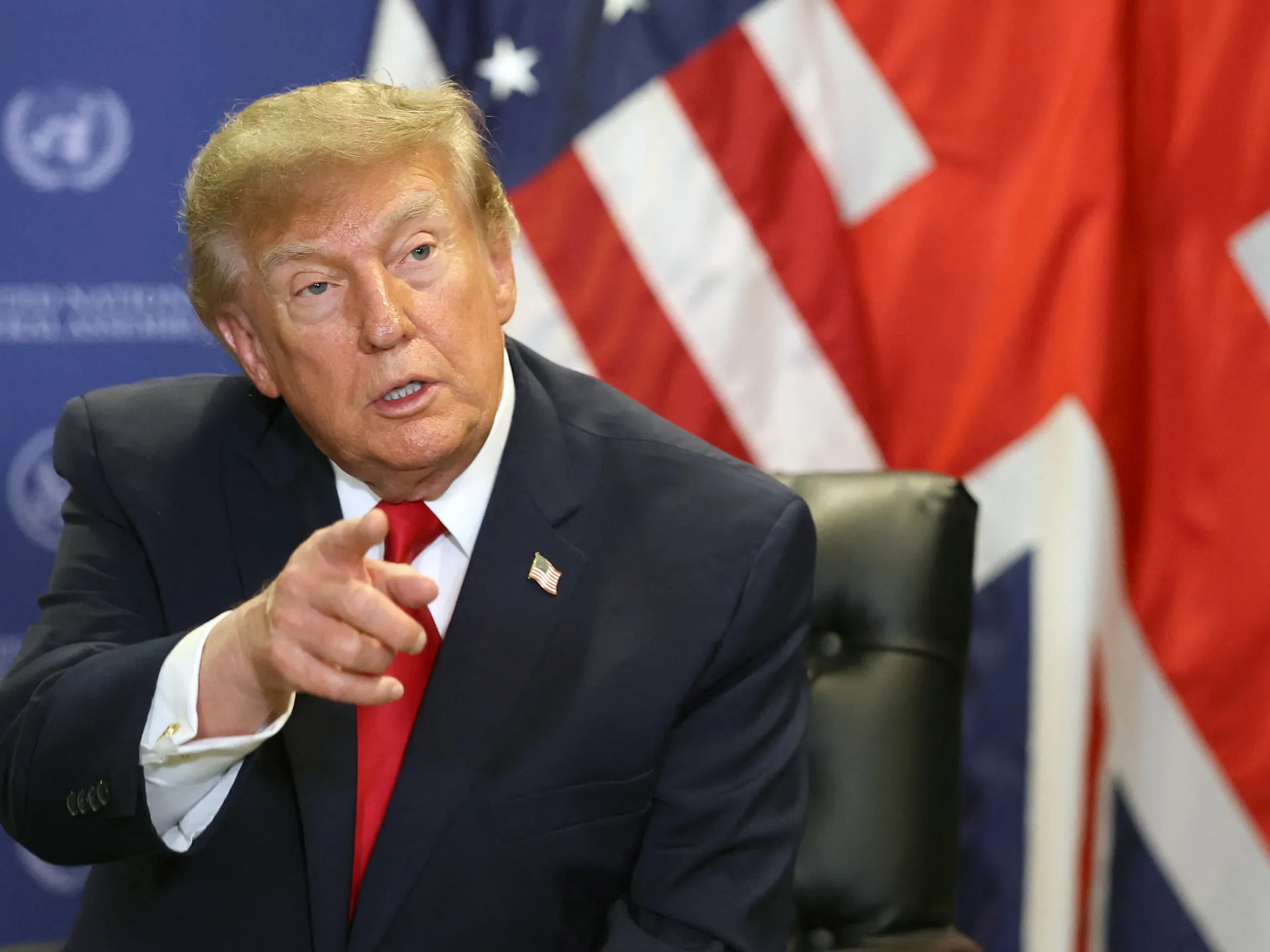
“I have the right to do tariffs, and I’ve always had the right to do tariffs,” Trump said at a news conference Friday, contending that he doesn’t need Congress’ approval.
Tariffs have been one of the only areas where the Republican-controlled Congress has broken with Trump. Both the House and Senate at various points had passed resolutions intended to rein in the tariffs imposed on key trade partners such as Canada. It’s also one of the few issues about which Republican lawmakers, who came of age in a party that largely championed free trade, have voiced criticism of Trump’s economic policies.
“The empty merits of sweeping trade wars with America’s friends were evident long before today’s decision,” Sen. Mitch McConnell (R-Ky.), the former longtime Senate Republican leader, said in a statement Friday, noting that tariffs raise the prices of homes and disrupt other industries important to his home state.
Democrats’ approach
Democrats, looking to win back control of Congress, intend to make McConnell’s point their own. At a news conference Friday, Senate Democratic leader Chuck Schumer said Trump’s new tariffs “will still raise people’s costs and they will hurt the American people as much as his old tariffs did.”
Schumer challenged Republicans to stop Trump from imposing the new global tariff. Democrats on Friday also called for refunds to be sent to U.S. consumers for the tariffs struck down by the Supreme Court.
“The American people paid for these tariffs and the American people should get their money back,” Sen. Elizabeth Warren (D-Mass.) said on social media.
The remarks underscored one of the Democrats’ central messages for the midterm campaign: that Trump has failed to make the cost of living more affordable and has inflamed prices with tariffs.
Small and midsize U.S. businesses have had to absorb the import taxes by passing them along to customers in the form of higher prices, employing fewer workers or accepting lower profits, according to an analysis by the JPMorganChase Institute.
Will Congress act?
The Supreme Court decision Friday made it clear that a majority of justices believe that Congress alone is granted authority under the Constitution to levy tariffs. Yet Trump quickly signed an executive order citing the Trade Act of 1974, which grants the president the power to impose temporary import taxes when there are “large and serious United States balance-of-payments deficits” or other international payment problems.
The law limits the tax to 150 days without congressional approval to extend it. The authority has never been used and therefore never tested in court.
Republicans at times have warned Trump about the potential economic fallout of his tariff plans. Yet before his “Liberation Day” of global tariffs last April, GOP congressional leaders declined to directly defy the president.
Some GOP lawmakers cheered on the new tariff policy, highlighting a generational divide among Republicans, with a mostly younger group fiercely backing Trump’s strategy. Rather than heed traditional free trade doctrine, they argue for “America First” protectionism, which they argue will revive U.S. manufacturing.
Republican Sen. Bernie Moreno, an Ohio freshman, slammed the Supreme Court’s ruling on Friday and called for GOP lawmakers to “codify the tariffs that had made our country the hottest country on Earth!”
A few Republican opponents of the tariffs, meanwhile, openly cheered the Supreme Court’s decision. Rep. Don Bacon (R-Neb.), a critic of the administration who is not seeking reelection, said on social media that “Congress must stand on its own two feet, take tough votes and defend its authorities.”
Bacon predicted there would be more Republican resistance coming. He and a few other GOP members were instrumental this month in forcing a House vote on Trump’s tariffs on Canada. As that measure passed, Trump vowed political retribution for any Republican who voted to oppose his tariff plans.
Groves writes for the Associated Press. AP writers Matt Brown, Joey Cappelletti and Lisa Mascaro contributed to this report.
New UCLA coach Bob Chesney will direct his first football season in a historic venue the Bruins have long called home.
UCLA announced on Saturday that the Bruins will play the 2026 season at the Rose Bowl amid ongoing litigation of the university’s right to potentially break its lease and play home games at SoFi Stadium.
“We know how much game day means to Bruins — to our students, alumni and fans who plan their autumn around Saturdays together,” UCLA vice chancellor for strategic communications Mary Osako said in a statement. “Our priority is delivering a strong season experience for our student-athletes and our community, and we have great momentum in our football program.
“During this unprecedented time in college athletics, UCLA will always be guided by what’s best for our student-athletes and the Bruin community.”
The California Post was the first to report UCLA’s decision to play another season at the Rose Bowl.
While the lawsuit states UCLA has formally notified the Rose Bowl that it is “moving on” and that “there’s no way we’re staying long term,” the school has never publicly announced plans to move its home games to SoFi Stadium.
“While we continue to evaluate the long-term arrangement for UCLA football home games, no decision has been made,” Osako said in a statement to The Times in October.
After a judge denied UCLA’s request to settle its legal dispute with the Rose Bowl operators and city of Pasadena via arbitration, it seemed unlikely the legal issues would be resolved in time for UCLA play the 2026 season anywhere but the Rose Bowl.
The city of Pasadena and the Rose Bowl Operating Co. filed a lawsuit in October to force UCLA to honor its contract and play games at the stadium through the 2044 season.
The complaint and subsequent filings have alleged that the university has been working to play its home games at SoFi Stadium, calling the move “a profound betrayal of trust.” Rose Bowl officials have since added SoFi Stadium and its operator, Kroenke Sports, to the lawsuit.
UCLA’s lease runs through June 30, 2044, and Pasadena officials say taxpayers have invested more than $150 million in stadium renovations while recently refinancing an additional $130 million in bonds for capital improvements.
The iconic Rose Bowl opened in 1922, is a national historic landmark and boasts ample tailgating opportunities, but some fans have complained about the aging venue’s uncomfortable seating and lack of modern amenities.
The next hearing in the case is scheduled for Friday as it proceeds toward trial.
WASHINGTON — President Trump said Saturday that he was raising the global tariff he wants to impose to 15%, up from 10% he had announced a day earlier after the Supreme Court declared most of his tariffs to be illegal.
Trump said in a social media post that he was making the decision “Based on a thorough, detailed, and complete review of the ridiculous, poorly written, and extraordinarily anti-American decision on Tariffs issued yesterday.”
After the court ruled he didn’t have the emergency power to impose many sweeping tariffs, Trump signed an executive order Friday night that would allow him to bypass Congress and impose a 10% tax on imports from around the world. The catch is that those tariffs would be limited to 150 days unless Congress agrees to extend them.
Trump’s post, significantly ratcheting up a global tax on imports to the U.S. yet again, was the latest sign that despite the court’s check, the Republican president was intent on continuing to wield in an unpredictable manner his favorite tool for the economy and to apply global pressure. Trump’s shifting announcements over the last year that he was raising and sometimes lowering import taxes with little notice jolted markets and rattled nations.
Saturday’s announcement seemed to be a sign that Trump intends to use the temporary global tariffs to continue that pattern.
“During the next short number of months, the Trump Administration will determine and issue the new and legally permissible Tariffs, which will continue our extraordinarily successful process of Making America Great Again,” Trump wrote in his post.
Under the order Trump signed Friday night, the 10% tariff was scheduled to take effect starting Feb. 24. The White House did not immediately respond to a message inquiring when the president would sign an updated order.
In addition to the temporary tariffs that Trump wants to set at 15%, the president said Friday that he was also pursuing tariffs through other sections of federal law that require investigation by the Commerce Department.
Trump leveled pointed personal attacks on the Supreme Court justices who ruled against him in a 6-3 vote, two of whom he appointed during his first term, Justices Neil M. Gorsuch and Amy Coney Barrett. Trump, at a news conference Friday, said of the court majority: “I think it’s an embarrassment to their families.”
He was still seething Friday night, complaining on social media about Gorsuch, Barrett and Chief Justice John G. Roberts Jr., who wrote the majority opinion.
On Saturday morning, Trump issued another post declaring that his “new hero” was Justice Brett M. Kavanaugh, whom he also appointed and who wrote a 63-page dissent. He also praised Justices Clarence Thomas and Samuel A. Alito Jr., who joined Kavanaugh in the minority.
The president said of the three dissenting justices: “There is no doubt in anyone’s mind that they want to, MAKE AMERICA GREAT AGAIN!”
U.S. Atty. Gen. Pam Bondi declared a triumph against California on Friday, touting an appellate court ruling that she said blocked a state ban on immigration agents and other law enforcement officers wearing masks.
“The 9th Circuit has now issued a FULL stay blocking California’s ban on masks for federal law enforcement agents,” Bondi posted on the social media site X, calling the Feb. 19 decision a “key victory.”
Bondi, however, appeared confused about which case the court was ruling on this week.
A federal judge in Los Angeles blocked California’s first-in-the-nation mask ban 10 days earlier, on Feb. 9.
At the time, U.S. District Judge Christina A. Snyder said she was “constrained” to block the law because it included only local and federal officers, while exempting state law enforcement.
The state did not appeal that decision.
Instead, on Wednesday, the law’s author Sen. Scott Wiener (D-San Francisco) introduced a new mask bill without the problematic carve-out for state officers.
With the initial legal challenge already decided and the new bill still pending in the legislature, the 9th Circuit Court of Appeals has no reason to revisit the mask ban.
The ruling that Bondi appeared to reference involves a separate California law requiring law enforcement officers to display identification while on duty.
Snyder had previously ruled the “No Vigilantes Act” could take effect because it did not exempt state police, a decision the Justice Department appealed to the 9th Circuit.
The appellate court is set to review the matter early next month. Until then, the court issued an injunction that pauses the state law from taking effect.
Issuing a temporary administrative injunction is a common procedural move, allowing judges to freeze things in the status quo until the court has a chance to weigh the law and come to a decision.
Thursday’s order set a hearing in the Richard H. Chambers U.S. Court of Appeals in Pasadena for March 3, indicating the case is far from over.
Bill Essayli, who leads the U.S. attorney’s office in Los Angeles, also celebrated with a post on X, calling Thursday’s order “another key win for the Justice Department.” He too suggested the injunction somehow involved the mask case.
A spokesperson for the U.S. Justice Department did not immediately respond to a request for comment.
The law requiring officers to show ID is less controversial than the mask ban. But it may still face an uphill battle in the appellate court. A three-judge panel is set to hear the case, comprising two judges nominated to the bench by President Trump and one by President Obama. One of the Trump appointees, Judge Mark Bennett of Hawaii, has previously signaled skepticism over the administration’s immigration enforcement policies.
At issue in the ID case is whether California’s law interferes with or controls the operations of the federal government, actions prohibited by the supremacy clause of the U.S. Constitution. Snyder ruled that the identification law was more akin to speed limits on the highway, which apply equally to everyone, a decision the appellate court could reject.
A ruling is not expected before mid-March, and would not directly affect the push by state lawmakers to pass a revised mask ban.
Recent polls show more than 60% of Americans want U.S. Immigration and Customs Enforcement officers and other federal agents unmasked. More than a dozen states are pursuing laws similar to California’s.
Feb. 20 (UPI) — The U.S. Supreme Court ruled Friday that President Donald Trump does not have the unilateral authority to impose tariffs.
The 6-3 decision struck down some of the broad tariffs Trump has imposed across the world from the Executive Branch. Chief Justice John Roberts said the president “must identify clear congressional authorization” to use the International Emergency Economic Powers Act to impose tariffs.
The decision came down in a lawsuit with several small businesses and Democratic attorneys general sued the Trump administration over improperly imposing tariffs. The plaintiffs argued that Trump was using the tariffs to raise revenue, a responsibility that falls under the scope of U.S. Congress, not the president.
While the Justice Department claimed that Trump was using tariffs to regulate foreign goods, Trump often said the tariffs were bringing in substantial revenue to the federal government.
Tariffs that Trump imposed using other laws will remain in place, such as tariffs on steel and aluminum.
Roberts added that the Trump administration has not provided any statutory support to its claim that the International Emergency Economic Powers Act applies to tariffs.
“We hold that the IEEPA does not authorize the president to impose tariffs,” Roberts wrote in the majority opinion.
Friday’s decision is the first in which a legal challenge to Trump’s second-term policies received a full hearing and resolution from the U.S. Supreme Court.
President Donald Trump speaks alongside Administrator of the Environmental Protection Agency Lee Zeldin in the Roosevelt Room of the White House on Thursday. The Trump administration has announced the finalization of rules that revoke the EPA’s ability to regulate climate pollution by ending the endangerment finding that determined six greenhouse gases could be categorized as dangerous to human health. Photo by Will Oliver/UPI | License Photo
WASHINGTON — The U.S. Commission of Fine Arts, a panel made up of President Trump’s appointees, on Thursday approved his proposal to build a ballroom larger than the White House itself where the East Wing once stood.
The seven-member panel is one of two federal agencies that must approve Trump’s plans for the ballroom. The National Capital Planning Commission, which has jurisdiction over construction and major renovation to government buildings in the region, is also reviewing the project.
Members of the fine arts commission originally had been scheduled to discuss and vote on the design after a follow-up presentation by the architect, and had planned to vote on final approval at next month’s meeting. But after the 6-0 vote on the design, the panel’s chairman, Rodney Mims Cook Jr., unexpectedly made another motion to vote on final approval.
Six of the seven commissioners — all appointed by the Republican president in January — voted once more in favor. Commissioner James McCrery did not participate in the discussion or the votes because he was the initial architect on the project before Trump replaced him.
The ballroom will be built on the site of the former East Wing, which Trump had demolished in October with little public notice. That drew an outcry from lawmakers, historians and preservationists who argued that the president should not have taken that step until the two federal agencies and Congress had reviewed and approved the project, and the public had a chance to provide comment.
The 90,000-square-foot ballroom would be nearly twice the size of the White House, which is 55,000-square-feet, and would accommodate about 1,000 people, Trump has said. The East Room, currently the largest room in the White House, can fit just over 200 people at most.
Commissioners offered mostly complimentary comments before the votes.
Cook echoed one of Trump’s main arguments for adding a larger entertaining space to the White House: It would end the long-standing practice of erecting temporary structures on the South Lawn that Trump describes as tents to host visiting dignitaries for state dinners and other functions.
“Our sitting president has actually designed a very beautiful structure,” Cook said. “The United States just should not be entertaining the world in tents.”
The panel received mainly negative comments from the public
Members of the public were asked to submit written comment by a Wednesday afternoon deadline. Thomas Leubke, the panel’s secretary, said “over 99%” of the more than 2,000 messages it received in the past week from around the country were in opposition to the project.
Leubke tried to summarize the comments for the commissioners.
Some comments cited concerns about Trump’s decision to unilaterally tear down the East Wing, as well as the lack of transparency about who is paying for the ballroom or how contracts were awarded, Leubke said. Comments in support referenced concerns for the image of the United States on the world stage and the need for a larger entertaining space at the White House.
Trump has defended the ballroom in a recent series of social media posts that included drawings of the building. He said in one January post that most of the material needed to build it had been ordered “and there is no practical or reasonable way to go back. IT IS TOO LATE!”
The commission met Thursday over Zoom and heard from Shalom Baranes, the lead architect, and Rick Parisi, the landscape architect. Both described a series of images and sketches of the ballroom and the grounds as they would appear after the project is completed.
Trump has said the ballroom would cost about $400 million and be paid for with private donations. To date, the White House has only released an incomplete list of donors.
A lawsuit against the project is still pending
The National Trust for Historic Preservation has sued in federal court to halt construction. A ruling in the case is pending.
In comments it submitted to the commission, the privately funded group recommended that the size of the ballroom be reduced to “accommodate and respect the primary historic importance of the original Executive Residence.”
At the commission’s January meeting, some commissioners had questioned Baranes, Trump’s architect, about the “immense” design and scale of the project even as they broadly endorsed Trump’s vision. On Thursday, Baranes described changes he has since made to the design, and the commissioners said they welcomed the adjustments.
The ballroom project is scheduled for additional discussion at a March 5 meeting of the National Capital Planning Commission, which is led by a top White House aide. This panel heard an initial presentation about the project in January.
UCLA has canceled an upcoming lecture featuring CBS News editor-in-chief Bari Weiss.
Weiss was scheduled to give the annual Daniel Pearl Memorial lecture on Feb. 27, about “The Future of Journalism.” But according to the university, the program will not move forward as scheduled, after Weiss’ team withdrew from the event.
A source familiar with the UCLA program said the lecture was canceled due to security concerns from Weiss, despite the public university offering to obtain additional security for the event, the source said. The Daniel Pearl Memorial lecture series honors the late journalist and is considered the capstone of the university’s Burkle Center for International Relations. Previous speakers include journalists Jake Tapper, Anderson Cooper and Bob Woodward.
According to the source, several employees at both the Burkle Center and the International Institute expressed opposition to Weiss speaking on campus. The university was also expecting a large number of students to protest the event.
Neither Weiss nor CBS immediately responded to a request for comment.
Weiss founded the media company, The Free Press, which was purchased in October by Paramount, CBS’ parent company. Following the $150 million purchase, Weiss was installed as editor-in-chief of CBS News.
Two months after taking on the new role, Weiss made the widely panned decision to pull a “60 Minutes” episode that examined the alleged abuse of deportees sent from the U.S. to an El Salvador prison. The decision earned Weiss heavy criticism and accusations that the move was politically motivated.
The canceled UCLA lecture comes at a time of ongoing organizational upheaval at CBS, which this week made headlines amid an escalating battle with its own late-night talk host, Stephen Colbert, over the FCC’s effort to enact stricter enforcement of the equal-time rule.
NBA commissioner Adam Silver believes teams are tanking more aggressively than in recent years and is considering many possible remedies to ensure real competition, from taking away draft picks to making wholesale changes to the draft and the lottery.
Silver immediately addressed the hottest topic in NBA circles Saturday in his annual address during All-Star Weekend at Intuit Dome, making it clear the NBA will do almost anything to make sure its teams earnestly compete.
Last Thursday, the league issued a $500,000 fine to the Utah Jazz and a $100,000 penalty to the Indiana Pacers for sitting healthy players, believing their apparent tanking actions compromised the league’s competitive integrity.
“Are we seeing behavior that is worse this year than we’ve seen in recent memory? Yes, is my view,” Silver said. “Which was what led to those those fines, and not just those fines, but to my statement that we’re going to be looking more closely at the totality of all the circumstances this season in terms of teams’ behavior, and very intentionally wanted teams to be on notice.”
Silver knows strong words and six-figure fines might not be nearly enough to compel struggling teams to commit to real competition instead of improving their odds in what’s expected to be one of the deepest drafts in recent history — and that’s why the NBA is looking at stronger solutions.
“The league is 80 years old, it’s time to take a fresh look at this and to see whether that’s an antiquated way of going about doing it,” Silver said of draft process. “Ultimately, we need a system to fairly distribute players. It’s in the players’ interest as well as the teams’ that you have a level of parity around the league. There’s only so many jobs and so many cities, but we’ve got to look at some fresh thinking here. I mean, what we’re doing, what we’re seeing right now, is not working.”
The NBA’s competition committee is reexamining the structure of the draft lottery for ways to minimize the upside of tanking, Silver said. The commissioner also acknowledged the fines could be followed by the revocation of draft picks from tanking teams.
“There is talk about every possible remedy now to stop this behavior,” Silver said.
Yet Silver also acknowledged the essential dilemma at the heart of this problem, one that has bedeviled the league since the 1960s: A team’s draft position is significantly tied to its chances of building a winner.
“It’s so clear that the incentives are misaligned,” Silver said. “My caveat is, and this is where teams are in a difficult place … that the worst place to be, for example, is a middle-of-the-road team. Either be great or be bad, because then [being bad] will help you with the draft. In many cases, you have fans of those teams, it’s not what they want to pay for, to see poor performance on the floor, but they’re actually rooting for their teams, in some cases, to be bad to improve their draft chances.”
But Silver intends to remind every team that tanking is a betrayal of its relationship with fans, both in their home cities and around the world.
In other topics covered by Silver on Saturday:
Expansion grows closer
The NBA still expects to make decisions on expansion this year, starting with more discussions at the Board of Governors meeting next month. The league won’t vote on expansion then, but Silver expects to know whether the league will move on to talk with potential owners.
Silver acknowledged Seattle and Las Vegas are the obvious candidates for expansion and said the league wants to make a decision soon: “I don’t want to tease cities or mislead anyone.”
Clippers investigation
Silver said he has been told the Clippers have been cooperative with the external investigation into their possible circumvention of the salary cap through a suspicious endorsement deal for Kawhi Leonard with a now-bankrupt company.
Silver firmly stated that the investigation and its findings were not purposely delayed while the Clippers host All-Star weekend. Wachtell Lipton, the Manhattan law firm conducting the investigation, has no deadline to produce its findings.
Prediction markets
The NBA is “paying an enormous amount of attention” to the rise of prediction markets, particularly after Milwaukee superstar Giannis Antetokounmpo sparked concern with his investment in Kalshi. Silver didn’t find fault with Antetokounmpo — whose shares are a “minuscule” position, according to Silver — but acknowledged the looming specter of the gambling industry without suggesting a solution.
“It concerns me in the totality of all this betting that we need a better handle, no pun intended, on all the different activity that’s happening out there,” Silver said.
Silver also acknowledged the overwhelming size of this task, given that roughly 80 countries allow betting on the NBA while billions more are wagered illegally.
Europe calling
The NBA’s desire to open a European league in partnership with FIBA remains strong, and it still would love to start in October 2027, but Silver acknowledged many hurdles remain.
The league still is working with the players union to determine whether active players will be allowed to invest in NBA Europe franchises — something that would be welcomed by many top players, including Antetokounmpo.
“If there’s an opportunity that comes across my desk to be an owner in sports, I would consider it 100%,” the Greek star said Saturday. “In the real NBA, I don’t know if I have that type of money … but I love basketball, and anywhere that I can be involved with it, I would love it.”
PHOENIX — Dodgers closer Edwin Díaz has been settling in with his new team at Camelback Ranch, but in his first comments to the media since camp opened, he faced questions about his old team.
In an interview with Mets broadcaster Howie Rose on Friday, team owner Steve Cohen called Díaz’s decision to a sign a three-year, $69-million contract with the Dodgers “perplexing.” Though Díaz was caught off guard by Cohen’s comments, he said Saturday he had no bad feelings towards the Mets or their fans.
“It’s a market and I was a free agent, so I got the chance to talk with everyone,” Díaz said. “I think the Dodgers did a great job of recruiting me, so at the end of the day, I chose to be here. I have a lot of respect for the Mets organization — players, staff, ownership — they treated me pretty good. I don’t have anything bad to say about them. But at the end of the day, I’m here, so this is a new journey for me. I’m happy to be with the Dodgers, so let’s see how it goes.”
Díaz participated in the Dodgers’ first day of official workouts Friday, throwing a clean bullpen session without any hiccups. Dodgers manager Dave Roberts has liked what he has seen thus far from the three-time MLB reliever of the year.
“I’m very excited to get to know him more,” Roberts said. “[He’s] just a great teammate, really good person, loves baseball, a good heartbeat. You can tell he knows what he needs to do to get ready. [He’s] likable, and at the end of the day, he chose to be here, so that’s something that is of a lot of value for us. High character. I’m really looking forward to getting to know him.”
One thing that attracted Díaz to the Dodgers was the team’s culture.
“That’s how they’ve been so good,” Díaz said. “They have a really good clubhouse… They’ve got different personalities in the clubhouse. They’ve got different players from different countries, and they all get together and have fun, so that’s something good.”
Part of having a melting pot of a clubhouse means missing some key ingredients for an extended period of spring training. The Dodgers will have several players participating in the World Baseball Classic, including Shohei Ohtani, Yoshinobu Yamamoto, Will Smith and Díaz.
Each Major League player competing in the event runs the risk of injury, something Díaz knows all too well. Moments after striking out the side to send Puerto Rico to the WBC quarterfinals in 2023, Díaz sustained a season-ending knee injury.
Despite suffering the trauma of the last WBC, Díaz told reporters it was a no-brainer, when he was asked to compete for his country again in 2026.
“It wasn’t in my mind,” Díaz said. “I have the chance to play in front of my family in Puerto Rico. It was an easy decision.”
Díaz’s fearlessness is one trait that Roberts admires about his new closer. Díaz met Roberts’ squad in the 2024 National League Championship Series, where the Dodgers managed only two hits off him across 5.1 IP, scoring no runs.
“He’s not scared,” Roberts said. “When he’s in the game, it’s an uncomfortable at bat for lefties and righties, and when we did see him in the postseason, [we were] really trying to keep him out of the game, knowing that he can go one, two [or] even three innings. That, he’s done against us in the postseason; [he’s] just a great competitor.”
The addition of Díaz should stabilize the back end of the Dodgers rotation. Since bidding farewell to Kenley Jansen after the 2021 season, the Dodgers haven’t had a closer tally more than 25 saves in a season. Over his nine-year career, Díaz has 253 saves.
With Díaz expected to be the regular ninth-inning guy, Roberts looks forward to having more flexibility when managing his bullpen.
“It’s huge,” Roberts said. “I don’t think that there’s one way to manage a pen, but when you have a guy like Edwin Díaz as your closer, I do think it frees up other guys, myself included. Not having to worry about matchups for the ninth, I think that’s freeing for me and allows for getting the matchups we need in the prior innings.”
Dodgers staying cautious with Graterol
One key relief weapon Roberts hopes to have in his armory is Brusdar Graterol.
The hard-throwing right-hander underwent labrum surgery shortly after the 2024 World Series, and hasn’t pitched in a game since.
Roberts provided an update on Graterol’s recovery Saturday.
“He’s in the picture, but I do think that coming back from the shoulder, it’s going to take some time,” Roberts said. “He’s in the bucket of, ‘We’re going to slow-play him’. I think yesterday he threw off the mound, and the velocity is not near where it’s going to be, so I think that it’s a slow progression. I just don’t know where that puts us, but it’s a slow process for Brusdar.”
Staff writer Anthony Solorzano contributed to this report.
Seven California Highway Patrol officers who piled atop a man screaming “I can’t breathe” as he died following a drunk driving stop.
All three cases had similar outcomes: charges dropped or reduced to no time behind bars after a plea deal.
After a year in office, a pattern has emerged for L.A. County Dist. Atty. Nathan Hochman, who found himself saddled with a number of misconduct and abuse cases against police officers filed by his predecessor, George Gascón.
During his 2024 campaign, Hochman often chastised Gascón for filing cases he claimed wouldn’t hold up before a jury — while also promising to continue bringing prosecutions against police when warranted.
In recent months, Hochman has downgraded or outright dismissed charges in many high-profile cases that Gascón filed. In the two misconduct cases Hochman’s prosecutors have brought to trial, the district attorney’s office failed to win a conviction.
Those outcomes have infuriated the loved ones of victims of police violence, local activists and even former prosecutors, who say Hochman’s backslide on the issue was predictable after he received millions in campaign contributions from police unions.
Greg Apt, a former public defender who served under Gascón as second-in-command of the unit that prosecutes police cases, said he quit last year out of frustration with the new leadership.
“I had concerns that the cases were not going to be treated the same way under Hochman that they were under Gascón, that alleged police wrongdoing would not be given the same level of oversight,” he said.
Hochman has scoffed at the idea that he’s too cozy with cops to hold their feet to the fire, saying his campaign’s war chest reflected bipartisan support that included Democrats who have been critical of police.
The district attorney said he’s made decisions based on what he can actually prove in court, and argued case reviews within the Justice Systems Integrity Division have become even more rigorous under his leadership.
“I’m going to look at the facts and the law of any case. I don’t believe in the spaghetti against the wall approach where you throw the spaghetti against the wall, and see if anything sticks, and let the jury figure it out,” he said. “That would be me abdicating my responsibility.”
Hochman’s supporters argue he has restored balance to an office that was often filing cases against police that were either legally dubious or flat out unwinnable.
Tom Yu, a defense attorney who often represents cops accused of wrongdoing, said Hochman is handling things in a more fair and objective manner.
Former Torrance Police Officers Cody Weldin, center, and Christopher Tomsic, right, pleaded guilty last year in a conspiracy and vandalism case in which they allegedly spray painted a swastika on a car. Attorney Tom Yu, defense for Weldin, is seen listening to the proceedings.
(Genaro Molina / Los Angeles Times)
“By and large, he’s not going after the cops. But he didn’t dismiss all the cases either. I’m OK with that,” Yu said. “On a personal level, I think he’s doing a very difficult job in the police cases, because someone is always going to be unhappy with the decisions he made.”
It is difficult to win a guilty verdict for an on-duty shooting, with no such convictions in Los Angeles County since 2000. Laws governing use-of-force give officers great latitude, often protecting them even when they shoot someone who is later found to be unarmed or in situations where video evidence shows no apparent threat.
Hochman questioned why he is being criticized when the California attorney general’s office has reviewed dozens of fatal shootings of unarmed persons throughout the state since 2020 and filed no criminal cases.
“If you bring weak cases and you lose, it undercuts your credibility of being any good at your job,” Hochman said. “It undercuts your credibility in saying that we believe in the facts and the law and bringing righteous cases.”
Hochman brought 15 cases against police officers in 2025, according to documents provided to The Times in response to a public records request, compared with 17 filed by Gascón in his final year in office.
But while Gascón had a strong focus on the kinds of excessive force cases the public was clamoring to see charged when he was elected in 2020, Hochman has more often filed charges for offenses such as fraud and evidence tampering.
Hochman’s recent dismissal of charges against most of the officers involved in the death of Edward Bronstein has drawn outcry from his family and at least one former prosecutor.
Bronstein died after screaming in agony as six California Highway Patrol officers piled on top of him in Altadena in 2020. The officers were trying to get a court-ordered blood draw after Bronstein was pulled over on suspicion of drunk driving.
Video from the scene shows Bronstein arguing with the officers while handcuffed and on his knees.
The officers warn Bronstein they’re going to force him down to get a sample. Right before they do, Bronstein mumbles that he’ll “do it willingly,” but they shove him face down while a seventh officer, Sgt. Michael Little, films the encounter. A minute passes. Then Bronstein’s body goes limp.
Officers can be seen trying to revive Bronstein, calling his name and slapping the side of his head, according to the video. But several minutes elapse before officers attempt to deliver oxygen or CPR. He was pronounced dead at the scene.
Los Angeles County Dist. Atty. George Gascón announces he will ask a judge to resentence Erik and Lyle Menendez for the killing of their parents in 1989, a decision that could free the brothers.
(Allen J. Schaben / Los Angeles Times)
In 2023, Gascón filed manslaughter charges against the seven officers, as well as the nurse who carried out the blood draw. But late last year, Hochman dismissed charges against all except Little, whose case was reduced to a misdemeanor, for which he received 12 months of probation. Little is no longer a CHP officer, according to an agency spokesman.
Prosecutors are still pursuing manslaughter charges against the nurse at the scene, Arbi Baghalian. His defense attorney, Joe Weimortz, said Baghalian had no control over the officers’ actions or the decision to pursue the blood draw. Weimortz also said he believed the officers were innocent.
Bronstein’s daughter, Brianna Ortega, 26, said in a recent interview that Hochman’s decision to drop the charges felt like a betrayal.
“It just seems like because they’re cops … they must get away with it,” Ortega said. “How are you going to put the blame on one person when all of you are grown men who know better? You have common sense. You have human decency. He is literally telling you he can’t breathe.”
The Los Angeles County coroner’s office could not conclusively determine Bronstein’s cause of death but attributed it to “acute methamphetamine intoxication during restraint by law enforcement.” Bronstein’s family was paid $24 million to settle a wrongful death suit in the case.
Hochman said his office reviewed depositions from the civil case — which he said Gascón did not do before filing a case — and did not believe he could win a manslaughter case because it was impossible to say any officer specifically caused Bronstein’s death. Hochman said the officers had no intent to harm the man and were following orders of a superior officer.
“We looked at each officer, what they knew, what their state of mind was at the time. Understanding that there was both a sergeant there and a nurse, who was in charge of not only taking the blood draw but obviously doing it in a safe manner, and then deciding whether or not we could meet the legal standard of involuntary manslaughter for each officer,” he said.
Edward Tapia, the father of Edward Bronstein, speaks at a news conference about his son, a 38-year-old Burbank man who died while being restrained by California Highway Patrol officers in 2020 after refusing to have his blood drawn after a traffic stop. The family received a $24-million civil rights settlement in 2023 after filing a lawsuit against the state.
(Jason Armond / Los Angeles Times)
Bronstein’s killing was one of three cases in which Hochman assigned new prosecutors in the months before a trial started or a plea deal was reached. Aside from the Bronstein case, the others ended in an acquittal or a hung jury. All three prosecutors who were removed from the unit that handles police misconduct cases had either been appointed by Gascón or had a political connection to the former district attorney.
“When somebody’s lived that case for years, and then you take them off, it suggests that you’re less than serious about winning that case,” said Apt, the former prosecutor on the Bronstein case.
Hochman said he was simply bringing in staff with more trial experience on each case, insisting politics had nothing to do with the transfers. One of the cases, which involved allegations of perjury against L.A. County sheriff’s deputies Jonathan Miramontes and Woodrow Kim, ended with a lightning fast acquittal. Records show jurors deliberated less than an hour before coming back with a not guilty verdict.
In the other case, Hochman’s staff came closer to convicting a cop for an on-duty shooting than anyone else has in L.A. County in a quarter-century.
Former Whittier police officers Salvador Murillo, left, and Cynthia Lopez during their arraignment at the Clara Shortridge Foltz Criminal Justice Center in Los Angeles. Murillo was charged in a 2020 shooting that left an unarmed man paralyzed. Murillo’s trial ended with a deadlocked jury in November 2025.
(Mel Melcon / Los Angeles Times)
Former Whittier Det. Salvador Murillo stood trial in November for shooting an unarmed man in the back as he fled down an alley in 2023. Nicholas Carrillo ran away on foot from a vehicle stop and was leaping over a fence — unarmed — when Murillo squeezed off four rounds. Two severed Carillo’s spine, paralyzing him.
The jury came back deadlocked, although a majority of the panel was leaning toward a conviction. Hochman said it is likely he will ask prosecutors to take Murillo to trial a second time, though a final decision has not been made.
This year, Hochman will have to weigh in on a pair of politically charged police killings.
The Department of Homeland Security said the off-duty ICE agent was responding to an “active shooter.” Porter’s family has said he was firing a rifle into the air as a celebration to ring in the new year.
Melina Abdullah, the co-founder of Black Lives Matter L.A., was part of a group that met with Hochman about Porter’s killing and other cases last month in South L.A.
She described the encounter as confrontational — and a disaster.
“I don’t know how we can expect any safety and accountability with this man in office,” Abdullah said.
Hochman must also decide how to proceed with the case of Clifford Proctor, a former LAPD officer charged for shooting an unarmed homeless man in the back in 2015.
Proctor left the LAPD in 2017 and was not indicted on murder charges until 2024. Gascón reopened the case in 2021, after prosecutors previously declined to file charges.
Hochman has not said if he intends to take Proctor to trial.
Hochman said that while he knows cases of police violence drive emotional reactions, he has to constrain himself to a cold analysis of the facts in front of him.
Reflecting on his confrontational meeting with Black Lives Matter activists, which centered on his recent move to dismiss charges in the 2018 killing of Christopher Deandre Mitchell by Torrance police officers, Hochman said he can’t pursue cases just because people are upset.
“They couldn’t point out anything in that analysis that they disagreed with,” he said. “Other than the result.”
Group’s co-founder declares ruling ‘monumental victory both for our fundamental freedoms here in Britain and in the struggle for freedom for the Palestinian people.’
Published On 13 Feb 202613 Feb 2026
Share
The High Court in the United Kingdom has ruled that the government ban on the pro-Palestinian campaign group called Palestine Action as a “terror group” was unlawful.
In a statement responding to the landmark ruling on Friday, the Claimant and co-founder of Palestine Action, Huda Ammori, said, “This is a monumental victory both for our fundamental freedoms here in Britain and in the struggle for freedom for the Palestinian people, striking down a decision that will forever be remembered as one of the most extreme attacks on free speech in recent British history.”
The United Kingdom said last June that it would ban Palestine Action under anti-terrorism laws. This that put the organisation on par with armed groups like al-Qaeda and ISIL (ISIS) in the UK, making it a criminal offence to be part of Palestine Action.
The government’s announcement prompted legal battles, criticism from human rights organisations and triggered protests.
President Trump’s administration can continue to detain immigrants without bond, marking a major legal victory for the federal immigration agenda and countering a slew of recent lower court decisions across the country that argued the practice is illegal.
A panel of judges on the 5th Circuit Court of Appeals ruled Friday evening that the Department of Homeland Security’s decision to deny bond hearings to immigrants arrested across the country is consistent with the Constitution and federal immigration law.
Specifically, Circuit Judge Edith H. Jones wrote in the 2-1 majority opinion that the government correctly interpreted the Immigration and Nationality Act by asserting that “unadmitted aliens apprehended anywhere in the United States are ineligible for release on bond, regardless of how long they have resided inside the United States.”
Under past administrations, most noncitizens with no criminal record who were arrested away from the border had an opportunity to request a bond hearing while their cases wound through immigration court. Historically, bond was often granted to those without criminal convictions who were not flight risks, and mandatory detention was limited to recent border crossers.
“That prior Administrations decided to use less than their full enforcement authority under” the law “does not mean they lacked the authority to do more,” Jones wrote.
The plaintiffs in the two separate cases filed last year against the Trump administration were both Mexican nationals who had lived in the United States for more than 10 years and weren’t flight risks, their attorneys argued. Neither man had a criminal record, and both were jailed for months last year before a lower Texas court granted them bond in October.
The Trump White House reversed that policy in favor of mandatory detention in July, reversing almost 30 years of precedent under both Democrat and Republican administrations.
Friday’s ruling also bucks a November district court decision in California, which granted detained immigrants with no criminal history the opportunity to request a bond hearing and had implications for noncitizens held in detention nationwide.
Circuit Judge Dana M. Douglas wrote the lone dissent in Friday’s decision.
The elected members of Congress who passed the Immigration and Nationality Act “would be surprised to learn it had also required the detention without bond of two million people,” Douglas wrote, adding that many of the people detained are “the spouses, mothers, fathers, and grandparents of American citizens.”
She went on to argue that the federal government was overriding the lawmaking process with the Department of Homeland Security’s new immigration detention policy that denies detained immigrants bond.
“Because I would reject the government’s invitation to rubber stamp its proposed legislation by executive fiat, I dissent,” Douglas wrote.
Douglas’ opinion echoed widespread tensions between the Trump administration and federal judges around the country, who have increasingly accused the administration of flouting court orders.
U.S. Atty. Gen. Pam Bondi celebrated the decision as “a significant blow against activist judges who have been undermining our efforts to make America safe again at every turn.”
“We will continue vindicating President Trump’s law and order agenda in courtrooms across the country,” Bondi wrote on the social media platform X.
Clare Balding met wife Alice Arnold when they both worked at the BBC in the 1990s, admitting she had one major question she wanted to ask in the early days of their relationship
Clare Balding revealed she had a major question for her wife Alice Arnold when they began dating
Their relationship blossomed and in 2006 they entered into a civil partnership together, later marrying in 2015, when same-sex marriage was legalised. And while the pair have now been together for over 26 years, Clare says there was one thing that could have been a deal-breaker.
Speaking on the Bookshelfie podcast, she said: “When Alice and I first got together my big question, ahead of everything, was, ‘Can we get a dog?’ It’s really important. Twenty four years later I’m glad she said, ‘Yes, we can get a dog’.”
Podcast host Yomi Adegoke, added: “You need to lay that groundwork because if the answers are not aligned, this is not going to work.”
Alice has previously admitted that allowing her wife to have a dog was one of the “original commitments” she made during the early stage of their relationship. In Clare’s book, Isle of Dogs, former Radio 4 announcer Alice said she would “never go back” on the pledge.
Clare admits she was left with a “dog-shaped hole” in her heart in 2020 after her much-loved Tibetan terrier Archie had to be put to sleep. While she says it was the “best decision” for the dog, she admits she “thinks about him everyday”.
After Archie’s death, Clare felt compelled to continue walking his favourite routes around Chiswick, London, to honour his memory.
Speaking to The Times, Clare said: “After Archie died in 2020 I wanted to walk his favourite route repeatedly to remember him, which seems a rather masochistic thing to do, and it was so painful because we kept seeing dogs we knew, and I’d stop to say hello before bursting into tears. We cried a heck of a lot, but slowly it became easier.”
Clare hopes that she and Alice will swap London for the countryside eventually so they can welcome a new dog into their lives. Clare explained: “We’re looking to move out of London, and one of the main reasons for that is to have a bit more space and protection from the road so it’s a good environment for a dog.
“As soon as we’re settled, it’s our plan – probably next spring. I smile at the thought of having a dog back in our lives.”
Clare previously revealed to MailOnline that she yearns for “everything a dog brings” to her life, from the icy winter strolls to the “enthusiastic greeting” Archie would offer her upon returning home from work.
She describes Archie as the “perfect dog” because he didn’t moult, which mattered greatly to Alice, who suffers from dog allergies. Clare, who hosts Crufts on Channel 4, explained: “Tibetan terriers are small enough to pick up but strong enough to go on long walks.
“They are intelligent, loyal and full of character. They are good guard dogs but don’t yap without cause.”
Clare will be presenting the coverage of the Winter Olympics on BBC Two between 6pm and 10pm tonight (February 7). It will feature the final run of the men’s singles luge, the ski jumping medal ceremony, and the big air run of the men’s snowboarding among others.
Everywhere you looked, there was a veteran Dodger willing to sacrifice himself for the good of the team.
That needs to happen again.
That needs to happen now.
A player needs to spearhead a decision that will not be made by the big business that runs this team, a decision that will bypass the biased blather and directly connect to their many besieged fans, a decision that only a player can make.
In the wake of Thursday’s White House confirmation that the Dodgers will be making the traditional champions visit there this spring, somebody needs to send a clear message to President Donald Trump.
“No.”
Federal immigration agents stage outside Gate E of Dodger Stadium on June 19. Sporadic immigration raids continue to roil Southern California.
No, they will not openly support an administration that has declared war on its fan base.
No, after basking in the adulation of four million diverse neighbors every summer, the players will not turn their backs on these people while the government continues to round them up despite no criminal history.
This isn’t about asking pro athletes to be politicians. This is about asking them to be people.
Some will say players should not be involved, that it’s a management decision high above the pay grade of the average southpaw or slugger. But when their backyard becomes a battlefield, those players need to fight back, and that time is now.
Dodger management will always leave any tough choice like this one up to the players. By virtue of hundreds of millions of dollars of salaries, the players are essentially partners who need to embrace that responsibility.
No matter what owner Mark Walter says, if the players don’t want to visit the White House, they won’t go.
No matter who shouts the loudest, whether it be conservatives or liberals, the players’ collective voice is the only one that counts.
So, when spring training begins next week, here’s hoping for a hero.
How about a standing ovation for the brave law-abiding immigrant family of four that cheers you from in the left-field pavilion even though they know they could be arrested and hauled away at any time?
How about a, “Let’s Go Dodgers” chant for the longtime residents with no criminal record who spent last October huddled around their TV sets clinging to your victories as reason for hope?
How about being there for so many who have been there for you?
A protestor wearing a Mookie Betts jersey and waving a Mexican and American flag stitched together protests ICE outside the Dodger Stadium game on June 21.
“This was something we discussed with all the players, all of whom wanted to go,” team president Stan Kasten told Hernández. “Remember, everyone in here grew up wanting to be a world champion and all the things that come with it, and it comes with a champagne toast, silliness in the locker room, a parade, rings, an invitation to the White House. It’s what they all come to associate with being world champions. Everyone wanted to go, and so we did.”
So they went, all of them except an injured Freddie Freeman. The event was even attended by Mookie Betts, who had previously declined a visit when he was with the Boston Red Sox.
Since then, the landscape has dramatically changed in light of the ICE raids that ramped up during the middle of the season.
This is no longer simply about the rebuke of a president. This is about a fight against a system that has consistently terrorized southern California streets and recently, in Minneapolis, resulted in the deaths of two American citizens at the hands of agents of the American government.
Surely the Dodgers clubhouse leaders see this. Surely they feel this.
They can’t be so insulated that they don’t notice the protests in city streets that resemble those near Chavez Ravine. They can’t be so sheltered that they don’t hear the outrage from people who look just like their biggest fans.
The players can’t hide from this. The players need to handle this.
“I was raised — by a man who served our country for 30 years — to respect the highest office in our country,” Roberts said. “For me, it doesn’t matter who is in the office, I’m going to go to the White House.”
Again, this is no longer about just Trump. This is about Tom Homan and Greg Bovino and Kristi Noem and all the other immigration officials that have wrought so much unfounded havoc.
Baseball clubhouses have traditionally leaned heavily to the right.
Nobody is asking anybody to disavow their beliefs. This is no longer about ideology, this is about standing up for those who are being wrongly arrested, being unfairly harassed or being made to feel constantly frightened in their own homes.
Dodger Stadium is one of those homes, and those who permanently live there need to do their best to provide comfort and safety for those who don’t.
Dodgers veteran leaders, this is your time.
Their White House visit would probably occur during the team’s trip to play the Washington Nationals in the first week of April. Here’s hoping that before the road trip, the secure and well-paid Dodgers veterans let the team’s kids understand what it means to be a Dodger and how declining a White House visit would be the Jackie Robinson thing to do.
Sending a title team to the White House is baseball tradition. Sending a message about equality and fairness and freedom is a Dodgers tradition.
Somebody in a Dodgers uniform needs to stand up for that tradition.
As the prospect of a conflict between the United States and Iran looms, analysts within Israel have questioned the country’s capacity to determine the outcome of a confrontation in a region that, just months ago, it had regarded itself as on the brink of dominating.
“The [Israeli] opposition are accusing [Israeli Prime Minister Benjamin] Netanyahu of giving in to [US President Donald] Trump and ending the war on Gaza too soon,” said Israeli political analyst Ori Goldberg. “[Israel is] being hounded out of Lebanon, [its] freedom to operate within Syria has been halted. All that’s left to [Israel] is the freedom to kill Palestinians, and with Qatar, Turkiye and Egypt now being involved in Gaza, over Israel’s objection, it won’t be allowed to do that for much longer.”
Recommended Stories
list of 4 itemsend of list
While senior Israeli figures including Netanyahu are liaising directly with the Trump administration over a possible attack on Iran, analysts say it is increasingly clear that Israel’s ability to shape regional developments is diminished.
After two years of genocide in Gaza, where Israel has killed more than 71,800 Palestinians, the US now appears to have taken the lead and has overruled Israel when it objected to the admission of Turkiye and Qatar to the board that will oversee the administration of Gaza.
In Syria, Israeli ambitions to hobble the new government of President Ahmed al-Sharaa also appear to have fallen foul of Trump’s White House, which is actively pushing the Netanyahu government to reach an accommodation with Damascus. In Lebanon, too, the US continues to play a defining role in determining Israeli actions, with any possible confrontation between Hezbollah and Israel said to be dependent upon Washington’s green light.
What influence Israel could wield over US action in Iran, according to many, is uncertain, even to the point that Washington could enter negotiations with no regard for Israeli concerns.
“There’s a worry that Donald Trump will not strike in Iran, which will continue to endanger Israel, and instead negotiate a conclusion that’s good for him as a peacemaker and leave the regime in place,” Netanyahu’s former aide from the early 90s and political pollster, Mitchell Barak, told Al Jazeera from West Jerusalem. “He’s transactional. That’s what he does. It’ll be like Gaza. Israel will secure their ultimate victory, then lose control to the US, whose interests – under Trump – don’t always align with ours.”
‘Big Bad Wolf’
While analysts’ expectations that Netanyahu could influence Trump’s actions in Iran may be limited, their sense that a fresh war would buy the Israeli prime minister relief from his current difficulties seems universal.
“Iran is Israel’s ‘Big Bad Wolf’,” Chatham House’s Yossi Mekelberg said of the geopolitical opponent that many in Israel believe exists only to ensure Israel’s destruction.
Mekelberg added that a war with Iran would serve as a useful distraction from Netanyahu’s domestic troubles, such as an inquiry into government failures related to the October 7, 2023 Hamas attack on Israel, his attempt to weaken the oversight powers of the judiciary, and his ongoing corruption trials.
“There’s a saying in Hebrew: ‘the righteous have their work done by others.’ I’m not for a moment saying that Netanyahu is righteous, but I’m sure he’s keen on having his work done by others,” Mekelberg said.
War fears
How much public appetite there may be for a confrontation with Iran is unclear.
Israel was able to heavily damage Iran during the conflict it started in June last year. But Iran was also able to repeatedly pierce Israel’s defences, making it clear that the Israeli public is not safe from the wars its state pursues in the region.
The threat – rather than the reality – of a confrontation with Iran also serves the prime minister’s ends, Goldberg noted. “Netanyahu has no need for a war. He doesn’t really need to do anything other than survive, which he’s proven adept at,” the analyst said, referring to the absence of any credible political rival, as well as the risk that an actual war may highlight Israel’s diplomatic weakness in its dealings with the US.
“There’s this joke phrase that became popular with those resisting Netanyahu’s judicial reform: ‘This time he’s done’,” Goldberg said. “Netanyahu’s never done. He committed a genocide, and all people in Israel can object to is the management of it. He’s currently losing military and diplomatic influence across the region, and few are noticing. I can’t imagine that this will be ‘it’ either.”
Heart of Midlothian manager Derek McInnes believes James Wilson has made a mistake by joining Tottenham Hotspur on loan in a deal that could be made permanent at the end of the season.
Arsenal were in talks with the Scottish Premiership leaders over a move for the 18-year-old but the Scotland striker joined Spurs instead.
Wilson, who became the youngest man to represent Scotland when he came on in their Nations League play-off tie against Greece last March, will play for Spurs’ Under-21s side.
He has scored eight goals in 45 appearances since making his Hearts breakthrough last season but he has struggled for game time this term.
“James wanted to go, so you don’t want to keep a player who then becomes unhappy,” said McInnes.
“I couldn’t guarantee him minutes, such is the way it’s been. I told him and his agent that our preference was to stay, fight for his place, be part of something.
“We’d get him a loan in Scotland if need be, to top his minutes up, and we can maybe recall him – still get the best of both worlds.
“The Kelly Clarkson Show,” the Daytime Emmy Award-winning series hosted by the Grammy-winning musician, is ending after a seven-season run. Kelly Clarkson announced Monday that she had decided to step away from hosting the daily talk show.
In a statement, Clarkson said she made her decision to prioritize spending time with her children. The former singer had two children, in 2014 and 2016, with ex-husband Brandon Blackstock, who died in August at age 48.
“I have been extremely fortunate to work with such an outstanding group of people at ‘The Kelly Clarkson Show,’ both in Los Angeles and New York,” Clarkson said in a statement. “This was not an easy decision, but this season will be my last hosting ‘The Kelly Clarkson Show.’ Stepping away from the daily schedule will allow me to prioritize my kids, which feels necessary and right for this next chapter of our lives.”
The syndicated talk show launched in September 2019 after Clarkson, who won over TV audiences as the first-ever winner of “American Idol,” in 2002, returned to the world of musical reality competitions as a coach on “The Voice” in 2018. “The Kelly Clarkson Show” showcased the “Since U Been Gone” singer’s affable, approachable charm in her sit-down interviews with celebrities and everyday heroes, as well as her talents in popular segments including “Kellyoke,” which saw Clarkson sing covers of other people’s songs.
“I am forever grateful and honored to have worked alongside the greatest band and crew you could hope for, all the talent and inspiring people who have shared their time and lives with us, all the fans who have supported our show and to NBC for always being such a supportive and incredible partner,” Clarkson added in her statement. “This isn’t goodbye. I’ll still be making music, playing shows here and there and you may catch me on ‘The Voice’ from time to time. … You never know where I might show up next. But for now, I want to thank y’all so much for allowing our show to be a part of your lives, and for believing in us and hanging with us for seven incredible years.”
The seventh season of “The Kelly Clarkson Show” kicked off in September and production will continue as planned. Clarkson will continue to host Season 7, with a few yet-to-be-announced guest hosts. The episodes for Season 7 will run through September.
BEIJING — Beijing on Monday criticized the Dalai Lama ’s first Grammy win, describing the music industry award for an audiobook, narration and storytelling as “a tool for anti-China political manipulation.”
The Tibetan Buddhist spiritual leader, who lives in exile in India, took the award on Sunday for his book, “Meditations: The Reflections of His Holiness the Dalai Lama.”
He said in a statement on his website that he saw the award “as a recognition of our shared universal responsibility.”
“I receive this recognition with gratitude and humility,” he added.
China’s Foreign Ministry spokesperson Lin Jian said: “It is well known that the 14th Dalai Lama is not merely a religious figure but a political exile engaged in anti-China separatist activities under the guise of religion.”
“We firmly oppose the relevant party using the award as a tool for anti-China political manipulation,” he added.
The Dalai Lama, who is seen by many as the face of Tibet’s struggle for autonomy, has lived in exile since 1959, when Chinese troops crushed an uprising in the Tibetan capital of Lhasa.
China, which governs Tibet as an autonomous region, has been accused of trying to stamp out the Tibetan language, culture and identity.
Beijing and the Dalai Lama also spar over the spiritual leader’s eventual successor. Tibetan Buddhists believe the Dalai Lamas are reincarnations of a spiritual leader first born in 1391.
Beijing maintains the next Dalai Lama will be born in Tibet and recognized by the ruling Communist Party, whereas the Dalai Lama has said his successor will be from a free country and that China has no role in the process.
After a tumultuous month of continued national immigration raids and the ICE shootings of Renee Good and Alex Pretti in Minneapolis, nationwide protests are set to occur today amid calls for a general strike. Small businesses across the L.A. area announced Friday closures in observation of the strike, while others who voiced support said the decision to close is impossible — especially for independent restaurants, which suffered an outsized string of hardships through 2025, causing a growing number of permanent closures.
Many operators who say they are unable to close are donating a portion or all profits from Friday’s business to immigrant rights causes. Some say they’ve left the decision up to their staff, who rely on the day’s wages. One restaurateur, who requested anonymity for fear of ICE retaliation, said their employees’ earnings regularly pay for undocumented staff’s private transportation to and from work, and they cannot afford to close for even a single night.
Some of L.A.’s restaurants, bars and cafes closed in observance of the strike and protests include Proof Bakery, Wilde’s, South LA Cafe, Lasita, Bar Flores, Canyon Coffee, Chainsaw, Yellow Paper Burger, Kitchen Mouse, Bacetti and Civil Coffee.
Guelaguetza‘s co-owner and Independent Hospitality Coalition member Bricia Lopez took to social media Thursday afternoon to provide tips for fellow restaurateurs who can’t afford to close their businesses today. They included donating to immigrant rights organizations or spotlighting specific fundraising dishes, as many across the county now are.
Some local restaurants are opting to remain open but are donating the day or the weekend’s proceeds to nonprofits and legal funds, or they’re temporarily flipping their dining rooms to centers for community action such as making protests signs.
Guelaguetza is offering free horchata and cafe de olla for protesters or those who can provide proof of donations to immigrant communities through 3 p.m. In Glassell Park, a pop-up tonight will raise funds for street vendors currently avoiding work for fear of ICE. Taiwanese chef Vivian Ku is fundraising at her downtown and Highland Park restaurants, while she closes Silver Lake’s Pine & Crane to the public in order to use it as a staging ground for aid groups today.
“For a lot of restaurants, coffee shops, etc., they’re just a few bad days from being upside down for the month, and a few bad months from having no business at all,” an owner of Highland Park’s Santa Canela posted to Instagram on Thursday. “We understand the weight and power of collective action, but plain and simple: We didn’t feel comfortable making financial decisions on behalf of our entire team as to whether or not they could afford to lose another shift at the end of the month at a time when cost of living has never been higher.”
“I wish we had the luxury of closing our doors, but we will keep them open as we stand in solidarity with our community and neighbors,” chef-owner Keegan Fong posted to Instagram. “We’ve given our staff the option to take the day off while also allowing those who need the hours to continue to work.”
Even those who are closing today have stressed the importance of supporting local restaurants.
Historic Filipinotown bar Thunderbolt posted its decision to close on Friday morning, with a statement on Instagram that read, “This strike isn’t about small businesses, but they will bear the weight of it…For small business in the food and beverage industry, closing the doors on a Friday night — during an already brutal January — can be catastrophic.”
Here are some L.A.-area restaurants remaining open today but fundraising for immigrant rights.
WASHINGTON — President Donald Trump said Friday that he will nominate former Federal Reserve official Kevin Warsh to be the next chair of the Fed, a pick likely to result in sharp changes to the powerful agency that could bring it closer to the White House and reduce its longtime independence from day-to-day politics.
Warsh would replace current chair Jerome Powell when his term expires in May. Trump chose Powell to lead the Fed in 2017 but this year has relentlessly assailed him for not cutting interest rates quickly enough.
“I have known Kevin for a long period of time, and have no doubt that he will go down as one of the GREAT Fed Chairmen, maybe the best,” Trump posted on his Truth Social site. “On top of everything else, he is ‘central casting,’ and he will never let you down.”
The appointment, which requires Senate confirmation, amounts to a return trip for Warsh, 55, who was a member of the Fed’s board from 2006 to 2011. He was the youngest governor in history when he was appointed at age 35. He is currently a fellow at the right-leaning Hoover Institution and a lecturer at the Stanford Graduate School of Business.
In some ways, Warsh is an unlikely choice for the Republican president because he has long been a hawk in Fed parlance, or someone who typically supports higher interest rates to control inflation. Trump has said the Fed’s key rate should be as low as 1%, far below its current level of about 3.6%, a stance few economists endorse.
During his time as governor, Warsh objected to some of the low-interest rate policies that the Fed pursued during and after the 2008-09 Great Recession. He also often expressed concern at that time that inflation would soon accelerate, even though it remained at rock-bottom levels for many years after that recession ended.
But more recently, however, in speeches and opinion columns, Warsh has said he supports lower rates.
Controlling the Fed
Warsh’s appointment would be a major step toward Trump asserting more control over the Fed, one of the few remaining independent federal agencies. While all presidents influence Fed policy through appointments, Trump’s rhetorical attacks on the central bank have raised concerns about its status as an independent institution.
The announcement comes after an extended and unusually public search that underscored the importance of the decision to Trump and the potential impact it could have on the economy. The chair of the Federal Reserve is one of the most powerful economic officials in the world, tasked with combating inflation in the United States while also supporting maximum employment. The Fed is also the nation’s top banking regulator.
The Fed’s rate decisions, over time, influence borrowing costs throughout the economy, including for mortgages, car loans and credit cards.
For now, Warsh would fill a seat on the Fed’s governing board that was temporarily occupied by Stephen Miran, a White House adviser who Trump appointed in September. Once on the board, Trump could then elevate Warsh to the chair position when Powell’s term ends in May.
Trump’s economic policies
Since Trump’s reelection, Warsh has expressed support for the president’s economic policies, despite a history as a more conventional, pro-free trade Republican.
In a January 2025 column in The Wall Street Journal, Warsh wrote that “the Trump administration’s strong deregulatory policies, if implemented, would be disinflationary. Cutbacks in government spending — inspired by the Department of Government Efficiency — would also materially reduce inflationary pressures.” Lower inflation would allow the Fed to deliver the rate cuts the president wants.
Since his first term, Trump has broken with several decades of precedent under which presidents have avoided publicly calling for rate cuts, out of respect for the Fed’s status as an independent agency.
Trump has also sought to exert more control over the Fed. In August he tried to fire Lisa Cook, one of seven governors on the Fed’s board, in an effort to secure a majority of the board. He has appointed three other members, including two in his first term.
Cook, however, sued to keep her job, and the Supreme Court, in a hearing last week, appeared inclined to let her keep her job while her suit is resolved.
Economic research has found that independent central banks have better track records of controlling inflation. Elected officials, like Trump, often demand lower interest rates to juice growth and hiring, which can fuel higher prices.
Trump had said he would appoint a Fed chair who will cut interest rates, which he says will reduce the borrowing costs of the federal government’s huge $38 trillion debt pile. Trump also wants lower rates to boost moribund home sales, which have been held back partly by higher mortgage costs. Yet the Fed doesn’t directly set longer-term interest rates for things like home and car purchases.
Potential challenges and pushback
If confirmed by the Senate, Warsh would face challenges in pushing interest rates much lower. The chair is just one member of the Fed’s 19-person rate-setting committee, with 12 of those officials voting on each rate decision. The committee is already split between those worried about persistent inflation, who’d like to keep rates unchanged, and those who think that recent upticks in unemployment point to a stumbling economy that needs lower interest rates to bolster hiring.
Financial markets could also push back. If the Fed cuts its short-term rate too aggressively and is seen as doing so for political reasons, then Wall Street investors could sell Treasury bonds out of fear that inflation would rise. Such sales would push up longer-term interest rates, including mortgage rates, and backfire on Warsh.
Trump considered appointing Warsh as Fed chair during his first term, though ultimately he went with Powell. Warsh’s father-in-law is Ronald Lauder, heir to the Estee Lauder cosmetics fortune and a longtime donor and confidant of Trump’s.
Who is Warsh?
Prior to serving on the Fed’s board in 2006, Warsh was an economic aide in George W. Bush’s Republican administration and was an investment banker at Morgan Stanley.
Warsh worked closely with then-Chair Ben Bernanke in 2008-09 during the central bank’s efforts to combat the financial crisis and the Great Recession. Bernanke later wrote in his memoirs that Warsh was “one of my closest advisers and confidants” and added that his “political and markets savvy and many contacts on Wall Street would prove invaluable.”
Warsh, however, raised concerns in 2008, as the economy tumbled into a deep recession, that further interest rate cuts by the Fed could spur inflation. Yet even after the Fed cut its rate to nearly zero, inflation stayed low.
And he objected in meetings in 2011 to the Fed’s decision to purchase $600 billion of Treasury bonds, an effort to lower long-term interest rates, though he ultimately voted in favor of the decision at Bernanke’s behest.
In recent months, Warsh has become much more critical of the Fed, calling for “regime change” and assailing Powell for engaging on issues like climate change and diversity, equity and inclusion, which Warsh said are outside the Fed’s mandate.
His more critical approach suggests that if he does ascend to the position of chair, it would amount to a sharp transition at the Fed.
In a July interview on CNBC, Warsh said Fed policy “has been broken for quite a long time.”
“The central bank that sits there today is radically different than the central bank I joined in 2006,” he added. By allowing inflation to surge in 2021-22, the Fed “brought about the greatest mistake in macroeconomic policy in 45 years, that divided the country.”
On Jan. 23, Swiss Federal Supreme Court sent the U.S. gymnast’s case back to the Court of Arbitration for Sport to re-examine the matter “on the basis of an audio-visual recording” that could provide evidence in Chiles’ favor, the court said Thursday in a news release.
“The Federal Supreme Court acknowledged that this new evidence may justify a modification of the contested award,” Switzerland’s highest court stated. “It referred the case back to the CAS for it to re-examine the situation, taking this new evidence into account.”
Chiles initially was deemed the fifth-place finisher in the women’s floor exercise final on Aug. 5, 2024, but was bumped up to third place after a judging inquiry placed by U.S. coach Cecile Landi gave Chiles an extra tenth of a point.
Days later, however, the CAS ruled that Landi’s inquiry was registered four seconds too late and that Chiles’ original score of 13.666 should be restored. That decision knocked the UCLA star back down to fifth place.
Chiles, with the support of the United States Olympic and Paralympic Committee and USA Gymnastics, filed an appeal of that ruling with Switzerland’s Supreme Court in September 2024. Her appeal maintains that the CAS had refused to allow video evidence she feels would show that Landi’s inquiry was filed within the required time frame.
In its Thursday statement, the Swiss court acknowledged that the video could “lead to a modification of the contested award in favour of the applicants, since the CAS could consider, in the light of this audio-visual sequence, that the verbal inquiry made on behalf of Jordan Chiles had been made before the expiry of the regulatory one-minute time limit.
“The Federal Supreme Court therefore partially overturns the contested award and refers the case back to the CAS for a new ruling, taking into account the probative value of the audio-visual recording in question.”
In a statement emailed to The Times on Thursday, the CAS agreed with the Swiss court’s ruling that “new evidence provided by the athlete after the CAS decision justifies a re-examination of the appeal.”
“During the Olympic Games, CAS renders sporting decisions in a demanding time frame,” the statement read. “CAS cannot reopen a closed procedure without the agreement of all Parties. Following the [Swiss Supreme Court’s] decision, CAS can now ensure a thorough judicial review of the new evidence that has since been made available.”
Maurice M. Suh, one of the attorneys representing Chiles, issued a statement Thursday praising the decision.
“We are delighted that the Swiss Federal Supreme Court has righted a wrong and given Jordan the chance she deserves to reclaim her bronze medal,” Suh said. “… We appreciate that Jordan will receive a full and fair opportunity to defend her bronze medal. She is ready to fight vigorously, and we look forward to helping her achieve that result.”
Although the two dominant political parties–Republican and Democratic–get most of the attention and their candidates win most offices, there are four other ballot-qualified parties in California: American Independent, Green, Libertarian, and Peace and Freedom. Buoyed by a surge in voter disaffection and disgust with the political status quo, the minor parties are fielding candidates in a number of major California races. Yet victory is likely to remain elusive: The combined voter registration of the four parties totals only 450,000. Most often, these parties enter races not so much to win as to force the discussion of certain issues that they feel might otherwise be ignored. Here is a look at the parties and the issues they stand for. All but the Green Party have entered candidates in the U.S. Senate races, and those candidates are also listed here. Candidates in other races are listed on Pages 6, 7 and 8.
AMERICAN INDEPENDENT:
Origins: Supporters of former Alabama Gov. George C. Wallace’s 1968 presidential bid formed this party. Today, it disavows the racism once associated with Wallace but promotes fiscal conservatism and a generally right-wing agenda. The party is loosely Loosely affiliated with the U.S. Taxpayers Party elsewhere in the nation. But it is not related, as some mistakenly believe, to businessman Ross Perot’s independent presidential candidacy.
Membership: 217,197 registered voters (1.54% of state’s total registration).
Issues: The party wants to reduce government spending across the board, including cuts in the military budget. It would terminate all foreign aid. American Independent candidates want to eliminate the federal income tax and the Internal Revenue Service. They would repeal many environmental and other government regulations and impose term limits for elected officials. They advocate removing the federal role in schools. They favor the death penalty and would outlaw abortion.
U.S. Senate candidates: Marketing consultant Paul Meeuwenberg for the two-year seat, Castroville businessman Jerome McCready for the six-year seat.
GREEN:
Origins: The newest of California’s alternative parties, the Greens were certified as an official party in January after a registration drive that targeted environmental rallies, anti-Gulf War marches and rock ‘n’ roll concerts. Members include environmentalists, feminists and peace activists, among others. Despite the party’s fledgling status, members have already won about a dozen nonpartisan local offices across the state. Sixteen Greens are running for seats in the Congress and the Legislature this fall , most of them in Southern California. Most members live in the San Francisco Bay Area The party is patterned after the European Green parties but there are no financial ties.
Membership: 95,116 registered voters (0.67% of total).
Issues: The Greens favor strong environmental protection, or “ecological wisdom.” The party would like to see deep defense cuts, with the “peace dividend” going to education and other domestic programs. The party favors abortion rights, nonviolence and community-based economics. It also advocates vegetarian meals in schools and jails.
U.S. Senate candidates: None.
PEACE AND FREEDOM:
Origins: The party grew out of the anti-war movement of the 1960s, first qualifying for the ballot in California in 1968. Party membership began to wane after the Vietnam War but it is making a small comeback as the party broadens its platform to include a variety of liberal and socialist issues. Still largely a California party.
Membership: 68,182 registered voters (0.48% of total).
Issues: The party promotes multiracial harmony and the righting of racial inequities as a prerequisite for bringing the national economy back to life. It advocates huge cuts in defense spending and the conversion of the nation’s defense industry to civilian business. The party also favors redistribution of the wealth, achieved through taxing the rich and raising the minimum wage.
U.S. Senate candidates: Gerald Horne, professor of history and chairman of the black studies department at UC Santa Barbara, running for the two-year seat. Genevieve Torres, a cancer researcher, is listed on the ballot as the party’s candidate for the six-year seat, but because of internal disputes, many in the party have distanced themselves from her campaign.
LIBERTARIAN:
Origins: On the ballot in all 50 states, the Libertarian Party was founded in 1971 in Colorado. It promotes a synthesis of social Darwinism, individualism and laissez-faire economics. The party is fielding 100 candidates in congressional and local races in California.
Membership: 66,994 registered voters (0.47% of total).
Issues: The Libertarian Party stands for a hands-off style of government and the defense of personal liberties. Libertarian candidates believe in putting a cap on federal spending, reducing defense spending and eliminating foreign aid. They would phase out federal subsidies to businesses and to state and local governments. They support a voucher system in schools and would eliminate the Department of Education, the Environmental Protection Agency and most government offices. Because they believe in limited government, Libertarian candidates advocate legalization of drugs, prostitution and gambling.
U.S. Senate candidates: Self-described entrepreneur and motivational speaker Richard Boddie for the two-year seat; computer programmer June Genis for the six-year term.