WASHINGTON — More than three weeks have passed since the deadline for extending or revoking temporary protections against deportation for around 170,000 immigrants from El Salvador.
The Trump administration still hasn’t reached a decision, plunging the Salvadoran community into uncertainty and raising questions about what has prompted the delay.
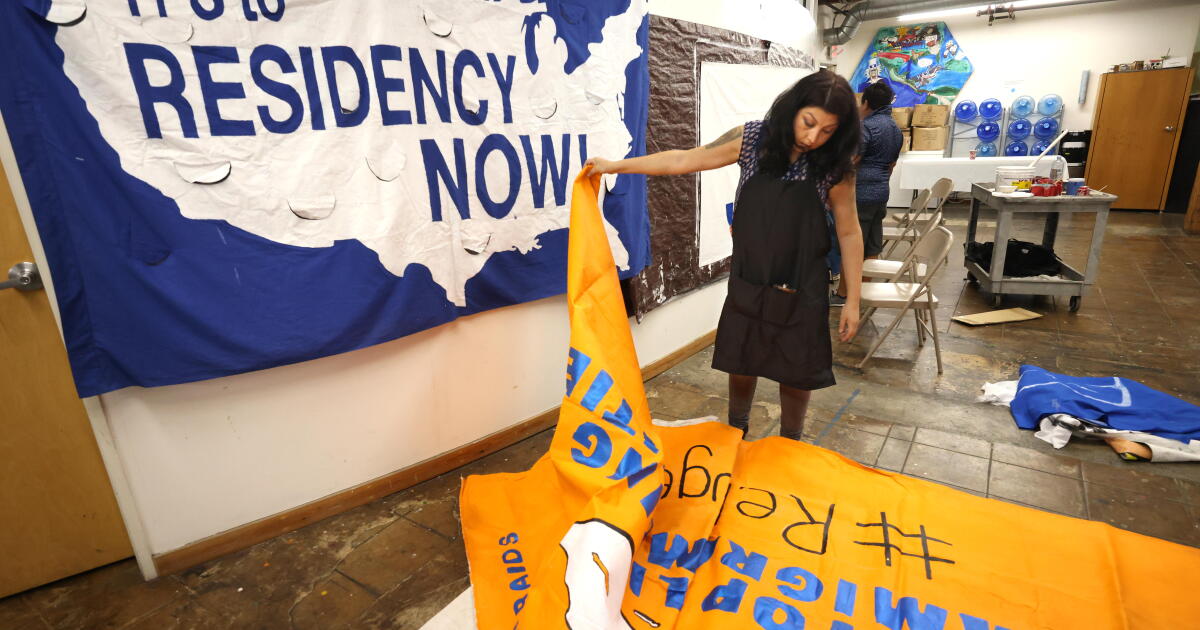
The deportation reprieve is known as Temporary Protected Status. About 1.3 million people from 17 countries had TPS when President Trump returned to office last year, and Salvadorans make up the largest group of remaining beneficiaries.
When the TPS expiration deadlines approached for other groups, the administration reached a decision within days of a deadline. Haitians lost their TPS protections and were encouraged to leave the country. Some have been deported.
For now, Salvadoran immigrants are stuck. Many have been able to keep their jobs, though others were laid off in the absence of an official work permit extension.
Last month, administration officials said an announcement on TPS for Salvadorans would come “at the appropriate time” and that they would retain work authorization in the meantime. Asked for updated guidance Friday, a Homeland Security spokesperson provided the same statement.
The Department of Homeland Security had been prepared to end TPS protections for Salvadorans but was stopped from doing so by the White House, Politico reported.
So what’s causing the limbo?
One theory focuses on political considerations — that extending the deportation reprieve could have made the administration appear weak on immigration to its conservative base, just ahead of next month’s consequential midterm election.
Another theory holds that ending TPS would shock El Salvador’s economy, which is heavily reliant on remittances from Salvadorans in the U.S. President Nayib Bukele, a Trump ally, advocated for more time, according to Politico.
In addition, the White House was warned that canceling TPS for Salvadorans would disrupt construction projects in Washington, D.C., the New Yorker reported and a source with knowledge of the warnings confirmed they had occurred.
A White House official, in a statement, said that “any assertion Washington D.C. construction projects had anything to do with a decision about El Salvador TPS are false.”
The Washington region has the second-largest Salvadoran population in the U.S., after Los Angeles, and the construction industry relies significantly on workers with TPS.
Trump is overseeing a sweeping aesthetic makeover of the nation’s capital, including his controversial 90,000-square-foot, $600-million ballroom complex at the White House. The president also ordered a facelift for the Lincoln Memorial Reflecting Pool, renovations at Lafayette Square, a public park across from the White House and the application of 23.75 karat gold leaf to four bronze and granite statues.
Contracts at sensitive locations such as the White House typically include requirements that workers be U.S. citizens. A White House official said there is no one with TPS status working on the East Wing Modernization construction project.
Asked about those working on the president’s other projects around the district, a Department of Interior spokesperson said contractors are obligated to ensure everyone working on any project is legally permitted to work in the U.S.
“The Department has not had any conversations about TPS or how it relates to construction projects around the city,” the spokesperson wrote in a statement.
People with TPS do work in other federal facilities.
Lauren Truslow is chief executive of 3D Enviro, a Virginia company that does hazardous materials abatement with a handful of workers affected by the TPS expiration for El Salvador. She said that after her employees’ federal badges expired last month, they were eventually reinstated until Oct. 9 — but not before missing several days of work.
TPS allows immigrants to obtain work permits and other documents. The uncertain status of TPS has led to sometime conflicting actions by government agencies or employers.
Advocates for TPS holders said some states have refused to renew their driver’s licenses, while others renewed licenses for different lengths of time. Truslow said some of her employees were only able to get federally noncompliant driver’s licenses, which they can’t use to get into federal facilities.
“At least they’re here in this community and they weren’t forced to leave,” she said. “I don’t want to look a gift horse in the mouth, but I think there were ramifications with the decision and still there’s uncertainty.”
Truslow said the government agency her company works with is unrolling a new process. After next week, her workers on that project can seek an approval extension for their badges that would last until March.
For construction companies, getting rid of TPS “would be a disaster,” said Arnoldo Diaz, co-coordinator of the National TPS Alliance, an advocacy group. “D.C. can’t function without TPS.”
Rebecca Shi, executive director of the American Business Immigration Coalition, has had ongoing conversations with Homeland Security and White House leaders about TPS. What sets Salvadorans apart, she said, is the decades of experience many bring to the construction industry, which would be impossible to quickly replace.
“Many are managers and business owners themselves, running large projects,” she said. “It’s a level of skill set and longtime loyalty that cannot be replaced overnight. Because the president has been in this industry for five decades, he instinctively knows that.”
That economic consideration, coupled with polls showing that Latino voters think Trump has gone too far with immigration enforcement, “are the much larger considerations than the president’s own pet projects,” Shi said.
Roxy Mejia, political director of a local painters union in Washingon, said 67% of the 1,500 members are Latino and many of them Salvadoran TPS holders.
Mejia said she and her father immigrated to the U.S. from El Salvador in 1985, before TPS existed. He worked on the Pentagon renovation after 9/11.
Under this administration, some Salvadorans with TPS have been declining government contract jobs out of fear of being detained, she said.
“Even the contractors have lobbied with us to keep TPS extending, because they would lose a lot of manpower in this area,” she said.