Paramount Skydance Chief Executive David Ellison faces a pivotal decision: Should he uproot his Hollywood studio — the birthplace of such film classics as “Sunset Boulevard,” “The Godfather” and “Beverly Hills Cop”?
Paramount floated shifting its home base to Tennessee or Texas in July, hoping to deter California Atty. Gen. Rob Bonta from waging a legal battle to block Paramount’s $111-billion acquisition of Warner Bros. Discovery.
Bonta rejected the tactic, calling it “blackmail.” His antitrust lawsuit, filed in collaboration with 11 other Democratic state attorneys general, has since stalled the largest Hollywood merger in decades and put Ellison in a jam.
The 43-year-old tech scion — a film aficionado who has spent two decades building his career in Hollywood — has told associates he doesn’t want to leave L.A. But he has signaled that he’s prepared to sell the historic studio lots and move Paramount’s and Warner Bros.’ operations from California if the merger isn’t finalized by next month, according to people familiar with the situation who were not authorized to comment.
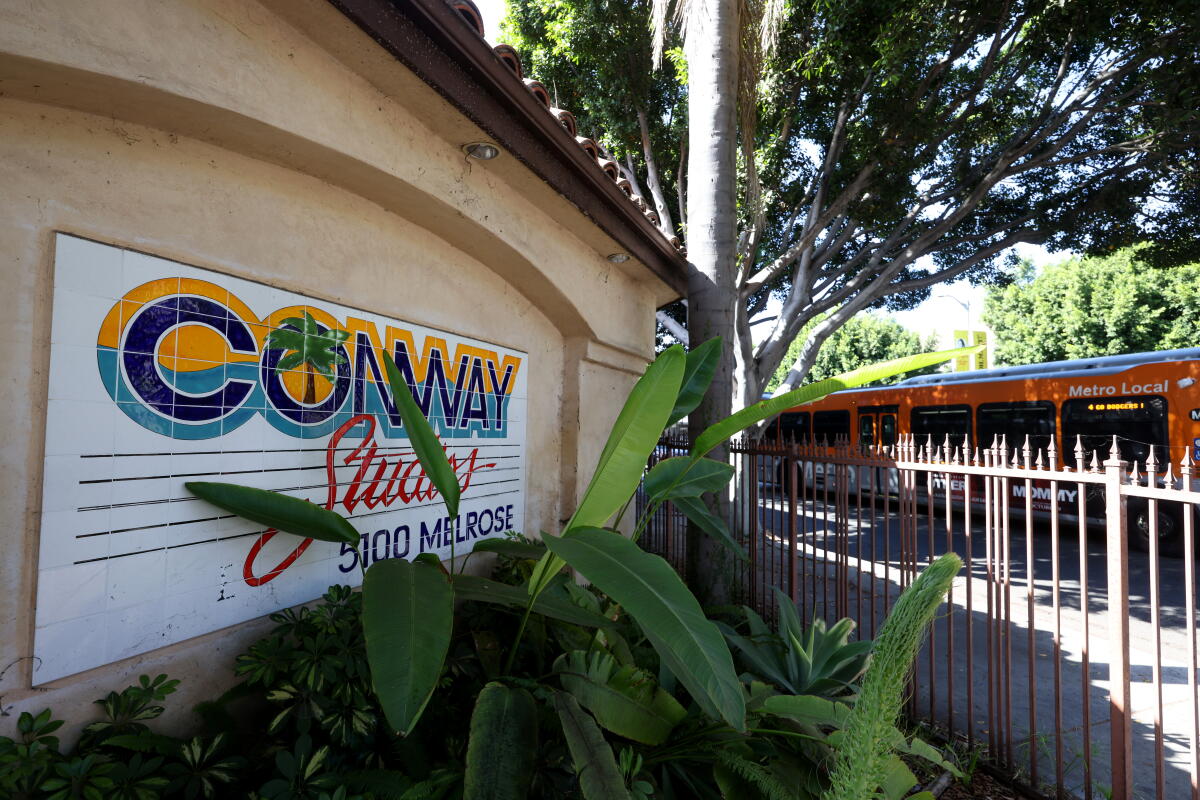
“It would be devastating,” Assemblymember Rick Chavez Zbur, who represents a district that includes the Melrose Avenue movie lot and neighborhoods near Warner Bros. in Burbank, said of a Paramount move. “We need to do everything we can to protect these important jobs in California’s iconic industry.”
Paramount declined to comment.
Ellison is frustrated after securing approvals from more than 65 regulators worldwide for the mammoth merger that would bring HBO, CNN, CBS, Comedy Central, MTV and TBS under the same roof.
“California is the fourth-largest economy in the world and the best place to do business,” a spokesman from Bonta’s office said. “Strong antitrust enforcement is essential so everyone can benefit from a vibrant economy.”
A federal judge in Oakland temporarily blocked the deal, prompting Paramount to agree not to finalize the acquisition until after a trial or June 1, whichever comes first. Settlement talks collapsed in late August after Bonta accused Paramount of leaking and misrepresenting their discussions.
Paramount has plenty at stake. U.S. District Judge Araceli Martínez-Olguín set the trial for March, but the company urgently needs the valuable Warner assets to better compete against tech behemoths. And beginning Oct. 1, Paramount must increase its payout to Warner Bros. Discovery shareholders by $7 million a day, so-called ticking fees that will heap more debt onto the highly leveraged transaction.
Paramount asked the judge to require California and other plaintiff states, including Nevada, Oregon and New York, along with the Writers Guild of America (which also sued) to post a $1.88-billion bond that could compensate Paramount for ticking fee costs. A hearing is set for Sept. 24.
For weeks, Paramount’s most potent weapon has been its in-the-works plan to leave L.A.
Lobbying has been intense, prompting a parade of politicians led by Gov. Gavin Newsom, L.A. Mayor Karen Bass and gubernatorial nominee Xavier Becerra to urge the two sides to settle the lawsuit.
“It’s a game of chicken,” Kevin Klowden, an economist and managing director at the Melcene Advisory firm, said in an interview. “But I’m not dismissing the threat because it is very real.”
Relocating from Los Angeles would allow Ellison’s cash-hungry media company to qualify for lucrative tax incentives offered by another state. Ellison’s short list includes Tennessee, Texas and Georgia. But leaving its longtime home would be costly for Paramount too, given how much of the talent and deal-making remains concentrated around L.A.
Tennessee’s Department of Economic and Community Development declined to discuss its negotiations with Paramount, but in a statement a spokesperson said the state “remains committed to working with companies across a wide range of industries that are exploring opportunities to invest and grow in Tennessee.”
Early this month, a pro-merger group was set to hold a news conference outside Paramount, but it moved its gathering to a warehouse a few blocks away after anti-merger activists planned a counterprotest.
The pro-merger organization, Neighbors for Strong Communities, was incorporated in Washington, D.C., in June and has lobbed text messages to Californians urging them to press Bonta to drop the case.
Speakers were concerned with just one issue: What would happen should Paramount pull out?
“What are we going to do with all these people who have invested their lives and many generations into building something here?” asked Keyla Wood, who moved from Mexico to L.A. about a decade ago after getting her start in Spanish-language soap operas.
“It’s been one thing after the other: The pandemic, the strikes and then it was the fires,” said Wood, who has worked as a stand-in for Eva Longoria and Salma Hayek. “So many people never work again.”
David Ellison is deciding whether to leave Hollywood.
(Bloomberg via Getty Images)
L.A.’s very identity is at stake, added Daniela Kelly, an actor and dancer who arrived from Brazil two decades ago.
“Everyone in the world sees Los Angeles and Hollywood as the platform for their dreams,” Kelly said. “Imagine if a huge studio with 100 years of history here just leaves? What will we be?”
Businesses like Kelly’s small Kreashen Studios USA, which provides video and podcasting space in Marina del Rey, depends on the region’s entertainment economy.
“It’s difficult financially right now to keep open,” she said. “So I’m pro having Paramount stay because this is the center, the heart of Hollywood.”
But deal opponents and some experts say the merger would actually worsen L.A.’s already bleak production picture.
Paramount has promised to cut $6 billion in expenses — a figure that doesn’t factor in the cost of ticking fees, which would add $650 million each quarter to the $81 billion that Paramount had anticipated paying Warner shareholders.
“We’ve seen from previous mergers that jobs have been lost,” L.A. City Councilmember Adrin Nazarian said at a City Hall event recently.
“When you look at the economic impact, it’s pretty staggering,” Kelly LoBianco, the department director, said in a recent interview. “An estimated $4 billion in economic output lost, and another $550 million lost in tax revenue at the local, state and federal level.”
The merger also could erase $79 million in tax revenue to Los Angeles County even if Paramount stays in L.A., she said.
But state and county tax revenue would plummet further should Paramount dispatch hundreds of its workers to Tennessee or some other state, Klowden said.
“If Ellison moves all the management out and all of the productions out, you’re talking about potentially tens of thousands of jobs,” Klowden said. “That, bluntly, isn’t just devastating to L.A. That becomes devastating to everybody.”
A report commissioned by Paramount from Los Angeles Economic Development Corp. predicted even steeper losses of at least 28,000 jobs should the studio move its entire operation out of state, according to a draft report given to Politico.
Under a less dire scenario, Paramount could shift its corporate headquarters to another state to qualify for incentives but still maintain large staffs in the creative hubs of Los Angeles and New York, where the company has its legal headquarters.
When the Ellison family acquired Paramount from the Sumner Redstone family last year, Ellison shifted operations to L.A., where he and other key executives work on the Melrose Avenue lot.
The threat to pull up stakes has created a disconnect after Ellison has spent more than a year touting how his family’s growing collection of media properties would strengthen traditional Hollywood.
The relocation campaign echoes a tactic used by software giant Oracle Corp., co-founded by Ellison’s billionaire father, Larry Ellison. For three decades, Oracle thrived in Redwood City, Calif., but in 2020, the company moved its headquarters to Austin, Texas, joining other California tech firms leaving in protest of the state’s high taxes.
The elder Ellison announced in 2024 that Oracle would be moving again, this time to Nashville, although that relocation hasn’t been finalized.
Paramount would risk leaving behind a skilled talent pool filled with experienced production workers and entertainment executives, Klowden said.
Fleeing L.A. could prompt “a talent bleed-out,” Klowden said. “Creative types are like: ‘Would I feel comfortable moving there?’ And, ‘What if I move there and something goes wrong? There would be nowhere else for me to go.’”
He pointed to Nissan’s 2006 U.S. headquarters move to the Nashville area from Gardena in L.A.’s South Bay, which dramatically reset the automaker’s workforce as fewer than half of its Southern California employees made the trek to Tennessee.
On Friday, a magistrate judge told both sides to identify dates in late October to meet for court-ordered settlement talks.
Each has motivations to settle — including avoiding a years-long court fight. Bonta has said Paramount must be willing to part with assets to alleviate market concentration, which could lead to a sale of Warner’s New Line Cinema, which has rights to “The Lord of the Rings” and “The Conjuring” franchises, and potentially cable channels such as CNN, Food Network or Cartoon Network.
Paramount, as part of a settlement, could abandon plans to leave L.A.
“All of the parties need to understand what this [issue] means to workers and small businesses,” Zbur, the local Assembly member, said. “I’m hopeful for a settlement that assures that Paramount and Warner Bros. will maintain their operations and remain a significant economic and employment force in Los Angeles.”
Times staff writer Cerys Davies contributed to this report.
This spot, just a short stroll from the Long Beach Museum of Art Downtown, doesn’t bother trying to graft cafe culture onto the cat-visiting experience, choosing instead to double-down on a whimsical cat motif that includes kitty murals and paw prints splashed across interior and exterior walls. (If you need a caffeine fix, there is a Starbucks a few blocks away.) The central element inside the space is a wooden tree-like structure where you’ll find many of the 50-plus cats provided by rescue partner Long Beach Felines lounging or climbing, while others roam about, pouncing on toys, wiggling through fabric tunnels or prancing on a cat exercise wheel the size of a truck tire.
Up to 25 people can kick it with the kitties at any one time, and the 50-minute sessions can be booked online. Other offerings include: Cats & Mats yoga (offered one Friday evening a month), Crochet With Cats (one Sunday afternoon a month) and cat-accompanied sound baths. (An employee I chatted with said the crochet class, with its preponderance of dangling yarn, is particularly popular with the cats.)
Price: $19.99 for 50-minute sessions, which start at the top of the hour
Hours: Monday, 11 a.m.-6 p.m.; Thursday-Sunday, 11 a.m.-6 p.m. (reservations end 1 hour before closing)
Pro tip: A shorter and less expensive option — $10 for 20 minutes — is available on a walk-in basis only at the top of the hour, depending on capacity.
The U.S. Navy’s newest stated requirements for its Collaborative Combat Aircraft (CCA) effort point toward a drone that sounds very much like an advanced uncrewed combat air vehicle (UCAV), rather than a smaller and less capable autonomous ‘loyal wingman’ intended to economically augment crewed fighters. Overall, the new requirements serve as a tacit admission that the Navy is still looking for the kind of drone that it previously explored with extreme promise in the X-47B and Unmanned Carrier-Launched Airborne Surveillance and Strike (UCLASS) program. The UCLASS requirements were abruptly shelved and replaced with an uncrewed carrier-based tanker effort, which resulted in the MQ-25 Stingray. This act was seen by some as one of the most controversial and puzzling procurement decisions in modern naval aviation history.
The traditional loyal wingman or CCA concept generally envisions uncrewed ‘fighter’ aircraft whose primary purpose is to complement crewed companions. This typically involves extending the crewed platform’s sensor reach, carrying additional weapons, and opening up a greatly expanded tactics playbook. An advanced UCAV, by contrast, is fundamentally an independent combat aircraft in its own right, designed to deliver weapons and other effects similar to what a crewed platform can provide without requiring a crew onboard or nearby. As such, it is more capable, survivable, and an overall ‘exquisite’ asset with a heavier payload, more capable of taking the place of a crewed aircraft in certain roles, rather than augmenting them, although there is nothing keeping them from working in a loyal wingman type role if required.
A rendering of a U.S. Navy Super Hornet working alongside smaller collaborative drones. Collins Aerospace/screencap
Yesterday, Naval Air Systems Command (NAVAIR) released a new Request for Information (RFI) that lays out an unusually demanding set of requirements for a CCA Increment 1 prototype. Among other things, the Navy wants an aircraft capable of operating from its aircraft carriers, carrying plentiful weapons, conducting strike missions in highly contested environments, and operating both independently and as part of a larger crewed-uncrewed team.
The combination of these requirements provides a much clearer picture of what the Navy wants its future carrier-based combat drones to be capable of.
Perhaps the most striking requirement concerns weapons carriage. The Navy says the Increment 1 CCA must have the ability to carry four externally mounted weapons weighing up to 2,500 pounds each throughout the target flight envelope and during carrier certification activities. That equates to a potential external weapons load of 10,000 pounds, although it should not necessarily be interpreted as the aircraft’s normal operational configuration. By way of comparison, a very heavily loaded F/A-18E/F Super Hornet might launch with close to 17,000 pounds of weapons and stores — though that is far from common.
An F/A-18F equipped with a uniquely massive weapons load, including no fewer than 10 1,000-pound GBU-32 JDAMs slung under its wings. All in, this stores load-out weighed roughly 16,750 pounds. U.S. Navy
Meanwhile, the kinds of drones that the U.S. Air Force is currently exploring under its own separate CCA Increment 1 effort, namely the General Atomics YFQ-42A Dark Merlin and Anduril YFQ-44A Fury, are air-to-air optimized. Their primary loadout is widely expected to be a pair of AIM-120 AMRAAM missiles, which is just a fraction of the Navy’s newly stated payload requirement.
A YFQ-44A Fury drone carrying an inert AIM-120 air-to-air missile during a flight test. U.S. Air Force
The RFI NAVAIR put out yesterday also specifically asks respondents to address internal weapons carriage, with both capacity and survivability among the factors the Navy will consider. Internal stores carriage would offer obvious advantages in reducing an aircraft’s radar signature and preserving aerodynamic performance.
The Navy also wants the aircraft to have a substantial combat radius while carrying its required weapons load, as well as the ability to spend at least 30 minutes on station while retaining sufficient fuel reserves to return to the carrier.
For a CCA, carrier operations add another layer of complexity. The aircraft must be capable of catapult launches and arrested landings from both Ford and Nimitz class carriers, while operating within existing carrier deck, elevator, hangar, and support constraints.
F/A-18E/Fs and F-35Cs seen on the deck of the Nimitz class supercarrier USS Theodore Roosevelt on July 10, 2026. Seaman Apprentice Tyler Harstad/U.S. Navy
Autonomy is similarly central to the concept. The Navy wants mission and flight autonomy that can support the aircraft from launch through recovery, along with the ability to incorporate third-party mission software. The prototype is also expected to demonstrate both individual and multi-aircraft autonomous operations. While crewed-uncrewed teaming is a fundamental part of the concept, the latest requirements make it clear that the aircraft will not depend on a crewed aircraft continuously supervising its actions.
The video below from Collins Aerospace offers a notional look at what crewed-uncrewed teaming involving carrier- and land-based CCA-type drones might look like in the future.
Collaborative Mission Autonomy
In terms of the survivability requirement, the Navy specifically wants the aircraft to operate in highly contested environments and is asking industry to provide approaches for assessing and managing survivability during collaborative operations. The consideration of internal weapons carriage is another indication that signature reduction and survivability are important design considerations, pointing to a low-observable (stealthy) platform.
All of this begins to blur the distinction between the Navy’s Increment 1 CCA plan and a traditional survivable UCAV concept.
That does not necessarily mean the Navy is abandoning the CCA concept entirely in favor of resurrecting the carrier-based UCAV concept. Rather, it suggests that the distinction between the two becomes blurred as requirements overlap. There also remains the strong possibility (or more likely probability) that the Navy will seek to explore CCA designs closer to what the Air Force, as well as the U.S. Marine Corps, are pursuing. This could potentially include development of carrier-based versions of one or more of those designs under a future increment.
A rendering depicting General Atomics carrier-based Gambit 5 drones operating from a British Queen Elizabeth class carrier. General Atomics
An earlier NAVAIR sources-sought notice released in July outlined an expansive vision for future carrier-based uncrewed aircraft covering missions including surface warfare; strike warfare; anti-submarine warfare; air warfare; electronic warfare; intelligence, surveillance, reconnaissance and targeting (ISR&T); mobility; and logistics. That notice also pointed toward aircraft capable of attacking targets at least 1,000 nautical miles from the carrier without requiring aerial refueling, while leaving open the possibility of extending that reach with tankers.
The mission sets as defined in the earlier RFI from July 2026. The acronyms JFC and CVW here refer to the joint force commander and the carrier air wing, respectively. U.S. Navy
Intriguingly, the new RFI does not include an explicit maximum range target, but based on the payload requirements alone, this would be very considerable, reflecting the Navy’s concerns about fighting a future conflict across the vast distances of the Pacific. Traditional advanced UCAVs usually have a combat radius measured in thousands of miles, not hundreds, far exceeding the reach of their crewed fighter counterparts.
Whatever the possible range target, the planned weapons load also points to a substantial airframe. Indeed, the deck-space requirement outlined in the RFI is relevant here. The CCA’s “spot factor” cannot exceed that of an existing fourth-generation fighter, meaning that it could potentially be as large as an F/A-18E/F.
Otherwise, however, the latest CCA Increment 1 RFI is considerably more concrete.
The Navy wants a first flight of a prototype within 24 months of a contract award and carrier certification during a three-year development effort. It also wants a path toward an affordability target of around $30 million per aircraft. This kind of price point would put it at the top end of the CCA concepts we have seen so far, and is fairly ambitious for a higher-end UCAV.
Navy officials said in 2024 that the CCA’s unit cost target was around $15 million, reflecting the idea that the aircraft would be sufficiently inexpensive to be expendable under some circumstances. The new RFI instead asks industry to outline a path toward an affordability target of $30 million per aircraft. That is still a fraction of the cost of a modern carrier-based fighter, but it suggests the Navy is willing to pay considerably more for an aircraft with substantially greater weapons capacity, range, autonomy, and survivability.
Concept artwork showing Boeing MQ-28 Ghost Bat CCAs alongside a Super Hornet. Boeing
As to the companies that might respond to the RFI, in August of last year, the Navy confirmed that Anduril, Boeing, General Atomics, and Northrop Grumman were all on contract for “conceptual” CCA designs. At that time, the service also said Lockheed Martin had been hired to work on a common control architecture for the drones. Lockheed Martin is already the prime contractor for the control stations and associated software the service is integrating onto its carriers now to support the MQ-25.
The new RFI, however, marks a shift from the conceptual studies described last year toward a specific prototype effort. The Navy is seeking industry input as it shapes the acquisition strategy, with responses due September 18.
In the past, the Navy has said it is aiming for the total makeup of carrier air wings to eventually be 60 percent or more uncrewed, although the precise balance is still to be determined and will certainly be informed by the lessons of Navy CCA Increment 1. Exactly how the CCA might fit in with the Navy’s sixth-generation crewed fighter – known as F/A-XX – is another intriguing prospect, but would clearly be optimized to work alongside that platform.
Now, back to the Navy’s earlier effort to develop a high-end, stealthy, carrier-based UCAV capability. Northrop Grumman built two X-47B demonstrators for that program, both of which underwent extensive flight testing, including carrier operations and aerial refueling. The aircraft flew from 2011 for around half a decade. As of 2022, both X-47Bs had been earmarked for eventual public display at museums.
The two X-47Bs together. Northrop Grumman
The two X-47Bs had offered far more than a glimpse of what a carrier-based UCAV capability might look like, and the base design was set to evolve into an operational type. These were large, stealthy UCAVs with thousands of pounds of payload and endurance that far outstripped crewed naval fighter aircraft. The follow-on UCLASS program aimed to see the capabilities the X-47 demonstrated put into operation via a new aircraft procurement effort. However, it transformed into the radically different, less ambitious, tanker-focused Carrier-Based Aerial-Refueling System (CBARS) program in the mid-2010s. This, as noted, led to the MQ-25 Stingray.
To this day, the cancellation of UCLASS remains a very sore spot and is widely seen as a nearsighted and even reckless decision. This mirrored earlier moves by the USAF, which had demonstrated how revolutionary UCAV capabilities could be, only to entirely walk away from the concept. In fact, that service went even further, appearing to erase those developments from recent memory. You can read all about this bizarre and troubling inflection point in American air power history and the glaring questions surrounding it in this past feature.
MQ-25 T-1 seen during deck handling testing aboard the USS George H.W. Bush. U.S. Navy
Fast forward to today, and the Navy is getting the MQ-25, which is primarily a tanker, but clearly, that was not the only mission set that influenced its exotic design.In fact, these Navy requirements could open the door for the Stingray platform to potentially fulfill at least parts of the Navy uncrewed combat drone role in a ‘cleaned-up,’ stealthier configuration, something we have explored in depth in the past.
Overall, the takeaway here is that the Navy’s latest CCA requirements raise the intriguing possibility that its earlier UCAV ambitions are resurfacing, this time under the CCA banner. This is happening as China is moving very quickly with its own stealthy UCAVs, a number of which are in testing, and one of which is very mature and is navalized for shipboard operations – the GJ-11 Sharp Sword. The GJ-11 sounds very similar to the Navy’s requirements wish list, including its ability to act independently and teamed with crewed counterparts, as well as its general size and need for survivability.
While an RFI only represents an early part of the contracting process, in practical terms, it looks like the Navy is asking whether industry can finally make good on the past promise of a U.S. Navy UCAV.
TODAY’S NUMBERS99.73 Dollar Index (DXY) · 4.81% US 10-year Treasury yield · $4,304 Gold, per ounce All three are rising together — the market pricing a Fed rate hike into a war, not a slowdown, a combination not seen in years.
THE HOOK
Late Monday, Donald Trump signaled the ceasefire with Iran was effectively over, threatening fresh strikes and casting doubt on the reopening of the Strait of Hormuz. Brent crude jumped past $90 a barrel. By Wednesday morning, the US Dollar Index had climbed to 99.73 — its highest in nearly three weeks — and the 10-year Treasury yield touched 4.81%, just shy of a 52-week high. The reason: traders now put the odds of a September Fed rate hike near 65–70%, not a cut.
THE MECHANISM
The chain runs cleanly enough to name. Iran’s conflict with the US raises the odds of a shipping disruption through Hormuz, which carries roughly a fifth of global oil supply; oil-price risk feeds straight into headline inflation; and a Fed under Chair Kevin Warsh — already fighting credibility questions after an ambiguous hold in July — cannot afford to look soft on prices while a war pushes them up. That is why futures markets have swung from pricing no move in 2026 to pricing a hike at the September 15–16 meeting.
Stay ahead of the geopolitical week.
MD Briefing delivers expert analysis across five global fronts — the Indo-Pacific, energy, geoeconomics, European security, and the Middle East — every Monday morning. Free.
Higher US rates make dollar assets pay more relative to everywhere else, which is the direct channel behind both the stronger DXY and the 4.81% ten-year. The winners are near-term and narrow: holders of short-dated Treasury bills, whose yields rise with the policy rate; US money-market funds; and, oddly, the stablecoin issuers whose reserves sit almost entirely in T-bills and now earn more for holding them. The losers are broader and slower-moving: emerging markets carrying dollar-denominated debt face a double bill, since a stronger dollar raises the local-currency cost of repayment at the same moment their own borrowing costs rise in sympathy with Washington’s. Oil-importing economies — India, Turkey, Japan, the eurozone — take a second hit, paying more for crude in a currency that is simultaneously getting more expensive to buy. Gold, meanwhile, is caught between two forces: safe-haven demand from the war pulls it up, rate-hike expectations pull it down, which is why it sits near $4,304, off its recent peak but still up 21% over the year.
WHY IT MATTERS
The apparent contradiction — dollar strong this week, dollar weaker for the decade — is really two different clocks running at once. Reserve managers make multi-year diversification bets; traders react to a war in hours. The IMF’s COFER data put the dollar at 57.13% of allocated reserves in the first quarter of 2026, down from 72% in 2000, and a recent survey of reserve managers found roughly three-quarters expect that share to keep falling over the next five years. None of that is undone by one hawkish week from Kevin Warsh.
What is new is where the dollar’s reach is actually growing: not in central bank vaults but in stablecoins. The GENIUS Act framework — now the subject of a Treasury rulemaking comment period that closes in October — has pushed issuers to back their tokens almost entirely with short-dated Treasuries, and forecasts from Standard Chartered and Senator Bill Hagerty put potential T-bill demand from stablecoins as high as $2–2.3 trillion. That is dollarization happening retail-first, in emerging-market wallets and crypto exchanges, invisible to COFER. For Washington, a Fed hike timed to a war raises borrowing costs precisely when the deficit needs cheap financing, and when the countries least able to absorb dearer dollars — many of them US partners, not adversaries — get hit hardest. That is a form of collateral leverage no sanctions list ever names.
WATCH FOR
The September 15–16 FOMC meeting is the date that resolves this. A 25-basis-point hike would confirm markets are right to treat this as an inflation fight, not a growth scare, and would likely push the dollar and yields higher still. A hold — especially if Hormuz tensions ease and oil retreats from $90 — would suggest Warsh blinked, and could send gold back toward its highs faster than the dollar can catch up. Either way, watch the Fed funds futures curve shift in the two weeks before the meeting.
WASHINGTON — President Trump on Friday said the U.S. has entered an agreement with Venezuela to take control of 65 billion barrels of the South American country’s oil reserves.
Trump in a social media post announced the agreement he said was negotiated by Secretary of State Marco Rubio, Defense Secretary Pete Hegseth and Venezuela’s interim President Delcy Rodríguez.
“The United States of America has just entered into an Agreement with the Country of Venezuela on, THE BIGGEST OIL DEAL IN WORLD HISTORY!” Trump wrote.
The Venezuelan government’s press office did not immediately respond to a request for comment.
The announcement of the deal comes nearly nine months after the U.S. military at Trump’s direction carried out an operation to capture Venezuela’s president Nicolás Maduro and spirit him to the United States to face federal narcoterrorism and drug trafficking charges.
Trump faces mounting pressure to address high gas prices as the war in Iran on Friday reached a six-month milestone with no conclusion in sight. The U.S. has tapped its strategic petroleum reserves, which in early August fell below 300 million barrels, down by more than 100 million barrels since the start of 2026.
The U.S.-Israel war against Iran has led to a dramatic slowdown of Gulf oil moving through the Strait of Hormuz, which about 20% of the world petroleum passed through prior to the conflict.
The average price of gas in the U.S. stood at about $4.09 a gallon on Friday, according to AAA. The average price was $3.21 at the same time last year.
Trump in his social media post Friday evening alluded to the Venezuela deal being part of a private partnership. The White House did not immediately reply to a request for comment about the private sector partners involved in the deal, and details on how the arrangement would work were not provided.
Persuading big American oil companies to return the region could face headwinds given and decades of badly damaged infrastructure.
Days after the ouster of Maduro, Trump gathered oil executives at the White House and called on them to rush back into Venezuela. Executives expressed interest in the opportunity but there was also a measure of caution given their past experience in the country.
Darren Woods, CEO of ExxonMobil, the largest U.S. oil company, said at that moment he saw the country as “un-investable.”
But Trump has insisted that his administration has brought a measure of stability to Venezuela.
He has argued that Venezuela stole U.S. oil when former Venezuelan President Hugo Chávez’s moved decades ago to nationalize hundreds of foreign-owned assets, including those owned by American oil companies.
Rodríguez, in one of her early moves after taking power, signed a law that opens the nation’s oil sector to privatization and reversed a bedrock tenet of the self-proclaimed socialist movement that had ruled the country for more than two decades.
Rubio said on X that the agreement would usher in $100 billion in private investment into Venezuela and lead to lower gas prices in the United States.
“This deal is a huge win for both the American and Venezuelan people,” Rubio posted.
Venezuela has one of the largest oil reserves in the world, with an estimated 303 billion barrels of crude oil in the ground. That’s about 17% of the world’s supply, according to the U.S. Energy Information Administration.
Madhani and Binkley write for the Associated Press. Regina Garcia Cano in Caracas contributed to this report.
Jason Heyward didn’t give Freddie Freeman the heads up that he’d secured a job in the Dodgers’ front office. He hadn’t told any of his former Dodger teammates. But Freeman, who’s known Heyward for two decades, now says he’d heard rumblings. He was just going to let his longtime friend break the news himself.
On May 13, midway through a home series against the Giants, Freeman walked into the food room at Dodger Stadium, and, to his surprise and confusion, there was Heyward.
“What are you doing here?” a slack-jawed Freeman asked.
“Well, I’m working,” Heyward said.
No text. No call.
“He waited to tell me in person,” Freeman said.
Heyward technically started his job as a special assistant at the beginning of May, but he was on site for the first time a couple of weeks later. That game against the Giants, with Heyward looking on as a Dodgers special assistant for the first time, Freeman stole a base — a rarity in recent years.
“I wanted to ask him, what was my grade?” Freeman said. “What do you give me, a 70 on the 20-80 (scouting) scale?”
Freeman chuckled. Though he has long been an adept baserunner, it’s never been because of his speed — not even in high school, when teams were scouting him for the 2007 MLB draft.
Jason Heyward, who joined the Dodgers as a special assistant earlier this season, stands on the field before a game against the Seattle Mariners at Dodger Stadium last month.
(Jayne Kamin-Oncea / Getty Images)
That’s when Freeman and Heyward first met, the summer before their senior year. They had no way of knowing that they’d go on to experience baseball and life milestones together for the next two decades and counting.
They were both drafted by the Braves, Heyward in the first round (No. 14 overall), and Freeman in the second (No.78). They became roommates and teammates, debuting in the same year.
Over the course of two long and decorated MLB careers — which includes Heyward’s five Gold Gloves, Freeman’s 10 All-Star selections, and five World Series rings between the two of them — their paths diverged and reconnected multiple times.
In this most recent chapter, Heyward has ventured into the front office, Freeman is adding to his Hall of Fame candidacy, and they’re once again on the same team.
“To see us now, it’s crazy,” Freeman said. “It really is.”
Strangers
It’s rare for friends of 20 years to be able to pick out the details of their first encounter. Over the decades, fond memories start to jumble and fade.
But not for Freeman and Heyward.
Without hesitation they’ll bring up August 2006, when they were both 16 and played on opposing teams in the Aflac All-American Classic, held that year in San Diego. They really got to know each other during the down time that week, hanging out in the communal game room in the hotel.
When they met, Freeman was playing Pop-A-Shot.
“That’s where he was most of the time,” Heyward said.
The group could gravitate to another part of the room to “trade cards, sign autographs, talk a little shop,” and Freeman would somehow end up back at the Pop-A-Shot.
That, however, didn’t stop Freeman and Heyward from hitting it off.
On the surface, they were an opposites-attract kind of duo, in pretty much every category but height — listed as 6-foot-4 and 6-5 during that showcase. Heyward grew up in the Atlanta metropolitan area, playing on the East team, and Freeman was an Orange County native, representing the West.
Their priorities and aspirations pulled them together.
“You kind of look around and see all the other guys there and see what they’re doing, how they talk, how they act,” Freeman said. “And then you run into Jason, and then, I’m like, ‘That’s who I want to hang out with.’ He had everything figured out at such a young age.”
Heyward was the more hyped prospect, and the star of the East in that game, with four stolen bases, a pair of hits and two RBIs.
The second time Heyward reached first base, Freeman said to him, “You’re not going to steal again.” Heyward’s response: “I’m going again.”
“I looked down, he was kicking dirt on my shoes, all that,” Heyward said. “So, same guy who he is today on first base, that’s who he’s always been.”
Even in practice, Freeman’s competitiveness stood out to his new friend.
“One hundred percent competitive, but it was fun for him to be competitive,” Heyward said. “Not competitive in like, ‘Get off me,’ [stuff] like that. He welcomed me.”
Though they became fast friends, and ran into each other on the showcase circuit throughout their senior year, who knows what would have happened if the 2007 draft had played out differently?
Dodgers first baseman Freddie Freeman takes his shoes off after batting practice during spring training at Camelback Ranch in Phoenix in February.
(Eric Thayer / Los Angeles Times)
Draftees
Freeman was scheduled to take a final exam the day he was drafted.
That year, the draft made its television debut. The first round — including the Braves selecting hometown kid Jason Heyward — was broadcast on ESPN2. Heyward’s selection wasn’t a surprise — “We know the Braves have a history of drafting young players from the area,” he said.
But Freeman would have to be in front of a computer to track the subsequent rounds. He finagled permission to go home until he was selected, and then return to school.
“We were going along, and I had some other teams calling for me as a pitcher,” Freeman said. “And I was like, ‘I don’t want to pitch, let me hit first.’”
Eventually the Braves called, with their second pick of the second round approaching. Freeman, wasting no time, kicked off the conversation with: “I don’t want to pitch.”
“And they’re like, ‘Good, because we don’t want you to,’” Freeman recalled.
Finally. The excitement began to set in.
Even after the Braves drafted Freeman, it wasn’t a done deal on his end.
He’d committed to Cal State Fullerton, the alma mater of his father, Fred Freeman. And Freddie had his sights set on becoming a CPA and taking over his dad’s business.
A couple days after the draft, at 2 or 3 a.m., Freddie knocked on Fred’s bedroom door with a decision.
“Dad, I don’t want to go to college,” he said. “I want to play baseball.”
They talked for a while. And though Fred had wanted his son to pursue an education, he softened his stance, supporting Freddie’s dream. They agreed, Freddie remembers, that if he didn’t make it to the big leagues in four years, he’d quit to follow the original plan.
“Back then, I was like, ‘Oh, yeah, that’s fine,” Freeman said. “And now you think about it — that was crazy to think, right? Four or five years in the minor leagues, that’s what the norm is. … We didn’t know any better.”
That set Freeman and Heyward on course to reunite, this time as teammates.
Heyward, poised to sign for above slot value, had to wait until mid-August to sign his contract ($1.7-million bonus). So, when he finally joined the Gulf Coast League, for all of eight games before finishing the season with rookie-ball Danville, he remembers Freeman greeting him with a disgruntled, “Hey, man, I’ve been waiting on you. I’ve been here, it’s been hot.”
“My bad,” Heyward said. “I couldn’t control it.”
Freeman broke into laughter.
After the instructional league that fall, Freeman and Heyward decided to room together in spring training. And though the accommodations changed throughout the years, they’d remain roommates through 2010, their debut season in the majors.
Roommates
Outfielder Jason Heyward, left, and infielder Freddie Freeman celebrate before the start of a spring training game against the Toronto Blue Jays in March 2010.
(Al Messerschmidt / Getty Images)
There’s no better way to quickly learn a person’s idiosyncrasies than living with them.
In terms of morning routines, Heyward and Freeman were on far ends of the spectrum. If Heyward was going to start getting ready at 12:30, Freeman was waiting until 12:48 — and it was always something that specific too. Extremely structured to this day, if something throws off Freeman’s schedule, his “robot mind,” as he puts it, malfunctions.
While Heyward would marvel at how close Freeman was willing to cut it, Freeman would give Heyward grief for how long he’d take to get ready.
“In the minor leagues, we had to shave, had to keep it low,” Heyward said. “And I’ve been, at that time, shaving since I was 15. So sometimes I had to shave twice a day, otherwise it was just freaking uncomfortable.
“So, yeah, if I may take a long time to get ready, ‘You’re rocking with what you’re rocking with; you can just get out of bed, literally wet your hair, and then go.’”
On the road, Freeman still jokes, Heyward’s BlackBerry phone came into play. The team would put the players up in hotel rooms with two beds, subjecting Freeman to the incessant clicking of Heyward texting.
“Anybody can nitpick something, but if I complain about a BlackBerry texting, that’s not really anything,” Freeman said. “‘Sorry, I had friends,’ he would say.”
Freeman and Heyward were inseparable. They’d hit back-to-back in the lineup, and then get on the bus for a 13-hour ride and sit right next to each other.
They rose quickly through the farm system, one after another, sharing the highs and lows.
“There was some irony in the fact of how he was treated in the South, versus how I’m treated in the South, even though I’m from there,” said Heyward, who is Black. “And that goes back to even in the minor leagues.”
A road trip to Savannah, Ga., in 2008 immediately came to mind for Freeman, who is white. From first base Freeman could hear everything the crowd said to Heyward in right field — including the racial slur a fan yelled in the middle of a game.
“It was the first time I ever heard the N-word,” Freeman said. “It was crazy to me. And I was almost in tears. I wanted to run into the stands.”
In fact, he started walking over there, before Heyward stopped him.
“For me, obviously, that’s been my whole life, especially growing up where I grew up,” Heyward said. “But it’s just a good perspective on him not hearing it before. And I think that’s it.
“But, yeah, if anybody would have tried him on anything, I’m fighting them too. … What’s understood didn’t have to be explained there.”
The fact that Heyward could remain so calm was eye-opening for Freeman. The pair came away from that incident, and more subtle slights (like having to wait 20 minutes to be seated in a mostly empty restaurant), with a better understanding of each other.
“For an 18-year-old to have that be a normal thing is even more saddening,” Freeman said. “To this day, it’s hard to even talk about. That those kids, or young adults [in the stands] grew up thinking that was an OK thing to say, it’s just baffling to me.”
Teammates
Heyward’s highly anticipated MLB debut came on April 5, 2010, opening day at Turner Field. And in his first major league at-bat, he smoked a three-run home run to right field.
Freeman, on the other hand, started the season in triple A. But that didn’t split up the roommates. Freeman made the 35-minute drive northeast to Gwinnett, and Heyward headed south for 15 minutes.
By late August, it was obvious Freeman would be among the Braves’ call-ups when rosters expanded on Sept. 1.
Sure enough, Heyward and Freeman both headed south that day — still driving separately because of their differing morning routines.
Freddie Freeman, left, Jason Heyward, center, and Brian McCann chat during a workout at spring training in Kissimmee, Fla., in 2011.
(Phelan M. Ebenhack / Associated Press)
“I walked into Turner Field, and saw my name in the lineup, hitting sixth, and I almost threw up,” Freeman said.
Seeing familiar faces helped. Freeman knew many of the coaches and his new teammates from major league spring training the past two years. And, of course, there was Heyward.
“Just a special day,” Freeman said. “I didn’t get any hits, but I didn’t care.
“Jason got all the hits for us, he went four for four. He was so happy I was there. He took all my hits.”
As Freeman went through his big-league firsts, he appreciated having Heyward, who’d already checked them off for himself, by his side.
Freeman looks back fondly on their plane rides. He and Heyward would sit together, eating Chick-fil-A.
Raising the level of decadence, the next year, Freeman had his first “show dinner” with Heyward and veterans such as Eric Hinske and Chipper Jones at a steakhouse in Seattle called El Gaucho.
“I was like, this is the coolest thing ever,” Freeman said.
“Those were both of our ‘college years,’” Heyward said. “So seeing the real world a little bit, spending time on flights, clubhouse, dinners, enjoying teammates, becoming young adults.”
Jason Heyward, right, high-fives teammate Freddie Freeman after scoring off a single by Justin Upton in the first inning of a June 2013 game against the Arizona Diamondbacks.
(David Goldman / Associated Press)
They were also playing well. Heyward and Freeman finished No. 2 in NL rookie of the year voting in consecutive years. And they started filling up their own individual trophy cases, while the Braves made it to the postseason three times in five years.
“Everyone has fun playing baseball,” Freeman said, “but to experience the big leagues with your best friend, I don’t know if you can get much better than that.”
Rivals
As soon as the Braves were eliminated from the 2014 postseason chase, the team fired general manager Frank Wren. Plunging into a rebuild, new president of baseball operations John Hart’s first big move was to trade Heyward to the Cardinals for pitching.
“That was the first time I saw the business side of baseball,” Freeman said. “Sad day. But it opened my eyes to, this isn’t just fun all the time. The fun has to end at some point.”
Freeman and Heyward kept in touch and celebrated each other’s successes. But it wasn’t the same.
“That was like, ‘Alright, this is becoming more of a job,” Heyward said.
Heyward leveraged that platform season in St. Louis into an eight-year free agent contract with the Cubs worth $184 million, setting a franchise record.
The Braves extended Freeman. Then when he finally hit free agency after the 2021 season, he became the first infielder to sign a $100-plus million deal with the Dodgers, signing a contract for six years and $162 million.
For eight years, Heyward and Freeman played for opposing NL teams. Then, an unexpected turn of events set the ball rolling for a reunion.
In early August 2022, when Heyward had already been on the injured list for over a month with what the Cubs called right knee inflammation, president of baseball operations Jed Hoyer announced that the team intended to release the veteran right fielder from the final year of his contract after the season.
Freeman saw an opportunity. And for the rest of the year, he didn’t let Dodgers president of baseball operations Andrew Friedman or general manager Brandon Gomes walk by without hearing his pitch for Heyward.
“I’ll shoot you straight,” Freeman told them. “I don’t know what you’re going to get from the baseball player Jason Heyward, but I know what you’re going to get from the person Jason Heyward, and what he would mean inside of a clubhouse, and what he can do to young guys and help them. There’s no one better to be in this clubhouse than how you are envisioning clubhouse culture and chemistry than to bring this guy in.”
Friedman doesn’t have an exact count on the number of times Freeman mentioned Heyward to him in those months, “but it was definitely a lot.”
Friedman and Gomes were intrigued enough to have their group dig into the evolution of Heyward’s swing. But they still had questions, like how open was he going to be to diving into adjustments with their staff?
Soon after he was officially released, the Dodgers set up a Zoom.
“He was all-in,” Friedman said, “in terms of open-mindedness, desire to change some of the recent narrative, and he was excited about the prospect of working with our guys and doing what he could to help us win games, both on and off the field.”
Heyward said he heard from the Dodgers three times before he heard from any other team in free agency.
“That was how persistent they were,” he said.
Jason Heyward, left, celebrates a run with Freddie Freeman against the Texas Rangers in June 2024.
(Ronald Martinez / Getty Images)
Heyward signed a minor-league deal with the Dodgers in early December. He spent time in Southern California over the offseason to get a head start on overhauling his swing. And he met Freeman in Newport Beach, to hang out, hit and work out together.
Heyward’s efforts paid off. He made the team out of spring training. And he and Freeman were officially teammates again.
“It was so fun,” Heyward said.
Their reunion on the field was brief — the Dodgers re-signed Heyward for the 2024 season and then, his first half derailed by injuries, released him in August — but it was still sweet.
“You go from sitting together on a bus coming from Rome, Ga., going to Wilmington, Delaware — and like now you’re on a first class flight with the L.A. Dodgers, and traveling from West Coast to East Coast, wearing the jumpsuits, all that stuff,” Heyward said. “That was a very cool experience coming from being 16-years-old, Aflac All-Americans, to now sharing a World Series ring.”
Co-workers
Heyward finished 2024 with the Astros and spent the next season with the Padres. He trained this past offseason to be ready for spring training if a team gave him an offer. But in the final weeks, he also started laying groundwork for a post-playing career in case the phone never rang.
“This year I said, ‘If we get a Super Bowl weekend, that’s it, and I’m content,’” Heyward said. “Not complacent; I’m content. I let it run its course, and now I have clarity to go do whatever else it is.”
He said he reached out to the Cubs first about a non-playing role, and had cursory conversations with the White Sox. He exchanged texts with Friedman, reviving conversations they’d had in his stint with the Dodgers. In many ways, it came down to timing.
Heyward had already been planning on meeting up in spring training with Dodgers manager Dave Roberts, a former player, to pick his brain about the transition.
They went to dinner, with both their wives, and stayed for six hours.
“I basically was just honest with him, in telling him that, No. 1, I think it’s great that he wants to stay in the game,” Roberts said. “But No. 2 is that when you’re a player, you look at certain things in a certain lens, but for him to be good at this job in the front office, he’s got to be really open-minded to learn.”
Roberts came away from the conversation excited by how earnestly Heyward embraced that message. And he mentioned to Gomes: “Someone with his character that has his desire to work could be a huge asset for us.”
Two and a half weeks later, Heyward stopped by Dodgers camp at Camelback Ranch to catch up with old friends and teammates.
“I was here for two years, and it felt like I was here for 10,” Heyward said. “And that’s family included — my family, my kids, my wife … So, what I thought was going to be natural, this was even more organic.”
Friends
Dodgers outfielder Jason Heyward, right, congratulates Freddie Freeman after bringing him home on an eighth-inning sacrifice fly against the Colorado Rockies at Dodger Stadium in a June 2024 game.
(Robert Gauthier / Los Angeles Times)
Life changes dramatically between the ages of 16 and 36.
“Single guys trying to make it, to married with many kids,” said Freeman, who turns 37 next month. “And we’re still as close as ever, which is really, really special for me.”
Then, he added: “This is going to be friends forever.”
Their wives, Chelsea Freeman and Vedrana Heyward, are close too. The Freeman’s middle children are just a little over a year older than the Heywards’ eldest. And the families’ newest additions were both born months apart.
Freeman and Heyward are already coordinating family schedules and travel — the Heywards are based in Chicago — to all get together in California this offseason.
They’re no longer those high schoolers bonding between rounds of Pop-A-Shot. In June, Freeman surpassed 2,500 career MLB hits.
“The way Free’s done it, winning is all over it,” Heyward said. “I think that’s one of those unique abilities, to this guy is playing the game first, winning first, and then he’s getting a result, then he’s having the big at-bat, doing it obviously in the postseason. So I’m just happy to see him get the recognition that he’s earned the time he put into it. I’m happy to see his stubbornness pay off.
“It’s not easy to do. It’s much easier said than done.”
Heyward, moving on from a 16-year major-league playing career, would love to be a general manager one day. But he’s keeping an open mind. He took Roberts’ advice to heart and is using his first year as a special assistant to learn and explore the possibilities.
Heyward has been around the major-league team for a handful of series in Los Angeles and Chicago (even giving Freeman advance notice before the White Sox series to make up for his May drop-in).
Trying his hand at player evaluation, he sat in the stands during the Southeastern Conference tournament. And as he pops in on affiliates, the Dodgers also see the time he spends with their outfield prospects — the biggest strength of their farm system — as invaluable.
“Whatever he wants to be in the front office, he’s going to be it, because that’s just who he is,” Freeman said. “Because he is a special man, he works hard, he cares, he wants to be the best.”
Freeman has already seen Heyward manifest his dreams once — and vice versa.
Being drafted, making it to the majors, winning championships, those were just dreams 20 years ago this month, when they both wandered into the communal activities room between All-American Classic obligations.
“That week in San Diego,” Freeman said, “obviously we’ll never forget it.”
Mel Brooks has been watching movies for about as long as anyone alive. The comedy icon, who turned 100 in June, was born in the silent era and grew up in Brooklyn devouring double bills at his neighborhood theater in the 1930s. That movie-mad kid would go on to become one of the giants of filmmaking, directing classics like “The Producers,” “Blazing Saddles” and “Young Frankenstein” and giving us a song-and-dance Frankenstein’s monster, cowboys farting around a campfire and the mystical power of the Schwartz.
So when the American Cinematheque recently invited Brooks to program a series of his favorite films — something he had never done before — there was no telling where his tastes might lead.
Beginning Sept. 3, the Cinematheque will bring Brooks’ 20 selections to the big screen in “Programmed by Mel Brooks: 100 Years at the Movies,” running through Nov. 12 at the Aero, Egyptian and Los Feliz 3 theaters. The lineup spans nearly nine decades of Brooks’ own lifetime: The oldest film he chose was released when he was 4; the newest came out when he was 93.
What made the cut? Some choices make perfect sense for Brooks: comedy classics like Charlie Chaplin’s “City Lights” (1931) and the Marx Brothers’ “A Night at the Opera” (1935). Others are more surprising, from Kevin Costner communing with the Sioux in “Dances With Wolves” (1990) to Eddie Murphy resurrecting a blaxploitation legend in “Dolemite Is My Name” (2019). The list is overwhelmingly American with just one foreign-language film, Federico Fellini’s bittersweet 1953 comedy “I Vitelloni.”
For Brooks, the exercise offered a chance to reconnect with what drew him to movies in the first place.
“It was wonderful compiling a list of all these marvelous movies for American Cinematheque,” Brooks said in a statement to The Times. “It reminded me about why I first fell in love with the art of film.”
Earlier this year, with Brooks’ centennial approaching, the Cinematheque began thinking about how to mark the milestone. The organization has screened his films regularly for decades and Brooks has appeared at its theaters a dozen or so times to discuss his work and collaborators. Simply putting “Blazing Saddles” and “Young Frankenstein” back on the marquee wasn’t going to cut it.
“The question was: How do we do something different and interesting?” says Chris LeMaire, the Cinematheque’s director of programming, in a phone interview. “Then it became: What if we reached out to Mel and asked if he wanted to put his programmer hat on and take over our calendar and see what he would come up with?”
The Cinematheque already invites filmmakers and other guests to choose individual films for its weekly Sunday Print Edition series, but handing someone an entire series to program was another matter.
“We didn’t even say how many films it could be,” LeMaire recalls. “We kind of said, ‘How many do you want to show?’ ”
Brooks conveyed his selections through his assistant, who would speak with him by phone and relay the titles to the Cinematheque by email. Rather than arriving all at once, the list grew over several days as Brooks kept thinking of movies he wanted to add.
“It was really neat to see it unfold because he sent an initial list and we were like, ‘Wow, this is great,’ ” LeMaire says. “Then a few hours later, he thought, ‘Well, we can’t forget John Ford. We’ve got to throw in ‘The Grapes of Wrath.’ Fast-forward a few more of these cycles where he was thinking about it and that’s how it got up to 20.”
Brooks is letting the selections speak for themselves, offering up the movies he loved without feeling the need to make a case for them.
“He didn’t provide much explanation, didn’t say why he was picking all these films,” LeMaire says. “I think that’s really beautiful in that sense.”
To LeMaire, the breadth of the list reflects both Brooks’ long view of movie history and the eclecticism of his own work.
“He was born before the sound era, so you get the sense that he’s put this list together based on actual experience, watching firsthand as cinema evolved over the decades,” LeMaire says. “There’s such a mix of genres on this list, and that mirrors how his films work — the love of cinema history and the lovingly satirizing ways of dealing with genre.”
Some connections to Brooks’ own career are particularly direct. He produced David Lynch’s 1980 drama “The Elephant Man,” while Alfred Hitchcock’s 1960 horror classic “Psycho” inevitably calls to mind Brooks’ 1977 Hitchcock spoof “High Anxiety.” Brooks also included one of his own films, “The Twelve Chairs,” his 1970 comedy based on the Russian novel.
Hardly one of his best-known films, “The Twelve Chairs” has proved one of the trickier titles for the Cinematheque to screen. LeMaire says it and Paul Mazursky’s 1986 comedy “Down and Out in Beverly Hills,” another Brooks selection, lack readily available digital restorations, making suitable screening materials harder to track down.
Brooks left the screening order up to the Cinematheque. LeMaire chose “City Lights” to kick off the series. “When Mel Brooks says he wants to show a Charlie Chaplin film, it just seemed like: Well, that’s the way we’ve got to open,” LeMaire says.
Brooks is not currently expected to appear at any of the screenings. Could he nevertheless turn up as a surprise? LeMaire isn’t making any promises.
“I wouldn’t want to get anyone’s hopes up,” he says. “I’ll be there with everybody else, wishing and hoping.”
Asked to name his own favorite Brooks film, LeMaire doesn’t hesitate: “Young Frankenstein.”
“I might have seen that more than any other film ever, honestly,” he says. “So it really is such a dream come true that he responded with enthusiasm and put this together for us. It’s a dream come true for me personally.”
Here is the complete lineup for “Programmed by Mel Brooks: 100 Years at the Movies”:
Sept. 3 — “City Lights” (1931), Aero Theatre Sept. 4 — “When Harry Met Sally…” (1989), Aero Theatre Sept. 5 — “I Vitelloni” (1953), Aero Theatre Sept. 6 — “The Grapes of Wrath” (1940), Aero Theatre Sept. 9 — “The Elephant Man” (1980), Aero Theatre Sept. 19 — “This Is Spinal Tap” (1984), Los Feliz 3 Sept. 20 — “Shane” (1953), Los Feliz 3 Sept. 23 — “The Miracle Worker” (1962), Los Feliz 3 Oct. 6 — “Down and Out in Beverly Hills” (1986), Los Feliz 3 Oct. 10 — “Top Hat” (1935), Aero Theatre Oct. 11 — “Dances With Wolves” (1990), Egyptian Theatre Oct. 16 — “Jojo Rabbit” (2019), Los Feliz 3 Oct. 17 — “Double Indemnity” (1944), Egyptian Theatre Oct. 18 — “Schindler’s List” (1993), Egyptian Theatre Oct. 20 — “A Night at the Opera” (1935), Los Feliz 3 Oct. 22 — “Dolemite Is My Name” (2019), Los Feliz 3 Oct. 24 — “Broadway Melody of 1940” (1940), Los Feliz 3 Oct. 25 — “Ed Wood” (1994), Egyptian Theatre Oct. 31 — “Psycho” (1960), Egyptian Theatre Nov. 12 — “The Twelve Chairs” (1970), Egyptian Theatre
A BUDGET airline has revealed the exact date it will be cancelling its flights from a major UK airport.
EasyJet will be cancelling all its flights from Leeds Bradford Airport on January 5, 2027.
EasyJet will stop all flights from Leeds Bradford Airport in JanuaryCredit: Getty
The decision follows a review conducted by the airline of its routes from Leeds Bradford Airport.
Current routes from Leeds Bradford Airport include Barcelona, Malaga, Paris, Geneva and Belfast.
Sign up for the Travel newsletter
Thank you!
In a statement, a spokesperson for the airline said: “Following a review of our routes from Leeds Bradford Airport, we have made the decision to no longer operate flights from the airport after 5 January.
“Our focus is on maintaining and developing routes which prove most popular with customers.
“We value the relationship we have built with Leeds Bradford Airport and we always keep options for our network under review, with the aim of providing more choice and connectivity where we see demand.”
The airline added that customers had been contacted with bookings beyond January 5 and offered either a flight transfer or a full refund.
EasyJet first launched its flights from the airport back in 2010 and only introduced its Paris route in 2024.
If you still want to head on holiday from Leeds Bradford Airport, there are other options available.
Destinations the airline flies to from the airport include Paris and BarcelonaCredit: Alamy
Competitor budget airline, Ryanair, still operates to and from the airport, as well as Jet2.
Leeds Bradford Airport has also recently had a £100million glow-up with a larger terminal that has more shops, seats and lounges.
THE UK’S largest regional airline will cease operations at a popular base in a matter of weeks.
Three routes will be axed after the flights were deemed to be “financially unsustainable”.
A major regional airline will axe all routes to and from Dundee Airport later this yearCredit: facebook/@DNDAirportLoganair has made the decision to withdraw the flights after they were deemed ‘financially unsustainable’Credit: Alamy
The airline currently runs flights from Dundee to London twice a day, having swapped from London Stansted to London Heathrow back in 2023.
Sign up for the Travel newsletter
Thank you!
However, this route, along with flights to Orkney and Shetland, will end on Friday, October 23.
A Loganair spokesperson said: “Following a review of the route’s long-term viability, Loganair can confirm that its Dundee–London Heathrow service will cease after Friday 23 October, and the operating base will close.
“Earlier this year, we served notice to the stakeholder group behind the Public Service Obligation route after the contract became financially unsustainable.”
The airline revealed that it had “explored alternative options but have not been able to identify a viable way forward that meets the objectives of the PSO while allowing the route to operate sustainably”.
The airline, which was founded by Willie Logan in 1962, has operated flights from the Scottish city for 12 years.
“We are also supporting Dundee-based colleagues and will explore alternative roles across the Loganair network wherever possible,” the airline rep added.
“These decisions reflect the same disciplined, decisive approach that has driven previous improvements in Loganair’s punctuality and resilience, protecting the long-term future of the airline, our people, and the lifeline connectivity we provide to communities across our network.”
AN ICONIC landmark could return to a UK seaside resort after more than a decade.
Councillors will decide next month whether to bring back the staggering 164ft attraction.
The seaside attraction may appear once more in time for summer next yearCredit: getty
The Brighton Wheel could make an appearance back on Brighton‘s seafront, following a council cabinet meeting on September 17.
Brighton and Hove City Council will decide whether to award a 25-year lease to reinstate the iconic landmark back to its original site on Madeira Drive.
Sign up for the Travel newsletter
Thank you!
Originally opened in 2011, the 164ft attraction operated until May 2016.
Following the expiration of its lease, the wheel was subsequently dismantled to make way for the development of the i360.
Now, the firm behind the Brighton Zip & Daltons Venue has proposed to re-install the wheel, while maintaining the current zip-line attraction in operation.
If approved, the firm will seek to have the wheel up and running by next summer.
Brighton & Hove City Councillor, David McGregor, said the return of the iconic landmark would “bring new energy” to the seafront.
McGregor said: “Brighton became Brighton because people came here to have fun by the sea.
“That’s part of our identity, and we should be ambitious about what a great seaside city looks like for the next generation.”
During its five-year run, developers of the Brighton Wheel believed more than 250,000 visitors would ride the landmark each year.